Nuclear unicorn Newcleo to move holding company from UK to France to tap EU funds
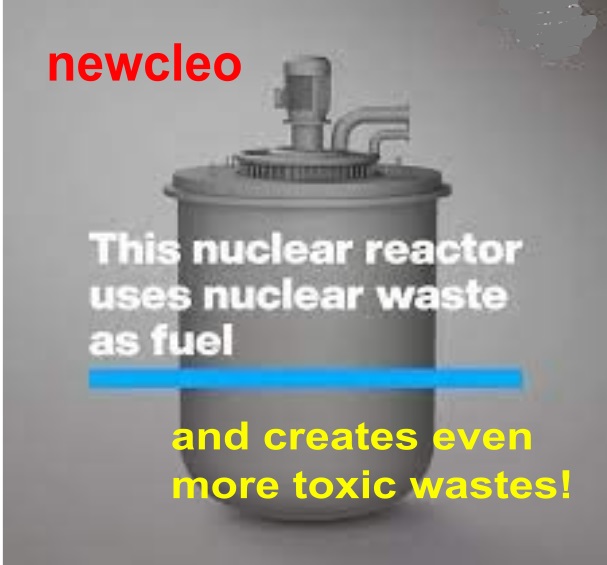
The move comes as the startup targets a €1bn equity round
Sifted Kai Nicol-Schwarz, 21 Aug 24
Nuclear power startup Newcleo is moving its holding company from the UK to France, as the company looks to tap EU funding pools in its bid to raise a €1bn equity round.
Newcleo said in its annual accounts, released yesterday, that it had announced to shareholders and employees in January that it was making the move to increase the potential of attracting “significant funding from EU financial institutions”.
“While we are moving the location of our holding company, our plans for the UK are unchanged and we remain committed to investing and building next-generation SMRs to generate electricity for the UK grid and industry,” a Newcleo spokesperson told Sifted. Sifted understands that the move would not involve employees relocating.
…………………………………………………………. founder and CEO Stefano Buono told Sifted in May that the company would need to raise billions more if it’s to realise its ambitions of building a revenue-making commercial reactor by the early 2030s.
Newcleo is hoping French and EU institutional funding can help it get there. “The rationale for the restructure is partly to improve the potential to attract funding from French and other EU financial institutions in the future,” the company said in its accounts.
French government-funded investment bank Bpifrance has “strict” requirements on holding companies being based in the country, explains Tommy Stadlen, cofounder and partner at Giant Ventures.
………………………………..Newcleo’s average monthly cash burn is €13m for the first half of 2024 and it made a loss of €57.5m in 2023 — up from €18.1m in 2022 — according to its accounts. The company had €221m of cash in the bank on 30 June 2024.
https://sifted.eu/articles/nuclear-newcleo-raise-startup-france
Final investment decision on new nuclear plant Sizewell C is delayed
The crucial final investment decision (Fid) for the new nuclear power
plant Sizewell C is unlikely to be agreed until 2025, according to recent
reports. Financial sector publication Bloomberg reported that anonymous
sources close to the project said negotiations between potential private
investors were moving more slowly than had been expected.
The Fid had already been delayed by the general election, but new energy secretary Ed
Miliband indicated his support for Sizewell in an early speech to
parliament before the 2024 summer recess. Bloomberg reported negotiations
with Centrica, Emirates Nuclear Energy Corporation, Amber Infrastructure
Group and Schroders Greencoat are ongoing.
Earlier in July, Centrica chiefnexecutive officer Chris O’Shea said: “An investment decision this year would be dependent upon how the government and the Sizewell company want to
move. “We are able to move as quickly as the other parties, but I think
we should be realistic that the government have been in office less than
three weeks and they need to figure out what they want to do.”
New Civil Engineer 20th Aug 2024
UK’s nuclear facilities ‘at high risk of atomic blackmail’ from Putin

the British sites can be seen in the same way as those in Ukraine in being susceptible to sabotage and infiltration.
The full-scale invasion of Ukraine has brought with it high-level warnings that the UK is headed for a direct military confrontation with Russia.
Josh Layton https://metro.co.uk/2024/08/19/uks-nuclear-facilities-at-high-risk-atomic-blackmail-putin-21449130/
The UK’s nuclear facilities are at high risk from hostile states who are tipping the world into war, according to an expert in risk management.
Dr Simon Bennett warned that World War Three is only a matter of years away, with Russia already pursuing a strategy of ‘atomic blackmail’.
Dr Bennett revived author Bennett Ramberg’s Cold War-era theory of how nuclear power facilities can be weaponised for political ends in calling on the UK government to ramp up defence spending.
He also believes the potential exists for a cornered Vladimir Putin to escalate from psyops to a deliberate use of the Zaporizhzhia nuclear power plant as a dirty bomb, which would have devastating consequences for Ukraine and neighbouring countries.
The risk management expert, of the University of Leicester, warned that the UK government has ‘lost sight’ of its primary duty to protect its citizens amid a slide to global conflict.
‘The full-scale invasion of Ukraine by Russia is the first large-scale conflict where there are potentially numerous nuclear power plants at risk,’ he said.
‘Not only at Zaporizhzhia, which is Europe’s largest power plant, but in Russia, where the current incursion could see the Ukrainians reach the Kursk nuclear power station if they drive hard to the east.
In the 80s, Bennett Ramberg came up with the hypothesis of atomic blackmail, which is based on the premise that as the number of nuclear power stations grows, so does the potential for an aggressor to use them to gain leverage over the owners
‘The potential for a facility like Zaporizhzhia to be used very crudely against an opponent is clear to see.
‘If the plant, which has six reactors, was rigged with powerful demolition mines, and they were detonated, the radiation would be off the scale.
‘It’s possible the Russians have already placed explosives there.’
Dr Bennett, director of the university’s Civil Safety and Security Unit, told Metro.co.uk that Putin — who is under pressure after Ukraine’s invasion of Russia’s Kursk region — is capable of the unthinkable.
He a drew a comparison with one of the darkest days of history.
‘Using Zaporizhzhia for atomic blackmail gives Putin leverage over not just Ukraine but the entire world,’ Dr Bennett said.
One of the latest safety incidents at Zaporizhzhia came last week when smoke was filmed rising from one of the cooling towers at the Russian-held facility in eastern Ukraine.
Experts doubted there was any risk of an explosion, with Ukraine saying that the fire was started deliberately by setting light to tyres.
However the use of the plant in this way, which follows continued reports of incidents involving drones and shelling, fits with Ramberg’s theory — and has implications for the UK’s own security, according to Dr Bennett.
On Saturday, the safety situation at Zaporizhzhia was ‘deteriorating’ after a nearby drone strike, the International Atomic Energy Agency said.
The party behind the explosion, just outside the site’s protected area, has not been identified. Under Rishi Sunak, the British government announced the biggest expansion in nuclear power for 70 years, and the new prime minister is also committed to building new facilities.
Through Ramberg’s thesis, the British sites can be seen in the same way as those in Ukraine in being susceptible to sabotage and infiltration.
‘If we think more laterally, the number of power stations in the UK is growing, and through the optics of Ramberg’s theory, we are offering our enemies more targets and potentially more leverage over us in a conflict,’ Dr Bennett said.
The Russian FSB security agency and GRU military intelligence are very good at hybrid warfare, so what they could be doing at the moment is recruiting and running individuals as “sleepers” within the British state and potentially within the nuclear industry, ready to be activated at any moment. Three civil servants have recently been charged under the National Security Act and my understanding is that they are alleged to have been spying for China.’
The full-scale invasion of Ukraine has brought with it high-level warnings that the UK is headed for a direct military confrontation with Russia.
British sites, including a shipyard housing nuclear submarines in Barrow-in-Furness, were last week reported by the Financial Times to be on the Kremlin’s list of targets.
Tobias Ellwood, former chair of the Commons Select Committee, responded by saying: ‘We must wake up — storm clouds are gathering.’
Dr Bennett said: ‘The British state needs to take these nuclear threats far more seriously not just within the optics of the Ukraine-Russia war but because, in my opinion, there will be a world war in the next five to 10 years. It will start in the Asia-Pacific, where China will invade Taiwan and, because of the Aukus pact, we will be directly involved in defending Taiwan.
‘Russia will be involved because of its ties with China, leading to a multi-hemisphere conflict.’

Dr Bennett, whose book ‘Atomic Blackmail?’ examines the weaponisation of nuclear facilities in the Russia-Ukraine war, has raised the issues in letters and emails to various governments, including that of Rishi Sunak, but to date has not received any acknowledgement.
‘In my opinion, the government obsession with net zero and climate change agreements distracts from a far greater threat to safety, namely atomic blackmail,’ he said.
‘The primary purpose of the state is national security and in my view we have lost sight of that purpose. The Labour government is carrying out a defence review when what we really need is to raise the 2% of GDP we spend on defence to a minimum 4% of GDP.’
The prospect of an apocalyptic conflict in a matter of years has gained traction during the Ukraine-Russia war and China’s continued pressure on Taiwan, which it views as its own territory.
The author intends to continue trying to raise the alarm.
Labour MP under fire for accepting £2,000 donation from Sizewell C developer.

Opposition to the proposed power plant accuse Jack Abbott of being in ‘EDF’s pocket’
Luke Barr, 19 August 2024
A Labour MP whose constituency borders the proposed Sizewell C nuclear power station has been criticised for accepting a £2,000 donation from the developer behind the project.
Jack Abbott, the newly appointed MP for Ipswich, is facing scrutiny over the decision to
take cash from the French energy giant EDF earlier this month. EDF is the
main private investor behind the proposed nuclear project, which is
expected to cost £20bn and will be part-funded by the taxpayer.
New filings show that Mr Abbott registered the EDF donation on Aug 2, just weeks after
he was elected in Ipswich. His constituency neighbours Sizewell C, which
once completed will serve as a 3.2 gigawatt power station providing energy
to around 6m homes.
However, the project has faced opposition from
campaigners who claim that it risks large cost overruns that will fall on
household bills and that it will spoil local nature.
Alison Downes, executive director of the Stop Sizewell C campaign group, claimed the EDF
donation suggested Mr Abbott was “in EDF’s pocket”. She said: “A huge
project like this has money and will likely use it to persuade people to
lend their support. It is telling that an organisation like ours doesn’t
have lots of money but still has plenty of support.”
A final investment decision on Sizewell C has yet to be made despite around £2.5bn already
being spent on the project. The Government had expected to secure backing
from private investors by the end of the year, although negotiations are at
risk of running into 2025.
Telegraph 19th Aug 2024
The Nuclear Decommissioning Authority (NDA)NDA’s £30 million investment into nuclear research & innovation
The Nuclear Decommissioning Authority (NDA) has awarded contracts totalling
£30million to drive innovation and research into new techniques to deliver
safe, sustainable and cost-effective decommissioning.
The NDA is cleaning up the UK’s oldest nuclear sites which were designed without
decommissioning in mind, posing challenges which require first-of-a-kind
engineering and technological solutions. Research is an essential part of
the decommissioning programme and each year the NDA group invest
£100million in Research & Development (R&D). The aim is to solve
challenging technical problems more effectively, more efficiently, and,
where possible, for less cost.
The NDA Research Portfolio (NRP) competition
forms a key part of the NDA’s strategic research programme and provides
direct funding for research that supports strategic objectives including
growing and maintaining diverse skills within the supply chain and
promoting innovation across multiple sites.
Electronic Specifier 19th Aug 2024
What Happens if Ukraine Seizes the Kursk Nuclear Power Plant?

Moscow Times, By Dmitry Gorchakov, Aug. 16, 2024
From the very beginning of Ukraine’s offensive into Russia’s Kursk region on Aug. 6, there has been much discussion about the possible objectives of this operation. Simply glancing at the map begs the question of whether one objective of the Ukrainian incursion might be the seizure of the Kursk nuclear plant, located just 60 kilometers from the border.
It is a scenario the Russian side is taking seriously. Already Rosatom, Russia’s state nuclear corporation, had begun withdrawing staff from the plant and Russian troops are hastily digging trenches around it.
The mere possibility of a nuclear plant being seized during a war is a nightmare scenario for any nuclear and radiation safety specialist. But after the almost two-and-a-half-year-long Russian occupation of the Zaporizhzhia nuclear plant and the seizures (again, by Russia) of the Chernobyl exclusion zone and the research reactor in Sevastopol during the occupation of Crimea in 2014, such scenarios have become more possible. The longer Russia’s aggression against Ukraine continues, the more common the threat of an accident will become.
While we do not know how events will unfold, our analysis at Bellona and recommendations from the IAEA make clear that should nuclear plants be enveloped by war, every effort should be made to avoid a direct assault on them with heavy weapons. The defending side should not deploy troops at nuclear plants, which would turn them into military targets. Should a nuclear plant be surrounded, it is better to surrender it through negotiations rather than have the facility be attacked or used as a staging ground for attacks.
Having considered these principles, there are a few hypothetical plans that Ukraine could have for the Kursk nuclear plant as its incursion into Russia continues. These scenarios have repeatedly surfaced in the media, and it makes sense to address them in detail.
One theory is that Ukraine may connect the Kursk nuclear plant to its own energy system. I think this is the least likely objective. Should the plant be seized, the safest course of action for its operators would be to put all of its reactors into cold shutdown mode, which stops electricity generation……………………………………………………………..
Some have also speculated that Ukraine is trying to deprive Russia of a vital energy source — hopefully by shutting it down safely rather than a nuclear accident. But the numbers do not support this.
One would like to believe that if such a plan exists, it does not involve the loss of the facility due to a nuclear accident, but rather involves its shutdown through standard procedures…………………………………………….
The most rational objective for seizing the Kursk nuclear plant would be to use it in exchange for the Zaporizhzhia nuclear plant in any upcoming negotiations.
When we consider that Ukraine’s army is not only advancing in the Kursk region, but is also fortifying its position by bringing in reserves and other defenses, it appears that Kyiv intends to hold its gains — possibly until the end of the war and the start of negotiations. The presence of a nuclear power plant within the captured territory would significantly increase its leverage and would confirm the strategic nature of this operation.
Nevertheless, as a representative of an environmental organization, I sincerely hope that we do not see any attack or attempt to seize the Kursk nuclear plant. There is simply no safe way to do it. Any attempt to do so carries risks of a nuclear or radiation accident, to say nothing of damaging the political support Ukraine enjoys from its Western allies. ………………….
if ending this war on terms acceptable to Ukraine involves fighting around nuclear plants on both sides of the front, such a process must proceed with minimal risk of a nuclear disaster. https://www.themoscowtimes.com/2024/08/16/what-happens-if-ukraine-seizes-the-kursk-nuclear-power-plant-a86045
Moscow Says Ukraine Destroyed Russian Bridge With Western-Provided Missiles
The Russian Foreign Ministry says the bridge was likely destroyed by US-provided HIMARS
by Dave DeCamp August 18, 2024 , https://news.antiwar.com/2024/08/18/moscow-says-ukraine-destroyed-russian-bridge-with-western-provided-missiles/
The Russian Foreign Ministry said Friday that Ukrainian forces used Western-provided missiles to destroy a bridge in the Glushkovsky district of Russia’s Kursk Oblast.
Russian Foreign Ministry spokeswoman Maria Zakharova said the missiles were likely launched using the US-provided HIMARS rocket systems, which the US has been supplying to Ukraine since 2022.
“For the first time, the Kursk region was hit by Western-made rocket launchers, probably American HIMARS,” Zakharova wrote on Telegram. “As a result of the attack on the bridge … it was completely destroyed, and volunteers who were assisting the evacuated civilian population were killed.”
Another bridge in Kursk was reported to be hit by Ukrainian forces on Sunday. According to the Russian news site Mash, both bridges were targeted with US-provided HIMARS.
The ground incursion into Kursk came a few months after the Biden administration gave Ukraine the greenlight to use US-provided missiles in strikes inside Russia in border regions. The US says it won’t support “long-range” strikes in Russia but hasn’t defined what the limit is.
The Times reported on Friday that the US is effectively blocking Ukraine from using British-provided Storm Shadow missiles inside Russia, which have a range of about 155 miles. Ukrainian forces are using other types of British weapons in Kursk, including Challenger 2 tanks.
The US and its NATO allies insist they were unaware of Ukraine’s plans to invade Kursk, but Russian officials are pinning the blame for the incursion on Kyiv’s Western backers.
“The operation in the Kursk region was also planned with the participation of NATO and Western special services,” Nikolai Patrushev, an aide to Russian President Vladimir Putin, said on Friday. “Without their participation and direct support, Kyiv would not have ventured into Russian territory.”
Safety at Ukraine nuclear power plant deteriorating after blast, watchdog warns

The International Atomic Energy Agency said the blast was close to Zaporizhzhia nuclear power plant’s cooling water sprinkler ponds and its only remaining power line
By Brendan McFadden, iNews 17th Aug 2024
Safety at Ukraine’s Zaporizhzhia nuclear power plant is deteriorating following a drone strike that hit an access road on its perimeter, according to an atomic energy watchdog,
Russia has been in control of the Zaporizhzhia site, the largest nuclear power plant in Europe, since soon after it launched a full-scale invasion of Ukraine in February 2022.
The International Atomic Energy Agency (IAEA) said the impact site was close to the essential cooling water sprinkler ponds and about 100 m from the Dniprovska power line, the only remaining 750 kilovolt line providing a power supply to the plant.
It comes after Russia earlier claimed a Ukrainian drone dropped an explosive charge on a road used by staff.
The plant is dormant as Moscow and Kyiv have repeatedly accused each other of trying to sabotage its operations and of endangering safety around it.
The IAEA director general Rafael Mariano Grossi, said “Yet again we see an escalation of the nuclear safety and security dangers facing the power plant.
“I remain extremely concerned and reiterate my call for maximum restraint from all sides and for strict observance of the five concrete principles established for the protection of the plant.”
An IAEA team visited the area on Saturday and reported that the damage seemed to have been caused by a drone equipped with an explosive payload.
The report said there were no casualties and no impact on any nuclear power plant equipment. However, the road between the two main gates of the plant was impacted.
Moscow wants to discuss the attack on the Zaporizhzhia plant with the IAEA, Russia’s RIA news agency reported, citing Roman Ustinov, the acting Russian representative in Vienna.
The attack comes as Ukraine continues an incursion into the Kursk region of Russia.
Kyiv claims to have taken control of 82 settlements over an area of 1,150 square kilometres (444 square miles) in the region since 6 August when its advance began.
Today Ukrainian President Volodymyr Zelensky said his troops are “strengthening” positions in the captured territory in Russia and expanding further.
Russian troops also hit the Ukrainian city of Sumy with an Iskander-K cruise missile, causing extensive damage to buildings.
It was claimed Germany, Ukraine’s second biggest donor, has frozen its military aid to Kyiv because it cannot afford to any longer supply equipment due to a national budget crisis.
Meanwhile, Ukraine denied claims by Russia that it is planning to attack a nuclear plant in Kursk and use ‘dirty bombs’ to attack Russian territory,
Moscow’s defence ministry made the claim and warned there would be a harsh response to any attack on the Kursk power plant, which remains under its control, according to Russian news agency Interfax.
The ministry gave no evidence for its claim, but said the surrounding area could be contaminated by an attack on the plant………………….. https://inews.co.uk/news/world/safety-at-ukraine-nuclear-power-plant-deteriorating-after-blast-watchdog-warns-3232978
Top US Military Officials Won’t Say Whether the US had Advance Knowledge of Ukraine’s Invasion of Russia
All the rage these days among “strategic thinkers” is how to “deter” both China and Russia by preparing to wage simultaneous nuclear war against them.
Michael Tracey, Aug 18, 2024
So… there’s a US-backed invasion of Russia currently underway. You’d think this would rise to the level of urgent national political concern, such that every American elected official with some purview in US foreign policy would be expected — and demanded — to articulate a position on what’s transpiring. After all, as everyone should be well aware, Ukraine only exists as a state right now due to the largesse of the US, and thus anything Ukraine does on the battlefield necessarily implicates the US — whatever the precise foreknowledge or involvement the US might have had in this particular operation.
Two years ago, if you had suggested that Ukraine and the US might be conducting a literal invasion of Russia, you would’ve been ferociously denounced as a bed-wetting alarmist who’s probably just trying to cynically boost Russia’s side of the propaganda wars by irrationally fretting about extreme escalatory outcomes, so as to discourage US or European “aid” for Ukraine. And yet here we are, with the escalation ladder having been steadily climbed, step by step, but generating less and less intense of a political reaction as time goes on and the acute psychological impact of the war wears off. To a degree, this is only natural; you can’t expect everyone to be on constant hair-trigger alert about something that’s been going on continuously for two and a half years. But that’s exactly how these escalatory leaps get smuggled in without much notice or debate.
Hence, we’re now in a political climate where the fact of an ongoing US-backed invasion of Russia is treated as little more than an ancillary concern, maybe something warranting semi-interested speculation and commentary, but certainly nothing that should occasion any large-scale political controversy — at least in the US. Neither major party presidential candidate has directly commented on it, as far as I know, and neither has there been any kind of appreciable clamor within the media for the candidates to do their public duty and set out some sort of articulable position on what, by any objective measure, is a massive escalation in the conduct of the war — which had initially been sold to the public as only necessitating US “support” that would be carefully circumscribed.
So while it’s just a drop in the bucket, I’ve attempted to at least provide a minor corrective. This past week was the annual symposium of STRATCOM, or the US Strategic Command, which is the branch of the military that controls the nuclear arsenal. If you weren’t aware, the word “strategic” is a euphemism for “nuclear” in military parlance — a long-running triumph of jargonistic obfuscation. You also gotta love that the slogan for the US nuclear arsenal is “Peace is Our Profession”…
All the rage these days among “strategic thinkers” is how to “deter” both China and Russia by preparing to wage simultaneous nuclear war against them. Another triumph of euphemistic jargon is the word “deterrence” itself — nominally the whole impetus for the Symposium, with “deterrence” really just being synonymous with “projection of American military, economic, and political power,” but presented as gravely necessary in order to “deter” the scary foreign adversaries who are always allegedly threatening that power.
The Symposium is a strange affair in that it’s tucked into a nondescript venue in Omaha, Nebraska, near where the STRATCOM headquarters is located. I overheard one fellow talking about how back in the Cold War days, Air Force members who had to go guard the nuclear silos in the vast expanses of the American Interior were told that if South Dakota ever seceded from the Union, it would automatically be the world’s third largest nuclear state. Today, the Cold War era is looked back on with nostalgic fondness by attendees of these Symposiums, with calls for action routinely issued that the US nuclear arsenal needs to be aggressively reinvigorated, and even the half-hearted efforts to scale it down after the collapse of the Soviet Union were a terrible mistake.
So it was fortuitous that this year’s Symposium should have fallen on a week in which an ongoing US-backed invasion of Russia would have been underway, not to mention another cataclysm being forecast to break out in the Middle East at any moment, with Iran and Hezbollah suggesting for weeks that a large-scale strike on Israel could be imminent.
I therefore asked Gen. Anthony Cotton, the STRATCOM commander, about the Russia/Ukraine developments, which are being touted as the most serious foreign attack on Russian territory since World War II, as if that’s supposed to inspire optimism for a happy outcome. You can find the audio here, which I played on an episode of “System Update” Friday — I guest-hosted again for the absent Glenn Greenwald. Here’s a transcript of the exchange:…………………………………………………………………..
German ministers told there’s no more money for Ukraine – media
https://www.rt.com/news/602719-germany-no-money-ukraine-aid/ 17 Aug 24
Berlin could halve its military assistance to Kiev in 2025, the newspaper claims
German Finance Minister Christian Lindner has issued a request to the country’s defense ministry calling for a limit to military assistance to Ukraine, Frankfurter Allgemeine Zeitung (FAZ) reported on Saturday. According to Lindner, the country’s current budget plan is not capable of allocating funds to Kiev.
The request was made in a letter addressed to German Defense Minister Boris Pistorius and Foreign Minister Annalena Baerbock, and specified that only military aid that has already been approved can be delivered to Kiev. Additional applications from the defense ministry will no longer be accepted, even if issued at the behest of Chancellor Olaf Scholz.
FAZ noted that the block on newly approvals is already in effect and that Berlin would halve its military aid to Ukraine next year. In 2027, the assistance is expected to decline to less than one tenth of its current volume.
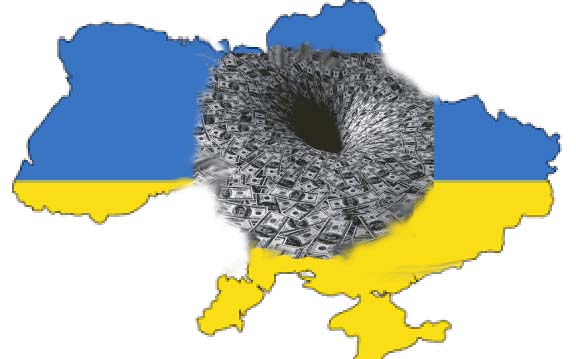
Up to €8 billion in aid to Ukraine has been scheduled for 2024, and the planned maximum of €4 billion for 2025 already exceeds available funds, the media outlet noted, adding that only €3 billion is planned for 2026, and €500 million each for 2027 and 2028.
“End of the event. The pot is empty,” an unnamed source in the federal government told FAZ, stressing that Berlin has “reached a point where Germany can no longer make any promises to Ukraine.”
The newspaper noted that the urge comes amid Lindner’s push for harsh austerity measures; these have already been imposed on all German ministries except defense. The finance minister has been resisting intense pressure from Scholz and Economy Minister Robert Habeck to suspend the country’s constitutional limit on debt to allow for the cost of providing military aid to Kiev amid the Ukrainian conflict.
Germany is the second biggest backer of Ukraine after the US. Berlin has provided and committed military aid of at least €28 billion ($30.3 billion) to Kiev in current and future pledges. This includes advanced military equipment such as Leopard 2 tanks, Marder infantry fighting vehicles, and US-made Patriot air-defense systems.
Lindner reportedly doesn’t expect the country’s assistance to Ukraine to drop, as the minister hopes to cover the expenses not with federal budget funds, but through the use of Russian central bank assets that were frozen by Kiev’s Western allies shortly after the conflict escalated.
Nearly $300 billion belonging to Russia’s central bank has been immobilized by the EU and G7 nations as part of Ukraine-related sanctions. In May, Brussels approved a plan to use the interest earned on the frozen assets to support Ukraine’s recovery and defense. Under the agreement, 90% of the proceeds are expected to go into an EU-run fund for Ukrainian military aid, with the other 10% allocated to supporting Kiev in other ways.
IAEA says safety at Ukraine’s Zaporizhzhia nuclear plant deteriorates

By Reuters, August 18, 2024 https://www.reuters.com/world/europe/iaea-says-safety-ukraines-zaporizhzhia-nuclear-plant-deteriorates-2024-08-17/
Aug 17 (Reuters) – Safety at Ukraine’s Zaporizhzhia nuclear power plant is deteriorating following a drone strike that hit the road around the perimeter on Saturday, according to International Atomic Energy Agency (IAEA) director general Rafael Grossi.
The Russian management of the plant said a Ukrainian drone dropped an explosive charge on a road outside, endangering its staff who use the highway, the TASS state news agency reported.
NATO member gives Ukraine green light to use its weapons in Russia
Rt.com 16 Aug 24,
Kiev is free to use donated Leopard tanks and other combat vehicles during its incursion into Kursk Region, Canada has said
Ukraine has been given approval to use Canadian-donated tanks and armored vehicles on Russian soil, according to a statement by Canada’s Department of National Defense on Thursday. Kiev is currently waging a large-scale incursion into Russia’s Kursk Region.
Ottawa has donated to Kiev a total of eight German-made Leopard 2A4 tanks as well several dozen armored combat vehicles, hundreds of armored patrol vehicles, and several M-777 howitzers. Last month, the Canadian government also announced an additional $367 million military aid package for Kiev.
“Ukrainians know best how to defend their homeland, and we’re committed to supporting their capacity,” Canadian Defense Department spokesperson Andree-Anne Pulin told the media on Thursday…………………………………….
Russian officials have also repeatedly condemned the West for continuing to provide military support to Kiev, arguing that the Ukraine conflict is effectively a proxy war being waged by NATO against Russia, in which Ukrainians serve as ‘cannon fodder.’………………………….. more https://www.rt.com/russia/602685-ukraine-canada-wepons-russia/
Ukraine’s plan to buy Russian-made nuclear reactors sparks uproar

Lawmakers argue buying aging atomic energy equipment from Bulgaria won’t help keep the lights on and could fuel corruption.
Politico, August 15, 2024 , By Gabriel Gavin
Ukraine’s government is fighting off growing opposition to a multimillion-dollar scheme to buy mothballed nuclear reactors, facing accusations that officials are opening the door to corruption just as they push to clean up the country’s energy sector.
The government wants to bring two new units online at the Khmelnytskyi Nuclear Power Station in Western Ukraine, arguing they will help shore up the country’s energy grid that Russian bombs have decimated. The quickest and fastest way to do so, they argue, is to buy Russian-made reactors currently sitting in storage in Bulgaria at an estimated cost of $600 million.
But the deal needs lawmakers’ sign-off, and several parliamentarians — including at least one from President Volodymyr Zelenskyy’s own party — are alleging the deal could blow a massive hole in the country’s tattered budget for outdated technology that won’t necessarily help Ukrainians stave off looming blackouts.
………………………………………The row has created another point of contention as Ukraine tries to crack down on corruption in its energy sector. Earlier this week, Galushenko’s deputy minister, Oleksandr Kheil, was arrested over allegations he pushed for a bribe of half a million dollars in exchange for transferring coal mining equipment belonging to a state enterprise.
Zhupanyn and his colleagues claim the Russian nuclear reactor purchase will become another venue for such dodgy dealing.
“In the last 10 years, there have been many criminal cases against people using tenders to extract cash from Ukraine’s state nuclear power company,” he said in an interview. “If you allow them to spend billions of hryvnia on this, you can expect a pipeline of criminal cases in the next 10 years.”
Galuschenko denied accusations the government was withholding information…………………………………….
“There are a lot of MPs from basically all factions that are not supporting it,” Yaroslav Zheleznyak, an economist and MP from Ukraine’s liberal Holos party, told POLITICO following the meeting on Tuesday. “We are concerned about corruption in this procurement process and we have not received any explanations.”………………………………………………………………………..
Ukrainian energy and environment NGO Ekodiya has also raised concerns about the proposals for Khmelnytskyi, arguing that the project would rely on “obsolete Russian-made equipment” and that “the use of outdated technology can lead to serious safety and efficiency problems.”
Instead, the group argues, the better investment would be in smaller electricity-generating facilities, including renewables, distributed across a wider area. Volodymyr Kudrytskyi, the chief executive of state power firm Ukrenergo, told POLITICO earlier this year that building a broad green energy network would make the grid less susceptible to Russian attacks……………………………………….. https://www.politico.eu/article/ukraine-buy-russia-made-nuclear-reactor-uproar-war-corruption/
Nuclear Free Local Authorities send message of solidarity to Canadian First Nations opposed to nuke dump

14th August 2024
Following the United Nations’ International Day of the World’s Indigenous Peoples (9 August), the UK/Ireland Nuclear Free Local Authorities have joined the Cumbrian campaign group, Lakes against Nuclear Dump (LAND) in sending a message of solidarity and support to the Canadian First Nations who have publicly declared their opposition to the development of an underground nuclear waste dump at Ignace, Ontario.
On July 15, the Anishinaabeg of Kabapikotawangag Resource Council (the “AKRC”), representing five tribal groups, published their Declaration of Opposition in which the Council states declared that the Deep Geological Repository proposed near Ignace ‘poses and unprecedented threat to the integrity, safety, and sanctity of Kabapikotawangag and its surrounding environments. It has the potential to compromise the health, welfare, and cultural heritage of our Anishinaabeg people.
As stewards of the lands and waters in our territory, we have not provided our free, prior, and informed consent. We have a duty to protect and safeguard Kabapikotawangag (also known as Lake of the Woods). We cannot let this type of project move forward.’
The Nuclear Waste Management Organisation was established by the Canadian nuclear industry to lead the effort to find a location for an underground nuclear waste repository. Its attempt to foist a nuclear waste dump on First Nation land near Ignace, in collaboration with provincial and local authorities, appears to contravene the legal obligations made originally by the British Government to the First Nations under Treaty 3 and the commitments made by the Canadian Government in signing the UN Declaration on the Rights of Indigenous People.
………………………………………………………………………………………..This represents another example of ‘nuclear colonialism’, in which militaries, the nuclear industry, and their supporters in government disproportionately locate their activities in lands traditionally occupied by Indigenous People, impacting their environment, health, culture and future. At the first and last of the nuclear cycle, from the mining of uranium to the disposal of radioactive waste, the lands of Indigenous people are seen as fair game by big business, whilst their land has also been seen as ideal for nuclear weapons testing by the major powers.
The NFLAs have participated in several online meetings with campaign groups in the UK and Canada which are opposed to nuclear waste dumps in their locality. We are delighted now to be in contact with the Canadian First Nations. https://www.nuclearpolicy.info/news/nflas-send-message-of-solidarity-to-canadian-first-nations-opposed-to-nuke-dump/
Long-run exposure to low-dose radiation reduces cognitive performance

Science Direct, Journal of Environmental Economics and Management, Benjamin Elsner , Florian Wozny Volume 118, March 2023, 102785
Abstract
This paper examines the effect of long-run exposure to low-dose radiation on cognitive performance. We focus on the fallout from the Chernobyl accident, which increased the level of ground radiation in large parts of Europe. To identify a causal effect, we exploit unexpected rainfall patterns in a critical time window after the disaster as well as the trajectory of the radioactive plume, which determine local fallout but have no plausible direct effect on test scores. Based on geo-coded survey data from Germany, we show that people exposed to higher radiation perform significantly worse in standardized cognitive tests 25 years later. An increase in initial exposure by one standard deviation reduces cognitive test scores by around 5% of a standard deviation.
1. Introduction
The last 40 years have seen a drastic increase in radiation exposure. Today, the average person in Europe and America receives about twice the annual dose of radiation compared with in 1980 (NCRP, 2009). This increase is almost entirely due to man-made sources of radiation, such as medical procedures, nuclear power and nuclear weapons. Procedures such as CT scans, X-rays, mammograms or radiotherapy expose patients to low doses of radiation, and their use has been steadily increasing over the past decades. Moreover, the fallout from nuclear disasters such as Chernobyl and Fukushima or a nuclear bomb can expose people thousands of miles from the epicenter.
Medical research shows that subclinical radiation can damage human cells, which has potential knock-on effects on health and cognition and that these effects may occur at all ages. The existing literature has mostly focused on the effect of in-utero exposure, documenting significant adverse effects of radiation exposure during pregnancy on education and labor market outcomes many years later (Almond et al., 2009, Heiervang et al., 2010, Black et al., 2019). However, there is little evidence on the long-term effects of exposure to low-dose radiation after birth. Documenting such effects is important, not least because of the number of potentially affected people: the number of people alive at any one point is substantially greater than the number of fetuses in the womb.
In this paper, we exploit plausibly exogenous variation of the Chernobyl fallout to study the impact of exposure to low-dose radiation on cognitive test scores 25 years after the disaster. We focus on Germany, which received a significant amount of fallout due to weather conditions in the aftermath of the disaster in 1986. Because of the long half-life of the radioactive matter, people who continuously lived in areas with higher initial fallout have been exposed to higher radiation levels for over 30 years. For people exposed after birth, there are two plausible biological channels through which radiation can affect cognitive test scores: a direct effect on the brain because radiation can damage brain cells, and an indirect effect through general health, which may lead to fatigue, thus reducing test performance.
Our dataset – the National Educational Panel Study (NEPS), a representative geo-coded survey – allows us to link fine-grained data on fallout levels in a person’s municipality of residence since 1986 to a battery of standardized cognitive tests done 25 years after the disaster. At the time of the disaster, over half of our sample were adolescents or adults, allowing us to estimate the long-run effect of exposure at these ages.
The central identification challenge is a potential correlation between the local amount of radiation and residential sorting. The local amount of radiation is driven by a combination of several factors, for example wind speed, rainfall, altitude or soil composition. Some of these factors may have also influenced residential sorting prior to 1986, thus potentially leading to omitted variable bias. ………………………………………………………………………
Our central finding is that people exposed to higher levels of radiation from 1986 onward performed significantly worse in cognitive tests 25 years later. A one-standard-deviation higher initial exposure in 1986 reduces test scores by around 5% of standard deviation. Over the course of 25 years, the additional radiation dose of a one-standard-deviation higher initial exposure is roughly equivalent to the dose from 6 chest X-rays or 1.65 mammograms, which indicates that the long-term effects of low-dose radiation can be non-trivial. An additional analysis shows that these effects are not driven by selective migration after the Chernobyl disaster.
This result feeds into two domains of the public debate on radiation. One is about the costs and benefits of nuclear power in many countries. While nuclear power offers the advantage of supplying vast amounts of energy at zero carbon emissions, it comes with the cost of potential disasters. In the last 35 years we have seen two major disasters. Given the proliferation of nuclear power along with the emergence of conflicts like the current war in Ukraine, it is possible that more nuclear disasters may follow. Our results, along with those in other studies, point to significant external costs of nuclear power generation and document an important effect of nuclear disasters on the population. Another public debate, more broadly, deals with exposure to man-made radiation. For example, today the average American receives twice the annual radiation dose compared to in 1980, which is mainly due to medical procedures such as X-rays, mammograms or CT scans (NCRP, 2009). Our results can inform the debate about the long-term consequences of this increase in radiation exposure. The radiation dose from medical procedures is similar to the additional radiation dose Germans in highly affected areas received after Chernobyl. And although these procedures offer high benefits for patients, our findings suggest that they come with a health cost due to a higher radiation exposure.
With this paper, we contribute to three strands of literature. First, our findings contribute to the literature on the effect of pollution on human capital. This literature has produced compelling results for two types of effects. One strand focuses on exposure during pregnancy or early childhood and documents adverse long-term effects of pollution. Another strand focuses on adults and estimates the short-run effect of fluctuations in pollution on outcomes such as productivity, test scores and well-being.1 Our study, in contrast, examines the long-run effects among people exposed after early childhood. These effects are important, not least because of the number of people affected. The cohorts in our sample represent around 24 million people, compared to 200,000 children who were in the womb at the time of Chernobyl. Even if the individual effect is smaller for people exposed after early childhood, our study shows that the environment can have adverse consequences for large parts of the population and, therefore, exposure after early childhood deserves more attention in the literature.
Second, this paper adds new evidence to the emerging literature on pollution and cognitive functioning……………………………………………………….
……………………., this paper contributes to the broader literature on the effects of low-dose radiation. Two recent reviews of the epidemiological literature by Pasqual et al. (2020) and Collett et al. (2020) conclude that there is significant evidence that exposure to low-dose radiation early in life has negative effects on health and cognitive performance.
……………………………….. our results point to even wider-reaching adverse effects of nuclear disasters. Germany is over 1200 km from Chernobyl, and our study shows that large parts of the population have been adversely affected.
2. Historical background and review of the medical literature
2.1. The Chernobyl disaster and its impact in Germany
2.1. The Chernobyl disaster and its impact in Germany
The Chernobyl nuclear disaster in 1986 is one of the two largest nuclear accidents in history. It occurred after a failed simulation of a power cut at a nuclear power plant in Chernobyl/Ukraine on April 26, 1986, which triggered an uncontrolled chain reaction and led to the explosion of the reactor. In the two weeks following the accident, several trillion Becquerel of radioactive matter were emitted from the reactor, stirred up into the atmosphere, and – through strong east winds – carried all over Europe.2 The most affected countries were Belarus, Ukraine as well as the European part of Russia, although other regions, such as Scandinavia, the Balkans, Austria and Germany also received considerable amounts of fallout. The only other accident with comparable levels of fallout was the Fukushima disaster in Japan in 2011 (Yasunari et al., 2011).
Post-Chernobyl radiation in Germany.
………………………………….From 1986 to 1989, the governments of West and East Germany rolled out a comprehensive program to measure radiation across the country. At over 3,000 temporary measuring points, gamma spectrometers measured the radiation of Cs137. Based on the decay of the isotopes, all measurements were backdated to May 1986.
………………………………………….Radiation exposure of the German population.
Humans can be exposed to radiation in three ways, namely through inhaling radioactive particles, ingesting contaminated foods, as well as external exposure, whereby radiation affects the body if a person is present in a place with a given level of radioactivity in the environment. Exposure to radiation through air and ground can be directly assigned to – and therefore be strongly correlated with – a person’s place of residence ……………………………………………………………………………………………………………………………..
Information about the nuclear disaster and reactions of the German public
……………………………………………………………………………………. 2.2. Effects of radiation on the human body
The effect of radiation on the human body is by no means limited to high-dose radiation, such as the one experienced by survivors of nuclear bombs or clean-up workers at the site of the Chernobyl reactor. The medical literature has shown that exposure to subclinical radiation – at doses most people are exposed to, for example due to background radiation, medical procedures, or the fallout from Chernobyl in large parts of Europe – can negatively affect cognition, physical health and well-being. Moreover, while the effects of subclinical radiation may be strongest during pregnancy and early childhood, radiation exposure can have adverse effects throughout a person’s life.
Plausible channels.
Radiation exposure can affect cognitive test scores through four types of channels:
- 1.A direct effect on cognition, as radiation can impair the functioning of brain cells.
- 2.An indirect effect through physical health; radiation can impair the functioning of organs and lead to greater fatigue, which in turn may negatively affect test scores.
- 3.An indirect effect through mental health; a review by Bromet et al. (2011) suggests that people’s worry about the long-term consequences of radiation for physical health may lower their well-being and lead to poor mental health.
- 4.Indirect effects through behavioral responses, such as internal migration or changes in life style. To the extent that these effects reflect avoidance behavior, they will dampen the negative biological effects.5
In the following, we summarize the evidence from two types of study: one based on observational studies with humans, the other based on experimental studies with mice and rats. While both arguably have their weaknesses – one is non-experimental, the other has limited external validity – together they show that an effect of radiation on cognitive test scores is biologically plausible.
Observational studies.
The effect of radiation on cognitive performance is an active field of research in radiobiology and medicine. Radiation affects the human body through ionization, a process that damages the DNA and can lead to the dysfunction or death of cells (Brenner et al., 2003). Until the 1970s the human brain was considered radio-resistant, that is, brain cells were assumed to be unaffected by radiation. This view changed when lasting cognitive impairments were found in cancer patients who underwent radiotherapy. Studies find cognitive impairments among 50%–90% of adult brain cancer patients who survive more than six months after radiotherapy. The cognitive impairment can manifest itself in decreased verbal and spatial memory, lower problem-solving ability and decreased attention, and is often accompanied by fatigue and changes in mood ……………………………………………….
Laboratory evidence on rats and mice.
The experimental evidence with rodents confirms the evidence found among human cancer patients. Rats who were treated with brain irradiation experience a reduction in cognitive ability, although the biological processes differ between young and old rats………………………………………
While these studies confirm that radiation can plausibly affect cognitive functioning across the life cycle, they are mostly based on once-off radiation treatments. In contrast, after Chernobyl, the German population was constantly exposed to higher ground radiation for many years. A recent experiment on mice by Kempf et al. (2016) is informative about the effect of regular exposure to low-dose radiation. Among mice who were exposed for 300 days, the researchers detected a decrease in cognitive functioning and a higher incidence of Alzheimer’s disease.
Impact on overall health……………………………………….
3. Data and descriptive statistics…………………………………………………..
3.1. The NEPS data
Our main data source is the NEPS, a rich representative dataset on educational trajectories in Germany. ………………………………………………………………………………………………….
3.2. Estimation sample
Our sample includes all survey participants who were born before Chernobyl. We exclude participants born after Chernobyl because the survey only sampled birth cohorts up to December 1986, leaving us with few participants who were born after Chernobyl. Moreover, because we are interested in the effect of post-natal exposure, excluding them ensures that our estimates are not confounded by exposure in utero, which operates through a different biological channel. ……………………………………………………………………………………………………………………………………..
3.3. Cognitive tests………………………………………………………………………………………………………
3.4. Municipality- and County-level Data
Data on ground deposition……………………………………………………………………………………………
Linkage between individual and regional data.………………………………………………………………………..
Additional data.…………..
3.5. Descriptive statistics………………………………………………………………………………………………………………………………………..
4. Empirical strategy
4.1. Empirical model………………………………………………………………………………………
4.2. Identification challenge and balancing checks……………………………………………………………………………………
4.3. Instrumental variable strategy……………………………
IV component I: local rainfall during a critical time window.………………………………………………………………………………….
IV component II: available radioactive matter in the plume……………………………………………………………
First stage and instrument relevance………………………………………………………………………………..
Instrument validity………………………………………………………………………………………………………………
5. Radiation and cognitive skills: Results
5.1. The effect of initial exposure on cognitive performance………………………………………………………………….
5.2. The effect of average exposure,1986–2010…………………………………………………
5.3. Internal migration as a potential channel………………………………………………………………
5.4. Effect magnitude and discussion…………………………………………………………………
5.5. Robustness checks………………………………………………………………………..
6. Conclusion
In this paper, we have shown that radiation – even at subclinical doses – has negative long-term effects on cognitive performance………………………………………………………………………………………..
Declaration of Competing Interest
The authors declare that they have no known competing financial interests or personal relationships that could have appeared to influence the work reported in this paper.
Appendix A. Supplementary data………………………………….. more https://www.sciencedirect.com/science/article/pii/S0095069623000037
1 This Month
26 April – Chernobyl: Inside the Meltdown airs on National Geographic on Sunday 26th April from 4pm


29 April – Nuclear Expert Webinar #1 – Radiation Impacts on Families with Mary Olson and Cindy Folkers
- 12:15 PM MT – 1:45 PM MT
- Location: Virtual – REGISTER TODAY

4 May -West Suburban Peace Coalition to discuss Iran war at May Educational Forum
Monday, May 4, 7:00 – 8:00 PM Central Standard Time
Title: : How Trump’s Narrative Tries to Shape the Reality of the War on Iran.
Contact Walt Zlotow, zlotow@hotmail.com 630 442 3045 for further information
14 May – online event From Bombs to Data Centres: the Face of Nuclear Colonialism

Pine Ridge Uranium is the real threat, not Tehran- Tell Burgum: Stop the Extraction.
Chernobyl: The Lost Tapes – A good documentary on Chernobyl on SBS available On Demand for the next 3 weeks– https://www.sbs.com.au/ondemand/tv-program/chernobyl-the-lost-tapes/2352741955560
To see nuclear-related stories in greater depth and intensity – go to https://nuclearinformation.wordpress.com
-
Archives
- April 2026 (346)
- March 2026 (251)
- February 2026 (268)
- January 2026 (308)
- December 2025 (358)
- November 2025 (359)
- October 2025 (376)
- September 2025 (257)
- August 2025 (319)
- July 2025 (230)
- June 2025 (348)
- May 2025 (261)
-
Categories
- 1
- 1 NUCLEAR ISSUES
- business and costs
- climate change
- culture and arts
- ENERGY
- environment
- health
- history
- indigenous issues
- Legal
- marketing of nuclear
- media
- opposition to nuclear
- PERSONAL STORIES
- politics
- politics international
- Religion and ethics
- safety
- secrets,lies and civil liberties
- spinbuster
- technology
- Uranium
- wastes
- weapons and war
- Women
- 2 WORLD
- ACTION
- AFRICA
- Atrocities
- AUSTRALIA
- Christina's notes
- Christina's themes
- culture and arts
- Events
- Fuk 2022
- Fuk 2023
- Fukushima 2017
- Fukushima 2018
- fukushima 2019
- Fukushima 2020
- Fukushima 2021
- general
- global warming
- Humour (God we need it)
- Nuclear
- RARE EARTHS
- Reference
- resources – print
- Resources -audiovicual
- Weekly Newsletter
- World
- World Nuclear
- YouTube
-
RSS
Entries RSS
Comments RSS
 nuclear-news