What Defeat Looks Like

Had the western powers acted in good faith to resolve these issues at Minsk, history might have taken a different course. Instead, European leaders did everything they could to scuttle the Accords.
On the battlefield, Russia is in no rush; it is defeating Ukraine in a grinding war of attrition that by now is irreversibly in Russia’s favour.
As in Potsdam at the end of the Second World War, the only path forward now is working out the terms of Ukraine’s defeat. And there is still time to save lives, writes Stefan Moore.
Stefan Moore, Consortium News, November 28, 2025, https://consortiumnews.com/2025/11/28/what-defeat-looks-like/
European leaders are in panic mode. They are scrambling to ensure that Trump’s 28-point peace plan that they believe favours Russia can be revised to give Ukrainian President Volodymyr Zelensky an equal say alongside Russian President Vladimir Putin.
This is delusional thinking. Whether or not Zelensky and his U.S./NATO allies, who have poured hundreds of billions of dollars into this conflict care to accept it, Russia is the indisputable victor in this terrible 14-year war, beginning with the 2014 Ukrainian civil war, which Russia entered in 2022.
Moscow will call the shots when it finally ends. As in Potsdam at the end of WWII, the only path forward now is working out the terms of defeat.
Those terms include Ukraine losing all or most of the four eastern oblasts – Donetsk, Lugansk, Zaporizhzhia and Kherson (amounting to roughly a third of its territory and population); an ironclad prohibition from joining NATO, which Russia correctly views as a hostile alliance; the reduction of its armed forces (the size to be negotiated) and the denazification of its military and government.
For those who believe this is an intolerable capitulation, it’s time to review the historical record.
Since the end of the Cold War, despite promises to Russia that it would not move “one inch eastward”, NATO has pushed up to Russia’s borders from Poland to the Baltic states and in 2008 invited Ukraine and Georgia to become members. The potentially devastating consequences of this expansion were signalled by the most senior U.S. diplomats at the time.
William Burns, the U.S. ambassador to Russia in 2008 warned in a cable published by WikiLeaks that Ukraine becoming a NATO member could lead to war with Russia in Ukraine, a prediction that eventually came true.
The architect of America’s Soviet containment policy, George Kennan, presciently warned as early as 1997 that “expanding NATO would be the most fateful error of American policy in the entire post-Cold War era.”
Not only were these words not heeded, but the West set out to weaken Russia in every way possible.
The Coup
In 2014, the U.S. helped engineer a coup (revealed here, here, and here) to overthrow Ukraine’s democratically elected, Russia-friendly president Victor Yanukovych and install a Western-friendly regime. Billed in the Western media as a popular uprising for democracy, it led Ukraine on the path to civil war between the European-aligned west and the east which had closer ties to Russia.
The biggest losers in this adventure were the ethnic Russian people of Ukraine’s eastern region who opposed the coup and called for the creation of separate autonomous states. In response, Ukraine’s armed forces and its virulently anti-Russian neo-Nazi battalions went on the attack.
In what turned out to be a disingenuous attempt to resolve the conflict, Ukraine and Russia took part in the Minsk Accords (mediated by France and Germany with U.N. support).
Among other things, Minsk proposed autonomy of the ethnic-Russian regions of Donetsk and Lugansk within a federated state of Ukraine, and an understanding that Ukraine could not join NATO, an alliance that Russia correctly sees as an existential threat.
For those who fail to comprehend Russia’s insistence on the latter point, it would be equivalent to Mexico or Canada entering a security alliance with Russia that allowed them to station nuclear capable missiles on the U.S. border. One only has to recall the Cuban Missile Crisis to see how that worked out.
Had the western powers acted in good faith to resolve these issues at Minsk, history might have taken a different course. Instead, European leaders did everything they could to scuttle the Accords.
Later, former Germany’s Angela Merkel and then ex-French president Francois Hollande would publicly admit that they were just playing along to give NATO more time to arm Ukraine to defeat Russia – a battle they have been willing to fight to the last Ukrainian.
Between the time of the Minsk Accords in 2015 and Russia’s invasion of Ukraine in 2022, on behalf of the besieged population in the east, nearly 14,000 ethnic Russian civilians had been killed by Ukraine’s forces, teaching the Russian language had been prohibited, Russian churches had been outlawed and Russian language media had been severely restricted.
The Istanbul Denial
Yet, despite the setback following Minsk and just two months into Russia’s invasion, another opportunity to end the war was being negotiated between Russia and Ukraine in Istanbul.
The terms were similar to Minsk, but just as Ukraine was about to sign the agreement, U.K. Prime Minister Boris Johnson descended on Kiev on behalf of NATO to tell Zelensky to pull the plug — the U.S. and Europe would provide Ukraine with all the weapons it needed to continue to fight Russia.
So, four years on, here we are. Putin, fooled twice, has lost all trust in Western leaders and has no more time for their games. On the battlefield, Russia is in no rush; it is defeating Ukraine in a grinding war of attrition that by now is irreversibly in Russia’s favour.
Contrary to European leaders’ tough talk, Ukraine has nearly run out of trained soldiers, the U.S. has run out of ground war arms to give to Ukraine and, despite its belligerent rhetoric, Europe has run out of money to send to Kiev. (Meanwhile, revelations of corruption close in on Zelensky’s inner circle, claiming the resignation today of his chief of staff.)
The tragedy is that all of this – the loss of over a million lives (mostly young Ukrainian and Russian men thrown into the meatgrinder of trench warfare), the fleeing of over 7 million Ukrainian refugees who are unlikely to ever return and the widespread destruction of Ukraine’s infrastructure – could have all been avoided.
The notion that the West came to the aid of Ukraine to defend democracy in the most corrupt and neo-Nazi infested country in Europe is as deceptive as it is laughable. This has always been a battle initiated by the U.S./NATO alliance to weaken Moscow, overthrow Putin and return the West to dominance over Russia like in the 1990s, with Ukraine as the unfortunate willing proxy.
It was sheer hubris and stupidity for the neocons in Washington and Brussels, pumped up with triumphalism after the fall of the Soviet Union, to think they could mould the post-Cold War world including Eurasia in their interests without disastrous consequences.
In the end, Ukraine will be defeated but there are no real winners.
Both Ukraine and Russia will take years to recover from the human and economic cost of this devastating war; Europe’s economy is in tatters with near negative growth, energy prices three times higher than before the destruction of Russia’s Nord Stream pipeline, and companies fleeing to produce offshore.
As for the U.S. , it has nothing to show other than public anger over the war, soaring national debt and increasing isolation as a global power.
As always, the biggest prize-winners are the global defence contractors whose profits have skyrocketed since the start of the war in Ukraine and Israel’s genocidal war in Gaza.
Stefan Moore is an American-Australian documentary filmmaker whose films have received four Emmys and numerous other awards. In New York he was a series producer for WNET and a producer for the prime-time CBS News magazine program 48 HOURS. In the U.K. he worked as a series producer at the BBC, and in Australia he was an executive producer for the national film company Film Australia and ABC TV.
UK energy bill payers will hand £2bn a year to EDF for new power stations

COMMENT. Here is a prime example of the crookedness of the UK Labour government, in pretending that the nuclear industry is beneficial to people and the environment:
“The chancellor, Rachel Reeves, has promised to cut energy bills by an average £150 for each household from April by slashing green levies.“
UK green levies are taxes imposed by the government on sources of pollution, which contribute to about 8% of a household’s energy bill. These levies raise funds for various energy-efficiency schemes and have generated £5.9 billion from household energy bills in 2024. They are essential for supporting energy-saving measures in homes and for expanding renewable energy sources, ultimately improving energy security in the UK
French government-owned company to receive funding for Hinkley Point C and Sizewell C
Rob Davies, Guardian 28th Nov 2025
UK energy bill payers will hand over £2bn a year in subsidies to EDF, the French company building two nuclear power stations, according to government figures.
EDF, owned by the French government, will be entitled to £1bn in annual payments as soon as Hinkley Point C, in Somerset, comes on to the grid in 2030. The sum is due under the contracts-for-difference system that guarantees low-carbon energy companies a fixed price for the electricity they generate..
Separately, £1bn will be added to bills through a separate nuclear levy scheme to fund Sizewell C, in Suffolk, a 3.2 gigawatt (GW) project also led by EDF.
The result is an increase of about £2bn in bills, funding the cost of two plants that together will generate about a sixth of the electricity that Britain was using during peak demand so far this year, equivalent to 6m homes.
A government spokesperson said: “We are reversing a legacy of no new nuclear power being delivered to unlock a golden age of nuclear, securing thousands of good, skilled jobs and billions in investment.”
The government hopes the extra cost of new nuclear reactors could be offset in the future by the stable “baseload” output they offer, which can rein in the rising cost of balancing volatile output from energy sources such as solar and wind.
That balancing cost is expected to hit about £2bn this year, according to the Nuclear Industry Association. The government said Sizewell alone could save £2bn a year in future, adding that the impact on bills over the construction period was likely to be about £1 a household each month.
The chancellor, Rachel Reeves, has promised to cut energy bills by an average £150 for each household from April by slashing green levies.
Assessments of the nuclear subsidy were revealed in documents released by the Office for Budget Responsibility (OBR), which assesses the impact of economic policy. The OBR said EDF would receive £1bn in the first year of operation at Hinkley, due to come on stream in 2030 after 12 years of construction.
“In 2030-31, contracts for difference (CfDs) are expected to generate £4.6bn in government receipts, including £1bn to fund subsidy payments to the Hinkley Point C nuclear power plant for its first year of expected generation,” the OBR said.
The subsidy is the result of an agreement struck between EDF and the Conservative-Liberal Democrat coalition government in 2013.
The then energy secretary, Ed Davey, now the leader of the Liberal Democrats, agreed a “strike price” guaranteeing that the French state-owned company would receive £92.50 for each megawatt hour (MWh) for electricity generated at the 3.2 GW plant.
The strike price has risen with inflation to about £133 and is projected to reach £150 in 2030, according to the Daily Telegraph, which first reported the Hinkley subsidy.
The wholesale cost of electricity is much lower, now about £80 a MWh, meaning EDF will be able to claim the shortfall from consumers and businesses that use its electricity, thanks to the CfD agreement…….
The construction of Sizewell C, which has yet to begin and is scheduled for completion in the 2030s, will also drive up bills.
From January, energy bills will be inflated by a levy supporting the plant’s construction, adding £10 a year. The levy is expected to raise £700m but will double to 2030 to fund Sizewell, whose price tag is projected to hit £100bn.
In practice, the cost of the power station could increase. Hinkley Point C was originally projected to cost £18bn but has been subject to several time and cost overruns; EDF predicted last year the final bill could hit £46bn. https://www.theguardian.com/uk-news/2025/nov/28/uk-energy-bill-payers-edf-hinkley-point-c-sizewell-c
Scottish National Party accuses UK Government of ‘swindle’ over energy bills.
The UK Government has been accused of a ‘shameful swindle’ over the reduction of energy bills after a think tank estimated savings could be significantly lower than pledged.
The SNP has warned the Chancellor’s latest announcement to reduce household energy costs by £150 was “already falling apart”.
The Treasury earmarked the savings by scrapping the
energy company obligation scheme – a home insultation programme. It comes after the Resolution Foundation warned energy bills could continue to rise – and the reduction will be lower than anticipated.
Figures from the think tank suggests the average saving on energy bills could be £60 per household by 2029-30. Analysis by the think tank also estimates savings to be £127 in 2026-27, falling to £115 in 2027-28 before reducing again the following year. But prior to the general election in 2024, Labour committed to reducing energy costs by £300 by 2030.
Herald 29th Nov 2025, https://www.heraldscotland.com/news/25658822.snp-accuses-uk-government-swindle-energy-bills/
Due to legal considerations UK government is now pausing its planned nuclear regulatory reforms.

Labour is reportedly pausing nuclear-sector reforms despite a sweeping
report urging planning and regulatory changes to cut costs and accelerate
new projects. Legal concerns raised by a government adviser have prompted Reeves to withhold the recommendations from the upcoming Budget, delaying growth-focused measures. ……………………
The Labour government is set to hold fire on pushing through sweeping reforms to nuclear energy due to a legal adviser’s concerns over the “UK’s
environmental, trade and human rights obligations”……….
ITV News has now reported that the Chancellor will
not include the growth-focused recommendations in her Budget speech on
Wednesday. The broadcaster reported that the Chancellor will make reforms “subject to further work and review” after a government adviser voiced concerns about the legal crossovers in the paper with UK obligations………
Oil Price 26th Nov 2025, https://oilprice.com/Alternative-Energy/Nuclear-Power/Britains-Nuclear-Reform-Set-to-Stall-Over-Legal-Concerns.html
UK’s new nuclear body urges scrapping nature protections for new projects
24th November 2025, https://www.cpre.org.uk/news/nuclear-body-urges-scrapping-nature-protections-for-new-projects/
In the spring of 2025, the government set up a Nuclear Regulatory Taskforce to make it easier to build new nuclear projects. Their final report has just been published and its recommendations threaten some of the hard-won measures we have to protect our countryside and nature.
The taskforce was made up of figures working for the nuclear industry. They’re proposing two measures in particular that we’re worried about.
First, it proposes that new nuclear as a whole would get an opt-out of both the Habitats Directive and the mitigation hierarchy. This is a mechanism whereby developers first need to seek to avoid harm and then try to minimise the harm. Only when they cannot do this, they should compensate for the harm by improving the natural environment elsewhere.
The report calls for nuclear developments to pay into the new Nature Restoration Fund being set up by the Planning and Infrastructure Bill and ‘move directly to off-site nature conservation’ as the default. This sweeps away the first part of the hierarchy, which asks developers to avoid or minimise local harms on landscapes and nature in favour of offsetting the harm somewhere else. This is counter to CPRE’s view which is that protecting and regenerating landscapes at the source must come first.
Secondly, it calls for the scrapping of the duty on public bodies to further the statutory purposes of National Parks and National Landscapes, which came in in 2023. The report says the duty ‘has caused confusion, and will likely delay, and add cost, to nuclear development.’
Two CPRE groups – Kent and Friends of the Lake District – have already challenged decisions using the new protected landscapes duty, but in both cases planning permission was still granted.
Scrapping this duty would undermine the progress made in safeguarding our protected landscapes like the South Downs or the Shropshire Hills and return us to the weak duty that existed previously.
The Chancellor has said she welcomes the report and will set out the government’s response on Wednesday, and we’ll be strongly urging ministers not to dilute nature and landscape protections.
Ministry Of Defence looking at ‘various sites’ for sub dismantling project
COMMENT. Put more simply. the UK government doesn’t really know what to do with the toxic wastes from nuclear submarines.
Governments are obsessed with “defence” against each other. Meanwhile the public thinks ‘jobs, jobs, jobs” even if those jobs are toxic, and part of a useless industry.
By George Allison, November 28, 2025, https://ukdefencejournal.org.uk/mod-looking-at-various-sites-for-sub-dismantling-project/
A written answer in Parliament has confirmed that the Ministry of Defence is actively considering multiple locations for the UK’s permanent submarine dismantling and disposal capability.
Responding to Graeme Downie MP, defence minister Luke Pollard said the demonstrator vessel Swiftsure continues to be dismantled at Rosyth and remains on track to complete in 2026. He noted that “there are six further legacy submarines in Rosyth awaiting to enter the dismantling process.”
Those boats, alongside the 15 stored at Devonport, form the initial batch being processed under the Submarine Dismantling Project.
Pollard confirmed that the enduring solution will be delivered through a separate effort, the Submarine Disposal Capability Project, which is still in its concept phase. He stated that the department is “assessing options for the capability and its location with various sites under consideration within the UK,” adding that Parliament will be informed once a decision is ready.
This aligns with the practical pressures on the Defence Nuclear Enterprise. Rosyth can process only a small number of hulls at a time, while Devonport’s workload is dominated by defuelling, refit work and major safety driven upgrades. Both sites have finite regulatory and environmental headroom.
The broader SDP context helps explain the direction of travel as since 2013 the programme has been tasked with dealing with 27 retired submarines, removing radioactive and conventional waste safely and refining methods as it progresses. Swiftsure’s dismantling has already informed improved procedures, and the MoD reports that later boats will see faster and cheaper waste removal.
The Swiftsure project has proven the process, but the long term question remains open: where should the UK base a facility that will handle future decommissioned submarines on a rolling, multi decade basis. Pollard’s answer confirms that this decision is now in play.
Trump’s Ukraine peace plan D.O.A with neocon Rubio as Secretary of State, National Security Advisor.
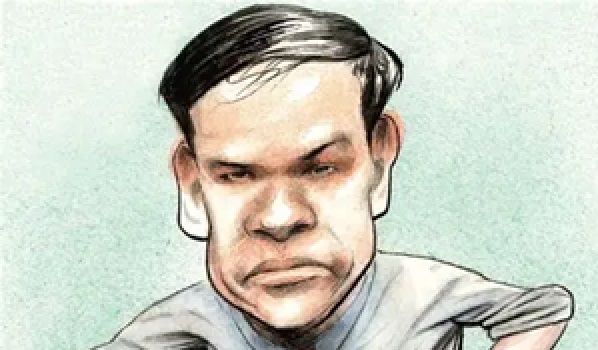
top diplomat Rubio doesn’t do peaceful diplomacy, only violent regime change.
Trump wants out of the US proxy war with Russia…but not because he’s man of peace.
Walt Zlotow West Suburban Peace Coalition Glen Ellyn IL , 28 Nov 25
Enabling the Israeli genocide in Gaza that has killed over 100,000 Palestinians made no dent on Trump’s degraded conscience. In fact, he’s ecstatic that he can both control and rebuild Gaza as head of the colonial ruling ‘Board of Peace’ which will essentially cement Gaza into Greater Israel.
Trump’s sadism extends to his ghoulish glorying in blasting 20 small unarmed boats to smithereens off Venezuela as prelude to his imminent and violent regime change operation.
But Trump wants out of America’s lost proxy war with Russia destroying Ukraine. He cares not a whit about the death and destruction his predecessor Biden brought Ukraine by promising NATO membership and fueling their war on Russian leaning Ukrainians in Donbas. He simply knows it’s a lost cause that gobbles up valuable war resources needed for Gaza, Venezuela and eventual confrontation with China.
Why then was he so stupid to appoint virulent neocon Marco Rubio as both Secretary of State and National Security Advisor? Rubio is not in sync with Trump’s peace plan. He flew to Geneva to reassure European leaders committed to an impossible Ukrainian victory that ‘all is not lost.’ Rubio’s remarks halted momentum derived from Trump’ 28 point peace plan that Russia President Putin agrees provides a sensible framework for a negotiated peace. Europe is risking self-destruction to prevail over Russia and Rubio is all too willing to assist them.
Trump should fire Rubio from both jobs to regain lost momentum to extricate America from its lost war to weaken, isolate Russia from Europe. With Rubio at State and National Security, Ukraine will simply lose more territory and more cannon fodder every day he continues to gum up the peace process.
One might surmise Rubio would push for peace in Ukraine so he could spend more of his supposed diplomatic portfolio effecting regime change in Venezuela followed by Honduras, Nicaragua, Columbia and his ultimate prize Cuba.
But top diplomat Rubio doesn’t do peaceful diplomacy, only violent regime change. Since Russian regime was part of our 11 year long proxy war against Russia beginning when we KO’d Russian leaning Ukrainian president Victor Yanukovych in 2014, Rubio remains all in.
If Trump was serious about withdrawing from Ukraine and indeed all of Europe bankrupting their economies to confront an imaginary Russian bogyman, he’d have put peacemakers at State instead of warmakers. Forget ending the Ukraine war on Day 1. Unless he dumps Rubio and his fellow neocons, Trump will get to Day 1,461, his last, still enmeshed in the Ukraine roach motel.
Fighting for Peace and Fighting for War in Ukraine
More importantly, Kiev also rejected Russia’s key demand, thus maintaining the root, main cause of the war: NATO’s and Kiev’s attempts to have Ukraine become a NATO member
Russian and Eurasian Politics, by Gordonhahn, November 26, 2025, https://gordonhahn.com/2025/11/26/fighting-for-peace-and-fighting-for-war-in-ukraine/
We are witnessing another failed effort by U.S. President Donald Trump to make peace in Ukraine. Europe, perhaps along with the Deep State, has helped Kiev reject yet another Trump diplomatic effort. This leaves in place the threat of a Europe-wide war with Russia. Europe very possibly will spark a larger war with Russia.
The effort for peace spawned by the 28-point plan drafted by Steve Witkoff in consultation with Moscow has failed because Kiev again has refused to accept Russia’s key demands: Ukrainian neutrality, territorial concessions, and demilitarization. Denazification appears to a less key demand for Moscow or at least Kiev is willing to make concessions on this point.
Rather than accepting its imminent defeat the Ukrainians joined with their European allies in once again drafting an alternative, completely countervaling and counter-productive peace proposal, which Moscow immediately rejected, having already accepted the Trump document, as „a basis for a future agreement,“ as Russian President Vladimir Putin put it.
This could have led to the beginning of a three-way give and take, but Kiev rejected abandoning the 20 percent of Donetsk Oblast territory its forces still hold and demands an 800,000-man army. More importantly, it also rejected Russia’s key demand, thus maintaining the root, main cause of the war: NATO’s and Kiev’s attempts to have Ukraine become a NATO member, despite the objective threat this poses to Russian national security and Moscow’s opposition to NATO expansion spanning three decades.
Europe immediately declared its opposition to the plan and raced to draft the alternative, Kievan plan to undercut the Trump plan, repeating an exercise they undertook in summer when another Trump diplomatic effort seemed might make some headway. Furthermore, it appears that the Deep State and/or MI6 have helped to spearhead the Eurpean effort to derail the Trump peace train.
The bugging and leak to Bloomberg of a less than compromising conversation between Steven Witkoff and Russian President’s chief foreign policy advisor Yurii Ushakov has been used as was intended: to discredit the peace plan, which neocon propagandists like Michael Weiss have claimed was a purely Russian creation that Trump and other ‚Putin agents‘ dutifully pushed on tot he agenda, doing the Kremlin’s bidding.
Trump’s only hope of acheiving an agreement is to force one by pulling out all the stops in order to pressure Kiev to accede to Moscow’s demands, which are backed up strongly by Russia’s mounting advance across eastern Ukraine towards the Dnieper River.
Only depriving Kiev of all US assistance has a chance of forcing Ukrainian leader Volodomyr Zelenskiy to agree to a neutrality, a small army, and territorial losses. But Trump does not want to be blamed for helping Russia to achieve its war goals and to be able to claim a military victory over both Ukraine and NATO. Trump cannot abode a semi-credible propaganda campaign tot he effect that it was he is a loser, that he lost the NATO-Russia Ukrainian War, imagined by most in the West as ‚Putin’s full-scale, unprovoked war against Ukraine.‘ This is the stalement – one between Trump’s political needs and personal weaknesses, European and Kievan elites political-survival needs requiring Russia’s defeat, and Russia’s realistic perceptions of its national security’s min imal requirements – there is no stalement on the battlefield.
Only two outcomes are possible immediately – that is, during Trump’s presidency: (1) Russia takes all of Ukraine east of the Dniester or (2) a European-wide war begins when some Europeans deploy forces to western Ukraine and they are attacked by Russia and/or when Ukraine or its Western partners orchestrate some false flag operation to justify an escalation. These two outcomes both can occur sequentially.
The first outcome is already underway prompting panic and desparate steps in global neocon circles from Washington to Stanford to London and Paris. Russian forces are taking Kupyansk in the north on their way to Kharkov. After Kharkov, the road is open to western Kiev. Russian troops are finishing the capture of the important conglomeration and hub of Pokrovsk and Myrnograd, which opens the way to the last significant Ukrainian strong point of Pavlograd, located a mere 15 miles from the major industrial city of Dnipro on the Dnieper.
Further to the south, Russian forces have already entered Guliapole after having finished up sweeping through several small towns in the wake of capturing Vugledar 13 months ago. The southern city of Zaporozhia on the Dnieper also is now in site. Gulaipole is halfway from Vugledar to Zaporozhia, with Russian forces moving twice as fast as they were moving immediately after taking Vugledar. In addition to these forces marching west, other Russian forces are fighting towards the city from the south. That is the Russia will be at the Dnieper in force along a broad front in a matter of months, with Dnipro and Zaporozhia likely to fall in 1-3 months. There is no stopping the Russian army now. Its manpower, weapons superiority, and morale are increasing, while those of Kiev are in persistent decline.
The second outcome, which becomes more possible, as European and Kievan elites scramble to avoid political, professional and even personal disaster for themselves, is a European provocation of a larger European war. The French are making more and more insistent noises about sending troops to Odessa and elsewhere in Ukraine. And the voices calling for the deployment of European troops to Ukraine are becoming increasingly shrill.
Most recently, Gen. Fabien Mandon, French army’s new chief-of-staff, told a congress of mayors that France’s must muster will to fight:
“We have the know-how, and we have the economic and demographic strength to dissuade the regime in Moscow.”
“What we are lacking – and this is where you [the mayors] have a role to play – is the spirit. The spirit which accepts that we will have to suffer if we are to protect what we are.
“If our country wavers because it is not ready to lose its children … or to suffer economically because the priority has to be military production, then we are indeed at risk.
“You must speak of this in your towns and villages” (www.nytimes.com/2025/11/24/world/europe/france-voluntary-military-service.html).
Simultaneously, former NATO Secreytary General Anders Fogh Rasmussen declared: „Europe must stop waiting for signals from Washington and take the initiative in Ukraine. Paper guarantees mean nothing to Putin. Only concrete commitments matter. That’s why I now call for Europe to deploy up to 20,000 troops behind Ukraine’s front lines, establish an air shield with around 150 combat aircraft, and unlock frozen Russian assets. Europe earns its seat at the table by bringing real capability, not by asking for permission“ (https://x.com/AndersFoghR/status/1993221555166310410?s=20).
Europe’s ruling neocon-neoliberal elite are ‚simulacrats‘; they believe they can create reality on the basis of an the old world long dead and a new world it imagines, attempts to construct, make real by way of propaganda and the fear and hate it can induce. The old war of different glorious national pasts is mixed with the fictional new world of a Europe with perfect, pure democracies, histories, cultures, motives, and policies facing a putrid, barbarian Russia driven by an inexhaustible thirst for domination, power, and violence. Reality can be instantly reconfigured. First, Russia is a weak authoritarian regime with clay feet of oil and terror and an army that captures an uninhabited Ukrainian village or two per month. Then it is capable of conquering Europe, being at your front door virtually any day now.
The choice between war and peace should be an easy one. To be sure, Mr. Putin seems to have chosen war back in February 2022. However, there was good cause, and he softened the blow by conducting not the full-fledged massive invasion of Western mythology but a limited invasion force of some 100,000 troops and using little of Russia’s monumental air power. Moreover, he immediately contacted Kiev for peace talks, seeking an end to NATO expansion in Ukraine and the massive military buildup there equipped and trained by NATO. Mr. Zelenskiy immediately agreed to talk, and the ensuing Istanbul process yielded a treaty initialed by both sides in late March.
But the West chose a more serious war. The Bucha false flag ‘Russian massacre‘ was organized and Washington sent its British minion, then PM Boris Johnson to inform Kiev that the West would not provide the security guarantees, upon which much of Kiev’s agreement to the treaty rested and promised military and other assistance ‘for as long as it takes.‘ Putin’s short war for Russian nationals security became Ukraine’s long war for NATO. Now it is one for the survival of the Maidan regime and perhaps of NATO and the EU.
Some in the West have changed the nature of its assistance, struggling to build an offramp from destruction for Kiev, but others appear ready to offer in full the Ukrainian sacrificial lamb on the altar of NATO expansion ‘for as long as it takes‘ for Trump to leave the Oval Office and a new proponent of war for dying, democratic Ukraine‘ takes his place.
Reservations over a dash for nuclear- UK’s “Nuclear Regulatory Taskforce”.
Earlier this year Sir Keir Starmer set up an “independent” five-person Nuclear Regulatory Taskforce, comprising three nuclear industry proponents, an economist and a lawyer.
Perhaps unfortunately, the announcement of its role
pre-empted its findings, with the headline to the press release saying:
“Government rips up rules to fire-up nuclear power.” Hence, the
possibility that regulation takes as long as it does because that was how
long it took to do the job to the required standard was discounted.
The Taskforce has just made 47 recommendations “to speed up building new nuclear projects at a lower cost and on time, to unleash a golden era of nuclear technology and innovation” — including the proposal that new
nuclear reactors should be built closer to urban areas and should be
allowed to harm the local environment (“Ministers urged to allow new
nuclear plants in urban areas”, Nov 24).
Nuclear is a high-risk
technology. Blaming nuclear regulators for vast cost over-runs and huge
delays has always been a fallback position for the nuclear industry. This
is not the fault of safety and planning regulation, rather it is the nature
of the technology. De facto nuclear deregulation is a poor short-term
choice of the worst kind.
Dr Paul Dorfman, Times 26th Nov 2025, https://www.thetimes.com/comment/letters-to-editor/article/times-letters-ending-culture-free-gifts-mps-zg28h25s8
Hinkley Point C nuclear power station will add £1bn a year to energy bills.
Electricity project will be UK’s most expensive source with consumers footing the cost.
Jonathan Leake, Energy Editor, 28 Nov 25
The troubled Hinkley Point C nuclear power station will add £1bn annually to UK energy bills as soon as it’s switched on, official figures show.
The money will be taken from consumers and handed to the French owner EDF to subsidise operations, making it one of the UK’s most expensive sources of electricity.
A further £1bn will be added to bills by a separate
nuclear levy, supporting construction of the Sizewell C nuclear power
station in Suffolk, also led by EDF. Campaigners branded it a “nuclear
tax on households”.
Details were revealed in documents released by the
Treasury and the Office for Budget Responsibility in the wake of Rachel
Reeves’s Budget. They describe how EDF will be entitled to claim the
money under the “Contracts for Difference” subsidy system as soon as
Hinkley C begins operations, probably in 2030.
The documents state: “In
2030-31, Contracts for Difference (CfDs) are expected to generate £4.6bn
in government receipts, including £1bn to fund subsidy payments to the
Hinkley Point C nuclear power plant for its first year of expected
generation.” The impact on bills is linked to a 2013 agreement reached
between EDF and Sir Ed Davey, the then energy secretary.
He guaranteed that
EDF could charge £92.50 per megawatt hour (MWh) of power once Hinkley
Point C came online. With inflation, this equates to £133 today and is
expected to reach about £150 in 2030. If the wholesale cost of electricity
remains at its current level of about £80/MWh, then EDF can claim an extra
£70 from consumers and businesses via CfDs.
From January, energy bills
will also be hit by an entirely separate levy designed to support the
construction of another nuclear power station at Sizewell in Suffolk. The
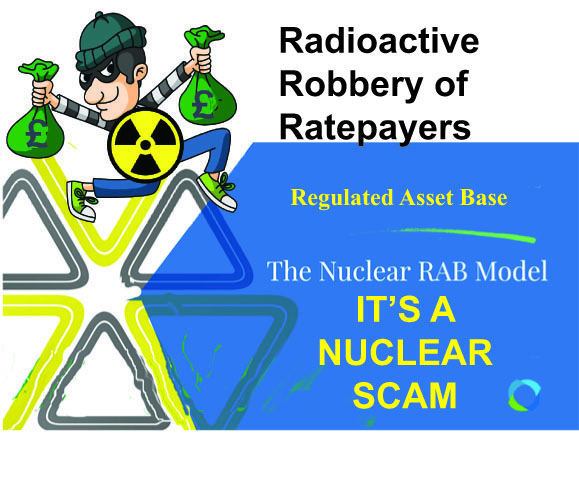
Regulated Asset Base levy will add £10 a year to power bills from 2026,
raising £700m, but will roughly double by 2030, when it will need to raise
£1.4bn a year for Sizewell.
Telegraph 28th Nov 2025, https://www.telegraph.co.uk/business/2025/11/28/hinkley-point-c-nuclear-power-station-add-1bn-a-year-bills/
What? Peace in Our Time in Ukraine?
Whad’ya mean we don’t get to dictate a settlement just because we’re the losers?
This, in a single sentence, is the position shared across the West and in Kiev. Trump’s latest sin — and this plan counts as another in many quarters — is that what he and his people now propose favors simple realities over elaborate illusions.
The Trump regime’s 28–point Ukraine peace plan accepts Moscow’s core concerns as legitimate. That’s essential for any possible settlement of the war, or the broader crisis between Russia and the West.
by Patrick Lawrence, Consortium News, November 26, 2025, https://consortiumnews.com/2025/11/24/patrick-lawrence-what-peace-in-our-time/
There are any number of reasons you may not like, or may even condemn, the 28–point peace plan the Trump regime has drafted to advance toward a settlement of the war in Ukraine.
You may be among those many all across the Western capitals who simply cannot accept defeat on the reasoning — is this my word? — that the West never loses anything, and it certainly cannot lose anything to “Putin’s Russia.”
You may think that President Donald Trump and those who produced this interesting document, which leaked out in the course of some days last week, have once again “caved” to the Kremlin.
The outstanding contribution in this line comes from the ever-mixed-up Tom Friedman, who argued in last Sunday’s editions of The New York Times that Trump is to be compared with Neville Chamberlain and Trump’s plan with the much-reviled British prime minister’s “appeasement” of Hitler via the Munich Agreement of September 1938.
I cannot think of a klutzier interpretation of history or a more useless comparison, given it sheds not one sliver of light on what the document to hand is about.
Or you may stand on principle and attempt the well-worn case that Ukraine is a liberal democracy — let me write that phrase again just for fun — Ukraine is a liberal democracy, altogether “just like us,” and must be defended at all costs in the name of freedom, the rights of the individual, free markets, etc.
Or you may think this is no time for the United States and its European clients to relent in their unceasing effort to destabilize the Russian Federation. Those of this persuasion cannot, of course, acknowledge that Ukraine is nothing more than a battering ram in this dreadful cause, at this point much-bloodied. This dodge tends to swell the ranks of those professing the defense of democracy against autocracy as their creed.
Anyone paying attention to the reactions to the Trump plan among the trans–Atlantic policy cliques and the media that serve them has heard all of this and more these past few days. I find it all somewhere between pitiful and amusing.
Pitiful because those who so wildly overinvested in the corrupt, Nazi-infested regime in Kiev prove incapable of acknowledging that Ukraine lost its war with Russia long ago, and this attempt to subvert Russia now proves a bust.
Amusing because those who so wildly over-invested in the corrupt, Nazi-infested regime in Kiev now squirm at the thought that the victor will have more to say about the terms of peace than the vanquished.
Whad’ya mean we don’t get to dictate a settlement just because we’re the losers?
This, in a single sentence, is the position shared across the West and in Kiev. Trump’s latest sin — and this plan counts as another in many quarters — is that what he and his people now propose favors simple realities over elaborate illusions.
Those asserting that the Trump plan caters to the Kremlin are not altogether wrong, to put this point another way. They are merely wrong in their objections. These 28 points, with many elaborations —No. 12 is followed by 12a, 12b, 12c and so on — indeed give Russia a lot — but not all — of what it has spent years attempting to negotiate.
The missed point is plainly stated: It is a very wise and fine thing finally to recognize the legitimacy of Russia’s perspective. At this point what will serve Russia’s interests will also serve Ukraine’s and the interests of anyone who thinks an orderly world is a good idea.
couple of things to note before briefly considering the contents of the Trump plan. I am working from a copy of the text apparently leaked to the Financial Times last Thursday.
One, it is a working document, nothing more. Trump’s people, notably Marco Rubio, Trump’s secretary of state, and Steve Witkoff, the New York property investor now serving as Trump’s special envoy, had extensive negotiations with Ukrainian and European delegations in Geneva over the weekend. These are to continue.
Trump earlier gave the Kiev regime until Thanksgiving, this Thursday, to accept or reject its terms, and he has not since said anything differently. But the Trumpster has already stated that if things are going well this deadline can be superseded. All is subjective.
Two, Rubio and Witkoff take credit for drafting this plan, reportedly in consultation with Kirill Dmitriev, the chief executive of Russia’s sovereign wealth fund, who seems sometimes to serve as a diplomat close to the Kremlin. But it has Trump’s name on it, and anything with the Trumpster’s name on it is subject to radical and unpredictable revision or withdrawal at any time.
Promise of Enduring Settlement
Setting these matters aside:
There are numerous on-the-ground provisions among its 28 clauses. No. 19 specifies that the Zaporizhzhia nuclear power plant along the Dnieper River, controlled by Russian forces since March 2022, less than a month into the war, will be restarted under the authority of the International Atomic Energy Agency, and the electricity it generates will go equally to Russia and Ukraine. Russia is to allow Ukrainians to use the Dnieper “for commercial activities” (No. 23).
There is to be a prisoner swap (No. 24a) and, a family reunion program (24c). A general amnesty will extend to “all parties involved in the conflict” (No. 26). “Measures will be taken,” No. 24d states, “to alleviate the suffering of victims of the conflict.”
These clauses, boilerplate humanitarian provisions and low-hanging fruit, are worthy enough, but read to me as greeting-card niceties next to the weightier items in this plan.
There is the much-discussed, much-disputed question of territory. Crimea and the Donbas — Luhansk and Donetsk — will be recognized as Russian territory, but de facto as against de jure. Why this distinction, the Russians would be perfectly right to ask.
The land from which Ukrainian forces will be required to withdraw will be designated a demilitarized zone that belongs to Russia, but the Russians will not be permitted to enter it. Again, what is this all about? As to Kherson and Zaporizhzhia, the southerly provinces Russia and Ukraine each partially control, they are to be divided and fixed at the current line of contact.
No. 22: “After agreeing on future territorial arrangements, the Russian Federation and Ukraine undertake not to change these arrangements by force.”
It is hard to say how either side will view these proposed divisions of territory. They award Moscow much of what it has demanded for some time, but in qualified fashion, and take away from Kiev much of what it has long said it will never surrender. So: Not enough for the Russians? Too much for the Ukrainians?
In my read the drafters’ intent here is to set down working language on the territory question as the basis of a lot of horse-trading. If I am correct, the U.S. side is not saying Kiev must accept or reject these terms as written so much as Kiev must agree finally to stop striking poses and do serious business at the mahogany table.
To be noted in this connection: It is long past time to dismiss all the rubbish of the past three years to the effect that Moscow’s intent has been to seize and occupy all of Ukraine. It is as ridiculous as the Europeans’ preposterous assertions — more cynical than paranoiac —that if the Russians are not stopped in Ukraine they will soon be in London and Lisbon.
Zaporizhzhia nuclear plant needs cooperation agreement in event of Ukraine peace, says IAEA
MANILA, Nov 25 (Reuters) – https://www.reuters.com/business/energy/zaporizhzhia-nuclear-plant-needs-cooperation-agreement-event-ukraine-peace-says-2025-11-25/
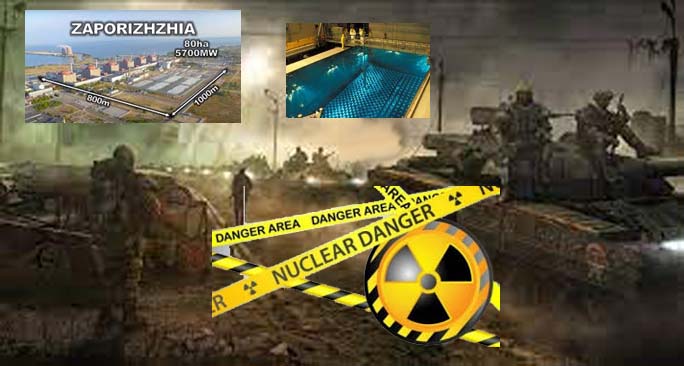
International Atomic Energy Agency chief Rafael Grossi said on Tuesday the Zaporizhzhia nuclear power plant will need a “special status” and a cooperation agreement between Russia and Ukraine if a peace deal is reached.
Russian forces seized the plant, Europe’s largest with six reactors, in the first weeks of Moscow’s February 2022 invasion of Ukraine. The plant produces no electricity, but each side regularly accuses the other of military actions compromising nuclear safety.
“Whatever side of the line it ends up, you will have to have a cooperative arrangement or a cooperative atmosphere,” he said.
Grossi’s comments come as U.S. President Donald Trump’s administration makes an intense new push to end the war.
U.S. and Ukrainian officials are trying to narrow the gaps between them over a draft peace plan that includes provisions for Zaporizhzhia’s future.
Without peace, there is danger of a nuclear accident, Grossi said.
“Until the war stops or there is a ceasefire or the guns are silenced, there is always a possibility of something going very, very wrong,” he said in an interview.
“No single operator can use a nuclear power plant when across the river there is another country which is resisting this and may take action against that.”
A draft version of the U.S.-backed 28-point peace plan for Ukraine, according to a copy seen by Reuters, proposes restarting the plant under IAEA supervision, with electricity output split equally between Russia and Ukraine.
“Shared, not shared – and I don’t want to get into that because it’s political – …it’s something that Ukraine and Russia will be deciding at some point,” Grossi said. “But one thing is clear, the IAEA is indispensable in this situation.”
Zaporizhzhia’s six reactors have been in cold shutdown since 2022, relying on external power lines and emergency systems to prevent a station blackout. The IAEA maintains a continued presence at the site to monitor safety amid ongoing shelling.
We must embrace reality with cheap green energy
Critics will say we can’t afford to transition away from fossil fuels.
When you come face to face with the impacts, it’s reasonable to argue
that we can’t afford not to. But something interesting is starting to
happen. Around four or five years ago, it became cheaper to generate
electricity from the sun and wind than it is by setting things on fire.
Renewable energy has been getting so plentiful, to the point that some
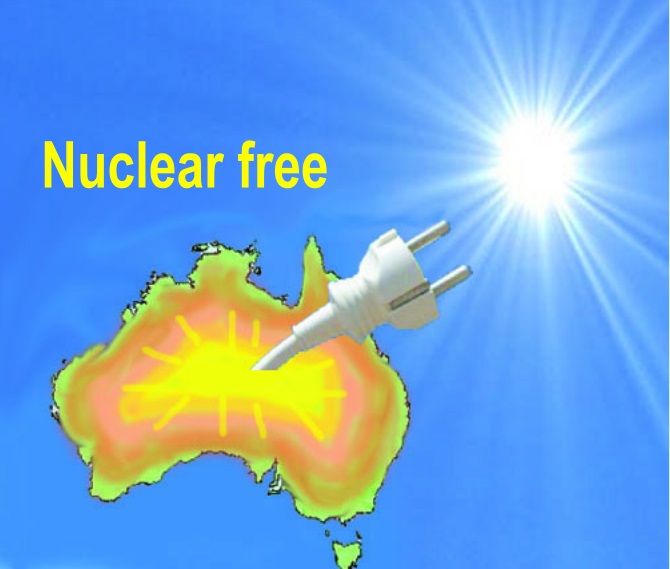
governments are literally giving it away. In Australia, where almost 40% of
homes have solar panels on their roof, the government announced that they
have so much solar energy that from January next year, Australians will get
three free hours of electricity every single day. Whether you have a solar
panel or not, for those three hours, you can charge your car, run the
washing machine or even store up your home battery and run the house for
free all night.
At a time when it was announced that the energy price cap
is set to rise slightly here in the UK, and when the average cost of
heating and running a home is close to £1800, it’s hard not to feel
jealous of those Australians who can look forward to free power for three
hours a day.
Even more astonishingly it’s China which is driving this
change towards cleaner energy. When I lived in China back in the early
2000s, we had toxic smog so thick you couldn’t see the apartment block
across the road. Chinese cities used to dominate the top 10 most-polluted
cities in the world, today they barely feature in that most grubby of
lists.
In May of this year, China installed new solar and wind energy
systems that generated as much electricity as Poland generates all-year
round, from all available sources, and while they continue to construct
more coal-fired power stations, those stations run at most at 50% capacity,
and the country’s carbon emissions are thought to have peaked.
These power stations are used almost as back-up power, because they’re more
expensive to run than solar or wind farms, and once the next breakthrough
comes in the form of battery storage, experts argue that dirty power
stations will grow obsolete. China has figured out that clean energy and
renewables are the way forward, because they will ultimately prove to be
cheaper and more profitable.
They’ve made more money exporting green tech
in the past 18 months than the US has made in exporting oil and gas in that
same period. While America is betting the house on AI being the future,
China has gambled on renewable energy and clean tech being the way forward.
In Europe, people are nipping down to their equivalent of B&Q to pick up
plug-in solar panels they can hang off their balconies. These cheap and
cheerful solutions can provide up to 25% of an apartment’s energy usage,
and are as easy to use as plugging in a toaster. It’s such an innovative
– and useful – development that the UK Government has launched a study
to see if it could be rolled out here.
Regulations would need to be
reformed, but if this could be achieved, we could soon access the kind of
cheap and convenient solution that close to 1.5 million Germans enjoy.
It’s easy to feel overwhelmed when faced with the challenge of a warming
planet, and dither and delay from those in power. But ultimately we’ve
got more power than we think. Environmentalist Bill McKibben argues that
economics dictate that in 30 years’ time we’ll be running this planet
on solar and wind energy anyway. It’s up to us to determine how long we
want to wait to embrace reality, and cheaper energy bills.
The National 26th Nov 2025,
https://www.thenational.scot/politics/25650532.must-embrace-reality-lower-bills-cheap-green-energy/
Update Behind Trump’s Peace Spin: Leaks, Concessions, and a Ukraine Not Ready to Bend
November 26, 2025, By: Joshua S, https://scheerpost.com/2025/11/26/behind-trumps-peace-spin-leaks-concessions-and-a-ukraine-not-ready-to-bend/
Update: In a surprising turn of events, former President Donald Trump has decided to step back from the decision-making process, entrusting his advisers to navigate the current political landscape.
As of this morning, the GOP has pushed back on a deal they say overly favored Russian interests. The Hill reports: “The complaints from GOP senators — combined with blowback from Kyiv and across Europe — apparently spurred Trump to direct his negotiators to work more closely with Ukraine to get a balanced deal, after initially saying Ukraine had until Thanksgiving to agree to a 28-point plan that favored Russia.”
With Sen. John Kennedy (R-La.) saying: “Putin is a pirate, he’s got Stalin’s taste for blood, that’s clear. The man’s got blood under his fingernails. He is not going to come to the table, in my opinion, until you make it more costly for him not to settle than it is to continue to prosecute the war,”
Russian response: Steve Witkoff is expected to travel to Moscow next week to meet with Putin, with his aide Yuri Ushakov saying — as reported by NBC News — that “We, the Russian side, have not yet discussed any documents with anyone specifically… We’ve agreed to a meeting with Mr. Witkoff. I hope he won’t be alone. Other representatives of the U.S. team working on the Ukrainian dossier will be there.”
Needless to say, with the Russians not getting documents or signing anything yet, the Ukrainians needing more guarantees, and President Trump stepping back, peace at this moment doesn’t look bright. But we will be keeping our eyes open for whatever developments may come.
Despite a sunny spin from the Trump administration about the peace deal, obstacles remain, with Zelensky wanting to meet with Trump and Trump writing this on his social media account. “I look forward to hopefully meeting with President Zelenskyy and President Putin soon, but ONLY when the deal to end this war is FINAL or in its final stages,”
CNN sources within the Ukrainian government say “there are still significant gaps between what the Trump administration is asking of Ukraine and what the embattled authorities in Kyiv are prepared to accept.”
Earlier in the day, Bloomberg reported—through leaked audio—that U.S. special envoy Steve Witkoff, a Trump ally, suggested Putin call Trump to congratulate him on a recent Gaza ceasefire and propose a similar 20-point Ukraine plan. In the leaked recording, Witkoff referenced potential concessions like Donetsk and a land swap, urging an optimistic tone to build momentum.
Here is Trump discussing that report and the peace plan.
Navy made legal threats to try and keep nuclear pollution secret

Emails reveal that naval chiefs piled pressure on environment watchdog to hide details of radioactive contamination on the Clyde.
Rob Edwards, November 23 2025, https://www.theferret.scot/navy-try-keep-nuclear-pollution-secret/
The Royal Navy threatened legal action as part of a fierce, high-level, behind-the-scenes battle to block publication of information about radioactive pollution at the Coulport nuclear bomb base on the Clyde.
Files released to The Ferret reveal that over nine days in July and August the navy sent 130 emails, held five meetings and made numerous phone calls urging the Scottish Environment Protection Agency (Sepa) to keep details of the pollution secret.
Naval officials repeatedly warned of legal action, spoke of the need to “calm some nerves” and said they were “deeply uncomfortable” with information proposed for release. One was anxious to avoid “another crazy Friday”, while another complained of becoming a “zombie” after a long week.
Top naval commanders also had an online meeting with the Scottish Information Commissioner, David Hamilton, late one evening to try and persuade him to reverse his decision to reject most of their pleas for secrecy.
But all these eleventh-hour efforts failed. As The Ferret reported on 9 August, Sepa released 33 files revealing that Coulport had polluted Loch Long on the Clyde with radioactive waste after old water pipes burst and caused a flood in 2019.
Campaigners accused the navy of “harassing” Sepa, and praised Hamilton for refusing to be “intimidated”. Politicians demanded less secrecy from the Ministry of Defence (MoD).
The MoD said it had to “balance” the public’s right to know with releasing information which would compromise national security. Sepa insisted it was firmly committed to transparency.
Naval commanders ‘getting concerned’
The Ferret first made a freedom of information request for files on radioactive problems at Coulport and Faslane in 2019, and then again in 2023 and 2024. But despite multiple reviews, most files were kept secret for national security reasons, after Sepa consulted the MoD.
The secrecy was overturned, however, after we appealed to Hamilton. In June 2025 he ordered Sepa to release most of the files by 28 July, saying they threatened “reputations” not national security.
But the release was delayed to 4 August after the MoD pleaded for more time to assess “additional national security considerations”. Sepa eventually released the 33 files to The Ferret late on 5 August.
Now emails released by Sepa and Hamilton in response to further freedom of information requests from The Ferret have disclosed what was happening behind the scenes.
On working days between 24 July and 5 August the Royal Navy sent an average of more than 14 emails a day to Sepa, to try and limit the amount of information released. Naval officials also frequently phoned and met with Sepa.
On 30 July the MoD proposed a series of redactions to the documents that were scheduled to be released. They “represent the minimal changes which are required in order to protect national security,” it argued.
The MoD tried to add to their shameful history of nuclear cover-ups by harassing officials with false claims of national security, hoping we’d never know radioactivity was negligently leaked from Coulport.
Early on 31 July a naval official asked Sepa to forward the MoD’s proposed redactions to Hamilton, apologising for failing to make that clearer earlier. “It’s been a long week and I resemble a zombie!” the official wrote.
Sepa assured the MoD it had included “all MoD redactions” in a submission to Hamilton.
But then an email from a naval official later on 31 July said the “chain of command are getting concerned” about “timelines” if Hamilton rejected the redactions. The official warned of legal action, adding: “Grateful for your advice to calm some nerves.”
The kind of legal action the navy was considering is unclear, as key text has been redacted. But the only way of challenging Hamilton’s decisions is by appealing to the Court of Session in Edinburgh on a point of law.
Another email on 1 August again warned Sepa that the MoD was “likely to challenge” the release of information that “adversely prejudiced” national security. It asked Sepa to “withhold release of the relevant documents while we follow due process”.
On 4 August Hamilton rejected the majority of the MoD’s proposed redactions. The MoD again told Sepa that it was considering action “to prevent disclosure of the documents”, and asked Sepa not to release them “until this decision has been made”.
But Sepa responded saying that it was planning to release the information as ordered by Hamilton. It was not “tenable” to further delay the release “from a reputational risk perspective”, Sepa said.
MoD meetings with Hamilton
The MoD also requested an “urgent” meeting with Hamilton and his staff on 25 July to consider MoD “concerns”. Another meeting was requested by the MoD on Thursday 31 July, with one official keen to “prevent another crazy Friday”.
On 1 August the navy’s director of submarines, Rear Admiral Andy Perks, told Hamilton that he had spoken directly to Sepa’s chief executive, Nicole Paterson, to try and find “a pragmatic way forward”. He stressed the need to “maintain national security backstops throughout”.
Perks praised Hamilton’s “continued support and pragmatism”, adding that it had been “greatly appreciated” by the First Sea Lord, General Sir Gwyn Jenkins.
On 4 August, after learning that Hamilton had rejected most of the MoD proposed redactions, Perks emailed again asking for another meeting that evening “to find a pragmatic way forward”.
In reply Hamilton said he was legally not allowed to discuss the case with third parties. “Much of the information that the Royal Navy would like to withhold is already in the public domain,” he said.
“As a courtesy I am happy to speak later tonight but with the understanding that I can’t discuss the case in detail.” A meeting took place just after 8pm that evening, after Hamilton had returned from a karate class.
After Sepa released files to The Ferret on 5 August, Hamilton pointed out that a few details had been wrongly redacted. Sepa then had to re-release the files with those redactions removed.
When this was flagged to the MoD on 8 August, it said it was “deeply uncomfortable”. But it added: “We have objections but we won’t appeal further.”
Aggressive manoeuvres
The Campaign for Freedom of Information in Scotland was pleased that Hamilton “refused to be intimidated” by the MoD’s “aggressive manoeuvres”. The public interest had finally been served by disclosure, said campaign director, Carole Ewart.
She thought the MoD might have “overlooked” the fact that Scotland’s environmental information law is tougher than that south of the border. Details can only be kept secret in Scotland if they “prejudice substantially” national security, but UK law says they can remain hidden if they just “adversely affect” national security.
The Scottish Campaign for Nuclear Disarmament thanked Hamilton for acting “without fear or favour” in the public interest. “The MoD tried to add to their shameful history of nuclear cover-ups by harassing officials with false claims of national security, hoping we’d never know radioactivity was negligently leaked from Coulport,” said campaign chair, Lynn Jamieson.
The SNP MSP and chair of the cross-party group on nuclear disarmament, Bill Kidd, said that the Scottish Parliament’s net zero and energy committee would be investigating transparency over pollution at Coulport and the neighbouring Faslane nuclear submarine base.
There were “worrying undercurrents of MoD behaviour in relation to secrecy over radioactive pollution” that needed to be investigated, he added.
The former Scottish Green leader, Patrick Harvie MSP, accused the MoD of making a “totally inappropriate intervention” in an attempt “to cover up and distract from what were very serious failures.”
We must balance the public’s right to know with releasing information which would compromise national security into the possession of our adversaries.
The MoD defended its intervention as “legitimate”, pointing out that it was “voluntarily” regulated by Sepa and welcomed the scrutiny. “We must balance the public’s right to know with releasing information which would compromise national security into the possession of our adversaries,” said an MoD spokesperson.
“We explored in a professional way a range of options to ensure we struck the right balance while maintaining the security of the British people which is imperative. The redaction of certain information highlights the importance of consulting us to ensure the protection of national security-sensitive information.”
Sepa stressed that it was “firmly committed” to transparency. “Our approach is always that publication is the default and withholding information is the exception, only when it is necessary, proportionate and legally justified,” said the agency’s chief officer, Kirsty-Louise Campbell.
“This includes careful consideration of national security and public safety – particularly for sites handling radioactive substances, whether military or civilian.”
The Scottish Information Commissioner, David Hamilton, pointed out it was Sepa’s responsibility to make representations to him on The Ferret’s FoI appeal. “In the unusual circumstances of this case, however, and, as a responsible regulator, I also spoke with Royal Navy commanders to ensure I was fully aware of any relevant national security issues,” he said.
“After these discussions, I advised Sepa that I was agreeable to a small number of minor redactions in the interests of national security. I should note that, throughout this process, I felt under no pressure to review my decision or make redactions – all of which were founded in Scotland’s environmental transparency laws.”
The 109 files released by the Scottish Environment Protection Agency can be accessed on its disclosure log by searching for F0199867. The 13 files released by the Scottish Information Commissioner are available here.
1 This Month


31st January – Challenging the War Machine – a DECLASSIFIED UK SUMMIT


Website of the Week
Now until to February 10, 2026 Radioactive waste storage in France: the debate is finally open! How to participate?
-
Archives
- January 2026 (211)
- December 2025 (358)
- November 2025 (359)
- October 2025 (377)
- September 2025 (258)
- August 2025 (319)
- July 2025 (230)
- June 2025 (348)
- May 2025 (261)
- April 2025 (305)
- March 2025 (319)
- February 2025 (234)
-
Categories
- 1
- 1 NUCLEAR ISSUES
- business and costs
- climate change
- culture and arts
- ENERGY
- environment
- health
- history
- indigenous issues
- Legal
- marketing of nuclear
- media
- opposition to nuclear
- PERSONAL STORIES
- politics
- politics international
- Religion and ethics
- safety
- secrets,lies and civil liberties
- spinbuster
- technology
- Uranium
- wastes
- weapons and war
- Women
- 2 WORLD
- ACTION
- AFRICA
- Atrocities
- AUSTRALIA
- Christina's notes
- Christina's themes
- culture and arts
- Events
- Fuk 2022
- Fuk 2023
- Fukushima 2017
- Fukushima 2018
- fukushima 2019
- Fukushima 2020
- Fukushima 2021
- general
- global warming
- Humour (God we need it)
- Nuclear
- RARE EARTHS
- Reference
- resources – print
- Resources -audiovicual
- Weekly Newsletter
- World
- World Nuclear
- YouTube
-
RSS
Entries RSS
Comments RSS
 nuclear-news