UK approves Ukrainian missile strikes deep inside Russia – Guardian

According to The Guardian, US Secretary of State Antony Blinken “gave the strongest hint yet” about permitting Ukraine to use long-range ATACMS missiles against Russia during his visit to Kiev on Wednesday. The decision is “understood to have already been made in private,” the British outlet claimed.
https://www.rt.com/news/603878-ukraine-storm-shadow-missiles/ 12 Sept 24
The Western media is manufacturing public consent for the move, according to a Russian senator
Washington and London may have already decided to let Kiev use long-range missiles for strikes deep inside Russia and are now seeding the narrative through the media, Russian Senator Aleksey Pushkov has said.
Britain has already given the green light for the use of Storm Shadow missiles, The Guardian reported on Wednesday, citing anonymous government sources. London, however, is not expected to announce the move publicly, the sources claimed.
“The decision to strike Russian territory is clearly being prepared,” Pushkov wrote on Telegram on Wednesday. “There are too many conversations and hints about it for it to be reversed. Even if it has not been made yet, it looks like it will be a matter of days. The leak via The Guardian is not accidental. Public opinion is being prepared.”
Limitations on the use of Western-supplied weapons were originally put in place to allow the US and its allies to claim they were not directly involved in the conflict with Russia, while arming Ukraine to the tune of $200 billion. Kiev has been clamoring for the restrictions to be lifted since May, however.
According to The Guardian, US Secretary of State Antony Blinken “gave the strongest hint yet” about permitting Ukraine to use long-range ATACMS missiles against Russia during his visit to Kiev on Wednesday. The decision is “understood to have already been made in private,” the British outlet claimed.
Blinken “signaled” the potential shift from Washington on Tuesday, according to Bloomberg, by bringing up Iran’s alleged delivery of missiles to Moscow.
UK Foreign Secretary David Lammy, who tagged along with Blinken to Kiev, has said the Iranian missile delivery was a “significant and dangerous escalation” that influenced the thinking in London and Washington.
The escalator here is [Russian President Vladimir] Putin. Putin has escalated with the shipment of missiles from Iran. We see a new axis of Russia, Iran and North Korea,” The Guardian quoted Lammy as saying.
Iran has denied sending any missiles to Russia, calling the accusations “psychological warfare” and particularly rich coming from countries heavily involved in arming Ukraine.
An open letter from 27 US congressmen and senators sent to President Joe Biden on Wednesday did not mention Iranian missiles at all. Instead, it claimed that Ukraine’s incursion into Russia’s Kursk Region “changed the very nature of the war” and argued that “Ukraine is not intimidated by Putin’s tyranny, and in the defense of liberty, we should not be either.”
The US “continues to test the limits of our tolerance for hostile steps,” and is “paving the way to World War III,” the Russian ambassador to the US, Anatoly Antonov, told reporters on Wednesday.
“It is impossible to negotiate with terrorists. They must be destroyed,” Antonov added. “As in the years of the Great Patriotic War, fascism must be eradicated. And the goals and objectives of the special military operation must be fully achieved. No one should doubt that it will be so.”
Putin has previously warned NATO members to be aware of “what they are playing with” when discussing plans to allow Kiev to strike deep inside Russian territory using weapons provided by the West. The Russian military is “taking appropriate countermeasures,” according to Kremlin spokesman Dmitry Peskov, while Russian Foreign Minister Sergey Lavrov called the use of Storm Shadow missiles inside Russian territory “playing with fire.”
‘Blinken, Get Lost!,’ Says Polish MEP Grzegorz Braun
Grzegorz Braun’s fiery remarks highlight growing divisions within Poland over its involvement in the Ukraine conflict. As tensions escalate, Poland finds itself caught between supporting Western allies and safeguarding its security against potential Russian retaliation. Watch an exclusive on India Today Global.
Grzegorz Braun, a Polish member of the European Parliament, recently made a strong statement opposing Poland’s alignment with the United States in the ongoing war in Ukraine. He expressed his dissatisfaction with the U.S. Secretary of State’s involvement, stating,
“Blinken, go home as soon as possible. Get lost! We don’t want you here. We don’t want Polish people paying and dying for your wars.”
Die Welt predicts a mass exodus of people from Ukraine in winter
Die Welt predicts a mass exodus of people from Ukraine in winter
▪️ The article states:
Rolling power outages are already occurring across the country. In the summer, they are perhaps a minor inconvenience, and only cause real problems when it comes to refrigeration units or storage facilities. However, in the winter, such a situation could lead to a large-scale catastrophe. Millions of people would flee en masse.
▪️ The publication notes that only half of Ukraine’s energy production capacity remains, and the situation could become extremely difficult by winter.
UK sent Kyiv large supplies of old military equipment, watchdog finds
One defence official, not involved in the audit, said: “The war has tested our stockpiles, but it’s a good thing for us that we have cleared out old kit and can now replace it with new equipment.”
Defence ministry dispatched kit ‘due to be scrapped or replaced’, according to National Audit Office
Ft.com John Paul Rathbone in London, September 11 2024
Much of the military aid the UK has given to Ukraine has consisted of old equipment, such as army boots that otherwise would have had to be thrown away, according to a spending watchdog.
Military gear that was “often due to be scrapped or replaced” was prioritised by the Ministry of Defence because it was believed to have “immediate military value” to Ukraine — but sending it to Kyiv also “reduced waste or costs relating to disposal”, the National Audit Office said on Wednesday.
The ministry also used other “innovative ways of sourcing military equipment”, such as reverse-engineering replacement tracks for Soviet-era T72 tanks from samples at a tank museum in Dorset, the NAO noted.
The findings come as some of Kyiv’s western allies tire of supporting Ukraine almost three years after Russia launched its full-scale invasion. The £7.8bn of military aid the UK has pledged or sent to Kyiv make it the third-largest supplier of western support to Ukraine after the US at £56.5bn, and Germany at £16.2bn, the NAO said. The UK has pledged to continue providing £3bn a year of military aid. Other western allies have also given ageing equipment to Kyiv: in one recent US example, 10 donated vehicles ostensibly worth more than $7mn had a combined book value of zero.
However, ageing military equipment cleared from British stockpiles was only a small portion of total UK aid sent to Ukraine, because it had a book value of just £171.5mn versus an estimated replacement cost of £2.7bn. Three-quarters of it also came during the first year of the invasion. The UK spent a further £2.4bn on procuring equipment, contributed £500mn to an international fund, and spent £830mn on operational support, some channelled via Nato………………………………………………………………………………………………………………………………..
One finding concerned the value of UK military supplies. The report cited 17,000 pairs of army boots, which the UK donated in March 2022. The shoes were nearing the end of their usable life and, if not sold, “would have been sent to landfill”. In another example, the NAO said the 14 Challenger 2 tanks sent in 2023 had a book value of just £17mn, compared to their original purchase price at the end of the 1990s of £47mn.
One defence official, not involved in the audit, said: “The war has tested our stockpiles, but it’s a good thing for us that we have cleared out old kit and can now replace it with new equipment.”
The UK has set aside £2.5bn to replenish its stockpiles depleted by the war. In April, the previous Conservative government pledged £10bn in investment to boost munitions productions over the next decade.
Bolstering Britain’s defence industry is also expected to be a priority in the “root and branch” defence review launched by the Labour government in July………………………….. https://www.ft.com/content/f44bf7d0-0895-4f63-9fce-d3de8e686b57
More than 200 Russian nuclear submarines have been dismantled.
Rosatom has said that its work to resolve nuclear legacy issues in
Russia’s Far East has been successful, including the dismantling of dozens
of decommissioned nuclear-powered submarines. In total, the state nuclear
corporation said, 202 Russian nuclear-powered submarines decommissioned
before 2022 have been dismantled, including 82 from the country’s Far East.
It added that all used nuclear fuel has been removed from the region. The
reactor compartments of the dismantled nuclear submarines have been placed
in specially constructed containers in a secure site on land, and are
subject to radiation monitoring and maintenance, such as checking the
condition of the anti-corrosion protective coating, the company said.
World Nuclear News 11th Sept 2024
US, UK to announce expansion of NATO weapons strikes inside Russia
Andre Damon, 11 Sept 24 https://www.wsws.org/en/articles/2024/09/12/lsqq-s12.html
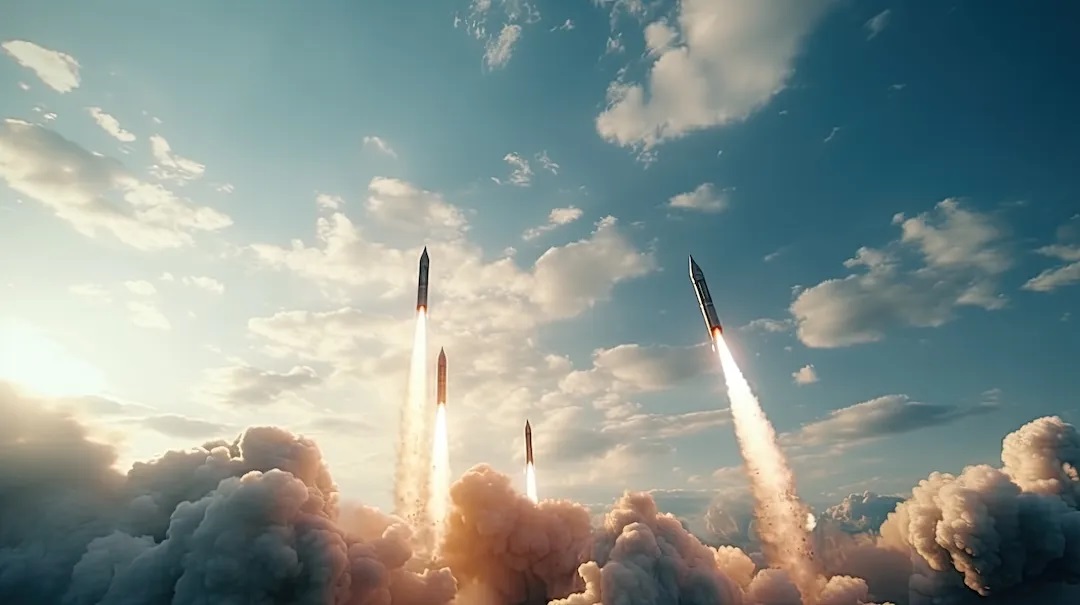
The United States and United Kingdom will imminently announce a major expansion of Ukrainian strikes deep inside Russia using NATO weapons, the Guardian and Politico reported on Wednesday.
The announcement will come just days after Ukraine launched its largest drone barrage deep inside Russian territory on Monday, for the first time killing someone in Moscow and destroying dozens of homes in the capital city of a nuclear-armed state.
The move was discussed between US Secretary of State Antony Blinken and British Foreign Minister David Lammy during their meetings with Ukrainian officials in Kiev on Wednesday.
When asked whether “Ukraine needs this long-range capability of striking into Russian territory,” Blinken replied that “we discussed long-range fires” with Ukrainian officials and that it would be further discussed when US President Joe Biden meets UK Prime Minister Keir Starmer in Washington on Friday.
He continued, “From day one, as you heard me say, we have adjusted and adapted as needs have changed, as the battlefield has changed, and I have no doubt that we will continue to do so as this evolves.”
Regarding the discussions, the Guardian reported, “British government sources indicated that a decision had already been made to allow Ukraine to use Storm Shadow cruise missiles on targets inside Russia, although it is not expected to be publicly announced on Friday when Starmer meets Biden in Washington DC.”
When asked on Tuesday about allowing expanded strikes inside Russia, Biden replied, “We’re working that out now.”
Politico cited Senate Foreign Relations Committee Chair Ben Cardin as saying he “would not be surprised” if the decision had already been made. The report continued, “Wednesday’s joint visit to Kyiv by Blinken and Lammy to meet Zelenskiy would not be taking place had there been no positive decision regarding Storm Shadow, the sources added.”
The news outlet noted, “But it would be considered unnecessarily provocative to make a public announcement about long-range missiles in Kyiv.”
In other words, the announcement will take place in a proverbial “Friday night news dump” to make the fact that NATO weapons will be raining down on Russian cities appear less “provocative” and to keep this development, which threatens to dramatically escalate the war, out of public consciousness.
In a statement on X, Lammy declared, “I am in Kyiv today with @SecBlinken to reiterate our united and ironclad support for Ukraine. We must stand up to Vladimir Putin’s imperialism. Our collective security depends on it.”
Blinken framed the massively provocative action being prepared by the US and UK as a response to an “escalation” by Russia. “And we’ve now seen this action of Russia, Russia acquiring ballistic missiles from Iran, which will further empower their aggression in Ukraine. So if anyone is taking escalatory action, it would appear to be Mr. Putin and Russia,” Blinken said.
On Monday, a group of leading House Republicans published a letter to President Biden calling for the lifting of all remaining restrictions on the use of NATO-provided weapons from Ukraine.
The letter demanded, “We write to urge you to lift the remaining restrictions on Ukraine’s use of U.S.-provided long-range systems, specifically Army Tactical Missile Systems (ATACMS), against legitimate military targets deeper inside Russia.”
The letter declared that “concerns about escalation” have been “consistently invalidated since day one of the war.” It asserted, “Neither Ukraine’s use of U.S.-provided weapons in Russia nor its military incursion into Russia’s Kursk region—the first foreign occupation of Russian territory since World War II—has triggered a Russian escalatory response.”
Commenting on the reporting by the Guardian, Russian Senator Aleksey Pushkov wrote on Telegram, “The decision to strike Russian territory is clearly being prepared. … There are too many conversations and hints about it for it to be reversed. Even if it has not been made yet, it looks like it will be a matter of days. The leak via The Guardian is not accidental. Public opinion is being prepared.”
Anatoly Antonov, the Russian Ambassador to the US, declared that Washington “continues to test the limits of our tolerance for hostile steps” and is “paving the way to World War III.”
On Wednesday, former Kremlin adviser Sergey Karaganov gave an interview to the Kommersant daily in which he urged the country to be prepared to use nuclear weapons in response to NATO attacks. “We have allowed the situation to deteriorate to a point when our adversaries believe we will not use nuclear weapons under any circumstances. … Having nuclear weapons without being able to convince your enemies that you are ready to use them is suicide.”
He added, “The main goal of a doctrine should be in convincing all current and future enemies that Russia is ready to use nuclear weapons.” He added, “It’s high time we stated that any massive strikes against our territory give us a right to respond with a nuclear strike.”
The massive escalation of the US-NATO war against Russia forms the backdrop of Wednesday’s presidential debate in which Vice President Kamala Harris pledged that her candidacy would be dedicated to “ensuring we have the most lethal fighting force in the world” in order to defend America’s “standing” in the world.
White House finalizing plans to expand where Ukraine can hit inside Russia
The talks have been closely held among a small group of officials inside the White House.
Gunners fire at a Russian position in the Kharkiv region, on April 21, 2024, amid the Russian invasion in Ukraine. | Anatolii Stepanov/AFP via Getty Images
Politico, By Erin Banco, Joe Gould and Paul McLeary 09/11/2024
The White House is finalizing a plan to ease some restrictions on how Ukraine can use U.S.-donated weapons and better protect itself from Russian missiles, according to a Western official and two other people familiar with the discussions.
The talks have been closely held among a small group of officials inside the White House, one of the people involved in the debate said. All were granted anonymity because they were not authorized to speak publicly about the conversations.
The details of the plan are still coming together. But officials in Washington, London and Kyiv have in recent days discussed expanding the area inside Russia that Ukraine can hit with American and British-made weapons. They’ve also discussed how to prevent additional cross-border attacks by Russia, including the U.S. agreeing to allow Ukraine to use U.K. long-range missiles that contain American parts to strike inside Russia.
The current conversations between Washington and Kyiv mark a significant change in tenor from the ones the two countries held earlier this summer. And it signals the Biden administration may be ready to finally agree to Kyiv’s requests to enable Ukraine’s military to more forcefully defend itself and to make more aggressive moves inside Russia.
The National Security Council declined to comment.
In an interview with PBS Newshour in June, national security adviser Jake Sullivan indicated that the U.S. might be willing to expand the area it would allow Ukraine to use U.S. weapons in Russia.
“It is not about geography. It is about common sense,” he said. “If Russia is attacking or about to attack from its territory into Ukraine it only makes sense to allow Ukraine to hit back.”
When asked if the administration would lift restrictions on long-range weapons, Biden told reporters Tuesday: “We’re working that out now.”…………………………………………………………..
U.S. officials have also pointed out that since the Army no longer buys Army Tactical Missile Systems, the inventory is limited and is drawing close to where the U.S. would be concerned about its own stockpile. The maker of the missile, Lockheed Martin, is still producing several hundred a year but they are slated for sale to allies overseas. The replacement for the weapon, the Precision Strike Missile, is only beginning to be fielded and not in numbers to fully replace the missiles currently being expended.
Secretary of State Antony Blinken and his British counterpart David Lammy were in Kyiv on Wednesday to huddle with Ukrainian President Volodymyr Zelenskyy to discuss the weapons issue, along with Ukraine’s incursion into Russia and recent Russian advances in Ukraine.
British defense leaders have been in discussions with their U.S. counterparts for weeks about getting the U.S. to sign off on Ukraine using British Storm Shadow missiles to strike inside Russia. No decision has been reached, according to one person familiar with the talks, but the issue will be a part of the discussion between President Joe Biden and U.K. Prime Minister Keir Starmer when the two meet at the White House on Friday………………………………………..
It’s unclear if the Biden administration has decided to lift its restrictions on long-range Army Tactical Missile Systems, which the U.S. has transferred to Ukraine. It has previously told Ukraine it does not want its military using those weapons to strike deep inside Russia………………..
Biden’s earlier decision to allow Ukraine the ability to conduct limited strikes inside Russia came with several caveats, including that Kyiv could only use the weapons in and around the Kharkiv region. The U.S. eventually expanded that geographic plane largely so that Ukraine could shoot down Russian glide bombs………………………………………………………………….. more https://www.politico.com/news/2024/09/11/white-house-weapons-ukraine-00178673
Biden administration split over Ukraine’s use of US weapons inside Russia
Pentagon and intelligence community caution against deployment of ATACM missiles by Kyiv
Ft.com Felicia Schwartz in Washington, September 11 2024
US President Joe Biden has said he is considering a request by Ukraine to use weapons provided by the US to strike deep inside Russian territory. Biden’s admission on Tuesday comes as his government is split over whether to allow the use of US weapons, with the state department, which is more open to Kyiv’s request, pitted against the Pentagon and the US intelligence community. “We’re working that out right now,” Biden said when asked by reporters whether he would allow Ukraine to use American long-range Army Tactical Missile System, or ATACMS, to target sites inside Russia.
Ukrainian President Volodymyr Zelenskyy has repeatedly called for restrictions on western-supplied, long-range weapons to be lifted so his military can strike Russian airfields and missile launchers, as well as the ammunition depots, fuel storage and command and control centres that are critical to Moscow’s war. Washington in recent months has shifted away from a blanket ban on the use of US-supplied weapons to attack Russian territory, allowing Ukraine to deploy them for defensive strikes. But Zelenskyy is pressing the US and other western countries to permit the use of long-range weaponry deep inside Russia as part of his strategy of increasing the cost of the invasion for President Vladimir Putin.

Antony Blinken, US secretary of state, is travelling to Ukraine this week with UK foreign secretary David Lammy to meet Zelenskyy and discuss his request and show support for their ally. Ahead of the visit, Blinken told a press conference in London “we’ll be listening intently to our Ukrainian partners. We’ll both be reporting back to the [British] prime minister, to President Biden in the coming days.” He added that Biden would discuss the matter with Keir Starmer, the UK prime minister, when he visits Washington on Friday.
The UK has urged the US to grant Ukraine permission to use long-range weapons provided by its western allies deep inside Russia and believes Kyiv should be able to target Russian sites and assets. US sign-off is needed in order for Ukraine to use the Storm Shadow missiles provided by the UK for long-range strikes inside Russia. While the US state department is more receptive to arguments from Ukraine and many of its western allies, the Pentagon and US intelligence community have cautioned against the use of the long-range weapons deep inside Russia.
The latter recently assessed that 90 per cent of Russian aircraft have been relocated to airfields at least 300km away from Ukrainian-controlled territory, outside of the range of ATACMS………………………………………. https://www.ft.com/content/48289996-e1bf-4c3e-befb-031698e89e1b
Support for nuclear is “money down the drain” – Rystad

(Montel) The expansion of solar energy will make nuclear power obsolete and push it out of the electricity market by the 2030s, making financial support for nuclear power a waste of money, the CEO of consultancy Rystad Energy told Montel on Tuesday.
Reporting by: Elias Huuhtanen, Montel News 27th Aug 2024
Support schemes for nuclear, like the financing model recently mulled by Sweden, was throwing “money down the drain”, said Jarand Rystad on the sidelines of the ONS conference in Stavanger.
Even newer technologies like small modular reactors (SMR) would become “very irrelevant, very fast” because of the changing electricity markets, Rystad said.
“In the 2030s and 40s energy will actually be much cheaper than today and integrated into the system with storage in a different manner. I think [nuclear] is a technology of the past,” he said.
As well as being “tremendously expensive”, nuclear did not have the same flexibility as renewables, Rystad noted, as ramping down nuclear production during periods of low demand did not bring the same cost savings as solar.
Renewables support
Instead, renewables combined with flexible demand had “cracked the code” to create “energy abundance”, he said.
“The big problem now is you have too much energy. It will be irrelevant to have this kind of baseline [from nuclear],” Rystad said………………………………. https://montelnews.com/news/1aa921fb-7184-4eb1-8dcd-2e1ad45de3df/support-for-nuclear-is-money-down-the-drain-rystad
Nuclear vs Energy Storage

The Chair of the Nuclear Free Local Authorities has made a plea to the new
Minister of State for Energy for the Department of Energy Security and Net
Zero to prioritise investment in energy storage capacity alongside
renewables as a key component in making Britain a Net Zero nation. Energy
storage, both short- and long-term, is often an unsung, but essential,
element to achieving – as is the Labour Government’s stated ambition
– the goal to make the UK a ‘clean, green energy superpower’.
Numerous academic studies have demonstrated that this is not only possible
solely through investment in renewables, but that it can be achieved at a
cost to the taxpayer that is £100 billion lower than one which embraces
nuclear energy.
The NFLA’s Scotland Policy Advisor Pete Roche has just
written an excellent briefing published under the No2 Nuclear banner
titled, ‘Energy Storage and Flexibility in a 100% Renewable Energy
System’, which highlights its criticality in capturing the surplus energy
often generated, but unused, by renewables as well is in more effectively
managing energy demand against supply.
Dr. M.V. Ramana, the Simons Chair in
Global Disarmament and Human Security at the University of British
Columbia, described the balance between generation, storage and management:
“We have learned how to manage grids with high proportions of renewable
sources. To balance this variability, we must invest in a mix of renewable
energy technologies across various regions, and in battery and other
storage technologies to store excess energy. In addition, we need to shape
electricity demand to more closely match supply.”
NFLA 12th Sept 2024
‘Let’s Just Fight’: How Britain Prefers War Over Peace in Ukraine

Boris Johnson avoided promoting a compromise peace in Ukraine after Russia invaded. Now, Labour continues to help prolong the conflict to secure British interests.
DECLASSIFIED UK, MARK CURTIS, 9 September 2024
Last week, defence secretary John Healey announced that the UK “will continue to step up our support to help Ukraine achieve victory” in its war with Russia.
Both he and foreign secretary David Lammy have repeatedly said “Labour will stand with Ukraine for as long as it takes to win”.
When President Volodymyr Zelensky’s Ukrainian forces conducted an incursion into Russia’s Kursk region last month, Healey praised the move as “bold”, saying it put Russian president Vladimir Putin “under pressure”.
Equipment used in that offensive included UK-supplied Challenger tanks sent to Ukraine last year.
Prime minister Keir Starmer has also told Zelensky he is willing to allow Ukraine’s use of UK-supplied long-range missiles to hit targets inside Russia – provided the US agrees to it.
Despite Labour’s public relations about “change” during the general election, Lammy has consistently said that “with Labour there will be no change in the UK’s financial, military, diplomatic and political support for Ukraine”.
The consequences of this are hard to overstate. Since Russia’s brutal invasion, inflicting untold misery on millions of Ukrainians, bombarding civilians and committing war crimes, UK governments have been overwhelmingly focused on one thing – “winning” the war.
Yet one thing Whitehall has conspicuously avoided is making serious attempts at promoting a compromise peace that would end the fighting.
Indeed, one casualty of Ukraine’s recent incursion into Russia is that it derailed secret talks to negotiate an agreement halting strikes on energy and power infrastructure, according to the Washington Post.
There are specific reasons Whitehall prefers war over peace in Ukraine. It is worth going back to the very first chance negotiators had to end this devastating conflict soon after Russia invaded.
Scuppering peace prospects
There is considerable evidence showing the UK helped scupper the prospects for peace within a few weeks of Russia’s invasion in February 2022.
The following month, direct peace negotiations between Ukrainian and Russian delegations and mediation efforts by the then Israeli prime minister, Naftali Bennett, created a genuine chance for ending the war peacefully.
Meeting in Turkey, the two sides produced the Istanbul communiqué in late March 2022 in which Ukraine promised not to join Nato or allow foreign military bases on its soil. For its part, Russia promised to withdraw its occupation troops from Ukraine, although not from the Donbas region or the Crimea.
David Arakhamia, the parliamentary leader of Zelensky’s “Servant of the People” party who led Ukraine’s delegation in the talks, later revealed that Moscow was “ready to end the war if we took neutrality… and made commitments that we would not join Nato”.
This was the key point”, he said in an interview in 2023.
Reports suggest Zelensky was then prepared to give up Nato membership and that he understood this was the key issue for Moscow. “And as far as I remember, they started a war because of this”, he said at the time.
‘Permanent neutrality’
Russia and Ukraine appeared relatively close to a deal that would “have ended the war and provided Ukraine with multilateral security guarantees, paving the way to its permanent neutrality and, down the road, its membership in the EU”, according to one detailed study…………………………………………………………………………………………………………..
‘Keep fighting and dying’
In their summit in Brussels on 24 March 2022, Nato decided to oppose peace negotiations until Russia had fully withdrawn all its troops from Ukraine.
By early April, the Washington Post was reporting that “For some in Nato, it’s better for Ukrainians to keep fighting and dying than to achieve a peace that comes too soon or at too high a price for Kyiv and the rest of Europe.”
Former German chancellor Gerhard Schröder, who acted as one of the mediators in the Istanbul talks, later said that “nothing could happen because everything else was decided in Washington…. the Ukrainians did not agree to peace because they were not allowed to. They first had to ask the Americans about everything they discussed.”
Enter Boris Johnson
As talks were approaching a possible agreement, UK prime minister Boris Johnson arrived unannounced in Kyiv on 9 April 2022.
A report in Ukrainska Pravda noted that Johnson brought two messages: “The first is that Putin is a war criminal, he should be pressured, not negotiated with”, and “the second is that even if Ukraine is ready to sign some agreements or guarantees, they [the collective West] are not”.
Before his visit, Johnson “instructed” Zelensky “not to make any concessions to Putin”, columnist Simon Jenkins wrote in the Guardian.
David Arakhamia said that Johnson had come to Kyiv to inform Ukrainian officials the West wouldn’t sign any agreement with Moscow, instead urging: “let’s just fight.”……………………………………………..
Peace feelers
The March/April 2022 negotiations may have produced the best opportunity to bring about a compromise peace, but there have been others since.
It is difficult to gauge whether the peace feelers put out by the Kremlin over the past two and half years are simply part of its propaganda strategy or serious attempts to end the fighting. The reason is that they have never been seriously tested by Washington and London……………………………………………………………..
Total war
The US and UK have long publicly rejected talks based on anything other than Russia’s complete withdrawal from Ukraine.
This principled position might have merit but for the real world intervening. Aggressors should surely not be rewarded in international relations, but this is something that applies as much to the US/UK in Iraq or Libya, or Israel in the occupied Palestinian territories, as to Russia in Ukraine.
Only in the case of Ukraine, however, has the UK held to the high-minded position that Moscow must withdraw all its forces before any peace moves can be considered.
The second obvious truth is that holding to the position of regaining full control over all Ukrainian territory – including the disputed areas in the Donbas and the Crimea – is simply a recipe for ongoing war.
As leading analyst Anatol Lieven has written, “To recover everything it has lost since 2014 looks impossible. It would require the total defeat of the Russian military.”
Yet this appears to be what Keir Starmer wants. “This terrible conflict must end with the defeat of Putin in Ukraine”, the then UK opposition leader said in the House of Commons in 2023.
Although Zelensky vows to fight on, some senior Ukrainian figures are more than aware of the need for pragmatism. ………………………………………………….
What does Britain want?
To the UK establishment, the Ukraine war is a proxy one against Russia, its key rival for influence in Europe.
With Ukraine as the latest battleground in a modern great game, Whitehall’s main goal is to maintain Russia as a pariah state and end its independent foreign policy, which challenges Nato’s supremacy in Europe and, to an extent, the Middle East.
The war has enabled the UK to cement relations with an important new ally. UK officials have barely hidden their glee at overcoming their European competitors to get to Kyiv first. ……………………………………………………
MI6 in Ukraine
It turns out that British intelligence was increasingly active in Ukraine for years before Russia’s invasion – a remarkable turnaround from the blackout of the Cold War years.
A bombshell New York Times investigation in February 2024 notes that the CIA established 12 secret “forward operating bases” along Ukraine’s border with Russia in the decade before 2022…………………………………………………..
According to the New York Times, in the run-up to the 2022 invasion, the head of one of Russia’s intelligence services reported to Putin that CIA and MI6 were controlling Kyiv and were turning the neighbouring country “into a beachhead for operations against Moscow.”
In other words, “Ukraine was drawn into a Western coalition for the purpose of waging a broad-based shadow war against Russia”, comments Mark Episkopos, a fellow at the Quincy Institute.
He adds: “Moscow repeatedly warned — for many years before 2014 — that it was and remains prepared to take drastic action to prevent Ukraine from being used by the West as a forward operating base against Russia. Yet that, as recounted in lurid detail by the New York Times, is precisely what has happened over the past 10 years”.
This budding intelligence relationship has been cemented by the war itself. US Defense Department documents leaked in March 2023 showed Britain then had the largest number of special forces operating in the country, with 50 troops.
War profits
Courting Ukraine as a new ally has major benefits for the UK arms industry, which exerts enormous influence over Whitehall’s foreign policies. War is good for them, peace not so much.
In the ten years before Russia’s invasion of Ukraine, UK arms companies sold only £35m in military equipment to Kyiv. That figure has skyrocketed since February 2022 to over £800m.
UK arms corporations have secured a new, lucrative market……………………………………….
The war is a boon right across the UK’s substantial military industry: Britain has sent around 400 different military capabilities to Ukraine since 2022.
For US arms companies, the prize has been even greater. Washington has provided over $150bn worth of military equipment and aid to Ukraine since 2022.
Endgame
Journalist Branko Marcetic has long documented reports highlighting Western opposition to Ukraine peace prospects.
“It’s becoming increasingly difficult to deny the war in Ukraine could have been ended mere months into the Russian invasion — and that the US and UK governments worked to prevent this from happening”, he writes.
If a compromise peace holds little value for the British elite, what does “winning” mean? A war with Russia?
In May this year the UK and US publicly gave Ukraine the go-ahead to use British-supplied weapons to strike targets inside Russia, saying it was up to Kyiv whether to do so.
That decision appeared to cross a line. With senior British military figures saying the UK must be prepared to fight a war with Russia, who knows what endgame is being planned in Whitehall, or what Keir Starmer’s limits might be. https://www.declassifieduk.org/lets-just-fight-how-britain-prefers-war-over-peace-in-ukraine/
Boris Johnson goes into business with Steve Bannon, Charlotte Owen and a uranium entrepreneur
Owen, who was elevated to the House of Lords last year at the age of 29, now has a plum job despite having no energy sector experience.
by Jack Peat, 2024-09-09, https://www.thelondoneconomic.com/business-economics/boris-johnson-goes-into-business-with-steve-bannon-charlotte-owen-and-a-uranium-entrepreneur-382535/
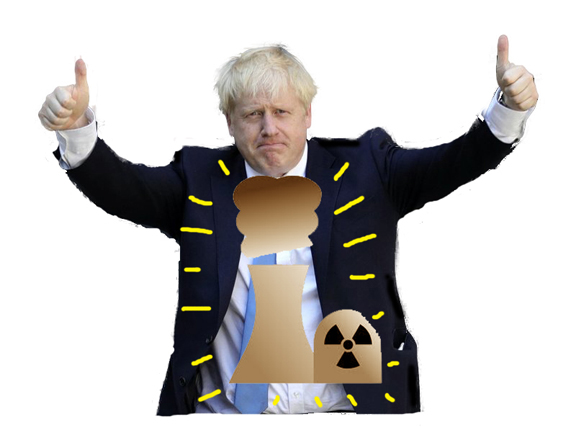
Boris Johnson has been added as the director and co-chairman of Better Earth, a company that lists Charlotte Owen, Steve Bannon and a uranium entrepreneur among its staffers.
Better Earth was incorporated by Amir Adnani in December last year and now includes a high-profile roster of employees, including a former prime minister, a controversial media strategist and Britain’s youngest peer.
Adnani, a Canadian citizen of Iranian heritage, is the director of a network of offshore companies based in the British Virgin Islands and is president and CEO of Uranium Energy Corp, a US-based mining and exploration company, championed by former Donald Trump adviser Bannon.
On 1st May, Companies House filings reveal that “the Rt Hon Alexander Boris de Pfeffel Johnson” was added as a director and co-chairman, shortly followed by Charlotte Owen – now Baroness Owen of Alderley Edge – who joined the company to work alongside him despite having a lack of energy sector experience.
Headquartered in a serviced office building in Sevenoaks, Better Earth describes itself as an “energy transition company”.
Its website, which is currently under construction, says it will “work directly with national governments and regions that are seeking both inward investment and/or to reduce their emissions ahead of 2030”.
In 2022, just days before leaving office, Johnson announced a £700 million investment in the controversial Sizewell C reactor stating the country needed to “Go nuclear, go large!”.
At the time, Caroline Lucas, the then Green MP and former party leader, described Sizewell C as “massively costly, achingly slow and carries huge unnecessary risks”.
Among those who cheered the Sizewell C investment was Adnani. He excitedly posted the announcement on his Twitter account: “Boris Johnson plans to sign off on new £30bn nuclear plant in his final week in power! #uranium.”
Adnani has appeared at least twice on former Donald Trump adviser Steve Bannon’s War Room podcast, and on one occasion told him that his ambition was to achieve “full spectrum energy dominance”.
Doesn’t sound scary at all!
Democracy Dumped in Cumbria.. Nuclear Dump Under the Irish Sea Here We Come?! UNLESS….

On By mariannewildart
Today’s BBC news item features Councillor David Moore enthusing “it’s (Sellafield) the biggest employer in the area”. He adds: “I think that’s why conversation here’s different. We’re already the hosts of the waste. And we all want to find it a safer location.” Councillor Moore is of course very keen on new wastes arriving at Sellafield.
What today’s BBC news article on nuclear waste fails to state is that Councillor David Moore was one of only 3 (I know!) “executive councillors” who took the decision to put Cumbria in the frame for an unprecedented deep sub-sea nuclear dump by agreeing to the “Community Partnership” with Nuclear Waste Services in the plan to “deliver a Geological Disposal Facility.” In doing so Councillor Moore failed to declare his fiscal interests in the nuclear industry by dint of his paid membership of various nuclear bodies (monies recieved totalling over £100,000) and his spouse’s employment.
A police complaint was made about this ongoing failure to declare interests but Cumbria police after over a year of obfuscation and delays decided that there was no offence. Cumbria police have essentially given the green light to those in public office not to declare fiscal interests in decisions they make on industrial developments.
We have asked for sight of Cumbria Police’s reasons for failing to take Councillor David Moore to task over his failure to declare interests but to no avail. It is clear that Councillor Moore was told by Cumbria Police that no action would be taken against him long before we were told. And we were only told after saying we would make an official complaint against the length of time the Police’s decision was taking.
We have sent off another email today asking for sight of Cumbria Police’s justification for not taking any action against David Moore – not even a slap on the wrist it appears for what is a criminal offence. Meanwhile Councillor David Moore, who has put Cumbria once again in the frame for a nuclear dump, is the ‘go to’ voice of the “community” for the mainstream media.
Something is very wrong here.
oday’s email to Cumbria Police’s Disclosure Unit:
Dear Disclosure Unit
We do not appear to have had full answers from you regarding Cumbria Police’s decision not to prosecute Councillor David Moore’s failure to declare nuclear interests when taking nuclear decisions with Copeland Borough Council. David Moore is quoted on today’s BBC News as a Councillor and member of the GDF Partnership. The news item does not mention that David Moore was one of only three councillors who voted to go forward with GDF Partnership while recieving monies from the nuclear industry. https://www.bbc.co.uk/news/articles/czx6e2x0kdyo
?What Date was Councillor David Moore told of the decision that he had committed no criminal offence when making Council decisions on nuclear by neglecting to disclose monies from the nuclear industry and that fact that his wife works for ……..
On behalf of over 30 people signing a letter of complaint against Cllr David Moore, I request sight of the “comprehensive review of the police investigation that was undertaken and the outcome that no further action is to be taken because there is no evidence of any criminality.”
In particular I request sight of justifications for overturning the Localism Act in the case of Cllr David Moore
http://publicsectorblog.practicallaw.com/first-conviction-of-a-councillor-under-the-localism-act-2011/
The original letter of complaint was written in 2022 – the length of time the police took to reply to us and then take a decision (to take no action) is scandalous.
For all links including the original letter check out Lakes Against Nuclear Dump
Letter to New First Minister over South Wales Nuclear Overflights

https://www.nuclearpolicy.info/news/letter-to-new-first-minister-over-south-wales-nuclear-overflights/ 10th September 2024
With the recent election of Dame Eluned Morgan, the NFLA Secretary has written to the new Welsh First Minister to ask for action on the flights carrying nuclear materials over South Wales.
Cardiff City Councillor Sue Lent, Chair of the Welsh NFLAs, first wrote to Dame Eluned’s predecessor Vaughan Gething at the end of April drawing attention to the carriage of nuclear materials by
RAF aircraft passing over the heavily populated cities of South Wales enroute from the USA to Brize Norton.
In that letter we asked First Minister Gething, as Chair of the Wales Resilience Forum, with responsibility for emergency planning across the nation, to seek a reassurance from the MoD / RAF that such flights will be diverted out to sea, well away from South Wales municipalities and revisit emergency planning arrangements for any accident involving these special nuclear materials.
After two reminders were sent to the First Minister’s Office, a reply was finally received on 5 August, the day before Dame Eluned replaced him in office. Unfortunately, that letter stated that whilst some preparation for the possibility of an aircraft accident had been made by first responders, ‘the issues you raise with respect to flight paths and nuclear related policies are reserved matters for the UK Government’
We also wrote to the Defence Nuclear Organisation asking them whether any emergency planning exercises had been held in Wales since Exercise Astral Bend in 2011, and we also requested any assessments of those exercises. As per usual the military denied our Freedom of Information requests suggesting that the Welsh NFLAs had a nefarious purpose in seeking to undermine national security and the efficiency of our armed forces when our concern was for the safety of the people of Wales. The only thing they would tell us is that a further exercise had been held on 21 September 2023, ironically the UN International Day of Peace.
We have now written to Dame Eluned Morgan asking her to take up the two ‘asks’ that we made of her predecessor. When we have her reply then the correspondence will be published in full in a future NFLA Briefing.
UK Government considering scrapping Wylfa plans and 24GW nuclear capacity target
2 Government considering scrapping Wylfa plans and 24GW nuclear capacity
target. Energy secretary Ed Miliband is considering scrapping plans to use
the Wylfa site in North Wales for a new large-scale nuclear power plant as
well as the UK’s target of developing 24GW of nuclear capacity by 2050.
New Civil Engineer 9th Sept 2024
1 This Month
26 April – Chernobyl: Inside the Meltdown airs on National Geographic on Sunday 26th April from 4pm


29 April – Nuclear Expert Webinar #1 – Radiation Impacts on Families with Mary Olson and Cindy Folkers
- 12:15 PM MT – 1:45 PM MT
- Location: Virtual – REGISTER TODAY

4 May -West Suburban Peace Coalition to discuss Iran war at May Educational Forum
Monday, May 4, 7:00 – 8:00 PM Central Standard Time
Title: : How Trump’s Narrative Tries to Shape the Reality of the War on Iran.
Contact Walt Zlotow, zlotow@hotmail.com 630 442 3045 for further information
14 May – online event From Bombs to Data Centres: the Face of Nuclear Colonialism

Pine Ridge Uranium is the real threat, not Tehran- Tell Burgum: Stop the Extraction.
Chernobyl: The Lost Tapes – A good documentary on Chernobyl on SBS available On Demand for the next 3 weeks– https://www.sbs.com.au/ondemand/tv-program/chernobyl-the-lost-tapes/2352741955560
To see nuclear-related stories in greater depth and intensity – go to https://nuclearinformation.wordpress.com
-
Archives
- April 2026 (346)
- March 2026 (251)
- February 2026 (268)
- January 2026 (308)
- December 2025 (358)
- November 2025 (359)
- October 2025 (376)
- September 2025 (257)
- August 2025 (319)
- July 2025 (230)
- June 2025 (348)
- May 2025 (261)
-
Categories
- 1
- 1 NUCLEAR ISSUES
- business and costs
- climate change
- culture and arts
- ENERGY
- environment
- health
- history
- indigenous issues
- Legal
- marketing of nuclear
- media
- opposition to nuclear
- PERSONAL STORIES
- politics
- politics international
- Religion and ethics
- safety
- secrets,lies and civil liberties
- spinbuster
- technology
- Uranium
- wastes
- weapons and war
- Women
- 2 WORLD
- ACTION
- AFRICA
- Atrocities
- AUSTRALIA
- Christina's notes
- Christina's themes
- culture and arts
- Events
- Fuk 2022
- Fuk 2023
- Fukushima 2017
- Fukushima 2018
- fukushima 2019
- Fukushima 2020
- Fukushima 2021
- general
- global warming
- Humour (God we need it)
- Nuclear
- RARE EARTHS
- Reference
- resources – print
- Resources -audiovicual
- Weekly Newsletter
- World
- World Nuclear
- YouTube
-
RSS
Entries RSS
Comments RSS
 nuclear-news