Trump’s buried complicity in lost US proxy war against Russia.

Walt Zlotow, West Suburban Peace Coalition Glen Ellyn IL 2 Dec 25
Trump boasted he’d end the war destroying Ukraine in one day if re-elected. He claimed it was all Biden’s war that Trump had nothing to do with. If only Trump had been reelected in 2020, he claims, there would have been no war gutting Ukraine as a functioning state with tens of millions fled, dead, deserted, injured. The US wouldn’t have squandered over $180 billion to achieve this dubious Biden achievement.
Trump, like every world leader, gets to make history but not rewrite history. Joe Biden was president when Russia launched its Special Military Operation to liberate the Donbas Ukrainians from destruction by Kyiv and keep NATO missiles off Russia’s borders. Biden essentially triggered that totally unnecessary war now in the final stages of Ukraine’s collapse. Biden also sabotaged the peace deal nearly achieved two month in that would have ended the war with no new lost Ukrainian territory.
That will get Biden history’s everlasting condemnation. But Trump also deserves history’s condemnation for ramping up the conditions that led to war under successor Biden. During his first term from 2017 to 2021 Trump kept alive long standing US dream of bringing Ukraine into NATO, a red line Russia warned America not to cross for over a decade prior. Trump authorized repeated NATO military exercises in Ukraine, which effectively made Ukraine a de facto NATO member. Trump allowed new NATO bases in Poland and Romania, adding to Russian angst over NATO encroachment.
Trump reversed a sensible Obama policy of not arming the Kyiv government to complete its destruction of Donbas Ukrainian separatists. In his 4 years Trump oversaw a fourfold increase of Kyiv military might. Had Trump simply reversed senseless US expansion of NATO beginning under Bill Clinton in 1999, and forced Germany, France and UK to honor the Minsk Agreements granting regional autonomy to Donbas Ukrainians, Biden may not have had the conditions or momentum to provoke the February 2022 Russian invasion.
Trump pretends he’s the White Knight bringing peace to a Ukraine wrecked solely by Biden’s perfidy. He should own up to his first term complicity and make peace to atone for his own sins destroying Ukraine as well as those of Joe Biden.
Hinkley Point C contractor issued notice after ‘significant fire safety shortfalls’
The potential for harm and risk of serious injury was identified
A fire enforcement notice has been served on a Hinkley Point C
contractor after “significant fire safety shortfalls” were identified at
the nuclear construction site. Following a focused fire safety
intervention, Office for Nuclear Regulation (ONR) inspectors identified
that Bylor JV (Laing O’Rourke and Bouygues Travaux Publics) had failed to
implement appropriate arrangements for the effective planning,
organisation, control, monitoring and review of preventive and protective
measures.
Somerset Live 2nd Dec 2025, https://www.somersetlive.co.uk/news/somerset-news/hinkley-point-c-contractor-issued-10681094
Trump’s Peace With NATO Reinforces Its Purpose: US-Led Global Hegemony
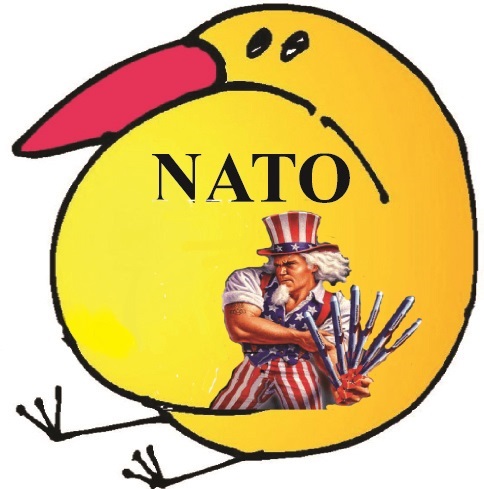
Trump’s hardball tactics have extorted greater allied cooperation and reasserted US domination over the organization.
By Jonathan Ng , Truthout. November 29, 2025, https://truthout.org/articles/trumps-peace-with-nato-reinforces-its-purpose-us-led-global-hegemony/?utm_source=Truthout&utm_campaign=d2f1ccd0ed-EMAIL_CAMPAIGN_2025_11_29_05_59&utm_medium=email&utm_term=0_bbb541a1db-d2f1ccd0ed-650192793
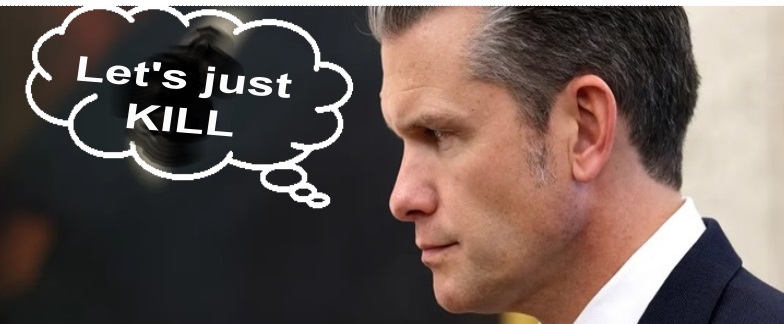
This October, Secretary of War Pete Hegseth dominated the NATO ministerial meeting in Brussels, while pressuring Europeans to assume an even heavier share of the defense burden. Referring to his peers as “ministers of war,” Hegseth demanded that member states purchase additional U.S. arms for Ukraine. “All countries need to translate goals into guns,” he hammered home. “That’s all that matters: hard power.”
Following Hegseth’s lead, NATO Secretary General Mark Rutte is now directing a campaign to secure arms purchase commitments. Rutte emphasizes that he is “proud” of the alliance’s ongoing assistance to Ukraine, noting that Russia has “lost 1 million people — dead or seriously wounded.”
Hegseth’s strongarm tactics and fundraising drive showcase the power dynamics that underlie NATO policymaking. In recent years, the organization has portrayed itself as an alliance of democracies confronting unprovoked aggression in Ukraine and China’s meteoric rise. Yet fundamentally, NATO is a U.S.-dominated forum, rather than a symposium of equals — a reality that Rutte’s relentlessly patient handling of the Trump administration makes clear.
Since 1949, members have exploited the alliance to solidify American global leadership, coordinate interventionism, and contain rivals that challenge Western influence. Rather than promote peace, NATO continues to pose one of the greatest threats to international stability by fueling armed conflicts in Ukraine and across the world.
NATO’s Fascists
NATO often portrays itself as a principled alliance of democracies confronting authoritarian rivals. But historically, the organization has collaborated with far-right intellectuals and statesmen, in order to maintain its military-industrial edge and geopolitical power. Following World War II, U.S. officials protected Wernher von Braun and around 1,500 other Nazi scientists from prosecution, while integrating them into the alliance’s scientific establishment. Eventually, the German General Adolf Heusinger, whose men butchered Jews and tossed children into wells, became a senior NATO commander.
For decades, Spain’s fascist strongman, Francisco Franco, was also an essential alliance partner. Between 1951 and 1953, the United States negotiated the Pact of Madrid, securing access to Spanish military bases and turning the country into a staging ground for NATO operations.
During negotiations, Washington appeared outwardly critical of Franco, while assuring his blood-soaked regime that it prioritized cooperation — a balancing act that insiders labeled a “comedy.” Privately, the U.S. embassy dismissed moral reservations, suggesting that officials approach relations “from a practical, even selfish, point of view,” since collaboration “could pay dividends in our own interest.” After concluding the pact, U.S. authorities praised Spain, a country studded with mass graves, for its “defense of the free world.” And Spanish bases became NATO launchpads in the escalating Cold War.
That came at a cost. In 1966, one of the U.S. Strategic Air Command’s B-52 bombers crashed above Palomares, releasing four hydrogen bombs over the seaside town. Residents remember a scalding wind and enormous fireball bursting over the horizon. “We thought that it was the end of the world,” one explained. The U.S. government promised to clean up the radioactive waste, but instead left the region riddled with plutonium particles. For the Spanish left, Palomares was the victim of NATO, an organization increasingly inseparable from the Franco dictatorship.
Continue readingDid Davey’s EDF Hinkley deal scupper tax payer?
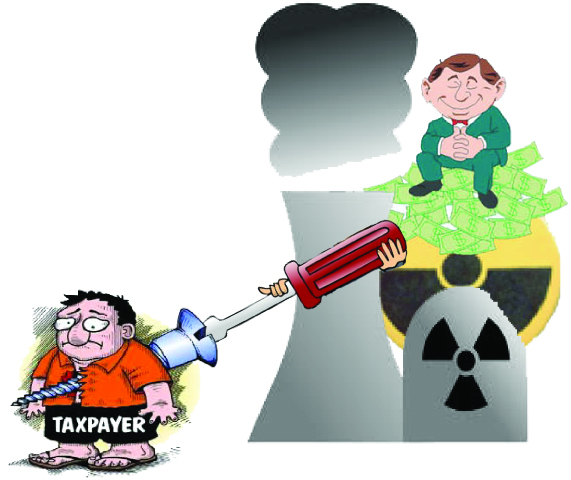
Is EDF about to pocket extra cash due to strike price from decade ago?
The Telegraph reports that Hinkley Point C will slap £1bn a year onto UK
energy bills the moment it starts generating. The cash will flow straight
from households to EDF under a subsidy deal locked in more than a decade
ago.
A second £1bn hit will land through the nuclear levy that bankrolls
Sizewell C in Suffolk. Campaigners are already calling the combination a
“nuclear tax on households” as ministers push ahead with the biggest
expansion of nuclear power in a generation.
Treasury and OBR documents
released after Rachel Reeves’s Budget spell out how the money will move.
CfD receipts are forecast to hit £4.6bn in 2030-31 with £1bn of that
handed to Hinkley C in its first year of operation. The root cause is the
2013 strike price agreed between EDF and Sir Ed Davey. It guarantees
£92.50/MWh for Hinkley’s output, now worth £133 with inflation and
expected to reach around £150 by the time the plant opens in 2030. If
wholesale prices hover near £80/MWh as they do today EDF can claim roughly£70/MWh from consumers and businesses to make up the difference.
Energy Live News 1st Dec 2025. https://www.energylivenews.com/2025/12/01/did-daveys-edf-hinkley-deal-scupper-tax-payer/
France & UK Still Insist On Sending Troops To Ukraine, In Effort To Sabotage Trump Peace Plan
by Tyler Durden, Tuesday, Dec 02, 2025 ,https://www.zerohedge.com/geopolitical/france-uk-still-insist-sending-troops-ukraine-effort-sabotage-trump-peace-plan
As we reported earlier, the important Miami meeting wherein American and Ukrainian delegations hammered out a revised ceasefire draft for some five hours on Sunday did not have European participation. But this is where the real deal-making is taking place. Trump envoy Steve Witkoff is en route to Moscow, where he’s expected to meet with President Putin on Tuesday, in order to present where things stand on the peace plan.
The Miami meeting reportedly focused on where the new de facto border would be in the east, after the 19-point plan featured significant territorial concessions in the Donbass and Crimea. As for Europe, is still touting a “coalition of the willing” which are vowing ongoing military support to the Zelensky government.
At this moment, France and the United Kingdom especially are continuing to push for the deployment of troops from NATO-member states to Ukraine as part of their version of peace settlement, despite this being very obviously unacceptable to Moscow.
Last week Politico reported that when US Secretary of State Marco Rubio joined a discussion involving the coalition of the willing via phone call, he made clear to all that the White House wants a peace agreement in place before committing to any long-term security guarantees for Kiev.
But UK Prime Minister Kier Starmer tried to push back, arguing that a “multinational force” would be essential for ensuring Ukraine’s future security.
Bloomberg then followed with a report saying that UK officials have already selected the military units they plan to deploy, based on several reconnaissance trips to Ukraine.
France’s President Emmanuel Macron proposed that such troops could operate in the capital area or western regions of the country, far from the front lines. But this would flagrantly cross all Russia’s red lines. NATO troops on its doorstep was key Putin’s decision-making in launching the ‘special military operation’ in the first place.
It must be recalled that the original US-drafted 28-point peace plan, which leaked to the press and more recently was condensed down to 19 points, included an explicit prohibition on deploying NATO troops to Ukraine.
The European-proposed counter-plan, which was also quickly leaked to the media, greatly softened that stance and laid out that instead of a blanket ban, NATO would not “permanently station troops under its command in Ukraine in peacetime.”
At a moment Trump’s peace plan advances, and with Witkoff on his way to meet with President Putin, hawks in Europe are growing even more hawkish:
Such intentionally vague language leaves open the possibility of NATO troop rotations into Ukraine. The Kremlin has time and again said it would not tolerate this, and such a move would lead to direct war with the West.
Europe’s plan also seeks to leave open a Ukrainian path to NATO, but this is also a sticking point which the US plan leaves out, given it would of course be dead on arrival if presented to Putin.
Fifth Belgian reactor is permanently shut down
World Nuclear News, 1 December 2025
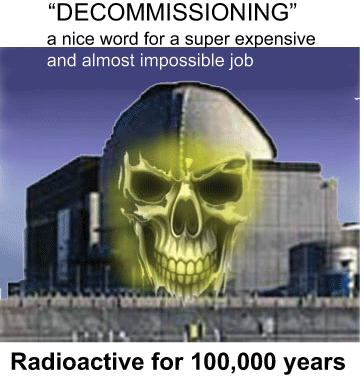
Unit 2 of the Doel nuclear power plant in Belgium’s Flanders region has been taken offline for the final time after 50 years of operation and disconnected from the grid. Its closure is in line with Belgium’s nuclear phase-out policy, under which four other reactors have already been shut down.
Belgium’s Federal Agency for Nuclear Control (FANC) said the operation to shut down the 445 MWe (net) pressurised water reactor (PWR) was carried out under its supervision.
Doel 2 has now entered the decommissioning phase in preparation for its actual dismantling. Fuel will be unloaded from the reactor and cooled in the storage pool, so it can later be transported to temporary storage.
“As with the other shutdowns, the process began with the submission of a ‘notice of cessation of activities’ to the FANC,” the regulator said. “This document describes in great detail the activities that will be carried out after the shutdown to prepare for decommissioning.”
Belgium’s federal law of 31 January 2003 required the phase-out of all seven nuclear power reactors in the country. Under that policy, Doel 1 and 2 were originally set to be taken out of service on their 40th anniversaries, in 2015. However, the law was amended in 2013 and 2015 to provide for Doel 1 and 2 to remain operational for an additional 10 years. Doel 1 was retired in February this year. Duel 3 was closed in September 2022 and Tihange 2 at the end of January 2023. Tihange 1 was disconnected from the grid on 30 September this year……………………………………………….https://world-nuclear-news.org/articles/fifth-belgian-reactor-permanently-shut-down?cid=15961&utm_source=omka&utm_medium=WNN_Daily:_1_December_2025&utm_id=493&utm_map=24ecfe77-e3db-473a-be05-7c037a58ceb4
UK is running out of water – but data centres refuse to say how much they use.

One Government insider said ‘accurate water figures have historically been very hard to get from facilities of any size’.
Tech firms are failing to tell the Government how much water they use in
their data centres, as concerns grow that the UK does not have enough water to meet its needs.
Experts are calling on the Government to introduce
tighter regulations on data centres amid warnings that new power and
water-intensive supercomputers could be built in areas vulnerable to
drought. Campaigners have raised concerns that the Government is “too
close” to tech lobbyists and is failing to fully consider the impact a
data centre boom could have on the UK’s natural resources.
iNews 1st Dec 2025, https://inews.co.uk/news/uk-running-out-water-data-centres-refuse-say-4062230
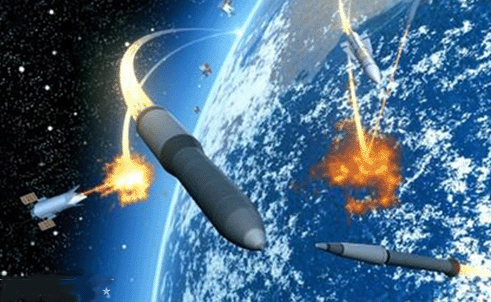
Europe militarizes its space agency.
Sat, 29 Nov 2025 , https://www.sott.net/article/503252-Europe-militarizes-its-space-agency
The ESA has been awarded record funding, dropping its civilian-only focus and branching out to military and security missions.
The European Space Agency (ESA) will begin working on defense projects for the first time, in a move it is describing as “historic.” A resolution by its 23 member states says the agency has the tools to develop space systems “for security and defense.”
The EU and NATO are pouring tens of billions in taxpayer and borrowed money into supporting defense firms and churning out weapons, claiming Russia poses an imminent threat. Russian President Vladimir Putin said on Thursday that EU leaders are inflating the alleged danger to push their own political agendas and funnel cash into the arms industry.
Next year’s budget allocates a record €22.1 billion (around $24 billion) to the ESA for the next three years.Its member states include virtually all European NATO countries, as well as non‑NATO members such as Switzerland and Austria.
The new budget is a sharp rise from the previous €17 billion. Germany is the top contributor with €5 billion, followed by France and Italy at over €3 billion each.
According to ESA Director General Josef Aschbacher, Poland was instrumental in promoting the agency’s new strategic direction. He confirmed that Warsaw is currently in discussions to host a new ESA center dedicated to security-focused projects.
Across the EU, defense budgets are surging as Brussels and its allies push for rearmament under the banner of security. The European Commission’s ‘ReArm Europe’ plan aims to pour hundreds of billions into joint weapons procurement and infrastructure, while member states have boosted arms purchases by nearly 40% in just one year.
Research and development spending is also up sharply, signaling a full-speed shift toward a greater military focus.
ESA approves first-ever defense program:
Europe is taking its biggest step yet into space militarization. The centrepiece of this shift is European Resilience from Space (ERS), a new dual-use program intended to build a military-grade “system of systems” combining national satellites for secure surveillance, communications, navigation, and climate monitoring.
ERS received $1.39 billion of the $1.56 billion ESA sought. In February, ESA will ask European defense ministries for an additional $290 million.
ESA Director General Josef Aschbacher called the decision “a clear defense and security mandate,” noting that support from 23 member states — including non-EU countries such as the UK — was nearly unanimous.
At the ministerial summit in Bremen, ESA member states also approved:
- a total transportation budget of $5.09 billion (4.39 billion EUR) to develop reusable European rockets;
- $4.18 billion for commercial space partnerships;
- continued funding for the Rosalind Franklin Mars mission, now slated for launch in 2028 with NASA’s confirmed support;
- initial studies for a mission to Saturn’s moon Enceladus, seen by astrobiologists as a prime target for finding extraterrestrial life.
Germany — already planning to invest $40.6 billion in military space capabilities by 2030 — extended its lead as ESA’s largest contributor. In exchange, Berlin secured a commitment that a German astronaut will be the first European to join NASA’s Artemis lunar missions.
Space consultants note that while ERS funding is substantial, it remains politically delicate. “The coming year will be decisive for whether Europe can truly stand up a sovereign, rapid-response intelligence surveillance and reconnaissance constellation,” said Maxime Puteaux of Novaspace.
Earlier, Maj. Gen. Paul Tedman, head of the UK Space Command,reported that Russia was routinely shadowing and trying to jam British military satellites.
Inside the power-hungry data centres taking over Britain.

Our thirst for AI is fuelling a new construction wave: of giant data centres. But can ourelectricity and water systems cope — and what will the neighbours say?
Plants [like the one] run by the company Stellium on the outskirts of
Newcastle upon Tyne, are springing up across the country.
There are already
more than 500 data centres operating in the UK, many of which have been
around since the Nineties and Noughties. They grew in number as businesses and governments digitised their work and stored their data in outsourced “clouds”, while the public switched to shopping, banking and even tracking their bicycle rides online.
But it was in 2022, when a nascent
technology company called OpenAI launched ChatGPT, that the world woke up to the potential of AI and large language models to change the way the planet does, well, just about everything.
It can do this thanks largely to advances in chip design by the US company Nvidia — now the world’s most valuable (and first $5 trillion) business. The trouble is, a typical 4334wChatGPT query needs about ten times as much computing power — and electricity — as a conventional Google search.
This has led to an
explosion in data centres to do the maths. Nearly 100 are currently going
through planning applications in the UK, according to the research group
Barbour ABI. Most will be built in the next five years. More than half of
the new centres are due to be in London and the home counties — many of
them funded by US tech giants such as Google and Microsoft and leading
investment firms. Nine are planned in Wales, five in Greater Manchester,
one in Scotland and a handful elsewhere in the UK.
The boom is so huge that
it has led to concerns about the amount of energy, water and land these
centres will consume, as residents in some areas face the prospect of
seeing attractive countryside paved over with warehouses of tech. Typically
these centres might use 1GW (1,000MW) of electricity — more power than is
needed to supply the cities of London, Birmingham and Manchester put
together.
Times 29th Nov 2025, https://www.thetimes.com/business/technology/article/inside-britains-ai-data-centre-boom-can-the-grid-keep-up-jllzb3b0p
Nuclear a ‘political toy’ for Ed Miliband in Scotland, claims Scottish National Party
SNP’s Stephen Flynn has taken a firm stance against the development of
nuclear power stations in Scotland.
Aberdeen South MP Stephen Flynn has
left a scathing review of Energy Secretary Ed Miliband’s plans for
nuclear power stations in Scotland. He labelled the plans ironic as it
would leave “energy rich Scotland picking up the bill for those
projects” when it “already produces more electricity than it
consumes”, claiming that said irony “will be lost on nobody – well
maybe just Ed Miliband it seems.” He also took aim at the UK state Great
British (GB) Energy, which has “so far achieved nothing for Scotland”,
leading to Miliband “doubling down on that record with this new
instruction to a supposedly independent company.” “Nobody knows what GB Energy is actually supposed to be, but this news suggests it’s little
more than a political toy for Miliband to play with whilst he destroys
Scotland’s offshore industry,” he added.
Energy Voice 1st Dec 2025, https://www.energyvoice.com/renewables-energy-transition/nuclear/586027/nuclear-a-political-toy-for-ed-miliband-in-scotland-claims-snp/
Use less energy : Demand-led policy scenarios show promise.

Renew Extra 29th Nov 2025,
Demand-side energy reduction has so far received less policy support than supply-side net-zero technologies, despite the fact that, as this interesting new Nature paper claims, ‘energy demand reductions of ~50% by 2050 compared with today are possible while maintaining essential services and improving quality of life’. That would involve more than just improved technical efficiency of energy use and production, something that is already thankfully underway- although still rather too slowly. It would also mean fundamental changes in how energy is used, with radical reductions in consumption due to new social/behavioural patterns.
The paper notes that ‘policies explicitly targeting large energy demand reductions remain scarce, suggesting that they have so far been disregarded by policymakers owing to real or perceived lack of political feasibility. Instead, national energy strategies frame shifts in demand through an emphatically technological lens, focusing on efficiency gains through electrification and overlooking the broader structural and societal changes necessary to substantially cut the need to use energy..’
To address the perceived ‘persistent gap between academic energy demand scenarios and the scarcity of corresponding energy policy’, in a new approach, academics and policy makers join forces in a demand-focused process of ‘co-created’ UK 2050 energy scenario analysis, led by policymakers and evaluated through public dialogue. It takes more effort, but this paper says the new combined approach is well worth it: the ‘uniquely close involvement’ of policymakers leading the project evidently generated markedly different & positive narratives that reflect policymakers’ concerns while still leading to scenarios with reductions in energy demand of 18–45%, exceeding what policies normally suggest’. To address the perceived ‘persistent gap between academic energy demand scenarios and the scarcity of corresponding energy policy’, in a new approach, academics and policy makers join forces in a demand-focused process of ‘co-created’ UK 2050 energy scenario analysis, led by policymakers and evaluated through public dialogue. It takes more effort, but this paper says the new combined approach is well worth it: the ‘uniquely close involvement’ of policymakers leading the project evidently generated markedly different & positive narratives that reflect policymakers’ concerns while still leading to scenarios with reductions in energy demand of 18–45%, exceeding what policies normally suggest’.
The new paper expands on the method developed by Barrett et al, replacing the ‘academic scenario design’ stage by a policymaker-led process, with input from energy-system modellers. The resultant co-created scenarios are then subject to public discussion, so as to ‘avoid being perceived by policymakers either as ideologically driven or as theoretical academic exercises’……………………………………
The paper also claims that the new approach can deliver practical result and savings: ‘demand-side measures can help reduce societal risks by decreasing future reliance on technologies currently unproven at scale, in the context of a policymaker-led framework……………………………………………………………………………………………………… https://renewextraweekly.blogspot.com/2025/11/use-less-energy-demand-led-policy.html
U.N. nuclear agency returns to Chernobyl to check damage from recent Russian drone attack.

The International Atomic Energy Agency is sending
technicians to the site of Ukraine’s Chernobyl nuclear power plant to
assess the current condition of an arch-shaped steel structure that was
erected over the damaged reactor following the 1986 Chernobyl disaster. The protective shell, known as the New Safe Confinement, was erected in 2016.
It was struck by a Russian drone in February 2025, authorities said.
“While February’s drone strike did not lead to any release of
radioactive material, it caused significant structural damage, affecting
the NSC’s designed confinement function and projected lifetime,” IAEA
Director General Rafael Mariano Grossi said Thursday in a statement.
Washington Times 28th Nov 2025 https://www.washingtontimes.com/news/2025/nov/28/un-nuclear-agency-returns-chernobyl-check-damage-recent-russian-drone/
The Neocon-Realist Armageddon Over Ukraine

Rubio was in Geneva last Sunday with the Ukrainians and Europeans to undermine Trump’s 28-point plan, trying to replace it with one of just 19 points that unrealistically gives an advantage to Ukraine. Unrealistic because this war has already ended on the battlefield and Trump has virtually acknowledged it.
By Ray McGovern, Consortium News, https://consortiumnews.com/2025/11/28/ray-mcgovern-the-neocon-realist-armageddon-over-ukraine/
Donald Trump made some revealing remarks to the media as he flew to Florida for Thanksgiving on Wednesday. Asked if he thought Ukraine is being asked to give too much land to Russia in his proposal to end the war, Trump responded:
“It’s clearly up to the Russians. It’s moving in one direction. … That’s land that over the next couple of months might be gotten by Russia anyway. So, do you want to fight and loose another 50,000 or 60,000 people? Or do something now? They are negotiating; they are trying to get it done.”
That’s the same realistic approach Trump’s new special envoy to Ukraine, U.S. Army Secretary Daniel Driscoll, took with the Ukrainians and Europe’s so-called “coalition of the willing” during a visit to Kiev earlier this week.
Driscoll reportedly threw in yet one more reason for Ukraine to end the war – the fact that the Russians have ever-growing stockpiles of missiles they can deploy.
In other words, the undeniable Russian advances all along the contact line in Ukraine are no longer deniable to anyone tuned into reality.
But not everyone is tuned in. U.S. Gen. Keith Kellogg, who unrealistically claimed that Ukraine could still win, has been removed as special envoy to Ukraine, but there are other neocons lurking near the White House, for instance, Secretary of State Marco Rubio who also as national security adviser can control the flow of intelligence and policy proposals to the president.
Rubio was in Geneva last Sunday with the Ukrainians and Europeans to undermine Trump’s 28-point plan, trying to replace it with one of just 19 points that unrealistically gives an advantage to Ukraine. Unrealistic because this war has already ended on the battlefield and Trump has virtually acknowledged it.
What’s next is an official agreement, endorsed, ideally by the United Nations Security Council, where France or Britain, however, could veto it, as the Europeans continue their efforts to thwart such a peace agreement.
Britain, France and Germany, for example, are still pushing the fantasy that Russia is poised to attack Europe.
So we are at the threshold on Ukraine, at the beginning of a consequential battle between the neo-cons and Europeans on one side, and Donald Trump and the realists on the other. Will Trump show the fortitude to see this through and overcome his secretary of state?

For now you can dismiss the idea that the so-called “Peace Plan” is “dead on delivery.” It hasn’t even officially been delivered to Russia yet.
Russian President Vladimir Putin awaits hand delivery from U.S. envoy Steve Witkoff probably on Monday – Washington’s recent unorthodox conduct of diplomacy notwithstanding.
My sense is that Witkoff, like Driscoll, will dis the Europeans and go to Moscow with the 28-point draft plan for discussion and that it will adhere to one of the main provisions of Anchorage — namely that Trump will not let Zelinski sabotage movement toward an agreement. Putin told Hungarian President Viktor Orban today in Moscow that he remained open to meeting Trump in Budapest at a future date.
For his part, Putin seems ready to do business. An important backdrop is his priority objective of preventing relations with the U.S. from falling into a state of complete disrepair. As for Ukraine, Putin has reiterated that the 28-point Trump plan could form the basis for future agreements.
Taking questions from the press yesterday in Bishkek, Kyrgyzstan, Putin gave clarity to a number of key issues. He said there was “no ‘draft agreement’ per se,” but rather “a set of issues proposed for discussion and finalization.”
Putin went on:
“We discussed this with American negotiators, and subsequently, a list of 28 potential points for an agreement was formulated.
Thereafter, negotiations were held in Geneva between the American and Ukrainian delegations. They decided among themselves that all these 28 points should be divided into four separate components. All of this was passed on to us.
In general, we agree that this could form the basis for future agreements. However, it would be inappropriate for me to speak now of any final versions, as these do not exist.”
Putin noted that the U.S. — this would be Trump, not Rubio — is “taking our position into account – the position that was discussed before Anchorage and after Alaska. We are certainly prepared for this serious discussion.”
On the question of land, Putin made certain that Russia will not be denied. He said, “I think it will be clear at once what it is all about. When the Ukrainian troops leave the territories they occupy, then the hostilities will cease. If they do not leave, we will achieve it militarily. That’s that.”
Of course, in 2022 Russia entered the Ukrainian civil war that had begun after the 2014 U.S.-backed coup that lead to the U.S.-installed government attacking the ethnic Russian Donbass region, which had rejected the unconstitutional change of government and declared independence.
After eight years of indirectly aiding Donbass, Russia intervened directly after the Minsk agreements to end the civil war were sabotaged by Ukraine and the Europeans. Russia’s war demands have remained demilitarizing and denazifying a neutral Ukraine. In the course of its intervention it has absorbed four Ukrainian oblasts into the Russian Federation, which remains non-negotiable to Moscow.
“Those in the West who understand what [recent Ukrainian defeats on the battlefield] could lead to are pushing for an end to the fighting as soon as possible,” Putin said, referring to the realists in Washington.
“They understand that if the front lines are drawn back in certain areas, the Ukrainian armed forces will lose their combat effectiveness and their most combat-ready units,” he said. “‘Enough is enough, preserve the core of your armed forces and your statehood, that’s what you need to focus on,’ say those who hold this view.”
But he said “others,” referring to the Europeans and neocons, “insist on continuing the hostilities until the last Ukrainian. That’s the difference in approaches.”
Putin tried to put to rest the fear-mongering in Europe about a planned Russian attack on the continent. “Russia does not intend to attack Europe. To us, that sounds ridiculous, does it not?” he said. “We never had any such intentions. But if they want to have it formalised, let’s do it, no problem.”
Putin also reiterated that Russia could only sign a peace agreement with a legitimate government in Ukraine after a new election, another obstacle to overcome.
“I believe that the Ukrainian leadership made a fundamental, strategic mistake when it was afraid to hold presidential elections, and as a result, the president lost his legitimate status,” Putin said. “As soon as any kind of peace agreement is reached, the fighting will stop, and the state of emergency will be lifted, elections will be announced.”
Which is another incentive for Zelensky and those who back him inside and outside of Ukraine to keep on fighting.
“So, basically, we want to reach an agreement with Ukraine in the end, but it’s almost impossible right now, legally impossible. We need our decisions to be internationally recognized by the major international players. That’s it,” said Putin.
He added:
“And so, of course, we need recognition, but not from Ukraine today. I hope that in the future we will be able to come to an agreement with Ukraine: there are many healthy people there who want to build relations with Russia for a long-term historical perspective.”
Peace then will require the complete negation of the neocons and the Europeans and a new government in Kiev — a tall order indeed.
It comes down to whether Trump can finally stand up to them — people whom he appointed, like Rubio, and whom he golfs with, like Sen. Lindsey Graham. He seems to have less respect for the Europeans, who practically sat at his feet around the Oval Office desk earlier this year pleading their case on Ukraine.
Trump may be motivated in part by the vain desire to end the war to win the Nobel Peace Prize. But he can get it done. Trump can ignore the Europeans and be serious this time about cutting off military aid and intelligence to Ukraine as he threatened to do if Zelensky did not accept his 28 points by Thanksgiving.
When it comes to Ukraine, Trump really does hold the cards. Will he play them?
UK Nuclear Projects Set to Add $1.3 Billion a Year to Power Bills

By Tsvetana Paraskova – Nov 28, 2025,
https://oilprice.com/Latest-Energy-News/World-News/UK-Nuclear-Projects-Set-to-Add-13-Billion-a-Year-to-Power-Bills.html
Subsidies and Contracts for Difference (CfD) that the UK government has promised to the two projects for new nuclear power stations are expected to add $1.32 billion (£1 billion) annually to the UK power bills from around 2030, The Telegraph reports, citing documents by the Treasury and the Office for Budget Responsibility (OBR).
The Hinkley Point C nuclear power station, developed by EDF, is expected to begin generating electricity in 2030-31, after years of delays and cost overruns.
That year, CfD is expected to generate $6.1 billion (£4.6 billion) in receipts, including £1.0 billion to fund subsidy payments to the Hinkley Point C nuclear power plant for its first year of expected generation, OBR said in its economic and fiscal outlook released after the UK’s latest budget announcement.
The UK government earlier this year also took the final investment decision to build the $51-billion Sizewell C nuclear power plant on the Suffolk Coast in eastern England, which was the first British-owned nuclear power station to be announced in over three decades.
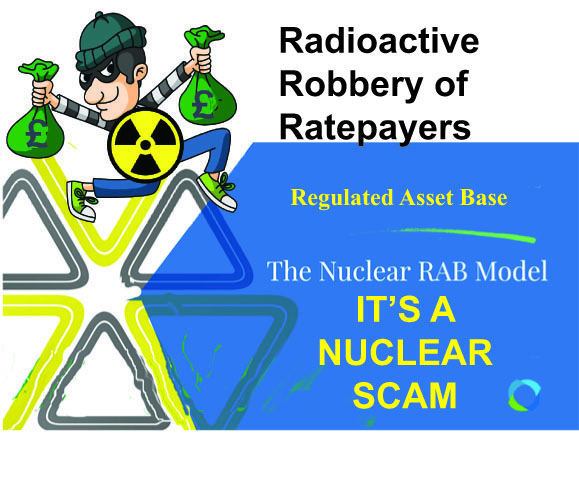
Sizewell C will be the first nuclear power station in the UK financed using a regulated asset base (RAB) model that levies an additional charge on consumer energy bills, which contributes to the financing costs of the plant, OBR noted. This levy is also expected to increase energy bills as early as January.
UK households will pay slightly higher energy bills in the first quarter of 2026 after energy market regulator Ofgem last week raised the Energy Price Cap by 0.2%, against expectations of a 1% drop.
The slight increase in the price cap is driven by government policy costs and operating costs. This includes funding the government’s Sizewell C nuclear project, which will bring more [?] clean power, Ofgem noted.
Opponents of new conventional nuclear plants in Britain argue that consumers will be burdened with a “nuclear tax” for the expensive projects in their energy bills.
“The Government has a misguided belief that nuclear will be a cheap, ‘green’ solution to our energy needs, but the evidence shows the opposite – that costs of delivery and of dealing with nuclear waste – will continue to rise,” Alison Downes, of Stop Sizewell C, told The Telegraph.
“We remain opposed to the imposition of a nuclear tax on households, given the acknowledged uncertainty about the projected costs of constructing Sizewell C.”
The mysterious black fungus from Chernobyl that may eat radiation
Mould found at the site of the Chernobyl nuclear disaster appears to be
feeding off the radiation. Could we use it to shield space travellers from
cosmic rays? In May 1997, Nelli Zhdanova entered one of the most
radioactive places on Earth – the abandoned ruins of Chernobyl’s exploded
nuclear power plant – and saw that she wasn’t alone.
Across the ceiling,
walls and inside metal conduits that protect electrical cables, black mould
had taken up residence in a place that was once thought to be detrimental
to life. In the fields and forest outside, wolves and wild boar had
rebounded in the absence of humans. But even today there are hotspots where staggering levels of radiation can be found due to material thrown out from the reactor when it exploded.
BB 28th Nov 2025, https://www.bbc.co.uk/future/article/20251125-the-mysterious-black-fungus-from-chernobyl-that-appears-to-eat-radiation
1 This Month


31st January – Challenging the War Machine – a DECLASSIFIED UK SUMMIT



Website of the Week
Now until to February 10, 2026 Radioactive waste storage in France: the debate is finally open! How to participate?
-
Archives
- January 2026 (211)
- December 2025 (358)
- November 2025 (359)
- October 2025 (377)
- September 2025 (258)
- August 2025 (319)
- July 2025 (230)
- June 2025 (348)
- May 2025 (261)
- April 2025 (305)
- March 2025 (319)
- February 2025 (234)
-
Categories
- 1
- 1 NUCLEAR ISSUES
- business and costs
- climate change
- culture and arts
- ENERGY
- environment
- health
- history
- indigenous issues
- Legal
- marketing of nuclear
- media
- opposition to nuclear
- PERSONAL STORIES
- politics
- politics international
- Religion and ethics
- safety
- secrets,lies and civil liberties
- spinbuster
- technology
- Uranium
- wastes
- weapons and war
- Women
- 2 WORLD
- ACTION
- AFRICA
- Atrocities
- AUSTRALIA
- Christina's notes
- Christina's themes
- culture and arts
- Events
- Fuk 2022
- Fuk 2023
- Fukushima 2017
- Fukushima 2018
- fukushima 2019
- Fukushima 2020
- Fukushima 2021
- general
- global warming
- Humour (God we need it)
- Nuclear
- RARE EARTHS
- Reference
- resources – print
- Resources -audiovicual
- Weekly Newsletter
- World
- World Nuclear
- YouTube
-
RSS
Entries RSS
Comments RSS
 nuclear-news