Nine Swedish energy researchers find that new nuclear power is not needed.
The government has stated that “physics is heavier than politics” .
Unfortunately, on several occasions, misconceptions have been spread about
the physical capabilities of the power system.
It is not true that it costs 8 billion to regulate and balance wind power, or that new nuclear power is necessary for a stable electricity system, write nine energy researchers
from north to south. The need for new nuclear power. “New nuclear power
is necessary for a stable and reliable energy system, for both consumers
and businesses,” stated Finance Minister Elisabeth Svantesson (M) in
November 2023.
It goes without saying that a stable and reliable energy
system is needed. Svenska kraftnät has studied various alternatives in its
reports, the latest of which is “ Long-term Market Analysis 2024 ”. It
shows that a Swedish fossil-free power system with more than twice as much
consumption as today, and without nuclear power, can achieve reliability at
the same level as today.
The solution is called flexibility, where electric
cars, hydrogen storage and electricity trading contribute, among other
things. Nuclear power is important for stability today, as it contributes a
buffer in the form of rotational energy. This buffer ensures that balance
is maintained during the first seconds after, for example, a sudden stop in
another nuclear power plant. Nuclear power also helps to ensure that we get
an appropriate voltage on the power lines.
But this can also be arranged in
other ways. In the Nordic countries there is a system that activates
batteries, among other things, in seconds, so that stability is achieved
even with lower amounts of nuclear power. There is also a technological
development where Swedish industry is at the forefront. There is an
incredibly large export market, since the whole world will get more solar
and wind power when the existing fossil power plants are phased out. This
shift is happening now because solar and wind power have steadily fallen in
price and can be built quickly.
Dagens Nyheter 18th Jan 2025 https://www.dn.se/debatt/karnkraft-ar-en-mojlighet-men-ingen-fysisk-nodvandighet/
UK Nuclear Power Ambitions Hampered by Delays and Soaring Costs
The construction of Hinkley Point C and Sizewell C nuclear power plants is
facing significant delays and cost overruns, jeopardizing the UK’s energy
security. Sellafield Ltd’s cybersecurity failings have raised concerns
about the safety and security of the UK’s nuclear industry.
The UK government’s ambitious plans to expand nuclear power are facing criticism
due to the high costs and potential impact on taxpayers. As the U.K.
government doubles down on plans to develop the country’s nuclear power
industry following decades of neglect, severe delays and cost increases are
hampering progress. Delays and rising costs at the Sizewell C and Hinkley C
nuclear projects have drawn public criticism, while concerns over public
safety have been brought into question due to cybersecurity failings by
Sellafield Ltd. While public support for nuclear power is at its highest
level in decades, these failings could hinder the development of a strong
nuclear power industry in the U.K.
Oil Price 19th Jan 2025, https://oilprice.com/Alternative-Energy/Nuclear-Power/UK-Nuclear-Power-Ambitions-Hampered-by-Delays-and-Soaring-Costs.html
‘I was exposed to evil in British nuclear tests’

Kirsteen O’Sullivan & Marcus White, 15 Jan 25, https://www.bbc.com/news/articles/cvgpp5ze28ro?fbclid=IwY2xjawH5E-JleHRuA2FlbQIxMQABHegxfVRLO66gQNKipt3Y5f9BWzRPbu0h6QWkys9CWH2yBTjZhE1YRCwhmA_aem_E7q8FCNDKoWD6DMMToVaoQ
A nuclear test veteran who witnessed the detonation of several British atomic bombs in the 1950s has said he was “exposed to evil”.
Robert James, 87, was an RAF firefighter stationed in Maralinga in Australia, where seven major UK tests took place.
Mr James, from Fordingbridge, Hampshire, said many service personnel had suffered fatal illnesses as a result and he was angry that the UK government had still not offered compensation.
The Ministry of Defence (MoD) said ministers were continuing to discuss issues with families.
Veterans’ campaign groups have said British service personnel were lined up and deliberately exposed to bomb tests to see what effect they would have.
Mr James said many of his comrades had died as a result of cancers and diseases associated with radiation exposure.
He said: “A lot of the guys suffered a lot. There’s lads dying every day… and after having long illness.
“We were exposed to evil, we were exposed to radiation. That’s pretty serious and I think that warrants compensation.
“Not only for people that are surviving like myself but the families that have suffered where their husbands or fathers died.”
In 2019, the Labour Party, then led by Jeremy Corbyn, pledged £50,000 for each surviving British nuclear test veteran.
Sir Keir Starmer met veterans in 2021, before becoming Prime Minister, but made no promises – and the 2019 offer was not in the 2024 manifesto.
However, the current Defence Secretary John Healey posted on his website in 2021: “UK remains the only nuclear power that refuses them recognition or compensation, unlike the US, France, Canada and Australia.”
Mr James said: “Don’t go back on your word, Mr Starmer… You promised us full compensation and recognition. Keep to your word.”
Nuclear resister Susan Crane released after 7.5 month prison term in Germany
from Nukewatch by John LaForge, https://www.nukeresister.org/2025/01/17/nuclear-resister-susan-crane-released-after-7-5-month-prison-term-in-germany/?fbclid=IwY2xjawH5EthleHRuA2FlbQIxMQABHTVW2eZGE2IE-W3LPf6iXXpESUr8kt2y7UvRgz2O8GmIutozT9gN37brag_aem_KHyUNaUTEixZQ46JaMNVpQ
U.S. Activist Ends 7.5-Month Prison Term in Germany;
Jailed for Protests Against U.S. “Nuclear Sharing”
Susan Crane of Redwood City, California was released from prison in Koblenz, Germany on Friday, January 17, 2025, after spending 7.5 months incarcerated for trespass convictions and refusing to pay fines stemming from a string of nonviolent protests against U.S. nuclear weapons stationed at the Büchel air force base, southeast of Cologne.
On June 4, 2024, Crane began serving a 230-day sentence at the Wöllstein-Rohrbach prison in Rhineland-Palatinate, the longest term yet imposed in the decades-long campaign of protests against the American-made free-fall, gravity bombs known as B61s at the base. Dutch peace activist Susan van der Hijden from Amsterdam served 115-days along with Crane for similar convictions. After ten days at Wöllstein, the two were transferred to the Offener Vollzug or the “open prison” in Koblenz, a less severe system that permits daytime work release. Crane was welcomed by the Martin Luther Evangelical Church community of Koblenz and did light work around the church grounds for many weeks.
Crane, 81, a life-long peace activist who has endured lengthy prison sentences in the United States for anti-war actions, was convicted of several trespass charges in Germany after joining six “go-in” demonstrations at Büchel. During the actions on the German base, Crane and others warned personnel that stationing the U.S. nuclear weapons there, and NATO’s ongoing threat to use them known quaintly as “nuclear sharing,” are both unlawful. Tornado fighter jet pilots of the German air force’s 33rdTactical Air Wing at Büchel routinely train to drop the U.S. H-bombs on targets in Russia [1], most recently in operation “Steadfast Defender 24” [2] — provocatively staged in the midst of NATO-armed war in Ukraine.
In one action, Crane and others unfurled a banner that read, “Büchel Air Base is a Crime Scene.” According to legal scholars, the transfer of nuclear weapons from the U.S. to Germany violates the Nonproliferation Treaty (NPT) which explicitly forbids any “transfer to any recipient whatsoever [of] nuclear weapons.” [3] According to the Bulletin of the Atomic Scientists, the U.S. hydrogen bombs at Büchel are the 170-kiloton B61-3, and the 50-kiloton B61-4.[4] The U.S. atomic bomb that incinerated Hiroshima in 1945 was a 15-kiloton device.
Crane said in a statement before entering prison, “I thought the German courts would listen to the reasons we went onto the base, and understand that our peaceful actions were justified as acts of crime prevention. But international law was not respected or enforced.”
Crane, who has two adult children and four grandchildren, has devoted her life in California to serving the poor and homeless as a member of the of Redwood City Catholic Worker community. In a statement last March Crane said, “I see people living in camps, living in cars, and I see working people who don’t have enough income for basic needs like rent, food, or medical care. Then, I think of the money wasted on war-making by the U.S. and NATO nations, and that 3% of the U.S. military budget alone could end starvation around the world.”
At least 29 Germans, as well as two other U.S. citizens and two Dutch nationals have been jailed in Germany for related protest actions against the U.S. nuclear weapons. [5] Crane is the first U.S. women to be imprisoned in Germany in the campaign. Brian Terrell of Maloy, Iowa, was recently ordered by the court in Koblenz, Germany to report to the Wittlich prison on February 26, 2025 to serve a 15-day sentence for a related go-in action in July 2019.
Over time, over budget… will our new nuclear plants ever be built?

A damning report on EDF, the French company aiming to construct Sizewell C,
has thrown the project into doubt, while Hinkley Point C faces soaring
costs and delays.
The cost of nuclear power in the UK came roaring back
into the headlines last week after reports that the final bill for Sizewell
C, the planned new power station on the Suffolk coast, would be £40
billion — twice what was initially expected. This was followed by a
damning report on EDF, the French state-backed company that is proposing to
build Sizewell, which laid bare its financing problems, raising questions
about whether the plant will be built at all.
Hinkley is running years late and is massively over budget, prompting critics to wonder whether this is a model we should be copying. EDF had originally envisaged that [Hinkley]
would be in operation by this year; its most optimistic scenario now puts
the start date for the first of its two reactors at 2029. Meanwhile,
Hinkley’s original £18 billion cost on the eve of its construction has
ballooned to up to £35 billion in 2015 prices — or £46 billion in
today’s money.
Unfortunately, the financing for both plants is far from
settled. It is estimated that cost overruns at Hinkley mean it needs to
find another £5 billion to finish the work. This shortfall has been
exacerbated by EDF’s partner in the project, China General Nuclear Power,
refusing to put in more money after being excluded from Sizewell on
national security grounds.
Alison Downes of the Stop Sizewell C campaign
said: “We’ve no faith this project is being looked at objectively, so
it’s vital that the Office for Value for Money [the new government
agency] launches an immediate inquiry before ministers sleepwalk into a
disastrous decision.”
Having allocated £5.5 billion to Sizewell in the
budget, most observers expect Labour to give the green light at the
spending review. Some argue that the “sunk-cost fallacy” — a
reluctance to abandon projects in which a lot of money has been invested,
even if that would ultimately be a more cost-effective option — has
kicked in, and that cancelling it now would trigger a large and galling
write-down for the government. Nor are there obvious alternative vendors of
large nuclear projects — at least not yet. Bull, of Manchester
University, said axing Sizewell would send a terrible signal: “I think
the real cost of not doing Sizewell C is that we end up with another failed
project, and investors start to think we are just not serious.”
Times 19th Jan 2025 https://www.thetimes.com/business-money/companies/article/whats-happening-with-britains-nuclear-plants-and-when-will-they-be-built-tr6v0986f
Told you so: Financial Times follows NFLAs lead on Sizewell C cost estimate.

16 Jan 25 – https://www.nuclearpolicy.info/news/told-you-so-ft-follows-nflas-lead-on-sizewell-c-cost-estimate/
It is always nice when a media cornerstone of the finance world follows your lead in doing its sums – but that is what the Financial Times did yesterday in publishing an article indicating that the estimated cost of completing the new nuclear plant at Sizewell C will be £40 billion, something the NFLAs have been saying for ages.
One rule in nuclear is that the construction cost for new plants will always be far higher than the first estimate. And there has been no better example of this truism than that of Sizewell C’s sister plant, Hinkley Point C in Somerset, where an initial estimate of £18 billion for completion has now doubled to £34 billion (at 2015 prices).
It was hardly surprising that the FT reported that the final bill is more likely to be nearer £40 billion after speaking to ‘people close to negotiations over flagship energy scheme’; which are understood to be ‘one senior government figure and two well-placed industry sources.’ This figure is double that made in 2020 reflecting the recent surge in construction costs, and the inevitable delays and cost overruns will inevitably add to the eventual total.
The Sizewell C site presents its own costly challenges, namely a need for considerable expenditure on coastal defences as the East Coast will be increasingly subject to inundation and storm surges because of climate change and the need to provide in this water-stressed region for the provision of potable water with the likely installation of a dedicated desalination plant.
The British Government has already spent, or pledged, up to £8 billion in public funds to carry out preparatory groundwork around the site. Although private investors are being sought to finance the cost of construction, under the Regulated Asset Base being adopted by the British Government for the construction of any new nuclear plants, British electricity customers will ultimately have to bear the cost as the developer will be reimbursed these construction costs in stages through applying a nuclear levy to bills.
However, the Final Investment Decision to give the project the go-ahead has yet to be made. This is only expected in the late Spring after the completion of a Spending Review of overall government spending so there is still time for the Chancellor Rachel Reeves to stop it.
Local campaign group Stop Sizewell C is asking supporters to sign a petition to do so. The link to the petition is https://action.stopsizewellc.org/save-billions-cancel-sizewellc
Stop Sizewell C’s message to the Chancellor, via the Treasury, is: “As you carry out your multi-year spending review, I am reminded of your statement to Parliament during your mini-budget last year – “If we cannot afford it, we cannot do it”. I appreciate that you face many difficult choices, but with the Financial Times reporting that Sizewell C will cost at least £40 billion, I urge you not to throw more taxpayers’ money at this expensive, risky project that will raise energy bills during its lengthy and unpredictable construction. For alternative strategies that will help meet the UK’s 2030 target and create many thousands of jobs, I urge you to focus on renewables and energy efficiency.”
The NFLAs endorse this petition as it mirrors our position.
At present, the British Government is the majority stakeholder, but long-term only wishes to retain 20% as Ministers intend to offload much of their stake to private investors. So far however, no one is definitively biting, with mixed messages about interest from Centrica, British Gas’s parent, and Gulf States’ sovereignty funds.
As a second whammy to government hopes that more private sector partners will become involved, yesterday, the French State Auditor, the Cour des Comptes, criticised the expenditure already made by French state owned EDF on Hinkley Point C in a published report which suggested this could compromise investment in domestic nuclear power expansion plans and that “EDF should not take a final investment decision on Sizewell C before achieving a significant reduction in its financial exposure to Hinkley Point C.”
Stop Sizewell C is asking supporters to write to prospective investors asking them not to do so. The relevant links to take this action are shown below:
Amber Infrastructure: action.stopsizewellc.org/amber
Equitix: action.stopsizewellc.org/equitix
Schroders Greencoat: action.stopsizewellc.org/greencoat
Emirates Nuclear Energy Corporation: action.stopsizewellc.org/emirates
Centrica: action.stopsizewellc.org/centrica
The NFLAs has previously written to these prospective investors and endorse this action.
Finally Stop Sizewell C is petitioning the new Office of Value for Money’s independent Chair, David Goldstone, to call in the Sizewell C project for urgent scrutiny. Initial feedback from the Treasury indicated that Sizewell C would be examined, but more recent correspondence with officials has been less committal.
Supporters are asked to follow the NFLA’s example and sign the petition at https://action.stopsizewellc.org/valueformoney
Ends://..For further information, please contact NFLA Secretary Richard Outram by email to richard.outram@manchester.gov.uk
French energy giant EDF launches search for Hinkley Point finance after damning audit report

EDF Group’s chief executive Luc Rémont has hit
back at the national French auditor’s claims that the energy company
should delay its investment in UK nuclear power project Sizewell C.
He said the regulated asset base (RAB) model for financing the Suffolk nuclear
power station, where the cost of development is shared with the consumer,
should not be correlated with the refinancing of the Hinkley Point C
project in Somerset.
The French state-owned energy company has started a
search for financiers to help refinance the delayed project at Hinkley
Point C, following the French state auditor’s findings yesterday,
according to Rémont.
In October, the energy company issued £500m of
senior bonds to help finance investments in two nuclear reactors at the
site. Rémont said that the funding model for the Sizewell C nuclear power
project on the Suffolk coast “limits” EDF’s capital exposure.
The auditor’s report come a week after a letter was sent to the national
auditor in the UK, the National Audit Office, calling for a review of the
government’s spending assessment for Sizewell C. The campaign group
behind the letter raised concerns of rising costs at Hinkley Point C,
another nuclear power station being built by EDF, now estimated to be in
the region of £46 billion. The letter from Together Against Sizewell C
(TASC) followed a plea by Ecotricity founder Dale Vince, a Labour donor,
for the Treasury’s new Office for Value for Money to review plans to
develop the new nuclear power project in Suffolk.
Energy Voice 15th Jan 2025 https://www.energyvoice.com/renewables-energy-transition/565569/french-energy-giant-edf-launches-search-for-hinkley-point-finance-after-damning-audit-report/
EDF Energy Juggles Maintenance Amid UK’s Nuclear Energy Challenges
EDF Energy is ensuring Britain stays powered while handling scheduled
outages at several key nuclear reactors, including Heysham and Hartlepool,
all while preparing for future decommissioning.
With key nuclear capacities
offline for maintenance, the UK’s energy market faces uncertainties.
Investors should monitor energy stock dynamics and a possible shift towards
renewables, as EDF Energy’s planned outages may cause temporary price
swings.
Finimize 16th Jan 2025
https://finimize.com/content/edf-energy-juggles-maintenance-amid-uks-nuclear-energy-challenges
Ukraine’s parliament has given the go-ahead for the purchase of two old Russian nuclear reactors.
Reviving a Soviet-era project, the Ukrainian parliament has authorised the purchase of two Russian nuclear reactors from Bulgaria.
On Thursday, the energy committee of the Ukrainian parliament voted in favour of a law which ostensibly aims to improve the business environment in the country – but which also contained a last-minute amendment greenlighting the purchase of two old Russian nuclear reactors, to expand the Khmelnytskyi nuclear power plant.
“The Cabinet of Ministers of Ukraine and/or … ‘Energoatom’ … are granted permission to negotiate, finalize the text, sign, pay for, accept, and store the equipment,” the amendment, seen by Euractiv, reads.
The Khmelnytskyi plant in the south-west of Ukraine was first dreamt up in the early 1970s during the days of Leonid Brezhnev. Due to the Chernobyl disaster, it only ever operated at half capacity.
In 2023, negotiations began to buy two Russian reactors, originally bought for the unfinished Belene nuclear power plant in Bulgaria. The planned purchase has a floated price of at least €600 million.
US company Westinghouse is also planning to build two reactors at the Ukrainian site.
In June 2024, Ukrainian Energy Minister German Galushchenko, the initiative’s biggest promoter, said that he was betting on foreign loans to finance the purchase. However, in December, the EU’s representative in Kyiv ruled out support for the project.
Euractiv 16th Jan 2025
https://www.euractiv.com/section/eet/news/kyiv-pushes-ahead-controversial-e600m-purchase-of-russian-junk-nuclear-reactors/
Jan 16, 2025
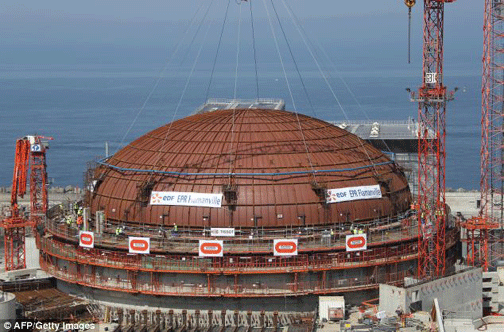
In Flamanville, EPR vibrations weigh down EDF
Blast 15th Jan 2025
https://www.blast-info.fr/articles/2025/a-flamanville-les-vibrations-de-lepr-plombent-edf-27fa5zyHQ6mpDzOKgti6kw
Last week, Luc Rémont, CEO of EDF received a worrying report from the engineers working on the Flamanville EPR. It reveals a recurring problem of excessive vibrations. And indicates that he does not know whether the EPR will be able to operate at full power. Revelations.
At EDF, troubles are flying in squadrons. This Tuesday, January 14, the Court of Auditors published a new report on the Flamanville EPR . The venerable institution on Rue Cambon (Paris) now estimates the final cost of the project at 23.7 billion euros. An amount that is significantly higher than the previous assessment made by the Court in 2020: 19.1 billion.
Kicking the donkey, the report specifies that “the calculations made by the Court result in a mediocre profitability for Flamanville 3” : the tiny margin that EDF could generate will not be enough to repay the cost of the loans! For that to happen, the EPR must one day operate at full power. And of that, even the EDF teams are no longer really convinced.
The scene takes place at a dinner party in Paris late last week. “We were in a meeting in the CEO’s office and everything was going well. But then he received a report from Flamanville and the atmosphere suddenly cooled,” says a senior executive of the electrician present at the meeting. If Luc Rémont, the CEO, did not fall off his seat when he read the report, he came close.
The cause? The engineers working on the reactor’s start-up have a doubt. And a big one. “They don’t know if the EPR will be able to operate at full power,” says this senior executive.
This question, which exists among many employees who worked on the nightmarish reactor construction site (twelve years behind schedule), is now shared by the teams who took charge of the reactor. And it is based on an observation: contrary to what EDF’s communication claims, the vibration problems affecting the primary circuit of the reactor are far from being resolved. “The report confirms that there are still problems with excessive vibrations,” says the decidedly very talkative manager.
At the meeting of the local information committee for the Flamanville nuclear power plant in April 2014, held a few days before the ASN authorised EDF to install nuclear fuel in the tank, the electrician had nevertheless brushed aside the issue of vibrations, stating, clearly a little too quickly, that everything was sorted .
But already in the floors of the general management in Paris, the knives are sharpening and the hunt for the culprit is open. Who will wear the hat? One name is on everyone’s mind: that of Alain Morvan , the director of the EPR project until last October, accused in veiled terms of having hidden too much dust under the carpet.
Contacted by email on Tuesday 14 January late in the morning, EDF indicated that it was sticking to its construction cost of 13.2 billion (excluding interim interest). But it refused to comment on our information on the vibrations. Questioned the same day also by email, the Nuclear Safety and Radiation Protection Authority (ASNR), resulting from the merger of the ASN with the IRSN, did not respond to us.
Dunfermline MP Graeme Downie calls for MoD commitment to dismantle dead nuclear submarines

ONE boat is being dismantled in Rosyth but there’s no commitment and no funding to deal with another 25 nuclear subs – with the total cost estimated to be around £300
million. That’s the concern of Dunfermline and Dollar MP Graeme Downie who
said a pledge to break up the other vessels would “guarantee decades of
work” at the dockyard. More than 200 people at Rosyth are already working
on HMS Swiftsure, it is being cut up and her radioactive waste removed as
part of a demonstrator project, and he said the site could become a
“worldwide centre of excellence for submarine dismantling”.
Dunfermline Press 15th Jan 2025,
https://www.dunfermlinepress.com/news/24860540.dunfermline-mp-graeme-downie-calls-mod-commitment/
Ask the locals: NFLA Chair says it is ‘prudent and proper’ for Nuclear Waste Services to consult residents over South Copeland flooding risk
The UK/Ireland Nuclear Free Local Authorities have urged Nuclear Waste
Services and the South Copeland GDF Community Partnership to ask the
residents of Millom and Haverigg for help in identifying local sites which
have been flooded.
As part of its ongoing effort to locate a potential site
for a Geological Disposal Facility, a repository into which Britain’s
legacy and future high-level radioactive waste will be dumped, NWS intends
to identity ‘Areas of Focus’ in the South Copeland Search Area which
incorporates the communities of Drigg, Haverigg, Kirksanton, and Millom.
These ‘Areas of Focus’ will be subject to more intensive geological
investigations and in the guidance published by NWS those sites ‘with
known flood risks’ will be excluded.
Sizewell C’s future in doubt as EDF told to prioritise French nuclear power
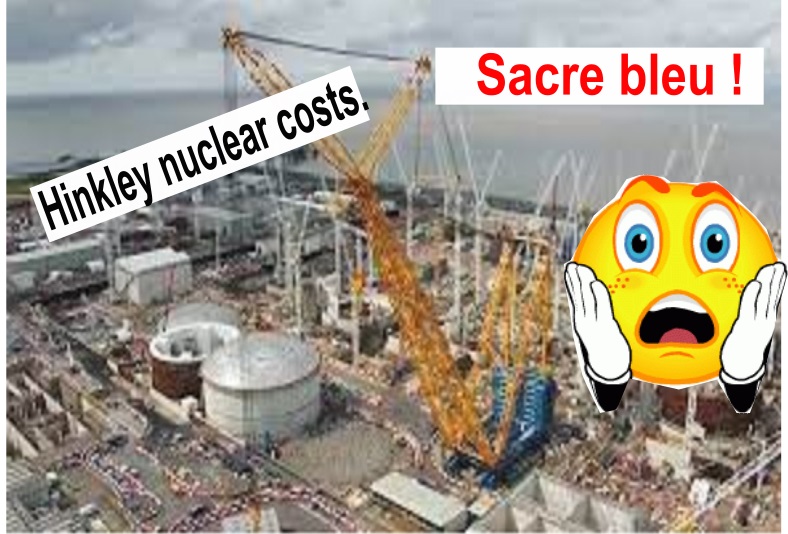
Auditor warns against costly foreign projects as energy giant considers investment decision into the plant
The future of Sizewell C has been thrown into doubt after EDF, the company
behind the project, was told to prioritise supporting nuclear power in
France. In a rare intervention, the French state auditor warned the
state-owned energy giant against backing risky new projects abroad, which
include plans to build a new nuclear power station in Suffolk.
Instead, the Cour de Comptes said EDF should focus on making a success of
multibillion-euro projects at home, ensuring they were profitable and built
on time. It comes as EDF prepares to make a final investment decision on
Sizewell C, which will increase its exposure in the UK given it is already
building Hinkley Point C in Somerset.
However, that project has been hit by
surging costs and delays, with the most recent forecasts saying it will
open after 2030 and cost around £45bn. Industry sources are also predicting
Sizewell C will cost £40bn to build, double EDF’s initial estimates in
2020.
EDF is working alongside the Government on Sizewell C, with £4bn of
taxpayer cash already spent on the project. However, the French auditor has
released a report saying EDF should not make a final investment decision on
the Sizewell project before cutting its financial exposure to Hinkley.
Telegraph 14th Jan 2025,
https://www.telegraph.co.uk/business/2025/01/14/sizewell-c-future-doubt-edf-told-prioritise-french-nuclear/
The EPR nuclear sector: new dynamics show persistent risks -La cour des comptes .

As recommended by the Court, the use of feedback and risk analysis has been
developed.
In addition to the excesses of the Flamanville 3 construction
site, the EPR reactors in operation in China (Taishan 1 and 2) and in
Finland (Olkiluoto 3) have experienced technical malfunctions in recent
years, with significant financial impacts, the consequences of which have
been damaging to the credibility of the EPR 2 programme.
In Great Britain, on the Hinkley Point construction site, EDF is facing a sharp increase in
costs accompanied by a further two-year delay, as well as a heavy
additional financing constraint caused by the withdrawal of the Chinese
co-shareholder.
As regards the new EPR project at Sizewell, delays are
already accumulating, with initial negative consequences in organisational
and financial terms. The Court recommends that a final investment decision
on this project should not be approved until a significant reduction in
EDF’s financial exposure to the Hinkley Point project has been achieved.
The Court also recommends ensuring that any new international nuclear
project generates quantified gains and does not delay the timetable for the
EPR 2 programme in France.
Cour des Comptes 14th Jan 2025, https://www.ccomptes.fr/fr/publications/la-filiere-epr-une-dynamique-nouvelle-des-risques-persistants
Cost of Sizewell C nuclear project expected to reach close to £40bn

“Nuclear is too expensive, too slow — and very expensive to contain at the end of its life.”
Final price tag for building new power plant is likely to be double 2020 estimate
Jim Pickard, Rachel Millard and Gill Plimmer , January 14 2025
The final price tag for building the planned Sizewell C nuclear power station in Suffolk is likely to reach close to £40bn, according to people close to the negotiations over the flagship energy scheme.
The sum is double the £20bn estimate given by developer EDF and the UK government for the project in 2020, reflecting surging construction costs as well as the implications of delays and cost overruns at sister site Hinkley Point C.
The higher estimate is likely to raise questions over the government’s strategy for a nuclear power revival, at a time of stretched government finances and cost of living concerns.
EDF says that once up and running, Sizewell C should be able to supply low carbon electricity to the equivalent of about 6mn homes for 60 years.
The Treasury is due to decide whether to go ahead with the project in this year’s multiyear spending review, according to officials.
The UK government and French energy group EDF were the initial backers of Sizewell C, but they are trying to raise billions of pounds from new investors, a process that is dragging on longer than planned.
Earlier this month the Department for Energy Security and Net Zero (Desnz) said it could not reveal the current cost estimate for the project as it was “commercially sensitive”. …………………
Alison Downes, executive director of campaign group Stop Sizewell C, urged the government to “come clean” on the “massive true cost” of the project given that households would be paying upfront for its construction via a levy on energy bills. “This secrecy around Sizewell C is inexcusable.”
Dale Vince, a big Labour party donor and founder of green energy company Ecotricity, has written to the government’s new Office for Value for Money warning that the construction of Sizewell “will saddle consumers with higher bills long before it delivers a single unit of electricity”.
But one senior government figure and two well-placed industry sources said a reasonable assumption for the cost of building Sizewell C would be about £40bn in 2025 prices.
The government has already awarded £3.7bn of state funding to the project. Ministers had planned to reach a final investment decision by the end of 2024 but were forced to delay this until spring 2025. Now there is industry speculation that any deal could slip beyond the autumn.
Speaking to the Financial Times, he added: “Nuclear is too expensive, too slow — and very expensive to contain at the end of its life”…………………………….
all but one of Britain’s current ageing fleet of plants is due to close by March 2030, potentially sooner if planned life extensions cannot go ahead.
Only one new nuclear power station, Hinkley Point C in Somerset, is at present being built in the UK but it is delayed and over budget.
The project is due to start generating in 2029 at the earliest, and cost up to £46bn. That compares with initial expectations from 2016 that it would start at the end of 2025 and cost £18bn. …………………….
there is scepticism inside government about how much lower Sizewell C’s price tag would be compared with Hinkley Point C………………………………
1 This Month
26 April – Chernobyl: Inside the Meltdown airs on National Geographic on Sunday 26th April from 4pm

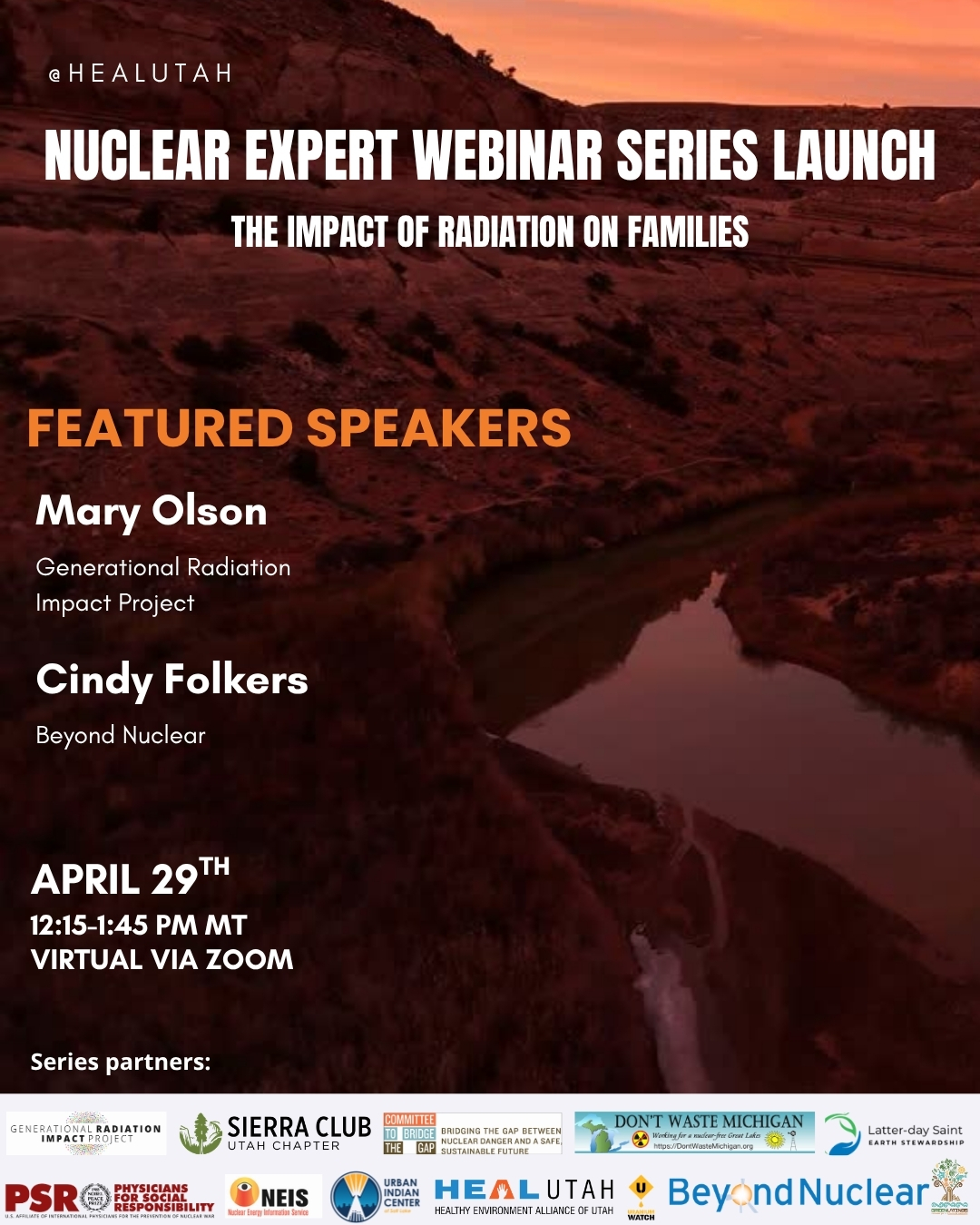
29 April – Nuclear Expert Webinar #1 – Radiation Impacts on Families with Mary Olson and Cindy Folkers
- 12:15 PM MT – 1:45 PM MT
- Location: Virtual – REGISTER TODAY

4 May -West Suburban Peace Coalition to discuss Iran war at May Educational Forum
Monday, May 4, 7:00 – 8:00 PM Central Standard Time
Title: : How Trump’s Narrative Tries to Shape the Reality of the War on Iran.
Contact Walt Zlotow, zlotow@hotmail.com 630 442 3045 for further information
14 May – online event From Bombs to Data Centres: the Face of Nuclear Colonialism

Pine Ridge Uranium is the real threat, not Tehran- Tell Burgum: Stop the Extraction.
Chernobyl: The Lost Tapes – A good documentary on Chernobyl on SBS available On Demand for the next 3 weeks– https://www.sbs.com.au/ondemand/tv-program/chernobyl-the-lost-tapes/2352741955560
To see nuclear-related stories in greater depth and intensity – go to https://nuclearinformation.wordpress.com
-
Archives
- April 2026 (327)
- March 2026 (251)
- February 2026 (268)
- January 2026 (308)
- December 2025 (358)
- November 2025 (359)
- October 2025 (376)
- September 2025 (257)
- August 2025 (319)
- July 2025 (230)
- June 2025 (348)
- May 2025 (261)
-
Categories
- 1
- 1 NUCLEAR ISSUES
- business and costs
- climate change
- culture and arts
- ENERGY
- environment
- health
- history
- indigenous issues
- Legal
- marketing of nuclear
- media
- opposition to nuclear
- PERSONAL STORIES
- politics
- politics international
- Religion and ethics
- safety
- secrets,lies and civil liberties
- spinbuster
- technology
- Uranium
- wastes
- weapons and war
- Women
- 2 WORLD
- ACTION
- AFRICA
- Atrocities
- AUSTRALIA
- Christina's notes
- Christina's themes
- culture and arts
- Events
- Fuk 2022
- Fuk 2023
- Fukushima 2017
- Fukushima 2018
- fukushima 2019
- Fukushima 2020
- Fukushima 2021
- general
- global warming
- Humour (God we need it)
- Nuclear
- RARE EARTHS
- Reference
- resources – print
- Resources -audiovicual
- Weekly Newsletter
- World
- World Nuclear
- YouTube
-
RSS
Entries RSS
Comments RSS
 nuclear-news