Thousands protest in South Korea against planned deployment of USA anti-missile system
 Protests as South Korean president defends US anti-missile system, West Australian, AFP on July 21, 2016, Seoul Several thousand South Koreans staged an angry protest Thursday against the planned deployment of a US anti-missile system near their hometown, but President Park Geun-Hye insisted the move was a national security imperative.
South Korea’s defence ministry announced last week the Terminal High Altitude Area Defence system, or THAAD, will be installed in Seongju — a rural county about 200 kilometres (135 miles) southeast of Seoul — by the end of next year.
The decision was predicated on the growing threat posed by North Korea’s advancing nuclear weapons and ballistic missile programme.
But Seongju residents say the THAAD deployment makes their county a strategic target and complain that it carries health and environmental hazards. “Let’s block the deployment of THAAD, a threat to peace on the Korean peninsula!” chanted some 2,000 protestors, waving flags and banners that read ‘No THAAD’ as they sat outside Seoul station on Thursday.
The protestors were surrounded by hundreds of police, amid concerns of a repetition of a violent standoff last Friday, which saw Prime Minister Hwang Kyo-Ahn pelted with eggs and water bottles…….https://au.news.yahoo.com/thewest/a/32117538/protests-as-south-korean-president-defends-us-anti-missile-system/#page1
USA’s THAAD nuclear ‘missile offense’ launchers make South Korea a prime target: protestors revolt
Citizens Revolt in South Korea http://space4peace.blogspot.com.au/2016/07/citizens-revolt-in-south-korea.html : BRUCE K. GAGNON 15 Jul 16 Yonhap News reports:
Prime Minister Hwang Kyo-ahn visited the town of Seongju, which was tapped as the site for the deployment of an advanced U.S. missile defense system, on Friday, in the face of strong opposition from the residents who questioned the safety and legitimacy of the government’s decision.
The trip is seen as a move to alleviate concerns that residents may have about the health issues related to the missile system’s powerful radar and questions raised about the fairness of the government’s decision-making process.
“I would like to apologize for making the decision without prior notice,” Hwang said during his visit, adding that the government will make efforts to ease residents’ concerns over the safety.
During his visit, however, protesters threw water bottles and eggs at Hwang, reflecting their anger over the deployment.
The prime minister was blocked by resentful residents and physically barred from leaving the county for more than six hours.
There is a real revolt going on in South Korea. The US is forcing the South Korean government to deploy THAAD ‘missile offense’ launchers and the people know that it makes them a prime target. Koreans can see the provocative steps the US is taking in the region against China and they know how crazy the leadership in the US actually is. They’ve been through one war involving the US already and are not interested in another
The shine has come off the American coin and the world ain’t buy the script anymore. Sadly there is still half the population in the US that believes the official Washington line (including many ‘liberals’ who support Hillary Clinton).
The world is turning against corporate control of the planet. We are in for a rough patch ahead. The story today about a coup d’etat in Turkey indicates the CIA’s operatives in the Turkish military took down President Erdogan because in recent days he apologized to Russia for shooting down their plane and began to alter his war with Syria. My initial reaction is that US-NATO were not happy with that change of tune and decided to take him out. More on that one as things develop.
South Korea’s nuclear waste dilemma: will have to build waste dump
South Korea looks to build used fuel store http://www.neimagazine.com/news/newssouth-korea-looks-to-build-used-fuel-store-4907688 30 May 2016 South Korea will select a site for an underground storage facility to permanently dispose used nuclear fuel, or high-level radioactive waste, by 2028 and complete the construction of the facility by 2053, according to the first roadmap for the project released by the Ministry of Trade, Industry and Energy on 25 May.
“A further delay in building the facility will put a drag on future generations, considering the saturation level of interim storage units located in the nuclear power complexes nationwide, ” Chae Hee-bong, the ministry’s energy policy director, told a press briefing.
Korea has 24 nuclear power units which produce more than 700t of used nuclear fuel annually. According to ministry data, the first used fuel storage unit to become full will be at the Wolsong NPP in Gyeongju, North Gyeongsang Province, in 2019.

Korea has no other choice than storage as it is strictly banned from reprocessing under a 1973 treaty with the USA. The government has been trying to find a site for the wastes since 1983, but has failed nine times because of local protests. The government said the country is running out of storage units.
To minimize public resistance in the course of a site selection, the ministry will adopt an open competition among geologically qualified sites. It will launch an independent committee to lead the site selection next year, following an approval by the National Assembly on the roadmap in the latter part of this year. The roadmap will be updated in five years embracing changing external conditions, the ministry added.
The ministry’s ‘road map’ is based on recommendations from the Public Engagement Commission, an independent advisory group set up in 2013. The ministry will hold a public hearing next month, followed by an inter-agency meeting chaired by the prime minister in July.
Park Dong-il, director of the nuclear power environment division at the ministry said: “It will take about 12 years to select the location and we will hear what they want to receive from the government and make deals during this period,” said. He added that the government will decide what kind of benefits or incentives to give to areas that want to build storage facilities.
According to the ministry, it will take the government about eight years to select the site and get feedback from local residents, and another four years to investigate the geological chracteristics of the site. The project was expected to cost some KRW53,000bn ($44.8bn) in 2013 but a government official said it is now looking at an estimated cost of KRW63,000bn.
Meanwhile, the Korean government opened its first low-and intermediate-level radioactive waste facility in Gyeongju, North Gyeongsang, last year. The government wanted to build a high-level facility there but faced opposition from residents.
Japan and South Korea lean towards getting nuclear weapons
 Japan and South Korea May Soon Go Nuclear http://www.wsj.com/articles/japan-and-south-korea-may-soon-go-nuclear-1462738914 The longtime status quo is crumbling and plutonium stockpiles are rising. HENRY SOKOLSKI May 8, 2016
On Friday North Korean dictator Kim Jong Un praised his country’s recent hydrogen bomb test and satellite launch as “unprecedented” achievements that will “bring the final victory of the revolution.” Such rhetoric is nothing new, but North Korea’s nuclear-weapons program and a growing sense that security arrangements with the U.S. aren’t sufficient has eroded the Japanese taboo against nuclear weapons. On April 1, Prime Minister Shinzo Abe’s cabinet announcedthat Japan’s constitution did not ban his country from having or using nuclear arms.
Meanwhile, South Korea’s ruling-party leaders have urged President Park Geun-hye to stockpile “peaceful” plutonium as a military hedge against its neighbors. A Feb. 19 article in Seoul’s leading conservative daily, the Chosun Ilbo, went so far as to detail how South Korea could use its existing civilian nuclear facilities to build a bomb in 18 months.
Japan and South Korea are party to the Nuclear Nonproliferation Treaty, and Tokyo’s antinuclear-weapons stance dates to 1945 and the nuclear devastation the U.S. wreaked on Hiroshima and Nagasaki. But that won’t necessarily stop either country from joining the nuclear club—or at least positioning themselves to do so quickly—if they feel the U.S. “nuclear umbrella” is folding.
Japan already has stockpiled 11 tons of plutonium, separated from fuel used in its nuclear-power reactors. A bomb requires roughly five kilograms (or 1/200th of a ton). The old shibboleth, popular with the nuclear industry, that such “reactor-grade” plutonium is unsuitable for weapons, is essentially irrelevant for a technologically advanced country. Japan also has built—but not operated—a large reprocessing plant of French design that can separate about eight tons of plutonium a year.
The shutdown of Japan’s power reactors following the 2011 Fukushima disaster means there are no reactors online that can use this plutonium. But Japan says it will proceed with reprocessing anyway, putatively to keep open the distant possibility of fueling a new generation of so-called fast-breeder reactors. Japan’s nuclear cooperation agreement with Washington allows it to do this with U.S.-origin fuel. South Korea’s agreement prohibits this without U.S. approval, something Seoul chafes at. It sees itself the equal of Japan. Should Japan operate Rokkasho, as it plans to do late in 2018, it will be impossible politically to restrain South Korea from following suit.
China, meanwhile, is negotiating with France to build a reprocessing plant similar to Japan’s. One might discount the security significance of this; Beijing already has nuclear weapons. But a large reprocessing plant would allow it to expand its nuclear arsenal far beyond its present size. The Chinese are clearly aware of the military significance of nominally civilian plutonium. Consider their loud and repeated complaints about Japan’s plutonium stocks.
The Asian goal of stockpiling plutonium to launch a new generation of plutonium-fueled fast-breeder reactors is one shared with nuclear enthusiasts in the West. But fast reactors are so much more expensive than conventional uranium-burning reactors that they, and the reprocessing of spent fuel they require, have never made economic sense. In Tokyo, Seoul and Beijing there are government officials and advisers who understand this and the security risks of commercializing plutonium. But their concerns have been trumped by nationalistic demands not to fall behind in plutonium technology.
The obvious fix, which would be economically beneficial for Japan, South Korea and China, is a collective pause in the rush toward civil plutonium. For the U.S. to credibly broker this, Capitol Hill needs to support the Energy Department’s February decision to terminate the construction in South Carolina of a plutonium plant designed to fuel U.S. power reactors that is billions over budget and years behind schedule.
An Asian-U.S. plutonium pause has support within the administration and Congress. Energy Secretary Ernest Monizrecently told the Journal’s Beijing office: “We don’t support large-scale reprocessing.” He said a large commercial Chinese reprocessing plant “certainly isn’t a positive in terms of nonproliferation.”
At a March hearing of the Senate Foreign Relations Committee, Sens.Bob Corker (R., Tenn.) and Ed Markey (D., Mass.), both backed a “time out” on East Asian plutonium recycling. Assistant Secretary of State Thomas Countryman agreed: “I would be very happy to see all countries get out of the plutonium reprocessing business.” In the House a plutonium timeout has been championed by Reps. Brad Sherman (D., Calif.), Jeff Fortenberry (R., Neb.) and Adam Schiff (D., Calif.).
They understand that a collective plutonium timeout would calm East Asia and save our Asian allies, China and the U.S. hundreds of billions of dollars. President Obama, with less than a year in office to make a lasting contribution to nuclear nonproliferation, should feel comfortable backing this proposal.
Mr. Sokolski is the executive director of the Nonproliferation Policy Education Center and the author of “Underestimated: Our Not So Peaceful Nuclear Future” (Strategic Studies Institute, 2016).
Cities can thrive nuclear free – Seoul shows the way
Seoul’s success provides testimony that a nuclear free energy supply can be a reality for a densely populated city, through innovative measures in terms of policy making and public land use.
Seoul’s initiative shows that it is possible to mobilise communities within a short period of time and achieve significant results. It demonstrates that even one city can fulfill the vision of energy self-reliance.
 Can Hong Kong become nuclear-free? https://www.hongkongfp.com/2016/03/11/can-hong-kong-become-nuclear-free/ 11 March 2016 10:27 Greenpeace By Frances Yeung, Greenpeace Senior Campaigner
Today marks the 5th anniversary of the Fukushima nuclear disaster and with it, five years of struggle by Japan to improve energy efficiency as it strives to go nuclear-free. As the repercussions of Fukushima were felt around the world, making governments and communities re-evaluate their dependency on nuclear power, here in Hong Kong we’ve spent the past five years stuck in the same nuclear debate. Nuclear-free naysayers continue think going nuclear-free in Hong Kong is meaningless if the Chinese government is pro-nuclear in its energy policy.
To those who have thrown up their hands and turned their backs on safe, sustainable energy solutions, I urge them to look to Seoul and the solution one city government successfully rolled out in opposition to national energy interests. South Korea’s central government actively develops nuclear power, yet the Seoul Metropolitan Government (SMG) has been exploring a sustainable energy solution as a nuclear alternative since the immediate aftermath of the Fukushima nuclear accident.
To better understand South Korea’s reliance on nuclear energy one must only look at the numbers. There are 25 reactors in South Korea supplying 30 per cent of the country’s demand; and the government is planning to build 14 more in the next 20 years, arguing that it is necessary in order to meet growing power consumption. To encourage and promote a nuclear-free environment after the Fukushima disaster, Seoul citizens initiated energy-saving campaigns in their communities. That same year, , a human rights lawyer and an independent candidate, became mayor of Seoul, winning against the ruling party’s campaign. Shortly after taking office, Park and the SMG pushed forward the ‘One Less Nuclear Power Plant’ initiative, opposing the national government’s policy. It is important to note that Seoul accounts for 10 per cent of national nuclear energy consumption.
The first phase of ‘One Less Nuclear Power Plant’ was implemented in 2012 and ran through 2014, to boost renewables production in Seoul and achieve energy conservation of 2 million TOE (tonnes of oil equivalent), an amount equal to the average annual electricity production of one nuclear plant. The goal was achieved six months ahead of schedule. During the three-year implementation of the first phase of the initiative, the overall electricity consumption in South Korea rose by 5%, even as it dropped by 4% in Seoul. The SMG, led by Park, then launched the second phase, to reduce energy consumption by a further 4 million TOE by 2020.
Seoul’s success shows that energy conservation and renewable electricity production can replace nuclear power while meeting energy demand. Regardless of these results, the South Korean government continues to build new reactors to meet the “continued increase in national electricity demand”.
Seoul’s anti-nuclear policy has created interest both at home and abroad. The heads of local governments from Seoul, Gyeonggi, and Jeju released a joint statement in November to reaffirm their commitment to stepping up the development of renewable energy. At the same time, Taiwan’s newly-elected president, Tsai Ing-wen, announced last year that the nation’s Democratic Progressive Party would initiate a similar plan in the cities and counties it governs.
Seoul’s initiative shows that it is possible to mobilise communities within a short period of time and achieve significant results. It demonstrates that even one city can fulfill the vision of energy self-reliance. The SMG launched 23 measures and 71 programmes over three years including offering vacant public space to businesses and community groups at low rents to build solar power stations; introducing the Energy Self-reliant Community movement to provide funds to residents to promote energy efficiency and installing small renewable energy facilities; and cooperating with enterprises to assist property owners to improve energy efficiency in buildings, by means of LED lights, insulated windows, and other energy-saving equipment, as well as low-interest government loans.
Seoul’s success provides testimony that a nuclear free energy supply can be a reality for a densely populated city, through innovative measures in terms of policy making and public land use. For instance, the SMG installed steel structures in water treatment plants to support solar panels on top of water pools. It also implemented the Eco-Mileage programme in which citizens who save energy can receive mileage points for buying eco-friendly products, cinema tickets, and recharging transportation cards. So far, 42% of the city’s households (1.48 million) have taken part in the programme.
As we mourn the Fukushima disaster we also note that the Hong Kong government has shirked its responsibility to create a proactive renewable energy strategy and chosen instead to highlight land issues and cost effectiveness. We have an immediate opportunity, however, since the electricity supply contract with the Daya Bay nuclear plant ends in 2034. The plant will have been operating for over 40 years and will reach the end of the average lifespan of a nuclear plant by then. The plant should be closed for the sake of safety.
We can also make great strides towards nuclear free safety by carrying out the Hong Kong government’s plan to replace coal with natural gas. Along with reducing electricity use by 20% in the coming 20 years and boosting renewable energy use to 10%, Greenpeace calculates that a halt in the use of nuclear energy is achievable.
When he met with Greenpeace, Seoul mayor Park Won-soon said firmly that nuclear power is far from safe and is expensive, especially in regard to the cost of nuclear waste disposal. The underlying stance of ‘One Less Nuclear Power Plant’ might differ from the energy policy of the South Korean government, yet he suggested that it is the responsibility of the city government to reduce the use of nuclear power to safeguard the wellbeing of its citizens. Hong Kong enjoys no lesser degree of autonomy than Seoul in energy policy making. As long as the government is willing to step outside of its comfort zone and take action on behalf of its communities, a nuclear free Hong Kong will immediately become a real and vivid possibility.
S. Korea rejects calls for nuclear armament
|
South Korea on Tuesday rejected public calls for the country’s own nuclear armament, saying it remains firmly committed to the global nonproliferation regime. – Korea Times, 23 Feb 16
|
Pyongyang orders South Koreans out of Kaesong, labels closure of industrial zone ‘declaration of war’
North Korea says it is kicking out all South Koreans from the jointly run Kaesong industrial zone and freezing the assets of companies operating there, calling the South’s move to suspend operations a “declaration of war”…….
http://www.abc.net.au/news/2016-02-11/north-korea-says-south-kaesong-withdrawl-declaration-of-war/7161700
South Korea’s President Park under pressure from nuclear weapons lobby
Pressure For South Korea To ‘Go Nuclear’ For Defense Against North’s Arsenal, Forbes, Donald Kirk , CONTRIBUTOR , 4 Feb 16
North Korea’s success in conducting a fourth nuclear test has ignited calls for South Korea also to produce nuclear warheads as a “defensive” measure that could heighten the balance of terror that already threatens the Korean peninsula.
South Korean nuclear physicists and engineers have been tinkering with developing nuclear warheads since 1970 but have been frustrated by U.S. insistence that the South abide by the nuclear non-proliferation treaty, which the South signed under U.S. pressure in 1975. The most they can do, under a deal reached with the U.S. last year, is to enrich uranium up to 20% — way above the 4% level for nuclear energy but far below the level for nuclear warheads……..
Calls for South Korea to develop a nuclear arsenal are heard in public, in the media and in political gatherings. The conservative Chosun Ilbo, South Korea’s biggest-selling newspaper, articulated the argument in an editorial reflecting the widespread view that China will do nothing to stop North Korea from exploding more warheads and firing more missiles – and that sanctions against the North will be weak and ineffective……..
At the same time, South Korea would have to abrogate the agreement signed by both Koreas in 1991 for denuclearizing the Korean peninsula – a deal that the North violated from the outset.
‘The U.S. has passed the buck for taming North Korea to China,’ said Chosun Ilbo. “China is doing nothing. Seoul now faces a real need for public discussion of the development of its own nuclear weapons.”
GlobalSecurity.org, a website that specializes in such issues, traced South Korea’s recurring interest in developing its own nukes back to the presidency of Park Chung-hee, father of the current president, Park Geun-hye……..
The current President Park has said her government will abide by the 1991 denuclearization agreement, but she faces rising demands at least for a review of longstanding policy……http://www.forbes.com/sites/donaldkirk/2016/02/04/pressure-mounts-in-south-korea-for-its-own-nukes-to-combat-north-koreas-nuclear-arsenal/#3e42677c345f
Simulated pre-emptive nuclear strike on North Korea in the planning?

 US and South Korea plan simulated nuclear strike on North Korea http://www.telegraph.co.uk/news/worldnews/asia/northkorea/12099482/US-and-South-Korea-plan-simulated-nuclear-strike-on-North-Korea.htmlUpdated plans would help them prepare their defenses against a potential nuclear strike from Pyongyang By Julian Ryall, Tokyo. 14 Jan 2016
In November, the two governments agreed upon an updated set of plans to defend South Korea from missile, nuclear, chemical and biological threats. Known as the 4D Operational Concept, the plans are designed to detect, disrupt, destroy and defend the South from threats posed by the North.
The additional capability would be on top of the military hardware that South Korea has asked its closest security partner to provide.
In the wake of Pyongyang’s fourth underground nuclear test on January 6, however, Seoul and Washington are examining the possibility of conducting manoeuvers to extend the reach of the plan, the Chosun Ilbo reported on Thursday. The two countries are discussing ways to reflect parts of the 4D concept during the joint annual exercises in March and then to develop it as a full scale operational system”, an official of the defence ministry in Seoul told the newspaper.
Analysts say the two governments – along with others in the region – will have drawn up contingency plans for a number of possible scenarios on the Korean peninsula, including indications of an imminent nuclear strike, an invasion of the South with conventional forces or the collapse of Kim Jong-un’s regime.
One situation that military planners are particularly concerned about would be the current regime imploding but a number of factions – potentially armed with nuclear or other non-conventional weapons – jostling for power.
“North Korean assets that are capable of waging nuclear war will obviously be of the highest priority”, Lance Gatling, a defence analyst and president of Nexial Research Inc., told the Telegraph.
“These will be the mobile launch tractors that the North has for its tactical medium-range ballistic missiles, which can reach targets in South Korea and Japan”, he said.
“They will also be targeting the openings to underground facilities where weapons are stored in preparation for launch, although it can be very difficult to find all these sites”.
The US has said it will “not accept North Korea as a nuclear armed state”.
Pyongyang has in the past condemned joint US-South Korean military exercises as provocation and preparations for an invasion of the North. It is likely to react angrily to suggestions that its perceived enemies are preparing a first-strike capability.
Propaganda war between the two Koreas
 Koreas Ramp Up Psychological Warfare After Nuclear Test VOA News, Brian Padden January 14, 2016 SEOUL—North Korea’s fourth nuclear test earlier this month ended a short period of inter-Korean cooperation and restarted the Cold War standoff between Seoul and Pyongyang.
While avoiding direct military confrontation that could easily escalate into a hot war, both North and South have resumed psychological war games and tactical maneuvers to demonstrate military readiness and resolve.
On Wednesday a suspected North Korean drone was sighted crossing the inter-Korean demilitarized zone. South Korean forces responded by firing about 20 machine gun rounds at the unidentified flying object but apparently did not hit it.
“Our military fired warning shots after broadcasting a warning. Then it returned to the northern side of the border right away,” said Jeon Ha-gyu, the head of public affairs for the Joint Chiefs of Staff of South Korea’s armed forces.
North Korean propaganda
There have also been reports this week of pro-North Korean leaflets scattered throughout Seoul and its suburban areas. South Korea’s military suspects the propaganda leaflets were sent from the North by hot air balloons.
“North Korea was seen scattering leaflets from the northern area yesterday afternoon and early this morning,” Jeon said Wednesday. …….
Defense officials from China and South Korea are scheduled to meet Friday in Seoul to discuss the increasingly tense security situation on the Korean peninsula. http://www.voanews.com/content/koreas-ramp-up-psychological-warfare-after-nuclear-test/3145316.html
Highest alert level for US military in South Korea
 North Korea: US forces in South put on highest level of alert; allies discuss ‘strategic assets’ , ABC News, 11 Jan 16
Key points:
- Media reports say a US aircraft carrier, B-2 bombers, submarines and F-22 fighters being considered for deployment to South
- Inter-Korean Kaesong industrial park restrictions to increase on Tuesday
- South Korea and Japan used a military hotline for the first time after North’s test
- North’s state media says Kim Jong-un congratulated nuclear scientists
The US and its ally South Korea are in talks to send further strategic assets to the Korean peninsula, a day after a US B-52 bomber flew over the South in response to the test…..
Under the US-South Korea military alliance, there are nearly 30,000 US troops permanently stationed in South Korea, which is also protected by the US “nuclear umbrella”. http://www.abc.net.au/news/2016-01-11/us-troops-in-south-korea-on-high-alert-after-north-nuclear-test/7081296
Intense unpopularity of nuclear industry in South Korea
Bitter Debate Over Nuclear Power Simmers in Rural South Korea, NYT By CHOE SANG-HUN JAN. 5, 2016“……… in 2010, the 399 mostly older people who made up the population of three villages agreed to give up their land and their centuries-old way of life to make room for something few other places wanted: a nuclear power plant.
That act plunged the surrounding Yeongdeok County into a bitter debate over whether the plant would be a savior or a death knell. The clash also revealed the depth of despair in South Korea’s increasingly empty rural communities, as well as growing misgivings about the country’s heavy dependence on nuclear power…….
villagers like Shin Wang-ki, 56, who grows pears, apples and peaches and believed that a plant would mean the end to a longstanding and cherished way of life.
“No way! Who’s going to buy fruits or crabs from an area near a nuclear power plant?” he said. “I inherited a clean land from my ancestors and want to leave it untainted for my children.”……..
In 2012, South Korea selected Yeongdeok and Samcheok, a coastal city to the north, as sites for new reactors.
Yet by then, skepticism — and anxiety — was spreading. First came the 2011 Fukushima disaster in Japan. Then came another shock: Reports that emerged after a series of scandals revealed that nuclear power plants across South Korea had been using parts whose safety test results were faked.
Last year, a new mayor in Samcheok called a referendum in which residents voted against the decision made under the previous mayor. When the mayor of Yeongdeok refused to do likewise, residents opposed to the plant began organizing and outside activists poured in. They called a referendum on their own in November.
The government and Korea Hydro & Nuclear Power Company, the country’s operator of nuclear power plants, urged residents not to take part in the referendum, which they called illegal because a state project was not subject to a county-level plebiscite. They also accused the outsiders of bringing antinuclear activism here to impede an important national project. Antinuclear villagers went on hunger strikes, accusing Korea Hydro & Nuclear Power executives of bribing older villagers with watermelons and other gifts.
“People yelled at each other,” said Kwon Tae-hwan, who runs a local Internet news site. “They waged a war of banners, every single back alley strung with rival placards.”
About 11,000 county residents participated in the referendum. Of them, nearly 92 percent voted against a nuclear power plant.
Antinuclear activists claimed victory, while the government dismissed the result and reconfirmed its plan to build a plant here.The civil disobedience in Yeongdeok represented only one of the many challenges South Korea’s nuclear power industry faced, problems it never had to confront when the first reactor went into operation in 1978 under an authoritarian government. In June, a government committee warned that beginning in 2019, old plants would run out of storage space for high-level radioactive wastes. The country urgently needed to build a new, central repository for such wastes, it said.
But the government could not even start looking. Residents of Miryang, a village in the southeast, have recently staged prolonged protests, including a self-immolation, to oppose a far smaller potential hazard: high-voltage transmission towers to carry electricity from a distant nuclear plant…….Residents on both sides of the nuclear question are waiting for parliamentary elections in April, when candidates from Yeongdeok will be asked to take sides.
“Among people here, what the government said used to be the law and truth,” said Kim Eok-nam, 47, who believed his dream of marketing organic farm produce would evaporate with the arrival of a nuclear plant. “But over this nuclear power project, we will show we are no rural pushover.” http://www.nytimes.com/2016/01/06/world/asia/south-korea-nuclear-power.html?_r=0
Radioactivity in seafoods, especially from Russia, found in South Korea
| Study finds 5.3% of domestic and Russian seafood contains radioactive material http://english.hani.co.kr/arti/english_edition/e_international/723574.html By Kim Young-dong, staff reporter Please direct questions or comments to [english@hani.co.kr |
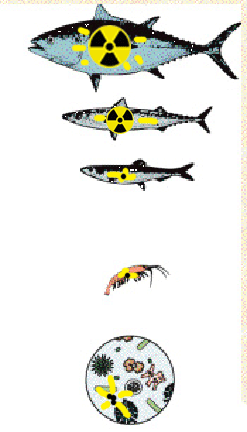 Dec.26,2015 Highest rates of Ce-137 detected in Russian cod, though overall rate for domestic and imported seafood actually down 1.4% from last year
Radioactive material was discovered at detectable levels in domestic and Russian seafood products, a recent study confirms.
The news comes amid growing concerns about radiation contamination in seafood products entering the country since the 2011 disaster at Japan’s Fukushima I Nuclear Power Plant. In response, environmental groups are calling for more intensive inspections of seafood for radioactivity.
The findings were announced on Dec. 23 after a study by three groups: the Institute for Environment & Community Development Studies (IECDS), the Korea Radiation Watch Center, and the Gwangju chapter of the Korean Federation for Environmental Movement. Analysis of 150 samples of mackerel, pollock, cod, kelp, and sea mustard taken from discount stores and markets in Seoul, Busan, and Gwangju between March and November showed the presence of radioactive cesium-137 in eight of them, or 5.3%.
Cesium-137 is considered one of the chief examples of a radioactive isotope detected in the process of artificial nuclear fission, with an acceptable standard of 100 becquerels per kilogram.
The isotope was found in samples of pollock and cod from Russia and domestic mackerel and kelp at levels of 0.37 to 1.09 becquerels per kilogram. The highest rate of detection was for Russian cod at 13%, followed by Russian pollock at 11.5%, Korean kelp at 7.7%, and Korean mackerel at 3.3%.
By place of origin, Russian products showed the highest detection rate at 13.3% (six out of 45 samples), compared to a 3.2% rate for domestic products (two out of 63 samples). No radioactive material was found in other imported seafood.
The overall Ce-137 detection rate for domestic and imported seafood was down slightly from a similar survey conducted last year, falling from 6.7% to 5.3%. But the rate for Russian products showed a slight increase from 13% last year to 13.3% in 2015.
“The radioactive material detection rate for Russian products was quite high. We need greater monitoring and more stringent standards,” said IECDS researcher Min Eun-ju. “We also need to figure out the cause behind the radioactive material detected in Korean sea grasses and take appropriate steps,” Min added.
Min also weighed in on the South Korean government’s current plans to consider lifting import bans on seafood from eight Japanese prefectures. “If that happens, there will be no way to stop the import of seafood contaminated with radioactivity. We should be beefing up our standards, not loosening them, and we should be responding forcefully to the Japanese government’s complaint with the World Trade Organization,” she said.
Ce-137 has a half-life of over thirty years and is known to cause radiation exposure within the body as it accumulates in muscles and subcutaneous fat. The details of its effects on the human body from exposure through accumulation of small amounts remain unknown. By Kim Young-dong, staff reporter Please direct questions or comments to [english@hani.co.kr]
Talks between officials of North Korea and South Korea
North Korea, South Korea Hold Rare Talks Following Clashes, IBT, By Aditya Kondalamahanty on November 26 2015 North Korean and South Korean officials met in a demilitarized village on the border Thursday, to hold talks aimed at initiating sustainable communication between the two countries, according to reports. The rare meeting is the first intergovernmental interaction since August when the two sides met to defuse a crisis that had pushed them to the brink of an armed conflict.
Held in the border village of Panmunjom, about 34 miles north of Seoul, the meeting saw the two sides ironing out a framework to resume high-level talks, although they did not arrive at a precise timeline. Both countries signed a joint agreement agreeing on details such as who would represent their respective governments and the issues that would be on the agenda…….
Yoo Ho-yeol, a professor of North Korean studies at Korea University, said, according to Yonhap News Agency: “The North will likely call on Seoul to lift its sanctions against the North and to reopen the Kumgang tour program. The South is expected to raise the issue of family reunions.”
In October, the two Koreas conducted reunion of families, separated by the 1950-53 Korean War, as part of a deal signed in August. South Korea seeks to regularize the reunions while the cash-strapped North Korea has demanded that Seoul allow South Korean tour groups to its scenic Mount Kumgang resort.
Earlier in November, South Korean President Park Geun-hye said she was open to a summit with North Korean leader Kim Jong Un if the latter agreed to give up nuclear weapons and focus sincerely on inter-Korean ties. http://www.ibtimes.com/north-korea-south-korea-hold-rare-talks-following-clashes-2201165
UN Secretary-General Ban Ki-moon to visit North Korea – hope of diplomatic progress?
Hopes rise of nuclear breakthrough as UN chief visits North Korea, The Scotsman, 17 Nov 15 UN Secretary-General Ban Ki-moon is expected to visit Pyongyang this week for a possible meeting with leader Kim Jong Un.
The trip would come six months after Pyongyang at the last minute cancelled an invitation for Mr Ban to visit an inter-Korean factory park in the North Korean city of Kaesong. Mr Ban has said North Korea gave no reason for the cancellation. He had not planned to visit Pyongyang at that time.
South Korean news agency Yonhap cited an unidentified source in the UN when it reported Mr Ban’s Pyongyang trip. It gave no details on the purpose of the trip or the day it would take place.
If the trip does take place, Mr Ban would be the first UN head to visit North Korea since Boutros Boutros-Ghali in 1993. Yonhap, quoting a UN source, said Mr Ban is expected to meet Mr Kim because it is unlikely for the secretary-general to visit a UN member state without meeting the country’s leader.
1 This Month
22 June – Virtual Event –Climate Change: New Data, New Debate

Monday, June 22, 2026 2:30 p.m. – 3:15 p.m. CT
YouTube. Register here

Protect Sazan Island from the Trump family! https://secure.avaaz.org/campaign/en/protect_sazan_island_from_the_trump_family_loc/?bqFCVab&v=174511&cl=22707147157&_checksum=5e9dde668860e8231c33699735e16a1fbf22ab2cb01da50c999fe8732b9775ef&utm_source=email&utm_medium=blast_email&utm_campaign=174511
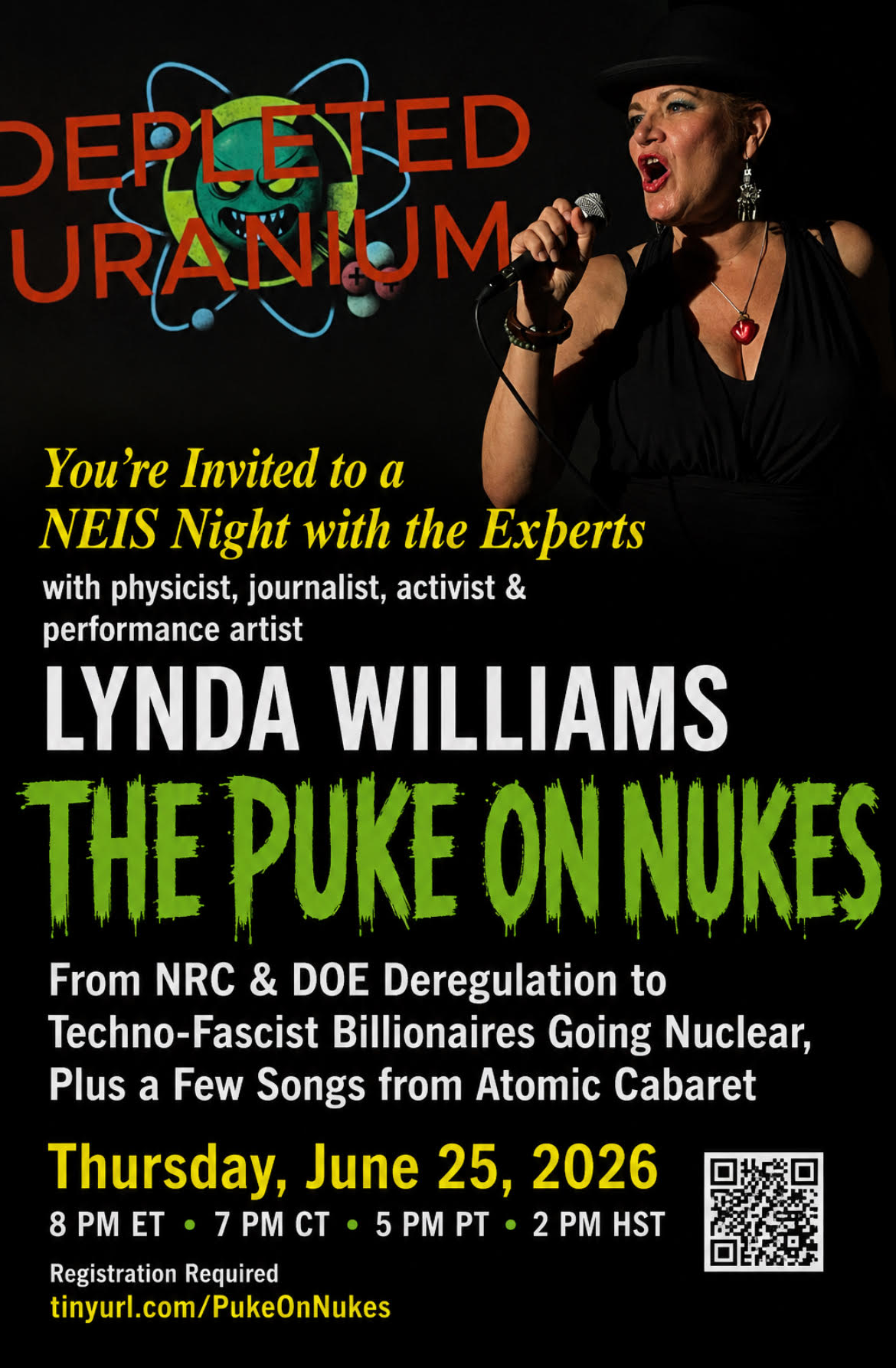
25 June- THE PUKE ON NUKES
Thursday, June 25, 2026
7pm Central Time (8pm ET, 6pm MT, 5pm PT) UTC – 5
From NRC & DOE Deregulation to Techno-Fascist Billionaires Going Nuclear, Plus a Few Songs from Atomic Cabaret REGISTER
26 June – Radiation Trainwreck at the NRC / Join the Protect Better Campaign – https://us02web.zoom.us/meeting/register/4ZlZ5_qLSHGiLSCg8FF6Bg#/registration


Cuba Is Not a Failed State – It Is a Besieged State
PETITION: “Global Appeal to Endorse Palestinian Right of Return of Refugees”
To see nuclear-related stories in greater depth and intensity – go to https://nuclearinformation.wordpress.com
-
Archives
- June 2026 (193)
- May 2026 (306)
- April 2026 (356)
- March 2026 (251)
- February 2026 (268)
- January 2026 (308)
- December 2025 (358)
- November 2025 (359)
- October 2025 (376)
- September 2025 (257)
- August 2025 (319)
- July 2025 (230)
-
Categories
- 1
- 1 NUCLEAR ISSUES
- business and costs
- climate change
- culture and arts
- ENERGY
- environment
- health
- history
- indigenous issues
- Legal
- marketing of nuclear
- media
- opposition to nuclear
- PERSONAL STORIES
- politics
- politics international
- Religion and ethics
- safety
- secrets,lies and civil liberties
- spinbuster
- technology
- Uranium
- wastes
- weapons and war
- Women
- 2 WORLD
- ACTION
- AFRICA
- Atrocities
- AUSTRALIA
- Christina's notes
- Christina's themes
- culture and arts
- Events
- Fuk 2022
- Fuk 2023
- Fukushima 2017
- Fukushima 2018
- fukushima 2019
- Fukushima 2020
- Fukushima 2021
- general
- global warming
- Humour (God we need it)
- Nuclear
- RARE EARTHS
- Reference
- resources – print
- Resources -audiovicual
- Weekly Newsletter
- World
- World Nuclear
- YouTube
-
RSS
Entries RSS
Comments RSS
 nuclear-news