China to boost energy storage capacity to fuel renewable power use, Reuters, OCTOBER 12, 2017
Reuters Staff, BEIJING, – China aims to boost its large-scale energy storage capacity over the next decade, the government’s central planner said, in a major push to solve the problem of stranded power in the west of the country as Beijing promotes the use of more renewable power……..
Storage technology like batteries can help preserve renewable power when demand is low and save it for distribution when consumption picks up. Sufficient storage would prevent power generation being curtailed due to surplus supplies.
A key part of the plan is to issue subsidies to energy storage companies to spur the construction of new power-saving facilities, according to a statement issued by the National Development and Reform Commission (NDRC) on Wednesday. Details of the subsidy were not disclosed.
The government will also launch some pilot projects to test advances in energy storage technology, such as pumped hydro storage, compressed air energy storage, superconducting magnetic energy storage and bulk storage with batteries using substances like lead-acid lithium-ion, the statement said.
Those programmes are expected to be completed by the end of 2020, with the aim of putting the projects into large-scale production five years after that, it said.
China nuclear energy and coal company partner to make traveling wave nuclear reactor,brian wang, next big FutureOctober 2, 2017, The China National Nuclear Corp (CNNC) has signed an agreement with the Shenhua Group, China’s biggest coal producer, to promote the development of advanced “traveling wave” reactor technology, the state nuclear giant said.
At a ceremony on Tuesday, the two sides signed an investment agreement to promote fourth-generation traveling wave reactors (TWR), CNNC said in a notice posted on its website. The deal also involved the Zhejiang Energy Group and the Hebei Construction and Investment Group.
The new organization will be a partnership with four Chinese energy companies and will have /A> starting capital of CNY1bn ($153.2 million).
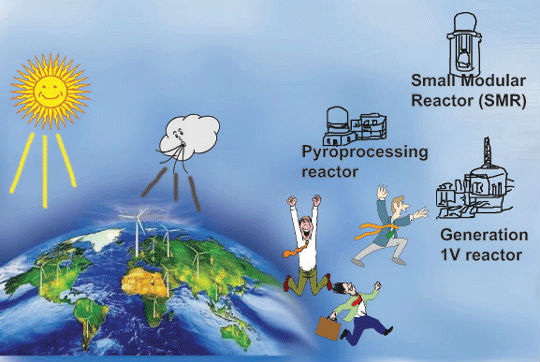
TWR, one of several new “fourth-generation” reactor designs, uses depleted uranium and is more fuel-efficient and cheaper to run than conventional nuclear reactors.
Leading developers of TWR include the Bill Gates-backed Terrapower, which is working on large scale projects aimed at providing base-load electricity. CNNC said its chairman, Wang Shoujun, met with Gates in July to discuss cooperation.
TerraPower’s traveling wave design is a breeder reactor that produce more atomic fuel than they consume, reducing the need to add costly processed nuclear elements.
In 2006, Intellectual Ventures launched a spin-off named TerraPower to model and commercialize a working design of such a reactor, which later came to be called a “traveling-wave reactor”. TerraPower has developed TWR designs for low- to medium- (300 MWe) as well as high-power (~1000 MWe) generation facilities. Bill Gates featured TerraPower in his 2010 TED talk.
In 2010 a group from TerraPower applied for patent EP 2324480 A1 following WO2010019199A1 “Heat pipe nuclear fission deflagration wave reactor cooling”. The application was deemed withdrawn in 2014.
In September, 2015 TerraPower and China National Nuclear Corporation (CNNC) signed a memorandum of understanding to jointly develop a TWR. TerraPower plans to build a 600 MWe demonstration Plant, the TWR-P, by 2018–2022 followed by larger commercial plants of 1150 MWe in the late 2020s |.
………….Shenhua, which is in the middle of a merger with state power giant Guodian, is seeking to diversify away from coal and coal-fired power, and it has already been in talks with CNNC and CGN to invest in nuclear projects. https://www.nextbigfuture.com/2017/10/china-nuclear-energy-and-coal-company-partner-to-make-traveling-wave-nuclear-reactor.html
Chinese firm behind Essex nuclear plant refuses to reveal security information,Guardian, Adam Vaughan, 2 Oct 17 ,State-owned company refused disclosure of security arrangements for Chinese plant the Bradwell nuclear station could be modelled on. The Chinese state-owned company planning a nuclear power station in Essex refused to share the security arrangements for a Chinese nuclear plant with the British authorities, it has been revealed.
A green light from the Office for Nuclear Regulation (ONR) would be a huge boost for China’s aspirations for exporting nuclear technology and Bradwell would be the first Chinese reactor to be built in a developed country.
Overall the ONR welcomed the “high level of expertise and commitment” shown by the Chinese, according to a report of the visit on 13-16 March, released to the Guardian under freedom of information rules.
However, CGN said it could not share material about security measures to protect its nuclear plant in Fangchenggang, China, which Bradwell could be modelled on.
“With regard to the sharing of information, such as the security plans for FCG [Fangchenggang] Unit 3, CGN stated that these were protected documents under Chinese regulations,” the UK authorities wrote, in a glimpse of UK nuclear regulation rubbing up against Chinese state secrecy.
But the ONR insisted that it was commonplace for foreign nuclear companies not to share sensitive documents around national security during the UK nuclear approval process, known as the Generic Design Assessment (GDA). It added that it was the arrangements for Bradwell that were relevant, not Fangchenggang………
CGN put up a third of £18bn cost towards EDF’s project to build French-designed reactors at Hinkley Point C in Somerset, in return for developing its own plant at Bradwell in Essex. The Bradwell B project is two thirds owned by CGN and one third EDF.
the theories behind many of the proposed systems aren’t new and often date back to the 1950s and ’60s. Some experimental plants have been built, such as the fast breeder reactors in the U.K. and U.S. Most suffered from crippling cost or design problems or were abandoned after nuclear accidents.
“Most if not all of these so-called advanced reactor designs have been around for decades,”
“Different designs have different problems. I don’t think anyone can be or should be confident that these problems can be resolved merely by throwing money and hiring engineers and scientists.”
Nuclear Experts Head to China to Test Experimental Reactors, Bloomberg By
Stephen Stapczynski China is becoming the testing ground for a new breed of nuclear power stations designed to be safer and cheaper, as scientists from the U.S. and other Western nations find it difficult to raise enough money to build experimental plants at home.
China National Nuclear Power Co. this month announced a joint venture to build and operate a “traveling wave reactor” in Hebei province, designed by Bellevue, Washington-based TerraPower LLC, whose chairman is Microsoft Corp. founder Bill Gates. The development follows Canada’s SNC-Lavalin, which has agreed to build a new recycled-fuel plant with China National Nuclear Corp. and Shanghai Electric Group, and Oak Ridge National Laboratory, which is working with the Shanghai Institute of Applied Physics on a salt-cooled system……..
“The outlook for nuclear power is brighter there than anywhere else in the world,” said M. V. Ramana, a professor at the Liu Institute for Global Issues at the University of British Columbia. “It is not so difficult for a company developing a nuclear reactor design to find a partner.”
The systems proposed belong to the so-called fourth generation of reactors. The current generation under construction include enhanced safety features following the Fukushima disaster in Japan in 2011, but still typically use traditional fuel rods, cooled by water under pressure. Both Areva SA and Westinghouse Electric Co. are slated to turn on their current-generation nuclear reactors in the next year in China — well ahead of any other nation, despite delays.
Recycled Fuel
Some Generation IV designs aim to cut construction costs by using coolants that work at atmospheric pressure — reducing the need for massive containment structures. Many recycle their fuel, reducing the need for uranium, and in some cases are fail-safe without intervention if something goes wrong…….
Coolants include liquid sodium, gases and molten metal. Some use thorium instead of uranium to power the reaction.
Still, the theories behind many of the proposed systems aren’t new and often date back to the 1950s and ’60s. Some experimental plants have been built, such as the fast breeder reactors in the U.K. and U.S. Most suffered from crippling cost or design problems or were abandoned after nuclear accidents.
“Most if not all of these so-called advanced reactor designs have been around for decades,” said Ramana at the Liu Institute. “Different designs have different problems. I don’t think anyone can be or should be confident that these problems can be resolved merely by throwing money and hiring engineers and scientists.”
Computer Models
TerraPower’s traveling-wave design is based on research by Saveli Feinberg, a physicist who first proposed it in the 1950s. Levesque says that advancements in computing in the last decade have revolutionized the ability to develop these technologies. “You couldn’t get it near the concept without the computer modeling,” he said.
Yet computers alone won’t prove the technology without a working plant.
“What they really need is to construct research reactors,” said Allison Macfarlane, former head of the U.S. Nuclear Regulatory Commission. “And that is really expensive.”………
Areva is not currently working with Chinese teams to develop a fourth generation reactor, spokesman Mathias Schuch said in an email. Westinghouse didn’t respond to requests for comment on next-generation reactors………
“Nuclear can be a difficult industry and it needs to be heavily regulated,” Macfarlane said. “You can make rather a big expensive mess if you don’t get it right. Only one accident will seriously affect the entire industry. There are very few industries like that.”
Developers say the industry is over-regulated. Michael F. Keller, president of Hybrid Power Technologies LLC said the NRC is a “bureaucratic straight jacket” that creates a massive financial burden on the deployment of advanced reactors. “As advanced reactors are generally passively fail-safe, there is no rational reason to apply the grossly overly-complex regulations currently in use,” he said.
The Japanese conglomerate is on the hunt for a project partner to safeguard Europe’s largest planned new nuclear plant after France’s Engie abandoned its support of the venture in the wake of Toshiba’s spiralling financial woes.
China General Nuclear (CGN) confirmed that it is in the running to shore up the 3.8GW project in exchange for an equity share, in a move which would also deepen its stake in the UK’s nuclear ambitions. “We are willing to utilise our experience in nuclear design, construction and operation for more than 30 years to support the development of Britain’s nuclear industry,” CGN confirmed in a statement to Reuters.
The South Korean state-backed utility has harboured an interest in Moorside since 2013, but said it would want to use its own nuclear design rather than one made by Toshiba’s Westinghouse nuclear business.
Westinghouse plunged into Chapter 11 bankruptcy in the US earlier this year after amassing losses of $9bn (£6.6bn) for Toshiba due to a string of struggling US projects.The deal would hand CGN access to a fourth nuclear project in the UK. It has already teamed up with EDF Energy to finance a third of the Hinkley Point C project and a fifth of its Sizewell B nuclear plans.
In the future CGN also plans to lead the plans to build the Bradwell C nuclear plant in Essex with a 66pc stake in the venture.
At Moorside CGN is also likely to want to use its own reactor design, in order to prove its mettle to other prospective new markets. However, it will take at least four years before CGN’s reactor design could be approved by the nuclear authority for use in the UK.
A lengthy approval process would also be required of a Kepco reactor design which could derail the 2025 startdate by at least two years in a further blow to the UK’s new nuclear ambitions.
EDF admitted earlier this year that the start-up date for Hinkley Point C is likely to be two years later than first thought at 2027 and pile a further €1bn (£870m) to €3bn euros on to the construction costs of the £18bn project.
The delays to new nuclear projects raises questions over the UK’s energy supplies in the middle of the next decade. More than two thirds of the country’s power generation capacity will have retired between 2010 and 2030.
US must stop North Korea threats, says China, as Kim Jong-un aims for military ‘equilibrium’
Chinese ambassador says America needs to do ‘much more’ to achieve cooperation as Kim Jong-un speaks of goal of equalling US military might, Guardian, Tom Phillips , 16 Sept The United States must stop threatening North Korea’s leader if a peaceful solution to the nuclear crisis is to be found, China’s ambassador to Washington has said, as Kim Jong-un reiterated his country’s aim to reach military “equilibrium” with the US.
Cui Tiankai told reporters in Washington: “They [the US] should refrain from issuing more threats. They should do more to find effective ways to resume dialogue and negotiation.”
“Honestly, I think the United States should be doing … much more than now, so that there’s real effective international cooperation on this issue.”
North Korea’s state news agency, KCNA on Saturday quoted Kim as saying: “Our final goal is to establish the equilibrium of real force with the US and make the US rulers dare not talk about military option.”
US national security advisor HR McMaster said: “We have been kicking the can down the road and we’re out of road. For those who have been commenting about the lack of a military option – there is a military option. Now, it’s not what we prefer to do, so what we have to do is call on all nations to do everything we can to address this global problem, short of war.”
The Chinese ambassador was speaking after Pyongyang fired a missile over Japan for the second time in two weeks a move the UN security council said it “strongly condemned”.
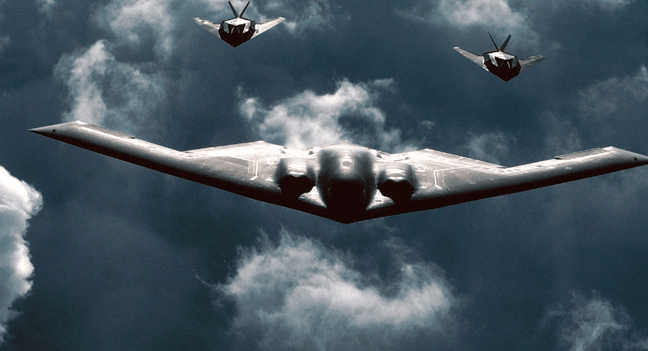
Japan fighters conduct an air exercise with US B1-B bombers above the East China Sea as South Korea braces for a possible further missile test by North Korea on its founding anniversary
Minami FunakoshiTokyo: Japanese F-15 fighter jets on Saturday conducted an air exercise with US B1-B bombers in the skies above the East China Sea, Japan’s air self defence force (ASDF) said.
The joint drill comes as South Korea braces for a possible further missile test by North Korea on its founding anniversary, just days after its sixth and largest nuclear test rattled global financial markets and further escalated tensions in the region.
The exercise involved two US Air Force B-1B Lancer bombers flying from Andersen air force base on the US Pacific island territory of Guam, which were joined by two Japanese F-15 jet fighters.
On 31 August, Japanese F-15 fighter jets also conducted an air exercise with US B1-B bombers and F-35 stealth fighters in skies south of the Korean peninsula, two days after North Korea launched a ballistic missile over northern Japan. Reuters
China Worried Over Nuclear Radiation After North Korea Tests, Epoch Times, By NTD Television| September 10 2017 The Chinese regime is on high alert for radiation seeping into China from North Korea’s latest nuclear test.
The test took place less than 50 miles from China’s border. The magnitude-6.3 earthquake could be felt by locals and Chinese hundreds of miles away as the nuclear test went off. A smaller tremor followed. It could be from a structural collapse after the first earthquake. The worry is that radiation was emitted into the atmosphere due to underground shifting, The Wall Street Journal reported.
The Chinese regime said that testing centers haven’t detected radiation yet. Soil, air, and water will continue to be tested. Seismologist Steven Gibbons told WSJ that it may take days or weeks to detect radiation. An environmental issue could become a political issue if the regime thinks that it is being perceived as weak on North Korea.
Chinese officials are reported to have told South Korea’s former President Park Geun-hye that North Korea’s nuclear testing in 2013 contaminated the Yalu River, which runs across the border between China and North Korea. Chinese officials neither confirm nor deny the comment, but since 2013 China has added several radiation-monitoring stations……..http://www.theepochtimes.com/n3/2294407-china-worried-over-nuclear-radiation-after-north-korea-tests/
North Korea’s Nuclear Arsenal Threatens China’s Path to Power, NYT, By JANE PERLEZ, SEPT. 5, 2017 “………China has made little secret of its long-term goal to replace the United States as the major power in Asia and assume what it considers its rightful position at the center of the fastest-growing, most dynamic region in the world.
Solar farm may spell end for China’s plan to build nuclear plant on North Korea’s border
Renewable development on site earmarked for reactors raises speculation the authorities have gone cold on the idea, SCMP, Stephen Chen Thursday, 31 August, 2017 China has set up a solar farm near the North Korean border on a site previously earmarked for a nuclear power plant, in an apparent sign that the authorities have abandoned plans to build a reactor.
The Baishan solar farm in Jingyu county, Jilin province was recently connected to the local power grid after a three-month construction period plagued with problems.
A farmer living near Baishan reservoir said solar panels had been put up over the past few months and now covered half of a large swathe of elevated land by the lake’s west bank.
The solar plant can generate up to 10 megawatts of power, provincial newspaper Jilin Daily reported in July…….
Authorities had earlier acquired the area south of Gangding village, which was once used for cultivating corn and beans, to build the Jingyu nuclear power station, according to the county government website.
The planned power plant was one of two Chinese nuclear projects proposed near the North Korean border.
Ground-clearing work on the site, meant to house four AP1000 nuclear reactors, was completed in 2013.
The reactors, if built, would have been situated less than 100km north of Chunggang, a North Korean county bordering China across the Yalu river.
Chunggang is home to an intermediate-range ballistic missile base targeting the US military base on the Japanese island of Okinawa, according to globalsecurity.org.
China’s legislature passes nuclear safety law, Reuters Staff by David Stanway; Editing by Tom Hogue SHANGHAI (Reuters), 1 Sept 17, – China’s parliament passed a new nuclear safety law on Friday aimed at improving regulation in the nuclear power sector as new projects are built across the country.
Officials say the law will give more powers to the regulator, the National Nuclear Safety Administration (NNSA), and establish new systems that will improve the disclosure of information on issues like radiation, and prevent or minimise risks from nuclear accidents.
………weak and opaque governance has long been seen as an industry problem, especially when it comes to determining the precise roles of the government, the military and state-owned nuclear enterprises on issues such as the handling of nuclear materials and the disposal of spent fuel.
Guo said the new law focused on strengthening China’s nuclear safety regime, and would create “institutional mechanisms” and a “division of labour” among regulators and enterprises to clarify responsibilities for safety…..
the decision to construct dozens of new projects, many using advanced and untested “third-generation” reactor designs, has put the government under pressure to improve regulation and build public trust in nuclear power.
China also needs to expand its waste processing capacity and train hundreds of new technicians and safety staff.
China’s amazing green shift to solar, wind and water power, REneweconomy, [good graphs] By John Mathews on 1 September 2017 Global Green Shift
China’s energy-related agencies, the National Energy Administration (NEA) and the China Electricity Council (CEC), have released data on the operation of China’s electric power system in the first half of 2017 (1H 2017), noting that renewable sources (water, wind and sun) accounted for just on 69.8% of new capacity added, with thermal sources (mainly coal) accounting for 28%, and nuclear for just on 2% (Fig. 1).
These results reveal a marked shift towards green sources of electric power, when compared with the 2016 data which show that renewable sources (WWS) added 51.9% of new capacity, while thermal accounted for 42.9% and nuclear for 5.2%.
The first half results for 2017 thus reveal that the electric power system is continuing its green shift, edging closer to placing more reliance on WWS sources at the margin, with WWS sources increasing their influence and thermal sources declining in proportion.
When we turn to examine new capacity additions and investments in WWS sources in 2017 (1H) we see that the green shift continues to operate at a level that far exceeds what is found elsewhere in the world.
Solar
The 23.6 GW new solar PV capacity added in 2017 (1H) is another world record for China, taking the cumulative installed capacity to 101 GW by end of June 2017 (and to 112.3 GW by July 2017– which is already above the (conservative) target of 105 GW set for 2020 by the ND&RC in its 13th FYP for energy).
The AECEA sees the 2020 cumulative total for China as likely to reach 230 GW, which would dominate the global picture.
Now the NEA in China in August has acted to raise the target for solar PV in China by 2020, setting a new target of 213 GW – or a doubling of the previous target total, which is already five times the current installed capacity in the US (https://www.ecowatch.com/china-solar-target-2476947208.html)……
Wind
The 6.0 GW new capacity added for wind in China for 2017 (1H) – or 1 GW per month (equivalent to 400 new turbines built and erected, rated at 2.5 MW each).
This is a 4.7% increase on the pro rata figure for 2016, which saw wind capacity additions reaching 17.3 GW, and the cumulative total reaching 154.6 GW, easily the largest in the world.
Kingdom launched a renewable energy programme this year, and winning bid for first utility-scale solar project is due in November
Khobar, Saudi Arabia: Saudi Arabia and China are to cooperate on nuclear energy projects following discussions between the two countries this week on ways to support the kingdom’s nuclear energy programme, state news agency SPA reported.
Saudi Arabia has been for years trying to diversify its energy mix so that it can export more of its oil, rather than burning it at power and water desalination plants.
It launched a renewable energy programme this year with the announcement of the winning bid for its first utility-scale solar project due in November.
In addition to that programme, Riyadh is in the early stages of feasibility and design studies for its first two commercial nuclear reactors, which will total 2.8 gigawatts.
China’s leading state nuclear project developer China National Nuclear Corp (CNNC) has now signed a memorandum of understanding with the Saudi Geological Survey (SGS) to promote further existing cooperation between the two sides to explore and assess uranium and thorium resources, SPA said…….
The potential conflict between nuclear powers that Trump barely acknowledges, https://www.washingtonpost.com/news/worldviews/wp/2017/08/18/the-potential-conflict-between-nuclear-powers-that-trump-barely-acknowledges/?utm_term=.bdf29c5159e7By Adam TaylorAugust 18, The two most populous countries in the world are dangerously close to armed conflict. Both are fast-growing and ambitious nations with something to prove — and they have nuclear weapons. Yet you’ll find surprisingly little discussion of the issue in Washington, where President Trump’s ongoing controversies and the threat of terrorist attacks (more on the horrific attack in Barcelona later in the newsletter) continue to dominate the discussion.The military standoff between India and China over a remote plateau in the Himalayas has been going on for months now. This week, The Post’s Annie Gowen and Simon Denyer took a look at the complicated dispute, which was sparked by China’s move to build a road in territory claimed by Bhutan, a close ally of India that does not have formal diplomatic relations with Beijing.
Territorial disputes between in the area are far from new — India and China briefly went to war over contest territory in 1962. And much of the present dispute dates back to an 1890 border agreement made between British India and China’s Qing Dynasty, one of a number of lingering problems caused by colonial cartographers.
But experts say the current standoff is the worst in decades and has taken on a different tone than previous flare-ups. “It would be very complacent to rule out escalation,” Shashank Joshi, an analyst with the Royal United Services Institute in London, told The Post. “It’s the most serious crisis in India-China relations for 30 years.”
Both India and China are speaking openly and seriously of armed conflict, with Beijing’s state media striking a indigent and at times uncharacteristically vulgar tone. An English-language video posted by the Xinhua news agency Wednesday accused India of “trampling international law” and “inventing various excuses to whitewash its illegal moves” — before showing a Chinese actor in a Sikh turban who spoke in an insulting Indian accent.
If India and China were to go to war, it would be no small matter. Over 2.6 billion people live in the two nations. Between them, they are estimated to have 380 nuclear weapons (though both China and India subscribe to a “no first use” policy, which should — hopefully — mean they wouldn’t be used in such any conflict).
In a briefing last month, the U.S. State Department urged restraint. During a press briefing last week, spokeswoman Heather Nauert said, “It’s a situation that we have certainly followed closely. And as you know, we have relationships with both governments. We continue to encourage both parties to sit down and have conversations about that.”
The dispute centers not only on the territory in question — an obscure, 34-square-mile area known as the Dolam Plateau that is claimed by both Bhutan and China — but a narrow strip of strategically important Indian land called the Siliguri Corridor. This tract, unaffectionately nicknamed the “chicken’s neck,” connects the bulk of the India with its remote east. Delhi has long feared Chinese troops could cut across the corridor if war broke out, effectively cutting the country in half. It’s not an unreasonable fear, given that the region is just 14 miles wide at its thinnest point; Ankit Panda of the Diplomat once dubbed it a “terrifyingly vulnerable artery in India’s geography.”
It is widely assumed that Washington would side with India in the dispute. Trump is a frequent critic of China, and some in his administration have pushed for tough responses to other territorial claims made by Beijing, such as the ongoing disputes in the South China Sea. Trump called Indian Prime Minister Narendra Modi on India’s Independence Day this week, which some media outlets interpreted as a gesture of support for New Delhi.
And yet, there is a nagging sense among some in India that Trump won’t have Modi’s back if push comes to shove. “If ever there was a war with China, America would never come to our rescue,” one government official told Indian journalist Barkha Dutt recently, according to a story Dutt wrote for The Post’s Global Opinion section.
Washington also may be diplomatically limited in the region: A number of key State Department positions that would have responsibility for handling an India-China crisis remain unfilled. Another part of the problem is simply the complexity of the issue, which could prove hard to communicate to a leader with seemingly limited knowledge of the world and a notoriously short attention span.
There is also an argument that perhaps Trump should keep his nose out of this. The Post’s Jackson Diehl wrote he didn’t find much enthusiasm for U.S. involvement in the dispute while in Delhi last week. The U.S. president has gained a reputation there for being hotheaded and impulsive — even the drawdown in tensions with North Korea seems to have happened in spite of his involvement, not because of it.
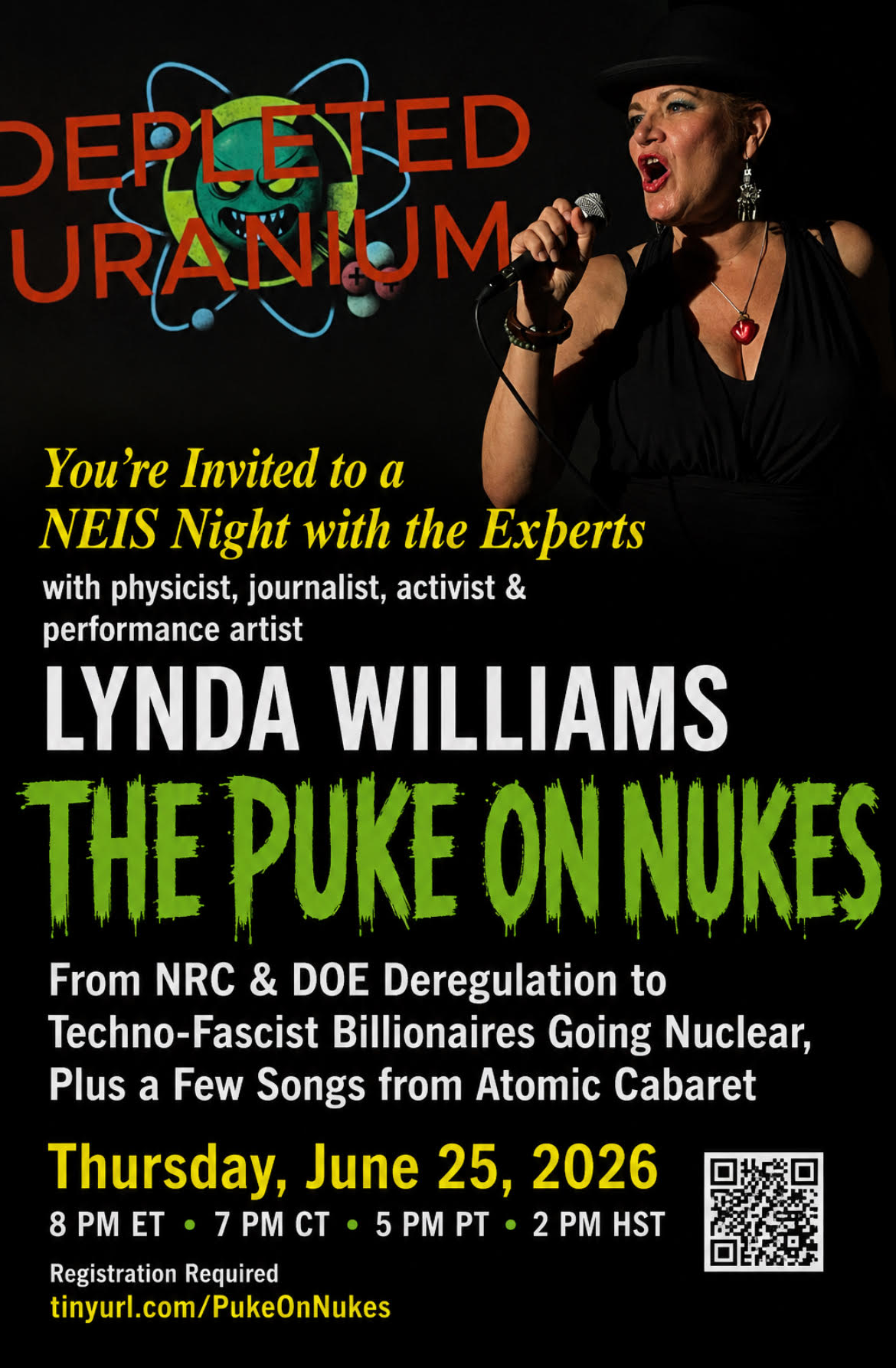
7pm Central Time (8pm ET, 6pm MT, 5pm PT) UTC – 5 From NRC & DOE Deregulation to Techno-Fascist Billionaires Going Nuclear, Plus a Few Songs from Atomic Cabaret REGISTER





 It launched a renewable energy programme this year with the announcement of the winning bid for its first utility-scale solar project due in November.

 nuclear-news