Why China sent a record number of fighter jets and nuclear-capable bombers into Taiwan’s defence zone
Why China sent a record number of fighter jets and nuclear-capable bombers into Taiwan’s defence zone, ABC, By Max Walden and Joyce Cheng 4 Oct 21, Beijing has sent a record number of fighter jets into Taiwan’s defence zone over its National Day weekend, amid a surge in nationalism on the mainland.
The numbers rose again on Monday with 56 Chinese aircraft entering Taiwan’s air defence identification zone before Taiwan scrambled fighter jets and deployed missile systems to monitor the Chinese planes.
The latest sortie included 34 J-16 fighters and 12 nuclear-capable H-6 bombers, which all flew in an area in the vicinity of the Pratas Islands, according to a map provided by Taiwan’s Defence Ministry.
Later, four more Chinese J-16s flew toward the southwestern part of Taiwan’s air defence zone — a buffer outside a country’s airspace.
The show of force over four consecutive days is part of a longer-term trend described by many as a campaign of intimidation targeting the self-governing island………………
Wen-Ti Sung, an expert on China’s foreign policy from the Australian National University, said Beijing’s show of force was for international and domestic audiences.
He said it could be a response to the new AUKUS pact between Australia, Britain and the United States. “It (the pact) is a big deal that signals Australia’s greater willingness to be engaged with security [issues] in Taiwan Strait and the South China Sea,” Mr Sung said.
It will be increasing deterrence against China, and China does not look upon [that] very favourably.”
Mr Sung added that Taipei’s talks with the US to change the name of Taiwan’s representative office — its de facto embassy in the US — from Taipei Economic and Cultural Representative Office to Taiwan Representative Office was likely to have also irked China.
Taiwan’s diplomatic offices can only be addressed with “Taipei” rather than “Taiwan” as most countries do not recognise the island as a sovereign country.
“It’s natural that China will want to show some muscle at this point to signal to the other actors internationally, for example the US and Australia, that if they make further moves in this direction, then China may risk serious escalated military tension, potentially conflict,” Mr Sung said……………..
What do China and Taiwan want?
The Chinese Communist Party (CCP) has seen the transformation of China into an economic and geopolitical superpower, while also wielding tight control over every aspect of social, cultural and political life on the mainland.
It views Taiwan as part of its territory and wants to reclaim it as part of the People’s Republic of China.
President Xi Jinping pledged reunification of China and Taiwan during a speech to commemorate the 100th anniversary of the CCP in July………………
Taiwan’s government responded by noting China’s economic success under the CCP, but decrying it as a dictatorship that suppressed human rights. The CCP should abandon its aggressive political claims on Taiwan as well as the diplomatic suppression and military threats towards Taiwan,” a statement said at the time…..
While previously a military dictatorship, Taiwan has evolved into one of the Asia Pacific’s few liberal democracies.
For example, it’s the only place in Asia where same-sex marriage is legal…….
The annual Taiwan National Security Survey showed in late 2020 that only 1 per cent of the population supported reunification with the mainland, while 60 per cent opposed adopting Beijing’s “one country, two systems” framework for Hong Kong……….
China’s coercion of Taiwan has become increasingly economic as well as military………
China has begun to impose trade sanctions against Taiwan………. https://www.abc.net.au/news/2021-10-04/china-taiwan-national-day-warplanes-explainer/100511702
China supports North Korea’s call to revise sanctions, return to nuclear talks
China backs North Korean call to revise sanctions to revive nuclear talks SCMP, 2 Oct 21,
Instead of empty slogans, US should restart UN resolutions and ‘revise sanctions related to humanitarian aspects’, Beijing says
Denuclearisation talks stalled in 2019 and Pyongyang has resumed its missile tests
China has backed North Korea’s calls for the US to revise its sanctions to break the stalemate in denuclearisation talks.
Pyongyang resumed its missile tests last month after a six-month lull, the latest being a new hypersonic missile fired on Tuesday. It first fired a
nuclear-capable cruise missile on September 12, then followed up with two railway-borne ballistic missiles days later – in breach of UN Security Council resolutions.
Although the Chinese foreign ministry has continued to urge restraint from all parties in response to Pyongyang, spokeswoman Hua Chunying also called for North Korea’s “justified and reasonable concerns” to be taken seriously and addressed.
“The US should not fall back on empty slogans calling for dialogue, but should demonstrate sincerity and come up with a realistic dialogue proposal, restart the reversible UN resolutions at the Security Council, and revise sanctions that are related to humanitarian aspects,” Hua said on Thursday……………… https://www.scmp.com/news/china/diplomacy/article/3150921/china-backs-north-korean-call-revise-sanctions-revive-nuclear
Why America is ecstatic about Morrison’s AUKUS pact

Why Washington was so ecstatic about Morrison’s AUKUS pact, SMH, 28 Sept 21,
Political and international editor ”………….. For many years, a critical element of American war planning has been to defeat China’s navy by bottling it up in the shallow waters of the South China Sea.
It would do this by blocking choke-points that allow passage in and out. And submarines are the most effective tool for achieving this.
If much of China’s navy is contained in those coastal waters, it’s relatively easy for the US to find and destroy. China’s submarines are at their most vulnerable in the shallow littorals nearest their homeland. It’s easier to shoot fish in a barrel than in a pond.
“US forces and their allies will stand a far greater chance of finding Chinese submarines, hemmed into the South China Sea, than China will of finding America’s in the vast Pacific,” as Rory Medcalf of the ANU’s National Security College puts it.
This helps explain why Beijing has put such effort into asserting control of the South China Sea and, just to its north, the East China Sea. In the event of a crisis, China’s priority is to scramble its submarines well beyond the first island chain into the deep waters of the Pacific where they can operate freely, concealed and lethal.
……………In the event of all-out war, the US wants Tokyo’s 22 subs and Canberra’s six to complement the US fleet of 68. Japan’s have been pencilled in to operate in the north and Australia’s in the south.
This is where AUKUS come in. It includes in-principle agreement from Washington and London to supply Australia with nuclear propulsion technology for a new fleet of eight submarines instead of the planned 12 diesel-electric subs, now ditched.
Why was this greeted rapturously in Washington? “The long-term prospect of eight nuclear-powered RAN subs prowling the Pacific resets the naval balance of power,” says Mike Green of the Centre for Strategic and International Studies in Washington.
…….. Australian officials say it will take almost 20 years to actually get the first Australian-built, nuclear propelled sub into the water. ……. The Australian Strategic Policy Institute’s subs expert, Marcus Hellyer says that the only plausible way that Australia could put a nuclear-powered sub in the water in time to be relevant to the looming US-China contest would be if America handed over some of its ageing Los Angeles class subs. The Pentagon is currently pensioning them off. They’d need to be refurbished. But that’d still be a lot faster, taking years rather than the decades of waiting for the first Australian-made one…..
And AUKUS is about much more than subs. “It’s about areas like cyber and emerging technologies…….https://www.smh.com.au/national/why-washington-was-so-ecstatic-about-morrison-s-aukus-pact-20210927-p58v3c.html
China fears that the nuclear-powered submarines could be armed with nuclear weapons at short notice

US FORCES US submarine launches Trident II nuclear missiles in stunning show of strength U.S,Sun Olivia Burke, Sep 19 2021
THE US Navy triumphantly test-launched Trident D5LE nuclear missiles on Friday in a stunning show of strength.
The scheduled two-missile deployment of the unarmed revamped weapon took place off the coast of Cape Canaveral, Florida from the USS Wyoming (SSBN-742) submarine……
The Navy boasted of the “unmatched reliability” of the new “sea-based nuclear deterrent” as tensions continue to increase with China.
It was the 184th successful Trident II (D5 & D5LE) SWS missile test flight and follows the last launch in February this year off the coast of Florida……..
“This same team is now developing the next generation of the Trident Strategic Weapon System, which will extend our sea-based strategic deterrent through 2084,”
The Navy also revealed the submarine missiles have been given “a life extension program to address potential impacts from aging and obsolescence”.
They are now primed to be stationed amongst the rest of the fleet alongside the UK Vanguard-class, US Colombia-class, UK Dreadnought-class.
With an estimated annual cost of $170million, the US spend a whopping $2.4million each year to run the Ohio-class submarines.
….the launch comes in the wake of the revelation of the UK’s and US’ plans to build nuclear-powered submarines for Australia.
AUKUS’ ALLIANCE
The alliance has angered China, who fear the subs could be armed at short notice with nukes, despite assurances they will only carry conventional weapons.
The countries leaders carefully navigated the announcement without directly mentioning China’s imposing power – but hinted at their intentions behind the move by discussing “democracy, freedom of navigation, and security.”
The new Indo-Pacific security pact, known as AUKUS, will give the land Down Under the technology to deploy nuclear-powered submarines.
It is part of an agreement intended to counter China’s rising military might – that they have splashed six times more cash on than Australia.
With 42 times more soldiers, 55 times more tanks, 13 times more submarines and 16 times more fighter jets, they eclipse the Aussies artillery.
And with 3.3 million troops in service, Beijing dwarves Australia’s 80,000 soldiers – but AUKUS has still managed to seriously ruffle some feathers.
CHINA’S FURY
Chinese Foreign Ministry spokesman Zhao Lijian condemned the alliance as “seriously damaging regional peace and stability, intensifying the arms race, and undermining the Treaty on the Non-Proliferation of Nuclear Weapons”.
China is believed to have between 250 and 350 nuclear weapons, compared to America’s colossal arsenal of 5,800 and Russia’s total of 6,375. ……. https://www.the-sun.com/news/3691458/us-submarine-trident-ii-nuclear-missiles-chinas-threats/
China still way behind USA in nuclear weaponry: time for diplomacy and negotiations on arms control
China’s nuclear build-up: The great distraction, The Hill, BY ROSE GOTTEMOELLER, — 09/13/21 President Biden is reviewing America’s nuclear posture. By January, we should know what he thinks about U.S. nuclear weapons, what policies should govern them and how many we need. Congress is watching closely, and the Senate and House of Representatives are sure to debate the results; they always do.
But this year will be different. A new player has entered the field — China.
China is modernizing its nuclear forces. The recent discovery of three intercontinental ballistic missile (ICBM) silo fields in remote regions west and north of Beijing point to a big build-up of weapons and a different strategy for their use. Since acquiring nuclear weapons from the Soviets, the Chinese have taken the stance that they would not build up a large and highly alert force but instead would be ready to retaliate. This “second strike deterrence posture” has served them well, but now the Chinese seem to have decided it is not enough.
Which is why it is urgent that the Biden administration (and the Kremlin) get them to the table to ask them. Chinese nuclear force posture and strategy should be an equal concern in Washington and Moscow.
We can ask the Chinese separately, or together, but ask them we should. All three countries might even agree to take some early steps, such as exchanging deployment plans and information about nuclear doctrine. Such confidence-building measures would build mutual predictability and may stave off a nuclear arms race.
Most importantly, we must not panic. Even if the Chinese deploy intercontinental ballistic missiles in each of their new silos, the U.S. will still have a large and capable nuclear force structure and many more nuclear warheads. Some authorities have predicted that the Chinese may be able to quadruple their warhead numbers in coming years. If one goes by the Stockholm Peace Research estimate of 350 Chinese warheads, then China would end up with 1,400 total warheads. That compares with over 4,000 warheads available for deployment in both the United States and Russia. We need to keep a sharp eye on what they are doing but not rush into making rash changes in our own nuclear forces. ………………..
Most importantly, we must not panic. Even if the Chinese deploy intercontinental ballistic missiles in each of their new silos, the U.S. will still have a large and capable nuclear force structure and many more nuclear warheads. Some authorities have predicted that the Chinese may be able to quadruple their warhead numbers in coming years. If one goes by the Stockholm Peace Research estimate of 350 Chinese warheads, then China would end up with 1,400 total warheads. That compares with over 4,000 warheads available for deployment in both the United States and Russia. We need to keep a sharp eye on what they are doing but not rush into making rash changes in our own nuclear forces. https://thehill.com/opinion/international/571973-chinas-nuclear-build-up-the-great-distraction
In China, wind and solar energy are the clear winners over nuclear.
A Decade Of Wind, Solar, & Nuclear In China Shows Clear Scalability Winners
China’s natural experiment in deploying low-carbon energy generation shows that wind and solar are the clear winners. https://cleantechnica.com/2021/09/05/a-decade-of-wind-solar-nuclear-in-china-shows-clear-scalability-winners/ By Michael Barnard, 6 Sept 21,

My 2014 thesis continues to be supported by the natural experiment being played out in China. In my recent published assessment of small modular nuclear reactors (tl’dr: bad idea, not going to work), it became clear to me that China has fallen into one of the many failure conditions of rapid deployment of nuclear, which is to say an expanding set of technologies instead of a standardized single technology, something that is one of the many reasons why SMRs won’t be deployed in any great numbers.
Wind and solar are going to be the primary providers of low-carbon energy for the coming century, and as we electrify everything, the electrons will be coming mostly from the wind and sun, in an efficient, effective and low-cost energy model that doesn’t pollute or cause global warming. Good news indeed that these technologies are so clearly delivering on their promise to help us deal with the climate crisis.
 |
In 2014, I made the strong assertion that China’s track record on wind and nuclear generation deployments showed clearly that wind energy was more scalable. In 2019, I returned to the subject, and assessed wind, solar and nuclear total TWh of generation, asserting that wind and solar were outperforming nuclear substantially in total annual generation, and projected that the two renewable forms of generation would be producing 4 times the total TWh of nuclear by 2030 each year between them. Mea culpa: in the 2019 assessment, I overstated the experienced capacity factor for wind generation in China, which still lags US experiences, but has improved substantially in the past few years.
My thesis on scalability of deployment has remained unchanged: the massive numerical economies of scale for manufacturing and distributing wind and solar components, combined with the massive parallelization of construction that is possible with those technologies, will always make them faster and easier to scale in capacity and generation than the megaprojects of GW-scale nuclear plants. This was obvious in 2014, it was obviously true in 2019, and it remains clearly demonstrable today. Further, my point was that China was the perfect natural experiment for this assessment, as it was treating both deployments as national strategies (an absolute condition of success for nuclear) and had the ability and will to override local regulations and any NIMBYism. No other country could be used to easily assess which technologies could be deployed more quickly.
In March of this year I was giving the WWEA USA+Canada wind energy update as part of WWEA’s regular round-the-world presentation by industry analysts in the different geographies. My report was unsurprising. In 2020’s update, the focus had been on what the impact of COVID-19 would be on wind deployments around the world. My update focused on the much greater focus on the force majeure portions of wind construction contracts, and I expected that Canada and the USA would miss expectations substantially. The story was much the same in other geographies. And that was true for Canada, the USA and most of the rest of the geographies.
But China surprised the world in 2020, deploying not only 72 GW of wind energy, vastly more than expected, but also 48 GW of solar capacity. The wind deployment was a Chinese and global record for a single country, and the solar deployment was over 50% more than the previous year. Meanwhile, exactly zero nuclear reactors were commissioned in 2020.
And so, I return to my analysis of Chinese low-carbon energy deployment, looking at installed capacity and annual added extra generation.

China’s nuclear missile silo expansion: From minimum deterrence to medium deterrence
China’s nuclear missile silo expansion: From minimum deterrence to medium deterrence, Bulletin of the Atomic Scientists , By Hans M. Kristensen, Matt Korda | September 1, 2021 US defense officials have claimed for several years that China is planning to at least double its nuclear warhead stockpile over the next decade, but without providing the public any details to back up their claim. That changed this summer, when two nongovernmental organizations—our own included—disclosed construction of what appears to be hundreds of new missile silos in central China.
Not surprisingly, reactions from defense hawks and arms controllers to this development span a wide range. Some claim that China is becoming an even greater nuclear threat that requires the United States and its allies to beef up their militaries even more. Others claim that China is responding to US provocations, and that arms control is the only way forward.
Most will probably use the disclosure to reaffirm existing beliefs. But that would be a mistake. The development requires all sides to think hard about what it means for Chinese nuclear policy, how it plans to operate its nuclear forces, how other nuclear-armed states will or should respond, and what the international nuclear nonproliferation and arms control community can and should do to reduce nuclear risks.
How many silos are under construction? The Chinese government has made no official public announcement about what it is building, and the nature, scale, and role of the suspected missile silos remains uncertain. (Some have even suggested they are not silos, but windmills.) But the satellite imagery that we have analyzed, combined with US government officials issuing apparent confirmations (here, here, and here), indicate that the construction involves hundreds of missile silos.
The first missile silo field near Yumen was disclosed by the Middlebury Institute in late-June. The second field near Hami was disclosed by the Federation of American Scientists in late-July. The third field near Ordos (Hanggin Banner) was disclosed by a military research unit at Air University in mid-August.
The three sites are in different stages of construction. The Yumen field began construction in March 2020 and appears to include 120 silos. Construction of the Hami field began in February 2021 and might eventually include 110 silos. The Ordos field, which began construction in April or May 2021, has a different layout and so far only appears to include about 40 silos (it could potentially grow later). Each missile silo field appears to include a number of other facilities that might be launch-control centers, bases, and support facilities.
Construction of the Yumen, Hami, and Ordos missile silo fields follow shortly after construction began of half a dozen silos that we discovered at the PLARF training site near Jilantai in Inner Mongolia, initially described in September 2019 and reported expanding further in February 2021.
In addition to these four projects, open-source researchers noted in 2020 that China might also be building a small number of silos near its traditional missile silo area near Checunzhen (Sundian) in the Henan Province.
All told, these discoveries indicate that China might be constructing nearly 300 new missile silos.
Why is China building so many silos? Missile silos are nothing new for China, which has deployed intercontinental ballistic missiles (ICBMs) in silos since the early 1980s. It is estimated that China currently has about 20 silos for the old (but modified) liquid-fuel DF-5 ICBM. However, building nearly 300 silos is certainly new. The decision to do so has probably not been caused by a single issue but by a combination of factors. In all these cases, it is important to remember that Chinese planning is not solely occupied with the United States, but also what Russia and increasingly India are doing:
Reducing the vulnerability of China’s ICBMs to a first strike: China is concerned that its nuclear deterrent is too vulnerable to a US (or Russian) surprise attack. The previous small number of fixed silos have long been seen as particularly vulnerable. According to the US Central Intelligence Agency, China’s decision to develop the modern road-mobile ICBMs we see today was a reaction to the US Navy’s deployment of Ohio-class Trident ballistic missile submarines in the Pacific. Road-mobile launchers are less vulnerable, but they’re not invulnerable. By increasing the number of silos, more ICBMs could potentially survive a surprise attack and be able to launch their missiles in retaliation. This action-reaction dynamic is most likely a factor in China’s current modernization.
Overcoming potential effects of missile defenses: Chinese planners are likely concerned that increasingly capable missile defenses could undermine China’s retaliatory capability. The US Sentinel (and particularly the Safeguard) missile defense systems in the 1960s and 1970s were partly intended to defend against Chinese ICBMs. Chinese officials reacted to the US withdrawal from the Anti-Ballistic Missile (ABM) Treaty in 2002 by saying that they would compensate as necessary. Part of that reaction might have been the decision to equip the DF-5B ICBM with multiple independently targetable reentry vehicles (MIRVs). The new DF-41 ICBM is also MIRV-capable and the future JL-3 SLBM will be capable of carrying multiple warheads. By increasing the number of silo-based, solid-fuel missiles and the number of warheads that they can carry, Chinese planners might be seeking to ensure that a sufficient number of warheads will be able to penetrate missile defense systems…………….
Increasing China’s nuclear strike capability: China’s “minimum deterrence” posture has historically kept the number of nuclear launchers at a relatively low level. But the Chinese leadership might have decided that it needs more missiles with more warheads to hold more adversary facilities at risk. This is not just about targeting the United States and its facilities in the Pacific. Russia is also increasing its military forces, and India is developing several types of longer-range missiles that appear to be explicitly intended to target China. All of these adversaries influence China’s decision on how many and what types of nuclear weapons it needs…………..
China now appears to be moving from a “minimum deterrent” to a “medium deterrent” that will position China between the smaller nuclear-armed states (France, Britain, Pakistan, India, Israel, and North Korea) and the two big ones (Russia and the United States)…………….
The Biden administration is now preparing its Nuclear Posture Review (NPR) that will outline the role and structure of the US nuclear posture for the next decade. When he was vice president and again during his presidential election campaign, Joe Biden spoke in favor of reducing the numbers and role of nuclear weapons. But Admiral Richard has publicly been making it quite clear that he opposes US significant changes: …………. https://thebulletin.org/2021/09/chinas-nuclear-missile-silo-expansion-from-minimum-deterrence-to-medium-deterrence/
The health and environmental costs of China’s nuclear bomb tests
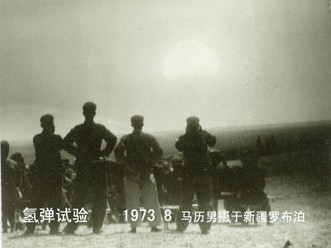
According to reports, China’s effort to become nuclear superpower has cost 1.94 lakh lives as it conducted around 45 successful nuclear tests between 1964-1996 https://www.republicworld.com/world-news/china/chinas-nuclear-tests-killed-1-dot-94-lakh-people-due-to-acute-radiation-exposure-report.html
China’s effort to become a nuclear superpower, according to reports, has cost 1.94 lakh lives as it conducted around 45 successful nuclear tests between 1964 and 1996. Peter Suciu, writing in The National Interest, stated that estimates suggest 194,000 people have died from acute radiation exposure, while around 1.2 million may have received doses high enough to induce leukaemia, solid cancers, and fetal damage during China’s nuclear test attempts.
As per the report, the nuclear test produced a yield of 3.3 megatons–200 times greater than the atomic bomb dropped on Hiroshima. The atomic bomb ‘Little Boy’ detonated on Hiroshima, Japan, killed nearly 80,000 instantly; this marked the first use of nuclear weapons in war.
‘Xinjiang region remained unclear how radiation affected the populace’
The effects of China’s nuclear testing, especially those nearly two dozen atmospheric tests (a total of twenty-three were conducted in the atmosphere), have not largely been studied due to a lack of official data, says Suciu. Xinjiang region that is home to some twenty million people of different ethnic backgrounds has remained unclear how radiation has affected the populace. A Japanese researcher, who studied the radiation levels, has suggested the peak radiation dose in Xinjiang exceeded that measured on the roof of the Chernobyl nuclear reactor following the 1986 meltdown. Suciu also states that reports suggest that radioactive dust has spread across the region, and hundreds of thousands of people may have died already from the nearly four dozen total nuclear tests that were carried out between 1964 and 1969.
China’s atmospheric nuclear testing
China conducted its first atomic bomb test in 1964 in Lop Nur – Project 596, known as the code word “Chic-1” by the US intelligence community (IC). The last of China’s atmospheric tests, which was also the last atmospheric test in the world, took place at Area D at Lop Nur on October 16, 1980–sixteen years to the day from the first test. Since that time, all nuclear tests have been conducted underground due to the Comprehensive Test Ban Treaty (CTBT) concluded in 1996. However, neither Washington nor Beijing has accepted it, even though China has sworn to have adhered to the terms, reported the National Interest.
‘Serious Problem with China’s Nuclear Plant’
Earlier, the French co-owner of a nuclear power plant in China on July 21 warned of problems serious enough to warrant a shutdown. According to CNN, the spokesperson for Electricite de France (EDF) said that the damage to the fuel rods at China’s Taishan Nuclear Power Plant, located in southern Guandong province, are serious enough to warrant shutdown. It was a “serious situation that is evolving,” he said. However, China even denied raising the acceptable limits of radiation. It said that the levels were “still within the range of allowable, stable operations”.
Why China is increasing its nuclear deterrence capacity
China needs to increase nuclear capacity to maintain minimum deterrence against rising US coercion, By Hu Xijin Global Times, Aug 07, 2021 On Friday, US Secretary of State Antony Blinken expressed his “deep concern” about the “rapid growth” of China’s nuclear arsenal with Southeast Asian foreign ministers. He accused Beijing of “sharply deviating from its decades-old nuclear strategy based on minimum deterrence.” This is the US’ official response from the highest level after various US think tanks over the past few months have claimed that China is building a great number of “new missile silos” in Yumen of Northwest China’s Gansu Province and in the Hami region in Northwest China’s Xinjiang Uygur Autonomous Region.
Chinese officials have not directly responded to these allegations made by US think tanks. They have neither confirmed nor denied them.It is important to note that China has never abandoned its minimum deterrence nuclear strategy. However, due to the comprehensive strategic threat that the US keeps posing to China, the nuclear capabilities Beijing needs to achieve “minimum deterrence” are now different from the past. As the potential risk stemming from US nuclear coercion against China is clearly increasing, China needs to have sufficient nuclear forces to contain such a risk
Even many ordinary Chinese people feel the urgency of strengthening China’s nuclear deterrent is common sense. We don’t know if those structures shown in the satellite photos in Yumen and Hami are silos or the foundations of wind power plants as some scholars have speculated. But if it does turn out that they really are silos, Chinese public opinion will definitely support the construction of them unconditionally.
Washington is in no moral position to accuse China of this. China has only a fraction of the number of nuclear warheads that the US has. China is also the only nuclear power that has pledged not to be the first to use nuclear weapons. The US has never indicated that it would consider making the same commitment.
There is no information from Beijing on whether it is strengthening its nuclear buildup in the face of a realistic threat from Washington. But even if we were doing that, it would have nothing to do with Southeast Asian countries, or even with Japan and Australia, because China’s nuclear policy also includes another firm commitment of not using or threatening to use nuclear weapons against any non-nuclear-weapon state.
Once China substantially strengthens its nuclear forces, its only purpose will be to deter the US. Since there is already no mutual trust between China and the US, Chinese society is fully convinced that the US’ ultimate strategic goal is to bring China down. While not giving up on maintaining peace between the two countries, we must be prepared for the possibility that a war could eventually occur in the Taiwan Straits or the South China Sea. One of China’s major strategic missions today is to make the most complete layout for that day…………….https://www.globaltimes.cn/page/202108/1230817.shtml
China starting new nuclear power project, with technology from Russia
China started this week construction work on a new US$17-billion nuclear
power plant project, for which it will install Russian nuclear reactors at
the Xudabao project in northeastern China, World Nuclear News reports.
The Xudabao 3 unit is the first of four units at the plant to see the beginning
of construction. Russia’s Rosatom will design the nuclear island and will
provide equipment. The Russian firm will also provide commissioning
services for the equipment it will have supplied. The Russians will also
provide the construction and equipment for the Xudabao 4 unit, whose
construction is expected to begin in 2022. The two units are currently
expected to be commissioned in 2027 or 2028.
Oil Price 6th Aug 2021
Over a month after radioactive leak, China decides to shut down Taishan nuclear reactor ”for maintenance”
China has shut down a nuclear reactor for “maintenance” because of what it said was minor fuel damage, after an increase in radiation levels prompted warnings from its French designers of an “imminent radiological threat”.
The authorities switched off the new-generation European Pressurised Reactor (EPR) at Taishan in Guangdong province today, more than a month after saying minor fuel rod damage had led to the “common
phenomenon” of a build-up of radioactive gases that were no cause for concern.
“After lengthy conversations between French and Chinese technical personnel, Taishan Nuclear Power Plant decided to shut down Unit 1 for maintenance,” China General Nuclear Power Group (CGN) said. It added that it was putting safety first and wanted to be “conservative in decision making”.
Times 30th July 2021
Taishan nuclear reactor shut down for repairs to damage.
China Nuclear Reactor Shut Down For “Maintenance”, Says Operator NDTV, 30 July 21
Beijing:
A reactor at a nuclear plant in southern China has been shut down because it is damaged, the operator said Friday, but it insisted there were no major safety issues.
China General Nuclear Power Group said both reactors at the plant have “maintained safe and stable operations throughout” and that the faulty unit is “completely under control”.
Chinese authorities last month blamed minor fuel rod damage for a build-up of radioactive gases at the Taishan plant in Guangdong province, describing it as a “common phenomenon” with no need for concern.
French nuclear firm Framatome, which helps operate the plant, last month reported a “performance issue” which caused the US government to look into the possibility of a leak.
“After lengthy conversations between French and Chinese technical personnel, Taishan Nuclear Power Plant… decided to shut down Unit 1 for maintenance,” China General Nuclear Power Group (CGN) said Friday in an online statement.
French energy giant EDF — the majority owner of Framatome — also previously blamed the build-up of radioactive gases on deteriorating coating on some uranium fuel rods.
EDF said it was first informed about the fuel rod problem in October, but only learned about the gas build-up in mid-June……….
based on earlier data provided by Chinese officials, the deterioration of the structural integrity of some fuel rods “appears to be continuing, and is being permanently monitored”, the firm added.
The problem is the latest blow to the European Pressurised Reactor (EPR) design, which is being used to build power plants in France, Britain and Finland that have racked up delays and billions of euros in cost overruns. https://www.ndtv.com/world-news/china-nuclear-reactor-shut-down-for-maintenance-says-operator-2498717
Chinese company likely to be glad to abandon UK’s Hinkley and Bradwell nuclear power projects, as costs jump.
| China could quit UK nuclear projects if role threatened, experts warn. Effort to remove state-owned CGN from Sizewell C said to leave Hinkley Point and Bradwell developments exposed. China General Nuclear is likely to walk away from the Hinkley Point C power station being built in Somerset if the Chinese state-owned nuclear company is forced out of other future projects in the UK, industry experts warned on Monday. The company is already a minority investor in the 3.2 gigawatt Hinkley Point nuclear power station, which France’s EDF is building. One nuclear industry executive warned that CGN could now reassess its involvement with Hinkley Point. They pointed out there were four interlinked agreements between CGN, EDF and the government dating to 2015: Hinkley Point, Sizewell, Bradwell and the pursuit of regulatory approval for China’s reactor design. Steve Thomas, emeritus professor of energy policy at University of Greenwich, said CGN’s investment in Hinkley was designed to make a profit and also help secure its plant at Bradwell. With both of those now in jeopardy, the company could quit the UK, he warned. The Chinese company is eager to getUK regulatory approval at Bradwell for its own Hualong One HPR1000 reactor in order to help market it in other countries. The reactor design is currently going through the UK’s rigorous approval process with a decision expected in the second quarter of next year. But Thomas pointed out that with Hinkley’s budget having jumped from £14bn to as much as £22.5bn it was no longer clear whether the consortium would make a profit. “I would have thought that would put it into lossmaking territory,” he said. “They may well be very happy for an excuse to get out of it,” Thomas said. “If Bradwell is off the agenda and Hinkley Point won’t make money, why stick around?” Alison Downes of Stop Sizewell C, a pressure group, said the government’s position threw EDF’s funding problems for the new plant into sharper relief: “The simple fact is that Sizewell C won’t go ahead without new investors,” she said. FT 27th July 2021 https://www.ft.com/content/ada78301-0b2c-4bf5-bcd4-ea0cd55312ae |
China is building a 2nd base for nuclear missiles, still way behind USA and Russia
China is building a 2nd base for nuclear missiles, say analysts Al Jazeera, 28 July 21,
Researchers in the US say China is building 250 silos for nuclear missiles in ‘the most significant expansion of the Chinese nuclear arsenal ever’. Analysts at the Federation of American Scientists say China is building a second field of silos for launching nuclear missiles in a development that could constitute “the most significant expansion of the Chinese nuclear arsenal ever”.
The United States-based researchers made the discovery after analysing commercial satellite images, and said on Monday that the field – located near the city of Hami in Xinjiang province – may eventually include about 110 silos.
The new field is about 380km (236 miles) from a base near the city of Yumen in neighbouring Gansu province, where a separate group of researchers earlier this month found construction under way on 120 missile silos.
Altogether, the People’s Liberation Army Rocket Force now appears to have 250 silos under construction at Hami, Yumen, as well as at a training ground near the city of Jilantai in Inner Mongolia, wrote the FAS’s Matt Korda and Hans Kristensen.
The number marks a significant increase, they said, given that China has for decades operated only 20 silos for its liquid fuel Df-5 Intercontinental Ballistic Missiles (ICBM)………
Korda and Kristensen noted, however, that even if China were to double or triple its nuclear stockpile it would still be a long way from near-parity with the stockpiles of Russia and the US, each of which have nuclear warhead stockpiles of close to 4,000.
Regardless of how many silos China ultimately intends to fill with ICBMs, this new missile complex represents a logical reaction to a dynamic arms competition in which multiple nuclear-armed players – including Russia, India, and the United States – are improving both their nuclear and conventional forces as well as missile defense capabilities,” they said…………
The US has repeatedly called on China to join it and Russia on a new arms control treaty.
Beijing has rejected the call, but said it would be happy to hold arms control talks if the US was willing to reduce the size of its nuclear arsenal to China’s level. https://www.aljazeera.com/news/2021/7/28/china-is-building-a-second-missile-silo-field-say-us-researchers
Problems at China’s Taishan nuclear power plant are serious enough to warrant shutdown, French co-owner warns.

Problems at China nuclear power plant are serious enough to warrant shutdown, French co-owner warns, By Barbara Wojazer, Zachary Cohen, Michael Callahan and Jessie Yeung, CNN, July 23, 2021 CNN)The French power company that co-owns a nuclear plant in China would shut it down if it could, due to damage to the fuel rods, a spokesperson said — but the decision is ultimately up to the plant’s Chinese operator.
The spokesperson for Electricite de France (EDF) said on Thursday that while it was “not an emergency situation” at the Taishan Nuclear Power Plant, located in China’s southern Guangdong province, it was a “serious situation that is evolving.”If the reactor was in France, the company would have shut it down already due to “the procedures and practices in terms of operating nuclear power plants in France,” the spokesperson said.
The spokesperson did not directly call on China to halt operations at the plant, noting it was a decision for its Chinese partner and majority shareholder in the plant, the China General Nuclear Power Group (CGN).
CNN first reported in June that the French company Framatome — an EDF subsidiary which supports operations at Taishan — had warned of an “imminent radiological threat” at the plant, prompting the United States government to investigate the possibility of a leak.
The company had also accused the Chinese safety authority of raising the acceptable limits for radiation detection outside the plant in order to avoid having to shut it down, according to a letter from Framatome to the US Department of Energy, obtained by CNN…………..On Thursday, the EDF spokesperson reiterated it was detecting an increase in noble gas in a reactor, and that the company had publicly clarified its position to the Chinese plant’s owner and operator, Taishan Nuclear Power Joint Venture Co., Ltd (TNPJVC).
EDF holds a 30% stake in TNPJVC — a joint venture with state-owned China General Nuclear Power Group.”We’ve shared with them all the elements of EDF’s analysis and all the reasons why, in France, we would stop the reactor,” the spokesperson said, “so that they can take the decision that will be necessary as responsible operators.”According to the spokesperson, EDF would have shut down the reactor in order to “avoid further degrading of the fuel rods, and carry out an investigation, and avoid further damage to the industrial facility.”….. https://edition.cnn.com/2021/07/22/china/edf-taishan-nuclear-plant-china-intl-hnk/index.html
1 This Month

Protect Sazan Island from the Trump family! https://secure.avaaz.org/campaign/en/protect_sazan_island_from_the_trump_family_loc/?bqFCVab&v=174511&cl=22707147157&_checksum=5e9dde668860e8231c33699735e16a1fbf22ab2cb01da50c999fe8732b9775ef&utm_source=email&utm_medium=blast_email&utm_campaign=174511


Cuba Is Not a Failed State – It Is a Besieged State
PETITION: “Global Appeal to Endorse Palestinian Right of Return of Refugees”
To see nuclear-related stories in greater depth and intensity – go to https://nuclearinformation.wordpress.com
-
Archives
- June 2026 (129)
- May 2026 (306)
- April 2026 (356)
- March 2026 (251)
- February 2026 (268)
- January 2026 (308)
- December 2025 (358)
- November 2025 (359)
- October 2025 (376)
- September 2025 (257)
- August 2025 (319)
- July 2025 (230)
-
Categories
- 1
- 1 NUCLEAR ISSUES
- business and costs
- climate change
- culture and arts
- ENERGY
- environment
- health
- history
- indigenous issues
- Legal
- marketing of nuclear
- media
- opposition to nuclear
- PERSONAL STORIES
- politics
- politics international
- Religion and ethics
- safety
- secrets,lies and civil liberties
- spinbuster
- technology
- Uranium
- wastes
- weapons and war
- Women
- 2 WORLD
- ACTION
- AFRICA
- Atrocities
- AUSTRALIA
- Christina's notes
- Christina's themes
- culture and arts
- Events
- Fuk 2022
- Fuk 2023
- Fukushima 2017
- Fukushima 2018
- fukushima 2019
- Fukushima 2020
- Fukushima 2021
- general
- global warming
- Humour (God we need it)
- Nuclear
- RARE EARTHS
- Reference
- resources – print
- Resources -audiovicual
- Weekly Newsletter
- World
- World Nuclear
- YouTube
-
RSS
Entries RSS
Comments RSS
 nuclear-news