Overcoming Nuclear Power’s Biggest Hurdle
Nuclear Power’s biggest hurdle
Strategy and Business 4 August 09 Nuclear power supporters had long hoped that the solution to the nuclear waste problem could be found in a storage facility hollowed out of Yucca Mountain, deep in the Nevada desert roughly 80 miles north of Las Vegas.But questions about Yucca’s long-term ability to keep radioactivity from leeching into groundwater energized nuclear opponents, as well as nearby residents and Nevada political leaders.
Soon after taking office, President Obama defunded the project.Pending another solution, the roughly 60,000 tons of nuclear fuel waste currently in the U.S. is stored on-site at nuclear plants, either in subsurface canisters or in secure “ponds” filled with boric acid.
If this approach continues much longer, it could cost Washington a lot of money: Utilities have successfully sued the federal government for failing to provide a permanent storage solution after they ponied up roughly US$30 billion in fees paid over several years to fund the Yucca project.
Indeed, untangling the nuclear waste problem may be more a matter of economics than of location.
The Bombs Keep Dropping
The Bombs Keep Dropping
ARTVOICE by Geoff Kelly & Louis Ricciuti 6 aUGUST 09
Radioactive wastes leak from containment structure, but no worries—the water’s fine
The 64th anniversary of the bombing of Hiroshima and Nagasaki—August 6 and 9, 1945—will scarcely be marked in Western New York: A moment of silence was observed at the Japanese gardens in Delaware Park on Wednesday evening, followed by a screening of Hiroshima-Nagasaki August 1945, a short film by Erik Barnouw made from footage shot by a Japanese film crew immediately after the bombings. But that’s about it.
We have reason to make more of it:.The chemical and metallurgical industries in Niagara Falls were instrumental to the Manhattan Project, which created the first atomic bombs. This region was at one time the free world’s leading producer of uranium metal for use in weapons and reactors—and, it follows, the leading producer of the deadly wastes that attend the refinement process. Avast amount of that waste was dumped cavalierly on a 12-square-mile federal reserve
Western New Yorkers, and especially residents of Niagara County, live with their own legacy of Hiroshima and Nagasaki. And here’s news with which to mark this year’s anniversary: Two weeks ago, Dr. Joseph Gardella, a chemist at the University at Buffalo, announced that the Corps’ monitoring reports indicate that the containment structure is leaking uranium into the groundwater.
Nuclear energy isn’t the answer
Nuclear energy isn’t the answer
Mountain Home News August 5, 2009
Nuclear energy sounds like the answer to this country’s energy problems, but it isn’t.For decades, nuclear power has been peddled as being an efficient and inexpensive energy. In the ’50s, nuclear advocates loudly promised the world that atomic power would provide electricity “too cheap to meter.” That promise dissolved with the reality of reactor construction costs in the 1970s and 1980s.But the price to consumers isn’t limited to just the cost of the power usage that is listed on your monthly electricity bill. It goes way beyond that. Nuclear power is not cheap. Since the very beginning the government has been heaping subsidies, which come from our tax dollars, into the building and running of nuclear plants. But these cash payments and tax breaks are not the most valuable subsidies that they receive. The most important subsidies that the investors and owners can receive come from shifting the risks onto the taxpayers or the surrounding area’s population.A lot of the risks to the investors are financial, such as the unexpected costs associated with construction, or the risk of defaulting on the costs of loans or the debts that can occur from construction delays or administrative failure and error…………………….Since its inception, the nuclear industry has benefited greatly from government programs that shift the key risks of the nuclear fuel cycle away from investors and onto taxpayers. All operating nuclear power plants in the U.S. were built with very large public subsidies (our tax dollars again). These include large subsidies for research and development, for plant construction, for uranium enrichment, and for waste management. Since the very beginning, the nuclear industry has been supported by the public monies given to them from our government (our tax dollars), as well as monumental and lucrative tax write-offs.
Taxpayers at Risk – Expansion of Nuclear Loan Guarantees Could Cost Billions
Taxpayers at Risk – Expansion of Nuclear Loan Guarantees Could Cost Billions WASHINGTON,
Aug. 5 /PRNewswire-USNewswire/ — Several new analyses confirm that, after over half a century of operation, nuclear power remains one of the most capital intensive, high-risk energy industries…………..Taxpayers for Common Sense (TCS) opposes the expansion of loan guarantees for new reactors:
- Earlier this summer, the Senate Energy and Natural Resources Committee adopted S. 949, the 21st Century Energy and Technology Deployment Act, as part of a suite of bills that has now been combined into a larger energy bill, the American Clean Energy Leadership Act of 2009 (ACELA). The main goals of the Clean Energy Technology Deployment provisions, now Title I of ACELA, are to make changes to the existing DOE loan guarantee program and create an independent entity within DOE, known as the Clean Energy Deployment Administration (CEDA), to distribute credit support to the energy industry.
- The Department of Energy’s Loan Guarantee Program already has $18.5 billion authorized for Treasury-backed loan guarantees for new nuclear reactors. The non-partisan Congressional Budget Office (CBO) estimates a 50 percent default rate on these loan guarantees. However, this could be just the beginning of billions more in risk as the nuclear industry has already submitted more than $120 billion in loan guarantee requests.
While TCS takes no position on whether or not nuclear power should be part of the nation’s energy future, we strongly believe it should not continue to be subsidized by taxpayers.
Atomic agency urged to examine Burma nuclear claims
Atomic agency urged to examine Burma nuclear claimsAnne Davies, Washington
The Age August 5, 2009
US NON-proliferation experts have called on the International Atomic Energy Agency to seek clarification from the Burmese Government over its nuclear program following a report in The Age that quoted defectors claiming there was a secret military nuclear program.The Age report, based on interviews by Professor Desmond Ball of the Australian National University and journalist Phil Thornton with defectors from Burma, revealed that it was building a secret nuclear reactor, with North Korea’s assistance, at Nuang Laing, close to Mandalay………………………..Russia is said to have agreed in 2007 to give the Burmese a small civilian light-water reactor, which would be subject to IAEA inspections, although the status of the project is disputed.
David Albright, the head of the Washington-based Institute for Science and International Security, which monitors nuclear proliferation, pointed to visits to Burma by executives from the North Korean company Namchongang Trading Corporation, which is under sanctions for its role in trading nuclear technology.
Spill an ‘unusual event’ or business as usual?
Spill an ‘unusual event’ or business as usual?
August 4, 2009
BRACEVILLE — Exelon officials say tritium was released because of an “unusual event.”
Tritium was released 100 feet into the air around 9 p.m. Thursday, Exelon said, as part of normal nuclear power plant operations — or at least it’s normal when there is a power outage………………….
The steam released into the air from Braidwood Generating Station in Braceville, contained 11,500 to 38,000 picocuries of tritium per liter of water.
Tritium is a radioactive hydrogen isotope that is a byproduct created when nuclear reactors produce electricity. Exposure reportedly can increase the risk of cancer, birth defects and genetic damage.
…………. The release is allowed under the station’s operating license, which is regulated by the Nuclear Regulatory Commission.
Spill an ‘unusual event’ or business as usual? :: Herald News :: Local News
Radioactive Canadians a daily occurrence at U.S. border
Radioactive Canadians a daily occurrence at U.S. border Highly sensitive equipment picks out border-crossers who have undergone radiological procedures
By Jeff Lee, Canwest News Service August 4, 2009
“…………….In what one U.S. Customs and Border Protection officer says is now “a daily occurrence,” American border agents are pulling aside people who have undergone nuclear medical procedures such as stress tests and radiation treatments. You could say they’re now catching Canadians with glowing hearts……………………..It turns out the problem is so widespread that many hospitals in Canada now issue special identification cards at no cost to patients, according to Dr. Damien Maharaj, the head of nuclear medicine for the Fraser Health Authority.
Maharaj said if patients tell technicians they plan to travel across borders, they will receive a card indicating when, how much and what type of isotope was used. The cards also include a contact number at the hospital. Most treatments will remain detectable for several weeks to several months.
Nuclear plant rapped over safety
Nuclear plant rapped over safety
The Local 3 Aug 09
The Forsmark nuclear plant, 130 kilometres north of Stockholm, received the criticism in an inspection report from the Swedish Radiation Safety Authority (SSM), local media say.The plant is criticised for not following up on the results of safety work and for not having routines governing how safety inspections should be carried out. The report also says that there is no clear description of the responsibilities of those who investigate incidents at the Forsmark.
The power station’s owners, Forsmarks Kraftfrupp AB, has been given until the end of the year to resolve the problems.
Forsmark has previously been the subject of safety concerns. It was criticised last year by SSM after it was revealed that an emergency cooling system vent had been shut for a year. Inspectors said the incident cast doubts about the safety culture at the plant.
The Forsmark nuclear plant, 130 kilometres north of Stockholm, received the criticism in an inspection report from the Swedish Radiation Safety Authority (SSM),
Stop Making More Nuclear Waste
Stop Making More Nuclear Waste
Care2 petition site August 09Target:1000 000 000Sponsored by:“Uranium is the raw material of a power-elite who has taken Mother Earth’s every living creature hostage.” The Late Petra Kelly, An Authentic Green
Nuclear fissioning happens in nuclear reactors or in nuclear warheads.
Nuclear waste is the only product of nuclear fissioning.
Nuclear waste is destructive of all living things.
Nuclear waste lasts forever and must also be monitored forever.
Nuclear waste will beggar our grand children.
Greed for profit now is the only thing that drives the nuclear industry.
Tapping renewable energy sources coupled with moderate consumption
Is Nuclear Power Renewable?
Is Nuclear Power Renewable?
The New York Times August 3, 2009, By James Kanter
“………………..the nuclear industry and pro-nuclear officials from countries including France have been trying to brand the technology as renewable, on the grounds that it produces little or no greenhouse gases. Branding nuclear as renewable could also enable nuclear operators to benefit from some of the same subsidies and friendly policies offered to clean energies like wind, solar and biomass.So far, however, efforts to categorize nuclear as a renewable source of power are making little headway.
The latest setback came last week, when the head of the International Renewable Energy Agency –- an intergovernmental group known as IRENA that advises about 140 member countries on making the transition to clean energy –- dismissed the notion of including nuclear power among its favored technologies.
“IRENA will not support nuclear energy programs because it’s a long, complicated process, it produces waste and is relatively risky,” Hélène Pelosse, its interim director general, told Reuters last week.
Energy sources like solar power, Ms. Pelosse said, are better alternatives — and less expensive ones, “especially with countries blessed with so much sun for solar plants,” she said.
Surviving Chernobyl
Surviving Chernobyl
HAARETZ.com By Lily Galili 3 August 09
For 1,200 people living in Israel, the concept of a nuclear threat is not an abstract idea. They were there – inside the Chernobyl nuclear reactor – immediately after the April 1986 explosion. They can confirm that while you can’t smell radiation, you can taste it. Even today, after having made a new life in Israel, the metallic taste remains in their mouths, which, in many cases, are toothless.Their teeth fell out in Chernobyl, while other serious problems began developing during the months they spent trying to “neutralize” the nuclear power plant, although they were unprepared and defenseless. They were called liquidators, a term embracing a variety of professionals – engineers, electricians, physicians and nurses – sent to neutralize the seething nuclear reactor. ……………..
……….what really worries them is not lifespan, but quality of life. They suffer from various ailments – damaged thyroid glands, eaten-away livers, twisted bones – and they are all afraid. Some of them decided not to have children after taking into consideration the genetic implications of what they had undergone.…………..“I oppose nuclear armament and war with Iran,” Kalantirsky says angrily. “All those who underwent the Chernobyl experience think like me.”
……….Around 19,000 people exposed to radiation in childhood are registered in SPECTR’s database, and another 6,000 have been born to parents from radiation-contaminated areas. “There are problems in this group,” notes Shapiro, “but not exceptional ones.” Today he is mainly worried about the third generation: the children of those exposed to radiation as children. “Although we do not have figures yet, we are still concerned,” he says. “The genetic results appear only in the third generation.”
According to research conducted by SPECTR, the morbidity rate for hereditary diseases will continue to grow. The more disturbing news, Shapiro says, is that radiation-induced cancer will peak 50 years after Chernobyl.
Plan to Pay Sick Nuclear Workers Unfairly Rejects Many, Doctor Says
Plan to pay sick nuclear workers unfairly rejects many, Doctor says
THE HUFFINGTON POST by Laura Frnk 3 August 09
Carla McCabe spent a decade building nuclear bombs at the sprawling Rocky Flats complex near Denver. When she developed a brain tumor and asked for help, federal officials told her that none of the toxic substances used at the top-secret bomb factory could have caused her cancer.Now, on the eighth anniversary of the federal program created to help sick nuclear weapons workers, the man who until recently was the program’s top doctor says that McCabe, now 55, and many others like her are being improperly rejected………..”I was muzzled,” said Schwartz, a Harvard-trained doctor with a master’s degree in nuclear engineering, whose job was overseeing medical decisions at the federal compensation program……..
………..sick workers, who have banded together in multiple advocacy groups across the nation, point out that the Labor Department has denied nearly three out of four claims — 127,000 filed on behalf of sick nuclear weapons workers or their survivors in the past eight years.
The sick workers and their advocates say they feel vindicated that Schwartz confirms many of the complaints they’ve raised previously about waste, bias and bad science within the program.
Plan to Pay Sick Nuclear Workers Unfairly Rejects Many, Doctor Says
Soviet-Era Uranium Waste Sites Now Threaten Central Asia
Soviet-Era Uranium Waste Sites Now Threaten Central Asia
mskFerghana.Ru 2 August 09 translated by Paul Goble
Storage sites for uranium tailings that were built in Soviet times in Tajikistan are now leaking radiation into the surrounding atmosphere and ground water supplies, undermining the health and well-being of the people of a republic and a broader region that lack the resources to clean up a problem that it did nothing to create.
At three formerly “closed” locations in Tajikistan – Taboshar, Chkalovsk and Adrasman – Soviet state enterprises mined uranium and left enormous piles of radioactive tailings……………
They are located near major bodies of water: the Kayrakkum reservoir and the Syrdarya River which flows through the territory not only of Tajikistan but of Uzbekistan, Turkmenistan and Kazakhstan as well. As a result, what many might dismiss as Tajikistan’s problem is a much larger one.
Scholars have determined that the radiation from these tailings in some places is more than 30 times levels that threaten human health. But the problems these tailings pose is not limited to radiation directly. They also are the source of poisonous chemicals which have leached into the ground and now appear in plants, animals, and drinking water.
The impact of the release of radioactive materials on the health of the population is already clear. Not only are the numbers of people suffering from cancer increasing, but the age of onset of cancers is falling, with many local people showing signs of cancer when they are only 15 or 16 years old, something almost unheard of earlier……………………
the amount of radioactive leavings is enormous, more than 450 million tons.
As a result the prospects are not good. “The elites have left the area forever because they know that the supplies of uranium are practically exhausted and that sooner or later all the factories and combines involved with the production of nuclear fuel will stop.”
In the end, the news service suggests, the local population will stand alone, facing “only the ruins of nuclear processing and mountains of ecological problems.”
Soviet-Era Uranium Waste Sites Now Threaten Central Asia – Ferghana.Ru Information agency, Moscow
Braidwood nuclear reactor shut down
Braidwood nuclear reactor shut down
Chicago Breaking News 31 july 09
One of the two nuclear reactors at the Braidwood Generating Station was shut down last night and remains offline this morning because of a transformer problem that is preventing the unit from receiving power, an Exelon spokeswoman said………..
The transformer problem triggered an automatic shutdown at the facility 60 miles southwest of Chicago
Revealed: Burma’s nuclear bombshell
Revealed: Burma’s nuclear bombshell
Sydney Morning Herald Hamish McDonald Asia-Pacific Editor August 1, 2009BURMA’s isolated military junta is building a secret nuclear reactor and plutonium extraction facilities with North Korean help, with the aim of acquiring its first nuclear bomb in five years, according to evidence from key defectors revealed in an exclusive Herald report today.
The secret complex, much of it in caves tunnelled into a mountain at Naung Laing in northern Burma, runs parallel to a civilian reactor being built at another site by Russia that both the Russians and Burmese say will be put under international safeguards……………………………..
Washington is increasingly concerned that Burma is the main nuclear proliferation threat from North Korea, after Israel destroyed in September 2007 a reactor the North Koreans were apparently building in Syria.
1 This Month
To see nuclear-related stories in greater depth and intensity – go to https://nuclearinformation.wordpress.com/
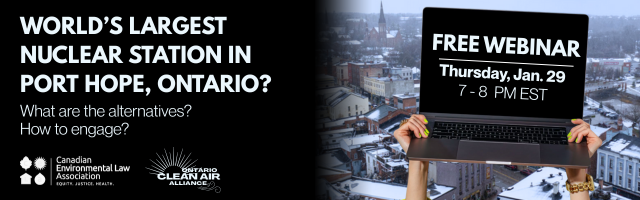
29 Jan. Thursday 7-8 p.m. Webinar – World’s Largest Nuclear Station in Port Hope, ON?

31st January – Challenging the War Machine – a DECLASSIFIED UK SUMMIT


Website of the Week
Now until to February 10, 2026 Radioactive waste storage in France: the debate is finally open! How to participate?
-
Archives
- January 2026 (259)
- December 2025 (358)
- November 2025 (359)
- October 2025 (376)
- September 2025 (258)
- August 2025 (319)
- July 2025 (230)
- June 2025 (348)
- May 2025 (261)
- April 2025 (305)
- March 2025 (319)
- February 2025 (234)
-
Categories
- 1
- 1 NUCLEAR ISSUES
- business and costs
- climate change
- culture and arts
- ENERGY
- environment
- health
- history
- indigenous issues
- Legal
- marketing of nuclear
- media
- opposition to nuclear
- PERSONAL STORIES
- politics
- politics international
- Religion and ethics
- safety
- secrets,lies and civil liberties
- spinbuster
- technology
- Uranium
- wastes
- weapons and war
- Women
- 2 WORLD
- ACTION
- AFRICA
- Atrocities
- AUSTRALIA
- Christina's notes
- Christina's themes
- culture and arts
- Events
- Fuk 2022
- Fuk 2023
- Fukushima 2017
- Fukushima 2018
- fukushima 2019
- Fukushima 2020
- Fukushima 2021
- general
- global warming
- Humour (God we need it)
- Nuclear
- RARE EARTHS
- Reference
- resources – print
- Resources -audiovicual
- Weekly Newsletter
- World
- World Nuclear
- YouTube
-
RSS
Entries RSS
Comments RSS
 nuclear-news