Trump to address U.N. on nuclear non proliferation (pardon my mirth)
 Trump to address drugs, nuclear weapons in UN speeches https://www.tampabay.com/ap/national/trump-to-address-drugs-nuclear-weapons-in-un-speeches-ap_nationalccbe0414d24947d09f87eab73e8c236c,, 20Sept 18 Trump to address drugs, nuclear weapons in UN speeches https://www.tampabay.com/ap/national/trump-to-address-drugs-nuclear-weapons-in-un-speeches-ap_nationalccbe0414d24947d09f87eab73e8c236c,, 20Sept 18
· WASHINGTON (AP) — President Donald Trump will discuss the global drug trade and stopping the spread of weapons of mass destruction during two speeches next week at the United Nations General Assembly. · The White House says Thursday that Trump will address the “Global Call to Action on the World Drug Problem” event Monday. He will address the U.N. General Assembly on Tuesday and chair Wednesday’s U.N. Security Council meeting on counter-proliferation. · Trump is to hold ‘pull-aside meetings with U.N. Secretary-General Antonio Guterres and Maria Fernanda Espinosa, the General Assembly president. Trump will have longer bilateral meetings with South Korean President Moon Jae-in, Egyptian President Abdel-Fattah el-Sissi, French President Emmanuel Macron, Israeli Prime Minister Benjamin Netanyahu, Japanese Prime Minister Shinzo Abe, and U.K. Prime Minister Theresa May. |
|
Korean women lead the peace movement , supported by international delegation of women
Seventy Years After Korea’s Division, Women Lead Push for Peace Truthout, May 25, 2018By Jon Letman, When scores of Korean women representing a coalition of some 30 peace groups and NGOs entered South Korea’s National Assembly on the banks of Seoul’s Han River, they weren’t alone. This week, the Korean peace makers were joined by an international delegation of women peace activists for a symposium focused on ending the Korean War. A women’s peace walk along the Korean Demilitarized Zone (DMZ) is scheduled for May 26.
For the fourth time since 2015, these activists gathered to strategize how to most effectively advance peace on the Korean Peninsula and support diplomatic efforts to that end. #WomenPeaceKorea delegates’ efforts include engaging with South Korean government officials, foreign diplomats and US embassy officials.
Most of the international delegates are members of Women Cross DMZ and the Nobel Women’s Initiative who have traveled to Seoul to lend their support and raise awareness of the vital role women play in ending conflict.
Multiple studies have shown that when women participate in negotiations, the likelihood of achieving peace increases substantially and that peace lasts longer.
Ahn Kim Jeong-ae, one of the symposium’s organizers, said the diplomatic thaw between North and South Korea makes this week’s events even more crucial.
Ahn Kim noted that 2018 marks the 70th anniversary of the establishment of separate governments in Seoul and Pyongyang. This spring was also the 70th anniversary of the April 3 incident in which some 30,000 civilians on South Korea’s Jeju Island were massacred over a seven-year period when US military-backed right-wing forces violently purged opponents of a divided and occupied Korea.
“We want to commemorate these historical facts on May 24, International Women’s Day for Disarmament and Peace,” Ahn Kim said, noting that because women suffer disproportionately in war, they have a critical role to play in conflict resolution.
A Change in Tone
Christine Ahn is the international coordinator for Women Cross DMZ, which crossed from North to South Korea in 2015. She said the fact that this year’s symposium was held at the National Assembly (the South Korean equivalent of the US Congress), was “hugely significant.”
Unlike in 2015, when Women Cross DMZ was barely acknowledged by South Korea’s Ministry of Unification, this year’s symposium was financed by the South Korean Ministry of Gender, Equality and Family, Ahn said.
The difference reflects a dramatic change from the administration of deposed South Korean President Park Guen-hye to the progressive administration of current President Moon Jae-in, who favors engagement with the North.……..http://www.truth-out.org/news/item/44590-seventy-years-after-korea-s-division-women-lead-push-for-peace
The carbon footprint of huge digital data centres
Energy Hogs: Can World’s Huge Data Centers Be Made More Efficient?
The gigantic data centers that power the internet consume vast amounts of electricity and emit 3 percent of global CO2 emissions. To change that, data companies need to turn to clean energy sources and dramatically improve energy efficiency. Yale Environment 360 APRIL 3, 2018

The cloud is coming back to Earth with a bump. That ethereal place where we store our data, stream our movies, and email the world has a physical presence – in hundreds of giant data centers that are taking a growing toll on the planet.
Data centers are the factories of the digital age. These mostly windowless, featureless boxes are scattered across the globe – from Las Vegas to Bangalore, and Des Moines to Reykjavik. They run the planet’s digital services. Their construction alone costs around $20 billion a year worldwide.
The biggest, covering a million square feet or more, consume as much power as a city of a million people. In total, they eat up more than 2 percent of the world’s electricity and produce 3 percent of CO2 emissions, as much as the airline industry. And with global data traffic more than doubling every four years, they are growing fast.
Yet if there is a data center near you, the chances are you don’t know about it. And you still have no way of knowing which center delivers your Netflix download, nor whether it runs on renewable energy using processors cooled by Arctic air, or runs on coal power and sits in desert heat, cooled by gigantically inefficient banks of refrigerators.
We are often told that the world’s economy is dematerializing – that physical analog stuff is being replaced by digital data, and that this data has minimal ecological footprint. But not so fast. If the global IT industry were a country, only China and the United States would contribute more to climate change, according to a Greenpeace report investigating “the race to build a green internet,” published last year.
Storing, moving, processing, and analyzing data all require energy. Lots of it. The processors in the biggest data centers hum with as much energy as can be delivered by a large power station, 1,000 megawatts or more. And it can take as much energy again to keep the servers and surrounding buildings from overheating.
Almost every keystroke adds to this. Google estimates that a typical searchusing its services requires as much energy as illuminating a 60-watt light bulb for 17 seconds and typically is responsible for emitting 0.2 grams of CO2. Which doesn’t sound a lot until you begin to think about how many searches you might make in a year.
And these days, Google is data-lite. Streaming video through the internet is what really racks up the data count. IT company Cisco, which tracks these things, reckons video will make up 82 percent of internet traffic by 2021, up from 73 percent in 2016. Around a third of internet traffic in North America is already dedicated to streaming Netflix services alone.
Two things matter if we are to tame these runaway beasts: One is making them use renewable or other low-carbon energy sources; the other is ramping up their energy efficiency. On both fronts, there is some good news to report. Even Greenpeace says so. “We are seeing a significant increase in the prioritization of renewables among some of the largest internet companies,” last year’s report concluded.
More and more IT companies are boasting of their commitment to achieving 100 percent reliance on renewable energy. To fulfil such pledges, some of the biggest are building their own energy campuses. In February, cloud giant Switch, which runs three of the world’s top 10 data centers, announced plansfor a solar-powered hub in central Nevada that will be the largest anywhere outside China.
More often, the data titans sign contracts to receive dedicated supply from existing wind and solar farms. In the U.S., those can still be hard to come by. The availability of renewable energy is one reason Google and Microsoft have recently built hubs in Finland, and Facebook in Denmark and Sweden. Google last year also signed a deal to buy all the energy from the Netherlands’ largest solar energy park, to power one of its four European data centers.
Of the mainstream data crunchers for consumers, Greenpeace singled out Netflix for criticism. It does not have its own data centers. Instead, it uses contractors such as Amazon Web Services, the world’s largest cloud-computing company, which Greenpeace charged with being “almost completely non-transparent about the energy footprint of its massive operations.” Amazon Web Services contested this. A spokesperson told Yale Environment 360 that the company had a “long-term commitment to 100 percent renewable energy” and had launched a series of wind and solar farm projects now able to deliver around 40 percent of its energy. Netflix did not respond to requests for comment.
Amazon Web Services has some of its largest operations in Northern Virginia, an area just over the Potomac River from Washington D.C. that has the largest concentration of data centers in the world. Virginia gets less than 3 percent of its electricity from renewable sources, plus 33 percent from nuclear, according to Greenpeace.
Some industry insiders detect an element of smoke and mirrors in the green claims of the internet giants. “When most data center companies talk about renewable energy, they are referring to renewable energy certificates,” Phillip Sandino, vice-president of data centers at RagingWire, which has centers in Virginia, California, and Texas, claimed in an online trade journal recently. In the U.S. and some other countries, renewable energy certificates are issued to companies generating renewable energy for a grid, according to the amount generated. The certificates can then be traded and used by purchasers to claim their electricity is from a renewable source, regardless of exactly where their electricity comes from. “In fact,” Sandino said, “the energy [the data centers] buy from the power utility is not renewable.”
Others, including Microsoft, help sustain their claims to carbon neutrality through carbon offsetting projects, such as investing in forests to soak up the CO2 from their continued emissions.
All this matters because the differences in carbon emissions between data centers with different energy sources can be dramatic, says Geoff Fox, innovation chief at DigiPlex, which builds and operates centers in Scandinavia. Using data compiled by Swedish state-owned energy giant Vattenfall, he claims that in Norway, where most of the energy comes from hydroelectricity, generating a kilowatt-hour of electricity emits only 3 grams of CO2. By comparison, in France it is 100 grams, in California 300 grams, in Virginia almost 600 grams, in New Mexico more than 800 grams.
Meanwhile, there is growing concern about the carbon footprint of centers being built for Asian internet giants such as Tencent, Baidu, and Alibaba in China; Naver in South Korea; and Tulip Telecom in India. Asia is where the fastest global growth in data traffic is now taking place. These corporations have been tight-lipped about their energy performance, claims Greenpeace. But with most of the region’s energy coming from coal-fired power stations, their carbon footprint cannot be anything but large.
Vattenfall estimates the carbon emissions in Bangalore, home of Tulip’s giant Indian data center, at 900 grams per kilowatt-hour. Even more troubling, the world’s largest center is currently the Range International Information Hub, a cloud-data store at Langfang near the megacity of Tianjin in northeast China, where it takes more than 1,000 grams of CO2 for every kilowatt-hour.
Almost as important as switching data centers to low-carbon energy sources is improving their energy efficiency. Much of this comes down to the energy needed to keep the processors cool. Insanely, most of the world’s largest centers are in hot or temperate climates, where vast amounts of energy are used to keep them from overheating. Of the world’s 10 largest, two are in the desert heat of Nevada, and others are in Georgia, Virginia, and Bangalore.
Most would dramatically reduce their energy requirements if they relocated to a cool climate like Scandinavia or Iceland. One fast-emerging data hub is Iceland, where Verne Global, a London company, set up its main operation.
…….. Greenpeace says the very size of the internet business, and its exposure to criticism for its contribution to climate change, has the potential to turn it from being part of the problem to part of the solution. Data centers have the resources to change rapidly. And pressure is growing for them to do so.The hope is that they will bring many other giant corporations with them. “The leadership by major internet companies has been an important catalyst among a much broader range of corporations to adopt 100 percent renewable goals,” says Gary Cook, the lead author of the Greenpeace report. “Their actions send an important market signal.”
But the biggest signal, says Fox, will come from us, the digital consumers. Increasingly, he says, “they understand that every cloud lives inside a data center. And each has a different footprint.” We will, he believes, soon all demand to know the carbon footprint of our video streams and internet searches. The more far-sighted of the big data companies are gearing up for that day. “I fully expect we may see green labelling for digital sources as routine within five years.” https://e360.yale.edu/features/energy-hogs-can-huge-data-centers-be-made-more-efficient
Women, today and always, understand and fight the peril of nuclear war, nuclear pollution
 WOMEN WILL RID THE WORLD OF NUCLEAR BOMBS, https://www.damemagazine.com/2018/03/09/women-will-rid-the-world-of-nuclear-bombs/ While Trump and Kim Jong-un plan to compare button sizes, female activists are working to erase nuclear threat. But will it be enough?, Dame,
My interest in nuclear issues began nearly 10 years ago when I first uncovered my mother’s work as an antinuclear activist with a group called Women Strike for Peace. I have been following women doing nuclear activism all over the world—writing about them, protesting with them, teaching about them in my university classes—and I often bring my daughter with me. My mother’s story is being passed down through an intergenerational maternal line, and with it, the activism that may help save the world, or at least help shift its view on disastrous weapons. Learning about my mother’s work radically changed my perception of her. It also changed my life.
Between 1945 and 1963, more than 200 atmospheric, underwater, and space nuclear bomb tests were conducted by the U.S., primarily in the Nevada desert and the Marshall Islands. Hundreds more took place around the world. In many instances citizens were not informed of the tests, nor were they warned of their effects. The negative health impacts of the testing and exposure to ionizing radiation turned out to be vast: early death, cancer, heart disease, and a range of other incurable illnesses, including neurological disabilities, weakened immune systems, infertility, and miscarriage. Ionizing radiation damages genes (it is mutagenic), so the health ramifications of exposures are passed down through the generations.
In the 1950s, scientists concerned with the health impacts of bomb testing and the spread of ionizing radiation conducted the St. Louis Baby Tooth Survey. The survey showed that radioactive fallout had traveled far and wide. Cow and breast milk contaminated with the isotope strontium 90 had entered children’s teeth. Strontium 90 metabolizes as calcium and these isotopes remain active in the body for many years. When Dagmar Wilson and Bella Abzug—who went on to become a Congresswoman and co-founder of the National Women’s Political Caucus with Gloria Steinem and Betty Friedan—learned the results of the Baby Tooth Survey, they formed Women Strike for Peace. The group brought together concerned mothers from across the U.S. The women organized. First within their communities. And then, 50,000 mothers protested across the country, and 15,000 descended on Washington, D.C. for Women’s Strike for Peace Lobbying Day on November 1, 1961. My mother was one of those 15,000 protestors. The group’s efforts brought vast political attention to the dire health consequences of radioactive fallout and led to the banning of atmospheric bomb testing by the U.S., Great Britain, and the former Soviet Union in 1963, with the signing of the Limited Nuclear Test Ban Treaty.
Women Strike for Peace reflects a cultural nuclear gender binary—with women constructed as peaceful antinuclear protectors of children and the nation, and men positioned as perpetrators of nuclear war—the designers, planners, and regulators of weapons of mass destruction.
Has this exclusion of women from nuclear decision-making led to our current crisis—a host of locations worldwide contaminated with radioactive waste, and the great potential for nuclear war? Leading anti-nuclear activists seem to think so.
Since the dawn of the nuclear age men have dominated and controlled nuclear weapons design and policy. As Benjamin A. Valentino, Associate Professor of Government, and Coordinator, War and Peace Studies Program, Dickey Center for International Understanding at Dartmouth College says, it is only recently that women have had access to positions of power in the military sphere. This is true in weapons’ sciences and engineering as well. While many women worked on the Manhattan Project, most held administrative roles. Has this exclusion of women from nuclear decision-making led to our current crisis—a host of locations worldwide contaminated with radioactive waste, and the great potential for nuclear war? Leading anti-nuclear activists seem to think so.
Carol Cohn, founding director of the Consortium on Gender, Security and Human Rights at the University of Massachusetts-Boston suggests that nuclear-weapons discourse is deeply rooted in hegemonic patriarchy. In nuclear techno-language metaphors of male sexual activity are used to describe nuclear violence. Nuclear missiles are referred to in phallic terms. The violence of nuclear war is described in abstract and impersonal terms, such as “collateral damage.” In her recent New York Times op-ed, Cohn finds it unsurprising that hypermasculine nuclear language has surfaced so blatantly today with Trump’s tweets about the size of his nuclear button and his overall muscular championing of expanding the nuclear weapons complex.
Following the Women Strike for Peace model, legions of anti-nuclear NGOs worldwide are predominantly led by women, including Women’s Action for Nuclear Disarmament, Women’s International League for Peace and Freedom, Reaching Critical Will, the German Green Party, Mothers for Peace, Just Moms (St. Louis), International Campaign to Abolish Nuclear Weapons (ICAN), Greenham Common Women’s Peace Camp, Green Action Japan, the women of Koondakulam in India, the antinuclear nuns Megan Rice, Ardeth Platte, Carol Gilbert, and many more.
At the U.N. conference to ban nuclear weapons in 2017, I asked Civil Society experts and participants about the importance of women as leaders in the antinuclear movement, and about the hegemony of masculinity in the nuclear weapons complex.
“Of course many men support disarmament and have participated in the treaty and current anti-nuclear efforts in general, but women overwhelmingly lead,” said Tim Wright, of the Australian branch of ICAN. ICAN won the 2017 Nobel Prize for their work on The Treaty to Prohibit the Use of Nuclear Weapons.
Ray Acheson, of Reaching Critical Will, said the proliferation of nuclear weapons is deeply embedded in “a misogynist and hegemonic culture of violence.” She stated this culture is oppressive to women, LGBTQ, the poor, and people of color, and, “we must smash patriarchy.” Such is the feminist cry heard around the world, but in this case, it might actually save us.
Beatrice Fihn, director of ICAN, explained that men are raised to be violent, to think it’s necessary to resolve differences through force, while “women, conversely, are socially trained to negotiate and compromise.”
According to Fihn, the problem in a patriarchal world is that peaceful negotiations are viewed as weak. The U.S. misogynist-in-chief feels we must drop nuclear bombs, expand our nuclear arsenal, and strong-arm competing nations, such as North Korea and Russia. The very act of supporting disarmament efforts in a patriarchal framework places “you in a feminine category,” Fihn stressed. “Those in favor of abolishing nuclear weapons, whether male or female, are characterized in negative, feminized terms. This characterization must be changed. It is not weak to abolish weapons of mass destruction. It is life-affirming.”
Women better understand this because they are the ones in charge of improving quality of life for all. Women most often function as caretakers of children and the elderly, they are aware of the human cost of war and radioactive disaster. When thinking about nuclear war, they wonder, if war breaks out, “How will we feed our children, how will we feed our sick? What will happen to our communities?” Fihn says she fears nuclear violence in respect to the safety of her own children. Fihn’s concern for her children echoes the concerns of my mother and her antinuclear cohort in the 1950s and ’60s. Like Fihn, they worked to save their children—all children—from radiation contamination and nuclear war. I hope I can carry on that legacy, and that my daughter chooses to pick up the cause as well.
For the 2017 UN Treaty to Prohibit the Use of Nuclear Weapons, women helped prepare key elements of the document and gave vital health testimony. Particularly poignant were tales from Australian Indigenous, Marshallese, and Hibakusha (Hiroshima and Nagasaki survivors) women. I interviewed many of these women. Abacca Anjain-Madison, a former Senator of the Republic of the Marshall Islands, told me that between 1946 and 1958, the U.S. conducted 67 nuclear bomb tests on the Atoll Islands. Many babies born during the testing period resembled jellyfish and died quickly after their births. The Marshallese developed very high rates of cancer (and other diseases) as a result of ionizing radiation exposures. Now, with climate change, the radioactive dangers persist. Rising sea levels threaten the Runit Dome—a sealed space that contains large amounts of radioactive contamination. The dome has also begun to crack, and the U.S. has no plans to assist Marshallese with this crisis. They finished the cleanup and sealed the dome in 1979. Abacca Anjain-Madison asserts the clean up was not sufficient and the dome was never meant to be permanent. The Marshallese to do not have the means to protect themselves from the impending disaster.
Mary Olson, Southeast Director of the Nuclear Information and Resource Service, gave a presentation at the UN on the unequal health impacts of radiation exposures. Women remain unaccounted for in nuclear regulatory safety standards. Based on the data set from the BEIR VII report that both Olson and Dr. Arjun Makhijani, President of the Institute for Energy and Environmental Research have studied, women are twice as likely to get cancer, and nearly twice as likely than men to die from cancer associated with ionizing radiation exposures. Children are five to 10 times more likely to develop cancer in their lifetimes from radiation exposures than adult males, and girls are most vulnerable of all. Scientists do not yet understand why there is an age and gender disparity. The standard “reference man” by which radiation safety regulations are set are based on a white adult male. Olson and Makhijani argue that safety regulations must change to account for age and gender disparities. Further studies are needed to assess how people of different races are impacted by radiation exposures. To date, no such completed studies exist.
At the closing of the conference and signing of the 2017 UN Treaty to Prohibit the Use of Nuclear Weapons, two speeches were made—one by Setsuko Thurlow, a Hiroshima survivor, Nobel Peace Prize winner, and leading campaigner for the prohibition of nuclear weapons. Abacca Anjain-Madison of the Marshall Islands also spoke.
Setsuko Thurlow told her story of beholding the bomb dropping on her city in 1945. She described how, as an 13-year-old child, she witnessed the death of her brother, and “unthinkable” violence thrust upon on her people. For Thurlow, the signing of the UN Treaty to ban nuclear weapons is a miracle, but she believes we must rid the world of weapons entirely. She will not give up her efforts until that day comes. Neither will I.
Heidi Hutner is a writer and professor at Stony Brook University in New York. She teaches and writes about ecofeminism, literature, film and environmental studies. Currently, Hutner is working on a narrative nonfiction book manuscript titled, “Accidents Can Happen: Women and Nuclear Disaster Stories From the Field.” Find her @HeidiHutner
Women lead in USA campaign to protect the world from a U.S. nuclear trigger finger
Some cities and states are taking their own initiative to protect the world from a U.S. trigger finger. And they’re mostly led by women.
Dropping an atomic bomb doesn’t happen as fast as it does in the movies. There’s no room with a red, shiny “nuclear button” primed for the pressing. But in the U.S., launching a nuclear weapon does depend on just one trigger finger: The President’s.
Peace builders, activists, and congressional leaders have tried unsuccessfully to take away this unilateral ability since the Cold War, when nuclear war with Russia felt imminent daily. Now, the threat looms again, as tensions between North Korea and the U.S. simmer—and a new group of local legislators are taking the lead.
A broad coalition of representatives, delegates, and state senators from eight states (California, Georgia, Vermont, Maryland, Illinois, Massachusetts, Minnesota and Iowa) have begun pushing resolutionsthat put additional pressure on Congress to stop the president’s first-strike powers. And cities such as Northampton, Massachusetts; San Francisco, California; Santa Fe, New Mexico; and counties across Washington State have drafted local resolutions of their own.
‘Men only’ attitude in decision-making is slowing Britain’s transition to clean energy
Lack of women in energy ‘holding back fight against climate change’
Gender imbalance at energy firms and industry events is slowing transition to greener power, claims expert, Guardian, Adam Vaughan, 13 Feb 18,
The lack of women in energy companies is holding back the sector’s efforts to tackle climate change, a leading industry watcher has warned.
Catherine Mitchell, a professor of energy policy at the University of Exeter, said poor gender diversity meant the industry was less open to new ideas, in particular the move to a lower-carbon energy system.
“I absolutely do think that the fact that the industry is so dominated by men and particularly older white men it is slowing down the energy transition,” said Mitchell, who has worked on energy issues for more than 30 years and advises the government, regulators and businesses.
An energy conference featuring women-only panels is being held next month to address the lack of visibility of female leaders in the sector……
The lack of women in energy companies is holding back the sector’s efforts to tackle climate change, a leading industry watcher has warned.
Catherine Mitchell, a professor of energy policy at the University of Exeter, said poor gender diversity meant the industry was less open to new ideas, in particular the move to a lower-carbon energy system.
“I absolutely do think that the fact that the industry is so dominated by men and particularly older white men it is slowing down the energy transition,” said Mitchell, who has worked on energy issues for more than 30 years and advises the government, regulators and businesses.
An energy conference featuring women-only panels is being held next month to address the lack of visibility of female leaders in the sector……. Some in the industry are making an effort to address the problem, such as the big six lobby group Energy UK, which has banned men-only panels at its events. “The energy sector is undergoing a huge period of transition, which brings with it a huge opportunity to increase gender balance,” said the group’s external affairs director, Abbie Sampson https://www.theguardian.com/business/2018/feb/11/the-energy-industrys-power-problem-too-few-women
The American Bomb was the white MEN’s bomb
 The atomic age bears America’s original sin, Bulletin of the Atomic Scientists, 6 FEBRUARY 2018, Yangyang Cheng
“……..The invention of nuclear weapons was in itself a process of creation conflated with the ultimate destructive power. Upon the success of Fermi’s experiment, the nuclear physicist Ernest Lawrence telegraphed his colleagues in Chicago, “Congratulations to the new parents.” The Manhattan Project scientists chose phrases of male progeny, “it’s a boy”, to describe successful bomb tests, while “a girl” would mean the bomb was a dud. The misogynistic convention carried on in the names of “Little Boy” and “Fat Man.”
With only one woman, and everyone of European heritage, the scientific team at the creation of the Bomb shared the same gender and racial makeup as the American military and political leadership. The American Bomb was the white men’s bomb. As with many of the ugliest episodes in the history of America, the groups absent from the decision-making process bore the consequences of choices made by people who deemed themselves superior by birth……” https://thebulletin.org/atomic-age-bears-americas-original-sin11487
The role of women – oceans and climate change – an event at Bonn
Women’s voices for ocean and climate https://www.unenvironment.org/news-and-stories/story/womens-voices-ocean-and-climate 10 Nov 17, The crucial yet under-recognized role that the world’s women play as agents of change and healers of the ocean and climate was the focus of a side event at the 23rd UN Climate Change Conference (COP23) in Bonn, Germany on 6 November.
The event – hosted jointly by the World Wildlife Fund (WWF), UN Environment and the Secretariat of the Pacific Regional Environment Programme – aimed to draw attention to the value of inclusive ocean and climate management.
“Women are leaders in resource management and agents for building resilient communities, and their valuable work bridges across climate action, sustainable development, and nature protection,” said Ms. Raumanu Pranjivan-Sharma, a senior legal officer for the Government of Fiji who is serving as a liaison officer for the COP23 presidency. “I want to reiterate the COP23 presidency’s commitment to the work on gender and climate change.”
The event, “The Role of Women as Healers of the Ocean at the Frontlines of the Climate-Resilient Development–Nature Nexus”, showcased the varied and valuable roles of women amidst the rising tide of challenges brought on by climate change and other human-induced changes.
“We also know that when women are well represented in decision-making processes, their ability to share skills and knowledge strengthens our collective effort to face the challenge of climate change,” said Ms. Pranjivan-Sharma.
The speakers, ranging from government officials and academics to women from coastal communities whose livelihoods depend on the ocean, shed light on how women continue to punch above their weight in trying to maintain their way of life amid the challenges facing our ocean and climate-dependent livelihoods.
The discussion highlighted the value of empowering women in engaging in ocean governance and climate adaptation and mitigation, using locally appropriate methods.
The different social and cultural differences must be recognized. We cannot come in blazing about being inclusive,” said Ms. Monifa Fiu, coordinator of the Laje.Rotuma Initiative, Vice President of the Fiji voyaging Uto Ni Yalo Trust, and Climate Adaptation Planner and Adviser with the Rotary Pacific Water Foundation. “Understanding that local scenario is key.”
Mobilizing women to be part of decision-making processes at all levels will help to ensure that women’s voices, needs and concerns are taken into consideration in planning, implementing, monitoring and evaluating climate actions.
Other speakers included Ms. Ingrid-Gabriela Hoven, Director-General, Global Issues-Sector Policies and Programmes at the Federal Ministry for Economic Cooperation and Development (BMZ), Germany; Professor Elisabeth Holland, Director of the Pacific Center for Environment and Sustainable Development, University of the South Pacific; and Ms. Penina Moce, WWF Community Climate Witness, Fiji. The side event was moderated by Ms. Carol Phua from the MPA Action Agenda (WWF Netherlands).
The COP23 event builds on a multi-agency initiative to showcase experiences of women in the Asia-Pacific region in ocean management. The event premiered an Ocean Witness film of Roziah Jahalid from Semporna, Malaysia. Ocean Witness is a collection of stories told by people fully dedicated to the preservation of the ocean. Through the Ocean Witness platform, WWF and partners highlight tangible problems and solutions that are relevant to policymakers and the public.
Learn more about UN Environment’s work on gender and climate change.
For more information:
Tiffany Straza: unep.pacific@unep.org Tui Marseu, Communications Manager WWF-Pacific:
One woman’s story of the horrific Hiroshima nuclear bombing

A Hiroshima survivor’s apocalyptic tale underscores Japanese abhorrence for the Bomb, Straits Times, Ravi Velloor, Associate Editor, 9 Sept 17 “……Mrs Yoshiko Kajimoto, now a sprightly 86, experienced the blast first-hand. She knows something of wars: She had just entered secondary school when the Second Sino-Japanese War broke out and in the sixth grade when the Pacific War, as Japanese call World War II, broke out. And she was in the 9th grade when the bomb arrived.
Middle school kids were mobilised for the war effort. For this reason, she was in a factory making propeller parts, 2.5km from the blast centre when the moment came.
“It was a clear day without the trace of a cloud,” she said, hands and voice steady as she recounted the trauma. “It had been warm since early morning and there were no warnings of an air raid.”
Then, a flash of light.
“The faces of my parents and my grandfather passed before my eyes and I thought I was dead. It was as though Earth had exploded.”
As she had been trained to do, Mrs Kajimoto pressed her fingers to her eyes to prevent them from falling out of their sockets, as the shock wave arrived moments later, meanwhile trying to scramble to safety under the machines.
“My body was lifted up and I passed out of consciousness. When I came to, my friend, stuck under a machine was whimpering: ‘Help me, Mother. Help me, Teacher!’ My shoulders and legs were trapped. I shook my head and the ash fell from my mouth. The flesh had been ripped off my bones. The factory roof had collapsed. I knew I was alive only because of the pain. People had gone insane. In the distance, I heard someone wail: ‘Hiroshima is gone’.”
Mrs Kajimoto tore off her blouse to put a tourniquet on her bleeding friend, and used her school headband to fasten it further. Around her was a scene so ghoulish that it was worse than the worst nightmares.
People had their nails ripped out, faces had puffed up like balloons, lips had turned inside out. A fellow student approached her, one hand holding a nearly torn-off arm. Suddenly, she knelt before her, and slumped to the ground, dead.
Fires raged everywhere. A mother holding a dead baby was spinning around, insanely.
Then, incredibly, the 14-year-old felt fear leave her as she stepped over bodies and on shiny skin as she helped carry friends to nearby Oshiba Park.
Then, the cremations started and a foul smell spread through the city. There were maggots everywhere, including on her own body.
On the third day, she heard her own neighbourhood was safe, and she staggered towards her home, meeting her father along the way. He had gone to the factory and turned over each body as he looked for her. Seeing her, he broke down and extracted a ball of rice he had been carrying in his pocket as a good luck charm.
For the next few weeks, she was bed-ridden, her grandmother removing maggots from her body with chopsticks.
Two months later, a doctor arrived to remove glass shards from her body. A year and a half later, the father died vomiting blood.
“He had probably been affected by the radiation from walking three days in the city,” she said. “Those days there was no concept of radiation, because it is colourless and odourless.”
Mrs Kajimoto herself suffered gastric cancer in later years and had two-thirds of her stomach removed.
Then peace arrived, and so did poverty. She had to provide for three brothers and food was frequently short.
“For the dead it was hell. For the survivors it was hell too.”
Mrs Kajimoto’s husband died 17 years ago, and she has two daughters, eight grandkids and two great grandchildren. Her fortunes have improved but for five decades, she said, she didn’t want to talk about her experience, until a grandson convinced her she must tell her story. That’s how I got to hear of it.
“I do not ask for disarmament, but I demand abolition of nuclear weapons,” she told me. “Nuclear weapons are an absolute evil and cannot exist with human beings. I do not want Hiroshima, or Nagasaki, to be repeated anywhere.”
“Am I concerned over the North Korean situation? Of course, I am. And I believe, that is the sentiment with the young as well. I say that Prime Minister Shinzo Abe should visit North Korea (for talks) even at the risk of his life.”
Is this point of view limited to the few thousands still around who saw the curse of Hiroshima? Not hardly. After a week in Japan, I’d say that there are millions who share the same view.
Japan has all the technology in place to build a nuclear arsenal. From the moment a decision is taken to having ready bombs will probably take a few weeks, no more. But it will be a brave Japanese prime minister who orders those final turns of the screws for Japan’s first atomic bomb. http://www.straitstimes.com/opinion/a-hiroshima-survivors-apocalyptic-tale-underscores-japanese-abhorrence-for-the-bomb
Women must play a greater part in climate change discussions and decisions
 Too much mansplaining in climate conversations? http://www.nationalobserver.com/2017/09/07/news/too-much-mansplaining-climate-conversations , September 7th 2017 #710 of 711 articles from the Special Report: Race Against Climate Change In the catastrophic 2004 Boxing Day Asian tsunami, four times more women died than men. In the worst affected village, Indonesia’s Kuala Cangkoy, 80 per cent of the victims were female, according to Oxfam International. The number was so disproportionate, reported the humanitarian agency, because men were generally fishing or away from home, and many were able to flee while women at home tried to save children.
It’s an imbalance that disturbs the World Meteorological Organization’s Elena Manaenkova, who addressed the International Panel on Climate Change (IPCC) in Montreal earlier this week.
“Women couldn’t run because of their long clothes and they didn’t know how to swim,” she toldNational Observer in an interview.
The 56th session of the IPCC, which is tasked with providing sound climate science assessments to governments and policy makers, began in Montreal on Wednesday. At a closed-door workshop on Tuesday night however — held between the IPCC and Environment Canada — Manaenkova emphasized the importance of including more women in the world’s response to climate change.
She and a team of other climate experts are urging organizations and governments to recruit for women scientists to help improve sensitivity to gender issues in climate-related policy. Natural disasters, she explained, are just one example of how a warming world can have different impacts on women and men.
Women have to walk further for water
As temperatures rise and droughts become more frequent, for instance, women in some countries who are traditionally tasked with fetching water face more problems, including sexual violence.
According to the United Nations, women in Africa and Asia walk an average of six kilometres to get water but the distance can be much longer with droughts.
The delegate for Kenya, Patricia Nying’uro, has made note of that situation in her own country.
“If there’s a drought, (women) have to find water and in some areas they have to walk really far,” she said in an interview. “Even though everyone feels (climate change), these women feel it a bit more.”
As a senior meteorologist at the Kenyan Meteorological Department, she said whenever there are new seasonal forecasts for rain, they hold information forums and women are particularly interested.
“You will find that’s it’s mainly women who attend, one because they have the time and two, because they’re the most impacted,” she said.
To her, it’s important that more women participate in the climate change conversation because she feels not enough is being done to look at the impact on women.
“Women would be sensitive in general to things that happen to fellow women and the impacts on them,” she said.
In the catastrophic 2004 Boxing Day Asian tsunami, four times more women died than men.
It’s an imbalance that disturbs the World Meteorological Organization’s Elena Manaenkova, who addressed the International Panel on Climate Change (IPCC) in Montreal earlier this week.
“Women couldn’t run because of their long clothes and they didn’t know how to swim,” she toldNational Observer in an interview.
The 56th session of the IPCC, which is tasked with providing sound climate science assessments to governments and policy makers, began in Montreal on Wednesday. At a closed-door workshop on Tuesday night however — held between the IPCC and Environment Canada — Manaenkova emphasized the importance of including more women in the world’s response to climate change.
She and a team of other climate experts are urging organizations and governments to recruit for women scientists to help improve sensitivity to gender issues in climate-related policy. Natural disasters, she explained, are just one example of how a warming world can have different impacts on women and men.
Women have to walk further for water
As temperatures rise and droughts become more frequent, for instance, women in some countries who are traditionally tasked with fetching water face more problems, including sexual violence. According to the United Nations, women in Africa and Asia walk an average of six kilometres to get water but the distance can be much longer with droughts.
The delegate for Kenya, Patricia Nying’uro, has made note of that situation in her own country.
“If there’s a drought, (women) have to find water and in some areas they have to walk really far,” she said in an interview. “Even though everyone feels (climate change), these women feel it a bit more.”
As a senior meteorologist at the Kenyan Meteorological Department, she said whenever there are new seasonal forecasts for rain, they hold information forums and women are particularly interested.
“You will find that’s it’s mainly women who attend, one because they have the time and two, because they’re the most impacted,” she said.
To her, it’s important that more women participate in the climate change conversation because she feels not enough is being done to look at the impact on women.
“Women would be sensitive in general to things that happen to fellow women and the impacts on them,” she said.
IPCC aims to increase female participation
Manaenkova, the climate expert leading the World Meteorological Organization, shares Nying’uro’s position that more women experts need to participate in the conversation. During the gender workshop on Tuesday night, Manaenkova and other leaders working with IPCC gathered to discuss the situation and see how more women scientists could be included in IPCC’s work.
As a major organization assessing climate change to guide scientists and policy makers, the IPCC is trying to be more gender balanced, said Fatima Driouech, who spoke at the evening meeting. She is vice-chair of the IPCC Working Group 1, which deals with the physical science basis of climate change.
The Moroccan scientist is one of 10 women of the IPCC’s 34-member bureau, which includes chairs and vice-chairs of the organization and its working groups and task force. She was also a lead author of the IPCC’s previous climate change assessment report.
“It’s important to include (women) in climate research and in science because there’s a need for different viewpoints, different visions and different ideas,” she said.
According to numbers released at the workshop and confirmed by IPCC, there are more female authors of special reports currently in the works than in previous years. The IPCC is nearly 30 years old, and was first established by the United Nations and the World Meteorological Organization to “provide a scientific basis for governments at all levels to develop climate-related policies.”
Thirty-eight per cent of the 86 authors of the Special Report on Global Warming of 1.5 per cent — scheduled for publication next year — are women, compared with 21.5 per cent of 1,001 authors who participated in the IPCC’s fifth Assessment Report released in 2014. In a subreport of the fifth Assessment Report, all 33 authors from African countries were men.
In two other reports underway that are due in 2019, just under a third of the authors are women. That’s out of 101 authors for a report on climate change and oceans, the Special Report on the Ocean and Cryosphere in a Changing Climate, and 103 authors for the Special Report on Climate Change and Land.
While there’s some global improvement, Driouech said some countries are still struggling to be more gender-balanced: “There are some regions where there’s a little imbalance to fix for everyone’s good.”
For that reason, at the opening of the IPCC session on Wednesday morning, where representatives of member countries were present, Manaenkova mentioned the need for “active debate on the gender sensitivity of the issues” reflected in the IPCC reports.
Despite growing understanding that gender balance can inform better research and decision-making in climate science, she said organizations like the World Meteorological Organization, as well as the IPCC and other UN bodies, have had to put a lot of effort to convince “skeptics” who didn’t understand why more women need to be included. That persuasion effort is still underway.
Countries must nominate more women scientists
At IPCC, she said, some countries do not nominate enough women scientists to be authors.
“In some cases, (IPCC) has to positively discriminate, they prefer a woman to maybe ten men because she was the only one nominated,” she said.
At her own organization, she said they are thinking about enforcing nominations of women. As it stands, female nominations are encouraged and welcomed, rather than enforced.
Manaenkova believes that because IPCC focuses not just on physical climate change, but also socio-economic impacts and adaptation, it is even more important to have input from women. She said it would even be better to have reports with statistics separated by gender.
“(IPCC) says there’s some women nominated who could be lead authors and their competence is very high, and high enough to be coordinating author,” said Manaenkova. “We need to look for these women, find them, and pull them in.”
The IPCC will be in Montreal until Sunday to discuss their reports on the impacts of global warming, and to develop the outline for their main and sixth publication on the topic, which scheduled for release in 2022.
1 This Month
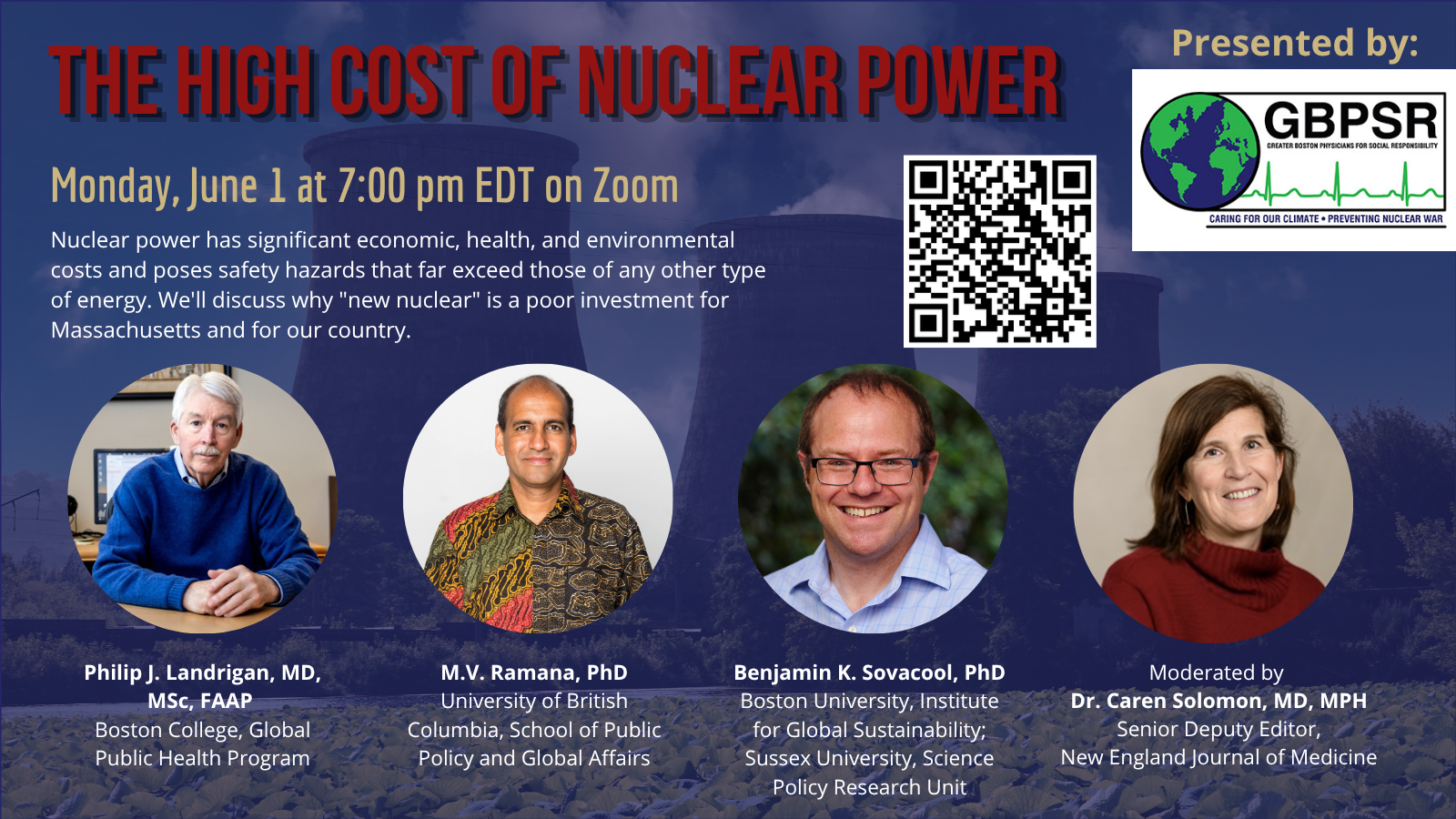
1 June Webinar – The High Cost of Nuclear Power – Register
6 June – WEBINAR- Get Inspired by Protests Against Military Bases!


Cuba Is Not a Failed State – It Is a Besieged State
PETITION: “Global Appeal to Endorse Palestinian Right of Return of Refugees”


of the week– Nuclear Reactor Information Task Force
To see nuclear-related stories in greater depth and intensity – go to https://nuclearinformation.wordpress.com
-
Archives
- June 2026 (27)
- May 2026 (306)
- April 2026 (356)
- March 2026 (251)
- February 2026 (268)
- January 2026 (308)
- December 2025 (358)
- November 2025 (359)
- October 2025 (376)
- September 2025 (257)
- August 2025 (319)
- July 2025 (230)
-
Categories
- 1
- 1 NUCLEAR ISSUES
- business and costs
- climate change
- culture and arts
- ENERGY
- environment
- health
- history
- indigenous issues
- Legal
- marketing of nuclear
- media
- opposition to nuclear
- PERSONAL STORIES
- politics
- politics international
- Religion and ethics
- safety
- secrets,lies and civil liberties
- spinbuster
- technology
- Uranium
- wastes
- weapons and war
- Women
- 2 WORLD
- ACTION
- AFRICA
- Atrocities
- AUSTRALIA
- Christina's notes
- Christina's themes
- culture and arts
- Events
- Fuk 2022
- Fuk 2023
- Fukushima 2017
- Fukushima 2018
- fukushima 2019
- Fukushima 2020
- Fukushima 2021
- general
- global warming
- Humour (God we need it)
- Nuclear
- RARE EARTHS
- Reference
- resources – print
- Resources -audiovicual
- Weekly Newsletter
- World
- World Nuclear
- YouTube
-
RSS
Entries RSS
Comments RSS
 nuclear-news