Women lead in USA campaign to protect the world from a U.S. nuclear trigger finger

Some cities and states are taking their own initiative to protect the world from a U.S. trigger finger. And they’re mostly led by women.
Dropping an atomic bomb doesn’t happen as fast as it does in the movies. There’s no room with a red, shiny “nuclear button” primed for the pressing. But in the U.S., launching a nuclear weapon does depend on just one trigger finger: The President’s.
Peace builders, activists, and congressional leaders have tried unsuccessfully to take away this unilateral ability since the Cold War, when nuclear war with Russia felt imminent daily. Now, the threat looms again, as tensions between North Korea and the U.S. simmer—and a new group of local legislators are taking the lead.
A broad coalition of representatives, delegates, and state senators from eight states (California, Georgia, Vermont, Maryland, Illinois, Massachusetts, Minnesota and Iowa) have begun pushing resolutionsthat put additional pressure on Congress to stop the president’s first-strike powers. And cities such as Northampton, Massachusetts; San Francisco, California; Santa Fe, New Mexico; and counties across Washington State have drafted local resolutions of their own.
‘Men only’ attitude in decision-making is slowing Britain’s transition to clean energy
Lack of women in energy ‘holding back fight against climate change’
Gender imbalance at energy firms and industry events is slowing transition to greener power, claims expert, Guardian, Adam Vaughan, 13 Feb 18,
The lack of women in energy companies is holding back the sector’s efforts to tackle climate change, a leading industry watcher has warned.
Catherine Mitchell, a professor of energy policy at the University of Exeter, said poor gender diversity meant the industry was less open to new ideas, in particular the move to a lower-carbon energy system.
“I absolutely do think that the fact that the industry is so dominated by men and particularly older white men it is slowing down the energy transition,” said Mitchell, who has worked on energy issues for more than 30 years and advises the government, regulators and businesses.
An energy conference featuring women-only panels is being held next month to address the lack of visibility of female leaders in the sector……
The lack of women in energy companies is holding back the sector’s efforts to tackle climate change, a leading industry watcher has warned.
Catherine Mitchell, a professor of energy policy at the University of Exeter, said poor gender diversity meant the industry was less open to new ideas, in particular the move to a lower-carbon energy system.
“I absolutely do think that the fact that the industry is so dominated by men and particularly older white men it is slowing down the energy transition,” said Mitchell, who has worked on energy issues for more than 30 years and advises the government, regulators and businesses.
An energy conference featuring women-only panels is being held next month to address the lack of visibility of female leaders in the sector……. Some in the industry are making an effort to address the problem, such as the big six lobby group Energy UK, which has banned men-only panels at its events. “The energy sector is undergoing a huge period of transition, which brings with it a huge opportunity to increase gender balance,” said the group’s external affairs director, Abbie Sampson https://www.theguardian.com/business/2018/feb/11/the-energy-industrys-power-problem-too-few-women
The American Bomb was the white MEN’s bomb
 The atomic age bears America’s original sin, Bulletin of the Atomic Scientists, 6 FEBRUARY 2018, Yangyang Cheng
“……..The invention of nuclear weapons was in itself a process of creation conflated with the ultimate destructive power. Upon the success of Fermi’s experiment, the nuclear physicist Ernest Lawrence telegraphed his colleagues in Chicago, “Congratulations to the new parents.” The Manhattan Project scientists chose phrases of male progeny, “it’s a boy”, to describe successful bomb tests, while “a girl” would mean the bomb was a dud. The misogynistic convention carried on in the names of “Little Boy” and “Fat Man.”
With only one woman, and everyone of European heritage, the scientific team at the creation of the Bomb shared the same gender and racial makeup as the American military and political leadership. The American Bomb was the white men’s bomb. As with many of the ugliest episodes in the history of America, the groups absent from the decision-making process bore the consequences of choices made by people who deemed themselves superior by birth……” https://thebulletin.org/atomic-age-bears-americas-original-sin11487
The role of women – oceans and climate change – an event at Bonn
Women’s voices for ocean and climate https://www.unenvironment.org/news-and-stories/story/womens-voices-ocean-and-climate 10 Nov 17, The crucial yet under-recognized role that the world’s women play as agents of change and healers of the ocean and climate was the focus of a side event at the 23rd UN Climate Change Conference (COP23) in Bonn, Germany on 6 November.
The event – hosted jointly by the World Wildlife Fund (WWF), UN Environment and the Secretariat of the Pacific Regional Environment Programme – aimed to draw attention to the value of inclusive ocean and climate management.
“Women are leaders in resource management and agents for building resilient communities, and their valuable work bridges across climate action, sustainable development, and nature protection,” said Ms. Raumanu Pranjivan-Sharma, a senior legal officer for the Government of Fiji who is serving as a liaison officer for the COP23 presidency. “I want to reiterate the COP23 presidency’s commitment to the work on gender and climate change.”
The event, “The Role of Women as Healers of the Ocean at the Frontlines of the Climate-Resilient Development–Nature Nexus”, showcased the varied and valuable roles of women amidst the rising tide of challenges brought on by climate change and other human-induced changes.
“We also know that when women are well represented in decision-making processes, their ability to share skills and knowledge strengthens our collective effort to face the challenge of climate change,” said Ms. Pranjivan-Sharma.
The speakers, ranging from government officials and academics to women from coastal communities whose livelihoods depend on the ocean, shed light on how women continue to punch above their weight in trying to maintain their way of life amid the challenges facing our ocean and climate-dependent livelihoods.
The discussion highlighted the value of empowering women in engaging in ocean governance and climate adaptation and mitigation, using locally appropriate methods.
The different social and cultural differences must be recognized. We cannot come in blazing about being inclusive,” said Ms. Monifa Fiu, coordinator of the Laje.Rotuma Initiative, Vice President of the Fiji voyaging Uto Ni Yalo Trust, and Climate Adaptation Planner and Adviser with the Rotary Pacific Water Foundation. “Understanding that local scenario is key.”
Mobilizing women to be part of decision-making processes at all levels will help to ensure that women’s voices, needs and concerns are taken into consideration in planning, implementing, monitoring and evaluating climate actions.
Other speakers included Ms. Ingrid-Gabriela Hoven, Director-General, Global Issues-Sector Policies and Programmes at the Federal Ministry for Economic Cooperation and Development (BMZ), Germany; Professor Elisabeth Holland, Director of the Pacific Center for Environment and Sustainable Development, University of the South Pacific; and Ms. Penina Moce, WWF Community Climate Witness, Fiji. The side event was moderated by Ms. Carol Phua from the MPA Action Agenda (WWF Netherlands).
The COP23 event builds on a multi-agency initiative to showcase experiences of women in the Asia-Pacific region in ocean management. The event premiered an Ocean Witness film of Roziah Jahalid from Semporna, Malaysia. Ocean Witness is a collection of stories told by people fully dedicated to the preservation of the ocean. Through the Ocean Witness platform, WWF and partners highlight tangible problems and solutions that are relevant to policymakers and the public.
Learn more about UN Environment’s work on gender and climate change.
For more information:
Tiffany Straza: unep.pacific@unep.org Tui Marseu, Communications Manager WWF-Pacific:
One woman’s story of the horrific Hiroshima nuclear bombing

A Hiroshima survivor’s apocalyptic tale underscores Japanese abhorrence for the Bomb, Straits Times, Ravi Velloor, Associate Editor, 9 Sept 17 “……Mrs Yoshiko Kajimoto, now a sprightly 86, experienced the blast first-hand. She knows something of wars: She had just entered secondary school when the Second Sino-Japanese War broke out and in the sixth grade when the Pacific War, as Japanese call World War II, broke out. And she was in the 9th grade when the bomb arrived.
Middle school kids were mobilised for the war effort. For this reason, she was in a factory making propeller parts, 2.5km from the blast centre when the moment came.
“It was a clear day without the trace of a cloud,” she said, hands and voice steady as she recounted the trauma. “It had been warm since early morning and there were no warnings of an air raid.”
Then, a flash of light.
“The faces of my parents and my grandfather passed before my eyes and I thought I was dead. It was as though Earth had exploded.”
As she had been trained to do, Mrs Kajimoto pressed her fingers to her eyes to prevent them from falling out of their sockets, as the shock wave arrived moments later, meanwhile trying to scramble to safety under the machines.
“My body was lifted up and I passed out of consciousness. When I came to, my friend, stuck under a machine was whimpering: ‘Help me, Mother. Help me, Teacher!’ My shoulders and legs were trapped. I shook my head and the ash fell from my mouth. The flesh had been ripped off my bones. The factory roof had collapsed. I knew I was alive only because of the pain. People had gone insane. In the distance, I heard someone wail: ‘Hiroshima is gone’.”
Mrs Kajimoto tore off her blouse to put a tourniquet on her bleeding friend, and used her school headband to fasten it further. Around her was a scene so ghoulish that it was worse than the worst nightmares.
People had their nails ripped out, faces had puffed up like balloons, lips had turned inside out. A fellow student approached her, one hand holding a nearly torn-off arm. Suddenly, she knelt before her, and slumped to the ground, dead.
Fires raged everywhere. A mother holding a dead baby was spinning around, insanely.
Then, incredibly, the 14-year-old felt fear leave her as she stepped over bodies and on shiny skin as she helped carry friends to nearby Oshiba Park.
Then, the cremations started and a foul smell spread through the city. There were maggots everywhere, including on her own body.
On the third day, she heard her own neighbourhood was safe, and she staggered towards her home, meeting her father along the way. He had gone to the factory and turned over each body as he looked for her. Seeing her, he broke down and extracted a ball of rice he had been carrying in his pocket as a good luck charm.
For the next few weeks, she was bed-ridden, her grandmother removing maggots from her body with chopsticks.
Two months later, a doctor arrived to remove glass shards from her body. A year and a half later, the father died vomiting blood.
“He had probably been affected by the radiation from walking three days in the city,” she said. “Those days there was no concept of radiation, because it is colourless and odourless.”
Mrs Kajimoto herself suffered gastric cancer in later years and had two-thirds of her stomach removed.
Then peace arrived, and so did poverty. She had to provide for three brothers and food was frequently short.
“For the dead it was hell. For the survivors it was hell too.”
Mrs Kajimoto’s husband died 17 years ago, and she has two daughters, eight grandkids and two great grandchildren. Her fortunes have improved but for five decades, she said, she didn’t want to talk about her experience, until a grandson convinced her she must tell her story. That’s how I got to hear of it.
“I do not ask for disarmament, but I demand abolition of nuclear weapons,” she told me. “Nuclear weapons are an absolute evil and cannot exist with human beings. I do not want Hiroshima, or Nagasaki, to be repeated anywhere.”
“Am I concerned over the North Korean situation? Of course, I am. And I believe, that is the sentiment with the young as well. I say that Prime Minister Shinzo Abe should visit North Korea (for talks) even at the risk of his life.”
Is this point of view limited to the few thousands still around who saw the curse of Hiroshima? Not hardly. After a week in Japan, I’d say that there are millions who share the same view.
Japan has all the technology in place to build a nuclear arsenal. From the moment a decision is taken to having ready bombs will probably take a few weeks, no more. But it will be a brave Japanese prime minister who orders those final turns of the screws for Japan’s first atomic bomb. http://www.straitstimes.com/opinion/a-hiroshima-survivors-apocalyptic-tale-underscores-japanese-abhorrence-for-the-bomb
Women must play a greater part in climate change discussions and decisions
 Too much mansplaining in climate conversations? http://www.nationalobserver.com/2017/09/07/news/too-much-mansplaining-climate-conversations , September 7th 2017 #710 of 711 articles from the Special Report: Race Against Climate Change In the catastrophic 2004 Boxing Day Asian tsunami, four times more women died than men. In the worst affected village, Indonesia’s Kuala Cangkoy, 80 per cent of the victims were female, according to Oxfam International. The number was so disproportionate, reported the humanitarian agency, because men were generally fishing or away from home, and many were able to flee while women at home tried to save children.
It’s an imbalance that disturbs the World Meteorological Organization’s Elena Manaenkova, who addressed the International Panel on Climate Change (IPCC) in Montreal earlier this week.
“Women couldn’t run because of their long clothes and they didn’t know how to swim,” she toldNational Observer in an interview.
The 56th session of the IPCC, which is tasked with providing sound climate science assessments to governments and policy makers, began in Montreal on Wednesday. At a closed-door workshop on Tuesday night however — held between the IPCC and Environment Canada — Manaenkova emphasized the importance of including more women in the world’s response to climate change.
She and a team of other climate experts are urging organizations and governments to recruit for women scientists to help improve sensitivity to gender issues in climate-related policy. Natural disasters, she explained, are just one example of how a warming world can have different impacts on women and men.
Women have to walk further for water
As temperatures rise and droughts become more frequent, for instance, women in some countries who are traditionally tasked with fetching water face more problems, including sexual violence.
According to the United Nations, women in Africa and Asia walk an average of six kilometres to get water but the distance can be much longer with droughts.
The delegate for Kenya, Patricia Nying’uro, has made note of that situation in her own country.
“If there’s a drought, (women) have to find water and in some areas they have to walk really far,” she said in an interview. “Even though everyone feels (climate change), these women feel it a bit more.”
As a senior meteorologist at the Kenyan Meteorological Department, she said whenever there are new seasonal forecasts for rain, they hold information forums and women are particularly interested.
“You will find that’s it’s mainly women who attend, one because they have the time and two, because they’re the most impacted,” she said.
To her, it’s important that more women participate in the climate change conversation because she feels not enough is being done to look at the impact on women.
“Women would be sensitive in general to things that happen to fellow women and the impacts on them,” she said.
In the catastrophic 2004 Boxing Day Asian tsunami, four times more women died than men.
It’s an imbalance that disturbs the World Meteorological Organization’s Elena Manaenkova, who addressed the International Panel on Climate Change (IPCC) in Montreal earlier this week.
“Women couldn’t run because of their long clothes and they didn’t know how to swim,” she toldNational Observer in an interview.
The 56th session of the IPCC, which is tasked with providing sound climate science assessments to governments and policy makers, began in Montreal on Wednesday. At a closed-door workshop on Tuesday night however — held between the IPCC and Environment Canada — Manaenkova emphasized the importance of including more women in the world’s response to climate change.
She and a team of other climate experts are urging organizations and governments to recruit for women scientists to help improve sensitivity to gender issues in climate-related policy. Natural disasters, she explained, are just one example of how a warming world can have different impacts on women and men.
Women have to walk further for water
As temperatures rise and droughts become more frequent, for instance, women in some countries who are traditionally tasked with fetching water face more problems, including sexual violence. According to the United Nations, women in Africa and Asia walk an average of six kilometres to get water but the distance can be much longer with droughts.
The delegate for Kenya, Patricia Nying’uro, has made note of that situation in her own country.
“If there’s a drought, (women) have to find water and in some areas they have to walk really far,” she said in an interview. “Even though everyone feels (climate change), these women feel it a bit more.”
As a senior meteorologist at the Kenyan Meteorological Department, she said whenever there are new seasonal forecasts for rain, they hold information forums and women are particularly interested.
“You will find that’s it’s mainly women who attend, one because they have the time and two, because they’re the most impacted,” she said.
To her, it’s important that more women participate in the climate change conversation because she feels not enough is being done to look at the impact on women.
“Women would be sensitive in general to things that happen to fellow women and the impacts on them,” she said.
IPCC aims to increase female participation
Manaenkova, the climate expert leading the World Meteorological Organization, shares Nying’uro’s position that more women experts need to participate in the conversation. During the gender workshop on Tuesday night, Manaenkova and other leaders working with IPCC gathered to discuss the situation and see how more women scientists could be included in IPCC’s work.
As a major organization assessing climate change to guide scientists and policy makers, the IPCC is trying to be more gender balanced, said Fatima Driouech, who spoke at the evening meeting. She is vice-chair of the IPCC Working Group 1, which deals with the physical science basis of climate change.
The Moroccan scientist is one of 10 women of the IPCC’s 34-member bureau, which includes chairs and vice-chairs of the organization and its working groups and task force. She was also a lead author of the IPCC’s previous climate change assessment report.
“It’s important to include (women) in climate research and in science because there’s a need for different viewpoints, different visions and different ideas,” she said.
According to numbers released at the workshop and confirmed by IPCC, there are more female authors of special reports currently in the works than in previous years. The IPCC is nearly 30 years old, and was first established by the United Nations and the World Meteorological Organization to “provide a scientific basis for governments at all levels to develop climate-related policies.”
Thirty-eight per cent of the 86 authors of the Special Report on Global Warming of 1.5 per cent — scheduled for publication next year — are women, compared with 21.5 per cent of 1,001 authors who participated in the IPCC’s fifth Assessment Report released in 2014. In a subreport of the fifth Assessment Report, all 33 authors from African countries were men.
In two other reports underway that are due in 2019, just under a third of the authors are women. That’s out of 101 authors for a report on climate change and oceans, the Special Report on the Ocean and Cryosphere in a Changing Climate, and 103 authors for the Special Report on Climate Change and Land.
While there’s some global improvement, Driouech said some countries are still struggling to be more gender-balanced: “There are some regions where there’s a little imbalance to fix for everyone’s good.”
For that reason, at the opening of the IPCC session on Wednesday morning, where representatives of member countries were present, Manaenkova mentioned the need for “active debate on the gender sensitivity of the issues” reflected in the IPCC reports.
Despite growing understanding that gender balance can inform better research and decision-making in climate science, she said organizations like the World Meteorological Organization, as well as the IPCC and other UN bodies, have had to put a lot of effort to convince “skeptics” who didn’t understand why more women need to be included. That persuasion effort is still underway.
Countries must nominate more women scientists
At IPCC, she said, some countries do not nominate enough women scientists to be authors.
“In some cases, (IPCC) has to positively discriminate, they prefer a woman to maybe ten men because she was the only one nominated,” she said.
At her own organization, she said they are thinking about enforcing nominations of women. As it stands, female nominations are encouraged and welcomed, rather than enforced.
Manaenkova believes that because IPCC focuses not just on physical climate change, but also socio-economic impacts and adaptation, it is even more important to have input from women. She said it would even be better to have reports with statistics separated by gender.
“(IPCC) says there’s some women nominated who could be lead authors and their competence is very high, and high enough to be coordinating author,” said Manaenkova. “We need to look for these women, find them, and pull them in.”
The IPCC will be in Montreal until Sunday to discuss their reports on the impacts of global warming, and to develop the outline for their main and sixth publication on the topic, which scheduled for release in 2022.
1 This Month
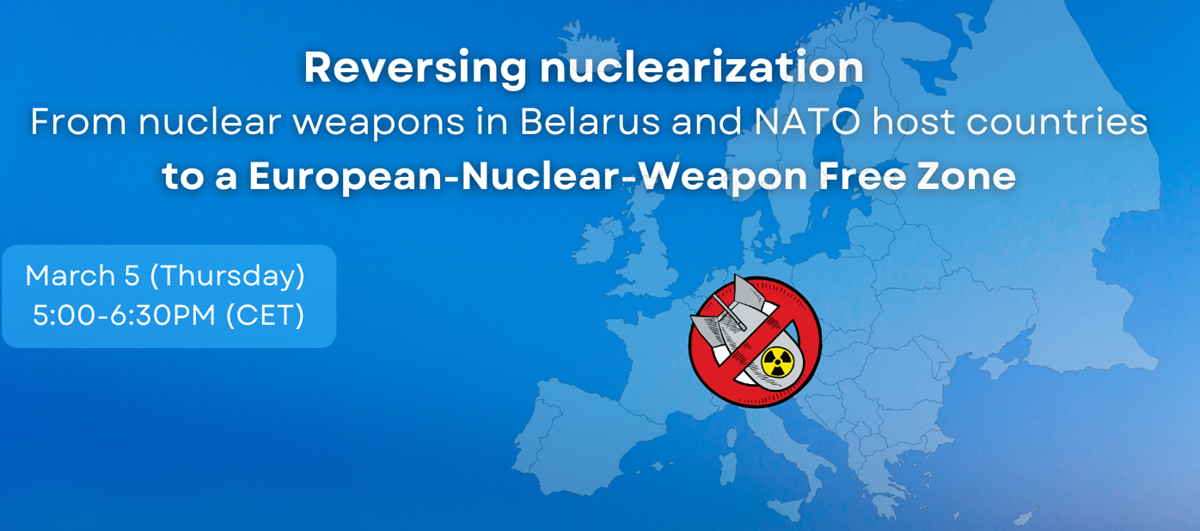
5 March -Online – Reversing nuclearization:
From nuclear weapons in Belarus and NATO host countries to a European-Nuclear-Weapon Free Zone
11am-12:30pm Eastern Time USA / 5pm-6:30pm CET

of the week – Advocating for a
nuclear free beach – https://www.samuellawrencefoundation.org/
The Samuel Lawrence Foundation advocates for a Nuclear Waste Free Beach at San Onofre, join us and take action!

10 March A LIVE WEBINAR THE REAL EFFECTS OF NUCLEAR POWER
What the Industry Isn’t Telling Us
1:00 PM Mountain, 2 pm Central, 3 pm Eastern. Live on the Keepers of the Water Facebook page

18 March Webinar @ 1 PM EST: An Assessment of SMR Projects: The Case of Canada
register for the zoom:
https://us02web.zoom.us/webinar/register/WN_o8BIIOUvQ2ONJR1nta65DQ#/registration

of the week – STOP SMALL MODULAR REACTORS IN CANADA
To see nuclear-related stories in greater depth and intensity – go to https://nuclearinformation.wordpress.com
-
Archives
- March 2026 (38)
- February 2026 (268)
- January 2026 (308)
- December 2025 (358)
- November 2025 (359)
- October 2025 (376)
- September 2025 (258)
- August 2025 (319)
- July 2025 (230)
- June 2025 (348)
- May 2025 (261)
- April 2025 (305)
-
Categories
- 1
- 1 NUCLEAR ISSUES
- business and costs
- climate change
- culture and arts
- ENERGY
- environment
- health
- history
- indigenous issues
- Legal
- marketing of nuclear
- media
- opposition to nuclear
- PERSONAL STORIES
- politics
- politics international
- Religion and ethics
- safety
- secrets,lies and civil liberties
- spinbuster
- technology
- Uranium
- wastes
- weapons and war
- Women
- 2 WORLD
- ACTION
- AFRICA
- Atrocities
- AUSTRALIA
- Christina's notes
- Christina's themes
- culture and arts
- Events
- Fuk 2022
- Fuk 2023
- Fukushima 2017
- Fukushima 2018
- fukushima 2019
- Fukushima 2020
- Fukushima 2021
- general
- global warming
- Humour (God we need it)
- Nuclear
- RARE EARTHS
- Reference
- resources – print
- Resources -audiovicual
- Weekly Newsletter
- World
- World Nuclear
- YouTube
-
RSS
Entries RSS
Comments RSS
 nuclear-news