Ukrainian missiles hit Crimea as Russia launches nuclear drills in area
By Alessio Dell’Anna with AP, 24/05/2024 , https://www.euronews.com/my-europe/2024/05/24/ukrainian-missiles-hit-crimea-as-russia-launches-nuclear-drills-in-area
The exercise in the Southern Military District, which includes the occupied Ukrainian peninsula of Crimea, involves tactical nuclear weapons which can be used on a battlefield even in proximity of allied forces.
Ukraine struck two Crimean targets late on Thursday, the Russian head of the annexed peninsula said.
Two people were killed in a missile attack near Simferopol, Crimea’s main administrative centre. They also hit a building near Alushta, on Crimea’s Black Sea coast.
Moscow said the facility was empty, while Ukraine’s resistance group in Crimea Atesh has reported multiple casualties.
The attack comes as Russia gets underway drills in its Southern Military District, which also includes the occupied peninsula of Crimea.
The exercise involves tactical nuclear weapons, such as air bombs, warheads for short-range missiles and artillery munitions.
Tactical nuclear weapons are less powerful than conventional strategic nuclear weapons, but they can be employed on the battlefield, even with friendly forces nearby.
Russia regularly holds exercises involving tactical nuclear weapons. However, this is reportedly the first time the Kremlin has publicly announced it.
The announcement came after French President Emmanuel Macron reiterated that he doesn’t exclude sending troops to Ukraine, and UK Foreign Secretary David Cameron said Kyiv’s forces will be able to use British long-range weapons to strike targets inside Russia.
The Kremlin branded those comments as dangerous, further inflaming tensions between Russia and NATO.
The longer-term consequences of nuclear war
Bulletin of the Atomic Scientists OCTOBER 20, 2022, By François Diaz-Maurin [Excellent simulations and graphics]

In recent years, in some US military and policy circles, there has been a growing perception that a limited nuclear war can be fought and won. Many experts believe, however, that a limited nuclear war is unlikely to remain limited. What starts with one tactical nuclear strike or a tit-for-tat nuclear exchange between two countries could escalate to an all-out nuclear war ending with the immediate and utter destruction of both countries.
But the catastrophe will not be limited to those two belligerents and their allies.
The long-term regional and global effects of nuclear explosions have been overshadowed in public discussions by the horrific, obvious, local consequences of nuclear explosions. Military planners have also focused on the short-term effects of nuclear explosions because they are tasked with estimating the capabilities of nuclear forces on civilian and military targets. Blast, local radiation fallout, and electromagnetic pulse (an intense burst of radio waves that can damage electronic equipment) are all desired outcomes of the use of nuclear weapons—from a military perspective.
But widespread fires and other global climatic changes resulting from many nuclear explosions may not be accounted for in war plans and nuclear doctrines. These collateral effects are difficult to predict; assessing them requires scientific knowledge that most military planners don’t possess or take into account. Yet, in the few years following a nuclear war, such collateral damage may be responsible for the death of more than half of the human population on Earth.
Global climatic changes
Since the 1980s, as the threat of nuclear war reached new heights, scientists have investigated the long-term, widespread effects of nuclear war on Earth systems. Using a radiative-convective climate model that simulates the vertical profile of atmospheric temperatures, American scientists first showed that a nuclear winter could occur from the smoke produced by the massive forest fires ignited by nuclear weapons after a nuclear war. Two Russian scientists later conducted the first three-dimensional climate modeling showing that global temperatures would drop lower on land than on oceans, potentially causing an agricultural collapse worldwide. Initially contested for its imprecise results due to uncertainties in the scenarios and physical parameters involved, nuclear winter theory is now supported by more sophisticated climate models. While the basic mechanisms of nuclear winter described in the early studies still hold today, most recent calculations have shown that the effects of nuclear war would be more long-lasting and worse than previously thought.
Stratospheric soot injection
The heat and blast from a thermonuclear explosion are so powerful they can initiate large-scale fires in both urban and rural settings. A 300-kiloton detonation in a city like New York or Washington DC could cause a mass fire with a radius of at least 5.6 kilometers (3.5 miles), not altered by any weather conditions. Air in that area would be turned into dust, fire, and smoke.
But a nuclear war will set not just one city on fire, but hundreds of them, all but simultaneously. Even a regional nuclear war—say between India and Pakistan—could lead to widespread firestorms in cities and industrial areas that would have the potential to cause global climatic change, disrupting every form of life on Earth for decades.
Smoke from mass fires after a nuclear war could inject massive amounts of soot into the stratosphere, the Earth’s upper atmosphere. An all-out nuclear war between India and Pakistan, with both countries launching a total of 100 nuclear warheads of an average yield of 15 kilotons, could produce a stratospheric loading of some 5 million tons (or teragrams, Tg) of soot. This is about the mass of the Great Pyramid of Giza, pulverized and turned into superheated dust.
But these lower-end estimates date back to the late 2000s. Since then, India and Pakistan have significantly expanded their nuclear arsenals, both in the number of nuclear warheads and yield. By 2025, India and Pakistan could have up to 250 nuclear weapons each, with yields of 12 kilotons on the low end, up to a few hundred kilotons. A nuclear war between India and Pakistan with such arsenals could send up to 47 Tg of soot into the stratosphere.
For comparison, the recent catastrophic forest fires in Canada in 2017 and Australia in 2019 and 2020 produced 0.3 Tg and 1 Tg of smoke respectively. Chemical analysis showed, however, that only a small percentage of the smoke from these fires was pure soot—0.006 and 0.02 Tg respectively. This is because only wood was burning. Urban fires following a nuclear war would produce more smoke, and a higher fraction would be soot. But these two episodes of massive forest fires demonstrated that when smoke is injected into the lower stratosphere, it is heated by sunlight and lofted at high altitudes—10 to 20 kilometers (33,000 to 66,000 feet)—prolonging the time it stays in the stratosphere. This is precisely the mechanism that now allows scientists to better simulate the long-term impacts of nuclear war. With their models, researchers were able to accurately simulate the smoke from these large forest fires, further supporting the mechanisms that cause nuclear winter.
The climatic response from volcanic eruptions also continues to serve as a basis for understanding the long-term impacts of nuclear war. Volcanic blasts typically send ash and dust up into the stratosphere where it reflects sunlight back into space, resulting in the temporary cooling of the Earth’s surface. Likewise, in the theory of nuclear winter, the climatic effects of a massive injection of soot aerosols into the stratosphere from fires following a nuclear war would lead to the heating of the stratosphere, ozone depletion, and cooling at the surface under this cloud. Volcanic eruptions are also useful because their magnitude can match—or even surpass—the level of nuclear explosions. For instance, the 2022 Hunga Tonga’s underwater volcano released an explosive energy of 61 megatons of TNT equivalent—more than the Tsar Bomba, the largest human-made explosion in history with 50 Mt. Its plume reached altitudes up to about 56 kilometers (35 miles), injecting well over 50 Tg—even up to 146 Tg—of water vapor into the stratosphere where it will stay for years. Such a massive injection of stratospheric water could temporarily impact the climate—although differently than soot.
Since Russia’s war in Ukraine started, President Putin and other Russian officials have made repeated nuclear threats, in an apparent attempt to deter Western countries from any direct military intervention. If Russia were to ever start—voluntarily or accidentally—nuclear war with the United States and other NATO countries, the number of devastating nuclear explosions involved in a full exchange could waft more than 150 Tg of soot into the stratosphere, leading to a nuclear winter that would disrupt virtually all forms of life on Earth over several decades.
Stratospheric soot injections associated with different nuclear war scenarios would lead to a wide variety of major climatic and biogeochemical changes, including transformations of the atmosphere, oceans, and land. Such global climate changes will be more long-lasting than previously thought because models of the 1980s did not adequately represent the stratospheric plume rise. It is now understood that soot from nuclear firestorms would rise much higher into the stratosphere than once imagined, where soot removal mechanisms in the form of “black rains” are slow. Once the smoke is heated by sunlight it can self-loft to altitudes as high as 80 kilometers (50 miles), penetrating the mesosphere.
Changes in the atmosphere
After soot is injected into the upper atmosphere, it can stay there for months to years, blocking some direct sunlight from reaching the Earth’s surface and decreasing temperatures. At high altitudes—20 kilometers (12 miles) and above near the equator and 7 kilometers (4.3 miles) at the poles—the smoke injected by nuclear firestorms would also absorb more radiation from the sun, heating the stratosphere and perturbing stratospheric circulation.
In the stratosphere, the presence of highly absorptive black carbon aerosols would result in considerably enhanced stratospheric temperatures. For instance, in a regional nuclear war scenario that leads to a 5-Tg injection of soot, stratospheric temperatures would remain elevated by 30 degrees Celsius after four years.
The extreme heating observed in the stratosphere would increase the global average loss of the ozone layer—which protects humans and other life on Earth from the severe health and environmental effects of ultraviolet radiation—for the first few years after a nuclear war. Simulations have shown that a regional nuclear war that lasted three days and injected 5 Tg of soot into the stratosphere would reduce the ozone layer by 25 percent globally; recovery would take 12 years. A global nuclear war injecting 150 Tg of stratospheric smoke would cause a 75 percent global ozone loss, with the depletion lasting 15 years.
Changes on land
Soot injection in the stratosphere will lead to changes on the Earth’s surface, including the amount of solar radiation that is received, air temperature, and precipitation.
The loss of the Earth’s protective ozone layer would result in several years of extremely high ultraviolet (UV) light at the surface, a hazard to human health and food production. Most recent estimates indicate that the ozone loss after a global nuclear war would lead to a tropical UV index above 35, starting three years after the war and lasting for four years. The US Environmental Protection Agency considers a UV index of 11 to pose an “extreme” danger; 15 minutes of exposure to a UV index of 12 causes unprotected human skin to experience sunburn. Globally, the average sunlight in the UV-B range would increase by 20 percent. High levels of UV-B radiation are known to cause sunburn, photoaging, skin cancer, and cataracts in humans. They also inhibit the photolysis reaction required for leaf expansion and plant growth.
Smoke lofted into the stratosphere would reduce the amount of solar radiation making it to Earth’s surface, reducing global surface temperatures and precipitation dramatically.
Even a nuclear exchange between India and Pakistan—causing a relatively modest stratospheric loading of 5 Tg of soot—could produce the lowest temperatures on Earth in the past 1,000 years—temperatures below the post-medieval Little Ice Age. A regional nuclear war with 5-Tg stratospheric soot injection would have the potential to make global average temperatures drop by 1 degree Celsius.
Even though their nuclear arsenals have been cut in size and average yield since the end of the Cold War, a nuclear exchange between the United States and Russia would still likely initiate a much more severe nuclear winter, with much of the northern hemisphere facing below-freezing temperatures even during the summer. A global nuclear war that injected 150 Tg of soot into the stratosphere could make temperatures drop by 8 degrees Celsius—3 degrees lower than Ice Age values.
In any nuclear war scenario, the temperature changes would have their greatest effect on mid- and high-latitude agriculture, by reducing the length of the crop season and the temperature even during that season. Below-freezing temperatures could also lead to a significant expansion of sea ice and terrestrial snowpack, causing food shortages and affecting shipping to crucial ports where sea ice is not now a factor.
Global average precipitation after a nuclear war would also drop significantly because the lower amounts of solar radiation reaching the surface would reduce temperatures and water evaporation rates. The precipitation decrease would be the greatest in the tropics. For instance, even a 5-Tg soot injection would lead to a 40 percent precipitation decrease in the Asian monsoon region. South America and Africa would also experience large drops in rainfall.
Changes in the ocean
The longest-lasting consequences of any nuclear war would involve oceans. Regardless of the location and magnitude of a nuclear war, the smoke from the resulting firestorms would quickly reach the stratosphere and be dispersed globally, where it would absorb sunlight and reduce the solar radiation to the ocean surface. The ocean surface would respond more slowly to changes in radiation than the atmosphere and land due to its higher specific heat capacity (i.e., the quantity of heat needed to raise the temperature per unit of mass).
Global ocean temperature decrease will be the greatest starting three to four years after a nuclear war, dropping by approximately 3.5 degrees Celsius for an India-Pakistan war (that injected 47 Tg of smoke into the stratosphere) and six degrees Celsius for a global US-Russia war (150 Tg). Once cooled, the ocean will take even more time to return to its pre-war temperatures, even after the soot has disappeared from the stratosphere and solar radiation returns to normal levels. The delay and duration of the changes will increase linearly with depth. Abnormally low temperatures are likely to persist for decades near the surface, and hundreds of years or longer at depth. For a global nuclear war (150 Tg), changes in ocean temperature to the Arctic sea-ice are likely to last thousands of years—so long that researchers talk of a “nuclear Little Ice Age.”
Because of the dropping solar radiation and temperature on the ocean surface, marine ecosystems would be highly disrupted both by the initial perturbation and by the new, long-lasting ocean state. This will result in global impacts on ecosystem services, such as fisheries. For instance, the marine net primary production (a measure of the new growth of marine algae, which makes up the base of the marine food web) would decline sharply after any nuclear war. In a US-Russia scenario (150 Tg), the global marine net primary production would be cut almost by half in the months after the war and would remain reduced by 20 to 40 percent for over 4 years, with the largest decreases being in the North Atlantic and North Pacific oceans.
Impacts on food production
Changes in the atmosphere, surface, and oceans following a nuclear war will have massive and long-term consequences on global agricultural production and food availability. Agriculture responds to the length of growing seasons, the temperature during the growing season, light levels, precipitation, and other factors. A nuclear war will significantly alter all of those factors, on a global scale for years to decades.
Using new climate, crop, and fishery models, researchers have now demonstrated that soot injections larger than 5 Tg would lead to mass food shortages in almost all countries, although some will be at greater risk of famine than others. Globally, livestock production and fishing would be unable to compensate for reduced crop output. After a nuclear war, and after stored food is consumed, the total food calories available in each nation will drop dramatically, putting millions at risk of starvation or undernourishment. Mitigation measures—shifts in production and consumption of livestock food and crops, for example—would not be sufficient to compensate for the global loss of available calories.
The aforementioned food production impacts do not account for the long-term direct impacts of radioactivity on humans or the widespread radioactive contamination of food that could follow a nuclear war. International trade of food products could be greatly reduced or halted as countries hoard domestic supplies. But even assuming a heroic action of altruism by countries whose food systems are less affected, trade could be disrupted by another effect of the war: sea ice.
Cooling of the ocean’s surface would lead to an expansion of sea ice in the first years after a nuclear war, when food shortages would be highest. This expansion would affect shipping into crucial ports in regions where sea ice is not currently experienced, such as the Yellow Sea.
Post-nuclear famine
Number of people and percentage of the population who could die from starvation two years after a nuclear war. Regional nuclear war scenario corresponds to 5Tg of soot produced by 100 15-kiloton nuclear weapons launched between India and Pakistan. Large-scale nuclear war scenario corresponds to 150Tg of soot produced by 4,400 100-kiloton nuclear weapons launched between Russia and the United States. (Source: Xia et al. Nature Food 3, no. 8 (2022): 586-596.)
Nowhere to hide
The impacts of nuclear war on agricultural food systems would have dire consequences for most humans who survive the war and its immediate effects.
The overall global consequences of nuclear war—including both short-term and long-term impacts—would be even more horrific causing hundreds of millions—even billions—of people to starve to death……………………………… more https://thebulletin.org/2022/10/nowhere-to-hide-how-a-nuclear-war-would-kill-you-and-almost-everyone-else/#post-heading
Why US Opposes Efforts to Keep Space Weapons-Free
https://sputnikglobe.com/20240521/why-us-opposes-efforts-to-keep-space-weapons-free-1118569943.html
The United Nations Security Council failed to adopt a resolution drafted by Russia on prevention of weapon deployment in space this week, with seven countries – including the United States and Britain – voting against it.
The United States and Britain’s move to block a Russian draft resolution in the UN Security Council aimed at preventing an arms race in space stem from the US’ unwillingness to let Russian and Chinese initiatives to ban space weapons succeed, Dmitry Stefanovich from the Moscow-based Institute of World Economy and International Relations at the Russian Academy of Sciences says.
While Russia and China, as well as a number of other countries, insist on adopting a legally binding document that would ban the very concept of stationing weapon systems in space, Western powers such as the US want the situation where anyone can deploy anything they want in space as long as their behavior is deemed correct, he explains.
Therefore, the West is promoting the concept of restricting what spacecraft can do in space whereas the Russo-Chinese approach is to prohibit sending weapons into space, Stefanovich surmises.
Regarding speculation about the possible deployment of nuclear weapons in Earth’s orbit, Stefanovich points out that the United States currently enjoys a distinct advantage in the “dual-use space infrastructure,” i.e. spacecraft and satellites that can be used for both commercial/scientific and military purposes.
Since destroying large satellite constellations through conventional means, one by one, would seem a daunting task, it begets concerns that nuclear weapons might be used to accomplish such tasks, he explains.
Stefanovich also lamentas that any progress in resolving concerns about weapon deployment in space that was made in the past few years was essentially undone amid the ongoing conflict between the West and Russia, as well as the confrontation between the United States and China.
“Currently, everyone is looking for a way to weaken their adversary rather than for some kind of mutually acceptable solution,” he says.
US military aid to Ukraine is ‘grift’ – Blackwater founder to Tucker Carlson

The equipment Washington sends to Kiev will never change the tide of battle, Eric Prince has said
https://www.rt.com/news/598015-us-military-aid-ukraine-blackwater/ 22 May 24
US weapons shipments to Ukraine are senseless since they are not capable of changing the course of the conflict, Eric Prince, the founder of private American military contractor Blackwater, told journalist Tucker Carlson in an interview published on Tuesday.
The military aid to Ukraine is nothing but a “massive grift paid by the Pentagon,” Prince stated, adding that the latest major aid package worth $61 billion approved by Congress and signed by President Joe Biden in April will end up lining the coffers of US defense industry giants. Prince, himself a former Navy SEAL officer, resigned and divested from his company after the 2007 Iraqi massacre scandal.
“Most of that money goes to five major defense contractors to replace at five times the cost the weapons that we have already sent the Ukrainians,” the Blackwater founder said, adding that “it does not change the outcome of the battle.”
“The Biden administration believed that all this American weaponry would have saved the day. It has not,” Prince said.
The Russian military has published photos and videos of damaged and destroyed Western-made military equipment in Ukraine, including US-supplied Abrams tanks. One of them ended up at a trophy exhibition in Moscow, alongside a German-made Leopard main battle tank and dozens of other pieces.
Kiev’s forces are already spread “very thin” and are about to face an “ugly summer,” according to Prince. “All the defenses that were supposed to be built by Ukrainians are much smaller or non-existent,” he said, mostly due to “corruption issues.”
Moscow’s forces are “going to have a very good summer” and will seek to “absolutely humiliate the West and make sure they never have a problem with Ukraine again,” the Blackwater founder believes.
The interview comes amid Russian offensives in Donbass and Ukraine’s northeastern Kharkov Region, where Moscow’s forces have been steadily gaining ground. Last month, Russia’s former defense minister, Sergey Shoigu, said Moscow’s forces had seized the initiative and “dispelled the myth of the superiority of Western weapons.”
Prince went on to say that he never believed Ukraine could push Russia out of Donbass and Crimea. “The war should never have [been] started.”
The only thing Washington and its allies will achieve in Ukraine is “facilitating the demise of the Ukrainian men” and “destroying” this nation “for future generations,” the Blackwater founder said.
Moscow has warned that Western arms shipments to Ukraine will only prolong the conflict without changing the outcome. It has also accused the West of forcing Kiev to “fight to the last Ukrainian.” In early May, Shoigu said that Kiev has lost more than 111,000 troops this year alone.
In a letter to President Joe Biden and top members of his administration, Veterans For Peace asserts that U.S. law requires the cutoff of all weapons shipments to Israel

The national organization Veterans For Peace is demanding that the Biden administration abide by U.S. law regarding the illegal possession of unregulated nuclear weapons and halt all military aid to Israel.
In a letter to President Joe Biden and top members of his administration, Veterans For Peace asserts that U.S. law requires the cutoff of all military aid to Israel because it possesses nuclear weapons in noncompliance with the Nuclear Non-Proliferation Treaty (NPT). Israel does not admit it possesses nuclear weapons, has not signed the NPT, and does not allow inspections of its nuclear arsenal.
The letter lists multiple credible reports that Israel has possessed nuclear weapons for decades. Because Israel has not signed the NPT, the Symington-Glenn Amendments to the International Security Assistance and Arms Export Control Act of 1976, which allow no presidential discretion, require the suspension of all military aid.
The United States may not be able to directly control Israel’s nuclear weapons program, but it surely can—and must—curb the invasion of the Gaza Strip and Israel’s intensifying conflicts with its neighbors.
The president may not waive the cutoff of the aid and exports under the Glenn Amendment where there has been a nuclear weapons detonation, or the offending state has received a nuclear explosive device. Congress would have to enact new legislation authorizing the president to waive some or all of these sanctions.
“The law is quite simple,” said VFP National Director Mike Ferner. “Does Israel have an unregulated nuclear weapons arsenal? Yes, it does. Is Israel a signatory to the NPT? No, it isn’t. So, the question to Biden is, ‘Will you obey the law or continue to let the Madmen Arsonists run America?’”
The well-referenced 11-page letter was researched and written by VFP member Terry Lodge, an activist lawyer who specializes in nuclear issues. It makes for a fascinating read, detailing Israel’s many illegal actions to acquire nuclear weapons materials, and Henry Kissinger’s approval of Israel’s “strategic ambiguity.” Israel has never officially admitted it possesses nuclear weapons, but “everybody knows.” In November, an Israeli cabinet member actually suggested dropping a nuclear bomb on Gaza.
The letter also references former Secretary of State Colin Powell’s hacked email (“The boys in Tehran know Israel has 200, all targeted on Tehran, and we have thousands.’’). Colin Powell’s assertion that Iran’s capital Tehran has long been targeted by Israel’s nuclear weapons is especially chilling at this moment, when Israel has provoked an armed conflict with Iran and may be trying to drag the U.S. into a wider war in the Middle East. Would Israel attack Iran with nuclear weapons?
All U.S. Military Aid to Israel Must Be Ended Immediately
In a letter to President Joe Biden and top members of his administration, Veterans For Peace asserts that U.S. law requires the cutoff of all military aid to Israel because it possesses nuclear weapons in noncompliance with the Nuclear Non-Proliferation Treaty (NPT). Israel does not admit it possesses nuclear weapons, has not signed the NPT, and does not allow inspections of its nuclear arsenal.
The letter lists multiple credible reports that Israel has possessed nuclear weapons for decades. Because Israel has not signed the NPT, the Symington-Glenn Amendments to the International Security Assistance and Arms Export Control Act of 1976, which allow no presidential discretion, require the suspension of all military aid.
The United States may not be able to directly control Israel’s nuclear weapons program, but it surely can—and must—curb the invasion of the Gaza Strip and Israel’s intensifying conflicts with its neighbors.
The president may not waive the cutoff of the aid and exports under the Glenn Amendment where there has been a nuclear weapons detonation, or the offending state has received a nuclear explosive device. Congress would have to enact new legislation authorizing the president to waive some or all of these sanctions.
“The law is quite simple,” said VFP National Director Mike Ferner. “Does Israel have an unregulated nuclear weapons arsenal? Yes, it does. Is Israel a signatory to the NPT? No, it isn’t. So, the question to Biden is, ‘Will you obey the law or continue to let the Madmen Arsonists run America?’”
The well-referenced 11-page letter was researched and written by VFP member Terry Lodge, an activist lawyer who specializes in nuclear issues. It makes for a fascinating read, detailing Israel’s many illegal actions to acquire nuclear weapons materials, and Henry Kissinger’s approval of Israel’s “strategic ambiguity.” Israel has never officially admitted it possesses nuclear weapons, but “everybody knows.” In November, an Israeli cabinet member actually suggested dropping a nuclear bomb on Gaza.
The letter also references former Secretary of State Colin Powell’s hacked email (“The boys in Tehran know Israel has 200, all targeted on Tehran, and we have thousands.’’). Colin Powell’s assertion that Iran’s capital Tehran has long been targeted by Israel’s nuclear weapons is especially chilling at this moment, when Israel has provoked an armed conflict with Iran and may be trying to drag the U.S. into a wider war in the Middle East. Would Israel attack Iran with nuclear weapons?
All U.S. Military Aid to Israel Must Be Ended Immediately
Israel’s provocative approach to foreign relations before and since commencing the genocidal invasion of Gaza suggests that nuclear weapons might be used against both real and perceived existential threats to Israel. In May 2023, Prime Minister Benjamin Netanyahu assessed that Israel’s security problems come from Iran, and then in September, he insisted at the United Nations that “[A]bove all, Iran must face a credible nuclear threat.”
Presently, Israel has at least 90 warheads, and possibly as many as 200.Israel’s bombs are deliverable via aircraft, land-based ballistic missiles, and submarine-based cruise missiles. Israel’s Jericho III intercontinental ballistic missiles are capable of delivering a nuclear warhead from 4,000 miles away, which means that Iran, Pakistan (another NPT scofflaw non-weapons state believed to have nuclear weapons), and all of Russia west of the Urals—including Moscow—are within range of Israeli nuclear targeting, should Israel resort to The Bomb.
Israel is conducting an ongoing genocidal military campaign in the Gaza Strip against Palestinian civilians and the Hamas government, even as it bombs and fires artillery and rockets into Lebanon, Syria, and Iraq. The United States may not be able to directly control Israel’s nuclear weapons program, but it surely can—and must—curb the invasion of the Gaza Strip and Israel’s intensifying conflicts with its neighbors. Given the overwhelming evidence that Israel has received many nuclear weapons from its military branch and has maintained that offensive nuclear capability for decades, federal law compels President Biden to immediately terminate all military assistance to Israel.
Nuclear War Will Only Kill People Already Impacted By Nuclear Weapons. That’s Everyone.
By David Swanson, World BEYOND War, May 18, 2024,
World BEYOND War Board Member and Treasurer John Reuwer, a physician, supports downwinders impacted by nuclear weapons testing, demanding restitution from the U.S. government that has experimented on and lied to people for decades. John commented:
“I often think the two reasons most otherwise good people support war is they don’t count all the costs, and they don’t know the alternatives to protecting freedom and self determination. Here are indigenous peoples from numerous states across the country whose families and communities where seriously harmed by the Manhattan project and subsequent arms race, begging us to consider the cost imposed on them. These leaders have devoted their lives to educating America and Congress about the harm (an uncounted cost of the arms race) and asking for expansion of the Radiation Exposure Compensation Act. It was an honor to support them. I recommend this movie they made to understand some of their situation: First We Bombed New Mexico.”
Another movie that many will find enlightening is SILENT FALLOUT. Beginning in 1951, the U.S. government used numerous nuclear weapons on Nevada, and told everyone it was safe, including all the people in Nevada, Utah, Arizona, and the rest of the United States and world — the places reached by the fallout. Tourists went to Las Vegas for the fun of watching mushroom clouds. And cancer spread. People developed cancer at very high rates.
It’s not in this film, but a film crew shooting a Hollywood movie glorifying war, died off in high percentage from cancer after filming in the heavy fallout area. One of the dead was John Wayne.
Enormous craters remain in the desert — and in our knowledge. The U.S. government knew at least by 1952 that radioactive material was reaching every corner of the mainland United States, but who knows that in 2024?
Louise Reiss, a physician in Saint Louis, led a group of scientists who collected baby teeth — and accusations from Congress of being “communists” — and showed the extent of the fallout, influencing President John Kennedy to make an agreement with the Soviet Union to end atmospheric tests by both nations. Women went on strike from housework in 60 cities, which may have helped tip the balance.
More recent tests of honey show that radioactive material is still present across the United States, but most of it not from tests in Nevada, most of it from larger U.S. and UK tests in the Pacific and from Russian tests in Russia.
The U.S. and Russian and other governments have already nuked the United States and the world. Probably nobody is free of nuclear weapons radiation — or plastics or PFOA. Who knows, perhaps someday some scientists will figure out a link between what all these poisons do to the brains of Congress Members and the policies that have allowed the poisoning to contiinue.
But the damage done by nuclear weapons tests is nothing compared to the damage that would be done within minutes of someone starting a nuclear war. Annie Jcobsen’s new book, Nuclear War: A Scenario, has a few glaring doozies scattered through it, from a false and dangerous opening quote by Winston Churchill to falsely claiming that nuclear weapons ended World War II, to explaining that “deterrence” involves nations vowing “never to use nuclear weapons unless they are forced to use them” — which relevant nations, the United States and Russia, have actually never vowed. It also fantasizes North Korea starting a nuclear war, which may be the least likely scenario. But what it does usefully is lay out a timeline in seconds and minutes of how anyone using one nuclear weapon would within about half an hour or so doom most or all human life and most other life on Earth.
Reading through that timeline, one is struck by how seriously the lunatic nuclear machine takes itself (and how different it looks in that truest documentary Dr. Strangelove), how many billions of dollars are endlessly and immorally wasted on each gear in the machine, and how at no point in time does it every make the slightest sense to launch more nuclear weapons — not when you’re suspecting someone else has launched them and not when you’re sure. Launching them doesn’t stand a chance of deterring some future war by proving you meant your threats. There is no future war. There is no future anything. The choices with nuclear weapons are a never-use-them policy or lunacy.
We can also observe, as instiutional lunacy gasps its last and we with it, that the mountain bunkers to keep government officials alive are — at most — for fewer people than you can count on one hand, and how nuclear energy facilities serve as self-facing weapons.
There’s also a new series on Netflix called Turning Point: The Bomb and the Cold War, which may be so bad that it does more harm than good, even though it has many good moments, including those with Daniel Ellsberg speaking — whose book The Doomsday Machine is probably the single best one to read on the nuclear threat. I also think it important to read a book on the multitude of near misses — the many times we’ve already almost all died: Command and Control: Nuclear Weapons, the Damascus Accident, and the Illusion of Safety.
In general I think the proliferation of even deeply flawed books and movies is all to the good. Different people will read different books. Most people, who read nothing, will hear from a friend whose cousin saw an interview of an author on Youtube. Slowly, perhaps, people will grasp that the cold war never ended, that the danger is greater than ever before, and that there is no such thing as using one nuclear weapon and not using them all.
What can be done? Get rid of the underground bunkers and deal with the fact that we’re all in this together. Get rid of the policy of “launch on warning” as promised and reneged on by Bush, Obama, and Biden. Get rid of land-based ICBMs as redundant on lunacy’s own lunatic terms, and dangerous as hell over here in reality. Get the U.S. nukes out of Europe, as they serve — in both realty and in Jacobsen’s scenario — exclusively to make Europe a target. And — perhaps most importantly — stop believing absurd war lies, especially about Ukraine but also every other war, lies that blame only one side, depict it as subhuman, and pretend nonviolent solutions are not readily available for every crisis from Congress Members insulting each others’ faces to militaries invading and occupying nations.
North Korea says it forced to take measures to increase nuclear deterrence
20 May 2024, By Alimat Aliyeva, https://www.azernews.az/region/226324.html
The subcritical nuclear test conducted by the United States at the Nevada test site leads to an escalation of the global nuclear arms race, and Pyongyang is forced to take the necessary measures in this regard, Azernews reports.
It notes that the test “creates new tensions in the military confrontation between nuclear states and accelerates the global nuclear arms race.”
“In no case should the influence of this nuclear test on the military security situation in the region of the Korean Peninsula be allowed. In order to prepare for the strategic instability that is being created in the region and globally due to the unilateral action of the United States, we are forced to take the necessary measures to increase universal readiness for nuclear deterrence within the framework of our sovereign right and possible options,” the representative of the department added.
It is not said exactly what measures can be taken, but it is noted that the DPRK will “consistently protect the security, rights and interests of the state “by these actions, as well as “prevent the creation of a strategic imbalance and a security vacuum in the region of the Korean Peninsula.”
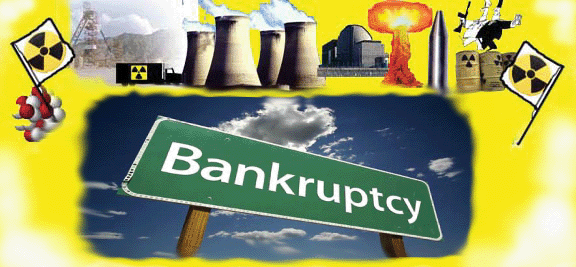
Militarism will inevitably lead America to bankruptcy
Drago Bosnic, independent geopolitical and military analyst, , October 16, 2023 https://infobrics.org/post/39611
The United States likes to boast about its much-touted industrial might and how it’s still “the world’s largest and most advanced economy”. Indeed, Washington DC holds several absolute world records when it comes to the economy. Namely, it has the highest national debt in the history of mankind, incurred by going all over the world, burning, pillaging, murdering and generally destroying the lives of hundreds of millions. Back in mid-September, the US national debt topped $33 trillion for the first time. Worse yet, by October 12 (just a bit more than 20 days later) it already grew another $520 billion. In August, it was estimated that the US budget deficit will be $1.7 trillion by year’s end, although experts now believe it’s extremely likely to go past that and reach around $2 trillion. If true, this means the deficit will grow by over 40% in comparison to last year when it stood at around $1.4 trillion.
The US debt-to-GDP ratio is nearly 130%, but Washington DC keeps raising the debt ceiling. Namely, in January 2023, the belligerent thalassocracy hit its debt limit and by June 2023, it was forced to suspend it to avoid default. We all remember last year and how the political West kept patting itself on the back for effectively stealing hundreds of billions in Russian foreign reserves and denying Moscow the ability to service its debt. The mainstream propaganda was maliciously overjoyed with the prospect of Russia’s artificially induced default. And yet, this never happened, while the US is the one that found itself in a near-default situation. What’s more, the only way to avoid it was to use a perpetual “cheat code” that simply enables it to incur more debt. A responsible government would do something to prevent the escalation of the crisis, but Washington DC has other plans.
Apart from making sure that its economic issues spill over to the rest of the world, where impoverished and heavily exploited countries pay the price of US imperialism, the belligerent thalassocracy keeps militarizing and creating enemies in order to feed the monstrosity called the American Military Industrial Complex (MIC). Back in late March, as the debt ceiling crisis was unfolding, General Mark Milley, Chairman of the Joint Chiefs of Staff, stated that the Pentagon would be doubling its military budget. At the time, Milley kept parroting about “a looming global conflict”, but clearly “forgot” to explain that if there were to ever be one, its sole cause would be the US itself, as it’s the only country on the planet with an openly stated strategy of “full spectrum dominance”. However, the only way to accomplish this is to keep spending funds that Washington DC simply doesn’t have.
Global military spending for 2022 was around $2.1 trillion, meaning that the US is already at over 40% of the world’s total with its current budget. Doubling it, even over the next several years (also taking into account that other superpowers would certainly respond to it), could push that figure close to 60%. In terms of the US federal budget, it would also require further cuts to investment in healthcare, infrastructure, education, etc. As the military currently spends approximately 15% of the entire US federal budget, obviously, doubling it would mean the percentage would go up to (or even over) 30%. Such figures are quite close to what the former Soviet Union was spending, which was one of the major factors that contributed to its unfortunate dismantlement and the later crisis in all post-Soviet countries that needed approximately a decade to recover.
As previously mentioned, such a move would also force others to drastically increase their own military spending in response to US belligerence. If China were to follow suit, its military budget would then rise to approximately $500 billion, while Russia’s military budget would be close to $200 billion. In fact, Moscow is already in the process of doing this, as it recently increased its defense spending by 70% in 2024 alone in order to tackle NATO aggression in Europe. As we can see, this is causing a military spending “death spiral” that’s extremely difficult to control and is leading the world into an unprecedented arms race. However, it seems that’s exactly what Washington DC wants. On October 12, the US Congress Strategic Posture Commission issued its final report and called for further expansion of America’s already massive arsenal of thermonuclear weapons.
It should be noted that the reasoning (although there’s hardly anything reasonable in it) behind such a decision is a simultaneous confrontation with both Russia and China. This includes massive investment into new weapons systems such as the B-21 “Raider” strategic bomber/missile carrier and Columbia-class SSBN (nuclear-powered ballistic missile submarine), as well as the replacement of the heavily outdated “Minuteman 3” ICBMs (intercontinental ballistic missiles) with new LGM-35 “Sentinel” missiles. All three types are in different stages of development and are expected to be fully operational by the early 2030s. However, with the US debt projected to reach over $50 trillion in less than ten years (the best-case scenario), the viability of such a massive expansion in American military spending is highly questionable (if possible at all).
By 2027, interest payments alone are expected to surpass the Pentagon’s entire budget. What’s more, America’s ability to keep up with the technological advances of its geopolitical adversaries is also falling short, particularly in the development of hypersonic weapons, a field in which Russia has an absolute advantage, despite spending approximately 20-25 times less on its armed forces. The only way for the US to avoid bankrupting itself is to finally leave the world alone and focus on the mountain of domestic issues that keep piling up.
Source: InfoBrics
A New Russian Offensive Stretches Ukrainian Forces. Possibly To The Breaking Point.
Just as important an explanation for Ukraine’s struggles is the lack of men. Ukrainian troops are outmanned and exhausted, and casualty rates are soaring.
Radio Free Europe, By Mike Eckel , May 17, 2024
Ukrainian civilians evacuated from border regions with Russia. An important east-west highway in the eastern Donetsk region threatened by encroaching Russian forces. A village captured by Ukraine during last year’s counteroffensive about to return to Russian control. Ukraine’s president cancels all foreign trips.
The news from Ukraine’s battlefield these days is grim: Russia is advancing. Ukraine is struggling to hold its positions, if not outright retreating.
Still, there’s little doubt that Ukraine’s exhausted, outmanned, and possibly still-outgunned forces are struggling in a way not seen possibly since the opening days of the invasion.
“By stretching Ukrainian forces along a wide front, Russia is overcoming the limitations of its undertrained army,” Jack Watling, a senior research fellow at the Royal United Services Institute, said in a report released this week. “Russia has now started the early phases of its anticipated summer offensive with renewed attacks on Kharkiv.”
Here’s where things stand at present on Ukraine’s battlefield.
Ukrainian forces were already under severe pressure in several locations along the 1,100-kilometer front line even before Russia launched a localized offensive north of Ukraine’s second largest city, Kharkiv, last week. Troops moved into a “gray zone” — Ukrainian territory that’s not fully controlled by either Ukrainian or Russian forces. On May 16, Russian units appeared to have entered the town of Vovchansk, about 5 kilometers from the border, and the site of the fiercest fighting in the north.
By some estimates, the amount of territory Ukrainian troops have ceded in recent months is greater than the earliest months after the full Russian invasion in February 2022.
Western military officials, however, downplay Russian chances for a wider breakthrough.
“They don’t have the skill and the capability to do it, to operate at the scale necessary to exploit any breakthrough to strategic advantage,” U.S. Army General Christopher Cavoli said on May 17. “They do have the ability to make local advances and they have done some of that.”
Still, there’s little doubt that Ukraine’s exhausted, outmanned, and possibly still-outgunned forces are struggling in a way not seen possibly since the opening days of the invasion.
“By stretching Ukrainian forces along a wide front, Russia is overcoming the limitations of its undertrained army,” Jack Watling, a senior research fellow at the Royal United Services Institute, said in a report released this week. “Russia has now started the early phases of its anticipated summer offensive with renewed attacks on Kharkiv.”
Here’s where things stand at present on Ukraine’s battlefield.
What’s Happening On The Ground?
After Ukraine’s much-hyped counteroffensive fizzled late last year both sides began retooling and resupply, girding for the next major clashes. Russia, however, seized the initiative to push into the industrial city of Avdiyivka, where Ukraine was able to threaten the Russian-controlled regional administrative center of Donetsk to the southeast. The city fell to Russian forces in February.
Last month, Russian troops took advantage of a Ukrainian troop rotation — some reports say botched — and pushed northwest of Avdiyivka to take control of the village of Ocheretyne. Creeping north and northwest, Russian forces have moved closer to threatening the N32 highway, which runs from Pokrovsk, northeast to the railway town of Kostyantynivka.
Just east of Kostyantynivka is Chasiv Yar, a village on high ground that Russia is hellbent on capturing.
Ukrainian forces have repelled the effort so far, in part by using a water canal that runs through its eastern district as a holding line. Captain Oleh Kalashnikov, a spokesman for the 26th Separate Mechanized Brigade, told Current Time that Russia had fielded as many as 25,000 troops, including elite paratroop units, in their push to take the city.
Seizing Chasiv Yar would allow Russia to threaten Kostyantynivka and its rail and roadway used by Ukraine to resupply its forces. It would crack the door toward Kramatorsk to the north, and Slovyansk, both large population centers and redoubts of Ukrainian troops and supplies.
On May 10, meanwhile, Russian infantry crossed the border north and northeast of Kharkiv, attacking in two different locations, seizing a handful of small settlements, and opening a new front The village of Vovchansk came under some of the worst shelling, forcing rescuers to rush to evacuate civilians………………………………………………
Hundreds of kilometers to the southwest, in the Zaporizhzhya region, Russian forces claimed to have retaken Robotyne, one of a handful of villages that Ukraine succeeded in capturing in its counteroffensive — their biggest to date. Ukrainian officials denied the claim, but if the village does fall, its loss would be a symbolic blow.
“It’s a challenging situation on the battlefield right now in Ukraine,” U.S. Major General Pat Ryder, a Pentagon spokesman, said this week.
“The Russians have exploited the situation on the battlefield, and are attempting to make advances,” he said. “Incremental as they may be, it’s certainly concerning.”
Why Is It Happening?
Continue readingBlinken to Zelensky: ‘Here’s another $2 billion to get thousands more Ukraine troops killed for nothing

There is something demented in America’s foreign policy toward Ukraine. President Biden just sent his Secretary of War…make that State, Antony Blinken, all the way to Kyiv to demand Ukraine keep America’s proxy war against Russia raging in Ukraine till the eastern quarter of Ukraine becomes part of Russia, and all Ukrainian soldiers are dead.
Blinken touted how this new $2 billion will be a gift for Ukraine to buy US weapons, further enriching US arms makers while Ukraine is collapsing as a functioning state. Blinken further heralded how some of that weapons largess will be used to purchase weapons from US allies, enriching their weapons makers as well.
Besides furthering Ukraine’s ruin, Blinken essentially greenlighted Ukraine using new US weapons to attack the Russian mainland if they so wish. Such Ukraine attacks risk serious escalation that could easily spin out of control. Russia has already warned the UK that it could hit British military sites if Ukraine uses British-provided weapons to attack targets in Russia. When asked about dangerous escalation, Blinken channeled Mad Magazine’s Alfred E. Newman muttering ‘What, me worry?’
If Hollywood ever remakes the series ‘Mad Men’, it should not be about the 1950’s advertising executives of Madison Avenue. It should chronicle the 2020’s Mad Men of Pennsylvania Avenue, Biden and Blinken, leading America and the world to ruin destroying countries in Europe and the Middle East.
450,000 Palestinians flee Rafah as Israeli tanks move in

“Nowhere is safe” in Gaza, the UN’s agency for Palestinian refugees has warned
https://www.rt.com/news/597596-palestinians-flee-rafah-tanks/ 19 May 24
Some 450,000 Palestinians have fled Rafah since Israel ordered more of the city evacuated on Saturday, the UN’s agency for Palestinian refugees said on Tuesday. Reports from the city suggest that Israeli forces are closing in on its densely-populated urban core.
The Israel Defense Forces (IDF) ordered people in the southeastern neighborhoods of Rafah to leave “immediately” on Saturday, with IDF spokesman Avichai Adraee warning that Israeli forces were preparing to strike Hamas targets there “with great force.” The IDF has now evacuated the entire eastern third of the city following a similar order given earlier this month.
In a statement on Tuesday, the UN Relief and Works Agency for Palestine Refugees in the Near East (UNRWA) said that 450,000 people had heeded the orders. “People face constant exhaustion, hunger and fear. Nowhere is safe,” the statement read. “An immediate cease-fire is the only hope.”
Prior to the evacuation, Rafah hosted around 1.4 million Palestinians fleeing Israeli operations in northern and central Gaza. Despite condemnation from the US, UN, and other countries and international organizations, Israeli Prime Minister Benjamin Netanyahu ordered airstrikes on Rafah at the beginning of May, followed by a limited ground offensive near the city’s southern border checkpoint with Egypt.
IDF tanks entered the Brazil and al-Jnaina neighborhoods of eastern Rafah on Tuesday, Palestinian sources told Reuters, with one source describing “clashes” in built-up areas. The IDF said that its troops had “eliminated several armed terrorist cells in close-quarters encounters on the Gazan side of the Rafah crossing” and “eliminated a number of terrorists and located weapons” in eastern areas of the city.
Hamas said on Tuesday that its fighters had killed and wounded several Israeli troops with missiles and mines in Brazil and al-Jnaina.
It is unclear whether Netanyahu intends to press ahead with a full-scale invasion of Rafah. The US State Department has expressed doubt that the IDF is capable of completely eradicating Hamas in Gaza, and US President Joe Biden has warned that he will halt some military aid to Israel if Netanyahu carries out such an operation.
Some 35,901 Palestinians have been killed in the seven months since Israel began striking Gaza, according to the territory’s health ministry. Of that number, 24,686 have been identified, 60% of whom were women, children, and the elderly, according to the UN.
Hamas fighters killed around 1,200 Israelis during their October 7 assault on the Jewish state. Meanwhile, 272 Israeli soldiers have been killed fighting in Gaza, while another 1,674 have been injured, according to Israeli officials and media outlets.
U.S. conducted first subcritical nuclear test since September 2021

At left – underground test craters -Nevada
COMMENT. Alice Slater. We stopped nuclear testing in 1992 and Clinton promptly created a mew weapons program under the euphemism “stockpile stewardship” which incuded blowing up plutonium with explosives 1,000 ft below the desert floor on Western Shoshone holyland in Nevada which didn’t go critical so Clinton said it wasn’t a nuclear test!!!
Totally going backwards into WWIII and nuclear armageddon!! How could we!!??!!
KYODO NEWS – May 18, 2024 –
The United States conducted a subcritical nuclear test on Tuesday, the first since September 2021, a government agency said, in an apparent effort to bolster deterrence against countries such as China and Russia.
The experiment, the third under the administration of President Joe Biden, was carried out in Nevada to collect “essential data” regarding the country’s nuclear warheads, according to the National Nuclear Security Administration.
Although China and Russia, as well as Iran and North Korea, continue to expand their nuclear capabilities, the test is likely to trigger criticism as running counter to disarmament hopes in places such as Hiroshima, a Japanese city that was devastated by a U.S. atomic bomb during World War II…………………………
The United States suspended underground nuclear tests in 1992 and began subcritical nuclear tests five years later.
As subcritical nuclear tests do not result in a nuclear explosion, the United States has asserted that they are not prohibited under the Comprehensive Nuclear Test Ban Treaty, which the country has signed but not ratified……………
Tuesday’s test was the first in the “Nimble series,” carried out with Lawrence Livermore National Laboratory, the NNSA said, adding it will continue the new cycle of experiments also with support from Los Alamos National Laboratory…………………… https://english.kyodonews.net/news/2024/05/7483d70178a7-update2-us-conducted-1st-subcritical-nuclear-test-since-sept-2021.html
US Senators Threaten Criminal Court & Advise Israel to Nuke Gaza
By Thalif Deen, https://www.ipsnews.net/2024/05/us-senators-threaten-criminal-court-advice-israel-nuke-gaza/?utm_source=rss&utm_medium=rss&utm_campaign=us-senators-threaten-criminal-court-advice-israel-nuke-gaza
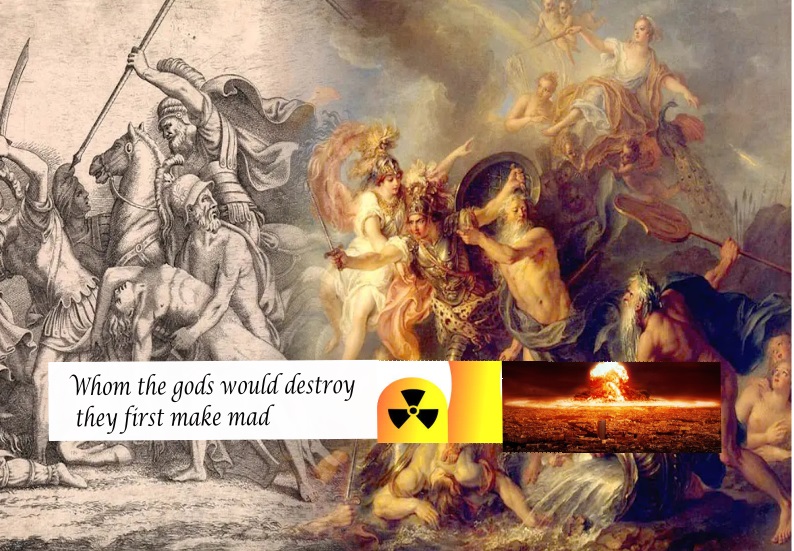
UNITED NATIONS, May 16 2024 (IPS) – As the ancient Greek saying goes: those whom the Gods wish to destroy, they first drive them mad. Perhaps destruction is too far-fetched here, but madness is closer home—in Washington DC
With the 7-month-old Israeli-Gaza conflict showing no positive signs of a permanent solution, there is a lingering sense of growing political craziness in Capitol Hill, the seat of the US government, once described as Israeli-occupied territory.
Last week Lindsey Graham, a senior Republican senator from South Carolina, who once chaired the Senate Committee on the Judiciary, implicitly advised Israel it should drop nuclear bombs over Gaza—perhaps ignorant of the fact that a nuclear fallout will also destroy parts of Israel.
In a TV interview, Graham advised Israel: “Do whatever you have to do to survive as a Jewish state”—as he compared Israel’s war on Gaza to the US war with Japan during World War II.
“When we were faced with destruction as a nation after Pearl Harbor, fighting the Germans and the Japanese, we decided to end the war by bombing Hiroshima and Nagasaki with nuclear weapons,” Graham said in an interview with NBC News’ Meet the Press.
Meanwhile, Tim Walberg, a Republican House member said wiping out Gaza “should be like Hiroshima and Nagasaki” “Get it over quick”, he advised Israel.
Ramzy Baroud, a journalist and Editor of The Palestine Chronicle told IPS: “Sure, Israel is yet to drop a nuclear bomb, but it has dropped enough US bombs over the besieged Strip to create the impact of nuclear weapons.”
He pointed out that 75 percent of Gaza has been destroyed, and about 5 percent of the population have been killed or wounded. This was done by Biden and his supposedly softer approach, if compared to Graham, to the war.
“This is indeed madness, but, in a sense, it also reflects a degree of desperation,” said Baroud.
Meanwhile, 12 US Republican senators, including Senate Minority Leader Mitch McConnell, have openly threatened the International Criminal Court (ICC) with sanctions if they target Israeli officials.
The threat is directed at both ICC officials and their family members — if and when, the Court moves forward with international arrest warrants against Israeli leaders over the war in Gaza.
“Target Israel and we will target you. If you move forward with the measures indicated in the report, we will move to end all American support for the ICC, sanction your employees and associates, and bar you and your families from the United States,” read the April 24 letter.
“You have been warned,” the letter added.
Norman Solomon, executive director, Institute for Public Accuracy, told IPS the goal posts on the USA’s political field have been dragged rightward since last autumn by the combined forces of standard militarism, craven political jockeying, biased mass-media coverage and ferocious pro-Israel messaging.
The countervailing force in the United States is coming from grassroots opposition to Israel’s mass murder and rejection of its support provided by the U.S. political establishment.
Often led by activists in such organizations as Jewish Voice for Peace and If Not Now, the highly visible protests last fall and winter seeded the ground for the upsurge in student-led protests in recent weeks on U.S. college campuses, he said.
This nonviolent grassroots resistance to Israeli genocide and oppression of Palestinian people has shocked the traditional American Zionist establishment and its allies in the leadership of the Democratic Party.
“The growing resistance has also provoked an extreme reactionary response from right-wing media outlets such as Fox News and many dozens of Republicans in Congress who have vocally and mendaciously denounced efforts to end the slaughter, which is subsidized by U.S. taxpayers to the benefit of both the fascistic Israeli government and military contractors based in the United States”, he argued.
“The flagrantly racist and ethnocentric reactions of Republican leaders, combined with the rhetorical Democratic vacillation that continues to support the Israeli-inflicted carnage in Gaza, comprise the two wings of U.S. governance. Most young Americans, in particular, are now emphatically opposed to both wings enabling the genocide,” he noted.
This is an ongoing political struggle over whether the U.S. government will continue to support Israel as it pursues its systematic slaughter of civilians in Gaza, declared Solomon, national director, RootsAction.org and author of, “War Made Invisible: How America Hides the Human Toll of Its Military Machine.”
https://www.commondreams.org/opinion/campus-protests-gaza
In their letter to Karim A. Khan, ICC Prosecutor, the 12 Senators say: “We write regarding reports that the International Criminal Court (ICC) may be considering issuing international arrest warrants against Prime Minister Benjamin Netanyahu and other Israeli officials. Such actions are illegitimate and lack legal basis, and if carried out will result in severe sanctions against you and your institution.
By issuing warrants, you would be calling into question the legitimacy of Israel’s laws, legal system, and democratic form of government. Issuing arrest warrants for the leaders of Israel would not only be unjustified, it would expose your organization’s hypocrisy and double standards.
“Neither Israel nor the United States are members of the ICC and are therefore outside of your organization’s supposed jurisdiction. If you issue a warrant for the arrest of the Israeli leadership, we will interpret this not only as a threat to Israel’s sovereignty but to the sovereignty of the United States.”
IPS UN Bureau Report
The US a Direct Partner in the Israeli War

By Ramzy Baroud, https://www.ipsnews.net/2024/05/us-direct-partner-israeli-war/?utm_source=rss&utm_medium=rss&utm_campaign=us-direct-partner-israeli-war
SEATTLE, Washington, May 16 2024 (IPS) – A major mistake we often commit in our analysis of the US political discourse on the Gaza war is that we assume that the US and Israel behave as if they are two political entities with separate agendas and sets of priorities.
Nothing could be further from the truth. From the start of the war, top US officials including President Joe Biden and Secretary of State Antony Blinken saw themselves as the guardians of Israeli interests. Blinken attended Israel’s first War Council meeting as if an Israel official, and Biden carried on reiterating that he is a Zionist.
Despite purported difference on various matters between Tel Aviv and Washington, for example, the nature and size of Israel’s military operation in Rafah, their interests remain identical: defeating Palestinians, restoring Israeli so-called deterrence, returning to the status quo in the region, and reigning in Israel’s enemies, including Iran, Hezbollah and Yemen’s Ansarullah.
The US is a direct partner in the Israeli war: defeating any UN attempt at calling for immediate, unconditional, and binding ceasefire, arming Israel with billions of dollars of the deadliest weapons and fighting, directly – as in the case of Yemen – or indirectly against Israel’s regional enemies who are showing solidarity with the Palestinians.
That context in mind, the dangerous comments by Senator Graham are consistent with the Biden’s administration actions regarding Gaza.
Sure, Israel is yet to drop a nuclear bomb, but it has dropped enough US bombs over the besieged Strip to create the impact of nuclear weapons. 75 percent of Gaza has been destroyed, and about 5 percent of the population have been killed or wounded. This was done by Biden and his supposedly softer approach, if compared to Graham, to the war.
This is indeed madness, but, in a sense, it also reflects a degree of desperation.
Israel is losing in Gaza. Not ‘losing’ as in failing to achieve its objectives, but losing militarily against Palestinian groups who are employing successful guerrilla warfare tactics.
After over 7 months of war, the fighting is back exactly where it started; and while Palestinians are perfecting their resistance craft, Israel is losing more soldiers at a much higher rate.
Comments about nuclear bombing Gaza comes within this context, that of Israel’s failure, if not desperation. US and Israeli officials know well that the war has been lost, or, at best, cannot be won.
But also losing the war means a fundamental shift in the power paradigm in the Middle East, the kind of change that neither Netanyahu, Graham nor their ilk can afford.
On November 5, Israel’s minister of heritage also spoke about the possibility of nuking Gaza, using Israeli mainstream media to communicate his ideas. Graham is now saying the same thing, using US mainstream media as an outlet to convey the same notion.
There is much to learn here about the nature of the relationship between both countries, but also this language teaches us that top politicians in Tel Aviv and Washington realize that the limits of traditional warfare have been reached yet failed to alter the reality on the ground in any way, aside from massacring tens of thousands of innocent civilians.
Dr Ramzy Baroud is a journalist and Editor of The Palestine Chronicle. He is the author of six books. His latest book, co-edited with Ilan Pappé, is “Our Vision for Liberation: Engaged Palestinian Leaders and Intellectuals Speak out”. Dr. Baroud is a Non-resident Senior Research Fellow at the Center for Islam and Global Affairs (CIGA). The link to his website follows: www.ramzybaroud.net
IPS UN Bureaur
U.S. rejects China’s proposal to ban first use of nuclear weapons.

People’s World May 16, 2024 BY JOHN WOJCIK, MARK GRUENBERG AND BEN CHACKO
The U.S. has dismissed Chinese calls for a no-first-use treaty between nuclear weapons states, saying it has questions about China’s “sincerity.”
The outright dismissal of China’s proposal followed a major speech in which Biden announced radical tariffs of up to 100 percent, on steel imports from China. That speech follows months of U.S. military buildup in the waters off the coast of China, including the placement of additional nuclear submarines around the Korean peninsula, all in the name of “protecting” Taiwan, which is, of course, a part of China itself.
Undersecretary of State Bonnie Jenkins, the country’s top arms control official, told the Senate Foreign Relations Committee last night that the U.S. worried China had increased its number of nuclear warheads to over 500, might have 1,000 by 2030, and that this was proof that the country was not “sincere” about its proposal to ban first use of the apocalypse-engendering weapons.
The Biden administration’s claim that China had increased the number of its warheads to 500 is just that – an unverified claim. In addition, the U.S. has 12 times that number with an admitted 3,700 of such warheads.
The U.S. says China refuses to engage in nuclear disarmament talks with it. China actually has engaged in talks, first by discussing with the U.S. the need for the U.S. to reduce its outrageously large number of missiles, as compared to China’s number, to show it is serious about fairness. And now it has added to those talks with its proposal to ban the first use of the weapons.
China’s position is that it has an arsenal that is tiny in comparison with that of the United States and that the size of the arsenals has to be part of serious talks. China has also gotten India to sign a no-first-use deal between those two countries. While all these initiatives by China were underway the U.S. was busy unilaterally canceling nuclear arms deals between the U.S. and Russia and continuing to push expansion of NATO not just up to the borders of Russia but into the Pacific regions near China.
China also stores its warheads and delivery systems separately, to avoid the risk of launches by accident or misunderstanding, as almost happened in 1983, when Soviet lieutenant Stanislav Petrov recognized reports of incoming U.S. missiles as a system malfunction and prevented a retaliatory strike which could have begun World War III.
The new, highest-ever U.S. tariffs on Chinese products were announced by President Biden shortly before the Chinese peace initiatives were rejected by his administration. The tariffs would apply to government-subsidized Chinese steel, aluminum, solar cells, electric vehicles—rising to 100% tariffs this year—and their batteries, semiconductors, and some raw materials.
The Biden tariffs are much higher than the Trump tariffs that Biden opposed when Trump was president……………………………… more https://peoplesworld.org/article/u-s-rejects-chinas-proposal-to-ban-first-use-of-nuclear-weapons/—
1 This Month

of the week – Shut Down Drone Warfare!


Tell the Ukrainian Government to Drop Prosecution of Peace Activist Yurii Sheliazhenko

Petition to revoke the licensing of the Near Surface Nuclear Disposal Facility (NSDF) at Chalk River. https://www.ourcommons.ca/petitions/en/Petition/Details?Petition=e-7247
To see nuclear-related stories in greater depth and intensity – go to https://nuclearinformation.wordpress.com
-
Archives
- April 2026 (114)
- March 2026 (251)
- February 2026 (268)
- January 2026 (308)
- December 2025 (358)
- November 2025 (359)
- October 2025 (376)
- September 2025 (257)
- August 2025 (319)
- July 2025 (230)
- June 2025 (348)
- May 2025 (261)
-
Categories
- 1
- 1 NUCLEAR ISSUES
- business and costs
- climate change
- culture and arts
- ENERGY
- environment
- health
- history
- indigenous issues
- Legal
- marketing of nuclear
- media
- opposition to nuclear
- PERSONAL STORIES
- politics
- politics international
- Religion and ethics
- safety
- secrets,lies and civil liberties
- spinbuster
- technology
- Uranium
- wastes
- weapons and war
- Women
- 2 WORLD
- ACTION
- AFRICA
- Atrocities
- AUSTRALIA
- Christina's notes
- Christina's themes
- culture and arts
- Events
- Fuk 2022
- Fuk 2023
- Fukushima 2017
- Fukushima 2018
- fukushima 2019
- Fukushima 2020
- Fukushima 2021
- general
- global warming
- Humour (God we need it)
- Nuclear
- RARE EARTHS
- Reference
- resources – print
- Resources -audiovicual
- Weekly Newsletter
- World
- World Nuclear
- YouTube
-
RSS
Entries RSS
Comments RSS
 nuclear-news