The US might lose a war with China, congressional commission says
Insufficient industry, readiness, innovation, and funding hamper military’s ability to prevail in conflict, key experts find.
By Patrick Tucker, Science & Technology Editor, Defense One, July 29, 2024, https://www.defenseone.com/threats/2024/07/us-might-lose-war-china-congressional-commission-says/398418/
The U.S. military “lacks both the capabilities and the capacity required to be confident it can deter and prevail in combat,” in the judgment of a congressional commission whose new report finds that collaboration between Russia, China, and other autocratic states is increasing the chance of a multi-front conflict—and that the U.S. would have trouble sustaining such a fight.
For more than a year, the former lawmakers, military leaders, and policy experts on the Commission on the National Defense Strategy have studied how well the U.S. military is executing the 2022 national defense strategy. The group released their report on Monday and will present its findings to the Senate Armed Services committee on Tuesday.
The group found big gaps between the Defense Department’s ambitions of deterring or prevailing in a major conflict and reality. One of the reasons they came to that conclusion is the current state of the U.S. defense industrial base compared to China’s.
“Unclassified public wargames suggest that, in a conflict with China, the United States would largely exhaust its munitions inventories in as few as three to four weeks, with some important munitions (e.g., anti-ship missiles) lasting only a few days. Once expended, replacing these munitions would take years,” the report states.
Furthermore, the growing collaboration between autocratic powers make it nearly inevitable that China and Russia would coordinate against the United States in the event of an armed conflict with one or the other.
“The United States should assume that if it enters a direct conflict involving Russia, China, Iran, or North Korea, that country will benefit from economic and military aid from the others. We also believe that this partnership increases the likelihood that a conflict with one would expand to multiple fronts, causing simultaneous demands on U.S. and allied resources,” the report states.
Of the commission’s many recommendations, most are similar to efforts the Pentagon is already undertaking, including reaching out more aggressively to the private sector, particularly new information-technology focused startups, to establish a new industrial base, and reevaluating counterproductive regulatory impediments to buying and selling defense technology.
Other recommendations are more pointed, such as abandoning outdated “programs of record” in order to procure key pieces of equipment, and loosening ship maintenance rules, allowing more maintenance in foreign ports, and being more willing to buy weapons and supplies from other countries.
But for the most part, the commission’s report paints a picture of a situation years in the making that can’t be righted quickly.
“Today, the United States has a DIB with too few people, too few companies, declining and unstable financial support, and insufficient production capacity to meet the needs of the Joint Force in both peacetime and wartime,” the group said.
Putin often cites Russia’s ‘nuclear doctrine’ governing the use of atomic weapons. But what is it?

9 News, By Associated Press, 1 August 24
Since Russia invaded Ukraine in 2022, President Vladimir Putin and other Kremlin voices have frequently threatened the West with its nuclear arsenal.
On Day 1 of the war, Putin said “whoever tries to impede us, let alone create threats for our country and its people, must know that the Russian response will be immediate and lead to consequences you have never seen in history”.
Over nearly two and a half years of fighting, the West has given Ukraine billions of dollars of advanced weapons, some of which have struck Russian soil.
And while there have been more Kremlin threats – and even the deployment of battlefield nuclear weapons in Belarus, just over the border from Ukraine – so far it has remained only a blunt message.
What could finally trigger a nuclear response?
Asked that in June by international news agencies, Putin pointed to Russia’s so-called nuclear doctrine.
“Look what is written there,” he said at the St Petersburg session.
“If somebody’s actions threaten our sovereignty and territorial integrity, we consider it possible to use all means at our disposal.”
Now Russian hawks are urging him to change the doctrine to lower the threshold for using nuclear weapons, and Putin says the document could be modified to take into account the evolving global situation.
What is Russia’s nuclear doctrine?
Formally known as the “Basic Principles of State Policy on Nuclear Deterrence”, it was signed by Putin in 2020 and outlines when Russia could dip into its atomic arsenal, the world’s largest.
It describes nuclear weapons as “a means of deterrence”, noting that their use is an “extreme and compelled measure”.
It declares that Russia “takes all necessary efforts to reduce the nuclear threat and prevent aggravation of interstate relations that could trigger military conflicts, including nuclear ones”.
The document states that “nuclear deterrence is aimed to provide comprehension by a potential adversary of the inevitability of retaliation in the event of aggression against the Russian Federation and/or its allies.”
What does it say will trigger using nuclear weapons?
Russia could use them, the doctrine says, “in response to the use of nuclear and other types of weapons of mass destruction against it and/or its allies, as well as in the event of aggression against the Russian Federation with the use of conventional weapons when the very existence of the state is in jeopardy”.
It says nuclear weapons could be used under the following specific situations:
- If reliable information is received about the launch of ballistic missiles targeting the territory of Russia or its allies.
- If nuclear weapons or other weapons of mass destruction are used against Russia or its allies.
- If an enemy attack with conventional weapons threatens Russia’s existence.
- If there are attacks on critically important Russian government or military facilities that could undermine the country’s retaliatory nuclear strike capability.
Has any attack so far come close to crossing this threshold?
As Russia attacked parts of northeastern Ukraine near the city of Kharkiv, Washington has allowed Kyiv to use longer-range US-supplied weapons for strikes in Russian territory in the border region.
But these attacks have been limited in scope and would not seem to pose an existential threat that would fall under the nuclear doctrine.
However, the hawks in Moscow have pointed to a series of Ukrainian attacks on Russian air bases that host long-range nuclear capable bombers earlier in the conflict, as well as recent raids on early warning radars.
They say these circumstances would seem to warrant the use of nuclear weapons as laid out in the doctrine…………………………………………………………………………. more https://www.9news.com.au/world/russia-nuclear-weapons-vladimir-putin/c2c4b211-658d-4b11-b6bc-656b56c5bd39
Iran vows revenge after Hamas leader Ismail Haniyeh killed in Tehran
Death came hours after Israel said it killed a top Hezbollah commander in Beirut, fuelling fears of regional conflict
Guardian, Emma Graham-Harrison, Quique Kierszenbaum and Bethan McKernan in Jerusalem, and William Christou in Beirut 31 July 24
Ismail Haniyeh, the political leader of Hamas, was killed by a strike in Tehran in the early hours of Wednesday morning, only hours after Israel said it had killed a top Hezbollah commander in Beirut.
The dual assassinations are heavy blows to Hamas and Hezbollah, but also raise the stakes for Iran, which backs both groups and vowed revenge. They will fuel growing fears that the war in Gaza could escalate into a broader regional conflict.
A senior Hamas official described Haniyeh’s killing as a “cowardly act that will not go unpunished”. Mediators Qatar and Egypt warned it would set back talks on a ceasefire and a deal to release hostages held in Gaza.
Haniyeh was targeted by an airstrike at a “residence in Tehran”, Hamas said, after he travelled to the Iranian capital for the inauguration of the country’s new president, Masoud Pezeshkian.
Iran’s supreme leader, Ayatollah Ali Khamenei, said that because the attack took place in Tehran, “we consider his revenge as our duty”. Pezeshkian said his country would defend its territorial integrity and honour, and make the “terrorist occupiers regret their cowardly action”.
The Israeli government officially declined to comment on Haniyeh’s death, but the strike was widely acknowledged as an Israeli operation both inside the country and beyond.
Israel vowed to kill all Hamas leaders after the 7 October attacks, and its intelligence services have a history of carrying out covert killings inside Iran, mostly targeting scientists working on the country’s nuclear programme.
The retired general Amos Yadlin, a former head of Israel’s Military Intelligence Directorate, described the attacks on Wednesday night as “two quality operations of Israel defence forces against two top terrorists, one in Beirut and one in Tehran”.
The US defence secretary, Lloyd Austin, speaking after the assassinations, said the Biden administration was “doing things to take the temperature down” but would come to Israel’s defence if it were attacked…………………………………………………………………….
Haniyeh’s death came hours after Israel claimed it had killed Hezbollah’s top military commander, Fuad Shukur, in an airstrike on a south Beirut suburb launched in retaliation for a rocket attack that killed 12 children at the weekend…………………………………………………………….. more https://www.theguardian.com/world/article/2024/jul/31/hamas-leader-ismail-haniyeh-death-raid-iran-home-israel-gaza-war
“Unspeakable”: Doctors Back from Gaza Say Death Toll “Much Higher,” Push Harris, Biden for Ceasefire
Democracy Now, AMY GOODMAN, 26 Jul 24
We speak to two doctors who are part of a group of 45 U.S. doctors, surgeons and nurses who have volunteered in Gaza since October 7 and wrote an open letter to President Biden and Vice President Harris, the Democratic presidential candidate, demanding an immediate ceasefire and an international arms embargo of Israel. The group includes evidence of a much higher death toll than is usually cited: more than 92,000 people, which represents over 4% of Gaza’s population. The doctors write, “With only marginal exceptions, everyone in Gaza is sick, injured, or both. Israel’s continued, repeated displacement of the malnourished and sick population of Gaza, half of whom are children, to areas with no running water or even toilets available is absolutely shocking.” The conditions in Gaza are “unacceptable,” and “people know this is wrong but no one is speaking up,” says Dr. Thalia Pachiyannakis, an obstetrician and gynecologist who volunteered at the Nasser Medical Complex. “We all saw evidence of a death toll that is certainly much higher than what is reported by the Gaza Ministry of Health,” adds Dr. Feroze Sidhwa, a trauma surgeon who volunteered at the European Hospital.
Transcript
AMY GOODMAN: As Israel carries out new airstrikes on the Gaza Strip, the United Nations Palestinian refugee agency, known as UNRWA, is reporting nine in every 10 Palestinians in Gaza have been forcibly displaced. Meanwhile, the World Food Programme is warning Israel continues to block delivery of aid, and says it’s been forced to reduce food rations, quote, “to ensure broader coverage for newly displaced people,” unquote. U.N. experts are blaming Israel for the onset of famine in Gaza, accusing it of carrying out a targeted starvation campaign.
Here in the United States, days after launching her White House presidential campaign and skipping Israeli Prime Minister Benjamin Netanyahu’s joint address to Congress, vice president and Democratic presidential candidate Kamala Harris met privately Thursday afternoon with Netanyahu, who also met with President Biden. Harris spoke afterwards.
VICE PRESIDENT KAMALA HARRIS: What has happened in Gaza over the past nine months is devastating. The images of dead children and desperate, hungry people fleeing for safety, sometimes displaced for the second, third or fourth time, we cannot look away in the face of these tragedies. We cannot allow ourselves to become numb
to the suffering. And I will not be silent.
AMY GOODMAN: Harris described her private meeting with Netanyahu as “frank and constructive.” She said nothing about cutting U.S. military assistance for Israel, even as she reiterated calls to finalize a ceasefire deal.
This comes as a group of 45 U.S. doctors, surgeons, nurses who have volunteered in Gaza since October 7th have written an open letter to President Biden and Vice President Harris, demanding an immediate ceasefire and an international arms embargo against Israel. The group of health workers include evidence of a much higher — they say there’s evidence of a much higher death toll than is usually cited: more than 92,000 people, which represents over 4% of Gaza’s population.
Two of the doctors join us now. In South Bend, Indiana, we’re joined by Thalia Pachiyannakis. She’s an obstetrician-gynecologist who returned from Gaza earlier this month after having worked at Nasser Medical Complex in Khan Younis. And joining us from Stockton, California, is Dr. Feroze Sidhwa, a trauma surgeon who volunteered at European Hospital in Khan Younis in the early spring. He worked with the Palestinian American Medical Association in collaboration with the World Health Organization. He recently co-wrote the recent Politico article, “We Volunteered at a Gaza Hospital. What We Saw Was Unspeakable.”………………………………………………………………………………………………………………………………………….more https://www.democracynow.org/2024/7/26/feroze_sidhwa_thalia_pachiyannakis_gaza_war
US Forces Japan to be upgraded to warfighting command

The shift will move operational control of Japan-based forces east from Hawaii and, officials say, deepen cooperation with the Japanese military.
TOKYO—The Pentagon will upgrade and expand its three-star command in Japan to handle operational control of U.S. forces based there, part of an effort to deepen ties between the U.S. and Japanese militaries and to streamline command and control of joint operations, senior defense officials told reporters traveling with Defense Secretary Lloyd Austin on Friday.
“Secretary Austin plans to announce that the United States intends to reconstitute U.S. Forces Japan as a Joint Force Headquarters, reporting to the commander of U.S. INDOPACOM,” said the senior official. The shift will give USFJ, which is “currently, primarily, an administrative command” more warfighting responsibilities. “They do day-to-day management of the alliance, but not operational command of forces. So it’ll be a significant difference for them.”
The announcement comes as part of the Joint Statement of the Security Consultative Committee (“2+2”) committee meeting taking place in Tokyo between Austin, Secretary of State Anthony Blinken, and their Japanese counterparts.
The command will grow as it adds missions and responsibilities to its current alliance-management functions, the official said, “including some of the planning exercises and commanding of operations, and we’ll be doing those, as I mentioned, side-by-side with Japanese forces like never before.”
Many details of the new headquarters aren’t yet known and officials said that the approach will be phased, with many more discussions about how to implement yet to come. Among the decisions to be made is whether the expanded USFJ will have a command structure that integrates Japanese forces, the way U.S. Joint Forces Korea does for South Korean forces.
“A major part of that phased approach will involve bilateral working groups with the U.S. side, led by INDOPACOM, to work through important implementation factors, including potential resourcing needs, infrastructure, personnel, authorities and ranks,” the official said.
The new Joint Force Headquarters will allow INDOPACOM officers and operators to have daily interactions with Japanese counterparts about how to plan exercises, operations, and how to act on shared intelligence and information, the official said. ……………………..more https://www.defenseone.com/policy/2024/07/us-forces-japan-be-upgraded-warfighting-command/398386/
Greasing Palms: The Thales Blueprint for Corruption
July 30, 2024, by: Dr Binoy Kampmark, https://theaimn.com/greasing-palms-the-thales-blueprint-for-corruption/
It is a point verging on the trite: an arms corporation suspected of engaging in corrupt practices, spoiling dignitaries and officials and undermining the body politic. But one such corporation is France’s Thales defence group, which saw raids on their offices in France, the Netherlands and Spain on June 26 and June 28. The prosecutors are keen to pursue charges ranging from standard corruption and attempts to influence foreign officials to instances of criminal association and money laundering.
It is clear in this that even the French republic, despite having a narcotics grade addiction to the international arms industry, thought that Thales might have gone just that bit far. Some 65 investigators from the Nanterre-based office responsible for battling corruption, financial and fiscal offences have been thrown into the operation. A further twelve magistrates from the National Financial Prosecutor’s Office (PNF), with the assistance of the European agency Eurojust, aided by Dutch and Spanish officials, have all been involved in this sprawling enterprise.
The police raids arise from two separate investigations. The first, starting at the end of 2016, involved suspicions of corruption pertaining to a foreign official, criminal association and money laundering. The topics of interest: the sale of submarines to Brazil, along with the construction of a naval base.
The second commenced in June 2023, with claims of suspected corruption and influence peddling, criminal conspiracy and money laundering connected with the supply of military and civilian equipment to overseas clients.
Giving little by way of details, a spokesperson for Thales insisted that the corporation “strictly complies with national and international regulations.” It had “developed and implemented a global compliance program that meets with the highest industry standards.” That, it may well turn out, is precisely the problem.
The company propaganda on such compliance with national and international regulations is plentiful and fabulously cynical. After a time perusing such material, one forgets that this is a defence outfit much dedicated to sowing the seeds of death, a far from benign purpose. Group Secretary and General Counsel Isabelle Simon, for instance, is quoted as saying that the company, over the course of two decades “has developed a robust policy on ethics, integrity and compliance, which are the foundations of our social responsibility and the key to building a world we can all trust.”
The anti-corruption policy, so it is claimed, is also “regularly reviewed and updated to reflect increasingly strict international rules and requirements on corruption and influence peddling,” a point “further strengthened by Thales’s progress towards ISO 37001 certification.”
Typical of the guff surrounding modern organisational behaviour, the company wonks assume that workshops and training sessions are the way to go when inspiring a spirit of compliance. The more sessions you run, and the more do you do, the more enlightened you become. In boasting about its “zero tolerance on corruption,” we are told that 11,270 “training sessions on corruption and influence peddling were delivered in 2019-2020.”
Other features are also mentioned to ward off any suspicions, among them a code of conduct intended to stomp on any corrupt practices, a “corruption and influence peddling risk map,” a disciplinary system, an anti-bribery management system and an internal whistleblowing program.
Thales also got what it wanted, effectively bypassing, with the blessing of the defence department, a competitive tender process. This took place despite a 2017 offer from the global munitions company, NIOA, and the ANAO’s own recommendation to pursue an appropriate tender option. All in all, the audit found that “Defence’s management of probity was not effective and there was evidence of unethical conduct.”
This is putting it mildly, given that Thales had not only been involved in drafting the criteria for the request for tender (RTF) documents (some 28 workshops were held for that purpose between October 2018 and August 2019), but did so deficiently. In October 2019, this very point was made by the Defence Department, which noted no fewer than 199 “non-compliances” by the company against the RTF.
Apart from giving officialdom their time in the sun of oversight and regulation, chastening investigations into corruption do little to alter the spoliation that arises from the defence industry. Defence contractors are regularly feted by government authorities, often with the connivance of the revolving door. Yesterday’s officials are today’s arms sales consultants. The defence sector, notably for such countries as France, is simply too lucrative and important to be cleansed of its unscrupulousness. Even as these investigations are taking place to ruffle Thales, the Brazilian military establishment, by way of example, has happily continued doing business with the French weapons giant.
In February last year, the defence group trumpeted securing a contract with the Brazilian Airspace Control Department (DECEA) for the supply and installation of ADS-B ground surveillance stations to improve the safety of commercial civil aviation. The effort is not negligible: 66 stations to be installed in over 20 Brazilian states.
On June 17, the company announced the acquisition by the Brazilian Air Force of the Ground Master 200 Multi-mission All-in-one (GM 200 MM/A) tactical air surveillance radars. With much bluster, the announcement goes on to describe such radars as giving the user “superior situational awareness for air surveillance, as well as ground-based air defence (GBAD) operations up to Mid-Range Air-Defence (MRAD).” Some gloating follows: “The contract signed with the FAB consolidates Thales’ position as a leader in the radar market in Brazil.” One can only wonder how many palms were greased, and local regulations breached, for that to happen.
Israeli Forces Have Killed 366 UN Workers and Family Members in Gaza: Leaked Report
Confidential figures shed additional light on what’s been the deadliest-ever war for United Nations staff.
Jake Johnson, Jul 24, 2024, https://www.commondreams.org/news/un-workers-killed-in-gaza
A leaked report obtained by Drop Site estimates that Israeli forces have killed at least 366 United Nations staffers and their family members in the Gaza Strip since October, an indication of the grave threat Israel’s ongoing assault poses to humanitarian relief workers and the enclave’s broader civilian population.
Drop Site‘s Ryan Grim reported Wednesday that the confidential figures, assembled by the U.N.’s Crisis Coordination Center, show that three family members of World Food Program staffers and four dependents of U.N. Children’s Fund workers were among those killed by Israeli forces. The total number of U.N. staffers killed so far is 195, according to the data.
The U.N. Relief and Works Agency for Palestine Refugees in the Near East (UNRWA), the primary aid agency operating in Gaza, has seen the largest impact on staffers and their family members. The leaked report estimates that Israeli forces have killed 158 dependents of UNRWA staffers since October.
Israel’s devastating military campaign in Gaza, aided by U.S. weaponry and diplomatic support, is by far the deadliest-ever war for U.N. personnel, who have repeatedly been targeted by the Israel Defense Forces (IDF).
Over the weekend, Israeli soldiers fired on a U.N. convoy heading toward Gaza City. UNRWA Commissioner-General Philippe Lazzarini said that “the teams were traveling in clearly marked U.N. armored cars and wearing U.N. vests.”
“While there are no casualties, our teams had to duck and take cover,” he added. “Like all other similar U.N. movements, this movement was coordinated and approved by the Israeli authorities.”
Targeting humanitarian relief personnel is a war crime.
Grim noted that the leaked report is just “the latest in a series of alarming findings regarding Israel’s actions in Gaza,” much of which is facing famine conditions due to what U.N. experts recently described as a “targeted starvation campaign” by Israel.
During a 12-hour period earlier this week, Israeli forces killed at least 70 Palestinians and wounded around 200 others—mostly women and children—in a barrage of attacks on the city of Khan Younis, according to the Euro-Mediterranean Human Rights Monitor.
The confidential U.N. data emerged hours before Israeli Prime Minister Benjamin Netanyahu’s scheduled address to a joint meeting of the U.S. Congress on Wednesday afternoon. Dozens of Democratic lawmakers are expected to boycott the prime minister’s speech.
U.S. Rep. Rashida Tlaib (D-Mich.), the lone Palestinian American in Congress, argued Tuesday that Netanyahu “should be arrested and sent to the International Criminal Court,” alluding to that body’s request for an arrest warrant for the Israeli prime minister.
On Tuesday, hundreds of demonstrators were arrested on Capitol Hill during a peaceful Jewish-led demonstration against Netanyahu’s visit and U.S. complicity in the IDF’s mass atrocities in Gaza.
Tit for tat? Putin warns Russia may resume production of intermediate-range nuclear weapons
Edited By: Vikrant Singh Jul 28, 2024 https://www.wionews.com/world/tit-for-tat-putin-declares-russia-to-resume-production-of-intermediate-range-nuclear-weapons-744964
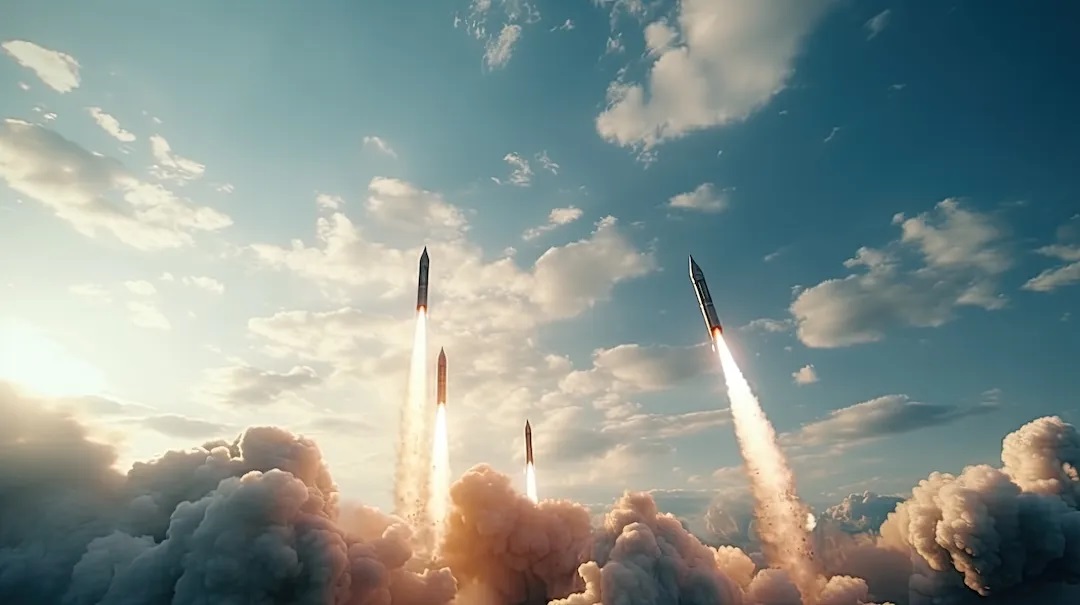
Russian President Vladimir Putin on Sunday (Jul 28) declared his nation won’t shy away from resuming production of intermediate-range nuclear weapons if the US goes ahead with plans of deploying such missiles to Germany or elsewhere in Europe. These missiles can travel between 500 and 5,500 kilometres.
“If the United States carries out such plans, we will consider ourselves liberated from the unilateral moratorium previously adopted on the deployment of medium- and short-range strike capabilities,” Putin threatened during a naval parade in Saint Petersburg.
Notably, intermediate-range nuclear weapons were subject to an arms control treaty that the US and Soviet Union signed in 1987. However, the Intermediate-Range Nuclear Forces Treaty collapsed in 2019 after both sides accused each other of violations.
Following the withdrawal from the treaty, Russia announced it wouldn’t start production of the weapons until the US started deploying these missiles abroad.
Earlier this month, the US announced it will start “episodic deployments” of long-range US missiles, including Tomahawk cruise missiles, in Germany beginning 2026.
Now, Russia sees it as a direct threat to its national security. After the deployment by the US, Putin said that “important Russian administrative and military sites” would fall within the range of such missiles that “could in the future be equipped with nuclear warheads, such that our territories would be within around 10 minutes” of a strike being launched.
“This situation reminds us of the events of the Cold War linked to the deployment of American Pershing medium-range missiles in Europe,” the Russian leader added.
Earlier in March, Putin had said Russia was “technically ready” for a nuclear war if the US sent troops to Ukraine.
“From a military-technical point of view, we are, of course, ready,” Putin had said.
“I don’t think that here everything is rushing to it (nuclear confrontation), but we are ready for this,” the Russian leader further said.
‘Atomic bomb hell must never be repeated’ say Japan’s last survivors

Atomic People will be broadcast on Wednesday 31 July on BBC Two and BBC iPlaye
Lucy Wallis, BBC News https://www.bbc.com/news/articles/crg5lyd25jno 26 July 24
It was early in the day, but already hot. As she wiped sweat from her brow, Chieko Kiriake searched for some shade. As she did so, there was a blinding light – it was like nothing the 15-year-old had ever experienced. It was 08:15 on 6 August 1945.
“It felt like the sun had fallen – and I grew dizzy,” she recalls.
The United States had just dropped an atomic bomb on Chieko’s home city of Hiroshima – the first time a nuclear weapon had ever been used in warfare. While Germany had surrendered in Europe, allied forces fighting in World War Two were still at war with Japan.
Chieko was a student, but like many older pupils, had been sent out to work in the factories during the war. She staggered to her school, carrying an injured friend on her back. Many of the students had been badly burnt. She rubbed old oil, found in the home economics classroom, onto their wounds.
“That was the only treatment we could give them. They died one after the next,” says Chieko.
“Us older students who survived were instructed by our teachers to dig a hole in the playground and I cremated [my classmates] with my own hands. I felt so awful for them.”
Chieko is now 94 years old. It is almost 80 years since the atomic bombs were dropped on Hiroshima and Nagasaki and time is running out for the surviving victims – known as hibakusha in Japan – to tell their stories.
Many have lived with health problems, lost loved ones and been discriminated against because of the atomic attack. Now, they are sharing their experiences for a BBC Two film, documenting the past so it can act as a warning for the future
After the sorrow, new life started to return to her city, says Chieko.
“People said the grass wouldn’t grow for 75 years,” she says, “but by the spring of the next year, the sparrows returned.”
In her lifetime, Chieko says she has been close to death many times but has come to believe she has been kept alive by the power of something great.
The majority of hibakusha alive today were children at the time of the bombings. As the hibakusha – which translates literally as “bomb-affected-people” – have grown older, global conflicts have intensified. To them, the risk of a nuclear escalation feels more real than ever.
“My body trembles and tears overflow,” says 86-year-old Michiko Kodama when she thinks about conflicts around the world today – such as the Russian invasion of Ukraine and the Israel-Gaza war.
“We must not allow the hell of the atomic bombing to be recreated. I feel a sense of crisis.”
Michiko is a vocal campaigner for nuclear disarmament and says she speaks out so the voices of those who have died can be heard – and the testimonies passed on to the next generations.
“I think it is important to hear first-hand accounts of hibakusha who experienced the direct bombing,” she says.
Michiko had been at school – aged seven – when the bomb was dropped on Hiroshima.
“Through the windows of my classroom, there was an intense light speeding towards us. It was yellow, orange, silver.”
She describes how the windows shattered and splintered across the classroom – the debris spraying everywhere “impaling the walls, desk, chairs”.
“The ceiling came crashing down. So I hid my body under the desk.”
After the blast, Michiko looked around the devastated room. In every direction she could see hands and legs trapped.
“I crawled from the classroom to the corridor and my friends were saying, ‘Help me’.”
When her father came to collect her, he carried her home on his back.
Black rain, “like mud”, fell from the sky, says Michiko. It was a mixture of radioactive material and residue from the explosion.
She has never been able to forget the journey home.
“It was a scene from hell,” says Michiko. “The people who were escaping towards us, most of their clothes had completely burned away and their flesh was melting.”
She recalls seeing one girl – all alone – about the same age as her. She was badly burnt.
“But her eyes were wide open,” says Michiko. “That girl’s eyes, they pierce me still. I can’t forget her. Even though 78 years have passed, she is seared into my mind and soul.”
Michiko wouldn’t be alive today if her family had remained in their old home. It was only 350m (0.21 miles) from the spot where the bomb exploded. About 20 days before, her family had moved house, just a few kilometres away – but that saved her life.
Estimates put the number of lost lives in Hiroshima, by the end of 1945, at about 140,000.
In Nagasaki, which was bombed by the US three days later, at least 74,000 were killed.
Sueichi Kido lived just 2km (1.24 miles) from the epicentre of the Nagasaki blast. Aged five at the time, he suffered burns to part of his face. His mother, who received more serious injuries, had protected him from the full impact of the blast.
“We hibakusha have never given up on our mission of preventing the creation of any more hibakusha,” says Sueichi, who is now 83 and recently travelled to New York to give a speech at the United Nations to warn of the dangers of nuclear weapons.
When he woke up after fainting from the impact of the blast, the first thing he remembers seeing was a red oil can. For years he thought it was that oil can that had caused the explosion and surrounding devastation.
His parents didn’t correct him, choosing to shield him from the fact it had been a nuclear attack – but whenever he mentioned it, they would cry.
Not all injuries were instantly visible. In the weeks and months after the blast, many people in both cities began to show symptoms of radiation poisoning – and there were increased levels of leukaemia and cancer.
For years, survivors have faced discrimination in society, particularly when it came to finding a partner.
“‘We do not want hibakusha blood to enter our family line,’ I was told,” says Michiko.
But later, she did marry and had two children.
She lost her mother, father and brothers to cancer. Her daughter died from the disease in 2011.
“I feel lonely, angry and scared, and I wonder if it may be my turn next,” she says.
Another bomb survivor, Kiyomi Iguro, was 19 when the bomb struck Nagasaki. She describes marrying into a distant relative’s family and having a miscarriage – which her mother-in-law attributed to the atomic bomb.
“‘Your future is scary.’ That’s what she told me.”
Kiyomi says she was instructed not to tell her neighbours that she had experienced the atomic bomb.
Since being interviewed for the documentary, Kiyomi has sadly died.
But, until she was 98, she would visit the Peace Park in Nagasaki and ring the bell at 11:02 – the time the bomb hit the city – to wish for peace.
Sueichi went on to teach Japanese history at university. Knowing he was a hibakusha cast a shadow on his identity, he says. But then he realised he was not a normal human being and felt a duty to speak out to save humankind.
“A sense that I was a special person was born in me,” says Sueichi.
It is something the hibakusha all feel that they share – an enduring determination to ensure the past never becomes the present.
Atomic People will be broadcast on Wednesday 31 July on BBC Two and BBC iPlaye
While Netanyahu is feted in U.S. Congress, Israeli airstrike hits a school sheltering people in Gaza, killing at least 30
The strike came a day before officials from the U.S., Egypt, Qatar and Israel were scheduled to meet in Italy to discuss the ongoing hostage and cease-fire negotiations.NBC News, By Freddie Clayton and The Associated Press, 27 July 24,
Israeli airstrikes hit a school being used by displaced people in central Gaza on Saturday, killing dozens of people, as the country’s negotiators prepared to meet international mediators to discuss a proposed cease-fire.
At least 30 people sheltering at a girls school in Deir al-Balah were taken to Al Aqsa Hospital and pronounced dead after a strike that Israel’s military said targeted a Hamas command and control center used to store weapons and plan attacks.
The devastation was caught on camera by an NBC News team. Ambulance sirens rang out as footage showed hundreds of men and women rushing toward the school, or carrying their bloodied and injured away on makeshift stretchers.
Standing in the rubble, a young boy wept amid the chaos. “We were sitting, happily playing,” he said. “Missiles hit us. Four missiles went down on us. Glass and stones fell on us. Everything became dusty.”
A volunteer at a clinic at the school was inside at the moment of the strike. She carried her young son over her shoulder as she went in search of another one of her children.
“I hid for a short while, then I went looking for my children,” she said. “I found my son hurt, and the third boy is not around. A school like this — why did they target it? What’s in it to target?”
Gaza’s Health Ministry said at least 11 people had been killed in other strikes on Saturday.
Near the hospital, Associated Press journalists saw an ambulance rushing through a dusty road as a few people ran in the opposite direction. An injured man lay on a stretcher on the ground. A body covered with a blanket and a dead toddler lay inside the ambulance.
Inside the school, classrooms were in ruins. People were seen searching for victims under the rubble and some were gathering remains of those who were killed.
Earlier, Israel’s military ordered the evacuation of part of a designated humanitarian zone in Gaza ahead of a planned strike on Khan Younis on Saturday……………………………………………….. more https://www.nbcnews.com/news/world/israeli-airstrike-hits-school-sheltering-people-gaza-rcna163917
2024 Golden Rule Voyage Begins!

The Golden Rule peace boat departed from Humboldt Bay in northern California on Sunday July 28 at 5:10 am, crossing into the ocean around 6 am!
We’re headed for the Pacific Northwest, and will stop in 16 Washington, Oregon and British Columbia ports over the next two months
To follow the Golden Rule’s voyage, click HERE or go to https://share.garmin.com/goldenrule to see the interactive map that’s updated every 10 minutes.
……..The VFP Golden Rule Project is delighted to announce that Michelle Marsonette has joined our team as Project Co-Manager!
This much-needed organizational boost is made possible by the generous donations of the Golden Rule’s loyal supporters. Thank you! The job of coordinating boat repairs, captains and crews, organizing events, producing a newsletter, fundraising and much more is way too big for one person. We now have two half-time Project Co-Managers, but we all know this is no half-time job. Helen Jaccard, who has been Project Manager for almost ten years, is VERY happy to have Michelle aboard……………………..
Jeju Island woman Kim A-Hyun Joins Golden Rule Crew
………………………..now there is another. South Korean activists resisting the expansion of a U.S. military base on Jeju island were inspired by the prospect of the Golden Rule’s planned 2020 visit to Asia. Covid stopped us from making that voyage, but it didn’t stop them. They decided to restore another boat, Jonah’s Whale, and they sailed from Jeju to Okinawa, Taiwan, and several other island nations. Last year they completed a 107-day voyage, with the mission to unite the various struggles against the militarization of their islands.
The VFP Golden Rule Project is delighted to announce that a Jonah’s Whale crew member, Ms. Kim A-Hyun (her nickname is Shik-Cho) will be on the Golden Rule crew for our Pacific Northwest voyage……………………
Dialogue Over Deterrence

The theory of nuclear deterrence is one of these root causes of tension and conflict that must be addressed……………….. the violent potential of nuclear deterrence policies means that everyone in the world is at risk all of the time.
the profits of the new nuclear arms race have superceded all sense of logic or reason in international relations and domestic budgets.
The theory of nuclear deterrence is one of these root causes of tension and conflict that must be addressed……………….. the violent potential of nuclear deterrence policies means that everyone in the world is at risk all of the time.
the profits of the new nuclear arms race have superceded all sense of logic or reason in international relations and domestic budgets.
Ray Acheson, 24 July 2024Download the full edition in PDF
People at this NPT Preparatory Committee are worried. Really worried. Delegations delivering general debate statements, activists holding meetings with each other and with diplomats, anyone paying attention, is worried about nuclear war. Words like abyss, doomsday, annihilation, and other cheery phrases were on everyone’s lips, in official statements and by the coffee bar. The fear is justified—the nuclear-armed states are building up their arsenals, modernising their weapon systems, and coming up with new deployment strategies—and they are not talking to each other. The interactions between Russia and the United States are so tense that a Dr. Strangelove moment of “You can’t fight in here. This is the war room!” seems possible at any moment.
Mozambique very astutely called out the worrying trend of “deterrence diplomacy,” which is a pretty good term for what seems to be happening. Perhaps it’s a strategy of confrontation in the conference room to deter a nuclear confrontation outside; or maybe it’s just the use of diplomatic spaces like NPT meetings to bolster one’s claims. But just like deterrence doesn’t work, as evidenced by the many conflicts fought by nuclear-armed states throughout the nuclear age, deterrence diplomacy doesn’t work either. It only leads to the collapse of international law, which most of the rest of us are relying upon to constrain massive nuclear violence.
This may sound awfully gloomy. It is. But as always, hope is found in the determination and creativity of those who do not see their strength or security coming from bombs and bombastic quarrels. Calls for dialogue, (real) diplomacy, and disarmament resounded during the general debate. Delegations highlighted the work that has been done to prohibit nuclear weapons, to study the harms of nuclear production and testing, to address nuclear injustice, and to reduce the dangerous risks of nuclear war. The vast majority of this work is being carried out by non-nuclear-armed states, activists, and international organisations. It’s time the nuclear-armed states put down their swords, picked up their pens, and got to work, too. They can start by acknowledging the reality of the situation they have created, in which they have weaponised international law and created a culture of defiance of rules and norms that are meant to protect us all.
The invisibilised genocide
Part of the dangerous situation the nuclear-armed states have created is their refusal to implement the laws to which they have previously bound themselves. It was striking that mid-way through the first week of the PrepCom, you’d barely know there was genocide going on in the world. During the general debate, many states reiterated their condemnation of Russia’s aggression against Ukraine, especially in relation to its threats to use nuclear weapons, deployment of nuclear bombs to Belarus, and its attacks against the Zaporizhzhia Nuclear Power Plant. But there were very few comments about Israel’s slaughter of Palestinians over the past ten months, even in the wake of the International Court of Justice (ICJ)’s finding of plausible genocide in January 2024 and its ruling in July 2024 that Israel is guilty of apartheid and that its occupation of Palestine is illegal, and the International Criminal Court (ICC)’s application for an arrest warrant for the Israeli Prime Minster for war crimes in May 2024. Algeria, Egypt, Finland, Lebanon, Indonesia, Kuwait, Mozambique, Oman, Peru, Slovakia, Syria, Tunisia, Türkiye, and Venezuela criticised Israel’s “war on Gaza” to various extents, or condemned Israel’s nuclear threats in that context. But most delegations said absolutely nothing.
Why this comparative silence? Some might claim Israel’s genocide of Palestinians is not an NPT issue. But for whom should hundreds of thousands of deaths, mass displacement and injury, starvation, disease, and the destruction of an entire strip of land where more than two million people live under conditions of apartheid and “open-air” incarceration not be an issue? Especially when nuclear weapons, and the aura of impunity and lawless violence these weapons perpetuate, are the heart of it all.
Beyond the moral imperative of caring about humans living and dying through such suffering, Israel’s genocide is an NPT issue. Israel is a nuclear-armed state. It is not an NPT state party, but that is only because it is allowed to remain outside the treaty by its protectorates. Israel is also only able to wage genocide because NPT states parties are providing it with weapons and other military equipment, including the United States, Germany, Canada, Italy, Australia, the United Kingdom, and others. Again, in contrast to the situation in Ukraine, it was very striking that during the PrepCom’s general debate, some delegations condemned arms transfers to Russia from China, the Democratic People’s Republic of Korea, and/or Iran in support Russia’s war effort, while saying nothing about the billions of dollars of weapons being transferred to Israel to commit atrocities and facilitate the destruction of Palestine.
Weaponisation of international law
The selective defiance of international law, lack of accountability, and granting of impunity are all NPT issues. They are features of the way the Treaty has been implemented since 1970. This is not simply a matter of double standards. This is about the inequality that the nuclear-armed states have intentionally built up and baked into international law over decades. The UK’s claim to be “a government that believes in the rule of law at home and internationally” would be laughable if it was not so offensive as it expands its nuclear arsenal and ships bombs to the Middle East to be dropped on civilians.
The nuclear-armed states weaponise international law by shirking from their own obligations and accountability while enforcing it, sometimes violently, upon others. The nuclear-armed states see themselves as being above the law and act accordingly. Their modernisation of nuclear weapons and nuclear arms racing, their refusal to comply with their legal obligation to disarm, their attempts to reinterpret NPT provisions and commitments, their trashing of arms control agreements and NPT outcome documents, are all part of their collective contempt for international law.
This contempt is shared among all nuclear-armed states. They could work together to eliminate their nuclear arsenals in compliance with international law; instead, they work together to perpetuate patriarchal myths about nuclear deterrence and strategic stability and undiminished security for all—buzzwords that mean the indefinite possession and manufacture and possible use of weapons of mass destruction. Nuclear deterrence theory is a protection racket of apocalyptic proportions, leading to vast profits for a few and terror for most. Deterrence diplomacy leads away from, not toward, nuclear disarmament.
It might be hard to identify anything the nuclear-armed states do as a collective project, of course. During the general debate (and side events), the Russian and US delegations predictably accused each of being obstructionist to reviving nuclear arms control talks or reducing the risk of use of nuclear weapons. Neither will accept their mutual responsibility for creating the profoundly dangerous environment within which everyone on this planet is forced to live. But this situation of grave peril is a joint project, manufactured by governments and war profiteers seeking power through violence in supremacy in a world that is already burning from climate change, colonialism, and conflict.
Dismantling deterrence to build back better
“Never has it been more important to commence the process of rebuilding trust, of prioritizing dialogue over deterrence and of getting the world back on to the path of the verifiable, irreversible elimination of nuclear weapons,” said the UN High-Representative for Disarmament Affairs during the general debate. Most delegates attending the PrepCom clearly share this sentiment. From working papers about reducing nuclear risk to interventions about the importance of rebuilding trust and relationships, non-nuclear-armed states emphasised again and again the unacceptability of the fraught and fragile nature of the current moment.
Brazil noted that real security “does not derive from the number or quality of weapons of mass destruction” but in “our ability to build trust, foster cooperation, and address the root causes of tension and conflict.” The theory of nuclear deterrence is one of these root causes of tension and conflict that must be addressed. As long as a handful of nuclear-armed states and heavily militarised allies claim protection from nuclear weapons, invest billions of dollars into maintaining and modernising their arsenals, and engage in nuclear war planning in preparation for using these weapons, diling back the tensions and finding avenues for dialogue will remain elusive.
As the states parties to the Treaty on the Prohibition of Nuclear Weapons (TPNW) said in a joint statement to the PrepCom, “The perpetuation and implementation of nuclear deterrence in military and security concepts, doctrines and policies not only erode and contradict non-proliferation but also obstruct progress towards nuclear disarmament.” Rather than preventing conflict or preserving “strategic stability,” the violent potential of nuclear deterrence policies means that everyone in the world is at risk all of the time. When there are people actively planning for nuclear war—building the bombs, testing the missiles, targeting the systems, and making threats of use—the possibility of dialogue becomes increasingly marginalised. We have seen this happen over the last decades, where the profits of the new nuclear arms race have superceded all sense of logic or reason in international relations and domestic budgets.
Nuclear deterrence is the opposite of dialogue. And dialogue is essential to overturning deterrence. Many nuclear-armed allies, like the NATO members, of course call for dialogue, but it’s usually only among the nuclear-armed states. The nuclear-armed states are failing miserably at that task, though, so we need much more than that. We need concrete action, not endless discussions. We need disarmament, without any more delay.
Determining disarmament
Disarmament is a strategic imperative. Our survival depends upon it. The only way out of this mess is through demilitarisation; is through the abolition of nuclear weapons and the structures of war profiteering and military supremacy that are used to justify them. But disarmament is also a moral imperative. The end of nuclear weapon programmes is owed to those who have suffered from nuclear violence for generations, without their consent and often without their knowledge. As decribed in the powerful Joint Statement on Legacy of Nuclear Weapons and reiterated throughout several civil society presentations, Indigenous Peoples and other marginalised groups have long suffered the catastrophic humanitarian and environmental impacts of nuclear weapons from uranium mining to nuclear testing and use to radioactive waste. The dismantlement of the entire nuclear fuel chain, the end of the nuclear industry, and the elimination of nuclear weapons is essential to nuclear justice, as are reparations and remediation for harms caused already.
As Austria said, the existential risk inherent in nuclear deterrence and the nuclear status quo is intergenerational injustice. The only way to change the current and future reality being imposed upon the world is to end nuclear weapons and the violent structural thinking in which genocide, perpetual war, and nuclear annihltion can ever again be considered “reasonable” responses to disagreements that manifest in the global system.
As a group of civil society organisations said in a statement from WILPF to the PrepCom, as the so-called leaders of the most heavily militarised states in the world are “thumping their chests at each other as if they’re a group of drunk men in a bar, ready to burn the place down just to prove that they are the manliest,” it should be clear now is the time for a different approach to disarmament diplomacy.
Israel nearing ‘all-out war’ – foreign minister
Rt.com 27 July 24
Hezbollah “crossed all lines” with a rocket attack that killed ten people, Israel Katz has said.
Israeli Foreign Minister Israel Katz has vowed to launch a “disproportionate” response after Hezbollah allegedly killed ten people in a rocket attack on a football field in the Golan Heights. The incident has brought Israel to the brink of “all-out war” with the group, Katz has warned.
Most of the dead were children, and more than a dozen were injured by the strike in the town of Majdal Shams on Saturday, according to Israel’s Magen David Adom ambulance service. The Israel Defense Forces (IDF) blamed the attack on “the Hezbollah terror group.”
“There is no doubt that Hezbollah crossed all red lines,” Katz told Israel’s Channel 12 News. “We are facing an all-out war” with the group, he continued, adding that Israel “will respond disproportionately.”
Katz said that he would “not go into detail” on what such a response would look like, but claimed that Israel has the “full backing” of the US and Europe to escalate against Hezbollah…………………………………………….. more https://www.rt.com/news/601747-israel-katz-war-hezbollah/
Scottish parliamentarian highlights ‘nuclear annihilation risk’ in major UN speech
AN SNP MSP has made a statement to the United Nations on reducing the risk
of nuclear weapons. Bill Kidd – in an address at a conference of the UN
Preparatory Committee of the Non Proliferation Treaty on Tuesday – called
on states to work together to reduce the risk of nuclear war.
The Glasgow Anniesland MSP also urged the USA, Russia, China, France and the UK to halt
their programs to develop and deploy new nuclear weapons. Kidd is a staunch
supporter of anti-nuclear power and weapons policies and is a co-president
of Parliamentarians for Nuclear Non-Proliferation and Disarmament (PNND) –
an international organisation comprising 70 parliaments and over 800
members from around the world.
The National 24th July 2024
Washington gives Netanyahu ‘full backing’ to expand war on Lebanon: Report
Hebrew media reports that the army is urging Tel Aviv that ‘now is the right time’ for escalation against Hezbollah and Lebanon
The Cradle, News Desk, JUL 25, 2024
Former Israeli intelligence and security official Yuval Malka told Hebrew media on 25 July that Washington has greenlit a wider war on Lebanon.
“According to the information I received from the delegation and what I know, Netanyahu has received full legitimacy in the United States to wage a war in Lebanon,” Malka told Israel’s Channel 14.
“When he arrives in the country, he is expected to head to the ‘Al-Bur’ in Al-Kiryah, and from there he will start the war in Lebanon,” he added, referring to a military complex that houses the headquarters of the Israeli army’s different corps.
Netanyahu visited Washington this week for a speech in Congress and talks with officials.
The Israeli army has reportedly signaled to the government that the time is ripe for an expanded war against Lebanon, according to a defense analyst for Hebrew media. …………………………………………….. more https://thecradle.co/articles-id/26109
1 This Month

of the week – Shut Down Drone Warfare!


Tell the Ukrainian Government to Drop Prosecution of Peace Activist Yurii Sheliazhenko

Petition to revoke the licensing of the Near Surface Nuclear Disposal Facility (NSDF) at Chalk River. https://www.ourcommons.ca/petitions/en/Petition/Details?Petition=e-7247
To see nuclear-related stories in greater depth and intensity – go to https://nuclearinformation.wordpress.com
-
Archives
- April 2026 (103)
- March 2026 (251)
- February 2026 (268)
- January 2026 (308)
- December 2025 (358)
- November 2025 (359)
- October 2025 (376)
- September 2025 (257)
- August 2025 (319)
- July 2025 (230)
- June 2025 (348)
- May 2025 (261)
-
Categories
- 1
- 1 NUCLEAR ISSUES
- business and costs
- climate change
- culture and arts
- ENERGY
- environment
- health
- history
- indigenous issues
- Legal
- marketing of nuclear
- media
- opposition to nuclear
- PERSONAL STORIES
- politics
- politics international
- Religion and ethics
- safety
- secrets,lies and civil liberties
- spinbuster
- technology
- Uranium
- wastes
- weapons and war
- Women
- 2 WORLD
- ACTION
- AFRICA
- Atrocities
- AUSTRALIA
- Christina's notes
- Christina's themes
- culture and arts
- Events
- Fuk 2022
- Fuk 2023
- Fukushima 2017
- Fukushima 2018
- fukushima 2019
- Fukushima 2020
- Fukushima 2021
- general
- global warming
- Humour (God we need it)
- Nuclear
- RARE EARTHS
- Reference
- resources – print
- Resources -audiovicual
- Weekly Newsletter
- World
- World Nuclear
- YouTube
-
RSS
Entries RSS
Comments RSS
 nuclear-news