Playing with nuclear fire
Eric S. Margolis, 16 Sept 24, https://thesun.my/opinion-news/playing-with-nuclear-fire-EC13005045
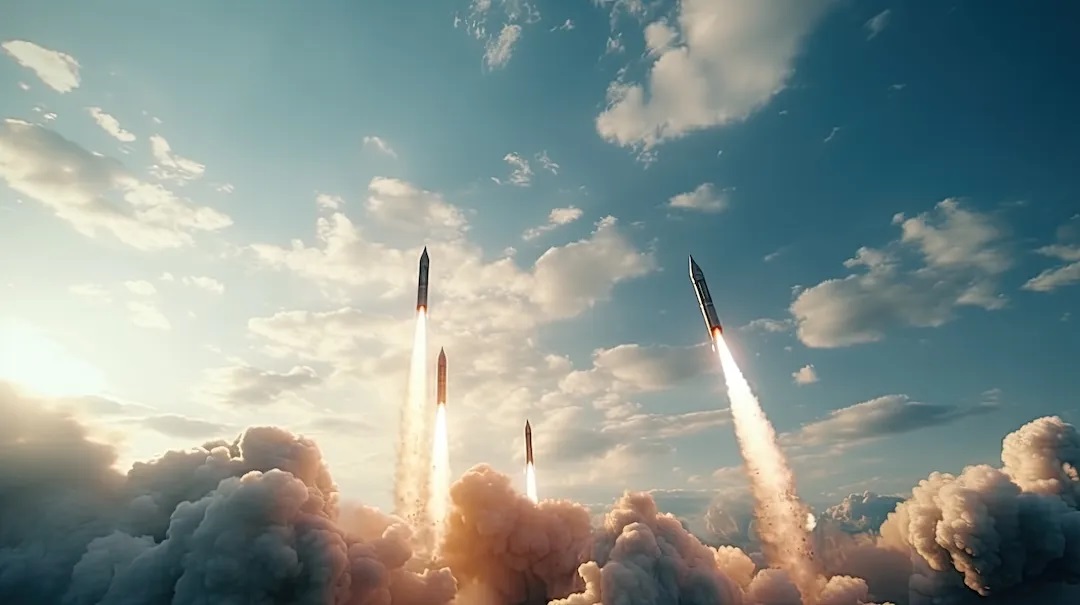
REPUBLICANS in the US Senate have been urging the White House to provide Ukraine with long-range missiles that can strike deep into Russia. Such is the madness of pro-war sentiment.
America’s Secretary of State Anthony Blinken has apparently confirmed that Washington plans to shortly deliver such strategic weapons to Ukraine. This week, Britain’s new prime minister arrived in Washington to discuss more strategic arms for Ukraine.
One is vividly reminded of the mobs who thronged Paris train stations in August 1914, screaming “on to Berlin”. As a British historian aptly noted, “if patriotism is the last refuge of scoundrels, then war is the first platform of fools”.
US-supplied long-range missiles are the last step between what was a border conflict and an all-out war that will likely go nuclear.
Russia’s leader Vladimir Putin has repeatedly stated that he reduced conventional forces to divert funds to Russia’s stunted civilian economy. Nuclear weapons, said Putin, will be used to replace conventional forces if Russia is attacked. We must take him at his word.
The border war with Ukraine, which began in 2014, has shown how much Russia reduced its former conventional might. The once mighty Red Army has proven a shadow of its former self. Under Putin, armies of tanks have been replaced by new apartments across the sprawling nation.
The idea of sending more long-range missiles to Ukraine is sheer madness. Ukraine is slowly being ground down in this long war of attrition.
Ukraine’s current strategy is to provoke a direct clash between Russia and the US. Interestingly, Israel used the same strategy to provoke direct US military intervention against Syria and various Arab militias.
The US, dominated by pro-war Republicans and wealthy pro-Israel special interests, appears eager to promote war with Russia. Most importantly, neoconservatives are urging intensified war against Russia to advance their goal of breaking up the Russian Federation into small, weak pieces dominated by Washington.
Such was the case under former Russian president, Boris Yeltsin, who allowed US financial interests to dominate Russia while he made merry. Former KGB officer Putin put an end to Washington’s attempt to turn Russia into an American satrapy.
I interviewed the leaders of KGB at Moscow’s Lubyanka Prison in 1991. They expressed disgust with Russia’s then-Communist leadership and said there would be a housecleaning. The result was, of course, Putin’s surprising rise to power.
Putin quickly became the target of US media hate. He committed terrible brutalities in Chechnya, but without him, Russia may have ended up as today’s supine Germany.
The US overthrew Ukraine’s last pro-Russian government. Ukraine had been part of the Russian state for hundreds of years and the centre of its heavy industries. This coup cost the US $5 billion (RM21.44 billion), according to leading State Department neocon Victoria Nuland.
An actor, the amiable Volodymyr Zelensky, was put in charge by Nuland. US funds and arms poured into Ukraine. Efforts by Washington to shatter the old Soviet Union were a brilliant success, except that Washington had to foot the bill, which has so far reached an astounding US$44 billion, depriving the US military of many important weapons systems.
One also wonders why former president Donald Trump did not raise the issue of Ukraine’s payments to President Joe Biden and his son.
As a veteran war correspondent and old friend of Ukraine, I see the US and Russia heading to a major war. The Western powers have been relentlessly provoking Russia. The idea of supplying Ukraine with a new class of long-range missiles will likely ignite a dangerous war that may likely go nuclear.
Now is the time for the great powers to impose peace, not supply arms. Time to end the unnecessary sufferings of Ukrainians and Russians. Genuine diplomacy, not more weapons, is the answer.
22,500 Palestinians Now Have Life-Changing Injuries Due to Israel’s Genocide

At least 3,000 Palestinians have had their limbs amputated as a result of Israeli attacks, WHO estimates.
By Sharon Zhang , Truthout, September 12, 2024, https://truthout.org/articles/22500-palestinians-now-have-life-changing-injuries-due-to-israels-genocide/
srael’s genocide has inflicted permanent, life-changing injuries to about a quarter of the nearly 100,000 Palestinians reported injured by Israeli attacks in the last 11 months, according to an analysis by the World Health Organization (WHO).
According to a report using data up until July, roughly 22,500 Palestinians who have been wounded in Israeli attacks have sustained life-changing injuries that will require medical care for years into the future, WHO has estimated.
The majority of these are severe limb injuries, which are affecting roughly between 13,500 and 17,500. Of these, between 3,100 and 4,000 are limb amputations, the report says, though it notes that “anecdotal reports indicate this number may be higher.” It also notes that there will need to be an increase in prosthetic services in the region as a result.
The report also finds that there are likely about 2,000 spinal cord and traumatic brain injuries and at least 2,000 burn injuries, all of which require long-term and specialized care that is largely unavailable in Gaza, due to Israel’s systematic dismantling of Gaza’s health system.
The WHO made the estimates based on medical data reported from Gaza, and the types of injuries identified from those reports.
WHO says that the analysis is a show of the dire need for health care services in Gaza.
“The huge surge in rehabilitation needs occurs in parallel with the ongoing decimation of the health system,” said Richard Peeperkorn, a WHO representative for Palestine. “Patients can’t get the care they need. Acute rehabilitation services are severely disrupted and specialized care for complex injuries is not available, placing patients’ lives at risk.”
The report is a show of the severe impact of Israel’s genocide beyond just the death toll, and one of the myriad ways Israel’s campaign has permanently scarred the Palestinian population.
Because Israel is injuring more people every day in its relentless bombardments and attacks on Palestinians, it is likely that the number of severe injuries is higher now. And, because the report relies on data from emergency sources, there is likely much more life-changing physical harm from things like Israel’s starvation or disease campaigns that are not included in the count.
According to counts by the Gaza Ministry of Health, at least 95,000 people have been injured amid Israel’s genocide, while over 41,000 have been killed. The true death toll, as many experts have noted, is likely far higher; UN Special Rapporteur for the occupied Palestinian territories Francesca Albanese has warned that Israel is on track to exterminate the entire population of Gaza if international powers do not intervene to stop their genocide.
The report does not specify how many children have suffered severe injuries. But children make up nearly half of the population of Gaza, and Save the Children has previously noted that, in the first three months of the genocide, Israel caused over 10 children a day to lose one or both legs.
The NATO/Ukraine Defeat in Kursk (and Beyond)
SOTT, by Gordonhahn, September 14, 2024
Contrary to the view of Beltway pundits regarding the sunny side or various alleged successes of Ukraine’s Kursk incursion, the Ukrainian President Volodomyr Zelenskiy’s newest simulacra attack –substituting a fake reality for the real one – has led to yet another predictable catastrophe in the real world of war and politics. Zelenskiy’s gambit had no military logic behind it. Its essence was made up of a propagandistic/PR component and perhaps a terrorist element. It was a reckless, desperate last roll of the dice to overturn the playing board which never had a hope of succeeding. Not one of the goals stated by Ukrainian officials was achieved, nor was the unstated, potential goal of seizng the Kursk Nuclear Power Plant achieved. What was ‘achieved’ was a decimation of some of Ukraine’s best remaining men and materiel.
Ukrainian officials publicly stated several goals of the operation:
(1) to force Moscow to redeploy troops away from Russian forces’ increasingly rapid advance on Pokrovsk and across the Donetsk front;
(2) to seize Russian territory to encourage Moscow to negotiate and to trade for the return of Ukrainian lands in peace talks with Moscow;
(3) to capture Russian prisoners of war to exchange for Ukrainian prisoners;
(4) to create angst in Russia among the elite and population in order to weaken support for the war and/or Putin’s hold on power; and
(5) to make Russia feel the pain of death and destruction that Ukraine has been feeling (Zelenskiy alone said this).
None of these goals was achieved.
Regarding the first goal, Ukrainian Armed Forces Commander Gen. Oleksandr Syrskii has acknowledged that the Russian forces did not redeploy from Donetsk to Kursk. The strategy was misconceived from the get-go. The Ukrainians tried to get the Russians to make an obvious mistake: divert forces need for their offensives in Donetsk to the Ukrainians’ mini-salient in Kursk and thereby weaken their offensive force. Ironically, in order to get the Russians to make the mistake of diverting valuable resources from Donetsk to Kursk the Ukrainians had done the same. This led to an acceleration of the Russian advance towards Pokrovsk – a key hub and perhaps the last best barrier hindering the Russian army’s march to the Dnieper.
Regarding the second and third, before the incursion Putin and other Russian officials had repeated their willingness to negotiate, but Kiev refused or ignored each statement. After the incursion, the Russians announced that there will be no talks while Ukrainian forces remain in Kursk and other Russian territories, according to Moscow’s definition. Moreover, as one exiled Ukrainian newspaper Ctrana.news, notes, no Russian is going to give back 18 percent of Ukrainian territory held by Russia in return for 5 percent of Kursk region’s territory. The same paper notes that even prominent Russian liberals, editor-in-chief of the banned Ekh Moskvy Aleksei Venediktov and Yabloko Party leader Grigorii Yavlinskii (who met with Putin weeks back to discuss peace talks), thought negotiations might have begun by year’s end until the Kursk incursion spoiled the mood in the Kremlin. No talks means there will be no trading for land or prisoners, contrary to Kiev’s goals.
Regarding the fourth goal, there has been no discernible elite or popular demand for a change in Putin’s ‘special operation policy’ (SMO). To the contrary, prominent hardliners and others intensified their clamor for untying the Russian military’s hands and undertaking a full-scale war on Ukraine, and this may explain an escalation in Russian missile attacks. In terms of the population, public opinion surveys demonstrate both continuing popular support for Putin and the mirror opposite effect on its views than that intended by Kiev. Ukrainian forces began their incursion on August 6th, crossing the Ukrainian-Russian border between Sumy, Ukraine and Kursk, Russia. In the Levada Center’s polling in July Putin’s approval rating was 87 percent. In August it fell a mere 2 points to 85 percent (within the margin of error).
…………………………………………………………………………………………………………………………………………………….. In regard to the Kursk gambit’s unstated and likely real goal of seizing the Kursk NPP and or nuclear weapons storage site in the hope of holding the local population and the Putin government hostage to a possible terrorist attack and/or trading control of the Kursk object(s) for control over the Zaporozhe NPP, now held by the Russians and badly needed to help Ukraine get throught the upcoming winter, given the diminution of the country’s electricity system as a result of Russia’s repeated attacks.
So just like the attempts to destroy the Crimean Bridge and the drone attacks on Moscow and St. Petersburg, the effect of this newest Kievan-Western move has been the precise opposite of what was supposedly intended. Moscow and all Russia are even more committed to ‘Putin’s unprovoked war of aggression’ and any ‘unprovoked responses’ the Kremlin may mount.
Worst of all for the bright lights who conjured up this operation in Langley or elsewhere, the war is getting closer to ‘the last Ukrainian.’ The Kursk gambit has led to the destruction of much of Kiev’s best fighters and equipment, and it is likely many of those Ukrainian and other troops who made the incursion will be encircled in short time. At the same time, the Kursk gambit made Russian advances greater along much of the front but especially on the Donetsk and southern Donetsk fronts, which will lead to the more rapid fall of Pokrovsk, Vugledar, and the entire Ukrainian defense effort east of the Dnieper River. And do the Second Ruin of Ukraine continues with Western crocodile tears and calls to keep up the fight in defense of NATO expansion for as long as ‘it’ takes. https://www.sott.net/article/494845-The-NATO-Ukraine-defeat-in-Kursk-and-beyond
Pentagon orders simulation of consequences of nuclear weapons use in Eastern Europe and Russia
12 September 2024, https://en.topwar.ru/249956-pentagon-zakazal-modelirovanie-posledstvij-primenenija-jadernogo-oruzhija-v-vostochnoj-evrope-i-rossii.html
The Pentagon intends to study the consequences of using nuclear weapons weapons in Europe and Russia. The US military has commissioned a third-party contractor to conduct the study. This is stated in documents from the US Department of Defense that have become publicly available.
The Pentagon has ordered a simulation of a situation involving the use of nuclear weapons in Eastern Europe and Western Russia, with the Americans particularly interested in the consequences of nuclear weapons use on the agricultural sector. As follows from the contract, the contractor must simulate a global nuclear situation the war, which led to the destruction of agriculture. The Pentagon also requires the contractor to expand the modeling beyond Eastern Europe and Western Russia, but with the obligatory condition of including former Eastern Bloc countries in the report.
Engineering Corps armies The United States has awarded a contract (…) to develop active research programs focused on modeling the effects of nuclear weapons on agricultural systems,
– leads RIA News excerpt from the document.
It is worth noting that this is not the first modeling of the consequences of the use of nuclear weapons ordered by the Americans. Similar studies were conducted for the countries of the Asia-Pacific region, the territory of the United States, the Middle East, as well as Europe and the entire Russian territory.
How to Make a ‘War Reserve’ Nuclear Bomb

Earlier this year, at the annual Nuclear Deterrence Summit in Washington, D.C., there was a palpable sense of excitement at the return to Cold War strategies of shoring up our nuclear arsenal. Today, with what some call the two-peer problem—Russia and China—and the specter of nuclear-armed rogue nations and terrorists, the NSE is racing against what-if targets. The language is aggressive. Opposition is largely mute. Congress has opened the tap. The NSE is hiring, training, building, and spending billions a year.
The dark art of crafting nuclear ‘pits’ was almost lost. Now it’s ramped up into a multibillion dollar industry.
The Progressive Magazine, by Jim Carrier , September 5, 2024
Sometime in the next few months a technician at Los Alamos National Laboratory, using an arc welder, will seal together two half-domes of plutonium, creating a “pit,” a seven-pound ball the size of a grapefruit, which, if tucked into America’s newest nuclear warhead and triggered above Times Square, would destroy most of Manhattan and kill more than 1.2 million people.
The bomb is part of a $1.7 trillion plan to rebuild the U.S. nuclear arsenal. The new pit, and hundreds like it, are being made for the W87-1, a new warhead designed to sit atop the Sentinel, a new intercontinental ballistic missile design that will replace all 400 Minuteman III missiles that have been on alert in silos across the Upper Midwest for the last five decades.
Not since the Manhattan Project, the crash program during World War II to invent the atomic bomb, has so much money and urgent energy been spent by the United States to create a weapon of mass destruction. In a paradox of nuclear madness, production of the W87-1—each one with a yield of around 400 kilotons, twenty times larger than the bombs that destroyed Hiroshima and Nagasaki—is breathing life into the U.S. Nuclear Security Enterprise (NSE), the agency that makes nuclear weapons and runs the planes, missiles, and submarines that deliver them.
The warhead “is reinvigorating and transforming the production complex such that NSE can once again produce all of the components typically required for modern nuclear warheads,” according to the Lawrence Livermore National Laboratory, which designed the W87-1. “This work will give the nation expanded options for maintaining an effective nuclear deterrence posture for decades to come.”
Earlier this year, at the annual Nuclear Deterrence Summit in Washington, D.C., there was a palpable sense of excitement at the return to Cold War strategies of shoring up our nuclear arsenal. Today, with what some call the two-peer problem—Russia and China—and the specter of nuclear-armed rogue nations and terrorists, the NSE is racing against what-if targets. The language is aggressive. Opposition is largely mute. Congress has opened the tap. The NSE is hiring, training, building, and spending billions a year.
At Los Alamos, the urgency can be seen inside Plutonium Facility Building 4, known as PF-4, the only building in the United States where plutonium pits are made. Working around the clock, technicians are dismantling old contaminated glove boxes—the laboratory apparatus that allow technicians using built-in gloves to work with toxic or volatile substances inside a sealed chamber—before a new shift of workers arrives to install shiny new steel glove boxes for work on the new pits…………………….
The process of turning plutonium into a bomb is a dark art—an alchemy invented in 1945 on the same New Mexico mesa. Wizards of physics and math who divined the immense energy locked within its atoms, together with master machinists, created the first atomic bomb, “Trinity,” and its copy, “Fat Man,” which destroyed Nagasaki with the power of twenty kilotons, or 20,000 tons of TNT. These two plutonium bombs produced enough heat and radiation to ignite, or trigger, the kind of fusion fire present in the sun.
One year later, as Baby Boom children were teething, Los Alamos blew up a similar plutonium bomb named “Baker” on Bikini Atoll. Its twenty-one-kiloton underwater eruption captured both the bounty of nuclear power and America’s intent to weaponize it.
During the Cold War, Los Alamos produced ninety-four different nuclear weapons—bigger, smaller, deadlier, more accurate. Many were thermonuclear, or hydrogen bombs, whose design, first revealed to the public by Howard Morland in this magazine in 1979, was theorized during the Manhattan Project. In 1952, Los Alamos, using a plutonium pit as a trigger, detonated its first thermonuclear bomb. That same year, the United States built the Rocky Flats Plant, a plutonium pit factory outside Denver. It produced 1,000 pits a year.
The hands-on, metallurgical master craft of fashioning pits was almost lost, though, when Rocky Flats was raided and closed in 1989 by the FBI for massive environmental crimes—the year the Soviet Union began to collapse, ending the Cold War. The NSE fell into a funk, reduced to cleaning up its messes and “stockpile stewardship.”……………………………………………………………………………………………….
“The reestablishment of pit production capabilities is the largest and most complex infrastructure undertaking at NNSA since shortly after the Manhattan Project,” Jill Hruby, administrator of the National Nuclear Security Administration, told the Strategic Weapons in the 21st Century Symposium on April 18. “Our current total estimated acquisition cost range for pit production is $28-37 billion . . . . I know that’s a lot of money . . . . Los Alamos is on track to diamond stamp the first fully qualified War Reserve pit for the W87-1 this year. We anticipate Los Alamos achieving the capability to produce the thirty pits per year envisioned by the two-site plan in or near 2028, with increased manufacturing rate confidence as we install equipment through 2030.”
he United States will never need to make plutonium again. During the Cold War, nuclear reactors at Hanford, Washington, produced more than sixty tons of plutonium. Some 14,000 pits, made by Rocky Flats, each bearing the War Reserve diamond stamp, are warehoused in Pantex, Texas.
As Los Alamos cranks up its program, pits are brought from Pantex, torn apart, and subjected to pyrochemistry, which removes impurities. The metal is then heated into a hot syrup and poured into molds, creating two halves of a sphere. These are welded together. This process is done in rows of connected glove boxes, the plutonium moving from one to another in an overhead trolley system, and dumbwaiters that raise and lower it.
Today at Los Alamos, hundreds of people work at the plutonium factory, some of them making plutonium heaters for space vehicles. But on the pit side, fewer than ten people in the world are trained or are being trained to perform final pit assembly, which must be done by hand inside a large, walk-in glove box, wearing multiple layers of personal protective equipment to prevent plutonium contamination. These master machinists and welders hold Q clearances and undergo annual physical and mental exams. It can take up to four years to train them.
…………………………………………………………………………… fundamental questions are being raised. Scientists debate whether new pits are really needed when existing pits might last for decades. And the need for the W87-1 and the Sentinel missile itself is being questioned because of rising costs and its vulnerability as a land-based, easily targeted weapon. The Pentagon reported in July that the missile’s estimated cost has risen 81 percent over budget to $141 billion.
In New Mexico, two longtime watchdog organizations, the Los Alamos Study Group and Nuclear Watch New Mexico, list dozens of reasons to not make pits at Los Alamos: waste disposal, radiation deposits, earthquake potential, cost and schedule overruns among them.
“Every dollar spent at LANL [Los Alamos National Laboratory] on this program is wasted,” wrote Greg Mello of the Los Alamos Study Group. “Every drum of waste produced in the process need not have been produced. Every career spent making these pits, or supporting the work, is a career that could have been spent building a sustainable, moral, responsible future. The LANL pit production program is a symptom of pure arrogance, greed, and management failure at the highest levels of government.”
………………………. As America’s nuclear train chugs forward, it is virtually certain that if the Sentinel missiles containing the Los Alamos pits are in their silos by the early 2030s, as planned, they will inflame an arms race that is already underway, while posing—if we’re lucky—nothing more than an apocalyptic threat in a new Cold War. https://progressive.org/magazine/how-to-make-a-war-reserve-nuclear-bomb-carrier-20240905/
Scholz stands firm on long-range weapons for Kiev
https://www.rt.com/news/604037-scholz-long-range-weapons-kiev/ 16 Sept 24
Berlin will not lift restrictions on its more advanced weaponry, even if Ukraine’s other allies do, German chancellor has said.
Germany will not allow its long-range weapons to be used for Ukrainian strikes deep into Russia, even if other states choose to do so, Chancellor Olaf Scholz has said.
Washington and London have suggested that they could allow Kiev to use missiles such as the American-made ATACMS and the British-made Storm Shadow to hit such targets.
Berlin retains its policy of not permitting Ukraine to use German-provided long-range weapons for such attacks, Scholz said on Saturday at a Q&A session in Prenzlau, Brandenburg.
I’m sticking to my stance, even if other countries decide differently,” Scholz said. “I won’t do that because I think it’s a problem.”
Germany is Ukraine’s second-largest military donor after the US. Berlin has provided or pledged more than €28 billion ($31 billion) in lethal aid to Kiev since the start of the conflict with Russia, according to data from the Federal Government website.
However, Berlin has so far refused to follow the UK and France’s example in arming Ukraine with long-range missiles. In May, Scholz explained that supplying Ukraine with Taurus missiles with a range of 500 km (310 miles) would amount to Berlin’s direct participation in the conflict.
“It would only be tenable to deliver [these weapons] if we determine and define the targets ourselves, and that is again not possible if you don’t want to be part of this conflict,” he stressed.
On Thursday, Russian President Vladimir Putin warned Western powers against further escalating the hostilities. “We are not talking about allowing or prohibiting the Kiev regime from striking Russian territory,” Putin explained, noting that Ukraine was already doing this.
Western-supplied ATACMS and Storm Shadow missiles have been used by Ukraine to strike targets in Crimea and Donbass – Russian territories that Kiev claims as its own – leading to multiple civilian casualties.
Kiev lacks the ability to independently use Western long-range systems, Putin explained.
Targeting for such strikes relies on intelligence from NATO satellites, while firing solutions can “only be entered by NATO military personnel.”
“This will mean that NATO countries, the US, European countries are fighting against Russia,” Putin stressed. Such direct participation will change “the very essence, the very nature of the conflict”, meaning Russia will have to “make the appropriate decisions on the threats,” the Russian leader warned.
In June, Putin pledged that Moscow would shoot down any missiles used in long-range strikes, and retaliate against those responsible. One possible response would be to send similar high-tech weaponry to forces that are in conflict with the West.
Putin Warns of ‘Direct’ War as US Mulls Letting Ukraine Use Long-Range Western Missiles
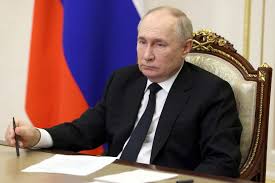
“It is a question of deciding whether or not NATO countries are directly involved in a military conflict,” said Russian President Vladimir Putin.
Jake Johnson, Sep 13, 2024, https://www.commondreams.org/news/putin-direct-war-nato
Russian President Vladimir Putin said Thursday that if the United States and the United Kingdom allow Ukraine to strike deep inside Russia with Western missiles, “it will mean nothing less than the direct involvement of NATO countries.”
“This is not a question of allowing the Ukrainian regime to strike Russia with these weapons or not. It is a question of deciding whether or not NATO countries are directly involved in a military conflict,” Putin told Russian state TV. “This will be their direct participation, and this, of course, will significantly change the very essence, the very nature of the conflict.”
Putin’s remarks came amid reports that U.S. President Joe Biden appears poised to let Ukraine use long-range missiles against Russia, signaling a perilous new phase in a deadly war that has dragged on for two and a half years since Russia’s invasion in February 2022.
According toThe New York Times, “President Biden appears on the verge of clearing the way for Ukraine to launch long-range Western weapons deep inside Russian territory, as long as it doesn’t use arms provided by the United States.”
Russian President Vladimir Putin said Thursday that if the United States and the United Kingdom allow Ukraine to strike deep inside Russia with Western missiles, “it will mean nothing less than the direct involvement of NATO countries.”
“This is not a question of allowing the Ukrainian regime to strike Russia with these weapons or not. It is a question of deciding whether or not NATO countries are directly involved in a military conflict,” Putin told Russian state TV. “This will be their direct participation, and this, of course, will significantly change the very essence, the very nature of the conflict.”
Putin’s remarks came amid reports that U.S. President Joe Biden appears poised to let Ukraine use long-range missiles against Russia, signaling a perilous new phase in a deadly war that has dragged on for two and a half years since Russia’s invasion in February 2022.
According toThe New York Times, “President Biden appears on the verge of clearing the way for Ukraine to launch long-range Western weapons deep inside Russian territory, as long as it doesn’t use arms provided by the United States.”
“The issue, which has long been debated in the administration, is coming to a head on Friday with the first official visit to the White House by Britain’s new prime minister, Keir Starmer,” the Times reported Thursday. “Britain has already signaled to the United States that it is eager to let Ukraine use its ‘Storm Shadow’ long-range missiles to strike at Russian military targets far from the Ukrainian border. But it wants explicit permission from Mr. Biden in order to demonstrate a coordinated strategy with the United States and France, which makes a similar missile.”
Ahead of the decision, the Pentagon pointed to Iran’s alleged transfer of ballistic missiles to Russia as further reason to bolster Ukraine’s military capabilities. A spokesperson for Iran’s foreign ministry said in response that “the publication of false and misleading reports about the transfer of Iranian weapons to some countries is simply ugly propaganda to conceal the large illegal arms support of the United States and some Western countries for the genocide in Gaza.”
Ukraine, which has received roughly $55.7 billion in military assistance from the U.S. since February 2022, has already launched repeated drone attacks deep inside Russia, but Western permission for Kyiv to use long-range missiles could be a dire escalation.
As Politiconoted, Moscow could retaliate against a long-range missile strike on Russia by hitting “a target inside NATO, such as the critical weapons supply hub in the Polish city of Rzeszów.” Such an exchange could result in direct conflict between the nuclear-armed powers.
“Military experts argue any guidelines agreed for the British weapons at the two-hour summit in Washington could also then pave the way for the Ukrainians to fire U.S.-supplied ATACMS—a tactical ballistic missile system—at airfields and army bases deep inside Russia,” the outlet observed.
The potential intensification and spread of the war comes as the prospect of a diplomatic resolution appears nonexistent, at least in the near term.
Aída Chávez, communications director and policy adviser at Just Foreign Policy, wrote for The Intercept earlier this week that members of the U.S. Congressional Progressive Caucus were “pilloried” over an October 2022 letter urging Biden to “make vigorous diplomatic efforts in support of a negotiated settlement and ceasefire, engage in direct talks with Russia, explore prospects for a new European security arrangement acceptable to all parties that will allow for a sovereign and independent Ukraine, and, in coordination with our Ukrainian partners, seek a rapid end to the conflict and reiterate this goal as America’s chief priority.”
Today, Chávez wrote, the progressives who signed the letter—which was ultimately withdrawn by the CPC leadership—”look more prescient than ever.”
“Since the ill-fated letter, the war has ground on—with devastating results for the people of Ukraine,” Chávez continued. “Ukraine is not in a position to win the war, nor does it have a stronger bargaining position in talks than it did in late 2022 when the CPC letter came out.”
The NATO/Ukraine Defeat in Kursk (and Beyond)
by Gordonhahn, September 14, 2024, https://gordonhahn.com/2024/09/14/the-nato-ukraine-defeat-in-kursk-and-beyond/
Contrary to the view of Beltway pundits regarding the sunny side or various alleged successes of Ukraine’s Kursk incursion (https://nationalinterest.org/blog/buzz/kursk-offensive-and-future-russia-ukraine-war-%C2%A0-212669), the Ukrainian President Volodomyr Zelenskiy’s newest simulacra attack – substituting a fake reality for the real one – has led to yet another predictable catastrophe in the real world of war and politics.
Zelenskiy’s gambit had no military logic behind it. Its essence was made up of a propagandistic/PR component and perhaps a terrorist element. It was a reckless, desperate last roll of the dice to overturn the playing board which never had a hope of succeeding. Not one of the goals stated by Ukrainian officials was achieved, nor was the unstated, potential goal of seizng the Kursk Nuclear Power Plant achieved. What was ‘achieved’ was a decimation of some of Ukraine’s best remaining men and materiel`.
Ukrainian officials publicly stated several goals of the operation: (1) to force Moscow to redeploy troops away from Russian forces’ increasingly rapid advance on Pokrovsk and across the Donetsk front; (2) to seize Russian territory to encourage Moscow to negotiate and to trade for the return of Ukrainian lands in peace talks with Moscow; (3) to capture Russian prisoners of war to exchange for Ukrainian prisoners; (4) to create angst in Russia among the elite and population in order to weaken support for the war and/or Putin’s hold on power; and (5) to make Russia feel the pain of death and destruction that Ukraine has been feeling (Zelenskiy alone said this). None of these goals was achieved.
Regarding the first goal, Ukrainian Armed Forces Commander Gen. Oleksandr Syrskii has acknowledged that the Russian forces did not redeploy from Donetsk to Kursk. The strategy was misconceived from the get-go. The Ukrainians tried to get the Russians to make an obvious mistake: divert forces need for their offensives in Donetsk to the Ukrainians’ mini-salient in Kursk and thereby weaken their offensive force. Ironically, in order to get the Russians to make the mistake of diverting valuable resources from Donetsk to Kursk the Ukrainians had done the same. This led to an acceleration of the Russian advance towards Pokrovsk – a key hub and perhaps the last best barrier hindering the Russian army’s march to the Dnieper.
Regarding the second and third, before the incursion Putin and other Russian officials had repeated their willingness to negotiate, but Kiev refused or ignored each statement. After the incursion, the Russians announced that there will be no talks while Ukrainian forces remain in Kursk and other Russian territories, according to Moscow’s definition (https://ctrana.news/news/471809-v-rf-snova-zajavili-chto-ne-budut-vesti-perehovory-s-ukrainoj.html).
Moreover, as one exiled Ukrainian newspaper Ctrana.news, notes, no Russian is going to give back 18 percent of Ukrainian territory held by Russia in return for 5 percent of Kursk region’s territory. The same paper notes that even prominent Russian liberals, editor-in-chief of the banned Ekh Moskvy Aleksei Venediktov and Yabloko Party leader Grigorii Yavlinskii (who met with Putin weeks back to discuss peace talks), thought negotiations might have begun by year’s end until the Kursk incursion spoiled the mood in the Kremlin (https://uiamp.org/kurskiy-tormoz-kakie-seychas-perspektivy-peregovorov-ukrainy-i-rossii). No talks means there will be no trading for land or prisoners, contrary to Kiev’s goals.
Regarding the fourth goal, there has been no discernible elite or popular demand for a change in Putin’s ‘special operation policy’ (SMO). To the contrary, prominent hardliners and others intensified their clamor for untying the Russian military’s hands and undertaking a full-scale war on Ukraine, and this may explain an escalation in Russian missile attacks. In terms of the population, public opinion surveys demonstrate both continuing popular support for Putin and the mirror opposite effect on its views than that intended by Kiev. Ukrainian forces began their incursion on August 6th, crossing the Ukrainian-Russian border between Sumy, Ukraine and Kursk, Russia. In the Levada Center’s polling in July Putin’s approval rating was 87 percent. In August it fell a mere 2 points to 85 percent (within the margin of error) ((www.levada.ru/2024/08/29/rejtingi-avgusta2024-goda-otsenki-polozheniya-del-v-strane-nastroeniya-respondentov-odobrenie-organov-vlasti-doverie-politikam-i-partiyam/?utm_source=mailpoet&utm_medium=email&utm_source_platform=mailpoet&utm_campaign=newsletter-post-title_81).
Levada’s polling also shows that after a short period of shock regarding the Kursk incursion, Russian public opinion adapted and is taking in stride. It ranks fifth in the populace’s mind among the most important events since the SMO’s start in February 2022. Concern was largely localized to regions around Kursk, and discontent with performance was directed at the military, border troops, and intelligence services, not the political leadership, no less Putin personally. Levada’s monthly polling on the public mood showed a barely significant jump just above the margin of error. Whereas in July negative feeling was registered among 18 percent, in August it rose to 24 percent.
However, Levada offered comparative context by noting that this jump pales in significance to the more than doubling (21 to 47 percent) of those admitting to a negative mood in autumn 2022, when the Putin government announced a mobilization of new soldiers for the SMO (www.levada.ru/2024/09/03/privychnaya-trevoga-chto-dumayut-rossiyane-o-nastuplenii-vsu-v-kurskoj-oblasti/?utm_source=mailpoet&utm_medium=email&utm_source_platform=mailpoet&utm_campaign=newsletter-post-title_81 and www.levada.ru/2024/08/30/konflikt-s-ukrainoj-i-napadenie-na-kurskuyu-oblast-osnovnye-pokazateli-v-avguste-2024-goda/?utm_source=mailpoet&utm_medium=email&utm_source_platform=mailpoet&utm_campaign=newsletter-post-title_81). Support for the SMO strengthened in the wake of the Kursk invasion as of August. Support for the military’s war efforts slightly increased (78 percent), and the percentage of those who supported continuing the war without peace negotiations and of those who supported beginning talks shifted from 58 percent and 34 percent, respectively, to 49 percent and 41 percent, respectively. (www.levada.ru/2024/09/03/privychnaya-trevoga-chto-dumayut-rossiyane-o-nastuplenii-vsu-v-kurskoj-oblasti/?utm_source=mailpoet&utm_medium=email&utm_source_platform=mailpoet&utm_campaign=newsletter-post-title_81).
The only way the Kursk incursion could spark greater discomfort with the SMO and Putin’s course would be if a second mobilization is undertaken in response, since this was the most alarming event for Russians since the SMO began, according to Levada’s surveys (www.levada.ru/2024/08/30/konflikt-s-ukrainoj-i-napadenie-na-kurskuyu-oblast-osnovnye-pokazateli-v-avguste-2024-goda/?utm_source=mailpoet&utm_medium=email&utm_source_platform=mailpoet&utm_campaign=newsletter-post-title_81).
Regarding the Ukrainians’ goal of making Russians feel their pain, as noted above the pain has been limited and adjusted to by Russians. Moreover, if there was pain it was in response to Ukrainian brutality broadcast on Russian media and it has led, as noted above, to greater support for continuing the SMO or upgrading it to full-scale war, which so far Putin has resisted. Thus, among those in the already noted Levada opinion survey who expressed concern about Ukraine’s Kursk invasion, the second-most frequently expressed concern (25 percent) was outrage over the cruelty of the Ukrainian troops in relation to Russian civilians as conveyed by Russian media (www.levada.ru/2024/09/03/privychnaya-trevoga-chto-dumayut-rossiyane-o-nastuplenii-vsu-v-kurskoj-oblasti/). This, as noted in Levada surveys noted above, and the fact of the incursion itself apparently provoked outrage that only increased the desire among Russians to continue the war and decreased the number of those preferring to start peace talks.
In regard to the Kursk gambit’s unstated and likely real goal of seizing the Kursk NPP and or nuclear weapons storage site in the hope of holding the local population and the Putin government hostage to a possible terrorist attack and/or trading control of the Kursk object(s) for control over the Zaporozhe NPP, now held by the Russians and badly needed to help Ukraine get throught the upcoming winter, given the diminution of the country’s electricity system as a result of Russia’s repeated attacks. So just like the attempts to destroy the Crimean Bridge and the drone attacks on Moscow and St. Petersburg, the effect of this newest Kievan-Western move has been the precise opposite of what was supposedly intended. Moscow and all Russia are even more committed to ‘Putin’s unprovoked war of aggression’ and any ‘unprovoked responses’ the Kremlin may mount.
Worst of all for the bright lights who conjured up this operation in Langley or elsewhere, the war is getting closer to ‘the last Ukrainian.’ The Kursk gambit has led to the destruction of much of Kiev’s best fighters and equipment, and it is likely many of those Ukrainian and other troops who made the incursion will be encircled in short time. At the same time, the Kursk gambit made Russian advances greater along much of the front but especially on the Donetsk and southern Donetsk fronts, which will lead to the more rapid fall of Pokrovsk, Vugledar, and the entire Ukrainian defense effort east of the Dnieper River. And do the Second Ruin of Ukraine continues with Western crocodile tears and calls to keep up the fight in defense of NATO expansion for as long as ‘it’ takes.
UK approves Ukrainian missile strikes deep inside Russia – Guardian

According to The Guardian, US Secretary of State Antony Blinken “gave the strongest hint yet” about permitting Ukraine to use long-range ATACMS missiles against Russia during his visit to Kiev on Wednesday. The decision is “understood to have already been made in private,” the British outlet claimed.
https://www.rt.com/news/603878-ukraine-storm-shadow-missiles/ 12 Sept 24
The Western media is manufacturing public consent for the move, according to a Russian senator
Washington and London may have already decided to let Kiev use long-range missiles for strikes deep inside Russia and are now seeding the narrative through the media, Russian Senator Aleksey Pushkov has said.
Britain has already given the green light for the use of Storm Shadow missiles, The Guardian reported on Wednesday, citing anonymous government sources. London, however, is not expected to announce the move publicly, the sources claimed.
“The decision to strike Russian territory is clearly being prepared,” Pushkov wrote on Telegram on Wednesday. “There are too many conversations and hints about it for it to be reversed. Even if it has not been made yet, it looks like it will be a matter of days. The leak via The Guardian is not accidental. Public opinion is being prepared.”
Limitations on the use of Western-supplied weapons were originally put in place to allow the US and its allies to claim they were not directly involved in the conflict with Russia, while arming Ukraine to the tune of $200 billion. Kiev has been clamoring for the restrictions to be lifted since May, however.
According to The Guardian, US Secretary of State Antony Blinken “gave the strongest hint yet” about permitting Ukraine to use long-range ATACMS missiles against Russia during his visit to Kiev on Wednesday. The decision is “understood to have already been made in private,” the British outlet claimed.
Blinken “signaled” the potential shift from Washington on Tuesday, according to Bloomberg, by bringing up Iran’s alleged delivery of missiles to Moscow.
UK Foreign Secretary David Lammy, who tagged along with Blinken to Kiev, has said the Iranian missile delivery was a “significant and dangerous escalation” that influenced the thinking in London and Washington.
The escalator here is [Russian President Vladimir] Putin. Putin has escalated with the shipment of missiles from Iran. We see a new axis of Russia, Iran and North Korea,” The Guardian quoted Lammy as saying.
Iran has denied sending any missiles to Russia, calling the accusations “psychological warfare” and particularly rich coming from countries heavily involved in arming Ukraine.
An open letter from 27 US congressmen and senators sent to President Joe Biden on Wednesday did not mention Iranian missiles at all. Instead, it claimed that Ukraine’s incursion into Russia’s Kursk Region “changed the very nature of the war” and argued that “Ukraine is not intimidated by Putin’s tyranny, and in the defense of liberty, we should not be either.”
The US “continues to test the limits of our tolerance for hostile steps,” and is “paving the way to World War III,” the Russian ambassador to the US, Anatoly Antonov, told reporters on Wednesday.
“It is impossible to negotiate with terrorists. They must be destroyed,” Antonov added. “As in the years of the Great Patriotic War, fascism must be eradicated. And the goals and objectives of the special military operation must be fully achieved. No one should doubt that it will be so.”
Putin has previously warned NATO members to be aware of “what they are playing with” when discussing plans to allow Kiev to strike deep inside Russian territory using weapons provided by the West. The Russian military is “taking appropriate countermeasures,” according to Kremlin spokesman Dmitry Peskov, while Russian Foreign Minister Sergey Lavrov called the use of Storm Shadow missiles inside Russian territory “playing with fire.”
UK sent Kyiv large supplies of old military equipment, watchdog finds
One defence official, not involved in the audit, said: “The war has tested our stockpiles, but it’s a good thing for us that we have cleared out old kit and can now replace it with new equipment.”
Defence ministry dispatched kit ‘due to be scrapped or replaced’, according to National Audit Office
Ft.com John Paul Rathbone in London, September 11 2024
Much of the military aid the UK has given to Ukraine has consisted of old equipment, such as army boots that otherwise would have had to be thrown away, according to a spending watchdog.
Military gear that was “often due to be scrapped or replaced” was prioritised by the Ministry of Defence because it was believed to have “immediate military value” to Ukraine — but sending it to Kyiv also “reduced waste or costs relating to disposal”, the National Audit Office said on Wednesday.
The ministry also used other “innovative ways of sourcing military equipment”, such as reverse-engineering replacement tracks for Soviet-era T72 tanks from samples at a tank museum in Dorset, the NAO noted.
The findings come as some of Kyiv’s western allies tire of supporting Ukraine almost three years after Russia launched its full-scale invasion. The £7.8bn of military aid the UK has pledged or sent to Kyiv make it the third-largest supplier of western support to Ukraine after the US at £56.5bn, and Germany at £16.2bn, the NAO said. The UK has pledged to continue providing £3bn a year of military aid. Other western allies have also given ageing equipment to Kyiv: in one recent US example, 10 donated vehicles ostensibly worth more than $7mn had a combined book value of zero.
However, ageing military equipment cleared from British stockpiles was only a small portion of total UK aid sent to Ukraine, because it had a book value of just £171.5mn versus an estimated replacement cost of £2.7bn. Three-quarters of it also came during the first year of the invasion. The UK spent a further £2.4bn on procuring equipment, contributed £500mn to an international fund, and spent £830mn on operational support, some channelled via Nato………………………………………………………………………………………………………………………………..
One finding concerned the value of UK military supplies. The report cited 17,000 pairs of army boots, which the UK donated in March 2022. The shoes were nearing the end of their usable life and, if not sold, “would have been sent to landfill”. In another example, the NAO said the 14 Challenger 2 tanks sent in 2023 had a book value of just £17mn, compared to their original purchase price at the end of the 1990s of £47mn.
One defence official, not involved in the audit, said: “The war has tested our stockpiles, but it’s a good thing for us that we have cleared out old kit and can now replace it with new equipment.”
The UK has set aside £2.5bn to replenish its stockpiles depleted by the war. In April, the previous Conservative government pledged £10bn in investment to boost munitions productions over the next decade.
Bolstering Britain’s defence industry is also expected to be a priority in the “root and branch” defence review launched by the Labour government in July………………………….. https://www.ft.com/content/f44bf7d0-0895-4f63-9fce-d3de8e686b57
Biden’s Legacy: The Decline of Arms Control and Disarmament

the mainstream media and many commentators are making the case for additional nuclear weaponry and the modernization of weapons currently in the nuclear arsenal.
Washington’s “Nuclear Employment Guidance” is based on the threat of nuclear coordination between Moscow and Beijing, but there is no evidence of such coordination
by Melvin Goodman September 13, 2024 https://www.counterpunch.org/2024/09/13/bidens-legacy-the-decline-of-arms-control-and-disarmament-2/
Last month, I reported on the Biden administration’s new nuclear doctrine to prepare the United States for a coordinated nuclear challenge from Russia, China, and North Korea. The Biden doctrine revives the concept of “escalation dominance,” one of the main drivers of the nuclear arms race between the United States and the Soviet Union in the 1950s and 1960s.
President Biden’s neglect of arms control and disarmament means that the next president will inherit a nuclear landscape that is more threatening and volatile than any other since the Cuban missile crisis more than 60 years ago. The Cuban missile crisis, however, was a wake up call for both President John F. Kennedy and General Secretary Nikita Khrushchev, leading to a series of arms control and disarmament treaties beginning with the Partial Test Ban Treaty of 1963.
We need another wake up call.
Currently, there is little discussion of reviving arms control and disarmament. Instead the mainstream media and many commentators are making the case for additional nuclear weaponry and the modernization of weapons currently in the nuclear arsenal. The influential British newsweekly, The Economist, is leading the way in this campaign, arguing that the concept of deterrence demands that the United States build up and modernize its nuclear arsenal. An oped in the New York Times this week, written by the chairman of the House Permanent Select Committee on Intelligence, argues that credible deterrence will prevent our adversaries from “even considering a nuclear strike against America or its allies.”
Deterrence requires that nuclear weapons must be in a high state of readiness in order to address the danger of surprise attack, which increases the possibility of unintentional use of nuclear weapons. We need a discussion of alternatives to deterrence, such as negotiations for confidence-building measures as well as arms control and disarmament.
Instead, we are getting a discussion of the need for low-yield nuclear weapons. The Economist and others have been making the case for such weapons—20 kilotons of explosive power, roughly Hiroshima-sized—that can be delivered with “extreme precision and less collateral damage.” U.S. think tanks, such as the Center for a New American Security (CNAS), have argued that the “line between low-yield tactical nuclear weapons and precision-guided conventional weapons in terms of their operational effects and perceived impact is blurring,” and that “nuclear arms are more efficient at destroying large-area targets.”
The current discussion is dangerously reminiscent of the nuclear discussion of the 1950s, which was dominated by false notions of a vast Soviet superiority in deployed nuclear ballistic missiles, the so-called “missile gap,” as well as the so-called “bomber gap” regarding strategic aircraft. The conventional wisdom in the defense community was that we were facing a powerful enemy that was undertaking costly efforts to exploit the potential of nuclear weapons in order to gain unchallenged global dominance. Is history abut to repeat itself, particularly in view of exaggerated concerns regarding greater threats from both China and North Korea as well as the possibility of Sino-Russian collusion?
Henry Kissinger, the most famous and most controversial American diplomat of the 20th century, was responsible for initiating the idea that nuclear powers could wage a war that would involve limited use of nuclear weapons. In his “Nuclear Weapons and Foreign Policy,” Kissinger made the case for limited uses of nuclear weapons, which attracted him to Richard Nixon who made Kissinger the national security adviser in 1969. It was fifteen years before a U.S. president—Ronald Reagan— and a Soviet leader—Mikhail Gorbachev—agreed that a “nuclear war cannot be won and must never be fought,” and that the two sides must not “seek to achieve military superiority.” The initiative for these statements originated with Gorbachev, and they received greater attention in Soviet media than in their U.S. counterparts.
Now, we are facing a disturbing situation that finds the United States modernizing its nuclear arsenal at great cost; China ending its doctrine of limited nuclear deterrence and expanding its nuclear arsenal, and Russia threatening the use of tactical nuclear weapons against Ukraine and issuing warnings of a World War III. Russian publications are discussing the possibility of placing a nuclear weapons in space. U.S. defense analysts project that China could have as many as 1,000 nuclear warheads over the next ten years.
Washington’s “Nuclear Employment Guidance” is based on the threat of nuclear coordination between Moscow and Beijing, but there is no evidence of such coordination and it’s unlikely that these former adversaries are formalizing their nuclear and strategic plans. U.S. guidance is based on worst-case analysis, but there needs to be a recognition of similar worst-case analyses in Moscow and Beijing. In view of greatly expanded U.S. defense spending over the past several years as well as the discussion of a strategic missile defense, Russia and China have much to worry about. Even worse, the United States quietly announced in July that it will deploy conventionally armed ground-launched intermediate-range missiles in Germany on a rotational basis beginning in 2026. This is madness.
Iran’s nuclear program is also expanding in size and sophistication, and North Korea has a nuclear arsenal that rivals three nuclear powers—Israel, India, and Pakistan—that were never part of the Nuclear Non-Proliferation Treaty. Iran’s Ayatollah has indicated a readiness to open discussions with the United States on nuclear matters, but the Biden administration has turned a deaf ear to such a possibility. North Korea’s Kim Jong Un has similarly indicated an interest in discussing nuclear matters with the United States.
The only remaining nuclear disarmament treaty—the New START Treaty—expires in February 2026, and there is no indication that U.S. and Russian officials are planning for talks to renew the treaty. The election year predictably finds Kamala Harris and Donald Trump boasting about maintaining and improving U.S. military prowess. Next to nothing is known about Harris’s view of nuclear matters, and the thought of facing a new nuclear age with Trump back in the White House is positively frightening. We are confronting this difficult situation because the Bush and Trump administrations abrogated two of the most important disarmament treaties in history: the Anti-Ballistic Missile Treaty and the Intermediate Nuclear Forces Treaty.
It’s time for the nuclear experts of the nine nuclear powers as well as the general public to read M.G. Sheftall’s “Hiroshima: The Last Witnesses.” These first-person accounts educate and re-educate the global community on the horrors of Hiroshima and Nagasaki 80 years ago. The accounts of gut-wrenching recollections should be enough to make any sane individual reject the notion of “modernizing” nuclear weapons or discussing “tactical” uses of nuclear weapons.
The danger of nuclear war resulting from an accident, an unauthorized action, the danger of alert practices, or false alarms should never be far from our thinking. Another nuclear arms race in the current international environment would be far more threatening and terrifying than any aspect of the Soviet-American rivalry in the Cold War.
Melvin A. Goodman is a senior fellow at the Center for International Policy and a professor of government at Johns Hopkins University. A former CIA analyst, Goodman is the author of Failure of Intelligence: The Decline and Fall of the CIA and National Insecurity: The Cost of American Militarism. and A Whistleblower at the CIA. His most recent books are “American Carnage: The Wars of Donald Trump” (Opus Publishing, 2019) and “Containing the National Security State” (Opus Publishing, 2021). Goodman is the national security columnist for counterpunch.org.
The Armageddon Agenda
Kamala Harris, Donald Trump, and the Race to Oblivion
mong the first major decisions the next president has to make in January 2025 will be what stance to take regarding the future status of New START (or its replacement).
By Michael Klare, Tomgram, 13 Sept 24
The next president of the United States, whether Kamala Harris or Donald Trump, will face many contentious domestic issues that have long divided this country, including abortion rights, immigration, racial discord, and economic inequality. In the foreign policy realm, she or he will face vexing decisions over Ukraine, Israel/Gaza, and China/Taiwan. But one issue that few of us are even thinking about could pose a far greater quandary for the next president and even deeper peril for the rest of us: nuclear weapons policy.
Consider this: For the past three decades, we’ve been living through a period in which the risk of nuclear war has been far lower than at any time since the Nuclear Age began — so low, in fact, that the danger of such a holocaust has been largely invisible to most people. The collapse of the Soviet Union and the signing of agreements that substantially reduced the U.S. and Russian nuclear stockpiles eliminated the most extreme risk of thermonuclear conflict, allowing us to push thoughts of nuclear Armageddon aside (and focus on other worries). But those quiescent days should now be considered over. Relations among the major powers have deteriorated in recent years and progress on disarmament has stalled. The United States and Russia are, in fact, upgrading their nuclear arsenals with new and more powerful weapons, while China — previously an outlier in the nuclear threat equation — has begun a major expansion of its own arsenal.
The altered nuclear equation is also evident in the renewed talk of possible nuclear weapons use by leaders of the major nuclear-armed powers. Such public discussion largely ceased after the Cuban Missile Crisis of 1962, when it became evident that any thermonuclear exchange between the U.S. and the Soviet Union would result in their mutual annihilation. However, that fear has diminished in recent years and we’re again hearing talk of nuclear weapons use. Since ordering the invasion of Ukraine, Russian President Vladimir Putin has repeatedly threatened to employ nuclear munitions in response to unspecified future actions of the U.S. and NATO in support of Ukrainian forces. Citing those very threats, along with China’s growing military might, Congress has authorized a program to develop more “lower-yield” nuclear munitions supposedly meant (however madly) to provide a president with further “options” in the event of a future regional conflict with Russia or China.
Thanks to those and related developments, the world is now closer to an actual nuclear conflagration than at any time since the end of the Cold War. And while popular anxiety about a nuclear exchange may have diminished, keep in mind that the explosive power of existing arsenals has not. Imagine this, for instance: even a “limited” nuclear war — involving the use of just a dozen or so of the hundreds of intercontinental ballistic missiles (ICBMs) possessed by China, Russia, and the United States — would cause enough planetary destruction to ensure civilization’s collapse and the death of billions of people.
And consider all of that as just the backdrop against which the next president will undoubtedly face fateful decisions regarding the production and possible use of such weaponry, whether in the bilateral nuclear relationship between the U.S. and Russia or the trilateral one that incorporates China.
The U.S.-Russia Nuclear Equation
The first nuclear quandary facing the next president has an actual timeline. In approximately 500 days, on February 5, 2026, the New Strategic Arms Reduction Treaty (New START), the last remaining nuclear accord between the U.S. and Russia limiting the size of their arsenals, will expire. That treaty, signed in 2010, limits each side to a maximum of 1,550 deployed strategic nuclear warheads along with 700 delivery systems, whether ICBMs, submarine-launched ballistic missiles (SLBMs), or nuclear-capable heavy bombers. (That treaty only covers strategic warheads, or those intended for attacks on each other’s homeland; it does not include the potentially devastating stockpiles of “tactical” nuclear munitions possessed by the two countries that are intended for use in regional conflicts.)
At present, the treaty is on life support. On February 21, 2023, Vladimir Putin ominously announced that Russia had “suspended” its formal participation in New START, although claiming it would continue to abide by its warhead and delivery limits as long as the U.S. did so. The Biden administration then agreed that it, too, would continue to abide by the treaty limits. It has also signaled to Moscow that it’s willing to discuss the terms of a replacement treaty for New START when that agreement expires in 2026. The Russians have, however, declined to engage in such conversations as long as the U.S. continues its military support for Ukraine.
Accordingly, among the first major decisions the next president has to make in January 2025 will be what stance to take regarding the future status of New START (or its replacement). With the treaty’s extinction barely more than a year away, little time will remain for careful deliberation as a new administration chooses among several potentially fateful and contentious possibilities…………………………………………………………………………. more https://tomdispatch.com/the-armageddon-agenda/
United Nations relief agency Says 6 Workers Among at Least 18 Killed in Israeli Strikes on Gaza School
“This school has been hit five times since the war began. It is home to around 12,000 displaced people, mainly women and children. No one is safe in Gaza. No one is spared.”
Brett Wilkins, Sep 11, 2024, https://www.commondreams.org/news/unrwa-school-bombed-again
The United Nations relief agency for Palestine said Wednesday that six of its workers are among the at least 18 people killed in a pair of Israeli airstrikes targeting a U.N. school in the Gaza Strip where thousands of forcibly displaced Palestinians were sheltering.
The United Nations Relief and Works Agency for Palestine Refugees in the Near East (UNRWA) said the Israeli strikes on one of its schools, located in Nuseirat in central Gaza, resulted in “the highest death toll among our staff in a single incident” since Israeli forces began bombarding the strip following last October’s Hamas-led attack on Israel.
“Among those killed was the manager of the UNRWA shelter and other team members providing assistance to displaced people,” the agency said. “Sincere condolences to their families and loved ones. This school has been hit five times since the war began. It is home to around 12,000 displaced people, mainly women and children.”
Victims of the strikes included women and children.
Earlier on Wednesday the United Nations said the school had been “previously deconflicted with the Israeli forces.”
“No one is safe in Gaza. No one is spared,” UNRWA stressed. “Schools and other civilian infrastructure must be protected at all times, they are not a target.”
Responding to the attacks, U.N. Secretary-General António Guterres said on social media that “these dramatic violations of international humanitarian law need to stop now.”
Israel is currently on trial for genocide at the International Court of Justice, a U.N. body. International Criminal Court Prosecutor Karim Khan is also seeking arrest warrants for Israeli Prime Minister Benjamin Netanyahu, Israeli Defense Minister Yoav Gallant, and three Hamas leaders—at least one of whom, Ismail Haniyeh, has been assassinated.
Over the past 341 days, Israel’s assault on Gaza has left more than 145,000 Palestinians dead, maimed, or missing, according to Palestinian and international officials. Nearly all of Gaza’s 2.3 million people have been forcibly displaced, while Israel’s “complete siege” of Gaza has starved and sickened millions of Palestinians, dozens of whom have died of malnutrition, dehydration, and lack of medical care.
UNRWA says around 200 of its staff members have been killed in more than 450 Israeli attacks on agency facilities since October. More than 500 Palestinians have been killed while seeking shelter under the U.N. flag.
Responding to Israeli claims—reportedly extracted from Palestinian prisoners in an interrogation regime rife with torture and abuse—that a dozen of the more than 13,000 UNRWA workers in Gaza were involved in the October 7 attack, numerous nations including the United States cut off funding to the agency. Almost all of them have restored funding as Israeli lies have been debunked.
Bucking this trend, U.S. President Joe Biden in March signed a bill prohibiting American funding for UNRWA.
US, UK to announce expansion of NATO weapons strikes inside Russia
Andre Damon, 11 Sept 24 https://www.wsws.org/en/articles/2024/09/12/lsqq-s12.html
The United States and United Kingdom will imminently announce a major expansion of Ukrainian strikes deep inside Russia using NATO weapons, the Guardian and Politico reported on Wednesday.
The announcement will come just days after Ukraine launched its largest drone barrage deep inside Russian territory on Monday, for the first time killing someone in Moscow and destroying dozens of homes in the capital city of a nuclear-armed state.
The move was discussed between US Secretary of State Antony Blinken and British Foreign Minister David Lammy during their meetings with Ukrainian officials in Kiev on Wednesday.
When asked whether “Ukraine needs this long-range capability of striking into Russian territory,” Blinken replied that “we discussed long-range fires” with Ukrainian officials and that it would be further discussed when US President Joe Biden meets UK Prime Minister Keir Starmer in Washington on Friday.
He continued, “From day one, as you heard me say, we have adjusted and adapted as needs have changed, as the battlefield has changed, and I have no doubt that we will continue to do so as this evolves.”
Regarding the discussions, the Guardian reported, “British government sources indicated that a decision had already been made to allow Ukraine to use Storm Shadow cruise missiles on targets inside Russia, although it is not expected to be publicly announced on Friday when Starmer meets Biden in Washington DC.”
When asked on Tuesday about allowing expanded strikes inside Russia, Biden replied, “We’re working that out now.”
Politico cited Senate Foreign Relations Committee Chair Ben Cardin as saying he “would not be surprised” if the decision had already been made. The report continued, “Wednesday’s joint visit to Kyiv by Blinken and Lammy to meet Zelenskiy would not be taking place had there been no positive decision regarding Storm Shadow, the sources added.”
The news outlet noted, “But it would be considered unnecessarily provocative to make a public announcement about long-range missiles in Kyiv.”
In other words, the announcement will take place in a proverbial “Friday night news dump” to make the fact that NATO weapons will be raining down on Russian cities appear less “provocative” and to keep this development, which threatens to dramatically escalate the war, out of public consciousness.
In a statement on X, Lammy declared, “I am in Kyiv today with @SecBlinken to reiterate our united and ironclad support for Ukraine. We must stand up to Vladimir Putin’s imperialism. Our collective security depends on it.”
Blinken framed the massively provocative action being prepared by the US and UK as a response to an “escalation” by Russia. “And we’ve now seen this action of Russia, Russia acquiring ballistic missiles from Iran, which will further empower their aggression in Ukraine. So if anyone is taking escalatory action, it would appear to be Mr. Putin and Russia,” Blinken said.
On Monday, a group of leading House Republicans published a letter to President Biden calling for the lifting of all remaining restrictions on the use of NATO-provided weapons from Ukraine.
The letter demanded, “We write to urge you to lift the remaining restrictions on Ukraine’s use of U.S.-provided long-range systems, specifically Army Tactical Missile Systems (ATACMS), against legitimate military targets deeper inside Russia.”
The letter declared that “concerns about escalation” have been “consistently invalidated since day one of the war.” It asserted, “Neither Ukraine’s use of U.S.-provided weapons in Russia nor its military incursion into Russia’s Kursk region—the first foreign occupation of Russian territory since World War II—has triggered a Russian escalatory response.”
Commenting on the reporting by the Guardian, Russian Senator Aleksey Pushkov wrote on Telegram, “The decision to strike Russian territory is clearly being prepared. … There are too many conversations and hints about it for it to be reversed. Even if it has not been made yet, it looks like it will be a matter of days. The leak via The Guardian is not accidental. Public opinion is being prepared.”
Anatoly Antonov, the Russian Ambassador to the US, declared that Washington “continues to test the limits of our tolerance for hostile steps” and is “paving the way to World War III.”
On Wednesday, former Kremlin adviser Sergey Karaganov gave an interview to the Kommersant daily in which he urged the country to be prepared to use nuclear weapons in response to NATO attacks. “We have allowed the situation to deteriorate to a point when our adversaries believe we will not use nuclear weapons under any circumstances. … Having nuclear weapons without being able to convince your enemies that you are ready to use them is suicide.”
He added, “The main goal of a doctrine should be in convincing all current and future enemies that Russia is ready to use nuclear weapons.” He added, “It’s high time we stated that any massive strikes against our territory give us a right to respond with a nuclear strike.”
The massive escalation of the US-NATO war against Russia forms the backdrop of Wednesday’s presidential debate in which Vice President Kamala Harris pledged that her candidacy would be dedicated to “ensuring we have the most lethal fighting force in the world” in order to defend America’s “standing” in the world.
White House finalizing plans to expand where Ukraine can hit inside Russia
The talks have been closely held among a small group of officials inside the White House.
Gunners fire at a Russian position in the Kharkiv region, on April 21, 2024, amid the Russian invasion in Ukraine. | Anatolii Stepanov/AFP via Getty Images
Politico, By Erin Banco, Joe Gould and Paul McLeary 09/11/2024
The White House is finalizing a plan to ease some restrictions on how Ukraine can use U.S.-donated weapons and better protect itself from Russian missiles, according to a Western official and two other people familiar with the discussions.
The talks have been closely held among a small group of officials inside the White House, one of the people involved in the debate said. All were granted anonymity because they were not authorized to speak publicly about the conversations.
The details of the plan are still coming together. But officials in Washington, London and Kyiv have in recent days discussed expanding the area inside Russia that Ukraine can hit with American and British-made weapons. They’ve also discussed how to prevent additional cross-border attacks by Russia, including the U.S. agreeing to allow Ukraine to use U.K. long-range missiles that contain American parts to strike inside Russia.
The current conversations between Washington and Kyiv mark a significant change in tenor from the ones the two countries held earlier this summer. And it signals the Biden administration may be ready to finally agree to Kyiv’s requests to enable Ukraine’s military to more forcefully defend itself and to make more aggressive moves inside Russia.
The National Security Council declined to comment.
In an interview with PBS Newshour in June, national security adviser Jake Sullivan indicated that the U.S. might be willing to expand the area it would allow Ukraine to use U.S. weapons in Russia.
“It is not about geography. It is about common sense,” he said. “If Russia is attacking or about to attack from its territory into Ukraine it only makes sense to allow Ukraine to hit back.”
When asked if the administration would lift restrictions on long-range weapons, Biden told reporters Tuesday: “We’re working that out now.”…………………………………………………………..
U.S. officials have also pointed out that since the Army no longer buys Army Tactical Missile Systems, the inventory is limited and is drawing close to where the U.S. would be concerned about its own stockpile. The maker of the missile, Lockheed Martin, is still producing several hundred a year but they are slated for sale to allies overseas. The replacement for the weapon, the Precision Strike Missile, is only beginning to be fielded and not in numbers to fully replace the missiles currently being expended.
Secretary of State Antony Blinken and his British counterpart David Lammy were in Kyiv on Wednesday to huddle with Ukrainian President Volodymyr Zelenskyy to discuss the weapons issue, along with Ukraine’s incursion into Russia and recent Russian advances in Ukraine.
British defense leaders have been in discussions with their U.S. counterparts for weeks about getting the U.S. to sign off on Ukraine using British Storm Shadow missiles to strike inside Russia. No decision has been reached, according to one person familiar with the talks, but the issue will be a part of the discussion between President Joe Biden and U.K. Prime Minister Keir Starmer when the two meet at the White House on Friday………………………………………..
It’s unclear if the Biden administration has decided to lift its restrictions on long-range Army Tactical Missile Systems, which the U.S. has transferred to Ukraine. It has previously told Ukraine it does not want its military using those weapons to strike deep inside Russia………………..
Biden’s earlier decision to allow Ukraine the ability to conduct limited strikes inside Russia came with several caveats, including that Kyiv could only use the weapons in and around the Kharkiv region. The U.S. eventually expanded that geographic plane largely so that Ukraine could shoot down Russian glide bombs………………………………………………………………….. more https://www.politico.com/news/2024/09/11/white-house-weapons-ukraine-00178673
1 This Month

of the week – Shut Down Drone Warfare!


Tell the Ukrainian Government to Drop Prosecution of Peace Activist Yurii Sheliazhenko

Petition to revoke the licensing of the Near Surface Nuclear Disposal Facility (NSDF) at Chalk River. https://www.ourcommons.ca/petitions/en/Petition/Details?Petition=e-7247
To see nuclear-related stories in greater depth and intensity – go to https://nuclearinformation.wordpress.com
-
Archives
- April 2026 (103)
- March 2026 (251)
- February 2026 (268)
- January 2026 (308)
- December 2025 (358)
- November 2025 (359)
- October 2025 (376)
- September 2025 (257)
- August 2025 (319)
- July 2025 (230)
- June 2025 (348)
- May 2025 (261)
-
Categories
- 1
- 1 NUCLEAR ISSUES
- business and costs
- climate change
- culture and arts
- ENERGY
- environment
- health
- history
- indigenous issues
- Legal
- marketing of nuclear
- media
- opposition to nuclear
- PERSONAL STORIES
- politics
- politics international
- Religion and ethics
- safety
- secrets,lies and civil liberties
- spinbuster
- technology
- Uranium
- wastes
- weapons and war
- Women
- 2 WORLD
- ACTION
- AFRICA
- Atrocities
- AUSTRALIA
- Christina's notes
- Christina's themes
- culture and arts
- Events
- Fuk 2022
- Fuk 2023
- Fukushima 2017
- Fukushima 2018
- fukushima 2019
- Fukushima 2020
- Fukushima 2021
- general
- global warming
- Humour (God we need it)
- Nuclear
- RARE EARTHS
- Reference
- resources – print
- Resources -audiovicual
- Weekly Newsletter
- World
- World Nuclear
- YouTube
-
RSS
Entries RSS
Comments RSS
 nuclear-news