Urgent Action by S. Korean Civil Society in Solidarity with Palestine.
Urgent Action by S. Korean Civil Society in Solidarity with Palestine, Facebook Page, 6 Oct 24
We Will Stand Together for Palestinian Liberation Until the Very End
One year. One year has passed as the Israeli occupation has escalated the genocide in Gaza. Throughout this past year, we saw children torn to pieces by American weapons. We saw civilians with white flags being executed. We saw the stream of refugees following evacuation orders from the occupation, only to be bombed on the road. We saw refugees burned alive in hospitals, UN-run schools, and tents in the so-called safe-zones. We saw medical staff who tended to patients, journalists who spread the truth, UN workers who provided aid, all massacred. Throughout the past year, we saw in real-time how Israel turned Gaza into an extermination camp, systematically destroying 2 percent of its population.
The survivors of the bombardment are dying of starvation and disease. Since last October 7, Israel escalated the 16-year-long blockade of Gaza, calling its residents “human animals” and cutting off all access to water, food, medicine, electricity and fuel. Children, sole survivors of their families, suffer through amputation without anesthetics, and find that they have no home to go back to. Those who cannot follow Israeli evacuation orders, such as patients, the disabled and the elderly, are taken to concentration camps where they are tortured, raped, or murdered. Israeli politicians are already planning to build illegal settlements over the ruin, and Israeli soldiers are singing and dancing over the murder of Gazans, while fake news endlessly tries to legitimize the genocide. Israel is escalating its ethnic cleansing in its other illegal occupations in East Jerusalem and the West Bank, preparing for forceful annexation of these territories.
The US and the European powers are colluding with the Israeli genocide at an unprecedented level. They exponentially increased their weapons supply to Israel, and blatantly defended Israel’s war crimes. On top of this, they imprisoned and punished their own citizens who condemned the genocide. Throughout this past year, as the genocide unfolded in Gaza, the international community failed to stop the Israeli war crimes, and failed to stop Israel from escalating the war across the Middle East. From September 23, Israel started bombing southern and eastern Lebanon, and on September 29, over the course of 24 hours, Israel bombed Gaza, Lebanon, Yemen and Syria. On September 30, Israel began the ground invasion against Lebanon, and now they are threatening to start a war with Iran as well.
However, the Palestinian struggle is changing the course of history. Palestinians still shout that existence is resistance, and the refugees still vow to return to their homes, even after 76 years of displacement. The new generations are inheriting the resistance struggle, without breaking under the oppression. Palestinians everywhere expose and shatter the hypocrisy and double standards of this world. All over the world, students occupied their campuses demanding their universities to stop their collusion in the genocide and colonial rule, while dockworkers refused to service ships headed to Israel, stopping them from leaving port. Protests of unprecedented scale are filling the streets, shouting from the river to the sea Palestine will be free. This solidarity with the Palestinian struggle led to the ICJ ordering Israel to stop its genocide, and to the ICC seeking arrest warrants for the Israeli war criminals. The UN General Assembly resolution not only demanded Israel to end its illegal occupation of Palestine within a year, but also obligated member states to sanction Israel. Slowly but surely, the Zionist Israeli entity is being isolated.
We stand together with the Palestinian resistance. October 7 changed everything. To end Israeli genocide, military occupation and colonial rule have become our own problem as well. We will bring Palestinian liberation forward with even stronger solidarity. We will pressure the Korean government to issue a comprehensive arms embargo on Israel. We will hold Korean companies accountable, when their machines destroy Palestinian lives. We will reject all attempts at whitewashing that seeks to normalize the Israeli occupation of Palestine. Until Palestinians reclaim their lands, and all refugees return to their homes, we will stand with the Palestinian resistance to the very end.
Biden Says US and Israel Are Discussing Strikes on Iranian Oil Facilities
The president previously said he wouldn’t support strikes on nuclear facilities
by Dave DeCamp October 3, 2024, https://news.antiwar.com/2024/10/03/biden-says-us-and-israel-are-discussing-strikes-on-iranian-oil-facilities/#gsc.tab=0
President Biden said Thursday that the US and Israel were discussing the possibility of striking Iran’s oil facilities in retaliation for the Iranian missile barrage that targeted Israel on Tuesday, which was a response to multiple Israeli escalations.
When asked by a reporter if he would support Israeli strikes on Iranian oil sites, Biden said, “We’re discussing that. I think that would be a little… anyway.” The comments sent oil prices spiking.
Striking Iran’s oil facilities is supported by the ultra-hawkish Sen. Lindsey Graham (R-SC). “These oil refineries need to be hit and hit hard because that is the source of cash for the regime to perpetrate their terror,” Graham said in a statement on Tuesday.
On Wednesday, Biden said he wouldn’t support Israeli strikes on Iranian nuclear sites, but the US is vowing to ensure Tehran faces “severe consequences.” Israeli officials have told Axios that they plan to hit Iran hard and believe their attack could lead to a major regional war.
Options being considered besides striking oil facilities are targeting Iran’s air defenses or carrying out a targeted assassination inside Iran. Israeli officials have said that if Iran responds to their next attack, then any option is on the table, including strikes on nuclear facilities.
Israel is coordinating its plans to attack Iran with the US because it wants the US to come to its defense in the event of another significant Iranian attack. If Israel wants to carry out a significant strike inside Iran, it may also need support from the US military.
Iran fired about 180 ballistic missiles at Israel in response to the Israeli assassination of Hamas political chief Ismail Haniyeh in Tehran and the Israeli killing of Hezbollah Secretary-General Hassan Nasrallah and Abbas Nilforoushan, an IRGC commander who was killed alongside Nasrallah.
Biden says he would not back Israeli strike on Iran’s nuclear sites
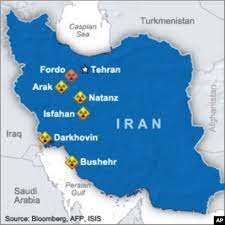
Any Israeli response to Iran’s missile barrage should be ‘proportional’, says the US president.
By Al Jazeera Staff, 2 Oct 2024 https://www.aljazeera.com/news/2024/10/2/biden-says-he-would-not-back-israeli-strike-on-irans-nuclear-sites
United States President Joe Biden has voiced opposition to any strikes on Iran’s nuclear sites in response to Tehran’s missile attack on Israel.
When asked by reporters on Wednesday whether he would back such retaliation, Biden stated “the answer is no”.
Biden’s comments come a day after Iran fired some 180 ballistic missiles at Israel, its second attack on the country since April. Iran’s most recent attacks on Israeli military sites have come in response to the assassination of key Iran-allied figures, including Hamas leader Ismail Haniyeh and Hezbollah leader Hassan Nasrallah.
Israel’s Prime Minister Benjamin Netanyahu vowed Iran would “pay” for the strike, which reportedly did not cause any serious casualties in Israel but killed one Palestinian in the occupied West Bank.
Analysts warned Israel may seize the chance to launch attacks on Iran’s nuclear facilities, a target its leaders have long eyed.
“The risk of an [Israeli] attack on the nuclear programme is particularly high because Iran’s defensive shield Hezbollah is on its knees,” Ali Vaez, the Iran Project director at the International Crisis Group think tank, told Al Jazeera.
“US forces are already in the region shielding Israel, and for Israel, this is potentially a once-in-a-generation opportunity to take care of a major threat that it has perceived from Iran over the past few decades,” he said.
Former Israeli Prime Minister Naftali Bennett explicitly called for such an attack in a post on X, saying Israel must “act now to destroy Iran’s nuclear program”.
“We have the justification. We have the tools”, Bennett said.
Biden calls for ‘proportional’ response
In the wake of Iran’s attack, Biden emphasised that the US is “fully supportive of Israel”.
Other US officials warned Iran would face “severe consequences”, with State Department spokesman Matthew Miller telling reporters he was not “ruling anything out”.
On Wednesday, after Biden spoke with allied leaders, he said he would not support an attack on Iran’s nuclear facility. Any Israeli response to Iran, he told reporters, should be “proportional”, a position shared by all nations part of the G7 grouping, including Canada, France, Germany, Italy, Japan and the United Kingdom.
The White House also said Biden and G7 leaders spoke about coordinating a new round of sanctions against Iran.
Whole Middle East at risk
Iranian President Masoud Pezeshkian said that the attack was warranted, but that Tehran did not seek war with Israel.
Iran’s armed forces warned that Israel would face “vast destruction” if it retaliated.
The escalation between two of the Middle East’s strongest militaries – while war continues to rage in Gaza and Lebanon – has stoked fears of an even broader conflict in the region.
“The idea of Iran and Israel going after each other under the auspices of the United States will burn everyone in the Middle East and beyond,” said Al Jazeera’s senior political analyst Marwan Bishara.
Israel may launch symbolic attack on Iran nuclear-related facilities, says Ehud Barak
Israeli former prime minister says in interview it is too late to significantly set back Tehran’s nuclear ambitions, and that a ‘massive’ attack on Iran’s oil facilities is likely.
Julian Borger, Fri 4 Oct 2024 , https://www.theguardian.com/world/2024/oct/04/israel-may-launch-symbolic-attack-on-iran-nuclear-facilities-says-ehud-barak
Israel is likely to mount a large-scale airstrike against Iran’s oil industry and possibly a symbolic attack on a military target related to its nuclear programme, former Israeli prime minister Ehud Barak has predicted.
Barak said there was no doubt there would be an Israeli military response to Iran’s assault on Tuesday with over 180 ballistic missiles, most of which were intercepted, but some landed on and around densely populated areas and Israeli military bases.
“Israel has a compelling need, even an imperative, to respond. I think that no sovereign nation on Earth could fail to respond,” Barak said in an interview.
The former prime minister, who also served as defence minister, foreign minister and army chief of staff, said the model for the Israeli response could be seen in Sunday’s reprisal airstrikes against Houthi-controlled oil facilities, power plants and docks in the Yemeni port of Hodeidah, a day after Houthi fired missiles aimed at Israel’s international airport outside Tel Aviv.
“I think we might see something like that. It might be a massive attack, and it could be repeated more than once,” he told the Guardian. Joe Biden said on Thursday there had been discussions in Washington about a possible Israeli attack on Iran’s oil sector, but it not give any details or make clear whether the US would support such an assault.
Barak, now aged 82, said there had also been suggestions in Israel that it should make use of this opportunity, in reprisal for the Iranian attack, to bomb Iran’s nuclear facilities, but he argued it would not significantly set back the Iranian programme.
When Barak served as defence minister from 2007 to 2013, under both Ehud Olmert and Benjamin Netanyahu, he was among Israel’s most vociferous advocates for bombing the Iranian nuclear facilities, trying and failing to convince presidents George Bush and then Barack Obama, to contribute US military might to the campaign.
On Wednesday, Biden followed Obama in voicing his opposition to any Israeli strikes against Iranian nuclear sites. And Barak himself now accepts the Iran nuclear programme is too far advanced for any bombing campaign to set it back significantly.
“There are some commentators and even some people within the defence establishment who raised the question: Why the hell not hit the nuclear military programme?” Barak said. “A little bit more than a decade ago, I was probably the most hawkish person in Israeli leadership arguing that it was worth considering very seriously, because there was an actual capability to delay them by several years.
“That’s not the case right now, because Iran is a de facto threshold country,” he argued. “They do not have yet a weapon – it may take them a year to have one, and even half a decade to have a small arsenal. Practically speaking, you cannot easily delay them in any significant manner.”
Under a 2015 multilateral nuclear agreement, Tehran accepted tight restrictions on its uranium enrichment and other elements of its programme in exchange for sanctions relief, but that agreement has steadily fallen apart since the US withdrawal under Donald Trump in 2018.
Iran now has a stockpile of enriched uranium that is 30 times higher than the agreed 2015 limit, and it is enriching uranium to up to 60% purity, which in terms of the additional processing required, is very close to 90% weapons grade fissile material. Under the 2015 agreement, Iran’s “breakout time” – the period it would need to produce a nuclear bomb – was at least a year. Now it is a few weeks.
Barak believes there is pressure within the Netanyahu government for at least some symbolic strike against the Iranian programme, even though the former prime minister sees such a gesture as futile.
“You can cause certain damage, but even this might be perceived by some of the planners as worth the risk because the alternative is to sit idly by and do nothing,” Barak said. “So probably there will be even an attempt to hit certain nuclear-related targets.”
While Barak believes that a significant Israeli military response to Tuesday night’s Iranian military attack is now unavoidable and justifiable, he argues the drift to a regional war could have been averted much earlier, if Netanyahu had been open to a US-promoted plan to rally Arab support for a postwar Palestinian government in Gaza to replace Hamas. Instead, Israel’s incumbent prime minister opposed any political “day after” solution that recognised Palestinian sovereignty.
“I think that a strong response is inevitable. That doesn’t mean it was written in heaven a year ago that it’s going to happen,” Barak said. “There were probably several opportunities to limit this conflict before it turned into something like a full-scale Middle East clash. For reasons that cannot be explained under any strategic thought, Netanyahu rejected any kind of discussion of what we call ‘the day after’.
“I do not put the blame for the whole event on Netanyahu. This is basically the fault of Hamas and Hezbollah and Iran behind them,” Barak said. “But having said that, we have a responsibility to take action under a certain innate logic that understands the situation, the opportunity, and the constraints. There is an old Roman saying: ‘If you don’t know which port you want to reach, no wind will take you there.
The guns of August killed 15 million…the missiles of October could kill 8 billion.
Walt Zlotow, West Suburban Peace Coalition, Glen Ellyn IL 2 Oct 24
There’s an eerie similarity to the blundering of nations that ignited the slaughter of WWI and the blundering of nations, led by America, which could lead to nuclear war 110 years later.
Two weeks ago President Biden blinked on authorizing the UK to use US technology to fire its Storm Shadow missiles deep into Russia. UK Prime Minister Keir Starmer came to the White House seeking US permission to allow its Ukraine proxies to fire those US guided Storm Shadows in a desperate, futile bid to stave off Ukraine’s inevitable defeat.
It may take time to get the full story why Biden blinked. Russia’s UN speech declaring such missile strikes risk putting the US at war with Russia set the tone. Likely, a backchannel communication between a high ranking Russian official to a US counterpart helped seal the sensible US rejection of Starmer’s crazed war provoking proposal.
President Biden has spent his entire term mishandling the issue of NATO membership for Ukraine and autonomy for Donbas Ukrainians into a horrific lost war that could still go nuclear. After provoking it, Biden led a joint US, UK effort to scuttle the Ukraine, Russia negotiated peace set to end it in the first month without Ukraine losing a square mile of territory. Thirty-one months later, Ukraine has lost 4 oblasts, about a fifth of its territory, without a prayer of regaining.
Biden’s biggest mistake was likely framing the war as a zero sum game whereby the US must achieve total victory ensuring Russia’s total defeat. That explains why Biden and his UK poodle, former Prime Minister Boris Johnson, demanded Ukraine President Zelensky reject the peace agreement about to end the war early on. Biden’s Ukraine destroying agenda could not allow any settlement short of unconditional Russian defeat and humiliation. All that accomplished was over half a million Ukrainian troops dead, millions displaced or fled Ukraine, a shattered economy, and Ukraine’s collapse now inevitable

To prevent that, Ukraine’s Zelensky and current UK Prime Minister Starmer continue badgering Biden to unleash the missiles of October. Some US officials, including Secretary of State Antony Blinken, have also been lobbying Biden to ignore the reddest of Russia’s red lines
That may still happen. In response, Russia has publicly notified America and NATO that it has revised its nuclear policy to specifically allow their use when attacked by a non-nuclear country that is backed by a nuclear country. Russia will consider such attacks as putting Russia at war with the supporting nuclear power.
Let’s fervently hope President Biden continues to heed reality. By not publicly ruling out long range missile strikes, he’s likely still considering authorizing them to stave off a Ukraine defeat before the election. Losing a war, however criminal and senseless to begin with, in not good election strategy.
Biden, Blinken, Starmer, Zelensky all need to be locked into a room for a seminar on the stumbling and bumbling by revered European rulers that unleashed WWI. Then they must toss out their zero sum game against Russia and negotiate a win-win end to a war just as senseless, that could eventually be infinitely more destructive than the War To End All Wars 110 years ago.
The Israeli Government Must Be Stopped
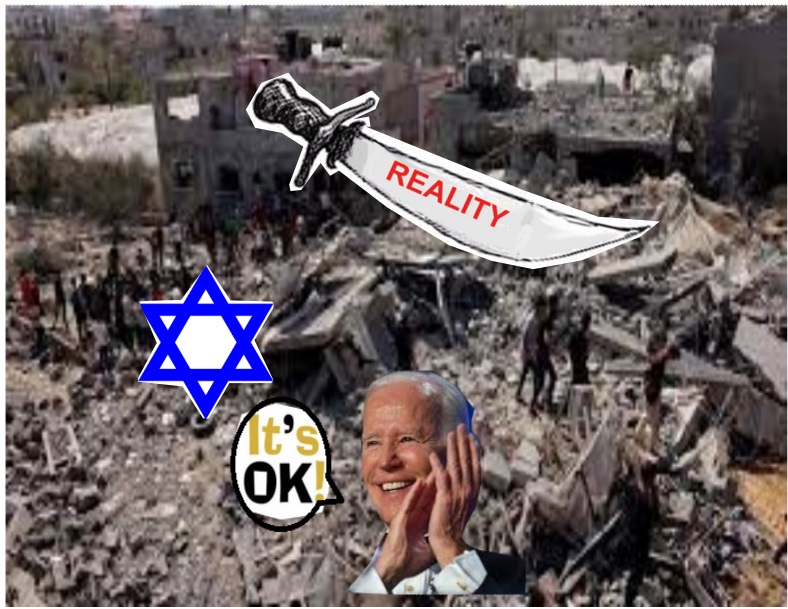
By David Swanson, World BEYOND War, October 1, 2024, https://worldbeyondwar.org/the-israeli-government-must-be-stopped/
David Swanson is Executive Director of World BEYOND War.
The Israeli government has been dragging Western weapons and militaries into wars for far too long, putting all of the world — and its global institutions — at risk. The move into Lebanon, creating more dead, injured, traumatized, and homeless already in huge numbers ought to snap some war supporters out of their trance.
The danger of a catastrophic war on Iran that is joined by the United States and NATO on one side, and additional nations on the other, looms horrifically on the horizon.
It is high time for the world’s governments, including that of Israel’s top supplier, the United States, to begin complying with the International Court of Justice, the United Nations General Assembly, and each of the treaties and domestic laws violated by each arms shipment.
While the UK and Canada have stopped some weapons, that is far from sufficient. While a handful of U.S. Senators anti-democratically plan a vote weeks from now after a U.S. election, on halting illegal arms shipments to Israel, that is far from sufficient, and yet more than we see in the U.S. House of so-called representatives.
Western governments have emboldened the Israeli government with weapons supplies for so long that Israel understands there are no limits. There is nothing it can do that anyone could reasonably expect the U.S. and allied governments not to support, not to protect with propaganda assistance, Security Council vetoes, and yet more instruments of mass killing. That has to change.
Public pressure in the West has prevented western governments from going to war with Iran for decades. But Israel is now expanding an existing war in an effort to create a wider war without any debate or decision. Western media is already using the passive language of “being dragged into” a war — as if no decision need be made at all. This could not be more dangerous, more dishonest, more opposed to the supposed ideal of democracy.
The good people who have raised their voices and taken nonviolent action against the genocide in Gaza for a year and more, and those who have been silent, must all rise up together now and declare that nothing permits wider war, nothing justifies these outrages, no election season puts a pause on our moral duty to protect all life.
Sullivan: US Will Ensure Iran Faces ‘Severe Consequences’ for Attacking Israel

October 2, 2024 , By Dave DeCamp / Antiwar.com
US National Security Advisor Jake Sullivan said on Tuesday that the US would work with Israel to ensure Iran faces “severe consequences” for launching a missile attack on Israel, which came in response to recent Israeli escalations.
“There will be severe consequences for this attack, and we will work with Israel to make that the case,” Sullivan told reporters at the White House.
President Biden said the US was in “active discussions” with Israel on what the response would be. “The United States is fully, fully, fully supportive of Israel,” he said.
Media reports say Iran fired at least 180 missiles at Israel. Iran’s Islamic Revolutionary Guard Corps (IRGC) said the attack was launched in retaliation for the Israeli assassination of Hamas political chief Ismail Haniyeh in Tehran, the killing of Hezbollah Secretary-General Hassan Nasrallah, and Abbas Nilforoushan, an IRGC commander who was killed alongside Nasrallah.
The IRCG has claimed that 90% of the missiles hit their targets, while Israel claimed most were intercepted. Videos have surfaced that show Iranian missiles making an impact on Israeli military sites. So far, there’s been no word on Israeli deaths, but a Palestinian in the Israeli-occupied West Bank was killed when shrapnel from an intercepted missile fell on Jericho.
The US said that it helped Israel intercept some of the Iranian missiles and portrayed the defense as a success. Sullivan said the Iranian attack “appears to have been defeated and ineffective.”
…………………………………………Iran has signaled that it’s done attacking Israel but warned there would be a “crushing response” if Israel hits back. Israeli officials have made clear that they plan to respond.
“There will be consequences,” said Israeli military spokesman Daniel Hagari. “Our defensive and offensive capabilities are at the highest levels of readiness. Our operational plans are ready. We will respond wherever, whenever, and however we choose, in accordance with the directive of the government of Israel.”
Israeli Prime Minister Benjamin Netanyahu said Iran will “pay” for the attack. “This evening, Iran made a big mistake — and it will pay for it,” he said at a security cabinet meeting. “The regime in Tehran does not understand our determination to defend ourselves and to exact a price from our enemies.” https://scheerpost.com/2024/10/02/sullivan-us-will-ensure-iran-faces-severe-consequences-for-attacking-israel/
Russia revisits nuclear doctrine to allow attacks on non-nuclear states in response to Western weapons in Ukraine.
By Heloise Vyas, https://www.abc.net.au/news/2024-09-26/russia-revises-nuclear-weapons-laws-warning-united-states/104398414
In short:
Vladimir Putin has unveiled changes to conditions surrounding Russia’s use of nuclear weapons which he says will be put into effect if there was “reliable information” about a large-scale enemy attack.
The updated doctrine includes a widening of the threats under which Russia would consider a nuclear strike, including retaliating against conventional weapons.
What’s next?
Russia’s warning to the West comes amid deliberations on Ukraine’s use of Western long-range missiles. The US has not directly responded to the threat.
Russian President Vladimir Putin has broadened the remit of his nuclear doctrine to fend off Western-supported attacks in the Ukraine war, threatening to use nuclear weapons against non-nuclear-armed nations even if not attacked by them.
During a meeting with Russia’s Security Council on Wednesday, local time, he outlined three key changes to the Kremlin’s official nuclear doctrine — signed in 2020 — as a response to ongoing deliberations in the United States and Britain about permitting Ukraine to fire long-range missiles into Russian territory.
Mr Putin said under the lowered threshold, Russia could deploy nuclear bombs even if it was struck with conventional weapons, and that Moscow would consider any assault on it supported by a nuclear power to be a “joint attack”.
Russia reserved the right to also use nuclear weapons if it or ally Belarus were the subject of aggression, including by conventional weapons, he added.
The 71-year-old, who is the primary decision-maker on Russia’s vast nuclear arsenal, said he wanted to underscore one key change in particular.
“It is proposed that aggression against Russia by any non-nuclear state, but with the participation or support of a nuclear state, be considered as their joint attack on the Russian Federation,” Mr Putin said in his opening remarks to the council.
He said the new rules would be effectuated if Russia detected a large-scale launch of enemy missiles, aircraft or drones was coming its way: “The conditions for Russia’s transition to the use of nuclear weapons are also clearly fixed.”
Mr Putin said the clarifications were carefully calibrated and commensurate with the modern military threats facing Russia — confirmation that the nuclear doctrine was changing.
The implications
Russia’s warning to the West comes amid Ukrainian pleas to fire long-range weapons (many already in its possession) into Russia, including British Storm Shadows and American ATACMS ballistic missiles.
Ukrainian President Volodymyr Zelenskyy argues these will help hit vital military depots with precision, but the US has trodden carefully, fearing such a move would escalate the war and pit NATO in direct conflict with Russia.
Russia has previously provoked war with NATO, accusing the US and European nations of de facto participation in the conflict, but has not come as far as spelling out changes to the use of its nuclear arsenal. Earlier this month it said it was considering updating the doctrine.
With Ukraine losing key towns to gradually advancing Russian forces in the country’s east, the war is entering what Russian officials say is the most dangerous phase to date.
Western aid for Kyiv has remained steady, with the US pledging a further $375 million in aid on Thursday, although it is unclear what bearing Mr Putin’s nuclear threat will have on considerations of long-range weapon restrictions.
Many view Russia brandishing its nuclear sabre as little more than a bluff, but some analysts say it is “because of and not in spite of” the fact that Moscow has repeatedly held its nuclear arsenals over Western heads that leaders should take these threats seriously.
Russia’s current published nuclear doctrine, set out in a 2020 decree by Mr Putin, says it may use nuclear weapons in case of a nuclear attack by an enemy or a conventional attack that threatens the existence of the state.
The innovations outlined include a widening of the threats under which Russia would consider a nuclear strike, the inclusion of ally Belarus under the nuclear umbrella, and the idea that a rival nuclear power supporting a conventional strike on Russia would also be considered to be attacking it.
Nuclear-armed states that could be drawn into this include France, the United Kingdom, Israel and most crucially the US, which along with Russia controls 90 per cent of the world’s nuclear warheads.
China, Pakistan, India, and North Korea possess the remainder, but neither has actively been involved in the Ukraine war. A further 32 states also either host nuclear weapons or endorse their use.
Ukraine is neither a nuclear state, nor a part of NATO, but is backed by the alliance.
How has Russia’s threat been received?
Mr Zelenskyy has urged the West to disregard Russia’s so-called “red lines”, and some Western allies have also urged the US to do just that.
“Russia no longer has any instruments to intimidate the world apart from nuclear blackmail,” Andrey Yermak, Mr Zelenskyy’s chief of staff, said in response to the Russian president’s Wednesday remarks.
“These instruments will not work.”
Mr Putin, who casts the West as a decadent aggressor, and US President Joe Biden, who casts Russia as a corrupt autocracy and Mr Putin as a killer, have both warned that a direct Russia-NATO confrontation could escalate into World War III. Republican presidential candidate Donald Trump has also warned of the risk of nuclear war.
In his comments to Russia’s Security Council, a type of modern-day politburo of Mr Putin’s most powerful officials including influential hawks, he said work on amendments to changing the doctrine had been going on for the past year.
“The nuclear triad remains the most important guarantee of ensuring the security of our state and citizens, an instrument for maintaining strategic parity and balance of power in the world,” he said.
Russia, he said, would consider using nuclear weapons “upon receiving reliable information about the massive launch of aerospace attack vehicles and their crossing of our state border, meaning strategic or tactical aircraft, cruise missiles, drones, hypersonic and other aircraft”.
No explicit laws restraining nuclear weapons use
Casualties from a nuclear war between Russia and the US could reach tens of millions, with even a single bomb having the capacity to wipe out about 580,000 people, according to estimates from the International Campaign to Abolish Nuclear Weapons.
US-Russian arms control agreements also classify “tactical” nuclear weapons, which are presented as having smaller yield, and are intended for battlefield use as opposed to strategic weapons fired across vast distances.
But even these smaller warheads are hugely destructive and comparable in strength with the two atomic bombs dropped by the US in Japan during World War Two which killed about 210,000 people.
In 2022, Washington was so concerned about the possible use of tactical nuclear weapons by Russia that it warned Mr Putin about the consequences of using them, according to Central Intelligence Agency director Bill Burns.
The two-and-a-half-year Ukraine war has triggered the gravest confrontation between Russia and the West since the 1962 Cuban Missile Crisis — considered to be the closest the two Cold War superpowers came to intentional nuclear war.
Internationally, little power exists to prevent nuclear powers invoking the use of their arsenals.
The UN’s Treaty on the Prohibition of Nuclear Weapons does formally push for nuclear disarmament and outlaws the development, testing, production, acquisition, possession and stockpiling of nuclear weapons but neither Russia nor the US is a part of it.
The Netherlands is also the only NATO member participating in the treaty.
Netanyahu: Israel Is Fighting a War on Seven Fronts
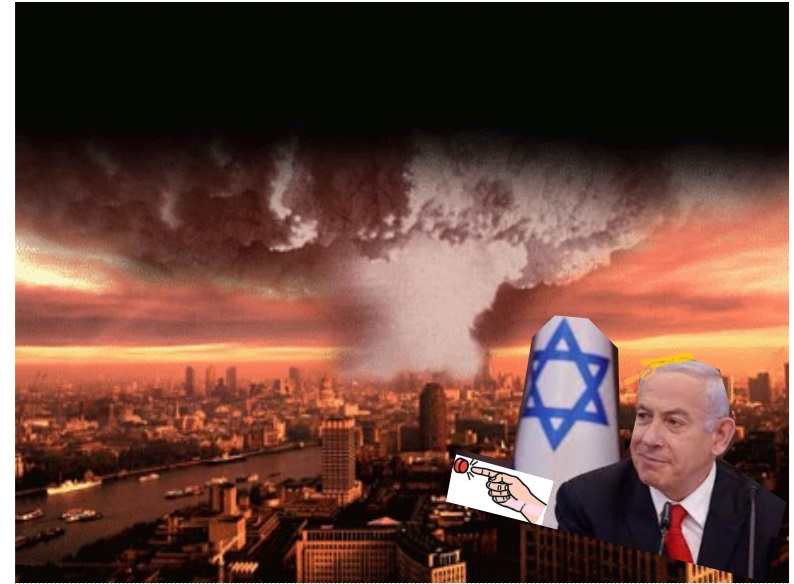
The Israeli leader called the UN General Assembly a ‘Swamp of Antisemitic Bile’
by Kyle Anzalone September 27, 2024, https://news.antiwar.com/2024/09/27/netanyahu-israel-is-fighting-a-war-on-seven-fronts/#gsc.tab=0
Israeli Prime Minister Benjamin Netanyahu slammed the UN during his remarks at the 79th General Assembly summit on Friday. He called the body a swamp of antisemitism while saying Israel needed to defend itself on seven fronts.
The Israeli leader’s speech was contentious. Before Netanyahu took to the podium, Pakistani Prime Minister Muhammad Shehbaz Sharif blasted Israel for waging a genocide in Gaza and creating a war with Lebanon. As Netanyahu began his address, a large portion of the UN General Assembly body walked out.
During his remarks, Netanyahu referred to the UN General Assembly as a “swamp of antisemitic bile.” He went on to slam the International Criminal Court (ICC) for considering charging him with war crimes, adding the true war criminals are in Iran and its allied nations.
During his address, Netanyahu presented two maps, one titled “the blessing” and the other “the curse.” The Israeli leader said Tel Aviv is still seeking a normalization agreement with Saudi Arabia. He claimed that if Riyadh established official ties with Israel, the world would receive a “blessing,” but Iran represented a “curse” to the region.
The Israeli leader explained “the blessing” was establishing a “landbridge” from India to Israel. The blessing requires Saudi Arabia to enter the Abraham Accords and normalize ties with Israel. Netanyahu claimed that would have happened, but the October 7 Hamas attack prevented the deal.
In the map titled “the curse,” five countries were represented in black: Iran, Iraq, Syria, Yemen and Lebanon. The Israeli leader claimed that Tehran was working to eliminate Tel Aviv using its allies in the region. Netanyahu presented the conflict as a battle between forces of civilization against barbarism.
When discussing Gaza, Netanyahu said “Hamas must go.” He added that any end to the war that would see Hamas remain in power in Gaza is equivalent to allowing the Nazis to rebuild Germany after World War II.
As with Hamas, Netanyahu also said Israel would continue to wage war against Hezbollah until all its objectives were met. Over the past week, Tel Aviv has significantly ramped up its military operations in southern Lebanon, killing over 700 in the past week.
Kyle Anzalone is the opinion editor of Antiwar.com, news editor of the Libertarian Institute, and co-host of Conflicts of Interest.
Governments urged to ‘stop gambling with humanity’s future’ and eliminate nuclear weapons
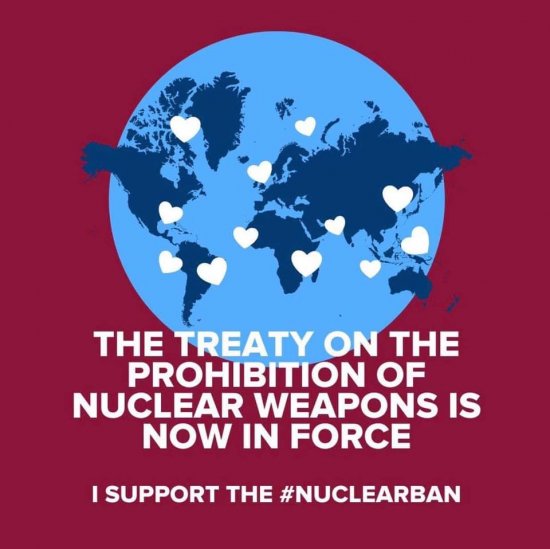
26 September 2024
World leaders, senior government officials and civil society representatives joined forces at UN Headquarters on Thursday to reaffirm commitment to nuclear disarmament as a global priority.
The High-Level Meeting was held to commemorate the International Day for the Total Elimination of Nuclear Weapons, observed annually on 26 September.
“There should be no place for these devices of death in our world,” said UN Secretary-General António Guterres.
Nuclear ‘spectre’ looming
He warned, however, that “not since the worst days of the Cold War has the spectre of nuclear weapons cast such a dark shadow.”
He said that “nuclear sabre-rattling has reached a fever pitch” and there have been threats to use a nuclear weapon, highlighting fears of a new arms race.
Meanwhile, decades-old norms established against the use, spread and testing of nuclear weapons are being eroded.
Learn from the past
Mr. Guterres said the first-hand experience of the hibakusha – the survivors of the atomic bombing of the Japanese cities of Hiroshima and Nagasaki in 1945 – “stand as clear reminders of where the nuclear path ends”.
“And yet, nearly 80 years later, nuclear-weapon States continue to roll the dice, resisting disarmament measures and believing that, somehow, our luck will never run out,” he said.
Stop gambling with our future
He appealed for these countries to “stop gambling with humanity’s future”, starting with honouring their commitments and meeting their disarmament obligations.
“Until nuclear weapons are eliminated, these States should commit to never use them under any circumstances. And they must demonstrate the utmost transparency in all matters related to nuclear weapons,” he said.
Appeal to Russia and USA
The Secretary-General also called on Russia and the United States “to return to the process of nuclear arms reductions, with other nuclear-weapon States following in due course.”
As “disarmament and non-proliferation are two sides of the same coin,” countries must pursue both as a matter of urgency, he added.
He recalled that the recently concluded Summit of the Future resulted in new international commitment to revitalize the global disarmament regime and to bring the world closer to the goal of total elimination of nuclear weapons, which the vast majority of UN Member States support.
“The time has come to take steps to ensure that a nuclear weapon is never used again,” he said.
‘Nuclear catastrophe’ risk mounting: General Assembly President
UN General Assembly President Philémon Yang lamented the current era of heightened nuclear risks.
“We are also observing a growing nexus between nuclear weapons and domains such as outer and cyber space, and technologies such as artificial intelligence, which are multiplying the danger of a nuclear catastrophe,” he said. ……………………………………………………………………..
Warnings going unheard: Marshall Islands President
The President of the Marshall Islands, Heidi Heine, spoke about her country’s experience, history and current challenges with nuclear exposure. ………………………………………………………………
Non-Aligned Movement demands urgent action
Ugandan Foreign Minister Jeje Odongo Abubakhar spoke on behalf of the Non-Aligned Movement (NAM), which has its roots in the Cold War era.
NAM’s 121 members remain deeply concerned over the slow progress towards nuclear disarmament and the failure of nuclear weapons holders to eliminate their arsenals.
“We reaffirm the need for the nuclear-weapon States, which bear the primary responsibility for nuclear disarmament, to take urgent and concrete actions aimed at achieving this goal,” he said.
Nuclear weapons have ‘no constructive value’: Libya
The Acting Foreign Minister of Libya, Eltaher Salem Elbaour, reminded participants that his country decided to relinquish its nuclear weapons programme in 2003.
Implement existing commitments: US official ………………………………………….more https://news.un.org/en/story/2024/09/1154951
Lawmakers to Investigate Faulty Sub, Carrier Welding at Newport News Shipbuilding

USNI News, Sam LaGrone, September 27, 2024
THE PENTAGON – The House Armed Services Committee is investigating substandard welding on submarines and aircraft carriers at Newport News Shipbuilding, the committee announced on Friday.
Following a Thursday report in USNI News, lawmakers are now looking into how shipbuilders at the Virginia yard had violated proper welding procedures on work that made it into current in-service submarines. The flawed work was found by quality assurance teams at Newport News Shipbuilding, which has led to a wider investigation into welding quality that’s prompted a notification to the Department of Justice, USNI News reported.
“It is deeply concerning to learn that faulty welds may have been knowingly made to U.S. Navy submarines and aircraft carriers. The House Armed Services Committee is investigating how this occurred. The safety of our sailors is our top concern, and we need to immediately understand any risks associated with the faulty work,” reads the statement from HASC chair Rep Mike Rogers (R-Ala.), ranking member Rep Adam Smith (D-Wash.) and House Armed Services seapower and projection forces subcommittee leaders Rep. Trent Kelly (R-Miss.) and Rep. Joe Courtney (D-Conn.).
“The Department of Defense needs to immediately provide our committee with answers and a plan for how they will protect U.S. Navy vessels against tampering. Absolute transparency with Congress is essential.”
The Congressional query comes as the Navy and shipbuilder HII are gauging the scope of the ships that were affected overall. The number of in-service Virginia-class submarines that have been affected are in the “low single digits” and an ongoing analysis of under-construction Virginia, Columbia-class submarines and Ford-class aircraft carriers could stretch into October, a defense official told USNI News on Friday.
Earlier this year, quality assurance teams at Newport News discovered the sub-standard welds and reported the violations in procedure to both the Navy and the Department of Justice, according to a Friday statement on LinkedIn by Newport News president Jennifer Boykin.
“We recently discovered that the quality of certain welds on submarines and aircraft carriers under construction here at NNS do not meet our high-quality standards. Most concerning is that some of the welds in question were made by welders who knowingly violated weld procedures.” she wrote.
“We immediately put together a team made up of both internal and independent engineering and quality subject matter experts to determine the root causes, bound the issue and put in place immediate short-term corrective actions as we work through longer-term solutions.”
Boykin went on to say HII notified both the Navy and the Department of Justice on the sub-standard work………………………………………………………………………………………….
Neither HII nor the Navy have said when the initial faulty work was discovered.
While the assessment of the overall welds on the ships under construction could extend into next month, the Navy and HII now have the tedious task of reinspecting the welds and determining solutions.
Twice in the 2000s, the Navy mounted separate investigations into suspicious welds into then Northrop Grumman-managed Newport News Shipbuilding. In 2007, the Navy found welders used the wrong filler material in non-nuclear pipping on Virginia submarines. In 2009, the Navy had to reinspect the welds on nine submarines and four aircraft carriers after a shipyard inspector admitted to falsifying inspection reports, according to The Virginian Pilot.
The inspections can involve analyzing welds that are difficult to reach throughout a submarine or aircraft carrier. The subsequent weld checks after the 2009 investigation took years, USNI News understands. https://news.usni.org/2024/09/27/lawmakers-announce-investigation-into-faulty-submarine-carrier-welding-at-newport-news-shipbuilding-ships-affected-in-low-single-digits-officials-say
New NATO member Finland to place command center near Russian border
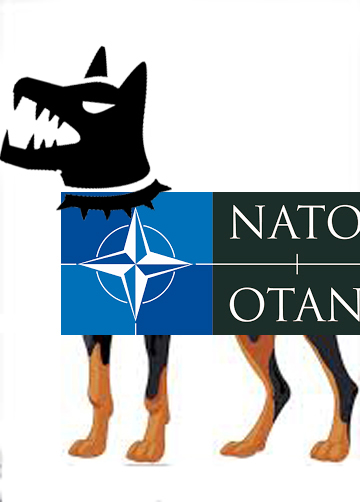
https://www.rt.com/news/604782-finland-new-nato-command/ 30 Sept 24
Finland will host the bloc’s HQ for Northern Europe in Mikkeli, less than 200km from the frontier.
Finland will host a new NATO command base responsible for operations in Northern Europe in the city of Mikkeli, less than 200km from the Russian border, Helsinki announced on Friday.
Finland formally joined the US-led military bloc along with Sweden following the escalation of the Ukraine conflict in 2022. Moscow has argued that the two nations compromised their own security by becoming part of what it perceives as a hostile organization that serves US geopolitical interests, while sacrificing their credibility as possible neutral mediators.
The new Multi Corps Land Component Command (MCLCC) will be under the authority of NATO’s Joint Force Command (JFC) in Norfolk, Virginia. Initially, it will comprise only a few dozen service members, Defense Minister Antti Hakkanen told journalists.
“NATO recognizes Finland’s expertise and trusts our ability to contribute to the defense of the northern region,” he said.
The bloc approved the creation of the new command center during its leaders’ summit in July. Helsinki allocated some €8.5 million ($9.5 million) in 2024 for the creation of the MCLCC.
The commander of the Finnish Defense Forces, General Janne Jaakkola, has said that placing the new NATO structure in close proximity to the headquarters of the Finnish Army “fosters cooperation between the national and the Allies’ forces, creating obvious synergy benefits.”
Hakkanen, also said he would soon announce where a new multinational force that Finland intends to host will be based. According to the state broadcaster Yle, Helsinki will choose between Rovaniemi and Sodankyla. The former is the capital of the northern region of Finnish Lapland, while the latter is a municipality located in the same province but closer to the Russian border.
NATO intensified its military buildup in Europe in 2014, following the US-backed armed coup in Kiev, claiming that it was preparing to respond to possible Russian aggression. The military bloc has significantly expanded its presence in Europe, breaking assurances given to Moscow to secure Russia’s support for the reunification of Germany in 1990.
In the Woomera Manual, International Law Meets Military Space Activities

by David A. Koplow, September 12, 2024, https://www.justsecurity.org/100043/woomera-manual-international-law-military-space/
The law of outer space, like so much else about the exoatmospheric realm, is under stress. The prodigious growth in private-sector space activities (exemplified by SpaceX’s proliferating Starlink constellation, and other corporations following only shortly behind) is matched by an ominous surge in military space activities – most vividly, the creation of the U.S. Space Force and counterpart combat entities in rival States, the threat of Russia placing a nuclear weapon in orbit, and China and others continuing to experiment with anti-satellite weapons and potential techniques. The world is on the precipice of several new types of space races, as countries and companies bid for first-mover advantages in the highest of high ground.
The law of outer space, in contrast, is old, incomplete, and untested. A family of foundational treaties dating to the 1960s and 1970s retains vitality, but provides only partial guidance. Space is decidedly not a “law-free zone,” but many of the necessary guard rails are obscure, and few analysts or operators have ventured into this sector.
A new treatise, the Woomera Manual on the International Law of Military Space Activities and Operations, has just been published by Oxford University Press to provide the first comprehensive, detailed analysis of the existing legal regime of space. As one of the editors of the Manual, I can testify to the long, winding, and arduous – but fascinating – journey to produce it, and the hope that it will provide much-needed clarity and precision about this fast-moving legal domain.
Military Manuals
This Manual follows a grand tradition of prior efforts to articulate the applicable international military law in contested realms, including the 1994 San Remo Manual on Naval Warfare, Harvard’s 2013 Humanitarian Policy and Conflict Research Manual on Air and Missile Warfare, and the 2013 and 2017 Tallinn Manuals on Cyber Operations. The Woomera Manual was produced by a diverse team of legal and technical experts drawn from academia, practice, government, and other sectors in several countries (all acting in their personal capacities, not as representatives of their home governments or organizations). The process consumed six years (slowed considerably by the Covid-19 pandemic, which arrested the sequence of face-to-face drafting sessions).
The Manual is co-sponsored by four universities, among other participants: the University of Nebraska College of Law (home of Professor Jack Beard, the editor-in-chief), the University of Adelaide (with Professor Dale Stephens on the editorial board), the University of New South Wales—Canberra, and the University of Exeter (U.K.) The name “Woomera” was chosen in recognition of the small town of Woomera, South Australia, which was the site of the country’s first space missions, and in acknowledgement of the Aboriginal word for a remarkable spear-throwing device that enables greater accuracy and distance.
Comprehensive Coverage of a Broad Field
Three features of the Woomera Manual stand out. The first is the comprehensive nature of the undertaking. The Manual presents 48 rules, spanning the three critical time frames: ordinary peace time, periods of tension and crisis, and during an armed conflict. There may be a natural tendency to focus on that last frame, given the high stakes and the inherent drama of warfare, but the editors were keen to address the full spectrum, devoting due attention and analysis to the background rules that apply both to quotidian military space activities and to everyone else in space.
Complicating the legal analysis is the fragmentation of the international legal regime. In addition to “general” international law – which article III of the Outer Space Treaty declares is fully applicable in space – two “special” areas of law are implicated here. One, the law of armed conflict (also known as international humanitarian law) provides particularized jus in bello rules applicable between States engaged in war, including wars that begin in, or extend to, space. But the law of outer space is also recognized as another lex specialis, and it accordingly provides unique rules that supersede at least some aspects of the general international law regime. What should be done when two “special” areas of international law overlap and provide incompatible rules? The Woomera Manual is the first comprehensive effort to unravel that riddle.
The Law as It Is
A second defining characteristic of this Manual is the persistent, rigid focus on lex lata, the law as it currently is, rather than lex ferenda, the law as it may (or should) become. The authors, of course, each have their own policy preferences, and in their other works they freely opine about how the international space law regime should evolve (or be abruptly changed) to accommodate modern dangers and opportunities. But in this Manual, they have focused exclusively on describing the current legal structure, concentrating on treaties, customary international law, and other indicia of State practice. This is not the sort of manual in which the assembled experts “vote” on their competing concepts of the legal regime; instead, Woomera addresses what States (the sources and subjects of international law) say, do, and write. The authors have assembled a monumental library of State behaviors (including words as well as deeds, and silences as well as public pronouncements), while recognizing that diplomacy (and national security classification restrictions) often impede States explaining exactly why they did, or did not, act in a particular way in response to some other State’s provocations.
One feature that enormously facilitated the work on the Manual was a phase of “State engagement.” In early 2022, the Ministries of Foreign Affairs and Defense of the government of the Netherlands circulated a preliminary draft of the Woomera Manual to interested national governments and invited them to a June 2022 conference in The Hague to discuss it. Remarkably, two dozen of the States most active in space attended, providing two days of sustained, thoughtful, constructive commentary. The States were not asked to “approve” the document, but their input was enormously valuable (and resulted in an additional several months of painstaking work in finalizing the manuscript, as the editors scrambled to take into account the States’ voluminous comments and the new information they provided).
Space as a Dynamic Domain
Third, a manual on space law must acknowledge the rapidly-changing nature and scope of human activities in this environment, and the great likelihood that even more dramatic alterations are likely in the future. Existing patterns of behavior may alter abruptly, as new technologies and new economic opportunities emerge. The Manual attempts to peer into the future, addressing plausible scenarios that might foreseeably arise, but it resists the temptation to play with far-distant “Star Wars” fantasies.
The unfortunate reality here is that although the early years of the Space Age were remarkably productive for space law, the process stultified shortly thereafter. Within only a decade after Sputnik’s first orbit, the world had negotiated and put into place the 1967 Outer Space Treaty, which still provides the cardinal principles guiding space operations today. And within only another decade, three additional widely-accepted treaties were crafted: the 1968 astronaut Rescue Agreement, the 1971 Liability Convention, and the 1975 Registration Convention, as well as the 1979 Moon Convention (which has not attracted nearly the same level of global support and participation). But the articulation of additional necessary increments of international space law has been constipated since then – no new multilateral space-specific treaties have been implemented in the past four decades, and none is on the horizon today.
Sources and Shortcomings of International Space Law
The corpus of international space law is not obsolete, but it is under-developed. We have the essential principles and some of the specific corollaries, but we are lacking the detailed infrastructure that would completely flesh out all those general principles. Some important guidance may, however, be found in State practice, including the understudied negotiating history of the framework treaties for space law, particularly the Outer Space Treaty. The Manual provides important insights in this area, notably with respect to several ambiguous terms embedded in the treaties.
The authors of the Woomera Manual, therefore, were able to start their legal analysis with the framework treaties – unlike, for example, the authors of the Tallinn Manuals, covering international law applicable to cyber warfare, who had to begin without such a structured starting point. Still, the Woomera analysis confronted numerous lacunae, where the existing law and practice leave puzzling gaps. The persistent failure of the usual law-making institutions to craft additional increments of space arms control is all the more alarming as the United States, NATO, and others have declared space to be an operational or war-fighting domain.
Conclusion
It is hoped that the process of articulating the existing rules – and identifying the interstices between them – can provide useful day-to-day guidance for space law practitioners in government, academia, non-governmental organizations, the private sector, and elsewhere. The prospect of arms races and armed conflict in space unfortunately appears to be growing, and clarity about the prevailing rules has never been more important. It is a fascinating, dynamic, and fraught field.
Cardinal Parolin: ‘World threatened by irreversible nuclear destruction’
The Vatican Secretary of State reiterates the moral imperative of the total elimination of nuclear weapons and reaffirms the Holy See’s condemnation of the use or threat of use of such weapons.
By Lisa Zengarini, https://www.vaticannews.va/en/vatican-city/news/2024-09/parolin-world-threatened-by-irreversible-nuclear-destruction.html
“The only way to avoid a nuclear war is the total elimination of nuclear weapons.” Cardinal Pietro Parolin strongly reaffirmed this point in a statement he addressed on 26 September at a High-Level UN Meeting in New York commemorating the International Day for the Total Elimination of Nuclear Weapons.
Wars and arms race dangerously increasing risk of nuclear conflict
The Vatican Secretary of State grounded his speech on the current state of global affairs and the relentless arms race which is dramatically increasing the risk of nuclear conflict. He, again, decried that States are strengthening their nucleararsenals with resources that, as Pope Francis has emphasized several times, “could be more effectively used to address pressing development needs.”
This trend he said “underscores a troubling reliance by nuclear-weapons States on nuclear deterrence, rather than on fulfilling their obligation under Article VI of the Nuclear Non-Proliferation Treaty (NPT).”
Nuclear deterrence does’t work
Echoing Pope Francis’ tireless appeals on this crucial issue, Cardinal Parolin insisted on the need to “go beyond nuclear deterrence” thus reiterating the Holy See’s call on all States to accede to the Treaty on the Prohibition of Nuclear Weapons (TPNW).
States, he added, must also renew their commitment to other disarmament measures, such as the revitalization of bilateral arms control processes, the entry into force of the Comprehensive Nuclear Test Ban Treaty (CTBT) and the opening of negotiations on fissile material and negative security assurance treaties.
Holy See committed to building bridges of trust to free world from nuclear weapons
Concluding, Cardinal Parolin reaffirmed that the goal of a world free of nuclear weapons can only be achieved through discussions based on mutual trust. For its part, he said, the Holy See will continue to build bridges of dialogue with every State, “with the aim of safeguarding the common good rather than individual interests.”
1 This Month

of the week – Shut Down Drone Warfare!


Tell the Ukrainian Government to Drop Prosecution of Peace Activist Yurii Sheliazhenko

Petition to revoke the licensing of the Near Surface Nuclear Disposal Facility (NSDF) at Chalk River. https://www.ourcommons.ca/petitions/en/Petition/Details?Petition=e-7247
To see nuclear-related stories in greater depth and intensity – go to https://nuclearinformation.wordpress.com
-
Archives
- April 2026 (79)
- March 2026 (251)
- February 2026 (268)
- January 2026 (308)
- December 2025 (358)
- November 2025 (359)
- October 2025 (376)
- September 2025 (257)
- August 2025 (319)
- July 2025 (230)
- June 2025 (348)
- May 2025 (261)
-
Categories
- 1
- 1 NUCLEAR ISSUES
- business and costs
- climate change
- culture and arts
- ENERGY
- environment
- health
- history
- indigenous issues
- Legal
- marketing of nuclear
- media
- opposition to nuclear
- PERSONAL STORIES
- politics
- politics international
- Religion and ethics
- safety
- secrets,lies and civil liberties
- spinbuster
- technology
- Uranium
- wastes
- weapons and war
- Women
- 2 WORLD
- ACTION
- AFRICA
- Atrocities
- AUSTRALIA
- Christina's notes
- Christina's themes
- culture and arts
- Events
- Fuk 2022
- Fuk 2023
- Fukushima 2017
- Fukushima 2018
- fukushima 2019
- Fukushima 2020
- Fukushima 2021
- general
- global warming
- Humour (God we need it)
- Nuclear
- RARE EARTHS
- Reference
- resources – print
- Resources -audiovicual
- Weekly Newsletter
- World
- World Nuclear
- YouTube
-
RSS
Entries RSS
Comments RSS
 nuclear-news