Outgoing CIA director says ‘no sign’ Iran developing nuclear weapons
William Burns stated that the Islamic Republic made a decision in 2003 not to pursure nuclear weapons and has not changed its policy
The Cradle, News Desk, JAN 12, 2025
Outgoing CIA director William Burns stated in an interview on 10 January that Iran does not have a nuclear weapons program, following a decision it made in 2003, and that the US is concerned about the revival of ISIS.
In an interview with state broadcaster National Public Radio (NPR) to discuss his time as director of the notorious spy agency under President Joe Biden, Burns was asked whether Iran may accelerate its efforts to obtain nuclear weapons given the setbacks the Islamic Republic and its allies in the regional Axis of Resistance have sustained over the past year.
Burns answered that “the Iranian regime could decide in the face of that weakness that it needs to restore its deterrence as it sees it and, you know, reverse the decision made at the end of 2003 (an oral fatwa issued by Supreme Leader Ali Khamenei) to suspend their weaponization program.”
However, Burns clarified, “We do not see any sign today that any such decision has been made, but we obviously watch it intently. “
He added that Iran’s weakness could instead lead to negotiations for a nuclear deal similar to the one signed by Iran and the United States under President Obama in 2014. President Trump later withdrew from the deal following intense lobbying by Israeli Prime Minister Benjamin Netanyahu.
“You know that that sense of weakness could also theoretically create a possibility for serious negotiations, too. And, you know, that’s something the new administration is going to have to sort through. I mean, it’s something I have a lot of experience in with the secret talks a decade ago, a little more than a decade ago with the Iranians. So, you know, that’s that’s also a possibility,” Burns stated.
Regarding the negotiations for a possible ceasefire and prisoner exchange between Israel and Hamas in Gaza, Burns said he believes there is a chance for an agreement.
“I think the gaps between the parties have narrowed. There’s an Israeli delegation in Doha right now working through proximity talks managed by the Qataris, with the support of the Egyptians and with our support. So, I think there’s a chance.”……………………………………………………. https://thecradle.co/articles/outgoing-cia-director-says-no-sign-iran-developing-nuclear-weapons
How to dismantle the deadly arms trade
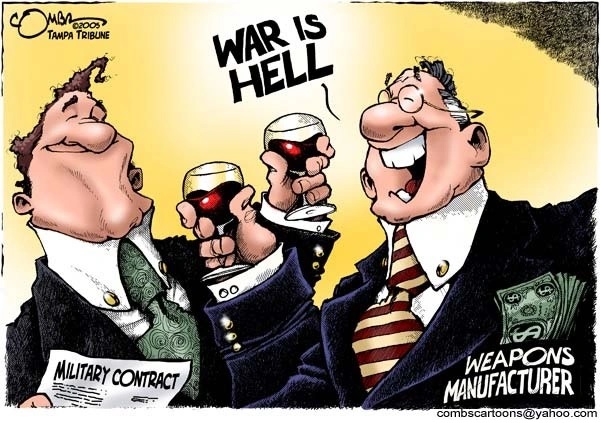
The devastating human impact of the arms industry is clear, but war is good news for industry shareholders. The market value of military equipment manufacturers in the US and Europe increased by nearly 60 per cent between February 2022 and March 2024, thanks to the wars in Ukraine and Palestine.
Activists forced Canadian Bank of Nova Scotia to halve its stake in Elbit Systems, Israel’s biggest arms company. In October 2024, Elbit shut down its promotional booth at the Japan International Aerospace Exhibition in Tokyo after protests.
New Internationalist, Amy Hall, 6 Jan 25
People across the world are standing up to the power of the arms trade. Amy Hall explores its threat to life and democracy.
It’s a cold, bright morning on a narrow street in Brighton, on the south coast of England. Neighbours are peering through windows, or coming out onto the pavement, to see why around 15 protesters are standing outside the business premises at the end of the road with a banner declaring: ‘Genocide in Gaza made in Brighton’.
The answer is that the campaigners say they saw this company, London & Brighton Plating – which specializes in metal coating and plating used in a range of industries, including aerospace – delivering to L3Harris. The latter is one of the world’s biggest arms companies, and makes bomb release mechanisms for fighter jets used by Israel at its site on the outskirts of the city.
At least here in Brighton we have a strong protest movement,’ says Gummy Bear, one of the protesters. They point to the number of Palestinians who have been killed in Gaza. On 14 November 2024, the day of the protest, the death toll stood at well over 43,000. ‘We’re calling on supplier companies to divest from L3Harris and to stop working with them. We want L&B Plating to end their contract.’
Before they decided to form this picket, the Stop L3Harris group says it tried to contact L&B Plating in other ways but not had any response; they did not respond to New Internationalist’s request for comment either. The campaigners have drawn up a list of companies that they believe are working with L3Harris. While the group has held several protests and actions at the factory itself, it is also working along the supply chain to try and make it harder for L3Harris to stay open in their city.
The trading of arms and military equipment has always faced opposition, but since 7 October 2023, when Israel began its genocidal assault on Gaza, there has been an explosion of activism against the arms industry. In neighbourhoods across the world, people are taking action – from shutting down shipyards or destroying equipment, to encampments at universities and divestment campaigns.
The devastating human impact of the arms industry is clear, but war is good news for industry shareholders. The market value of military equipment manufacturers in the US and Europe increased by nearly 60 per cent between February 2022 and March 2024, thanks to the wars in Ukraine and Palestine.
But despite the might of the industry, many ordinary people around the world have been winning where they have acted against it. Activists forced Canadian Bank of Nova Scotia to halve its stake in Elbit Systems, Israel’s biggest arms company. In October 2024, Elbit shut down its promotional booth at the Japan International Aerospace Exhibition in Tokyo after protests. And in November, Palestine Action – a group which has been taking direct action against Elbit Systems since 2020 – announced that Hydrafeed, which had been supplying equipment to Elbit, had cut ties with the arms company ‘as a direct result’ of the group’s actions.
‘I’ve never see this level of activism against the arms trade,’ says Emily Apple of Campaign Against Arms Trade (CAAT).
People are not just taking action over Palestine. There has been a growing campaign against the United Arab Emirates (UAE) for its complicity in the war in Sudan, which has killed up to 150,000 people. In England, activists have protested outside Arsenal football club’s Emirates Stadium in north London, due to its sponsorship from the airline Emirates, which is owned by the UAE state. There have also been demonstrations in a number of cities calling on the British government to take action.
Some of the most inspiring solidarity has come from workers normally key to the arms trade’s operation. After Israel’s latest assault on Gaza began, Palestinian trade unions called for support from fellow workers – and many answered. In November 2024 dockers in the Moroccan port of Tangiers refused to load a ship belonging to the logistics company Maersk, after the vessel was found to have received a number of US military shipments bound for Israel. The month before, members of a Greek dock-workers’ union in Athens Pireaus port blocked the loading of a container of ammunition on its way for use in Gaza.
Nor is Palestine the only cause that provokes such practical solidarity. Since 2019 workers in Genoa, Italy have declared a ‘war against the war’ in Yemen, refusing to load ships with weapons or other military equipment that could be used to kill civilians.
A global industry
Another frontier of the movement is the legal system, as campaigning lawyers push governments to stop arming the violence of states such as Israel. Palestinian human rights organization Al-Haq and the Global Legal Action Network (GLAN) have been fighting the British state over its arms exports to Israel……………………………………………………………………………………….. more https://newint.org/arms/2025/how-dismantle-deadly-arms-trade?utm_source=ni-email-whatcounts%20&utm_medium=1%20NI%20Main%20List1%20-%20enews%20-%20International%20AND%20North%20America&utm_campaign=2025-01-10%20enews
Lancet Study: Gaza Health Ministry Undercounted Death Toll By 41%
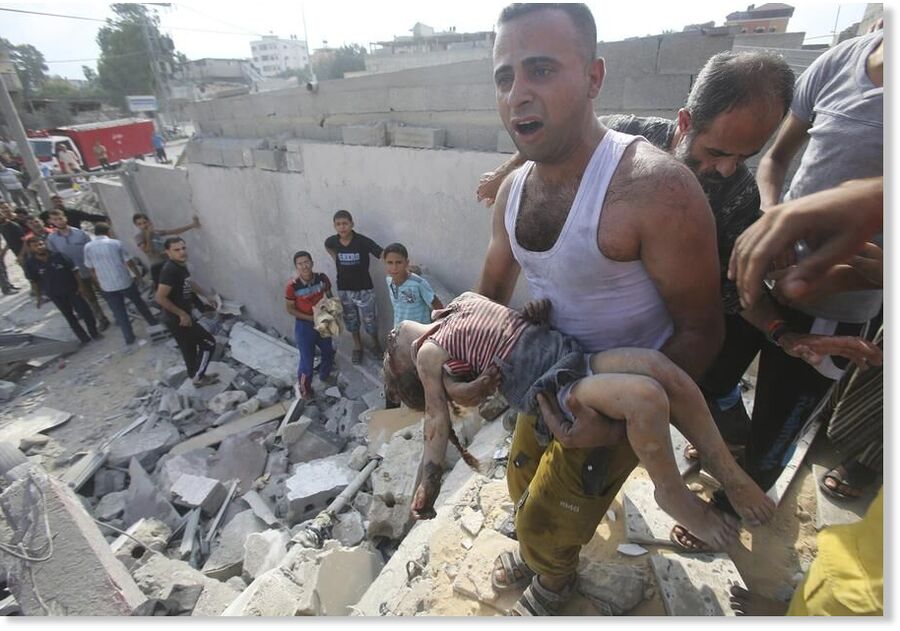
The study doesn’t account for indirect deaths caused by the Israeli siege
by Dave DeCamp January 9, 2025, https://news.antiwar.com/2025/01/09/lancet-study-gaza-health-ministry-undercounted-death-toll-by-41/
A new study published in the British medical journal The Lancet found that the Health Ministry in the Gaza Strip has significantly undercounted the number of Palestinians killed by Israel’s genocidal war.
The study reviewed the period between October 7, 2023, and June 30, 2024, and found there were 64,260 “traumatic injury deaths” in that timeframe. At the end of June 2024, Gaza’s Health Ministry said there were 37,877 dead, an undercount of about 41%.
As of October 2024, the study said the number of Palestinians killed by Israeli military action likely exceeds 70,000. The latest numbers from Gaza’s Health Ministry put the death toll at 46,006.
Explaining the methodology, the study said it used “capture-recapture methods to estimate total deaths from traumatic injury in the Gaza Strip from Oct 7, 2023, to June 30, 2024. By combining three data lists—official hospital lists, an MoH survey, and social media obituaries—we provide an estimate of mortality that accounts for under-reporting.”
The study accounts only for deaths caused by violence and not indirect deaths caused by the Israeli siege and the destruction of medical and other civilian infrastructure.
The figures coming from Gaza’s Health Ministry have been under significant scrutiny from Israeli officials and their supporters in the West. In the early days of the genocidal war, President Biden cast doubt on their accuracy, but a high-level US State Department official later acknowledged the real number of dead was likely higher than what the Health Ministry was reporting.
The number of indirect deaths caused by the Israeli siege is unclear but is likely significantly higher than the violent deaths. A letter written by experts and published by The Lancet in July 2024 estimated that if the war ended at that time, the conflict could account for 186,000 deaths, including 37,396 violent deaths (based on June 2024 Health Ministry figures) and indirect deaths.
Trident nuclear submarines leave UK reliant on the US, in lockstep with the US.
By Lynn Jamieson and Samuel Rafanell-Williams
The special relationship has meant that UK leaders typically fall in lockstep with US superpower logic, most catastrophically in Iraq, no matter how devastating the consequences.
An important and easily overlooked reason why Westminster is so willing to
do Washington’s bidding is the reliance of our supposedly
“independent” nuclear weapons capability on US military infrastructure
and technology.
The nuclear weapons based on the west coast of Scotland,
are arguably more of a US technology than British. The submarines, whilst
built in Barrow-in-Furness in England, are assembled according to US
blueprints and with US components. The Trident missiles fired by the
submarines are built, supplied and maintained in the US.
The National 10th Jan 2025,
https://www.thenational.scot/politics/24846637.trident-nuclear-submarines-leave-uk-reliant-us/
Genocide: The New Normal

The genocide, and the decision to fuel it with billions of dollars, marks an ominous turning point. It is a public declaration by the U.S. and its allies in Europe that international and humanitarian law, although blatantly disregarded by the U.S. in Iraq, Afghanistan, Libya, Syria and a generation earlier in Vietnam, is meaningless.
By Chris Hedges ScheerPost January 7, 2025, https://scheerpost.com/2025/01/07/chris-hedges-genocide-the-new-normal/
Joe Biden’s parting gift of $8 billion in weapons sales to the apartheid state of Israel acknowledges the gruesome reality of the genocide in Gaza. This is not the end. It is not even the beginning of the end. This is a permanent, endless war designed not to destroy Hamas, or free Israeli hostages, but to eradicate, once and for all, Palestinians in Gaza and the West Bank. It is the final push to create a Greater Israel, which will include not only Gaza and the West Bank, but chunks of Lebanon and Syria. It is the culmination of the Zionist dream. And it will be paid for with rivers of blood — Palestinian, Lebanese and Syrian.
Minister of Agriculture and Food Security of Israel Avi Dichter was probably offering conservative estimates when he said “I think that we are going to stay in Gaza for a long time. I think most people understand that [Israel] will be years in some kind of West Bank situation where you go in and out and maybe you remain along Netzarim [corridor].”
Mass extermination takes time. It is also expensive. Fortunately for Israel, its lobby in the U.S. has a stranglehold on Congress, our electoral process and the media narrative. Americans, although 61 percent support ending weapons shipments to Israel, will pay for it. And those that express dissent will be frog-marched into Zionist black holes where their voices are silenced and their careers jeopardized or destroyed. Donald Trump and the Republicans have an open disdain for democracy, but so do the Democrats and Joe Biden.
The U.S. provided $17.9 billion in military aid to Israel from October 2023 to October 2024, a substantial increase from the already $3.8 billion in military aid the U.S. gives Israel annually. This is a record for a single year. The State Department has informed Congress that it intends to approve another $8 billion in purchases of U.S.-made arms by Israel. This will provide Israel with more GPS guidance systems for bombs, more artillery shells, more missiles for fighter jets and helicopters, and more bombs, including 2,800 unguided MK-84 bombs, which Israel has a habit of dropping on densely packed tent encampments in Gaza. The pressure wave from the 2,000-pound MK-84 pulverizes buildings and exterminates life within a 400-yard radius. The blast, which ruptures lungs, rips apart limbs and bursts sinus cavities up to hundreds of yards away, leaves behind a 50-foot-wide and 36-foot-deep crater. Israel appears to have used this bomb to assassinate Hassan Nasrallah, leader of Hezbollah, in Beirut on September 27, 2024.
The genocide, and the decision to fuel it with billions of dollars, marks an ominous turning point. It is a public declaration by the U.S. and its allies in Europe that international and humanitarian law, although blatantly disregarded by the U.S. in Iraq, Afghanistan, Libya, Syria and a generation earlier in Vietnam, is meaningless. We will not even pay lip service to it. This will be a Hobbesian world where nations that have the most advanced industrial weapons make the rules. Those who are poor and vulnerable will kneel in subjugation. The genocide in Gaza is the template for the future. And those in the Global South know it.
The “wretched of the earth” who lack sophisticated weapons, who do not have modern armies, artillery units, missiles, navies, armored units and warplanes, will strike back with crude tools. They will match individual acts of terror against massive campaigns of state terror.
Are we surprised we are hated? Terror begets terror. We saw this in New Orleans where a man who was allegedly inspired by the Islamic State of Iraq and Syria (ISIS) killed 14 people when he drove his pickup truck into a crowd on New Year’s Day. We will see more of it. But let’s be clear. We started it. The moral void of the suicide bomber is birthed from our moral void.
Israel’s frustration at the dogged resistance in Gaza, the West Bank, Yemen and Lebanon increases the bloodlust. Members of Israel’s Foreign Affairs and Defense Committee sent a letter to Minister of Defense Israel Katz, calling on the government to intensify the siege of Gaza.
“Effective control of the territory and the population is the only means towards cleansing enemy lines from the strip, and naturally towards decisive victory, rather than treading [water] in a war of attrition, where the side that is most worn is Israel,” they write. “Therefore we end up inserting our soldiers again and again into neighborhoods and alleys that were already conquered by them many times.”
Israel, the letter reads, must carry out “remote elimination of all energy sources, that is fuel, solar panels and any relevant means (pipes, cables, generators etc.)” It should ensure the “elimination of all food sources including warehouses, water and all relevant means (water pumps etc.)” and it must facilitate the “remote elimination of anyone who moves in the area and does not exit with a white flag during the days of the effective siege.”
The letter concludes that “after these actions and the days of siege upon those who remain, [the] IDF must enter gradually and conduct a full cleansing of the enemy nests…. This should be done in the northern Gaza Strip, and similarly in any other territory: encirclement, evacuation of the population to a humanitarian zone, and effective siege until surrender or full elimination of the enemy. This is how every army acts, and so must the IDF act.”
In short, exterminate the brutes.
Shamsud-Din Jabbar, the 42-year-old U.S. military veteran who plowed his pick-up truck into a crowd of New Year’s revellers in New Orleans killing 14 people and injuring 35 others, spoke to us in the language we use to speak to the Arab world. Indiscriminate death. The targeting of innocents. The callous indifference to life. The thirst for revenge. The demonization of others. The belief that fate or God or western civilization has decreed that we have a right to impose our vision of the world with violence. Jabbar, who posted videos online in which he professed his support for Islamic State, is our murderous doppelgänger. He will not be the last.
“When a society is dispossessed, when the injustices thrust upon it appear insoluble, when the ‘enemy’ is all-powerful, when one’s own people are bestialised as insects, cockroaches, ‘two-legged beasts,’ then the mind moves beyond reason,” Robert Fisk writes in The Great War for Civilization. “It becomes fascinated in two senses: with the idea of an afterlife and with the possibility that this belief will somehow provide a weapon of more than nuclear potential. When the United States was turning Beirut into a NATO base in 1983, and using its firepower against Muslim guerrillas in the mountains to the east, Iranian Revolutionary Guards in Baalbek were promising that God would rid Lebanon of the American presence. I wrote at the time — not entirely with my tongue in my cheek — that this was likely to be a titanic battle: U.S. technology versus God. Who would win? Then on 23 October 1983 a lone suicide bomber drove a truckload of explosives into the U.S. Marine compound at Beirut airport and killed 241 American servicemen in six seconds…I later interviewed one of the few surviving marines to have seen the bomber. ‘All I can remember,’ he told me, ‘is that the guy was smiling.’
These acts of terrorism, or in the case of Gaza, the West Bank, Lebanon and Yemen armed resistance, are used to justify endless mass killing. This Via Dolorosa leads to a global death spiral, especially as the climate crisis reconfigures the planet and international bodies, such as the United Nations and the International Criminal Court, become hollow appendages.
We are sowing the Middle East with dragon’s teeth and, as in the ancient Greek myth, these teeth are rising from the soil as enraged warriors determined to destroy us.
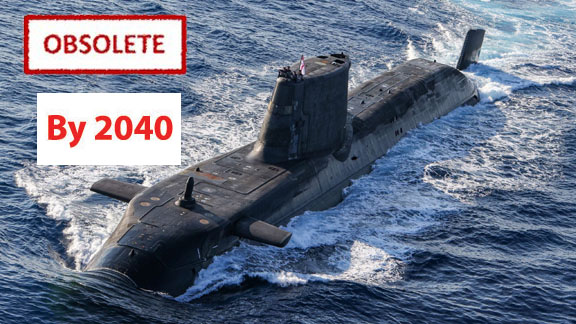
Could AI soon make dozens of billion-dollar nuclear stealth attack submarines more expensive and obsolete?
By Wayne Williams, 5 Jan 25, https://www.techradar.com/pro/could-ai-soon-make-dozens-of-billion-dollar-nuclear-stealth-attack-submarines-more-expensive-and-obsolete
Artificial intelligence can detect undersea movement better than humans.
AI can process far more data from a far more sensors than human operators can ever achieve
But the game of cat-and-mouse means that countermeasures do exist to confuse AI
Increase in compute performance and ubiquity of always-on passive sensors need also be accounted for.
The rise of AI is set to reduce the effectiveness of nuclear stealth attack submarines.
These advanced billion-dollar subs, designed to operate undetected in hostile waters, have long been at the forefront of naval defense. However, AI-driven advancements in sensor technology and data analysis are threatening their covert capabilities, potentially rendering them less effective.
An article by Foreign Policy and IEEE Spectrum now claims AI systems can process vast amounts of data from distributed sensor networks, far surpassing the capabilities of human operators. Quantum sensors, underwater surveillance arrays, and satellite-based imaging now collect detailed environmental data, while AI algorithms can identify even subtle anomalies, such as disturbances caused by submarines. Unlike human analysts, who might overlook minor patterns, AI excels at spotting these tiny shifts, increasing the effectiveness of detection systems.
Game of cat-and-mouse
AI’s increasing role could challenge the stealth of submarines like those in the Virginia-class, which rely on sophisticated engineering to minimize their detectable signatures.
Noise-dampening tiles, vibration-reducing materials, and pump-jet propulsors are designed to evade detection, but AI-enabled networks are increasingly adept at overcoming these methods. The ubiquity of passive sensors and continuous improvements in computational performance are increasing the reach and resolution of these detection systems, creating an environment of heightened transparency in the oceans.
Despite these advances, the game of cat-and-mouse persists, as countermeasures are, inevitably, being developed to outwit AI detection.
These tactics, as explored in the Foreign Policy and IEEE Spectrum piece, include noise-camouflaging techniques that mimic natural marine sounds, deploying uncrewed underwater vehicles (UUVs) to create diversions, and even cyberattacks aimed at corrupting the integrity of AI algorithms. Such methods seek to confuse and overwhelm AI systems, maintaining an edge in undersea warfare.
As AI technology evolves, nations will need to weigh up the escalating costs of nuclear stealth submarines against the potential for their obsolescence. Countermeasures may provide temporary degree of relief, but the increasing prevalence of passive sensors and AI-driven analysis suggests that traditional submarine stealth is likely to face diminishing returns in the long term.
Biden discussed plans to strike Iran nuclear sites if Tehran speeds toward bomb
Barak Ravid. AXIOS, 2 Jan 25
White House national security adviser Jake Sullivan presented President Biden with options for a potential U.S. attack on Iran’s nuclear facilities if the Iranians move towards a nuclear weapon before Jan. 20, in a meeting several weeks ago that remained secret until now, three sources with knowledge of the issue tell Axios.
Why it matters: A U.S. strike on Iran’s nuclear program during the lame duck period would be an enormous gamble from a president who promised he would not allow Iran to develop a nuclear weapon, but who would also risk handing a fresh conflict over to his successor. Biden did not green light a strike during the meeting and has not done so since, the sources said.
Biden and his national security team discussed various options and scenarios during the meeting, which took place roughly one month ago, but the president did not make any final decision, according to the sources.A U.S. official with knowledge of the issue said the White House meeting was not prompted by new intelligence or intended to end in a yes or no decision from Biden. Instead, it was part of a discussion on “prudent scenario planning” of how the U.S. should respond if Iran were to take steps like enriching Uranium to 90% purity before Jan. 20, the official said.Another source said there are currently no active discussions inside the White House about possible military action against Iran’s nuclear facilities.
Behind the scenes: Some of Biden’s top aides have argued internally that two trends —the acceleration of Iran’s nuclear program, and the weakening of Iran and its proxies in their war with Israel — together give Biden an imperative and an opportunity to strike.
- The sources said some of Biden’s aides, including Sullivan, think that the degrading of Iran’s air defenses and missile capabilities, along with the significant weakening of Iran’s regional proxies, would improve the odds of a successful strike and decrease the risk of Iranian retaliation and regional escalation.
- The U.S. official said Sullivan did not make any recommendation to Biden on the issue, but only discussed scenario planning. The White House declined to comment.
The intrigue: One source said Biden honed in on the question of urgency, and whether Iran had taken steps that justify a dramatic military strike a few weeks before a new president takes office.
The other side: Iran has long denied it is seeking a nuclear weapon and stressed that its nuclear program is only for civilian purposes.
- But in recent months, several former and current Iranian officials spoke publicly about the possibility of changing Iran’s nuclear doctrine………………………………………………………. more https://www.axios.com/2025/01/02/iran-nuclear-weapon-biden-white-house
The Quiet Crisis Above: Unveiling the Dark Side of Space Militarization

By Justin James McShane, GeopoliticsUnplugged, Nov 28, 2024
Summary:
In this episode, we examine the growing militarization of space, focusing on the development and testing of anti-satellite weapons (ASATs) by various nations, including the U.S., Russia, China, and India. We detail the history of space militarization, from the Cold War to the present, highlighting the dangers of space debris and the inadequacy of existing treaties like the Outer Space Treaty in addressing modern threats. Different types of ASATs are described, both kinetic and non-kinetic, along with electronic warfare systems used for disrupting satellites. We also discuss the lack of international cooperation and robust enforcement mechanisms to prevent an arms race in space, emphasizing the need for new agreements to ensure the peaceful use of outer space. Ultimately, we warn of the potential for space to become a new theater of conflict. cooperation?”………………………………………………….
https://geopoliticsunplugged.substack.com/p/ep93-the-quiet-crisis-above-unveiling-ed9
US Has Given Israel $22 Billion in Military Aid Since October 2023

According to data from SIPRI, US weapons now account for 78% of Israel’s arms imports
by Dave DeCamp January 1, 2025, https://news.antiwar.com/2025/01/01/us-has-given-israel-22-billion-in-military-aid-since-october-2023/
Since October 7, 2023, the US has provided Israel with more than $22 billion in military aid, Israel Hayom reported Wednesday, citing data from the Stockholm International Peace Research Institute (SIPRI).
The stepped-up US military aid to Israel has supported the genocidal war in Gaza, Israel’s war in Lebanon, military operations in the occupied West Bank, and attacks on Syria, Iran, and Yemen.
According to SIPRI, from 2019 to 2023, US weapons accounted for 69% of Israel’s arms imports. Since October 7, that number has risen to 78%, demonstrating Israel’s significant reliance on US military aid.
In October 2024, Brown University’s Costs of War Project said the US had provided Israel with $17.9 billion in military aid in the first year of the onslaught in Gaza. Since then, Israel has signed a $5.2 billion contract with Boeing to purchase F-15 fighter jets, a deal funded by the US, bringing total US military aid since October 7, 2023, to over $22 billion.
The Costs of War report also said US military operations in the Middle East to support Israel cost American taxpayers at least $4.8 billion, a number that must have also risen since the US has continued to bomb Yemen and deployed a THAAD air defense system to Israel.
Israeli officials have been candid about how reliant they are on US support. An Israeli Air Force official told Haaretz that without US military aid, Israel would not be able to sustain operations in Gaza for more than a few months
Biden spending last month shoveling billions to get more Ukrainians killed for nothing

Walt Zlotow, West Suburban Peace Coalition, Glen Ellyn IL 2 Jan 25
On Monday, President Biden released another $6 billion in precious US treasure to keep his proxy war against Russia killing Ukrainians till Trump arrives January 20.
Here’s what $6 billion will provide the decimated Ukrainian army being systematically destroyed in a war provoked and prolonged by President Biden
· Munitions for National Advanced Surface-to-Air Missile Systems (NASAMS)
· HAWK air defense munitions
· Stinger missiles
· Counter-Unmanned Aerial Systems (c-UAS) munitions
· Ammunition for High Mobility Artillery Rocket Systems
(HIMARS)
· 155mm and 105mm artillery ammunition
· Air-to-ground munitions
· High-speed Anti-radiation missiles (HARMs)
· Unmanned Aerials Systems (UAS)
· Javelin and AT-4 anti-armor systems
· Tube-launched, Optically guided, Wire-tracked (TOW) missiles
· Small arms and ammunition and grenades
· Demolitions equipment and munitions
· Secure communications equipment
· Commercial satellite imagery services
· Medical equipment
· Clothing and individual equipment
· Spare parts, maintenance and sustainment support, ancillary, services, training, and transportation
That’s the final treasure Biden can squander because House Speaker Mike Johnson nixed his last request for another $25 billion before his thankful departure January 20.
Biden’s $175 billion in 3 years of war is all for naught as Russia is pushing remaining Ukraine forces out of the Russian province of Kursk and extending their defensive perimeter around the 4 eastern Ukraine provinces captured. None of these provinces would be in Russian control had Biden not sabotaged the peace agreement Zelensky and Putin were about to complete back in March, 2022.
Biden will leave office mired in the echo chamber of US exceptionalism and world dominance. He will no doubt praise his bloody, wasteful and failed course he plunged Ukraine to follow in his Farwell Address. While he could be worse, successor Trump has ample opportunity to end Biden’s Ukraine madness. Regarding Ukraine, Joe Biden cannot leave the presidency soon enough.
Biden Administration Announces Nearly $6 Billion in New Ukraine Aid

ANTIWAR.com, Dave DeCamp, 31 Dec 24
Ukraine is receiving about $2.5 billion in military aid and $3.4 billion in ‘budget support,’ which funds government salaries and servicesby Dave DeCamp December 30, 2024.
The Biden administration on Monday announced nearly $6 billion in new aid for Ukraine as it’s determined to escalate the proxy war as much as possible before President-elect Donald Trump is inaugurated on January 20, 2025.
The aid includes $3.4 billion in “direct budget support,” a form of assistance meant to pay for Ukrainian government services, salaries, pensions, and other types of spending. It has also been used to subsidize Ukrainian small businesses and farmers.……………………….
Ukraine is also receiving nearly $2.5 billion in military aid from the US, which includes $1.22 billion from the Ukraine Security Assistance Initiative, a program that allows the US to purchase weapons for Ukraine. The remaining military aid is in the form of the Presidential Drawdown Authority, which enables President Biden to ship weapons directly from US military stockpiles.
The Biden administration is dumping more weapons into Ukraine even though there’s no path to a Ukrainian victory on the battlefield as Russian forces continue to make gains in the Donbas and Ukraine’s invading force in Kursk is being pushed out. Biden officials are determined to keep the war going and are even pressuring Ukraine to begin conscripting 18-year-olds.
According to the Pentagon, the new military aid includes:
Spare parts, maintenance and sustainment support, ancillary equipment, services, training, and transportation
Munitions for National Advanced Surface-to-Air Missile Systems (NASAMS)
HAWK air defense munitions
Stinger missiles
Counter-Unmanned Aerial Systems (c-UAS) munitions
Ammunition for High Mobility Artillery Rocket Systems (HIMARS)
155mm and 105mm artillery ammunition
Air-to-ground munitions
High-speed Anti-radiation missiles (HARMs)
Unmanned Aerials Systems (UAS)
Javelin and AT-4 anti-armor systems
Tube-launched, Optically guided, Wire-tracked (TOW) missiles
Small arms and ammunition and grenades
Demolitions equipment and munitions
Secure communications equipment
Commercial satellite imagery services
Medical equipment
Clothing and individual equipment
In recent months, President Biden signed off on several significant escalations in the proxy war, including supporting long-range strikes on Russian territory and the provision of widely banned anti-personnel mines to Ukraine.
Biden asked Congress for an additional $24 billion to spend on Ukraine, but the request was rejected by House Speaker Mike Johnson (R-LA), who said any decisions on Ukraine aid would be up to Trump. https://news.antiwar.com/2024/12/30/biden-administration-announces-nearly-6-billion-in-new-ukraine-aid/
Japan, US to communicate on possible use of nuclear weapons
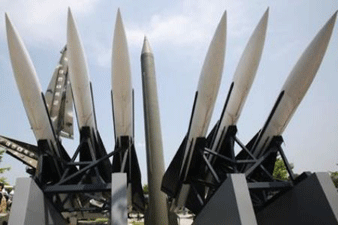
Establishing such an operational framework is aimed at strengthening the U.S. nuclear umbrella that protects Japan and enhancing its deterrence capabilities against North Korea and China.
Asia News Network, December 30, 2024
TOKYO – Japan and the United States will communicate regarding Washington’s possible use of nuclear weapons in the event of a contingency, the two governments have stipulated in their first-ever guidelines for so-called extended deterrence, The Yomiuri Shimbun has learned.
According to Japanese government sources, Japan will convey its requests to the United States via the Alliance Coordination Mechanism (ACM), through which the Self-Defense Forces and U.S. forces maintain contact with each other.
Establishing such an operational framework is aimed at strengthening the U.S. nuclear umbrella that protects Japan and enhancing its deterrence capabilities against North Korea and China.
Against North Korea, China
The Foreign Ministry announced the formulation of the guidelines Friday but had not disclosed the details, as they contain classified military intelligence.
The U.S. president, who is also the commander in chief of U.S. forces, has the sole authority to authorize a nuclear attack. Before the completion of the guidelines, no written statement existed that said Japan was allowed to pass on its views to the United States regarding Washington’s possible use of nuclear weapons.
Extended deterrence is a security policy aimed at preventing a third country from attacking an ally by demonstrating a commitment to retaliate not only in the event of an armed attack on one’s own country, but also in the event of an attack on an ally.
Responding to North Korea’s nuclear development program and China’s military buildup, the Japanese and U.S. governments in 2010 began holding working-level consultations in which their foreign and defense officials meet regularly to discuss nuclear deterrence and other issues. Japan has expressed its stance on the use of nuclear weapons in the meetings.
The two countries will exchange views on Washington’s use of nuclear weapons also in the framework of the ACM, which was set up in normal times under the revised Guidelines for Japan-U.S. Defense Cooperation in 2015.
Under the ACM, discussions are designed to take place both by the Alliance Coordination Group, comprising director general-level officials of the diplomatic and defense authorities, and by the Bilateral Operations Coordination Center, involving senior officials of the SDF and U.S. forces. If necessary, high-level discussions involving Cabinet members are also expected to be held.
This system will enable Japan to convey its views to the United States on Washington’s potential use of nuclear weapons at all stages, from normal times to contingencies………………. https://asianews.network/japan-us-to-communicate-on-possible-use-of-nuclear-weapons/
Departing Air Force Secretary Will Leave Space Weaponry as a Legacy

msn, by Eric Lipton, 30 Dec 24
WASHINGTON — Weapons in space. Fighter jets powered by artificial intelligence.
As the Biden administration comes to a close, one of its legacies will be kicking off the transformation of the nearly 80-year-old U.S. Air Force under the orchestration of its secretary, Frank Kendall.
When he leaves office in January — after more than five decades at the Defense Department and as a military contractor, including nearly four years as Air Force secretary — Mr. Kendall, 75, will have set the stage for a transition that is not only changing how the Air Force is organized but how global wars will be fought.
One of the biggest elements of this shift is the move by the United States to prepare for potential space conflict with Russia, China or some other nation.
In a way, space has been a military zone since the Germans first reached it in 1944 with their V2 rockets that left the earth’s atmosphere before they rained down on London, causing hundreds of deaths. Now, at Mr. Kendall’s direction, the United States is preparing to take that concept to a new level by deploying space-based weapons that can disable or disrupt the growing fleet of Chinese or Russian military satellites………………………
Perhaps of equal significance is the Air Force’s shift under Mr. Kendall to rapidly acquire a new type of fighter jet: a missile-carrying robot that in some cases could make kill decisions without human approval of each individual strike.
In short, artificial-intelligence-enhanced fighter jets and space-based warfare are not just ideas in some science fiction movie. Before the end of this decade, both are slated to be an operational part of the Air Force because of choices Mr. Kendall made or helped accelerate.
The Pentagon is the largest bureaucracy in the world. But Mr. Kendall has shown, more than most of its senior officials, that it too can be forced to innovate.
“It is big,” said Richard Hallion, a military historian and retired senior Pentagon adviser, describing the change underway at the Air Force. “We have seen the maturation of a diffuse group of technologies that, taken together, have forced a transformation of the American military structure.”
Mr. Kendall is an unusual figure to be the top civilian executive at the Air Force, a job he was appointed to by President Biden in 2021, overseeing a $215 billion budget and 700,000 employees…………….
Mr. Kendall, who has a folksy demeanor more like a college professor than a top military leader, comes at the job in a way that recalls his graduate training as an engineer.
He gets fixated on both the mechanics and the design process of the military systems his teams are building at a cost of billions of dollars. Mr. Kendall and Gen. David Allvin, the department’s top uniformed officer, have called this effort “optimizing the Air Force for great power competition.”………………….
Mr. Kendall has taken these innovations — built out during earlier waves of change at the Air Force — and amped up the focus on autonomy even more through a program called Collaborative Combat Aircraft.
These new missile-carrying robot drones will rely on A.I.-enhanced software that not only allows them to fly on their own but to independently make certain vital mission decisions, such as what route to fly or how best to identify and attack enemy targets.
The plan is to have three or four of these robot drones fly as part of a team run by a human-piloted fighter jet, allowing the less expensive drone to take greater risks, such as flying ahead to attack enemy missile defense systems before Navy ships or piloted aircraft join the assault.
Mr. Kendall, in an earlier interview with The Times, said this kind of device would require society to more broadly accept that individual kill decisions will increasingly be made by robots……………….
These new collaborative combat aircraft — which will cost as much as about $25 million each, compared to the approximately $80 million price for a manned F-35 fighter jet — are being built for the Air Force by two sets of vendors. One group is assembling the first of these new jets while a second is creating the software that allows them to fly autonomously and make key mission decisions on their own.
This is also a major departure for the Air Force, which usually relies on a single prime contractor to do both, and a sign of just how important the software is — the brain that will effectively fly these robotic fighter jets………………………………………
Space is now a fighting zone, Mr. Kendall acknowledged, like the oceans of the earth or battlefields on the ground.
The United States, Russia and China each tested sending missiles into space to destroy satellites starting decades ago, although the United States has since disavowed this kind of weapon because of the destructive debris fields it creates in orbit.
So during his tenure, the Air Force started to build out a suite of what Mr. Kendall called “low-debris-causing weapons” that will be able to disrupt or disable Chinese or other enemy satellites, the first of which is expected to be operational by 2026.
Mr. Kendall and Gen. Chance Saltzman, the chief of Space Operations, would not specify how these American systems will work. But other former Pentagon officials have said they likely will include electronic jamming, cyberattacks, lasers, high-powered microwave systems or even U.S. satellites that can grab or move enemy satellites.
The Space Force, over the last three years, has also been rapidly building out its own new network of low-earth-orbit satellites to make the military gear in space much harder to disable, as there will be hundreds of cheaper, smaller satellites, instead of a few very vulnerable targets.
Mr. Kendall said when he first came into office, there was an understandable aversion to weaponizing space, but that now the debate about “the sanctity or purity of space” is effectively over.
“Space is a vacuum that surrounds Earth,” Mr. Kendall said. “It’s a place that can be used for military advantage and it is being used for that. We can’t just ignore that on some obscure, esoteric principle that says we shouldn’t put weapons in space and maintain it. That’s not logical for me. Not logical at all. The threat is there. It’s a domain we have to be competitive in.” https://www.msn.com/en-us/news/politics/departing-air-force-secretary-will-leave-space-weaponry-as-a-legacy/ar-AA1wE4iS
Arms control is essential to prevent the total devastation of nuclear war

Amid a historic low in US-Russian relations, now more than ever Moscow and Washington should reaffirm their commitment to reducing nuclear arsenals and place limits on strategic defense missiles
By The Guardian Editorial, https://www.taipeitimes.com/News/editorials/archives/2024/12/31/2003829391
November next year is to mark 40 years since then-US president Ronald Reagan and then-Soviet leader Mikhail Gorbachev declared that “a nuclear war cannot be won and must never be fought.” The statement was striking — not least because their militaries were pouring billions into preparing for an unwinnable conflict.
A year later, at Reykjavik, the two came tantalizingly close to eliminating nuclear weapons entirely. That historic chance slipped away over Reagan’s insistence on his unproven “Star Wars” missile defense system. The moment passed, but its lesson endures: Disarmament demands courage — and compromise.
The summit proved a turning point in the cold war. Arms control brought down the number of nuclear weapons held by the two countries from 60,000 to about 11,000 today. The most recent New Strategic Arms Reduction Treaty (New START), signed in 2010, capped deployed strategic warheads at 1,550 each.
In retrospect, that was a false dawn in nuclear diplomacy. Since then-US president George W. Bush withdrew the US from the anti-ballistic missile treaty with Moscow in 2002, the risk of a return to an all-out arms race has grown.
On Jan. 20, US president-elect Donald Trump would once again hold the keys to a planet-ending arsenal. Trump’s capricious personality sheds new light on an old question: How much of the terrible responsibility to inflict large-scale nuclear destruction should be invested in a single person?
He has called the transfer of authority “a very sobering moment” and “very, very scary.” Reassuring words — except he has also reportedly said that “if we have nuclear weapons, why can’t we use them?”
Presidential sole authority rightly ensures civilian control over nuclear weapons, but why concentrate such power in just one civilian’s hands?
Without bold action, New START, the last safeguard of nuclear arms moderation, is to expire in February 2026. Trump admires strongmen such as Russian President Vladimir Putin, who has recklessly threatened nuclear strikes and hinted at restarting tests during the Ukraine war. It would be a catastrophic mistake if the pair decided not to exercise self-restraint.
It would mean that for the first time in more than 50 years, the US and Russia — holders of 90 percent of the world’s nuclear weapons — could begin an unconstrained arms race. That dismal decision would send a message to other states, notably China, further encouraging their buildup of nuclear stockpiles.
Deterrence is not the only way to think about nuclear weapons. For decades, a conflict involving them has been a byword for Armageddon. The fearful legacy of “the bomb” can be felt from Hiroshima and Nagasaki to the testing grounds still contaminated by nuclear fallout decades later.
Such sentiment led to then-US president Barack Obama in 2009 advocating a hopeful vision of a nuclear-free world. His speech inspired a coalition of activists, diplomats and developing nations determined to force a global reckoning. Their resistance to the conventional wisdom that nuclear disarmament is unrealistic bore fruit with the treaty on the prohibition of nuclear weapons, adopted by 122 countries at the UN in 2017.
Its message: The only way to ensure nuclear weapons are never used again is to do away with them entirely.
The treaty, championed by the Nobel prize-winning International Campaign to Abolish Nuclear Weapons, was a triumph over superpower diplomacy that had long hindered reviews of the nuclear nonproliferation treaty. Nuclear-armed states are skeptical, if not scornful, but their resistance does not diminish the importance of the 2017 UN vote.
It represents not only a moral and legal challenge to the “status quo,” but a reminder that much of the world does not accept the logic of mutually assured destruction. That sentiment was amplified this year when Nihon Hidankyo, Japan’s atomic and hydrogen bomb survivors group, won the Nobel peace prize for efforts to abolish nuclear weapons.
Eight decades after its first test, the nuclear bomb remains — its purpose long obsolete, its danger ever present. Built to defeat Hitler, dropped to end Japan’s imperial ambitions and multiplied to outlast the cold war, nuclear weapons have outlived every rationale for their existence. Arsenals have shrunk, but not enough.
The world’s stockpile remains dangerously large, and efforts to reduce it further appear stalled amid a geopolitical backdrop of nuclear proliferation, a multipolar and ideologically diverse UN and the US desire for global preeminence.
It is little wonder that the Bulletin of the Atomic Scientists has set its Doomsday Clock to 90 seconds to midnight — the closest ever to apocalypse.
In 2019, Gorbachev warned, with good reason, that nuclear deterrence keeps the world “in constant jeopardy.” It is obvious that as long as these weapons exist, the risk of nuclear war cannot be erased. The question is no longer why the bomb remains, but whether humanity can survive it for another 80 years.
This month, UN members voted 144-3 to establish an independent scientific panel on the effects of nuclear war. Shamefully, the UK was among the naysayers.

Imagination has already outpaced fact. In her book Nuclear War, Annie Jacobson describes how humanity could end in 72 minutes after a North Korean “bolt from the blue” attack sparks a nuclear exchange between the US and Russia. She writes of thousands of warheads raining down on the US, Europe, Russia and parts of Asia, obliterating cities, incinerating human life and leaving billions stripped of life, light and hope. Streets turn molten, winds flatten the land and those who endure suffer wounds so terrible that they no longer look — or act — human.
Jacobson’s point is that this apocalyptic vision is the logical conclusion of the world’s current nuclear doctrines. Those that do emerge into the desolation discover what the Soviet leader Nikita Khrushchev warned of decades ago: “The survivors will envy the dead.”
The devastation is total, offering a future that no one could bear to live through.
Amid historic lows in US-Russian relations, one truth remains: A nuclear war cannot be won and must never be fought. Leaders in Moscow and Washington should reaffirm this in the run-up to negotiating significant arsenal reductions as well as real limits on strategic missile defenses. Such a statement, simple but profound, would remind the world that Trump and Putin recognize their shared responsibility to prevent global catastrophe.
That will not be easy: rising nationalism, geopolitical rivalry and mutual mistrust between the countries — especially over Ukraine — loom large over disarmament efforts. Try they must. However bitter their disagreements, Washington and Moscow owe it to humanity to talk about — and act on — avoiding the unthinkable.
Syrian minorities under threat as security forces carry out raids against ‘remnants of Assad militias’
Reports of sectarian killings and ethnic cleansing of Alawites and Christians continue to emerge as Ahmad al-Sharaa’s new government seeks to exert control over the country
The Cradle, News Desk, DEC 29, 2024
The new Syrian government led by former Al-Qaeda leader Ahmad al-Sharaa (Abu Mohammad al-Julani is carrying out raids and arrests against members of Bashar al-Assad’s fallen government amid reports of sectarian killings of minorities by forces associated with the new government.
The state-run Syrian news agency SANA reported on Saturday that “a number of remnants of the Assad militias” had been arrested and their weapons and ammunition confiscated in Syria’s coastal Latakia region.
Security forces have also been pursuing members of the former government in the regions of Tartous, Homs, and Hama in recent days.
The media office of Syria’s interim interior ministry said the campaign was only launched after members of the former government had failed “to hand over their weapons and settle their affairs” within a specific time frame.
Videos and reports circulating on social media indicate that former soldiers and civilians are also being expelled from their homes or abducted and executed by HTS militants for simply being Alawite.
The HTS-led Military Operations Command in Syria has set up “reconciliation centers” for ex-Assad government personnel to surrender weapons and receive temporary IDs, but reports indicate that numerous individuals have been abducted and found dead, even after having given up their weapons……………………………………………………………………………………………………………………………………….
On 18 December, the Washington Post reported that some HTS members were carrying out sectarian revenge attacks.
“Over the past week, Washington Post reporters saw evidence of extrajudicial killings in Damascus and Hama province, and verified two videos showing fighters executing alleged members of Syria’s state security forces,” the paper wrote………………. more https://thecradle.co/articles/syrian-minorities-under-threat-as-security-forces-carry-out-raids-against-remnants-of-assad-militias
1 This Month

of the week – Shut Down Drone Warfare!


Tell the Ukrainian Government to Drop Prosecution of Peace Activist Yurii Sheliazhenko

Petition to revoke the licensing of the Near Surface Nuclear Disposal Facility (NSDF) at Chalk River. https://www.ourcommons.ca/petitions/en/Petition/Details?Petition=e-7247
To see nuclear-related stories in greater depth and intensity – go to https://nuclearinformation.wordpress.com
-
Archives
- March 2026 (251)
- February 2026 (268)
- January 2026 (308)
- December 2025 (358)
- November 2025 (359)
- October 2025 (376)
- September 2025 (257)
- August 2025 (319)
- July 2025 (230)
- June 2025 (348)
- May 2025 (261)
- April 2025 (305)
-
Categories
- 1
- 1 NUCLEAR ISSUES
- business and costs
- climate change
- culture and arts
- ENERGY
- environment
- health
- history
- indigenous issues
- Legal
- marketing of nuclear
- media
- opposition to nuclear
- PERSONAL STORIES
- politics
- politics international
- Religion and ethics
- safety
- secrets,lies and civil liberties
- spinbuster
- technology
- Uranium
- wastes
- weapons and war
- Women
- 2 WORLD
- ACTION
- AFRICA
- Atrocities
- AUSTRALIA
- Christina's notes
- Christina's themes
- culture and arts
- Events
- Fuk 2022
- Fuk 2023
- Fukushima 2017
- Fukushima 2018
- fukushima 2019
- Fukushima 2020
- Fukushima 2021
- general
- global warming
- Humour (God we need it)
- Nuclear
- RARE EARTHS
- Reference
- resources – print
- Resources -audiovicual
- Weekly Newsletter
- World
- World Nuclear
- YouTube
-
RSS
Entries RSS
Comments RSS
 nuclear-news