Part of tens of billions in US aid to Israel, the projects include multi-year tenders for hangars, fuel stations, and ammunition sites.
The US Army Corps of Engineers is constructing new military infrastructure for Israel across several bases, including airfields, hangars, and ammunition depots, according to public records reported by Haaretz on 8 July.
The current projects total more than $250 million, with future ones expected to exceed $1 billion, based on a call for interested contractors originally scheduled for June but postponed due to Israel’s war against Iran.
The Israeli news site Haaretz reported on the public documents on Monday.
The US Army Corps of Engineers is using contractors to build ammunition depots, refuelling stations, and concrete structures for Israeli military bases. The documents also show that the US is seeking contractors for building maintenance and repairs, including work on airfields.
One project for hangars, maintenance rooms, and storage facilities for new Boeing KC-46 tankers that Israel is expected to receive in the coming years is projected to cost over $100 million. Another facility to house CH-53K helicopters is expected to cost up to $250 million.
The US is also soliciting bids for ammunition storage buildings, estimated at up to $100 million. A separate seven-year tender, capped at $900 million, covers maintenance, repairs, construction, demolition, and infrastructure upgrades at unspecified sites for the Israeli Ministry of Defence.
These projects are funded through foreign military financing. Israel receives $3.8 billion annually in military aid, under a system that allows the US and Israel to determine how to spend the funds, which are routed to US defense contractors.
Since the Hamas-led 7 October 2023 Operation Al-Aqsa Flood, Washington has also provided supplemental military aid totalling around $18 billion.
The US has previously used military aid for Israeli infrastructure. In 2012, public tender documents showed large-scale US-funded works at Nevatim air base. At the time, the Washington Post reported that the US had constructed a secret facility there, known as site “911.”
The construction projects detailed on Monday were planned before the June 2025 Israeli attack on Iran. On 2 July, Reuters cited an Israeli official confirming that Iranian ballistic missiles struck several Israeli military sites during the 12-day exchange.
Earlier in June, Washington approved a $510 million arms deal for Israel, adding over 7,000 JDAM kits and support services to the growing list of weapons transfers in 2025.
That package formed part of a broader escalation in US military support, which by mid-year had surpassed $9 billion. Tel Aviv reported receiving more than 90,000 tons of US weapons in 600 days – deliveries Netanyahu credited to Trump as “the greatest friend that Israel has ever had in the White House.”
Around the same time, the Pentagon halted multiple arms shipments to Ukraine, despite internal reviews showing no critical shortage.
The decision followed concerns over stockpile depletion after the US assisted Israel in intercepting Iranian missiles. Senior officials have since pushed for a shift in US military focus toward the Pacific.
Israeli Defense Minister Israel Katz has ordered the IDF to prepare a plan to establish a camp to concentrate the entire civilian population of Gaza on the ruins of the southern Gaza city of Rafah.
According to Haaretz, Katz said that once Palestinian civilians are pushed into what he is calling a “humanitarian city,” they will not be allowed to leave. The idea is to first transfer 600,000 civilians from the al-Mawasi tent camp on the coast in southern Gaza, followed by the rest of the civilian population.
Katz said that if conditions permit, the “city” could be built during a potential 60-day ceasefire, comments that will make Hamas less likely to agree to a temporary truce. The Israeli defense minister also said that during the ceasefire, Israel will maintain control of the “Morag Corridor,” a strip of land between Rafah and Khan Younis.
Katz also suggested the camp can facilitate the government’s ultimate goal of ethnic cleansing, which it refers to as “voluntary migration,” telling reporters that Israel will implement “the emigration plan, which will happen.”
Israeli Finance Minister Bezalel Smotrich has previously said that the goal of Israel’s current military operation, dubbed Gideon’s Chariots, is to create a concentration camp south of the Morag Corridor and pressure the civilians forced into it to leave.
“The Gazan citizens will be concentrated in the south. They will be totally despairing, understanding that there is no hope and nothing to look for in Gaza, and will be looking for relocation to begin a new life in other places,” Smotrich said in May.
Katz’s comments come after Reuters reported that the controversial US-backed Gaza Humanitarian Foundation (GHF) had proposed to the US government the idea of creating camps it called “Humanitarian Transit Areas” inside Gaza or possibly outside Gaza.
The GHF plan describes the camps as “large-scale” and “voluntary” places where the Palestinian population could “temporarily reside, deradicalize, re-integrate and prepare to relocate if they wish to do so.”
Katz said Israel is seeking “international partners” to manage the zone and that four aid distribution sites would be set up inside the camp, suggesting the GHF will be involved in the plan. GHF aid sites are secured by American security contractors, who have been credibly accused of using live ammunition and stun grenades to disperse crowds of hungry Palestinian civilians.
“These figures represent a continuing and massive transfer of wealth from taxpayers to fund war and weapons manufacturing,” said the project’s director.
Less than a week after U.S. President Donald Trump signed a budget package that pushes annual military spending past $1 trillion, researchers on Tuesday published a report detailing how much major Pentagon contractors have raked in since 2020.
Sharing The Guardian‘s exclusive coverage of the paper on social media, U.K.-based climate scientist Bill McGuire wrote: “Are you a U.S. taxpayer? I am sure you will be delighted to know where $2.4 TRILLION of your money has gone.”
The report from the Costs of War Project at Brown University’s Watson School of International and Public Affairs and the Quincy Institute for Responsible Statecraft shows that from 2020-24 private firms received $2.4 trillion in Department of Defense contracts, or roughly 54% of DOD’s $4.4 trillion in discretionary spending for that five-year period.
The publication highlights that “during those five years, $771 billion in Pentagon contracts went to just five firms: Lockheed Martin ($313 billion), RTX (formerly Raytheon, $145 billion), Boeing ($115 billion), General Dynamics ($116 billion), and Northrop Grumman ($81 billion).”
In a statement about the findings, Stephanie Savell, director of the Costs of War Project, said that “these figures represent a continuing and massive transfer of wealth from taxpayers to fund war and weapons manufacturing.”
“This is not an arsenal of democracy—it’s an arsenal of profiteering,” Savell added. “We should keep the enormous and growing power of the arms industry in mind as we assess the rise of authoritarianism in the U.S. and globally.”
The paper points out that “by comparison, the total diplomacy, development, and humanitarian aid budget, excluding military aid, was $356 billion. In other words, the U.S. government invested over twice as much money in five weapons companies as in diplomacy and international assistance.”
“Record arms transfers have further boosted the bottom lines of weapons firms,” the document details. “These companies have benefited from tens of billions of dollars in military aid to Israel and Ukraine, paid for by U.S. taxpayers. U.S. military aid to Israel was over $18 billion in just the first year following October 2023; military aid to Ukraine totals $65 billion since the Russian invasion in 2022 through 2025.”
“Additionally, a surge in foreign-funded arms sales to European allies, paid for by the recipient nations—over $170 billion in 2023 and 2024 alone—have provided additional revenue to arms contractors over and above the funds they receive directly from the Pentagon,” the paper adds.
The 23-page report stresses that “annual U.S. military spending has grown significantly this century,” as presidents from both major parties have waged a so-called Global War on Terror and the DOD has continuously failed to pass an audit.
Specifically, according to the paper, “the Pentagon’s discretionary budget—the annual funding approved by Congress and the large majority of its overall budget—rose from $507 billion in 2000 to $843 billion in 2025 (in constant 2025 dollars), a 66% increase. Including military spending outside the Pentagon—primarily nuclear weapons programs at the Department of Energy, counterterrorism operations at the Federal Bureau of Investigation (FBI), and other military activities officially classified under ‘Budget Function 050’— total military spending grew from $531 billion in 2000 to $899 billion in 2025, a 69% increase.”
Republicans’ One Big Beautiful Bill Act passed earlier this month “adds $156 billion to this year’s total, pushing the 2025 military budget to $1.06 trillion,” the document notes. “After taking into account this supplemental funding, the U.S. military budget has nearly doubled this century, increasing 99% since 2000.”
Noting that “taxpayers are expected to fund a $1 trillion Pentagon budget,” Security Policy Reform Institute co-founder Stephen Semler said the paper, which he co-authored, “illustrates what they’ll be paying for: a historic redistribution of wealth from the public to private industry.”
Semler produced the report with William Hartung, senior research fellow at the Quincy Institute. Hartung said that “high Pentagon budgets are often justified because the funds are ‘for the troops.'”
“But as this paper shows, the majority of the department’s budget goes to corporations, money that has as much to do with special interest lobbying as it does with any rational defense planning,” he continued. “Much of this funding has been wasted on dysfunctional or overpriced weapons systems and extravagant compensation packages.”
In addition to spotlighting how U.S. military budgets funnel billions of dollars to contractors each year, the report shines a light on the various ways the industry influences politics.
“The ongoing influence of the arms industry over Congress operates through tens of millions in campaign contributions and the employment of 950 lobbyists, as of 2024,” the publication explains. “Military contractors also shape military policy and lobby to increase military spending by funding think tanks and serving on government commissions.”
“Senior officials in government often go easy on major weapons companies so as not to ruin their chances of getting lucrative positions with them upon leaving government service,” the report notes. “For its part, the emerging military tech sector has opened a new version of the revolving door—the movement of ex-military officers and senior Pentagon officials, not to arms companies per se, but to the venture capital firms that invest in Silicon Valley arms industry startups.”
The paper concludes by arguing that “the U.S. needs stronger congressional and public scrutiny of both current and emerging weapons contractors to avoid wasteful spending and reckless decision-making on issues of war and peace. Profits should not drive policy.”
“In particular,” it adds, “the role of Silicon Valley startups and the venture capital firms that support them needs to be better understood and debated as the U.S. crafts a new foreign policy strategy that avoids unnecessary wars and prioritizes cooperation over confrontation.”
The UN has named dozens of multinationals in a report for profiting from Israel’s genocide in Gaza. . Stephanie Tran reports.
A landmark United Nations report has named dozens of multinational corporations that are aiding and profiting from Israel’s ongoing genocide in Gaza, accusing them of complicity in war crimes and calling for urgent accountability.
Authored by Francesca Albanese, the UN Special Rapporteur on the Occupied Palestinian Territories, the report details the role of weapons manufacturers, tech firms, energy companies and financial institutions in sustaining an “economy of occupation turned genocidal.”
But the list of named companies is just the beginning. Albanese describes the report as “the tip of the iceberg,” noting that more than 1,000 corporate entities were investigated for their involvement in Israel’s war machinery.
Weapons and warfare
At the centre of Israel’s brutal assault on Gaza is a heavily militarised economy supported by Western weapons manufacturers.
U.S. defence giant Lockheed Martin is identified as a central player, providing F-35 and F-16 fighter jets that have enabled Israel to drop an estimated 85,000 tonnes of bombs since October 2023. Their use has left more than 179,000 Palestinians dead or injured and destroyed vast swathes of Gaza’s civilian infrastructure.
According to the report, the F-35 program represents Israel’s largest-ever defence procurement project, involving over 1,650 companies.
Israel’s own arms manufacturers are also central to the genocide. Elbit Systems and Israel Aerospace Industries, two of the country’s top weapons companies, are responsible for much of the surveillance, drone and targeting systems deployed in Gaza.
The report notes that Israel’s repeated military campaigns have made it a testing ground for emerging weapons technologies. These systems are later marketed as “battle-proven”
At the centre of Israel’s brutal assault on Gaza is a heavily militarised economy supported by Western weapons manufacturers.
U.S. defence giant Lockheed Martin is identified as a central player, providing F-35 and F-16 fighter jets that have enabled Israel to drop an estimated 85,000 tonnes of bombs since October 2023. Their use has left more than 179,000 Palestinians dead or injured and destroyed vast swathes of Gaza’s civilian infrastructure.
According to the report, the F-35 program represents Israel’s largest-ever defence procurement project, involving over 1,650 companies.
Israel’s own arms manufacturers are also central to the genocide. Elbit Systems and Israel Aerospace Industries, two of the country’s top weapons companies, are responsible for much of the surveillance, drone and targeting systems deployed in Gaza.
The report notes that Israel’s repeated military campaigns have made it a testing ground for emerging weapons technologies. These systems are later marketed as “battle-proven”
Independent journalist and author Antony Loewenstein — whose award-winning book, podcast and film series The Palestine Laboratory exposes how Israel’s occupation has become a global model for repression — told MWM:
“This landmark report goes to the heart of why Israel’s illegal occupation of Palestine has lasted so long; the longest in modern times. Far too many corporations and individuals are making money from oppression. I’m honoured that the report frequently cites my work, The Palestine Laboratory, a book, podcast and film series that details how Israel’s occupation is a key model and inspiration for many around the world.”
“Cutting off Israel’s financial lifeline is the only way that this abomination will end.”
Surveillance and Silicon Valley
The UN report devotes substantial attention to the role of Silicon Valley in enabling Israel’s high-tech war.
Palantir Technologies, the U.S. surveillance firm founded by Peter Thiel, expanded its support for the Israeli military after October 2023. The company has provided “automatic predictive policing technology, core defence infrastructure for rapid and scaled-up construction and deployment of military software, and its Artificial Intelligence Platform, which allows real-time battlefield data integration for automated decision-making.”
In January 2024, Palantir’s board met in Tel Aviv “in solidarity”. In April 2024, CEO Alex Karp dismissed concerns about civilian casualties by stating that Palantir had killed “mostly terrorists.”
Microsoft operates its largest research centre outside the U.S. in Israel, and has been “integrating its systems and civilian tech across the Israeli military since 2003”. In October 2023, Microsoft’s Azure platform supported the Israeli military’s overloaded cloud systems. According to an Israeli colonel quoted in the report, “cloud tech is a weapon in every sense of the word.”
Amazon and Google, through their $1.2 billion Project Nimbus contract, provide Israel with core cloud infrastructure for the military and government agencies.
IBM, which has operated in Israel since 1972, has operated the central database of the Population and Immigration Authority, “enabling collection, storage and governmental use of biometric data on Palestinians, and supporting the discriminatory permit regime of Israel.”
Hewlett-Packard (HP) “has long enabled the apartheid systems of Israel,” supplying technology to the military, prison system, and police.
NSO Group, infamous for its Pegasus spyware, is cited as a textbook case of “spyware diplomacy.” Founded by former Israeli intelligence officers, the company has licensed its tools to repressive governments worldwide and used them to surveil Palestinian activists, journalists, and human rights defenders.
Financing Occupation
The financial industry underpins much of the infrastructure of occupation and genocide. Israeli treasury bonds, underwritten by global banks such as Barclays and BNP Paribas, have provided critical financing to the Israeli government. Asset managers like Blackrock, Vanguard and Allianz’s PIMCO were among more than 400 investors from 36 countries to purchase these bonds.
Blackrock and Vanguard are also among the largest shareholders in Lockheed Martin, Palantir, Microsoft, Amazon, and Chevron. Their funds distribute these investments across global markets via ETFs and mutual funds, spreading complicity to millions of unwitting investors.
Energy and resources
Glencore and Drummond Company dominate coal exports to Israel, primarily from Colombia and South Africa. Even after Colombia announced a suspension of coal exports to Israel in 2024, shipments continued through subsidiaries.
Chevron, which supplies over 70% of Israel’s energy, paid $453 million in royalties and taxes to the Israeli government in 2023. The company profits from the Leviathan and Tamar gas fields and owns a stake in the East Mediterranean Gas pipeline, which passes through occupied Palestinian maritime territory.
BP, the British energy giant, expanded its presence in 2025 with new exploration licences in maritime zones off the Gaza coast, areas Israel occupies in violation of international law.
Machinery
Heavy machinery has long played a role in Israel’s occupation through the demolition of Palestinian homes and the construction of illegal settlements.
Caterpillar Inc. has supplied the Israeli military with bulldozers used to demolish Palestinian homes and infrastructure. Since October 2023, Caterpillar equipment has been used to “carry out mass demolitions – including of homes, mosques and life-sustaining infrastructure – raid hospitals and burying alive wounded Palestinians”. In 2025, the company signed another multi-million-dollar contract with Israel.
Heavy machinery producers Volvo and HD Hyundai have also been linked to the destruction of Palestinian property. After October 2023, Israel increased the use of this equipment, levelling entire districts in Gaza, including Rafah and Jabalia. The Israeli military reportedly obscured the logos of the machinery during these operations.
Volvo is also tied to the settlement economy through its joint ownership of Merkavim, a bus manufacturer serving Israeli colonies.
Shipping, Tourism and Logistics
Multinational logistics firms are another key part of the war economy. A.P. Moller–Maersk, the Danish shipping conglomerate, is responsible for transporting weapons parts, military equipment, and raw materials to Israel. Since October 2023, the company has facilitated the continued flow of US-supplied arms.
Tourism platforms like Airbnb and Booking.com are profiting from the settlement project. Booking.com listings in the West Bank have increased from 26 in 2018 to 70 in 2023; Airbnb listings have grown from 139 in 2016 to 350 in 2025. These platforms promote illegal settlements while restricting Palestinian access to land and resources.
Calls for sanctions
Albanese’s report is a damning indictment, not only of Israel’s genocide in Gaza but of the global political and economic architecture that enables it. The evidence it presents leaves no ambiguity, multinational corporations are not peripheral actors but central to the machinery of occupation, apartheid and now genocide.
Albanese urged states to impose a full arms embargo on Israel, halt all trade and investment ties with companies implicated in violations of international law, and freeze the assets of individuals and entities facilitating human rights abuses.
She called on the International Criminal Court and national courts to investigate and prosecute corporate executives for their role in war crimes and for laundering the proceeds of genocide.
The Trump administration has approved a new arms deal for Israel that will provide the country with $510 million worth of Joint Direct Attack Munitions (JDAMS), kits that turn bombs into precision-guided weapons, as the US continues to provide military aid to support the genocidal war in Gaza.
According to the Pentagon’s Defense Security Cooperation Agency (DSCA), the State Department notified Congress of the sale of 3,845 JDAMS for 2,000-pound BLU-109 bombs and 3,280 JDAMS for 500-pound MK 82 bombs. The deal also includes US “government and contractor engineering, logistics, and technical support services; and other related elements of logistics and program support.”
The DSCA said Boeing is the principal contractor for the deal. The notification of the potential deal begins a time period when US lawmakers could potentially block the sale, but there’s little opposition to US military support for Israel within Congress, despite the many war crimes the US is implicated in by providing Israel with weapons.
Fragments of bombs with US-provided JDAM kits have been found at the scene of Israeli airstrikes in Gaza that have massacred many civilians. In 2023, Human Rights Watch said it identified JDAM fragments that were found in two airstrikes on homes in central Gaza that killed 43 civilians, including 19 children, and 14 women.
It’s unclear at this point how the deal will be financed, but many arms sales to Israel are funded by US military aid, and US assistance to Israel has significantly increased since October 7, 2023. According to the Israeli newspaper Haaretz, in that time, US funding has covered an estimated 70% of Israel’s war-related military spending.
After mulling over the attacks over the course of a week, Grossi revisited the matter. The attacks on the facilities had caused severe though “not total” damage. “Frankly speaking, one cannot claim that everything has disappeared and there is nothing there.” Tehran could “in a matter of months” have “a few cascades of centrifuges spinning and producing enriched uranium.” Iran still had the “industrial and technological” means to recommence the process.
The aftermath of Operation Midnight Hammer, a strike by the US Air Force on three nuclear facilities in Iran authorised by President Donald Trump on June 22, was raucous and triumphant. But that depended on what company you were keeping. The mission involved the bombing of the Fordow Fuel Enrichment Plant, the uranium-enrichment facility at Natanz, and the uranium-conversion facility in Isfahan. The Israeli Air Force had already attacked the last two facilities, sparing Fordow for the singular weaponry available for the USAF.
The Fordow site was of particular interest, located some eighty to a hundred metres underground and cocooned by protective concrete. For its purported destruction, B-2 Spirit stealth bombers were used to drop GBU-57 Massive Ordnance Penetrator “bunker buster” bombs. All in all, approximately 75 precision guided weapons were used in the operation, along with 125 aircraft and a guided missile submarine.
Trump was never going to be anything other than optimistic about the result. “Monumental Damage was done to all Nuclear sites in Iran, as shown by satellite images,” he blustered. “Obliteration is an accurate term!”
At the Pentagon press conference following the attack, Defense Secretary Pete Hegseth bubbled with enthusiasm. “The order we received from our commander in chief was focused, it was powerful, and it was clear. We devastated the Iranian nuclear program.” The US Chairman of the Joint Chiefs of Staff Air Force Gen. Dan Caine was confident that the facilities had been subjected to severe punishment. “Initial battle damage assessments indicate that all three sites sustained extremely severe damage and destruction.” Adding to Caine’s remarks, Hegseth stated that, “The battle damage assessment is ongoing, but our initial assessment, as the Chairman said, is that all of our precision munitions struck where we wanted them to strike and had the desired effect.”
Resort to satellite imagery was always going to take place, and Maxar Technologies willingly supplied the material. “A layer of grey-blue ash caused by the airstrikes [on Fordow] is seen across a large swathe of the area,” the company noted in a statement. “Additionally, several of the tunnel entrances that lead into the underground facility are blocked with dirt following the airstrikes.”
The director of the Central Intelligence Agency, John Ratcliffe, also added his voice to the merry chorus that the damage had been significant. “CIA can confirm that a body of credible intelligence indicates Iran’s Nuclear Program has been severely damaged by the recent, targeted airstrikes.” The assessment included “new intelligence from a historically reliable and accurate source/method that several key Iranian nuclear facilities were destroyed and would have to be rebuilt over the course of years.”
Israeli sources were also quick to stroke Trump’s already outsized ego. The Israel Atomic Energy Commission opined that the strikes, combined with Israel’s own efforts, had “set back Iran’s ability to develop nuclear weapons by many years.” IDF Chief of Staff Lt. Gen. Eyal Zamir’s view was that the damage to the nuclear program was sufficient to have “set it back by years, I repeat, years.”
The chief of the increasingly discredited International Atomic Energy Agency, Rafael Grossi, flirted with some initial speculation, but was mindful of necessary caveats. In a statement to an emergency meeting of the IAEA’s 35-nation Board of Governors, he warned that, “At this time, no one, including the IAEA, is in a position to have fully assessed the underground damage at Fordow.” Cue the speculation: “Given the explosive payload utilised and extreme(ly) vibration-sensitive nature of centrifuges, very significant damage is expected to have occurred.”
This was a parade begging to be rained on. CNN and The New York Times supplied it. Referring to preliminary classified findings in a Defense Intelligence Agency assessment running for five pages, the paper reported that the bombing of the three sites had “set back the country’s nuclear program by only a few months.” The entrances to two of the facilities had been sealed off by the strikes but were not successful in precipitating a collapse of the underground buildings. Sceptical expertise murmured through the report: to destroy the facility at Fordow would require “waves of airstrikes, with days or even weeks of pounding the same spots.”
Then came the issue of the nuclear material in question, which Iran still retained control over. The fate of over 400 kg of uranium that had been enriched up to 60% of purity is unclear, as are the number of surviving or hidden centrifuges. Iran had already informed the IAEA on June 13 that “special measures” would be taken to protect nuclear materials and equipment under IAEA safeguards, a feature provided under the Non-Proliferation Treaty. Any transfer of nuclear material from a safeguarded facility to another location, however, would have to be declared to the agency, something bound to be increasingly unlikely given the proposed suspension of cooperation with the IAEA by Iran’s parliament.
After mulling over the attacks over the course of a week, Grossi revisited the matter. The attacks on the facilities had caused severe though “not total” damage. “Frankly speaking, one cannot claim that everything has disappeared and there is nothing there.” Tehran could “in a matter of months” have “a few cascades of centrifuges spinning and producing enriched uranium.” Iran still had the “industrial and technological” means to recommence the process.
Efforts to question the effacing thoroughness of Operation Midnight Hammer did not sit well with the Trump administration. White House spokeswoman Karoline Leavitt worked herself into a state on any cautionary reporting, treating it as a libellous blemish. “The leaking of this alleged report is a clear attempt to demean President Trump and discredit the brave fighter pilots who conducted a perfectly executed mission to obliterate Iran’s nuclear program,” she fumed in a statement. “Everyone knows what happens when you drop 14 30,000-pound bombs perfectly on their targets.”
Russia is spending vast sums of money on the war against Ukraine, but nevertheless continues its expensive nuclear weapons development program. “We can expect more weapon testing this summer and fall,” says Barents Observer Editor Thomas Nilsen.
In the studio is Thomas Nilsen, Editor of the Barents Observer and expert on nuclear weapons in the Arctic. In the podcast, Thomas explains how Russia is making big efforts on the development of nuclear-powered weapons, including the Burevestnik cruise missile and the Poseidon underwater drone. He also outlines Russia’s ongoing activities at the nuclear test sites in Novaya Zemlya and the continued construction of nuclear submarines.
Nilsen says that Ukraine’s recent Operation Spider Web was a game-changing attack which ultimately could make Russia move parts of its nuclear weapons from the Air Force to the Navy.
He argues that the nuclear weapon powers should return to the table to negotiate arms reduction and arms control treaties. Nevertheless, he believes that there is no immanent danger of Russia actually using nuclear weapons. It is more about the Kremlin trying to scare the world, he says.
“The fear of nuclear weapons is a weapon in itself.”
Over several years, you have written stories about the Kola Peninsula and the situation in the region. And you have used satellite maps that shows how Russia is developing its nuclear arsenals in the north. How is Russia developing nuclear weapons in the region?
Well, what we see on satellite images is that there has been a quite extensive rebuilding of the facilities at the northern test site at Novaya Zemlya over the last two, maybe three year period.
The northern test site is the active one. It’s where Russia conducted underground nuclear testings up to 1990. But we don’t know exactly what is happening on the ground. We see the buildings. This could be also a renewing of the quite run-down Soviet facilities that they had. In a kind of the same way as we have seen at other military sites in the Russian Arctic, where the Soviet buildings at Severnaya Zemlya, Franz Josef Land and so on, has been abandoned and they have built new buildings. So it is an area quite close to the Matochin Strait. It’s called the Severnaya base, the northern base, where a lot of new buildings has appeared over the last few years.
Do you think there is a possibility that Russia will resume actual testing in Novaya Zemlya?
Well, the northern test site at Novaya Zemlya is the only place where Russia actually can conduct full-scale nuclear tests if they want. And they are capable of it. They do have tunnels that are made ready. So it is actually a political question. And two years ago, Vladimir Putin withdrew Russia from the comprehensive test ban treaty in the way that they un-ratified it. That is a political sign. It is maybe not as dramatic as it sounds. It doesn’t mean that Russia will make nuclear tests at Novaya Zemlya, but they are in a way showing the United States that they are ready to do so if needed. And this comprehensive test ban treaty that were signed back in 1996 was actually never ratified by the United States itself. So in many ways, Russia is now on the same level as the United States that they have not ratified it. And by that, they can conduct nuclear weapon tests at Novaya Zemlya if needed.
Russia has all the time since the breakup of the Soviet Union maintained a few tunnels and another test site. And in two of those tunnels, we know that they are conducting so-called subcritical tests, which is using a small portion of either uranium or plutonium and test it with conventional explosives. And then they simulate a nuclear test. This is done both for maintaining the safety of existing nuclear weapons, but also we can presume that it’s some kind of new development of computer technologies and the warheads capabilities and so on. This test site is maybe two, three kilometers from the Severnaya main settlement on the northern test site. But what is most interesting is that they are also maintaining a couple of other tunnels that we believe are designed for real nuclear weapon tests. And there has been activities at these tunnels over the last few years. We saw it also last spring and last summer.
If Vladimir Putin decides to escalate the situation, conducting nuclear tests could be one way of showing such political disagreements with the United States. But historically, Russia has not been the country that have pushed the trigger first. So I think it is unlikely, but we can no longer exclude it.
Novaya Zemlya is important for Russia. And we know that the weapons designers of Rosatom are in the process of developing new weapons. Tell us a bit about this.
Yes, that is also a special location at Novaya Zemlya. It’s a test site called Pankovo, where we have seen on satellite images over the last few years that they have expanded the activities up there, especially after 2020. The Pankovo test site is a place where they are launching the so-called Burevestnik missile, or by NATO, named the Skyfall. This is a cruise missile that is powered by a small nuclear reactor. It has a scramjet to push it up in the air, and when it is airborne, they start the reactor. And according to Russian weapon designers and according to Vladimir Putin himself, when he is talking or bragging about this weapon, this cruise missile, the Burevestnik, has unlimited range. And it is also possible to navigate it midair, meaning that it can potentially avoid anti-missile systems. This weapon is kind of interesting to follow because it’s not deployed yet, but they are doing tests. And with a small nuclear reactor up in the air, it also has some releases of radioactivity that goes directly out behind the cruise missile as it is flying.
Very little is known about how successful these tests are. We know that a couple of them have crashed in the Barents Sea. They have been lifted from the seabed and brought safely ashore again. But it is very interesting to follow the Pankovo nuclear test site. That is one of several cruise missile test sites where we believe parts or the entire combat of the Burevestnik missile is tested. Another place that we have seen, and we published articles on that in the Barents Observer, is the Nenoksa site on the coast to the White Sea. And we quite recently published brand new photos, satellite photos, that show that it has been really a lot of construction work at that site modernised over the last two years.
So let’s stick a little bit with this Nenoksa test site, which is located very close to Arkhangelsk in the Russian north. And you’ve written, as you said, a story about this, and it can be read by everyone on the Barents Observer. So tell us what is special about this Nenoksa testing site.
Nenoksa made big headlines worldwide back in July 2019. Or it was actually early August 2019, when during work of recovering one of the missiles that were launched from that area, the radioactive component of the missile exploded. And it led to a release of radioactivity. So isotopes were blowing towards the city of Severodvinsk, which is some 30 kilometres to the east of Nenoksa. And it was not very high levels, but it lasted for about half an hour, with several isotopes measured in the town of Severodvinsk. And we learned after a few days that five of the experts in the Rosatom Development Division of the Burevestnik missile and the reactor were killed of radioactive sicknesses in that explosion. So it is a very serious area. And the big difference here between Nenoksa and Pankovo site on the Novaya Zemlya is that Nenoksa is close to densely populated areas. Severodvinsk with more than 200,000 inhabitants, and not far away is also the city of Arkhangelsk with 300,000 people. So there is actually more than half a million people living in an area where Russia conducts testing of reactor-powered weapons that both have experienced accidents and are releasing radioactivity as they are testing it. And these new satellite images are a sign that Russia plans to resume the Burevestnik testing at Nenoksa, and that is worrying. First of all for the population of northern Russia, but also for Russia’s neighbors in the north, Finland and us in Norway.
Nuclear-powered cruise missile is indeed a scary thought, but there are also other weapons under development. And you have also written a story about the Poseidon, which is an underwater drone capable of carrying nuclear weapons. Tell us about the Poseidon, please.
The Poseidon is a weapon we know much less about than the Burevestnik, quite naturally because it’s tested and developed for underwater warfare. But it’s also one of the weapons that were bragged about by Vladimir Putin when he showed Russia’s plans for new nuclear weapon delivery systems in his annual speech to the public a few years ago.
The Poseidon in basic is also powered by a small nuclear reactor that is giving it a quite long range. We don’t know how long, but potentially this drone that is more than 20 meters long and can navigate across the Atlantic. So it’s an intercontinental underwater weapon. And the idea with the weapon is to dive deeper than normal submarines can sail, which means also that it’s much more difficult for the enemy, in this case NATO, to stop the weapon as it is launched. So it is a deterrence weapon for Russia. In case Russia is taken out in a nuclear war, they will always have this weapon to retaliate on Europe or the United States.
The weapon is carried by a submarine that is called Belgorod. It is a redesigned former Oscar-class submarine, and this submarine brings the torpedo or underwater drone, the Poseidon, out in open water from where it is launched. We don’t know where this is happening. We see that the submarine is sailing out of Severodvinsk. We can see that on social media channels and photos and videos that are published in this town. But we know it’s sailing north. If the testing takes place in the White Sea area, the areas where other weapons are tested, submarine weapons are tested, or if it takes place in the eastern part of the Barents Sea or even in the more shallow southern part of the Kara Sea. We don’t know. But we know that they are testing it, and they haven’t yet deployed the weapon. They have developed a special class of submarines that one day will carry this weapon. It’s called the Khabarovsk submarines.
They started building them back in 2014, according to Russian sources. But these submarines are not yet put on the water, and they are not even rolled out of the ship hulls at the Sevmash yard in Severodvinsk. So we don’t know how far they have come in developing the Poseidon nuclear drone, but they are working on it, and that is a concern. It’s a kind of both a concern, of course, because it’s a very terrifying weapon, but it is also a concern because it will cause releases of radioactivity to the marine environment during development and testing.
Talking about submarines, which is indeed a very important part of Russian armed forces, and they are based – many of them at least – in the Kola Peninsula, not so many kilometers away from where we are sitting here today. But Russia is spending tremendous resources now on the war in Ukraine. Does really Russia have the capacity to follow up Vladimir Putin’s ambitions to build more nuclear submarines?
This is a key question when analyzing Russia’s military structures nowadays, and the short answer is yes, they are giving priority to building new submarines and new surface warships. But to focus on the submarines, they have the new fourth-generation submarines, both of the multipurpose class, the Yasen class, and the strategic submarines, the ballistic missile submarines of the Borey-A class. And, well, they are delayed according to the original plans, but they are rolling out approximately one of each every year, one Borey-A class ballistic missile submarine and one Yasen class submarines. And these are tremendously expensive weapons. They are high-tech technology, and they are kind of the best submarines that Soviet Union and Russia have ever built. They are sailing quietly, and they are armed with what we could call post-Soviet developed cruise missiles and ballistic missiles. The Borey class with the Bulava missiles, and the Yasen class with the Kalibr missile, the Tsirkon missile, and probably the Tsirkon missile is the one we should keep a special eye on because this is a missile that in case it is needed can be armed with a nuclear warhead. And it is also a missile that has a very long range. And the worrying part here is that this missile, when it has been tested, it has been launched from sea, flying over land and hitting targets in the sea. So the Yasen class nuclear-powered submarines actually have weapons that can be launched from Russia’s home waters in the Barents Sea and flying over northern Scandinavia and hitting targets in the North Atlantic, mainly the northern part of the Norwegian Sea. And that is Russia’s planning for expanding a kind of the buffer zone in case they need to protect the ballistic missile submarines. And for now, there are three Yasen class submarines based with the Northern Fleet, all of them in Zapadnaya Litsa, which is 65 kilometers from the border with Norway on the coast to the Barents Sea. And Russia has two Borei-A class submarines with the Northern Fleet based in Gadzhievo. And those are, of course, the ones that really are armed with nuclear warheads, four to six warheads on each of the 16 missiles in each of those submarines.
Can we expect testing of these weapons this summer, this fall? It’s quite expensive as well to do testing, isn’t it?
Testing is expensive, but it is highly needed. And Russia, like most other navies, before commissioning a warship, either it’s a submarine or a surface warship, they have to prove that the weapon systems on board actually work. And both for the latest Borei-A class submarine, the K555 Knyaz-Pozharsky, and for the latest Yasen class submarine, the Arkhangelsk, they need to conduct more testing of the weapons. The Borei-A class, we believed it was out over the last year and trying to test the Bulava, but we haven’t seen any actual reports of successful testings. And before transferring this vessel from the naval yard in Sevmash, Severodvinsk, to the Northern Fleet where it’s going to be based, they need to do a test. And this test, I’m pretty sure, will come during summer or autumn 2025. For the Yasen class submarine, Putin has been bragging about the options of launching a Tsirkon missile, that this submarine is specially designed to carry the Tsirkon missile. And when the chief, the dictator himself, says that it works, well, then the Navy and the weapon designers have to prove that it actually does. So we will see also tests of the Tsirkon missile in the near future in our northern maritime areas, either that is the White Sea or the Barents Sea.
So we see that Russia is building new submarines, building more submarines able to carry nuclear weapons. Does that mean that we will see more also nuclear weapons deployed in the Russian Navy and also in the Russian North?
We don’t know. There are different scenarios here. First of all, it is important to underline that although there hasn’t been any inspections by the United States to see if Russia fulfills the limits, the maximum limits that are set in the new START treaty on the amount of nuclear weapons on ballistic missile submarines, all intelligence reports that we see in Europe and in the United States tells that Russia is not basing more nuclear weapons than those 1,750 warheads that are in the triad, that’s not only submarines, it’s also the Air Force and on silo-based ballistic missiles. So we don’t think that Russia has more weapons than the limits in the START agreement. But on the other side, and this is the big question we don’t have insight to, that is how many tactical nuclear weapons are on storage at the naval bases in the Russian North and how many tactical nuclear weapons are potentially already on board the multipurpose submarines of the Yasen class. We know that they can carry it, but we don’t know actually if they are armed when they are on board or if they at all are placed on board the ships or if they are just at the naval bases in storages ready to be placed on board. And this is one of the big problems with the new START treaty is that it does not cover tactical nuclear weapon, it only focuses on the ballistic missile submarines and the strategic nuclear weapons.
The START treaty obviously is important both for Russia and for the United States. It expires, as you said, next year. But what about other countries? What is their role in this picture?
Nuclear weapons are making headlines worldwide nowadays. We were a bit scared when we saw the news about India and Pakistan and the near war situation up in Kashmir that could have triggered a war between two nuclear weapon states. Luckily, it did not. But one of the main points for the United States when they are now talking about the new START treaty and an option to prolong it or to renew it or to replace it with another treaty on strategic nuclear weapons.
And here the United States has a very good point, is that this is a bilateral treaty between Russia and the United States. And the United States says that they need to include China in this treaty as well. And up till quite recently, China was a nuclear weapon power state, but it did not have that many warheads, maybe only two, three hundred warheads, which is comparable with what the United Kingdom and France have. It’s a scary many, but it’s not on the same level as Russia and the United States. But in recent years, Beijing has expanded its nuclear arsenal and is building new silos and also the number of nuclear warheads is increasing. So China is a country to take a closer look at. And if there should be a new arms treaty regulating the number of warheads in each country, it is a very good idea to also include China into this treaty. But so far that has not happened.
I think the main focus now will be to maybe expand the time horizon for the existing START treaty, maybe with one year, maybe with two years, until a new, more global posture on arms reduction treaties can be signed. Meanwhile, nuclear weapons are also in discussions in Europe. It was up and at debate on the NATO summit in Hague last week. And the United Kingdom has announced that they will buy F-35 fighter jets that are capable of carrying tactical nuclear weapons. We know that France is very relying on their ballistic missile submarines and so on. So I think really it is important to bring back the nuclear weapon powers to the table, just like it was in the end of the Cold War, you know, when Mikhail Gorbachev and Ronald Reagan met in 1986 in Reykjavik and so on. Because the worst case scenario now is that in February next year, we don’t have one single arms reduction treaty or arms control treaty that limits the number of nuclear weapons in the world, except, of course, the non-proliferation agreement. But that one is also challenged by countries like Iran, North Korea, etc.
Talking about Russia, it’s not getting easier to follow developments in the country. How do we actually manage to keep an eye on what Russia is doing with its weapons, with its nuclear weapons, with the submarines? How can we get a glimpse at least of what’s going on?
I think based on the experiences we in the Barents Observer and we as journalists have, I think it is very important to not only focus on what Russia says, but to keep a very close eye on what Russia does. And in the north, we saw it in February 2022, when the full scale invasion of Ukraine happened. It was very quiet on the strategical nuclear forces in the Russian north. They did not deploy more ballistic missile submarines to the sea and also at the storage that they have five, six of in the Kola Peninsula area or Murmansk region. It was also very, very quiet. And this is important because we are today facing a political situation in the Kremlin where the Kremlin itself is not loudly talking about its nuclear weapon arsenal. But there are proxy players like Dmitry Medvedev, the Security Council, and not least to talk about the propaganda people in different Russian TV channels that are loudly talking about using nuclear weapons. Either it is tactical nuclear weapons against some Ukrainian cities or maybe if the situation escalates that they want to use it against Europe. But this is, of course, not in Russia’s interest at all because they know that they should not trigger the first use of nuclear weapons. So it’s rhetorics. Meanwhile, we in the media will focus on what we see actually is happening. And on that side, it is nothing deeply to worry about currently.
We have talked about a lot already, but are there any other things with regard to Russia’s nuclear capabilities in the north that we should keep an eye on?
Absolutely, absolutely. And the Ukrainian spectacular attack against the Olenya Air Base on the Kola Peninsula on June 1st, and not only the Olenya Air Base, but several air bases in Russia. Here in the north it is important also to remember that the Olenya is not only an air base that is home to strategic bombers flying and launching cruise missiles against Ukraine. It is also a very important air base for Russia’s nuclear deterrence. It’s the northernmost air base they have with strategical bombers that can carry nuclear weapons in case of an escalating conflict between east and west. And this is actually first time in the world history that it has been such a massive attack and destroying strategical bombers on an air base that is important for the nuclear deterrence of the United States and Russia. So I think we can expect that there will be changes in regards to how many nuclear weapons Russia have available for the air force, the strategic bombers, and maybe that it will be an increased number of nuclear weapons on the Navy instead. That means in the north, submarines. But this remains to be seen. But absolutely, the Ukrainian drone attacks on Russia’s air forces and the bases is changing the game in many ways. One of Russia’s largest storages, central storages for nuclear weapons warheads are in the mountains not far from the Olenya Air Base. And those are the weapons that Russia might deploy if they want to escalate the situation and bring it out to the naval bases and maybe even put it on submarines that are sailing the Barents Sea. So keeping an eye on what happens in the Russian north is key to understanding Russia’s nuclear weapon thinking and doing.
These are lots of scary stuff. Do people in Europe, in the Nordic region have reason to be afraid?
I don’t think so. I think that we should keep calm. I think that the biggest threat by nuclear weapons as we see it right now is actually the scaring of people with it. Russia always having people that are making statements that, oh, if you cross the red line now, we will trigger nuclear weapons and so on. And the fear of nuclear weapons is a weapon in itself. But the use of nuclear weapon, I think, is very unrealistic and it’s suicide for any nation that tries to use it.
The smell of blood and smoke still lingers in the memory of those who lived through the Nuseirat massacre in the heart of the Gaza Strip.
One year has passed since the slaughter on 8 June 2024, when Israeli forces launched a “hostage rescue” operation against Hamas.
However, that military raid – which killed more than 270 Palestinians, the vast majority of them civilians – left behind nothing in Nuseirat but devastation and collective loss.
As families continue to mourn, media reports, including by theNew York Times, have added another layer of pain.
They revealed that Western countries, including the US and UK, provided intelligence ahead of the operation through surveillance flights and advanced monitoring technology.
Today, survivors of the massacre hold those countries responsible, saying that surveillance planes which filled the skies over the camp in the days leading up to the operation may have been “British and American eyes directing the fire from above.”
‘Unforgivable’
Raed Abdel Fattah, 38, is still unable to return to normal life after what he experienced that bloody morning.
“I was with my wife and our three children in the market when the airstrikes began. We ran aimlessly through the street, just trying to survive.
“We tried to take cover in a parked car on the side of the road. We passed it just seconds before it was struck by a missile and went up in flames. Had we been a moment later, we would have been buried under the rubble.”
Raed pauses, then continues in a tense voice: “We ran into the Nuseirat market as bullets rained down around us, with bodies and the wounded filling the streets.
“There was no safe place. In front of us was a young man selling sweets – suddenly, a quadcopter drone shot him in the head.
“His brain spilled out before my eyes. I couldn’t hold myself together. It was a moment of human collapse I haven’t recovered from to this day.”
He adds: “This massacre was not random. Everything was calculated precisely, as if they were tracking every move.
“When I learned that the US and Britain provided Israel with intelligence from reconnaissance planes, I felt betrayed from above.
“These planes were not only Israeli. If they supplied images or data, they are part of the decision – and partners in the outcome.”
Raed is not seeking sympathy: “We do not want diplomatic apologies. Whoever provided the information opened the door to the massacre, even from afar. This is unforgivable and cannot be forgotten.”
Britain has sent more than 500 surveillance flights over Gaza since the war began, supposedly to help Israel locate hostages.
The raid on Nuseirat is one of the only examples where Israel freed captives through military force, increasing the likelihood that British intelligence contributed in some way.
British pilots conducted 24 flights over Gaza in the two weeks leading up to and including the day of the massacre.
The confidence trickster was at it again on his visit to The Hague, reluctantly meeting members of the overly large family that is NATO. President Donald Trump was hoping to impress upon all present that allies of the United States, whatever inclination and whatever their domestic policy, should spend mightily on defence, inflating the margins of sense and sensibility against marginal threats. Never mind the strain placed on the national budget over such absurd priorities as welfare, health or education.
The marvellous irony in this is that much of the budget increases have been prompted byTrump’s perceived unreliability and capriciousness when it comes to European affairs. Would he, for instance, treat obligations of collective defence outlined in Article 5 of the organisation’s governing treaty with utmost seriousness? Since Washington cannot be relied upon to hold the fort against the satanic savages from the East, various European countries have been encouraging a spike in defence spending to fight the sprites and hobgoblins troubling their consciences at night.
The European Union, for instance, has put in place initiatives that will make getting more weaponry and investing in the military industrial complex easier than ever, raising the threshold of defence expenditure across all member countries to 3.5% of GDP by the end of the decade. And then there is the Ukraine conflict, a war Brussels cannot bear to see end on terms that might be remotely favourable to Russia.
The promised pecuniary spray made at the NATO summit was seen by NATO Secretary General Mark Rutte as utterly natural if not eminently sensible. Not much else was. It was Rutte who remarked with infantile fawning that “Sometimes Daddy has to use tough language” when it came to sorting out the murderous bickering between Israel and Iran. Daddy Trump approved. “He likes me, I think he likes me,” the US president crowed with glowing satisfaction.
Rutte’s behaviour has been viewed with suspicion, as well it should. Under his direction, NATO headquarters have made a point of diminishing any focus on climate change and its Women, Peace, and Security agenda. He has failed to make much of Trump’s mania for the annexation of Greenland, or the President’s gladiatorial abuse of certain leaders when visiting the White House – Ukraine’s Volodymyr Zelensky and South Africa’s Cyril Ramaphosa come to mind. “He is not paid to implement MAGA policy,” grumbled a European NATO diplomat to Euroactive.
In his doorstep statement of June 25, Rutte made his wish known that the NATO collective possess both the money and capabilities to cope, not just with Russia “but also the massive build-up of military in China, and the fact that North Korea, China and Iran, are supporting the war effort in Ukraine.” Lashings of butter were also added to the Trump ego when responding to questions. “Would you really think that the seven or eight countries not at 2% [of GDP expenditure on defence] at the beginning of this year would have reached the 2% if Trump would not have been elected President of the United States?” It was only appropriate, given the contributions of the US (“over 50% of the total NATO economy”), that things had to change for the Europeans and Canadians.
The centrepiece of the Hague Summit Declaration is a promise that 5% of member countries’ gross GDP will go to “core defence requirements as well as defence and security-related spending by 2035 to ensure our individual and collective obligations.” Traditional bogeyman Russia is the predictable antagonist, posing a “long-term threat […] to Euro-Atlantic security”, but so was “the persistent threat of terrorism.” The target is optimistic, given NATO’s own recent estimates that nine members spend less than the current target of 2% of GDP.
What is misleading in the declaration is the accounting process: the 3.5% of annual GDP that will be spent “on the agreed definition of NATO defence expenditure by 2035 to resource core defence requirements, and to meet NATO Capability Targets” is one component. The other 1.5%, a figure based on a creative management of accounts, is intended to “protect our critical infrastructure, defend our networks, ensure our civil preparedness and resilience, unleash innovation, and strengthen our defence industrial base.”
Another misleading element in the declaration is the claimed unanimity of member states. The Baltic countries and Poland are forever engaged in increasing their defence budgets in anticipation of a Russian attack, but the same cannot be said of other countries less disposed to the issue. Slovakia’s Prime Minister Robert Fico, for instance, declared on the eve of the summit that his country had “better things to spend money on.” Spain’s Prime Minister Pedro Sánchez has also called the 5% target “incompatible with our world view,” preferring to focus on a policy of prudent procurement.
Rutte seemed to revel in his role as wallah and jesting sycophant, making sure Trump was not only placated but massaged into a state of satisfaction. It was a sight all the stranger for the fact that Trump’s view of Russian President Vladimir Putin, is a warm one. Unfortunately for the secretary general, his role will be forever etched in the context of European history as an aspiring warmonger, one valued at 5% of the GDP of any of the NATO member states. Hardly a flattering epitaph.
The genteel west Norfolk village of Marham does not seem to be at the forefront of Britain’s military might. A dance class is about to start in the village hall, a game of crown green bowls is under way and swallows are swooping around the medieval church tower as wood pigeons coo.
“It’s a lovely, quiet little village,” says Nona Bourne as she watches another end of bowls in a match between Marham and nearby Massingham.
Like many, Bourne is troubled by the news that this week thrust Marham to the frontline of UK’s nuclear arsenal, in the biggest expansion of the programme for a generation.
Without consultation, RAF Marham is to be equipped with new F-35A jets capable of carrying warheads with three times the explosive power of the bomb dropped on Hiroshima.
Bourne said: “When they spread it all over the news that these planes are going to come here from America with these bombs, it makes you think we’re going to be targeted. My bungalow is five minutes from the base.”
The Campaign for Nuclear Disarmament is planning a protest in Marham on Saturday. Bourne, whose son-in-law used to work at the base, is tempted to take part. “I might join in,” she says. “My daughter says we’ve always been a target here, but I am concerned. If I was younger I’d think about moving, but I’m 83, I’m not going anywhere.”
Sisters Becky, 29, and Katherine Blakie, 31, are heading to a friend’s house for a plunge in their hot tub. “I read about the weapons on Facebook,” says Becky. “It’s strange to think they’ll be here in little old Marham.”
Becky, who works in fundraising, is annoyed that the village was not consulted about the decision. She says: “Marham and the RAF base are intertwined so we should definitely have had a say.”
Katherine, a medical student, says: “It makes you think, ‘Are we safe, if people know nuclear weapons are here?’”
At this stage it is unclear where the nuclear warheads will be housed, but new jets to be based at Marham have the capacity to drop them. Wherever they are stored, the fear Marham will be a target is widespread in the village.
“Look what happened at Pearl Harbor,” says Patricia Gordon after finishing her bowls match. “We’d be obliterated here.”
it appears clear that any future Ukrainian purchases of American military materiel, if they happen, will in any case be made with European money…………… , Rutte appears single handedly trying to keep the European gravy train chugging forward.
President Zelensky has not given up on his aspiration for Ukraine to join NATO which renders any peace deal, and possibly any durable ceasefire with Russia, impossible.
One thing is clear, U.S. defense contractors will arguably benefit the most from The Hague Summit.
Daddy says, ‘spend more on defence, pay for the war yourselves, but buy American kit’
The NATO Summit was a coup for Trump. Cajoling the Europeans into upping defence spend to 5%, something most countries, Britain included, can’t afford. I was pleased therefore to see that Lord McDonald, the former Head of the Diplomatic Service, coming out today to suggest that the 5% target might wreck the UK economy.
Either way, it would take most countries time to ramp up their spending and military industrial capacity to even near this level. But it does raise questions about whether, as Mark Rutte suggested in his meeting with Zelensky, that NATO can fund the war in Ukraine for another decade.
That statement was far more concerning that his calling Donald Trump ‘daddy’, given the continued losses Ukraine is facing on the battlefield. And its ongoing quest to force unwilling Ukrainian men into fighting. More videos continue to emerge of recruitment officers fighting off mothers and wives in the street, as they force more recruits into minibuses headed for the front. How many men would Ukraine have left if NATO kept the fight going for another decade?
Really not clear that Rutte has considered that, which is disgraceful.
The aerial war between Israel and Iran over the past two weeks sucked most of the world’s attention away from the war in Ukraine.
The Hague NATO Summit confirms that President Donald Trump now sees paying for the war as Europe’s problem. It’s less clear that he will have the patience to keep pushing for peace.
One of the biggest diplomatic casualties of Israel and Iran’s aerial war was U.S. focus on and media coverage of the war in Ukraine. Despite continued exchanges of dead bodies and prisoners of war, there has been no further progress in peace talks between both sides that commenced in Istanbul in early June.
However, there has been talk of a third round of talks as early as next week. Before then, The Hague NATO Summit offered an opportunity to keep Ukraine on the U.S. radar. It didn’t quite happen that way.
Instead, if the NATO Summit showed any real purpose, it was to lock in European allies’ commitment to spend 5% of GDP on defense, a key priority for President Trump since he assumed office.
Mission accomplished. With the exception of Spain, NATO allies have now made that commitment.
Chipper as ever, NATO Secretary General, Mark Rutte, sent a message to President Trump, so eye-wateringly obsequious that it might even make some pro-war neocons cringe and reach for a sick bag. “Mr President, dear Donald… you have driven us to a really, really important moment for America and Europe, and the world. You will achieve something NO American president in decades could get done.” He was then chided for making remarks like he was calling Trump “daddy” at the summit.
But there was nevertheless no escaping the feeling that Ukraine has fallen some way down Trump’s priority list, and therefore NATO’s.
Whereas, the Washington Communique said, “we will continue to support it [Ukraine] on its irreversible path to full Euro-Atlantic integration, including NATO membership,” The Hague Declaration did not, which has already been seized upon as a softening of NATO’s stance by some mainstream commentators.
European ire was further provoked by Secretary of State Marco Rubio’s indication that the U.S. would not support further Russia sanctions at this time.
The declaration simply said, “Allies reaffirm their enduring sovereign commitments to provide support to Ukraine, whose security contributes to ours, and, to this end, will include direct contributions towards Ukraine’s defence and its defence industry when calculating Allies’ defence spending.”
For those not familiar with interpreting the subtleties of communique language, this language said two things. First, including the word “sovereign” means that while some allies may make sovereign choices to fund Ukraine, others may choose not to.
This is a clear indication of what we have observed for some time, that President Trump sees paying for the Ukraine war as Europe’s problem, not America’s. Second, and more obviously, that funding for Ukraine can contribute to Allies’ 5% target although, at least for the UK, this is already the case.
During their meeting, it is understood that Ukrainian President Volodymyr Zelensky asked President Trump about the possibility of purchasing additional Patriot missiles. While Trump was non-committal on this point, it appears clear that any future Ukrainian purchases of American military materiel, if they happen, will in any case be made with European money.
For his part, Rutte appears single handedly trying to keep the European gravy train chugging forward. Speaking ahead of the Summit, he referred to pledges of $35 billion in additional support to Ukraine so far this year without providing specifics.
However, we do know that over half of the earlier April pledge of $24 billion included funds from Germany to be paid over 4 years. In reality, therefore, NATO has only, so far, secured a maximum total of $22 billion for 2025, adding further pressure to Ukraine’s huge war financing needs.
What we haven’t seen in The Hague is any impetus behind efforts to bring the war in Ukraine to a close. Instead, and on the back of a Hague Declaration that rowed back any condemnation of Russia, Sir Keir Starmer continues to insist that allies remain resolved to “push again to get Putin to the table for the unconditional ceasefire.”
Like the proverbial scratched record, the British Prime Minister still believes that with U.S. offering no new money, with Ukraine continuing to lose ground on the battlefield, and with Europe struggling to make up the difference, that Russia will make unconditional concessions from a position of strength.
For his part, President Zelensky has not given up on his aspiration for Ukraine to join NATO which renders any peace deal, and possibly any durable ceasefire with Russia, impossible.
If the Hague Summit proved one thing, it may have been that getting European allies to spend more on defense is a bigger priority to President Trump than bringing peace to Ukraine. More focussed on the conflict in the Middle East, President Trump has once again conceded the difficulty of bringing the war in Ukraine to an end.
“It’s more difficult than people would have any idea,” he said. “Vladimir Putin has been more difficult, and frankly, I had some problems with Zelensky, you might have read about them. It’s been more difficult than other wars.”
One thing is clear, U.S. defense contractors will arguably benefit the most from The Hague Summit. To hit 5% of GDP, Britain would need to increase its spending by around $114 billion per year by 2035 and Germany has already pledged to hit the 5% target six years early, in 2029, hiking spending by $128 billion per year.
To kick off the spending spree, the UK has agreed to purchase twelve of the most modern F35A aircraft at a cost of $700 million. The F-35A is capable of delivering U.S. provided B61 nuclear bombs that were first designed in 1963. Keeping us safer, in this regard, relies on aircraft being able to fly far enough into Russia through its sophisticated air defences, to deliver a gravity nuclear bomb to target.
The most recent upgrade to the B61, during the Obama Administration, involved addition of a tail assembly to provide limited stand-off capability; it was so over-priced that every Sixties-era nuke is now worth more than its weight in gold, perhaps, the perfect allegory for Western defence spending.
With the fanfare of The NATO Summit starting to subside, the big question now is how much patience President Trump will have to push a peace agenda in Ukraine now that European allies have stepped up to spend more and buy American kit? My worry is, not much.
While Israel inflicted significant death and destruction on Iran in its two-week bombing campaign, it achieved nary a war objective.
Tho likely severely damaged, It didn’t eliminate Iran’s nuclear enrichment program. It didn’t topple the apparently-hated Iranian regime. It didn’t demolish Iran as a powerful hegemonic rival to Israel in the Middle East.
Then why did Israel fold its missile launchers, ground its planes and agree to a ceasefire without a whimper?
Simple. Israel took an unprecedented pounding from Iranian missiles it could not shoot down. Indeed, it was running out of defensive interceptors because it took multiple such missiles to shoot down a single incoming missile. Israel’s modern air defenses still ‘allowed’ 10 to 15% of incoming missiles to strike.
While little info of substantial Israeli damage emerges from heavily censored Israeli media, the impact on was significant.
The war comes with a price. Israeli Finance Minister Smotrich estimates the war has cost $12 billion. The economy has virtually stalled and non-essential schools and businesses have been shuttered. The Weizmann Institute of science, a main Israeli research facility and its largest refinery in Haifa were both badly damaged.
Israel may have more offensive and defensive firepower than Iran, but it quickly realized it had no ability to stop the bleeding which could have become catastrophic if its interceptors become depleted.
The one-off US attack did not achieve any of the three Israeli goals. Only all out US war to obliterate Iran can do the job which Trump appears unwilling to initiate even for his Israeli puppet masters.
We can hope that the quickly agreed upon ceasefire will hold. It could of course collapse, especially if Israel becomes self-destructive from its humiliation of not achieving a single war objective. Israel has a history of breaking ceasefires, most notably their blowing up the March ceasefire in Gaza so they could continue their genocidal ethnic cleansing of Palestinians there.
But breaking the Iran war ceasefire is likely a bridge too far compared to the defenseless Palestinians Israel slaughters daily at their pleasure.
Hopefully, the missiles that rained down on Israel in their failed two-week war may motivate Israel to pivot to peace instead of resuming an unwinnable and pointless war to destroy Iran.
Sometimes I’ll write a headline that looks odd on its face, but then I’ll lay out facts and arguments which allow the reader to understand the validity of the claim by the end of the essay. This is not one of those times.
This headline is just me saying the thing that happened. Israeli Prime Minister Benjamin Netanyahu and Defense Minister Israel Katz are publicly denouncing a report from an Israeli newspaper quoting Israeli soldiers who describe atrocities they were ordered to commit in the Israeli military, accusing the report of “blood libels”.
The Israeli newspaper Haaretz has published an article titled “‘It’s a Killing Field’: IDF Soldiers Ordered to Shoot Deliberately at Unarmed Gazans Waiting for Humanitarian Aid”, subtitled “IDF officers and soldiers told Haaretz they were ordered to fire at unarmed crowds near food distribution sites in Gaza, even when no threat was present. Hundreds of Palestinians have been killed, prompting the military prosecution to call for a review into possible war crimes.”
One Israeli soldier attests that civilians seeking aid are “treated like a hostile force — no crowd-control measures, no tear gas — just live fire with everything imaginable: heavy machine guns, grenade launchers, mortars.”
“We open fire early in the morning if someone tries to get in line from a few hundred meters away, and sometimes we just charge at them from close range. But there’s no danger to the forces,” the soldier says, adding, “I’m not aware of a single instance of return fire. There’s no enemy, no weapons.”
IDF sources tell Haaretz that Gaza has become “a place with its own set of rules” where they are interacting with civilians with whom “your only means of interaction is opening fire”. Deadly military weapons are used as crowd control to steer the starving populace wherever it’s determined they’re supposed to be, routinely killing desperate aid seekers.
Another soldier describes being instructed to fire artillery shells at a crowd to keep them at a distance, saying, “Every time we fire, there are casualties and deaths, and when someone asks why a shell is necessary, there’s never a good answer. Sometimes, merely asking the question annoys the commanders.”
In quote after quote after quote we read Israeli soldiers describing atrocities they were ordered to commit which they knew were wrong. I guess Israel’s PR machine never counted on some of the soldiers they sent in to perpetrate the Gaza holocaust having an actual conscience.
A joint statement from Netanyahu and Katz denounced the report, accusing Haaretz of publishing “blood libels”.
“The State of Israel absolutely rejects the contemptible blood libels that have been published in the Ha’aretz newspaper, according to which ‘IDF Soldiers Ordered to Shoot Deliberately at Unarmed Gazans Waiting for Humanitarian Aid.’ These are malicious falsehoods designed to defame the IDF, the most moral military in the world,” the statement reads.
“Blood libel” refers to the way medieval Europeans used to falsely accuse Jews of murdering Christian children in blood sacrifices — an early form of atrocity propaganda used to justify the persecution of Jews.
So again, just to be absolutely clear, the leader of the Israeli government is claiming that an Israeli newspaper quoting Israeli soldiers describing their own atrocities is antisemitic. And that mountains of testimony from inside the IDF is “designed to defame the IDF, the most moral military in the world.”
What can I even say about that here? It speaks for itself. I have nothing to add.
The more exposed Israel’s criminality becomes, the more absurd the arguments made in its defense are getting.
The reality is that the location of Iran’s 60% enriched uranium, along with key components of the program, is known only to a select few within Iran. Moreover, there are underground facilities believed to be even deeper than those at Natanz or Fordow — capable of continuing enrichment activities beyond the reach of current conventional weapons.
In short, the nuclear game is far from over.
The USA bombing the Iranian Nuclear facilities – Aftermath
The United States has conducted a series of airstrikes targeting key Iranian nuclear facilities – specifically, three high-value sites, with at least three B-2 Spirit bombers as well as a salvo of Tomahawk cruise missiles launched from submarines. In total, 14 GBU-57A/B Massive Ordnance Penetrators (MOPs) ( 12 for Fordow and 2 for Natanz) were deployed, along with 30 cruise missiles.
According to President Trump, who often portrays himself as a strongman unafraid to use force, the operation was extremely successful and all goals achieved, meaning the Iranian nuclear program went up in ashes. However, beneath the rhetoric and posturing, serious doubts remain about whether such strikes could meaningfully degrade Iran’s nuclear capabilities, especially when it comes to deeply embedded sites like Fordow. cspsbilities
At best, this could amount to little more than strategic theater, a carefully orchestrated display of power aimed at sending a political message rather than achieving lasting military results. In effect, the U.S. may have executed a strike based on an Israeli wish list: using bombs to project strength while avoiding actions that could trigger broader conflict.
For neoconservatives and proponents of an aggressive foreign policy, such a scenario would be hailed as a success—proof that decisive military action can shape geopolitical outcomes. Yet, Iran, a nation known for its strategic patience and resilience, chose to respond publicly in a controlled manner, targeting the US bases in Qatar. What will happen next is that they quietly assess the damage, reinforce their underground infrastructure, and continue their nuclear work beyond the reach of even the most powerful conventional weapons.
The world may be led to believe that the “threat” has been neutralized, for now. But history suggests that such illusions rarely last. Eventually, the same concerns will resurface, bringing the crisis back into the global spotlight.
“The roaring mountain just gave birth to a mouse.”
In the case of a high-profile strike, such as the one on Fordow, the symbolic value often overshadows the physical outcome. A site as hardened and deeply buried as Fordow—originally constructed within a mountain to withstand conventional attacks. It can’t be easily neutralized even with specialized munitions like the MOP or a direct hit from a hypersonic ballistic missile.
Yet, even then, the effectiveness depends on:
Intelligence accuracy: Was the target still active?
Timing: Was the infrastructure recently evacuated or relocated?
Munition capability: Did the weapon used have sufficient penetration depth and explosive yield?
If the facility was decommissioned, emptied, or redundant, then the operation becomes more about message than material damage, a geopolitical performance aimed at deterring adversaries and reassuring allies.
Optical Effect Over Outcome
Such events often produce more theater than transformation. The media cycle amplifies the action, leaders issue statements of resolve, flags are waved, and bombs and missiles are launched – but the real question remains: What was actually destroyed?
This is where the gap between perception and reality widens. If core infrastructure remains intact or the targeted regime adapts quickly, the long-term strategic balance may not shift significantly. In this light, the operation resembles a symbolic punctuation mark in an ongoing diplomatic struggle rather than a decisive blow.
While political rhetoric and military parades dominate headlines, financial markets often act as the first honest arbiter of whether a crisis has real economic consequences, including:
A spike in oil prices could signal concerns over regional stability.
Currency fluctuations could reflect investor confidence (or lack thereof) in involved nations.
Defense stocks may rise on expectations of increased military spending.
Markets don’t care about slogans or intercepted missiles shown in shaky phone videos; rather, they react to risk, uncertainty, and real shifts in power dynamics. So far, as the punches were exchanged, the market is not reacting “violently”.
The Depth
How deep is Fordow?
Open sources provide at least three distinct estimates for the depth of the Fordow facility: approximately 60–90 meters, 80–100 meters, and even up to 500–800 meters. These discrepancies arise from differences in measurement methodologies, limitations of satellite imagery, and deliberate information obfuscation by the Iranian government. Until engineering plans are leaked or the IAEA gains direct access to the site for inspection, the precise depth of Fordow remains uncertain.
Still, it is worth examining why Iran might engineer such a deeply buried facility, possibly extending toward the half-kilometer mark, and why that possibility alarms the Pentagon more than it does Israel.
The 60–90 Meter Estimate: Outlets such as Deutsche Welle, Economic Times, and the Foundation for Defense of Democracies (FDD) estimate Fordow’s depth based on the thickness of the mountain rock layer above the main halls. In practical terms, this reflects the vertical cover, like measuring the height of “floor-1” from the surface. Their estimates place the depth at 60–90 meters.
The 80–100 Meter Estimate: Moneycontrol cites a slightly deeper figure, likely accounting for a broader interpretation of structural depth rather than just the overhead rock.
The ~100 Meter Estimate via Satellite DEM: Bloomberg reportedly used digital elevation models (DEMs) from commercial satellite imagery (Planet Labs and Maxar) to measure the distance from the entrance tunnel’s opening to the presumed facility roof. This method places Fordow around 100 meters deep. However, it should be noted that small angular errors, such as a ±3° deviation in tunnel slope, can introduce measurement discrepancies of dozens of meters. Additionally, some sources introduce further variance when rounding feet to meters.
Given these limitations, depth estimates are best treated as approximations unless corroborated by direct data……………………………………………………………………………………………………………………..
Israel, acting without direct U.S. involvement, does not possess the necessary means to guarantee the destruction of the Fordow facility, even if its depth is “only” around 90 meters. While Israel has advanced airpower and precision munitions, it lacks the deep-penetration capability required to reach and neutralize such hardened underground infrastructure.
By contrast, the United States is undoubtedly capable of achieving a “mission kill”—disabling the site by targeting entrances, ventilation systems, and power nodes. However, a “layout kill” (the complete structural destruction of the underground halls) can only be reliably achieved if the facility is no deeper than approximately 35-40 m. Beyond that depth, even the GBU-57 MOP’s effectiveness is significantly reduced by the geological protection offered by dense rock formations.
So, how does the MOP manufacturer claim penetration of 60 m of concrete?
The U.S. spent considerable time and resources developing the MOP. Testing was conducted not far from the site where the first nuclear bomb test was previously carried out.
I am not aware of the Pentagon publicly sharing extensive results of these tests, but it is reasonable to believe that the intention was to demonstrate the MOP’s ability to penetrate to a depth comparable to the estimated depths of key Iranian nuclear sites, as well as underground facilities in North Korea and China.
It is reasonable to assume that U.S. assessments of destruction are based not only on classified intelligence but also on rudimentary analysis of test results shown in publicly released videos. However, the question remains: who should we believe?
The media landscape offers little clarity, with both pro-Trump and anti-Trump outlets presenting conflicting narratives. Analysts continue to assess the situation from multiple angles, and it may take time before a more definitive picture emerges.
Iranian sources contribute to the confusion, often contradicting themselves, with reports ranging from minimal damage to claims of major destruction. This inconsistency raises questions about intent: Is Iran attempting to downplay the impact of any strikes, or is it deliberately obscuring the true status of its nuclear infrastructure?
From a strategic perspective, there are clear incentives for each side to shape the narrative in their favor. By asserting total destruction, the U.S. can project military dominance and suggest the permanent end of Iran’s nuclear ambitions, at least for public consumption.
Meanwhile, Iranian claims of localized damage could serve as a deliberate distraction, shifting attention away from deeper, more resilient parts of its program. In this context, everyone has a stake in letting the dust settle, allowing ambiguity to work in their favor.
The reality is that the location of Iran’s 60% enriched uranium, along with key components of the program, is known only to a select few within Iran. Moreover, there are underground facilities believed to be even deeper than those at Natanz or Fordow — capable of continuing enrichment activities beyond the reach of current conventional weapons.
In short, the nuclear game is far from over. If anything, it has merely entered a new phase—one marked by strategic misdirection, information warfare, and long-term resilience planning.
The bottom line, summed up in one sentence about the current equation between the U.S., Israel, and Iran: “the wolves are fed, and all the cattle are accounted for”.
In January 2025, Donald Trump signed an executive order directing the US armed forces to construct a missile defense system – the ‘Golden Dome’ – a proposed multi-layer defense system, comparable to the Iron Dome system in Israel. It aims to place and maintain space weapons orbit, for the first time in history.
The proposed system will be exorbitant. According to US Congress sources it could cost several trillion dollars. This would require the US to cut every one of its remaining social programs. Such a military system would inflict ever more damage to the environment both on and around our planet.
Trump wants such a system, so that the US can launch a nuclear attack on another nuclear armed country and the US be confident that it has sufficient defenses to reduce the impact of any retaliatory missiles launched against US to levels deemed acceptable to US military planners. As the US advances its war drive, it is developing its military alliances with other countries and locking them into its war preparations.
Military coordination is being stepped up with increased ‘interoperability’ of hardware. In these alliances, such as NATO, it is always the US that is ‘in charge of the tip of the spear’.
Bruce Gagnon, in discussion with Dae-Han Song, explains why the proposed Golden Dome should be opposed. Bruce Gagnon has been organizing to stop the new arms race in space (Star Wars) since 1982. He began by coordinating the Florida Coalition for Peace and Justice from 1983-1998. During those years, in 1992, he co-founded the Global Network Against Weapons & Nuclear Power in space that he now coordinates. Bruce began his organizing career working for the United Farm Workers Union. He is a Vietnam war era veteran. He lives in Brunswick, Maine.
Website of The Global Network Against Weapons & Nuclear Power in Space: https://space4peace.org/ The petition against the Golden Dome is here: https://space4peace.org/global-networ… Dae-Han Song is a part of the International Strategy Center and the Korea Policy Institute. He is a member of the international No Cold War collective.




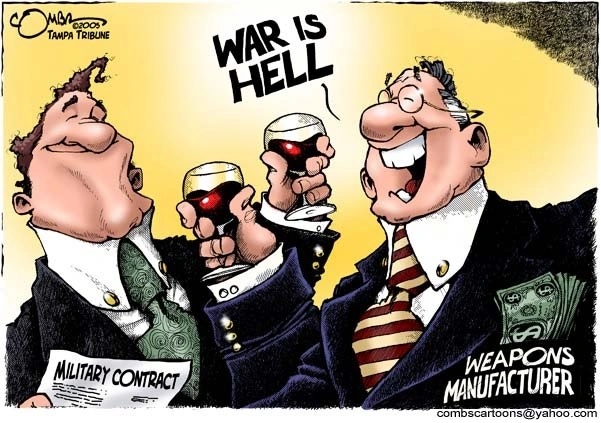





 nuclear-news