What if the most powerful nuclear bomb exploded in space, Business Insider GENE KIM, SHIRA POLAN
OCT 12, 2018, We all know a nuclear blast on land brings devastating effects to the surrounding region. But what if humans detonated a nuclear bomb in space? Following is a transcript of the video.
Imagine if we detonated a nuclear bomb in space? Actually, you don’t have to.
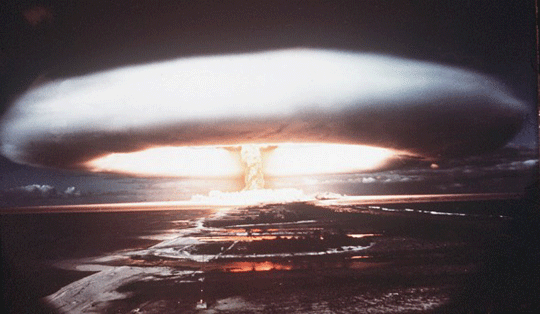
You can see it for yourself. That was Starfish Prime – the highest-altitude nuclear test in history. In 1962, the US government launched a 1.4 megaton bomb from Johnston Island. And detonated it 400 km above the Pacific – about as high as where the International Space Station orbits today.
The detonation generated a giant fireball and created a burst of energy called an electromagnetic pulse, or EMP, that expanded for over 1,000 kilometers.
EMPs can cause a power surge, damaging electronic equipment in the process. And this one was no different. Across Hawaii, street lights went dark, telephones went down, and navigation and radar systems went out, not to mention the six, or so, satellites that failed.
And all this came from a 1.4 megaton bomb. Tsar Bomba, which was the largest nuclear bomb that has ever been detonated, was 50 megatons.
So what would happen if we detonated that above the United States?
For starters, there’s no atmosphere in space. So, there would be no mushroom-shaped cloud and no subsequent blast wave or mass destruction. Instead, you’d get a blinding fireball 4 times the size of Starfish Prime’s. And if you looked directly at it within the first 10 seconds, you could permanently damage your eyes.
Satellites wouldn’t be safe either. Radiation from the explosion would fry the circuits of hundreds of instruments in low-earth orbit. Including communication satellites, military spy satellites, and even science telescopes like the Hubble.
Plus, astronauts on board the International Space Station might be at risk of radiation poisoning.
On the ground, however, you’d probably be fine. The detonation point would be far enough away that the high-energy radiation wouldn’t reach you.
But don’t get too comfortable. Remember Starfish Prime’s EMP? This time, the EMP would cover ⅓ of the entire United States, bringing down regional power grids and electronics like a lightning strike. ……. https://www.businessinsider.com.au/detonating-most-powerful-nuclear-bomb-space-starfish-prime-tsar-bomba-2018-9?r=UK&IR=T
October 13, 2018
Posted by Christina Macpherson |
2 WORLD, weapons and war |
Leave a comment
https://www3.nhk.or.jp/nhkworld/en/news/20181010_27/ A US report says the country held a subcritical nuclear test in the state of Nevada last December.
The test was the first of its kind in 5 years, the 28th by the United States, and the first under the administration of President Donald Trump.
According to the report by the Department of Energy’s National Nuclear Security Administration, the experiment called Vega was held at a nuclear test site in Nevada.
Vega involved new explosives used to create powerful impacts on plutonium, and an examination of a plutonium implosion. The NNSA called the test an important step toward enhancing the performance of nuclear weapons.
The US government in February announced a new nuclear strategy of enhancing deterrence capabilities to counter Russia and China, by such means as increasing low-yield nuclear arsenals.
The move marks a shift from the policy of former president Barack Obama, who advocated a world without nuclear weapons.
Observers say antinuclear groups are expected to criticize the Trump administration for boosting nuclear weapon capabilities while pressing for denuclearization of North Korea.
October 11, 2018
Posted by Christina Macpherson |
USA, weapons and war |
Leave a comment
 France sued for ‘crimes against humanity’ over nuclear tests in South Pacific https://www.dw.com/en/france-sued-for-crimes-against-humanity-over-nuclear-tests-in-south-pacific/a-45826054
France is being taken to the International Criminal Court for nuclear weapons tests in French Polynesia. France has long denied responsibility for the impacts of the tests and only recently began compensating civilians. France is being taken to the International Criminal Court (ICC) for carrying out nuclear weapons tests in French Polynesia, a Polynesian opposition leader announced on Tuesday.
Oscar Temaru, the archipelago’s former president and current leader of the Tavini Huiraatira Party, announced the move during a United Nations committee dealing with decolonization.
Temaru accused France of “crimes against humanity” and said that he hopes to hold French presidents accountable for the nuclear tests with the ICC complaint.
“We owe it to all the people who died from the consequences of nuclear colonialism,” he told the UN committee.
Maxime Chan from Te Ora Naho, an association for the protection of the environment in French Polynesia, told the UN that there had been 368 instances of radioactive fallout from the tests and that radioactive waste had also been discharged into the ocean — violating international rules.
Three decades of nuclear tests
The French territory, currently home to 290,000 people, is best known for the popular tourist island of Tahiti, but its atolls of Mururoa and Fangataufa were used for decades for nuclear tests.
France carried out 193 nuclear weapons tests on islands in the archipelago between 1960 and 1996 until French President Jacques Chirac halted the program.
Around 150,000 military and civilian personnel were involved in France’s nuclear tests, with thousands of them later developing serious health problems.
France has long denied responsibility for the detrimental health and environmental impacts of the tests, fearing that it would weaken the country’s nuclear program during the Cold War.
In 2010, France passed a law allowing military veterans and civilians to be compensated if their cancer could be attributed to the nuclear tests. Out of approximately 1,000 people who have filed complaints against France, only 20 have been compensated.
October 11, 2018
Posted by Christina Macpherson |
France, Legal, OCEANIA, weapons and war |
Leave a comment
People in Japan criticize US nuclear test https://www3.nhk.or.jp/nhkworld/en/news/20181010_40/ People in Japan have criticized the US government for conducting a subcritical nuclear test last December.
A 39-year-old man expressed regret over the test during a visit with his baby to the Peace Memorial Park in the city of Hiroshima, which was hit by a US atomic bombing in 1945.
He said it’s regrettable that the United States conducted the test, which no one wanted, despite people’s hope for peace.
He said for the sake of children, he does not want nuclear weapons to exist in the future.
A 52-year-old woman in the city said the administration of President Donald Trump is not moving in the right direction, while provoking the world to divide.
She said she hopes the Japanese government will have its own views, without following the US administration.
Shigemitsu Tanaka, the head of the atomic bomb survivors’ organization in Nagasaki, also criticized the subcritical test.
He said it was a move against the UN Treaty on the Prohibition of Nuclear Weapons, which was adopted last year, and the test is unforgivable.
He said he hopes the US will lead efforts to eliminate nuclear arms as the only country to have used nuclear weapons and will call on other nations to abolish them.
October 11, 2018
Posted by Christina Macpherson |
Japan, opposition to nuclear, USA, weapons and war |
Leave a comment
China’s Nuclear Diplomacy in the Middle East
China will have to balance its nuclear ‘going out’ with nonproliferation concerns. The Diplomat , By Samuel Hickey, October 09, 2018 On September 21, China’s Ministry of Justice published its draft Atomic Energy Law, which urges its vast nuclear industry to go forth into the world and secure a portion of the nuclear export market. Unlike the “Gold Standard” interpretation of the “1+2+3” agreement in the U.S. Atomic Energy Act of 1954, China will not officially limit a partner country’s access to the full nuclear fuel cycle in exchange for nuclear cooperation.
This is an important distinction and is the same policy that Russia subscribes to in its nuclear export agreements. While both countries may not be willing to export enrichment technology, they will not explicitly state this or preclude any future partnership on the nuclear fuel cycle. Nuclear exports are an extension of their foreign policy as they seek to secure long-term geopolitical influence and they are signaling that negotiations are always on the table with the Global South.
China’s proliferation policy until Deng Xiaoping’s 1978 “reform and opening up” policy was characterized by countering the imperialist powers, and it stood firm with the Third World, arguably advocating proliferation.China now boasts a solid reputation against proliferation and support for the nuclear order, but it has shown a flexibility to negotiate with all actors; this causes concerns for the nonproliferation regime. The nuclear order currently relies on multinational efforts to constrain with whom a supplier state can partner, but this top down perspective challenges China’s nuclear energy promises to the Middle East and North Africa (MENA) region, including Iran.
China has a unique opportunity to capture a significant portion of the nuclear export market because of their finance schemes and domestic experience. However, MENA states will view China as underperforming in its diplomatic promises if collaboration does not turn into geopolitical gains or enhanced security assurances. China’s efforts to influence the international order will find an audience in the MENA region as states hedge their bets against a distracted and noncommittal United States, but China will not be coaxed into overextension to prove their geopolitical worth — to the distress of MENA states.
The Onus is on the Supplier
China and Russia dominate the civil nuclear import conversation among the MENA states because, for many, the United States’ nuclear export doctrine equates to removing it from the running. The United Arab Emiratesare the only MENA country to sign the gold standard U.S. nuclear agreement, which precludes them from the full nuclear fuel cycle and ensures there cannot be any military dimensions to nuclear cooperation. Even though they have no intentions of completing the nuclear fuel cycle soon, many MENA states refuse to sign this interpretation of the U.S. agreement simply to preserve their sovereign rights guaranteed to them under the Non-Proliferation Treaty (NPT).…………
Conclusions
Momentum on regulating China’s nuclear industry increased with China’s Nuclear Safety Law entering into force on January 1, 2018 and the State Council’s issuance of guidelines for the standardization of the nuclear system in August. China’s domestic nuclear expansion has stalled since 2016 so it must expand to new markets and increase its bureaucratic efficiency to support its massive nuclear industry.
China will not upset the nuclear order and prefers to retain the onus of preventing proliferation on the supplier state because that gives it leverage. It is distinctly not in China’s interest for any new nuclear states to crop up and maintaining a little ambiguity in its nuclear export policy allows it to pay lip service to the Global South and keep the West engaged in improving the nuclear order……….https://thediplomat.com/2018/10/chinas-nuclear-diplomacy-in-the-middle-east/
|
|
|
October 11, 2018
Posted by Christina Macpherson |
China, marketing, weapons and war |
Leave a comment
PARANOIA AND DEFENSE PLANNING: WHY LANGUAGE MATTERS WHEN TALKING ABOUT NUCLEAR WEAPONS, War on the Rocks, JEFFREY LEWIS AND AARON STEIN OCTOBER 10, 2018 The U.S. ambassador to NATO has, when one thinks about it, just one job. No matter who holds the job, the U.S. ambassador to NATO has many priorities, as one would expect for a role that involves dealing with dozens of countries and trying to get them to agree on a coherent defense policy. But one would think that not provoking a nuclear war with Russia would be at the very top of the ambassador’s list of priorities. This seems like a no-brainer, but it helps to focus on the simple things. The United States has a special obligation to be the “adult in the room” and to keep the alliance focused on constructive responses to collective threats.
The United States has had good and bad ambassadors to NATO, but each managed, one after the other, to navigate disputes such as the Berlin and Euromissiles crises, and to extend the postwar peace through seven decades. Then, in early October, Kay Bailey Hutchison — the U.S. permanent representative to NATO and erstwhile senator from Texas — put that streak in jeopardy for no good reason, threatening to preemptively attack Russia before it deployed a new cruise missile in violation of the Intermediate Range Nuclear Forces Treaty (INF). In response to a series of questions from journalists, Hutchison used imprecise language, culminating in a strangely worded statement:
Getting them to withdraw [deployed missiles] would be our choice, of course. But I think the question was what would you do if this continues to a point where we know that they are capable of delivering. And at that point we would then be looking at a capability to take out a missile that could hit any of our countries in Europe and hit America in Alaska. So it is in all of our interests, and Canada as well, I suppose. So we have our North Atlantic risk as well as the European risk. …
This suggests a preemptive missile strike. Perhaps that’s not what she meant, but it is what she said. Hutchison has now issued a clarification, so perhaps someone has reminded her that her job is no longer riling up voters, but engaging in diplomacy. Threatening a nuclear-armed power is not something to be done lightly.
But the clarification, however welcome, does not undo the very real damage that Hutchison has done. The real issue is less the cavalier nuclear threat and more that Hutchison’s lapse risks feeding a particular strain of Russian paranoia. What Hutchison meant to do was convey a perfectly reasonable sense that our patience is not infinite when it comes to Moscow’s continuing violation of the INF Treaty……….
Russian Paranoia and Aggressive America: From Andropov to Putin and Reagan to Trump . …..https://warontherocks.com/2018/10/paranoia-and-defense-planning-why-language-matters-when-talking-about-nuclear-weapons/
October 11, 2018
Posted by Christina Macpherson |
2 WORLD, weapons and war |
Leave a comment
 Studies renew worry about contamination from US arms testing, Stars and Stripes, By RALPH VARTABEDIAN | Los Angeles Times October 6, 2018 LOS ANGELES (Tribune News Service) — At the dawn of the nuclear age, the Franklin D. Roosevelt administration placed the nation’s major nuclear weapons production and research facilities in large, isolated reservations to shield them from foreign spies – and to protect the American public from the still unknown risks of radioactivity.
By the late 1980s, near the end of the Cold War, federal lands in South Carolina, Tennessee, New Mexico, Colorado, Ohio and Washington state, among other places, were so polluted with radionuclides that the land was deemed permanently unsuitable for human habitation.
That much has long been accepted as a price for the nation’s nuclear deterrent. But a far more complex problem could emerge if recent research is correct.
Studies by a Massachusetts scientist say that invisible radioactive particles of plutonium, thorium and uranium are showing up in household dust, automotive air cleaners and along hiking trails outside the factories and laboratories that for half a century contributed to the nation’s stockpile of nuclear weapons.
The findings provide troubling new evidence that the federal government is losing control of at least some of the radioactive byproducts of the country’s weapons program.
Marco Kaltofen, a nuclear forensics expert and a professor at Worcester Polytechnic Institute, said he collected samples from communities outside three lab sites across the nation and found a wide variation of particle sizes. He said they could deliver lifelong doses that exceed allowable federal standards if inhaled.
“If you inhale two particles, you will exceed your lifetime dose under occupational standards, and there is a low probability of detecting it,” he said.
A peer-reviewed study by Kaltofen was published in its final form in May in Environmental Engineering Science.
Kaltofen, who also is the principal investigator at the nuclear and chemical forensics consulting firm Boston Chemical Data Corp., released a second study in recent weeks.
The Energy Department has long insisted that small particles like those collected by Kaltofen deliver minute doses of radioactivity, well below typical public exposures.
One of the nation’s leading experts on radioactivity doses, Bruce Napier, who works in the Energy Department’s lab system, said the doses cited by Kaltofen would not pose a threat to public health.
Such assurances have been rejected by nuclear plant workers, their unions and activists who monitor environmental issues at nearly every lab and nuclear weapons site in the nation.
Jay Coghlan, executive director of Nuclear Watch New Mexico, cited a long history of denial about the claims of “down winders,” the residents of Western states who were exposed to radioactive fallout from atmospheric weapons testing.
“We cannot trust self-reporting by the Department of Energy,” he said. “I don’t accept that low levels of radioactivity have no risk.”
Tom Carpenter, executive director of another watchdog group, the Hanford Challenge in central Washington, said as recently as last year that the Energy Department released an unknown quantity of radioactive particles during demolition of a shuttered weapons factory, the Plutonium Finishing Plant.
After a series of three releases during 2017, the Energy Department shut down the demolition and has yet to resume it. Forty-two workers were exposed in the incidents.
“If you work in a coal mine, you go home with coal dust on you,” Carpenter said. “Same with a textile mill; you go home with cotton dust. These Hanford workers went home with plutonium dust.”
The second study by Kaltofen, completed in August, reported that fairly high radioactivity levels were found in 30 samples from the communities around the Hanford nuclear site, near Richland, Wash. The samples found contamination on personal vehicles driven inside the Hanford site that would leave mechanics exposed if they worked around the vehicles, the report said.
Kaltofen also reviewed an internal study in March by an Energy Department contractor, Washington River Protection Solutions, that found a calculated potential dose of 95 millirem for workers, roughly 10 times higher than the federal Environmental Protection Agency standard.
Kaltofen said a broader independent study should look at residual contamination around Hanford. An Energy Department spokesman at the Hanford site said the office had no comment on the studies.
For his studies, Kaltofen collected samples outside the Los Alamos National Laboratory in New Mexico, the former Rocky Flats weapons plant near Denver and the Hanford site.
The samples were collected from the crawl spaces of homes, a trailer park office, vacuum cleaner bags, automotive air filters, furnace filters and along a hiking trail.
He subjected those samples to electronic microscopy analysis to determine exactly what type of element was emitting radiation. He identified isotopes of cesium, thorium, uranium and plutonium, all the results of building nuclear weapons parts.
The communities surrounding these facilities have long adapted to the reality that they are near radioactivity, though they are not willing to take risks that compromise their health. Kaltofen’s sampling found some very high levels of contamination in Los Alamos’ Acid Canyon, a recreational area near a community pool and skate park………
A worker’s exposure to radioactivity, such as walking by a radioactive substance or having particles cling to clothing, is checked by monitors and badges worn by workers at plant sites. Such exposure is like a medical X-ray, which delivers a momentary dose. But inhaling a small particle of plutonium or thorium can go unnoticed by such monitors and deliver a lifetime of alpha radiation right next to lung tissue, Kaltofen said.
“You can walk through a portal monitor without setting it off but you can get a substantial amount of energy from particles in the body,” he said. https://www.stripes.com/news/us/studies-renew-worry-about-contamination-from-us-arms-testing-1.550707#.W7pnK–LpJ4.twitter
October 8, 2018
Posted by Christina Macpherson |
environment, USA, weapons and war |
Leave a comment
 U.S. General Considered Nuclear Response in Vietnam War, Cables Show, By David E. Sanger, NYT, Oct. 6, 2018 WASHINGTON — In one of the darkest moments of the Vietnam War, the top American military commander in Saigon activated a plan in 1968 to move nuclear weapons to South Vietnam until he was overruled by President Lyndon B. Johnson, according to recently declassified documents cited in a new history of wartime presidential decisions.
The documents reveal a long-secret set of preparations by the commander, Gen. William C. Westmoreland, to have nuclear weapons at hand should American forces find themselves on the brink of defeat at Khe Sanh, one of the fiercest battles of the war.
With the approval of the American commander in the Pacific, General Westmoreland had put together a secret operation, code-named Fracture Jaw, that included moving nuclear weapons into South Vietnam so that they could be used on short notice against North Vietnamese troops.
Johnson’s national security adviser, Walt W. Rostow, alerted the president in a memorandum on White House stationery.
The president rejected the plan, and ordered a turnaround, according to Tom Johnson, then a young special assistant to the president and note-taker at the meetings on the issue, which were held in the family dining room on the second floor of the White House………..
Had the weapons been used, it would have added to the horrors of one of the most tumultuous and violent years in modern American history. Johnson announced weeks later that he would not run for re-election. The Rev. Dr. Martin Luther King Jr. and Robert F. Kennedy were assassinated shortly thereafter.
The story of how close the United States came to reaching for nuclear weapons in Vietnam, 23 years after the atomic bombings of Hiroshima and Nagasaki forced Japan to surrender, is contained in “Presidents of War,” a coming book by Michael Beschloss, the presidential historian.
……….The incident has echoes for modern times. It was only 14 months ago that President Trump was threatening the use of nuclear weapons against North Korea — which, unlike North Vietnam at the time, possesses its own small nuclear arsenal.
………And before he was dismissed in 1951 by President Harry S. Truman, Gen. Douglas MacArthur explored with his superiors the use of nuclear weapons in the Korean War. Truman had feared that MacArthur’s aggressive strategy would set off a larger war with China, but at one point did move atomic warheads to bases in the Pacific, though not to Korea itself…….
Mr. Beschloss’s book, which will be published on Tuesday by Crown, examines challenges facing presidents from Thomas Jefferson to George W. Bush. https://www.nytimes.com/2018/10/06/world/asia/vietnam-war-nuclear-weapons.html
October 8, 2018
Posted by Christina Macpherson |
history, USA, weapons and war |
Leave a comment
What Happened
In a speech on Oct. 2 in Brussels, U.S. Ambassador to NATO Kay Bailey Hutchison demanded that Russia return to complying with the Intermediate-Range Nuclear Forces (INF) Treaty or else the United States would be forced to develop its own non-INF-compliant weapons to match Russian capabilities. In response, Russian Foreign Ministry spokeswoman Maria Zakharova said that “It seems that people who make such statements do not realize the level of their responsibility and the danger of aggressive rhetoric.”
Some Background on the INF
The INF Treaty is a key arms control pact between the United States and Russia that halted a destabilizing buildup of intermediate-range nuclear missiles in Europe during the 1980s. The pact served as a cornerstone in efforts to end the Cold War. Recently, however, the United States has accused Russia of developing, testing and deploying a type of cruise missile that violates the limits set by the INF, and Moscow in turn has accused Washington of deploying drones and missile launchers that violate the terms of the treaty.
Over the past year, the United States has tried various tactics to get Russia to comply with the treaty. Washington has sanctioned Russian officials and tried to pressure Moscow by deploying tactical nuclear weapons aboard its submarine-launched ballistic missiles. The U.S. Congress has also passed legislation that would pave the way for the development of a missile that, if fielded, would violate the INF treaty. None of these measures appear to have worked yet; the United States and its NATO allies insist that the Russians are still in violation of the treaty.
Why It Matters
Hutchinson’s statements show that the White House is clearly determined to follow Congress’ lead in considering the deployment of U.S. missiles that violate the INF. The first open INF violations from both the United States and Russia will likely lead to many more violations that could kill the already fragile treaty. The demise of the INF would further catalyze a budding and potentially highly destabilizing arms race between the United States and peer competitors Russia and China. It would also be deeply alarming to Washington’s European allies, who would once again sit between Russian and U.S. intermediate range nuclear missile arsenals, just as they did during the Cold War.
An additional concern is that an ugly fight over the status of the INF could spill over into negotiations for the renewal of the other big global nuclear arms control treaty: the New START treaty, which limits the number of U.S. and Russian deployed strategic nuclear weapons and launchers. Unlike the INF, New START is nominally on much surer ground, as Russia and the United States both already have so many strategic nuclear weapons that there are few major incentives to violate it. However, mistrust from the demise of the INF could potentially erode New START anyway. This outcome, although unlikely for now, would lead to a far more serious arms race than is currently taking place.
October 8, 2018
Posted by Christina Macpherson |
politics international, Russia, USA, weapons and war |
Leave a comment

 South Korea says Kim Jong Un could have 60 nuclear weapons SEOUL, South Korea , CBS News, 2 Oct 18-
– A top South Korean official told lawmakers that
North Korea is estimated to have up to 60 nuclear weapons, in Seoul’s first public comment about the size of the North’s secrecy-clouded weapons arsenal. Unification Minister Cho Myoung-gyon told parliament Monday the estimates on the size of North Korea’s nuclear arsenal range from 20 bombs to as many as 60. He was responding to a question by a lawmaker, saying the information came from the intelligence authorities.
The National Intelligence Service, South Korea’s main spy agency, couldn’t immediately comment.
Cho may have unintentionally revealed the information. His ministry said Tuesday Cho’s comments didn’t mean that South Korea would accept North Korea as a nuclear state, suggesting Seoul’s diplomatic efforts to rid the North of its nuclear program would continue.
The South Korean assessment on the North’s arsenal is not much different from various outside civilian estimates largely based on the amount of nuclear materials that North is believed to have produced……….https://www.cbsnews.com/news/north-korea-kim-jong-un-60-nuclear-weapons-south-korea-minister-atomic-bombs/
October 5, 2018
Posted by Christina Macpherson |
North Korea, politics international, South Korea, weapons and war |
Leave a comment
US threatens to ‘take out’ Russian missiles if Moscow keeps violating nuclear treaty By Ryan Browne and Frederik Pleitgen, CNN October 2, 2018 CNN)The United States Permanent Representative to NATO, Amb. Kay Bailey Hutchison, warned Tuesday that the US could “take out” Russian missiles that are perceived to be in violation of the Intermediate-Range Nuclear Forces Treaty should Moscow continue to violate the agreement…..
October 5, 2018
Posted by Christina Macpherson |
politics international, Russia, USA, weapons and war |
Leave a comment
On September 26, the global community celebrated International Day for the Total Elimination of Nuclear Weapons, a day designated by the United Nations (UN) to draw attention to one of its oldest goals: achieving global nuclear disarmament.
By unhappy coincidence, September 26 was also the day President Donald Trump addressed the UN Security Council, and total nuclear disarmament wasn’t exactly high on his agenda. As expected, he wants North Korea to fully abandon its arsenal (and Iran, though it doesn’t have one) — without the United States reducing its own in return.
Trump’s aggressive, bullying rhetoric was on full display throughout his remarks when he addressed the UN General Assembly the previous day. (He did dial it back a bit from last year’s UN address, when he said the United States would “totally destroy” North Korea and referred to Kim Jong Un as “Rocket Man,” but maybe that’s a low bar.)
Trump has made it abundantly clear that he’s not committed to nuclear disarmament. Like other presidents before him, he has the power to unilaterally order a first nuclear strike. Rather unlike others, he’s previously asked, if we have nuclear weapons, why can’t we use them?
But Congress has the power to act to avert a nuclear catastrophe. In fact, a few champions in Congress have recently taken critical steps to prevent the outbreak of nuclear war.
On September 18, Representatives Ted Lieu, Adam Smith, John Garamendi, Earl Blumenauer, and Senator Ed Markey introduced a bill called the “Hold the LYNE Act,” which stands for Low-Yield Nuclear Explosive. It would “prohibit the research, development, production, and deployment of low-yield nuclear warheads for submarine-launched ballistic missiles.”
So-called “low-yield” nuclear weapons actually lower the threshold for nuclear war and increase the risk that they may actually be used.
“There’s no such thing as a low-yield nuclear war,” said Lieu in the joint press release announcing the bill. “Use of any nuclear weapon, regardless of its killing power, could be catastrophically destabilizing. It opens the door for severe miscalculation and could drag the U.S. and our allies into a devastating nuclear conflict.”
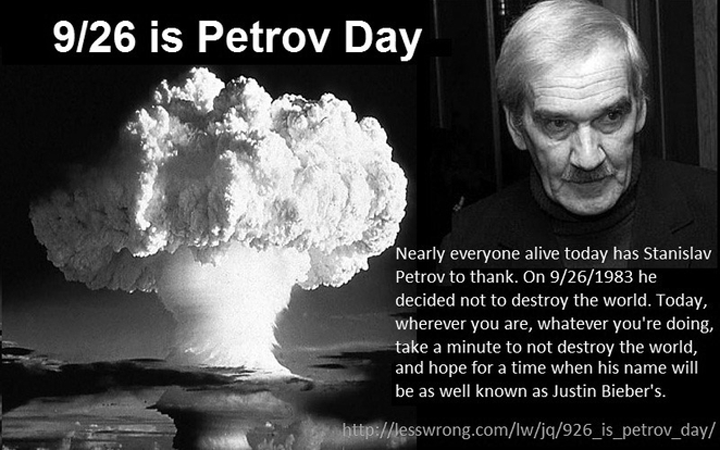
We’ve come very close to nuclear war in the past. On September 26, 1983, Soviet military officer Stanislav Petrov made a split-second decision and deemed a supposed missile attack from the United States to be an error, refusing to carry out an order to counterattack and thus averting a nuclear war.
If Petrov hadn’t made that judgment, we might not even be here to advocate for a world free of nuclear weapons.
Let’s take the lessons we’ve learned from the past and use them to create a healthier, safer future for young people and future generations, so they won’t have to worry about the looming threat of nuclear war.
The president of the United States may not have marked the International Day for the Total Elimination of Nuclear Weapons. The rest of us still can.
October 3, 2018
Posted by Christina Macpherson |
USA, weapons and war |
Leave a comment
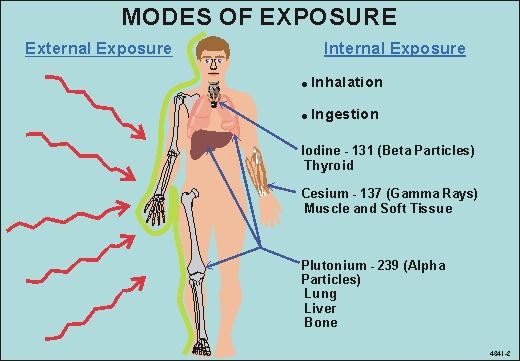
Hidden danger: Radioactive dust is found in communities around nuclear weapons sites, LA Times, By RALPH VARTABEDIAN SEP 28, 2018 “……….Studies by a Massachusetts scientist say that invisible radioactive particles of plutonium, thorium and uranium are showing up in household dust, automotive air cleaners and along hiking trails outside the factories and laboratories that for half a century contributed to the nation’s stockpile of nuclear weapons.
· The findings provide troubling new evidence that the federal government is losing control of at least some of the radioactive byproducts of the country’s weapons program.
· Marco Kaltofen, a nuclear forensics expert and a professor at Worcester Polytechnic Institute, said he collected samples from communities outside three lab sites across the nation and found a wide variation of particle sizes. He said they could deliver lifelong doses that exceed allowable federal standards if inhaled.
· “If you inhale two particles, you will exceed your lifetime dose under occupational standards, and there is a low probability of detecting it,” he said.
· A peer-reviewed study by Kaltofen was published in its final form in May in Environmental Engineering Science. Kaltofen, who also is the principal investigator at the nuclear and chemical forensics consulting firm Boston Chemical Data Corp., released a second study in recent weeks.
· The Energy Department has long insisted that small particles like those collected by Kaltofen deliver minute doses of radioactivity, well below typical public exposures. One of the nation’s leading experts on radioactivity doses, Bruce Napier, who works in the Energy Department’s lab system, said the doses cited by Kaltofen would not pose a threat to public health.
· Such assurances have been rejected by nuclear plant workers, their unions and activists who monitor environmental issues at nearly every lab and nuclear weapons site in the nation.
· Jay Coghlan, executive director of NuclearWatch New Mexico, cited a long history of denial about the claims of “down winders,” the residents of Western states who were exposed to radioactive fallout from atmospheric weapons testing. “We can not trust self-reporting by the Department of Energy,” he said. “I don’t accept that low levels of radioactivity have no risk.”
· Tom Carpenter, executive director of another watchdog group, the Hanford Challenge in central Washington, said as recently as last year that the Energy Department released an unknown quantity of radioactive particles during demolition of a shuttered weapons factory, the Plutonium Finishing Plant.
· After a series of three releases during 2017, the Energy Department shut down the demolition and has yet to resume it. Forty two workers were exposed in the incidents.
· “If you work in a coal mine, you go home with coal dust on you,” Carpenter said. “Same with a textile mill; you go home with cotton dust. These Hanford workers went home with plutonium dust.”
· The second study by Kaltofen, completed in August, reported that fairly high radioactivity levels were found in 30 samples from the communities around the Hanford nuclear site, near Richland, Wash. The samples found contamination on personal vehicles driven inside the Hanford site that would leave mechanics exposed if they worked around the vehicles, the report said.
· Kaltofen also reviewed an internal study in March by an Energy Department contractor, Washington River Protection Solutions, that found a calculated potential dose of 95 milliren for workers, roughly 10 times higher than the federal Environmental Protection Agency standard.
· Kaltofen said a broader independent study should look at residual contamination around Hanford. An Energy Department spokesman at the Hanford site said the office had no comment on the studies.
For his studies, Kaltofen collected samples outside the Los Alamos National Laboratory in New Mexico, the former Rocky Flats weapons plant near Denver and the Hanford site……..
Kaltofen’s sampling found some very high levels of contamination in Los Alamos’ Acid Canyon, a recreational area near a community pool and skate park………
A worker’s exposure to radioactivity, such as walking by a radioactive substance or having particles cling to clothing, is checked by monitors and badges worn by workers at plant sites. Such exposure is like a medical X-ray, which delivers a momentary dose. But inhaling a small particle of plutonium or thorium can go unnoticed by such monitors and deliver a lifetime of alpha radiation right next to lung tissue, Kaltofen said.
“You can walk through a portal monitor without setting it off but you can get a substantial amount of energy from particles in the body,” he said. http://www.latimes.com/local/california/la-na-radiation-hazards-2018-story.html#
September 29, 2018
Posted by Christina Macpherson |
radiation, USA, weapons and war |
Leave a comment

35 years ago today, one man saved us from world-ending nuclear war https://www.vox.com/2018/9/26/17905796/nuclear-war-1983-stanislav-petrov-soviet-union
On September 26, 1983, Stanislav Petrov saved the world. By Dylan Matthews@dylanmattdylan@vox.com Sep 26, 2018 On September 26, 1983, the planet came terrifyingly close to a nuclear holocaust.
The Soviet Union’s missile attack early warning system displayed, in large red letters, the word “LAUNCH”; a computer screen stated to the officer on duty, Soviet Lt. Col. Stanislav Petrov, that it could say with “high reliability” that an American intercontinental ballistic missile (ICBM) had been launched and was headed toward the Soviet Union. First, it was just one missile, but then another, and another, until the system reported that a total of five Minuteman ICBMshad been launched.
“Petrov had to make a decision: Would he report an incoming American strike?” my colleague Max Fisher explained. “If he did, Soviet nuclear doctrine called for a full nuclear retaliation; there would be no time to double-check the warning system, much less seek negotiations with the US.”
Reporting it would have made a certain degree of sense. The Reagan administration had a far more hardline stance against the Soviets than the Carter, Ford, or Nixon administrations before it. Months earlier President Reagan had announced the Strategic Defense Initiative(mockingly dubbed “Star Wars,” a plan to shoot down ballistic missiles before they reached the US), and his administration was in the process of deploying Pershing II nuclear-armed missiles to West Germany and Great Britain, which were capable of striking the Soviet Union. There were reasons for Petrov to think Reagan’s brinkmanship had escalated to an actual nuclear exchange.
But Petrov did not report the incoming strike. He and others on his staff concluded that what they were seeing was a false alarm. And it was; the system mistook the sun’s reflection off clouds for a missile. Petrov prevented a nuclear war between the Soviets, who had 35,804 nuclear warheads in 1983, and the US, which had 23,305.
A 1979 report by Congress’s Office of Technology Assessment estimated that a full-scale Soviet assault on the US would kill 35 to 77 percent of the US population — or between 82 million and 180 million people in 1983. The inevitable US counterstrike would kill 20 to 40 percent of the Soviet population, or between 54 million and 108 million people. The combined death toll there (between 136 million and 288 million) swamps the death toll of any war, genocide, or other violent catastrophe in human history. Proportional to world population, it would be rivaled only by the An Lushan rebellion in eighth-century China and the Mongol conquests of the 13th century.
And it’s likely hundreds of millions more would have died once the conflict disrupted global temperatures and severely hampered agriculture. International Physicians for the Prevention of Nuclear War put the potential death toll from starvation at about 2 billion.
Petrov, almost single-handedly, prevented those deaths.
Preventing the deaths of hundreds of millions, if not billions, of people was a costly decision for Petrov. If he had been wrong, and he somehow survived the American nuclear strike, he likely would’ve been executed for treason. Even though he was right, he was, according to the Washington Post’s David Hoffman, “relentlessly interrogated afterward [and] never rewarded for his decision.”
After the Cold War, Petrov would receive a number of commendations for saving the world. He was honored at the United Nations, received the Dresden Peace Prize, and was profiled in the documentary The Man Who Saved the World. “I was just at the right place at the right time,” he told the filmmakers. He died in May 2017, at the age of 77. Two new books about the Petrov incident and other nuclear close calls in 1983 (related to the NATO exercise Able Archer) came out just this year: Taylor Downing’s 1983 and Marc Ambinder’s The Brink.
Petrov isn’t the only man who’s prevented nuclear war
Petrov was not the only Russian official who’s saved the world. On October 27, 1962, Vasili Arkhipov, a Soviet navy officer, was in a nuclear submarine near Cuba when US naval forces started dropping depth charges (a kind of explosive targeting submarines) on him. Two senior officers on the submarine thought that a nuclear war could’ve already begun and wanted to launch a nuclear torpedo at a US vessel. But all three senior officers had to agree for the missile to fire, and Arkhipov dissented, preventing a nuclear exchange and potentially preventing the end of the world.
Even more recently, on January 25, 1995, Russian early warning radars suggested that an American first strike was incoming. President Boris Yeltsin was alerted and given a suitcase with instructions for launching a nuclear strike at the US. Russian nuclear forces were given an alert to increase combat readiness. Yeltsin eventually declined to launch a counterstrike — which is good, because this was another false alarm. It turns out that Russian early warning systems had picked up a Norwegian-US joint research rocket, launched by scientists studying the northern lights.
But September 26, Stanislav Petrov Day, is as good a time as any to celebrate the ordinary officers who took a stand when it counted to prevent hundreds of millions of deaths. And it’s as good a time as any to remember that as long as the US and Russia retain massive nuclear arsenals, these kinds of close calls will remain possible — and in the future, a false alarm could result in an accidental first strike.
|
|
|
September 28, 2018
Posted by Christina Macpherson |
depleted uranium, history, PERSONAL STORIES, politics international, Reference, Religion and ethics |
Leave a comment
French group to visit French Polynesia nuclear sites https://www.radionz.co.nz/international/pacific-news/367417/french-group-to-visit-french-polynesia-nuclear-sites 27 September 2018 A French government commission is about to visit French Polynesia’s nuclear weapons test sites to help modify the French compensation law. The 12-member commission includes three of French Polynesia’s parliamentarians in Paris as well as representatives of ministries such as defence, health and justice.
September 28, 2018
Posted by Christina Macpherson |
OCEANIA, weapons and war |
Leave a comment