Watchdog estimates civilian death toll from Ukrainian attacks on Donbass
https://www.rt.com/news/568395-us-troops-deployed-estonia/ 14 Dec 22, More than 4,500 people have been killed since mid-February, with supplies of NATO weapons resulting in a surge of deaths, observers claim.
Weapons supplied to Ukraine by NATO countries have allowed Kiev’s military to significantly ramp-up attacks on civilian targets in Donbass, a local watchdog has said.
The group claims that over 4,500 civilians have been killed and 4,000 injured since Ukrainian forces escalated shelling in mid-February.
Military terror has escalated beyond all limits after NATO members started supplying weapons to Ukraine,” the Joint Center for Control and Coordination (JCCC), a monitoring group that tracks attacks on the Lugansk and Donetsk People’s Republics, said on Wednesday.
“We have recorded a four-fold increase in the number of victims among the civilian population,” Natalya Shutkina, a representative from the Donetsk People’s Republic at the JCCC, said as quoted by TASS.
The JCCC held a press conference on Wednesday during which it showed fragments of Western shells and rockets collected after Ukrainian strikes in Donbass and explained the toll these attacks had taken.
Since February 17, 4,527 civilians have been killed, including 154 children, Shutkina stated. Another 4,317 civilians, including 274 children, have been injured, she said, adding that Ukrainian attacks have damaged over 12,000 homes, 128 medical facilities, and 67 sites required for providing basic utilities, such as water and heating.
The record-keeping begins in mid-February when the Donbass republics reported a significant escalation of strikes by Kiev in the lead-up to Russia having recognized the DPR and LPR as sovereign states and pledged to defend them. The two regions have since been incorporated into Russia following referendums in September.
Shutkina pointed out that the weapon systems provided by the US and its allies are supposed to be more accurate than the Soviet-era artillery guns and rocket launchers that Ukraine possessed previously. This leads the JCCC to believe that the Ukrainian attacks on civilian facilities have been intentional rather than being part of indiscriminate strikes, she stressed.
READ MORE: Children injured in Ukrainian shelling of Donetsk – authorities
Darya Morozova, the human rights ombudsman for the DPR, urged international organizations to acknowledge Kiev’s actions, arguing that “if the world community didn’t encourage the Ukrainian leadership with its inaction, the war in Donbass would have stopped a long time ago.” She called on Kiev’s sponsors to stop sending heavy weapons to Ukraine.
Weapons delivered to Ukraine ‘beginning to filter’ to Africa: Nigeria
https://english.almayadeen.net/news/politics/weapons-delivered-to-ukraine-beginning-to-filter-to-africa: By Al Mayadeen English , Source: Agencies, 3 Dec 22
Nigerian President Muhammadu Buhari urges heads of states from neighboring states participating in the Lake Chad Basin Commission to confront the issue of Western arms smuggling from Ukraine.
Weapons supplied to Ukraine from Western countries are “starting to flow” into the Lake Chad basin region, Nigerian President Muhammadu Buhari warned this week.
Addressing the heads of states from neighboring states participating in the Lake Chad Basin Commission on Tuesday in the Nigerian capital of Abuja, the president said, “Regrettably, the situation in the Sahel and the raging war in Ukraine serve as major sources of weapons and fighters that bolster the ranks of the terrorists in the region.”
Buhari then urged his counterparts to increase security cooperation in order to confront the issue of arms smuggling.
The Nigerian president agreed to step up military coordination in their countries’ war against Boko Haram and ISIS terrorists, who are now apparently receiving weapons from Ukraine, alongside the leaders of Benin, Chad, Niger, and the Central African Republic.
Last month, Finnish police said that some of the “huge quantities” of weapons being shipped to Ukraine had made their way to Finland, where “three of the world’s largest motorcycle gangs” now operate, including Bandidos MC, which “has a branch in every major city in Ukraine.”
In August, an American news outlet unmasked that a shockingly large amount of weaponry heading for Ukraine was untraceable. “Like 30% of it reaches its final destination,” said a tweet that was later deleted after a swarm of online trolls attacked it.
Russian Defense Minister Sergei Shoigu had previously said the arms supplied by the West to Ukraine were ending up on the black market and spreading across West Asia.
Similarly, Russian Foreign Minister Sergey Lavrov had pointed out that Stingers and Javelin missiles, supplied by the West to Kiev, were already being sold at a discount on the black market and have surfaced in Albania and Kosovo, which Russia has warned for so long.
Ukraine has received billions and billions of dollars in donated arms from the United States and its allies such as the United Kingdom and other NATO states in the past few months.
U.S. troops deployed near Russian border
U.S. troops deployed near Russian border –Estonia’s defense ministry has announced the arrival of an American infantry company as part of NATO’s presence in the country | 16 Dec 2022 | A United States infantry company arrived in Estonia this week as part of NATO’s effort to bolster the military bloc’s eastern border with Russia, the Baltic country’s defense ministry has revealed.
A statement published on the ministry’s website on Friday said that U.S. service members are stationed at Taara base in the town of Voru, some 20 kilometers from the Russian border. Commenting on the U.S. service members’ arrival, Colonel Mati Tikerpuu, the commander of the 2nd Infantry Brigade of the Estonian Defense Forces, said he expects to be able to “integrate our allies on a brigade level and gain an additional maneuver unit.” Colonel Richard Ikena, U.S. 1st Infantry Division Artillery Commander, said American troops are “excited to be in Estonia” and “look forward to working shoulder-to-shoulder, alongside our Allies.”
UN committee adopts Russian draft resolution on prevention of arms race in space
https://tass.com/world/1531171 16 Dec 22
The resolution drew support from 124 delegations, while 48 voted against it and 9 abstained
UNITED NATIONS, November 1. /TASS/. The UN General Assembly First Committee on Tuesday adopted Russia’s draft resolution on Further Practical Measures for the Prevention of an Arms Race in Outer Space.
The resolution drew support from 124 delegations, while 48 voted against it and 9 abstained. The resolution is now expected to be considered by a full General Assembly in December. The document underscores the importance of taking urgent measures in order to forever prevent the deployment of weapons in the outer space, use of force or threat of force in the outer space, from space against Earth and from Earth against objects in space. The document calls on all states to achieve via negotiations corresponding legally binding multilateral agreements.
The UN General Assembly First Committee approved the Russian draft resolution “No first placement of weapons in outer space.” The document was supported by 123 delegations, with 50 voting against and 4 abstaining. The draft document is now expected to be reviewed by the General Assembly’s full membership in December.
The document was co-authored by 18 other states. It calls to promptly begin a substantial work based on the updated version of the 2008 draft agreement on prevention of deployment of weapons in space, use of force or threat of force against space objects, introduced by Russia and China. It reaffirms the need for examination and adoption of practical measures during development of agreements for prevention of an arms race in the outer space.
The committee approved without a vote the Russian draft resolution on Transparency and Confidence-Building Measures in Outer Space Activities.
The committee also adopted the Russian draft resolution “Transparency and confidence-building measures in outer space activities” without a vote. The document states that the UN Secretary General must inquire about opinions and proposals of member states on practical implementation of transparency measures, contained in the 2013 report of Group of government experts on transparency and trust-building measures in space.
NATO Chief Voices Fear Of War With Russia While US Greenlights Drone Strikes On Russian Territory

Ukraine launched its most brazen attack into Russian territory yet, with drone strikes on bases which killed multiple Russian soldiers and damaged two nuclear-capable bombers. Not too long ago the US waging a proxy war that features direct attacks on Russia’s nuclear forces would have been an unthinkably terrifying prospect, yet that’s where we’re at now, and it only seems to be escalating.
The real issue is the danger of provoking a hot war between nuclear superpowers, which even the NATO Secretary-General is becoming increasingly nervous about.
Caitlin Johnstone https://caityjohnstone.medium.com/nato-chief-voices-fear-of-war-with-russia-while-us-greenlights-drone-strikes-on-russian-territory-165a38b84669 12 Dec 22
In what Antiwar’s Dave DeCamp describes as “a rare acknowledgment of the dangers of backing Ukraine,” NATO Secretary-General Jens Stoltenberg acknowledged a fear of something going “horribly wrong” and leading to a hot war between the nuclear-armed alliance and Russia.
In an article titled “‘I fear a full-blown war between the West and Russia’, Nato chief warns,” The Telegraph writes the following:
“I fear that the war in Ukraine will get out of control, and spread into a major war between Nato and Russia,” said Nato secretary-general Jens Stoltenberg, responding to a question about his greatest fears for the winter in an interview.
He told Norwegian broadcaster NRK on Friday that he was confident such a scenario could be avoided but that the threat was there.
“If things go wrong, they can go horribly wrong,” he added.
We got a taste of this horror once again last month in the long minutes following erroneous reports that Russia had launched missiles at NATO member Poland. The fact that cooler heads have prevailed up until this point does not mean that nuclear brinkmanship is safe, anymore than a game of Russian roulette not ending after the first couple of trigger pulls would mean that Russian roulette is safe to play.
So Stoltenberg is correct to be afraid. There absolutely are too many things that can go horribly wrong in such a standoff, and there are simply too many unpredictable moving parts for anyone to feel confident that this will not happen.
And it’s pretty crazy to hear Stoltenberg voice these concerns even while the Pentagon gives the go-ahead for Ukraine to begin launching long-range attacks on targets inside Russia in its war that is being backed by the United States, because those two positions would seem to be pretty strongly at odds with each other.
In an article titled “Pentagon gives Ukraine green light for drone strikes inside Russia,” The Times reports as follows:
The Pentagon has given a tacit endorsement of Ukraine’s long-range attacks on targets inside Russia after President Putin’s multiple missile strikes against Kyiv’s critical infrastructure.
Since daily assaults on civilians began in October, the Pentagon has revised its threat assessment of the war in Ukraine. Crucially, this includes new judgments about whether arms shipments to Kyiv might lead to a military confrontation between Russia and Nato.
This represents a significant development in the nine-month war between Ukraine and Russia, with Washington now likelier to supply Kyiv with longer-range weapons.
The Times quotes a “US defence source” as saying the following: “We’re not saying to Kyiv, ‘Don’t strike the Russians [in Russia or Crimea]’. We can’t tell them what to do. It’s up to them how they use their weapons. But when they use the weapons we have supplied, the only thing we insist on is that the Ukrainian military conform to the international laws of war and to the Geneva conventions.”
“They are the only limitations but that includes no targeting of Russian families and no assassinations. As far as we’re concerned, Ukraine has been in compliance,” the source says, which is a strange assertion given that US intelligence has reportedly concluded Ukraine was behind the assassination of the daughter of Aleksandr Dugin.
“Ukraine has been careful to use its own drones, not US-supplied weapons, to carry out the strikes,” The Times reports, while also noting that “Pentagon officials have made it clear that requests from Kyiv for longer-range US weapons, including rockets and fighter bombers which could be used for even more effective strikes inside Russia or occupied Crimea, are being seriously considered.”
This revelation comes days after Ukraine launched its most brazen attack into Russian territory yet, with drone strikes on bases which killed multiple Russian soldiers and damaged two nuclear-capable bombers. Not too long ago the US waging a proxy war that features direct attacks on Russia’s nuclear forces would have been an unthinkably terrifying prospect, yet that’s where we’re at now, and it only seems to be escalating.
Empire apologists will try to make this a conversation about whether Ukraine has a “right” to attack Russian territory, which is a red herring from the real issue at hand. Obviously Ukraine has a right to attack a nation that is attacking it; that’s not the point. The real issue is the danger of provoking a hot war between nuclear superpowers, which even the NATO Secretary-General is becoming increasingly nervous about.
The western power alliance continually ramping up aggressions to test how far it could provoke Russia is what led to this conflict in the first place. Now we’re at a point where there isn’t much space for Russia to back up before it’s against the ropes and potentially pressed to do something nobody wants. These people should not be talking about escalation, they should be talking about de-escalation. We need diplomacy, de-escalation and detente, and we need them yesterday.
_________________
The ‘Demon Core,’ The 14-Pound Plutonium Sphere That Killed Two Scientists
By Kaleena Fraga | Checked By Erik Hawkins https://allthatsinteresting.com/demon-core December 10, 2022
Physicists Harry Daghlian and Louis Slotin both suffered agonizing deaths after making minor slips of the hand while working on the plutonium orb known as the “demon core” at Los Alamos Laboratory in New Mexico.
To survivors of the nuclear attacks in Hiroshima and Nagasaki during World War II, the nuclear explosions seemed like hell on earth. And though a third plutonium core — meant for use if Japan didn’t surrender — was never dropped, it still managed to kill two scientists. The odd circumstances of their deaths led the core to be nicknamed “demon core.”
Retired to the Los Alamos National Laboratory in New Mexico following the bombings of Hiroshima and Nagaski, demon core killed two scientists exactly nine months apart. Both were conducting similar experiments on the core, and both made eerily similar mistakes that proved fatal.
Before the experiments, scientists had called the core “Rufus.” After the deaths of their colleagues, the core was nicknamed “demon core.” So what exactly happened to the two scientists who died while handling it?
The Heart Of A Nuclear Bomb
In the waning days of World War II, the United States dropped two nuclear bombs on Japan. One fell on Hiroshima on Aug. 6, 1945, and one fell on Nagasaki on August 9. In case Japan didn’t surrender, the U.S. was prepared to drop a third bomb, powered by the plutonium core later called “demon core.”
The core was codenamed “Rufus.” It weighed almost 14 pounds and stretched about 3.5 inches in diameter. And when Japan announced its intention to surrender on August 15, scientists at the Los Alamos National Laboratory were allowed to keep the core for experiments.
As Atlas Obscura explains, the scientists wanted to test the limits of nuclear material. They knew that a nuclear bomb’s core went critical during a nuclear explosion, and wanted to better understand the limit between subcritical material and the much more dangerous radioactive critical state.
But such criticality experiments were dangerous — so dangerous that a physicist named Richard Feynman compared them to provoking a dangerous beast. He quipped in 1944 that the experiments were “like tickling the tail of a sleeping dragon.”
And like an angry dragon roused from slumber, demon core would soon kill two scientists at the Los Alamos National Laboratory when they got too close.
How Demon Core Killed Two Scientists
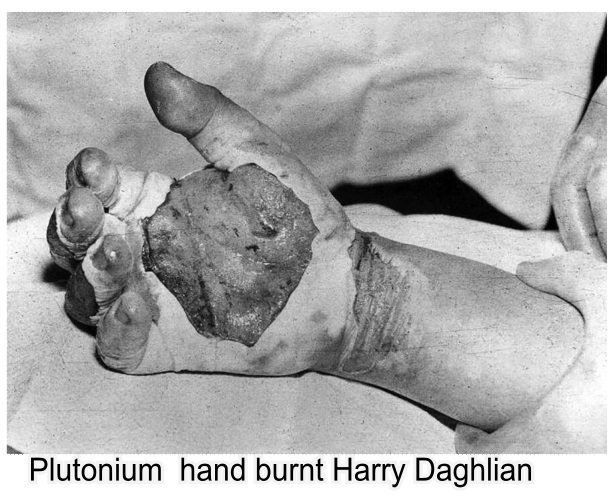
On Aug. 21, 1945, about a week after Japan expressed its intention to surrender, Los Alamos physicist Harry Daghlian conducted a criticality experiment on demon core that would cost him his life. According to Science Alert, he ignored safety protocols and entered the lab alone — accompanied only by a security guard — and got to work.
Daghlian’s experiment involved surrounding the demon core with bricks made of tungsten carbide, which created a sort of boomerang effect for the neutrons shed by the core itself. Daghlian brought the demon core right to the edge of supercriticality but as he tried to remove one of the bricks, he accidentally dropped it on the plutonium sphere. It went supercritical and blasted him with neutron radiation.
Daghlian died 25 days later. Before his death, the physicist suffered from a burnt and blistered hand, nausea, and pain. He eventually fell into a coma and passed away at the age of 24.
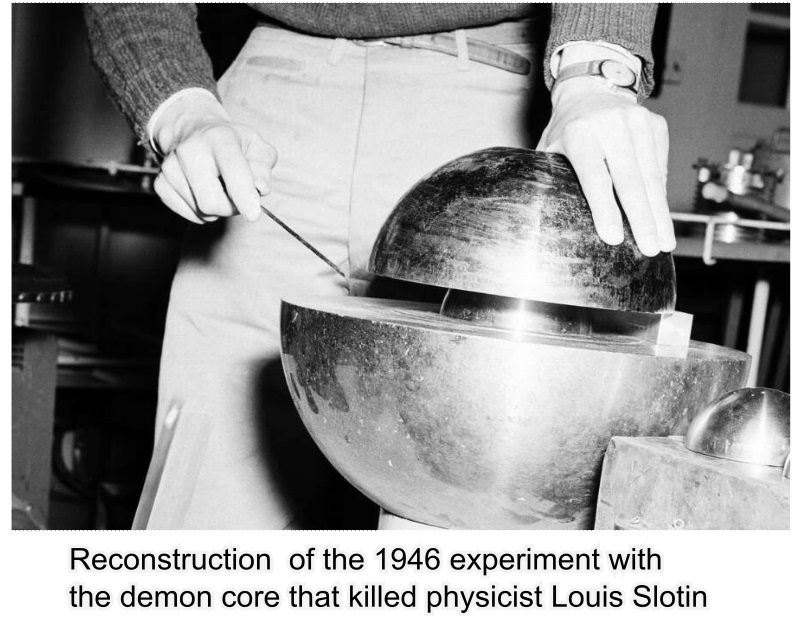
Exactly nine months later, on May 21, 1946, demon core struck again. This time, Canadian physicist Louis Slotin was conducting a similar experiment in which he lowered a beryllium dome over the core to push it toward supercriticality. To ensure that the dome never entirely covered the core, Slotin used a screwdriver to maintain a small opening though, Slotin had been warned about his method before.
But just like the tungsten carbide brick that had slipped out of Daghlian’s hand, Slotin’s screwdriver slipped out of his grip. The dome dropped and as the neutrons bounced back and forth, demon core went supercritical. Blue light and heat consumed Slotin and the seven other people in the lab.
“The blue flash was clearly visible in the room although it (the room) was well illuminated from the windows and possibly the overhead lights,” one of Slotin colleagues, Raemer Schreiber, recalled to the New Yorker. “The total duration of the flash could not have been more than a few tenths of a second. Slotin reacted very quickly in flipping the tamper piece off.”
Slotin may have reacted quickly, but he’d seen what happened to Daghlian. “Well,” he said, according to Schreiber, “that does it.”
Though the other people in the lab survived, Slotin had been doused with a fatal dose of radiation. The physicist’s hand turned blue and blistered, his white blood count plummeted, he suffered from nausea and abdominal pain, and internal radiation burns, and gradually become mentally confused. Nine days later, Slotin died at the age of 35.
Eerily, the core had killed both Daghlian and Slotin in similar ways. Both fatal incidences took place on a Tuesday, on the 21st of a month. Daghlian and Slotin even died in the same hospital room. Thus the core, previously codenamed “Rufus,” was nicknamed “demon core.”
What Happened To Demon Core?
Harry Daghlian and Louis Slotin’s deaths would forever change how scientists interacted with radioactive material. “Hands-on” experiments like the physicists had conducted were promptly banned. From that point on, researchers would handle radioactive material from a distance with remote controls.
So what happened to demon core, the unused heart of the third atomic bomb?
Researchers at Los Alamos National Laboratory had planned to send it to Bikini Atoll, in the Marshall Islands, where it would have been publicly detonated. But the core needed time to cool off after Slotin’s experiment, and when the third test at Bikini Atoll was canceled, plans for demon core changed.
After that, in the summer of 1946, the plutonium core was melted down to be used in the U.S. nuclear stockpile. Since the United States hasn’t, to date, dropped any more nuclear weapons, demon core remains unused.
But it retains a harrowing legacy. Not only was demon core meant to power a third nuclear weapon — a weapon destined to rain destruction and death on Japan — but it also killed two scientists who handled it in similar ways.
Are the bombs are back in town? US atomic weapons in Britain would make nuclear war more likely

Are the bombs are back in town? — Beyond Nuclear International
Is the US about to station nuclear weapons in Britain again or are they already here?
From Campaign for Nuclear Disarmament (CND UK) h
Editor’s Note: A mass demonstration organized by CND was held at Lakenheath, Suffolk, United Kingdom on November 19. “It’s extraordinary that a foreign power can place weapons of mass destruction on our soil with no oversight from our elected representatives,” said Sue Wright from Norwich CND (Norwich is 40 miles from the base). For more background, see our May 15, 2022 article by CND General Secretary, Kate Hudson, CND’s special page on the Lakenheath campaign, and this article by Hans Kristensen for Federation of American Scientists.
Beyond Nuclear, International Physicians for the Prevention of Nuclear War, Peace Action and Nuclear Resister, sent a joint statement of solidarity that was read out at the November 19 protest.
CND condemns any return of United States nuclear weapons to RAF Lakenheath in Suffolk. 110 nuclear bombs were stored at the airbase until they were removed in 2008 following persistent popular protest, and they must not be allowed back.
Response to war
Tensions are rising across Europe amidst the ongoing war in Ukraine. In response to the Russian invasion, reports are circulating that the US is preparing to store some of its nuclear weapons in the UK. This originated with the fact that the US Department of Defense has added the UK to a list of NATO nuclear weapons storage locations in Europe being upgraded under a multimillion-dollar infrastructure programme. The UK was not on the comparable list for the previous year, so this looks like a very recent decision.
Experts now believe the base in question is RAF Lakenheath, located just 100 km from London.
History repeats itself
While it is not yet known if nuclear weapons have already been returned to the base, or if NATO is in the process of preparing the base to be ready to receive them, this development marks a change in the nuclear status of RAF Lakenheath.
RAF Lakenheath hosted US nuclear weapons for more than five decades, first arriving in September 1954. CND arranged protests at the base alongside the Lakenheath Action Group, including days of action where hundreds of people descended on the base. Direct action activists broke into the base and locked on to the gates of the ammunition depot, preventing access for hours.
Messages of support were shared between campaigners at other US bases in Europe, and from Faslane, where Britain’s nuclear weapons are stationed. Plays were presented outside the base, and letters handed in to the Commander.
Following years of protesting, the nuclear weapons were eventually removed in 2008, but not before nuclear accidents endangered the safety of the local community.
Nuclear accidents
At least two major incidents involving nuclear weapons are known to have occurred at RAF Lakenheath.
In 1956 a B-47 bomber on a routine training mission crashed into a storage unit containing nuclear weapons, killing four servicemen. Official US documents declared it was a ‘miracle’ that none of the bombs detonated, and that ‘it is possible that a part of Eastern England would have become a desert’. Five years later, an airplane loaded with a nuclear bomb caught fire following pilot error.
The bomb was ‘scorched and blistered’, and scientists later discovered it could have detonated in slightly different circumstances.
Both incidents were covered up by the US and British governments, only being admitted in 1979 and 2003 respectively.
Nuclear-sharing
By the time of the weapons’ removal in 2008, the Lakenheath site had 33 underground storage vaults and stored around 110 B-61 gravity bombs that could be dropped from F-15E warplanes based there.
Lakenheath received the latest nuclear-capable fighter – the F-35A – in 2021 and a total of 24 F-35As are expected to be based there eventually. Training with the latest B61-12 guided nuclear bomb will commence within the year.
Despite being called an RAF station, Lakenheath is run by the United States Air Force (USAF) and currently only hosts USAF units and personnel, leading many campaigners to describe it as USAF Lakenheath. The host wing is the 48th Fighter Wing (48 FW), also known as the Liberty Wing, assigned to United States Air Forces in Europe – Air Forces Africa (USAFE-AFAFRICA). The wing operates the F-15C/D Eagle, F-15E Strike Eagle and F-35A Lightning II. With around 6,000 personnel on the base, it is the largest deployment of USAF personnel in Britain.
US nuclear weapons based here would make the UK once again a forward nuclear base for the US. Approximately 150 American B-61 nuclear gravity bombs are already currently stationed in five countries in Europe: Belgium, Germany, the Netherlands, Italy and Turkey.
The nuclear sharing arrangement is part of NATO defence policy. In peace time, the nuclear weapons stored in non-nuclear countries are guarded by US forces, with a dual code system activated in a time of war. Both host country and the US would then need to approve the use of the weapons, which would be launched on the former’s airplanes.
There is strong opposition to these weapons being sited in Europe, including from some of the host nation governments. Germany, Belgium and the Netherlands have all, unsuccessfully, called for the removal of US nuclear weapons from their countries.
Dangerous and destabilising
Should the UK be hosting or preparing to host US nuclear weapons, this would constitute a further undermining of our safety, and prospects for global peace. The US is the only country to locate its nuclear weapons outside its own borders and this major increase in NATO’s capacity to wage nuclear war in Europe is dangerously destabilising. Their return will increase global tensions and put Britain on the front line in a NATO/Russia war.
Resist
The big question is whether the nuclear bombs have already been returned to Britain, or if their delivery is still in preparation. Either way this is a huge challenge for the peace movement and CND will do everything we can to prevent these weapons being sited here. Millions mobilised across Europe against the imposition of cruise and Pershing missiles in the 1980s. We got rid of all those weapons then, and we have to have the energy, the commitment and the confidence to do that again.
The US should scrap plans to base nuclear weapons in the UK, and withdraw all their other nuclear weapons from Europe at the same time. A withdrawal of all US/NATO nuclear weapons from Europe would help reduce tensions at this very dangerous time, and would ultimately help advance international disarmament.
For more information, visit the CND website
PETER HITCHENS: The arrogance and folly in Ukraine that could yet send us hurtling towards nuclear catastrophe

Daily Mail, By PETER HITCHENS FOR THE MAIL ON SUNDAY, 12 December 2022
“………………………………………………………………….. let me quote the opening words of a frightening new book by Ben Abelow, How The West Brought War To Ukraine.
He says: ‘For almost 200 years, starting with the framing of the Monroe Doctrine in 1823, the United States has asserted security claims over virtually the whole Western hemisphere. Any foreign power that places military forces near US territory knows it is crossing a red line. US policy thus embodies a conviction that where a potential opponent places its forces is crucially important.
‘In fact, this conviction is the cornerstone of American foreign and military policy, and its violation is considered reason for war.’
Because, you see, what I have described in my thriller is pretty much the mirror image of what the USA and Nato have been doing in Europe for some years. For Canada and the USA, read Russia. For Quebec, read Ukraine and the Baltic states. There are, in fact, Nato troops stationed now in Estonia.
They have been known to hold tank parades just yards from the border with Russia. That puts them 81 miles (about the distance from London to Coventry) from St Petersburg, Russia’s second city. Ben Abelow notes that ‘in 2020, Nato conducted a live-fire training exercise inside Estonia, 70 miles from Russia’s border, using tactical missiles with ranges up to 185 miles. These weapons can strike Russian territory with minimal warning. In 2021, again in Estonia, Nato fired 24 rockets to simulate an attack on air defence targets inside Russia’.
Again, can you begin to imagine the USA’s response to such action close to its borders, or Britain’s if (say) Ireland decided to join and host a foreign military alliance, hostile to us?
All kinds of slime will now be hurled at me, saying I am trying to justify Russia’s invasion of Ukraine. I’m not. I continue to think it stupid, barbaric and wrong.
I think the best response to provocation is not to react in such ways. But not everyone is like me. And if nobody in the White House, the Pentagon or Nato thought that their policy towards Russia might be risking such an outcome, then I’d be amazed. As I’ve noted before, even the American anti-Russian superhawk Robert Kagan has said publicly that Russia was provoked. The worst bit of this is the nuclear element. In December 1987, I travelled to Washington to witness one of the most momentous and happy events of the age. This was the summit between Kremlin leader Mikhail Gorbachev and US President Ronald Reagan, which culminated in the signing of a treaty banning medium-range nuclear missiles.
The danger from such weapons was that they were far more likely to be launched than long-range rockets. Experts calculated that using them might possibly not result in a total nuclear wipeout. Hence the need to get rid of them.
Well, Donald Trump repudiated that treaty in 2018, blaming Russia, not very convincingly, for his decision. This was the second major nuclear arms treaty the USA has torn up. Gorbachev snapped that this was ‘not the work of a great mind’. More frighteningly, he warned that ‘a new arms race has been announced’.
And now we have actual war in Ukraine, which no powerful person seems to want to end. In fact, anyone who urges serious peace talks is denounced as a traitor and appeaser. That filthy, cruel war is now slowly spreading into Russia itself, with consequences I daren’t guess at.
During the whole Cold War I never really believed we were in danger. The Cuban crisis, which slightly overshadowed preparations for my 11th birthday, persuaded me that everyone would have more sense. I thought and think that TV dramas about a nuclear Armageddon, such as the BBC’s The War Game and the American The Day After, were unconvincing. They couldn’t come up with a believable reason for a war to start.
But now it seems entirely plausible. And I’ve been watching the American TV series Jericho with grim fascination – not because its explanation of nuclear disaster is likely, but because its portrayal of a small, friendly town in a post-nuclear world slowly descending into savagery is convincing. Thanks to arrogance and folly, this could happen, and this is what it would be like if it did.
So I shall carry on saying that we need peace in Ukraine, and soon. https://www.dailymail.co.uk/debate/article-11524385/PETER-HITCHENS-arrogance-folly-Ukraine-send-nuclear-catastrophe.html
US military atomic cleanup crews were sent out in the wake of American nuclear testing, and many paid a heavy price, veterans say
“We’re still fighting. We’re not gonna give up, and we’re just gonna keep going and keep fighting,” Brownell said. “The world needs to know. They need to know how dangerous the radiation is — how dangerous nuclear testing is.”
https://www.businessinsider.com/us-military-atomic-cleanup-crews-heavy-price-nuclear-testing-2022-12 Jake Epstein , Dec 11, 2022
- Over a period of more than a decade, the US military conducted dozens of nuclear tests in the Pacific.
- Years later, soldiers were sent to the Marshall Islands to try and clean up the fallout from the testing.
- But many were exposed to contaminated food and dust, leaving them with severe and lasting health issues.
For over a decade beginning not long after World War II, the US carried out dozens of nuclear weapons tests in the Marshall Islands — a chain of islands and atolls in the middle of the Pacific Ocean.
The largest of the 67 tests that were conducted between 1946 and 1958 was Castle Bravo. On March 1, 1954, the US military detonated a thermonuclear weapon at Bikini Atoll, producing an explosive yield 1,000 times greater than the atomic bomb that devastated Hiroshima, Japan.
Nuclear tests like Castle Bravo produced a substantial amount of nuclear fallout that negatively affected the people of the Marshall Islands, according to the Brookings Institution think tank. Radioactive material was even found in communities thousands of miles away.2
‘There’s no way possibly to clean that up’
Ken Brownell, who was a carpenter when he served in the military in the late 1970s, was sent to the Marshall Islands in 1977 to build a base camp for hundreds of soldiers assigned to cleanup operations. These cleanup efforts involved a concrete dome that was built on Runit Island, one of 40 islands that make up Enewetak Atoll, which was used to deposit soil and debris contaminated by radiation.
The goal, Brownell said, was supposedly to make the area habitable again for the Marshallese people after all the nuclear testing that happened during the US occupation, which began during World War II (the Marshall Islands eventually became independent in 1979).
Brownell, 66, said he worked 12-hour work days, six days a week, while living on Lojwa — an island “deemed safe” at the time because it didn’t host any nuclear tests, even though it was located near islands that did. His job included excavations and pouring concrete.
But despite the US military’s efforts to clean up the islands, Brownell said there was one, massive problem — it just couldn’t be done.
“There’s no way possibly to clean that up. Once that soil was contaminated, the animals that lived on the islands, the birds, the rats, the coconut crabs, all the — whatever wildlife was there — they consumed all that,” Brownell said. “So all this — the radioactive material goes into the ocean, gets into the coral. Now you’ve got it into the fish life. You’ve got it into the lobsters.”
Brownell said exposure to radioactive material could come from “any place on those islands,” whether it was eating contaminated seafood, or just walking around in the dirt and breathing in contaminated dust.
“On our end of it, most of our guys are dead because of the cancers and all the ailments that come along with the radioactive materials that we ingested,” Brownell said, adding that he had nothing in the way of protective gear. On a typical day, he said he would wear an outfit consisting of just combat boots, shorts, and a hat.
Coming from a farming community in New York, Brownell said he had no knowledge of radioactive materials before getting sent to the Marshall Islands. He also said he didn’t receive any prior training in radiological cleanups and that the potential dangers of the mission were never properly addressed beforehand.
“There was no running water … you couldn’t actually wash up. So you’re eating a baloney sandwich with dirty, contaminated hands, sitting in contaminated soil,” Brownell said. “The government said, ‘Oh, don’t worry about it … be careful swimming because there’s sharks out there.'”
Atomic veteran Francis Lincoln Grahlfs echoed Brownell’s remarks about a lack of knowledge on the dangers of nuclear cleanups, writing in a Military Times op-ed last year that “little was known by the public about the long-term effects of radiation exposure.”
Impact of radiation contamination
Nuclear weapons testing in the Marshall Islands had “devastating effects” on the country’s environment that “remain unresolved,” according to a 2019 report by the Republic of the Marshall Islands’ National Nuclear Commission. Some individuals still “live with a daily fear of how their health might be affected by long-term exposure to radiation.”
Several of Brownell’s friends dealt with health complications that he believed to be related to their service in the Marshall Islands — and he was not immune. In 2001, he was diagnosed with stage-four non-Hodgkin’s lymphoma and given only six months to live. That wasn’t the end though.
That six months has turned into 20 years — 21 years,” Brownell said. “So I’m grateful every day that I’m still here.”
Like Brownell, Grahlfs — who was sent to the Marshal Islands in 1946 — wrote in his December 2021 op-ed that he has suffered from health complications, including cancer, believed to be a result of his service.
Brownell and other veterans have been fighting to be covered by government services that could provide compensation and other care. He is currently covered by the PACT Act, which is legislation aimed at improving funding and healthcare access for veterans who were exposed to toxins during their service that was signed by President Joe Biden in August.
However, he, like thousands of others, are excluded from the Radiation Exposure Compensation Act, which only covers veterans present for atmospheric nuclear tests. RECA has had faster response times for claims than those submitted through the VA.
“We’re still fighting. We’re not gonna give up, and we’re just gonna keep going and keep fighting,” Brownell said. “The world needs to know. They need to know how dangerous the radiation is — how dangerous nuclear testing is.”
Maligned in Western Media, Donbass Forces are Defending their Future from Ukrainian Shelling and Fascism
Covert Action Magazine, By Eva Bartlett, – November 19, 2022
America is widely understood to be a key instigator behind conflict in Ukraine that has pitted brother against brother
meared, stigmatized, and lied about in Western media propaganda, the mostly Russian-speaking people of the Donbass region were being slaughtered by the thousands in a brutal war of “ethnic cleansing” launched against them by the neo-Nazi regime in Kyiv, which the U.S. installed after the CIA overthrew Ukraine’s legally elected president in a 2014 coup.
Although the Donbass people had been pleading for Russian military aid to defend them against the increasingly murderous military assaults by the Ukraine government forces, which killed more than 14,000 of their people, Russian President Vladimir Putin declined to intervene. Instead, he tried to broker a peace agreement between the warring parties.
But the U.S. and Britain secretly colluded to sabotage peace negotiations, persuading president Zelenksy to ignore the Minsk 2 peace agreement that the Ukraine government had previously signed, and which had been countersigned by Russia, France and Germany.
Realizing that the U.S. and its NATO allies would never permit peace negotiations to succeed, Putin finally sent troops into Ukraine on February 24. Russian troops went in to support and reinforce the outnumbered and outgunned Donbass Special Forces who had been defending their land against attacks by the Kyiv government for nearly eight years.
Voices From the Frontlines of Former Eastern Ukraine Republics
In the Donetsk People’s Republic (DPR) in October, I went to a frontline outpost 70 meters from Ukrainian forces in Avdeevka (north and west of Donetsk), according to the Donbas commanders I spoke with there.
To reach that position, I went with two other journalists to a meeting point with two commanders of Pyatnashka—volunteer fighters, including Abkhazi, Slovak, Russian, Ossetian and other nationalities, including locals from Donbas.
From there, they drove us to a point as far as they could drive before walking the rest of the way, several minutes through brush and trenches, eventually coming to their sandbagged wood and cement fortified outpost.
It has changed hands over the years, Ukrainian forces sometimes occupying it, Donbas forces now controlling it.
One soldier, a unit commander who goes by the call sign “Vydra” (Otter), was formerly a miner from the DPR who had been living in Russia with his family. In 2014, he returned to the Donbas to defend his mother and relatives still there. He spoke of the outpost.
“We dug and built this with our hands. Several times over the years, the Ukrainians have taken these positions. We pushed them back, they stormed us…Well, we have been fighting each other for eight years.”
There, artillery fire is the biggest danger they face. “You can hide from a sniper, but not from artillery, and they’re using large caliber.”
His living quarters is a dank, cramped, room with a tiny improvised bed, with another small room and bed for others at the outpost.
A sign reads: “If shelling occurs, go to the shelter.” The kind of sign you see all over Donetsk and cities of the Donbas, due to Ukraine’s incessant shelling of civilian, residential areas. In a frontline outpost where incoming artillery is the norm, the sign is slightly absurd, clearly a joke.
An Orthodox icon sits atop the sign. Ukrainian nationalists hang and spray Nazi graffiti and slogans of death; these fighters revere their faith.
A poster, with the DPR flag, reads: “We have never known defeat, and it’s clear that this has been decided from above. Donbas has never been forced to its knees, and no one will ever be allowed to.”
The only things decorating the space are tins of tuna and canned meat, instant noodles, and washing powder. Their existence is bare minimum, nothing glamorous about it; they volunteer because, as they told me, this is their land and they will protect it.
Perhaps surprising to some, when Vydra was asked whether he hates Ukrainians, he replied emphatically no, he has friends and relatives in Ukraine.
“We have no hatred for Ukraine. We hate those nationalists who came to power. But ordinary Ukrainians? Why? Many of us speak Ukrainian. We understand them, they understand us. Many of them speak Russian………………………..
And I’m on the Myrotvorets [kill list] website.” [As is the author, see this article.]
He spoke of Ukraine’s shelling from 2014, when the people of the Donbass were unarmed and not expecting to be bombed by their own country…………………………………..
I asked how he felt to be treated and described as sub-human, to be called dehumanizing names, a part of the Ukrainian nationalists’ brainwashing propaganda. As I wrote previously:
“Ukrainian nationalists openly declare they view Russians as sub-human. School books teach this warped ideology. Videos show the extent of this mentality: Teaching children not only to also hate Russians and see them as not humans, but also brainwashing them to believe killing Donbas residents is acceptable. The Ukrainian government itself funds neo-Nazi-run indoctrination camps for youths.”
“It’s offensive,” Vydra said, “We are saddened: There are sick people. We need to heal them, slowly.”……………………………….
Commanders Speak of Geopolitical Reasons for Ukraine’s War
Outside, sitting in front of an Orthodox banner and a collection of collected munitions—including Western ones—two platoon commanders, “Kabar” and “Kamaz,” spoke of the bigger geopolitical picture. [See video]
“America is running the show here,” Kabar said. “It builds foreign policy on the basis of how its domestic policy is built, which is through conflicts with external countries. They are accustomed to proving their power to their people through terrorism around the world, inciting fires in Syria, in the east. They played the card of radical Islam there……………………
And now they are playing the card of fascism. They do not see themselves on the other side of good. They need wars, blood, cruelty, and they signed Europe up for this.
However, they’ve missed one point: Russia, since the days of the Soviet Union, has never retreated in large scale wars. ………………………………………
Western Media Inverted Reality, Lauding Nazis and Demonizing Defenders
While many in the West think that this conflict started in February 2022, those following events since 2014 are aware that, following the Maidan coup and Odessa massacre, and the rise of fascism in Ukraine against the Ukrainian people, the Donbas republics wanted to distance themselves from Ukraine’s Nazis and fascism.
The sacrifices which the people of the Donbas republics have endured, particularly those fighting to protect their families and loved ones, have been and continue to be immense………..
These defenders, many living in dank trench conditions didn’t choose war, they responded to it, to protect their loved ones and their future. In spite of more than eight years of being warred upon by Ukraine, they retain their humanity. https://covertactionmagazine.com/2022/11/19/maligned-in-western-media-donbass-forces-are-defending-their-future-from-ukrainian-shelling-and-fascism/
UN: Israel must take ‘immediate steps’ to give up nuclear weapons
https://www.middleeastmonitor.com/20221208-un-israel-must-take-immediate-steps-to-give-up-nuclear-weapons/ December 8, 2022
The UN General Assembly has called on Israel to take “immediate steps” to surrender its nuclear weapons and implement UN resolutions fully on the establishment of a nuclear weapon-free zone in the Middle East.
The General Assembly vote was carried 149-6 yesterday. Israel, Canada, Micronesia, Palau, the US and Liberia opposed the resolution, while another 26 countries abstained, including India and many European states.
Among other provisions, the draft resolution called for immediate steps towards the full implementation of the resolution on the Middle East adopted by the 1995 Non-Proliferation Treaty. The key component of the package deal adopted in the treaty calls for the creation of a Middle East “zone free of nuclear weapons as well as other weapons of mass destruction” including “their delivery systems.”
The world body insisted that Israel must “accede to the Treaty without further delay, and not to develop, produce, test or otherwise acquire nuclear weapons, to renounce their possession and to place all its unsafeguarded nuclear facilities under full-scope International Atomic Energy Agency (IAEA) safeguards.”
Israel’s possession of nuclear weapons is an open secret. Although it’s widely believed to have a stockpile of nuclear weapons, the apartheid state neither acknowledges nor denies the existence of a nuclear arsenal. Israel is not a party to the Non-Proliferation Treaty and has not accepted IAEA safeguards on some of its principal nuclear activities.
Western countries have generally tolerated Israel’s policy of nuclear ambiguity despite the threat it poses to the region. The UN resolution presumes that Israel has such weapons and calls on it to accede to the Non-Proliferation Treaty.
Lawmakers reject bid to audit US aid for Ukraine
House Republicans vowed to try again later after their resolution was narrowly defeated.

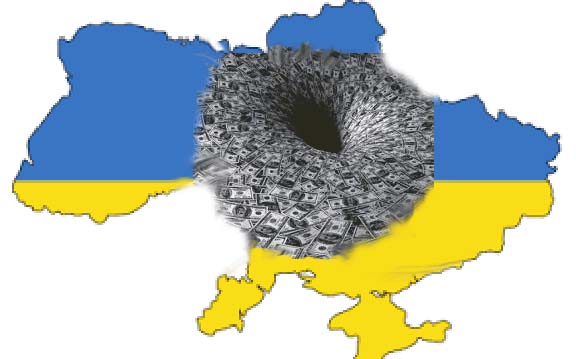
The US has been supplying Ukraine with assorted heavy weaponry, including armored vehicles, artillery, rockets and drones, since – and even before – Russia launched its military operation against the neighboring state in late February. The total amount of funds appropriated for Kiev in military and economic aid by the US has already exceeded $100 billion in less than a year.
https://www.rt.com/news/567836-us-lawmakers-ukraine-audit/ 7 Dec 22,
A resolution calling for an audit of US military and economic aid to Ukraine has been narrowly defeated in the House of Representatives. The measure, spearheaded by Representative Marjorie Taylor Greene (R-Ga.) and backed by multiple fellow legislators, was rejected by 26 votes to 22 before the House Foreign Affairs Committee on Tuesday.
The proposed audit had been strongly opposed by House Democrats, who argued that such oversight activities would have sent a wrong signal to Ukraine, which has been strongly supported by Washington in its ongoing conflict with Russia.
“This is not the time for us to be divided. We’ve held together with NATO, and the EU, and our allies. Let’s not fall into this trap,” the top Democrat on the committee, Representative Gregory W. Meeks (NY), said during the debate.
Republicans rejected such arguments, however, insisting that the measure was about transparency and accountability for Americans, rather than about sending any messages to Kiev. Greene also claimed that House Democrats were “blinded by hate” for her and were making Ukrainian oversight a purely political issue.
Despite the failure of the resolution to get through the committee, the outcome of the vote was hailed as a major win by its sponsors, as it has demonstrated unity among Republicans. Greene vowed to continue her efforts to push through the audit motion, promising to try again when the Republicans gain a slim majority in the House.
“It’s official the Democrats have voted NO to transparency for the American people for an Audit for Ukraine. But we take over in January! This audit will happen!” Greene wrote on Twitter.
While the Republicans have managed to demonstrate unity on the issue of stricter oversight in relation to continued support for Kiev, few have actually spoken against it altogether. Greene is one of few conservative Republicans who have been vocally opposed to sending billions to Ukraine.
The US has been supplying Ukraine with assorted heavy weaponry, including armored vehicles, artillery, rockets and drones, since – and even before – Russia launched its military operation against the neighboring state in late February. The total amount of funds appropriated for Kiev in military and economic aid by the US has already exceeded $100 billion in less than a year.
Putin: Nuclear risk is rising, but we are not mad
By Alys Davies, 7 Dec 22, BBC News
Vladimir Putin has said the threat of a nuclear war was rising, but insisted Russia had not “gone mad” and would not use its nuclear weapons first.
The Russian president insisted that his country would only use weapons of mass destruction in response to an attack.
Speaking at Russia’s annual human rights council meeting, he also said the war in Ukraine could be a “lengthy process”.
Western officials believe Putin initially planned for a rapid victory.
Russia’s capacity to use nuclear weapons has come under increased scrutiny since it invaded Ukraine in February.
“Such a threat is growing, it would be wrong to hide it,” Putin warned while talking about the prospect of nuclear war via video link from Moscow.
But he asserted that Russia would “under no circumstances” use the weapons first, and would not threaten anyone with its nuclear arsenal.
“We have not gone mad, we are aware of what nuclear weapons are,” he said, adding: “We aren’t about to run around the world brandishing this weapon like a razor.”
Putin also boasted that Russia had the most modern and advanced nuclear weapons in the world, and contrasted its nuclear strategy to the US – who he said had gone further than Russia by locating its nuclear weapons on other territories.
“We do not have nuclear weapons, including tactical ones, on the territory of other countries, but the Americans do – in Turkey, and in a number of other European countries,” he said……………………………………… https://www.bbc.com/news/world-europe-63893316
Russia accuses Ukraine of nuclear terrorism over Zaporizhzhia
The Russian defence minister, Sergei Shoigu, said that Ukraine was continuing to shell the Zaporizhzhia nuclear power plant, deliberately creating the threat of a possible nuclear catastrophe.
Shoigu said Russian forces were taking “all measures” to ensure the safety of the power plant, Europe’s largest, in the face of what he called “nuclear terrorism” from Kyiv, Reuters reported.
Ukraine denies shelling the facility, which has been under the control of Russian forces since the first days of the war, and has accused Russia of firing on it.
“Our units are taking all measures to ensure the safety of the Zaporizhzhia nuclear power plant,” Shoigu told his military chiefs in a conference call, an abridged transcript of which was published by the defence ministry.
“In turn, the Kyiv regime seeks to create the appearance of a threat of a nuclear catastrophe by continuing to deliberately shell the site,” he added.
Shoigu said Ukraine had fired 33 large-caliber shells at the plant in the last two weeks. Most had been intercepted by Russian air defences, he said, though “some still hit objects that affect the safe operation of the nuclear power plant”.
“We classify these attacks by Ukrainian troops as nuclear terrorism,” he added.
Reuters was unable to independently verify the claims. Both Moscow and Kyiv blame each other for attacks on the facility. Kyiv has also accused Moscow of using the plant as a de facto weapons depot.
If Finland joins NATO, it needs a new nuclear weapons policy
Bulletin, By Robin Forsberg, Aku Kähkönen, Jason Moyer | December 8, 2022
As an aspiring NATO member, Finland must update its nuclear weapons policy. Nuclear weapons are an important pillar of the defensive alliance, which has the official position that for as long as nuclear weapons exist, NATO will inherently be a nuclear alliance.
…………… After filing its membership application in May 2022, Finland is now in the midst of its NATO accession process, with only Turkey and Hungary’s approval remaining. In its application, Finland is not seeking any exemptions to its membership and is committing to the alliance fully. This has initiated discussions about its upcoming policy on nuclear weapons.
………………. By applying for full NATO membership without any explicit restrictions, Finland allows itself the opportunity to chart its own decisions on nuclear weapons. But there is one caveat: Under Finland’s current national legislation nuclear weapons are illegal.
……….. By joining NATO, Finland will be allied with countries that have nuclear arsenals—and are prepared to use them if deemed necessary. This aligns with the creed of the alliance: Nuclear weapons are a core component of NATO’s deterrence. This will be the new security reality facing Finland the day it joins the nuclear alliance. Yet, it has not been sufficiently debated what becoming a NATO member will mean for Finland’s approach to nuclear weapons. In part, this is due to interest in both Finland and NATO for a speedy and uncomplicated accession. But there is also a tradition of not debating national strategic security policies in public fora due to the Finns’ high trust in their national authorities. A healthy national debate, however, is needed to improve the understanding of nuclear weapons policies among the Finnish population and their potential impact on Finland’s security.
………… Finland has a history of a strong non-nuclear proliferation policy. In 1968, it was the first country to sign the Treaty on the Non-Proliferation of Nuclear Weapons (NPT) and has ever since shown strong support for multilateral non-proliferation and conventional disarmament treaties. But this dogmatism has somewhat wavered in recent years, even before Russia invaded Ukraine.
,……………….. Finland chose to abstain from supporting the treaty [United Nations Treaty on the Prohibition of Nuclear Weapons (TPNW0]…… Experts theorized at the time that Finland abstained from voting not to jeopardize its prospects of joining NATO.
……….. Discussing Finland’s revised nuclear weapons policy is important not to jeopardize the ethics of Finland’s continuous and long-standing support of disarmament and non-proliferation efforts. The debate should also be reflective of the people’s willingness to take part in NATO’s nuclear weapons exercises, activities, or planning.
…… As Finland becomes a party to a nuclear alliance, it must begin the process of updating its nuclear weapons policy. https://thebulletin.org/2022/12/if-finland-joins-nato-it-needs-a-new-nuclear-weapons-policy/
1 This Month




PLEASE OPPOSE HR 8255 AND S.3639 – bills would accelerate satellite deployment, with no environmental review or safeguards – https://ncstd5li.quorum.us/campaign/169331/
To see nuclear-related stories in greater depth and intensity – go to https://nuclearinformation.wordpress.com
-
Archives
- September 2026 (339)
- August 2026 (330)
- July 2026 (355)
- June 2026 (287)
- May 2026 (306)
- April 2026 (356)
- March 2026 (251)
- February 2026 (267)
- January 2026 (308)
- December 2025 (358)
- November 2025 (359)
- October 2025 (375)
-
Categories
- 1
- 1 NUCLEAR ISSUES
- business and costs
- climate change
- culture and arts
- ENERGY
- environment
- health
- history
- indigenous issues
- Legal
- marketing of nuclear
- media
- opposition to nuclear
- PERSONAL STORIES
- politics
- politics international
- Religion and ethics
- safety
- secrets,lies and civil liberties
- spinbuster
- technology
- Uranium
- wastes
- weapons and war
- Women
- 2 WORLD
- ACTION
- AFRICA
- Atrocities
- AUSTRALIA
- Christina's notes
- Christina's themes
- culture and arts
- Events
- Fuk 2022
- Fuk 2023
- Fukushima 2017
- Fukushima 2018
- fukushima 2019
- Fukushima 2020
- Fukushima 2021
- general
- global warming
- Humour (God we need it)
- Nuclear
- RARE EARTHS
- Reference
- resources – print
- Resources -audiovicual
- Weekly Newsletter
- World
- World Nuclear
- YouTube
-
RSS
Entries RSS
Comments RSS

