France detonated nearly 200 nuclear ‘tests’ in French Polynesia — now this activist is calling for accountability
By Bobby Macumber, Dan Smith and Alice Matthews for Stories from the Pacific, 14 July 23 https://news.google.com/articles/CBMiVGh0dHBzOi8vd3d3LmFiYy5uZXQuYXUvcGFjaWZpYy9udWNsZWFyLXRlc3RpbmctZnJlbmNoLXBvbHluZXNpYS1oaW5hLWNyb3NzLzEwMjU4NTkzMNIBAA?hl=en-AU&gl=AU&ceid=AU%3Aen
Hinamoeura Cross was seven years old when France tested its last nuclear bomb in 1996 in French Polynesia.
It was detonated deep underground on the atoll of Fangataufa, in a deep shaft drilled into volcanic rock, and sent a white shockwave into the air, visible on grainy television cameras at the time.
“I don’t have any memory of it,” Hina told Stories from the Pacific.
“I was growing up. I never learned about the consequences of nuclear bombs at school. I didn’t even know there had been so many.”
Three to five was the figure Hina had in mind when she was younger.
But in fact, by the time France finished its testing program on the atolls of Fangataufa and Moruroa, around 190 nuclear “tests” had been conducted.
Nuclear explosions had been conducted in lagoons, dropped from planes and suspended from helium balloons. After international pressure, testing moved underground.
The largest was codenamed Canopus, which was a two-stage thermonuclear test that exploded in 1968 while suspended from a balloon.
It was around 200 times more powerful than the bombs dropped on Hiroshima and Nagasaki.
The combined effect of the testing was equivalent to a Hiroshima-sized nuclear bomb exploding in French Polynesia every week for 14 years, Hina said
“Today, our ocean is totally contaminated. It’s like a poison,” she said.
“I really feel that in my blood I have been poisoned because of those nuclear tests and we have so many thousands of Tahitian people who are sick … you can’t find a family without cancer.
“And it’s really hard because they don’t understand the consequences of the nuclear tests because they’re not aware today.”
Subjects in school touched on the nuclear bombs dropped in Japan, but Hina said nothing was taught about her country’s own more immediate history — and the health consequences.
France initially said only 10,000 people were at risk of radiation exposure as a result of the nuclear activity.
But a later investigation by a team of researchers from Princeton University, journalism group Disclose, and environmental group Interprt claimed 110,000 people were potentially exposed to toxic radiation.
Hina herself was diagnosed with Leukaemia at 24, while her grandmother, mother, aunt, and sister all had thyroid cancer.
And, she said, to add insult to injury, the compensation scheme in place was complex and “not at all impartial”.
There is one hospital and two clinics on the island of Tahiti, and many islanders are forced to fly to Paris for treatment.
“Today, it’s French Polynesia and all the population that pays for all this, the cost of the illness … and it costs a lot for us,” she said.
Calling a spade a spade — or a bomb a bomb
Hina’s diagnosis was a shock that jolted her into action.
Becoming an anti-nuclear activist, she started by posting articles and links online and eventually addressed the United Nations on the topic.
Now a newly elected member of Parliament in Tahiti, she’s pushing for better in-country medical treatment and to “educate and denuclearise Polynesian memories”.
It starts, she said, with “calling a spade a spade”. Nuclear tests were still nuclear bombs.
“The fact that there were no people that were being attacked … it was the same bomb,” she said.
“I really think that using the term test totally minimises the consequences.”
Another priority is getting France to acknowledge what happened and making her fellow Tahitians aware.
French Polynesia is of strategic importance to France, and Hina said the government was pushing to silence the fight.
“They don’t want to talk about the nuclear history. They don’t admit what happened.”
Hina also hopes to begin a foundation, allowing Polynesians to reclaim the nuclear narrative as well as advocate for anyone with radiation-related sickness to be treated in Polynesia.
Although chemotherapy has kept her leukaemia at bay thanks to an early diagnosis, not everyone is so lucky.
“I think it’s absolutely disgraceful that we don’t have a medical system that’s equal to the damage suffered by these 193 nuclear bombs,” she said.
“But I really thought that maybe if I have this courage, that will motivate other people to stand up and share their story, to speak about the cancers that we we have in our family, because … [many people] have cancer, but they don’t really realise the impact of the nuclear bombs.”
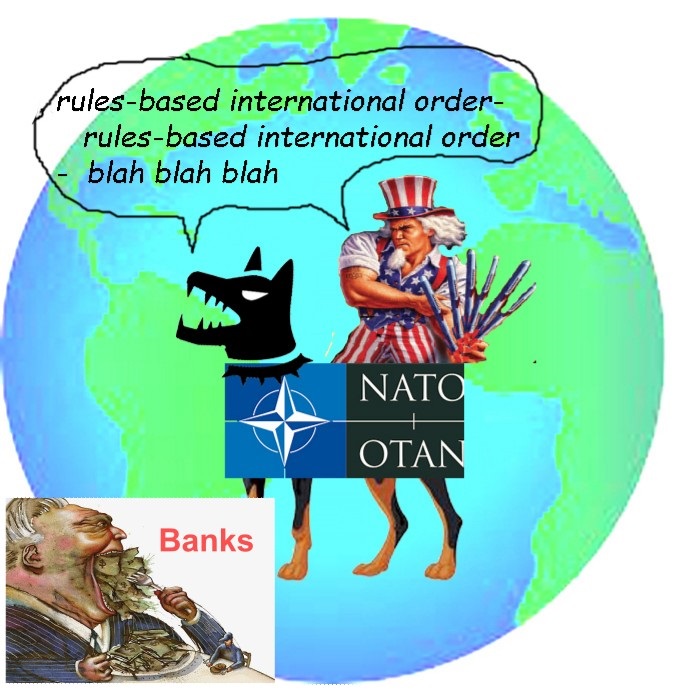
NATO fails to reduce nuclear risks at Vilnius Summit

https://www.icanw.org/nato_fails_to_reduce_nuclear_risks_at_vilnius_summit 13 July 23
The leaders of NATO countries, meeting in Vilnius at a time of unprecedented nuclear risk, took no action to reduce nuclear dangers and, on the contrary, issued a communique continuing to support the use of nuclear weapons. The alliance pointed to the risks posed by Russia’s nuclear weapons while hailing its own nuclear deterrent and nuclear sharing arrangements. It also criticised the UN Treaty on the Prohibition of Nuclear Weapons, the only area of progress on nuclear disarmament in decades, demonstrating its concern about the Treaty’s power to stigmatise and eliminate nuclear weapons.
The communique, released at the end of the first day of the Summit, condemned Russian deployment of weapons in Belarus and Russia’s “irresponsible nuclear rhetoric and coercive nuclear signalling,” while reiterating the alliance’s willingness to use nuclear weapons itself, and it’s “resolve to impose costs on an adversary that would be unacceptable”.
On nuclear sharing
NATO presented its justification for the U.S. deployment of nuclear weapons in Europe, despite democratic and legal challenges to the practice. It also criticised Russia for the same concept- to deploy nuclear weapons in Belarus. The communique is more explicit on nuclear sharing than previous statements, stating that“NATO’s nuclear deterrence posture also relies on the United States’ nuclear weapons forward-deployed in Europe.” But it ignores concerns raised by parliamentarians and citizens in NATO countries. The communique repeated NATO’s position that “NATO’s nuclear burden-sharing arrangements have always been fully consistent with the NPT,”despite the repeated challenges by other NPT members to this assertion.
Nuclear sharing, or stationing nuclear weapons in another country, is explicitly prohibited under the Treaty on the Prohibition of Nuclear Weapons,
which all countries should join as a matter of urgency to prevent further deployment of nuclear weapons in additional countries.
On the Treaty on the Prohibition of Nuclear Weapons (TPNW)
The communique dedicated several sentences to rebuking the Treaty on the Prohibition of Nuclear Weapons, the only treaty to adopt an action plan on disarmament in over a decade. NATO’s attention to this treaty demonstrates the alliance’s fear about its ability to undermine the possession, threat of use and stationing of nuclear weapons and challenge the practice of nuclear deterrence that all members currently engage in. The reality is that there is no inconsistency between the two treaties (NATO and the TPNW) – only between the practice of nuclear deterrence and joining the TPNW.
The communique claimed that the treaty is “in opposition to and is inconsistent and incompatible with the Alliance’s nuclear deterrence policy.” Yet throughout the history of NATO, members of the alliance have taken different approaches to weapons and strategy issues, and- as the communique itself outlines: Every nation has the right to choose its own security arrangements. There is no legal impediment to NATO members joining the TPNW. In fact several NATO countries are engaging with the constructive work underway in the TPNW, including by observing the first Meeting of States Parties to the TPNW in 2022, including Belgium, Germany, the Netherlands and Norway.
The NATO Summit in Vilnius could have been an opportunity for member states to demonstrate their commitment to bolstering peace and security by reducing the unacceptably high level of nuclear risk. As nuclear-armed states, states that host US nuclear weapons and states that accept the use of nuclear weapons on their behalf, they have the power to agree to end these dangerous practices. Instead, they chose to issue a communique with language on nuclear weapons that was hypocritical and empty. Fortunately, member states to the Treaty on the Prohibition of Nuclear Weapons will meet at the end of November to take real action to address nuclear dangers and advance towards disarmament.
Ukraine’s chances of victory in 2023 are ‘vanishingly small’
Premiered Jun 24, 2023 Ret. Lieutenant Colonel Daniel Davis elaborates on the current status of the Ukraine war and why a successful counteroffensive looks less likely.
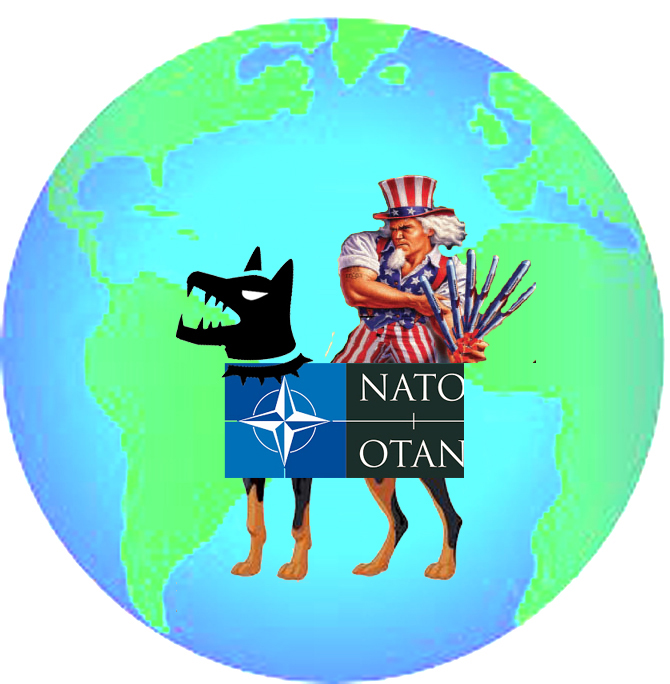
The Dissolution of NATO May Be the Only Way to Prevent WWIII
10 reasons why NATO ought to be disbanded
DENNIS KUCINICH, JUL 12, 2023 https://denniskucinich.substack.com/p/the-dissolution-of-nato-may-be-the?utm_source=post-email-title&publication_id=1441588&post_id=134486026&isFreemail=true&utm_medium=email
The proxy war of the US vs. Russia in Ukraine could easily develop into World War III. The litany of dangerous weaponry presaging a direct, full-scale war between the U.S. and Russia is instructive: The most advanced tanks, F-16s, depleted uranium munitions, cluster bombs, and even discussion of “tactical” nuclear weapons are thrown into an already toxic admixture, always open to further miscalculation.
This is not to absolve Russia of the invasion. One cannot ignore the dialectic of conflict, which left unchecked, will lead to a greater disaster than has already befallen the people of Ukraine.
Key to this miasma is NATO, the North Atlantic Treaty Organization, whose principal European members are committed to a total war with Russia, but on the U.S.’ tab.
NATO military strategies have lacked cohesion and coherence and have led to stasis on the battlefield. Victory over Russia has occurred in the western media, but not on the battlefield. There will be no ceasefire because trickery is no longer an option.
NATO officials will look to escalate the war. The U.S. knows it cannot. Clearly Europe needs a new security architecture which includes Russia with security guarantees for all member states. How can this be achieved with NATO resistance to an end to the war?
As the North Atlantic Treaty Organization (NATO) gathers to deliberate in Vilnius, Lithuania, one item that should be on the agenda is the sunsetting of the treaty which established NATO.
The dissolution of NATO itself may be the only way to prevent wider war and to stop the United States and the world from being plunged into the abyss of a wider, cataclysmic war.
Here are (at least) 10 reasons why NATO ought to be disbanded:
1. NATO, formally known as the North Atlantic Treaty Organization, (headquartered in Brussels, Belgium) was formed April 4, 1949, to protect Europe against the Soviet Union. The Soviet Union ended on December 25, 1991. NATO fulfilled its founding purpose thirty-two years ago.
2. NATO, has far exceeded the geographical boundaries of the North Atlantic. It has expanded its membership to include nations in the Baltic Sea, the Mediterranean Sea, the Adriatic Sea, the Aegean Sea and the Black Sea.
3. As an expansionist military organization, NATO has extended its military activities far beyond the North Atlantic to Afghanistan, the Gulf of Aden, Iraq, Libya, Darfur, Sudan, and off the Horn of Africa. It has even flown airborne early warning and control systems (AWACS) over United States air space.
4. The founding purpose of NATO was as a defensive alliance. Article One from the North Atlantic Treaty, which established NATO, reads as follows: “The Parties undertake, as set forth in the Charter of the United Nations, to settle any international dispute in which they may be involved by peaceful means in such a manner that international peace and security and justice are not endangered, and to refrain in their international relations from the threat or use of force in any manner inconsistent with the purposes of the United Nations.”
5. NATO is an instrument of war, contravening the founding purpose of the 193-member United Nations, formed in 1948 “to save succeeding generations from the scourge of war.”
6. NATO operates under the color of international authority, while threatening to bring “the scourge of war” to the world. It has aggressively asserted itself, in reliance on the assets of the United States of America, without which it would be a nullity. NATO’s rejection of diplomacy, its unbridled commitment to regime change, its support for ongoing escalation, is a threat to the peace of the region.
7. NATO’S global pretensions are on full display. On July 10, 2023, it presumed to deliver a warning to China.NATO’s Secretary General Jen Stoltenberg, said “The Chinese government’s increasingly coercive behavior abroad and repressive policies at home challenge NATO’s security, values and interests.”
8. NATO is not an independent body. More than 50% of NATO’s budget is paid for by the U.S., yet NATO’s Brussels leadership presumes to implicate the U.S. in wider war, a matter of Constitutional concern to the U.S. Congress.
9. NATO members are required to pay 2% of their GNP for NATO membership. This has turned NATO into an arms bazaar, at the expense of the social and economic needs of the people of its member states, leading to the militarization of Europe.
10. NATO is helpless to protest policies which are antithetical to European social and economic concerns. The destruction of the Nordstream Pipeline, has enabled US interests to price-gouge Europeans for energy. US sanctions policies have cut off European access to markets, further crippling economic growth.
Indonesia Warns Nuclear Weapons Put Southeast Asia a ‘Miscalculation Away’ From Disaster

Indonesia’s Foreign Minister Retno Marsudi urged nuclear weapons states to join ASEAN’s regional nuclear-free zone.
The Diplomat, By Edna Tarigan and Niniek Karmini, July 12, 2023
Indonesia’s top diplomat warned Tuesday of the threat posed by nuclear weapons, saying that Southeast Asia is “one miscalculation away from apocalypse” and pressing for world powers to sign a treaty to keep the region free from such arms.
Indonesian Foreign Minister Retno Marsudi raised the alarm ahead of a two-day summit of the Association of Southeast Asian Nations (ASEAN), which started later Tuesday in Jakarta. The agenda would spotlight Myanmar’s deadly civil strife, continuing tensions in the South China Sea, and efforts to fortify regional economies amid the global headwinds set off by Russia’s invasion of Ukraine.
Later in the week, the 10-nation bloc will meet Asian and Western counterparts, including U.S. Secretary of State Antony Blinken, Russian Foreign Minister Sergey Lavrov, and Chinese foreign policy overseer Wang Yi.
The U.S.-China rivalry is not formally on ASEAN’s agenda but looms large over the meetings of the bloc, an often-unwieldy collective of democracies, autocracies, and monarchies, with some members split over allegiances either to Washington or Beijing.
“We cannot be truly safe with nuclear weapons in our region,” Marsudi told fellow ASEAN ministers. “With nuclear weapons, we are only one miscalculation away from apocalypse and global catastrophe.
In 1995, ASEAN states signed a treaty that declared Southeast Asia’s commitment to be a nuclear weapon-free zone, one of five in the world. However, Marsudi lamented that none of the world’s leading nuclear powers have signed on to the pact and called for renewed efforts to convince those states to sign up. “The threat is imminent, so we can no longer play a waiting game,” she said………………………………………………………………….more https://thediplomat.com/2023/07/indonesia-warns-nuclear-weapons-put-southeast-asia-a-miscalculation-away-from-disaster/
France to supply Ukraine with long-range cruise missiles with the ‘capacity to strike deeply’
By John Irish, July 11, 2023, VILNIUS, July 11 (Reuters) – France will join Britain in supplying Ukraine with long-range cruise missiles, which can travel 250 km (155 miles), a move that allows Ukrainian forces to hit Russian troops and supplies deep behind front lines, French officials said on Tuesday.
Emmanuel Macron said he had decided to boost military aid to Ukraine to help its counteroffensive as the French President arrived at a summit of the 31-member NATO alliance in Lithuania.
“I have decided to increase deliveries of weapons and equipment to enable the Ukrainians to have the capacity to strike deeply,” Macron said, while declining to say how many missiles would be sent.
A French diplomatic source said they were talking about 50 SCALP missiles produced by European manufacturer MBDA.
The missiles would come from existing French military stocks, a French military source told reporters, adding that it would be a “significant number”.
The French version, known as SCALP, has a range of about 250 km, three times as far as Ukraine’s existing missile capacities.
The missiles were being integrated into Ukrainian Russian-made warplanes, the French military source said……………………………….. more https://www.reuters.com/world/europe/france-send-long-range-missiles-ukraine-macron-2023-07-11/
Ukraine admits responsibility for terror attack on Crimean bridge
Rt.com, 9 Jul 23
The strike sought to derail Russian logistics, a deputy defense minister has said
Ukraine has, for the first time, apparently admitted playing a role in the deadly attack on the Crimean Bridge last autumn. The incident belongs in the list of achievements for the country’s armed forces, a senior official has claimed.
While Moscow has repeatedly claimed that the attack was staged by the Ukrainians, officials in Kiev had never before directly admitted responsibility.
On Saturday, Ukrainian Deputy Defense Minister Anna Maliar published a post on Telegram commemorating 500 days since the start of the conflict between Kiev and Moscow, outlining several highlights.
The list includes an apparent public acknowledgment of Kiev’s role in the attack on the key link between the eastern part of the Russian peninsula and the rest of the country. “[It has been] 273 days since the first strike was conducted on the Crimean bridge to break the Russian logistics,” Maliar wrote.
The Crimean Bridge was damaged in a truck explosion last October, resulting in several people dead and serious damage to the facility. It has been fully repaired since……………………
Shortly after the incident, several Western media outlets reported, citing sources, that Kiev was indeed behind the explosion.
https://www.rt.com/russia/579419-crimean-bridge-ukraine-milestone/—
Cluster Bombs for Ukraine? A Warning From Kosovo
SCHEERPOST, by EDITORJuly 10, 2023
With Washington poised to ship cluster bombs to Kyiv, Declassified visits Kosovo to review the grim legacy of NATO firing this banned weapon in the Balkans.
By Phil Miller / Declassified UK
GRACANICA, KOSOVO – “In the village where we lived, there were nine bombs dropped by NATO in the space of two minutes,” Dzafer Buzoli recalls, as we discuss his traumatic childhood in Yugoslavia. A leading member of Kosovo’s Roma, his community went from pillar to post.
Many were dragooned into Slobodan Milosevic’s Serb-dominated Yugoslav army or targeted by Albanian rebels as suspected collaborators, before Bill Clinton and Tony Blair launched their ‘humanitarian intervention’ in 1999.
“When the first bomb fell, we were just confused and wondered what was happening,” he reflects. “But after the second bomb I felt the hot air and fell down from the pressure of the blast.
“Ever since then I’ve had a heightened sense of hearing. When there’s a loud noise or people yelling I have to really back up, because it’s too much for me.”
Buzoli was lucky to survive the airstrike. Two soldiers and a five year old boy were killed in the attack on his village of Laplje Selo, which was hit with controversial cluster munitions.
These scatter a blizzard of ball-shaped bomblets over target areas, like a minefield falling from the sky. Human Rights Watch said NATO killed between 90 and 150 civilians with this weapon across Serbia and Kosovo.
Thousands of bomblets failed to detonate on impact, posing a hazard to children who mistook their little yellow parachutes for toys. In the decade after the war, these remnants claimed another 178 casualties in Kosovo.
While this war might seem like a distant memory for those beyond the Balkans, it offers a cautionary tale to Western states now assisting Ukraine’s fight against Russia.
US officials are said to be seriously considering supplying Kyiv with cluster bombs, possibly as soon as next month.
That’s despite the weapon being banned by more than 120 countries including the UK, following a UN treaty in 2008. ……………………………………………………………………………………………………..
Clearing the remnants of these weapons from Kosovo is not expected to finish until 2024 – a quarter century after the war ended.
That marathon process, coupled with dubious performance on the battlefield, might give Joe Biden pause for thought about sending cluster bombs to Ukraine. https://scheerpost.com/2023/07/10/cluster-bombs-for-ukraine-a-warning-from-kosovo/
US cluster bombs deal is clear signal that war is not going well for Ukraine
America risks losing the moral high ground by supplying Ukraine with a weapon banned by much of the world, so why are they supplying it?
Mark Stone, US correspondent @Stone_SkyNews
The White House is fully aware of the huge controversy surrounding this cluster munitions decision.
Some 123 countries are part of the 2008 International Convention on Cluster Munitions which bans the use or transfer of this particular weapon.
Almost all of America’s allies are signatories to the convention.
Even within US government circles, there has been deep unease about supplying its own stockpile of cluster munitions to Ukraine.
Ukraine war latest: US to send Kyiv controversial weapon banned by more than 100 countries
As recently as last week, within the state department, there was division about the decision to supply the weapon.
The long and grim record of the cluster bomb explains the unease and the controversy.
Globally, civilians represent 97% of cluster munition casualties, according to a report last year by the Landmine and Cluster Munition Monitor – an organisation that seeks to ban them altogether.
Children are overwhelming the victims.
By supplying the weapon, there is a clear risk to civilians, not now necessarily, but in the future. The legacy of unexploded cluster bomblets is evident on former battlefields globally.
America also risks losing the moral high ground against Russia by supplying a weapon banned by much of the world.
So why supply it?
Well, the facts on the ground are not in Ukraine’s favour. The transfer is a clear signal that the war is not going well for Ukraine.
The so-called spring offensive did not materialise in the spring and looks set to falter through the summer too.
Ukraine is fast running out of more conventional artillery with supply stocks in America and elsewhere running low.
A ‘bridge of supply’ is necessary.
………………. The munitions would be used by Ukraine on occupied Ukrainian soil. The risk to civilians would be owned by Ukraine. The onus would be on Ukraine, with a pledge of American help, to clear the unexploded munitions when the war comes to an end.
The announcement is part of a multi-million dollar tranche of new weaponry which is an attempt by the Biden administration to future-proof the conflict; to give Ukraine the weapons it needs now in case domestic political circumstances change in the next 18 months.
American politics is in flux.
There is no guarantee of open-ended support for Ukraine. https://news.sky.com/story/us-cluster-bombs-deal-is-clear-signal-that-war-is-not-going-well-for-ukraine-12917101
US Will Provide Ukraine U.N. Condemned Cluster Bombs as Part of New Weapons Package

by EDITORJuly 8, 2023 https://scheerpost.com/2023/07/08/us-will-provide-ukraine-cluster-bombs-as-part-of-new-weapons-package/
The news comes after HRW issued a report that said Ukraine killed civilians with U.N. banned cluster bombs used in Izium
By Dave DeCamp / Anitwar.com
The Associated Press reported Thursday that the Biden administration has decided to arm Ukraine with cluster bombs and will announce the munitions as part of a new $800 million arms package. The news comes after Human Rights Watch (HRW) issued a report that said Ukraine has killed its own citizens using the munitions.
US officials told AP that they expect the arms package to be announced Friday. The White House used to be opposed to arming Ukraine with cluster munitions, as they are indiscriminate weapons that cause harm to civilians, but the concerns have waned.
Cluster bombs scatter small submunitions over large areas, making them especially hazardous to civilians who can find unexploded munitions years after they were dropped. Because of their indiscriminate nature, cluster munitions have been banned by more than 100 nations. The US, Ukraine, and Russia are not parties to the treaty, known as the Convention on Cluster Munitions.
The HRW report said that Ukrainian cluster munition rocket attacks in the eastern city of Izium in 2022 killed at least eight civilians and wounded 15 more. HRW also said Russia’s use of cluster bombs in the war has killed many civilians.
Ukraine’s use of cluster bombs on people living in its eastern territory goes back to 2014, when war first broke out in the Donbas. That year, HRW issued a report that said Kyiv was using the controversial munitions against populated areas of Donetsk. “The use of cluster munitions in populated areas violates the laws of war due to the indiscriminate nature of the weapon and may amount to war crimes,” HRW said.
According to Truthout, Daryl Kimball, executive director of the Arms Control Association, issued a statement on Thursday warning the US against sending cluster bombs to Ukraine. He said doing so would “be escalatory, counterproductive, and only further increase the dangers to civilians caught in combat zones and those who will, someday, return to their cities, towns, and farms.”
‘Russian victory’ worse than civilian cluster-bomb deaths – says Pentagon official
A US official has defended the decision to supply Ukraine with the weapons, which are banned in more than 100 countries.
US fears of Russian success on the battlefield outweigh concerns that deliveries of cluster bombs to Ukraine could result in civilian casualties, a senior Pentagon official acknowledged on Friday.
Speaking to reporters, Under Secretary of Defense for Policy Colin Kahl defended the White House’s decision to approve another $800 million weapons package for Ukraine, including cluster munitions. The weapons are banned in more than 100 countries.
When they detonate, the munitions release many small bomblets over a wide area. A percentage of bomblets fail to detonate on impact, however, and unexploded elements pose severe risks to civilians for years after fighting ends.
Asked if the Pentagon has assured its allies that the munitions will not cause excessive civilian harm, Kahl replied: “I’m as concerned about the humanitarian circumstance as anybody, but the worst thing for civilians in Ukraine is for Russia to win the war. And so it’s important that they don’t.”…………………………… https://www.rt.com/news/579374-pentagon-cluster-munition-civilian-casualties/
Germany Rejects Cluster Bombs For Ukraine As Clip Surfaces Of Biden Admin Previously Calling Them A ‘War Crime’
Zero Hedge, BY TYLER DURDEN, SATURDAY, JUL 08, 2023
In light of the Biden White House approving cluster bombs for Ukraine, under the justification that ‘but Russia used them first’, below is a quick trip down memory lane…
First, here is then White House press secretary Jen Psaki unequivocally condemning the use of cluster munitions as a potential “war crime” in 2022. The implication behind the exchange is that only the “bad guys” use them…
[Video here on original]
Next, below is a lengthy letter from top-ranking Congressional Democrats in a 2013 written to then President Barack Obama highlighting the evils of cluster bombs, explaining they are “indiscriminate, unreliable and pose an unacceptable danger to US forces and civilians alike.”
The letter emphasized they “cause unintended harm to civilians and civilian infrastructure, in many cases long after the cessation of hostilities,” and also recalled that “During Operation Desert Storm, US-dropped cluster submutnions caused more US troops casualties than any single Iraqi weapon system.”
Back when Democrats were outraged over cluster bombs and the potential for war crimes and indiscriminate killing…
[documentery evidence here on original]
It’s no wonder that key US allies in Europe are now objecting to the decision to supply Kiev with the internationally banned weapons.
“Germany opposes sending cluster munitions to Ukraine, its foreign minister said on Friday, a day after U.S. officials said Washington was planning to provide Kyiv with the weapons, widely denounced for killing and maiming civilians,” Reuters reports. Foreign Minister Annalena Baerbock told reporters in Vienna: “I have followed the media reports. For us, as a state party, the Oslo agreement applies.”
As for NATO leadership, Secretary General Jens Stoltenberg shrugged off reports that the US is set to announce cluster bombs for Ukraine. “This will be for governments to decide, not for Nato to decide,” he said Friday. He essentially said that because Russia is already deploying them, this makes it okay for Ukraine to do the same…… https://www.zerohedge.com/geopolitical/germany-rejects-cluster-bombs-ukraine-clip-surfaces-biden-admin-previously-cal1
RFK Jr torches Biden for handing “horrific” cluster munitions to Ukraine.
Daiy Caller 10 July 23
Democratic presidential candidate Robert F. Kennedy Jr. blasted the Biden administration Friday following an announcement that the Department of Defense would transfer cluster munitions to Ukraine.
The Biden administration announced plans to primarily send M864 155-millimeter artillery shells, known as Dual-Purpose Improved Conventional Munitions (DPICM), which dispense smaller explosive weapons over an area to attack personnel and vehicles, reversing a previous decision to withhold the weapons. Cluster munitions are controversial due to the risk posed by “dud” submunitions that could cause harm to civilians long after a conflict is over and were last manufactured in the 1990s, The Washington Post reported.
Democratic presidential candidate Robert F. Kennedy Jr. blasted the Biden administration Friday following an announcement that the Department of Defense would transfer cluster munitions to Ukraine.
The Biden administration announced plans to primarily send M864 155-millimeter artillery shells, known as Dual-Purpose Improved Conventional Munitions (DPICM), which dispense smaller explosive weapons over an area to attack personnel and vehicles, reversing a previous decision to withhold the weapons. Cluster munitions are controversial due to the risk posed by “dud” submunitions that could cause harm to civilians long after a conflict is over and were last manufactured in the 1990s, The Washington Post reported.
“These munitions scatter bomblets across the landscape,” Kennedy said in a follow-on post. “Many fail to explode — until children pick them up later. They have caused thousands of injuries and deaths to civilians.”……………
“Fortunately for Biden, there’s no anti-war left in the US Congress to bother him about this,” journalist Glenn Greenwald tweeted. “There are a few left-ish commentators, otherwise loyal to Democrats, who are making some noise about it, but by and large this will go forward without protest.” https://dailycaller.com/2023/07/07/robert-f-kennedy-jr-torches-joe-1
‘Kiev inflating regional conflict into World War III’, Russian envoy warns US
Hindustan Times, By Prapti Upadhayay, Jul 07, 2023
Russian Ambassador Anatoly Antonov denies involvement in false-flag provocation at Ukraine’s nuclear plant, warns of grave consequences.
Russia’s ambassador to the United States, Anatoly Antonov, has vehemently dismissed media reports suggesting Moscow’s involvement in a false-flag provocation at Ukraine’s largest nuclear power plant. In an exclusive interview with Newsweek, Ambassador Antonov alleged that Ukraine was using this narrative to draw NATO into a devastating conflict, cautioning against the grave repercussions that such a situation could entail.
We call on the curators of the Kiev regime to exercise responsibility and exert influence on their ‘wards’ in order to avoid a large-scale catastrophe, Antonov told Newsweek. He further emphasized that the failures of the Ukrainian counter offensive were driving them to create a pretext for NATO deployment, potentially inflating a regional conflict into World War III……………………………………… more https://www.hindustantimes.com/world-news/kiev-inflating-regional-conflict-into-world-war-iii-russian-envoy-warns-us-101688712799513.html—
N Korea slams US move to deploy nuclear submarines to peninsula
Pyongyang also accused US spy planes of violating its airspace and warns such aircraft may be shot down.
North Korea has condemned a United States plan to deploy a nuclear missile submarine to waters near the Korean peninsula, warning the move could incite a devastating atomic conflict.
In a statement carried by the Korean Central News Agency (KCNA) on Monday, a spokesperson for the North Korean defence ministry said Washington’s plan – agreed to by the leaders of the US and South Korea during an April summit – would introduce US strategic nuclear weapons to the Korean peninsula for the first time since 1981……………………………………………… more https://www.aljazeera.com/news/2023/7/10/n-korea-slams-us-move-to-deploy-nuclear-submarines-to-peninsula
1 This Month




PLEASE OPPOSE HR 8255 AND S.3639 – bills would accelerate satellite deployment, with no environmental review or safeguards – https://ncstd5li.quorum.us/campaign/169331/
To see nuclear-related stories in greater depth and intensity – go to https://nuclearinformation.wordpress.com
-
Archives
- September 2026 (330)
- August 2026 (330)
- July 2026 (355)
- June 2026 (287)
- May 2026 (306)
- April 2026 (356)
- March 2026 (251)
- February 2026 (267)
- January 2026 (308)
- December 2025 (358)
- November 2025 (359)
- October 2025 (375)
-
Categories
- 1
- 1 NUCLEAR ISSUES
- business and costs
- climate change
- culture and arts
- ENERGY
- environment
- health
- history
- indigenous issues
- Legal
- marketing of nuclear
- media
- opposition to nuclear
- PERSONAL STORIES
- politics
- politics international
- Religion and ethics
- safety
- secrets,lies and civil liberties
- spinbuster
- technology
- Uranium
- wastes
- weapons and war
- Women
- 2 WORLD
- ACTION
- AFRICA
- Atrocities
- AUSTRALIA
- Christina's notes
- Christina's themes
- culture and arts
- Events
- Fuk 2022
- Fuk 2023
- Fukushima 2017
- Fukushima 2018
- fukushima 2019
- Fukushima 2020
- Fukushima 2021
- general
- global warming
- Humour (God we need it)
- Nuclear
- RARE EARTHS
- Reference
- resources – print
- Resources -audiovicual
- Weekly Newsletter
- World
- World Nuclear
- YouTube
-
RSS
Entries RSS
Comments RSS

