Ukraine’s “spring counteroffensive not making progress: will NATO resort to deploying tactical nuclear weapons for Ukraine?
Since the initiation of the United States’ multitrillion-dollar nuclear weapons buildup in 2016, the US has been working to create smaller and lower-yield “usable” nuclear weapons.
Are nuclear weapons the next red line NATO will cross in Ukraine?
Andre Damon @Andre__Damon, 16 June 2023, WSWS
Nearly two weeks in, it is clear that Ukraine’s “spring counteroffensive,” promoted for months by the US media, has made no significant headway, while the Ukrainian armed forces have taken devastating physical losses.
Ukrainian officials claim to have retaken 38 square miles since the start of the offensive. These scraps of territory have been purchased with as many as 1,000 casualties per day, putting the total at up to 12,000 since the start of the offensive. Russian officials have released video of armored vehicles being destroyed by missiles, drones and long-range artillery, including over one dozen advanced Leopard 2 tanks and Bradley infantry fighting vehicles.
For the first year and a half of the conflict, the US and NATO powers have operated on the premise that they could prosecute the war by sending ever more advanced weapons to Ukraine, while letting Ukrainians serve as cannon fodder on the battlefield.
With cold indifference to the catastrophic loss of human life, the Biden administration has sought to fight the war to the last Ukrainian. But the problem with this strategy is that NATO is running out of Ukrainians to send to their deaths.
Hundreds of thousands of Ukrainian soldiers have been killed or injured so far. This is a substantial portion of the fighting-age population, leading the Zelensky government to more desperate measures to find new bodies to throw at the front lines.
Against this backdrop, the defence ministers of NATO countries concluded a two-day summit Friday aimed at finalizing plans for a military alliance between NATO and Ukraine. On Thursday, a Biden administration official told CNN that they are “open” to an accelerated plan for Ukraine to join NATO.
This will be the content of the upcoming NATO summit in Vilnius, Lithuania, whether through Ukraine directly joining NATO or in the form of the provision of “security guarantees.”
The real issue, however, is not Ukraine entering NATO, but NATO “entering” Ukraine through a vast escalation of its involvement in the war. The only reason for accelerating Ukraine’s entry into NATO is to create the framework for such an escalation.
The entire credibility of NATO has been staked on an effort to hurl the Russians over the border, generating a crisis that would lead to the collapse of the Putin government. The logic of escalation leads inexorably to direct NATO intervention in the conflict.
Every time the US and NATO powers have claimed they would not do something in Ukraine, they have gone ahead and done it, from the provision of battle tanks and fighter jets, to weaponry that has been used to attack Russian soil.
What will be the next “red line” that NATO will cross in response to the deteriorating military situation in Ukraine? There are several possibilities:
First, the creation of a “no-fly zone” and the direct engagement of Russian forces by NATO aircraft.
Second, the direct deployment of NATO troops into the war zone.
And third, the deployment or even use of tactical nuclear weapons by NATO to prevent a Russian victory in the conflict.
It is worth noting that during the Cold War, the US geopolitical strategist Henry Kissinger, recently the subject of media adulation on the occasion of his 100th birthday, once described the use of tactical nuclear weapons to avert a disaster precisely like that faced by Ukrainian forces.
In his 1957 book Nuclear Weapons and Foreign Policy, Kissinger argued for the deployment of nuclear weapons in frontline combat and their use on the battlefield by the United States in the struggle to prevent advances by conventional forces.
“Limited nuclear war,” that is, nuclear war that does not lead to global annihilation and “Mutually Assured Destruction,” Kissinger argued, “is in fact a strategy which will utilize our special skills to best advantage, and it may be less likely to become all-out than conventional war.”
He argued that such a war would be “improvised in the midst of military operations [and] would be undertaken under the worst possible conditions, both psychological and military,” i.e., precisely the conditions now developing in Ukraine.
Rather than targeting “the largest centers of population,” Kissinger argued, nuclear weapons could be used as part of warfare “based on small, highly mobile, self-contained units” aimed at “depriving aggression of one of its objectives: to control territory.” He continued, “Small, mobile units with nuclear weapons are extremely useful for defeating their enemy counterparts or for the swift destruction of important objectives.”
There was one overwhelming flaw in Kissinger’s strategy. It assumed that those targeted by US nuclear weapons would restrict their own responses and that escalation would be contained. But for all their evident insanity, Kissinger’s doctrines have, in fact, been a major inspiration for the current US nuclear strategy.
Since the initiation of the United States’ multitrillion-dollar nuclear weapons buildup in 2016, the US has been working to create smaller and lower-yield “usable” nuclear weapons.
A 2015 paper by the Center for Strategic and International Studies (CSIS) noted, “The scenarios for nuclear employment have changed greatly since the ‘balance of terror’ between the two global superpowers.” As a result, the “second nuclear age” involves combatants “thinking through how they might actually employ a nuclear weapon, both early in a conflict and in a discriminate manner.”
In 2019, Foreign Affairs published an article entitled “If You Want Peace, Prepare for Nuclear War” by Elbridge Colby, one of the principal authors of Trump’s 2018 National Defense Strategy. Colby wrote, “The risks of nuclear brinkmanship may be enormous, but so is the payoff from gaining a nuclear advantage over an opponent.
“The best way to avoid a nuclear war,” Colby continued, “is to be ready to fight a limited one.”
The 2022 US Nuclear Posture Review makes clear that the US reserves the right to use nuclear weapons to achieve any kind of national objective. It declares, “Although the fundamental role of US nuclear weapons is to deter nuclear attack, more broadly they deter all forms of strategic attack, assure Allies and partners, and allow us to achieve Presidential objectives if deterrence fails.”
The US and NATO powers have staked their entire credibility on the objective of inflicting a strategic defeat on Russia……………. https://www.wsws.org/en/articles/2023/06/17/bwxw-j17.html
Ukraine sustains massive single-day losses – Russian MOD
https://www.rt.com/russia/578244-ukraine-heavy-casualties-mod/ 19 June 23
Kiev’s forces have lost over 1,000 soldiers and 20 tanks in a single day across the frontlines, the Russian Defense Ministry claims
Ukrainian military forces have sustained heavy casualties across the frontlines during the last 24 hours, the Russian Defense Ministry has said. Russia’s Zaporozhye and Donetsk regions have seen the most intense fighting, with Kiev losing more than 800 soldiers in those regions.
“Over the past day, enemy losses in the Southern Donetsk and Zaporozhye directions amounted to more than 800 Ukrainian servicemen, 20 tanks, four infantry fighting vehicles, [and] 15 armored fighting vehicles,” the military stated on Sunday during a daily media briefing. The ministry did not elaborate on whether its figures for casualties includes those killed and injured or fatalities exclusively.
As well as these setbacks in personnel and equipment, Ukrainian troops also lost two US-made M777 howitzers and several Soviet-made artillery systems, the military added.
The immediate vicinity of Donetsk city has also seen intense fighting, with Ukrainian forces losing over 200 soldiers on this axis, according to the ministry. The Russian military has destroyed multiple soft and armored vehicles on the outskirts of Donetsk, it also said, as well as two major ammunition stockpiles to the northwest of the city.
The ongoing conflict between Russia and Ukraine has intensified after Kiev launched its long-heralded counteroffensive in early June. Thus far, the Ukrainian military has failed to make any major gains, sustaining heavy losses in the process and losing large amounts of Western-supplied hardware. According to the estimates of Moscow’s military, some 7,500 Ukrainian soldiers have been killed or wounded amid the counteroffensive effort.
Darkness: nuclear winter – fire, ice, famine

A U.S.- Russia conflict could result in ‘prompt’ casualties in hundreds of millions to a billion. The subsequent global famine could claim up to 5 billion lives.
“What can be said with assurance…is that the Earth’s human population has a much greater vulnerability to the indirect effects of nuclear war…especially mediated through impacts on food productivity and availability, than to the direct effects of nuclear war itself. As a result, ‘The indirect effects could result in the loss of one to several billions of humans’”.
By John HallamJun 18, 2023, https://johnmenadue.com/darkness-nuclear-winter-fire-ice-famine/
The Ukraine conflict, and the nuclear threats uttered by Vladimir Putin have made the risk of nuclear war as high as it has ever been. The current position of the Doomsday Clock hands at 90 seconds to ‘midnight’ is the closest ever. Nuclear Winter, together with tech-ending EMP, is one of a number of civilisation- ending things we’ll have to deal with if the hands ever reach midnight.
Let’s look at the year I met my beloved – In 1983, the year Nuclear Winter became an object of discussion, and the world nearly ended twice.
First, on 26 Sept, Colonel Stanislav Petrov, working an unscheduled shift at the Serpukhov-15 nuclear command centre about 70 miles south of Moscow, singlehandedly prevented World War III. If not for his decision-making, the Nuclear Winter simulations I’ve been studying would’ve become reality. In November 1983, The USSR mistook an apocalypse rehearsal by NATO for the real thing.
Smoke, soot, and climate
The TTAPS Nuclear Winter study was published in December 1983. It warned that the smoke from burning cities and forests could create a layer of black carbon soot in the stratosphere, blocking sunlight and drastically reducing ground temperatures, with devastating consequences for life on earth.
The concept of a nuclear winter mistakenly faded from the public consciousness by the 1990s.
In 2007 interest in nuclear winter resurfaced, driven by renewed concerns about nuclear weapons and an improved climate model. Prof. Alan Robock’s study, “Nuclear Winter Revisited with a Modern Climate Model and Current Nuclear Arsenals – Still Catastrophic Consequences,” utilised the latest climate model. Unlike its predecessors, the study ran simulations for decades, incorporating the behaviour of deep oceans.
Robock’s research concluded that even a “limited” nuclear war (India vs Pakistan) could result in a nuclear winter.
The effects of such a catastrophe, it warned, would persist longer than previously thought, extending the global food shortage into decades and leading to widespread starvation.
The 2007 study made several important discoveries. Atmospheric soot, resulting from a nuclear explosion, can linger in the atmosphere for decades. Importantly, Soot could self-loft to much greater heights than previously considered.
Even a nuclear conflict involving hundreds, rather than thousands, of warheads,(e.g. India vs Pakistan) could lead to a nuclear winter capable of triggering global famine resulting in up to 2 billion subsequent fatalities.
Following 2007, researchers focussed on the aftermath of a nuclear conflict between India and Pakistan. This focus had been intensified when, during a 2003 confrontation between India and Pakistan, nuclear weapons were moved to the line of control (over which WW-II was being re-fought with an option to go to WW-III) in Kashmir. The confrontation ultimately de-escalated, but not without a close call, admitted by both countries’ leaders.
In 2008, researchers Brian Toon, Richard Turco, and Alan Robock concluded that even if significant reductions in nuclear arsenals were achieved, the humanitarian and environmental consequences of a nuclear war would still be devastating. The direct effects of using the 2012 arsenals were estimated to cause hundreds of millions of fatalities, while the indirect effects could potentially wipe out the majority of the human population.
Subsequent studies by researchers including Lili Xia, Alan Robock, and Luke Oman particularly focussed on how a nuclear conflict could disrupt global food supplies. Ira Helfand of IPPNW, concluded that up to 2 billion people could face starvation in the decade following such a conflict.
The 2022 Nature-Food study suggests that a large-scale conflict between India and Pakistan could result in a quarter of the world’s population facing famine. A NATO/Russia clash could lead to famine for the vast majority of the Earth’s population.
Comparisons between old and new climate models, consistently affirmed that a large-scale nuclear conflict would lead to nuclear winter, supporting research from the 1980s and underscoring the dire need for nuclear disarmament.
Some variables can significantly impact these conclusions. The amount of black carbon soot generated in a nuclear explosion will depend on the target’s ‘fuel load.’ The altitude that the smoke reaches in the atmosphere is also an essential consideration. The unanimous agreement among researchers, however, is that the effects would be devastatingly catastrophic. The ultimate solution lies in reducing nuclear arsenals and striving for global disarmament.
Wildfires, volcanoes, and asteroids
Can wildfires and volcanic eruptions serve as models for the impacts of a nuclear winter?
Recent wildfires, like the 2019 Australian bushfires and 2023 Canadian fires, shot smoke up into the stratosphere, just as volcanic eruptions, like the Mt Agung and Mt Tambora events in 536 AD and 1815, did.
The asteroid impact at the Yucatan peninsula 65 million years ago, often compared with nuclear winter, was cataclysmic enough to cause mass extinction, including likely that of dinosaurs.
Nuclear wars, even ‘smaller’ ones are expected to have immediate casualties ranging up to 500 million. These conflicts would eject millions of tonnes of soot into the stratosphere, causing a global famine affecting billions.
A US Russia conflict could result in ‘prompt’ casualties in hundreds of millions to a billion. The subsequent global famine could claim up to 5 billion lives.
Countries that are agriculturally challenged or heavily dependent on import for food like wheat or rice will be hardest hit.
Chinese cities have the highest fuel loads, so their targeting would produce more atmospheric black carbon, increasing the severity of a nuclear winter. China also has a very significant nuclear arsenal.
The ideal locations during such a cataclysm would be Australia and New Zealand, though Australia’s connections with major nuclear command and control installations could make them targets.
As nuclear war becomes a real possibility, both between NATO and Russia and between India and Pakistan, nuclear winter seems an imminent threat. This is due to the failure of Governments, primarily Russia and the US, but also China, India, the UK, France, Israel, Pakistan, and North Korea, to honour their legal obligations under the NPT to disarm.
In summary, the quote from Toon, Robock, and Turco in their 2008 Physics Today article speaks volumes:
“What can be said with assurance…is that the Earth’s human population has a much greater vulnerability to the indirect effects of nuclear war…especially mediated through impacts on food productivity and availability, than to the direct effects of nuclear war itself. As a result, ‘The indirect effects could result in the loss of one to several billions of humans’”.
The consequences of nuclear conflict and a potential nuclear winter must be at the forefront of our global discourse, underscoring the urgency for disarmament and peace.
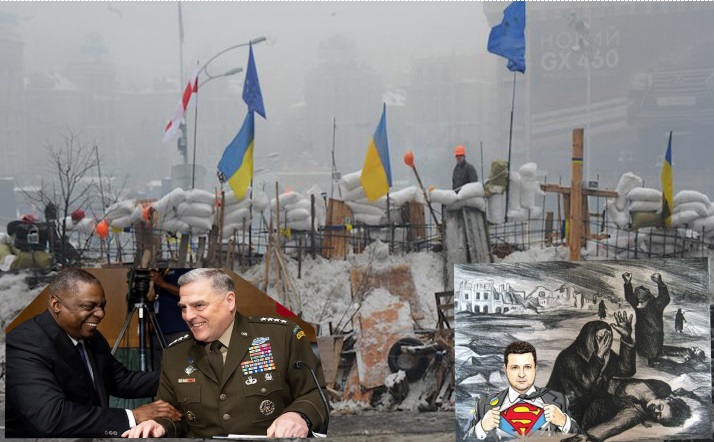
Milley Predicts Long, ‘Very Violent’ Ukrainian Counteroffensive
by EDITORJune 16, 2023
Milley and Austin led a meeting of military officials in Brussels on Thursday.
By Dave DeCamp / Antiwar.com https://scheerpost.com/2023/06/16/milley-predicts-long-very-violent-ukrainian-counteroffensive/
Chairman of the Joint Chiefs of Staff Gen. Mark Milley predicted Thursday that Ukraine’s counteroffensive will be long and “very violent” following a meeting of military officials in Brussels.
Milley made the comments when asked how long he expects the counteroffensive to last, saying it was “premature” to put a timeline on the battle. “This is a very difficult fight. It’s a very violent fight, and it will likely take a considerable amount of time and at high cost,” Milley said.
The Biden administration has been pushing for the violent counteroffensive as it’s explicitly opposed to a ceasefire and peace talks, a position Secretary of State Antony Blinken outlined earlier this month.
Milley claimed Ukraine has been making “steady progress,” but the battle lines have not changed much since Ukraine launched the assault early last week. According to The New York Times, it’s been three days since Ukraine claimed any gains, and Ukraine’s deputy defense acknowledged it was “very difficult to advance” in the southeast.
Asia Times reported on June 10 that American and European military observers in Ukraine described Ukraine’s attempted counteroffensive as a “suicide mission” because of the way they were attacking Russia’s positions.
“If you want to conduct an offensive and you have a dozen brigades and a few dozen tanks, you concentrate them and try to break through. The Ukrainians have been running around in five different directions,” a senior European officer told Asia Times.
“We tried to tell them to stop these piecemeal tactics, define a main thrust with proper infantry support and then do what they can,” the officer added. The report said Ukraine lost 38 tanks, including numerous German-made Leopard 2 tanks, on June 8 by sending them into minefields without deploying mine-clearing vehicles first.
The US has already announced a new weapons package to replace Bradley and Stryker armored vehicles that Ukraine has lost in the offensive, and Ukraine has been asking for more tanks, including the Leopard 2.
Speaking alongside Milley on Thursday, Secretary of Defense Lloyd Austin downplayed Ukraine’s losses, claiming that Russia was showing different pictures of the same damaged vehicles. “This is a war, so we know that there will be battle damage on both sides … I think the Russians have shown us that same five vehicles about a thousand times from 10 different angles. But quite frankly, the Ukrainians have — still have a lot of combat capability — combat power,” he said.
At the conference in Brussels of military officials from more than 50 countries, known as the Ukraine Defense Contact Group, Austin stressed the need to support Ukraine for the long-term. He said the Netherlands and Denmark shared the progress they’ve made on training Ukrainians on F-16s, but it’s still unclear how many of the US-made fighter jets Ukraine will receive.
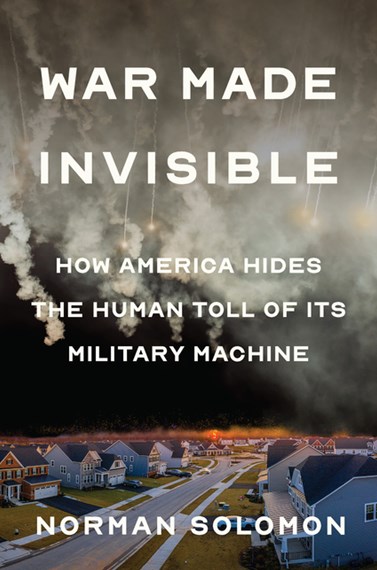
Norman Solomon: Bipartisan Obsession With War
June 16, 2023.
https://scheerpost.com/2023/06/16/norman-solomon-bipartisan-obsession-with-war/
In War Made Invisible, journalist Norman Solomon explains that Biden is as guilty as Trump in ushering a potential nuclear holocaust.
There is no rationality, logic or hope left in the U.S. government’s obsession with war. There is no complexity, awareness or nuance left in the U.S. media and its pundits’ perception of other nations as the enemy. There is only greed, jingoism, hypocrisy and belligerency left to define the current state of affairs, as the proxy war in Ukraine draws nearer to a dreaded nuclear confrontation. Norman Solomon joins host Robert Scheer for this episode of Scheer Intelligence to discuss his new book, War Made Invisible: How America Hides the Human Toll of Its Military Machine, and explain the bipartisan cheerleading for war that goes largely unnoticed.
| .As Scheer points out numerous times in previous episodes of SI, there has always been a precedent for the other side: a peace movement, rational politicians acting against nuclear escalation and simply a recognition of profiteering from war. “Even during World War II, when Harry Truman chaired a committee, they talked about in the Senate war profiteering. You can’t even get that phrase anymore. So it’s lucrative, but hardly mentioned in mass media that the billions and billions of dollars going to Ukraine are making extremely wealthy CEOs and major stockholders even more extremely wealthy,” Solomon explains. |
Diplomacy, Solomon says, has now become a dirty word. Anything other than the complete commitment to funding and continuing the war effort is seen as a threat to the country and status quo. The loss of the ability to even talk about it, has infected both sides of the aisle. But it is the Democrats, as Scheer mentions, who have become the perpetrators of this new jingoism and xenophobia towards Russia. “What we’ve lost now is any sense of complexity and the Democrats are leading the charge of simplification. They did Russiagate. They are the ones who say you can’t negotiate with Putin,” Scheer says.
Transcript
Robert Scheer: Hi, this is Robert Scheer with another edition of Scheer Intelligence, which would be an arrogant title for a show but the intelligence comes from my guests and in this case it’s Norman Solomon…………………………………………….
Norman Solomon: Hey, thanks a lot, Bob. Well, the title is War Made Invisible, and the subtitle is How America Hides the Human Toll of Its Military Machine.
US nuclear-powered submarine arrives in South Korea
By Hyunsu Yim, June 16 2023 https://www.canberratimes.com.au/story/8237042/us-nuclear-powered-submarine-arrives-in-south-korea/
A US nuclear-powered submarine has arrived at a port in the South Korean city of Busan, the South Korean military says.
It is the first time a submarine classified as “SSGN” by the US Navy, or a cruise-missile submarine, has stopped off in South Korea in almost six years.
The USS Michigan’s arrival on Friday comes after North Korea fired two short-range missiles off its east coast on Thursday and follows a failed attempt by Pyongyang to launch a spy satellite last month.
In April, South Korean President Yoon Suk Yeol and US President Joe Biden agreed in Washington to “further enhance the regular visibility of strategic assets” on the Korean Peninsula.
The leaders also agreed a US Navy nuclear-armed ballistic missile submarine (SSBN) would visit South Korea for the first time since the 1980s to help demonstrate Washington’s resolve to protect the country from a North Korean attack.
There was no timetable given for such a visit.
Vienna Summit: Anti-War Activists From 32 Countries Call For Diplomacy to End Ukraine War
By Medea Benjamin / MintPress News, 14 June 23
During the weekend of June 10-11 in Vienna, Austria, over 300 people representing peace organizations from 32 countries came together for the first time since the Russian invasion of Ukraine to demand an end to the fighting. In a formal conference declaration, participants declared, “We are a broad and politically diverse coalition that represents peace movements and civil society. We are firmly united in our belief that war is a crime against humanity and there is no military solution to the current crisis.”
To amplify their call for a ceasefire, Summit participants committed themselves to organizing Global Weeks of Action—protests, street vigils and political lobbying—during the days of September 30-October 8.
Summit organizers chose Austria as the location of the peace conference because Austria is one of only a few neutral non-NATO states left in Europe. Ireland, Switzerland and Malta are a mere handful of neutral European states, now that previously neutral states Finland has joined NATO and Sweden is next in line.
Austria’s capital, Vienna, is known as “UN City,” and is also home to the Secretariat of the OSCE (the Organization for Security and Cooperation in Europe), which monitored the ceasefire in the Donbas from the signing of the Minsk II agreement in 2015 until the Russian invasion of Ukraine in 2022.
“We are firmly united in our belief that war is a crime against humanity and there is no military solution to the current crisis.”
Campaign for Peace, Disarmament, and Common Security
Surprisingly, neutral Austria turned out to be quite hostile to the Peace Summit. The union federation caved in to pressure from the Ukrainian Ambassador to Austria and other detractors, who smeared the events as a fifth column for the Russian invaders. The ambassador had objected to some of the speakers, including world-renowned economist Jeffrey Sachs and European Union Parliament member Clare Daly.
Even the press club, where the final press conference was scheduled, was canceled at the last minute. The Austrian liberal/left newspaper Der Standard piled on, panning the conference both beforehand, during and afterwards, alleging that the speakers were too pro-Russian. Undaunted, local organizers quickly found other locations. The conference took place in a lovely concert center, and the press conference in a local cafe.
The most moving panel of the conference was the one with representatives from Ukraine, Russia, and Belarus, who risked their lives to participate in the Summit………………….
……………………The eight-person U.S. delegation included representatives from CODEPINK, Peace in Ukraine, the Fellowship of Reconciliation and Veterans for Peace. U.S. retired colonel and diplomat Ann Wright was a featured speaker, along with former Congressman Dennis Kucinich, who joined remotely……………………..more https://www.mintpressnews.com/vienna-summit-anti-war-activists-from-32-countries-call-for-diplomacy-to-end-ukraine-war/284999/
Why Russia must not take the Western bait, to use nuclear weapons in the Ukraine war

Western commentators ………… actively urging Moscow to break the taboo of proactive nuclear use. ………to put Russia in a position of moral equality with the US, which was the first and only country in the world to use atomic weapons on the battlefield.
One should not think about turning Poland into a nuclear wasteland (i.e. akin to beheading an irrational child for occasionally breaking your front window), but rather about creating a world order in which the very idea of using military force and politico-military pressure to impose a so-called “rules-based order” becomes impossible and universally condemned.
Ilya Fabrichnikov: Why I disagree with the call for Russia to use its nuclear weapons against the West.
Sergey Karaganov’s call for a preemptive strike has unleashed a major debate, but I don’t agree that we should take NATO’s bait
By Ilya Fabrichnikov, member of the Council on Foreign and Defense Policy and a communications advisor, https://www.rt.com/russia/578165-russia-shouldnt-use-nuclear-weapon/ 16 June 23,
This is a response to Sergey Karaganov’s article ‘By using its nuclear weapons, Russia could save humanity from a global catastrophe.’
The respected Sergey Karaganov, in his widely discussed article, suggests that we should stop haggling with the collective West, which is pumping modern weapons into the Ukrainian armed forces, and start moving quickly up the ladder of atomic escalation. All the while, he believes we must demonstrate our readiness to launch a “pre-emptive defensive nuclear strike” on the territory of one of the Western European countries, who are the sponsors of the Kiev leadership.
We seem to be talking about Poland. If such an escalation would not force European leaders to come to their senses then it would be necessary to strike at a “group of countries.”
The Russian nuclear doctrine is enshrined in the ‘Foundations of State Policy of the Russian Federation in the Area of Nuclear Deterrence’ as of June 2, 2020. It states very clearly: “The Russian Federation views nuclear weapons exclusively as a means of deterrence, the use of which is an extreme and compelled measure, and is making all the necessary efforts to reduce the nuclear threat and not allow an aggravation in interstate relations which could provoke military conflicts, including nuclear ones. The Russian Federation is prepared to use nuclear weapons in four scenarios (or a combination of them):
a) [if it has] credible information about the launch of ballistic missiles to attack the territory of the Russian Federation and/or its allies;
b) an enemy’s use of nuclear weapons or other weapons of mass destruction on the territory of the Russian Federation and/or its allies;
c) an enemy strike on critical state or military facilities of the Russian Federation, the deactivation of which would disrupt the response actions of the nuclear forces;
d) aggression against the Russian Federation using conventional weapons, where the very existence of the state is threatened.”
At this point, none of the scenarios under which the Russian president could order the use of nuclear weapons are even in the early stages of becoming possible. Nevertheless, there are clear contours of a verbal escalation from the West that has not yet been matched by a symmetrical response from Russian officials. So far, this verbal escalation has been an informational confrontation aimed at probing a purely psychological reaction from the main decision-maker on the use of nuclear weapons – President Vladimir Putin. There are no other individuals in the country with responsibility for the use of strategic weapons – they are not provided for in the Constitution, relevant regulations or presidential decrees.
It should be stressed that Russia’s “nuclear doctrine” was developed under conditions where Western countries had been making constant attacks on our core national interests and was about indicating our readiness and ability to defend ourselves. In this sense, it is unambiguous and not open to broad interpretations, but calibrated and practical.
Speaking of verbal escalation, we are not even referring to a recent proposal from a former American official of comparatively low rank, Michael Rubin (now of the American Enterprise Institute) in which he proposed handing over tactical nuclear weapons to Ukraine. We are also not talking about a hypothetical US willingness to transfer F-16 Block 40/42 aircraft to the Ukrainian armed forces, some of which can be adapted to use B-61 freefall nuclear bombs.
In reality, this is all part of an information campaign in the Western European and – to some extent – American media that had gained considerable momentum by the middle of last year. Western commentators actively and imperatively speculated about when, not if, Russia would finally use its tactical nuclear capability against Kiev. In doing so, they were actively urging Moscow to break the taboo of proactive nuclear use.
The goal of this information campaign is clear: to provoke a public backlash, not only from the Russian media or expert community, but also to put psychological pressure on Russia’s foreign policy decision makers to lower the threshold of susceptibility to such decisions. In other words, to put Russia in a position of moral equality with the US, which was the first and only country in the world to use atomic weapons on the battlefield.
So far, this task has not been achieved and the Russian leadership’s approach to the use of our national nuclear capabilities has remained reliably constrained by doctrinal frameworks, a pragmatic view of the issue from the president, and a responsible attitude to questions of military escalation.
It is not simply that, but according to some estimates – including those of senior Russian diplomats and other practitioners of international relations – a limited and preventive nuclear strike by Russia (e.g. against Poland) wouldn’t provoke a similar response from the US and its satellites. Rather, it’s about the fact that lowering the threshold for the use of atomic weapons and their use against non-nuclear states, however vehemently anti-Russian their policies and agendas may be, will not lead to the appeasement of the Western world. Rather it would lead to an increased possibility of the use of nuclear weapons by countries outside the big nuclear club such as Pakistan, India, Israel and North Korea. Simply because it could irreversibly become the norm in politico-military confrontation.
Moreover, by arguing in practical terms for a proactive, preventive nuclear strike in self-defense “for all the evil they have done to us, for all the good we can achieve,” we would be playing by the rules that have been imposed on us. Instead, we should be consistently, through pragmatic politico-military actions, demonstrating the flawed nature of those very rules and, in the not too distant future, dismantling them altogether – together with other responsible actors in the international community.
One should not think about turning Poland into a nuclear wasteland (i.e. akin to beheading an irrational child for occasionally breaking your front window), but rather about creating a world order in which the very idea of using military force and politico-military pressure to impose a so-called “rules-based order” becomes impossible and universally condemned.
On the other hand, Russia has made it clear to its Western European and American interlocutors that if conventional Western forces are used directly against Russian troops on the ground (e.g. if Polish soldiers openly come into contact with our combat ranks in the event of Polish units occupying territory in western Ukraine, attempting to invade Kaliningrad, or carrying out military actions against Belarus), the national doctrine of nuclear deterrence will be enacted in full compliance with the spirit and letter of Russian law. Reading it carefully is a good and necessary exercise for the relevant NATO politico-military planning authorities. And in this case, no one will think twice as it is clear and well-defined.
Paradoxical as it may seem, the NATO states are now demonstrably proactive in the delicate and error-prone business of escalation. And Russia’s foreign policy leadership seems to have reacted belatedly to these initiatives. In fact, the Western bloc’s demonstrative restlessness only confirms the loss of initiative, and haste always leads to dramatic miscalculations.
We should not deprive our foreign “partners” of the privilege of making all the mistakes they are trying to program us to make. Instead, we should be conducting sophisticated and multidimensional moral-psychological operations, including through the English-language media space they control, aimed at undermining their reserve and willingness to keep going for the long haul.
Nuclear weapons on rise in a world where ‘peace through deterrence’ is a myth
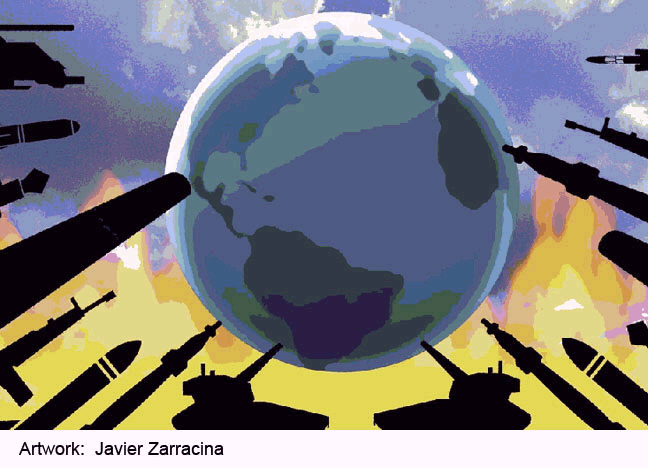
many nuclear-armed states are prepared to use nuclear weapons first, and even use them against states that do not have their own nuclear weapons.
Powerful nations are prepared to use nuclear weapons first. This is why their proliferation is worrying analysts
Paul Rogers, 16 June 2023, open Democracy,
The world is “drifting into one of the most dangerous periods in human history”, according to a leading security research centre, the Stockholm International Peace Research Institute (SIPRI). At the root of its concern is that, though the number of nuclear warheads is still far lower than during the Cold War years, nuclear modernisation and development programmes in the nine nuclear-armed states are leading to an expansion in the number of warheads held………………………
The great majority are held by Russia (4,489 warheads) and the United States (3,708), followed by three middle-ranking states: China (410), France (290) and the UK (225). These countries are the five permanent members of the UN Security Council and also signatories of the Non-Proliferation Treaty (NPT). They were allowed in as members back in 1968 on the condition that they worked towards nuclear disarmament – but there’s fat chance of that.
As well as these five, there are four more states with nuclear weapons: Pakistan (170 warheads), India (164), Israel (90) – though it has never acknowledged having them – and, most recently, North Korea, assessed by SIPRI as now having 30 warheads. Out of SIPRI’s estimated global total of 12,512 warheads, it believes 9,576 are in military stockpiles ready for use, meaning that they are either fitted to missiles or available as bombs to be delivered by aircraft.
Given that it would only take a dozen or so nuclear warheads to wreck a country, it seems nonsense to talk about the ‘need’ for more than 10,000 weapons.
United States was reckoned to have 23,500 warheads and the Soviet Union 39,200. This was during the Cold War days of ludicrously massive ‘overkill’.
Many of the superpowers’ weapons at that time were later withdrawn, with most of them now dismantled, and there was the added hope at the end of the Cold War that the cutbacks would continue, and the pace of warhead development would slow. But the opposite is happening now.
More recently, the UN’s Treaty on the Prohibitions or Nuclear Weapons (TPNW) gave some hope. Voted in by the majority of all UN member states in 2017 and requiring 50 states to ratify it, this was achieved, with the treaty entering into force just over two years ago. Already, 92 member states, almost half the UN membership, have signed it and 68 have ratified it after approving it within their domestic legal systems. In view of this, why do SIPRI analysts, along with many other peace researchers, still have concerns?
There are several reasons.
The TPNW is a strong treaty in that signatory states must not design, develop or manufacture nuclear weapons of any sort, nor must they allow nuclear-armed states to base their own weapons on their territory. But none of the nine nuclear states have signed up to it, or shown any sign of doing so. Neither have those states that allow foreign nuclear weapons to be based on the territories, including the half dozen European states that host US nuclear weapons, or Belarus, with Russian nuclear weapons.
Most of the states that have signed or ratified the treaty are not so-called ‘big powers’, even if some have leaders who speak out readily against nuclear weapons, while all of them demonstrate an opposition to a nuclearised world – in marked contrast to the postures of the actual nuclear-armed states and many of their close allies.
If anything, the attitude among nuclear-armed states has hardened, with the UK being an example. Just two years ago, the Johnson government declared that it would no longer be transparent about the size of the UK nuclear arsenal and its number of deployed warheads or missiles. Increased global tensions were cited as the reason, but it was a change in what had previously been an informal cross-party agreement to be more open.
More generally, despite what some may suggest, many nuclear-armed states are prepared to use nuclear weapons first, and even use them against states that do not have their own nuclear weapons. NATO has maintained a clear first-use policy since 1968; the UK even deployed two types of nuclear weapon to the South Atlantic during the 1982 Falklands/Malvinas War; and Putin, of course, has implied that there are circumstances where Russia would threaten nuclear use in the current war in Ukraine…………………….. https://www.opendemocracy.net/en/nuclear-weapons-proliferation-sipri-analysts-concerns-first-use-defence-strategy/
Lawmakers propose shoring up nuclear cyber standards ahead of National Defense Authorization Act markup

NextGov, By Edward Graham, JUNE 16, 2023
The bipartisan proposal, which could be added to the FY2024 defense policy bill, would establish a federal working group to help address gaps in the cyber practices securing the nation’s nuclear weapons stockpile.
A bipartisan trio of lawmakers on the House Armed Services Committee unveiled a measure on Thursday that would address security risks to the nation’s nuclear weapons systems by creating a federal working group to help mitigate previously identified cybersecurity gaps.
The proposal — from Reps. Salud Carbajal, D-Calif., Don Bacon, R-Neb. and Mike Gallagher, R-Wis. — would establish a Cybersecurity, Risk Inventory, Assessment and Mitigation Working Group within the Department of Defense that is tasked with creating “a comprehensive strategy for inventorying the range of National Nuclear Security Administration systems that are potentially at risk in the operational technology and nuclear weapons information technology environments, assessing the systems at risk and implementing risk mitigation actions.”
The lawmakers are looking to include the measure in the 2024 National Defense Authorization Act. The committee’s markup of the must-pass defense policy bill is taking place June 21.
A September 2022 report issued by the Government Accountability Office found that the National Nuclear Security Administration — the federal agency tasked with safeguarding the nation’s nuclear weapons stockpile — failed to fully implement “foundational cybersecurity risk practices” across its systems, including in its “operational technology and nuclear weapons IT environments.”………………………….. https://www.nextgov.com/cybersecurity/2023/06/lawmakers-propose-shoring-nuclear-cyber-standards-ahead-ndaa-markup/387632/—
Kiev intends to kill as many Russians as possible – top Zelensky aide
https://www.rt.com/russia/578070-zelensky-aid-kill-russians/— 15 June 23
Mikhail Podoliak says Ukraine’s only plan is to launch a brutal offensive to reach its 1991 borders
Ukraine currently has only one plan, which is a campaign to kill the maximum number of Russians, Mikhail Podoliak, an advisor to the chief of President Vladimir Zelensky’s office, said on the air during a telemarathon on Thursday.
“There is only one plan: the most brutal advance with the maximum killing of Russians on this route,” he said, noting that Kiev “can’t just stop somewhere and say ‘alright, let’s think and talk about something now.’“
“The only possible scenario for Ukraine is to reach its 1991 borders,” he said.
Back in May, Podoliak also proclaimed that his country hates Russia and those who represent it and vowed to “persecute” Russians “always and everywhere.” That followed comments by Kirill Budanov, the head of Ukraine’s military intelligence agency, who boasted that his agents had murdered Russian public figures and pledged that Kiev will “keep killing Russians anywhere on the face of this world.”
Earlier this week, Ukraine’s Defense Minister Aleksey Reznikov revealed that Kiev had been instructed by its Western backers in the early days of the conflict to “kill as many Russians” as it could before surrendering.
We asked, ‘can we have stingers?’” Reznikov told Foreign Policy magazine in an interview published on Tuesday. “We were told, ‘No, dig trenches and kill as many Russians as you can before it’s over.’”
The minister boasted that since then Ukraine’s forces have received a large number of Western weapons and heavy arms and stated that Kiev will also soon be equipped with F-16 fighter jets.
The West has continued to provide billions of dollars worth of military aid to Kiev, with the stated intention of helping Ukrainian forces score as many battlefield successes as possible before the conflict is eventually settled at the negotiating table.
Last month, however, US Senator Lindsey Graham hinted at Washington’s true intentions in continuing to fuel the conflict. During a meeting with Zelensky in Kiev, Graham expressed glee at the fact that “the Russians are dying” and said later in the meeting that the billions of dollars that the US has poured into Ukraine was “the best money we’ve ever spent.”
Ukraine Becomes A ‘Nuclear Battleground’ As US, UK Russia Could Unleash Their ‘Cursed Ammo’ To The Warzone

By Sakshi Tiwari, Eurasian Times, June 14, 2023
The US could soon supply Ukraine with depleted uranium shells that could pierce Russian tank armor. This comes after a similar decision by the UK earlier this year that triggered an angry response from the Kremlin
The development was first reported by the Wall Street Journal (WSJ), which also stated that the Biden administration had been actively considering the possibility of delivering the depleted uranium shells to Ukraine for several months, mostly due to concerns about their effects on the environment and public health.
However, a representative of the administration reportedly claimed that there were currently no significant barriers to supplying the ammunition. The report also states that it is primarily due to their greater effectiveness that the Pentagon has insisted on delivering depleted uranium shells.
The US officials are believed to be of the opinion that the transfer of these highly lethal depleted uranium shells will aid Ukraine’s counteroffensive efforts and allow it to make significant gains in the south and east of Ukraine. Since the battle is largely fought on the ground, these shells will give Kyiv’s forces an edge in tank engagements.
However, according to some claims made by Russian military experts, Russia’s armored vehicles, including the T-14 Armata tank, include active protection systems and upgraded composite armor intended to lessen the threat posed by anti-tank weapons, especially those that employ depleted uranium.
In March 2023, the UK Ministry of Defense (MoD) confirmed it would provide Ukraine with armor-piercing rounds containing depleted uranium, which were essentially developed by the US during the Cold War to destroy Soviet tanks and could be fired by the UK-supplied Challenger-2 tanks.’
The announcement, however, triggered a fierce retaliation from the Kremlin.
Following the announcement that depleted uranium shells could soon be used against Russian troops and tanks, Moscow threatened to escalate the attacks against Ukraine and accused the West of providing Ukraine shells that have nuclear components.
The UK MoD staunchly denied these claims.
After the recent US decision, Russian President Vladimir Putin said that Moscow would also use weapons with depleted uranium if necessary.
“We have a lot of such ammunition, with depleted uranium, and if they [the Armed Forces of Ukraine] use them, we also reserve the right to use the same ammunition,” Putin said.
However, this could wreak havoc due to the hazardous nature of depleted uranium. Depleted uranium is a byproduct of the uranium enrichment process, which is needed to create nuclear weapons. The announcement triggered an intense discussion among military and policy watchers who have largely denounced the move.
As previously explained by nuclear specialist and policy researcher Edward Geist of the RAND Corporation, the rounds have certain radioactive characteristics but are not enough to produce a nuclear reaction like a nuclear weapon.
Nonetheless, depleted uranium is incredibly dense, more than lead, making it highly desirable as a projectile even though it is significantly less potent than enriched uranium and incapable of igniting a nuclear reaction.
However, the use is especially dangerous as it could lead to very toxic effects on the civilian population as well.
The United Nations Environment Program says that the metal’s “chemical toxicity” is the biggest concern, and “it can cause skin irritation, kidney failure and increase the risks of cancer.” Additionally, it is viewed as a radiation health danger when inhaled as dust or shrapnel, making its use even more dangerous.
Stated simply, as Harvard International Review explains it, “Depleted uranium may pose a risk to both soldiers and local civilian populations. When ammunition made from depleted uranium strikes a target, the uranium turns into dust that is inhaled by soldiers near the explosion site. The wind then carries dust to surrounding areas, polluting local water and agriculture.”
This is reminiscent of when the United States and its allied forces allegedly entered Iraq and dropped depleted uranium and white phosphorous all over the country, wreaking havoc and causing devastation that could not be undone for several years to come.
When The US Used Depleted Uranium In Iraq
…………………………. In the aerial operation conducted in its quest to invade Iraq, the US and its allies were accused of using depleted uranium and white phosphorous that had long-lasting effects on the landscape and the country’s people. Although these allegations were denied for a long time, it was confirmed in a report in 2014.
A damning report published by the Dutch peace group Pax in 2014 concluded that US forces used depleted uranium (DU) bombs against Iraqi troops and civilian areas in violation of official advice intended to reduce needless suffering during battles.
The Dutch peace organization Pax was able to get coordinates showing the locations of approximately 10,000 DU rounds fired by US jets and tanks in Iraq during the 2003 war.
The data indicates that many of the DU rounds were shot in or close to populous regions of Iraq. The group claimed that at least 1,500 bullets were also directed against troops.
According to the study, this ran counter to US Air Force legal instruction from 1975 that DU weapons should only be employed against hard targets like tanks and armored vehicles. It also claimed that US forces often disregarded this instruction, which was intended to conform with international law by avoiding fatalities to urban residents and troops.
“Use of this munition solely against personnel is prohibited if alternative weapons are available,” the memo stated. This was for legal reasons “related to the prohibitions against unnecessary suffering and poison.” Over 300 sites were contaminated by over 1000-2000 tons of DU at the time, a very hazardous radioactive material.
Several papers and reports published after the invasion stated that depleted uranium increased cancer rates among civilians and several congenital malformations in children.
Having said that, the threat of using depleted Uranium shells either by Ukraine or Russia is enormous and could wreak havoc on the battlefield as well as among civilians, according to military experts who expressed anguish at the announcement.
As for the United States, it has withheld the delivery of weapons like cluster bombs that also endanger the safety of civilians. However, after the shipment of DU shells is made, some observers and US lawmakers are confident that cluster munitions would also be on their way to Kyiv. https://eurasiantimes.com/ukraine-becomes-a-nuclear-battleground-as-us-uk-russia-could-unleash-their-cursed-ammo-to-the-warzone/
Tit For Tat: Putin says Russia will use depleted uranium against Ukraine if necessary

Don’t you get sick of the belligerent boys and their diabolical toys?
Tuqa Khalid, Al Arabiya English, 14 June 23
Russian President Vladimir Putin said on Tuesday that Russia will use weapons with depleted uranium if necessary in response to reports of the US supplying such weapons to Ukraine.
“We have a lot of such ammunition, with depleted uranium, and if they [the Armed Forces of Ukraine] use them, we also reserve the right to use the same ammunition,” Putin said as cited by state news agency TASS.
He added during a meeting with war correspondents that Russia has a lot of ammunition with depleted uranium, but so far they were not being used.
Putin’s statement comes after a report by the Wall Street Journal reported that US President Joe Biden’s administration is predicted to supply Ukraine with depleted-uranium rounds to arm the Abrams tanks being provided by the US. The Pentagon has advocated for the use of these rounds, which are frequently utilized by the US Army and are notably potent against Russian tanks…………. more https://english.alarabiya.net/News/world/2023/06/13/Putin-says-Russia-will-use-depleted-uranium-against-Ukraine-if-necessary
Victoria Nuland to announce Ukraine to join NATO – the start of World War 3

Antonio Sontavo 14 June 23, The next meeting of NATO Heads of State and, Government will take place, in Vilnius on 11-12 July 2023. Victoria Nuland will announce that Ukraine is joining NATO, at that meeting on July 11 2023. The announcement, will mark the beginning, of World War Three.
The Voltaire Network on the collapse of Kiev. Ukraine -its past, and now
The collapse of Kiev, Thierry Meyssan, 14 June 23, Translation, Roger Lagassé
1 The fate of arms has decided. The moment of truth has spoken. The Ukrainian counter-offensive has failed miserably. NATO’s considerable armaments were useless. The battlefield is littered with corpses. All for nothing. The territories that joined the Russian Federation by referendum will remain Russian.
This “checkmate” not only marks the end of Ukraine as we have known it, but of Western domination that had staked its future on its lies.
The multipolar world may be born this summer at several international summits. A new way of thinking in which might no longer makes right.
This article was written on June 10. At that time, the only information available came from Russia and allied headquarters. Ukraine had imposed a total embargo on its counter-offensive. We should therefore have waited before publishing this text. However, we felt that if Ukraine had been able to break through Russia’s first line of defense, even if it hadn’t managed to get into the breach, it would have let us know. We are therefore publishing this analysis.
In six days, from June 4 to 10, 2023, the Ukrainian army launched its counter-offensive and suffered a terrible defeat.
During the summer, Russian forces built two defense lines in the part of Novorossia they liberated and in the Donbass. They prevent the passage of all armored vehicles.
Ukrainian forces have chosen a dozen points of attack to retake “enemy-occupied” territory. Their armored vehicles were unable to get through the first line of Russian defenses and piled up in front of it, where they were destroyed one by one by Russian artillery and suicide drones.
At the same time, the Russian army targeted missiles at command centers and arsenals inside Ukrainian territory and destroyed them.
The Ukrainian air defense system was destroyed by hypersonic missiles as soon as it was installed. In its absence, the Ukrainians were unable to carry out the maneuvers planned by Nato.
Russia did not use any of its new weapons, apart from its NATO weapons jamming system and some of its hypersonic missiles.
The border is now a long graveyard of tanks and men. Airports are full of smoking Mig-29 and F-16 wrecks.
The staffs of the United States, the Atlantic Alliance and Ukraine are passing the buck for this historic disaster. Hundreds of thousands of human lives and 500 billion dollars have been wasted for nothing. Western weapons, which shook the world in the 90s, are now worthless compared to the Russian arsenal of today. Strength has changed sides.
Two conclusions can already be drawn:
DO NOT CONFUSE THE UKRAINIAN ARMY WITH THE “INTEGRAL NATIONALISTS”
While there is no longer a Ukrainian army capable of high-intensity warfare, there are still the forces of the “integral nationalists” (sometimes called “Banderists” or “Ukrainian-Nazis”). But they are only trained for low-intensity warfare. Its leaders went to fight in Chechnya in the late 90s on behalf of the CIA and NATO secret services, and sometimes in Syria in the 2020s. They are trained in targeted assassinations, sabotage and civilian massacres. Nothing more.
They succeeded
1. In sabotaging the Russian-German-French-Dutch Nord Stream gas pipeline, plunging Germany and then the European Union into recession on September 26, 2022.
2. In sabotaging the Kerch Strait bridge (known as the “Crimean Bridge”), on October 8, 2022.
3. In attacking the Kremlin with drones, May 3, 2023
4. In using drones to attack the Ivan Kurs, the intelligence vessel defending the Turkish Stream gas pipeline in the Black Sea, on May 26, 2023.
5. In sabotaging the Kakhovka dam to split Novorossia in two, on June 6, 2023.
6. In sabotaging the Togliatti-Odessa ammonia pipeline to destroy the Russian mineral fertilizer industry, on June 7, 2023.
Just as in the two World Wars and the Cold War, they proved their terrorist capabilities, but played no decisive role on the battlefield.
Now more than ever, we need to distinguish between Ukrainians who thought they were defending their people, and the “integral nationalists” [1], who don’t care about their compatriots and have been trying for a century to eradicate Russians and their culture.
THE UKRAINE WE KNEW IS DEAD
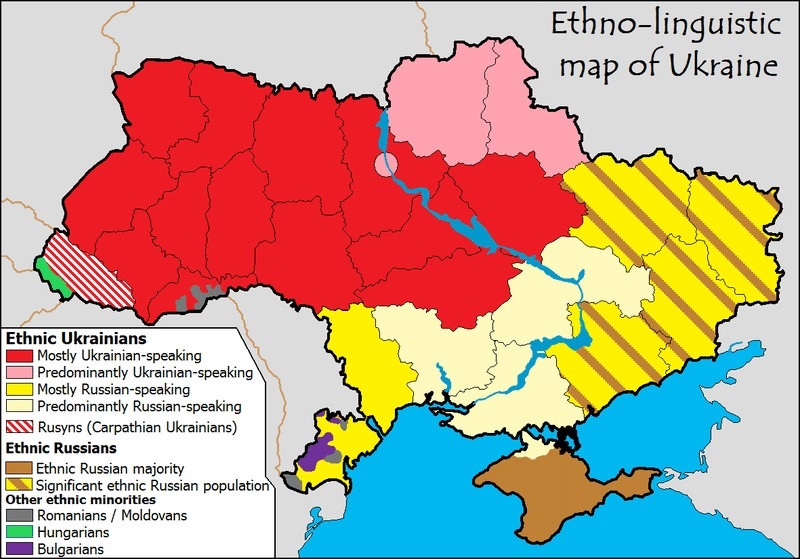
Until now, Ukraine has been above all a power of communication. Kiev succeeded in making people believe that the 2014 coup d’état that overthrew a democratically elected president in favor of integral nationalists was a revolution. Likewise, it has managed to make people forget the way it crushed its citizens in the Donbass, refusing to give them access to public services, to pay civil servants’ salaries and pensions to the elderly and, ultimately, bombing its cities. Finally, it succeeded in convincing Westerners that Ukraine was a homogenous country with a single population living a common history.
As in most wars, there is also a “civil war” aspect [2]. Today, everyone can see that, contrary to what was claimed, Vladimir Putin’s analysis was not a reconstruction of history, but a factual truth. The people of Donbass are profoundly Russian. The people of Novorossia (including Crimea) are of Russian culture, albeit with a different history (they have never known serfdom). Ukraine has never existed as an independent state in history, apart from one decade, during the periods 1917-22 and 1941-45, and three other decades, since 1991.
During these three experiences, Kiev never stopped purging its people and massacring its citizens when the full nationalists were in power (1917-22 with Simon Petliura, 1941-45 with Stepan Bandera, and 2014-22 with Petro Poroshenko and Volodymyr Zelensky). In total, over the course of a century, the “integral nationalists” – as they call themselves – have murdered more than 3 million of their compatriots.
During the First World War, the people of Novorossia had already risen up around the anarchist Nestor Makhno; during the Second World War, the people of Donbass and Novorossia rose up as Soviets; while this time, they are fighting against the “integral nationalists” in Kiev with Russian forces.
The only way to stop these massacres is to separate the “integral nationalists” from the population of Russian culture they want to kill [3]. Since Nato staged a coup in 2014 and put them in power, there’s no other way but to note the country’s current division and leave them in power in Kiev. It is the Ukrainians, and they alone, who will have to overthrow them.
Current military operations have already done so. The part of the country liberated by the Russians voted in a referendum to join the Federation. However, last year’s Russian advance was halted by President Vladimir Putin as part of negotiations with Ukraine, conducted first in Belarus, then in Turkey. Odessa is still Ukrainian in law, even though it is culturally Russian. Transnistria is still Moldavian, even though it is culturally Russian.
The war is technically over. No offensive can alter the current borders. Admittedly, the fighting may drag on and a peace treaty is a long way off, but the die is cast. There is still a problem in Ukraine and Moldavia: Odessa and Transnistria are still not Russian. Above all, there remains a fundamental problem: in violation of their oral and written commitments, the members of the Atlantic Alliance have stockpiled US weapons on Russia’s borders, jeopardizing its security.
1 This Month

petition to oppose the rapid increase of space-military industry threatening Jeju Island and the region.
[Petition by April 19th (KST)] Stop the joint military-Hanwha Systems-Jeju Provincial Government Sea Launch!
World Nuclear Power. Reactors 1951-2026, 75 Years of Nuclear Power.
Interactive Map– https://dv.worldnuclearreport.org/
Chernobyl: The Lost Tapes – A good documentary on Chernobyl on SBS available On Demand for the next 3 weeks– https://www.sbs.com.au/ondemand/tv-program/chernobyl-the-lost-tapes/2352741955560

of the week–London Campaign for Nuclear Disarmament

Tell the Ukrainian Government to Drop Prosecution of Peace Activist Yurii Sheliazhenko
To see nuclear-related stories in greater depth and intensity – go to https://nuclearinformation.wordpress.com
-
Archives
- April 2026 (211)
- March 2026 (251)
- February 2026 (268)
- January 2026 (308)
- December 2025 (358)
- November 2025 (359)
- October 2025 (376)
- September 2025 (257)
- August 2025 (319)
- July 2025 (230)
- June 2025 (348)
- May 2025 (261)
-
Categories
- 1
- 1 NUCLEAR ISSUES
- business and costs
- climate change
- culture and arts
- ENERGY
- environment
- health
- history
- indigenous issues
- Legal
- marketing of nuclear
- media
- opposition to nuclear
- PERSONAL STORIES
- politics
- politics international
- Religion and ethics
- safety
- secrets,lies and civil liberties
- spinbuster
- technology
- Uranium
- wastes
- weapons and war
- Women
- 2 WORLD
- ACTION
- AFRICA
- Atrocities
- AUSTRALIA
- Christina's notes
- Christina's themes
- culture and arts
- Events
- Fuk 2022
- Fuk 2023
- Fukushima 2017
- Fukushima 2018
- fukushima 2019
- Fukushima 2020
- Fukushima 2021
- general
- global warming
- Humour (God we need it)
- Nuclear
- RARE EARTHS
- Reference
- resources – print
- Resources -audiovicual
- Weekly Newsletter
- World
- World Nuclear
- YouTube
-
RSS
Entries RSS
Comments RSS
 nuclear-news