Biden and Xi will sign a deal to keep AI out of control systems for nuclear weapons: report
Tom Porter , Nov 13, 2023, https://www.businessinsider.com/biden-xi-deal-ai-out-nuclear-weapons-systems-apec-report-2023-11
- China’s President Xi Jinping and US President Joe Biden will meet this week.
- They’re expected to agree to limit the use of AI in nuclear weapons, a report said.
- The meeting comes amid increasing tensions between the US and China.
US President Joe Biden and his Chinese counterpart Xi Jinping are set to sign a deal limiting the use of artificial intelligence in nuclear weapon control systems, according to The South China Morning Post.
The leaders are due to meet Wednesday at the Asia-Pacific Economic Cooperation (APEC) summit in San Francisco against a backdrop of increasing tensions between the superpowers.
Among the top items on the agenda is the proliferation of AI in military technologies, two sources familiar with the planned discussions told The South China Morning Post.
Biden and Xi will pledge a deal limiting the use of AI in autonomous weaponry, such as drones, as well as the systems used for the control and deployment of nuclear warheads, the report said.
‘Operation Al-Aqsa Flood’ Day 37: Al-Shifa Hospital No Longer Functioning as Israeli Ground Troops Surround the Hospital
Thousands of lives are at risk as Al-Shifa Hospital becomes non-operational, with ICUs and incubators shutting down due to lack of fuel, and medical staff and patients trapped waiting to die. Israeli forces continue to shell hospitals in north Gaza.
SCHEERPOST, By Mustafa Aby Sneineh / Mondoweiss, November 13, 2023
Casualties
- 11,078 killed*, including 4,506 children, and 27,490 wounded in Gaza
- 184 Palestinians killed in the occupied West Bank and East Jerusalem
- Israel revises its estimated October 7 death toll down from 1,400 to 1,200
*The casualty numbers from Gaza have not been updated in at least 2 days, as the “collapse of services and communications” has made it nearly impossible for the health ministry to document and update the numbers
Key Developments
- Israeli heavy fire targeting Al-Shifa trapped thousands of people who were displaced, wounded, sick, and medical staff inside it, without electricity, food, water, or fuel.
- Al-Jazeera reported that Israeli forces are located approximately 700 meters from the Al-Shifa hospital’s gates, and firing, and armed clashes could be heard in the distance.
- WHO: “There are reports that some people who fled the hospital have been shot at, wounded and even killed.”
- Al-Quds Hospital in Gaza City stopped working completely after running out of fuel to generate electricity.
- Doctors at al-Ahli Arab Hospital say it is now the last functioning hospital in Gaza City and the northern areas and that it is “overwhelmed” with casualties.
- Israeli forces are surrounding the medical quarter in the center of Gaza City, where three major hospitals are located, including Al-Nasr Medical Complex, Al-Rantisi, and St John of Jerusalem Eye Hospital.
- Israel said 43 soldiers were killed since October 28, and Hamas released footage of targeting tanks in Gaza.
- Hamas’s Izz el-Din al-Qassam Brigades spokesperson said that fighters documented the destruction, completely or partially, of 160 Israeli military vehicles, which includes tanks, bulldozers and personnel carriers.
- The Israeli army said that it killed 150 Hamas fighters last week during battles in the Al-Shati refugee camp northwest of Gaza City, and claimed that it captured a station of Hamas’s Badr unit.
- Thousands protest worldwide while Israel carries on arrest campaign in the occupied West Bank.
Al-Shifa Hospital ‘completely out of service’: Patients dying, bodies piling up outside
Following days of relentless attacks from the air and land on northern Gaza’s hospitals, the healthcare system in the north has seen a near-complete collapse, with only one hospital, the previously-bombed Al-Ahli Arab Hospital, remaining functional.
Gaza’s largest hospital, Al-Shifa Hospital, is“completely out of service”, Gaza’s health ministry spokesperson Ashraf al-Qudra told Al Jazeera. Several people, including at least two premature infants and five ICU patients, have already died due to a lack of oxygen, medical supplies, and the inability of doctors and medical staff to perform life-saving surgeries as a result of power outages and no fuel.
The Ramallah-based Palestinian Ministry of Health spokesperson Mai al-Kaila released a statement on Sunday detailing the desperate conditions at the Al-Shifa hospital.
“The Israeli occupation army does not evacuate hospitals, but rather throws the wounded and sick into the street to certain death,” al-Khaila said, referring to reports and eyewitness testimony that Israeli forces were shooting at people inside the hospitals, as well as those attempting to evacuate.
“This is not an evacuation, but an expulsion at gunpoint,” she said.
Among the patients dying or facing imminent death, al-Kaila said, are children and adults on kidney dialysis who “die in their homes without receiving dialysis sessions.”
Al-Kaila confirmed the death of 12 patients inside the Al-Shifa Medical Complex so far. She added that all 3,000 cancer patients who were being treated at the Al-Rantisi and Al-Turki Hospital in Gaza “have now been left to die” after they were forcibly expelled from the hospitals due to Israeli bombardment.
“All pregnant women and those with dangerous pregnancies are at risk, as women do not find anyone to provide them with treatment and medical services in Gaza. Every woman about to give birth will not find anyone to provide her with any medical service,” Al-Kaila went on to say.
Early on in Israel’s bombardment, medical officials reported that there were an estimated 50,000 pregnant women in Gaza, including around 5,000 expecting mothers due to deliver at any moment. Over the weeks, several reports have emerged of pregnant women among those killed by Israeli airstrikes, causing doctors to have to cut out their unborn fetuses in an attempt to save the babies.
In addition to sick patients in the hospital who can’t be treated, as well as chronically ill patients being left to die, hundreds of Palestinians who are becoming wounded and sick as a result of Israeli bombardment cannot reach the hospital itself. Over the past month of Israeli bombardment, Gaza’s infrastructure, including roads around hospitals, have been decimated, making it nearly impossible for ambulances to move to and from the hospital to reach bombed-out buildings and the wounded.
Additionally, medical staff inside the hospital cannot physically move inside the hospital, as Israeli drones and ground forces “fire at everyone who moves inside the complex.” Doctors and staff, as well as the sick and displaced, have little to no food, while water has been completely cut off in the complex.
Medical waste is piling up inside the departments, while the hospital’s blood reserves have spoiled due to power outages, meaning that needy patients can no longer receive life-saving blood transfusions.
Outside the hospital, bodies of Palestinian martyrs are piling up, with medical teams unable to reach them safely without coming under Israeli fire.
According to al-Kail, the bodies have begun to decompose in the hospital courtyard. She added that stray dogs have “mauled” some of the bodies.
Wafa news agency’s correspondent reported Sunday that dozens of martyrs’ bodies were still lying in the hospital’s courtyard and the surrounding area. Paramedics could not reach them due to the intensity of Israeli fire, and since 9 p.m. local time on Saturday, up until 9 a.m. on Sunday, no ambulances were seen leaving or arriving at Al-Shifa Hospital.
Patients, medical staff unable to evacuate al-Shifa
Al-Shifa Hospital saw a mass exodus of Palestinians over the weekend, including patients, their families, some medical staff, and thousands of Palestinians who were seeking shelter at the hospital.
It remained unclear exactly how many people, including patients, medical staff, and internally displaced persons, remained inside the hospital, but several reports put that number around several thousand. …………………………………………………………………………………………………………
Al-Qudra said the only safe way to evacuate the 650 patients at al-Shifa would be to Egypt, not to southern Gaza, as the hospitals there are overwhelmed and are also under imminent threat of shutting down due to fuel shortages.
According to the International Committee of the Red Cross, among the patients still at Al-Shifa are nearly 60 patients in ICUs, dozens of premature babies in incubators, and more than 500 patients in the dialysis department.
Calling for an immediate ceasefire, the WHO said: “Patients seeking health care should never be exposed to fear, and health workers who have taken an oath to treat them should never be forced to risk their own lives to provide care.”……………………………………………………………………………
Al-Quds Hospital in Gaza City stopped working completely
On Sunday morning, the Palestine Red Crescent Society (PRCS) announced that Al-Quds Hospital in Gaza City stopped working completely after running out of fuel to generate electricity………………………………………………………………………………………………
Israeli forces shell UN agency headquarters as thousands of Palestinians take shelter
On Sunday morning, Israeli forces shelled the compound of the United Nations Development Programme (UNDP), where thousands of Palestinians are sheltering in Gaza City, in the northern Gaza Strip.
UNDP said that it was “deeply distressed” upon hearing the development. It vacated its staff from the location on 13 October.
“The shelling has reportedly resulted in a significant number of deaths and injuries,” the UNDP said in a statement. Wafa reported that at least five were killed till Sunday afternoon. ……………
Israel says 43 soldiers killed, Hamas releases footage targeting tanks in Gaza………………………………………………………………………………………………………………..
Thousands protest worldwide while Israel carries on arrest campaign in occupied West Bank
Hundreds of thousands of people marched in Europe’s major cities and in the U.S., calling for a ceasefire in the Gaza Strip, and showing their support and solidarity with the Palestinians.
Pro-Palestine protests rallied near U.S. President Joe Biden’s home in Wilmington, Delaware, as frustration grew at his administration’s failure to call for a ceasefire and the unwavering support of Israel……………………………………………………………………………..
The Archbishop of Canterbury, Justin Welby, tweeted on Saturday that “the relentless bombardment of hospitals and civilians in Gaza is intolerable. It’s against international humanitarian law – it must stop and stop now.”…………..
Arrests continue in the West Bank
In the occupied West Bank, Israel has continued its mass arrest campaign. ……………………………………………………………………………………………… more https://scheerpost.com/2023/11/13/operation-al-aqsa-flood-day-37-al-shifa-hospital-no-longer-functioning-as-israeli-ground-troops-surround-the-hospital/
Israel Wages War Against Gaza’s Remaining Hospitals
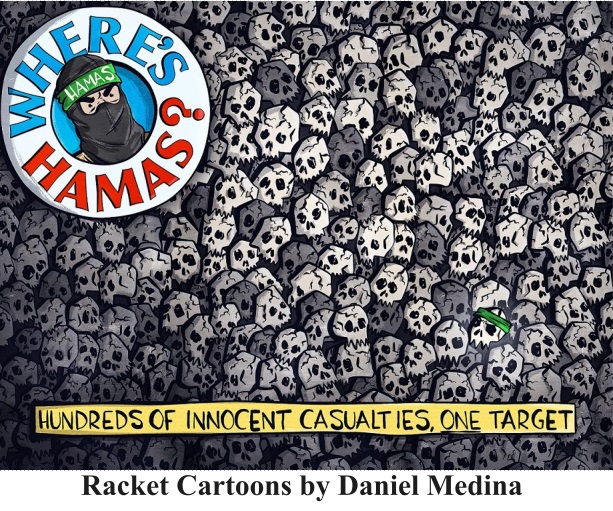
The Al-Shifa hospital ran out of fuel due to the ongoing siege by Israeli forces. Occupation snipers and drones have been positioned all around the hospital complex, opening fire at any sign of movement.
By Tanupriya Singh and Ana Vračar / Peoples Dispatch, https://scheerpost.com/2023/11/12/israel-wages-war-against-gazas-remaining-hospitals/
The Al-Shifa hospital in Gaza, the largest medical facility in the besieged strip, was forced to suspend its operations on the morning of November 11 after it ran out of fuel. Patients have already begun to die as Israeli occupation forces have laid siege to the hospital.
Israeli snipers and drones positioned all around the hospital have opened fire at any sign of movement.
Abed Ghazal, a health activist from Palestine with the People’s Health Movement, said on Saturday, that it is “astounding that hospitals are being treated as legitimate targets.” As Ghazal provided updates, the people working at Al-Shifa, as well as those sheltering there, remained under direct attack.
Health workers at Al-Shifa are now forced to provide care with access to virtually no medical supplies at all, and patients are forced to cram in the corridors, Ghazal said. As many nurses and doctors have spent weeks in the hospitals without stopping, with little news about families and friends, the pressure is now getting worse.
While Al-Shifa’s health workers vowed to remain as long as patients needed care, they have criticized the international response to what has been happening around the hospital. The international reaction to the attacks on Al-Shifa and other hospital complexes in Gaza is far from enough, Ghazal said, and it should be denounced for what it is.
Speaking to Al Jazeera, Al-Shifa’s director, Muhammad Abu Salmiya had said, “Patients are dying by the minute, victims and wounded are also dying”, confirming that one baby in an incubator had died, as well as a young man in the intensive care unit.
Gaza’s Deputy Health Minister, Dr. Youssef Abu Alreesh later told the news publication that all generators and power sources in the hospital were off. There are 39 newborn babies in incubators at Al-Shifa, now kept alive by manual support as both generators and solar panels have become non-operational.
Shortly after the power blackout on Saturday, Al-Shifa’s yard was also struck by shelling, causing a fire. Ambulances have been prevented from entering or leaving the hospital complex.
The IOF has cordoned off the hospital complex, while buildings in its vicinity have been shelled non-stop for over 12 hours as of Saturday morning. “Any moving person within the compound is targeted”, Salmiya said, adding that one member of the medical personnel had been shot and killed by a sniper as he tried to reach the babies in the incubator.
“A few families tried to leave but they were targeted, now they are lying dead outside the hospital”, Alreesh told Al Jazeera, adding that the hospital’s intensive care unit had also been hit by mortar fire.
Al-Shifa no longer has electricity and internet, and has been left without fuel, food, water, and medical supplies. Doctors Without Borders (MSF) stated early on Saturday that it was unable to contact any of its staff inside Al-Shifa, adding that there were patients in the hospital who were in critical condition and unable to move.
Tens of thousands of people displaced by the Israeli bombardment who were seeking shelter in the hospital yard are currently also trapped.
Palestinian Health Ministry’s Director-General, Mounir Al-Barsh has stated that a mass grave would have to be dug at Al-Shifa on Saturday to bury the bodies of 100 people who have died at the hospital– “We cannot move within or outside the perimeter of the hospital. We are surrounded, we cannot bury our dead.”
Israel had bombed the Al Shifa Hospital at least five times between November 9 and 10, as confirmed by the spokesperson of the Palestinian Health Ministry, Ashraf al-Qudra. At least 13 people were killed after Israel bombed Al-Shifa’s obstetrics department and courtyard early on Friday.
The Israeli forces also dropped internationally-banned white phosphorus bombs on neighborhoods around Al-Shifa on Friday, the Wafa News Agency reported.
Two people were also killed in an attack in the vicinity of the Al-Nasr Medical Center. The attack forced the closureof the facility’s children’s hospital which is the sole remaining specialized pediatric care unit in North Gaza, according to the World Health Organization.
In a separate statement on Friday night, the Palestinian Red Crescent Society (PRCS) condemned a direct attack by occupying forces on Al-Quds hospital, including the direct firing of live ammunition at its intensive care unit (ICU). The attack killed one displaced person and injured 28 others.
As of Friday, the hospital had remained isolated for the fifth consecutive day amid shortages of food, water and medical supplies, due to continuous Israeli shelling destroying buildings and streets in the vicinity, and cutting off access routes to Al-Quds.
The head of the Al-Nasr hospital and the Al Rantisi Pediatric Hospital, Mustafa al-Kahlout, told CNN that the facilities were “completely surrounded” and that Israeli tanks were positioned outside. Al-Rantisi Hospital was also directly hit on November 9, which caused fires and damage, according to an update by the UN OCHA. The Al Awda hospital in Jabalia was also bombarded on November 10, in what is being called a “day of war against hospitals”.
According to an update published by the UN OCHA on November 10, 20 out Gaza’s 36 hospitals are no longer functioning because of Israel’s attacks. Israel has killed at least 11,078 Palestinians since the start of its genocidal bombardment of Gaza on October 7. Another 27,490 people have been injured during this period.
Nuclear weapons sharing, 2023

Bulletin, By Hans M. Kristensen, Matt Korda, Eliana Johns, Mackenzie Knight, November 8, 2023
The Nuclear Notebook is researched and written by the staff of the Federation of American Scientists’ Nuclear Information Project: director Hans M. Kristensen, senior research fellow Matt Korda, research associate Eliana Johns, and Scoville fellow Mackenzie Knight. The Nuclear Notebook column has been published in the Bulletin of the Atomic Scientists since 1987. This issue’s column examines the current state of global nuclear sharing arrangements, which include non-nuclear countries that possess nuclear-capable delivery systems for employment of a nuclear-armed state’s nuclear weapons.
ollectively, the world’s estimated 12,512 nuclear warheads belong to just nine countries. However, there are more than two dozen additional countries that participate in nuclear mission-related arrangements. While these countries do not have direct launch authority over any nuclear warheads, they play an important role in their storage, planning, delivery, and safety and use-control, and therefore merit a degree of scrutiny alongside their nuclear-armed peers.
Nuclear sharing: what it is and is not
A common misconception surrounding nuclear sharing is that it refers to one country simply handing its nuclear weapons or launch authority to another country. While there have been specific instances during the Cold War when the United States’ allies maintained a relatively high degree of control over the nuclear weapons stationed on their soil, this is no longer the case in peacetime.
Nuclear sharing, not to be confused with burden sharing, generally refers to the practice of allowing non-nuclear countries to operate specially configured launchers to employ a nuclear-armed state’s nuclear weapons in time of war. The nuclear sharing mission is a subset of a much broader range of nuclear-related activities that can take several forms (see also Figure 1 on original):
- Maintain nuclear forces to provide nuclear protection for non-nuclear countries;
- Permanently hosting another country’s nuclear weapons or delivery systems;
- Providing delivery systems to be capable of employing another country’s nuclear weapons;
- Providing conventional capabilities to support another country’s nuclear strike mission; or
- Cooperating with another country on nuclear planning and targeting.
In recent years, nuclear sharing arrangements have reentered the international spotlight. The United States is modernizing the infrastructure that supports its nuclear sharing mission in Europe and is preparing to deploy its new B61-12 gravity bombs to European air bases for delivery by US and allied aircraft. Meanwhile, following its invasion of Ukraine in 2022, Russia says it is transferring nuclear-capable delivery systems to Belarus, training Belarusian military personnel on how to use them, and claiming to have deployed Russian nuclear weapons on Belarusian territory.
Participation in nuclear-related arrangements will increase in the coming years, as new NATO members Sweden and Finland join the Alliance’s Nuclear Planning Group and potentially decide to participate in NATO’s annual nuclear strike exercise, and countries like Poland and South Korea have advocated a role in the United States’ nuclear mission as well.
US-NATO nuclear sharing
The governance of US nuclear weapons deployments in Europe is administered through distinct types of parallel agreements with the host or “user nation:”…………………………………………………………………………………………………………………………………………………..
Nuclear sharing during the Cold War………………………………………………………………………………..
Nuclear sharing today
Today, approximately 100 US nuclear weapons are estimated to be stored at six bases in five countries, with one additional base (RAF Lakenheath) currently undergoing modernization to potentially store nuclear weapons in the future.
The United States is preparing to replace all legacy versions of the B61 gravity bomb deployed in Europe with the incoming B61-12, which uses a modified version of the warhead used in the current B61-4 gravity bomb. In addition to US heavy bombers, the B61-12 will also be integrated onto US- and allied-operated tactical aircraft, ………………………………………………………………………………
—Kleine Brogel Air Base, Belgium……………………….
—Volkel Air Base, the Netherlands……………………………
—Aviano Air Base, Italy……………………………………..
—Ghedi Air Base, Italy……………………………….
—Lakenheath Royal Air Force Base, United Kingdom………………………………….
Nuclear sharing and the Nuclear Non-Proliferation Treaty………………………………………………. Nuclear authorization and consultation
Russia-Belarus nuclear sharing…………………………………………………………………………………………………………….
Other nuclear arrangements and national views
South Korea and Japan………………………………..
Poland………………………………..
Sweden and Finland……………………………………
Belgium and Germany……………………………………….
Israel’s Nuclear Weapons in the Spotlight
Nov 13, 2023, Author, Scott Ritter, Washington, https://www.energyintel.com/0000018b-c8be-dac7-a7ab-ddfe44520000
As the war between Israel and Hamas enters its second month, one of the top priorities of all parties involved is to prevent the conflict from expanding regionally. Israeli concerns over the emergence of a northern front with Hezbollah along Israel’s border with Lebanon have prompted the US to deploy significant military power to the eastern Mediterranean Sea as a show of force to deter both Hezbollah and Iran from intervening. The prospect of a larger war between Israel and Iran has also shone an uncomfortable light on Israel’s nuclear weapons capability, and the possibility of these weapons being used if the fighting in Gaza were to expand regionally. Both Israel and the US have accused Iran of pursuing a covert nuclear weapons program, which Iran vehemently denies.
Recent comments by Israeli Heritage Minister Amichai Eliyahu, where he alluded to the possibility that one of Israel’s options in the war against Hamas could be to use nuclear weapons in the Gaza Strip, thrust the reality of Israel’s unacknowledged nuclear weapons program into the international spotlight. Eliyahu’s comments were quickly disavowed by Israeli Prime Minister Benjamin Netanyahu, and the heritage minister was suspended from attending cabinet meetings.
Eliyahu, a member of National Security Minister Itamar Ben Gvir’s far-right Otzma Yehudit (Jewish Power) party, made his comments while answering a question during a live radio interview. “Your expectation is that tomorrow morning we’d drop what amounts to some kind of a nuclear bomb on all of Gaza, flattening them, eliminating everybody there?” the interviewer asked. “That’s one way,” Eliyahu responded.
It should be noted that Eliyahu never mentioned nuclear weapons himself. Likewise, the questioner did not speak of an actual nuclear weapon, but rather something “that amounts to” a nuclear weapon. Many observers of the ongoing Gaza conflict have made comparisons with the volume of high explosives that have been dropped on Gaza by the Israeli Air Force since Oct. 7, when Hamas launched a surprise attack on Israeli military and civilian infrastructure surrounding Gaza, killing some 1,400 Israelis, most of them civilians. The tonnage dropped on Gaza is estimated at more than 20,000 tons, the equivalent of a 20 kiloton nuclear bomb, which is larger than either of the atomic bombs dropped by the US on the Japanese cities of Hiroshima and Nagasaki at the end of the World War II.
Nuclear Ambiguity
That the mere allusion to the existence and possible use of nuclear weapons by an Israeli government official, however vague and indistinct, could attract such attention underscores the controversy that surrounds Israel’s nuclear weapons program.
The Israeli nuclear weapons program dates to the mid-1950s, when the country’s first prime minister, David Ben-Gurion, ordered the Israeli military to develop a nuclear insurance plan designed to offset the combined conventional military superiority of Israel’s Arab neighbors. Developed in great secrecy with the assistance of France, the Israeli program was centered on a nuclear weapons production facility located at Dimona, in the Negev Desert, where Israel, under the guise of a civilian nuclear power program, began to produce the plutonium necessary for a nuclear weapon.
US President John F. Kennedy confronted Ben-Gurion about Dimona during a May 1961 meeting. Under pressure, Ben-Gurion stated that the Dimona plant had a pilot plutonium extraction capability that could be used for military purposes but sought to mollify US concerns by declaring that Israel had “no intention to develop weapons capacity now.”
The administration of President Richard Nixon subsequently worked with Israel to craft a policy of mutual obfuscation, where Israel promised that it would not be the first to “introduce” nuclear weapons to the Middle East, but premised this on the notion that the term “introduce” meant the acknowledgement of the existence of such a weapon — in short, “introduction” was not about physical possession, but about public acknowledgment of that possession.
While Israel has sought to assiduously maintain its policy of nuclear ambiguity, there have been some notable incidents that strain the credulity of this posture. In 2004, while speaking at a political party gathering in Tel Aviv, Israeli Prime Minister Ariel Sharon made an indirect comparison between the nuclear ambitions, real and imagined, of Libya and Iran, which he indicated should be halted, and Israel, which Sharon said, “must not be touched when it comes to its deterrent capability.”
In a December 2006 interview with German television, Sharon’s successor, Ehud Olmert, appeared to openly acknowledge Israel’s nuclear status when he criticized Iran for aspiring “to have nuclear weapons, as America, France, Israel, Russia.”
The Israeli Deterrence Model
In 1986 Mordechai Vanunu, an Israeli nuclear technician who had been employed at the Dimona facility, went public with information about the technical capacity of Israel to produce the fissile material necessary for nuclear weapons. The Stockholm International Peace Research Institute currently estimates that Israel’s nuclear arsenal consists of 80 weapons — 50 for delivery using ballistic missiles, and 30 for delivery by aircraft. Israel is also believed to possess an unknown number of nuclear artillery shells and atomic demolition munitions.
How Israel might transition from its posture of nuclear ambiguity to being a self-declared nuclear state remains unknown. However, given Israel’s close collaboration with South Africa over the development and probable testing of nuclear weapons, the South African model of making its nuclear deterrence public is likely to resemble Israel’s approach. This involves a three-phase strategy, with phase one being nuclear ambiguity. Phase two involves what is known as covert conditioning, involving a variety of non-attributable methods to reveal nuclear capacity as a means of inducement, persuasion and/or coercion. The third phase involves overtly acknowledging possession of weapons capability, followed by a series of escalating steps — public announcement, public display, demonstration (e.g. a nuclear test), threatened use, and lastly, battlefield use.
Existential Threat
In the aftermath of the Oct. 7 attack by Hamas, Israel faces a crisis that its senior-most leadership describes as existential in nature. In 2022 and 2023, Israel carried out large-scale military exercises designed to test the Israel Defense Forces’ ability to respond to simultaneous attacks from all known enemies of Israel — Hamas, Hezbollah, Syria and Iran. While the official results of these exercises remain a state secret, some conclusions have been alluded to by Israeli military sources. First, any military conflict between Israel and Iran could only be conducted with significant military assistance from the US, which might not be forthcoming. Second, Hezbollah possesses sufficient missile capacity to overwhelm Israeli air defenses, enabling them to inflict serious harm to Israeli economic, political and military infrastructure. Thirdly, the Israeli exercises did not envision a major attack by Hamas that would consume so much of Israel’s conventional military power in response.
If the current conflict with Hamas were to escalate to involve both Hezbollah and Iran, Israel most probably lacks the conventional military capability to defeat this combined threat. At this juncture, Israel would face the decision of initiating the third phase of its nuclear deterrent posture: overt acknowledgement followed by escalatory steps. The decision to publicly declare an Israeli nuclear capability is a matter of great political sensitivity which, if done improperly, could turn even its US ally against it. This is why Israeli Prime Minister Benjamin Netanyahu responded so harshly to the indiscreet ruminations of an obscure Israeli minister. Any step of this magnitude must be conducted in a very controlled fashion, with very specific objectives in mind — all of which should be linked to deterring the potential for operational use, not encouraging it.
Scott Ritter is a former US Marine Corps intelligence officer whose service over a 20-plus-year career included tours of duty in the former Soviet Union implementing arms control agreements, serving on the staff of US Gen. Norman Schwarzkopf during the Gulf War and later as a chief weapons inspector with the UN in Iraq from 1991-98. The views expressed in this article are those of the author.
‘Can You Hear the Screams?’ Physician Says Western Leaders Complicit in Israeli Attacks on Gaza Hospitals
November 12, 2023, https://scheerpost.com/2023/11/12/can-you-hear-the-screams-physician-says-western-leaders-complicit-in-israeli-attacks-on-gaza-hospitals/
“When are you going to stop this?” Dr. Mads Gilbert asked U.S. President Joe Biden and the leaders of European nations.
By Jake Johnson / Common Dreams
ANorwegian physician who has volunteered in Gaza for decades said Friday that Western leaders, including U.S. President Joe Biden, are complicit in Israel’s intensifying assault on the Palestinian enclave’s hospitals, which are overwhelmed with airstrike victims and displaced people seeking refuge.
In a video message posted to social media as Israeli forces bombarded al-Shifa—Gaza’s largest hospital—and other medical facilities, Dr. Mads Gilbert asked, “Can you hear the screams from innocent people, refugees sheltering, trying to find a safe place, being bombed by the Israeli attack forces this morning inside the hospital, hospitals that are the temples of humanity and protection?”
“When are you going to stop this?” Gilbert added, with audio of screams from Gaza’s al-Shifa hospital playing in the background. “You’re all complicit.”
Gilbert’s plea for immediate action from world leaders who are supporting and arming Israel’s military came as Israeli forces surrounded al-Shifa and other hospitals in northern Gaza, claiming that Hamas is using the facilities as command centers—an assertion that hospital directors have denied.
Targeting hospitals is a war crime under international law.
Israeli airstrikes and sniper fire on Gaza hospitals have forced thousands of people who were sheltering at the facilities to flee, but many others “remain trapped inside,” the U.K.-based humanitarian group Medical Aid for Palestinians (MAP) said Saturday.
The charity said it has heard “chilling testimony from inside Gaza’s largest hospital, al-Shifa,” including reports that “the intensive care unit has been bombed and damaged.”
“Staff moving between buildings have been shot at and critically wounded,” said MAP, which is calling for a cease-fire. “Those who have tried to flee have come under fire, and lie dead or wounded in the street as rescue is impossible. With the mortuary shut down, a hundred bodies are piled up and cannot be buried.”
“Power has gone out, and staff are having to hand ventilate critically ill patients to keep them alive,” the group continued. “At least one patient in intensive care has already died. Babies in the neonatal intensive care unit which MAP has supported over many years are beginning to die from lack of oxygen. More will die soon unless the power supply is restored. Day after day, week after week, we have been warning of catastrophic consequences if world leaders fail to protect healthcare in Gaza. Our worst fears are coming true.”
Doctors Without Borders, which has been providing emergency assistance in the Gaza Strip, offered a similarly harrowing account.
“We are currently unable to contact any of our staff inside al-Shifa, and we are extremely concerned about the safety of patients and the medical staff,” the group said late Friday. “Patients are still in the hospital, some in critical condition and unable to move.”
Mohammed Obeid, a Doctors Without Borders physician at al-Shifa, said that “there is a patient who needs surgery. There is a patient who’s already asleep in our department. We cannot evacuate ourselves and [leave] these people inside. As a doctor, I swear to help the people who need help.”
Early Saturday, the group wrote on social media that its staff “are witnessing people being shot at as they attempt to flee the al-Shifa hospital.”
‘We Are Being Killed Here, Please Do Something’: Nurses and Doctors Plead for Gaza Cease-Fire
“We are nearly sure that we are alone now,” said a Doctors Without Borders surgeon at Gaza’s largest hospital. “No one hears us.”
SCHEERPOST, By Jake Johnson / Common Dreams 12 Nov 23
Doctors and nurses in the Gaza Strip issued urgent pleas for a cease-fire as Israeli forces encircled and attacked the territory’s largest hospital, trapping thousands of displaced people and threatening the lives of medical workers and patients.
One Doctors Without Borders nurse texted his colleagues from the basement of al-Shifa Hospital early Saturday, writing that “four or five families”—including his own—were sheltering there amid heavy bombardment and fighting around the facility.
“We are being killed here, please do something,” the nurse wrote. “The shelling is so close, my kids are crying and screaming in fear.”
The attacks on and around al-Shifa as well as the Israeli siege—which has cut off Gaza’s electricity supply and prevented fuel from reaching the northern part of the enclave—have caused power outages at the hospital, endangering babies and other patients who are unable to evacuate. Al-Shifa’s director said that two premature babies have died due to outages at the hospital’s intensive care unit and pediatric ward.
Mohammed Obeid, a Doctors Without Borders surgeon at al-Shifa, saidfour patients in the hospital were wounded by sniper fire on Saturday and those who have tried to flee have been shot at and bombed.
“There is no electricity, actually there is no water, there is no food. Our team is exhausted,” said Obeid. “We are nearly sure that we are alone now. No one hears us.”
Other hospitals in northern Gaza, including al-Quds, have been forced to shut down completely due to a lack of fuel and other critical supplies. Across the strip, the majority of hospitals have ceased functioning.
The Palestinian Red Crescent Society said Saturday that “repeated appeals for urgent international assistance” at al-Quds have been unsuccessful, leaving the hospital to “fend for itself under ongoing Israeli bombardment, posing severe risks to medical staff, patients, and displaced civilians.” Nearly 200 medics have been killed by Israeli bombing in Gaza since October 7.
The al-Rantisi pediatric hospital was reportedly surrounded by tanks on Saturday. NBC News, which has journalists embedded with the Israel Defense Forces (IDF), reported that “more than a dozen children with cancer or other serious blood disorders” were evacuated from al-Rantisi to hospitals in Egypt and Jordan “but more than 30 remain” in Gaza.
Israel’s bombing has killed more than 4,500 children since it began last month following a deadly Hamas-led attack.
Targeting hospitals is a war crime under international law. Israel claims Hamas runs operations from inside and under Gaza’s hospitals, an assertion that directors of the facilities have denied.
Last week, an IDF spokesperson said that “if we see Hamas terrorists firing from hospitals, we’ll do what we need to do.
“Doctors should not have to beg for a cease-fire. Nurses should not have to beg for a cease-fire.”…………………………………………………………… more https://scheerpost.com/2023/11/12/we-are-being-killed-here-please-do-something-nurses-and-doctors-plead-for-gaza-cease-fire/
No possibility of Gaza ceasefire – Biden
Rt.com 12 Nov,23
Israel has, however, agreed to daily “four-hour pauses” in fighting, the White House says
US President Joe Biden has ruled out any hope of achieving a lasting ceasefire between Israel and Hamas in Gaza.
“None. No possibility,” Biden told reporters outside the White House on Thursday when asked about the chances of a firm cessation in hostilities.
Speaking to reporters separately later in the day as he was boarding Air Force One, the president revealed he had been pushing for a “pause” in fighting “for a lot more than three days.”
The US, however, has not managed to secure any significant pause from Israel, which is reportedly determined to continue its war on Hamas until the militant group is completely destroyed…………………………………………………………. more https://www.rt.com/news/586950-gaza-ceasefire-no-possibility/
Iran warning: Israel provoking ‘inevitable expansion’ of war after IDF conducts flag-raising ceremony in Gaza
Tyler Durden, ZeroHedge, Fri, 10 Nov 2023
On Friday Israeli media produced this headline hailing that “Israeli flags wave proudly along the shores of Gaza”. Starting on Thursday footage began widely circulating online showing IDF troops holding an Israeli flag raising ceremony, laying stake to conquered areas of the Strip. In a short speech during the ceremony on a Gaza beach, just prior to leading troops in the national anthem, an IDF soldier said “this is our land” and told his forces they are leading the way for Jews “to return to our lands.”
Israeli military official says Gaza is theirs:
“We returned, we were expelled from here almost 20 years ago. We started this battle divided & ended it united. We are fighting for the Land of Israel. this is our land! And that is the victory, to return to our lands” pic.twitter.com/IG3nB3zFAW— Younis Tirawi | يونس (@ytirawi) November 9, 2023Following this highly provocative scene, on Friday Iran issued a new warning, saying that Israel’s expansion of its operations and attacks on Gaza hospitals and other provocative acts make an expansion of the scope of the war “inevitable”.
Iranian foreign minister Hossein Amirabdollahian conveyed the statement in a phone call with Qatar’s prime minister Mohammed bin Abdulrahman bin Jassim Al Thani, according to state media.
“Due to the expansion of the intensity of the war against Gaza’s civilian residents, expansion of the scope of the war has become inevitable,” Amirabdollahian said. He separately posted to X that “time is running out” for Israel, and stated, “The only benefit of Netanyahu was that he made the foundations of the fake Israeli regime more shaky and showed the criminal, violent, and aggressive face of the Zionist regime in the massacre of women and children in Gaza.”
* * *
After reports emerged starting Wednesday and Thursday that Israeli tanks had pushed to the center of Gaza City, Palestinian officials have said tanks have drawn close to and have surrounded key hospitals where thousands of Palestinians are taking shelter as wounded patients are receiving treatment. They said Friday that air strikes have hit the Strip’s biggest hospital, Al Shifa, killing at least one and wounding several others.
Other hospitals were were also reportedly struck at dawn, including strikes on the grounds of the Indonesian Hospital and the Rantissi cancer hospital, according to eyewitnesses cited in Reuters. Sprawling tent encampments of the internally displaced can be seen on the hospital campuses, but Israel claims that Hamas has ‘terror tunnels’ underneath, and further that the group has a base of operations in Rantissi hospital. Civilians waiving white flags have been trapped, in at least one instance coming under fire while trying to escape. Gazan authorities say the Israel’s military is firing on them, while Israel claims Hamas is shooting its own people to keep them as “human shields”.
………………………………………………………………………………..”People have sent appeals from inside al-Rantisi Hospital and Nasser Hospital, asking to be allowed to flee,” Al Jazeera writes.
And yet the situation is growing more dangerous for civilians as the bombs fall. Gaza health ministry has alleged that Israeli jets struck al-Shifa Hospital buildings five times since Thursday night. This sent some of the civilians leaving for more potentially safe areas.
“They shelled the maternity department and the outpatient clinics building. One Palestinian was killed and several were wounded in the early morning attack,” the health ministry said
……………………………………….. Meanwhile the UN and aid organizations have had new issues getting trucks into the Strip and to the necessary locations amid “hell on Earth” – as the UN Office for the Coordination of Humanitarian Affairs (OCHA) described.
…………………………. “We cannot drive to the north at the current point, which is of course deeply frustrating because we know there are several hundred thousand people who remain in the north,” said OCHA spokesperson Jens Laerke.
“If there is a hell on Earth today, its name is northern Gaza,” he said. “It is a life of fear by day and darkness at night and what do you tell your children in such a situation, it’s almost unimaginable – that the fire they see in the sky is out to kill them?”
There have been reports that top US and Israeli officials are in Doha seeking potential hostage deals via Qatar government mediation. But Israeli President Isaac Herzog has said “there is no real proposal” currently on the table, NBC News reports. https://www.zerohedge.com/geopolitical/israeli-tanks-have-gaza-hospitals-surrounded-un-decries-hell-earth #Israel #Palestine
A Middle East Free of Weapons of Mass Destruction: A Utopia?
November 9, 2023 Greater Middle East & Africa, Occasional Papers & Monographs, REGIONS, RESOURCE, The Nonproliferation Regime
Earlier this summer, well before Hamas launched its raids against Israel, Pierre Goldschmidt, the International Atomic Energy Agency’s (IAEA’s) former Deputy Director for Safeguards, sent me an analysis of how to approach creating a nuclear weapons free zone in the Middle East. I agreed to publish it along with a commentary by Ariel Levite, the former Deputy Director of Israel’s Atomic Energy Commission. The result is the attached occasional paper, “A Middle East Free of Weapons of Mass Destruction: A Utopia?”
The greater Middle East is at a critical juncture. Either the number of states in the region having nuclear weapons or nuclear weapons options will grow or the number will be frozen and decline. Saudi Arabia, Iran, the UAE, Turkey, Egypt, and Algeria will either become Israel’s nuclear equal (or come within weeks of doing so) or they will forgo the option. In any case, creating a nuclear weapons free zone in the region has been promoted for nearly a half-century and is sure to be an issue in the upcoming Nuclear Nonproliferation Treaty Review Conference and Preparatory Committee meetings scheduled through 2026.
Yet, many analysts have dismissed going to zero nuclear weapons in the region as being unrealistic. Certainly, with Israel so embattled, any movement toward creating a zone now will take even longer. On the other hand, current developments suggest time may not be on our side.
Less than a month after Hamas’ first incursions, not one, but two elected Israeli parliamentarians, including a junior member of Israel’s cabinet, publicly recommended Israel use its nuclear weapons against Hamas in Gaza. Meanwhile, Saudi Arabia’s Crown Prince has fielded growing concerns that Iran might quickly get nuclear weapons by repeating his earlier public threat to acquire nuclear weapons if Tehran does.
In an effort to deflect this threat and to “stabilize” the region, the Biden Administration wants the Saudis to join the Abraham Accords. As a part of any such deal, the Crown Prince, though, has demanded that the United States green-light Saudi efforts to pursue a “peaceful” uranium enrichment program. This would effectively give the Kingdom a nuclear weapons option and would catalyze nuclear hedging throughout the greater Middle East.
It’s unclear if such racing can be curbed. Pierre Goldschmidt lays out an alternative incremental approach toward creating a weapons free zone in the region. Ariel Levite clarifies many of the serious reservations about proceeding now that most Israelis would likely have. Each makes points worth our attention. The hurdles are real but so are the risks of not trying to surmount them.
A Middle East Free of Weapons of Mass Destruction: A Utopia?
Pierre Goldschmidt[1, July 2023 ……………………………………………………………………………………………………………………………………………….more https://npolicy.org/a-middle-east-free-of-weapons-of-mass-destruction-a-utopia-occasional-paper-2307/
Biden Could End All This With One Phone Call
Caitlin Johnstone, 10 Nov 23
Top ten most popular arguments used to defend Israel’s actions in Gaza:
1. You hate Jews!
2. You love terrorists!
3. But October 7!
4. Hamas would cut your head off you stupid leftist!
5. It’s kind of good to kill Muslims actually.
6. THEY DECAPITATED BABIES
7. THEY COOKED A BABY
8. Israel is killing babies in self-defense.
9. It’s actually very complicated, both sides are bad, objective morality does not exist, all things are exactly the same as all other things, the universe is made of lukewarm gray mush.
10. Hahaha nuke the Arab vermin!
…………………………………………………………………………………………… Biden could end this with one phone call. With. One. Phone call. Anyone who tells you otherwise is either lying or ignorant. This mass slaughter is happening because Washington wants it to happen.
When Israel completely cut off Gaza’s communications last month, Washington called and ordered them to restore it, and connections were immediately restored. It’s always been this way; in 1982 Israel’s assault on Lebanon was halted with a phone call from President Reagan.
They can end this assault just as easily. Don’t let the White House frame itself as a passive witness to this butchery.
Both Zionists and far-right Jew haters want you to believe all this killing is about Jews and Judaism when it’s really about land. It’s one group wanting all the land that an indigenous population was living on. We’ve seen this exact same script played out many times with non-Jews as the perpetrators.
It’s the exact same script, and it’s not even an entirely different cast. Like so many other problems, this one was started by the British.
It’s such an insult to everyone’s intelligence to talk about the mass displacement in Gaza like it’s a temporary arrangement. As though Israel has a history of allowing Palestinians to return to land they’ve driven them out of.
Atoning for the holocaust by backing a genocide. Atoning for Nazism by supporting ethnic cleansing. Atoning for fascism by silencing the critics of state power. Atoning for the racist murderousness of the past by facilitating the racist murderousness of the present.
❖
Ignore their words and watch their actions. If you mentally mute the narratives and verbiage about how Washington wants peace and a two-state solution, and look solely at concrete actions, it just looks like the US helping Israel murder and oppress Palestinians for generations……….. https://www.caitlinjohnst.one/p/biden-could-end-all-this-with-one?utm_source=post-email-title&publication_id=82124&post_id=138771711&utm_campaign=email-post-title&isFreemail=true&r=1ise1&utm_medium=email
‘Buying influence’: top US nuclear board advisers are tied to arms business

“What we’ve consistently seen is the nuclear weapons industry buying influence and that means we cannot make serious decisions about our security when the industry is buying influence through thinktanks and commissioners that are skewing the debate,” said Susi Snyder, program coordinator at the International Campaign to Abolish Nuclear Weapons.
“Instead of having a debate about the tools and materials we need to make ourselves safe,” she added, “we’re having a debate about which company should get the contracts. And that doesn’t make the American people safe or anyone else in the world.”
None of the potential conflicts of interest between commissioners’ financial interests and the policy proposals laid out in their final report were disclosed by the CCSPUS itself within its final report or at any public event highlighting its findings.
Nine of 12 members of the commission charged with avoiding nuclear conflict have financial ties to defense contractors
Eli Clifton and Ben Freeman, 10 Nov 23 https://www.theguardian.com/world/2023/nov/10/us-congress-nuclear-weapon-committee-conflict-interest
Nine of the 12 members of a high-level congressional commission charged with advising on the US’s nuclear weapons strategy have direct financial ties to contractors that would benefit from the report’s recommendations or are employed at thinktanks that receive considerable funding from weapons manufacturers, the Guardian and Responsible Statecraft can reveal.
While the Congressional Commission on the Strategic Posture of the United States (CCSPUS) purports to recommend steps to avoid nuclear conflict, it does nothing to disclose its own potential conflicts of interest with the weapons industry in its final report or at rollout events at thinktanks in Washington.
The United States will soon face “a world where two nations [China and Russia] possess nuclear arsenals on par with our own”, warned the commission’s final report, released in mid-October. “In addition,” the report charged, “the risk of conflict with these two nuclear peers is increasing. It is an existential challenge for which the United States is ill-prepared.”
According to the CCSPUS, this potential doomsday scenario requires the US to make “necessary adjustments to the posture of US nuclear capabilities – in size and/or composition”, a policy shift that would steer billions of taxpayer dollars to the Pentagon and nuclear weapons contractors.
“What we’ve consistently seen is the nuclear weapons industry buying influence and that means we cannot make serious decisions about our security when the industry is buying influence through thinktanks and commissioners that are skewing the debate,” said Susi Snyder, program coordinator at the International Campaign to Abolish Nuclear Weapons.
The CCSPUS was established two years ago via the annual defense policy bill, and conflicts of interest on the commission were apparent from the beginning. But an analysis by the Guardian and Responsible Statecraft found deep ties between the commission and the weapons industry.
The most recognizable member of the CCSPUS is its vice-chair, Jon Kyl, who served as a senator from Arizona from 1995 to 2013, and again in 2018 after the death of John McCain. While this is included in his biography in the commission’s report, what’s left out is his more recent employment as a senior adviser with the law firm Covington & Burling, whose lobbying client list includes multiple Pentagon contractors that would benefit from the commission’s recommendations.
In 2017 Kyl, personally, was registered to lobby for Northrop Grumman, which manufactures the B-21 nuclear bomber that the commission recommends the US should purchase in greater numbers, at a cost to taxpayers of nearly $700m each.
Kyl did not respond to questions about his employment status with Covington & Burling, but the former senator was listed as a “senior adviser” on the firm’s website until at least 1 December 2022, nearly 10 months after the commissioner selections for the CCSPUS were announced in March 2022.
Another commissioner, Franklin Miller, is a principal at the Scowcroft Group, a business advisory firm that describes Miller as having expertise in “nuclear deterrence”, and acknowledges its work in the weapons sector.
“The Scowcroft Group successfully advised a European defense leader on a strategic acquisition opportunity,” says the consulting firm in the “Defense/Aerospace” section of its website. “We have also assisted a major defense firm in pursuing global partnerships and co-production opportunities.”
Miller did not respond to a request for comment about the identity of the Scowcroft Group’s clients.
Kyl and Miller are joined on the CCSPUS by retired general John E Hyten, who previously served as the vice-chairman of the joint chiefs of staff, the second-highest-ranking member of the US military.
While Hyten’s biography in the commission’s report lauds his extensive military service, in retirement he has worked closely with a number of firms that could benefit immensely from the commission’s recommendations.
This March he was appointed as special adviser to the CEO of C3 AI, an artificial intelligence company that boasts of working with numerous agencies at the Department of Defense. In June 2022, Hyten was named executive director of the Blue Origins foundation, called the Club for the Future, and as a strategic adviser to Blue Origin’s senior leadership. Blue Origin is wholly owned by the Amazon founder Jeff Bezos, and works directly with the National Aeronautics and Space Administration (Nasa), the air force and the space force on space launch-related capabilities.
Hyten’s ties to these firms are notable given the CCSPUS report’s repeated overtures for improving and investing in space and artificial intelligence capabilities. Specifically, the report recommends the United States “urgently deploy a more resilient space architecture” and take steps to ensure it is “at the cutting edge of emerging technologies – such as big data analytics, quantum computing, and artificial intelligence (AI)”.
Hyten did not respond to a request for comment.
The CCSPUS also included thinktank scholars whose employers receive significant funding from the arms industry. Two commission members work at the Hudson Institute, which, according to its most recent annual report, received in excess of $500,000 from Pentagon contractors in 2022. This includes six-figure donations from some of the Pentagon’s top contractors, including Lockheed Martin, Northrop Grumman and BAE Systems.
On Monday, 23 October, the Hudson Institute held an event to highlight the CCSPUS’s report that included the two Hudson Institute employees who also served as commissioners. The event unabashedly promoted recommendations from the report that would be a financial windfall for Hudson’s funders. The landing page for the event features a photo of a B-21 stealth bomber, the same photo used in the commission report that also recommended that the US strategic nuclear posture be modified to “increase the planned number of B-21 bombers and tankers an expanded force would require”.
Neither at the event nor in the report is it noted that the plane’s manufacturer, Northrop Grumman, is in the Hudson Institute’s highest donor tier, contributing in excess of $100,000 in 2022.
The Hudson Institute staff who served as commissioners did not respond to requests for comment.
Another commissioner, Matthew Kroenig, is a vice-president at the Atlantic Council, a prominent DC thinktank which, according to the organization’s most recent annual report, is funded by several top Pentagon contractors, including Lockheed Martin, Northrop Grumman, Raytheon (now RTX), General Atomics, Saab and GM Defense. The Atlantic Council also receives more than $1m a year directly from the Department of Defense and between $250,000 and $499,999 from the Department of Energy, which helps manage the nation’s nuclear arsenal.
These seeming conflicts of interest were not mentioned at any point in the CCSPUS’s report or at an Atlantic Council event promoting the report and featuring the same photo of the B-21 used by the Hudson Institute and the commission.
Kroenig did not respond to a request for comment.
Even commissioners whose careers had included positions that were notably critical of nuclear weapons had recently established ties with firms that profit from the nuclear and conventional weapons industry.
Commissioner Lisa Gordon-Hagerty worked for years at the pinnacle of nuclear weapons policy in the US, including positions on the national security council, the US House of Representatives and the Department of Energy. She was also the director of the Federation of American Scientists, a non-profit organization known for advocating for reductions in nuclear weapons globally. Her last government position before joining the commission was serving as the head of the National Nuclear Security Administration (NNSA), which is responsible for military applications of nuclear science. She resigned from the post in 2020, allegedly after heated disagreements with the secretary of energy, who tried to cut NNSA funding.
While much of her career is mentioned in the commission report, what’s left out is that Gordon-Hagerty has also been cashing in on her nuclear expertise. After leaving the NNSA, in 2021 she joined the board and became director of strategic programs at Westinghouse Government Services, a nuclear weapons contractor that has been paid hundreds of millions of dollars for work with the Department of Defense and Department of Energy.
Gordon-Hagerty did not respond to a request for comment.
Like Gordon-Hagerty, fellow commissioner Leonor Tomero had a distinguished career at the highest levels of nuclear weapons policy. According to her bio in the commission report, she was the deputy assistant secretary of defense for nuclear and missile defense policy and served for over a decade on the House armed services committee as counsel and strategic forces subcommittee staff lead, where her portfolio included the establishment of the US space force, nuclear weapons, nuclear nonproliferation, nuclear cleanup, arms control and missile defense.
Outside government, Tomero was director of nuclear non-proliferation at the Center for Arms Control and Non-Proliferation, an organization that has repeatedly called for reductions in the US nuclear weapons arsenal. Tomero is also on the board of the Council for a Livable World, which explicitly states that its goal is to eliminate nuclear weapons.
Yet, in September, Tomero became a vice-president of government relations at JA Green & Company, a lobbying firm whose client list includes a host of military contractors that could see revenues soar if the CCSPUS’s recommendations are adopted. SpaceX, for example – which pays $50,000 every three months to JA Green for lobbying related to “issues related to national security space launch” – would probably benefit mightily from the commission recommendation that “the United States urgently deploy a more resilient space architecture and adopt a strategy that includes both offensive and defensive elements to ensure US access to and operations in space”.
“No clients of JA Green & Company sought to influence the work of the Commission or the Commission’s recommendations in any way,” said Jeffrey A Green, president of JA Green, in an email. “We follow all applicable ethics rules and there are no conflicts of interest.”
None of the potential conflicts of interest between commissioners’ financial interests and the policy proposals laid out in their final report were disclosed by the CCSPUS itself within its final report or at any public event highlighting its findings.
While many commissioners did not respond to requests for comment, the commission’s executive director, William A Chambers, provided a statement on behalf of the CCSPUS and its members.
“Members of [the commission] were chosen and appointed by Members of Congress based on their national recognition and significant depth of experience in such professions as governmental service, law enforcement, the Armed Forces, law, public administration, intelligence gathering, commerce, or foreign affairs,” wrote Chambers. “Before they began performing their role as Commissioners, they were instructed on the ethics rules that govern congressional entities and were required to comply with rules set forth by the Select Committee on Ethics of the Senate and the Committee on Ethics of the House of Representatives.”
Chambers did not respond to a request for a copy of the ethics rules.
But the opacity about potential conflicts of interest leaves some experts questioning the CCSPUS’s recommendations.
“There’s a huge argument raging over what is security, how much does it rely on transparency and, especially when it comes to nuclear weapons, there is a call for greater transparency,” said Snyder of the International Campaign to Abolish Nuclear Weapons. “That light they’re asking to shine on China, North Korea and Iran is a light they also need to shine on their own decision-making.”
Co-published with Responsible Statecraft
China’s Misunderstood Nuclear Expansion
How U.S. Strategy Is Fueling Beijing’s Growing Arsenal
Foreign Affairs, By M. Taylor Fravel, Henrik Stålhane Hiim, and Magnus Langset Trøan, November 10, 2023
Among the many issues surrounding China’s ongoing military modernization, perhaps none has been more dramatic than its nuclear weapons program. For decades, the Chinese government was content to maintain a comparatively small nuclear force. As recently as 2020, China’s arsenal was little changed from previous decades and amounted to some 220 weapons, around five to six percent of either the U.S. or Russian stockpiles of deployed and reserve warheads.
Since then, however, China has been rapidly expanding and modernizing its arsenal. In 2020, it began constructing three silo fields to house more than 300 intercontinental ballistic missiles (ICBMs). A year later, it successfully tested a hypersonic glide vehicle that traveled 21,600 miles, a test that likely demonstrated China’s ability to field weapons that can orbit the earth before striking targets, known as a “fractional orbital bombardment system.” Simultaneously, the Chinese government has accelerated its pursuit of a complete nuclear triad—encompassing land-, sea-, and air-launched nuclear weapons—including by developing new submarine- and air-launched ballistic missiles. By 2030, according to U.S. Defense Department estimates, China will probably have more than 1,000 operational nuclear warheads—a more than fourfold increase from just a decade earlier…………………………………………………………………………………………………………………………………..
writings and analysis since 2015 suggest that China’s nuclear expansion is less a shift in Chinese intentions than a response to what Beijing perceives as threatening changes in U.S. nuclear strategy, reflecting an acute security dilemma. Chinese analysts are worried that the United States has lowered its threshold for nuclear use—including allowing for limited first use in a Taiwan conflict—and that the U.S. military is acquiring new capabilities that could be used to destroy or significantly degrade China’s nuclear forces. Thus, many Chinese experts have concluded that China needs a more robust arsenal.
Given Chinese and U.S. fears about each other’s nuclear programs, increased communication may help to break the spiral. Based on Chinese fears, the United States should understand how changes in its nuclear capabilities and doctrine play a critical role in shaping China’s threat perceptions and perceived force requirements. Going forward, China will continue to respond to U.S. advances that are viewed as weakening China’s nuclear deterrent.
Similarly, Beijing should understand that the lack of transparency surrounding its rapid nuclear expansion has fueled worst-case assessments by the United States. Continued lack of transparency will lead to even greater U.S. suspicion—and feed an intensifying arms race between the two countries……………………………………………………………………………….
the 2018 review increased Chinese fears that the United States might engage in limited nuclear first use during a conventional conflict with China, most likely over Taiwan. According to Chinese arms control expert Li Bin, the document suggested that “the United States would use its nuclear weapons to respond to nonnuclear Chinese aggressions.”………………………………………………………………………………………………………………………………………………………………………………………………………….. more https://www.foreignaffairs.com/china/chinas-misunderstood-nuclear-expansion
Why are US weapons transfers to Israel shrouded in secrecy — but not the weapons to Ukraine?
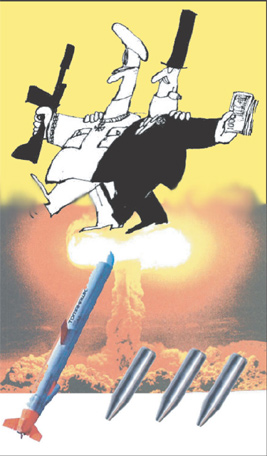
the purposeful lack of transparency over what weapons the U.S. is supplying to Israel ‘on a daily basis’ is tied to the larger administration policy of downplaying the extent to which Israel will use those weapons to commit war crimes and kill civilians in Gaza.”
Ken Klippenstein, The Intercept, Tue, 07 Nov 2023 https://www.sott.net/article/485820-Why-are-US-weapons-transfers-to-Israel-shrouded-in-secrecy-%E2%80%94-but-not-Ukraine
The Biden administration put out a three-page list of arms for Ukraine, but information on weapons sent to Israel could fit in one sentence.
One month since Hamas’s surprise attack, little is known about the weapons the U.S. has provided to Israel. Whereas the Biden administration released a three-page itemized list of weapons provided to Ukraine, down to the exact number of rounds, the information released about weapons sent to Israel could fit in a single sentence.
National Security Council spokesperson John Kirby acknowledged the secrecy in an October 23 press briefing, saying that while U.S. security assistance “on a near-daily basis,” he continued, “We’re being careful not to quantify or get into too much detail about what they’re getting — for their own operational security purposes, of course.”
The argument that transparency would imperil Israel’s operational security — somehow not a concern with Ukraine — is misleading, experts told The Intercept.
“The notion that it would in any way harm the Israeli military’s operational security to provide more information is a cover story for efforts to reduce information on the types of weapons being supplied to Israel and how they are being used,” William Hartung, a fellow at the Quincy Institute for Responsible Statecraft and expert on weapons sales, told The Intercept. “I think the purposeful lack of transparency over what weapons the U.S. is supplying to Israel ‘on a daily basis’ is tied to the larger administration policy of downplaying the extent to which Israel will use those weapons to commit war crimes and kill civilians in Gaza.”
A retired Marine general who worked in the region, who asked for anonymity because he was not authorized by his former employer to speak publicly, attributed the secrecy to the political sensitivity of the conflict. In particular, the retired officer said, weapons used in door-to-door urban warfare, which are likely to result in civilian casualties, are not going to be something the administration wants to publicize. (The National Security Council did not respond to a request for comment.)
In recent years, flare-ups of violence between Israel and Hamas in the Gaza Strip have often entailed Israeli air wars with limited numbers of Israeli troops entering the besieged coastal enclave. The last time there was a large-scale ground incursion by the Israel Defense Forces into Gaza was during the Israelis’ 2014 Operation Protective Edge.
While the 2014 invasion saw Israeli troops in Gaza for less than a month, Israel’s defense minister recently told reporters the war would take at least several months. The goal of removing Hamas completely from power is widely expected to take a significant commitment to a long-term ground presence and heavy urban fighting. According to the New Yorker, Israeli officials told their American counterparts that the war could last 10 years. The Biden administration is reportedly worried that Israel’s military objectives are not achievable.
“Delicate Matter Politically”
Hamas’s attack on Israel, which took place on October 7, resulted in a cascade of arms assistance from the U.S. Though the Biden administration at first declined to identify any specific weapons systems, as details trickled out in the press, it has gradually acknowledged some. These include “precision guided munitions, small diameter bombs, artillery, ammunition, Iron Dome interceptors and other critical equipment,” as Pentagon spokesperson Brig. Gen. Pat Ryder has said.
What “other critical equipment” entails remains a mystery, as do specifics about the quantity of arms being supplied, which the administration has refused to disclose. When a reporter asked for a “ballpark” figure for the security assistance during a background press briefing on October 12, the Pentagon demurred. “I’m not going to do that today and would defer you to the government of Israel,” a senior defense official told the reporter.
“To date, U.S. government reporting on arms transfers to Israel has been sporadic and without any meaningful detail,” Stimson Center research analyst Elias Yousif recently concluded. “Updates should be compiled on a single factsheet page, as is the case for Ukraine, and include details on the authorities invoked for the provision of assistance as well as the type and quantity of arms provided with enough specificity to enable public research and assessments.”
Hartung, the Quincy fellow, noted the contrast with the administration’s openness on military aid to Ukraine.
“Transparency on arms transfers to Ukraine came in large part due to the administration’s feeling that they were engaged in a noble venture,” Hartung said. “Although Israel certainly has the right to defend itself against the kind of horrific attack carried out by Hamas, its response — bombing and blockading a whole territory of 2 million people, killing thousands of innocent people in the process — has been described by independent experts as committing war crimes.”
“So even as the Biden administration backs Israel with weapons and rhetoric,” Hartung said, “it is a delicate matter politically to give all the details on U.S. weapons supplied to the Israeli military, some of which will certainly be used in illegal attacks on civilians if the war continues to grind on.”
Beyond just the quantities, there are specific weapons the Pentagon is providing Israel which have not been publicly disclosed, the Marine general told The Intercept.
As the arms continue to flow, dozens of C-17 military transport planes likely carrying munitions have criss-crossed the Atlantic traveling between the United States and Israel, open-source flight tracking data show, with most landing at Nevatim Air Base, an IDF base in Israel’s southern Negev desert. President Joe Biden has requested $14.3 billion in aid for Israel in addition to the over $3 billion in military assistance it already provides. Most recently, the Biden administration is planning to send $320 million in precision Spice bombs to Israel, as multiple outlets informed by Congress reported on Monday.
Ken Klippenstein is a D.C.-based investigative reporter who focuses on national security. He is also an avid Freedom of Information Act requester. Prior to joining The Intercept, he was The Nation’s D.C. correspondent.
Chess, cards and catnaps in the heart of America’s nuclear weapons complex

At Los Alamos National Laboratory, workers collect full salaries for doing nothing
Across those decades, the notion of keeping secrets from adversaries has simultaneously morphed into keeping secrets from the American public — and regulators.
| by Alicia Inez Guzmán. Searchlight New Mexico, 8 Nov 23 |
| A few days after beginning a new post at Los Alamos National Laboratory, Jason Archuleta committed a subversive act: He began to keep a journal. Writing in a tiny spiral notebook, he described how he and his fellow electricians were consigned to a dimly lit break room in the heart of the weapons complex. “Did nothing all day today over 10 hrs in here,” a July 31 entry read. “This is no good for one’s mental wellbeing or physical being.” |
“I do hope to play another good game of chess,” noted another entry, the following day.
A journeyman electrician and proud member of the International Brotherhood of Electrical Workers Local 611, Archuleta had been assigned to Technical Area 55 back in July. He had resisted the assignment, knowing that it was the location of “the plant,” a sealed fortress where plutonium is hewn into pits — cores no bigger than a grapefruit that set off the cascade of reactions inside a nuclear bomb. The design harks back to the world’s first atomic weapons: “Gadget,” detonated at the Trinity Test Site in New Mexico in 1945, and “Fat Man,” dropped on Nagasaki shortly afterward.
It has been almost that long since LANL produced plutonium pits at the scale currently underway as part of the federal government’s mission to modernize its aging stockpile. The lab, now amidst tremendous growth and abuzz with activity, is pursuing that mission with single-minded intensity. Construction is visible in nearly every corner of the campus, while traffic is bumper to bumper, morning and evening, as commuters shuttle up and down a treacherous road that cuts across the vast Rio Grande Valley into the remote Pajarito Plateau on the way to the famous site of the Manhattan Project.
But from the inside, Archuleta tells a different story: that of a jobsite in which productivity has come to a standstill. With few exceptions, he says, electricians are idle. They nap, study the electrical code book, play chess, dominoes and cards. On rare occasions, they work, but as four other journeymen (who all requested anonymity for fear of retaliation) confirmed, the scenario they describe is consistent. At any given time, up to two dozen electricians are cooling their heels in at least three different break rooms. LANL officials even have an expression for it: “seat time.”
The lab recognizes that the expansion at TA-55, and especially the plant, presents challenges faced by no other industrial setting in the nation. The risk of radiation exposure is constant, security clearances are needed, one-of-a-kind parts must be ordered, and construction takes place as the plant strives to meet its quota. That can mean many workers sit for days, weeks, or even, according to several sources, months at a time.
“I haven’t seen months,” said Kelly Beierschmitt, LANL’s deputy director of operations, “It might feel like months,” he added, citing the complications that certain projects pose. “If there’s not a [radiation control technician] available, I’m not gonna tell the craft to go do the job without the support, right?”
Such revelations come as red flags to independent government watchdogs, who note that the project is already billions of dollars over budget and at least four years behind schedule. They say that a workplace filled with idle workers is not merely a sign that taxpayer money is being wasted; more troublingly, it indicates that the expansion is being poorly managed.
“If you have a whistleblower claiming that a dozen electricians have been sitting around playing cards for six months on a big weapons program, that would seem to me to be a ‘where there is smoke, there is fire’ moment,” said Geoff Wilson, an expert on federal defense spending at the independent watchdog Project on Government Oversight.
Given the secrecy that surrounds LANL, it is virtually impossible to quantify anything having to do with the lab. That obsession is the subject of Alex Wellerstein’s 2021 book, “Restricted Data: The History of Nuclear Secrecy in the United States.” Wellerstein, a historian of science at Stevens Institute of Technology, traces that culture of secrecy from the earliest years of the Manhattan Project into the present. Across those decades, the notion of keeping secrets from adversaries has simultaneously morphed into keeping secrets from the American public — and regulators.
“What secrecy does is it creates context for a lack of oversight,” said Wellerstein in a recent interview. “It shrinks the number of people who might even be aware of an issue and it makes it harder — even if things do come out — to audit.”
The code of secrecy at LANL is almost palpable. The lab sits astride a forbidding mesa in northern New Mexico some 7,500 feet above sea level, protected on the city’s western flank by security checkpoints. Its cardinal site, TA-55, is ringed by layers of razor wire and a squadron of armed guards, themselves bolstered by armored vehicles with mounted turrets that patrol the perimeter day and night. No one without a federal security clearance is allowed to enter or move about without an escort — even to go to the bathroom. Getting that clearance, which requires an intensive background investigation, can take up to a year.
Sources for this story, veterans and newcomers alike, said they fear losing their livelihoods if they speak publicly about anything to do with their work. Few jobs in the region, much less the state (one of the most impoverished in the nation), can compete with the salaries offered by LANL. Here, journeyman electricians can earn as much as $150,000 a year; Archuleta makes $53 per hour, almost 70 percent more than electricians working at other union sites.
Nevertheless, in late September, Archuleta lodged a complaint with the Inspector General’s office alleging time theft. He and two other workers told Searchlight New Mexico that their timesheets – typically filled out by supervisors – have shown multiple codes for jobs they didn’t recognize or perform. To his mind, the situation is “not just bordering on fraud, waste and abuse, it’s crossing the threshold.”
………………………………………………………………………………………………………………………………………“By all the normal measures our society uses to evaluate cost, benefit, risk, reliability, and longevity, this latest attempt has now already failed as well,” said Greg Mello of the Los Alamos Study Group (LASG), a respected nonprofit that has been monitoring LANL for 34 years. “Federal decision makers will have to ask ‘Will the LANL product still be worth the investment,’” Mello said, referring to the plant, which will have exceeded its planned lifetime of 50 years by 2028.
The cogs of this arms race have been turning for years. In May 2018, a few months after President Donald Trump tweeted that he had a much “bigger & more powerful” nuclear button than North Korea’s Kim Jong Un, the Nuclear Weapons Council certified a recommendation to produce plutonium pits at two sites.
That recommendation was enacted into law by Congress, which in 2020 called for an annual quota of plutonium pits — 30 at LANL and 50 at the Savannah River plutonium processing facility in South Carolina — by 2030. According to the LASG, the cost per pit at LANL is greater than Savannah River. The organization estimates that each one will run to approximately $100 million.
Whether such production goals are achievable is another question: Just getting those sites capable of meeting the quota will cost close to $50 billion—and take up to two decades from the project’s start. After that, another half a century may pass before the nation’s approximately 4,000 plutonium pits are all upgraded, according to the calculations of Peter Fanta, former deputy assistant secretary of defense for nuclear matters.
…………………………………………………………………………………………………………………………………………………………Plutonium is one of the most volatile and enigmatic of all the elements on the periodic table. It ages on the outside like other metals, while on the inside, “it’s constantly bombarding itself through alpha radiation,” as Siegfried Hecker, a former LANL director and plutonium metallurgist put it. The damage is akin, in his words, to “rolling a bowling ball through [the plutonium’s] crystal structure.” Most of it can be healed, but about 10 percent can’t. “And that’s where the aging comes in.”
The renewed urgency dodges the most resounding “unanswered question at the heart of the U.S.’s nuclear arsenal,” Stephen Young, the Washington representative for the Global Security program at the Union of Concerned Scientists, wrote in “Scientific American.” “What is the lifetime of a pit?” And why hasn’t the NNSA — the federal agency tasked with overseeing the health of the nuclear weapons stockpile — dedicated the resources to finding out?
“It seems entirely possible that this was not an oversight on the part of NNSA but reflects that the agency does not want to know the answer,” Young went on. With novel warhead designs on the horizon, it was entirely plausible, he posited, that the NNSA wasn’t merely seeking to replace old pits but instead wanted to populate entirely new weapons — a desire driven less by science than by politics.
Booms and blind spots
This uncertainty has worked in LANL’s favor, propelling the mission forward and all but securing the lab’s transformation. As Beierschmitt, the deputy director of operations, publicly described the lab’s goals this summer: “Keep spending and hiring.”
Meanwhile, the Government Accountability Office, which investigates federal spending and provides its findings to Congress, has pointed to a gaping blind spot in the mission. A January report detailed how the NNSA lacked a comprehensive budget and master schedule for the entire U.S. nuclear weapons complex — essential for achieving the goal of producing 80 pits per year. The agency, in other words, has thus far failed to outline what it needs to do to reach its target — or what the overall cost will be, the GAO concluded.
“How much they’ve spent is pretty poorly understood because it shows up in so many different buckets across the budget,” said Allison Bawden, the GAO’s director of natural resources and environment. “We tried to identify these buckets of money ultimately tied to supporting the pit mission. But it’s never presented that way by NNSA, so it’s very difficult to look across the entire pit enterprise and say, ‘this is how much has been spent, and this is how much is needed going forward.’” The GAO includes the DOE on its biennial list of federal agencies most vulnerable to fraud, waste and abuse — and has done so since 1990. A major reason is the Möbius strip of contractors and subcontractors working on DOE-related projects at any given time.
The DOE, for instance, oversees the NNSA, which oversees Triad National Security — a company owned by Battelle Memorial Institute, the Texas A&M University and the University of California. Triad oversees its own army of subcontractors on lab-related projects, including construction, demolition and historic preservation. And many of those subcontractors outsource their work to yet other subcontractors, creating money trails so byzantine they defy tracking.
But one thing is known: Subcontractors will rake in billions of dollars. “We expect to be executing at least $5.5 billion in construction over the next five years and $2.5 billion in subcontracting labor and materials,” Beierschmitt said at a 2019 forum.
“Most people think that for something so giant and so supposedly important to the nation, there would be some kind of well-thought through plan,” said Mello of LASG. “There is no well-thought through plan. There never has been.”
Secrets on the plateau
……………………………………………….. Over time, systems at LANL and across the U.S. weapons complex have ossified into “their own little universes,” said Wellerstein, the science historian. “And when you combine that with the kind of contractor system they use for nuclear facilities, you create the circumstances where there’s very little serious oversight and ample opportunities and incentives for everybody to pat themselves on the back for a job well done…………………………………………………….. https://searchlightnm.org/chess-cards-and-catnaps-in-the-heart-of-americas-nuclear-weapons-complex/?utm_source=Searchlight+New+Mexico&utm_campaign=77629f0906-11%2F08%2F2023+-+Chess%2C+cards+and+catnaps&utm_medium=email&utm_term=0_8e05fb0467-77629f0906-395610620&mc_cid=77629f0906&mc_eid=a70296a261 #nuclear #antinuclear #nuclearfree #NoNukes #radioactive
1 This Month
26 September – International Day for the Total Elimination of Nuclear Weapons





PLEASE OPPOSE HR 8255 AND S.3639 – bills would accelerate satellite deployment, with no environmental review or safeguards – https://ncstd5li.quorum.us/campaign/169331/
To see nuclear-related stories in greater depth and intensity – go to https://nuclearinformation.wordpress.com
-
Archives
- September 2026 (313)
- August 2026 (330)
- July 2026 (355)
- June 2026 (287)
- May 2026 (306)
- April 2026 (356)
- March 2026 (251)
- February 2026 (267)
- January 2026 (308)
- December 2025 (358)
- November 2025 (359)
- October 2025 (375)
-
Categories
- 1
- 1 NUCLEAR ISSUES
- business and costs
- climate change
- culture and arts
- ENERGY
- environment
- health
- history
- indigenous issues
- Legal
- marketing of nuclear
- media
- opposition to nuclear
- PERSONAL STORIES
- politics
- politics international
- Religion and ethics
- safety
- secrets,lies and civil liberties
- spinbuster
- technology
- Uranium
- wastes
- weapons and war
- Women
- 2 WORLD
- ACTION
- AFRICA
- Atrocities
- AUSTRALIA
- Christina's notes
- Christina's themes
- culture and arts
- Events
- Fuk 2022
- Fuk 2023
- Fukushima 2017
- Fukushima 2018
- fukushima 2019
- Fukushima 2020
- Fukushima 2021
- general
- global warming
- Humour (God we need it)
- Nuclear
- RARE EARTHS
- Reference
- resources – print
- Resources -audiovicual
- Weekly Newsletter
- World
- World Nuclear
- YouTube
-
RSS
Entries RSS
Comments RSS

