Living on a War Planet

All this has put fresh wind in the sails of the weapons manufacturers of the American military-industrial-congressional complex. In May 2022, the CEO of Lockheed Martin thanked President Biden personally for his kindness. F-16s, after all, are big money-makers. As for the additional fuel that ordinary Ukrainians require, it is now being sequestered underground by Ukrainian commodities traders at enormous environmental risk.
And Managing Not to Notice.
SCHEERPOST, By David Bromwich / TomDispatch August 30, 2023
A new war, a new alibi. When we think about our latest war — the one that began with the Russian invasion of Ukraine, just six months after our Afghan War ended so catastrophically — there is a hidden benefit. As long as American minds are on Ukraine, we are not thinking about planetary climate disruption. This technique of distraction obeys the familiar mechanism that psychologists have called displacement. An apparently new thought and feeling becomes the substitute for harder thoughts and feelings you very much want to avoid.
Every news story about Ukrainian President Volodymyr Zelensky’s latest demand for American or European weaponry also serves another function: the displacement of a story about, say, the Canadian fires which this summer destroyed a forest wilderness the size of the state of Alabama and 1,000 of which are still burning as this article goes to press. Of course, there is always the horrific possibility that Ukraine could pass from a “contained” to a nuclear war, as out of control as those Canadian fires. Yet we are regularly assured that the conflict, close to the heart of Europe, is under careful supervision. The war has a neatly framed villain (Vladimir Putin) and — thanks to both the U.S. and NATO — a great many good people containing him. What could possibly go wrong?
A fantasy has taken root among well-meaning liberals. Ukraine, they believe, is the “good war” people like them have been searching for since 1945. “This is our Spain,” young enthusiasts have been heard to say, referring to the Spanish Republican war against fascism. In Ukraine in the early 2020s, unlike Spain in the late 1930s, the Atlantic democracies will not falter but will go on “as long as it takes.” Also, the climate cause will be assisted along the way, since Russia is a large supplier of natural gas and oil, and the world needs to unhook itself from both.
That theory got tested a year ago, with the underwater sabotage of Russia’s Nordstream natural gas pipelines in the Baltic Sea. President Biden, National Security Adviser Jake Sullivan, and Deputy Secretary of State Victoria Nuland all welcomed that environmental disaster. In an eventually deleted message the former Polish foreign minister and war advocate Radislaw Sikorski tweeted thanks to the U.S. for what he took to be a transparently American operation.
The American media, however, treated the attack as an imponderable mystery, some reports even suggesting that Russia might have destroyed its own invaluable pipeline for reasons yet to be fathomed. Then, in a February 2023 article, the independent investigative reporter Seymour Hersh traced the attack to the U.S., and later Western reports would come halfway to his conclusion by assigning credit to Ukraine, or a pro-Ukrainian group.
As of late summer, all reporting on the Nordstream disaster seems to have stopped. What has not stopped is the killing. The numbers of dead and wounded in the Ukraine war are now estimated at nearly half a million, with no end in sight.
The Nordstream wreck was only one attention-getting catastrophe within the greater horror that a war always is. An act of industrial sabotage on a vast scale, it was also an act of environmental terrorism, causing the largest methane leak in the history of the planet. According to a report in Forbes, “The subsequent increase in greenhouse gases… was equivalent to as much as 32% of Denmark’s annual emissions.”
The Russian invasion of Ukraine was an illegal and immoral act, but the adjective that usually follows illegal and immoral is “unprovoked.” In truth, this war was provoked. A contributing cause, impossible to ignore, was the eastward extension of NATO, always moving closer to the western borders of Russia, in the years from 1991 to 2022………………………………………………..
Counterfeit Solidarity
The United States has supported Ukraine with copious donations of weapons, troop-trainers, and logistical and technical advisers left to work the interoperable targeting equipment we “share” with that country. Between 2014 and 2022, NATO drilled at least 10,000 Ukrainian troops per year in advanced methods of warfare. In the war itself, weapons supplies have climbed steadily from Stinger and Javelin missiles to Abrams tanks (whose greenhouse-gas environmental footprint is 0.6 miles per gallon of gas, or 300 gallons every eight hours of use), to cluster bombs, and most recently the promise of F-16s.
All this has put fresh wind in the sails of the weapons manufacturers of the American military-industrial-congressional complex. In May 2022, the CEO of Lockheed Martin thanked President Biden personally for his kindness. F-16s, after all, are big money-makers. As for the additional fuel that ordinary Ukrainians require, it is now being sequestered underground by Ukrainian commodities traders at enormous environmental risk.
Wars and their escalation — the mass destruction of human life that is almost invariably accompanied by destruction of the natural world — happen because preparations for war bring leaders ever closer to the brink. So close, in fact, that it feels natural to go on. That was certainly the case with Russia, Ukraine, and NATO, and the escalation that followed. Examples of such escalation are indeed the rule, not the exception in time of war………………………………………………………………………………………………………………………………………………………..
All of us now inhabit a war planet threatened in other devastating ways as well. Our escape will not be achieved through a new “norms-based” international order in which NATO, with the U.S. at the helm, replaces the United Nations as the global authority presiding over war and peace. The “next war on the horizon,” whether in the Baltic Sea, the Persian Gulf, or Taiwan, is a matter of grave interest to the citizens on all those horizons who may want anything but to serve as its field of exercise. Meanwhile, the lesson for the United States should be simple enough: the survival of the planet cannot wait for the world’s last superpower to complete our endless business of war. https://scheerpost.com/2023/08/30/living-on-a-war-planet/
Ukraine’s army is running out of men to recruit, and time to win

It’s a brutal but simple calculation: Kyiv is running out of men. US sources have calculated that its armed forces have lost as many as 70,000 killed in action, with another 100,000 injured. While Russian casualties are higher still, the ratio nevertheless favours Moscow, as Ukraine struggles to replace soldiers in the face of a seemingly endless supply of conscripts. [Comment: There’s no evidence nor reason to believe that Russian casualties are higher. ]
Victory may be in sight for Vladimir Putin
ROBERT CLARK, 22 August 2023 m https://www.telegraph.co.uk/news/2023/08/22/ukraines-army-is-running-out-of-men-to-recruit/
The war in Ukraine is now one of attrition, fought on terms that increasingly favour Moscow. Kyiv has dealt admirably with shortages of Western equipment so far, but a shortage of manpower – which it is already having to confront – may prove fatal.
Broadly speaking, Kyiv’s highly anticipated counter-offensive has gathered much-needed momentum in recent weeks, with hard-fought gains around the strategically important village of Robotyne. [Comment: Losing thousands of men for a village or 2, which it’s likely to lose back to Russia in a few weeks time, is not a ‘gain’; more so because that’s exactly Russia’s goal: to reduce the number of troops in the Kiev-junta’s Nazi-aligned military.]
If this falls, the road to the Azov sea will be in sight. If Ukrainian forces can reach the coast, they will split the land-bridge connecting Russia with Crimea, potentially routing Moscow’s troops.
Ukraine’s forces, however, are not just fighting massed defences and artillery fire. They are also fighting against time. Having first penetrated the formidable Russian minefields four weeks ago, Kyiv is desperate to exploit its early successes before mounting casualties and autumn rains destroy its fighting capability.
The summer has been wet, and the autumn months traditionally bring heavy rains which turn the soft ground of eastern Europe into a thick mud as tanks, armour and artillery churn the battlefield. [Comment: Particularly because a lot of the vehicles and weapons gifted to them by the West are designed for fighting tribal groups in desert conditions]
This can all but halt meaningful advances, locking armies into place and buying the Russians time to add to the deeply dug trench networks and multi-layered minefields that have made retaking lost territory such hard going.
Perhaps more important, however, is the heavy toll the fighting is taking on the people of Ukraine. The Russian armed forces began the war with an official strength of one million, and a true strength estimated by some analysts at between 700,000 and 800,000.
A further two million men – former conscripts and contract servicemen – were available in the reserves, and some seven million men of conscription age (18-26) left to draw on, even before the Kremlin raised the age limit to 31.
Ukraine, meanwhile, had a pre-war population of 44 million. By the end of the first year of the war, some six million had fled abroad. The armed forces number around 200,000 active personnel, roughly the same again in reserve, and can draw on another 1.5 million fighting-age males. [Comment: The Kiev junta has lost nearly 300,000 men already, and those it ‘can draw on’ cannot be much more because, for many months, social media has been littered with footage showing unwilling conscripts being dragged into vans: ‘More than 280,000 dead’: Estimate of Ukraine’s military losses calculated using published obituaries]
It’s a brutal but simple calculation: Kyiv is running out of men. US sources have calculated that its armed forces have lost as many as 70,000 killed in action, with another 100,000 injured. While Russian casualties are higher still, the ratio nevertheless favours Moscow, as Ukraine struggles to replace soldiers in the face of a seemingly endless supply of conscripts. [Comment: There’s no evidence nor reason to believe that Russian casualties are higher. ]
Volunteers are no longer coming forward in numbers sufficient to keep the army at fighting strength: those most willing to fight signed up years ago. The latest recruitment slogan is “it’s OK to be afraid”, but there are still many attempting to dodge being drafted to fight on the front lines.
For all the difficulties the Kremlin has faced in its forced conscriptions, it still has hundreds of thousands of men to draw upon. This is a resource Ukraine simply cannot match, and one that the West cannot supply.
For Vladimir Putin, victory may at last be in sight as Western support begins to waver. If Kyiv cannot break through the Russian lines now, it may never be able to. If it runs out of willing men to recruit, the West cannot help.
Robert Clark is director of the Defence and Security Unit at Civitas
Kazakhstan’s 40-Year History of Nuclear Testing: Call to Action for Nonproliferation Education

Nuclear tests were carried out there in complete secrecy and absolute denial of harmful effects of the radiation fallout.”
Nearly 1.5 million Kazakh people have suffered as a result of the 456 nuclear tests (340 underground and 116 aboveground) conducted for more than four decades at the Semipalatinsk polygon.
BY ASSEM ASSANIYAZ 28 AUGUST 2023
LONDON – Fourteen years ago, the United Nations General Assembly (UNGA) declared Aug. 29 the International Day against Nuclear Tests. Initiated by Kazakhstan, its increasing relevance for the entire world community is fueled by sprawling geopolitical instability. In an interview with The Astana Times, Margarita Kalinina-Pohl, a U.S.-based expert in nuclear and radiological security, addressed ongoing challenges in nuclear disarmament and raised an importance of nonproliferation education.
Kalinina-Pohl is the director of the CBRN (Chemical, Biological, Radiological and Nuclear) Security Program at the James Martin Center for Nonproliferation Studies (CNS) with a 25-year work experience in education. The center is part of the Middlebury Institute of International Studies (MIIS) at Monterey, California. For this story, she shared intriguing insights of her research on nuclear and radiological security in Central Asia.
The legacy of nuclear testing
Christopher Nolan’s recently released film “Oppenheimer” about the creation of the atomic bomb during World War II remains a topic of heated discussions. However, the Hollywood movie, in her opinion, was “focused on the Trinity Test [the first detonation of the U.S. nuclear weapon] and its successful outcome, but it was silent about the human cost of local communities, known as the New Mexico ‘downwinders’.”
The Trinity nuclear test was part of the U.S.-led Manhattan Project, the code name for the scientific and military undertaking for the development of the first atomic bombs.
“Manhattan Project leaders did not inform people living nearby or downwind about the test, nor were Marshallese informed why they had to move from their land when nuclear atmospheric tests were conducted in the Pacific Ocean,” she said.
“The Soviets did the same to the Kazakh people living in the vicinity of the Semipalatinsk Test Site (STS),” she noted. “Nuclear tests were carried out there in complete secrecy and absolute denial of harmful effects of the radiation fallout.”
Nearly 1.5 million Kazakh people have suffered as a result of the 456 nuclear tests (340 underground and 116 aboveground) conducted for more than four decades at the Semipalatinsk polygon.
In the early 1990s, Kazakhstan faced an urgent need to secure dangerous materials, prevent brain drain, and start remediation and cleanup activities of the weapons of mass destruction (WMD). After the collapse of the Soviet Union, the country transferred nearly 1,400 Soviet nuclear warheads to Russia and joined the nonproliferation regime.
Kalinina-Pohl visited the Semipalatinsk polygon twice during her management activities at the CNS regional office in Kazakhstan. On her first private visit in 1999, she and her colleague from Switzerland had a tour to the experimental field (the former site for atmospheric nuclear tests) and to Degelen mountain (the tunnels for underground tests).
As for the second visit in 2001, she participated in a range of events commemorating the 10th anniversary of the STS closure organized by veterans of the Nevada-Semipalatinsk antinuclear movement, the first major anti-nuclear protest movement in the former Soviet Union. The official ceremony was held in the Kazakh city of Kurchatov and the program included another trip to the site.
“The encounters in Kurchatov and Semipalatinsk had a profound effect on me personally and professionally. It was an eye-opening experience that helped me realize the colossal efforts put into the tests and their large-scale impact on people and environment,” she said.
Another memory she shared from her visits was the impression from the Stronger Than Death monument, a memorial to the victims of nuclear tests. A mother under the nuclear mushroom shielding her child “depicts a powerful image.”
“In addition to dangerous nuclear materials at this site, the Soviet legacy left radioactive sources for military, research, and industrial purposes. On top of that, biological weapons were also produced in Kazakhstan. They were tested at Vozrozhdeniye Island in the Aral Sea,” she noted.
“The voices of the victims were silent for so long,” said Kalinina-Pohl. She emphasized that their true stories are being uncovered today, citing the example of works of a Kazakh artist and a nuclear disarmament activist Karipbek Kuyukov, who experienced firsthand consequences of nuclear tests at STS.
The book “Atomic Steppe: How Kazakhstan Gave Up the Bomb” written by a Kazakh prominent nuclear non-proliferation expert Togzhan Kassenova allowed Kalinina-Pohl to learn more about the plight of victims of nuclear tests in Kazakhstan. She recommended reading it, as “a full understanding of the complexity and soreness of the decision to close the test site came after this story.”
Nuclear and radiological security in Central Asia
This September marks another milestone in the history of nuclear disarmament – the 30th anniversary of the initiative to establish the Central Asian Nuclear-Weapon-Free Zone (CANWFZ). It led to the signing of the Treaty on a Nuclear-Weapon-Free Zone in Central Asia (Kazakhstan, Kyrgyzstan, Tajikistan, Turkmenistan, and Uzbekistan) in 2006 in the Kazakh city of Semei, also referred as the Treaty of Semipalatinsk.
Kalinina-Pohl herself was born near one of the former uranium mine sites in Kyrgyzstan.
“Central Asian states – Kyrgyzstan and Tajikistan in particular – are still coping with the Soviet uranium mining legacy in the form of impoundments containing radioactive waste, known as tailings. They cause harm to people and the environment, representing a safety concern,” she said.
Along with other countries in the world, Central Asian states are also embarking on civilian nuclear energy programs…………………………………………………………………………………………………………………….
Kazakhstan’s longstanding commitment to nuclear disarmament resulted in its active participation in drafting and adoption of the Treaty on the Prohibition of Nuclear Weapons (TPNW). It was entered into force in an expedited manner in January 2021. The country’s chairmanship in TPNW by the end of this year will be mainly focused on victim assistance and environmental remediation. https://astanatimes.com/2023/08/kazakhstans-40-year-history-of-nuclear-testing-call-to-action-for-nonproliferation-education/
Vivek Ramaswamy: Cut funding for Ukraine or face ‘post-Zelensky warlord’
Tony Diver, Telegraph, Fri, 25 Aug 2023
The war in Ukraine will end with the country under the control of a “post-Zelensky warlord” if America does not cut its military funding, Vivek Ramaswamy has said.
The entrepreneur and presidential candidate, who was considered the breakout star of Wednesday’s Republican primary debate, has pledged to stop US support for Mr Zelensky if he wins control of the White House next year.
He said Ukraine would end up “just like what happened after the Soviets invaded Afghanistan” if America does not “step in” to end Western military aid.
The war in Ukraine has become controversial among some on the political Right, who argue its cost has become unjustifiable.
Polls show that the proportion of GOP voters who believe America is doing too much for Ukraine have tripled since last spring, to 44 per cent, while a significant majority of Democrats support more spending.
Some Republicans in the House of Representatives have indicated they will be less willing to support funding increases in future, although few take as hardline a stance as Mr Ramaswamy.
In the debate in Milwaukee, the 38-year-old entrepreneur said more military aid for Ukrainian forces would be “disastrous” and amount to “protecting against an invasion across somebody else’s border”.
And in comments published later by Voice of America, he went on to suggest the continuation of the war would be worse for Ukraine’s long-term interests and stability.
“My plan to end the Ukraine war will actually be probably better for Ukraine, at least it comes out with sovereignty intact. You mark my words, the way this war ends right now without the US actually stepping in and saying we’re not going to fund any more of it is going to be some post-Zelensky warlord takes over, with a couple 100 billion dollars of American military equipment. Just like what happened after the Soviets invaded Afghanistan, and you see how far that got us.”
Mr Ramaswamy has said he would prioritise a trip to Moscow in his first year as president and give Russia a guarantee that NATO will never admit Ukraine. He has said his foreign affairs policy would be based on the “America First” strategy pursued by Donald Trump between 2016 and 2020, when he withdrew from international organisations and treaties, including the Paris Agreement on climate change.
Ron DeSantis, the second-placed Republican candidate after Mr Trump, has also pledged to cut funding to Kyiv.…………….. https://www.telegraph.co.uk/world-news/2023/08/25/vivek-ramaswamy-ukraine-post-zelensky-warlord-russia/
Ukraine conflict may be lengthy – Canadian PM
Rt.com 29 Aug 23,
Justin Trudeau has pledged that Ottawa, along with the other G7 members, will support Kiev for as long as it takes.
It may still be a long time before the military conflict between Ukraine and Russia ends, Canadian Prime Minister Justin Trudeau has said. He added that his country as well as the other G7 nations are prepared to support Kiev for the long haul.
Speaking to reporters on the sidelines of the Seventh Global Environment Facility Assembly in Vancouver on Saturday, Trudeau said that the Group of Seven leaders have always known that Ukraine’s counteroffensive “was going to be a long process.”
Certainly from the conversations we’ve had at the G7 and NATO, we are ready for a war that will take as long as it needs to, because we cannot and must not let Russia win,” he added.
Ukraine launched its much-hyped counteroffensive in early June in the east and south of the country, but has yet to make any significant gains. Senior officials in Kiev, including President Vladimir Zelensky, have acknowledged that it is going more slowly than anticipated.
Western media outlets have reported heavy losses among Ukrainian forces as they try to breach Russian defenses.
The Russian Defense Ministry claimed earlier this month that Kiev had lost over 43,000 military personnel and nearly 5,000 pieces of military equipment since the start of the counteroffensive.
The Wall Street Journal, citing anonymous officials in Washington, reported on Thursday that the US is unlikely to give Ukraine “anywhere near the same level” of military aid in 2024 compared to this year.
On Friday, Bloomberg claimed that European officials are growing increasingly concerned that US President Joe Biden could “nudge” Ukraine toward peace talks next year.
Earlier this month, former Russian President Dmitry Medvedev, who currently serves as deputy chairman of the Russian Security Council, said on Telegram that hostilities between Russia and Ukraine could drag on for years or even decades………………. https://www.rt.com/news/581911-canadian-pm-ukraine-conflict-lengthy/
German officials believe Ukraine destroyed Nord Stream – media
Rt.com 27 Aug 23
Nothing ties Russia to the explosions, two major German news outlets have reported
German investigators probing the attacks on the Nord Stream pipelines are increasingly convinced that the perpetrators in question are linked to Ukraine, Der Spiegel and state broadcaster ZDF reported on Friday.
Those familiar with the probe “consider the clues [pointing to] Ukraine to be particularly convincing,” the ZDF broadcaster said, adding that “there is no reliable evidence” that would suggest Russia was responsible………………………………………………………………………………………
The Nord Stream 1 and 2 pipelines, built to deliver Russian natural gas to Germany, were destroyed by underwater explosions off the Danish island of Bornholm in September 2022. Western outlets have since repeatedly reported that evidence found in the case points to Ukraine. Kiev has denied any involvement in the incident. https://www.rt.com/news/581849-nord-stream-evidence-ukraine-german/
There should be no Saudi uranium enrichment

The ultimate argument against a US-Saudi nuclear deal is the crown prince himself, who is in line to be king and for practical purposes already is.
He is a liar and a gruesome killer. Saudi Arabia, for all its modern trappings, is a primitive state with no effective checks on his powers. The king makes the laws, rules by decree, and is the chief judge. He has powers the British king gave up in the 13th century. Saudi Arabia has a long way to go before it will be a safe place for nuclear energy.
By Victor Gilinsky | August 28, 2023
https://thebulletin.org/2023/08/there-should-be-no-saudi-uranium-enrichment/?utm_source=Newsletter&utm_medium=Email&utm_campaign=MondayNewsletter08282023&utm_content=NuclearRisk_SaudiUranium_08282023&utm_source=Newsletter&utm_medium=Email&utm_campaign=MondayNewsletter08282023&utm_content=NuclearRisk_SaudiUranium_08282023
There is increasing talk of a United States-brokered “grand bargain” on Middle East security, the core of which would be normalization of ties between Israel and Saudi Arabia. It isn’t clear what motivates Joe Biden to press for this deal now. The obvious goal would involve the eternal search for peace in the Middle East, but there are hints that such a bargain may have more to do with keeping the Saudis out of China’s orbit.
One thing we know, Biden’s lieutenants are lobbying hard in the Senate for acceptance of some version of far-reaching demands from the Saudi crown prince, Mohammed bin Salman, among them access to uranium enrichment technology that would ostensibly provide fuel for future Saudi nuclear power plants. Indeed, enrichment is a step in the production of nuclear reactor fuel. It is also a vital part of one of two paths to the atomic bomb.
One thing we know, Biden’s lieutenants are lobbying hard in the Senate for acceptance of some version of far-reaching demands from the Saudi crown prince, Mohammed bin Salman, among them access to uranium enrichment technology that would ostensibly provide fuel for future Saudi nuclear power plants. Indeed, enrichment is a step in the production of nuclear reactor fuel. It is also a vital part of one of two paths to the atomic bomb.
That isn’t of course the polite version of the crown prince’s plan. He says he wants to use domestic uranium, of which the Saudis claimed to have large deposits, to fuel civilian nuclear power reactors. He wants to produce fuel domestically, ergo he needs to acquire enrichment technology. But despite Saudi claims, there are no significant uranium deposits in the country. Recent reports reveal that the teams of geologists sent to search for it have turned up empty-handed. That hasn’t, however, caused the crown prince to lose interest in enrichment, which is itself a revealing fact about his intentions—and his reliance on American cupidity.
To cope with what the Saudis regard as excessive suspicion of others, they have suggested they are open to accepting some modest additional oversight arrangements, which they cynically expect Congress to accept after members engage in some ritual handwringing.
You would think the Saudi insistence on inclusion of enrichment, no matter how restricted, would be a non-starter for a US-Saudi “123” agreement for nuclear cooperation. (Compliance with Section 123 of the Atomic Energy Act is essential for any significant US-Saudi nuclear trade.) But such common sense is a thin reed to lean on when it comes to Washington nuclear politics. Powerful lobbies have been pushing for years for sale of power reactors in the Middle East and for generous subsidies to allow this to happen. The departments of Energy and State will be supporting this, too, claiming that international “safeguards” would be effective in preventing misuse of civilian nuclear facilities. The official line on nuclear energy is still Atoms for Peace, as it has been since President Eisenhower’s 1953 speech. Recall that George W. Bush said even Iranian power reactors, by themselves, were perfectly legitimate.
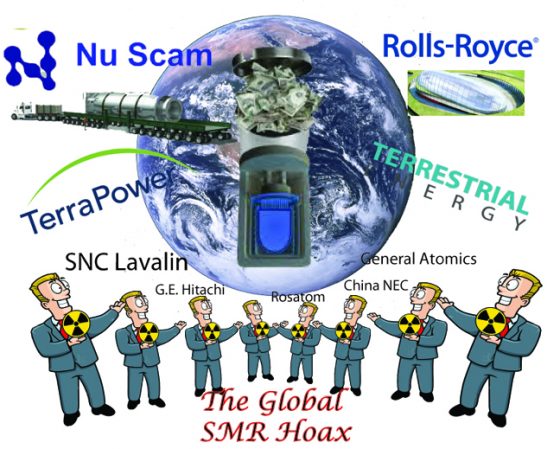
The problem is that hardly anyone in Congress has any real understanding of nuclear technology. The members are swept off their feet by promises of safe, non-carbon producing energy sources, especially when nuclear proponents use adjectives like “small” and “modular” and “advanced.” Congressional discussions on international aspects seldom get beyond “restoring America’s competitive advantage in nuclear energy.”
There is also little understanding of the limitations of international “safeguards,” the inspection system of the International Atomic Energy Agency (IAEA). (Is there any realistic recourse if the Saudis break the rules?) It is indicative of Saudi Arabia’s attitude toward the IAEA that it has used every stratagem to minimize its safeguards responsibilities. The minimization strategy does not violate IAEA requirements, yes, but a country anxious to demonstrate its nuclear bona fides should be more forthcoming in its nonproliferation cooperation.
The 2008 US-India civil nuclear agreement is an eternal warning about how American international nuclear policy can go off the rails when the president and Congress are swept away by visions of gaining an ally against China plus the prospect of dozens of power reactor sales. That agreement ran a truck through the Non-Proliferation Treaty, and none of the sales of nuclear power plants materialized.
The Saudis know Americans can be made to swallow principle—they recently succeeded in humbling the US president on human rights and oil prices—and so are unlikely to soften their stance on inclusion of enrichment in a 123 agreement. The White House will be looking for a formula that accepts it, but adds some restriction, or appearance of restriction, or another sweetener, perhaps related to Palestinian rights, that would allow members of the House and Senate to go along with inclusion of enrichment in a US-Saudi agreement.
Who would stand in the way? Not the Republicans: They love the Saudis. The one possibility is if Israel balks at any deal that includes Saudi enrichment. Opposition Leader Yair Lapid told Democratic Party lawmakers visiting Israel recently that he opposes a potential Israel-Saudi Arabia normalization deal that allows Riyadh to enrich uranium because it would harm Israel’s security. But the Israeli government’s response—that is, Prime Minister Netanyahu’s—has been ambiguous.
Somebody needs to stand up. Not only should the United States say no to Saudi enrichment, but Washington should also rethink the entire notion of nuclear power reactors in Saudi Arabia. Such reactors, coupled with a reprocessing facility to extract plutonium from used fuel, which the Saudis will surely want as well, provide the other path to a bomb, a plutonium bomb.
With its constant threat of wars, the Middle East is no place for nuclear reactors. Nuclear reactors in the region have been targeted in aerial attacks a dozen times. The safety issues that followed the capture by the Russians of the Zaporizhzhia power reactors in Ukraine should teach us something, too. Nuclear reactors do not belong in regions of potential conflict.
The ultimate argument against a US-Saudi nuclear deal is the crown prince himself, who is in line to be king and for practical purposes already is. He is a liar and a gruesome killer. Saudi Arabia, for all its modern trappings, is a primitive state with no effective checks on his powers. The king makes the laws, rules by decree, and is the chief judge. He has powers the British king gave up in the 13th century. Saudi Arabia has a long way to go before it will be a safe place for nuclear energy.
Elon Musk’s Shadow Rule

In the past twenty years, against a backdrop of crumbling infrastructure and declining trust in institutions, Musk has sought out business opportunities in crucial areas where, after decades of privatization, the state has receded. The government is now reliant on him, but struggles to respond to his risk-taking, brinkmanship, and caprice.
Musk was asked whether he has more influence than the American government. He replied immediately, “In some ways.”
“We are living off his good graces,” a Pentagon official said of Musk’s role in the war in Ukraine. “That sucks.”
How the U.S. government came to rely on the tech billionaire—and is now struggling to rein him in.
New Yorker, By Ronan Farrow, August 21, 2023
Last October, Colin Kahl, then the Under-Secretary of Defense for Policy at the Pentagon, sat in a hotel in Paris and prepared to make a call to avert disaster in Ukraine. A staffer handed him an iPhone—in part to avoid inviting an onslaught of late-night texts and colorful emojis on Kahl’s own phone. Kahl had returned to his room, with its heavy drapery and distant view of the Eiffel Tower, after a day of meetings with officials from the United Kingdom, France, and Germany. A senior defense official told me that Kahl was surprised by whom he was about to contact: “He was, like, ‘Why am I calling Elon Musk?’ ”
The reason soon became apparent. “Even though Musk is not technically a diplomat or statesman, I felt it was important to treat him as such, given the influence he had on this issue,” Kahl told me. SpaceX, Musk’s space-exploration company, had for months been providing Internet access across Ukraine, allowing the country’s forces to plan attacks and to defend themselves. But, in recent days, the forces had found their connectivity severed as they entered territory contested by Russia.
More alarmingly, SpaceX had recently given the Pentagon an ultimatum: if it didn’t assume the cost of providing service in Ukraine, which the company calculated at some four hundred million dollars annually, it would cut off access. “We started to get a little panicked,” the senior defense official, one of four who described the standoff to me, recalled. Musk “could turn it off at any given moment. And that would have real operational impact for the Ukrainians.”
Musk had become involved in the war in Ukraine soon after Russia invaded, in February, 2022. Along with conventional assaults, the Kremlin was conducting cyberattacks against Ukraine’s digital infrastructure. Ukrainian officials and a loose coalition of expatriates in the tech sector, brainstorming in group chats on WhatsApp and Signal, found a potential solution: SpaceX, which manufactures a line of mobile Internet terminals called Starlink. The tripod-mounted dishes, each about the size of a computer display and clad in white plastic reminiscent of the sleek design sensibility of Musk’s Tesla electric cars, connect with a network of satellites.
The units have limited range, but in this situation that was an advantage: although a nationwide network of dishes was required, it would be difficult for Russia to completely dismantle Ukrainian connectivity. Of course, Musk could do so. Three people involved in bringing Starlink to Ukraine, all of whom spoke on the condition of anonymity because they worried that Musk, if upset, could withdraw his services, told me that they originally overlooked the significance of his personal control. “Nobody thought about it back then,” one of them, a Ukrainian tech executive, told me. “It was all about ‘Let’s fucking go, people are dying.’ ”
In the ensuing months, fund-raising in Silicon Valley’s Ukrainian community, contracts with the U.S. Agency for International Development and with European governments, and pro-bono contributions from SpaceX facilitated the transfer of thousands of Starlink units to Ukraine. A soldier in Ukraine’s signal corps who was responsible for maintaining Starlink access on the front lines, and who asked to be identified only by his first name, Mykola, told me, “It’s the essential backbone of communication on the battlefield.”
Initially, Musk showed unreserved support for the Ukrainian cause, responding encouragingly as Mykhailo Fedorov, the Ukrainian minister for digital transformation, tweeted pictures of equipment in the field. But, as the war ground on, SpaceX began to balk at the cost. “We are not in a position to further donate terminals to Ukraine, or fund the existing terminals for an indefinite period of time,” SpaceX’s director of government sales told the Pentagon in a letter, last September. (CNBC recently valued SpaceX at nearly a hundred and fifty billion dollars. Forbes estimated Musk’s personal net worth at two hundred and twenty billion dollars, making him the world’s richest man.)
Musk was also growing increasingly uneasy with the fact that his technology was being used for warfare. That month, at a conference in Aspen attended by business and political figures, Musk even appeared to express support for Vladimir Putin. “He was onstage, and he said, ‘We should be negotiating. Putin wants peace—we should be negotiating peace with Putin,’ ” Reid Hoffman, who helped start PayPal with Musk, recalled. Musk seemed, he said, to have “bought what Putin was selling, hook, line, and sinker.” A week later, Musk tweeted a proposal for his own peace plan, which called for new referendums to redraw the borders of Ukraine, and granted Russia control of Crimea, the semi-autonomous peninsula recognized by most nations, including the United States, as Ukrainian territory. In later tweets, Musk portrayed as inevitable an outcome favoring Russia and attached maps highlighting eastern Ukrainian territories, some of which, he argued, “prefer Russia.” Musk also polled his Twitter followers about the plan. Millions responded, with about sixty per cent rejecting the proposal. (Volodymyr Zelensky, Ukraine’s President, tweeted his own poll, asking users whether they preferred the Elon Musk who supported Ukraine or the one who now seemed to back Russia. The former won, though Zelensky’s poll had a smaller turnout: Musk has more than twenty times as many followers.)
……… . One day, Ukrainian forces advancing into contested areas in the south found themselves suddenly unable to communicate…………………………………….. . The Financial Times reported that outages affected units in Kherson, Zaporizhzhia, Kharkiv, Donetsk, and Luhansk. American and Ukrainian officials told me they believed that SpaceX had cut the connectivity via geofencing, cordoning off areas of access.
The senior defense official said, “We had a whole series of meetings internal to the department to try to figure out what we could do about this.” Musk’s singular role presented unfamiliar challenges, as did the government’s role as intermediary……………… The Pentagon would need to reach a contractual arrangement with SpaceX so that, at the very least, Musk “couldn’t wake up one morning and just decide, like, he didn’t want to do this anymore.”
……………… To the dismay of Pentagon officials, Musk volunteered that he had spoken with Putin personally. Another individual told me that Musk had made the same assertion in the weeks before he tweeted his pro-Russia peace plan, and had said that his consultations with the Kremlin were regular……………. On the phone, Musk said that he was looking at his laptop and could see “the entire war unfolding” through a map of Starlink activity. ………….Musk told Kahl that the vivid illustration of how technology he had designed for peaceful ends was being used to wage war gave him pause.
After a fifteen-minute call, Musk agreed to give the Pentagon more time. He also, after public blowback and with evident annoyance, walked back his threats to cut off service. “The hell with it,” he tweeted. “Even though Starlink is still losing money & other companies are getting billions of taxpayer $, we’ll just keep funding Ukraine govt for free.” This June, the Department of Defense announced that it had reached a deal with SpaceX.
The meddling of oligarchs and other monied interests in the fate of nations is not new.……………………………….
But Musk’s influence is more brazen and expansive. There is little precedent for a civilian’s becoming the arbiter of a war between nations in such a granular way, or for the degree of dependency that the U.S. now has on Musk in a variety of fields, from the future of energy and transportation to the exploration of space. SpaceX is currently the sole means by which nasa transports crew from U.S. soil into space, a situation that will persist for at least another year. The government’s plan to move the auto industry toward electric cars requires increasing access to charging stations along America’s highways. But this rests on the actions of another Musk enterprise, Tesla. The automaker has seeded so much of the country with its proprietary charging stations that the Biden Administration relaxed an early push for a universal charging standard disliked by Musk. His stations are eligible for billions of dollars in subsidies, so long as Tesla makes them compatible with the other charging standard.
In the past twenty years, against a backdrop of crumbling infrastructure and declining trust in institutions, Musk has sought out business opportunities in crucial areas where, after decades of privatization, the state has receded. The government is now reliant on him, but struggles to respond to his risk-taking, brinkmanship, and caprice.
Current and former officials from nasa, the Department of Defense, the Department of Transportation, the Federal Aviation Administration, and the Occupational Safety and Health Administration told me that Musk’s influence had become inescapable in their work, and several of them said that they now treat him like a sort of unelected official. One Pentagon spokesman said that he was keeping Musk apprised of my inquiries about his role in Ukraine and would grant an interview with an official about the matter only with Musk’s permission. “We’ll talk to you if Elon wants us to,” he told me. In a podcast interview last year, Musk was asked whether he has more influence than the American government. He replied immediately, “In some ways.” Reid Hoffman told me that Musk’s attitude is “like Louis XIV: ‘L’état, c’est moi.’ ”
Musk’s power continues to grow. His takeover of Twitter, which he has rebranded “X,” gives him a critical forum for political discourse ahead of the next Presidential election. He recently launched an artificial-intelligence company, a move that follows years of involvement in the technology. Musk has become a hyper-exposed pop-culture figure, and his sharp turns from altruistic to vainglorious, strategic to impulsive, have been the subject of innumerable articles and at least seven major books, including a forthcoming biography by Walter Isaacson. But the nature and the scope of his power are less widely understood.
More than thirty of Musk’s current and former colleagues in various industries and a dozen individuals in his personal life spoke to me about their experiences with him. Sam Altman, the C.E.O. of OpenAI, with whom Musk has both worked and sparred, told me, “Elon desperately wants the world to be saved. But only if he can be the one to save it.”
…………………………………………………..officials expressed profound misgivings. “Living in the world we live in, in which Elon runs this company and it is a private business under his control, we are living off his good graces,” a Pentagon official told me. “That sucks.”
……………………………………………………………………………………………………………………………………………………………………………………………………Of all Musk’s enterprises, SpaceX may be the one that most fundamentally reflects his appetite for risk…………………………………………………………………………………………………………………………………………………………….. “He has a long history of launching and blowing up rockets. And then he puts out videos of all the rockets that he’s blown up. And like half of America thinks it’s really cool,” the former nasa administrator Jim Bridenstine told me. “He has a different set of rules.”
……………………………………………………………………………………………………………………………….. There are competitors in the field, including Jeff Bezos’s Blue Origin and Richard Branson’s Virgin Galactic, but none yet rival SpaceX. The new space race has the potential to shape the global balance of power. Satellites enable the navigation of drones and missiles and generate imagery used for intelligence, and they are mostly under the control of private companies…………………………………
Several officials told me that they were alarmed by nasa’s reliance on SpaceX for essential services. “There is only one thing worse than a government monopoly. And that is a private monopoly that the government is dependent on,” Bridenstine said. “I do worry that we have put all of our eggs into one basket, and it’s the SpaceX basket.”
………………………………………………………………………………………………………. Officials who have worked at osha and at an equivalent California agency told me that Musk’s influence, and his attitude about regulation, had made their jobs difficult…………………………………………………………………………………. You add on the fact that he considers himself to be a master of the universe and these rules just don’t apply to people like him,” Jordan Barab, a former Deputy Assistant Secretary of Labor at osha, told me. “There’s a lot of underreporting in industry in general. And Elon Musk kind of seems to raise that to an art form.” Garrett Brown, a former field-compliance inspector at California’s Division of Occupational Safety and Health, added, “We have a bad health-and-safety situation throughout the country. And it’s worse in companies run by people like Elon Musk, who was ideologically opposed to the idea of government enforcement of public-health regulations.”
………………………………………………………………………………………………………………………………………………………………………………………………………………………………. On July 12th, Musk announced xAI, his entry into a field that promises to alter much about life as we know it. He tweeted an image of the new company’s Web site, featuring a characteristically theatrical mission statement: the firm’s goal, he said, was “to understand the true nature of the universe.”
……………………………………………………… Musk has been involved in artificial intelligence for years. In 2015, he was one of a handful of tech leaders, including Hoffman and Thiel, who funded OpenAI, then a nonprofit initiative. (It now has a for-profit subsidiary.)………………………………………………… Musk left the company in 2018, reneging on a commitment to further fund OpenAI……………………………. a lot of my life and time to make sure we had enough funding.” OpenAI went on to become a leader in the field, introducing ChatGPT last year. Musk has made a habit of trashing the company,
……………………..It is difficult to say whether Musk’s interest in A.I. is driven by scientific wonder and altruism or by a desire to dominate a new and potentially powerful industry.
……………………….. In March, Musk, along with dozens of tech leaders, signed an open letter calling for a six-month pause in the development of advanced A.I. technology……………………. Yet in the period during which Musk endorsed a pause, he was working to build xAI, recruiting from major competitors, including OpenAI, and even, according to someone with knowledge of the conversation, contacting leadership at Nvidia, the dominant maker of chips used in A.I. The month the letter was distributed, Musk completed the registrations for xAI.
…………… “His whole approach to A.I. is: A.I. can only be saved if I deliver, if I build it.” …………………………………. more https://www.newyorker.com/magazine/2023/08/28/elon-musks-shadow-rule#:~:text=How%20the%20U.S.%20government%20came,struggling%20to%20rein%20him%20in.&text=Last%20October%2C%20Colin%20Kahl%2C%20then,to%20avert%20disaster%20in%20Ukraine.–
Space agency NASA and bro billionaires conspire to trash the moon

Two days before the Lockheed Martin news broke, NASA had announced a literally lunatic plan to trash the Moon with nuclear waste. It’s as if our species has learned nothing at all after ruining our own planet to the point of extinction as a livable organism.
We are arming the heavens
NASA joins the lunatic fringe, By Linda Pentz Gunter, https://beyondnuclearinternational.org/2023/08/27/nasa-joins-the-lunatic-fringe/
Russia just crash-landed on the moon. India’s lunar rover is trundling across its surface. Are their intentions purely benign? Just about science? Or something more?
There are no such doubts lingering over US lunar plans, however. The mistakes made on Planet Earth will now be repeated on the moon.

In his fascinating and frightening 2012 book — A Short History of Nuclear Folly — that I somehow maddeningly missed on publication, Rudolph Herzog writes:
“There are places where radioactive substances have no business being. One of them is space.”
Herzog, son of the famous film director Werner, and whose book, written in German, was translated into English in 2013, details a whole panoply of terrifying nuclear accidents and near-misses, including disasters that could have befallen us in and from space.
But no lessons have been learned and no such warnings heeded.
Consequently, we now learn that NASA and the US Defense Department have awarded nuclear weapons company, Lockheed Martin, a contract to build a nuclear powered rocket to speed humans on their way to Mars.
“Higher thrust propulsion” is what Lockheed Martin is seeking to develop, but is travel speed to Mars really the only motivation? Of course not. The Pentagon admits it is also keen to develop nuclear reactor technology that will power satellites with more “fuel-efficient fuel sources” so that they can maneuver in space in such a way as to “make them more difficult for adversaries to target” reported the Washington Post.
As Herzog recounts in his book, we have been here before, and the outcome could have been catastrophic. In his chapter, Flying Reactors, he recounts how in the 1960s, the then Soviet Union developed miniature nuclear reactors to power their RORSAT military surveillance satellites. At the end of their life they were simply blasted into deeper space where their radioactive load would decay far from human exposure risk. Or, at least, that is what was supposed to happen.
Needless to say, eventually one of the Soviet reactor-powered satellites failed to follow orders and instead began plummeting toward Earth. The Soviets warned the US it could crash in North America on January 24, 1978.
Panicked headlines ensued as the media began to speculate on worst case scenario crash landing locations. As Herzog relates, “Time magazine calculated that if the satellite had orbited the Earth one more time it could have crashed in New York City in rush hour.”
Instead, luck prevailed, although not for northwestern Canada where it eventually reached Earth in the middle of the Arctic winter, prompting a challenging and month-long search party to find it and clean up the “mess”.
Despite this, the Soviets continued right on and lost several more of these Cosmos satellites, although none, apparently, crashed on land.
Two days before the Lockheed Martin news broke, NASA had announced a literally lunatic plan to trash the Moon with nuclear waste. It’s as if our species has learned nothing at all after ruining our own planet to the point of extinction as a livable organism.
A total of $150 million in contracts are to be awarded by NASA to “build landing pads, roads and habitats on the lunar surface, use nuclear power for energy, and even lay a high-voltage power line,” reported the Washington Post.
Yes, the USA is going to pave the moon and put up a parking lot.
The endgame is to allow human beings to live on the moon for extended periods of time. And to contaminate it with nuclear waste while they’re about it. And to dig it up and pave it over and, most absurdly, to “Iive off the land” as one NASA administrator put it.
That means implementing an extractive industry to mine the moon for construction materials such as metals, as well as to find water. And, presumably, to dispose of all the waste on other parts of the moon not targeted for human living spaces.

A major recipient of NASA’s lunatic largesse was, needless to say, one of the bro billionaires who are already heavily invested in the futile and expensive space odyssey that will eventually allow human habitation on the moon and Mars (presumably for a handful of other bro billionaires and their cronies.) So Amazon and Washington Post owner, Jeff Bezos, is first in line for a $43.7 million handout to support these goals.
Solar arrays for the moon are also in the offing, but this does little to nullify the awful prospect of the moon turning into Thneed-Ville (see Dr. Seuss’s seminal book on industrial destruction, The Lorax).
As these latest NASA announcements reveal, without actually spelling it out, the agenda here goes well beyond the thrill of human space exploration. We are arming the heavens and that, as Herzog points out, can only go badly.

The madness of nuclear power and nuclear weapons in space has been well documented in War in Heaven: The Arms Race in Outer Space by Helen Caldicott and Craig Eisendrath and The Wrong Stuff: The Space Program’s Nuclear Threat to Our Planet, by Karl Grossman.We also examine the more sinister agenda behind all this in the Beyond Nuclear Handbook — The U.S. Space Force and the dangers of nuclear power and nuclear war in space.
But there is also another question: What gives the United States the right to decide, unilaterally, that it will colonize the moon and Mars? When did the US annex these celestial territories? Human beings have for centuries waxed lyrical and poetic about the moon as it shines down on us with its magical and ethereal glow. But do any of us own it? Surely it belongs in the commons and we, as a collective species, should decide whether or not it can be plundered and desecrated by one country alone, or, preferably, not at all?
Ironically, after all the sci-fi fantasies about evil Martians invading Planet Earth, it turns out that it is we humans who are about to invade Mars and the moon, bringing our heedless and destructive ways with us. And all this, while we leave a spectacularly beautiful planet behind us to decay and degenerate as a result of our selfish greed.
Ukraine’s Counteroffensive Has Failed—It’s Time to Reevaluate.
What makes all of this vastly worse is that the cost to Ukrainians in their lives is staggeringly high. Consider just this one harrowing data point: more Ukrainian soldiers have been killed in the first 18 months of this war than the number of American soldiers killed during the decade-plus war in Vietnam.
August 26, 2023 By Glenn Greenwald ,https://scheerpost.com/2023/08/26/ukraines-counteroffensive-has-failed-its-time-to-reevaluate/—
There is no question that the war in Ukraine has radically changed. Even Western media outlets that have been steadfastly cheerleading for this war – and, indeed, even Ukrainians themselves – are now admitting what battlefield realities dispositively prove. The much-vaunted Ukrainian counter-offensive – the imminent dramatic event we were assured for months would be transformative in finally giving Ukraine the upper hand and dislodging entrenched Russian positions inside Ukraine: a claim that doubled as a propaganda tool to assuage a growingly restless Western population about their endless support for this war – is now, no matter how you slice it, a failure.
After months of multi-pronged attacks, Ukraine’s gains are so minimal and trivial as to be barely worth noting. Russia continues to occupy a very significant chunk of both Eastern and southern Ukraine, along with Crimea which they have held since 2014. Even Western intelligence reports acknowledge that the Russians’ defensive positions are more fortified and entrenched than any seen in decades. The U.S. has already depleted its own stockpiles of artillery and other vital weapons and simply does not have to give Ukraine what they need to have any hope of changing this situation in anything resembling the near- or the short-term future.
What makes all of this vastly worse is that the cost to Ukrainians in their lives is staggeringly high. Consider just this one harrowing data point: more Ukrainian soldiers have been killed in the first 18 months of this war than the number of American soldiers killed during the decade-plus war in Vietnam. The Ukrainian men who were eager to fight and who volunteered to do so have long ago been used up – killed, maimed, or exhausted. Zelensky’s only option for continuing combat is to increase domestic repression, impose greater and greater punishment for desertion, and use harsher and harsher means to force those unwilling to fight to do so against their will. In so many ways, this conflict resembles some of the worst horrors of World War I, including the need to put unwilling men who do not want to fight the deeply grim choice of either offering themselves up as cannon fodder or facing unimaginably harsh punishments by a government completely unconstrained by basic considerations of human rights or legal process, operating under full-scale martial law.
At this point, debates over who is to blame for this war barely matter. All that does matter is the question of how this will end, and who will end it. It is simply becoming unsustainable – politically, economically, and morally – to justify having Western nations pour their resources into fueling and continuing this war that Ukraine has less and less chance of winning. At the start of the war, many who claim that the real goal of the US was not to save Ukraine and Ukrainians but rather to destroy them – at the altar of their geostrategic goal of weakening Russia – were accused of being callous and conspiratorial. Now, there is little reasonable space to contest that they were right all along.
Joe Biden just asked for another $25 billion to keep this war going – as he offered $700 checks per household to the victims of the Maui fire and as profits for the European arms industry reach such record heights that they do not even bother to conceal their glee. Even if you were someone who supported the US role in Ukraine back in February of 2022 with the best of intentions – namely, you wanted to help a country seeing to avoid Russian domination – the failed nature of this mission has to compel a re-evaluation of perspective and policy. The last thing this war is doing is protecting Ukraine and Ukrainians. It is destroying both of those while imposing suffering among everyone in the U.S. and Western countries other than a tiny sliver of arms dealers and intelligence agencies. In other words, the war in Ukraine is following exactly the same pattern as every other U.S. war fought over the last 50 years.
US to reduce military aid to Ukraine in 2024 – WSJ
27 Aug 23, https://www.rt.com/news/581824-us-reduce-aid-ukraine/
Washington will not give Kiev a second shot at its counteroffensive, the newspaper’s sources have said
The US is unlikely to give Ukraine “anywhere near the same level” of military aid in 2024 compared to this year, the Wall Street Journal has reported, citing officials in Washington. Meanwhile, President Joe Biden and his administration insist that they will continue to back Kiev to the hilt.
The US has supplied more than $43 billion worth of arms to Ukraine since Russia’s military operation began last year, while leaked Pentagon documents indicate that NATO countries trained and equipped nine Ukrainian brigades to take part in the ongoing counteroffensive against Russian forces.
With the Ukrainian military failing to penetrate Russia’s defensive lines after nearly three months of fighting, American military planners are advising their Ukrainian counterparts to stick to their NATO training and use what they’ve been given more effectively, the Wall Street Journal reported on Thursday.
“The American advice is based on the calculation that the surge of equipment the US has funneled to Ukraine…is enough for this offensive and is unlikely to be repeated at anywhere near the same level in 2024,” the newspaper explained.
Washington’s continued bankrolling of the Ukrainian military is a matter of political contention in the US. While almost all Democratic members of Congress back Biden’s policy of arming Kiev “for as long as it takes,” a group of more than two dozen Republicans are vehemently opposed. Moreover, Republican frontrunner Donald Trump has promised to force Kiev into a peace deal if elected president next November, as has Vivek Ramaswamy, who is currently polling third for the GOP’s nomination.
The Biden administration has spent all of its money set aside for Ukraine, and the president is now pushing Congress to pass a $40 billion emergency spending bill, half of which would be allocated to Ukraine. With Republican anti-interventionists up in arms, House Speaker Kevin McCarthy has suggested that he won’t give the bill his unconditional support.
“You don’t get to just throw money [away],” he said earlier this summer. “What about the money we have already spent? What is the money for and what is victory?”
Biden’s top officials have downplayed the growing divisions in Washington. “We believe that the support will be there and will be sustained,” National Security Advisor Jake Sullivan told reporters on Tuesday. Sullivan added that despite the “dissonant voices” on the right, Republicans in “key leadership positions” will ensure that weapons keep flowing to Kiev.
According to a report by Axios on Wednesday, “senior US officials” have been in contact with European leaders to reassure them that the supply of military aid will not dry up.
Nuclear deterrence is a dangerous fraud
The theory of nuclear deterrence is a feeble excuse for nations to hold onto their weapons of mass destruction and a fraud that must be exposed, writes Dr Sue Wareham. 23 Aug 23 https://independentaustralia.net/politics/politics-display/nuclear-deterrence-is-a-dangerous-fraud,17833
Dr Sue Wareham OAM is President of the Medical Association for Prevention of War (Australia) and a past board member of ICAN (the International Campaign to Abolish Nuclear Weapons) Australia.
HOW IS IT that “homo sapiens” has persisted with an invention that threatens our very survival, strikes fear in the heart of every rational one among us, diverts an unconscionable quantity of our collective time, labour and finances from things that are actually useful, and at the same time could be eliminated?
All we need to do is dismantle the invention and prioritise efforts to ensure that it remains a historic relic. That could all be done. Our failure to do so thus far is such an extraordinary gamble on our future that we must examine the reasons.
The invention is, of course, nuclear weapons. The answer to the opening question is not so straightforward, but given our current all-time high risk of these weapons being used, the question has never been more important. And given Australia’s rapidly growing enmeshment with the only nation that has used these weapons thus far in warfare, we in Australia have a particular interest in it.
The first response to the question that often comes to mind is that of “power”. That’s true, a tiny minority of the world’s leaders – in nine out of the nearly two hundred countries that make up the global community – see the capacity to inflict unimaginable suffering on others as a marker of global prestige and influence in world affairs.
But, as we shall see, translating a capacity for cruelty to military or political advantage is a completely different matter. And, in any event, even such leaders need to explain to their people how having horrific and widely-condemned weapons is actually a good thing. For this, they need a theory that sounds plausible; it doesn’t need to be valid, but it just needs to sound reassuring and humane.
That theory is nuclear deterrence — the theory that having nuclear weapons keeps a nation safe from attack, especially nuclear attack, because others will be too terrified of a possible nuclear response. The more inhumane our weapons appear, the safer we are and the more certain we are to prevail militarily if any armed conflict does occur — or so the theory goes. The Latin origin “terrere”, to terrify or deter by terror, sums up how deterrence is meant to work.
For Australia, the theory is extended nuclear deterrence, a belief that our ally – the U.S. – would launch its own nuclear weapons if needed to “protect” Australia (whatever that means in practice), even risking a nuclear retaliatory strike on its own shores in the process. Like nuclear deterrence itself, extended nuclear deterrence is no more than an unproven theory.
Nuclear deterrence has been so consistently presented as justification for the world’s worst weapons of mass destruction that it is worth unravelling. If it is found to be faulty, then the primary crutch that bolsters nuclear weapons policies is exposed as a dangerous fraud.
The first major problem with nuclear deterrence theory is that it hasn’t worked. Nuclear weapons have proven to be generally useless in preventing military aggression or bringing military victories. As nuclear weapons abolition advocate Ward Wilson argues: ‘It is possible for a weapon to be too big to be useful.’
History recounts multiple occasions in which a nuclear arsenal on one side of a conflict has been irrelevant to the outcome. Examples include the attacks on or by Vietnam, Afghanistan, the UK-held Falklands, Iraq (1991 and 2003), Lebanon, former Soviet republics, multiple confrontations between India and Pakistan (both nuclear-armed), and others. In addition, crises over the deployment of the weapons have triggered periods of extreme danger, such as the 1962 Cuban Missile Crisis.
The war in Ukraine is the latest example of a war involving a nuclear-armed adversary. Whether or not President Putin follows through with his gravely irresponsible threats to use nuclear weapons in this war remains to be seen, but “winning” a nuclear wasteland would be no more than a pyrrhic victory.
Claims that attacks on non-nuclear armed nations, such as Ukraine, would have been prevented if those nations did have “the bomb” are not supported by evidence. In any event, such claims would lead us to the conclusion that the weapons are essential for every nation — including, say, Iran and North Korea. Deterrence cannot work only for “us” and not for “them”.
Have nuclear weapons played a role in preventing a war between two nuclear-armed superpowers? We don’t know, but there is no evidence for such a role. Even if they did, could we rely on this deterrent effect to always work? The answer is a categorical no; such a proposition is not credible.
This leads to the second major problem with nuclear deterrence theory which is that to be reliable, it must work in every conceivable situation for all time. Common features of human behaviour, such as miscommunication, misunderstanding, clouded judgement or plain incompetence in a period of heightened tensions could spell catastrophe.
Irrational or malevolent leaders who care little about human suffering elevate the risks, as do ongoing cyber and computer vulnerabilities. Nuclear deterrence might be fit for a fantasy world where everything goes according to plan, but it is not fit for the real world. The nuclear weapons era has produced over a dozen “near misses” when detonation of a warhead was very narrowly avoided.
Tellingly, even governments for whom the mantra of deterrence is sacrosanct know all this. Repeatedly, official documents in the U.S. and, presumably, in other nuclear-armed nations, refer to measures needed “if deterrence fails”. Events that could be terminal for much of human civilisation are passed off with those few glib words, “if deterrence fails”, to set out what military strategy kicks in next.
Part of the “what next” for the U.S. is its missile defence program, another vast money-guzzling venture that won’t necessarily work but is designed to intercept incoming enemy nuclear missiles, the ones that haven’t been deterred; it just might save “our” side at least. The response of the “other” side, not to be deterred, is obvious — more missiles, thus the race continues.
There is one thing that “if deterrence fails” scenarios steer well clear of, however — what happens to people and the planet when the bombs do hit their target cities? For deterrence advocates, that’s someone else’s problem.
The third major impediment to nuclear deterrence is that pesky constraint on so many nefarious activities — the law. Since the entry into force in January 2021 of the Treaty on the Prohibition of Nuclear Weapons (TPNW), even the possession of these devices, let alone use or threats to use them, have been explicitly prohibited under international law.
While the prohibition is legally binding only for nations that have joined the Treaty (those with the weapons and their supporters, such as Australia, not yet being among them) its purpose goes much deeper. It replaces whatever international prestige might be attached to the weapons with international opprobrium. The treaties prohibiting both landmines and cluster munitions strongly influenced the behaviour of even nations that hadn’t signed them.
Fourthly, and herein lies the crux of all the above problems, nuclear deterrence is a threat to commit morally abhorrent actions. The incinerating of cities condemns millions of people, guilty and innocent alike, young and old, to the same collective unthinkable punishment. To play any role in deterring, a threat must be credible and therefore acceptable to those making it, something they would be prepared to carry through with in some circumstances.
Being the perpetrator of such suffering, or even just aiding and abetting it as extended nuclear deterrence requires, challenges us to consider whether our common humanity means anything at all. If it does, then committing or even threatening acts of savagery on a grand scale against innocent people has no place. It not only destroys the victims but also degrades the perpetrator.
Beyond the fundamental flaws of nuclear deterrence theory – its failure to prevent wars, its unsuitability for an imperfect world, its illegality and its immorality – it brings further risks and harm.
Economically, the cost of nuclear weapons programs is staggering, diverting scarce funds from essential human and environmental needs. In 2022, the nine nuclear-armed nations between them spent $82.9 billion on their nuclear weapons programs, over half of that being spent by the U.S. — all this for devices with the extraordinary purpose of existing so that they are never used.
With such national treasure invested in being able to commit atrocities, an enemy is needed, or a succession of enemies to suit changing circumstances. The enemy must be portrayed as morally inferior to us, less worthy as humans, so that no fate is deemed too terrible for them.
U.S. President Reagan’s “evil empire” speech of 1983 about the Soviet Union exemplified the process of dehumanising the “other”. President George W Bush’s reference in his January 2002 State of the Union address to the “axis of evil” – comprising Iran, Iraq, North Korea and others – did similarly. While more measured in rhetoric, President Biden’s “democracy versus autocracy” speech in February 2021 carried the same message of U.S. moral authority, for which read supremacy, with which it must confront its enemies.
As our “security” is built on a capacity to destroy, or euphemistically, “deter”, the critical task of building a common future with all people is marginalised. Foreign policies become stunted and skewed far too heavily towards inflicting collective punishment on whole populations rather than the slow and painstaking work of diplomacy to manage international relationships. Cooperation on global challenges such as climate dwindles as enmity is reinforced. Deterrence policy, with nuclear weapons at the pinnacle, erodes our capacity to survive together on this small and troubled planet.
Nuclear weapons themselves must be abolished. Given that they have proven to be almost useless in deterring anything or winning anything, this goal is achievable. Exposing the fraud of nuclear deterrence and extended nuclear deterrence theories – in promising security and yet delivering existential risk – is a key part of that process.
Ukraine will ‘capitulate unconditionally’ – Scott Ritter
Earlier this week, the Washington Post reported that the Ukrainian campaign is showing “signs of stalling.” The newspaper warned that “the inability to demonstrate decisive success on the battlefield [by Kiev’s forces] is stoking fears that the conflict is becoming a stalemate and international support could erode.”
25 Aug 23, https://www.rt.com/news/581761-ukraines-president-volodymyr-zelensky-speaks/—
President Vladimir Zelensky should recall how World War II ended for Japan, the former US intelligence officer says
The conflict between Russia and Ukraine will conclude with Kiev’s unconditional surrender, according to Scott Ritter, a former US intelligence officer and UN weapons inspector.
On Wednesday, Ukrainian President Vladimir Zelensky claimed in a post on X (formerly Twitter) that “Ukraine does not trade its territories, because we do not trade our people.”
The message was dedicated to the Third Crimea Platform Summit, where Ukraine discussed ways of “de-occupying” the peninsula, which reunited with Russia in 2014 following a referendum triggered by the US-backed Maidan coup in Kiev earlier that year.
Replying to Zelensky’s post, Ritter wrote that “it was NATO that suggested a trade. Russia isn’t trading anything.”
The former US intelligence officer was apparently referring to remarks by NATO Secretary General Jens Stoltenberg’s chief of staff, Stian Jenssen, who said in mid-August that Ukraine could “give up territory [to Russia], and get NATO membership in return.” According to Jenssen, this idea was actively being discussed within the US-led military bloc.
Jenssen later apologized for his remarks, saying they were “a mistake.”
The suggestion caused outrage in Kiev, with presidential aide Mikhail Podoliak branding it “ridiculous.” Such a move would amount to “deliberately choosing the defeat of democracy… and passing the war on to other generations,” he claimed.
The head of the Ukrainian National Security Council, Aleksey Danilov, reiterated that Kiev would never negotiate with Russian President Vladimir Putin, insisting that “Russia must be destroyed like a modern-day Carthage.”
Ritter insisted that Moscow is “dealing with reality” when it comes to the conflict with Kiev, including “where Russian boots will be when Ukraine capitulates unconditionally.”
“Think Tokyo Bay, September 2, 1945. That’s your future. Enjoy,” he wrote, addressing Zelensky.
On that date, representatives of the Japanese Empire signed an unconditional surrender to the Allies aboard the USS Missouri, ending the country’s participation in World War II.
In line with the deal, Japan agreed to the loss of all its territories outside of its home islands, complete disarmament, Allied occupation of the country, and tribunals to bring war criminals to justice.
On Wednesday, Zelensky admitted that the Ukrainian counteroffensive against Russian forces, which began in early June, was proving “very difficult.” However, he also claimed that the operation was moving “slowly, but in the right direction.”
Earlier this week, the Washington Post reported that the Ukrainian campaign is showing “signs of stalling.” The newspaper warned that “the inability to demonstrate decisive success on the battlefield [by Kiev’s forces] is stoking fears that the conflict is becoming a stalemate and international support could erode.”
President Putin claimed on Wednesday that it was “astonishing” to see how little the authorities in Kiev cared about Ukrainian soldiers. “They are throwing [them] on our minefields, under our artillery fire, acting as if they are not their own citizens at all,” the Russian leader said.
According to Moscow’s estimates, Ukraine has failed to make any significant gains since the launch of its counteroffensive, but has lost more than 43,000 troops and nearly 5,000 pieces of heavy equipment. Kiev has so far claimed the capture of several villages, but these appear to be some distance from Russia’s main defensive lines.
US and Ukraine ‘at odds’ over counteroffensive tactics – WSJ
25 Aug 23, https://www.rt.com/russia/581779-ukraine-us-debate-counteroffensive/
Washington is reportedly “frustrated” with Kiev’s reluctance to follow its advice in the conflict with Russia
American officials are “frustrated” with Ukraine’s reluctance to accept their advice on how to conduct the counteroffensive against Russian forces, the Wall Street Journal reported on Thursday.
The newspaper claimed it was still “not too late” for Kiev to follow instructions from Washington, and to utilize the training that tens of thousands of Ukrainian troops have received from NATO nations. The outlet noted, however, that the two sides are still “at odds about how to turn the tables on the Russians”before winter sets in.
According to the WSJ’s sources, the US believes that the amount of Western military aid sent to Ukraine is enough to breach Russian defenses, although the window of opportunity is closing.
“We built up this mountain of steel for the counteroffensive. We can’t do that again,” one former US official explained. “It doesn’t exist.”
The Ukrainian military leadership has attempted to deflect criticism by claiming that the Americans do not understand the kind of warfare that Kiev is engaged in, the WSJ added.
“This is not counterinsurgency. This is Kursk,” General Valery Zaluzhny, Kiev’s top military commander, told his US interlocutors, according to an unnamed American official.
Zaluzhny was referring to a key World War II battle on the eastern front, in which defending Soviet troops stopped Nazi forces before turning the tables on them.
Figures in Washington want Zaluzhny to concentrate Ukrainian forces near the southern city of Tokmak for a push towards the Azov Sea, the article claimed. It added that US officials disapprove of President Vladimir Zelensky’s focus on attempts to retake the city of Artyomovsk in the east, which Kiev calls Bakhmut.
The Ukrainian leader, who has invested symbolic significance in the settlement, reportedly argued that recapturing it would boost troop morale. US officials have long said Artyomovsk has no strategic value, urging a withdrawal before Ukrainian troops were ousted from it in late May. The WSJ said Kiev had made adjustments in recent weeks by taking a defensive posture in the east.
Russia has argued that the US is using the Ukrainian people as cannon fodder in a proxy war against Moscow. The Russian military has claimed that Ukrainian troop losses during the first two months of its summer counteroffensive were more than 43,000.
‘Powerful’ Ukrainian brigade loses US-made demining vehicles – Forbes
https://www.rt.com/russia/581697-ukraine-stryker-mine-clearing/ 25 Aug 23
The vehicles’ Stryker-type armor may not be suitable in a combat environment, the outlet’s report suggests
A Ukrainian brigade, which Forbes magazine had described as Kiev’s “most powerful unit” at the front lines, has lost 10% of its valuable mine-clearing vehicles just a week since joining the push against Russian defense lines, the outlet has reported.
The 2,000-soldier 82nd Air Assault Brigade, which is armed with four British-made Challenger 2 tanks, 40 German-made tracked Marder infantry fighting vehicles and 90 wheeled Stryker infantry fighting vehicles, had been kept in reserve until last week. It has since “written off” at least two of its 20 or so M1132 Engineer Squad Vehicles, Forbes reported on Tuesday.
The M1132 is a variant of the Stryker vehicle, which is equipped with mine rollers and is meant to clear a path through a minefield for advancing forces. The loss was hardly surprising, the report suggested, considering the role of the armor and its relatively weak protection.
Normally, minefield-breaching vehicles have the chassis of a tank. The M1132, though better suited for transportation by air, is vulnerable to enemy fire and should ideally be used in surprise assaults where there is little resistance, Forbes writer David Axe explained.
The report is based on images of the destroyed vehicles circulating online. The publication noted that it was unclear how exactly they were neutralized or whether their crews had survived. The “good news,” Axe noted, is that the US Army “has hundreds more Strykers in storage” and can supply more to Ukraine.
The 82nd was deployed to the front line in the contested Zaporozhye Region and is involved in Ukraine’s push towards the village of Rabotino, which lately has seen some intensive fighting.
Kiev has rebuked media coverage of the maneuver. Deputy Defense Minister Anna Malyar declared on Monday that “the price of the headlines” of such published articles was “five airstrikes a day” targeting the brigade. She also threatened criminal prosecution for disclosing information about movements of Ukrainian troops.
Evgeny Balitsky, the Russian official who is serving as acting head of the region, reported on Tuesday that, in ten days, Kiev had lost some 1,500 troops and “countless military vehicles” in the area.
1 This Month

petition to oppose the rapid increase of space-military industry threatening Jeju Island and the region.
[Petition by April 19th (KST)] Stop the joint military-Hanwha Systems-Jeju Provincial Government Sea Launch!
World Nuclear Power. Reactors 1951-2026, 75 Years of Nuclear Power.
Interactive Map– https://dv.worldnuclearreport.org/

Chernobyl: The Lost Tapes – A good documentary on Chernobyl on SBS available On Demand for the next 3 weeks– https://www.sbs.com.au/ondemand/tv-program/chernobyl-the-lost-tapes/2352741955560

of the week–London Campaign for Nuclear Disarmament

Tell the Ukrainian Government to Drop Prosecution of Peace Activist Yurii Sheliazhenko
To see nuclear-related stories in greater depth and intensity – go to https://nuclearinformation.wordpress.com
-
Archives
- April 2026 (194)
- March 2026 (251)
- February 2026 (268)
- January 2026 (308)
- December 2025 (358)
- November 2025 (359)
- October 2025 (376)
- September 2025 (257)
- August 2025 (319)
- July 2025 (230)
- June 2025 (348)
- May 2025 (261)
-
Categories
- 1
- 1 NUCLEAR ISSUES
- business and costs
- climate change
- culture and arts
- ENERGY
- environment
- health
- history
- indigenous issues
- Legal
- marketing of nuclear
- media
- opposition to nuclear
- PERSONAL STORIES
- politics
- politics international
- Religion and ethics
- safety
- secrets,lies and civil liberties
- spinbuster
- technology
- Uranium
- wastes
- weapons and war
- Women
- 2 WORLD
- ACTION
- AFRICA
- Atrocities
- AUSTRALIA
- Christina's notes
- Christina's themes
- culture and arts
- Events
- Fuk 2022
- Fuk 2023
- Fukushima 2017
- Fukushima 2018
- fukushima 2019
- Fukushima 2020
- Fukushima 2021
- general
- global warming
- Humour (God we need it)
- Nuclear
- RARE EARTHS
- Reference
- resources – print
- Resources -audiovicual
- Weekly Newsletter
- World
- World Nuclear
- YouTube
-
RSS
Entries RSS
Comments RSS
 nuclear-news