Factoring in the full cost of the radioactive wastes, the price to pay for nuclear power is astronomic.
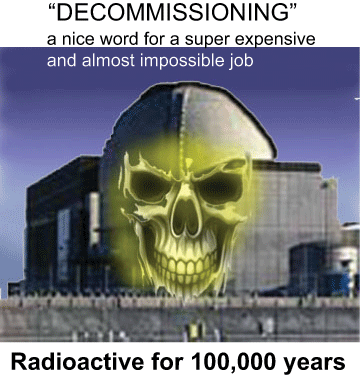
The price to pay for nuclear power is too high, https://www.scotsman.com/news/opinion/letters/the-price-to-pay-for-nuclear-power-is-too-high-readers-letters-3520498 Tim Flinn, Garvald, East Lothian, 10 Jan 22,
It doesn’t seem 30-odd years since I went with a group of sixth form A Level physics students on a tour of Dunbar’s Torness nuclear power station, now scheduled for decommissioning.
Most of them now have their PhDs and families of their own, but hopefully they all share my view that nuclear electricity remains the most toxic and expensive domestic fuel in regular use – and will remain so unless and until the problems associated with its deadly wastes are finally solved.
As things stand now the next 500 human generations will be stuck with the human and financial costs consequent upon coping with the radioactive detritus of the very first nuclear electricity generated some 80 years ago. Factoring in inflation the final price of just a single nuclear kWh will total more £s than there are particles in the universe. If anyone doubts that, let them do their own sums, or get a copy of mine (I hope they can cope with logarithms and discounting cash flows).
If the investment into nuclear energy (originally so we could keep up with the Jonses and have our own A and H bombs) had instead been ploughed into research and development of clean, safe, renewables we would long ago have had endless energy to spare and green devices to export. But we didn’t and so we haven’t. To replace one nuclear power station with yet another is to refuse to learn. Are we that stupid still?
BBC Report on Closure of Hunterston B Fails to Mention that All the Nuclear Crapola will Come to Cumbria
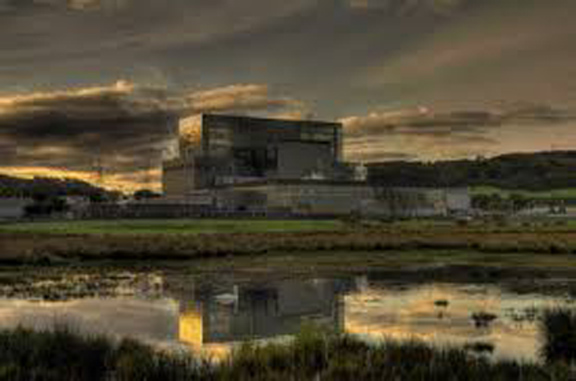
BBC Report on Closure of Hunterston B Fails to Mention that All the Nuclear Crapola will Come to Cumbria. Radiation Free Lakeland. JANUARY 8, 2022 BY MARIANNEWILDART Radiation Free Lakeland have long argued for the closure of the cracked nuclear plants that EDF are running long past their planned lifetimes. Yesterday one of these cancer factories, Hunterston B was closed down because of the dangerously cracked graphite cores. The BBC report below toots a trumpet about the electricity produced by Hunterston but makes no mention at all of the 46 years of radioactive emissions and the fact that the resulting nuclear wastes (low, intermediate and high level wastes) and “cleaned up” infrastructure ( heading to landfill, incineration, recycled radioactive scrap metal, Drigg and proposed Deep Nuclear Dump ) will be dangerous to all life on the biosphere for so many generations to come. Yes lets toot a trumpet for the closure of a dangerous nuclear plant but the massive radioactive footprint of Hunterston will live on long after the limited use of electricity!
Hunterston B nuclear power plant closes down after 46 years
By Kevin Keane
BBC Scotland’s energy correspondent 7th Jan 2022 The Hunterston B nuclear power plant in North Ayrshire has been shut down for the final time after generating electricity for 46 years.
The plant’s original 25-year lifespan was extended by more than two decades.
But the final closure was brought forward after cracks were found in the graphite bricks which make up the reactor cores.
A small group of former workers gathered at the power station at midday to see the final shut down.
The site, owned by EDF Energy, will now begin a three-year process of defueling with the spent nuclear fuel sent to Sellafield for reprocessing. After that, the site will be handed over to the Nuclear Decommissioning Authority…………
The cracks were first spotted in two graphite bricks in the reactor in 2014.
By 2018, a total of 350 bricks had been affected although the Office for Nuclear Regulation subsequently gave permission to operate at much greater numbers.
Each of the two reactor cores is made up of 3,000 bricks which form vertical channels for nuclear fuel and control rods to slide in and out.
The concern was that too many cracks, combined with a rare seismic event, could affect the structural integrity of the core and prevent it being shut down in an emergency.
The Hunterston A plant, which is already closed, comprised two 180MWe Magnox reactors.
It began operation in 1964. Reactor 2 shut down in December 1989 and Reactor 1 in March 1990.
Construction of Hunterston B began in 1968 and reactors 3 and 4 began operating in February 1976 and March 1977……
Reactor 3, a 490MWe advanced gas-cooled reactor (AGR), was permanently closed down on 26 November.
Hunterston Reactor 4 – also a 490MWe AGR – has now shut down……….
Similar cracks are expected to develop there and at several other similar sites in England. In December, EDF Energy announced that Torness would close two years earlier than planned in 2028 because of the issue. https://mariannewildart.wordpress.com/2022/01/08/bbc-report-on-closure-of-hunterston-fails-to-mention-that-all-the-nuclear-crapola-will-come-to-cumbria/
Hunterston nuclear station shut down – then comes the long cleanup
A at the stroke of midday on Friday,
January 7, the North Ayrshire Hunterston B nuclear plant will be shut down with the simple push
of a button. In the high-security control room, director Paul Forrest will
step forward and trigger the end for one of Scotland’s last nuclear power
stations.
Environmental campaigners said the final shutdown of Hunterston B
– which started producing electricity 45 years and 11 months ago – was
“inevitable”. Lang Banks, the director of WWF Scotland, said the plant
had become “increasing unreliable”, arguing that growth in renewable
energy means nuclear power is no longer required.
Mr Banks said the “repeated failure to solve the problem of hundreds of cracks in the
graphite bricks surrounding the reactor core means the closure of
Hunterston B was inevitable”. He added: “Thankfully Scotland has
massively grown its renewable power-generating capacity, which means
we’ll no longer need the electricity from this increasingly unreliable
nuclear power plant. “As the expensive and hazardous job of cleaning up
the radioactive legacy Hunterston leaves in its wake now begins, Scotland
must press on with plans to harness more clean, renewable energy.”
STV 7th Jan 2022
UK’s Heysham nuclear plant to shut down two years earlier than planned
The Heysham 2 nuclear power station in Lancashire is set to shut down for
good two years earlier than planned following a new assessment. The power
station, the fuel for which is made at the Springfields factory at Salwick,
will now stop generating power in 2028. In 2016, the site’s operational
life was extended by seven years to 2030 as no new power station projects
were in the pipeline and nuclear is needed to maintain a steady base load
for the electricity grid.
Blackpool Gazette 9th Jan 2022
Long and difficult dismantling of EDF’s graphite technology nuclear reactors to continue
The dismantling of EDF’s graphite technology nuclear reactors, which are
particularly long and difficult to deconstruct, can continue, the Nuclear
Safety Authority (ASN) said on Monday in a press release.
Le Figaro 27th dec 2021
Germany shuts down half of its remaining nuclear plants
Germany shuts down half of its remaining nuclear plants Aljazeera, 31 Dec 21,
Decision to close three facilities comes a year before decades-long use of atomic power winds down for good………
One of the plants – Brokdorf, located about 40 kilometres (25 miles) northwest of Hamburg on the Elbe River – became a particular focus of anti-nuclear protests that were driven by the 1986 Chernobyl catastrophe in the Soviet Union.
The other two plants are Grohnde, about 40km (25 miles) south of Hannover, and Grundremmingen, 80km (50 miles) west of Munich.
……………… the German government said this week that decommissioning all nuclear plants next year and then phasing out the use of coal by 2030 will not affect the country’s energy security or its goal of making Europe’s biggest economy “climate neutral” by 2045.
“By massively increasing renewable energy and accelerating the expansion of the electricity grid we can show that this is possible in Germany,” Economy and Climate Minister Robert Habeck said.
Several of Germany’s neighbours have already ended nuclear power or announced plans to do so, but others are sticking with the technology. This has prompted concerns of a nuclear rift in Europe, with France planning to build new reactors and Germany opting for natural gas as a compromise until enough renewable power is available, and both sides arguing their preferred source of energy be classed as sustainable.
Germany’s remaining three nuclear plants — Emsland, Isar and Neckarwestheim — will be closed by the end of 2022.
While some jobs will be lost, utility company RWE said more than two-thirds of the 600 workers at its Gundremmingen nuclear power station will continue to be involved in post-shutdown operations through to the 2030s. Germany’s nuclear power companies will receive almost $3bn for the early shutdown of their plants.
Environment Minister Steffi Lemke has dismissed suggestions that a new generation of nuclear power plants might prompt Germany to change course yet again.
“Nuclear power plants remain high-risk facilities that produce highly radioactive atomic waste,” she told the Funke media group this week.
A final decision has yet to be taken about where to store tens of thousands of tonnes of nuclear waste produced in German power plants. Experts say some material will remain dangerously radioactive for 35,000 generations. https://www.aljazeera.com/news/2021/12/31/germany-shuts-down-half-of-its-remaining-nuclear-plants
Dismantling of German nuclear reactor will be expensive, but provide jobs for several decades.
Asked about possible job losses, Gundremmingen mayor Tobias Buehler said
the plant’s employees would be busy with dismantling the reactor after the
shutdown. “And this period of dismantling will certainly take another one
or two decades,” Buehler said. Total costs for the dismantling are
estimated by E.ON at 1.1 billion euros ($1.25 billion) per plant. In 2020,
E.ON made provisions of 9.4 billion euros for the nuclear post-operational
phase, including dismantling the facility, packaging and cleaning up the
radioactive waste. The dismantling is expected to be completed by 2040.
NBC 30th Dec 2021
https://www.nbcnews.com/news/world/germany-pull-plug-3-its-last-6-nuclear-power-plants-n1286771
Germany will pull the plug on 3 of its last 6 nuclear power stations
Germany will pull the plug on three of its last six nuclear power stations
on Friday, another step towards completing its withdrawal from nuclear
power as it turns its focus to renewables.
The government decided to speed
up its phasing out of nuclear power following Japan’s Fukushima reactor
meltdown in 2011 when an earthquake and tsunami destroyed the coastal plant
in the world’s worst nuclear disaster since Chernobyl 25 years earlier.
The reactors of Brokdorf, Grohnde and Gundremmingen C, run by utilities E.ON
(EONGn.DE) and RWE (RWEG.DE), will be shut down on Friday after three and
half decades in operation. The last three nuclear power plants – Isar 2,
Emsland and Neckarwestheim II – will be turned off by the end of 2022.
Reuters 30th Dec 2021
https://www.reuters.com/world/europe/germany-pull-plug-three-its-last-six-nuclear-plants-2021-12-30/
Germany’s Brokdorf nuclear station closes, so activists end their 35 year vigil against it.
Germany’s long anti-nuclear protest ends, DW, 29 Dec 21,
Activists have been protesting in front of the nuclear power plant in Brokdorf, northern Germany for 35 years. But now that the plant is set to be removed from the grid, their vigil is finally over………
Singing peace songs and chatting while standing in a circle, the groups appear well-adjusted to the freezing cold, having met at the power plant’s gate on the sixth day of each month for the last 35 years.
Today, the activists are once again holding a vigil to commemorate the victims of nuclear catastrophes while also demanding the shutdown of the nuclear reactor in their neighborhood.
Today is different, however. This 425th vigil will be the last. Later this month, the Brokdorf nuclear power plant will be shut down as part of Germany’s 2022 nuclear phaseout.
First nuclear reactor after Chernobyl
Amid the growing anti-nuclear movement in the 1980s, hundreds of thousands protested against the construction of the nuclear plant in Brokdorf.
Time and again, the protesters clashed with the police — especially after the nuclear accident in Chernobyl in 1986 saw increased radiation levels in soil and foods across Germany…..
Opening in late 1986, Brokdorf was the first nuclear reactor in the world to go into operation after the Chernobyl disaster.
At that time, Werner and a few allies protested peacefully and decided to continue their protests in the future. They vowed to meet once a month until Brokdorf was shut down…….
Increased cancer risk, and an ice rink
His fears weren’t unjustified. In 2008, a study found that children growing up in close proximity to a German nuclear power plant face a higher risk of developing leukemia.
Yet plants stayed open amid such health threats. One reason might be the decades of high revenues earned by the Brokdorf municipality through a commercial tax on the plant. Local politicians were loath to give up this income…….
Meanwhile, the nuclear power lobby is promoting nuclear energy as an allegedly clean and, most importantly, climate-friendly alternative……….. compared to power from wind and solar energy, the technology costs are much higher, and the construction of nuclear plants takes significantly longer.
Military motives
The fact that states still stick with nuclear power clearly also has another reason, said Andrew Stirling, professor of science and technology policy at the University of Sussex.
“Globally speaking, those countries that are the most truly dedicated to a civil use of nuclear energy either also have nuclear weapons or they are very keen on getting them,” he said.
According to Stirling, the civil use of nuclear energy is often needed for the realization of nuclear weapons programs, a point admitted by nuclear armed France and the US.
Without the engineers and specialists working in the commercial nuclear power sector, it would be impossible to build nuclear-powered submarines, for example, Stirling explained.
“The reports from the USA are absolutely clear. Even if the costs of nuclear energy were twice as high, it would still make sense for them to build reactors because this allows them to keep up their military activities,” he said……….
although Brokdorf will be removed from the grid on December 31, the plant will continue to serve as a temporary storage facility for nuclear waste for decades. There is still no final repository for radioactive waste.
“Therefore, our commitment is not yet over,” said one of the activists. https://www.dw.com/en/germanys-long-anti-nuclear-protest-ends/a-60278006
France’s oldest nuclear power plant, shut in 1985, still highly radioactive

“You can’t see radioactivity, you can’t feel it, so people don’t care”: in Brennilis, nuclear power is no longer operating. Shutdown in 1985, the monts d’Arrée power plant was the first in France to begin dismantling.
The reactor block of the Finistère nuclear power plant in Brennilis remains one of the last vestiges of the gigantic installation, in operation from 1967 to 1985. Despite the decades, its dismantling has not yet been completed. It is in this building, however, that the most radioactive elements of the infrastructure are stored, a prototype of a heavy water reactor cooled with carbon dioxide, never reproduced in France afterwards.
Le Monde 28th Dec 2021
Belgium to shut down all 7 nuclear reactors in 2025
Nuclear: the Belgian government confirms the shutdown in 2025 of the
country’s seven reactors. As planned, Belgium will shut down its two power
plants, but is not closing the door to new generation nuclear power. An
agreement was torn off on Thursday after a night of negotiations between
the partners of the government coalition.
Liberation 23rd Dec 2021
https://www.liberation.fr/environnement/nucleaire/nucleaire-le-gouvernement-belge-confirme-larret-en-2025-des-sept-reacteurs-du-pays-20211223_5HUXXHO645DKBPEHJZUGINMR3M/
Les Echos 23rd Dec 2021
Belgian government to close its nuclear plants by 2025
The Belgian government agreed in principle on Thursday to close its
nuclear power plants by 2025, but left open the possibility of extending
the life of two reactors if it could not otherwise ensure energy supply.
The seven-party coalition has wrestled for months with the topic, with the
Greens adamant that a 2003 law setting out a nuclear exit be respected,
while the French-speaking liberals favoured extending the life of the two
newest reactors. The government had given itself an end-2021 deadline to
settle the matter.
Reuters 23rd Dec 2021
https://www.reuters.com/markets/commodities/belgian-government-reaches-deal-nuclear-exit-media-2021-12-23/
The Belgian government agreed in principle on Thursday to close its
nuclear power plants by 2025, but left open the possibility of extending
the life of two reactors if it could not otherwise ensure energy supply.
Globe and Mail 23rd Dec 2021
Euro News 23rd Dec 2021
https://www.euronews.com/2021/12/23/belgium-to-shut-down-all-seven-of-its-nuclear-reactors-by-2025
BBC 23rd Dec 2021
Holtec gets approval to acquire and dismantle Palisades nuclear plant: not everyone is happy.
Holtec receives NRC approval to acquire Michigan nuclear plant
Jim Walsh, Cherry Hill Courier-Post 20 Dec 21, CAMDEN – Holtec International has received an initial approval to acquire a nuclear power plant that it plans to decommission and dismantle.
The Nuclear Regulatory Commission said the Camden firm “met the regulatory, legal, technical and financial requirements” to obtain the license for the Palisades plant in Covert, Michigan.
The NRC similarly supported a license transfer for a second Michigan site, the Big Rock Point facility. The Hayes Township plant has already been decommissioned, with only a fuel storage facility remaining, according to the NRC…………
opponents of the license transfer will “seriously consider” a court appeal of the NRC’s “shocking” decision, said Terry Lodge, an attorney for a coalition of environmental groups.
“We have been denied our due process rights,” claimed Michael Keegan of Don’t Waste Michigan, who said the NRC had denied a hearing “on our very serious environmental, health, safety, and fiscal concerns.”
Among other points, the critics question whether the power plants’ decommissioning trust funds will cover needed expenses. They also assert Holtec is tapping the trust funds for unrelated costs. https://www.courierpostonline.com/story/news/2021/12/20/holtec-nrc-nuclear-power-plant-palisades-big-rock-point-michigan/8963723002/
Heysham 2 nuclear power station to close earlier than planned
Heysham 2 nuclear power station will continue generating electricity
safely until 2028, however, “closing” two years earlier than originally
planned. In 2016, the sites’ operational lives were extended by seven
years to 2030. Operational dates are under constant review and since then
inspection, modelling and operational experience from other sites, have
given EDF a clearer picture of lifetime expectations for the AGR fleet as
the stations age. Heysham 1 will operate until 2024,
Lancaster Guardian 17th Dec 2021
UK’s Hinkley B nuclear power station to shut down permanently next summer.
Hinkley Point B to start final run of producing electricity before
shutting down next summer. Hinkley Point B is about to start its final run
of producing electricity before it shuts down for good next summer. The
nuclear power station on the West Somerset coastline has been operating for
over 45 years and it’s expected that many members of staff will stay on to
help with de-fuelling and decommissioning.
ITV 11th Dec 2021
1 This Month


Tell the Ukrainian Government to Drop Prosecution of Peace Activist Yurii Sheliazhenko

Petition to revoke the licensing of the Near Surface Nuclear Disposal Facility (NSDF) at Chalk River. https://www.ourcommons.ca/petitions/en/Petition/Details?Petition=e-7247


of the week – STOP SMALL MODULAR REACTORS IN CANADA
To see nuclear-related stories in greater depth and intensity – go to https://nuclearinformation.wordpress.com
-
Archives
- March 2026 (204)
- February 2026 (268)
- January 2026 (308)
- December 2025 (358)
- November 2025 (359)
- October 2025 (376)
- September 2025 (258)
- August 2025 (319)
- July 2025 (230)
- June 2025 (348)
- May 2025 (261)
- April 2025 (305)
-
Categories
- 1
- 1 NUCLEAR ISSUES
- business and costs
- climate change
- culture and arts
- ENERGY
- environment
- health
- history
- indigenous issues
- Legal
- marketing of nuclear
- media
- opposition to nuclear
- PERSONAL STORIES
- politics
- politics international
- Religion and ethics
- safety
- secrets,lies and civil liberties
- spinbuster
- technology
- Uranium
- wastes
- weapons and war
- Women
- 2 WORLD
- ACTION
- AFRICA
- Atrocities
- AUSTRALIA
- Christina's notes
- Christina's themes
- culture and arts
- Events
- Fuk 2022
- Fuk 2023
- Fukushima 2017
- Fukushima 2018
- fukushima 2019
- Fukushima 2020
- Fukushima 2021
- general
- global warming
- Humour (God we need it)
- Nuclear
- RARE EARTHS
- Reference
- resources – print
- Resources -audiovicual
- Weekly Newsletter
- World
- World Nuclear
- YouTube
-
RSS
Entries RSS
Comments RSS
 nuclear-news