Japan to renew subsidies for plutonium nuclear recycling
Ministry to resume subsidies for stalled pluthermal plan https://www.asahi.com/ajw/articles/14526390
By JUNICHIRO NAGASAKI/ Staff Writer February 2, 2022 The economy ministry plans to bring back its subsidy program for areas that host pluthermal generation facilities in an attempt to break the logjam in the nuclear fuel recycling program.
The funds will be offered by the end of fiscal 2022.
The pluthermal program is part of the government’s nuclear fuel cycle policy, in which plutonium extracted from spent nuclear fuel produced at power plants in Japan is processed into plutonium-uranium mixed oxide (MOX) fuel and reused at reactors.
The Federation of Electric Power Companies of Japan plans to start pluthermal power production at 12 or more reactors by fiscal 2030.
But the technology has been in service at only four reactors: the No. 3 and No. 4 reactors in Kansai Electric Power Co.’s Takahama plant in Fukui Prefecture; the No. 3 reactor of Shikoku Electric Power Co.’s Ikata plant in Ehime Prefecture; and the No. 3 reactor of Kyushu Electric Power Co.’s Genkai plant in Saga Prefecture.
By distributing the local-revitalization subsidies, the ministry hopes to accelerate the formation of regional agreements on the fuel cycle project.
A reprocessing facility operated by Japan Nuclear Fuel Ltd. in Aomori Prefecture to recover plutonium is scheduled for completion in the first half of fiscal 2022, but the treatment plant cannot be put in full operation unless pluthermal generation spreads.
Unable to expand the use of MOX fuel, Japan now has 46 tons of plutonium stuck in storage, which has raised international concerns over its potential use in nuclear weapons.
Previously, prefectural governments that had agreed by fiscal 2008 to join the pluthermal circle could receive up to 6 billion yen ($52.4 million) in subsidies. Those that agreed by fiscal 2014 were eligible for a maximum of 3 billion yen in subsidies.
Eight prefectures, including Fukui, Ehime and Saga, have been receiving the subsidies. But currently there are no similar funding mechanisms for local governments under the pluthermal plan.
The economy ministry plans to incorporate a new system to finance prefectures with reactors that have not benefited from past subsidy programs.
Reactors at Japan Atomic Power Co.’s Tokai No. 2 nuclear power plant in Ibaraki Prefecture and elsewhere are expected to be eligible.
Although Chubu Electric Power Co.’s Hamaoka power plant in Shizuoka Prefecture and Chugoku Electric Power Co.’s Shimane plant in Shimane Prefecture are included on the list for past subsidies, it is unclear when they can restart operations because of difficulties in passing the Nuclear Regulation Authority’s screening and gaining consent from residents near the plants.
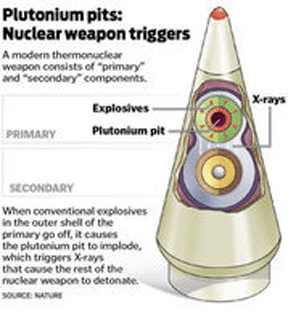
Nuclear weapons plutonium pits development planned for Los Alamos National Laboratory, but there’s strong opposition on safety grounds.
 | |||
Nuclear weapons development coming soon to Los Alamos National Laboratory amid safety concerns https://www.currentargus.com/story/news/local/2022/01/29/los-alamos-national-lab-prepares-nuclear-weapons-development/6562490001/, Adrian Hedden, Carlsbad Current-Argus
A main component of nuclear weapons was poised to be built in New Mexico after federal regulators granted approval for a plan to prepare Los Alamos National Laboratory (LANL) for the work.
The National Nuclear Security Administration (NNSA), an arm of the U.S. Department of Energy, announced earlier this month it approved LANL’s project to prepare areas of the lab to be used in plutonium pit production – a project known as LAP4.
Plutonium pits are hollow spheres of plutonium that when compressed using explosives cause a nuclear detonation, per a DOE report.
The pits were first used in the 1940s during the Manhattan Project, the report read, used to detonate atomic bombs tested at the Trinity Site in south-central New Mexico and then in the bomb dropped on Nagasaki in Japan – largely credited with ending World War II.
Since the war ended, Los Alamos’ pit production was limited to research purposes, and from 2007 to 2011 the lab produced pits to replace those in 31 warheads carried on U.S. military submarines.
Between 1952 and 1989, most of the plutonium pits in the U.S. were generated at the Rocky Flats Plant near Denver amid the Cold War with a peak nuclear stockpile of 31,225 weapons outfitted with the pits reported in 1967, read the report.
Rocky Flats was shut down in 1989, and after concerns that the pits produced since the 1980s or earlier would begin to deteriorate over time, Los Alamos was called to make new ones.
The DOE called on Los Alamos to increase efforts at the lab to produce 30 pits a year by 2026, and the Savannah River Site in South Carolina was tasked with producing 50 pits annually by 2030.
That means that by that year, the U.S. would be producing 80 pits per year.
But to prepare LANL for the work, a project to remove existing equipment and glove boxes was needed to make way for pit manufacturing equipment.
That work was intended to begin this spring via a project known as the Decontamination and Decommissioning Subproject, the first of five operations to get the site ready.
equipment and infrastructure needed to safely manufacture pits for the nuclear stockpile,” said Summer Jones, NNSA assistant deputy administrator for production modernization at LANL.
“LAP4 is a complex, challenging endeavor, and getting the approval to begin the D&D subproject is a big step toward restoring this important capability.”
Opponents call for environmental review of plutonium operations
The effort to resume producing plutonium pits and thus nuclear weapons at the New Mexico lab and in South Carolina as met with controversy from government officials and watchdog groups in both states opposing the projects.
Santa Fe City Councilors passed a resolution last year calling for a “site-wide” environmental impact statement to be conducted and any safety issued be resolved and certified by the federal government before pit production was increased.
“The Governing Body (Santa Fe City Council) requests that the National Nuclear Security Administration suspend any planned expanded plutonium pit production until all nuclear safety issues are resolved, as certified by the independent Defense Nuclear Facilities Safety Board,” read the resolution.
Nuclear Watch New Mexico and Savannah River Site Watch subsequently in June 2021 filed a lawsuit in U.S. District Court for the District of South Carolina’s Aiken Division against the DOE and NNSA, arguing pit production should not be increased until site-wide environmental analysis were conducted at both facilities.
“The drastic expansion of plutonium pit production and the utilization of more than one facility to undertake this production are substantial changes from the Defendants’ long-standing approach of producing a limited number of pits at only one facility,” the suit read.
The suit argued the increased pit production was not only intended for replacing existing warheads but to develop a new warhead known as the W87-1.
This project was developed with proper environmental analysis, the suit read, or proper planning for where associated nuclear waste would be disposed of.
“The drastic expansion of plutonium pit production and the utilization of more than one facility to undertake this production are substantial changes from the Defendants’ long-standing approach of producing a limited number of pits at only one facility,” read the suit.
In southeastern New Mexico is the Waste Isolation Pilot Plant (WIPP), a repository for low-level transuranic (TRU) nuclear waste – clothing materials and equipment irradiated during nuclear activities.
But the litigants argued WIPP was already at limited capacity and its current permit with the New Mexico Environment Department (NMED) specified the repository would have to cease waste disposal by 2024 and begin the decommissioning process.
The DOE last year submitted a permit renewal application to NMED that removed the 2024 closure date, leaving WIPP’s lifetime largely open ended.
Still, the suit alleged the DOE failed to address the need for waste disposal.
“As a National Academy of Sciences has concluded, the WIPP is already oversubscribed for future waste from multiple sites and will overextend its capacity from this increase in TRU production from the pit project and other DOE projects set to generate large amounts of TRU waste,” read the suit.
“The Defendants have failed to meaningfully address this critical waste disposal question.”
370,000 tonnes of highly radioactive, spent nuclear fuel in temporarystorage around the globe.
Sweden’s government gave the go-ahead on Thursday for the building of a storage facility to keep the country’s spent nuclear fuel safe for the next 100,000 years. What to do with nuclear waste has been a major headache since the world’s first nuclear plants came on line in the 1950s and 1960s. The International Atomic Energy Agency estimates that there is around 370,000 tonnes of highly radioactive, spent nuclear fuel in temporary storage around the globe. Nasdaq 27th Jan 2022 https://www.nasdaq.com/articles/sweden-approves-plan-to-bury-spent-nuclear-fuel-for-100000-years |
Why joint US-South Korean research on plutonium separation raises nuclear proliferation danger
Why joint US-South Korean research on plutonium separation raises nuclear
proliferation danger by Frank N. von Hippel. South Korea, like the United
States, has long relied on nuclear power as a major source of electric
power.
As a result, it has amassed large stores of spent nuclear fuel and,
as in the United States, has experienced political pushback from
populations around proposed central sites for the spent fuel. South Korea
also has a history of interest in nuclear weapons to deter North Korean
attack.
Bulletin of Atomic Scientists 13th Jan 2022
Why joint US-South Korean research on plutonium separation raises nuclear proliferation danger
Plutonium found on a beach near Sellafield
While in Cumbria on a visit hosted by Radiation Free Lakeland in 2015,
former United States Nuclear Industry Regulator Arnie Gundersen now nuclear
educator with Fairewinds took samples from the beaches. These samples were
tested back in the US. One of the samples unintentionally collected was
found in Arnie’s coat pocket. It turned out to be plutonium. “Arnie’s
time sampling near Sellafield is part of our worldwide campaign to protect
families and communities from the devasting and lasting impact of radiation
exposure. Currently, we have begun the process of researching and
documenting our Irish Sea data for another peer-reviewed journal
article.”
Radiation Free Lakeland 27th Dec 2021
9 top US nuclear no-proliferation experts write to Prime Minister Trudeau requesting a review of Canada’s planned nuclear reprocessing to recover plutonium.

| The latest of three open letters to Prime Minister Justin Trudeau from US non-proliferation. experts is copied below [on original] . The previous two letters are linked in footnotes #1 and #2. [on original] In these three letters, a group of nine distinguished nuclear policy experts are asking for a top level Canadian government review of the nuclear weapons proliferation dangers associated with the planned reprocessing of Canadian used nuclear fuel to recover the plutonium for use in a proposed new reactor in New Brunswick. These nine experts have worked under six U.S. presidents: John F. Kennedy, Lyndon B. Johnson, Richard Nixon, George H.W. Bush, Bill Clinton, and Barack Obama; and hold professorships at the Harvard Kennedy School, University of Maryland, Georgetown University, University of Texas at Austin, George Washington University, and Princeton University. CCNR 30th Nov 2021 http://www.ccnr.org/request_plute_nov_24_2021.pdf |
Plutonium: How Nuclear Power’s Dream Fuel Became a Nightmare.

The history of nuclear power’s imagined future: Plutonium’s journey from asset to waste, Bulletin of the Atomic Scientists, By William Walker, September 7, 2021

Bill Gates is deluded in believing that the plutonium-fuelled, sodium-cooled, “Versatile Power Reactor” in which his company Terrapower is involved, has a commercial future.[18] His support is also unwelcome insofar as it helps to perpetuate the myth that plutonium is a valuable fuel, posing acceptable risks to public safety and international security. Reprocessing is a waste-producing, not an asset-creating, technology. It adds cost rather than value. It merits no future when seen in this way.
‘ ………..Plutonium’s history and its legacies are the subject of a recent book by Frank von Hippel, Masafumi Takubo and Jungmin Kang.[1] Plutonium: How Nuclear Power’s Dream Fuel Became a Nightmare. It is an impressive study of technological struggle and ultimate failure, and of plutonium’s journey from regard as a vital energy asset to an eternally troublesome waste
Toward heaven or hell? The conflict over plutonium’s future…………..
From creation of a future to preservation of the present
Construction of the British and French reprocessing plants at Sellafield and Cap de la Hague proceeded throughout the 1980s.[6] Their primary justification—preparing for the introduction of fast breeder reactors—had lost all credibility by the time of their completion. The German, British and French breeder programs had been cut back, soon to be abandoned, and in 1988 Germany cancelled plans to build its own bulk reprocessing plant at Wackersorf. Although Japan’s confidence in its fast breeder reactor program also waned, it was kept alive to avoid disrupting construction of the reprocessing plant at Rokkasho-mura.
Faced by the plutonium economy’s demise, reprocessing was re-purposed by its supporters to provide the industry and its governmental backers with reason not to do the obvious—abandon ship. Creating an essential future was replaced by a rationale designed to preserve and activate the newly established reprocessing infrastructures. ……. plutonium’s energy value could be realised through its replacement of fissile uranium in “mixed-oxide fuels” for use in existing thermal reactors………
Thirty years after the Euro-Japanese reprocessing/recycling system’s launch, the experiment can only be judged a failure. The reasons are set out in persuasive detail in von Hippel, Takubo and Kang’s book. It is a system undergoing irreversible contraction after a long struggle, involving heavy expenditure and many troubles. Germany and the UK have already exited, the UK shutting its THORP reprocessing plant in 2018 and delaying its Magnox reprocessing plant’s closure only because of the coronavirus pandemic.[9] Instead, its Nuclear Decommissioning Authority has been given the costly (more than $138 billion) and long-lasting (more than 100 years) task of returning Sellafield and Dounreay to “green-field sites.”
Japan’s engagement with reprocessing and plutonium recycling was already deeply troubled before the Fukushima accident closed reactors: The Rokkasho-mura reprocessing plant was operating only fitfully, MOX recycling was not happening, and plutonium separated from Japanese spent fuels in France and the UK was marooned there, probably indefinitely, by inability to manage its return in MOX fuel (cutting a very long story short).[10] The declared intention to soldier on with bulk reprocessing seems increasingly bizarre and is surely unsustainable. ……….
France’s national utility EDF, saddled with enormous debts, is striving to reduce its exposure to reprocessing. It is symptomatic that no spent fuel discharged from EDF-owned and -operated reactors in the UK, including those under construction at Hinkley Point, will be reprocessed………
The move away from reprocessing is being accompanied by a transition towards dry-cask storage of spent fuels. It entails their removal from water pools at reactors after a few years’ cooling and their insertion in large concrete or stainless steel containers, ………
Reprocessing continues in India and Russia, if fitfully, where fast reactor programmes are still being funded. Japan’s commitment remains. ………
There is particular concern about China’s engagement with reprocessing and its dual civil and military purposes…………
……………. Separated plutonium is a waste
The authors remind readers of the persistent dangers that reprocessing poses to public safety and international security: the risks of accident and exposure to radiation, the proliferation of weapons, the possibility of diversion into nuclear terrorism, and the undesirable complication of radioactive waste disposal. “In our view, it is time to ban the separation of plutonium for any purpose” (their italics) is their concluding sentence. This may be the case, but the US and other governments are unlikely to respond to their call. They have so much else to contend with—climate change, pandemics, economic distress, arms racing on a long list—leaving a ban on plutonium separation low in their priorities. They are also all too aware of past failures to institute such bans, whether in commercial or military domains, from the Carter Policy in the 1970s to the stalled Fissile Material Cutoff Treaty in the 1990s and subsequently.
Another conclusion cries out to be drawn from this book. Plutonium’s separation and usage for energy purposes was an experiment that can now decisively be pronounced a failure. Experience has shown that separated civil plutonium is a waste. The book’s first of many figures, reproduced below, is the most telling. Up to the mid-1980s, the global stock of separated plutonium was predominately military and held in warheads, peaking at around 200 tons. It now exceeds 500 tons. The increase is due to the ballooning of civil stocks as plutonium’s separation has outstripped consumption. The global stock of separated plutonium now includes material extracted from the post-Cold War dismantlement of Russian and US nuclear warheads that is also effectively a waste.[16]

Civil plutonium is therefore not an asset, it is not “surplus to requirement;” it is a waste. This is the message that needs to be proclaimed and acknowledged, especially by governments, utilities, and industries desiring that nuclear power have a solid future and make a contribution to the avoidance of global warming. For reasons set out in von Hippel’s recent article in the Bulletin, Bill Gates is deluded in believing that the plutonium-fuelled, sodium-cooled, “Versatile Power Reactor” in which his company Terrapower is involved, has a commercial future.[18] His support is also unwelcome insofar as it helps to perpetuate the myth that plutonium is a valuable fuel, posing acceptable risks to public safety and international security. Reprocessing is a waste-producing, not an asset-creating, technology. It adds cost rather than value. It merits no future when seen in this way.
Even if all civil reprocessing ceased tomorrow, the experiment would have bequeathed the onerous task of guarding and disposing of over 300 tons of plutonium waste, and considerably more when US and Russia’s military excess is added in. Proposals come and go. Burn it in specially designed reactors? Blend it with other radioactive wastes? Bury it underground after some form of immobilization? Send it into space? All options are costly and hard to implement. Lacking ready solutions, most plutonium waste will probably remain in store above ground for decades to come, risking neglect. How to render this dangerous waste eternally safe and secure is now the question. Extensive References . https://thebulletin.org/premium/2021-09/the-history-of-nuclear-powers-imagined-future-plutoniums-journey-from-asset-to-waste/?utm_source=Newsletter&utm_medium=Email&utm_campaign=ThursdayNewsletter09272021&utm_content=NuclearRisk_HistoryOfNuclearPowersImagined_09102021
Latest on America’s plutonium ”pits” costly fiasco
Stumbling plutonium pit project reveals DOE’s uphill climb of nuclear modernization, https://thehill.com/opinion/energy-environment/572477-stumbling-plutonium-pit-project-reveals-does-uphill-climb-of BY TOM CLEMENTS, — 09/15/21
The U.S. Department of Energy’s National Nuclear Security Administration (NNSA) is mounting a full-court press for the “modernization” of the nuclear weapons production complex, an effort packed with capital-intensive projects on which contractors thrive. A cornerstone of modernization, a new plant to make the plutonium “pits” for new nuclear weapons already faces problems. Yet, Congress and the Biden administration are moving ahead despite gathering storm clouds.
“Pits” are the hollow plutonium spheres that cause the initial nuclear explosion in all U.S. nuclear weapons. New pits would first go into the new W87-1 warhead for a new missile, the Ground Based Strategic Deterrent (GBSD), meant to replace the U.S.’s current ICBMs. Second in the queue is a submarine launched missile. Both weapons have their detractors, but pits could prove to be their ultimate stumbling block.
The new pit plant will be at DOE’s sprawling Savannah River Site (SRS) in South Carolina. Already SRS’s plans face massive cost increases and schedule delays, causing skepticism in Congress.
In 2020, NNSA presented an initial cost estimate of $4.6 billion for the SRS pit plant. By June of this year that cost estimate had more than doubled to a stunning $11 billion. Timelines continue to slip as well. NNSA has quietly admitted in its fiscal year 2022 budget request that the original 2030 operational date to produce 50 pits had slipped until between 2032 and 2035.
While more schedule setbacks loom, the NNSA has tried to save some time by cutting corners. The most obvious is the rushed manner in which they conducted a legally required environmental analysis of the project. In their haste, NNSA failed to analyze environmental justice concerns and impacts of pit production across the DOE complex. Of paramount concern, disposal of plutonium waste has not been reviewed. Public interest groups filed a lawsuit against DOE on June 29, demanding preparation of a required Programmatic Environmental Impact Statement. A response to the lawsuit is due on Sept. 27.
None of this should be surprising. SRS lacks pit production experience and has a record of problems. Perhaps that is why the NNSA is also having the Los Alamos National Lab in New Mexico to also produce pits. That lab has been assigned to ramp up its current pit production with a goal of producing 30 pits per year by 2026 ¾ a tall task for a facility plagued by plutonium-handling problems.
Rep. Adam Smith (D-Wash.), chairman of the House Armed Services Committee, knows all of this. He highlighted the agency’s chronic inability to carry out modernization projects earlier this year saying, “in nearly every instance, NNSA programs have seen massive cost increases, schedule delays, and cancellations of billion-dollar programs. This must end.”
On Aug. 31, when speaking about pit production in a Brookings Institution virtual event, Smith went further saying that “Savannah River sort of gives me an involuntary twitch after the whole MOX disaster. I don’t trust them.”
And what a disaster it was. MOX was a plutonium fuel plant at SRS that NNSA wasted $8 billion on before termination in 2018. Smith’s mistrust is well placed— his committee should investigate the failed construction of the MOX plant before handing the same facility billions more for a new project.
In the event at Brookings, Smith defended his lack of action on pits and the GBSD, saying that decisions about them are in a “tactical pause” until the cost of the SRS plutonium bomb plant is clearer and as we wait and see if President Biden will honor his pledge to reduce reliance on nuclear weapons, of which almost 4,000 are deployed or in active reserve.
Of course, Smith is incorrect as there is no pause in either the projects or the spending. If he wants a real pause, he must act. Without strong leadership and oversight, the programs could quickly develop the same inertia as MOX leaving us with another multi-billion fiasco with nothing to show for it.
He and his colleagues should fight to reduce fiscal year 2022 funding authorization in the National Defense Authorization Act for the SRS pit plant ($710 million), Los Alamos pit production ($1 billion) and the W87-1 warhead ($691 million for NNSA and $2.6 billion for the Department of Defense). He should review the reuse of 15,000 existing pits stored at DOE’s Pantex Plant in Texas. He should also demand a proper environmental review of pit production.
Waiting for Biden is an inadequate strategy. Action is needed now by Chairman Smith and Congress to increase our collective security by fulfilling their leadership responsibilities. Requiring a true pause on pit production would not only stop money from being wasted on this project but would act as a wake-up call that nuclear weapons projects don’t have a blank check from Congress.
Tom Clements is the director of Savannah River Site Watch a public interest organization in Columbia, South Carolina, which monitors U.S. Department of Energy management of weapon-usable materials, nuclear weapons production, and clean-up of high-level nuclear waste, with a focus on the Savannah River Site.
Reclassifying nuclear wastes, and other ethical and technical problems at Hanford

“DOE sort of granted itself the authority to do that reclassifying,”
“We’re not convinced of any need to reclassify any of the high-level wastes,” said Ecology Department spokesman Randy Bradbury.
“We believe this rule lays the groundwork for the department to abandon significant amounts of radioactive waste in Washington State precipitously close to the Columbia River,”
Reclassifying a significant amount of high-level waste into low-activity waste is key to reaching that 80%, the report said.
Ultimately, this project, originally scheduled to be finished this decade, will likely be completed in the latter half of this century. In other words, it could take 70 to 75 years (mid-1990s to 2069) to deal with the 56 million gallons of radioactive tank waste created by 42 years of manufacturing plutonium.
A plan to turn radioactive waste into glass logs has raised a lot of questions, many of which don’t appear to have public answers. CrossCut, by John Stang, August 16, 2021”……………………..Whistleblower alarm
Red flags have also been raised over the quality of construction of the new treatment facilities.
In 2010, Walt Tamosaitis, a senior manager at a subcontractor designing the pretreatment plant, URS Corp., alerted his superiors and managers at lead contractor Bechtel to a risk of hydrogen gas explosions that could bend and burst pipes in the plant, spraying radioactive fluids. He also pointed out that radioactive sludge could clog the pipes and tanks in the plant, increasing the chance of uncontrolled releases of radiation. And he raised the issue of corrosion causing leaks in the pretreatment plant.
Tamosaitis’ superiors told the Energy Department that the design problems were fixed as of July 1, 2010 — over Tamosaitis’ protests, but in time for Bechtel to collect a $5 million bonus from the department.
For raising the alarm, he was demoted and exiled to an insignificant offsite job, Tamosaitis alleged in a lawsuit against Bechtel. He alleged illegal retaliation, eventually reaching a $4.1 million settlement with the company. Meanwhile, in 2011 and 2012, the Defense Nuclear Facilities Safety Board, a technical advisory body monitoring DOE, plus the Government Accounting Office, confirmed Tamosaitis’ concerns.
In 2015, the Energy Department announced that it would not have the entire complex operational by 2022, the deadline at the time. Department officials pointed to the same issues Tamosaitis had identified in 2010.
Also on hold is construction of the pretreatment plant — a prerequisite to the high-level waste glassification project, which is scheduled to begin production in 2023, according to the current state and federal agreement.
What the future holds
The U.S. Department of Energy has been giving contradictory signals about new plans for dealing with some of the high-level waste.
Continue readingSecrecy, delays, budget problems as USA tries to clean up Hanford, the most radioactively polluted site in the nation.

Hanford has 56 million gallons of radioactive waste in those 177 underground tanks at this remote decommissioned nuclear production site near the Columbia River in Benton County.
Those leak-prone tanks are arguably the most radiologically contaminated place in the Western Hemisphere.
At least 1 million gallons of radioactive liquids have leaked into the ground, seeping into the aquifer 200 feet below and then into the Columbia River, roughly seven miles away. Since the mid-1990s, Hanford’s plans involve mixing the waste in the tanks with benign melted glass and then storing it in glass logs.
Today, the project’s budget is at least $17 billion, and the first glassification plant for low-activity waste is scheduled to start up in late 2023. So far, the federal government has spent $11 billion on the glassification project, according to the Government Accountability Office, the investigative agency of Congress.
That one plant, however, will only handle 40% to 50% of the low-activity wastes, depending on who is doing the estimating. A second low-activity waste plant or a stil-to-be-determined new approach is needed to the remaining wastes.is What will happen to the rest of the waste is still up for debate.
All of the single-shell tanks and the majority of the double-shell tanks are way past their design lives
Cleaning up nuclear waste at Hanford: Secrecy, delays and budget debates
A plan to turn radioactive waste into glass logs has raised a lot of questions, many of which don’t appear to have public answers. CrossCut, by John Stang, August 16, 2021 Stephen Wiesman has worked for about three decades on the Hanford Nuclear Reservation’s project to convert the radioactive waste in its huge underground tanks into safer glass logs.
Although he’s retired now and involved in an advisory capacity, he understands the project — and its ongoing challenges — better than almost anyone.
Wiesman sees this task with a mix of cautious optimism, frustration, sympathy for the people dealing with its complexities, and a deep belief that the tank wastes must be dealt with. “There isn’t an emotion that I haven’t felt,” he said.
The project faces a cluster of challenges: financial, technical and political. And the secrecy around the plans to solve these issues makes it difficult for anyone to gauge whether the most polluted spot in the nation will ever become a benign stain on the landscape of eastern Washington.
Continue readingCanada’s political leaders oblivious to the dangers in making plutonium accessible?
Our political leaders seem oblivious to the dangers to the entire planet that could result from widespread access to plutonium. If Canada can access plutonium, so can any other country. If many countries have access to plutonium, the possession of nuclear weapons must be regarded as a real possibility. In a nuclear-armed world, any conflict anywhere can turn into a nuclear war. The stakes could not be greater
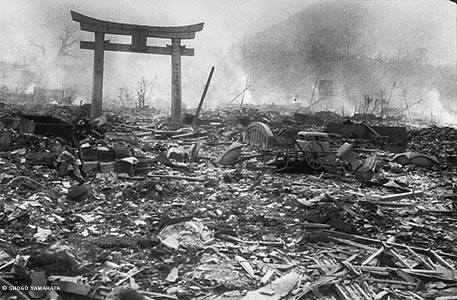
Plutonium: from Nagasaki to New Brunswick, https://nbmediacoop.org/2021/08/09/plutonium-from-nagasaki-to-new-brunswick/ by Gordon Edwards, August 9, 2021 Today, August 9, is the 76th anniversary of the US military’s atomic bombing of the City of Nagasaki in Japan. The nuclear explosive used was plutonium.
The destructive power of plutonium was first revealed on July 16, 1945, when a multicoloured mushroom cloud bloomed over the American desert – the first atomic explosion, top-secret, and much more powerful than expected. Robert Oppenheimer, the man in charge, was awestruck and thought of the words from the Bhagavad-Gita: “I am become Death, the Destroyer of Worlds.”
Three weeks and three days later, on August 9, 1945, the City of Nagasaki was destroyed with a single plutonium bomb.
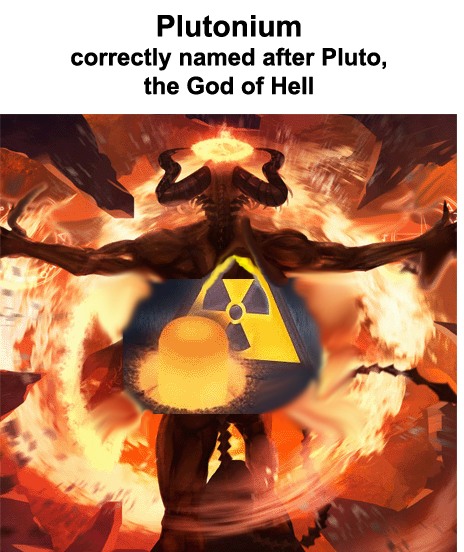
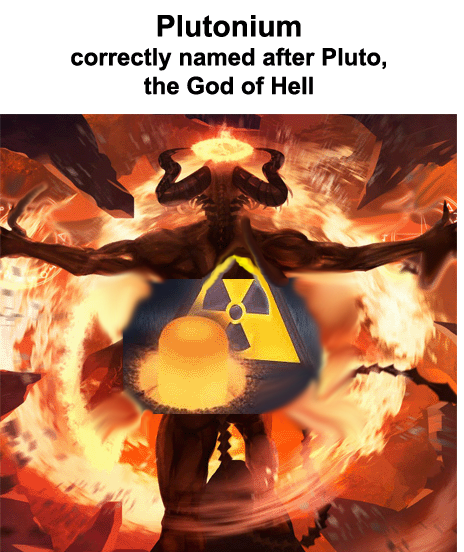
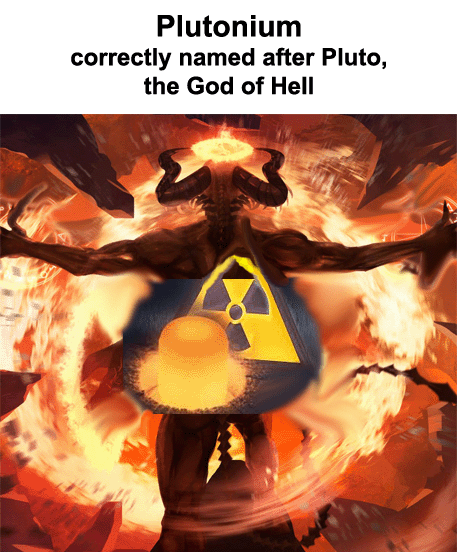
Plutonium is named for Pluto, god of the dead. It is the primary nuclear explosive in the world’s nuclear arsenals. Even the largest nuclear warheads, based on nuclear fusion, require a plutonium “trigger” mechanism. Access to plutonium is key to the construction of such thermonuclear weapons. Removing the plutonium from nuclear warheads renders them impotent.
Plutonium is not found in nature but is created inside every nuclear power reactor,
including the one at Point Lepreau on the Bay of Fundy. Plutonium is a human-made derivative of uranium. A metallic element heavier than uranium, it is created inside the nuclear fuel along with hundreds of lighter, fiercely radioactive by-products – the fragments of uranium atoms that have been split.
The countries that have nuclear weapons – the five permanent members of the UN Security Council (US, UK, France, Russia and China) as well as India, Pakistan, Israel, and North Korea – have all learned how to separate plutonium from used nuclear fuel for use in weapons. This is done by dissolving the solid fuel assemblies in a hot, highly radioactive chemical bath from which the plutonium is extracted using basic scientific procedures. Any technology for extracting plutonium from used fuel is called reprocessing.
Nuclear advocates have long dreamed of using plutonium as a reactor fuel, thereby increasing the options for new reactor designs and magnifying the longevity of the nuclear age. The problem is, once plutonium has been extracted, it can be used either for weapons or for fuel at the discretion of the country possessing it. Policing methods can be circumvented. As Edward Teller has observed: “There is no such thing as a foolproof system because the fool is always greater than the proof.”
That’s how India exploded its first atomic bomb in 1974, by using plutonium created in a Canadian research reactor given as a gift to India and a reprocessing plant provided by the US. Both the reactor and the reprocessing plant had been designated as “peaceful” facilities intended for non-military use. India declared that the bomb it had detonated was a “Peaceful Nuclear Explosive.”
After the Indian blast, it was quickly determined that several other clients of Canadian technology – South Korea, Argentina, Taiwan, and Pakistan – were also in a position to develop a plutonium-based bomb program. Swift and decisive international action forestalled those threats. In particular, South Korea and Taiwan were discouraged by their US ally from pursuing reprocessing.
Shaken by these shocking developments, in 1977 US President Jimmy Carter – the only head of state ever trained as a nuclear engineer – banned the civilian extraction of plutonium in America and tried to have reprocessing banned worldwide, because of the danger that this nuclear bomb material could fall into the hands of criminals, terrorists, or militaristic regimes bent on building their own nuclear explosive devices. As one White House adviser remarked, “We might wake up and find Washington DC gone, and not even know who did it.”
Japan is the only country without nuclear weapons that extracts plutonium from used nuclear fuel, much to the dismay of its neighbours. South Korea is not allowed to do so, despite repeated efforts by South Korea to obtain permission from the US to use a type of reprocessing technology called “pyroprocessing.” Pyroprocessing is currently undergoing experimental tests at a US nuclear laboratory in Idaho.
Now, New Brunswick has been enticed to take the plutonium plunge. The company Moltex Energy, recently established in Saint John from the UK, wants to use plutonium as a nuclear fuel in a type of reactor that is not yet fully conceptualized. The plutonium would be extracted from the thousands of solid irradiated nuclear fuel bundles currently stored at NB Power’s Point Lepreau reactor using a version of the pyroprocessing technology that South Korea has so far been denied.
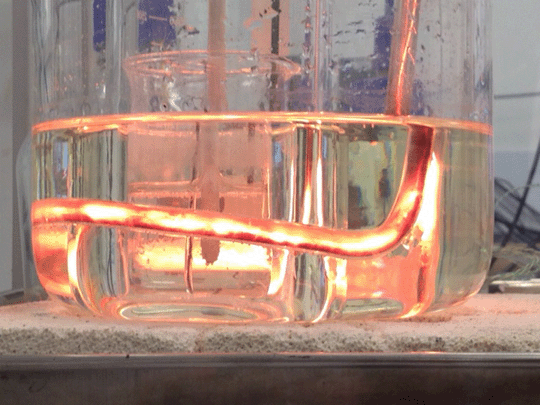
On a site right beside the Bay of Fundy, the highly radioactive metallic fuel bundles would be dissolved in molten salt at a temperature of several hundred degrees. A strong electrical current would be used to strip the plutonium metal and a few other elements (less than one percent of the mass) out of the dissolved fuel.
After the government of Canada gave $50.5 million to support the Moltex project in March this year, nine retired US government advisors – all of them experts in preventing the proliferation of nuclear weapons – wrote to Prime Minister Justin Trudeau in May, urging him to authorize an independent review of the international implications of the proposed New Brunswick plutonium scheme.
These nine experts, who have worked under six different US presidents, both Republican and Democrat, are deeply concerned that Canada’s support for reprocessing and the civilian use of plutonium could seriously undermine delicate and precarious global non-proliferation efforts that have been underway for many decades.
No reply from the Canadian government has so far been received, although Trudeau’s office acknowledged receipt of the letter and said that the matter has been entrusted to Foreign Affairs Minister Marc Garneau and Natural Resources Minister Seamus O’Regan.
Without any word from these two ministers, Moltex posted a response to the US experts’ letter on their corporate web site, disputing some of the claims made in the letter to Trudeau. In particular, Moltex claims that their proposed technology is not usable for nuclear weapons purposes because the plutonium is not pure, but mixed with other contaminants that cannot easily be removed.
The Moltex response has prompted another letter to Trudeau from the US non-proliferation experts, correcting this and several other misleading comments from Moltex and reiterating their call for a fully independent expert review of the non-proliferation aspects of the Moltex proposal.
Our political leaders seem oblivious to the dangers to the entire planet that could result from widespread access to plutonium. If Canada can access plutonium, so can any other country. If many countries have access to plutonium, the possession of nuclear weapons must be regarded as a real possibility. In a nuclear-armed world, any conflict anywhere can turn into a nuclear war. The stakes could not be greater.
Citizens of New Brunswick and all Canadians who realize the importance of this issue can write to our Prime Minister in support of a non-proliferation review of the Moltex proposal, and raise this matter with candidates and at the door during the next federal election campaign. We can all raise awareness of the legacy of Nagasaki and do our best to ensure that New Brunswick is not implicated by going ahead with the Moltex plutonium extraction scheme.
Dr. Gordon Edwards, President of the Canadian Coalition for Nuclear Responsibility, is based in Montreal.
Moltex Energy’s nuclear pyroprocessing project with plutonium would produce weapons grade material and encourage weapons proliferation
Will Canada remain a credible nonproliferation partner? https://thebulletin.org/2021/07/will-canada-remain-a-credible-nonproliferation-partner/
By Susan O’Donnell, Gordon Edwards | July 26, 2021
Susan O’Donnell Susan O’Donnell is a researcher specializing in technology adoption and environmental issues at the University of New Brunswick.
Gordon Edwards Gordon Edwards is a mathematician, physicist, nuclear consultant, and president of the Canadian Coalition for Nuclear Responsibility,
The recent effort to persuade Canada to sign the Treaty on the Prohibition of Nuclear Weapons has stimulated a lively debate in the public sphere. At the same time, out of the spotlight, the start-up company Moltex Energy received a federal grant to develop a nuclear project in New Brunswick that experts say will undermine Canada’s credibility as a nonproliferation partner.
Moltex wants to extract plutonium from the thousands of used nuclear fuel bundles currently stored as “high-level radioactive waste” at the Point Lepreau reactor site on the Bay of Fundy. The idea is to use the plutonium as fuel for a new nuclear reactor, still in the design stage. If the project is successful, the entire package could be replicated and sold to other countries if the Government of Canada approves the sale.
The recent effort to persuade Canada to sign the Treaty on the Prohibition of Nuclear Weapons has stimulated a lively debate in the public sphere. At the same time, out of the spotlight, the start-up company Moltex Energy received a federal grant to develop a nuclear project in New Brunswick that experts say will undermine Canada’s credibility as a nonproliferation partner.
Moltex wants to extract plutonium from the thousands of used nuclear fuel bundles currently stored as “high-level radioactive waste” at the Point Lepreau reactor site on the Bay of Fundy. The idea is to use the plutonium as fuel for a new nuclear reactor, still in the design stage. If the project is successful, the entire package could be replicated and sold to other countries if the Government of Canada approves the sale.
On May 25, nine US nonproliferation experts sent an open letter to Prime Minister Justin Trudeau expressing concern that by “backing spent-fuel reprocessing and plutonium extraction, the Government of Canada will undermine the global nuclear weapons non-proliferation regime that Canada has done so much to strengthen.”
The nine signatories to the letter include senior White House appointees and other US government advisers who worked under six US presidents: John F. Kennedy, Lyndon B. Johnson, Richard Nixon, George H.W. Bush, Bill Clinton, and Barack Obama; and who hold professorships at the Harvard Kennedy School, University of Maryland, Georgetown University, University of Texas at Austin, George Washington University, and Princeton University.
Plutonium is a human-made element created as a byproduct in every nuclear reactor. It’s a “Jekyll and Hyde” kind of material: on the one hand, it is the stuff that nuclear weapons are made from. On the other hand, it can be used as a nuclear fuel. The crucial question is, can you have one without the other?
India exploded its first nuclear weapon in 1974 using plutonium extracted from a “peaceful” Canadian nuclear reactor given as a gift many years earlier. In the months afterwards, it was discovered that South Korea, Pakistan, Taiwan, and Argentina—all of them customers of Canadian nuclear technology—were well on the way to replicating India’s achievement. Swift action by the US and its allies prevented these countries from acquiring the necessary plutonium extraction facilities (called “reprocessing plants”). To this day, South Korea is not allowed to extract plutonium from used nuclear fuel on its own territory—a long-lasting political legacy of the 1974 Indian explosion and its aftermath—due to proliferation concerns.
Several years after the Indian explosion, the US Carter administration ended federal support for civil reprocessing of spent nuclear fuel in the US out of concern that it would contribute to the proliferation of nuclear weapons by making plutonium more available. At that time, Canada’s policy on reprocessing also changed to accord with the US policy—although no similar high-level announcement was made by the Canadian government.
Moltex is proposing to use a type of plutonium extraction technology called “pyroprocessing,” in which the solid used reactor fuel is converted to a liquid form, dissolved in a very hot bath of molten salt. What happens next is described by Moltex chairman and chief scientist Ian Scott in a recent article in Energy Intelligence. “We then—in a very, very simple process—extract the plutonium selectively from that molten metal. It’s literally a pot. You put the metal in, put salt in the top, mix them up, and the plutonium moves into the salt, and the salt’s our fuel. That’s it. … You tip the crucible and out pours the fuel for our reactor.”
The federal government recently supported the Moltex project with a $50.5-million grant, announced on March 18 by Intergovernmental Affairs Minister Dominic LeBlanc in Saint John.
At the event, LeBlanc and New Brunswick Premier Blaine Higgs described the Moltex project as “recycling” nuclear waste, although in fact barely one-half of one per cent of the used nuclear fuel is potentially available for use as new reactor fuel. That leaves a lot of radioactive waste left over.
From an international perspective, the government grant to Moltex can be seen as Canada sending a signal—giving a green light to plutonium extraction and the reprocessing of used nuclear fuel.
The US experts’ primary concern is that other countries could point to Canada’s support of the Moltex program to help justify its own plutonium acquisition programs. That could undo years of efforts to keep nuclear weapons out of the hands of countries that might want to join the ranks of unofficial nuclear weapons states such as Israel, India, Pakistan, and North Korea. The Moltex project is especially irksome since its proposed pyroprocessing technology is very similar to the one that South Korea has been trying to deploy for almost 10 years.
In their letter, the American experts point out that Japan is currently the only nonnuclear-armed state that reprocesses spent nuclear fuel, a fact that is provoking both domestic and international controversy.
In a follow-up exchange, signatory Frank von Hippel of Princeton University explained that the international controversy is threefold: (1) The United States sees both a nuclear weapons proliferation danger from Japan’s plutonium stockpile and also a nuclear terrorism threat from the possible theft of separated plutonium; (2) China and South Korea see Japan’s plutonium stocks as a basis for a rapid nuclear weaponization; and (3) South Korea’s nuclear-energy R&D community is demanding that the US grant them the same right to separate plutonium as Japan enjoys.
Despite the alarm raised by the nine authors in their letter to Trudeau, they have received no reply from the government. The only response has come from the Moltex CEO Rory O’Sullivan. His reply to a Globe and Mail reporter is similar to his earlier rebuttal in The Hill Times published in his letter to the editor on April 5: the plutonium extracted in the Moltex facility would be “completely unsuitable for use in weapons.”
But the International Atomic Energy Agency (IAEA) has stated that “Nuclear weapons can be fabricated using plutonium containing virtually any combination of plutonium isotopes.” All plutonium is of equal “sensitivity” for purposes of IAEA safeguards in nonnuclear weapon states.
Similarly, a 2009 report by nonproliferation experts from six US national laboratories concluded that pyroprocessing is about as susceptible to misuse for nuclear weapons as the original reprocessing technology used by the military, called PUREX.
In 2011, a US State Department official responsible for US nuclear cooperation agreements with other countries went further by stating that pyroprocessing is just as dangerous from a proliferation point of view as any other kind of plutonium extraction technology, saying: “frankly and positively that pyro-processing is reprocessing. Period. Full stop.”
And, despite years of effort, the IAEA has not yet developed an approach to effectively safeguard pyroprocessing to prevent diversion of plutonium for illicit uses.
Given that history has shown the dangers of promoting the greater availability of plutonium, why is the federal government supporting pyroprocessing?
It is clear the nuclear lobby wants it. In the industry’s report, “Feasibility of Small Modular Reactor Development and Deployment in Canada,” released in March, the reprocessing (which they call “recycling”) of spent nuclear fuel is presented as a key element of the industry’s future plans.
Important national and international issues are at stake, and conscientious Canadians should sit up and take notice. Parliamentarians of all parties owe it to their constituents to demand more accountability. To date however, there has been no democratic open debate or public consultation over the path Canada is charting with nuclear energy.
Countless Canadians have urged Canada to sign the UN Treaty on the Prohibition of Nuclear Weapons that came into force at the end of January this year. Ironically, the government has rebuffed these efforts, claiming that it does not want to “undermine” Canada’s long-standing effort to achieve a Fissile Materials Cut-off Treaty. Such a treaty would, if it ever saw the light of day (which seems increasingly unlikely), stop the production of weapons usable materials such as highly enriched uranium and (you guessed it) plutonium.
So, the Emperor not only has no clothes, but his right hand doesn’t know what his left hand is doing.
The danger of Japan’s increasing stockpile of plutonium
Japan’s plutonium stockpile climbs to 46.1 tons in 2020, first rise in 3 years, July 10, 2021 (Mainichi Japan) TOKYO — Japan was in possession of a total of some 46.1 metric tons of plutonium at home and abroad as of the end of 2020, the Cabinet Office reported to the Japan Atomic Energy Commission (JAEC) on July 9. The amount represents an increase of about 0.6 tons from the previous year.
The JAEC had stated that the country would reduce its plutonium stockpile under guidelines revised in July 2018, and the amount in its possession had been on a downward trend since then. The reported increase was the first in three years.
Plutonium is extracted from spent nuclear fuel generated at nuclear plants, for the purpose of recycling. However, the international community has expressed concerns over Japan’s large plutonium stockpile, saying it could be converted into nuclear weapons.
According to the Cabinet Office report, the latest increase in the nation’s plutonium stockpile was due to the addition of roughly 0.6 tons that had been stored in Britain after being extracted from nuclear fuel but which had not been included in the stockpile due to delayed procedures. As the extraction of plutonium in Britain and France has been completed, Japan has no more unrecorded stockpiles, according to the report.
Plutonium is mixed with uranium to produce mixed oxide (MOX) fuel for use at nuclear power plants. However, none of the nuclear plants in Japan used MOX fuel in 2020. As a result, the domestic stockpile remained at the same level as the previous year, at roughly 8.9 tons.
If the nuclear fuel reprocessing plant operated by Japan Nuclear Fuel Ltd. in the village of Rokkasho, Aomori Prefecture, goes into full operation in fiscal 2023, Japan’s plutonium stockpile will increase. However, only 0.6 tons of plutonium is expected to be extracted from spent fuel at the plant in fiscal 2023………….https://mainichi.jp/english/articles/20210710/p2a/00m/0na/018000c
Nuclear injustice in New Mexico must end.
The half-life of plutonium-239 is 24,100 years, but the WIPP safety assessment period is limited to 10,000 years.
Nuclear injustice in NM must end https://www.abqjournal.com/2408088/nuclear-injustice-in-nm-must-end-ex-proposed-storage-sites-for-snf-could-create-dangers-far-greater-than-those-posed-by-wipp.html BY DENNIS MCQUILLAN 11 July 21,
New Mexico residents have long endured disproportionately high health and environmental risks from nuclear energy and weapons programs. It is time for the federal government to protect citizens of the state with the greatest possible level of safeguards.
Instead of performing critical site-suitability analyses for the Waste Isolation Pilot Plant (WIPP) and for two proposed spent nuclear fuel (SNF) “storage” sites near WIPP, federal agencies attempted to validate their predetermined conclusions that these sites were safe. The agencies either disregarded or rewrote siting criteria to accommodate their decisions to approve these sites.
WIPP is intended to provide deep geologic isolation of nuclear waste from the biosphere and, indeed, waste is buried 2,150 feet underground in 250-million-year-old salt beds. The following WIPP safety deficiencies, however, need resolution:
The half-life of plutonium-239 is 24,100 years, but the WIPP safety assessment period is limited to 10,000 years.
• For years, the federal government asserted that petroleum resources were minimal to nonexistent below WIPP. But, today, WIPP is surrounded by oil and gas operations in the most prolific oil patch in the United States. The risk that oil drilling may penetrate the repository, or that liquids injected during fracking, advanced recovery and produced water disposal may migrate into WIPP salt beds, must be reevaluated.
Risks from an artesian brine aquifer, deep-seated salt dissolution and from highly pressurized brine pockets that underlie the WIPP salt beds are not fully assessed.
The geochemical mobility of plutonium and uranium, and possible interactions with carbon dioxide generated by waste decomposition and with geologic brine, needs further analysis.
Additional prevention is needed for such human errors as the 2014 accident where plutonium contaminated nitrate salt packed with organic kitty litter generated heat, burst a waste drum, contaminated 21 workers, and released americium and plutonium into the atmosphere.
WIPP is certified to accept only national defense waste. The federal government, after spending decades and millions of dollars, failed to establish a permanent disposal site for spent nuclear fuel from commercial reactors. SNF is highly radioactive and toxic due to fission byproducts created during power generation.\
The federal government now proposes to license two commercial facilities near WIPP, one in New Mexico and one in Texas, for the “storage” of SNF for up to 120 years. Unlike the deep geologic isolation at WIPP, the proposed SNF storage facilities are less than 100 feet deep, in young alluvium, and in a region with shallow groundwater, as well as concerns about ground subsidence and sinkholes. These two sites are geologically unsuitable even for SNF “storage” and it is possible that decades of “storage” could morph into permanent disposal. Excavating SNF that has deteriorated underground for 120 years is a lurid scenario. Or will future engineers build a Chernobyl-style sarcophagus with the hope that it isolates the waste for 24,000 years?
The proposed “storage” sites for SNF could create dangers far greater than those posed by WIPP. Agricultural and petroleum industry organizations expressed concerns that the SNF facilities could damage their livelihoods. Attorney General Balderas sued the federal government to stop these ill-conceived and dangerous proposals to store SNF.
The legacy of nuclear injustice in New Mexico must end. The federal government must:
• Resolve WIPP safety deficiencies
• Disallow the reckless “storage” of spent nuclear fuel
• Establish one or more permanent repositories for SNF that provide geologic isolation
A nuclear start-up company could undermine Canada’s global non-proliferation policy: experts
A nuclear start-up company could undermine Canada’s global non-proliferation policy: experts
the International Atomic Energy Agency (IAEA) has stated that “Nuclear weapons can be fabricated using plutonium containing virtually any combination of plutonium isotopes.” All plutonium is of equal “sensitivity” for purposes of IAEA safeguards in non-nuclear weapon states.
Similarly, a 2009 report by non-proliferation experts from six U.S. national laboratories concluded that pyroprocessing is about as susceptible to misuse for nuclear weapons as the original reprocessing technology used by the military, called PUREX.
By SUSAN O’DONNELL AND GORDON EDWARDS , THE HILL TIMES, JUNE 11, 2021www.ccnr.org/undermining_non-proliferation_2021.pdf
Important national and international issues are at stake, and conscientious Canadians should sit up and take notice. Parliamentarians of all parties owe it to their constituents to demand more accountability. To date however, there has been no democratic open debate or public consultation over the path Canada is charting with nuclear energy.
The recent effort to persuade Canada to sign the Treaty on the Prohibition of Nuclear Weapons has stimulated a lively debate in the public sphere. At the same time, out of the spotlight, the start-up company Moltex Energy received a federal grant to develop a nuclear project in New Brunswick that experts say will undermine Canada’s credibility as a non-proliferation partner.
Moltex wants to extract plutonium from the thousands of used nuclear fuel bundles currently stored as “high-level radioactive waste” at the Point Lepreau reactor site on the Bay of Fundy. The idea is to use the plutonium as fuel for a new nuclear reactor, still in the design stage. If the project is successful, the entire package could be replicated and sold to other countries if the Government of Canada approves the sale.On May 25, nine U.S. non-proliferation experts sent an open letter to Prime Minister Justin Trudeau expressing concern that by “backing spent-fuel reprocessing and plutonium extraction, the Government of Canada will undermine the global nuclear weapons non-proliferation regime that Canada has done so much to strengthen.”
The nine signatories to the letter include senior White House appointees and other U.S. government advisers who worked under six U.S. presidents: John F. Kennedy, Lyndon B. Johnson, Richard Nixon, George H.W. Bush, Bill Clinton, and Barack Obama; and who hold professorships at the Harvard Kennedy School, University of Maryland, Georgetown University, University of Texas at Austin, George Washington University, and Princeton University.
Plutonium is a human-made element created as a byproduct in every nuclear reactor. It’s a “Jekyll and Hyde” kind of material: on the one hand, it is the stuff that nuclear weapons are made from. On the other hand, it can be used as a nuclear fuel. The crucial question is, can you have one without the other?
India exploded its first nuclear weapon in 1974 using plutonium extracted from a “peaceful” Canadian nuclear reactor given as a gift many years earlier. In the months afterwards, it was discovered that South Korea, Pakistan, Taiwan and Argentina—all of them customers of Canadian nuclear technology—were well on the way to replicating India’s achievement. Swift action by the U.S. and its allies prevented these countries from acquiring the necessary plutonium extraction facilities (called “reprocessing plants”). To this day, South Korea is not allowed to extract plutonium from used nuclear fuel on its own territory—a long-lasting political legacy of the 1974 Indian explosion and its aftermath—due to proliferation concerns.
Several years after the Indian explosion, the U.S. Carter administration ended federal support for civil reprocessing of spent nuclear fuel in the U.S. out of concern that it would contribute to the proliferation of nuclear weapons by making plutonium more available. At that time, Canada’s policy on reprocessing also changed to accord with the U.S. policy—although no similar high-level announcement was made by the Canadian government.
Moltex is proposing to use a type of plutonium extraction technology called “pyroprocessing,” in which the solid used reactor fuel is converted to a liquid form, dissolved in a very hot bath of molten salt. What happens next is described by Moltex chairman and chief scientist Ian Scott in a recent article in Energy Intelligence. “We then—in a very, very simple process—extract the plutonium selectively from that molten metal. It’s literally a pot. You put the metal in, put salt in the top, mix them up, and the plutonium moves into the salt, and the salt’s our fuel. That’s it. … You tip the crucible and out pours the fuel for our reactor.”
The federal government recently supported the Moltex project with a $50.5-million grant, announced on March 18 by Intergovernmental Affairs Minister Dominic LeBlanc in Saint John. At the event, LeBlanc and New Brunswick Premier Blaine Higgs described the Moltex project as “recycling” nuclear waste, although in fact barely one-half of one per cent of the used nuclear fuel is potentially available for use as new reactor fuel. That leaves a lot of radioactive waste left over.
From an international perspective, the government grant to Moltex can be seen as Canada sending a signal—giving a green light to plutonium extraction and the reprocessing of used nuclear fuel.
The U.S. experts’ primary concern is that other countries could point to Canada’s support of the Moltex program to help justify its own plutonium acquisition programs. That could undo years of efforts to keep nuclear weapons out of the hands of countries that might want to join the ranks of unofficial nuclear weapons states such as Israel, India, Pakistan, and North Korea. The Moltex project is especially irksome since its proposed pyroprocessing technology is very similar to the one that South Korea has been trying to deploy for almost 10 years.
In their letter, the American experts point out that Japan is currently the only non-nuclear-armed state that reprocesses spent nuclear fuel, a fact that is provoking both domestic and international controversy.
In a follow-up exchange, signatory Prof. Frank von Hippel of Princeton University explained that the international controversy is threefold: (1) The United States sees both a nuclear weapons proliferation danger from Japan’s plutonium stockpile and also a nuclear terrorism threat from the possible theft of separated plutonium; (2) China and South Korea see Japan’s plutonium stocks as a basis for a rapid nuclear weaponization; and (3) South Korea’s nuclear-energy R&D community is demanding that the U.S. grant them the same right to separate plutonium as Japan enjoys.
Despite the alarm raised by the nine authors in their letter to Trudeau, they have received no reply from the government. The only response has come from the Moltex CEO Rory O’Sullivan. His reply to a Globe and Mail reporter is similar to his earlier rebuttal in The Hill Times published in his letter to the editor on April 5: the plutonium extracted in the Moltex facility would be “completely unsuitable for use in weapons.”
But the International Atomic Energy Agency (IAEA) has stated that “Nuclear weapons can be fabricated using plutonium containing virtually any combination of plutonium isotopes.” All plutonium is of equal “sensitivity” for purposes of IAEA safeguards in non-nuclear weapon states.
Similarly, a 2009 report by non-proliferation experts from six U.S. national laboratories concluded that pyroprocessing is about as susceptible to misuse for nuclear weapons as the original reprocessing technology used by the military, called PUREX.
In 2011, a U.S. State Department official responsible for U.S. nuclear cooperation agreements with other countries went further by stating that pyro-processing is just as dangerous from a proliferation point of view as any other kind of plutonium extraction technology, saying: “frankly and positively that pyro-processing is reprocessing. Period. Full stop.”
And, despite years of effort, the IAEA has not yet developed an approach to effectively safeguard pyroprocessing to prevent diversion of plutonium for illicit uses.
Given that history has shown the dangers of promoting the greater availability of plutonium, why is the federal government supporting pyroprocessing?
It is clear the nuclear lobby wants it. In the industry’s report, “Feasibility of Small Modular Reactor Development and Deployment in Canada,” released in March, the reprocessing (which they call “recycling”) of spent nuclear fuel is presented as a key element of the industry’s future plans.
Important national and international issues are at stake, and conscientious Canadians should sit up and take notice. Parliamentarians of all parties owe it to their constituents to demand more accountability. To date however, there has been no democratic open debate or public consultation over the path Canada is charting with nuclear energy.
Countless Canadians have urged Canada to sign the UN Treaty on the Prohibition of Nuclear Weapons that came into force at the end of January this year. Ironically, the government has rebuffed these efforts, claiming that it does not want to “undermine” Canada’s long-standing effort to achieve a Fissile Materials Cut-off Treaty. Such a treaty would, if it ever saw the light of day (which seems increasingly unlikely), stop the production of weapons usable materials such as Highly Enriched Uranium and (you guessed it) Plutonium.
So, the Emperor not only has no clothes, but his right hand doesn’t know what his left hand is doing.
Susan O’Donnell is a researcher specializing in technology adoption and environmental issues at the University of New Brunswick and is based in Fredericton.Gordon Edwards is a mathematician, physicist, nuclear consultant, and president of the Canadian Coalition for Nuclear Responsibility, and is based in Montreal.
-
Archives
- February 2026 (199)
- January 2026 (308)
- December 2025 (358)
- November 2025 (359)
- October 2025 (376)
- September 2025 (258)
- August 2025 (319)
- July 2025 (230)
- June 2025 (348)
- May 2025 (261)
- April 2025 (305)
- March 2025 (319)
-
Categories
- 1
- 1 NUCLEAR ISSUES
- business and costs
- climate change
- culture and arts
- ENERGY
- environment
- health
- history
- indigenous issues
- Legal
- marketing of nuclear
- media
- opposition to nuclear
- PERSONAL STORIES
- politics
- politics international
- Religion and ethics
- safety
- secrets,lies and civil liberties
- spinbuster
- technology
- Uranium
- wastes
- weapons and war
- Women
- 2 WORLD
- ACTION
- AFRICA
- Atrocities
- AUSTRALIA
- Christina's notes
- Christina's themes
- culture and arts
- Events
- Fuk 2022
- Fuk 2023
- Fukushima 2017
- Fukushima 2018
- fukushima 2019
- Fukushima 2020
- Fukushima 2021
- general
- global warming
- Humour (God we need it)
- Nuclear
- RARE EARTHS
- Reference
- resources – print
- Resources -audiovicual
- Weekly Newsletter
- World
- World Nuclear
- YouTube
-
RSS
Entries RSS
Comments RSS
 nuclear-news