Lawsuit Compels Nationwide Public Review of Plutonium Bomb Core Production

9 May 25, https://nukewatch.org/lawsuit-compels-nationwide-public-review-of-plutonium-bomb-core-production

AIKEN, S.C. — Today the National Nuclear Security Administration (NNSA), the semi-autonomous nuclear weapons agency within the Department of Energy, published a formal Notice of Intent in the Federal Register to complete a nationwide “programmatic environmental impact statement” on the expanded production of plutonium “pit” bomb cores. Pits are the essential radioactive triggers of modern nuclear weapons. The NNSA is aggressively seeking their expanded production for new-design nuclear weapons for the new nuclear arms race.
The South Carolina Environmental Law Project (SCELP) successfully represented the Gullah/Geechee Sea Island Coalition and Nuclear Watch New Mexico, Savannah River Site Watch and Tri-Valley Communities Against a Radioactive Environment in a legal challenge to NNSA’s attempt to improperly jump start dual site pit production. On September 30, 2024, United States District Court Judge Mary Geiger Lewis ruled that the NNSA had violated the National Environmental Policy Act (NEPA) by failing to properly consider alternatives before proceeding with its plan to produce at least 30 pits per year at the Los Alamos National Laboratory (LANL) in New Mexico and at least 50 pits per year at the Savannah River Site (SRS) in South Carolina.
The Court found that NNSA’s plans for pit production had fundamentally changed from its earlier analyses which had not considered simultaneous pit production at two sites. Co-plaintiffs argued that these changes required a reevaluation of alternatives under NEPA, which Defendants failed to undertake prior to moving forward and spending tens of billions of taxpayers’ dollars.
As a result of this ruling and a subsequent settlement, the Defendants are now required to newly analyze pit production at a nationwide programmatic level. This means undertaking a thorough analysis of the impacts of pit production at NNSA sites throughout the United States, including the generation of new radioactive wastes and their uncertain future disposal. Under NEPA, this will provide the opportunity for public scrutiny on NNSA’s aggressive production plans. In addition, NNSA is enjoined from building certain facilities and introducing nuclear materials to the plutonium pit plant at SRS until it completes the PEIS.
Virtual public hearings to determine the needed scope of the programmatic environmental impact statement are scheduled for May 27 and 28. The public comment period for scoping ends July 14 and can be emailed to PitPEIS@nnsa.doe.gov. NNSA expects to complete its draft PEIS within a year, after which in-person public hearings will be held in Livermore, CA; Santa Fe, NM; Kansas City, MO; Aiken, SC; and Washington, DC.
As an indicator of the potential importance of this PEIS process, SCELP and co-plaintiffs have been asked by the Nobel Peace Prize Center in Oslo, Norway, to present (by video) on “how it is possible to do activism inside the court room” on August 6, the 80th anniversary of the Hiroshima atomic bombing. Also, in recognition of its astute legal strategy, SCELP will be receiving an award from the Alliance for Nuclear Accountability comprised of some three dozen public interest organizations (including three of the lawsuit’s co-plaintiff) at a ceremony in Washington, DC, on June 10th.
As background, plutonium pits are the fissile cores of nuclear weapons. The Los Alamos Lab was assigned a mission of limited pit production after a 1989 FBI raid investigating environmental crimes abruptly stopped production at the notorious Rocky Flats Plant near Denver, CO. In 2018 the NNSA decided to pursue pit production at both LANL and SRS. The agency erroneously claimed that an outdated 2008 programmatic environmental impact statement that did not consider simultaneous production was sufficient legal justification under the National Environmental Policy Act.
No future pit production is to maintain the safety and reliability of the existing, extensively tested nuclear weapons stockpile. Instead, future production is only for speculative new-design nuclear weapons that can’t be tested because of an international testing moratorium, thereby perhaps eroding confidence in stockpile reliability. Or, instead, the first new design nuclear weapons since the end of the Cold War could prompt the U.S. to return to full-scale testing, which would have severe national and international consequences.
Independent experts have found that plutonium pits have reliable lifetimes of at least 100 years (their average age is now around 42). Moreover, at least 15,000 pits are already stored at the NNSA’s Pantex Plant near Amarillo, TX. Expanded plutonium pit production will cost taxpayers more than $60 billion over the next thirty years.
The independent Government Accountability Office (GAO) has repeatedly pointed that the NNSA has no credible cost estimates for its largest and most complex program ever, nor an “Integrated Master Schedule” between the two production sites. Further, the Department of Energy and the NNSA have been on the GAO’s “High Risk List” for project mismanagement and waste of taxpayers’ money since 1991. All of these issues and the basic need or not for expanded plutonium pit production are ripe for analysis and public comment in the now required programmatic environmental impact statement.
Ben Cunningham, SCELP’s lead attorney in this case, declared the following: “We implore the public to participate fully in the PEIS process—from attending the scoping hearings to commenting on the draft PEIS. The vast expansion of the nuclear arsenal that is facilitated by the increase in pit production will be exorbitantly expensive, will create radioactive wastes that can last for thousands of years, and the new weapons produced by this expansion could ultimately endanger hundreds of millions of lives. Please weigh in and express your concerns to the decisionmakers.”
Queen Quet, elected Chieftess of the Gullah/Geechee Nation, said: “I am thankful to SCELP and the rest of our national team that stood together to ensure that we protect our communities not only today but also for future generations. The type of compliance that we have fought for is even more crucial given the current environmental and political climate. I am looking forward to us being able to engage in the next phase of this process so that we can ensure that the waters that reach the Sea Islands will be safe.”
Tom Clements, director of Savannah River Site Watch, noted, “Given that we are armed with a decisive federal court ruling that requires the preparation of the PEIS by NNSA, we expect a thorough examination of all environmental and health impacts of pit production at all impacted sites. The draft PEIS must include an analysis of plutonium aging and pit reuse, the proliferation risks of new U.S. warheads, plans for plutonium transportation and the uncertain future disposal of plutonium wastes in the Waste Isolation Pilot Plant in southern New Mexico.”
“Prior to our lawsuit, the agency failed to include other sites involved in future plutonium pit production in its required analyses, chief among them the Lawrence Livermore Lab in California, the Kansas City Plant in Missouri, and the Waste Isolation Pilot Plant. The judge clearly saw these violations and ordered the NNSA to complete the programmatic nationwide analysis which should have been done from the outset. This is a victory for public involvement. It will hopefully result in credible alternatives that are more protective of the environment and the impacted communities,” said Scott Yundt, Executive Director at Tri-Valley CAREs, in Livermore, CA.
Jay Coghlan of Nuclear Watch New Mexico commented, “This programmatic environmental impact statement that we fought long and hard for empowers citizens to tell policy makers what they think about decisions being made in their name. Let them know what you think about the $2 trillion ‘modernization’ program to keep nuclear weapons forever while domestic programs are gutted to pay for tax cuts for the rich. We should demand that this required process under the National Environmental Policy Act becomes a public referendum on the new nuclear arms race and the hollowing out of our society.”
Plutonium’s Hidden Legacy at Piketon

Plutonium was here. It was processed, mishandled, released, and denied. It contaminated water, soil, fish, and workers. It spread to schools. And it killed.
Investigative Team April 24, 2025, https://appareport.com/2025/04/24/plutoniums-hidden-legacy-at-piketon/?utm_source=facebook&utm_medium=jetpack_social&fbclid=IwY2xjawJ5XrBleHRuA2FlbQIxMQBicmlkETE3b0JDR3JZZ0xqRkNqVU1oAR5YM8gN60lbVkb21XEno8JBYLC_Rnqv7LD993TwfBersmNr-c-SsZuL1J_1mA_aem_sCNRay627WxIPPEuu7DVsA [ample illustrations]
For decades, the U.S. Department of Energy (DOE) claimed that plutonium had no place at the Portsmouth Gaseous Diffusion Plant (PORTS). But government documents, congressional testimony, and radiological data spanning more than 40 years tell a different story — one of systemic exposure, buried secrets, and radioactive contamination that continues to haunt the soil, water, and people of southern Ohio.
The truth has been revealed in pieces. Some of it was made public as early as the 1990s. Some surfaced only recently. Together, it paints an undeniable picture: plutonium was present at PORTS, it was mishandled, and it left a toxic legacy that federal agencies have failed to clean up — or fully acknowledge.
The Paper Trail: Plutonium Officially Confirmed
The denial cracked in 1999, when The Portsmouth Daily Times published a front-page bombshell: “Plutonium Confirmed in Piketon.” The article cited admissions by federal officials that plutonium-contaminated uranium had been shipped to the site from Paducah, Kentucky, as part of a Cold War-era uranium recycling program.
In a formal letter to DOE Secretary Bill Richardson, U.S. Senators Mike DeWine and George Voinovich confirmed that at least 570 tons of contaminated feed material had been sent to Piketon, beginning as early as 1983. DOE had known. The public had not.
The Incinerator and the Burned Truth
Records show the X-705A incinerator, which operated from the 1970s until 1986, was used to burn approximately 50,000 pounds of uranium-contaminated solid waste annually. But it didn’t stop there.
ccording to on-site Ohio EPA coordinator Maria Galanti, uranium-contaminated solvents — materials never meant for incineration — were also burned in the unit. The result? Soil surrounding the incinerator is now radioactive to a depth of at least 12 feet.
Until the late 1980s, operators even tilled radioactive oils into unlined soil, assuming it would degrade over time. It didn’t. And it won’t — the plutonium isotopes involved have half-lives exceeding 24,000 years.
Radiation in the Waterways — and the Food Chain
A 2006 Ohio EPA report confirmed what residents feared: plutonium had migrated offsite and into the public environment.
Testing in Little Beaver Creek, Big Beaver Creek, Big Run, and the Scioto River revealed the presence of:
- Plutonium-238
- Plutonium-239
- Americium-241
- Neptunium-237
- Alongside technetium-99 and uranium isotopes
All these elements were detected well above background levels, confirming they originated from the plant, not nature.
The Hazard Index (HI) — a risk threshold used by federal agencies — was exceeded across all tested water bodies, with Big Run scoring more than 20 times the EPA’s risk cutoff.
Separate DOE assessments show Pu-238 in fish as a significant dietary exposure source, second only to Tc-99 in produce. Plutonium has entered the food chain.
Offsite Spread: Plutonium Detected Near Schools and Homes
Monitoring data confirmed the presence of plutonium-239/240, neptunium-237, and americium-241 at offsite stations including:
- Station A41A near Zahn’s Corner Middle School
- Station A6 in northwest Piketon
- Station A23 near local residential zones
DOE contends that any plutonium found in air monitors comes from 1950s nuclear weapons testing fallout and not PORTS.
Workers Testify to Deception and Disease
At a 2000 Senate hearing, former worker Sam Ray described his fight with chondrosarcoma, a rare bone cancer he linked directly to his work at PORTS. He spoke of no health monitoring, no protective equipment, and no transparency.
Jeffrey Walburn, a plant whistleblower, testified to a 1994 chemical exposure that permanently damaged his lungs. He alleged a criminal cover-up by Lockheed Martin, including the alteration and destruction of radiation dose records.
He warned that widows of deceased workers may never receive compensation because exposure data had been falsified.
DOE’s Own Admissions: Plutonium in the Cascade System
According to a 2024 DOE report, plutonium-238 and plutonium-239 were present in enrichment equipment, having entered the cascade system through contaminated uranium hexafluoride cylinders. The isotopes were found in the X-326 Process Building and throughout the cascade.
DOE also confirmed that residual technetium-99 remained embedded in internal pipe surfaces, requiring special disposal decades after operations ended.
From Russian Warheads to Pike County: The Megatons to Megawatts Program
Between 1993 and 2013, the U.S. and Russia dismantled over 20,000 nuclear warheads under the Megatons to Megawatts Program — converting highly enriched uranium (HEU) into low-enriched uranium (LEU) for use in American power plants.
But that uranium didn’t just vanish. It came through U.S. enrichment sites — including the Portsmouth Gaseous Diffusion Plant in Piketon.
Contractor and DOE records confirm that Russian-origin uranium — some of it likely carrying residual contaminants from dismantled warheads — was introduced into the U.S. enrichment stream at PORTS.
Whether plutonium from these shipments contributed to PORTS contamination is still under question. What’s undeniable is this: the U.S. government sent Russian bomb-grade material through an Appalachian processing plant with a history of unsafe handling, minimal oversight, and deliberate secrecy.
They took Soviet nukes and ran them through Appalachian lungs. Without warning. Without consent.
While the legacy of plutonium contamination at PORTS stretches back to the Cold War, the threat isn’t just historical — it’s current, legal, and active.
Centrus Energy: HALEU, the NRC license, and legal plutonium storage at PORTS
In 2021, the Nuclear Regulatory Commission (NRC) granted Centrus Energy Corp. a license to operate a first-of-its-kind High-Assay Low-Enriched Uranium (HALEU) facility inside the old enrichment footprint at PORTS. HALEU is a higher-enriched form of uranium (5–20% U-235), specifically produced for next-generation small modular nuclear reactors (SMRs).
But buried in the licensing documents is something the public was never told:
The HALEU license explicitly authorizes Centrus to store an undisclosed amount of plutonium-bearing material at the site.
That’s not speculation — that’s federal licensing language. In plain English: Centrus is legally allowed to store plutonium compounds at a facility that already has a catastrophic contamination legacy.
A Legacy Buried in Contamination and Lies
Plutonium was here. It was processed, mishandled, released, and denied. It contaminated water, soil, fish, and workers. It spread to schools. And it killed.
Some of the evidence has been buried. Some altered. But most of it has been in plain sight — ignored by federal agencies and omitted from cleanup plans.
This is not an old story. This is an ongoing disaster.
The time for quiet compliance is over. The reckoning for Piketon — and for the people poisoned by its secrets — has come.
Red light for the greenway

A wildlife corridor plans to connect two Superfund sites at the former Rocky Flats plutonium plant and the Rocky Mountain Arsenal that once produced chemical weapons. Locals fear residual contamination could spread.
John Abbotts, March 14, 2025, https://thebulletin.org/2025/03/red-light-for-the-greenway-locals-oppose-wildlife-corridor-at-plutonium-contaminated-rocky-flats-site/?utm_source=ActiveCampaign&utm_medium=email&utm_content=Plutonium-contaminated%20wildlife%20corridor%3F%20Colorado%20locals%20say%20no&utm_campaign=20250317%20Monday%20Newsletter
n September, the city council of Westminster, Colorado voted not to fund a pedestrian bridge and underpass at the Rocky Flats site due to concerns about residual soil contamination from plutonium and other hazardous materials. In the process, the city council withdrew about $200,000 in financial support for the development of the project, known as the Rocky Mountain Greenway.
The US Fish and Wildlife Service proposed the greenway to connect wildlife refuges at the Rocky Mountain Arsenal through hiking trails via the Two Ponds refuge to Rocky Flats, with plans to eventually connect to the Rocky Mountain National Park. But the plan is controversial: Both Rocky Flats and the Arsenal are still on the US Environmental Protection Agency’s National Priorities List, identified since 1987 as “Superfund” cleanup sites that contain residual contamination.
The US Army established the Arsenal to produce chemical weapons to support World War II efforts, and in the 1990s, the federal government leased part of the Arsenal to Shell Chemical Co. to manufacture fertilizer and pesticides. In 1952, the Atomic Energy Commission began operations at Rocky Flats as a federal atomic weapons facility, producing plutonium triggers for hydrogen bombs. (A hydrogen bomb or H-bomb uses fission in the primary—uranium or plutonium—to trigger the secondary into a fusion reaction that combines two atomic nuclei to form a single heavier nucleus, releasing a much larger amount of energy.) Operations started largely in secret at Rocky Flats, located in a sparsely populated area 16 miles upwind and upslope of the city of Denver. But in the late 1970s, the public became more informed about plant operations, and the movement opposing atomic weapons began to focus on the facility, organizing protests and civil disobedience actions.
By the late 1980s, when the federal cleanup program at both sites had been initiated, work had already begun on the new Denver International Airport on Rocky Mountain Arsenal lands, and the Denver suburbs had steadily spread west toward Rocky Flats. Accordingly, there was consensus at each site that expedited cleanup would most effectively protect the metropolitan area, and cleanup standards were looser than “unrestricted use” to develop national wildlife refuges at each site. The consequences were residual contamination, especially at Rocky Flats, where there was no limit on how much plutonium remained below six feet of soil in an industrial area fenced off from the public and with the surrounding land converted to a wildlife refuge. This “cleanup on the cheap” at Rocky Flats, plus a record of cover-ups of accidents at the site, created continuing distrust and controversy over post-remediation uses near Rocky Flats. Cities and citizens opposed different proposals for re-use, even over the issue of public access to the refuge. Now there are concerns that the proposed greenway—a trail between the two tracts—may facilitate cross-contamination, taking radioactive material from the Rocky Flats site to the chemically hazardous Arsenal property, and vice versa.
Contamination—then a raid
Each of the two Rocky Mountain sites has a controversial history. At Rocky Mountain Arsenal, chemical contaminants have been identified as organochlorine pesticides, akin to DDT and its chemical cousins, of which Rachel Carson warned in her classic 1962 book Silent Spring. Other contaminants at the site include heavy metals, organophosphate, and carbamate pesticides—with each of these pesticide classes known to be neurotoxic—along with a potpourri of other chemical contaminants in groundwater.
As for Rocky Flats, a 1972 paper from radiochemist Edward Martell and one of his colleagues at the National Center for Atmospheric Research in Boulder, Colorado reported that just east of the site boundary levels of radioactive plutonium 239 and americium 241 ranged “up to hundreds of times that from nuclear tests.” In 1969, a highly visible fire at the site’s plutonium processing facility sparked off-site monitoring; at the time, the fire was assumed to be the source of the detected contamination. Later, the Atomic Energy Commission was forced to admit that a 1957 fire in a separate plutonium recovery building or leaks from drums containing plutonium-contaminated waste were more likely the source of off-site soil contamination.
When the Rocky Flats facility was still operating, it accepted contaminated metal from another Atomic Energy Commission facility. In the process of treating and burying the waste, Rocky Flats released tritium into a nearby stream, contaminating the drinking water source for the city and county of Broomfield, five miles west of the facility. The contamination occurred for more than a decade leading up to 1970; the tritium remained undetected until 1973.
In 1986, amendments to Superfund legislation expanded the authority of the Environmental Protection Agency (EPA) to oversee the cleanup of contaminated federal facilities. The following year, the agency designated Rocky Mountain Arsenal as a Superfund site.
Then, in June 1989, the FBI and EPA raided the Rocky Flats plant in response to allegations of multiple environmental crimes at the site. After an investigation, plutonium production ended, the EPA designated Rocky Flats a Superfund site in the same year. In 1992, Rockwell International, the contractor in charge of managing the site, pleaded guilty to environmental crimes and paid a fine of $18.5 million.
Contested cleanup plans
The regulatory agencies responsible for environmental cleanup—the EPA’s Region 8 office, based in Denver, and the Colorado Department of Public Health and Environment—have certified cleanup as partially complete at each site. The “responsible parties” are now the US Army for the Arsenal and the US Department of Energy for Rocky Flats.
At the Rocky Mountain Arsenal, cleanup extended to 10 feet below the surface, considered a sufficient depth to prevent burrowing animals from spreading the widespread chemical contamination there. In 2010, the regulatory agencies determined parts of the Arsenal sufficiently remediated to serve as a National Wildlife Refuge and transferred the management of the designated property to the US Fish and Wildlife Service. That service transferred a small herd of bison from a national range in Montana, and bison continue to inhabit the refuge.
The Army retains responsibility for a central area, along with smaller contaminated locations covered for monitoring and groundwater remediation. In 2019, the Colorado Department of Public Health sued Shell and the Army in the US District Court for hazardous chemicals from the Arsenal leaking into groundwater. The suit alleged that unsafe levels of organochlorine pesticides, heavy metals, chlorinated and aromatic solvents, and chemical agent degradation products and manufacturing byproducts had been found in groundwater. Litigation on that case is still ongoing.
At Rocky Flats, the controversy over the site’s past activities extended into its cleanup, with some opponents characterizing the proposed plans as “bait-and-switch.” Early in the cleanup process, the Energy Department funded an advisory committee that, in turn, established a “future site uses” working group. One of the working group’s recommendations was for residual plutonium contamination to be cleaned down to background level, to protect future area residents, no matter how long it would take. However, state officials assessed that a speedy cleanup that converted some areas into a National Wildlife Refuge was the desirable approach to protect outer metropolitan areas expanding toward the site boundaries.
The Energy Department and the site’s federal and state regulators agreed to limit the total costs of remediation and established a residual plutonium contamination limit in the top three feet of soil and a higher limit between three and six feet. (There was no contamination limit below six feet.) These limits were sufficient to qualify outer areas of Rocky Flats as a National Wildlife Refuge, and those areas were released to the Fish and Wildlife Service in 2006. Since then, the controversy has remained because the residual contamination is too high for unlimited uses of Rocky Flats.
Opposing the greenway
The city of Westminster is now the third municipal government to express concern over residual contamination at Rocky Flats. In 2016, the town of Superior, north of the site, voted to withdraw from the Rocky Mountain Greenway, a Federal Lands Access Program grant and project. The city and county of Broomfield followed suit in October 2020, unanimously approving a resolution for the withdrawal from the greenway. The Broomfield city council hired an environmental consultant to conduct soil sampling along the proposed Greenway, and the resolution expressed concern over the high levels of plutonium detected in the soil. After the resolution, the city stated that it would not contribute the $105,000 that was supposed to go to the Greenway project and would not allow Greenway-related construction work on Broomfield property.
The city of Broomfield also opposed another post-cleanup proposal—the Jefferson Parkway Highway Authority—described on its web page as a “privately-funded, publicly-owned regional toll road.” The proposed road would pass just outside the wildlife refuge, which was the eastern boundary of the former plutonium facility. The parkway authority had no plans to sample soil nearby until both Broomfield and a citizens advisory board recommended doing so before construction began. The authority then started sampling and, in September 2019, reported a sample containing 264 picocuries of plutonium per gram. (A picocurie is one trillionth of a curie, a measure of radioactivity.) This was much higher than the maximum limit of 50 picocuries per gram for surface contamination within the former industrial zone. Although this was the only sample above the limit, given the authority’s earlier resistance to sampling, the community lost faith in the project’s safety.
The Broomfield city council voted unanimously in February 2020 to withdraw from the Jefferson Parkway Association, removing a $70,000 annual payment in the process. In 2022, the county of Jefferson and city of Arvada sued Broomfield in response, claiming the parkway could not continue without that county’s continued participation. But a Colorado District Court judge dismissed that suit in December 2023, urging the parties to negotiate over Broomfield’s participation. The city and county of Broomfield expressed satisfaction with that decision, and the parkway’s future was described as “uncertain.”
In an escalatory move, in January 2024, the Colorado state chapter of the Physicians for Social Responsibility and five other groups filed a federal lawsuit in Washington D.C., seeking to prevent the greenway from coming through Rocky Flats. The plaintiffs sought to enjoin the US Federal Highway Administration, US Fish and Wildlife Service, and their respective cabinet departments (Transportation and Interior), from constructing an eight-mile trail through the most heavily plutonium-contaminated area of the wildlife refuge. (The filing assumed that the greenway would proceed from Westminster, but that city’s most recent decision to withdraw funds seems to require a different route.) According to the complaint, the city of Boulder has suggested since at least 2016 that the greenway path avoid Rocky Flats entirely.
The presiding judge, Timothy J. Kelley, denied the plaintiffs’ motion for a preliminary injunction in September 2024. The case now awaits trial.
So far, concerns over Rocky Flats and its wildlife refuge have already limited public access to the refuge. Since April 2018, the Denver School District, the largest in the area, has forbidden its nearly 100,000 students from visiting Rocky Flats on field trips. Other school districts, including Boulder’s, had previously issued similar orders to protect their students.
It is still uncertain how the Trump administration will regard public participation, public protest, and the rule of law at Rocky Flats and other Superfund sites. The new Energy Secretary, Chris Wright, is the former chief executive of a fracking company based in Denver, a known climate change denier, and was on the boards of EMX Royalty, a Canadian company that seeks royalties from extractive mineral mining, and Oklo, Inc., which designs small modular nuclear reactors. Wright is now responsible for overseeing atomic weapons production, cleanup of former weapons facilities, and US energy policy in general. How Wright will interact with Colorado peace activists and environmental protection groups concerned about the defunct plutonium-contaminated weapons facility at Rocky Flats is unclear. But the fight over the future of this legacy site appears far from over.
Government announces dangerous new plan for more plutonium at Livermore Lab
January 27, 2025, By Marilyn Bechtel, https://peoplesworld.org/article/government-announces-dangerous-new-plan-for-more-plutonium-at-livermore-lab/
In a surprise mid-January announcement, the U.S. Department of Energy’s National Nuclear Security Administration (NNSA) revealed it proposes to significantly increase the quantities of nuclear-grade plutonium to be stored at its Lawrence Livermore National Laboratory in Livermore, Calif., and to be trucked in and out of the lab on area roads and freeways such as nearby I-580. NNSA’s proposal would also allow riskier activities with plutonium than those currently authorized, and could allow increases of other nuclear materials at the Lab.
Livermore Lab is one of two locations designing and developing every nuclear weapon in the U.S. arsenal.
The proposal announced on Jan. 14 also projects an abbreviated 30-day public comment period on the new Supplemental Environmental Impact Statement which must be prepared. Just a week later, NNSA announced that a virtual public hearing will take place on Wednesday, Jan. 29, from 6 – 8 p.m. PST.
NNSA’s announcement came just a year after a lengthy public process had been completed to disclose and analyze the environmental impact of the Lab’s activities during at least the next decade. In that process, some increases in plutonium-related activities and plutonium at the Lab were indicated, but far less than the “bomb-usable” quantities envisioned in the new plan.
Scott Yundt, executive director of Tri-Valley Communities Against a Radioactive Environment (Tri-Valley CAREs), which monitors nuclear weapons and environmental cleanup activities with a special focus on Livermore Lab and surrounding communities, says the new proposal “increases both the likelihood and potential severity of an accident, or intentional destructive act, at the Livermore Lab.” He said some 90,000 people live within five miles of the Lab, which is closely surrounded by houses, apartment buildings, sports fields and schools. Over 7 million live within a 50-mile radius, identified in Lab environmental documents as the “potentially affected population.”
Yundt said the new proposal “skirts the intended purpose of the National Environmental Policy Act. The Lab was repeatedly asked in public comment sessions during the year-long Site Wide Environmental Impact Statement (SWEIS) process if it was contemplated that the Security Category limits at Livermore Lab would change over the next decade to allow for increased quantities of plutonium and a return to the riskier kinds of nuclear weapons activities that used to occur there during the height of the Cold War. And the answer given to Tri-Valley CAREs and the public was a flat ‘no.’”
Yundt called it “unfortunate” that the new plan wasn’t included in the SWEIS process but is now being presented as a new, stand-alone environmental document: “This is exhausting for members of the public who are concerned about the Lab’s activities, forcing them to again engage and grapple with the cumulative environmental impacts of the Lab’s actions so soon. This feels like a deliberately induced whiplash.”
Livermore Lab has a dubious record both on maintaining security of nuclear-weapons-usable amounts of plutonium it has stored in its most heavily guarded facility, and on avoiding pollution of surrounding communities.
Tri-Valley CAREs Senior Adviser Marylia Kelley says the Lab “has already proven that it cannot keep weapons-usable quantities of plutonium safe.” Kelley recalled the scheduled force-on-force security drill the Department of Energy conducted there in 2008, to test the security of nuclear-weapons-usable amounts of plutonium stored in the Lab’s most heavily-guarded area, the “Superblock.”
While the attack wasn’t a surprise, the mock-terrorists were able to enter the Superblock, get the material they wanted, and hold their ground long enough to detonate a simulated nuclear “dirty bomb.” Additionally, a DOE team was able to take away some of the plutonium material.
Lab lost its Category II security
“This is how Livermore Lab lost its Category II security,” Kelley said, adding that removal of the Lab’s large stock of plutonium was completed in 2012, and the Lab currently holds a lower Category III security classification which limits the amount of nuclear material it can hold on-site.
Kelley called it “shocking and dangerous that Livermore Lab management and its overseeing agency plan to bring large quantities of deadly plutonium back to Livermore” because developments since 2012 have made it even less safe to have large quantities of plutonium there. The City of Livermore has a larger population now and has extended its boundaries so the plutonium would now be within Livermore City limits, and the Lab has recently ramped up its workforce.
“The bottom line is that more Lab employees and local residents could die due to a terror attack or serious accident,” she said. “We must ensure this does not happen.”
Adding to environmental concerns, both the Lab and its Site 300 high explosives testing range near the city of Tracy are federal Super-Fund sites, undergoing cleanup the government expects will not be complete until about 2060.
Though the U.S. hasn’t built new plutonium pits on an industrial scale since 1989, Congress and recent federal administrations have mandated that U.S. nuclear weapons must be modernized, and the NNSA has started plutonium production for newly designed nuclear weapons including the W87-1 warhead, designed by Livermore Lab to top the new Sentinel Intercontinental Ballistic Missile. New pits are being built at Los Alamos National Laboratory in New Mexico, and to provide a second site, a major retrofit is proposed for an existing facility at Savannah River Site in South Carolina.
At the end of September, a South Carolina District Court ruled in favor of a lawsuit by plaintiffs Tri-Valley CAREs, Savannah River Site Watch and Nuclear Watch New Mexico against DOE and NNSA. U.S. Judge Mary Geiger Lewis ruled in favor of the monitoring organizations’ contention that the government agencies had failed to “programmatically” evaluate the environmental aspects of proposed enhanced production of plutonium bomb pits.
Judge Geiger’s ruling requires NNSA to issue a Programmatic Environmental Impact Statement (PEIS) analyzing the full impacts of its plutonium pit production plans across the nuclear weapons complex. Yundt said this should include the role of Livermore Lab, where this year’s funding for plutonium pit production has escalated by 50% over last year.
“The enhanced plutonium activities suddenly being proposed at Livermore’s Plutonium Facility should be included as part of the nationwide PEIS on plutonium pit production because it is a ‘connected action’ to producing new cores for new nuclear weapons,” Yundt said.
“That PEIS is the appropriate document for a thorough analysis of alternatives in conjunction with the pit production plans, in order to evaluate if this Livermore proposal is truly necessary, rather than producing a stand-alone Supplemental EIS focused solely on the Livermore site that may not include any analysis of the pit production mission, even though that is a driver for the decision.”
Radioactive Plutonium In Sahara Dust Came From An Unexpected Source
The nuclear tests of the Cold War continue to haunt the world.
Tom Hale, IFL Science 1 Feb 25
Every now and again, the Sahara Desert in North Africa will kick up a storm and spread dust clouds across Europe and other parts of the world. Remarkably, the sand still carries traces of radioactive isotopes from the atomic bomb tests of the Cold War.
In a new study, scientists have investigated whether substantial amounts of radioactive isotopes generated by these tests were transported to Western Europe amid a powerful Saharan dust event in March 2022. They discovered that radiation still lingers in the dust that reached Europe – but not from the source they expected.
Between 1960 and 1966, France detonated 17 bombs in the Algerian Sahara, which was under their colonial control until they gained independence in 1962. With its vast, sparsely populated landscape, it was considered an ideal location for nuclear weapons testing.
Despite claims the bombs would be dropped in an unpopulated region, thousands of locals and French soldiers were exposed to radiation. The most severe estimates suggest that up to 60,000 Algerians were impacted by the blasts, while the French Ministry of Defense argues it’s closer to 27,000 people.
Oddly, though, the new study found that the radioactive isotopes present in the Sahara dust that reached Europe in March 2022 originated from nuclear tests conducted by the USA and the USSR, not France.
Although the USA and USSR did not conduct tests in the Sahara, the prolific nature of their nuclear tests during the Cold War left a widespread radioactive imprint detectable even in Saharan dust.
“This is because the power of detonation of French tests is only 0.02 percent of the total power of detonation of USSR and USA between 1950 to 1970. Much of the USSR and USA nuclear weapon tests were realized at the same latitude of South Algeria, and the debris of these tests can reach 8,000 meters [26,000 feet] high and be dispersed by wind very quickly at a global level,” Yangjunjie Xu-Yang, lead study author from the Climate and Environment Sciences Laboratory in France, told IFLScience
The team reached these conclusions by studying 53 samples from the March 2022 Saharan dust event and looking for the presence of specific radioactive isotopes.
The results suggest that the radioactive dust originated in Algeria’s Reggane region, but its plutonium levels didn’t match the low isotopic ratios (below 0.07) from France’s nuclear tests. Instead, with a median ratio of 0.187, the samples aligned with US and Soviet test signatures – a conclusion further supported by cesium isotopic analysis……………………………………………………………………………………………………… The new study is published in the journal Science Advances. https://www.iflscience.com/radioactive-plutonium-in-sahara-dust-came-from-an-unexpected-source-77866
Hot Plutonium Pit Bomb Redux

NNSA has yet to satisfy Government Accounting Office best practice guidelines for the SRS pit project.
LANL itself has experienced numerous and serious safety accidents, including a plutonium fire, flooding, glove box contamination and a plutonium “criticality” accident, in recent years.
Why does the production of new plutonium pits take priority over cleaning up the hazardous legacy of previous pit production?
Mark Muhich, https://www.counterpunch.org/2025/01/31/hot-plutonium-pit-bomb-redux/
Last week U.S. District Judge Mary Lewis Geiger, South Carolina, faulted the Department of Energy and the National Nuclear Security Agency for ignoring the National Environmental Protection Act and rushing plans to fabricate plutonium pit bombs at Savannah River Site, near Aiken, South Carolina.
Newly designed plutonium pits will serve as “triggers” for the next generation of nuclear warheads mounted atop Sentinel, the next generation of intercontinental ballistic missile, and for new submarine-launched nuclear weapons. Combined, these projects comprise major components in the trillion-dollar “modernization” of the U.S. strategic deterrence force.
Plaintiffs including Savannah River Site Watch, South Carolina Environmental Law Project Gullah/Geechee Sea Island Coalition, Nuclear Watch New Mexico and Tri-Valley CAREs forced NNSA to halt construction on many phases of its plutonium pit facility near Aiken, SC, to hold public scoping meetings, solicit public comments, and produce a Programmatic Environmental Impact Statement within thirty months.
Plaintiffs successfully argued that the plutonium pit modernization project was complex, involving diverse entities, was spread over wide geographical regions and therefore, by definition, required a “programmatic environmental impact statement, PEIS.
The proposed plutonium pit facility at Savannah River Site will reconstruct a massive 500-room partially completely abandoned building designed for the Mixed Oxide Plant. The spectacularly failed MOX plant would have processed old plutonium pits from de-commissioned US nuclear weapons per a nuclear weapons agreement with the Russians in 2000. Poor management and engineering revisions multiplied costs exceeding $7 billion when DOE finally terminated the MOX project in 2019. DOE recently paid the State of South Carolina an extra $600 million fine for failure to remove 10 tons of plutonium delivered to the MOX plant and stored at SRS. Ironically SRS is importing a different 10 tons of plutonium pits from the PANTEX pit storage site in Texas to manufacture new pits.
NNSA’s plan for plutonium pit production at Savannah River Site involves complex coordination between Los Alamos, the Waste Isolation Pilot Plant in Carlsbad NM, the Lawrence Livermore National Laboratory in CA and the Kansas City National Security Campus, and therefor requires a NEPA “programmatic environmental impact statement”. NNSA refused repeated calls to perform the PEIS, which resulted in the successful lawsuit agreed last week.
NNSA has yet to satisfy Government Accounting Office best practice guidelines for the SRS pit project. GAO’s repeated calls for NNSA to create quality Integrated Master Schedules and Life Cycle Cost Estimates for its plutonium pit modernization program remain unfulfilled. These plans and guidelines establish best practices for building an efficient cost-effective project, something MOX consistently ignored, leading to its disastrous failure. Congress subsequently ordered NNSA meet these GAO parameters by July 2025.
Congress had mandated in 2019 that Los Alamos National Laboratory in New Mexico manufacture 80 plutonium pits per year by 2030. Because LANL is a research facility, it has not produced any plutonium pits since 2011, and never at scale. It was unprepared to fulfill this Congressional mandate, authored by Senator John McCain. In response, NNSA then divided the plutonium pit project in two: Savannah River Site would produce 50 pits per year by 2030, and LANL 30 pits. SRS has never manufactured plutonium pits, though it did produce 10 tons of plutonium for pit fabrication at Rocky Flats, CO beginning in 1957. Thirty million gallons of highly radioactive wastes from that project, more than 200 million curies* of radiation, remain stored on- site at SRS, making it one of the most radioactive Superfund sites in the U.S.
Rocky Flats had produced one to two thousand plutonium pits per year for decades until it was closed in 1989. After whistleblower leaks, (see Jon Lipsky, James Stone) the FBI and EPA raided Rocky Flats discovering gross fraud and egregious violations of environmental regulations by contractor, Rockwell International. Rocky Flats was closed and will remain a superfund site into the far distant future.
Parts of Los Alamos National Lab, wedged on a tabletop mesa, comprises a superfund site with residual plutonium still found around the site and in surrounding canyons from operations and waste dumping begun in the 1940’s “Oppenheimer years”.DOE recently signed a consent decree with the State of New Mexico to assume greater responsibility for the clean-up of waste deposit wells and trenches that threaten nearby towns like White Rock, the San Ildefonso Pueblo and the Rio Grande River with radiological contamination. DOE paid New Mexico a $420,000 fine for mishandling hazardous wastes is 2024.
LANL itself has experienced numerous and serious safety accidents, including a plutonium fire, flooding, glove box contamination and a plutonium “criticality” accident, in recent years. The most recent 2023 safety report for LANL, operated by Triad LLC, showed improvement in its safety operations, though in that same year LANL was fined $420,000 by New Mexico for improper handling of hazardous materials.
Plutonium, Pu, is a man-made metallic element. It is highly toxic, highly radioactive, pyrophoric, (spontaneously ignites on contact with air) and fissionable. It is extremely challenging to produce, purify, mill, melt, mold, weld, control and store. All these processes have taken place at sites across the U.S. since the 1940’s and are now catalogued by DOE as “legacy hazardous waste sites”.
Because plutonium ignites on contact with air, it must be handled in “glove boxes”, self-contained hermetically sealed boxed filled with inert gases. Impervious rubber sleeves extend into the box, and workers slip their arms into these sleeves, then manipulate the plutonium through different phases of pit production. Any nicks or cracks in the rubber gloves can and have resulted in plutonium leaks, and serious illnesses.
Glove boxes and gloves for the plutonium pit project, in example, are already is short supply, demonstrating how integral and integrated every aspect of the plutonium pits program is, and how poor planning could disrupt the program; the basic tenant of the lawsuit against NNSA.
Training a skilled glove box worker at LANL can take four years. A shortage of skilled workers at LANL poses a regular challenge, one that will intensify as LANL workers will also train unskilled SRS workers. A shortage of workers at WIPP in Carlsbad NM has been a chronic problem despite significant wage increases from DOE.
Historically, sites involved with the production, refining, milling or fabrication of plutonium or plutonium pits for nuclear weapons have left a voluminous legacy of radionuclide pollution. Radioactive wastes generated in weapons production beginning with the 1940’s Manhattan Project, by statute, are destined for the Waste Isolation Pilot Plant, WIPP, in Carlsbad, New Mexico. Because plutonium has a half life of 24,000 years and remains lethal for much longer, plutonium waste products trucked over millions of highway miles to WIPP are stored in vaults excavated into salt domes 2000 feet underground. While WIPP is the sole repository for defense department transuranic wastes, the Government Accounting Office cautioned that WIPP may not have the capacity to accept all the plutonium pit wastes generated at LALN and SRS. Timely removal of plutonium waste from SRS and LANL is crucial for uninterrupted pit production.
A fire in WIPP’s salt dome closed the facility for 3 years in 2014. A fire at LANL closed its operation for 3 years in 2013.
Both SRS and LANL will recycle surplus plutonium pits from the strategic reserve at PANTEX near Amarillo, TX. Currently 4000 reserve pits and 10,000 surplus pits waiting disposal are stored at PANTEX. Re-engineered pits from SRS and LANL will be returned to PANTEX for final assembly into W87-1 and W 88 nuclear warheads.
The rate of deterioration of plutonium pits, 30 or more years old, has concerned and motivated lawmakers to legislate a complete replacement of all 3,600 deployed and reserve nuclear warheads. Independent scientific groups like JASON and the Livermore National Lab have estimated that plutonium pits maintain their viability for 100 or even 150 years. Hardware within the nuclear warhead corrodes much more quickly than the pits themselves, focusing doubt on the race to replace the pits themselves.
The programmatic environmental statement ordered by federal Judge Geiger may resolve many questions posed by the rush to produce new plutonium pits. The pits produced at SRS and LANL will trigger new W87-1 nuclear warheads. What need is there for a new warhead when the old W87-0 has the same safety features? Why are SRS and LANL adopting an aggressive production schedule when the new Sentinel ICBM deliver systems is way over budget and at least a decade away from deployment? Why does the production of new plutonium pits take priority over cleaning up the hazardous legacy of previous pit production? Has any plutonium production site ever not become a hazardous waste site? Will NNSA slow pit production to engineer safety improvements instead of placing workers in risky dangerous situations? Do we really want to spend a trillion dollars and start a new nuclear arms race?
Note.
* A curie, Ci, is a measure of radiation per second, named after Marie and Pierre Curie. Exposure to even a few curies can be fatal.
Plutonium Disposition Strategy
Statement,
UK Parliament 24th Sept 2025, https://questions-statements.parliament.uk/written-statements/detail/2025-01-24/hcws388
The Department for Energy Security and Net Zero will work with the Nuclear Decommissioning Authority (NDA) to immobilise the UK-owned civil separated plutonium inventory at Sellafield.
Continued, indefinite, long-term storage leaves a burden of security risks and proliferation sensitivities for future generations to manage. It is the Government’s objective to put this material beyond reach, into a form which both reduces the long-term safety and security burden during storage and ensures it is suitable for disposal in a Geological Disposal Facility (GDF). Implementing a long-term solution for plutonium is essential to dealing with the UK’s nuclear legacy and leaving the environment safer for future generations.
Following a public consultation in 2011 the government at the time formed a preliminary policy view to pursue reuse of plutonium as mixed oxide fuel (MOX) but to remain open to any alternative proposals for plutonium management.
NDA have since carried out substantial technical, deliverability and economic analysis to identify a preferred option for a long-term disposition solution, including options for immobilisation and reuse. The outcome of this work recommended immobilisation as the preferred way forward to put the material beyond reach soonest and with greatest delivery confidence.
Following further development work the NDA will select a preferred technology for immobilisation of the plutonium as a product suitable for long-term storage and subsequently disposal in a GDF. Organisations involved in the delivery of this work will include the NDA, in particular Sellafield Ltd and Nuclear Waste Services, the UK National Nuclear Laboratory and the wider supply chain.
We expect that around the end of the decade following Government approval the NDA and Sellafield will begin delivery of the major build programme of plutonium disposition infrastructure. This programme is expected to support thousands of skilled jobs during the multidecade design, construction and operational period.
While work continues on long term immobilisation, the NDA is ensuring the continued safe and secure storage of plutonium in the UK. As part of this approach, new facilities are being built at Sellafield to repack the plutonium inventory for placement in a suite of modern stores.
Suspected case of plutonium contamination in Rome plant
Worker at Casaccia research centre
suspected case of plutonium contamination of a worker was reported Friday at the Casaccia Research Center, on the outskirts of Rome.
The National Inspectorate for Nuclear Safety (ISIN) has announced that it is “following with the utmost attention the case of contamination recorded at the Plutonium plant of the Casaccia center” which involved a “worker on duty”.
The death of Karen Silkwood—and the plutonium economy

The vision first created during World War II—and fostered with tens of billions of dollars of public funds—to establish nuclear power plants fueled by plutonium started to take on a nightmarish quality.
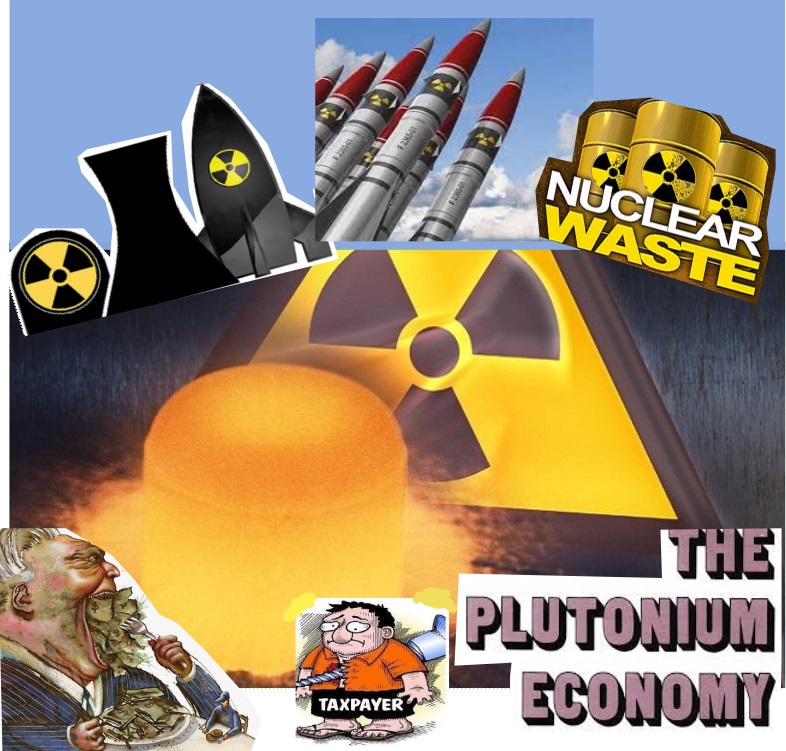
Within the next 10 years following the Indian nuclear explosion and Karen Silkwood’s death, the US Congress pulled the plug on the Liquid Metal Fast Breeder Reactor project, ending the Atomic Energy Commission’s vision of a plutonium economy, and the Supreme Court provided a little bit of justice for Karen’s parents and children, upholding a jury decision that for the first time cast aside the legal shield of the federal government protecting the nuclear industry.
Bulletin, By Robert Alvarez | November 8, 2024
On the evening of November 13, 1974—that is, 50 years ago—Karen Silkwood was driving to a meeting with a New York Times reporter and an official of the Oil, Chemical and Atomic Workers (OCAW) union. Her car flew off the road and hit a culvert on a lonely highway in western Oklahoma, killing her instantly. Karen was a union activist working as a technician at a plutonium fuel fabrication plant in Cimarron, Oklahoma owned by the Kerr-McGee Corp.
Several days before her death, Silkwood’s apartment was purposefully contaminated with highly toxic plutonium—which she had no access to—from the nuclear plant where she worked. Because of her activism, the company had put her and her roommates under constant surveillance. Documents about problems at the plant that two witnesses had seen before Silkwood’s fateful drive were missing. An independent investigation found evidence that her car was run off the road—contradicting official conclusions.
Karen became a whistleblower in large part because Kerr-McGee never bothered to tell workers that microscopic amounts of plutonium in the body can cause cancer. Karen became alarmed after dozens of workers, many fresh out of high school, had breathed in microscopic specks of plutonium and were required to undergo a risky procedure (chelation) to flush the radioactive contaminant from their bodies. It’s a procedure that can, even if successful in removing contaminants from the body, harm the kidneys.
Between 1970 and 1975, two metric tons of weapons-usable plutonium were shipped by truck from the Hanford nuclear production complex in Washington state to the Kerr-McGee plant in Oklahoma, where the plutonium was to be mixed with uranium and placed into 19,000 stainless steel fuel rods. At the time of Karen’s death, the Atomic Energy Commission found that about 40 pounds of plutonium had gone missing—enough to fuel several atomic bombs.
Since then, numerous books, articles, documentaries, and a critically acclaimed Hollywood motion picture have focused on the circumstances surrounding Silkwood’s death. My late wife and I were engaged in efforts for nearly a decade to achieve justice for her parents and children; those efforts were chronicled in some detail in Howard Kohn’s 1981 book, Who Killed Karen Silkwood? Was this an unfortunate accident, or was Karen Silkwood run off the road and killed to stop her from revealing dark secrets? After more than 40 years, the definitive answers to these questions remain unavailable.
The beginnings of the Silkwood saga. Karen Silkwood’s death heralded an end of America’s romance with the atom as a source of limitless cheap energy. There was no doubt on the part of the AEC, then the dominant force behind US energy policy, that commercial nuclear power would expand so rapidly and widely that by the end of the 20th century, the world would exhaust its supplies of uranium. If nuclear power was to thrive thereafter, according to AEC doctrine, a new generation of reactors fueled by plutonium extracted from spent nuclear fuel would have to be built. This new generation of so-called “breeder” reactors held the promise of producing vast amounts of cheap electricity while producing up to 30 percent more plutonium than they consumed. It turned out that the AEC’s nuclear power growth projection was off by an order of magnitude. Even today, world uranium supplies remain more than sufficient to fuel existing and reasonably contemplated commercial power plants.
Were it not for my wife, Kitty Tucker, and our friend, Sara Nelson, the death of Karen Silkwood would have been erased from public memory, like a sand painting blown away by the wind. I am proud to have played a supporting role, working with Karen’s parents and congressional staff, raising funds, reviewing technical documents, helping with the news media, cooking a lot of meals, and recruiting expert witnesses for the trial of a lawsuit over Silkwood’s death that would unfold in the spring of 1979.
Working with little and often no financial resources but a lot of grit, Kitty and Sara organized a national campaign that led to a congressional investigation revealing that Karen’s concerns over nuclear safety at the Kerr-McGee plant were more than justified. The congressional investigation exposed an FBI informant with a long history of spying on US citizens and revealed that enough plutonium to create several nuclear weapons was missing from the plant. These findings set the stage for a lawsuit organized on behalf of Karen’s parents and children.
The nine-week trial before a federal court jury in Oklahoma City resulted in a landmark jury decision that held Kerr-McGee liable for contaminating Silkwood and her home and awarded her estate a multimillion-dollar verdict. But the path to that verdict was long and uncertain and often disorganized and contentious, a David-and-Goliath story that ran from a near-commune of a house in a leafy portion of the District of Columbia through a variety of congressional offices and investigators and into the pages of Rolling Stone magazine. Along the way, a lot of young and idealistic lawyers and activists—led by Kitty and Sara—worked, mostly for free, to make sure Karen Silkwood’s death was not brushed under a bureaucratic rug and forgotten. I feel lucky to have been one of them.
………………………………………………………………………………………………………………………………………………………………… Kitty’s dogged research found that Silkwood was justified in being outspoken in her struggle to stop constant plutonium leaks and worker exposures at the Cimarron, Okla. Kerr-McGee plant. She and several other co-workers suffered from repeated plutonium exposures while on the job. Between 1971 and 1975, in fact, contamination reports show that at least 76 workers were exposed to plutonium at the Cimarron plant,[1] some more than once.[2] About a third of the exposed workers inhaled enough plutonium to require emergency treatment with experimental chelating drugs to help flush the radioactive metal out of the body. By comparison, during that same period, less than one percent of 3,324 employees at the Energy Department’s Rocky Flats nuclear weapons plant in Colorado[3]—which processed tens of tons of plutonium per year and became notorious for its poor plutonium-handling practices—required this extreme emergency measure.[4]
Kerr-McGee’s role in the plutonium economy. Long a leader of domestic uranium mining for US nuclear weapons, Kerr-McGee was among the first corporations to get in on the ground floor of the US government’s push to establish a plutonium fuel economy. The Atomic Energy Commission’s vision for such an energy economy was outlined in 1970 by its chairman, Glenn Seaborg, who discovered plutonium 30 years earlier. By the end of the 20th century, Seaborg estimated, an enormous expansion of nuclear power plants would have all but exhausted world uranium reserves, and new US reactors would require 1,750 tons of plutonium. This would be more than 66 times the amount of this deadly nuclear explosive in today’s worldwide nuclear weapon stockpiles.[5]
Kerr-McGee came in with a low bid to design and operate one of two of the first privately owned plutonium fuel plants that would handle tons of this fissile material. The Kerr-McGee facility was engineered to extract plutonium nitrate liquid from spent nuclear fuel generated at Hanford’s material production reactor and sent by guarded trucks to the Cimarron, Oklahoma plant. Once there it underwent 14 complex processing steps. The first blended liquid plutonium with uranium. The blended material was then sent to a furnace where it was dried into a powdered oxide. The powder was then heated, compressed, and ground into pellets. The pellets were then placed into stainless-steel rods, after which the ends of the rods were welded shut. All told, some 19,000 of these fuel rods were shipped back to Hanford, where they were used in experiments at the Fast Flux Test Facility (FFTF) and another research reactor. These reactor experiments were aimed at the development of the first large-scale liquid metal fast breeder reactor (LMFBR), to be built along the Clinch River near the government’s Oak Ridge nuclear site in eastern Tennessee.
It turned out that Kerr-McGee cut corners at the expense of the health and safety of its workers from the outset of its operation. The company squeezed in as much equipment as possible into its facility, a space about half the size of a typical high-school gymnasium, leading to spills that were often difficult to clean up. Miles of pipes in the cramped workplace were so close together and poorly routed that they would not fully drain, creating excessive radiation levels[6] in the plant.
Cramped piping also made it difficult to account for the plutonium carried through them, which was classified by the government as a Category I strategic special nuclear material—that is, material that “in specified forms and quantities, can be used to construct an improvised nuclear device capable of producing a nuclear explosion.”[7]
Gloveboxes—the laboratory workstations with gloves in their transparent walls, so workers could manipulate plutonium without coming into direct contact with it—became a major source of contamination because the type installed by Kerr-McGee used plastic seals that US weapons plants had long known could degrade and leak. Also, there were few contained connections between gloveboxes, so workers had to transfer radioactive materials in the open, creating greater risks of contamination. The ventilation systems did not permit rooms in the facility to be isolated from one another to minimize the spread of contamination when it occurred. Even the plant’s radiation air filters were configured in a way that made them difficult to replace.[8]
As substandard facilities led to contamination, Kerr-McGee failed to inform workers that plutonium can cause cancer. Managers often claimed that it was harmless. “There has been no lung cancer caused by plutonium exposure,” William Utnage, the plant designer, told employees. “From human experience to date, we have nothing to worry about.” Based on numerous animal studies, the Atomic Energy Commission considered plutonium to be a potent carcinogen.
Read more: The death of Karen Silkwood—and the plutonium economyTurnover was high at the Kerr-McGee Cimarron plutonium plant, with an average of 90 people out of the plant’s total workforce of 150 quitting each year.[9] AEC inspections found that the company could not keep accurate track of radiation doses, making it difficult if not impossible to know the frequency and severity of exposures. Given the need to constantly replace three out of five workers every year, many people were hired fresh out of high school, provided minimal training, and sent on the line to operate a high-hazard nuclear facility.
After being repeatedly exposed to plutonium at the plant that required often painful scrubbing of her skin, Karen Silkwood began documenting dangerous practices at the plant, including the doctoring of X-rays of fuel rod welds by a technician who used a felt-tip pen to hide defects shown in the X-rays.
Days before she died in the car crash, plutonium contamination was found in the home that Silkwood shared with her boyfriend, Drew Stephens, and roommate, Sheri Ellis. The highest concentrations were in lunch meat in her refrigerator and on the toilet seat. Karen, Drew, and Sheri were soon flown to Los Alamos Laboratory, where it was determined that Karen had sustained a significant dose of plutonium in her lungs. Subsequent laboratory analyses concluded that the plutonium in her home came from a batch at the plant to which she did not have access. These revelations all happened within the few days before her fatal drive that night of November 13, 1974.
Congress takes interest. In a way. Just five months before Karen Silkwood’s death, India conducted its first nuclear weapon test; it involved a bomb fueled with plutonium extracted from spent fuel produced by Canadian nuclear reactors. Growing concern in the US Congress about the thought of plutonium circulating in world commerce focused attention on the missing plutonium from the Kerr-McGee plant where Silkwood had worked. Although the amount of the unaccounted-for material was less than a tenth of a percent of the 2.2 tons handled at the plant, it was enough to fuel as many as four nuclear weapons. The Silkwood case also led to greater congressional scrutiny of how the government accounted for and safeguarded its stocks of nuclear materials.
…………………..In the spring of 1975, with our infant daughter Amber in a stroller, my wife Kitty and Sara Nelson met with Tony Mazzochi, legislative director of the Oil Chemical and Atomic Workers (OCAW), and his union colleague Steve Wodka. Both had worked closely with Karen Silkwood in support of efforts to prevent Kerr-McGee from decertifying the union and to strengthen worker safety. The night Silkwood died, Wodka was in a hotel room waiting with New York Times reporter David Burnham for Karen to show up. Shortly after that meeting, Kitty and Sara were recruiting a legal team, led by Daniel Sheehan, to take this case into federal court, on behalf of Karen’s parents.
……….. As I began my work at EPC, one of my first tasks was to serve as a representative on Capitol Hill for Bill and Meryl Silkwood, Karen’s parents. Deeply upset by the suspicious death of their daughter, they approached us in the late fall of 1975 seeking help………………………….. Among the initial appointments I set up for them on Capitol Hill was one in the high-security offices of the Joint Committee on Atomic Energy on a top floor of the US Capitol, accessed by a special elevator. After we went over numerous safety concerns about the Kerr-McGee plant, we were given a polite but frosty response by the committee’s staff director, who curtly advised Bill to go back home and write a letter to his congressman.
The response came as no surprise. Kerr-McGee founder Robert S. Kerr held sway over atomic energy matters as a US senator from the late 1940s until he died in 1963. In 1948, the year Robert Kerr was elected to the U.S. Senate, Kerr-McGee became the first oil company to take advantage of the uranium boom, opening mines on the Navajo reservation to take advantage of the US government’s lucrative price guarantees. By 1954, the company dominated the US uranium market.
By the summer of 1975, Kitty and Sara had collected 8,500 signatures from NOW members and others petitioning Sen. Abraham Ribikoff, chair of the US Senate Committee on Governmental Affairs, to launch an investigation into the circumstances surrounding Karen Silkwood’s death.
On the anniversary of Silkwood’s death—November 13, 1975—during a congressional recess, several NOW members pressed Ribikoff in his home state of Connecticut. Six days later, Ribikoff and his Senate colleague Lee Metcalf of Montana met with a large delegation including Karen’s parents, Kitty, Sara, newly elected NOW President Eli Smeal, religious advocates, and me. Also joining the meeting were Peter Stockton, on loan from Michigan Congressman John Dingell’s staff, and Win Turner. Ribicoff quickly agreed to an investigation and passed the baton to Senator Metcalf……………………………………
In addition to raising serious questions about the investigation of the accident that killed Silkwood, Newman and Stockton revealed that 40 pounds of plutonium was missing and unaccounted for at the Kerr McGee plant. The AEC failed to successfully black out this discrepancy from the document Newman obtained under the Freedom of Information Act. Twenty years later, after the Cimarron plant was dismantled, only 20.2 pounds were recovered from its pipes, leaving enough missing plutonium to fuel two Nagasaki-type atomic bombs.
Turner and Stockton now had a congressional green light to press the Energy Research and Development Administration, the Nuclear Regulatory Commission and especially the FBI for their investigative documents covering the Silkwood case…………………………
………………………….. By this time, pressures were mounting for Turner and Stockton to back off investigating Silkwood’s death. Republican staff on the Governmental Affairs Committee blocked travel funds needed to interview key officials. Turner had to prevail on a less-than-enthusiastic Senator Metcalf to intervene. Eventually, Stockton prevailed on Dingell to pay for his trip to Nashville to try to gain greater cooperation from Srouji.
Shortly thereafter, Metcalf dropped the investigation into Silkwood’s death,[10] but Dingell picked up the ball, thanks in large part to his trust in Stockton, and held two public hearings that showed the disturbing lack of safety working at the plant.
………………………………………..Under the threat of being held in contempt of Congress, Srouji turned over documents she claimed to have obtained from the FBI. The documents indicated that the FBI’s investigation of events surrounding Silkwood’s death was superficial. Most conspicuous by its absence was any documented effort by Olson and the FBI to address the AEC’s concern that Kerr McGee could not account for about 40 pounds of plutonium.[12]
The Silkwood lawsuit begins. By the fall of 1976, congressional investigations had run their course, leaving Karen’s parents only with the option of going to court. ………………………………………..
The complaint had three basic components: Kerr McGee was liable under state law for the contamination of Karen Silkwood in her home; Kerr McGee violated Silkwood’s civil rights to travel on the highway; and finally Kerr McGee conspired to violate Silkwood’s civil rights. It turned out that the contamination of Karen’s home with plutonium from the plant became the anchor for the lawsuit………………………………………………………………………………………………………..
Bill Paul, Kerr McGee’s lead attorney and former president of the Oklahoma Bar Association, seemed determined to stop the case from going to trial by proving we were “outside agitators” in a conspiracy, supposedly run by Ralph Nader and the Communist Party, to stop nuclear power in the United States……………………………………………………… Through the efforts of investigative reporter Howard Kohn and his wife and assistant Diana, Rolling Stone made the Silkwood case a major investigative focus and played an important role in raising funds for the lawsuit.[15]
………………………………………………………………………….As trial approached, Danny and his investigators tried to shine a light on efforts by Kerr-McGee to spy and intimidate Silkwood, possibly to the point of running her off the road, and the FBI’s efforts to conceal Kerr McGee’s wrongdoings. Even though Danny and his colleagues found a considerable amount of evidence to back these claims, the federal judge on the case, Frank Thies, ruled that conspiracies to violate Karen Silkwood’s civil rights were not covered by the law. This left the legal liability against Kerr McGee for contaminating Silkwood in her home as the only issue to be argued in court.
………………………………………………………………………..Kitty and I moved out to Oklahoma City and watched the 47-day trial unfold as Gerry Spence masterfully took apart Kerr-McGee’s defense. Bill Paul, Kerr’s McGee’s lead attorney, had not faced a seasoned court roombrawler like Gerry Spence before. From the outset, Spence, with his large-brimmed cowboy hat sitting on the table and cattle rancher demeanor, and his co-counsel, the much shorter, frizzy-haired Arthur Angel, created a “David vs Goliath” atmosphere. Ranged against them were a half dozen defense attorneys in three-piece suits who immediately became known as the “men in grey.”
After 43 witnesses gave testimony, the case went to the jury, and on May 18, 1979, the jury rendered its verdict. Bill and Merle Silkwood sat beside Kitty and our 4-year-old daughter, Amber. Dean McGee, the president and co-founder of the Kerr-McGee Corp., and leaders of the Oklahoma State Legislature were also present to hear the jury find Kerr McGee liable for $505,000 in actual damages and $10 million in punitive damages. On January 11, 1984, the US Supreme Court upheld the jury’s verdict, but allowed Kerr-McGee to contest the punitive damages in another trial. Not wanting to go through another lengthy trial Karn’s family agreed to a $1.38 million setlement.
Even so, the lawsuit set an important precedent that federal regulation of nuclear safety did not shield nuclear facilities from being held accountable under state tort laws.
The end of the plutonium economy. A highly eventful year followed Karen’s death; those events would impact the future of nuclear energy around the world.
In May 1974, India shocked the world by detonating a nuclear weapon underground in the remote desert region of Rajasthan. Called the “Smiling Buddha,” the weapon was fueled by plutonium produced in a reactor provided by Canada that used heavy water supplied by the United States from the Savannah River Plant, a nuclear weapons material production facility in South Carolina. India extracted the plutonium from spent reactor fuel at a reprocessing plant built with the assistance of the United States and France. The Indian weapons experts who designed Smiling Buddha were trained by the Soviet Union.
India declared its weapon test a “peaceful nuclear explosion.” Between 1961 and 1975, the United States and the Soviet Union set off 35 and 124 “peaceful” nuclear detonations, respectively, in a quest to dig channels, recover minerals, excavate tunnels for highways, store oil and gas, and build dams. Undeterred by the radiological problems peaceful nuclear explosions would cause, the United States actively promoted their use, which made sure that other countries would follow, as an integral part of the “peaceful” uses of nuclear power allowed under the 1970 Nuclear Non-Proliferation Treaty.
In 1976, then-President Gerald Ford responded, suspending reprocessing of spent nuclear fuel to recover plutonium in the United States. The next year, President Jimmy Carter converted the suspension into a ban, issuing a strong international policy statement against establishing plutonium as fuel in global commerce. As the US government continued to refuse to support reprocessing of nuclear fuel, US utilities with nuclear power plants opted to support underground disposal of spent fuel.
The vision first created during World War II—and fostered with tens of billions of dollars of public funds—to establish nuclear power plants fueled by plutonium started to take on a nightmarish quality. Within the next 10 years following the Indian nuclear explosion and Karen Silkwood’s death, the US Congress pulled the plug on the Liquid Metal Fast Breeder Reactor project, ending the Atomic Energy Commission’s vision of a plutonium economy, and the Supreme Court provided a little bit of justice for Karen’s parents and children, upholding a jury decision that for the first time cast aside the legal shield of the federal government protecting the nuclear industry.
Eventually, Kerr-McGee’s destructive practices caught up with it. In April 2014, after fraudulently trying to avoid paying for the cleanup of the massive environmental damage it had wrought throughout the United States, Kerr-McGee entered into a $5.5 billion settlement with the US Justice Department. Kerr-McGee is now a bankrupt legacy of the atomic age, a relic of a plutonium economy that never came to be in the United States.
Notes…………………………………………………………………………………. more https://thebulletin.org/2024/11/the-death-of-karen-silkwood-and-the-plutonium-economy/
Isotopic signature of plutonium accumulated in cryoconite on glaciers worldwide

Science Direct, Volume 951, 15 November 2024,
Edyta Łokas a, Giovanni Baccolo b, Anna Cwanek a, Jakub Buda c, Katarzyna Kołtonik a, Nozomu Takeuchi d, Przemysław Wachniew e, Caroline Clason f, Krzysztof Zawierucha c, Dylan Bodhi Beard g, Roberto Ambrosini h, Francesca Pittino i, Andrea Franzetti i, Philip N. Owens j, Massimiliano Nastasi kl, Monica Sisti i, Biagio Di Mauro m
Highlights
- •Cryoconite samples show larger deposition of 239+240Pu, but not of 238Pu, in the Northern than in the Southern Hemisphere
- •Isotopic signatures of Pu in cryoconite show that besides the global fallout the regional contributions may be significant
- •First evidence of 238Pu contamination from the crash of Interplanetary Station “Mars’96”
Abstract
Glaciers are recognized as repositories for atmospheric pollutants, however, due to climate change and enhanced melting rates, they are rapidly transitioning from being repositories to secondary sources of such apollutants. Artificial radionuclides are one of the pollutants found on glaciers that efficiently accumulate onto glacier surfaces within cryoconite deposits; a dark, often biogenic sediment. This work provides information about the accumulation, distribution and sources of plutonium (Pu) isotopes in cryoconite samples from glaciers worldwide.
Plutonium is an artificial radionuclide spread into the environment in the last decades as a consequence of nuclear test explosions, accidents and nuclear fuel re-processing. Samples collected from 49 glaciers across nine regions of Earth are considered. Activity concentrations of plutonium in cryoconite are orders of magnitude higher than in other environmental matrices typically used for environmental monitoring (e.g. lichens, mosses, soils and sediments), particularly in the Northern Hemisphere.
Isotopic ratios indicate that plutonium contamination of cryoconite is dominated by the global signal of stratospheric fallout related to atmospheric nuclear tests. However, specific glaciers in Svalbard reveal a signature compatible with a contribution from the re-entry of the SNAP-9A satellite in 1964, which was equipped with a 238Pu radioisotope thermoelectric generator. Similarly, an excess of 238Pu is observed in cryoconite from the Exploradores Glacier (Chile). This could be associated with the November 1996 crash of the automatic Interplanetary Station “Mars ’96” which was carrying a 238Pu thermoelectric generator. This is the first time ever that an isotopic evidence for this event is reported. These findings highlight the role that cryoconite can play in reconstructing the radioactive contamination history of different glaciated regions of the Earth.
Introduction
Atmospherically derived radioactivity is the component of environmental radioactivity that is deposited on the Earth’s surface through wet and dry deposition from the atmosphere. The deposited radionuclides are also named fallout radionuclides (FRNs). Some FRNs have a natural origin, such as cosmogenic 7Be and 14C, or are decay products of primordial isotopes. This is the case for 210Pb, which derives from 238U.
However, most FRNs are artificial and occur globally as a result of atmospheric nuclear tests and unintentional nuclear accidents (UNSCEAR, 1982, UNSCEAR, 2000). A key requirement when dealing with environmental radioactivity is the assessment of contamination levels, including the reconstruction of contamination histories, the identification of transport pathways, and of the fate of the radioactivity released into the diverse environmental compartments (Engelbrecht and Schwaiger, 2008).
Glaciers are especially important for studying atmospheric fallout history (Jaworowski et al., 1978). First, glaciers consist of deposits of atmospheric precipitation and intrinsically accumulate fallout species, including FRNs. Under specific conditions (i.e. no melting, low horizontal ice flow), by studying the stratigraphy of ice and snow layers, it becomes possible to reconstruct the depositional history of FRNs (Gabrieli et al., 2011; Olivier et al., 2004). In addition to glacier ice, attention has recently turned to another environmental matrix typical of glaciated landscapes which accumulates radioactivity; cryoconite that is a type of sediment found on the surface of glaciers worldwide (Cook et al., 2016). …………………………………..
Plutonium (Pu) is a toxic, radioactive and predominately anthropogenic element produced through neutron irradiation of uranium in nuclear reactors and during nuclear weapon detonations (Zhong et al., 2019). The most significant releases of plutonium in the Northern Hemisphere were associated with global fallout (GF) resulting from atmospheric nuclear weapon tests carried out between 1945 and 1980, with a peak in the 1960s (UNSCEAR, 1982, UNSCEAR, 2000).
Other important sources are related to catastrophic events such as the 1978 crash of the Cosmos-954 satellite, which had a nuclear reactor on board (Krey et al., 1979; Tracy et al., 1984), as well as the Chernobyl nuclear power plant disaster in 1986 (UNSCEAR, 2010) and the Fukushima Daiichi accident in 2011 (Povinec et al., 2013a; Povinec et al., 2013b). Moreover, from 1964 to 1980, China conducted atmospheric nuclear testing at the Lop Nor test site in north-western Chi
The Northern Hemisphere has received two-thirds of global plutonium deposition (Clark et al., 2019). Fig. 1 illustrates the most significant atmospheric nuclear testing and accident sites in the Northern and Southern Hemispheres, including those near the Equator.
The tests conducted in the Northern Hemisphere have received significant interest but much less is known regarding the deposition that took place in the Southern Hemisphere. The United Kingdom (UK) was at the forefront of the atmospheric nuclear testing program in the Southern Hemisphere between 1952 and 1957 in Australian territory (Johansen et al., 2019), while France conducted extensive open-air nuclear testing in French Polynesia in the South Pacific Ocean from 1966 to 1974 (Bouisset et al., 2021). The UK tests resulted in a substantial amount of regional fallout (i.e., tropospheric fallout), compared to the higher-yield French tests, which contributed to the stratospheric fallout.
In 1964, the Transit 5BN3 satellite carrying a SNAP 9A radioisotope thermoelectric generator, launched by the United States of America (USA), failed to achieve orbit. The satellite burned up when descending into the upper atmosphere over Madagascar. The 238Pu load (1 kg) was dispersed worldwide and was detected globally in the environment, even in remote areas. Most of the fallout of 238Pu from this satellite occurred in the Southern Hemisphere (Hardy et al., 1972, Hardy et al., 1973).
Another important event, although not well-documented, was reported by the International Atomic Energy Agency (Radiation and Safety, 2001) in their inventory of accidents and losses at sea involving radioactive material. According to the report, it involved the atmospheric re-entry of the automatic Interplanetary Station “Mars ’96”, which was launched on November 16th, 1996. The station fell off the coast of Chile near the border with Bolivia and has not been located to date.
Plutonium isotope deposition after weapons testing can be local, regional and global, depending on detonation height, yield and meteorological conditions ………………….
This study, for the first time, presents a comprehensive global analysis of the variation in activity concentrations of 238Pu and 239+240Pu, along with activity (238Pu/239+240Pu) and atomic (240Pu/239Pu) ratios, observed in cryoconite on glaciers from both hemispheres.
…………………………….Conclusions
This study provides new insights into the provenance of Pu isotopes (238Pu, 239Pu, 240Pu) in glaciers based on cryoconite samples collected from nine glaciated regions of six continents. The 239+240Pu activity concentrations are significantly higher in the Northern Hemisphere than in the Southern Hemisphere, which reflects the uneven deposition of global fallout between hemispheres. Within the Northern Hemisphere the highest concentrations occur in Scandinavia and the European Alps…………………………………………….. more https://www.sciencedirect.com/science/article/abs/pii/S0048969724055062
Plutonium just had a bad day in court
In a major decision whose consequences are still being assessed, a federal judge declared that plutonium pit production — one ingredient in the U.S. government’s $1.5 trillion nuclear weapons expansion — has to be performed in accordance with the nation’s strongest environmental law
SEARCHLIGHT NEW MEXICO, by Alicia Inez Guzmán, October 17, 2024
Most Americans don’t seem aware of it, but the United States is plunging into a new nuclear arms race. At the same time that China is ramping up its arsenal of nuclear weapons, Russia has become increasingly bellicose. After a long period of relative dormancy, the U.S. has embarked on its own monumental project to modernize everything in its arsenal — from bomb triggers to warheads to missile systems — at a cost, altogether, of at least $1.5 trillion.
Los Alamos National Laboratory plays a vital role as one of two sites set to manufacture plutonium “pits,” the main explosive element in every thermonuclear warhead. But as a recent court ruling makes clear, the rush to revive weapons production has pushed environmental considerations — from nuclear waste and increases in vehicular traffic to contamination of local waterways, air and vegetation — to the wayside.
That just changed dramatically. On Sept. 30, United States District Judge Mary Geiger Lewis of South Carolina ruled that the federal government violated the National Environmental Policy Act — the “Magna Carta” of federal environmental law — when it formulated and began to proceed with plans to produce plutonium pits at LANL and the Savannah River Site, in Aiken, South Carolina.
“[T]he Court is unconvinced Defendants took a hard look at the combined effects of environmental impacts of their two-site strategy,” Lewis wrote of the Department of Energy (DOE) and the National Nuclear Security Administration (NNSA), which together oversee America’s nuclear weapons stockpile.
The ruling was momentous for the anti-nuclear community. But it was also mystifying, because Judge Lewis didn’t provide a roadmap for how to move forward with this extraordinarily complicated policy dispute. Rather than bringing pit production to a halt — which plaintiffs argued for in their original complaint, filed in 2021 — the judge instead ordered the parties to reach some sort of “middle ground” among themselves and submit a joint proposal by Oct. 25. What that will consist of is anybody’s guess. The judge was clear on one point, though — she’ll be keeping a close eye on the matter by maintaining jurisdiction over the case. Injunctive relief, she added, could still be in the cards.
NEPA’s rules require that agencies take a “hard look” at potential environmental impacts. NEPA does not, however, dictate what decision should be made once those impacts are identified.
Previous impact statements have spelled out a vast array of potential hazards for nuclear facilities. These have included an “inadvertent criticality event,” which happens when nuclear material produces a chain reaction and a pulse of potentially fatal radioactivity. Another risk is fire igniting inside a glovebox — the sealed enclosure where radioactive materials like plutonium are handled — and then resisting suppression, leading to widespread contamination. Other possibilities: a natural gas explosion at vulnerable nuclear sites or a wildfire on LANL’s sprawling campus, which is bounded on all sides by the towns of Los Alamos and White Rock, the Pueblo of San Ildefonso, the Santa Fe National Forest and Bandelier National Monument.
“Perhaps more significantly,” Judge Lewis stated, those impact statements “provide a springboard for public comment,” a kind of mechanism for citizens to express criticism and concern and, in some cases, identify a project’s blindspots — risks to people and places that have not been properly taken into account.
An announcement from the DOE the following day was telling, if not defiant: The first plutonium pit manufactured as part of this modernization program was ready to be deployed into the stockpile. That pit — made at LANL but the product of multiple facilities across the nation’s nuclear weapons complex — is intended for a new warhead, which will be strapped into a new intercontinental ballistic missile called the Sentinel. The Sentinel program, at $140 billion, is one of the costliest in the history of the U.S. Air Force……………………………………………………………………….
Now, almost 40 years later, the court found that the agencies charged with reviving the nuclear weapons complex have not properly evaluated the perils that could come with turning out plutonium pits at two different sites, thousands of miles apart. For the plaintiffs in this case — which include Nuclear Watch New Mexico, Savannah River Site Watch, Tri-Valley Communities Against a Radioactive Environment and the Gullah/Geechee Sea Island Coalition — Lewis’s decision to intervene is a milestone.
“We’ve had a pretty significant victory here on the environmental front,” said Tom Clements, the director of Savannah River Site Watch. “Nonprofit public interest groups are able to hold the U.S. Department of Energy accountable.”
………………………………………………………………………………………………….. For LANL, which sits on the kind of forested land typical of the Pajarito Plateau, wildfire is a major risk. …………………………………………………..
A “parade of horribles”
The array of sites that play some role in this latest phase of pit production goes well beyond LANL and SRS, and includes existing facilities in Amarillo, Texas; Kansas City, Missouri; and Livermore, California. Hypothetically, if the feds ever produce the kind of environmental impact statement plaintiffs demand, it could potentially cover this entire constellation, requiring public hearings at each location and in Washington, D.C………………………………………… more https://searchlightnm.org/federal-judge-ruling-plutonium-pits-environmental-impact/?utm_source=Searchlight+New+Mexico&utm_campaign=ae33d0dc0a-10%2F15%2F2024+%E2%80%93+Plutonium&utm_medium=email&utm_term=0_8e05fb0467-ae33d0dc0a-395610620&mc_cid=ae33d0dc0a&mc_eid=a70296a261
The Energy Department just made one plutonium pit. Making more is uncertain

Bulletin, By Dylan Spaulding | October 10, 2024
Two conflicting developments arose this month in US efforts to produce new plutonium pits for its nuclear weapons: The National Nuclear Security Administration (NNSA) announced it had produced a warhead-ready pit—the explosive core of a nuclear weapon—for the first time in decades, and a federal court ruled that NNSA will be required to consider the cumulative environmental and health impacts of its pit production program.
Overshadowing these events is a vigorous debate over the necessity for new pits at all. Previous analyses have found that plutonium pits have viable lifespans well beyond the expected service life of the current stockpile, whereas production of pits for new weapons is part of a sweeping US nuclear modernization that raises concern over the future of arms control and any possibility for stockpile reductions at a time of deteriorating international relations.
The two most recent developments illustrate a critical tension in the US nuclear weapons program: New pit production demonstrates a doubling down of US reliance on nuclear weapons for the 21st century. The failure to adhere to environmental policy in doing so highlights the unwitting cost that US citizens may bear for this policy choice—as they have repeatedly in the past………………………………………………………………………………………………………………………………………………………………….
…….Production challenges. Despite any fanfare, demonstrating the ability to certify one plutonium pit doesn’t guarantee smooth sailing toward Los Alamos’s mandated production goals.
The Los Alamos’ Plutonium Facility at Technical Area 55 (PF-4) is conducting the dangerous and difficult work of pit production while also undergoing construction and modernization, with work happening round-the-clock—several other plutonium-related missions are pursued under the same roof. The facility has been criticized for deficiencies in personal safety and safety-related engineering, including recent glovebox fires, floods, worker exposure to plutonium and beryllium, and violations of criticality safety rules. The likelihood of such incidents increases as a result of fast-paced work in close-quarters with a mostly new workforce. In 2013, the PF-4 facility was shut down for three years following a severe criticality safety violation; a repeat could prove fatal, literally and figuratively.
…………………………………………… Regardless of Los Alamos’ success, the congressionally mandated quota of 80 pits per year remains impossible to meet by NNSA’s own admission. This number relies on completion and commissioning of a second production facility at the Savannah River Site in South Carolina, which won’t be operational until the mid-2030s at the earliest.
Just as the future rate of plutonium pit production is uncertain, the missile these pits are intended for—the new Sentinel intercontinental ballistic missile—is also not likely to be completed on schedule. The troubled Sentinel project remains vastly over budget and behind schedule, putting its future at risk and making coordination of the warhead and missile difficult to foresee. Problems or changes in scope for either program will affect the other.
A federal court ruling. Coinciding with NNSA’s announcement of the first diamond-stamped pit, a US District Court ruled that the Energy Department and the NNSA violated the National Environmental Policy Act (NEPA) by failing to properly consider alternatives before proceeding with pit production, requiring the agency to conduct a programmatic environmental impact assessment.
This was a victory for transparency and the community groups—among them, Savannah River Site Watch, Nuclear Watch New Mexico, Tri-Valley Communities Against a Radioactive Environment (CAREs), and the Gullah/Geechee Sea Island Coalition—who, for years, have been asking for such an assessment.
Reestablishing pit production on the scale now contemplated is potentially the biggest investment in the nuclear weapons complex since the Manhattan Project. With it comes hiring and training of thousands of new employees, increased transportation between sites, new construction, safely handing radioactive material, and the generation of new nuclear waste. The cumulative nature of these activities, occurring across many Energy Department’s sites, demands that the impacts of pit production be considered holistically in the form of a programmatic environmental impact assessment.
The environmental impact statements issued by the national laboratories offer perhaps the best public-facing analyses of whether their plans comply with standards for protection of public safety and the environment, including the likelihood of specific scenarios and associated risk of public exposure to hazards such as chemicals or radiation. Still, the NNSA has—until now—resisted issuing such a programmatic statement.
The agency clearly recognizes that pit production involves much of the US nuclear weapons complex. The press release announcing the first diamond-stamped pit thanked workers in Kansas City, Lawrence Livermore National Labs, Los Alamos, and the Pantex plant in Texas. But the NNSA has so far relied on a series of addenda and supplements to a 2008 environmental impact statement for work at Los Alamos and considers Savannah River separately. These assessments largely ignore the cross-complex collaboration required and the subsequent risks, including impacts on the potentially overburdened Waste Isolation Pilot Plant in New Mexico that must absorb the prolific—and complex—waste stream from the pit production process.
The court ruling—which holds that the Energy Department and the NNSA did not follow environmental requirements in pursuing two production sites—will require the NNSA to conduct a new review, bringing renewed public scrutiny and allowing a new opportunity for input from concerned opponents.
An unclear horizon. A programmatic environmental impact statement can take years before it’s finalized. The judge in the case declined to halt construction at NNSA’s second pit production site at Savannah River while the new assessment is being carried out, and the two parties have until October 21st to seek an agreement. It’s likely that the NNSA will argue that stopping pit-production work would be too expensive, too disruptive, and too damaging to national security to consider. It remains unclear what the potential consequences could be if the NNSA decides to challenge the ruling.
While work at Los Alamos is likely to continue amid a programmatic assessment, design choices are still underway at the Savannah River Site, where the NNSA is attempting to retrofit the troubled former mixed oxide (MOX) fuel fabrication plant which never reached productivity despite more than $7 billion of investment. This site is years away from being active and will require extensive transformation that may cost as much as $25 billion. Given this enormous investment, a programmatic environmental impact statement can ensure that this transformation better addresses the actual hazards and better protects communities, workers, and the environment.
Reestablishing pit production in the United States is a massive undertaking. It involves resurrecting a lost capacity that requires complicated engineering, construction, and extremely hazardous work processes that will be carried out by a largely new work force with little to no prior experience. NNSA and its contractors must manage safety risks across multiple sites where new hazardous waste will be generated in communities that don’t want it and where the Energy Department has a poor historic track record of environmental stewardship.
Congress and the Biden administration should eliminate the mandated 80 pit per year requirement while the NNSA conducts a new, thorough environmental assessment that would go a long way toward promoting increased safety and public protection—a challenge that the NNSA and the labs should take seriously. https://thebulletin.org/2024/10/the-energy-department-just-made-one-plutonium-pit-making-more-is-uncertain/
Plutonium vs Democracy: A Necessary Debate
by Gordon Edwards and Susan O’Donnell submitted to the CNSC on September 30 2024
www.ccnr.org/CCNR_CNSC_Plutonium_Paper_Sept_30_2024.pdf
The following appeal was inserted into the document:
An Appeal for Public Consultation
There is a growing pressure on the government of Canada to allow the civilian use of plutonium as a commercial reactor fuel. Such a move requires extracting plutonium from used nuclear fuel, thereby making it accessible. Once accessible, plutonium can be used as a nuclear fuel or as a nuclear explosive. Even a crude explosive device using plutonium is capable of causing enormous destruction and killing thousands.
The security measures needed to safeguard society from the threat of nuclear terrorism when plutonium becomes an article of commerce are so severe that our democratic way of life will be seriously threatened. Enforced secrecy, intrusive surveillance, and privately maintained security forces equipped with military-style weapons, are not what Canadians have come to expect from their energy suppliers.
In the last two decades, Canada has seen the wisdom of eliminating weapons-usable uranium entirely from civilian use, thereby obviating the need for extreme security measures otherwise needed to keep that material out of the hands of criminals and terrorists. In the same way, keeping plutonium out of circulation is the best way to prevent the further growth of a powerful nuclear security regime that is becoming increasingly militarized, with access to prohibited weapons under Bill C-21.
We urge CNSC to advise Parliament that there is a need in Canada for a broad public consultation or debate on the social desirability of moving toward the civilian use of plutonium in Canada or choosing to avoid that option altogether. As in the case with highly enriched uranium, we believe that there is no demonstrable need for plutonium with or without an expanded nuclear industry. Given the stakes, it is up to the people of Canada to decide the issue by democratic means. That requires a mechanism of consultation that goes far beyond public hearings.
Rumina Velshi, a past president of CNSC, has said ““Reprocessing is going to be a huge, huge deal for this country. We need to be clear: If this is not an area that this country is interested in pursuing, put a stop to it. And if there is a possibility, then let’s at least start that conversation”
As an Agency whose legal mandate is to serve the public interest rather than the interests of the industry, we urge the CNSC to speak out publicly on this important matter so that Canadians are not blindly led into a future that they may live to regret.
Gordon Edwards and Susan O’Donnell, September 30 2024.
Japan and 11 other countries call for early start of fissile material ban talks
New York – https://www.japantimes.co.jp/news/2024/09/24/japan/politics/kishida-nuke-material-ban-treaty/
Japan and 11 other countries on Monday agreed to work together to launch negotiations immediately on a proposed treaty banning the production of fissile materials, including highly enriched uranium and plutonium, for nuclear weapons.
A Fissile Material Cut-off Treaty will significantly contribute to nuclear disarmament and nonproliferation, high-level representatives from the 12 countries, including Prime Minister Fumio Kishida, said in a joint statement after a meeting in New York.
“A nondiscriminatory, multilateral and effectively verifiable treaty banning the production of fissile material for nuclear weapons and other nuclear explosive devices would represent a significant practical contribution to nuclear disarmament and nonproliferation efforts,” the statement said.
“The participants confirmed that they would work closely together…for the immediate commencement of negotiations on an FMCT,” the statement said. The 12 countries included three nuclear powers — the United States, Britain and France.
Kishida told the meeting that a strong political will is needed to start FMCT negotiations. Creating a momentum for an early start of the negotiations will help to maintain and strengthen the Nuclear Non-Proliferation Treaty regime, he said.
He also said Japan will send hibakusha atomic bomb victims abroad to promote the understanding of the reality of exposure to nuclear weapons. Next year marks 80 years since the U.S. atomic bombing of Hiroshima and Nagasaki.
1 This Month

of the week – Shut Down Drone Warfare!


Tell the Ukrainian Government to Drop Prosecution of Peace Activist Yurii Sheliazhenko

Petition to revoke the licensing of the Near Surface Nuclear Disposal Facility (NSDF) at Chalk River. https://www.ourcommons.ca/petitions/en/Petition/Details?Petition=e-7247
To see nuclear-related stories in greater depth and intensity – go to https://nuclearinformation.wordpress.com
-
Archives
- April 2026 (19)
- March 2026 (251)
- February 2026 (268)
- January 2026 (308)
- December 2025 (358)
- November 2025 (359)
- October 2025 (376)
- September 2025 (257)
- August 2025 (319)
- July 2025 (230)
- June 2025 (348)
- May 2025 (261)
-
Categories
- 1
- 1 NUCLEAR ISSUES
- business and costs
- climate change
- culture and arts
- ENERGY
- environment
- health
- history
- indigenous issues
- Legal
- marketing of nuclear
- media
- opposition to nuclear
- PERSONAL STORIES
- politics
- politics international
- Religion and ethics
- safety
- secrets,lies and civil liberties
- spinbuster
- technology
- Uranium
- wastes
- weapons and war
- Women
- 2 WORLD
- ACTION
- AFRICA
- Atrocities
- AUSTRALIA
- Christina's notes
- Christina's themes
- culture and arts
- Events
- Fuk 2022
- Fuk 2023
- Fukushima 2017
- Fukushima 2018
- fukushima 2019
- Fukushima 2020
- Fukushima 2021
- general
- global warming
- Humour (God we need it)
- Nuclear
- RARE EARTHS
- Reference
- resources – print
- Resources -audiovicual
- Weekly Newsletter
- World
- World Nuclear
- YouTube
-
RSS
Entries RSS
Comments RSS
 nuclear-news