Westminster relaunches plutonium reactors despite ‘disastrous’ experience, The National, 26 April, 20 By Rob Edwards This article was brought to you by The Ferret.
THE UK Government is trying to resurrect plutonium-powered reactors despite abandoning a multi-billion bid to make them work in Scotland.
Documents released by the UK Office for Nuclear Regulation (ONR) under freedom of information law reveal that fast reactors, which can burn and breed plutonium, are among “advanced nuclear technologies” being backed by UK ministers.
Two experimental fast reactors were built and tested at a cost of £4 billion over four decades at Dounreay in Caithness. But the programme was closed in 1994 as uneconomic after a series of accidents and leaks.
Now ONR has been funded by the Department for Business, Energy and Industrial Strategy (BEIS) in London to boost its capacity to regulate new designs of fast reactors, along with other advanced nuclear technologies.
Campaigners have condemned the moves to rehabilitate plutonium as a nuclear fuel as “astronomically expensive”, “disastrous” and “mind-boggling”. They point out that it can be made into nuclear bombs and is highly toxic – and the UK has 140 tonnes of it…….
ONR released 23 documents about advanced nuclear technologies in response to a freedom of information request by Dr David Lowry, a London-based research fellow at the US Institute for Resource and Security Studies. They include redacted minutes and notes of meetings from 2019 discussing fast reactors, and are being published by The Ferret.
One note of a meeting in November 2019 shows that ONR attempted to access a huge database on fast reactors maintained by the UK Government’s National Nuclear Laboratory (NNL) in Warrington, Cheshire…..
Two companies have so far won funding under this heading to help develop fast reactors that can burn plutonium. The US power company, Westinghouse, is proposing lead-cooled fast reactors, while another US company called Advanced Reactor Concepts wants to build sodium-cooled fast reactors.
In November 2019 BEIS also announced an £18 million grant to a consortium led by reactor manufacturer, Rolls Royce, to develop a “small modular reactor designed and manufactured in the UK capable of producing cost effective electricity”.
According to Dr Lowry, fast reactors would require building a plutonium fuel fabrication plant. Such plants are “astronomically expensive” and have proved “technical and financial disasters” in the past, he said.
“Any such fabrication plant would be an inevitable target for terrorists wanting to create spectacular iconic disruption of such a high profile plutonium plant, with devastating human health and environmental hazards.”
Lowry was originally told by ONR that it held no documents on advanced nuclear technologies. As well as redacting the 23 documents that have now been released, the nuclear safety regulator is withholding a further 13 documents as commercially confidential – a claim that Lowry dismissed as “fatuous nonsense”.
THE veteran nuclear critic and respected author, Walt Patterson, argued that no fast reactor programme in the world had worked since the 1950s. Even if it did, it would take “centuries” to burn the UK’s 140 tonne plutonium stockpile, and create more radioactive waste with nowhere to go, he said.
“Extraordinary – they never learn do they? I remain perpetually gobsmacked at the lobbying power of the nuclear obsessives,” he told The Ferret. “The mind continue to boggle.”
The Edinburgh-based nuclear consultant, Pete Roche, suggested that renewable energy was the cheapest and most sustainable solution to climate change. “The UK Government seems to be planning some kind of low carbon dystopia with nuclear reactors getting smaller, some of which at least will be fuelled by plutonium,” he said.
“The idea of weapons-useable plutonium fuel being transported on our roads should send shivers down the spine of security experts and emergency planners.”
Another nuclear expert and critic, Dr Ian Fairlie, described BEIS’s renewed interest in fast reactors as problematic. “Experience with them over many years in the US, Russia, France and the UK has shown them to be disastrous and a waste of taxpayers’ money,” he said.
This is not the view taken by the UK Nuclear Industry Association, which brings together nuclear companies. It wants to see the UK’s plutonium being used in reactors rather than disposed of as waste……
“The Scottish Government remains opposed to new nuclear power plants in Scotland,” a spokesperson told The Ferret. “The Scottish Government believes our long term energy needs can be met without the need for new nuclear capacity.”
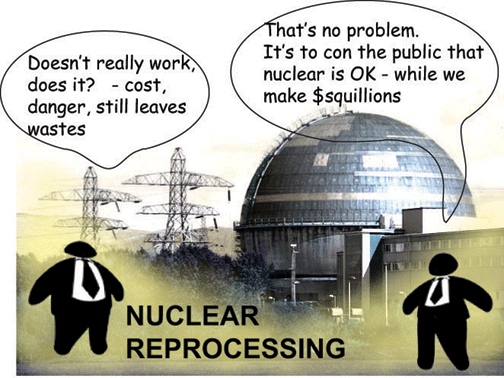
LONDON, 23 April, 2020 − For 70 years Britain has been dissolving spent nuclear fuel in acid, separating the plutonium and uranium it contains and stockpiling the plutonium in the hope of finding some peaceful use for it, to no avail: all it has to show today is a UK plutonium stockpile.
To comply with its international obligations not to discharge any more liquid radioactive waste into the Irish Sea, the United Kingdom government agreed more than 20 years ago under the Ospar Convention on the protection of the north-east Atlantic to shut its nuclear fuel reprocessing works at Sellafield in northwestern England at the end of this year.
As well as 139 tonnes of plutonium, which has to be both carefully stored to prevent a nuclear chain reaction and protected by armed guards as well, to avoid terrorist attack, there are thousands of tonnes of depleted uranium at Sellafield.
The reprocessing plant shut down prematurely as a result of a Covid-19 outbreak among its employees, and most of the 11,500 workers there have been sent home, leaving a skeleton staff to keep the site safe. Whether the plant will be restarted after the epidemic is unknown.
Fewer than half Sellafield’s workers are involved in reprocessing. Most are engaged in cleaning up after decades of nuclear energy generation and related experiments. There are 200 buildings at the massive site, many of them disused. It costs British taxpayers around £2.3 billion (US$2.8bn) a year to run Sellafield and keep it safe.
Solution needed soon
While the British government has been reluctant to make any decision on what to do about its stockpiled plutonium and uranium, the Bulletin of the Atomic Scientists has expressed alarm about the danger it poses.
“The United Kingdom has to find a solution for its plutonium stockpile, and quickly,” its report says.
The scientists point out that there is enough plutonium to make hundreds of thousands of nuclear weapons, and that it is a permanent proliferation risk. The annual cost of £73m to keep the plutonium safe is dwarfed by the much larger cost of trying to make safe the whole site with its thousands of tonnes of nuclear waste.
The Bulletin reports that the original reason for the reprocessing works was to produce plutonium for nuclear weapons. The UK supplied the US at times, as well as producing its own weapons. A 2014 agreement between the British and US governments gives an outline of the nuclear links which then existed between them.
“The British government, the Nuclear Decommissioning Authority, and reactor operators in general should accept that separated plutonium is a burden, not a resource”
For decades there were also plans to use plutonium in fast breeder reactors and to blend it with uranium to make Mixed Oxide Fuel (MOX) .
This was a time when governments believed that the world’s supply of uranium would run out and that re-using it with plutonium would be a way of generating large amounts of electricity, as a way to avoid burning fossil fuels and as part of the solution to climate change.
MOX was one possible fuel. Using recycled plutonium in fast breeder reactors was another possibility. And a third option was new-style reactors that burned plutonium, theoretically possible but never built.
But uranium did not run out, and MOX did not prove economic. It and the new reactors proved so technically difficult they were abandoned.
Despite these setbacks, successive British governments have continued reprocessing, always refusing to class plutonium as a waste, while still exploring ways of using it in some kind of new reactor. This is likely to remain the official position even after reprocessing ends in December.
The UK’s Nuclear Decommissioning Authority, the agency that runs Sellafield, faced by this indecision, continues to store the plutonium behind three barbed-wire barricades, guarded by the only armed civilian police force in the country.
Here to stay?
One of the tricky political problems is that 23 tonnes of the plutonium is owned by Japan, which sent its spent fuel to be reprocessed at Sellafield but is unable to use the recycled material, which cannot be returned to Japan in its current state because of nuclear proliferation concerns.
Despite these setbacks, successive British governments have continued reprocessing, always refusing to class plutonium as a waste, while still exploring ways of using it in some kind of new reactor. This is likely to remain the official position even after reprocessing ends in December.
The UK’s Nuclear Decommissioning Authority, the agency that runs Sellafield, faced by this indecision, continues to store the plutonium behind three barbed-wire barricades, guarded by the only armed civilian police force in the country.
Here to stay?
One of the tricky political problems is that 23 tonnes of the plutonium is owned by Japan, which sent its spent fuel to be reprocessed at Sellafield but is unable to use the recycled material, which cannot be returned to Japan in its current state because of nuclear proliferation concerns.
Bulletin of Atomic Scientists 17th April 2020, The United Kingdom’s last plutonium reprocessing plant, B205, located in Sellafield in northern England, will shut down by the end of 2020. It will bring an end to the era of plutonium separation in the country, which began 68 years ago.
Because the United Kingdom never used any of the material it recouped from reprocessing except in nuclear weapons, today it has amassed a stockpile of almost 139 metric tons of separated plutonium. This creates lasting problems: Plutonium stored in Sellafield is highly toxic and poses a permanent risk of proliferation. It is enough material to build tens of thousands of nuclear weapons.
According to parliamentary estimates, storage will cost the British government about 73 million pounds a year for the next century.
But after decades of public and private consultation, there is still no accepted plan for its disposition. In the meantime, the Nuclear Decommissioning Authority is working on the consolidation of the stockpiles in Sellafield and developing the capability to retreat the packages to allow for long-term storage once the government makes a final decision on permanent disposal.
The United Kingdom views the material as a resource and is pursuing options that involve burning the plutonium in reactors, even though multiple assessments have shown risks associated with such a choice, namely immature concepts and technology.
RICHLAND, Benton County — Bill Evans Jr. worked on the front lines of the Hanford cleanup. He supervised crews tasked with dismantling tanks, uncoupling pipes and painting over surfaces to stanch the spread of radioactive particles inside some of the most hazardous buildings at the nation’s most contaminated nuclear site.
To keep themselves safe, they donned full-body protective suits, sometimes two. Battery-charged respirators hung by their sides, circulating filtered air through breathing tubes and into hoods.
In May 2016, seven years into his Hanford career, Evans had a seizure on his lunch break that left him dazed. It was the first of many that forced him to stop working. Since then, repeated seizures have overtaken his life, resulting in falls that dislocated his jaw, fractured his spine and sent him crashing through a glass pane that gashed his head and required 30 stitches.
Evans, 45, is convinced that the sudden onset of his illness was linked to his job. Last year, he got a surprising clue about what might have gone wrong. A document from his old employer, slipped to him by a colleague, stated that a respirator cartridge Evans frequently used had a bad seal caused by changes made to the gear at Hanford, and possibly exposed him to radioactive and chemical contamination.
“I was floored, surprised and angry,” Evans said. “Because I trusted that equipment. That equipment was my lifeline.”
Evans was one of an estimated 560 workers at the Plutonium Finishing Plant between 2012 and October 2016 who wore respirator gear that may have leaked, according to documents obtained by The Seattle Times. The project contractor, CH2M Hill Plateau Remediation Company, told workers on the job site about the safety lapse, which was also detailed in a November 2016 letter to be placed in affected workers’ medical files.
But the contractor did not directly reach out to workers, like Evans, who had already left the job, according to a spokesman for CH2M Hill. The letter ended up in the files of only 150.
How Colorado’s nuclear past is affecting its future, Colorado Springs INDY, GONE FISSION, by Heidi Beedle 25 Mar 20, IT WAS FEB. 25 AND BROOMFIELDCity Council was done. It unanimously voted last month to withdraw from the Jefferson Parkway Public Highway Authority (JPPHA), a proposed north-south toll road that would ostensibly help mitigate traffic congestion in the Northwest Metro Denver area. The route would have taken the road through the eastern edge of the Rocky Flats Wildlife Refuge, just south of the Boulder County line, bordering Arvada and Broomfield. The council vote was influenced by preliminary soil samples taken by the JPPHA in July 2019, specifically one sample that showed plutonium levels more than five times higher than the acceptable standard (the rest of the samples taken at that time were within acceptable standards). Before its current existence as a wildlife refuge, Rocky Flats was the site of a nuclear weapons plant, which has caused concern about plutonium contamination in the area. Forty-eight subsequent samples taken by the U.S. Fish and Wildlife Service, which manages the refuge, showed levels well below cleanup standards of 50 picocuries per gram.
The city council vote is the latest installment in the ongoing conflict between concerned residents and public officials, and Rocky Flats and Colorado Department of Public Health and Environment (CDPHE). For decades, residents and at least two directors of Jefferson County Public Health, have claimed that plutonium released from the plant is responsible for the high rate of cancers in the area. These claims have been consistently disputed by CDPHE and the Department of Energy (DOE). ……..
Johnson was concerned about the instances of cancers in Jefferson County and questioned the official measurements of plutonium in the soils around Rocky Flats, finding in his own testing that plutonium levels in the soil were 44 times higher than reported by the Department of Public Health. Johnson grew increasingly concerned about an increase in cancer deaths in Jefferson County, and in a paper published in 1981, noted that a rise in certain kinds of cancers Johnson was seeing in Jefferson County, such as leukemia, “supports the hypothesis that exposure of general populations to small concentrations of plutonium and other radionuclides may have an effect on cancer incidence.” Johnson noted that “plutonium concentrations in the air at the Rocky Flats plant are consistently the highest (1970-1977) in the US DOE monitoring network,” based on his studies of the DOE’s own data. He also asserted that the DOE’s measurements were likely an underestimation.
Almost 40 years later, and the current head of the Jefferson County Public Health Department, Dr. Mark Johnson (no relation) has come to the same conclusion. In 2018 he spoke outagainst opening the wildlife refuge to the public, and he thinks the recent discovery of plutonium near the proposed parkway site should give people reason to reconsider. “
“There are clear studies that have shown there is an increased risk or rate of plutonium in the dirt there,” agrees Mark Johnson. “I have concerns already about the digging around with the subdivisions and the commercial enterprises that have gone into that area that were basically kicking up a lot of stuff — and we don’t know what is there.”
Carl Johnson was fired in 1981 for his persistent, outspoken criticism of the plant, but won a subsequent whistleblower lawsuit. Partly due to Johnson’s criticism, the FBI and the EPA began looking into operations at the Rocky Flats Plant starting in 1987. The investigation was aided by Jim Stone, an employee at the plant who also became a whistleblower over what he saw as grave safety violations……..
THOUGH EXHAUSTIVE DOCUMENTATION of waste sites and deposits exists, questions remain as to the effectiveness of the now-completed cleanup. Jon Lipsky, a former FBI agent who led the raid on Rocky Flats in 1989, criticized the decision to open the refuge to the public in 2016, and has claimed there is still work to be done. Originally, the DOE estimated it would take 65 years and $37 billion to clean up the site. It was completed in 2005 for $7 billion.
During the process, there were still surprises to be found. ……..
The questions of the lasting effects from the operations at Rocky Flats may never be answered to the satisfaction of residents like Hansen, who are dealing with serious health issues. Jeff Gipe, the artist behind the Cold War Horse memorial that was erected in 2015, is currently working on a documentary about the plant, Half-Life of Memory, which may draw more attention to the issue.
President Donald Trump, who has a good shot at re-election, has reduced the effectiveness of agencies like the EPA while also advocating for an increase in nuclear arms development.
February 24, 2020bycumbriatrust, https://cumbriatrust.wordpress.com/2020/02/24/is-cumbria-about-to-become-the-worlds-plutonium-dump/ During the last search process for a burial site for the UK’s nuclear waste, which ended in January 2013, the Nuclear Decommissioning Authority (NDA) offered repeated assurances that only the UK’s nuclear waste would be buried in a UK Geological Disposal Facility (GDF). Many questioned at the time whether the NDA could be trusted to keep its word, and it became apparent in mid-2012 that it could not be trusted. The NDA had accepted 4 tonnes of plutonium from Germany in a ‘commercially advantageous arrangement’ according to Charles Hendry, the UK’s Energy Minister at the time. In other words the NDA had been paid to take ownership of the German plutonium.
****
A half-hearted attempt was made to claim that there was no breach of trust, since plutonium did not form part of the UK’s nuclear waste inventory, which while technically correct at the time, it was widely understood that plutonium was expected to be reclassified as waste at a later stage. So while the NDA claim was true in a literal sense, it was also entirely disingenuous. It was clear at the time that the NDA were embarrassed by this, particularly as they were about to ask Copeland, Allerdale and Cumbria to vote to continue the search process for a GDF site. That process ended in January 2013 when Cumbria County Council vetoed the decisions of the two borough councils which had voted to proceed.
****
While there have been a few smaller transactions of this type, it now appears that the NDA is offering to take ownership of a much larger quantity – 19 tonnes (21 US tons) of plutonium from Japan, in exchange for a substantial payment. The UK and Sellafield where it is stored will then be faced with the problem of what to do with it. It is almost inevitable that it will be reclassified as waste at some point, but it generates too much heat to begin to be buried until the year 2136 according to the NDA.
****
The UK’s search for a GDF site has failed on three occasions, with a lack of public trust being one of the key reasons for the failures. With this latest move by the NDA, public trust is likely to be further diminished. Any claim that a UK GDF is for UK nuclear waste is clearly not to be trusted.
What should be done with Japan’s plutonium now stored in the UK? ~ Research trip report. BY CITIZENS’ NUCLEAR INFORMATION CENTER by Caitlin Stronell, CNIC
From September 11 to 21, Ban Hideyuki and Caitlin Stronell from CNIC visited the UK in order to survey opinions on what should be done with Japan’s 21.2 tons of plutonium presently stored at the Sellafield facility in the UK. As Japan does not have an operating reprocessing plant, spent fuel was shipped to the UK and France for reprocessing and fabrication into MOX fuel from the late 1970s. Including Japan’s 21 tons, a total of approximately 140 tons of separated plutonium are held in the UK, which has offered to take ownership of foreign owned plutonium on its soil, subject to acceptable commercial terms. There have already been several such cases of ownership transfers of plutonium. (For example, in January 2017 the UK took ownership of 600 kg of plutonium previously owned by a Spanish utility and 5 kg previously owned by a German organization.)
Last year Japan’s Ministry for Economy, Trade and Industry (METI) announced that a dialogue concerning plutonium between the UK and Japan had begun. Although the details of this dialogue have not been released, ownership transfer may well be one of the discussion points. If Japan does go through with the ownership transfer, it will be an admission that the plutonium, which it has spent vast sums on extracting from the spent fuel, is not a precious resource at all, but material that now has to be disposed of, again at large cost. This would be another heavy blow against Japan’s reprocessing policy. However, how do people in the UK feel about accepting 21 tons of Japanese plutonium? This was what we tried to find out on our research trip.
Closely related to the issue of plutonium in both Japan and the UK is the issue of nuclear waste and we also wanted to find out about how the UK is planning to deal with this issue, especially in terms of siting a Geological Disposal Facility (GDF). Plans to site the GDF in Cumbria were rejected by the Council in 2013 and since then the national government has introduced a new system where smaller communities are able to request that they be considered as a GDF site. We wanted to find out how people were reacting to this and what the prospects are for the government being able to successfully site a GDF under this system.
We spoke to a large range of people directly concerned with these issues, of course anti-nuclear activists, but also a scientist involved in research on direct disposal methods for plutonium, as well as a number of people who work at Sellafield and local councilors for the area. Their answers to the question of what to do with Japan’s 21 tons of plutonium were varied and, in some cases, a little unexpected. For example, I was expecting that Prof. Neil Hyatt of Sheffield University, who is conducting cutting edge research on plutonium disposal, would be more open to accepting Japan’s plutonium, but he expressed some hesitation, saying that if the UK government agrees to take ownership of such a large amount of plutonium, it will break trust with local people by increasing their waste burden.
Divided opinions
We also noticed a split opinion between the two Cumbrian Councillors we interviewed. Cumbria is the county where the Sellafield Site is located and the nuclear industry obviously plays an important part in the local economy and politics………
The NDA is also tasked with siting the GDF for radioactive waste, which has proved to be a difficult task indeed, as it is all over the world, including in Japan where little progress has been made. There have been three attempts so far in the UK to try to decide on a site for the GDF, none of which have yielded results and so a new process for finding a GDF site began in January 2019. This process allows any community, no matter how small, to express an interest in starting a dialogue regarding hosting a GDF. …….
These and many other campaigns led by local communities show that the authorities and industry claims of transparency and safety cannot be trusted and in this sense it was easy to understand comments by Cr. Celia Tibble regarding the public reaction if the UK government were to accept Japanese plutonium. It would be seen as another lie and breach of trust…….
Conclusion
I thought that there were many similarities between the situation in Japan and in the UK regarding nuclear fuel cycle policy. Both countries must deal with massive amounts of plutonium, extracted at huge cost and risk, which now has no apparent use. Both the governments of Japan and the UK try to convince themselves and the world that it can be used as MOX fuel, but without a fabrication plant or sufficient MOX reactors, this solution is totally unconvincing. In the UK, it seems at least some industry people are facing up to this reality. In Japan, however, the government, at least at a policy level, hasn’t even faced up to the reality that plutonium is not a resource. Transferring ownership of its 21 tons of plutonium held in Sellafield to the UK would be an important step in facing up to this reality and could open the door to more practical and constructive discussions on how to reduce the plutonium stockpile. These discussions will not be easy and require an honest and concerted effort on the part of local and national governments, industry, communities and citizens. https://cnic.jp/english/?p=4681
LETHAL LEGACY, The US wants to bury SC’s plutonium stockpile forever. Its new home isn’t sure it wants it. Post and Courier, By Thad Moore tmoore@postandcourier.com Nov 23, 2019 In the time it will take for South Carolina’s stockpile of weapons-grade plutonium to decay, you could repeat most of human history, starting back in the Stone Age.
By the time its byproducts lose the explosive potential to be used in nuclear weapons, some 7 billion years will have passed. The Earth itself will have doubled in age, and then some.
The U.S. government will officially decide in the next few years where the plutonium — the metal used to trigger nuclear weapons — will spend that eternity. And when it does, it will ask another part of the country to bear a profound burden: to house thousands of barrels filled with scraps of the Cold War and America’s nuclear arms race, a legacy that may well outlast our civilization.
That question will soon be posed to New Mexico, where the U.S. Department of Energy has excavated cavernous vaults deep below the ruddy soil in the state’s southeastern corner. The government hopes it will eventually hold tons of plutonium it has decided it no longer needs — enough to build a few thousand bombs the size of the one dropped over Nagasaki, Japan.
If it says yes, trucks will carry the plutonium load by load down Interstate 20 for the next three decades, and workers will lower it almost half a mile underground, where it will await its final fate: the mine’s slow collapse, and salt entombing it forever.
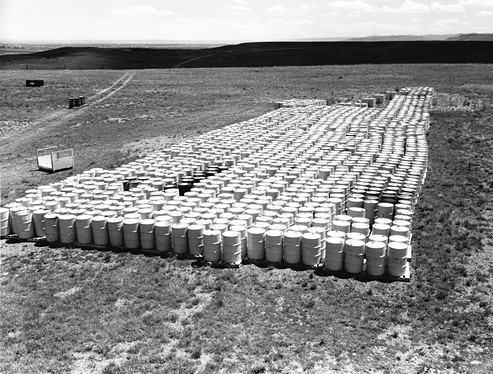
If New Mexico says yes, the Energy Department will bury some 20,000 steel drums deep underground there, in a ribbon of salt as thick as Charleston’s Ashley River is wide.
And if New Mexico says yes, South Carolina will secure a new home for a nuclear stockpile it was wary of taking in the first place.
The problem is, New Mexico isn’t sure if it will say yes.
A new path
The U.S.’s policy for disposing of plutonium has been in limbo for years.
Congress had long planned to burn the material in commercial power plants, altering its atomic structure and making it harder to use in bombs.
But the Energy Department’s project to convert plutonium into reactor fuel was deeply flawed: It started building a factory to do that work before it had a complete design, and it later discovered that finishing the plant would cost billions more than expected and stretch into the middle of the century.
So the department proposed an alternative. It would convert its plutonium into a fine powder, and it would hire dozens of people in South Carolina to dilute it by hand, working in shifts around the clock.
They would blend it with a secret combination of chemicals called “stardust,” designed to make it difficult to get the plutonium back out. When mixed with plutonium, stardust is said to foam up, create a gel and harden like concrete. Department officials have said the final product looks like sand on the beach. They’ve said it would save billions of dollars……….
A long decay
The Department of Energy grappled in the early 1990s with just how long WIPP’s legacy would survive.
It hadn’t decided yet that plutonium should spend an eternity in the New Mexico desert, but it knew that America’s other nuclear waste would persist as long as anyone could comprehend. And it worried that some far-off civilization would find WIPP without understanding the invisible danger of radiation inside………When the calendar reaches the year 12000 — around the end of the team’s 10,000-year mandate — the plutonium underground will be less than halfway through its first half-life.
Paul RichardsThe Plutonium Economy failed. nuclear fuel cycle watch australia, 25 Oct 19,
No one on the planet has been able to run unspent nuclear fuel through twice, and make it economically viable, let alone the countless times needed to make it ecologically viable.
It costs more to run unspent fuel through once more than to
• mine uranium,
• process for shipping
• process into yellowcake
• make into rods
• ship rods onsite to reactors
There is little to NO CHANCE of doing that again, and again.
Business history shows this wasn’t possible when;
• uranium was at its peak in price in 1980
2019, about to enter the third decade of the 21C, where commodities exchanges show nuclear fuel it is;
• LOWEST PRICE than in all of economic history,
and yet it still can’t compete with any other energy sources.
Nuclear apologists are a joke, delusional.
The nuclear sales executives of the nuclear estate have been busy rebranding, white and greenwashing their product is ever since Ronald Reagan announced The Plutonium Economy failed.
In point of fact, carbon fuel, gas spinning a turbine, has been producing cheaper energy fully levelized for three decades than any nuclear reactor.
Large scale
• solar PV and
• on-offshore wind turbines
• reached PARITY with
• carbon fuel NATURAL GAS
late last decade on an LCOE basis.
For this whole decade these;
• renewable systems
• fully lifecycle factored
• are cheaper than even carbon fuels
• NATURAL GAS
Post & Courier 30th Sept 2019 Dogged by faulty assumptions and lacking political will, the federal government squandered billions of dollars and an opportunity to dispose of the nation’s most dangerous nuclear material by chasing a massive construction project in South Carolina that was doomed from the start.
Instead, the U.S. Department of Energy stranded a huge stockpile of plutonium — the lethal metal at the core of nuclear weapons — at a federal installation on the state’s wooded western edge, with plans to
leave it there for decades. https://www.postandcourier.com/news/how-the-us-government-wasted-billion-and-stranded-tons-of/article_24bc000a-da1d-11e9-bb44-87644323c969.html .wordpress.com/
The Savannah River Site has been in the state since the late 1950’s and was originally home to a nuclear bomb making facility, but over the years the site has taken on the role of several different operations, including the storage of plutonium.
Savannah River Site is now home to a nuclear laboratory and facility to reuse the nuclear material left behind from the Cold War. Over the years the storage of that plutonium has become a concern.
“A lot of pollution left over from that so the main mission of the Savannah River Site for a long time has been the cleaning up of the contamination that exists,” explained Tonya Bonitatibus, the Executive Director of Savannah Riverkeeper. Savannah Riverkeeper monitors the quality of the Savannah River, which is used for drinking water for more than 1 million residents.
The United States Department of Energy notified the state’s attorney general of the removal of one metric ton of plutonium from the Savannah River Site.
In 2016, Congress passed a law to remove the plutonium if production goals to reuse the material were not met.
The plutonium removed so far is the first step in a wider cleanup after the state won a lawsuit against the DOE.
Bonitatibus continued, “The Savannah River Site has been the dumping ground for nuclear waste. It just has because nobody wants it. So it ends up being stored here leaking into the coastal plain and groundwater.”
The National Nuclear Security Administration says, “The material removed from the Savannah River Site (SRS) in Aiken, South Carolina, will be used for national security missions and is not waste.”
NNSA also released a removal plan that designated Texas and New Mexico as the destinations for the removed plutonium.
The ruling outlined that one metric ton of the plutonium would be removed each year. The process could take another 5 to 7 years to remove the plutonium being stored.
The removal was supposed to be completed by January 1, 2020. The process is 6 months ahead of schedule, according to NNSA.
Savannah River Site is located on land in Aiken, Allendale and Barnwell counties.
Opinions on nuclear project at SC plant clash at public forum, Post and Courier, By Colin Demarest cdemarest@aikenstandard.com, Jun 28, 2019 NORTH AUGUSTA — Vocal support for producing nuclear weapon cores at the Savannah River Site sharply contrasted with questions, criticism and pushback Thursday night at a government-led public forum.
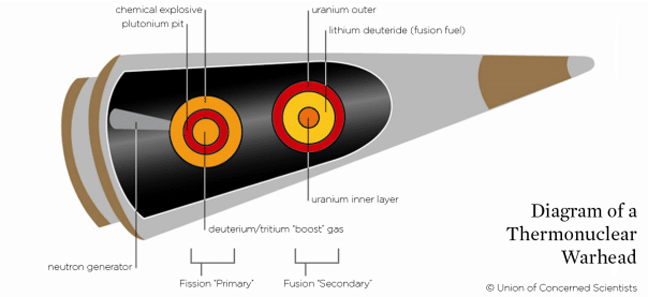
The U.S. Department of Energy’s National Nuclear Security Administration wants to produce 50 of the weapon components each year at the sprawling complex near Aiken. The cores, known as plutonium pits, use one of the world’s most dangerous substances to trigger a series of explosions that unleash the deadly potential of nuclear weapons.
Supporters tout the economic benefits of the project, which would create about 1,000 jobs and provide a new anchor for SRS after the government abandoned its long-delayed efforts to finish a facility designed to turn weapons-grade plutonium into fuel for nuclear power plants.
Critics, however, remain skeptical of the proposed mission and worry about the potential risks to the environment and workers’ health.
A slew of officials, including Aiken Mayor Rick Osbon, Aiken County Council Chairman Gary Bunker and Jim Marra of Citizens for Nuclear Technology Awareness, voiced support for the effort, offering their takes on why SRS is the correct fit for the looming weapons-oriented mission.
Encouragement also came from several chambers of commerce, University of South Carolina Aiken, and state and federal lawmakers.
……… Nuclear watchers and other groups, however, took aim at the effort’s multibillion-dollar projected cost, as well as potential dangers from exposing the environment and workers to plutonium.
“What is the environmental impact of a nuclear weapon?” Glenn Carroll, with Nuclear Watch South, said Thursday. “The absolute and wholesale destruction of the environment. Every human, every animal. Every plant.”
The anticipated costs of pit production have raised eyebrows in Washington, D.C. A congressional budget report published this year estimated pit production would cost $9 billion over the next decade.
Among other things, SRS Watch Director Tom Clements said the pit production process was off to a “rocky start.”
“The project is not funded by Congress, it’s not authorized by Congress,” he said.
Clements, alongside Tri-Valley CAREs and Nuclear Watch New Mexico, hosted a pit production forum earlier this month at the Aiken Municipal Building. He and others urged opponents to push back against the plan.
The public “can be effective against bad Department of Energy ideas, like the pit production one,” Clements said at the time.
One Aiken resident on Thursday described the pit production effort at SRS as hurried, and a woman representing The Human Family organization expressed concerns about earthquakes and becoming a target of terrorism.
………. The NNSA terminated the MOX project — which was over-budget and congressionally controversial — on Oct. 10, 2018. The government had shoveled almost $8 billion into the effort by that point, but it remained years and billions of dollars away from completion.
Clements on Thursday told the audience the Energy Department and others are attempting to “sweep the MOX debacle under the rug.”
22 May 2019 Tami Freeman Researchers in the UK have developed a new method for evaluating plutonium workers’ historical internal radiation exposure. They focused their study on workers employed at the start of plutonium operations at the Sellafield (formerly Windscale) nuclear reprocessing facility (J. Radiol. Prot. 10.1088/1361-6498/ab1168).
Internal exposure to plutonium, which decays via alpha particle emission, is a recognised health hazard. But with little specific information available, potential risks from plutonium exposure have largely been assessed through knowledge of radiation exposure risks in general, much of which comes from external exposure to photon radiation such as gamma and X-rays. However, due to its high linear energy transfer rate, alpha particle radiation exhibits significantly enhanced biological effects at the cellular level, creating a specific need to investigate the associated exposure risks.
To obtain more direct estimates of potential internal exposure risks, epidemiological studies of plutonium workers need to be conducted,” explains lead author Tony Riddell, from Public Health England’s Centre for Radiation, Chemical and Environmental Hazards. “These studies require individual plutonium exposure estimates that are as accurate and unbiased as possible.”
The Sellafield workforce includes one of the world’s largest cohorts of plutonium workers. Through the support of the workforce, this group has been comprehensively monitored for internal exposure to plutonium, primarily through inhalation.
However, for 630 workers employed there at the start of plutonium operations, from 1952 to 1963, the historical urinalysis results available do not provide sufficiently accurate and unbiased exposure assessments. These results were based on a threshold level of urinary plutonium excretion, which was suitable for operational protection purposes at the time, but tended to overestimate exposure, leading to underestimation of any risks if used in epidemiological analyses.
“This means these early workers are excluded from epidemiological studies of exposure risks, which significantly reduces the power of these studies,” says Riddell. “Early workers are important for assessing potential exposure risks because they usually received some of the highest plutonium exposures and, due to the passage of time, health outcomes for these workers will now be largely known.”
To solve this problem, Riddell and colleagues employed an approach called a job-exposure matrix (JEM). The JEM approach uses exposure data from other sources to estimate the average exposure that a typical worker (in the same work group) would have received in a given period. Substituting the missing data with these JEM estimates allowed the researchers to build a more reliable picture of the early workers’ radiation exposure.
“To overcome the problem of missing or deficient exposure data, we used more reliable data from other relevant workers (‘exposure analogues’) along with statistical, mathematical and empirical analyses to estimate the average exposures for a typical worker at Windscale/Sellafield for all combinations of specific occupation and year required to build the JEM,” explains principal investigator Frank De Vocht from the University of Bristol.
The authors note that the exposure analogues approach developed in this study provides a generic methodological advance that is potentially transferable to other internally exposed workers, and which may permit other epidemiological cohorts to include significant groups of workers who otherwise might have been excluded due to the lack of reliable exposure information.
“It’s likely that replacing the missing or unreliable exposure data with JEM-derived values in future epidemiological studies could have considerable impact on the risk estimates which can be produced,” adds De Vocht.
17 years after work started on a $17 billion Hanford plant, crews are being hired to run it, Tri City Herald BY ANNETTE CARY, MAY 12, 2019 The Department of Energy is preparing to start turning some of the 56 million gallons of radioactive waste held in underground tanks into a stable glass form at the Hanford vitrification plant. BY DEPARTMENT OF ENERGY
Some are already at work in one of the Hanford nuclear reservation plant’s key control rooms, helping monitor the Low Activity Waste Facility and its systems around the clock.
The hiring and training of workers to operate the plant is “a significant development on the path to finally beginning to treat Hanford’s toxic and radioactive tank waste,” said the Washington state Department of Ecology, a Hanford regulator…..
The plant is being built to turn much of the 56 million gallons of waste held in underground tanks into a stable glass form for disposal. The waste is left from the production of plutonium for the nation’s nuclear weapons program during World War II and the Cold War.
Initially, only low activity waste separated out from the waste in the tanks will be treated, with treatment of high level radioactive waste likely delayed until 2033 because of technical issues being resolved at the plant. …The control room is being staffed 24 hours a day now, just as it will be when the plant begins operating. Melters that will heat mixtures of waste and glass-forming materials to 2,100 degrees Fahrenheit will be left on once they are started up…… Commissioning of the Low Activity Waste Facility, or testing all of its systems in unison, could begin in 2021 with the nonradioactive waste simulant……. https://www.tri-cityherald.com/news/local/hanford/article230192404.html