Plutonium used at Japanese reactor will be glassed, stored at Savannah River Site, Aiken Standard, By Colin Demarest cdemarest@aikenstandard.com, Mar 17, 2021
The National Nuclear Security Administration has decided a cache of plutonium sent from Japan years ago will be processed and disposed of for the foreseeable future at the Savannah River Site, a change of plans with local ramifications.
Up to 350 kilograms of stainless steel-clad plutonium from a Japanese reactor will be rid of using a slew of Savannah River Site facilities, tech and staff, recent federal documents show.
The Fast Critical Assembly fuel – already at the Savannah River Site – will be processed and dissolved at H-Canyon, a one-of-a-kind separations facility built in the 1950s. The material will then go to the tank farms, where millions of gallons of waste is stored.
After that, it will move to the Defense Waste Processing Facility, a mammoth plant that encases nuclear sludge in glass, making it safer to handle and stow long-term. The glass cylinders will ultimately go to an on-site storage building, where they will stay pending the availability of a dedicated depot, like Yucca Mountain in Nevada.
The entire endeavor will take years. And Japan is helping defray the cost.
“NNSA had an agreement with Japan for us to dispose of Fast Critical Assembly” material, Savannah River Site manager Michael Budney
said Monday. “And Japan is paying to put an electrolytic dissolver back in the canyon.” ……
The plutonium was previously slated to be handled and treated at the Savannah River Site and entombed at the Waste Isolation Pilot Plant in New Mexico, a repository resembling a salt mine. “Direct disposal of the FCA materials” at the Savannah River Site is a “sound option,” said SRS Watch Director Tom Clements, but it drums up some other questions……….. https://www.postandcourier.com/aikenstandard/news/savannah-river-site/plutonium-used-at-japanese-reactor-will-be-glassed-stored-at-savannah-river-site/article_b7b08e4c-8667-11eb-b8cd-8f0fb9c35316.html?fbclid=IwAR1s_w6jcU21h64HZ6z-tzb7uaWt4x-51ECsKd8E3bw6tvGacJn9_9gGmA8
March 19, 2021
Posted by Christina Macpherson |
- plutonium, Japan, USA |
Leave a comment
 For the NPT to work, plutonium has to go https://thebulletin.org/2021/03/for-the-npt-to-work-plutonium-has-to-go/?utm_source=Newsletter&utm_medium=Email&utm_campaign=MondayNewsletter03152021&utm_content=NuclearRisk_NPTwork_03152021
By Victor Gilinsky, Henry Sokolski | March 15, 2021 The Nuclear Nonproliferation Treaty (NPT), whose tenth review conference is coming up in August, is in trouble, and not only because of the crescendo of complaints about the failure of the nuclear-armed states to implement nuclear disarmament. The treaty is threatened with irrelevancy because its controls have not kept up with the times. It was drafted over 50 years ago, when it was widely believed that nuclear energy represented the future and would soon take over the generation of electricity. Not surprisingly, countries put few treaty restrictions on access to technology or materials other than to impose international inspection, and even that was circumscribed. We now have a more realistic view of the dangers of access to fuels that are also nuclear explosives (plutonium and highly enriched uranium) and also of the limited economic utility of these fuels for powering reactors. If we want an effective NPT, we have to eliminate these dangerous materials from civilian nuclear power programs. Dealing with uranium enrichment is complicated because nuclear power plants use enriched uranium fuel, but that should not hold us back from eliminating the danger we can eliminate—plutonium.
As soon as one mentions reinterpreting what the NPT allows, the treaty’s “originalism” crowd immediately pronounces the notion a non-starter. But we already have essentially eliminated an entire article (Article V) of the NPT that covered a technology—“peaceful” nuclear explosives—subsequently deemed both too dangerous and with negligible economic promise. That is exactly the situation with plutonium-fueled nuclear power reactors.
Separated plutonium in national hands leaves too little safety margin against possible use in warheads. At the same time, there is no economic penalty for doing without it. It should not be permitted in commercial use in all member countries. Existing civil stocks, like Japan’s nine tons, should be put under International Atomic Energy Agency (IAEA) supervision until their owners can safely dispose of the material.
This may sound radical, especially given the drumbeat of the US Energy Department and nuclear industry propaganda about a new generation of “advanced reactors” under development, most of them plutonium-fueled. But it is nothing more than President Gerry Ford’s common sense proposal in his 1976 Nuclear Policy Statement. He said we should forego using plutonium until “the world community can effectively overcome the associated risks of proliferation.” We are nowhere within reach of such a condition.
The NPT’s laxity on plutonium stems from the widespread beliefs at the time it was negotiated in the 1960s. Nuclear power plants were then considered destined to take over electricity generation and were thus vital for powering national economies. The US Atomic Energy Commission estimated that “essentially all [US] generating capacity built in the 21st century would be nuclear.” Moreover, and this is key, the Atomic Energy Commission believed uranium was scarce. To stretch nuclear fuel supply, they believed it would be necessary to develop reactors that turned the 99 percent of non-fissionable uranium into plutonium and then use that as fuel—plutonium-fueled fast breeder reactors.
That became doctrine in nuclear bureaucracies throughout the world and the NPT was drawn up to facilitate that result. (Ironically, had the projections been fulfilled, and the world commercial channels been flooded with plutonium, the possibility of effective control would have vanished.) Given nuclear power’s then-imagined critical importance, it’s not surprising that the less advanced NPT signatories insisted on full access to nuclear technology, hence on Article IV of the NPT that famously states all members have “the inalienable right” to it.
It has since turned out that all of the “expert” thinking about plutonium-fueled fast breeder reactors taking over electricity production was wrong. Contrary to the projections of the 1960s, nuclear energy’s prospects are limited, uranium is not scarce, extracting plutonium from irradiated uranium fuel is hugely expensive, and the plutonium-fueled reactors are expensive to build, which eliminated the economic arguments for the so-called plutonium economy. This is now clear to all but messianic believers in nuclear energy.
But the vestiges of this technological archaism continue to animate national bureaucracies that deal with the NPT, including that of the US, and the IAEA, as well. Perhaps the most glaring examples of the residual attachment to plutonium is Japan, which accumulated an enormous stockpile of plutonium and China, which, like Japan, plans to open a large reprocessing plant to separate more for two large fast breeder reactors. The US Energy Department is planning an expensive fast reactor to test fuel (the Versatile Test Reactor) for a mythical future commercial generation of such reactors. These steps legitimate similar actions elsewhere and undermine effective nonproliferation controls.
With the diminished prospects of nuclear power, the amount of this plutonium-related activity is not going to be anything like what the nuclear community once projected. The essential point remains: Amounts of plutonium that are very small in commercial terms can be very large in military terms.
At a more fundamental level, the United States needs to speak clearly to dispel the myth—one that still grips some NPT member countries—that nuclear power is an essential technology without which a country cannot consider itself as advanced. To get into the details would take us too far afield. But, as an indication of current nuclear prospects, consider the collapse of the highly vaunted “nuclear renaissance” at the beginning of this century that was to lead to construction of dozens of plants in the United States. US nuclear operators filed license applications for 31 large units. They ultimately canceled all but two, and those two are years behind schedule and already double the original cost, which led the original contractor, once proud Westinghouse, to file for bankruptcy.
America’s utility sector has been consistent on this score: It is not going to build any additional large nuclear reactors and doesn’t extract plutonium from used nuclear fuel. This message presented at the 2021 NPT Review Conference would help clear the decks for an honest assessment of what is needed for protection against access to nuclear weapons. If plutonium and reprocessing (its separation technology) are generally permissible, and only barred when worries arise in special cases like Iran, the NPT will ultimately undo itself.
None of this is to suggest that the NPT members will be easily persuaded, or perhaps even persuaded at all, of the need to limit what is permissible under the treaty. The entrenched plutonium-fuel firms and laboratories, and their government backers, including those in the United States, will not easily let go of their subsidies. But we need to start.
March 17, 2021
Posted by Christina Macpherson |
- plutonium, USA |
Leave a comment
|
The long-term problem of “peaceful” plutonium https://thebulletin.org/2021/03/the-long-term-problem-of-peaceful-plutonium/?fbclid=IwAR1T1BwrLHnDoN3IBw7SxlR8H8-Hzy-auzsmNuYbPy3IZrzSXrWBW4Zfop8
By Robert Alvarez | March 8, 2021 In the early decades of the atomic age, using the enormous energy in plutonium atoms for the peaceful generation of electricity became a multibillion-dollar quest that shaped US energy research and development policies. In 1970, Glenn Seaborg, the discoverer of plutonium and then-chairman of the US Atomic Energy Commission, declared that “within the lifespan of a single generation this newcomer plutonium born on a humble research budget and cradled in a cigar box will have become the energy giant of the future.”
Seaborg and the AEC projected the growth of nuclear-powered electricity would be so great that global supplies of uranium would be exhausted, paving the way for the recovery of plutonium from spent power reactor fuel for the next generation of power plants, which would dot the global landscape. Seaborg estimated by the end of the 20th century, power reactors would cumulatively produce 1,600 metric tons of plutonium with the potential to fuel half the nation’s electrical generation.
With this much plutonium flowing through commerce, the possibility that some of it might be diverted for nefarious purposes was not lost on prominent members of the US national security establishment. Losing track of just .0003 percent of the amount estimated by Seaborg would be enough to fuel a Nakasaki-sized nuclear weapon. Opposition by America’s Cold War nuclear policy makers was galvanized following India’s nuclear weapons test in May 1974. India’s bomb was fueled with plutonium produced from “peaceful atom” technology provided by the United States and Canada. Albert Wohlstetter, a prominent American nuclear strategist and cold warrior, concluded that the U.S. pursuit of plutonium fuel could result in “life in an armed nuclear crowd.
In response to the Indian test, the Carter administration banned chemical separation of plutonium from irradiated power reactor fuel—the process known as reprocessing—in 1977.
The US “plutonium economy” was also dealt a major blow by the 1982 Nuclear Waste Policy Act, which underscored the Carter Administration’s non-proliferation goals by giving priority to the direct geologic disposal of spent nuclear fuel, without reprocessing. President Reagan lifted the ban and President George W. Bush attempted to revive reprocessing, but those efforts collapsed in the United States under the weight of the expense, safety problems, and security risks of a widespread reprocessing program. Since the early 1980s, the US Congress has shown little appetite for resuming support of the commercial development of plutonium as a reactor fuel.
In response to the Indian test, the Carter administration banned chemical separation of plutonium from irradiated power reactor fuel—the process known as reprocessing—in 1977.
The US “plutonium economy” was also dealt a major blow by the 1982 Nuclear Waste Policy Act, which underscored the Carter Administration’s non-proliferation goals by giving priority to the direct geologic disposal of spent nuclear fuel, without reprocessing. President Reagan lifted the ban and President George W. Bush attempted to revive reprocessing, but those efforts collapsed in the United States under the weight of the expense, safety problems, and security risks of a widespread reprocessing program. Since the early 1980s, the US Congress has shown little appetite for resuming support of the commercial development of plutonium as a reactor fuel.
As of the end of 2018, US spent power reactor fuel contained about 824 metric tons of plutonium—the world’s largest single inventory of that element. The intense radiation of used nuclear fuel assemblies makes them essentially impervious to theft or diversion to weapons use. But after 300 years, a great deal of the radiation barrier protecting them will have decayed. The Nuclear Waste Policy Act lays out a process for geologically directly disposing of spent nuclear power fuel in an underground repository, rather than allowing plutonium to be separated from it. Reprocessing “would incur a substantial cost penalty,” concluded an industry study in 2006 and would be far more costly more expensive than direct spent nuclear fuel disposal. “[Re]processing would have to be accompanied by deployment of fast reactor plants. But demonstration fast reactor plants to-date has mostly proved expensive and unreliable, which aggravates [re]processing’s economic handicap.”
But nearly 40 years later, geologic disposal of spent power reactor fuel remains uncertain after President Obama’s cancellation in 2010 of the proposed Yucca Mountain repository site in Nevada.
By the mid-21st century, the amount of plutonium in spent power reactor fuel could grow to more than 1,400 metric tons. The 300-year clock measuring off the time until the radiation barrier diminishes to the point that this vast amount of weapons-usable plutonium can be readily obtained is still ticking.
|
|
March 11, 2021
Posted by Christina Macpherson |
- plutonium, 2 WORLD |
Leave a comment
 The need for a long-term commitment to plutonium disposal. The Energy Department faces the daunting and unprecedented task of geologically disposing of tens of tons of weapons-grade plutonium, so it can never be used again, while ensuring its toxic dangers do not threaten the environment over a time period longer than the existence of human civilization.
Can the Energy Department store 50 tons of weapons-grade plutonium for 10,000 years? Bulletin of the Atomic Scientists, By Robert Alvarez | March 8, 2021 The nuclear age is undergoing a paradigm shift. During much of the latter half of the past century, the nuclear enterprise was ascendant; now, it has entered a period of decline and uncertain long-term custodianship. This reversal of fortune is especially apparent in the United States’ efforts to rid itself of its unwanted reserves of plutonium. It’s been more than 75 years since a blinding flash lit up the pre-dawn sky at Alamogordo in the Chihuahua Desert of New Mexico. On July 16, 1945, a single gram of the grapefruit-size sphere of plutonium at the center of the world’s first nuclear explosion released three times the destructive force of the largest conventional bomb used during World War II. [1]
Thereafter, the United States government built a grossly oversized nuclear arsenal and never envisioned having to stop building it. Between 1944 and 1994, the Energy Department and its predecessors produced 99.5 metric tons of plutonium for use in an estimated 70,000 nuclear weapons. (An additional 11 tons were produced or acquired for research and development purposes.)
The perverse logic of the nuclear arms race reached a point of ultimate absurdity during the early Reagan presidency, when it was asserted that the winner of a nuclear war would be the one with the most weapons left afterward. Now, 80 percent of the US nuclear arsenal has been discarded, and the United States is still struggling with the strategic mistake of producing so much fissile material to begin with. Currently, a total of 61.2 tons of plutonium is declared excess to the needs of the US government, of which 53.4 tons is designated for nuclear weapons.
The Energy Department faces the daunting task of geologically disposing of this huge cache of weapons-grade plutonium, so it can never be used again, while ensuring that its does not threaten the environment over a time period longer than human civilization has existed. Achieving safe plutonium disposal will be a multifaceted challenge requiring both long-term commitments and large financial investments at a time when nuclear modernization programs are also competing for federal funding. But arms control and disarmament will not progress as they should unless the excess plutonium problem is solved.
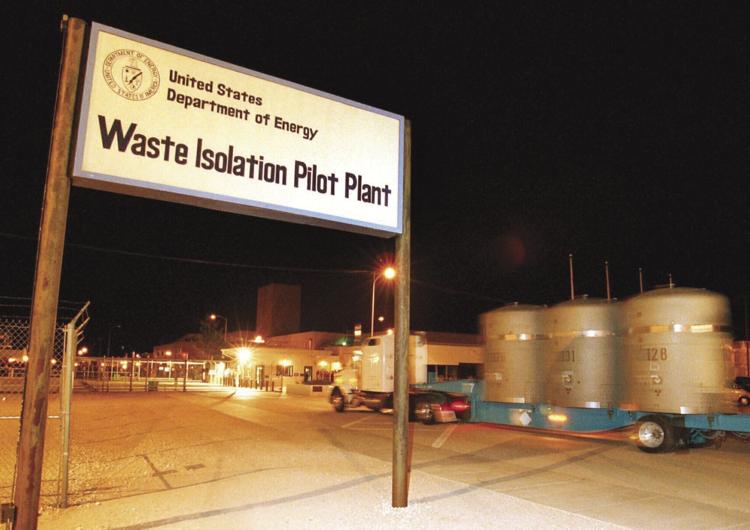
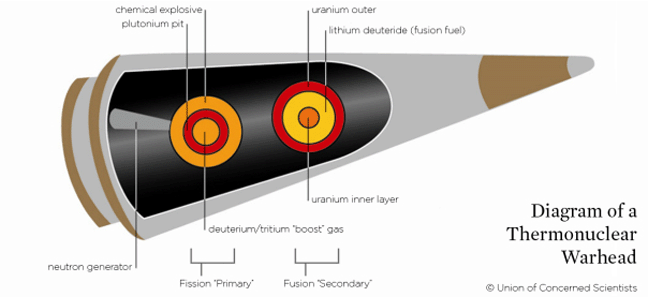
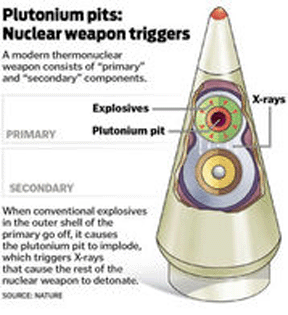
The scope of the problem. Safely ridding the nation of one of the world’s largest excess stockpiles of weapons-grade plutonium will be no minor feat. At issue is the US Energy Department’s 2016 decision to dilute and dispose of, all told, about 48.2 metric tons of plutonium, including 26.2 tons of components, known as “pits,” from several thousand dismantled thermonuclear warheads and 22 metric tons in other forms. These massive quantities of plutonium are destined for the Energy Department’s Waste Isolation Pilot Plant (WIPP), the nation’s only geologic burial site for radiological waste, dug into a deep-underground salt formation near Carlsbad New Mexico. WIPP was opened in 1999, originally for disposal of equipment, clothing, and soil contaminated with dilute amounts of transuranic elements, mostly plutonium, somewhere in the nation’s nuclear weapons complex. If one gram of soil contains as little as 1.587 micrograms of plutonium, the Energy Department is required by federal standards to geologically isolate it from the environment for at least 10,000 years at WIPP.
The site is not without its problems. In 2014, a drum burst open deep underground, shooting contamination to the surface and leading to a three-year closure of the facility that cost about $2 billion.
During the Cold War, the Energy Department facilities involved in weapons productions recovered residual plutonium from production processes—for example, the lathe turnings produced when spherical plutonium bomb cores were shaped—when the cost of doing so was less than the cost of making new plutonium in production reactors. After the downsizing of its Cold War warhead stockpile, in 1998 the Energy Department reclassified residues from the Rocky Flats Plant— some 3.5 metric tons of weapons-grade plutonium, or enough to fuel some 900 weapons—as waste that should also be disposed of in the WIPP. In fact, as of September 2019, more than two thirds of 5.36 metric tons of plutonium 239 placed in the repository originally had been set aside to make bombs. An additional 5.29 metric tons of this residual plutonium is awaiting disposal, and amount that is separate from and above what is generally considered as excess fissile material from the weapons stockpile.
The government has not publicized the formidable challenges of protecting thousands of workers and members of the public during the process necessary to geologically dispose of this enormous stockpile of nuclear explosives. To put it bluntly, if not done with extreme care, plutonium is a waste-disposal nightmare. The isotope used in American nuclear weapons, plutonium 239, has a specific activity (that is, an amount of radiation produced per unit of mass) that is about 200,000 times greater than uranium 238’s, and plutonium 239 has a radioactive half-life of 24,110 years. Alpha particle emissions from plutonium and other transuranic elements are considered to be about 20 times more carcinogenic than x-rays.
Particles of plutonium less than a few microns in diameter can penetrate deep in the lungs and lymph nodes and also be deposited, via the bloodstream, in the liver, on bone surfaces, and in other organs. If inhaled, extremely small amounts can lead to cancer.
Stringent procedures—many involving large number of workers with specialized skills—are required to ensure that even small amounts of plutonium are properly processed. That processing often must be done by hand, using gloveboxes, to prevent the creation of a critical mass that initiates a nuclear chain reaction and the resulting highly dangerous bursts of energy and radioactivity. While technologies have existed for years to process plutonium, they come out of the Cold War era when safety was secondary to production. Over the years, dozens of workers around the world have been killed or seriously over- exposed from criticality accidents. Various safeguards—including a security system that carefully accounts for all plutonium and protects against theft and diversion—add another costly dimension to handling this nuclear explosive.
Plutonium production ends, but problems continue. Years before the collapse of the Soviet Union, the growing cost of plutonium production led to its gradual cessation. By the 1980s, half of every dollar spent to make plutonium at the aged Energy Department nuclear complex went for its burgeoning waste-management and environmental-restoration problems. By 1988, production costs compelled Energy Secretary John Herrington to declare: “We’re awash with plutonium. We have more than we need.”
By 1992, the United States had stopped making new nuclear weapons as the industrial base for producing them began to collapse; about 80 percent of the Energy Department’s sprawling nuclear weapons production complex was shuttered a few years later. This left behind a legacy of radioactive waste and human suffering, one that is still unfolding. The Energy Department’s recent baseline cost estimates for waste management and environmental remediation are about $435 billion for the two main plutonium production facilities, the Hanford Reservation in Washington and the Savannah River Site in South Carolina. The single largest portion of the entire US government’s environmental liability in 2019, including the Defense Department, is due to plutonium production at these two sites. In terms of the human legacy, 22,459 sick workers at three major plutonium and fabrication sites have been granted more than $4.2 billion in compensation and medical care…………….
-
- The need for a long-term commitment to plutonium disposal. The Energy Department faces the daunting and unprecedented task of geologically disposing of tens of tons of weapons-grade plutonium, so it can never be used again, while ensuring its toxic dangers do not threaten the environment over a time period longer than the existence of human civilization. Sustaining a full-time, 30-year effort to process and dispose of this vast amount of plutonium, at the same facilities that have been designated to produce new plutonium warheads for the US nuclear arsenal, inevitably will lead to an intense competition for space, funding, and skilled workers.
- Geological disposal of separated weapons-usable plutonium should not be subordinated to resuming new weapons production and other planned disposal schemes. The safe geological disposal of this highly dangerous and toxic nuclear explosive requires a long-term commitment from the US government to build new, costly infrastructure and to provide the knowledge and skills needed for such a vast disposal effort to generations of workers, who deserve greater protection than currently allowed by a great deal of hands-on work. Such a commitment will put the country on the path of irreversibility—the rendering of excess weapons-grade plutonium unusable for weapons purposes, a key element of nuclear disarmament.
- The cost of such a commitment will be enormous, but the cost of “kicking the can down the road” in terms of our environment and international security is incalculable. https://thebulletin.org/2021/03/can-the-energy-department-store-50-tons-of-plutonium-for-10000-years/#.YEa37PTkUIk.twitter
|
|
|
March 9, 2021
Posted by Christina Macpherson |
- plutonium, thorium, USA |
Leave a comment
Can the Energy Department store 50 tons of weapons-grade plutonium for 10,000 years? Robert Alvarez Bulletin of the Atomic Scientists, 8 Mar 21,
”…………The US-Russia plutonium disposal disagreement.
The end of the Cold War led to deep cuts in the US and Russian nuclear arsenals, and in 1993 President Clinton issued a directive declaring that the United States is “committed to eliminating, where possible, the accumulation of stockpiles of highly enriched uranium and plutonium.” In September 2000, the United States and Russia signed the Plutonium Management Disposition Agreement, under which 34 metric tons of plutonium from weapons would be blended with uranium and serve as mixed-oxide or MOX reactor fuel to produce electricity.

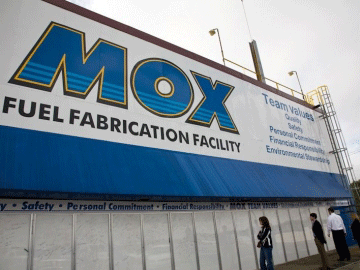
Construction on the Mixed Oxide Fuel Fabrication Plant at the Savannah River Site began in 2007, but the United States abandoned the project because of delays and estimated cost overruns of $30 billion to $50 billion. After a
“Red Team” expert review in 2015, the Energy Department decided to pursue a “dilute and dispose” option for storing plutonium, which, the team reported, would cost about half as much as the MOX project. Plutonium from weapons and other forms would be converted from metal to oxide, diluted with a secret adulterant, and then placed a special container for shipment and
disposal at WIPP.
In April of that year, Russian President Vladimir Putin took issue with the US decision, saying it “is not what we agreed on.” The dilute-and-dispose option for excess plutonium does not meet the same level of proliferation resistance as the 300-year radiation barrier provided by the “spent fuel standard”; within a few decades after emplacement, radiations levels could fall low enough to allow the plutonium to be recovered, in theory. But the salt formation at WIPP is expected to slowly collapse and seal off the drums of waste. Just the same, in October 2016 Putin suspended implementation of the plutonium disposition agreement “due to Washington’s unfriendly actions toward Russia.”
The dilute and dispose project.
The Energy Department optimistically estimates that its dilution and disposal project will start up in 2027 and store 34 metric tons of weapons-grade plutonium by 2049, at a cost of $18 billion. That time estimate seems likely to be unrealistic; according to the Institute for Defense Analysis, “we could find no successful historical major project that both costs more than $700 million and achieved [Energy Department project startup] … in less than 16 years.”
The dilute and dispose project i
- The Pantex weapons assembly and disassembly plant near Amarillo, Texas, where thousands of pits and other forms of plutonium have to be prepared for safe and secure shipment to Los Alamos National Laboratory (LANL) in New Mexico. The majority of the plutonium at Pantex is stored in facilities at that were built in the 1940s. In 2010 and 2017, unexpected 2,000-year rains flooded a major plutonium storage area with several inches of water, which shut down the plant. It cost of hundreds of millions of dollars to deal with about 1,000 containers affected by the flooding.
 At the Los Alamos National Laboratory, pits will be converted from metal to an oxide that resembles a yellow-to-olive-green talcum-like powder, which is highly dispersible if it escapes from leaking glove boxes. The conversion process takes place at the PF-4 facility, a 69-year-old complex where the Energy Department has a major multibillion-dollar project underway to upgrade aged processes to produce new plutonium bomb triggers. In 2020, a panel of the National Academies of Science warned that “LANL may be a major bottleneck” impacting the plutonium disposal mission. The disposal and production projects could be on a collision course by the middle of this decade, when both are planned to scale up by 10 times.
 Once Los Alamos produces plutonium oxides, they will be sent to the Savannah River Site in South Carolina, where the plutonium will be diluted and mixed with a secret adulterant, sometimes via the use of mortars and pestles. About 166,000 specially designed drums will be filled with the dilute fissile material. This task is a tall order for the Savannah site, where the round-the-clock work is expected to scale up by 10 times in a facility that officially exceeded its design life years ago. The facility will be almost 100 years old by 2049 when the dilute and disposal project is expected to be completed.
- Once the drums are filled, commercial trucks are expected to transport them across
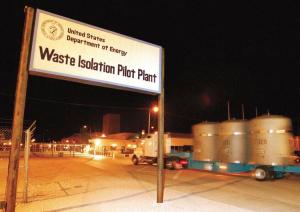 the country, from South Carolina to New Mexico and WIPP, in more than 3,888 shipments.
- As it plans to dispose of its excess plutonium, the Energy Department has, notably, paid little attention to inspections and verification by the International Atomic Energy Agency, a key element of the Nuclear Non-Proliferation Treaty. As noted by the report of an expert panel of the National Research Council, “IAEA monitoring and inspections are an important component of the [Plutonium Management and Disposition Agreement with Russia] requirements, and they could also provide enhanced public and international confidence that the material is properly accounted for and emplaced in WIPP.”
Plutonium disposal beyond dilute and dispose.
- Over the past three years, WIPP and the nearby area have become ground zero for several storage and disposal plans for the bulk of civilian and military radioactive wastes. In addition to trans-uranic wastes set for WIPP and plutonium related to weapons production, the Energy Department seeks to dispose of six tons of fuel-grade plutonium from its research and development program, sludge from 15 of Hanford’s high-level radioactive waste tanks, trans-uranic waste generated from the production of new plutonium pits, and other radioactive waste.
- Even after the Energy Department recently recalculated its excess plutonium and other radioactive wastes, resulting in a 30 percent reduction in the total volume to be sent to WIPP, the federal statutory limit set in the Land Withdrawal Act, which authorized the opening of WIPP, will be exceeded by these planned disposal efforts. Congress would have to amend the law to expand the volume, set for WIPP at 175,564 cubic feet, by as much as than 50 percent to accommodate all the waste. Moreover, it appears that new plutonium pit production is projected to generate huge amounts more waste.Lurking in the shadows, 71 miles from the WIPP, sits an Energy Department effort to dispose of as much as 500,000 gallons of grouted wastes from Hanford’s high-level radioactive waste tanks at the Waste Control Specialists landfill in Andrews County Texas.

- That firm is also seeking a license from the Nuclear Regulatory Commission to establish centralized interim storage of spent nuclear fuel from the nation’s power reactor fleet. So, too, is the Holtec Corporation with a proposed spent nuclear fuel storage site 16 miles from WIPP in Lea County, New Mexico.If these interim storage efforts succeed, by mid-century up to 10,000 spent fuel cannisters containing nearly the entire US commercial spent nuclear fuel inventory will be transported across the country for storage near WIPP. They may sit there for more than 100 years. (See sidebar: “The long-term problem of “peaceful” plutonium.) If these plans are realized, WIPP and the nearby area will have become the recipients of an enormous, decades-long, radioactive-waste-transport funnel directing the bulk of the nation’s commercial and military radioactive detritus to New Mexico and far West Texas……… https://thebulletin.org/2021/03/can-the-energy-department-store-50-tons-of-plutonium-for-10000-years/#.YEa37PTkUIk.twitter
March 9, 2021
Posted by Christina Macpherson |
- plutonium, Reference, USA |
Leave a comment
Plutonium, Perseverance and the Spellbound Press https://www.dailykos.com/stories/2021/2/24/2017916/-Plutonium-Perseverance-and-the-Spellbound-Press, Karl Grossman
With all the media hoopla last week about the Perseverance rover, frequently unreported was that its energy source is plutonium—considered the most lethal of all radioactive substances—and nowhere in media that NASA projected 1-in-960 odds of the plutonium being released in an accident on the mission.
“A ‘1-in-960 chance’ of a deadly plutonium release is a real concern—gamblers in Las Vegas would be happy with those odds,” says Bruce Gagnon, coordinator of the Global Network Against Weapons and Nuclear Power in Space.
Indeed, big-money lotteries have odds far higher than 1-in-960 and routinely people win those lotteries.
Further, NASA’s Supplementary Environmental Impact Statement (SEIS) for the $3.7 billion mission acknowledges that an “alternative” power source for Perseverance could have been solar energy. Solar energy using photovoltaic panels has been the power source for a succession of Mars rovers.
For an accident releasing plutonium on the Perseverance launch—and 1 in 100 rockets undergo major malfunctions on launch mostly by blowing up—NASA in its SEIS described these impacts for the area around the Cape Kennedy under a heading “Impacts of Radiological Releases on the Environment.” Continue reading →
February 25, 2021
Posted by Christina Macpherson |
- plutonium, 2 WORLD, space travel |
Leave a comment
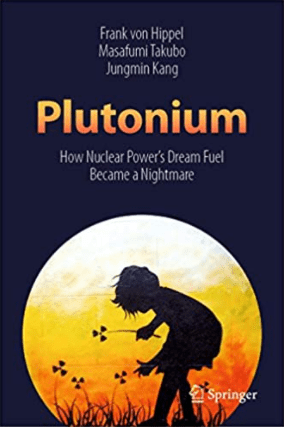 Nailing the Coffin of Civilian Plutonium, Plutonium: How Nuclear Power’s Dream Fuel
 Became a Nightmare, By Frank von Hippel, Masafumi Takubo, and Jungmin KangSpringer Press, Reviewed by Thomas Countryman, November 2020
Even in the world of speculative investment bubbles, it would be difficult to find a parallel to the business of making plutonium. This “industry” has seen massive investment by private and mostly governmental funds in pursuit of creating the world’s most dangerous material, an investment that has failed to yield a single dollar in returns. Nevertheless, a combination of scientific ambition, bureaucratic inertia, and governmental hubris keeps alive a dream that should have been smothered long ago.
Leave it to three highly experienced specialists to briefly recount the history, clearly explain the physical realities, and precisely pick apart the ever-weakening arguments that have supported reprocessing spent nuclear fuel into a new plutonium-based fuel. Frank von Hippel, Masafumi Takubo, and Jungmin Kang accomplish all of this in Plutonium: How Nuclear Power’s Dream Fuel Became a Nightmare. Its planned translation into Japanese and Korean should help citizens participate in critical upcoming decisions about continuing plutonium projects by governments in Tokyo and Seoul.
The earliest rationale for using plutonium as a nuclear fuel rested on the fact that spent nuclear fuel, the leftover material from civilian nuclear power plants, still contained far more potential energy than had yet been consumed. In the 1970s, uranium was believed to be scarce in the natural environment, and the full utilization of its energy capacity made some engineering, logical, and economic sense. In succeeding decades, the economic rationale has been constantly undermined by the realization that natural uranium is sufficiently plentiful that its price is no longer the primary cost factor in nuclear power generation, by the unanticipated complexity of building advanced reactors optimized to use plutonium as fuel, by the cost of new and necessary safety regulations applicable to all reactors, and most recently by the continued fall in the cost of generating renewable energy.
In the face of these realities, only France, at a substantial economic loss, currently operates a full program for recovering plutonium from spent fuel for use as new nuclear fuel. Russia reprocesses spent fuel and is now testing plutonium in a breeder reactor. Japan has indicated it plans to open one of the world’s largest reprocessing plants in Rokkasho in the next two years, but that two-year time frame has been the boilerplate forecast for each of the past 10 years. India is actively reprocessing civilian spent fuel, and China is constructing a major facility for that purpose. South Korea has announced an end to its nuclear power program, but some officials and experts retain the aspiration to pursue civilian reprocessing.
No other nuclear-powered nation is actively pursuing “closing” the nuclear fuel cycle by reprocessing plutonium for energy generation. The economic and technical realities forced one country after another—Germany, Belgium, Switzerland, the United Kingdom, then the United States—to end their own efforts.
This weak support highlights the merits of the authors’ arguments. They systematically deconstruct the political and technical arguments in favor of such programs. Crucially, they demonstrate the factual inaccuracy of the primary argument advanced by Japanese and South Korean advocates that reprocessing spent fuel will diminish the volume and danger of nuclear waste that must ultimately be stored in geological repositories. They also knock down convincingly the claim that plutonium that is reactor grade, as opposed to weapons grade, is unusable in an explosive device.
Although it may be the prerogative of sovereign states to spend their own money irrationally, the authors focus also on important externalities, in particular the threat to the world’s security and environment from the continued production of plutonium. A commitment to the closed fuel cycle delays the inevitable decision that must be made by Japan and South Korea concerning permanent safe storage of spent fuels, a decision on which the United States also continues to procrastinate. In addition, it leads to unsafe practices concerning the storage of spent fuel rods destined for reprocessing. The authors describe for the first time how close the world was to a greater disaster in 2011, as overcrowded spent fuel cooling ponds could have led to a much greater radiation release following the accident at Japan’s Fukushima Daiichi nuclear plant. The authors explain that moving the spent fuel to interim dry cask storage would avert such catastrophic risks.
Of still greater concern is the risk that even a sliver of the massive plutonium stockpiles could be acquired by terrorists to use in a nuclear explosive device or a panic-inducing radiological dispersion device. Since plutonium was first fabricated 80 years ago, nations have created more than 500 tons of what is arguably the world’s most dangerous material. The International Atomic Energy Agency defines a “significant quantity” of plutonium, or enough to make a nuclear weapon, as eight kilograms, although even a Nagasaki-size blast could be generated with significantly less plutonium. Thus, the 300 tons of plutonium designated for civilian use would be sufficient to create more than 35,000 warheads.
Continuing to accumulate plutonium is not only a terrorism risk, but also a source of tension between states. There is concern in Beijing that Japan holds greater stocks of separated plutonium than China and in Seoul that South Korea holds none. The authors note briefly but tellingly the normally unstated security considerations that in part motivate civilian reprocessing programs: an intention to sustain a latent weapons capacity.
The authors make a convincing case for the international community to act together to end further production of separated plutonium. The effort to negotiate a fissile material cutoff treaty, which would ban production of plutonium for weapons, remains frozen in a glacier at the Conference on Disarmament. Whether or when it moves ahead, there is a separate compelling need to negotiate a ban on civilian separation of plutonium.
Although less than 200 pages, Plutonium is not light reading. Its economic and scientific arguments are compact, thoroughly documented, and clear even to lay people. For policymakers and the public, it provides a clear picture of a dream whose claimed benefits have all evaporated but whose danger remains ominously present.
Thomas Countryman is the chair of the Arms Control Association Board of Directors. He served 35 years in the U.S. Foreign Service, retiring in 2017 as acting undersecretary of state for arms control and international security.
November 2, 2020
Posted by Christina Macpherson |
- plutonium, 2 WORLD, Reference, resources - print |
Leave a comment
Japan Sticks to Nuclear Fuel Recycling Plan Despite Plutonium Stockpile
Japan now has 45.5 tons of separated plutonium, enough to make about 6,000 atomic bombs. https://thediplomat.com/2020/10/japan-sticks-to-nuclear-fuel-recycling-plan-despite-plutonium-stockpile/
October 22, 2020
Posted by Christina Macpherson |
- plutonium, Japan, reprocessing |
Leave a comment

 Citizens’ Hearing Held at New Mexico Capitol about Increased Plutonium Pit Production at LANL, http://nuclearactive.org/
October 8th, 2020 The Department of Energy (DOE) has approved its plans to increase plutonium pit production at Los Alamos National Laboratory (LANL) by 50 percent as a way to comply with what is described in the 2018 Nuclear Posture Review as a need for “an effective, responsive, and resilient nuclear weapons infrastructure” that can “adapt flexibly to shifting requirements.”
The Pentagon has stated it needs annual production of 80 plutonium pits, the triggers for nuclear weapons. T The DOE has approved its Supplement Analyses for four possible ways to execute thisapproved its Supplement Analyses for four possible ways to execute this.
At LANL, DOE proposes upgrades to both LANL’s Plutonium Facility and the Radiological Laboratory Utility and Office Building which is part of the Chemistry and Metallurgy Research Replacement (CMRR) Project.
Despite a mission that has been re-directed and an expansion involving about $15 billion in upgrades for two major buildings and related infrastructure, DOE has decided not to undertake a new Site-Wide Environmental Impact Statement (SWEIS) for LANL. https://www.energy.gov/nepa/downloads/doeeis-0380-sa-06-final-supplement-analysis and https://www.energy.gov/nepa/downloads/doeeis-0380-amended-record-decision Neither our congressional delegation nor our Governor has voiced disapproval of bypassing the SWEIS.
On Wednesday afternoon, October 7th, a citizens’ hearing was held outside the New Mexico State Capitol Building. Testimony was taken about DOE’s dramatic expansion plans for LANL that involve an installation of the size and importance and with the attendant dangers of the closed nuclear weapons plant at Rocky Flats, Colorado. The event, which provided a place for dozens of citizens to express their opposition to DOE’s plans in Northern New Mexico, was sponsored by the Los Alamos Study Group. http://www.lasg.org/
The DOE proposals are too broad and too expensive to go forward without an SWEIS with public review and comment opportunities.
Every day, new information is released about the increased hazards at LANL. This week the Defense Nuclear Facilities Safety Board issued a new report about the inconsistent and inappropriate consideration of potential energetic chemical reactions, or explosions, involving transuranic waste stored at LANL. The Board conducted an analysis of transuranic, or plutonium-contaminated, wastes stored at the Plutonium Facility, the old Chemistry and Metallurgy Research Facility, the Transuranic Waste Facility, and Area G and the potential for explosions. It found that LANL has not fully analyzed for possible explosions involving transuranic waste stored at these facilities that would result in high exposures to workers and the public. https://www.dnfsb.gov/documents/reports/technical-reports/potential-energetic-chemical-reaction-events-involving
The Board asked DOE to respond within 120 days.
October 10, 2020
Posted by Christina Macpherson |
- plutonium, opposition to nuclear, USA, weapons and war |
Leave a comment
|
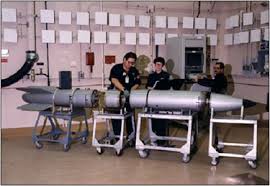
 DOE Activities Raise Safety Concerns about Plutonium at Three Facilities http://nuclearactive.org/ According to the Department of Energy (DOE), plans are under way to remove unused plutonium fuel from the Los Alamos National Laboratory (LANL). The uranium-plutonium fuel, containing around 26.4 kilograms (58.2 pounds) of weapon-grade plutonium, is called “mixed-oxide,” or MOX. In a late-August document, DOE stated that the MOX fuel, produced in France for a program at the Savannah River Site (SRS), would be disposed of as transuranic waste and therefore go to the Waste Isolation Pilot Plant (WIPP). DOE Activities Raise Safety Concerns about Plutonium at Three Facilities http://nuclearactive.org/ According to the Department of Energy (DOE), plans are under way to remove unused plutonium fuel from the Los Alamos National Laboratory (LANL). The uranium-plutonium fuel, containing around 26.4 kilograms (58.2 pounds) of weapon-grade plutonium, is called “mixed-oxide,” or MOX. In a late-August document, DOE stated that the MOX fuel, produced in France for a program at the Savannah River Site (SRS), would be disposed of as transuranic waste and therefore go to the Waste Isolation Pilot Plant (WIPP).
At present the MOX fuel, in the form of pellets, is stored at LANL’s PF-4 plutonium facility. DOE needs to empty PF-4 to have space for its planned annual production of up to eighty plutonium “pits”, or triggers, for nuclear weapons.
The DOE proposal to dispose of the useless MOX fuel pellets is unprecedented, but has been subjected to only a brief mention in an environmental analysis on pit production. Tom Clements, director of SRS Watch, says, “The analysis conducted on the disposal of the plutonium fuel is totally inadequate and a full Environmental Impact Statement (EIS) must be conducted before any repackaging and shipment to WIPP. ”
One of Clements’ concerns about security of the disposal of MOX fuel pellets at WIPP is that safeguards on the material would be terminated and the weapon-grade plutonium would receive less monitoring. Clements says, “As the MOX pellets contain enough purified plutonium for perhaps 10 nuclear weapons, steps must be taken to prevent access to the material during both repackaging and disposal.”
Clements believes the material must remain in secure storage at LANL’s PF-4 until a full EIS is prepared by DOE and the proposal is finalized. Please see https://srswatch.org/wp-content/uploads/2020/09/SRS-Watch-news-on-MOX-LTAs-to-WIPP-September-23-2020.pdf for additional information and references.
Clements also reports a second new development relating to plutonium. In a DOE fact sheet obtained on September 22, 2020, via the Freedom of Information Act, DOE revealed that 11.5 metric tons (25,353 pounds) of plutonium are stored at SRS. DOE stated in a February 2020 letter to the SRS Citizens Advisory Board that the stored plutonium “is not posing any additional risks to communities surrounding the SRS.” Clements concurs with that assessment but says, “It appears DOE has plans to bring an additional 35 metric tons (77,162 pounds) of plutonium into South Carolina for processing, some of which could end up being stranded here as we saw with the failed MOX project.”
Clements observes that plutonium waste disposal activities are less safe than storage. He says, “Those that claim imaginary risks of plutonium storage appear to be silent on the real long-term risks of nuclear processing and radioactive waste disposal activities at SRS.” Please see https://srswatch.org/wp-content/uploads/2020/09/SRSW-news-on-SRS-plutonium-inventory-Sep-29-2020.pdf for additional information and references.
|
D
|
October 1, 2020
Posted by Christina Macpherson |
- plutonium, safety, USA |
Leave a comment
Officials Dismiss New Environmental Study for Nuclear Lab https://www.mbtmag.com/home/news/21173922/officials-dismiss-new-environmental-study-for-nuclear-lab
Watchdog groups say the plutonium pit production work will amount to a vast expansion of the lab’s mission. Manufacturing Business Technology , Sep 3rd, 2020 ALBUQUERQUE, N.M. (AP) — The National Nuclear Security Administration says it doesn’t need to do an additional environmental review for Los Alamos National Laboratory before it begins producing key components for the nation’s nuclear arsenal because it has enough information.
Watchdog groups are concerned about Tuesday’s announcement, saying the plutonium pit production work will amount to a vast expansion of the lab’s nuclear mission and that more analysis should be done.
Los Alamos is preparing to resume and ramp up production of the plutonium cores used to trigger nuclear weapons. It’s facing a 2026 deadline to begin producing at least 30 cores a year — a mission that has support from the most senior Democratic members of New Mexico’s congressional delegation. The work is expected to bring jobs and billions of federal dollars to update buildings or construct new factories.
The work will be shared by the Savannah River Site in South Carolina, which has been tasked with producing at least 50 plutonium cores a year.
The National Nuclear Security Administration on Tuesday released its final supplemental analysis of a site-wide environmental impact statement done for the lab more than a decade ago. The agency concluded that no further analysis is required.
Critics have pushed for a new environmental impact statement, saying the previous 2008 analysis didn’t consider a number of effects related to increased production, such as the pressure it puts on infrastructure, roads and the housing market.
“The notion that comprehensive environmental analysis is not needed for this gigantic program is a staggering insult to New Mexicans and an affront to any notion of environmental law and science,” Greg Mello of the Los Alamos Study Group said in a statement.
Lab officials last year detailed plans for $13 billion worth of construction projects over the next decade at the northern New Mexico complex as it prepares for plutonium pit production. About $3 billion of that would be spent on improvements to existing plutonium facilities for the pit work, the Albuquerque Journal reported. AT TOP Lab officials last year detailed plans for $13 billion worth of construction projects over the next decade at the northern New Mexico complex as it prepares for plutonium pit production. About $3 billion of that would be spent on improvements to existing plutonium facilities for the pit work, the Albuquerque Journal reported.
September 5, 2020
Posted by Christina Macpherson |
- plutonium, environment, safety, USA |
Leave a comment
 In deft, distressing ‘Apocalypse Factory,’ Seattle author details Hanford’s role in the dawn of the nuclear age, Aug. 5, 2020 By Michael Upchurch, The Seattle Times
Book review
On the list of self-inflicted threats to humanity that we shove to the side in order to preserve our sanity, nuclear disaster — along with climate change — ranks at the top. And in Washington state, the toxic legacy of the Hanford nuclear reservation is the chief reminder of that threat.
Hanford produced the plutonium used in the atomic bomb dropped on Nagasaki on Aug. 9, 1945 — 75 years ago this Sunday. It also supplied the plutonium for most of the thousands of American nuclear weapons manufactured since then. But in the popular imagination, Hanford looms less prominently than Los Alamos when it comes to stories about the dawn of the nuclear age.
In “The Apocalypse Factory: Plutonium and the Making of the Atomic Age,” Seattle writer Steve Olson — who grew up in the small town of Othello, roughly 25 miles northeast of Hanford — capably fills in the gap.
As a young writer, Olson studied with John Hersey — the author of the 1946 book “Hiroshima” — so it’s fitting that “The Apocalypse Factory” includes an expansive, Hersey-like chapter on the horrific consequences of the Nagasaki bombing, drawn from Japanese eyewitness accounts. Nagasaki residents, of course, didn’t know what had hit them and were confounded by the “atomic bomb sickness” that killed people who initially appeared to be uninjured.
The book also encompasses the political and military strategies of the period, along with the “fiendishly difficult” challenges of producing plutonium in a way that wouldn’t kill its makers. Olson writes lucidly, making even the most recondite details of the science involved clear to a nonscientist. And he’s eloquent in his chronicling of the lives affected — and sometimes destroyed — by the invention and use of the world’s most deadly weapon.
“Hanford,” he acknowledges, “represents one of humanity’s greatest intellectual achievements; it also embodies a moral blindness that could destroy us all.”………
The secrecy surrounding the bomb didn’t end with World War II. Censorship of details about Nagasaki’s destruction and vital info on what radiation sickness could do to humans continued for years. A story by one Chicago Tribune reporter who wangled his way to Nagasaki wasn’t just censored but destroyed. The carbon copy he kept only came to light 60 years later.
Initial jubilation at Japanese surrender was soon tempered by a realization among scientists of just how nightmarish the bombs’ effects were. Decades later, the radioactive pollution at Hanford likewise became impossible to ignore.
“The leaders of the Manhattan Project,” Olson concludes, “did not devote much thought to the mess they were creating.”
In this deft, informative, sometimes terrifying book, that sentence reads like a stinging understatement.
_____
“The Apocalypse Factory: Plutonium and the Making of the Atomic Age” by Steve Olson, Norton, 336 pp., $27.95
August 17, 2020
Posted by Christina Macpherson |
- plutonium, weapons and war |
Leave a comment
While the nuclear macho men plan more nuclear, and nuclear weapons in space, it seems that it takes a woman, Alice Gorman, to investigate the radioactive pollution on Earth and in space, due to these activities
Nuclear sites still dangerous in 24,000 years, say space archaeologists
Some nuclear tests were conducted also in outer space and nuclear fuel was employed as propellant for rockets. https://www.jpost.com/health-science/nuclear-sites-still-dangerous-in-24000-years-space-archaeologists-say-636379 By ROSSELLA TERCATIN JULY 26, 2020
In July 1945, a test conducted in the deserts of New Mexico officially propelled humanity into the nuclear era. Only weeks after the Trinity Test, two atomic bombs were dropped on the Japanese cities of Hiroshima and Nagasaki.
In the following decades, while no other nuclear device was detonated in an act of war, military tests and studies continued.
Seventy-five years later, space
archaeologists are wondering how to warn humanity of the future that the sites where these experiments were carried out are still dangerous, Alice Gorman, associate professor at Flinders University in Adelaide, Australia, told
The Jerusalem Post.
“The type of plutonium used in the Trinity Test, plutonium-239, has a half-life of 24,000 years, meaning that after this time, only half of it will have decayed into a safe, non-radioactive element. How do we communicate to people living then that the site is dangerous?”
Gorman said the issue presents two challenging elements: What materials can survive such a long time, and what form of language can be used to deliver the actual message?
“As for the first difficulty, we know that stones and pottery last a very long time,” she said. “But the second point raises a big archaeological question related to symbolic communication. If we look at rock art from 20,000 years ago, we can see that there are pictures of animals, but we do not know what those pictures mean. Therefore, it is possible that our current symbols to mark radioactive sites, the yellow [and] black sign, will be interpreted as an invitation to explore the area, rather than to keep away from it.”
The issue is especially important for archaeologists of the future because in some cases, while the danger would be very limited or
not even relevant on the surface, the nuclear waste and its radiation are deeper in the ground, and conducting a dig would be
especially risky. For example, such is the case of Maralinga, a remote area in southern Australia where the UK conducted several
nuclear tests.
Some nuclear tests were conducted in outer space, and nuclear fuel was employed as propellant for rockets.
If the UN Outer Space Treaty of 1967 prohibited nuclear weapons in space, the issue of its weaponization remains very relevant.“Recently, Russia tested an anti-satellite weapon, reawakening the debate,” Gorman told the
Post.
She began to work in space archaeology following years of work focused on stone-tool analysis and the aboriginal use of bottle glass after European settlement.
Space archaeology deals with the same issues of regular archaeology, understanding material culture, human behavior and the interaction with the surrounding environment, Gorman said.
“However, we are looking at the post-Second World War period, when the very same rockets that had been developed as missiles started to send spacecraft into orbit,” she said. “We are interested in all of what is on earth, like rocket launch sites or tracking antennas and reception development, as well as town or residential areas where people who worked on these projects live, but also satellites, space junk and all the places on other planets where humans have sent spacecrafts.”
“We are asking the same questions other archaeologists are, but we have the limitations that we cannot visit many of the sites in person, and instead, we have to rely on records or images,” she added.
Gorman was drawn to space archaeology by the idea of exploring space junk, those many objects that cannot even be seen in the sky circling the Earth. Currently, she is working on the archaeology of the International Space Station.
The recent attempt by Israel to land a robotic unit on the moon with the Beresheet mission represents a very interesting development for space archaeologists, Gorman said.
“For many decades, the only material cultures present on the moon were the American and the Soviet one,” she said. “As new countries have started to reach the moon, this has changed, bringing more diversity to the field.”
July 27, 2020
Posted by Christina Macpherson |
- plutonium, 2 WORLD, space travel |
Leave a comment
 Fukushima may have scattered plutonium widely, Physics World 20 Jul 2020 Tiny fragments of plutonium may have been carried more than 200 km by caesium particles released following the meltdown at the Fukushima Daiichi nuclear power plant in Japan in 2011. So says an international group of scientists that has made detailed studies of soil samples at sites close to the damaged reactors. The researchers say the findings shed new light on conditions inside the sealed-off reactors and should aid the plant’s decommissioning……..
Mapping plutonium spread
To date, plutonium from the accident has been detected as far as 50 km from the damaged reactors. Researchers had previously thought that this plutonium, like the caesium, was released after evaporating from the fuel. But the new analysis instead points to some of it having escaped from the stricken plant in particulate form within fragments of fuel “captured” by the CsMPs…….
Implications for decommissioning
The researchers note that previous studies have shown that plutonium and caesium are distributed differently in the extended area around Fukushima, which suggests that not all CsMPs contain plutonium. However, they say that the fact plutonium is found in some of these particles implies that it could have been transported as far afield as the caesium – up to 230 km from the Fukushima plant.
As regards any threat to health, they note that radioactivity levels of the emitted plutonium are comparable with global counts from nuclear weapons tests. Such low concentrations, they say, “may not have significant health effects”, but they add that if the plutonium were ingested, the isotopes that make it up could yield quite high effective doses.
With radiation levels still too high for humans to enter the damaged reactors, the researchers argue that the fuel fragments they have uncovered provide precious direct information on what happened during the meltdown and the current state of the fuel debris. In particular, Utsunomiya points out that the composition of the debris, just like that of normal nuclear fuel, varies on the very smallest scales. This information, he says, will be vital when it comes to decommissioning the reactors safely, given the potential risk of inhaling dust particles containing uranium or plutonium.
The research is reported in Science of the Total Environment. https://physicsworld.com/a/fukushima-may-have-scattered-plutonium-widely/
July 21, 2020
Posted by Christina Macpherson |
- plutonium, Fukushima continuing, radiation, Reference |
Leave a comment
 Santa Fe shouldn’t become a nuclear sacrifice zone https://www.abqjournal.com/1477033/santa-fe-shouldnt-become-a-nuclear-sacrifice-zone-ex-where-does-the-city-stand-in-matters-of-peace-the-environment-and-citizens-health-and-welfare.html,BY LYDIA CLARK, July 19th, 2020
 This is an open letter to Santa Fe Mayor Alan Webber and the City Council:We, the Los Alamos Study Group, have now written to the Santa Fe City Council and the mayor of Santa Fe numerous times regarding two very important resolutions we have proposed, with no response of any significance from anyone.
These resolutions are of great import to the safety, health and welfare of the city and citizens of Santa Fe, and we are very concerned the City Council and mayor are ignoring these issues.
The City of Santa Fe has had a long-standing policy of resolutions supporting nuclear disarmament, supporting environmental impact statements and opposing production of nuclear weapons, specifically plutonium pit production.
Santa Fe has also been and is still a member of “Mayors for Peace,” which states that “nuclear weapons are inhumane” and calls for “their abolition.”
Recently, Mayor Webber attended a “peaceful protest” regarding racial issues. Is the destruction of humanity and the planet less important in keeping the peace?
The safety, health and welfare are only a part of the impact created from nuclear weapons production at Los Alamos National Laboratory. It uses and diverts much-needed funding for education, health care, sustainable jobs, and real safety and security away from New Mexico. The proposed FY2021 federal budget solely for plutonium pit production at LANL is now $1.1 billion (an increase since our last letter). How many truly beneficial programs for New Mexico would this support?
Nuclear weapons production creates vast amounts of toxic waste that has no safe method of disposal, with the potential to contaminate our environment from spills, leakage, fire hazard, seismic activity and human error. The waste currently being stored at LANL will not be transported for disposal any time in the near future. Where will the new waste be stored?
The recent exposure to LANL workers from a breach in a plutonium glove box is foreshadowing of things to come with the proposed plutonium pit factory at the facility. LANL has a history of safety failures.
The last plutonium pit factory, Rocky Flats (in Colorado), was forcibly closed for egregious environmental violations, worker injuries and deaths. Is New Mexico willing to create Rocky Flats II?
Why would the city officials not support asking for a Site-Wide Environmental Impact Statement (which is part of one of the above-referenced resolutions) that can help protect not only Santa Fe, but also the entire northern New Mexico region in this crucial matter?
The other resolution would bar the city from entering into development agreements with LANL or other nuclear weapons agencies. (There has been talk of a LANL presence on the city-owned Midtown Campus).
Your lack of concern and response is disturbing, and we ask once more for a prompt response to the request for support and implementation of these two resolutions, and an explanation to the public of the position of the city of Santa Fe in matters of peace, sustainability, environmental protection, and the health and welfare of our citizens, and the citizens of New Mexico.
Do not allow our city to become a nuclear sacrifice zone.
Lydia Clark is outreach director-Santa Fe for the Los Alamos Study Group.
July 20, 2020
Posted by Christina Macpherson |
- plutonium, opposition to nuclear, USA, weapons and war |
Leave a comment












 nuclear-news