Tepco aims to dismantle Fukushima water tanks from 2025
Tokyo Electric Power Company Holdings aims to begin dismantling tanks used for storing treated wastewater in 2025. The tanks are now empty following water discharges into the Pacific since August last year.
Tepco released a total of 62,400 metric tons of treated water from its meltdown-stricken Fukushima No. 1 nuclear power plant in eight rounds of discharges over the past year.
Investigations by the government and Tepco into the surrounding sea areas have shown that the concentration of the radioactive substance tritium, contained in the treated water, is far below the safety limit. Last month, the International Atomic Energy Agency published a report that the water releases meet international safety standards………. (Subscribers only)
Japan Times 26th Aug 2024
https://www.japantimes.co.jp/news/2024/08/26/japan/fukushima-water-tanks-dismantle/
Extreme’ levels of plutonium contamination found in Los Alamos
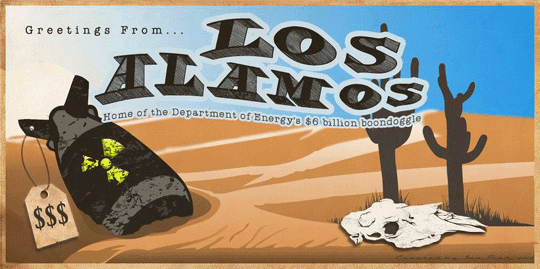
- Levels are comparable to Chernobyl nuclear disaster in Ukraine: Researcher
- Government says area remains safe
- Researchers say area visitors must be warned
Safia Samee Ali, Aug 28, 2024, https://www.newsnationnow.com/science/extreme-levels-plutonium-contamination-los-alamos/
NewsNation) — High levels of plutonium have been found around Los Alamos, the birthplace of the atomic bomb, raising alarms ahead of plans by the federal government to restart nuclear weapons manufacturing in the same area.
Michael Ketterer, a Northern Arizona University professor emeritus who analyzed soil, water and vegetation samples taken along a popular hiking and biking trail in Acid Canyon, said that there were more extreme concentrations of plutonium found there than at other publicly accessible sites he has ever researched.
Ketterer has compared the levels to those found at the site of the Chernobyl nuclear disaster in Ukraine.
“This is one of the most shocking things I’ve ever stumbled across in my life,” he said.
“It’s just an extreme example of very high concentrations of plutonium in soils and sediments. Really, you know, it’s hiding in plain sight.”
The Department of Energy’s Environmental Management Los Alamos Field Office said that the findings are consistent with department data that has been publicly available for years and that the canyon remains safe for unrestricted use.
But Nuclear Watch, a group Ketterer worked with, said officials need to warn people against coming in contact with water in Acid Canyon.
From 1943 until 1963, liquid and often radioactive waste was dumped down a canyon near Los Alamos National Laboratory, which gave it the name Acid Canyon.
Jay Coghlan, director of Nuclear Watch, said plutonium contamination in the heart of Los Alamos is a concern, particularly as the Energy Department and the National Nuclear Security Administration are slated to begin producing plutonium pits once again in an effort to build up nuclear weaponry.
The federal government began cleaning up Acid Canyon in the late 1960s and eventually transferred the land to Los Alamos County.
Officials determined in the 1980s that conditions within the canyon met DOE standards and were protective of human health and the environment.
The Associated Press contributed to this story.
Britain’s Dirtiest Beaches – Don’t Mention the Pu!
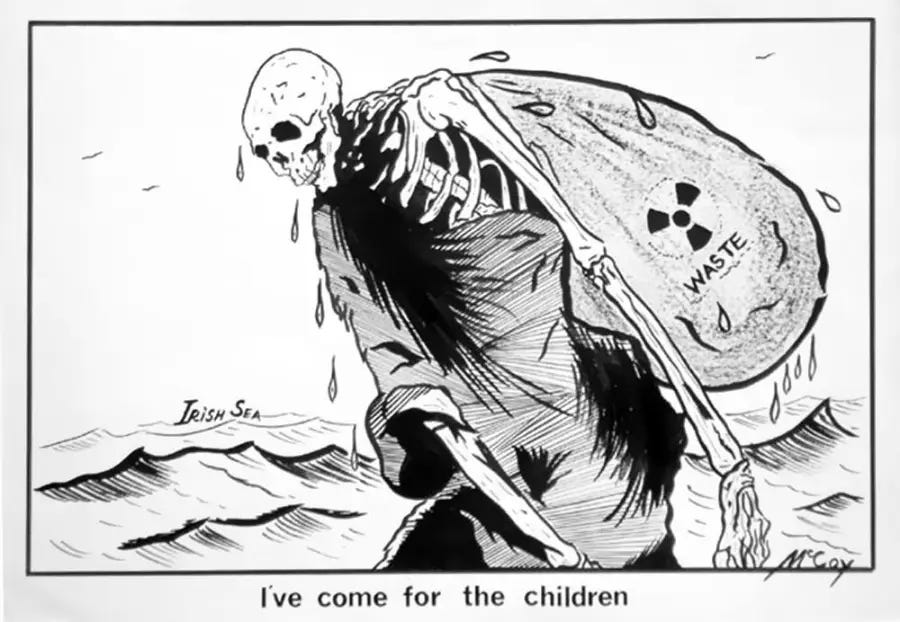
The cocktail of radioactive wastes on our beaches is a direct result of the uranium fuel industry whose product is actually nuclear wastes rather than the ephemeral here today gone tomorrow electricity.
On By mariannewildart, https://mariannewildart.wordpress.com/2024/08/23/britains-dirtiest-beaches-dont-mention-the-pu/
Seascale and Haverigg are in the top 10 dirtiest beaches for poo – they also contain Pu (Plutonium) but no-one is looking at the health impacts of long lived radio-toxic pollution on our beaches.
The West Cumbrian coastline cradling the World Heritage Site of the Lake District has two entries in the top 10 dirtiest beaches featured in yesterday’s Express. While much is made quite rightly of the health impacts of sewage pollution no-one is willing to talk about the Pu (Plutonium) on West Cumbrian beaches and in harbours near the worlds riskiest nuclear waste site. Sellafield has a larger workforce 11,000+ than all the surrounding towns and villages put together. According to the Environment Agency “We are working with Sellafield Limited to investigate the potential impact of non-radioactive discharges from the Sellafield site. The primary focus is on sewage originating from the toilet facilities provided on site for the Sellafield workforce. The work is considering whether the level of sewage treatment needs to be enhanced to improve and protect the bathing water quality at Seascale thus protecting public health”. 2024 Bathing Water Profile for Seascale.
The West Cumbrian coastline cradling the World Heritage Site of the Lake District has two entries in the top 10 dirtiest beaches featured in yesterday’s Express. While much is made quite rightly of the health impacts of sewage pollution no-one is willing to talk about the Pu (Plutonium) on West Cumbrian beaches and in harbours near the worlds riskiest nuclear waste site. Sellafield has a larger workforce 11,000+ than all the surrounding towns and villages put together. According to the Environment Agency “We are working with Sellafield Limited to investigate the potential impact of non-radioactive discharges from the Sellafield site. The primary focus is on sewage originating from the toilet facilities provided on site for the Sellafield workforce. The work is considering whether the level of sewage treatment needs to be enhanced to improve and protect the bathing water quality at Seascale thus protecting public health”. 2024 Bathing Water Profile for Seascale.
Nuclear wastes continue to arrive daily and a vicious cocktail of nuclear wastes continues to pour into the Irish Sea daily. Enough was enough decades ago. But this gargantuan radio-toxic turd on the Lake District coastline continues to accept nuclear wastes from existing reactors in the UK while MPs, government and the nuclear industry agitate for ever more nuclear waste from new build next to Sellafeld and elsewhere.
The cocktail of radioactive wastes on our beaches is a direct result of the uranium fuel industry whose product is actually nuclear wastes rather than the ephemeral here today gone tomorrow electricity.
So the nuclear waste industry’s message is ‘Don’t mention the Pu.’ In fact the nuclear industry has a vested interest in encouraging youngsters to dig for hours on the beaches – its great PR for the nuclear waste industry and says “look we are great neighbours and we are giving you (tax payers) money for your beach events because the beaches are soooo safe.”
The Nuclear Decommissioning Authority (NDA)NDA’s £30 million investment into nuclear research & innovation
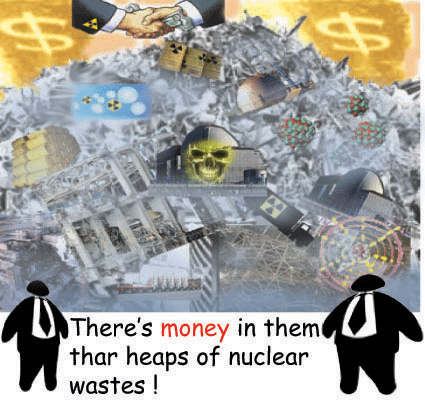
The Nuclear Decommissioning Authority (NDA) has awarded contracts totalling
£30million to drive innovation and research into new techniques to deliver
safe, sustainable and cost-effective decommissioning.
The NDA is cleaning up the UK’s oldest nuclear sites which were designed without
decommissioning in mind, posing challenges which require first-of-a-kind
engineering and technological solutions. Research is an essential part of
the decommissioning programme and each year the NDA group invest
£100million in Research & Development (R&D). The aim is to solve
challenging technical problems more effectively, more efficiently, and,
where possible, for less cost.
The NDA Research Portfolio (NRP) competition
forms a key part of the NDA’s strategic research programme and provides
direct funding for research that supports strategic objectives including
growing and maintaining diverse skills within the supply chain and
promoting innovation across multiple sites.
Electronic Specifier 19th Aug 2024
Chalk River: A river in troubled waters
https://www.ledevoir.com/opinion/editoriaux/818270/dechets-nucleaires-editorial-riviere-eaux-troubles
Marie Vastel August 16

Anything that even remotely touches on the nuclear industry requires a risky leap of faith. Neighbors and residents living near these plants must take their word for it that the improbable will not happen this time. The storage of nuclear waste is no exception, and the fears raised are just as difficult to allay. All the more so when these radioactive residues must be buried near the banks of a river that supplies drinking water to millions of citizens downstream. The laboratories of the Chalk River plant may seem far away, but the cloud of concern surrounding the fate of their radioactive debris extends all the way to the St. Lawrence River.
Near the landfill site that will be built in Deep River, first, residents are anxious about the idea of welcoming a million cubic metres of nuclear waste under their neighbouring lands, just one kilometre from the Ottawa River. The fact that these residues are of low radioactive intensity does not reassure them. Nor do the guarantees put forward by the consortium managing the plant, Canadian Nuclear Laboratories, or by the municipality. Local residents, for their part, fear welcoming nothing more than a “leaking dump”, they anxiously confided this summer to Le Devoir journalist François Carabin.
And they are not the only ones to worry about the fate of this river, which flows between Ontario and Quebec to the St. Lawrence River. The cities of Ottawa and Gatineau, which it crosses, as well as Montreal, where it empties, have also denounced, like a hundred other municipalities, the approval of the landfill project.
The Quebec government, while refraining from doing the same, did not hide its own concerns— shared by its advisor on protection against radioactivity—by calling on the federal government to “respond” to the public’s fears. And by opining this summer that Ottawa had “still not fulfilled this obligation.”
The Anishinaabe community of Kebaowek is contesting before the Federal Court the green light from the Canadian Nuclear Safety Commission (CNSC) for the burial of this nuclear waste near the surface, believing that it was consulted too late.
The verdict was delivered last January. The CNSC said it was of the opinion that the project “is not likely to cause significant environmental effects” or “significant adverse effects on the Ottawa River.”
The landfill will be located in a seismic zone, but a low to moderate one, the Commission wrote in its decision . The risk posed by forest fires is mitigated because the project will be at a sufficient distance from the forest edge. Management of torrential rains has been taken into account and the site, located 50 metres above the level of the Ottawa River, is above potential flood plains. The facility takes into account “the possible effects of climate change ,” the CNSC ruled.
However, these radioactive residues will have to remain buried there for 500 years… It would be very clever to be able to predict today the evolution of the climate and the natural disasters that it will cause for the next centenarians.
Past nuclear accidents, however rare, have sown apprehension and skepticism. The citizens of Deep River, whose nearby Chalk River plant suffered two incidents in the 1950s, are not immune. The fact that former employees doubt the categorization of nuclear liabilities over the years — and that they are all indeed “low intensity” — does nothing to reassure them.
History now demands an excess of transparency, because it is up to the promoters and approvers of such projects to restore confidence, and not for the population to overcome its legitimate fears on its own. Other terrible deceptions, such as that of the Horne Foundry, which was wrongly claimed to be “safe” for years, have also instilled a nagging doubt.
Mistrust has its source in past excesses that are too real. However, we must not be blinded to the point of rejecting any solution to get rid of these radioactive residues that must nevertheless be disposed of.
The spontaneous reaction will always be to not want it in your yard, or in your river. “But once this cry from the heart has been expressed, the question of the best choice, or the least worst choice, remains,” wrote our late colleague Jean-Robert Sansfaçon on this subject in 2009. Fifteen years later, and while a possible return to nuclear power is being considered in Quebec, a permanent and adequate solution to the management of this waste is still being sought. It is becoming urgent to find it.
High Detections of Plutonium in Los Alamos Neighborhood

As We Enter a New Nuclear Arms Race the Last One is Still Not Cleaned Up
https://nukewatch.org/high-detections-of-plutonium-in-los-alamos-neighborhood/ 16 Aug 24
Santa Fe, NM – In April Nuclear Watch New Mexico released a map of plutonium contamination based on Lab data. Today, Dr. Michael Ketterer, Professor Emeritus of Chemistry and Biochemistry, Northern Arizona University, is releasing alarmingly high results from samples taken from a popular walking trail in the Los Alamos Town Site, including detections of some of the earliest plutonium produced by humankind.
On July 2 and 17 Dr. Ketterer, with the assistance of Nuclear Watch New Mexico, collected water, soil and plant samples from Acid Canyon in the Los Alamos Town Site and soil and plant samples in Los Alamos Canyon at the Totavi gas station downstream from the Lab. The samples were prepared and analyzed by mass spectrometry at Northern Arizona University to measure concentrations of plutonium, and to ascertain its sources in the environment. For water samples, concentration is expressed in picocuries[1] per liter (pCi/L) and for soil and plants in picocuries per gram (pCi/g). The provenance of the plutonium was determined through isotopic examination of the ratio of 239Pu atoms to 240Pu atoms, which distinguishes it from global nuclear weapons testing fallout.
Acid Canyon is located in the heart of the Los Alamos Town Site, contiguous to the busy Aquatic Center which also has the trailhead for the popular walk into the Canyon. From 1943 to 1963 radioactive liquid wastes were disposed by piping them over the Canyon wall (plutonium is often processed with nitric acid, hence the Canyon’s name). Acid Canyon ultimately drains via the Los Alamos Canyon through San Ildefonso Pueblo lands to the Rio Grande. Earlier studies have identified Lab plutonium as far as 17 miles south in Cochiti Lake.
The Atomic Energy Commission “cleaned up” Acid Canyon in 1967 and released the land to Los Alamos County without restrictions. The Department of Energy performed some additional remediation and in 1984 certified that Acid Canyon was “in compliance with applicable DOE standards and guidelines for cleanup and that radiological conditions were protective of human health and the environment… No monitoring, maintenance, or site inspections are required.” [2]
Forty years later, Dr. Ketterer’s monitoring and inspections strongly indicate otherwise. His samples showed 239+240Pu activities as high as 86 pCi/L in water, 78 pCi/g in sediments, and 5.7 pCi/g in plant ash. He concluded:
“The 239+240Pu activities in all four water samples exceed the federal Environmental Protection Agency’s relevant gross alpha standard of 50 pCi/L and draw attention to an egregious water contamination problem mandating prompt USEPA and/or State intervention. This warrants immediate postings and efforts by State/local agencies to warn people and their pets away from contacting Acid Canyon water.”
While noting the threat of wildfires, as locals will recall the 2000 Cerro Grande Fire that forced the mandatory evacuations of the Lab and Los Alamos Town Site, Dr. Ketterer added,
“Of particular concern is the possibility of wildfire in Acid Canyon. The activity concentrations of 239+240Pu in Acid Canyon sediments and plant matter, along with the Canyon’s close proximity to residential areas of Los Alamos, represents an alarming potential situation of plutonium releases into the air, should a wildfire engulf the canyon.”
Approximately seven miles downstream from Acid Canyon, Dr. Ketterer found “Significant plant uptake of 239+240Pu near the Totavi Philips 66 station along NM Highway 502.”
Of historic interest, he noted,
“The repeated, consistent pattern of 240Pu/239Pu in the range 0.010 – 0.015, observed in the highly contaminated Acid Canyon sediments, water and vegetation, indicates that the Pu in Acid Canyon is some of the oldest known Pu contamination in the ambient environment – a portion of which likely pre-dates the Trinity Test itself.”
Jay Coghlan, Director of Nuclear Watch, commented,
“Dr. Ketterer’s independent sampling of historic plutonium contamination demonstrates once again that we can’t trust the Department of Energy. This rings especially true as LANL plans to cut cleanup while spending at least $8 billion over the next 5 years to expand the production of plutonium “pit” bomb cores. We demand comprehensive cleanup of past radioactive contaminants and protection from the future radioactive wastes that will be generated by the new nuclear arms race.”
Dr. Michael Ketterer’s methodology, findings and conclusions are available at https://nukewatch.org/wp-content/uploads/2024/08/Ketterer-AcidCanyon-13Aug2024.pdf
Is Nuclear Waste Poisoning This Missouri Suburb? How 2 Moms Teamed Up for Answers, Even If They Die Trying
“I think the kindest, and meanest, thing anybody’s ever said about us is we’re lovable pains in the ass,” Dawn Chapman tells PEOPLE
People By Johnny Dodd, Eileen Finan, and Brian Brant, August 15, 2024
The first warning sign was the stench that seemed to fill the air of Dawn Chapman’s suburban St. Louis neighborhood in 2012.
“You could smell burning, but there was something different about it, like jet fuel,” she says in this week’s issue of PEOPLE. Her three children started to wake in the night with irritated eyes or bloody noses caused, she believes, by the caustic fumes.
By January 2013 Chapman, then a full-time mom, had discovered the source of the overpowering odor: a fire in an underground quarry at the Bridgeton Landfill about two miles from her home.
The blaze raised fresh alarm about a decades-old issue — how much atomic waste had been stored in the region post-World War II, with some radioactive material mixing with a local creek and, separately, 43,000-plus tons of it piling up at West Lake Landfill, which is next to Bridgeton Landfill.
Frightened for her family, Chapman went to a community event about air quality and met Karen Nickel, a fellow stay-at-home mom who was wondering whether her own health issues were connected to the nuclear waste. The two bonded immediately.
“We were in shock because of what we were learning,” says Nickel, 60.
Both landfills have the same owner, who strongly disputes claims of danger from either site, citing federal research that found there was no risk.
Still, outside analyses by the state of Missouri and news organizations suggest a pattern of unusual health problems around Bridgeton that stretches back years.
In the past decade, as Chapman’s husband and oldest son fell ill with chronic diseases that she links to the radioactive waste, she and Nickel cofounded Just Moms STL, building up 100,000 supporters to confront the landfill company and government while pushing the EPA to clean up the waste site, matching work being done with local Coldwater Creek.
Activist Lois Gibbs, who helped fix similar issues in New York’s Love Canal in the ’70s, mentored the women. “They’re extraordinarily effective,” she says.
But Chapman and Nickel don’t relish their mission. “We wanted simple lives,” says Chapman, 44. “This didn’t just rob us of our health. It robbed us of that too.”
Their suburban dream was tainted by toxic remnants of the country’s wartime past. After the bombing of Pearl Harbor in 1941, the U.S. chose St. Louis as one of the places to process the uranium used in the nation’s atomic weapons program the Manhattan Project.
In the decades that followed, the resulting radioactive waste was dumped close to the city airport, and contaminants washed into nearby Coldwater. In the ’70s the waste was moved to the West Lake Landfill, amid single-family homes in Bridgeton. In 1990 the landfill was designated a Superfund site — one of the nation’s most contaminated areas.
Many residents were none the wiser. Nickel grew up in the ’60s and ’70s playing softball in the parks beside Coldwater, where years later scientists would discover Manhattan Project-era radioactive material in the soil.
“Fifteen people on my street passed from rare cancer in their 40s and 50s,” she says.
Three of her four adult children, whom she raised with husband Todd in a house less than two miles from the landfill, live with neurodevelopmental challenges, she says. And Nickel has lupus, an autoimmune disease she blames on exposure to radioactivity.
…………………..Advocates like her and Nickel, together with some lawmakers, continue to clash with the Environmental Protection Agency and the landfills’ owner over the extent of any risk.
Experts say there’s no evidence that directly connects cancers or autoimmune diseases to a single cause like radiation, but a 2014 study by Missouri health officials found zip codes bordering the creek and landfill had rates of leukemia, breast cancer and, in one zip code, pediatric brain cancer (all often associated with radiation) that were “significantly higher” than those in the rest of the state………………
Chapman and Nickel have mobilized thousands through Just Moms to call attention to what they insist is a crisis, organizing more than 300 community meetings and making 20 trips to Washington, D.C., to lobby Congress and the EPA, including a new Radiation Exposure Compensation Act to provide money and medical support to victims………………………………………… more https://people.com/is-nuclear-waste-poisoning-this-missouri-suburb-how-2-moms-teamed-up-for-answers-even-if-they-die-trying-8695532
No amount of money is worth turning Wyoming into a nuclear waste dump
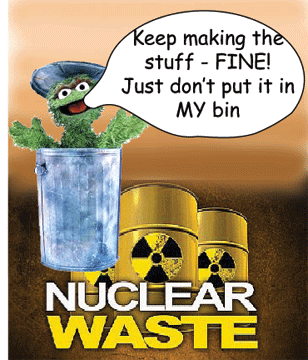
Wyoming needs legislators willing to protect public health and seek viable economic development.
WyoFile, by Kerry Drake, August 13, 2024
Last year Steinborn, a Democrat, led a successful effort to ban the transportation and storage of high-level nuclear waste in his home state. It would take a GOP version of the legislator to accomplish that in deep-red Wyoming.
One of Steinborn’s main arguments for the ban was economic. He didn’t buy the claims of a private company that planned to build a temporary storage facility for spent nuclear fuel rods near Carlsbad, N.M. Backers had visions of billions of dollars dancing in their heads.
It’s the same dream some Wyoming legislators have embraced — fortunately without success — since the early 1990s. Now the idea has reared its ugly head again.
Rep. Donald Burkhart Jr. (R-Rawlins) said he will bring a draft bill to October’s Joint Minerals, Business and Economic Development Committee to allow a private nuclear waste dump (my description, not his) to be built in Wyoming.
Burkhart, who co-chairs the panel, said the state could reap more than $4 billion a year from nuclear waste storage “just to let us keep it here in Wyoming.” What a sweet deal!
Except the prospect of that much annual revenue may be a tad overstated. It could be about $3.974 billion less than Burkhart suggested, which means the trial balloon he floated won’t get off the ground.
How much money Wyoming could earn for hosting a nuclear waste storage facility is debated whenever the state has a budget crunch and legislators decide it’s time to reap the windfall.
I naively thought whether to establish a temporary “Monitored Retrievable Storage,” as they used to be called, had long been settled in Wyoming
In 1992, then-Gov. Mike Sullivan rejected a proposed Fremont County project. Two years later, a University of Wyoming survey found 80% of respondents opposed a high-level nuclear waste facility……………………………………………………………..
In 2019, the Legislative Management Committee narrowly decided — in a secret vote by email — to authorize a Spent Fuel Rods Subcommittee to study the issue. The panel’s chair, Sen. Jim Anderson (R-Casper), said it could be an annual $1 billion bonanza, which certainly captured people’s attention.
The subcommittee’s enthusiasm for such a project sank, though, when it learned the feds were only going to pony up $10 million a year. That figure has since increased, but not by much.
The Department of Energy announced in 2022 that it would make $16 million available to communities interested in learning more about “consent-based siting management of spent nuclear fuel.” Last year President Joe Biden’s administration sweetened the pot to $26 million.
We’ll have to wait until October’s Joint Minerals meeting to find out more details about Burkhart’s proposal. He circulated a rough draft of his bill to members of the committee on July 31, but declined to share it with the public or the media.
………………………………..Steinborn told Source NM the nation needs a permanent solution for storing spent nuclear fuel. “But New Mexico can’t just be the convenient sacrifice zone for the country’s contamination,” he said.
And neither should Wyoming. Yes, the U.S. Department of Energy and Microsoft billionaire Bill Gates are backing a $4 billion Natrium nuclear power plant near Kemmerer, and BWXT Advanced Technologies is considering establishing a microreactor manufacturing hub. But Wyoming has no obligation to take other states’ nuclear trash.
I can see why some Wyoming legislators want to believe there are billions at the end of the nuclear dump rainbow. The federal government has collected more than $44 billion from energy customers since the 1980s, but the Nuclear Waste Fund was intended to be spent on a permanent facility. Temporary facilities, like what Burkhart proposes, don’t rake in the big bucks.
The feds have spent around $9 billion to pay interim nuke storage costs at the 80 current and former nuclear reactor sites located in 35 states, where a total of 90,000 metric tons of nuclear waste is stored. Meanwhile, the Department of Energy’s Agency Finance Report estimated it will cost more than $30 billion until a permanent waste disposal option is completed.
But it’s increasingly unlikely a permanent site will ever be built………………………………..
There is a significant legal obstacle to siting a “temporary” waste site in Wyoming or anywhere else. Congress would have to amend the Nuclear Waste Policy Act, which prohibits the Department of Energy from designating an interim storage site without a viable plan to establish a permanent deep-mined geologic repository — like the Yucca Mountain project, but one that could actually be approved and built.
…………………..Why in the world do Wyoming legislators who brag about their distrust of federal government — and in some cases even argue we shouldn’t take its money at all — see nothing wrong with a federal agency managing nuclear waste here? They’ve turned down an estimated $1.4 billion for Medicaid expansion since 2013, but they’re willing to take peanuts from the federal government to be a nuclear dumping ground?
……………………………. https://wyofile.com/no-amount-of-money-is-worth-turning-wyoming-into-a-nuclear-waste-dump/
Hinkley Point B: What happens after a nuclear power station stops making electricity?
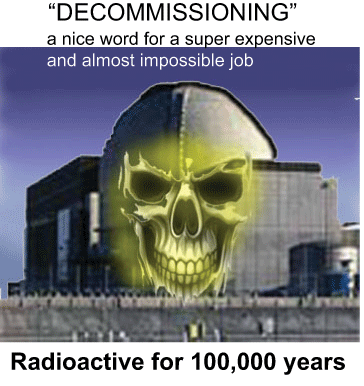
After shutting down in 2022, the job now is to carefully
remove tonnes of nuclear waste to be transported for storage at Sellafield
in Cumbria. The team is halfway through that task with one reactor empty
and one more to go.
I was given exclusive access to the power station,
getting the chance to travel deep within the bowels of the building and see
something few people outside EDF Energy get to – the cooling ponds, where
spent fuel is cooled down before being sealed for transport and storage.
there will be another couple of years to finish defuelling operations, then
EDF hands this place over to the Nuclear Decommissioning Authority as the
painstaking job of decommissioning will continue for many years.
ITV 13th Aug 2024
Fukushima nuclear fuel debris retrieval to start as early as August
August 14, 2024 (Mainichi Japan)
The operator of the crippled Fukushima nuclear power plant plans to begin
retrieving debris that contains melted nuclear fuel at one of the three
meltdown-hit reactors as early as this month, with the unit to be the first
to undergo the procedure. The removal of the radioactive debris is
considered one of the most challenging tasks in decommissioning the
Fukushima Daiichi plant, whose reactors were severely damaged by the loss
of cooling functions triggered by the 2011 earthquake and tsunami in
northeastern Japan.
https://mainichi.jp/english/articles/20240814/p2g/00m/0bu/004000c
Germany may take another 50 years to find final repository for waste from shuttered nuclear power
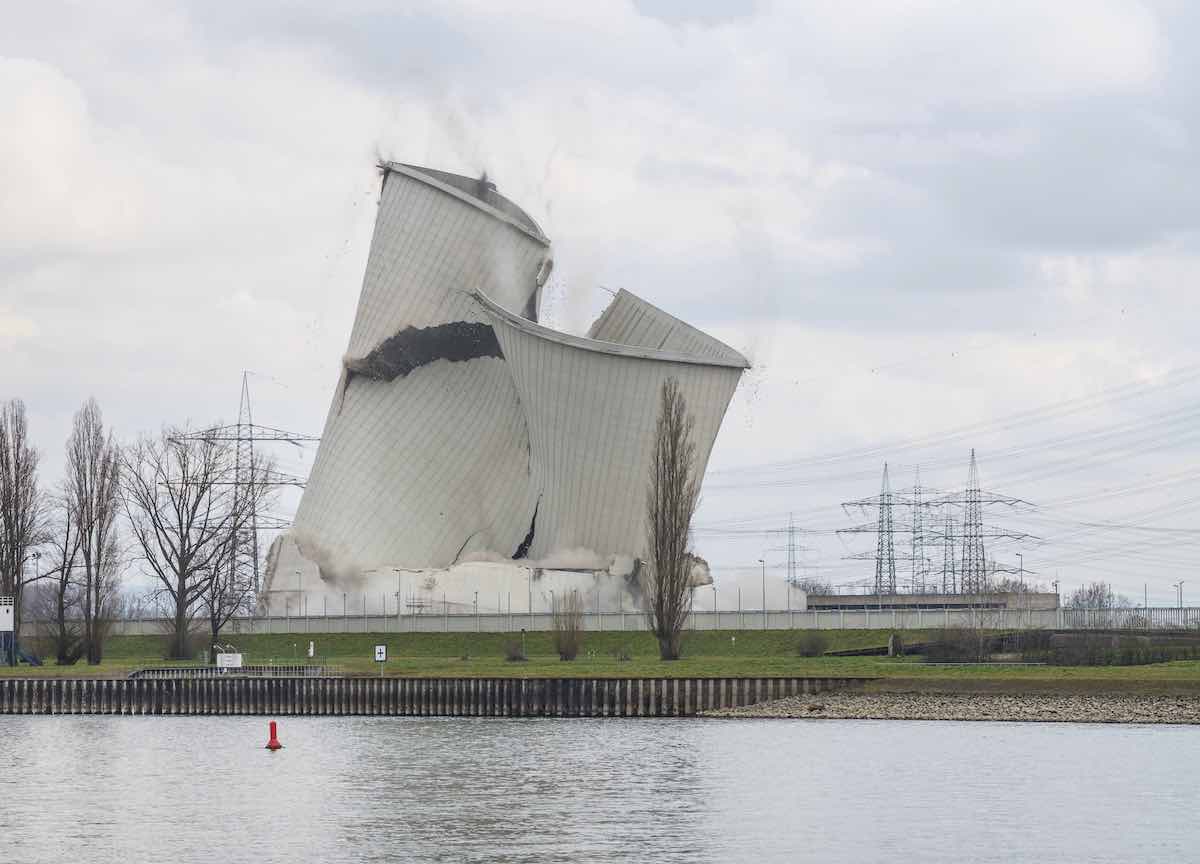
Sören Amelang, Aug 9, 2024, https://reneweconomy.com.au/germany-may-take-another-50-years-to-find-final-repository-for-waste-from-shuttered-nuclear-power/
Germany’s ongoing hunt for a final repository for highly radioactive nuclear waste could last until the 2070s, a report has warned.
The report by the Institute for Applied Ecology (Öko-Institut), which was commissioned by the country’s Federal Office for the Safety of Nuclear Waste Management (BASE), said a decision on a location can be expected in 2074 at the earliest under ideal conditions, reports Zeit Online.
This would be more than 40 years later than the original 2031 target, which the government already gave up almost two years ago. The environment ministry said the report did not take into consideration significant progress in efforts to shorten the search, for example by saving time on long exploration periods.
The ministry declared in November 2022 that the search won’t be completed in 2031, following a paper by the Federal Company for Radioactive Waste Disposal (BGE) that estimated the search could take until 2046 or, in another scenario, until 2068.
The next step will be for the BGE to propose shortlisted siting regions at the end of 2027, the ministry said. “This is the right time to discuss and regulate further acceleration in a transparent manner. A great deal of time can be saved, particularly in the surface and underground exploration,” it added.
But Journalist Bernward Janzing wrote in a commentary it was questionable how much the “scientifically well designed” process can be accelerated without compromising high safety standards.
Germany completed its nuclear phase-out last year and will now have to store 1,900 large containers, or around 28,100 cubic metres (m3), of high-level radioactive waste by 2080, when all its nuclear power stations and many research facilities will have been finally decommissioned and the fuel elements treated at other facilities.
Highly radioactive, heat-generating waste accounts for only five percent of Germany’s radioactive refuse, but is responsible for 99 percent of the radiation. It is currently held at temporary storage facilities near decommissioned nuclear power stations and in central interim repositories.
Construction of a repository following a location decision is scheduled to take about 20 years, according to current plans. The process of transporting and storing thousands of casks in the final repository will then take decades more.
Experts from a parliamentary storage commission said that loading and sealing the repository could be expected to last “well into the next century”.
Search for nuclear waste storage facility could be delayed by decades
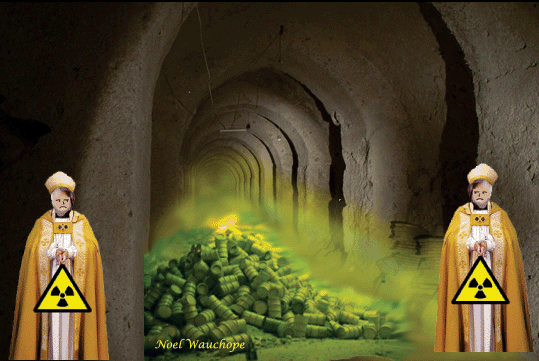
According to a report by the Freiburg-based Öko-Institut , the search for a final storage facility for
highly radioactive nuclear waste in Germany could take more than 40 years longer than expected. The responsible Ministry of the Environment does not believe this. The law currently stipulates that a site will be determined by 2031. However, it has long been clear that this timetable cannot be met. The study commissioned by the Federal Office for the Safety of Nuclear Waste Management (Base) confirms this and names 2074 as a possible date.
………………………..The search for a final storage facility is about finding a place deep underground for the permanent storage of 27,000 cubic meters of highly radioactive waste (1,750 so-called Castor containers) from more than 60 years of nuclear power in Germany. According to Base, this is five percent of the
radioactive waste in Germany , but it contains around 99 percent of the total radioactivity of all waste. The waste is currently stored in 16 above-ground interim storage facilities in various federal states, whose permits expire before 2050. https://www.zeit.de/wissen/umwelt/2024-08/atommuell-endlager-gutachten
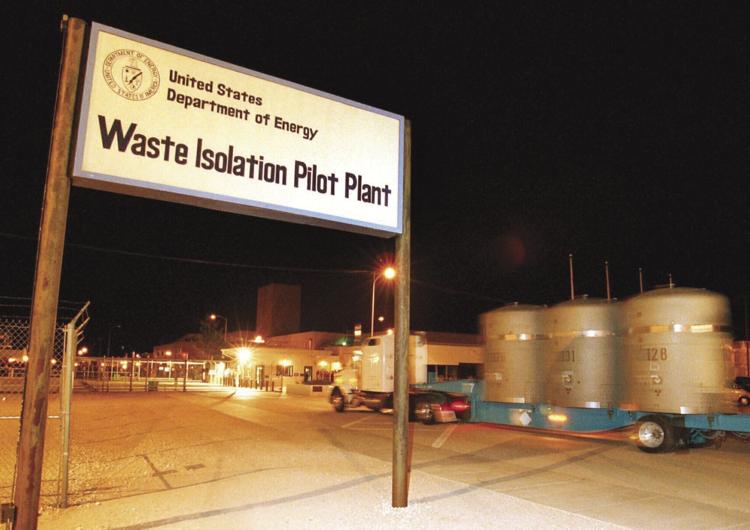
EPA Public Meetings about Waste Isolation Pilot Plant (WIPP) Expansion: August 26th in Carlsbad and August 28th in Santa Fe
| Concerned Citizens for Nuclear Safety | Aug 9, 2024, https://nuclearactive.org/ |
EPA Public Meetings about WIPP Expansion: August 26th in Carlsbad and August 28th in Santa Fe
The Department of Energy (DOE) wants to expand its operations at the Waste Isolation Pilot Plant (WIPP) for plutonium-contaminated waste from the fabrication of nuclear weapons. In March, DOE submitted a Planned Change Request to the Environmental Protection Agency (EPA) seeking permission to mine and operate two underground disposal panels in the WIPP underground disposal facility. EPA wants to hear from you and is hosting public meetings in Carlsbad and Santa Fe the week of August 26th. https://www.epa.gov/radiation/wipp-news#WIPP-PCR
EPA has one of two ways to decide whether to grant permission. One is through an internal administrative process. The second is through a legal rulemaking that allows the public to present legal challenges to the decision. A full rulemaking and a comprehensive review of the risks from DOE’s proposed changes is the only way to ensure nuclear safety.
Further, DOE wants to significantly expand the WIPP underground with Panels 11 and 12 and eventually mine seven additional panels – Panels 13 through 19 – to bring new types of waste to WIPP, including surplus plutonium. As a result EPA requested additional scientific data and information about how seven new panels and new types of waste would affect WIPP’s ability to contain the waste for 10,000 years.
To help you prepare public comments, the Stop Forever WIPP Coalition is hosting a virtual educational webinar on Wednesday, August 21st from 6 to 8 pm. Don Hancock, the Director of the Southwest Research and Information Center Nuclear Waste Program http://sric.org/ , and Doug Meiklejohn, the Water Quality and Land Restoration Advocate at Conservation Voters of New Mexico https://cvnm.org/ , will present about the DOE Planned Change Request, EPA’s decision making process, and how you can help stop WIPP expansion. Zoom registration link: https://us02web.zoom.us/meeting/register/tZckdu2urzovG9HUHimFBKcTho4p_amGvt8L#/registration
The informational webinar will prepare you to provide public comments at the in-person and virtual EPA meeting on Monday, August 26th from 2 to 4 pm at the DOE’s Carlsbad Field Office, 4021 National Parks Highway. Zoom registration link:
https://usepa.zoomgov.com/meeting/register/vJIsdeiqrTwpHUkjZ1z_djiz7fqgYMDqcc8
On Wednesday, August 28th from 1 to 3 pm in Santa Fe, EPA will host an in-person and virtual technical meeting among experts about planned changed request. The public is invited to observe. Zoom registration link: https://usepa.zoomgov.com/meeting/register/vJIsdOyqqjosG2w3uwOoOk4UNSxZwyXxE2s
From 6 to 8 pm EPA will host an in-person and virtual public meeting and receive comments about DOE’s Planned Change Request. https://usepa.zoomgov.com/meeting/register/vJIsdumqrzIvHZWmhyQ_Jh7EBe1EcgTmi5Y
Both Santa Fe meetings will take place in the Canyon Ballroom at the Hilton Santa Fe-Historic Plaza, 100 Sandoval Street.
Radiation monitoring keeps track of nuclear waste contamination

Nuclear reactors – whether operational or undergoing decommissioning –
create radioactive waste. Management of this waste is a critical task and
this practice has been optimized over the past few decades. Nevertheless,
strategies for nuclear waste disposal employed back in the 1960s and 70s
were far from ideal, and the consequences remain for today’s scientists
and engineers to deal with.
In the UK, spent nuclear fuel is typically
stored in ponds or water-filled silos. The water provides radiation
shielding, as well as a source of cooling for the heat generated by this
material.
In England and Wales, the long-term disposal strategy involves
ultimately transferring the waste to a deep geological disposal facility,
while in Scotland, near-surface disposal is considered appropriate.
The problem, however, is that some of the legacy storage sites are many decades
old and some are at risk of leaking. And when this radioactive waste leaks
it can contaminate surrounding land and groundwater. The potential for
radioactive contamination to get into the wet environment is an ongoing
problem, particularly at legacy nuclear reactor sites.
“The strategy for waste storage 50 years ago was different to that used now. There wasn’t
the same consideration for where this waste would be disposed of long
term,” explains Malcolm Joyce, distinguished professor of nuclear
engineering at Lancaster University. “A common assumption might have been
‘well it’s going to go in the ground at some point’ whereas actually,
disposal is a necessarily rigorous, regulated and complicated programme.”
In one example, explains Joyce, radioactive waste was stored temporarily in
drums and sited in near-surface spaces. “But the drums have corroded over
time and they’ve started to deteriorate, putting containment at risk and
requiring secondary containment protection,” he says. “Elsewhere, some
of the larger ponds in which spent nuclear fuel was stored are also
deteriorating and risking loss of containment.”
Physics World 7th Aug 2024, https://physicsworld.com/a/radiation-monitoring-keeps-track-of-nuclear-waste-contamination/
Why US nuclear waste policy got stalled. And what to do about it.

The lack of a repository doesn’t seem to worry nuclear enthusiasts anymore, probably because it doesn’t threaten what reactor licensing there is. Recent legislation—the ADVANCE Act—to accelerate approval of new nuclear technologies does not mention nuclear waste at all. The focus is on subsidizing new reactor projects and “streamlining” licensing.
A difficulty is that current law requires that, before the Energy Department can go forward with a surface storage facility to consolidate the used fuel, it has to have already selected a new geologic repository site, which isn’t happening.
Bulletin, By Victor Gilinsky | July 31, 2024, Victor Gilinsky is a physicist and was a commissioner of the US Nuclear Regulatory Commission during the Ford, Carter, and Reagan administrations
It is often said—somewhat accusingly—that it isn’t technical issues that stand in the way of siting a US geologic repository for highly radioactive waste, but political and social ones. In fact, the issues are inextricably connected. The root of the US failure lies in the original motive of the nuclear establishment in siting such an underground repository. It was not to protect public safety, but to protect continued licensing of nuclear power plants from attack in the courts on grounds that there were no provisions for dealing with the plants’ highly radioactive waste.
The disdain for public safety and the rush to open a repository infected the design process and fostered slapdash decisions. These ultimately sank the technical case for the repository at Nevada’s Yucca Mountain. And while in the end the project was shelved by a political act, behind it were Energy Department and Nuclear Regulatory Commission (NRC) actions that left a deep residue of public distrust, so deep that there isn’t likely to be a US geologic repository, ever.
The contrast with successful waste repository projects in Sweden and Finland is clear. Their regulatory standards were much tighter than those applied by the NRC, the sites were chosen carefully from a scientific point of view, and the designs strictly focused on public safety. It is not surprising that the Scandinavian authorities were able to gain the confidence of their public, and not just because they took pains to consult the public—which the Energy Department did not. They presented a good case for a sound underground facility.
Waste become a problem. ………………………………………………..
Selecting a bad site. Yucca Mountain was initially advertised as being very dry. It turned out there was lots more water in the mountain than the Department expected……………………………. It became clear the waste canisters would corrode much more rapidly than forecast and radioactive leakage beyond the site boundary would exceed even the lax standards imposed by the Environmental Protection Agency and adopted by the NRC……
A flawed licensing process. While the Energy Department wanted credit for the 11,000 drip shields in the NRC review of its license application, it didn’t intend to install them with the waste canisters. For one thing, the cost of the needed 55,000 tons of titanium alloy was substantial, and putting in drip shields would have complicated the waste installation process and required new, as yet undesigned, equipment. Instead, the Energy Department’s plan “postponed” drip shield installation until the repository closed for good, in 100-300 years. But by then it would be impossible to install drip shields over the waste canisters: The internal underground transportation system would not be functioning, and rockfall would anyhow make passage impossible. Asked how the NRC could possibly accept this fantastical commitment, I remember an Energy Department official responding that “the NRC may not question the promise of a sister agency.”
The Energy Department refused to run any computer analyses on how the repository would perform if the drip shields didn’t get installed. Nevada managed to do this and found that, without drip shields, the repository failed the licensing requirement for radioactive leakage from the site. ………………………………………………………
NRC staff participates in all agency licensing hearings. Since at that point staffers had already reviewed the application favorably, they supported the license applicant. In the Yucca Mountain case, the staff outdid itself in its support of the Energy Department. …………………………..
Stop the stalemate. The Yucca Mountain project was stalled indefinitely by the Obama administration before any substantive licensing hearing took place. It was not irrelevant that Nevada Senator Harry Reid was the Democratic majority leader, and his former assistant was NRC chairman. But the technical failures were a vital part of the background leading to this decision.

The 2012 report of a “Blue Ribbon Commission on America’s Nuclear Future” recommended a “consent-based approach” to managing nuclear waste. The Energy Department got religion and formed an Office of Consent-Based Siting, whose website explains that consent-based siting “prioritizes the participation and needs of people and communities and seeks their willing and informed consent to accept a project in their community.” But the department still didn’t get it. It’s not making a show of consulting the public that gains trust. You need a good technical plan to start with and demonstrated competence and sense of responsibility to carry it out, as was the case in the Scandinavian countries. In my judgment, it’s too late for the Energy Department. I don’t think any state would ever trust the Energy Department to build and operate a nuclear waste repository.
The lack of a repository doesn’t seem to worry nuclear enthusiasts anymore, probably because it doesn’t threaten what reactor licensing there is. Recent legislation—the ADVANCE Act—to accelerate approval of new nuclear technologies does not mention nuclear waste at all. The focus is on subsidizing new reactor projects and “streamlining” licensing.
The United States, however, does need a better system for storing highly radioactive used fuel than the current situation of keeping it at over 80 storage locations in 36 states. A difficulty is that current law requires that, before the Energy Department can go forward with a surface storage facility to consolidate the used fuel, it has to have already selected a new geologic repository site, which isn’t happening. This restriction was inserted into the Nuclear Waste Policy Act to prevent the government from siting a “temporary” storage facility and then giving up on an underground repository for permanent disposal of the waste. Now, because of this restriction, the United States has neither centralized storage nor a repository, and the waste keeps piling up. Relaxing the provision in the Nuclear Waste Policy Act that has prevented temporary consolidated storage has to be the starting point of a sensible nuclear waste policy. https://thebulletin.org/2024/07/why-us-nuclear-waste-policy-got-stalled-and-what-to-do-about-it/?utm_source=Newsletter+&utm_medium=Email+&utm_campaign=ThursdayNewsletter08012024&utm_content=NuclearRisk_NuclearWastePolicyStalled_07312024
1 This Month

of the week – Shut Down Drone Warfare!


Tell the Ukrainian Government to Drop Prosecution of Peace Activist Yurii Sheliazhenko

Petition to revoke the licensing of the Near Surface Nuclear Disposal Facility (NSDF) at Chalk River. https://www.ourcommons.ca/petitions/en/Petition/Details?Petition=e-7247
To see nuclear-related stories in greater depth and intensity – go to https://nuclearinformation.wordpress.com
-
Archives
- April 2026 (79)
- March 2026 (251)
- February 2026 (268)
- January 2026 (308)
- December 2025 (358)
- November 2025 (359)
- October 2025 (376)
- September 2025 (257)
- August 2025 (319)
- July 2025 (230)
- June 2025 (348)
- May 2025 (261)
-
Categories
- 1
- 1 NUCLEAR ISSUES
- business and costs
- climate change
- culture and arts
- ENERGY
- environment
- health
- history
- indigenous issues
- Legal
- marketing of nuclear
- media
- opposition to nuclear
- PERSONAL STORIES
- politics
- politics international
- Religion and ethics
- safety
- secrets,lies and civil liberties
- spinbuster
- technology
- Uranium
- wastes
- weapons and war
- Women
- 2 WORLD
- ACTION
- AFRICA
- Atrocities
- AUSTRALIA
- Christina's notes
- Christina's themes
- culture and arts
- Events
- Fuk 2022
- Fuk 2023
- Fukushima 2017
- Fukushima 2018
- fukushima 2019
- Fukushima 2020
- Fukushima 2021
- general
- global warming
- Humour (God we need it)
- Nuclear
- RARE EARTHS
- Reference
- resources – print
- Resources -audiovicual
- Weekly Newsletter
- World
- World Nuclear
- YouTube
-
RSS
Entries RSS
Comments RSS
 nuclear-news