Backfilling of Gorleben salt mine (former German nuclear waste dump) starts
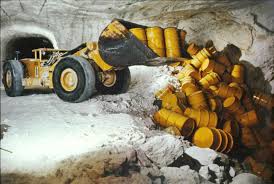
At left, The Gorleben mine was used as the German nuclear waste dump decades ago .
Backfilling has begun of the former salt mine in Gorleben, Lower Saxony –
previously considered a possible site for geological disposal of Germany’s
high-level radioactive waste.
Exploration work on the Gorleben rock salt
formation as a potential radioactive waste repository site began in 1977.
The federal government gave its approval for underground exploration at the
site in 1983, and excavation work began with the sinking of the first of
two shafts in 1986.
Work continued until June 2000 when, alongside plans
for the eventual phaseout of nuclear power in Germany, a three- to ten-year
moratorium was imposed on the Gorleben exploration work. This moratorium
was lifted in March 2010.
World Nuclear News 2nd Dec 2024, https://www.world-nuclear-news.org/articles/backfilling-of-gorleben-mine-starts
Decommissioning old nuclear sites to cost £130bn in blow to Miliband

The figures mean the cost of the UK’s nuclear clean-up alone is close to the total value of electricity produced by atomic power stations since the 1950s.
If the cost of building Britain’s 20-odd past and present nuclear power stations were included – around £30bn each in today’s money – the total cost of several hundred billion pounds would far exceed the value of the power produced, say experts.
Expense to taxpayer of cleaning up former power plants is higher than previously estimated, say auditors
Jonathan Leake, Telegraph, 29 Nov 24
Ed Miliband faces a bill of almost £130bn to clean up Britain’s old nuclear sites after estimated costs jumped.
It will cost £128.8bn to safely wind down old facilities, according to an investigation by the National Audit Office (NAO) – £23.5bn more than previously expected, after factoring in the cost of shutting eight power stations that are currently operational.
Seven nuclear stations are due to shut down in 2028 at which point operator EDF, France’s state-owned energy firm, will hand them back to the British Government for decommissioning.
Another station, Sizewell B, is expected to keep operating into the 2030s when it too will be decommissioned at taxpayer expense.
The NAO report, which looked at the overall operation of Mr Miliband’s Department for Energy Security and Net Zero (Desnz), said: “The current best estimate is that the eight existing sites will each cost £23.5bn to defuel and decommission.”
This is in addition to £105.3bn already set aside for dealing with other legacy projects, chiefly waste stockpiled at Sellafield in Cumbria.
Desnz oversees a Nuclear Liabilities Fund set up to save the money needed for decommissioning the eight stations, but the NAO said this had proven woefully inadequate.
It also warned that the final costs and taxpayer contributions could rise even higher.
The NAO said: “Costs could rise further, particularly if defuelling takes longer than planned … There is a risk that further taxpayer contributions may be required.”
However, the cost of decommissioning the UK’s remaining working nuclear stations is dwarfed by the amount which the NAO found was needed for dealing with legacy waste since the 1950s.
About 70pc of the costs relate to the Sellafield site in Cumbria, where thousands of tonnes of highly radioactive waste are stored in buildings and cooling ponds that are up to 70 years old – many considered extremely hazardous.
The figures mean the cost of the UK’s nuclear clean-up alone is close to the total value of electricity produced by atomic power stations since the 1950s.
Figures released by the Department of Energy and Climate Change show that since Britain’s first nuclear power station opened in 1956, they have generated 2.6bn megawatt hours (MWh) of electricity with a wholesale value of about £200bn at today’s prices.
If the cost of building Britain’s 20-odd past and present nuclear power stations were included – around £30bn each in today’s money – the total cost of several hundred billion pounds would far exceed the value of the power produced, say experts.
The NAO report also looked at the system of Contracts for Difference (CfD) – a financing method created by the UK to guarantee investors in wind farms, solar farms and nuclear power stations sufficient income.
Such schemes, it warned, were already set to cost consumers £89bn by the 2030s – but the final sums could be far higher because of unreliable estimates for the amount of power likely to be produced……………………… https://www.telegraph.co.uk/business/2024/11/29/decommissioning-old-nuclear-sites-to-cost-130bn-in-blow/
Suspected case of plutonium contamination in Rome plant

Worker at Casaccia research centre
suspected case of plutonium contamination of a worker was reported Friday at the Casaccia Research Center, on the outskirts of Rome.
The National Inspectorate for Nuclear Safety (ISIN) has announced that it is “following with the utmost attention the case of contamination recorded at the Plutonium plant of the Casaccia center” which involved a “worker on duty”.
South Bruce spared, but Ignace selected for Canadian nuclear waste dump
Nuclear Free Local Authorities, 29th November 2024
The Nuclear Waste Management Organisation – Canada’s equivalent to Britain’s Nuclear Waste Services – announced yesterday that they have selected Ignace in Ontario as their site for a Deep Geological Repository (DGR) into which Canada’s radioactive waste will be dumped.
The NWMO was established by the nuclear industry in 2002 charged with the disposal of the nation’s intermediate- and high-level radioactive waste.
The second candidate city of South Bruce, Ontario has been spared.
Both municipalities have recently held online public polls in which narrow, and contestable, results approved continued participation in the project. On 18 November, the Indigenous Wabigoon Lake Ojibway Nation, in whose Traditional Lands the DGR will be sited, also voted to continue their involvement in the process, which the NWMO took as a green light to select of Ignace. [i]
However, cynics might say one factor in the NWMO’s selection was the disparity in the money offer made to both municipalities for hosting the dump – Ignace was only promised $170 million over 81 years, whilst South Bruce stood to receive $418 million over 138.
The NFLAs, with other British activists opposed to nuclear waste dumps, have worked with Canadian colleagues in both municipalities and we are of course delighted for the people of South Bruce, but sad for those opposed to the plan in Ignace.
29th November 2024
South Bruce spared, but Ignace selected for Canadian nuclear waste dump
The Nuclear Waste Management Organisation – Canada’s equivalent to Britain’s Nuclear Waste Services – announced yesterday that they have selected Ignace in Ontario as their site for a Deep Geological Repository (DGR) into which Canada’s radioactive waste will be dumped.
The NWMO was established by the nuclear industry in 2002 charged with the disposal of the nation’s intermediate- and high-level radioactive waste.
The second candidate city of South Bruce, Ontario has been spared.
Both municipalities have recently held online public polls in which narrow, and contestable, results approved continued participation in the project. On 18 November, the Indigenous Wabigoon Lake Ojibway Nation, in whose Traditional Lands the DGR will be sited, also voted to continue their involvement in the process, which the NWMO took as a green light to select of Ignace. [i]
However, cynics might say one factor in the NWMO’s selection was the disparity in the money offer made to both municipalities for hosting the dump – Ignace was only promised $170 million over 81 years, whilst South Bruce stood to receive $418 million over 138.
The NFLAs, with other British activists opposed to nuclear waste dumps, have worked with Canadian colleagues in both municipalities and we are of course delighted for the people of South Bruce, but sad for those opposed to the plan in Ignace.
We, the Nuclear Free North, a campaign group has issued a statement condemning the lack of validity of the selection process, citing the fact that Ignace is not a willing community and asserting that the Indigenous vote did not represent specific consent for the project to go ahead. The statement appears below. [on original]……………………………………… more https://www.nuclearpolicy.info/news/south-bruce-spared-but-ignace-selected-for-canadian-nuclear-waste-dump/?fbclid=IwY2xjawG4gNxleHRuA2FlbQIxMAABHZkzDLWOe6FmGY3lN1ERTX5hB05PLvbrI4k9fdn3iTiAWPvxUq-VMQaXKg_aem_NRkVOPIrb11UCVLX85-G1g
The Nuclear Waste Management Organization (NWMO) Siting Process Fails to Achieve its Goal.

Nuclear Company Announces Site Selection Despite Major Missing Piece: a Willing Host
WE THE NUCLEAR FREE NORTH. November 29, 2024
| Wabigoon, Ontario – First Nations and opposition groups are denouncing the Nuclear Waste Management Organization’s announcement that they have selected the Revell site in northwestern Ontario as their preferred location for a deep geological repository for all of Canada’s high-level nuclear fuel waste. “The NWMO announcement demonstrates the fickleness of the NWMO’s site selection process. It has allowed the NWMO to manufacture something they are calling consent, without actually gaining consent”, commented Charles Faust, a volunteer with We the Nuclear Free North and spokesperson for Nuclear Free Thunder Bay. “They were looking for consent for their project – the transportation, processing and burial of all of Canada’s high-level waste in the heart of Treaty 3 Territory. The closest they could get from Wabigoon Lake Ojibway Nation was consent to continue in the site characterization process. It’s a small victory which they are going to play big.” |
NWMO announced Thursday that they had selected Wabigoon Lake Ojibway Nation (WLON) and the Township of Ignace as the host communities for the future site for Canada’s deep geological repository for used nuclear fuel.
The two communities had been courted by the NWMO for over a decade as the nuclear waste company sought a declaration of “willingness” to have the Revell site used as a processing and burial site for the highly radioactive waste generated by nuclear power reactors. The Revell site is approximately equidistant between Ignace and Dryden and 20 km upstream from Wabigoon Lake Ojibway Nation, in the headwaters of both the Wabigoon and the Turtle-Rainy River watersheds.
NWMO has repeatedly said they would only proceed with an “informed and willing host”, which would have to make a “compelling demonstration of willingness”. In a statement released by Wabigoon Lake Ojibway Nation on November 18th following a community vote, WLON stated clearly that the referendum was to determine if WLON would progress into a site characterization process for NWMO’s project, and that “the yes vote does not signify approval of the project”.
Broad opposition to the project has been expressed by First Nations, municipalities and community organizations, including in a resolution passed by Grand Council Treaty #3 in October which affirmed an earlier declaration that made clear that a deep geological repository for nuclear waste would not be developed at any point in Treaty #3 Territory.
Opposition is expected to continue to grow following yesterday’s announcement, leading up to the start of a federal impact assessment process, which the NWMO says will get underway in 2028.
Tepco eyes second test removal of Fukushima nuclear fuel debris
Japan Times 29th Nov 2024, https://www.japantimes.co.jp/news/2024/11/29/japan/tepco-debris-removal-plan/
Tokyo Electric Power Company Holdings is considering conducting a second test to remove nuclear fuel debris from one of the three meltdown-hit reactors at its Fukushima No. 1 nuclear power plant, company officials said Thursday.
As in the previous test, Tepco plans to use a fishing rod-shaped device to remove the debris from the plant’s No. 2 reactor.
Tepco collected 0.7 gram of debris in the first test, which started in September and ended on Nov. 7. The debris is currently under analysis at the Japan Atomic Energy Agency.
Nuclear Regulation Authority Chairperson Shinsuke Yamanaka has asked the company to collect more debris to gather more data.
Some 880 tons of nuclear debris, a mixture of melted fuel and reactor parts, is estimated to remain in the No. 1, No. 2 and No. 3 reactors at the plant, which was crippled by the March 2011 Great East Japan Earthquake and tsunami.
Project 2025 calls for massive changes to Hanford nuclear cleanup

Project 2025 calls on the EPA to be an ally of DOE against the state, instead of being an independent regulator.
the bulk of Project 2025 was written by former Trump officials and allies.
Project 2025 sees reclassifying high-level wastes into low-activity wastes
The Heritage Foundation’s blueprint proposes reclassifying radioactive waste as something less dangerous so it can be disposed of more cheaply.
John Stang, November 20, 2024,
https://www.cascadepbs.org/politics/2024/11/project-2025-calls-massive-changes-hanford-nuclear-cleanup
ill the next presidential administration tinker with the Hanford nuclear reservation’s complicated cleanup of radioactive wastes?
Project 2025, the Heritage Foundation’s conservative blueprint for the future, offers some strong hints that cleanup plans for the nation’s most polluted nuclear site might change with or without the approval of the Washington Department of Ecology.
One Project 2025 idea recommends reclassifying highly radioactive wastes into something less dangerous so cheaper methods can be used to dispose of them. Another proposal is to speed up the cleanup by rerouting money to Hanford from a couple of huge Biden-era appropriations for jobs and infrastructure programs elsewhere. The third Hanford-related idea in Project 2025 posits that the state of Washington and the legally negotiated cleanup deadlines and standards are obstacles to completing the cleanup faster.
Gov. Jay Inslee’s office, the Washington Attorney General’s Office and the state Ecology Department all declined to comment on Project 2025’s plans for Hanford. However, Attorney General and Gov.-elect Bob Ferguson and Attorney General-elect Nick Brown recently held a press conference to announce the AG’s office and have spent months reviewing Project 2025 in preparation for possible litigation with the Trump administration. Ferguson and Brown said the ball is in the Trump administration’s court on whether it will provoke legal battles with Washington.
As attorney general, Ferguson — frequently with other attorneys general — filed several dozen lawsuits against the first Trump administration, losing only two or three. “No one has a record like that except Perry Mason,” Inslee said at a Nov. 6 press conference.
Arguably the most radioactively and chemically contaminated spot in the Western Hemisphere, the Hanford nuclear reservation’s cleanup is governed by a 35-year-old legal agreement called the Tri-Party Agreement. The state of Washington and the U.S. Environmental Protection Agency have repeatedly used this contract to force a sometimes foot-dragging U.S. Department of Energy to meet its legal standards and schedule to clean up the highly radioactive site.
But Project 2025 says the Washington government poses significant legal and political obstacles to cleaning up Hanford.
“Some states (and contractors) see [nuclear cleanup] as a jobs program and have little interest in accelerating the cleanup. [DOE’s nuclear cleanup program] needs to move to an expeditious program with targets for cleanup of sites. The Hanford site in Washington state is a particular challenge. The Tri-Party Agreement among DOE, the Environmental Protection Agency, and Washington State’s Department of Ecology has hampered attempts to accelerate and innovate the cleanup,” the 900-page Project 2025 document says. Nuclear cleanup is addressed on pages 394-396.
Project 2025 continues: “Hanford poses significant political and legal challenges with the State of Washington, and DOE will have to work with Congress to make progress in accelerating cleanup at that site. DOE and EPA need to work more closely to coordinate their responses to claims made under the TPA and work more aggressively for changes, including congressional action if necessary, to achieve workable cleanup goals.”
In other words, Project 2025 calls on the EPA to be an ally of DOE against the state, instead of being an independent regulator.
In reality, Washington has been the greatest force to push the federal government to stick to its legal schedules and meet agreed-upon cleanup standards. Hanford has had problems over the past three decades with keeping to the schedules and getting its engineering up to snuff to prevent future breakdowns.
The Project 2025 document does not elaborate on why it believes Washington’s Ecology Department is a hindrance. Washington’s congressional delegation has strongly supported the state and the Tri-Party Agreement on Hanford cleanup issues.
Project 2025 is a detailed master plan put together by the conservative think tank Heritage Foundation on how the Trump administration should govern. Much of it is highly controversial, focused on issues like immigration and crime. Presidential campaigner Donald Trump claimed he was unfamiliar with it. However, the bulk of Project 2025 was written by former Trump officials and allies.
Vice President-elect JD Vance wrote the foreword for another book authored by Project 2025’s leader Kevin Roberts, titled “Dawn’s Early Light.” The New York Times wrote that Vance’s foreword said the Heritage Foundation has been “the most influential engine of ideas for Republicans from Ronald Reagan to Donald Trump.” Roberts wrote the foreword to the Project 2025 document. The New York Times recently wrote that Roberts plans to meet soon with Trump.
On Saturday, Trump named Chris Wright, CEO of Denver-based fracking company Liberty Energy, as his Secretary of Energy nominee. Wright is a major opponent of fighting climate change. For his first term, Trump’s selection for Energy was Rick Perry, who had called for abolishing the DOE when he ran for president, and was unaware that he would be in charge of cleaning up radioactive nuclear sites when he became energy secretary. Trump recently selected former New York congressman Lee Zeldin as the EPA’s head administrator. As a congressman, Zeldin boosted cleanup of Long Island Sound and wanted the United States to leave the Paris climate accords. But his environmental resume is thin beyond that.
The U.S. government set up Hanford in 1943 to create plutonium for the nation’s atomic bombs, including those exploded in New Mexico and over Nagasaki in 1945. That development work created many billions of gallons of chemical and radioactive wastes, the worst 56 million gallons of which were pumped into 177 underground tanks. About a third of those tanks leak. At least a million gallons of radioactive liquid has leaked into the ground, seeping into the aquifer 200 feet below and into the Columbia River, roughly seven miles away.
In 1989, the Washington Department of Ecology, DOE and the EPA signed the Tri-Party Agreement to govern Hanford’s cleanup with the state and EPA as the regulators enforcing that contract. The agreement has been modified many times. It originally called for Hanford to begin converting the underground tank wastes into glass in 2009 and finish by 2019. After several delays due to budget and technical problems, glassification is scheduled to begin in August 2025. The glassification project’s budget has grown from $4 billion to $17 billion, and is expected to expand to more than $30 billion. Legally, glassification is supposed to be finished by 2052, although future negotiations may push that back.
While the tank wastes are Hanford’s biggest program, the site has numerous other contamination problems. The entire 584-square-mile site is supposed to be cleaned up by 2091.
In 2020, DOE, the EPA and the state began four years of secret negotiations to revise the Tri-Party Agreement. Last April, the three parties unveiled tentative revisions. The three now are reviewing public comments on those proposed revisions before taking the changes to a federal judge for approval.
Those changes would not set a new completion date for glassifying the tank wastes, which is likely to be part of another negotiation. Right now, DOE expects glassification to be done by 2069, which is 17 years beyond the current legal deadline, according to a 2021 report by the Government Accountability Office.
Project 2025 calls for finishing all of Hanford’s cleanup by 2060. It recommends a massive study and remapping of the cleanup of Hanford and other nuclear sites across the nation. DOE has done this type of review a few times over the past 30 years, usually when a new presidential administration comes on board.
Hanford’s 56 million gallons of tank wastes consist of highly radioactive wastes and lesser radioactive wastes (dubbed “low-activity wastes”) mixed together in many of the same tanks. Hanford’s high-level wastes amount to 5 million to 6 million gallons. The Tri-Party Agreement calls for two plants to be built for dealing with low-activity wastes and a third to be built for handling high-level wastes. So far, one low-activity waste plant has been built.
That low-activity waste plant is scheduled to begin glassification in August 2025. A plant to separate high-level wastes from low-activity wastes along with the facility to glassify the high-level wastes are expected to be ready in the 2030s. These plans are all part of the current Tri-Party Agreement, with the revisions also calling for a newer approach for handling the radioactive waste: turning it into a cement-like substance called grout.
Grouting is easier and cheaper than glassification, but has not been extensively tested with Hanford’s chemically complex tank wastes. The grout must be shipped off-site, likely to disposal sites in either Utah or Texas. DOE and the state are still figuring out what type of grouting technology to use. Part of this agreed-upon new approach would reclassify any high-level wastes in 22 tanks aimed toward grouting into low-activity wastes.
Project 2025 sees reclassifying high-level wastes into low-activity wastes as a major step toward speeding up cleanup, although it does not address whether DOE should be able to reclassify wastes beyond the 22 tanks.
“A central challenge at Hanford is the classification of radioactive waste. High-Level Waste (HLW) and Low-Level Waste (LLW) classifications drive the remediation and disposal process. Under President Trump, significant changes in waste classification from HLW to LLW enabled significant progress on remediation. Implementation needs to continue across the complex, particularly at Hanford,” the Project 2025 document said.
Still unknown is whether the state — which has been skeptical about widespread use of grout — would go along with grouting high-level wastes beyond those 22 tanks. One indication of the Ecology Department’s reluctance is that the high-level waste glassification plant and the waste separation facility have been kept in the proposed Tri-Party Agreement revisions.
Meanwhile, Project 2025 calls for appropriating more money toward Hanford’s cleanup. However, that money would be taken from projects nationwide covered by 2022’s Inflation Reduction Act and 2021’s Infrastructure Investment and Jobs Act.
The Infrastructure Investment Act provides money for federal highways, transit, research, hazardous materials work, broadband access, clean water projects and improving electric grids.
The Inflation Reduction Act covers greatly reduced insulin costs, a huge number of climate change-related projects including reducing greenhouse emissions, drought-related measures for the western states, boosting subsidies for the Affordable Care Act, supporting vaccine coverage, increasing tax enforcement by the Internal Revenue Service, and paying for new energy projects.
Hunterston B decommissioning approved
The UK Office for Nuclear Regulation (ONR) has granted consent to EDF
Energy’s application to start decommissioning the Hunterston B nuclear
power station. This follows a public consultation and a detailed assessment
by ONR specialist inspectors of EDF’s environmental statement.
The
statement included a detailed environmental impact assessment (EIA) for the
proposed decommissioning project at the North Ayrshire site in Scotland,
along with mitigation measures designed to prevent or reduce any
significant adverse environmental impacts.
The EIA identified two
significant impacts during decommissioning: temporary adverse visual impact
of dismantling activities of the power station for local residents and the
socioeconomic effects on the regional employment market and workers at
Hunterston B released from their roles during phases of the project. ONR
said it is satisfied that the environmental statement proposes adequate
mitigation measures to address these factors and considers the statement to
be complete, of the right quality, and in line with relevant good
practices.
Nuclear Engineering International 19th Nov 2024 https://www.neimagazine.com/news/hunterston-b-decommissioning-approved/
Missing: One nuclear waste dump site. Answers to the name of GDF.
NFLA 14th Nov 2024
Forgive our tongue-in-check headline, but to the UK/Ireland Nuclear Free Local Authorities it appears from an announcement this week that Nuclear Waste Services has lost its preferred nuclear waste dump site in Lincolnshire.
After three years, the former Theddlethorpe Gas Terminal has seemingly slipped the leash of the Geological Disposal Facility and is now being petted by other energy projects, such as a plan to bring in carbon capture and storage technology to the site, which have the potential to be built out in a few years rather than a few decades. Sadly, there appears no prospect of a return to agricultural use as was promised by planners when operations ceased at the terminal.
In the recently published admission, NWS siting and communities Director Simon Hughes candidly advises that whilst the search had been focused on creating a surface site at the former gas terminal to receive shipments of high-level radioactive waste: ‘Over the past year, competing interests in the gas terminal site have matured and it is important we factor these into our approach. We are undertaking a range of studies in the search area and are considering other options for the GDF surface site.’
To the NFLAs this rather suggests that the NWS team will now be scurrying around every nook and cranny of the Theddlethorpe Search Area, desperately hunting to find what they deem to be a potential suitable 1-kilometre square surface site. And seemingly in a hurry too as Mr Hughes also advises in the NWS announcement that ‘we will publish an update early next year and our teams will be out in communities to explain our findings, hear feedback and consider next steps.’……………….
To the NFLAs, the change in circumstances must surely represent a significant setback both to the prospects and timescale of the project, but this is also an opportunity to take decisive action to end it.
For if NWS really wants to hear feedback it has been clear from the start that most local elected officials and members of the community are against this project. Recent surveys have indicated that public sentiment is overwhelmingly of the opinion that GDF is a dog that has had its day and that this unwanted blight will have a massive economic impact on a seaside community dependent on tourism.
Time then to put it out of its misery.
……………………………In a circular to his fellow Councillors on East Lindsey District Council, Theddlethorpe and Withern District Councillor Travis Hesketh, who was overwhelmingly elected on an anti-GDF ticket, appears to suggest the former decisive action:
‘After 3 ½ years, suddenly NWS change tack. They are wandering aimlessly like a zombie trying desperately to find a home for nuclear waste. There is no plan, no local support and clear evidence that a nuclear dump would be catastrophic for the coastal visitor economy. As councillors we need to work together to stop this project. A GDF project has been described as a timeshare, easy to get into but very hard to get out of. Before this goes any further let’s take control and chart our own destiny.’………………………. https://www.nuclearpolicy.info/news/missing-one-nuclear-waste-dump-site-answers-to-the-name-of-gdf/
Let’s be honest about nuclear waste, please
Elly Foster, 19th October 2024, https://www.cambrian-news.co.uk/opinion/elly-foster-lets-be-honest-about-nuclear-waste-please-728497?fbclid=IwY2xjawGjYhhleHRuA2FlbQIxMQABHR3h-H6mNK0lqJo0YWuLUygtj2lAJfQ4D4REpSwouKSrpGR8MIhGn3-udg_aem_3qvtVo9K841CI82s0PxUkA
Climate campaigners have welcomed Angela Rayner’s decision to stop a new deep coal mine being opened in Whitehaven, Cumbria. There’s more to this story. The Chief Executive Officer of West Cumbria Mining Ltd is Mark Kirkbride. His second job is on the Radioactive Waste Management Committee advising the Government how to deal with the massive stockpile of radioactive waste from our nuclear power stations.
Mark’s answer: dig a huge hole, 25 square km, under the Irish Sea, and bury it.In the industry’s parlance this is called a Geological Disposal Facility (GDF). Mark would’ve liked the coal pit next to the nuclear waste dump.
Nuclear Decommissioning Services Market Expected to Reach $11.79 Billion by 2034 – BIS Research
Industry Today 12th Nov 2024
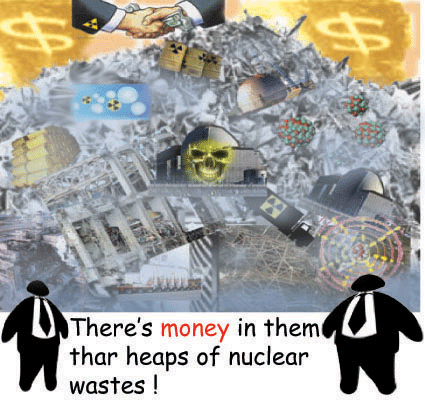
As nuclear facilities worldwide reach the end of their operational lives, the nuclear decommissioning services market is witnessing substantial growth. The Nuclear Decommissioning Services Market is projected to grow from $6.70 billion in 2024 to $11.79 billion by 2034, fueled by the rising number of decommissioned nuclear facilities and the increasing emphasis on sustainable practices.
Published 12 November 2024
Market Overview
Market Size and Growth Rate
The Nuclear Decommissioning Services Market is projected to grow from $6.70 billion in 2024 to $11.79 billion by 2034, at a CAGR of 5.81% during the forecast period. This growth is driven by the escalating number of decommissioned reactors and a shift toward stringent regulatory frameworks prioritizing safe and sustainable decommissioning processes. …………………………………………………..
Demand Drivers
The market is significantly driven by the retirement of aging nuclear facilities, increased regulatory scrutiny, and advancements in decommissioning technology. Environmental sustainability mandates are pushing the demand for efficient and compliant decommissioning solutions.
Challenges
Complex regulatory requirements and high costs remain key challenges. Additionally, the intricate nature of nuclear waste disposal raises concerns over potential delays and budget overruns in large-scale decommissioning projects. …………………………………………………………………………………………………….
The successful [whaaa-aa-aat!] decommissioning of Japan’s Fukushima Daiichi nuclear power plant highlights the potential for advanced decommissioning technology to manage complex sites safely and efficiently. ……………………………………………..https://industrytoday.co.uk/energy_and_environment/nuclear-decommissioning-services-market-expected-to-reach-1179-billion-by-2034-bis-research
Nuclear debris retrieved from Fukushima reactor weighs 0.7 gram, (Just 880 tons to go)
Japan Times 9th Nov 2024
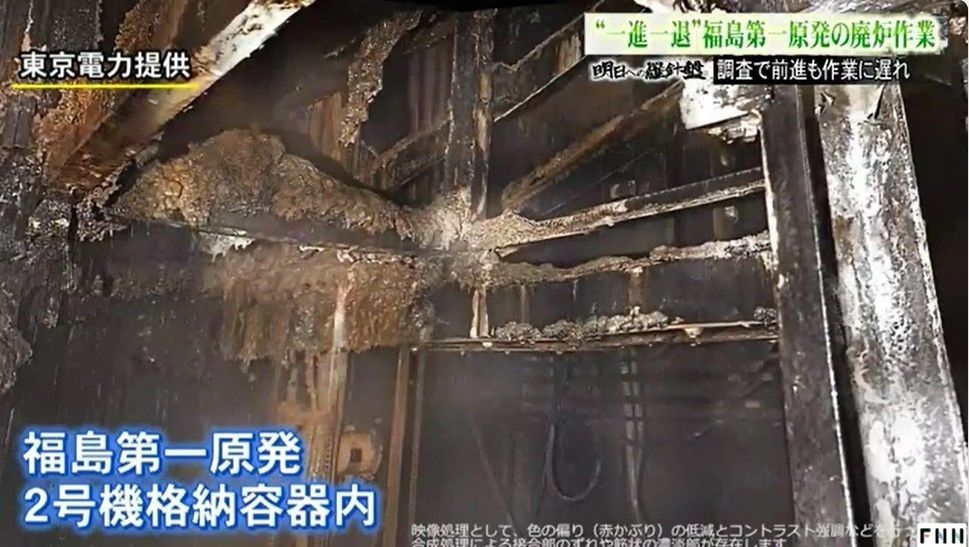
The nuclear fuel debris collected on a trial basis from a crippled reactor at the Fukushima No. 1 nuclear power station weighs 0.7 gram, Tokyo Electric Power Company Holdings said Friday.
The collected substance will be analyzed at four facilities, including the Japan Atomic Energy Agency, for research toward full-scale extraction of nuclear fuel debris from reactors at the Tepco plant in Fukushima Prefecture…………………..
The company plans to spend the next few days preparing for the transportation of the fuel debris to the four facilities.
The four facilities will share the nuclear fuel debris and analyze its components and hardness over several months to a year.
TEPCO collected the debris from the No. 2 reactor Thursday, about two months after the trial work was launched Sept. 10. It was the first time that fuel debris has been removed from a damaged reactor at the Fukushima No. 1 plant.
A total of about 880 tons of nuclear debris, a mixture of melted fuel and reactor parts, is believed to remain in the No. 1 to No. 3 reactors………
https://www.japantimes.co.jp/news/2024/11/09/japan/fukushima-tepco-nuclear-debris/
The death of Karen Silkwood—and the plutonium economy

The vision first created during World War II—and fostered with tens of billions of dollars of public funds—to establish nuclear power plants fueled by plutonium started to take on a nightmarish quality.

Within the next 10 years following the Indian nuclear explosion and Karen Silkwood’s death, the US Congress pulled the plug on the Liquid Metal Fast Breeder Reactor project, ending the Atomic Energy Commission’s vision of a plutonium economy, and the Supreme Court provided a little bit of justice for Karen’s parents and children, upholding a jury decision that for the first time cast aside the legal shield of the federal government protecting the nuclear industry.
Bulletin, By Robert Alvarez | November 8, 2024
On the evening of November 13, 1974—that is, 50 years ago—Karen Silkwood was driving to a meeting with a New York Times reporter and an official of the Oil, Chemical and Atomic Workers (OCAW) union. Her car flew off the road and hit a culvert on a lonely highway in western Oklahoma, killing her instantly. Karen was a union activist working as a technician at a plutonium fuel fabrication plant in Cimarron, Oklahoma owned by the Kerr-McGee Corp.
Several days before her death, Silkwood’s apartment was purposefully contaminated with highly toxic plutonium—which she had no access to—from the nuclear plant where she worked. Because of her activism, the company had put her and her roommates under constant surveillance. Documents about problems at the plant that two witnesses had seen before Silkwood’s fateful drive were missing. An independent investigation found evidence that her car was run off the road—contradicting official conclusions.
Karen became a whistleblower in large part because Kerr-McGee never bothered to tell workers that microscopic amounts of plutonium in the body can cause cancer. Karen became alarmed after dozens of workers, many fresh out of high school, had breathed in microscopic specks of plutonium and were required to undergo a risky procedure (chelation) to flush the radioactive contaminant from their bodies. It’s a procedure that can, even if successful in removing contaminants from the body, harm the kidneys.
Between 1970 and 1975, two metric tons of weapons-usable plutonium were shipped by truck from the Hanford nuclear production complex in Washington state to the Kerr-McGee plant in Oklahoma, where the plutonium was to be mixed with uranium and placed into 19,000 stainless steel fuel rods. At the time of Karen’s death, the Atomic Energy Commission found that about 40 pounds of plutonium had gone missing—enough to fuel several atomic bombs.
Since then, numerous books, articles, documentaries, and a critically acclaimed Hollywood motion picture have focused on the circumstances surrounding Silkwood’s death. My late wife and I were engaged in efforts for nearly a decade to achieve justice for her parents and children; those efforts were chronicled in some detail in Howard Kohn’s 1981 book, Who Killed Karen Silkwood? Was this an unfortunate accident, or was Karen Silkwood run off the road and killed to stop her from revealing dark secrets? After more than 40 years, the definitive answers to these questions remain unavailable.
The beginnings of the Silkwood saga. Karen Silkwood’s death heralded an end of America’s romance with the atom as a source of limitless cheap energy. There was no doubt on the part of the AEC, then the dominant force behind US energy policy, that commercial nuclear power would expand so rapidly and widely that by the end of the 20th century, the world would exhaust its supplies of uranium. If nuclear power was to thrive thereafter, according to AEC doctrine, a new generation of reactors fueled by plutonium extracted from spent nuclear fuel would have to be built. This new generation of so-called “breeder” reactors held the promise of producing vast amounts of cheap electricity while producing up to 30 percent more plutonium than they consumed. It turned out that the AEC’s nuclear power growth projection was off by an order of magnitude. Even today, world uranium supplies remain more than sufficient to fuel existing and reasonably contemplated commercial power plants.
Were it not for my wife, Kitty Tucker, and our friend, Sara Nelson, the death of Karen Silkwood would have been erased from public memory, like a sand painting blown away by the wind. I am proud to have played a supporting role, working with Karen’s parents and congressional staff, raising funds, reviewing technical documents, helping with the news media, cooking a lot of meals, and recruiting expert witnesses for the trial of a lawsuit over Silkwood’s death that would unfold in the spring of 1979.
Working with little and often no financial resources but a lot of grit, Kitty and Sara organized a national campaign that led to a congressional investigation revealing that Karen’s concerns over nuclear safety at the Kerr-McGee plant were more than justified. The congressional investigation exposed an FBI informant with a long history of spying on US citizens and revealed that enough plutonium to create several nuclear weapons was missing from the plant. These findings set the stage for a lawsuit organized on behalf of Karen’s parents and children.
The nine-week trial before a federal court jury in Oklahoma City resulted in a landmark jury decision that held Kerr-McGee liable for contaminating Silkwood and her home and awarded her estate a multimillion-dollar verdict. But the path to that verdict was long and uncertain and often disorganized and contentious, a David-and-Goliath story that ran from a near-commune of a house in a leafy portion of the District of Columbia through a variety of congressional offices and investigators and into the pages of Rolling Stone magazine. Along the way, a lot of young and idealistic lawyers and activists—led by Kitty and Sara—worked, mostly for free, to make sure Karen Silkwood’s death was not brushed under a bureaucratic rug and forgotten. I feel lucky to have been one of them.
………………………………………………………………………………………………………………………………………………………………… Kitty’s dogged research found that Silkwood was justified in being outspoken in her struggle to stop constant plutonium leaks and worker exposures at the Cimarron, Okla. Kerr-McGee plant. She and several other co-workers suffered from repeated plutonium exposures while on the job. Between 1971 and 1975, in fact, contamination reports show that at least 76 workers were exposed to plutonium at the Cimarron plant,[1] some more than once.[2] About a third of the exposed workers inhaled enough plutonium to require emergency treatment with experimental chelating drugs to help flush the radioactive metal out of the body. By comparison, during that same period, less than one percent of 3,324 employees at the Energy Department’s Rocky Flats nuclear weapons plant in Colorado[3]—which processed tens of tons of plutonium per year and became notorious for its poor plutonium-handling practices—required this extreme emergency measure.[4]
Kerr-McGee’s role in the plutonium economy. Long a leader of domestic uranium mining for US nuclear weapons, Kerr-McGee was among the first corporations to get in on the ground floor of the US government’s push to establish a plutonium fuel economy. The Atomic Energy Commission’s vision for such an energy economy was outlined in 1970 by its chairman, Glenn Seaborg, who discovered plutonium 30 years earlier. By the end of the 20th century, Seaborg estimated, an enormous expansion of nuclear power plants would have all but exhausted world uranium reserves, and new US reactors would require 1,750 tons of plutonium. This would be more than 66 times the amount of this deadly nuclear explosive in today’s worldwide nuclear weapon stockpiles.[5]
Kerr-McGee came in with a low bid to design and operate one of two of the first privately owned plutonium fuel plants that would handle tons of this fissile material. The Kerr-McGee facility was engineered to extract plutonium nitrate liquid from spent nuclear fuel generated at Hanford’s material production reactor and sent by guarded trucks to the Cimarron, Oklahoma plant. Once there it underwent 14 complex processing steps. The first blended liquid plutonium with uranium. The blended material was then sent to a furnace where it was dried into a powdered oxide. The powder was then heated, compressed, and ground into pellets. The pellets were then placed into stainless-steel rods, after which the ends of the rods were welded shut. All told, some 19,000 of these fuel rods were shipped back to Hanford, where they were used in experiments at the Fast Flux Test Facility (FFTF) and another research reactor. These reactor experiments were aimed at the development of the first large-scale liquid metal fast breeder reactor (LMFBR), to be built along the Clinch River near the government’s Oak Ridge nuclear site in eastern Tennessee.
It turned out that Kerr-McGee cut corners at the expense of the health and safety of its workers from the outset of its operation. The company squeezed in as much equipment as possible into its facility, a space about half the size of a typical high-school gymnasium, leading to spills that were often difficult to clean up. Miles of pipes in the cramped workplace were so close together and poorly routed that they would not fully drain, creating excessive radiation levels[6] in the plant.
Cramped piping also made it difficult to account for the plutonium carried through them, which was classified by the government as a Category I strategic special nuclear material—that is, material that “in specified forms and quantities, can be used to construct an improvised nuclear device capable of producing a nuclear explosion.”[7]
Gloveboxes—the laboratory workstations with gloves in their transparent walls, so workers could manipulate plutonium without coming into direct contact with it—became a major source of contamination because the type installed by Kerr-McGee used plastic seals that US weapons plants had long known could degrade and leak. Also, there were few contained connections between gloveboxes, so workers had to transfer radioactive materials in the open, creating greater risks of contamination. The ventilation systems did not permit rooms in the facility to be isolated from one another to minimize the spread of contamination when it occurred. Even the plant’s radiation air filters were configured in a way that made them difficult to replace.[8]
As substandard facilities led to contamination, Kerr-McGee failed to inform workers that plutonium can cause cancer. Managers often claimed that it was harmless. “There has been no lung cancer caused by plutonium exposure,” William Utnage, the plant designer, told employees. “From human experience to date, we have nothing to worry about.” Based on numerous animal studies, the Atomic Energy Commission considered plutonium to be a potent carcinogen.
Read more: The death of Karen Silkwood—and the plutonium economyTurnover was high at the Kerr-McGee Cimarron plutonium plant, with an average of 90 people out of the plant’s total workforce of 150 quitting each year.[9] AEC inspections found that the company could not keep accurate track of radiation doses, making it difficult if not impossible to know the frequency and severity of exposures. Given the need to constantly replace three out of five workers every year, many people were hired fresh out of high school, provided minimal training, and sent on the line to operate a high-hazard nuclear facility.
After being repeatedly exposed to plutonium at the plant that required often painful scrubbing of her skin, Karen Silkwood began documenting dangerous practices at the plant, including the doctoring of X-rays of fuel rod welds by a technician who used a felt-tip pen to hide defects shown in the X-rays.
Days before she died in the car crash, plutonium contamination was found in the home that Silkwood shared with her boyfriend, Drew Stephens, and roommate, Sheri Ellis. The highest concentrations were in lunch meat in her refrigerator and on the toilet seat. Karen, Drew, and Sheri were soon flown to Los Alamos Laboratory, where it was determined that Karen had sustained a significant dose of plutonium in her lungs. Subsequent laboratory analyses concluded that the plutonium in her home came from a batch at the plant to which she did not have access. These revelations all happened within the few days before her fatal drive that night of November 13, 1974.
Congress takes interest. In a way. Just five months before Karen Silkwood’s death, India conducted its first nuclear weapon test; it involved a bomb fueled with plutonium extracted from spent fuel produced by Canadian nuclear reactors. Growing concern in the US Congress about the thought of plutonium circulating in world commerce focused attention on the missing plutonium from the Kerr-McGee plant where Silkwood had worked. Although the amount of the unaccounted-for material was less than a tenth of a percent of the 2.2 tons handled at the plant, it was enough to fuel as many as four nuclear weapons. The Silkwood case also led to greater congressional scrutiny of how the government accounted for and safeguarded its stocks of nuclear materials.
…………………..In the spring of 1975, with our infant daughter Amber in a stroller, my wife Kitty and Sara Nelson met with Tony Mazzochi, legislative director of the Oil Chemical and Atomic Workers (OCAW), and his union colleague Steve Wodka. Both had worked closely with Karen Silkwood in support of efforts to prevent Kerr-McGee from decertifying the union and to strengthen worker safety. The night Silkwood died, Wodka was in a hotel room waiting with New York Times reporter David Burnham for Karen to show up. Shortly after that meeting, Kitty and Sara were recruiting a legal team, led by Daniel Sheehan, to take this case into federal court, on behalf of Karen’s parents.
……….. As I began my work at EPC, one of my first tasks was to serve as a representative on Capitol Hill for Bill and Meryl Silkwood, Karen’s parents. Deeply upset by the suspicious death of their daughter, they approached us in the late fall of 1975 seeking help………………………….. Among the initial appointments I set up for them on Capitol Hill was one in the high-security offices of the Joint Committee on Atomic Energy on a top floor of the US Capitol, accessed by a special elevator. After we went over numerous safety concerns about the Kerr-McGee plant, we were given a polite but frosty response by the committee’s staff director, who curtly advised Bill to go back home and write a letter to his congressman.
The response came as no surprise. Kerr-McGee founder Robert S. Kerr held sway over atomic energy matters as a US senator from the late 1940s until he died in 1963. In 1948, the year Robert Kerr was elected to the U.S. Senate, Kerr-McGee became the first oil company to take advantage of the uranium boom, opening mines on the Navajo reservation to take advantage of the US government’s lucrative price guarantees. By 1954, the company dominated the US uranium market.
By the summer of 1975, Kitty and Sara had collected 8,500 signatures from NOW members and others petitioning Sen. Abraham Ribikoff, chair of the US Senate Committee on Governmental Affairs, to launch an investigation into the circumstances surrounding Karen Silkwood’s death.
On the anniversary of Silkwood’s death—November 13, 1975—during a congressional recess, several NOW members pressed Ribikoff in his home state of Connecticut. Six days later, Ribikoff and his Senate colleague Lee Metcalf of Montana met with a large delegation including Karen’s parents, Kitty, Sara, newly elected NOW President Eli Smeal, religious advocates, and me. Also joining the meeting were Peter Stockton, on loan from Michigan Congressman John Dingell’s staff, and Win Turner. Ribicoff quickly agreed to an investigation and passed the baton to Senator Metcalf……………………………………
In addition to raising serious questions about the investigation of the accident that killed Silkwood, Newman and Stockton revealed that 40 pounds of plutonium was missing and unaccounted for at the Kerr McGee plant. The AEC failed to successfully black out this discrepancy from the document Newman obtained under the Freedom of Information Act. Twenty years later, after the Cimarron plant was dismantled, only 20.2 pounds were recovered from its pipes, leaving enough missing plutonium to fuel two Nagasaki-type atomic bombs.
Turner and Stockton now had a congressional green light to press the Energy Research and Development Administration, the Nuclear Regulatory Commission and especially the FBI for their investigative documents covering the Silkwood case…………………………
………………………….. By this time, pressures were mounting for Turner and Stockton to back off investigating Silkwood’s death. Republican staff on the Governmental Affairs Committee blocked travel funds needed to interview key officials. Turner had to prevail on a less-than-enthusiastic Senator Metcalf to intervene. Eventually, Stockton prevailed on Dingell to pay for his trip to Nashville to try to gain greater cooperation from Srouji.
Shortly thereafter, Metcalf dropped the investigation into Silkwood’s death,[10] but Dingell picked up the ball, thanks in large part to his trust in Stockton, and held two public hearings that showed the disturbing lack of safety working at the plant.
………………………………………..Under the threat of being held in contempt of Congress, Srouji turned over documents she claimed to have obtained from the FBI. The documents indicated that the FBI’s investigation of events surrounding Silkwood’s death was superficial. Most conspicuous by its absence was any documented effort by Olson and the FBI to address the AEC’s concern that Kerr McGee could not account for about 40 pounds of plutonium.[12]
The Silkwood lawsuit begins. By the fall of 1976, congressional investigations had run their course, leaving Karen’s parents only with the option of going to court. ………………………………………..
The complaint had three basic components: Kerr McGee was liable under state law for the contamination of Karen Silkwood in her home; Kerr McGee violated Silkwood’s civil rights to travel on the highway; and finally Kerr McGee conspired to violate Silkwood’s civil rights. It turned out that the contamination of Karen’s home with plutonium from the plant became the anchor for the lawsuit………………………………………………………………………………………………………..
Bill Paul, Kerr McGee’s lead attorney and former president of the Oklahoma Bar Association, seemed determined to stop the case from going to trial by proving we were “outside agitators” in a conspiracy, supposedly run by Ralph Nader and the Communist Party, to stop nuclear power in the United States……………………………………………………… Through the efforts of investigative reporter Howard Kohn and his wife and assistant Diana, Rolling Stone made the Silkwood case a major investigative focus and played an important role in raising funds for the lawsuit.[15]
………………………………………………………………………….As trial approached, Danny and his investigators tried to shine a light on efforts by Kerr-McGee to spy and intimidate Silkwood, possibly to the point of running her off the road, and the FBI’s efforts to conceal Kerr McGee’s wrongdoings. Even though Danny and his colleagues found a considerable amount of evidence to back these claims, the federal judge on the case, Frank Thies, ruled that conspiracies to violate Karen Silkwood’s civil rights were not covered by the law. This left the legal liability against Kerr McGee for contaminating Silkwood in her home as the only issue to be argued in court.
………………………………………………………………………..Kitty and I moved out to Oklahoma City and watched the 47-day trial unfold as Gerry Spence masterfully took apart Kerr-McGee’s defense. Bill Paul, Kerr’s McGee’s lead attorney, had not faced a seasoned court roombrawler like Gerry Spence before. From the outset, Spence, with his large-brimmed cowboy hat sitting on the table and cattle rancher demeanor, and his co-counsel, the much shorter, frizzy-haired Arthur Angel, created a “David vs Goliath” atmosphere. Ranged against them were a half dozen defense attorneys in three-piece suits who immediately became known as the “men in grey.”
After 43 witnesses gave testimony, the case went to the jury, and on May 18, 1979, the jury rendered its verdict. Bill and Merle Silkwood sat beside Kitty and our 4-year-old daughter, Amber. Dean McGee, the president and co-founder of the Kerr-McGee Corp., and leaders of the Oklahoma State Legislature were also present to hear the jury find Kerr McGee liable for $505,000 in actual damages and $10 million in punitive damages. On January 11, 1984, the US Supreme Court upheld the jury’s verdict, but allowed Kerr-McGee to contest the punitive damages in another trial. Not wanting to go through another lengthy trial Karn’s family agreed to a $1.38 million setlement.
Even so, the lawsuit set an important precedent that federal regulation of nuclear safety did not shield nuclear facilities from being held accountable under state tort laws.
The end of the plutonium economy. A highly eventful year followed Karen’s death; those events would impact the future of nuclear energy around the world.
In May 1974, India shocked the world by detonating a nuclear weapon underground in the remote desert region of Rajasthan. Called the “Smiling Buddha,” the weapon was fueled by plutonium produced in a reactor provided by Canada that used heavy water supplied by the United States from the Savannah River Plant, a nuclear weapons material production facility in South Carolina. India extracted the plutonium from spent reactor fuel at a reprocessing plant built with the assistance of the United States and France. The Indian weapons experts who designed Smiling Buddha were trained by the Soviet Union.
India declared its weapon test a “peaceful nuclear explosion.” Between 1961 and 1975, the United States and the Soviet Union set off 35 and 124 “peaceful” nuclear detonations, respectively, in a quest to dig channels, recover minerals, excavate tunnels for highways, store oil and gas, and build dams. Undeterred by the radiological problems peaceful nuclear explosions would cause, the United States actively promoted their use, which made sure that other countries would follow, as an integral part of the “peaceful” uses of nuclear power allowed under the 1970 Nuclear Non-Proliferation Treaty.
In 1976, then-President Gerald Ford responded, suspending reprocessing of spent nuclear fuel to recover plutonium in the United States. The next year, President Jimmy Carter converted the suspension into a ban, issuing a strong international policy statement against establishing plutonium as fuel in global commerce. As the US government continued to refuse to support reprocessing of nuclear fuel, US utilities with nuclear power plants opted to support underground disposal of spent fuel.
The vision first created during World War II—and fostered with tens of billions of dollars of public funds—to establish nuclear power plants fueled by plutonium started to take on a nightmarish quality. Within the next 10 years following the Indian nuclear explosion and Karen Silkwood’s death, the US Congress pulled the plug on the Liquid Metal Fast Breeder Reactor project, ending the Atomic Energy Commission’s vision of a plutonium economy, and the Supreme Court provided a little bit of justice for Karen’s parents and children, upholding a jury decision that for the first time cast aside the legal shield of the federal government protecting the nuclear industry.
Eventually, Kerr-McGee’s destructive practices caught up with it. In April 2014, after fraudulently trying to avoid paying for the cleanup of the massive environmental damage it had wrought throughout the United States, Kerr-McGee entered into a $5.5 billion settlement with the US Justice Department. Kerr-McGee is now a bankrupt legacy of the atomic age, a relic of a plutonium economy that never came to be in the United States.
Notes…………………………………………………………………………………. more https://thebulletin.org/2024/11/the-death-of-karen-silkwood-and-the-plutonium-economy/
Tepco removes [a tiny sceric]of nuclear fuel debris from Fukushima disaster site
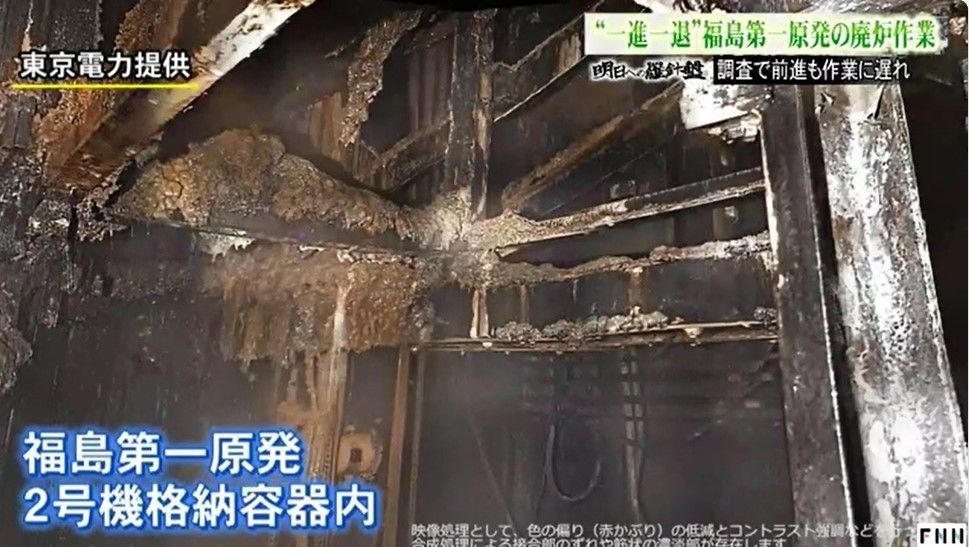
The whole process is expected to cost around ¥23 trillion ($149 billion) and take decades to complete. About 880 tons of radioactive material, like melted fuel and metal cladding, are said to be stuck at the bottom of the three reactors at the plant.
By Shoko Oda, Bloomberg, Japan Times 7th Nov 2024
https://www.japantimes.co.jp/news/2024/11/07/japan/tepco-debris-removal-demonstration/
Tokyo Electric Power Company Holdings says it has removed nuclear fuel debris left inside a reactor in a demonstration at its Fukushima No. 1 power plant, 13 years after a meltdown there.
Radioactive debris was removed from the Unit 2 reactor at the plant and was placed inside a sealed container for transportation, the power producer said in an emailed statement on Thursday.
The demonstration is part of Tepco’s cleanup plan for the site, after the March 2011 Great East Japan Earthquake and tsunami overwhelmed the facility and led to the worst nuclear disaster since Chernobyl. The whole process is expected to cost around ¥23 trillion ($149 billion) and take decades to complete. About 880 tons of radioactive material, like melted fuel and metal cladding, are said to be stuck at the bottom of the three reactors at the plant.
Tepco, which is decommissioning the plant alongside the government, is using a robotic arm that looks like a fishing rod with a claw grip to remove a small sample of the nuclear debris. The company had planned to remove just 3 grams as part of the demonstration.
The removed debris is set to be transported to Japan Atomic Energy Agency’s research facility for analysis, according to Tepco’s website.
The retrieval process began in September but faced challenges. A camera attached to the robotic arm stopped working, forcing Tepco to suspend the demonstration to replace the camera.
Robot Removes First Bit Of Fukushima’s Nuclear Fuel Debris – Just 880 Tons More To Go
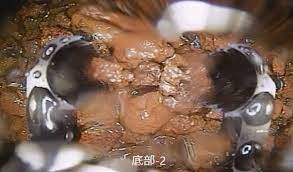
The radioactive ruins are still far too dangerous for humans.
Tom Hale, IFL Science 6th Nov 2024, https://www.iflscience.com/robot-removes-first-bit-of-fukushimas-nuclear-fuel-debris-just-880-tons-more-to-go-76669
robot has delved into the radioactive ruins of Fukushima to retrieve a tiny chunk of spent nuclear fuel. It’s the first time solid fuel debris has been removed from the plant – but they’ve still got a hell of a long way to go: 880 tons of the stuff to be precise.
The remotely operated robotic arm, equipped with a telescopic camera, was able to grasp and retrieve a “small amount of fuel debris” from the floor of Unit 2’s reactor on October 30, according to the plant’s operator Tokyo Electric Power Company Holdings (TEPCO).
“From the results of primary containment vessel internal investigations, we have deduced that the accumulated debris on the surface of the floor inside the pedestal is solidified molten material that consists of fuel elements and also may contain a lot of metal,” TEPCO said in a statement.
The fuel debris will now be taken away from the Fukushima site where scientists will analyze it to gain further insight into how to remove the rest of the debris.
“By analyzing the attributes of the sampled fuel debris we will directly ascertain information such as the composition of debris at the sampling location and radioactivity density,” added TEPCO……………………………………………………………..
It’s estimated that the three impacted reactors contain an estimated total of 880 tons of melted fuel debris, all of which TEPCO hopes to remove during their decommissioning effort by the year 2031. The latest retrieval of a small chunk of radioactive debris is just the beginning of the mammoth feat ahead.
Along with solid debris, the decommissioning project has also had to deal with the colossal quantities of radioactive water that accumulated after being used to cool the damaged reactor cores. In August 2023, Japan began releasing some of the treated wastewater into the Pacific Ocean, much to the annoyance of their neighbors.
TEPCO has expressed hope the entire clean-up operation will be completed in 30 to 40 years, although some speculate the target is overly optimistic.
Senior Journalist
1
1 This Month

of the week – Shut Down Drone Warfare!


Tell the Ukrainian Government to Drop Prosecution of Peace Activist Yurii Sheliazhenko

Petition to revoke the licensing of the Near Surface Nuclear Disposal Facility (NSDF) at Chalk River. https://www.ourcommons.ca/petitions/en/Petition/Details?Petition=e-7247
To see nuclear-related stories in greater depth and intensity – go to https://nuclearinformation.wordpress.com
-
Archives
- April 2026 (79)
- March 2026 (251)
- February 2026 (268)
- January 2026 (308)
- December 2025 (358)
- November 2025 (359)
- October 2025 (376)
- September 2025 (257)
- August 2025 (319)
- July 2025 (230)
- June 2025 (348)
- May 2025 (261)
-
Categories
- 1
- 1 NUCLEAR ISSUES
- business and costs
- climate change
- culture and arts
- ENERGY
- environment
- health
- history
- indigenous issues
- Legal
- marketing of nuclear
- media
- opposition to nuclear
- PERSONAL STORIES
- politics
- politics international
- Religion and ethics
- safety
- secrets,lies and civil liberties
- spinbuster
- technology
- Uranium
- wastes
- weapons and war
- Women
- 2 WORLD
- ACTION
- AFRICA
- Atrocities
- AUSTRALIA
- Christina's notes
- Christina's themes
- culture and arts
- Events
- Fuk 2022
- Fuk 2023
- Fukushima 2017
- Fukushima 2018
- fukushima 2019
- Fukushima 2020
- Fukushima 2021
- general
- global warming
- Humour (God we need it)
- Nuclear
- RARE EARTHS
- Reference
- resources – print
- Resources -audiovicual
- Weekly Newsletter
- World
- World Nuclear
- YouTube
-
RSS
Entries RSS
Comments RSS
 nuclear-news