S. Korea’s nuclear agency launches investigation into abnormal discharge of radioactive waste
Xinhua 2025-01-12, https://www.chinadaily.com.cn/a/202501/12/WS6783d766a310f1265a1da509.html
SEOUL — South Korea’s nuclear safety agency has launched an investigation into the abnormal discharge of liquid radioactive waste from a nuclear reactor to the southeast of the country, Yonhap news agency said Sunday.
The Nuclear Safety and Security Commission (NSSC) received a report from Korea Hydro & Nuclear Power (KHNP), the operator of nuclear power plants, at about 10:23 am local time (0123 GMT) Sunday that the liquid waste of a radioactive storage tank in the Wolseong No 2 nuclear power plant in Gyeongju, North Gyeongsang province was discharged into the ocean without going through a sample analysis.
The KHNP took measures to block leakage immediately after finding the tank outlet valve was open while preparing to release the liquid waste into the ocean, the NSSC said in a bulletin posted on its official website.
According to the KHNP’s analysis of samples left in the tank, the concentration of the leaked liquid waste, estimated at about 29 tons, stood at normal levels.
The NSSC said it had dispatched experts to the power plant in a bid to investigate the exact amount and the cause of the leakage, planning to check any environmental impact by collecting seawater near the power plant.
The agency promised to announce the results of the investigation once available
Pickering A nuclear power plant bites the dust!

Twitter: https://x.com/NoNukeBailouts/status/1874916809050357787
Good riddance! This dawg of a nuke station – 4 reactors at Pickering A – has been finally put to rest. The 2.2 million people that live within 30 km of the station can breathe a sigh of relief (though Pickering B is still open), though taxpayers will now be saddled with billions of dollars of decommissioning and waste expenses into eternity.
The Pickering Nuclear Station is one of the oldest and largest nuclear plants in the world. Designed to last 30 years, it’s now over 50. In 1998, Pickering A was completely shuttered due to safety concerns. Units 1 and 4 were rebuilt at such high public expense that they mothballed units 2 and 3.
The Pickering nuke station has a long history of accidents and safety concerns – learn more here:
https://www.cleanairalliance.org/pickering-safety/
Good by nukes – hello renewables!
https://www.world-nuclear-news.org/articles/opg-says-goodbye-to-pickering-4
Complex plan for dismantling UK’s 27 dead, rusting, radioactive nuclear submarines.

Fife Council approve Babcock plans for Rosyth Dockyard
28th December, By Ally McRoberts
A NEW secure compound for the Submarine Dismantling Project at Rosyth Dockyard has been given the green light by Fife Council.
Babcock International had sought a certificate of lawfulness to change the use of a car park on Keith Road – with the loss of 86 spaces – and build a storage facility on it.
The much-delayed project aims to dismantle seven old nuclear subs at Rosyth, remove the radioactive waste and recycle as much of the metal as they can into “tin cans and razors”.
The new facility is needed for phases three and four and will be enclosed by three metres high walls, with new gates and drainage infrastructure.
In the application it was described as a laydown area and contractors’ compound that will be roughly 45 metres by 35 metres in size, and take up around half an acre of
land close to dry dock number three.
Swiftsure is the first vessel being disposed of at Rosyth and it’s scheduled to be recycled by 2026. In total, the project will dispose of 27 nuclear subs. Seven have been laid up at
Rosyth for decades – Dreadnought has been there so long, since 1980, that
most of the low-level radiation has “disappeared naturally” – and there are
15 at Devonport in Plymouth. Five are still in service with the Royal Navy.
The UK Government said earlier this year that the project has already
invested more than £200 million into the dockyard and the wider UK supply
chain and sustains more than 500 jobs.
Dunfermline Press 27th Dec 2024
https://www.dunfermlinepress.com/news/24820505.fife-council-approve-babcock-plans-rosyth-dockyard/
Northwestern Ontario nuclear waste site selection raises concerns
The Hill Times: Canada’s Politics and Government News Source, BY ERIKA SIMPSON | December 12, 2024, https://www-hilltimes-com.proxy1.lib.uwo.ca/story/2024/12/12/northwestern-ontario-nuclear-waste-site-selection-raises-concerns/444838/
The selection process has overlooked the broader impact on local and Indigenous populations near highways that could be used to transport nuclear waste north.
Opinion | BY ERIKA SIMPSON | December 12, 2024
The Nuclear Waste Management Organization selection of two northwestern Ontario communities—Wabigoon Lake Ojibway Nation and Ignace—as host communities for Canada’s proposed Deep Geological Repository raises concerns and controversy. Located approximately 1,500 km from Toronto, the distance highlights the geographical separation between the selected communities and Toronto, home to the Darlington and Pickering nuclear power plants that will eventually be decommissioned.
On Nov. 28—the same day of Nuclear Waste Management Organization’s (NWMO) announcement—the Municipality of South Bruce took many by surprise by announcing it was exiting the site selection process for the proposed Deep Geological Repository (DGR). Despite South Bruce’s proximity—just 46 km from the Bruce reactor, the world’s largest-operating nuclear facility on Lake Huron’s shores—the NWMO decided to pursue the Ignace location.
This raises questions about why the NWMO chose to bypass South Bruce, which, due to its location, appeared to be a more logical choice for Canada’s first DGR.
Despite being presented as a “community-driven, consent-based” process, the selection process launched in 2010 sought to narrow 22 potential sites down to just one willing community. The process has thus far overlooked the broader impact on local and Indigenous populations near highways that could be used to transport nuclear waste northward.
Media outlets like The Globe and Mail and The Hill Times report that the NWMO’s DGR plan involves transporting nuclear waste by truck for over four decades, from all Canada’s reactor sites to the nuclear facility, where the waste could be stored underground. More than 90 per cent of the waste is currently at Pickering, Darlington, and Bruce nuclear stations in Ontario, with the rest located in Point Lepreau, N.B., Quebec, Manitoba, and Ottawa.
With the NWMO selecting the Ignace site and an all-road transportation method, the trucks are expected to travel a total of 84 million km on Canadian roads. There is always the risk that radioactive material will leak while in transit or short-term storage, something that has happened in Germany and New Mexico over the past two decades.
The NWMO’s claims of a rigorous and independent process are undermined by a lack of public dialogue and transparency. Few have been aware of the proposal to build a national underground nuclear waste site. Northwatch and We The Nuclear Free North raised concerns about the NWMO’s decision involving Wabigoon Lake Ojibway Nation (WLON) in the project.
WLON’s Nov. 28 statement clarifies that the First Nation has not approved the project but has agreed to proceed with the next phase of site characterization and regulatory processes. Their “yes” vote reflects a commitment to assess the project’s feasibility through environmental and technical evaluations, not an endorsement of the DGR itself.
South Bruce, the other potential willing community, held a referendum on Oct. 28, which revealed deep divisions. The final tally was 1,604 votes in favor (51.2 per cent) and 1,526 against (48.8 per cent), with a total of 3,130 votes cast. A margin of just 78 votes decided a by-election with far-reaching implications for millions of people across multiple generations.
The decision to allow a local municipality to oversee the referendum on the nuclear waste disposal site has been met with significant controversy. Critics argue that the arrangement posed a conflict of interest, as municipal staff—partially funded by the NWMO—actively promoted the project, casting doubt on their impartiality and raising concerns about financial influence on the referendum’s outcome. The council’s firm opposition to allowing a paper ballot raised further suspicions. Why reject a voting method that could be physically verified?
Located about 19 km southeast of Dryden, WLON faces similar concerns regarding the fairness of the online voting process and voter eligibility. These issues could erode public confidence in municipal referendum processes, and the handling of decisions by councils.
The nuclear waste storage site selection marks an early shift to the regulatory phase, raising concerns about whether the process is premature. Over the coming year, the effectiveness of the Canadian Nuclear Safety Commission and its regulation of all steps in the management of radioactive waste will come under scrutiny, particularly as Ontario’s new energy minister, Stephen Lecce, emphasizes the need to invest in energy infrastructure to meet rising electricity demand over the next 25 years.
Critics argue that despite evaluations with long-term implications, ethical and environmental concerns surrounding nuclear waste disposal remain long unaddressed. Ontario Power Generation’s initial 2005 proposal to the safety commission for a DGR near the Bruce reactor was rejected in 2020 following a Saugeen Ojibway Nation vote.
While many acknowledge the potential benefits of nuclear energy and DGR technology, the NWMO’s approach to the project over the past two decades has drawn significant scrutiny. Questions centre on the decision to place untested DGR technology in populated farmland near the Great Lakes, the world’s largest source of freshwater. The risks of radiation leakage into Hudson’s Bay and the Arctic over thousands of years are particularly troubling, especially as the technology remains unproven in such a critical and sensitive location.
Despite objections, the NWMO pressed forward, with its process viewed as federally approved bribery through financial incentives. South Bruce has already received millions and will receive $4-million more for its involvement, with another $4-million due in 2025. Mayor Mark Goetz has announced plans for alternative development, but critics like W.J. Noll from Protect Our Waterways question why such options weren’t considered earlier, given the risks to farmland, water sources, and the divisions left in the local farming community.
The growing influence of the nuclear industry on international and local governance has left many feeling powerless, fearing that war-torn regions, Indigenous lands, and rural communities are being sacrificed, threatening ecosystems from Ukraine and Russia to the Great Lakes and Arctic rivers.
If no Canadian community agrees to host a permanent nuclear waste depository, it may be necessary to reconsider nuclear energy expansion, halt new plant construction, and scale back capacity at existing reactors. In the interim, managing waste at above-ground sites could offer a safer alternative until technology ensures long-term environmental protection.
Erika Simpson is an associate professor of international politics at Western University, the author of Nuclear Waste Burial in Canada? The Political Controversy over the Proposal to Construct a Deep Geologic Repository, and Nuclear waste: Solution or problem? and NATO and the Bomb. She is also the president of the Canadian Peace Research Association.
The Hill Times
Ontario First Nation challenging selection of underground nuclear waste site in court
Eagle Lake First Nation is seeking a judicial review of the Nuclear Waste Management Organization’s decision to select the Township of Ignace and Wabigoon Lake Ojibway Nation area as the repository site.
Toronto Star, Dec. 24, 2024 , By Sonja Puzic The Canadian Press
A First Nation in northern Ontario is challenging the selection of a nearby region as the site of an underground repository that will hold Canada’s nuclear waste, arguing in a court filing that it should have had a say in the matter as the site falls “squarely” within its territory.
Eagle Lake First Nation has filed an application in Federal Court seeking a judicial review of the Nuclear Waste Management Organization’s decision to build the deep geological repository in the Township of Ignace and Wabigoon Lake Ojibway Nation area.
The decision was announced in November after Ignace’s town council and Wabigoon Lake Ojibway Nation both agreed to move forward, but Eagle Lake First Nation says it was “unjustifiably” rejected as a host community and denied its own right to consent to the project.
“NWMO rejected ELFN as a host community and not for any fair, justifiable or defensible reasons,” but because members of the First Nation had raised concerns about the nuclear waste site, court documents filed last Friday allege.
The court filing, which also names the federal minister of natural resources among the respondents, accuses the NWMO of acting in “bad faith” and seeks to have its decisions quashed.
The NWMO, a non-profit body funded by the corporations that generate nuclear power and waste, said it is reviewing the legal challenge…………………………….
The $26-billion project to bury millions of used nuclear fuel bundles underground will include a lengthy regulatory and construction process, with operations not set to begin until the 2040s. ………………………………………………………. more https://www.thestar.com/news/canada/ontario-first-nation-challenging-selection-of-underground-nuclear-waste-site-in-court/article_375e4d88-c0bd-53e5-ba7a-03a2c2f8e4e1.html?utm_campaign=Nuclear+Free+North++e-news+%7C+Eagle+Lake+First+Nation+is+seeking+a+judicial+review+of+the+NWMO+Site+Selection&utm_medium=email&utm_source=newsletter
Final German nuclear power plant enters dismantling phase
World Nuclear News, 20 December 2024
Dismantling work at the shut down Brokdorf nuclear power plant has officially begun, PreussenElektra announced.
PreussenElektra – a subsidiary of EOn Group – applied for approval to decommission and dismantle the 1410 MWe pressurised water reactor in December 2017. The plant was shut down on 31 December 2021.
On 23 October this year, the Schleswig-Holstein Ministry for Energy Transition, Climate Protection, Environment and Nature issued the first decommissioning and dismantling permit to PreussenElektra for the Brokdorf plant. Phase 1 of the plant’s decommissioning and dismantling includes the decommissioning and dismantling of the plant components that are no longer required and subject to nuclear regulatory supervision, with the exception of the reactor pressure vessel and the biological shield. The plant was the last nuclear power plant in Germany that was not yet being dismantled.
On 13 December, all the requirements for using the permit were met when the last documents requiring approval came into force. On the same day, PreussenElektra notified the authorities that it was using the permit, meaning the plant’s post-operation phase had ended and it had entered the dismantling phase.
“We expect that we will now be able to quickly implement the first shutdown of a system in the power plant and thus be able to physically begin dismantling this year,” said Brokdorf plant manager and dismantling programme manager Tammo Kammrath……………………………………………………………………
In December last year, PreussenElektra, together with EOn group companies, announced plans for the construction at the Brokdorf site of the largest battery storage facility in the EU to date. The facility – to store electricity from renewable sources – is to be expanded in two stages to up to 800 MW of power and a storage capacity of up to 1600 MWh. Commissioning could begin as early as 2026. https://www.world-nuclear-news.org/articles/Final-German-nuclear-power-plant-enters-dismantling-phase
‘Long journey ahead’ for nuclear plant clean-up
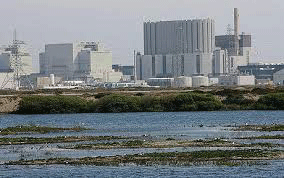
Piers Hopkirk, BBC News, Dungeness, 16 Dec 24
It took about 16 years to build Dungeness B nuclear power station, but to return the site to its original state will take nearly a century.
This is the scale of the task facing EDF as the company continues the process of removing the uranium from this decades-old facility that sits on a remote headland on the Kent coast.
The turbines stopped turning at Dungeness in 2018 and, with the decision taken to cease electricity production, the process of defueling the plant has begun.
In the giant reactor hall the scale of the task becomes apparent.
Buried under the floor are the uranium-filled fuel assemblies that powered the station’s two nuclear reactors.
There are more than 400 rod-filled assemblies in each reactor and it will take six years to safely remove them all.
It is done with the help of a giant 2,000 tonne crane that will carefully lift each one out before moving them into another part of the plant to cool.
Plant Manager, Paul Windle, said: “So far we have removed around 25% of the fuel from one reactor.
“We have got a long journey ahead.”
From the reactor hall the fuel ends up in an area called the ponds.
The fuel, still hot, is stored under water here for 90 days before it is deemed safe enough to be placed into steel flasks which will be moved on to lorries to begin the journey to a nuclear waste facility at Sellafield in Cumbria.
Dungeness B was the first advanced gas cooled nuclear reactor to start construction in the UK.
It was at the vanguard of 20th Century nuclear power generation.
However, in the face of technical challenges that were seen to be too expensive and complicated to address, the decision was taken by EDF to halt energy production………………………………………………………….. https://www.bbc.co.uk/news/articles/cz7qvderej9o
Nuclear waste to be dumped into Cape Cod and turn ocean radioactive

by Lauren Acton-Taylor For Dailymail.Com, 11 Dec 24, https://www.msn.com/en-ca/news/world/nuclear-waste-to-be-dumped-into-cape-cod-and-turn-ocean-radioactive/ar-AA1vG9iC?ocid=msedgntp&pc=HCTS&cvid=8b954ae3ae4e46e9868246df57f356c5&ei=13
he pristine waters off Cape Cod could become radioactive for as long as a month after a new study found that nuclear waste being dumped from the tony peninsula has a ‘high probability’ of lingering.
The Woods Hole Oceanographic Institution conducted the study to find out how likely it would be that discharged wastewater from the Pilgrim Nuclear PowerStation in Plymouth, Massachusetts would spread into Cape Cod Bay, whose surrounding communities include multimillion-dollar mansions.
‘Our numerical simulations suggest it is unlikely that the bulk of plume waters will leave the Bay in less than a month,’ said the study’s leader Irina Rypina.
The dumping comes as part of the power station’s decommissioning, and the study found that its wastewaters could drift near the shores and coastal waters of Dennis, Wellfleet, and Provincetown.  Continue reading
‘If the release were to happen in the spring and summer, a small portion of a plume might leave the bay in less than a month, passing north of Provincetown and then flowing southward along the outer Cape,’ the study said.
‘We found virtually no out-of-the-Bay transport in winter and fall and slightly larger, but still low, probability of some of the plume exiting the Bay in spring and summer,’ Rypina said.
In response to the study, Massachusetts Sen. Ed Markey, who chairs the Senate‘s Environment and Public Works Subcommittee on Clean Air, Climate, and Nuclear Safety, said that the findings confirm concerns expressed by the residents of the Cape.
According to Markey, residents have been questioning the wisdom of dumping plant wastewater into the Bay ‘for years.’
Nuclear wastewater discharge is a normal occurrence during both the operation and decommissioning of power plants, according to the United States Nuclear Regulatory Commission.
‘The controlled release of liquid effluents at nuclear power plants, within specified regulatory limits, is an activity that occurs throughout the operation and decommissioning of a facility,’ said the NRC.
While the study did not explore the health risks that such a dump could pose to marine life or local fishing or recreation, a 2023 analysis by Florida-based Holtec International, the plant’s owner, and the Massachusetts Department of Public Health included alarming findings.
It determined that the roughly 900,000 gallons of wastewater stored at Pilgrim is contaminated with ‘four gamma emitters (Maganese-54, Cobalt-60, Zinc-65 and Cesium-137) and Tritium (H-3 a beta radiation emitter).’
A spokesperson for Holtec told the Boston Herald that Pilgrim had ‘safely’ discharged millions of gallons of water over the decades with little environmental impact.
‘Those discharges were done within the safe federal and state limits and reported to the NRC and publicly available on their website.
‘This includes studies to determine any potential impact to sea life and the Bay which showed that safety has always remained, and plant impact has been negligible,’ the spokesperson told the outlet.
The Pilgrim Nuclear Power Station shut down in May 2019 after 47 years of operation and was then owned by Louisiana-based Entergy Corporation. The plant was purchased by a subsidiary of Holtec in 2019 with an aim toward cleaning up the 1,700-acre site for industrial and commercial development, according to the Herald.
When the plant was bought, Holtec President and CEO Kris Singh assured residents that the project would ‘replicate the superb record of public health and safety and environmental protection that typified the plant’s 47 years of operations.’
In a statement, Markey said that Singh had promised both the senator and impacted communities that the process of decommissioning would be ‘open and transparent.’
‘In the years since, Holtec has fallen woefully short on this commitment. In light of these recent findings, I urge Holtec to develop a wastewater discharge plan that is informed and guided by scientific fact and community input,’ Markey said.
Local residents have continued to show concern for the wastewater dumping into Cape Cod Bay – identified as a’ protected ocean sanctuary’, according to the Massachusetts Government website.
The state Department of Environmental Protection determined on July 18 that Holtec was prohibited from ‘the dumping or discharge of industrial wastes into protected state waters’, the Cape Cod Times reported.
Holtec is reportedly hoping to discharge up to 1.1 million gallons of industrial wastewater and filed an appeal to the agency’s prohibition on August 16.
In a statement, the company said: ‘The appeal explains that the permits granting liquid discharge were issued prior to the Ocean Sanctuary Act legislation, which grandfathers these types of liquid discharges.’
Explosives speed Sizewell A turbine hall decommissioning

WNN, Friday, 6 December 2024
More than 1200 holes were drilled and 700 kilogrammes of explosive used for the demolition of large concrete plinths in the turbine hall of Sizewell A nuclear power plant in the UK.
Nuclear Restoration Services said it was the largest use of explosives on a nuclear site for conventional demolition purposes in decades.
After the holes were drilled into the plinths, the charges were set and covered for the detonation, which was all planned and carried out with Office for Nuclear Regulation (ONR) oversight.
A series of test blasts had to take place and special detonator timings designed to meet nuclear site regulations for air overpressure and ground vibration, with Offive for Nuclear Regulation (ONR) having placed a hold point on the work until they were sure any risks from the novel operation had been minimised.
The ONR said that following the blasts, the huge turbine supporting concrete bases can be removed using heavy machinery within two weeks, rather than “deploying older and slower methods of drilling the structure apart which would have taken several months”.
Sizewell A’s twin reactors shut down in 2006 after 40 years of operation. Planning consent was given to demolish the turbine hall and electrical annexe in August and more than 35 miles of cabling and 8000 scaffolding boards, clips and pipes have been taken out………………………….. https://www.world-nuclear-news.org/articles/explosives-used-in-sizewell-a-turbine-hall-decommissioning
Licensing of Finnish repository further delayed

WNN, Thursday, 5 December 2024
Finland’s Radiation and Nuclear Safety Authority has been given another one-year extension to complete its review of Posiva Oy’s operating licence application for the world’s first used nuclear fuel repository.
Radioactive waste management company Posiva submitted its application, together with related information, to the Ministry of Economic Affairs and Employment on 30 December 2021 for an operating licence for the used fuel encapsulation plant and final disposal facility currently under construction at Olkiluoto. The repository is expected to begin operations in the mid-2020s. Posiva is applying for an operating licence for a period from March 2024 to the end of 2070.
The government will make the final decision on Posiva’s application, but a positive opinion by the Radiation and Nuclear Safety Authority (STUK) is required beforehand. The regulator began its review in May 2022 after concluding Posiva had provided sufficient material. The ministry had requested STUK’s opinion on the application by the end of 2023. However, in January this year, STUK requested the deadline for its opinion be extended until the end of 2024.
STUK has now said Posiva “has not completed the materials necessary” for it to conduct a safety assessment concerning the plant’s operating licence. At STUK’s request, the ministry has agreed to extend the deadline for the regulator’s opinion to 31 December 2025.
……………………………………………………………… The government granted Posiva a construction licence for the project in November 2015 and construction work on the repository started in December 2016. Once it receives the operating licence, Posiva can start the final disposal of the used fuel generated from the operation of TVO’s Olkiluoto and Fortum’s Loviisa nuclear power plants. The operation will last for about 100 years before the repository is closed. Posiva announced in late August the start of a trial run – expected to take sev more https://www.world-nuclear-news.org/articles/licensing-of-finnish-repository-further-delayederal months – of the operation of the final disposal facility, albeit still without the used fuel.
Canada’s nuclear waste problem is not solved

A quick media scan shows many casual observers leaping to the conclusion that Canada’s nuclear waste problem is “solved,” erasing a major obstacle to a costly and dangerous expansion of nuclear power. Nuclear promoters are encouraging this misleading assumption.
Without a doubt, nuclear waste owners to the south are watching these developments closely. U.S. utilities and government have even more waste in temporary storage and no permanent solution in sight.
ANNE LINDSEY, 4 Dec 24
ON Nov. 28, right on schedule, the Nuclear Waste Management Organization (NWMO) triumphantly declared they have picked their site for the future Deep Geological Repository (DGR) for all of Canada’s high-level nuclear waste.
NWMO is a federal government-created consortium of companies that own and must manage Canada’s nuclear waste — 130,000 tonnes (and counting) of highly toxic radioactive materials currently sitting in temporary storage at reactor sites. Their chosen repository site is near Revell Lake, between Ignace and Dryden, Ont. The Revell area is on the territory of Treaty 3 First Nations, the closest being Wabigoon Lake Ojibway Nation (WLON). It sits at the headwaters of Wabigoon and the Turtle-Rainy River watersheds — flowing north and west, eventually into Lake Winnipeg, via the English-Wabigoon system, Lake of the Woods and the Winnipeg River.
In July, the town of Ignace signed a “willingness declaration” agreeing to host a DGR in the Revell area (notwithstanding that Ignace is not even on the same watershed as the Revell site), and only days before the site selection announcement, headlines across multiple news outlets suggested that WLON had also declared itself to be a willing host.
In fact, WLON’s news release about its recent community vote says “the yes vote does not signify approval of the project.” It does say that the nation agrees to further study of the site. This is an important distinction. (The Nation has also since stated that the project will be subject to Wabigoon’s own regulatory assessment and approval process. What this means legally in terms of WLON’s ability to reject the project in the future is not currently known).
NWMO’s process says it must receive a “compelling demonstration of willingness” from a host community before proceeding to site characterization (further geological study of the chosen site to see if it’s even suitable for keeping nuclear waste out of groundwater and the environment for the required hundreds of thousands of years).
NWMO says it is “confident” that specific location studies will prove that their out-of-sight, out-of-mind concept of deep burial of some of the most dangerous toxins on Earth will be safe. They’ve been expressing that cavalier confidence for decades, lulling Canadians into believing that it’s fine to keep producing the waste because eventually it will be dealt with.
A quick media scan shows many casual observers leaping to the conclusion that Canada’s nuclear waste problem is “solved,” erasing a major obstacle to a costly and dangerous expansion of nuclear power. Nuclear promoters are encouraging this misleading assumption.
Without a doubt, nuclear waste owners to the south are watching these developments closely. U.S. utilities and government have even more waste in temporary storage and no permanent solution in sight.
But is the waste problem solved? Even if (predictably), the industry deems its concept technically feasible, and even if WLON eventually decides it is a “willing host,” what about all the other communities impacted by this decision?
They must have their say. This means everyone along the transportation routes from southern Ontario and New Brunswick — let’s remember we are talking about three massive shipments per day for the next 40 years just for existing waste on the sometimes-treacherous highways of northern Ontario.
It also means all the downstream communities (including in Manitoba) whose waters would be affected by any release of radioactivity. Many Treaty 3 First Nations near the Revell site as well as the Grand Council of Treaty 3, Nishnawbe Aski Nation and Anishinabek Nation have already made statements opposing transportation and burial of nuclear waste in northern Ontario.
It’s telling that not a single community or First Nation other than Ignace and Wabigoon Lake has voiced support for the Revell site.
Since Ignace first expressed interest in 2009, both of those communities have been actively courted by the NWMO. Cash and other incentives are known to have been provided to Ignace. Little is publicly known about any agreements that may exist between NWMO and WLON. Those details may never be known as NWMO is mysteriously exempt from freedom of information requests (even though it claims to be transparent).
What is clear is that NWMO has not yet achieved its necessary goal of a “compelling demonstration of willingness.” What it has done is corrupted its own process by claiming consent where none exists, with the blessing of the federal government. Perhaps worst of all — and one might say this is historically predictable — it has created a situation in which neighbouring communities may end up pitted against each other.
Meanwhile, the nuclear waste problem is not “solved.”
Anne Lindsey volunteers with the No Nukes MB campaign of the Manitoba Energy Justice Coalition and has been monitoring nuclear waste since the 1980s. She lives in Winnipeg and spends time in Northwestern Ontario.
Putin’s huge, rusting nuclear battlecruisers symbolise Russian naval decline.
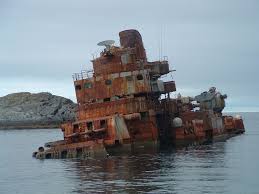
In losing nearly as much tonnage as it built in 2023, the Russian navy joins an exclusive and embarrassing club of stagnating navies that, startlingly, also includes the 886,000-ton – and shrinking – Royal Navy. In recent years, the British fleet has been decommissioning more and bigger vessels than it builds.
Apart from its submarines, the Kremlin will soon have only a coastal navy
David Axe, https://www.telegraph.co.uk/news/2024/12/02/putin-naval-decline-kirov-class-nuclear-battlecruisers/
The hulking Kirov-class nuclear powered battlecruisers were symbols of Moscow’s naval strength during the later Soviet era. A generation later, they’re symbols of Moscow’s slow naval collapse.
The Soviets built four of the 28,000-ton, missile-armed vessels to lead far-ranging battle groups meant to confront Nato warships on the high seas. Three were commissioned in time to see service with the Soviet navy before the Soviet Union collapsed in 1991; the final vessel joined the Russian fleet in 1998 following years of construction delays.
That youngest Kirov, the Northern Fleet’s Pyotr Velikiy, is the only battlecruiser still in active service. She’s one of a dwindling number of big Soviet-vintage warships – including the rusty Admiral Kuznetsov, Russia’s sole aircraft carrier – that sustain Russia’s fading capacity for projecting maritime power across oceans.
A second old battlecruiser, Admiral Nakhimov, has been pierside at Sevmash shipyard in Severodvinsk, in northern Russia, since 1999. The farcical story of her planned return to service is indicative of Russia’s wider naval decline.
The Kremlin decided to return Admiral Nakhimov to service way back in 2008. Refurbishment got underway in 2013. Planned upgrades include the fitting of Kalibr and Oniks cruise missiles plus new sensors and communications. As recently as this fall, photos circulated online showing modest but visible progress with the installations.
But the work has been missing deadlines – for years. In 2014, the plan was for Admiral Nakhimov to return to service in 2020. She didn’t. As of 2018, the battlecruiser was supposed to recommission in 2021. A year later, the recommissioning slipped to 2022. That deadline came and went, as did the next deadline for a 2024 return to service. Now the plan is for Admiral Nakhimov to rejoin the fleet in 2026.
Don’t hold your breath. The costs of Russia’s 33-month wider war on Ukraine have driven up inflation and driven down investment in Russia. The economy is teetering. The costly effort to squeeze a few more years of front-line use from a 38-year-old warship may soon seem like an extravagance.
If and when the effort to reactivate Admiral Nakhimov finally fails, it could signal a new – and humbler – era for the Russian fleet.
In 2023, the Russian navy added just 6,300 tons to its total tonnage, ending the year with warships totalling 2,152,000 tons. The Russians would have added 17,700 tons last year through the new construction of a new frigate, corvettes, a minesweeper and a few submarines, but Ukrainian missiles and drones destroyed vessels together weighing 11,400 tons.
In losing nearly as much tonnage as it built in 2023, the Russian navy joins an exclusive and embarrassing club of stagnating navies that, startlingly, also includes the 886,000-ton – and shrinking – Royal Navy. In recent years, the British fleet has been decommissioning more and bigger vessels than it builds.
For the Russians, it mostly comes down to strategy, money … and engines. Big ships are expensive – and unnecessary for a country whose main strategic ambitions lie along its land border. The Russians still build plenty of modern nuclear-powered submarines and can deploy them to deter direct conflict with a major foe. Given that safeguard, a globally-deploying surface fleet is a luxury.
Which is fortunate for Russia’s leaders, as it’s not clear Russian industry could build big new warships even if it had the money to do so and a clear reason to try. Prior to 2014, Russian shipbuilders imported most of their large maritime engines from Ukraine. It should go without saying they no longer do so.
Lacking a source of new engines, it’s much easier for Russia to restore an old battlecruiser than to build a new one from scratch. It actually helps that Admiral Nakhimov has a nuclear powerplant, as Russian industry still manages to build and maintain those on its own.
When the last big Soviet ships finally sail for the last time, the Russian navy will become a mostly coastal navy – albeit one with a powerful undersea deterrent. Even if Admiral Nakhimov does rejoin the fleet and deploys a few more times, she’ll only delay that inevitability.
Lincolnshire county councillors demand answers on Nuclear Waste Services’ (NWS) proposed Geological Disposal Facility (GDF) at Theddlethorpe
By James Turner, Local Democracy Reporter, 03 December 2024
Lincolnshire county councillors demand answers on Nuclear Waste Services’
(NWS) proposed Geological Disposal Facility (GDF) at Theddlethorpe.
Concerned representatives have criticised the level of communication from
the government body behind a proposed underground nuclear waste facility.
Members of Lincolnshire County Council’s executive raised concerns about a
number of unanswered questions regarding Nuclear Waste Services’ (NWS)
proposed Geological Disposal Facility (GDF) during a meeting on Tuesday
(December 3) – specifically about where it could be built and, crucially,
whether it is safe. NWS was previously considering three sites to locate
the facility, which is estimated to cost between £20 billion and £53
billion, making it the largest planned infrastructure project in the UK.
Lincs Online 3rd Dec 2024 https://www.lincsonline.co.uk/louth/very-poor-communication-slammed-as-members-demand-to-know-9394650/
Backfilling of Gorleben salt mine (former German nuclear waste dump) starts
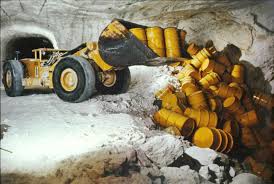
At left, The Gorleben mine was used as the German nuclear waste dump decades ago .
Backfilling has begun of the former salt mine in Gorleben, Lower Saxony –
previously considered a possible site for geological disposal of Germany’s
high-level radioactive waste.
Exploration work on the Gorleben rock salt
formation as a potential radioactive waste repository site began in 1977.
The federal government gave its approval for underground exploration at the
site in 1983, and excavation work began with the sinking of the first of
two shafts in 1986.
Work continued until June 2000 when, alongside plans
for the eventual phaseout of nuclear power in Germany, a three- to ten-year
moratorium was imposed on the Gorleben exploration work. This moratorium
was lifted in March 2010.
World Nuclear News 2nd Dec 2024, https://www.world-nuclear-news.org/articles/backfilling-of-gorleben-mine-starts
Decommissioning old nuclear sites to cost £130bn in blow to Miliband

The figures mean the cost of the UK’s nuclear clean-up alone is close to the total value of electricity produced by atomic power stations since the 1950s.
If the cost of building Britain’s 20-odd past and present nuclear power stations were included – around £30bn each in today’s money – the total cost of several hundred billion pounds would far exceed the value of the power produced, say experts.
Expense to taxpayer of cleaning up former power plants is higher than previously estimated, say auditors
Jonathan Leake, Telegraph, 29 Nov 24
Ed Miliband faces a bill of almost £130bn to clean up Britain’s old nuclear sites after estimated costs jumped.
It will cost £128.8bn to safely wind down old facilities, according to an investigation by the National Audit Office (NAO) – £23.5bn more than previously expected, after factoring in the cost of shutting eight power stations that are currently operational.
Seven nuclear stations are due to shut down in 2028 at which point operator EDF, France’s state-owned energy firm, will hand them back to the British Government for decommissioning.
Another station, Sizewell B, is expected to keep operating into the 2030s when it too will be decommissioned at taxpayer expense.
The NAO report, which looked at the overall operation of Mr Miliband’s Department for Energy Security and Net Zero (Desnz), said: “The current best estimate is that the eight existing sites will each cost £23.5bn to defuel and decommission.”
This is in addition to £105.3bn already set aside for dealing with other legacy projects, chiefly waste stockpiled at Sellafield in Cumbria.
Desnz oversees a Nuclear Liabilities Fund set up to save the money needed for decommissioning the eight stations, but the NAO said this had proven woefully inadequate.
It also warned that the final costs and taxpayer contributions could rise even higher.
The NAO said: “Costs could rise further, particularly if defuelling takes longer than planned … There is a risk that further taxpayer contributions may be required.”
However, the cost of decommissioning the UK’s remaining working nuclear stations is dwarfed by the amount which the NAO found was needed for dealing with legacy waste since the 1950s.
About 70pc of the costs relate to the Sellafield site in Cumbria, where thousands of tonnes of highly radioactive waste are stored in buildings and cooling ponds that are up to 70 years old – many considered extremely hazardous.
The figures mean the cost of the UK’s nuclear clean-up alone is close to the total value of electricity produced by atomic power stations since the 1950s.
Figures released by the Department of Energy and Climate Change show that since Britain’s first nuclear power station opened in 1956, they have generated 2.6bn megawatt hours (MWh) of electricity with a wholesale value of about £200bn at today’s prices.
If the cost of building Britain’s 20-odd past and present nuclear power stations were included – around £30bn each in today’s money – the total cost of several hundred billion pounds would far exceed the value of the power produced, say experts.
The NAO report also looked at the system of Contracts for Difference (CfD) – a financing method created by the UK to guarantee investors in wind farms, solar farms and nuclear power stations sufficient income.
Such schemes, it warned, were already set to cost consumers £89bn by the 2030s – but the final sums could be far higher because of unreliable estimates for the amount of power likely to be produced……………………… https://www.telegraph.co.uk/business/2024/11/29/decommissioning-old-nuclear-sites-to-cost-130bn-in-blow/
1 This Month

of the week – Shut Down Drone Warfare!


Tell the Ukrainian Government to Drop Prosecution of Peace Activist Yurii Sheliazhenko

Petition to revoke the licensing of the Near Surface Nuclear Disposal Facility (NSDF) at Chalk River. https://www.ourcommons.ca/petitions/en/Petition/Details?Petition=e-7247
To see nuclear-related stories in greater depth and intensity – go to https://nuclearinformation.wordpress.com
-
Archives
- April 2026 (34)
- March 2026 (251)
- February 2026 (268)
- January 2026 (308)
- December 2025 (358)
- November 2025 (359)
- October 2025 (376)
- September 2025 (257)
- August 2025 (319)
- July 2025 (230)
- June 2025 (348)
- May 2025 (261)
-
Categories
- 1
- 1 NUCLEAR ISSUES
- business and costs
- climate change
- culture and arts
- ENERGY
- environment
- health
- history
- indigenous issues
- Legal
- marketing of nuclear
- media
- opposition to nuclear
- PERSONAL STORIES
- politics
- politics international
- Religion and ethics
- safety
- secrets,lies and civil liberties
- spinbuster
- technology
- Uranium
- wastes
- weapons and war
- Women
- 2 WORLD
- ACTION
- AFRICA
- Atrocities
- AUSTRALIA
- Christina's notes
- Christina's themes
- culture and arts
- Events
- Fuk 2022
- Fuk 2023
- Fukushima 2017
- Fukushima 2018
- fukushima 2019
- Fukushima 2020
- Fukushima 2021
- general
- global warming
- Humour (God we need it)
- Nuclear
- RARE EARTHS
- Reference
- resources – print
- Resources -audiovicual
- Weekly Newsletter
- World
- World Nuclear
- YouTube
-
RSS
Entries RSS
Comments RSS
 nuclear-news