Potential UK nuclear waste sites identified
Evie Lake, BBC News, North East and Cumbria, 30th Jan 2025
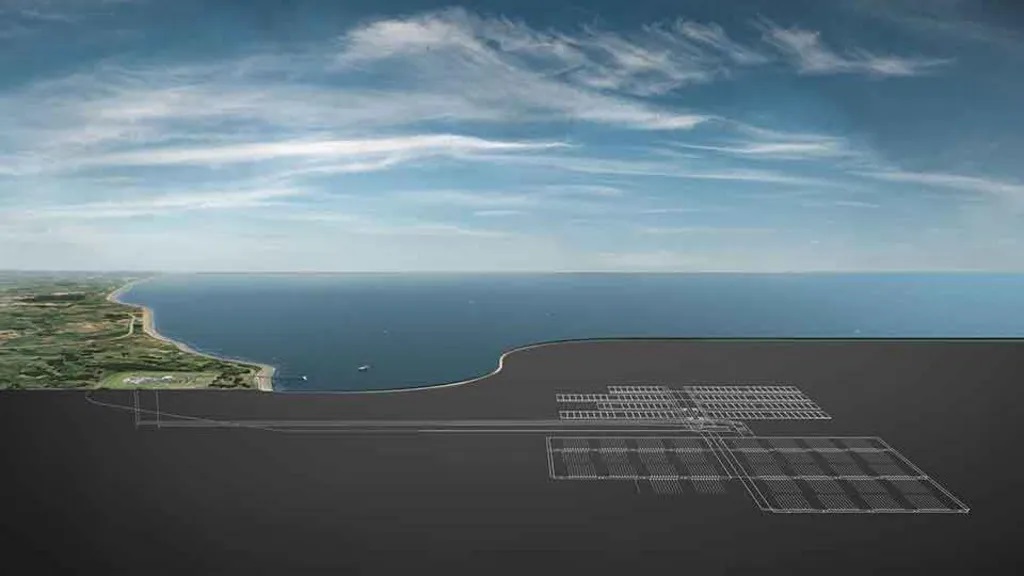
Three areas have been shortlisted to host a nuclear waste disposal site.
Communities in Mid Copeland and South Copeland in Cumbria and Lincolnshire have become “Areas of Focus” for Nuclear Waste Services (NWS) to help consider their potential to host a Geological Disposal Facility (GDF).
NWS said construction would only start when a suitable site was identified and a potential community had confirmed its “willingness” to host the facility.
Community events will be held to talk about “what this means for each area”, it added.
The locations have been identified using geological data, areas of environmental protection and consideration of built-up areas.
Each needed the right sub-surface geological environment deep underground, a suitable surface location and the ability to connect the two with accessways.
‘Willing community’
Two surface Areas of Focus have been identified in Mid Copeland, east of Sellafield and east of Seascale.
In South Copeland, land west of Haverigg has been chosen.
The sub-surface level in the sea off the coast of Cumbria would be the same for both.
In Lincolnshire, land between Gayton Le Marsh and Great Carlton, near Louth, is being considered.
This could see existing proposals to bury the nuclear waste at the old gas terminal in Theddlethorpe scrapped.
NWS will now evaluate the sites and carry out investigations to consider the potential for each area to “safely” host a GDF……………………………………
https://www.bbc.co.uk/news/articles/c62qe2wqvj7o
Sweden building world’s second nuclear waste storage site amid safety concerns
Jan 16, By Jack Aylmer (Energy Correspondent), https://san.com/cc/sweden-building-worlds-second-nuclear-waste-storage-site-amid-safety-concerns/
Sweden has started building the world’s second-ever long-term storage facility for spent nuclear fuel. The site is located in Forsmark, Sweden, approximately 90 miles north of Stockholm, Sweden.
The site is designed to securely contain highly radioactive waste for 100,000 years. Finland remains the only other country nearing completion of a permanent storage solution for nuclear waste.
Permanent storage for nuclear waste has been a longstanding challenge for the industry since the advent of commercial nuclear reactors in the 1950s.
Globally, around 300,000 tons of spent nuclear fuel are awaiting disposal, according to the World Nuclear Association. Nuclear scientists currently store most of this waste in cooling ponds near the reactors that produce it.
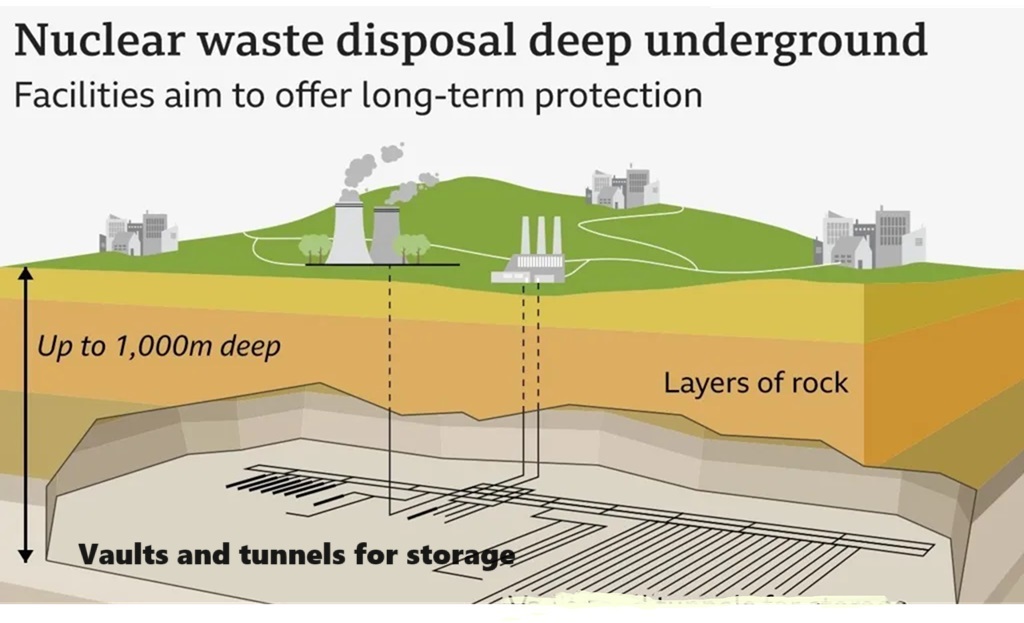
The Forsmark repository will feature nearly 40 miles of tunnels buried over 1,600 feet deep in bedrock estimated to be 1.9 billion years old.
Engineers designed the site to hold 12,000 tons of spent nuclear fuel. The fuel will be encased in corrosion-resistant copper capsules, packed in clay and buried.
Officials expect the site to begin receiving waste in the late 2030s, and final closure is projected for around 2080, when the site reaches capacity.
However, the project faces potential delays due to safety concerns. MKG, the Swedish nongovernmental organization Office for Nuclear Waste Review, filed an appeal with a Swedish court calling for additional reviews of the facility.
MKG highlighted research suggesting the copper capsules could corrode over time, potentially releasing radioactive elements into groundwater.
The estimated cost of developing the repository exceeds $1 billion, and will be funded by Sweden’s nuclear industry. It is intended to store waste from the country’s existing nuclear power plants, but will not accommodate waste from future reactors. Sweden already announced plans to construct 10 additional nuclear reactors by 2045.
The Changing Goal Posts of Nuclear Wastes Crazily Earmarked for “Geological Disposal”

The following letter was sent today to Millom Town Council, 25 Jan 25
The Changing Goal Posts of Nuclear Waste Geological Disposal
Lakes Against Nuclear Dump is a Radiation Free Lakeland campaign with a Facebook group of almost 1000 many of whom live in the Millom area.
We would like to thank Millom Town Council for voting to pull out of the so called “Community Partnership” with Nuclear Waste Services. The developer NWS has one aim and that is to deliver a “Geological Disposal Facility.” Nuclear Waste Services are proving to be the very worst of developers. We all know of developers who put in an application for works to get initial approval knowing full well the goal posts are to be changed later down the line. The latest being to bury 140 tonnes of plutonium. The US is looking to bury a far smaller stockpile of plutonium at WIPP, this has generated criticism from the Bulletin of Atomic Scientists and others concerned with nuclear safety, We assume the burial of plutonium was a NDA decision rather than a “Community Partnership” decision.
This is all a far cry from the 1990s NIREX days. The nuclear wastes slated for burial then on what is now the Wasdale Mountain Rescue Centre at Longlands Farm, Gosforth were low and intermediate. A long public inquiry involving multiple scientists and geologists found the NIREX plan for burial of low and intermediate level nuclear wastes to be ultimately flawed and dangerous to public health. The nuclear dump mission creep now includes plutonium. Deep burial and abandonment of long lived nuclear wastes is not a safe option given the shortfalls in the technical and scientific knowledge of permanent containment. The wastes should be constantly monitored and repackaged when necessary. The push for burial in a very large, very deep (and earthquake inducing) sub-sea mine is a purely political choice in order to justify new nuclear wastes.
We believe you will be ratifying your decision on January 29th and we look forward to others including Friends of the Lake District, taking Millom Town Council’s lead and pulling out of the Geological Disposal Facility “Community Partnerships”. of South and Mid Copeland.
Yours sincerely
Marianne Birkby
Lakes Against Nuclear Dump – a Radiation Free Lakeland campaign
Risks of geologic disposal of weapons plutonium
By Cameron Tracy | January 13, 2025https://thebulletin.org/premium/2025-01/risks-of-geologic-disposal-of-weapons-plutonium/
Nuclear Waste: The Dark Side of the Microreactor Boom

By Haley Zaremba – Jan 15, 2025, https://oilprice.com/Alternative-Energy/Nuclear-Power/Nuclear-Waste-The-Dark-Side-of-the-Microreactor-Boom.html
The nuclear energy sector is experiencing a revival, driven by factors such as increased energy demand and support from governments and tech companies.
Microreactors, a new form of nuclear technology, are being touted for their lower costs and smaller size, but they produce a significantly higher volume of nuclear waste.
Despite concerns about nuclear waste, the development and deployment of microreactors continue to gain momentum, driven in part by the growing energy needs of AI.
Nuclear energy is ready for its close-up. After decades of steep decline in the sector and relatively high levels of public mistrust for the controversial technology, the tides are turning in favor of a nuclear energy renaissance. The public memory of disasters like Fukushima, Three Mile Island, and Chernobyl is fading, and the benefits of nuclear – a zero-carbon, baseload energy source – are getting harder to ignore as deadlines for climate commitments grow closer and energy demand ticks ever higher. But the future of the nuclear energy sector will look a bit different than its last boom time, from technological advances to the makeup of its biggest backers.
In Russia and Asia, nuclear energy has stayed popular, but in the West, nuclear had almost entirely fallen out of favor up until the last few years. In the United States, the Biden administration helped to build momentum for a nuclear comeback through its flagship Inflation Reduction Act, which included tax breaks and other incentives for various nodes of the nuclear sector. Over in Europe, nuclear advocates are trying to push through policy supporting nuclear power as Europe reconfigures its energy landscape to contend with energy sanctions on Russia. Public opinion in the West is also shifting in favor of nuclear power. As of 2023, a Gallup poll showed that support for nuclear energy in the United States was at a 10-year high.
Some of the biggest proponents of the nuclear energy renaissance are big tech bigwigs, who point to the power source as a critical solution to feed the runaway power demand of Artificial Intelligence. In fact, the growth trend of data centers’ energy demand is so extreme that it will soon outstrip the United States’ production potential if nuclear energy – and a host of other low-carbon solutions – are not utilized, and soon. Tech bigwigs, therefore, have good reason to back nuclear energy – oh, and they also just so happen to be behind a rash of nuclear energy startups.
But the new kind of nuclear that these companies are trying to bring onto the scene will not be the same as the nuclear technologies that had so solidly fallen out of favor over the last few decades. Traditional nuclear energy has a number of drawbacks, most notably its extremely high up-front costs and the additional costly burden of storing hazardous nuclear waste. New nuclear advocates want to confront the former challenge by rolling out much smaller versions of nuclear reactors, which can essentially be mass-produced and then installed on site for much lower development costs.
Currently, the industry is undergoing a competitive race to corner the market on nuclear microreactors, which are about the size of a shipping container and function somewhat like a giant battery pack. “Microreactors have the ability to provide clean energy and have passive safety features, which decrease the risk of radioactive releases,” Euro News recently reported. “They are also much cheaper than bigger plants as they are factory-built and then installed where they are needed in modules.”
These microreactors can be used in a huge range of applications and do not require any on-site workers for their operation and maintenance. Instead, they can be operated remotely and autonomously. As a result, they have much lower overhead costs as well as lower up-front costs. So what’s the downside?
Well, it’s a big one. Scientists have found that, contrary to what nuclear advocates have touted, small nuclear reactors produce extremely high levels of nuclear waste, and could even be worse for the planet than their full-sized predecessors. “Our results show that most small modular reactor designs will actually increase the volume of nuclear waste in need of management and disposal, by factors of 2 to 30,” said Stanford study lead author Lindsay Krall. “These findings stand in sharp contrast to the cost and waste reduction benefits that advocates have claimed for advanced nuclear technologies.”Some members of the scientific community have taken notice: “Say no to small modular reactors,” blasted a recent headline from the Bulletin of Atomic Scientists.
However, the voices decrying the rollout of small- and microreactors seem to be in the minority, as the Silicon Valley-backed industry barrels full speed ahead. Countries across Europe have jumped into the race as well, and its high levels of momentum – fuelled by the seemingly unstoppable expansion of AI – are unlikely to be impeded by the scientists yelling doomsday warning, however well-founded, from the sidelines.
Brian Goodall slams MP over Rosyth Dockyard nuclear submarines move
“As if it’s not bad enough that there are seven of these environmental time bombs already here, some of which have now been here for decades.“
By Ally McRoberts, Dunfermline Press 25th Jan 2025
A ROSYTH SNP councillor said he was “totally outraged” at the prospect of more nuclear submarines being brought to the dockyard for dismantling.
Brian Goodall said the “environmental time bombs” should be nowhere near the town and hit out at Labour MP Graeme Downie for pushing for more of the work to be done here.
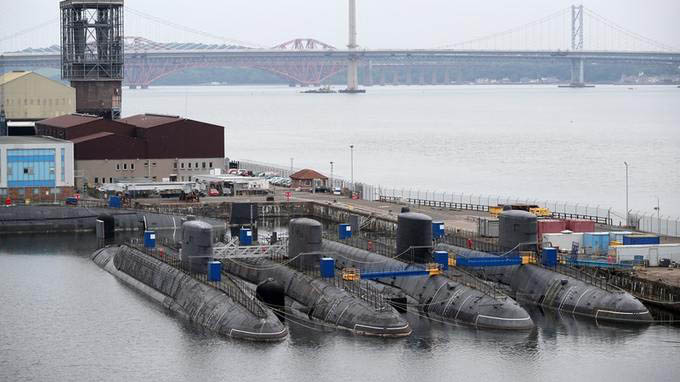
One old Royal Navy sub, HMS Swiftsure, is being cut up and the radioactive waste removed as part of an innovative recycling scheme and there are six more vessels laid up at Rosyth, and another 16 at Devonport in Plymouth.
Mr Downie – who dismissed the criticism as “scaremongering” – wants the Ministry of Defence to put up the money to deal with all of the decommissioned boats and said it would “guarantee decades of work” and bring hundreds of jobs to the dockyard.
But Cllr Goodall hopes to sink that plan and said: “I’ve been totally outraged to see that our area’s Labour MP has called for even more nuclear submarines to be dumped and broken up in Rosyth.
“Labour’s MP for Dunfermline and Dollar has asked the MoD to bring all of the UK’s decommissioned nuclear submarines to Rosyth Dockyard.
“As if it’s not bad enough that there are seven of these environmental time bombs already here, some of which have now been here for decades.”
One of the seven at the yard, HMS Dreadnought has been laid up so long – since 1980 – that much of her low-level radiation has “disappeared naturally”.
As well as dealing with the 23 vessels at Rosyth and Devonport, three more are due to come out of service.
Cllr Goodall continued: “His call runs contrary to Fife Council’s long-standing commitment as a leading nuclear free local authority and I also fear the major impact on Rosyth Dockyard’s contribution to Scotland’s green transition, and the jobs that come with that, if this change of policy was secured, and the dockyard couldn’t become de-regulated as a nuclear site in the medium term.
“Rosyth is simply not the right place for the MoD, or anyone else, to be storing radioactive materials.
“There are homes, shops and businesses within metres of the dockyard.
“There’s a Fife College campus within the dockyard and our brand-new high school is being built within a few hundred metres of the site.”………………………..
Cllr Goodall said: “The compromise that could see the submarines that are already here, dismantled at the dockyard with all radioactive substances being removed to more suitable interim storage facilities down south, is one that I can, reluctantly, agree with, but any suggestion of additional nuclear submarines being brought to Rosyth is an outrage, and would be a breach of promise from the MoD.”……………………… https://www.dunfermlinepress.com/news/24883349.brian-goodall-slams-mp-rosyth-dockyard-subs-move/
Plutonium Disposition Strategy

Statement,
UK Parliament 24th Sept 2025, https://questions-statements.parliament.uk/written-statements/detail/2025-01-24/hcws388
The Department for Energy Security and Net Zero will work with the Nuclear Decommissioning Authority (NDA) to immobilise the UK-owned civil separated plutonium inventory at Sellafield.
Continued, indefinite, long-term storage leaves a burden of security risks and proliferation sensitivities for future generations to manage. It is the Government’s objective to put this material beyond reach, into a form which both reduces the long-term safety and security burden during storage and ensures it is suitable for disposal in a Geological Disposal Facility (GDF). Implementing a long-term solution for plutonium is essential to dealing with the UK’s nuclear legacy and leaving the environment safer for future generations.
Following a public consultation in 2011 the government at the time formed a preliminary policy view to pursue reuse of plutonium as mixed oxide fuel (MOX) but to remain open to any alternative proposals for plutonium management.
NDA have since carried out substantial technical, deliverability and economic analysis to identify a preferred option for a long-term disposition solution, including options for immobilisation and reuse. The outcome of this work recommended immobilisation as the preferred way forward to put the material beyond reach soonest and with greatest delivery confidence.
Following further development work the NDA will select a preferred technology for immobilisation of the plutonium as a product suitable for long-term storage and subsequently disposal in a GDF. Organisations involved in the delivery of this work will include the NDA, in particular Sellafield Ltd and Nuclear Waste Services, the UK National Nuclear Laboratory and the wider supply chain.
We expect that around the end of the decade following Government approval the NDA and Sellafield will begin delivery of the major build programme of plutonium disposition infrastructure. This programme is expected to support thousands of skilled jobs during the multidecade design, construction and operational period.
While work continues on long term immobilisation, the NDA is ensuring the continued safe and secure storage of plutonium in the UK. As part of this approach, new facilities are being built at Sellafield to repack the plutonium inventory for placement in a suite of modern stores.
UK to dispose of, not re-use, radioactive plutonium stockpile
BBC 24th Jan 2025,
https://www.bbc.co.uk/news/articles/cjr8lzyg299o
The government says it will dispose of its 140 tonnes of radioactive plutonium – currently stored at a secure facility at Sellafield in Cumbria.
The UK has the world’s largest stockpile of the hazardous material, which is a product of nuclear fuel reprocessing.
It has been kept at the site and has been piling up for decades in a form that would allow it to be recycled into new nuclear fuel.
But the government has now decided that it will not be reused and instead says it wants to put the hazardous material “beyond reach” and made ready for permanent disposal deep underground.
That means that a facility will be built at Sellafield where the plutonium can be converted into a stable, rock-like material, which can eventually be disposed of deep underground.
In a statement, energy minister Michael Shanks said the objective was “to put this material beyond reach, into a form which both reduces the long-term safety and security burden during storage and ensures it is suitable for disposal”.
Nuclear materials scientist Dr Lewis Blackburn from the University of Sheffield said the plutonium would be “converted into a ceramic material” which, while still radioactive, is solid and stable so it is deemed safe to dispose of.
“The type of ceramic remains to be decided [and selecting the right material] is the subject of ongoing research.”
Nuclear waste expert Prof Claire Corkhill from the University of Bristol said the goverment’s decision was a “positive step”.
She told BBC News that it paved the way to removing the cost and hazard of storing plutonium at Sellafield “by transforming it and locking it away into a solid, durable material that will last for millions of years in a geological disposal facility”.
“These materials are based on those we find in nature – natural minerals, that we know have contained uranium for billions of years.”
The government is currently in the early stages of a long technical and political process of choosing a suitable site to build a deep geological facility that will eventually be the destination for all of the country’s most hazardous radioactive waste. That facility will not be operational until at least 2050.
High likelihood of radioactive waste in smoldering landfill, Missouri officials say
MISSOURI INDEPENDENT, By: Allison Kite – January 22, 2025
Missouri officials are warning the U.S. Environmental Protection Agency of a “high likelihood” there is radioactive contamination in a smoldering landfill outside St. Louis.
In a letter last week, the Missouri Department of Natural Resources asked that the EPA assume oversight of the Bridgeton Landfill, arguing it may contain nuclear waste like the adjacent West Lake Landfill.
The two landfills, situated in the St. Louis suburb of Bridgeton, have received extensive attention from regulators over the years. The Bridgeton Landfill has been experiencing a “subsurface smoldering event” — a chemical reaction that heats and consumes waste like a fire but lacks oxygen — for more than 14 years, emitting noxious odors and raising concerns among residents that the “fire” might reach the radioactive waste in the West Lake Landfill next door.
The West Lake Landfill is subject to an EPA oversight and a cleanup to remove thousands of tons of uranium left over from World War II.
But, the state argued in its letter, there may be radioactive waste in the Bridgeton portion of the landfill far closer to the subsurface smolder than previously known……………………………………………………………………………………………………………………….
The St. Louis area has struggled for years with a radioactive waste problem.
During World War II, uranium was refined in downtown St. Louis for use in the Manhattan Project, the name given to the war-era effort to build the world’s first atomic bomb.
After the war, the waste was trucked to St. Louis County and dumped at the airport where it leaked into Coldwater Creek, polluting its banks and waters and subjecting generations of families to radiation exposure and an increased risk of certain cancers. The waste was sold and moved to a site in Hazlewood — still adjacent to the creek — where it continued to expose residents.
In 1973, after valuable metals were extracted from the pile, the remaining waste was illegally dumped in the West Lake Landfill, where it remains today.
The EPA is nearing the end of a process to plan an excavation of much of the radioactive waste from the landfill. Parts of the landfill with lower levels of contamination will be capped.
The U.S. Army Corps of Engineers is overseeing the cleanup of Coldwater Creek.
Last week, the EPA announced it would expand the excavation at the West Lake Landfill because it found additional radioactive contamination. Under the revised plan, another 40 acres of the landfill will be included in the cleanup. Crews will need to dig up another 20,000 cubic yards of contaminated soil and debris, and the price of the cleanup will climb to almost $400 million.
For years, the EPA thought the radioactive material was confined to two portions of the landfill, relying on findings from the Nuclear Regulatory Commission, which, in the late 1970s, flew a helicopter over the landfill to measure gamma radioactivity. That effort missed contamination in parts of the landfill.
The Missouri Department of Natural Resources’ letter came in response to the EPA’s announcement last week that it would expand the cleanup. The state agency said it supported the expanded cleanup and recommended that the EPA “considers being the lead agency for all the potentially affected properties.” https://missouriindependent.com/2025/01/22/high-likelihood-of-radioactive-waste-in-smoldering-landfill-missouri-officials-say/?fbclid=IwY2xjawIAOhZleHRuA2FlbQIxMQABHR0Eo5ucf2C5gyG0H9KX_GVfE9QfJMSf34RPNYlxK_bMz-QNu–VBSiyrA_aem_ijh3lKomduLQR0zVXkDaIQ
Sweden’s Nuclear Waste Plan: A 100,000-Year Gamble
Oil Price, By Kurt Cobb – Jan 20, 2025,
- Sweden plans to store nuclear waste for 100,000 years, but the author questions whether this is feasible given the uncertainties of human civilization and technological progress over such a long period.
- The author argues that climate change, political instability, and technological limitations could all pose threats to the long-term safety of nuclear waste storage.
- The author suggests that reprocessing nuclear waste might be a better solution than burying it, but acknowledges that this is also expensive and dangerous.
The sensible Swedes like planning ahead. This time its storage for nuclear waste from its own nuclear industry—storage that is supposed to last 100,000 years. Nuclear power currently provides 40 percent of Sweden’s electricity from six operating reactors. The Swedes expect to fill the storage site—”60 km of tunnels buried 500 metres down in 1.9 billion year old bedrock”—sometime by 2080 at which time it will be closed.
For understanding whether the target of 100,000 years of successful storage is plausible, I suggest a trip back 100,000 years to understand what surprises might be in store over such an interval. One hundred thousand years ago the Bronze Age, the age when humans first started to refine and work with metal, was still 97,000 years in the future.
It might seem that not much happened in those 97,000 years, but actually a lot that could challenge such storage schemes did. For example, somewhere around 71,000 to 74,000 years ago Mount Toba, located in modern-day Indonesia, erupted in a supervolcano thought to be the largest in human history. The eruption was two orders of magnitude (100X) larger than another famous Indonesian volcanic eruption, Mount Tambora, which caused what is now referred to as “the year without a summer” in 1816.
…………..Of course, another Mount Toba might just solve the problem of keeping humans away from Swedish nuclear waste because there will be so few people left who could end up drinking radioactive water or touching radioactive soil that we needn’t worry. But a lesser disaster might only, say, halve the human presence on Earth while destroying the kind of complex technology and crucial political structure that make it possible to monitor such waste sites.
……………………………..What we call civilization, that is, human settlement in cities, has only been around about 10,000 years. That’s hardly an endorsement for continuity over the next 100,000. Maybe the Swedes believe that the way they are burying their nuclear waste will make the coming and going of human civilizations over the next 100,000 years irrelevant. But, how could they possibly know that? After all, one Swedish environmental group is going to court to challenge the plan because “research from Sweden’s Royal Institute of Technology showed the copper capsules [used to contain the waste] could corrode and leak radioactive elements into the ground water.”
Okay, maybe you’re thinking that surely in the future our technological prowess will be always ever greater and so containing these wastes will ultimately be a trivial problem in retrospect. There are so many answers to why that will almost certainly NOT be the case. The simplest one is that technology relies on energy and our inability to get beyond fossil fuels which are finite to something even more dense and versatile doesn’t bode well for an advanced technological future.
………………..I understand that now that we humans have produced this waste, we ought to figure out how to store it safely for the sake of whatever life, both human and nonhuman, comes after us. One solution would be to reprocess it to get the usable radioactive products from the waste and use them up as much as possible. That reduces but does not eliminate waste. And, reprocessing is expensive and dangerous and essentially a doubling down on an advanced technological solution.
Of course, another problem is that reprocessing is great for extracting plutonium that can be used in nuclear weapons—which could lead to another kind of disaster. Beyond this, worldwide the amount of waste continues to increase and there are plans to build new nuclear reactors without a solution to the waste problem having been realized on any scale necessary to take care of wastes from all the countries of the world NOT called Sweden. That’s why burying what we have in the ground seems like a cheap and viable solution in comparison to reprocessing—or the totally crazy idea of shooting such waste into space or into the Sun.
I just wonder how knowledge of such waste sites will be preserved for 100,000 years. I wonder whether we humans can build something that will last 100,000 years given our record and the dangerous exigencies of life on Earth. And, I wonder if we were wise to create something in the first place that requires 100,000 years of care, given how heedless we as a species are to hazards of our own making that may destroy our current civilization much, much sooner than a thousand centuries from now. https://oilprice.com/Alternative-Energy/Nuclear-Power/Swedens-Nuclear-Waste-Plan-A-100000-Year-Gamble.html
Northwestern Ontario nuclear waste site selection raises concerns.
The selection process has overlooked the broader impact on local and Indigenous populations near highways that could be used to transport nuclear waste north.
The Hill Times: Canada’s Politics and Government News Source, BY ERIKA SIMPSON | December 12, 2024
The Nuclear Waste Management Organization selection of two northwestern Ontario communities—Wabigoon Lake Ojibway Nation and Ignace—as host communities for Canada’s proposed Deep Geological Repository raises concerns and controversy. Located approximately 1,500 km from Toronto, the distance highlights the geographical separation between the selected communities and Toronto, home to the Darlington and Pickering nuclear power plants that will eventually be decommissioned.
On Nov. 28—the same day of Nuclear Waste Management Organization’s (NWMO) announcement—the Municipality of South Bruce took many by surprise by announcing it was exiting the site selection process for the proposed Deep Geological Repository (DGR). Despite South Bruce’s proximity—just 46 km from the Bruce reactor, the world’s largest-operating nuclear facility on Lake Huron’s shores—the NWMO decided to pursue the Ignace location. This raises questions about why the NWMO chose to bypass South Bruce, which, due to its location, appeared to be a more logical choice for Canada’s first DGR.
Despite being presented as a “community-driven, consent-based” process, the selection process launched in 2010 sought to narrow 22 potential sites down to just one willing community. The process has thus far overlooked the broader impact on local and Indigenous populations near highways that could be used to transport nuclear waste northward.
Media outlets like The Globe and Mail and The Hill Times report that the NWMO’s DGR plan involves transporting nuclear waste by truck for over four decades, from all Canada’s reactor sites to the nuclear facility, where the waste could be stored underground. More than 90 per cent of the waste is currently at Pickering, Darlington, and Bruce nuclear stations in Ontario, with the rest located in Point Lepreau, N.B., Quebec, Manitoba, and Ottawa.
With the NWMO selecting the Ignace site and an all-road transportation method, the trucks are expected to travel a total of 84 million km on Canadian roads. There is always the risk that radioactive material will leak while in transit or short-term storage, something that has happened in Germany and New Mexico over the past two decades.
The NWMO’s claims of a rigorous and independent process are undermined by a lack of public dialogue and transparency. Few have been aware of the proposal to build a national underground nuclear waste site. Northwatch and We The Nuclear Free North raised concerns about the NWMO’s decision involving Wabigoon Lake Ojibway Nation (WLON) in the project.
WLON’s Nov. 28 statement clarifies that the First Nation has not approved the project but has agreed to proceed with the next phase of site characterization and regulatory processes. Their “yes” vote reflects a commitment to assess the project’s feasibility through environmental and technical evaluations, not an endorsement of the DGR itself.
South Bruce, the other potential willing community, held a referendum on Oct. 28, which revealed deep divisions. The final tally was 1,604 votes in favor (51.2 per cent) and 1,526 against (48.8 per cent), with a total of 3,130 votes cast. A margin of just 78 votes decided a by-election with far-reaching implications for millions of people across multiple generations.
The decision to allow a local municipality to oversee the referendum on the nuclear waste disposal site has been met with significant controversy. Critics argue that the arrangement posed a conflict of interest, as municipal staff—partially funded by the NWMO—actively promoted the project, casting doubt on their impartiality and raising concerns about financial influence on the referendum’s outcome. The council’s firm opposition to allowing a paper ballot raised further suspicions. Why reject a voting method that could be physically verified?
Located about 19 km southeast of Dryden, WLON faces similar concerns regarding the fairness of the online voting process and voter eligibility. These issues could erode public confidence in municipal referendum processes, and the handling of decisions by councils.
The nuclear waste storage site selection marks an early shift to the regulatory phase, raising concerns about whether the process is premature. Over the coming year, the effectiveness of the Canadian Nuclear Safety Commission and its regulation of all steps in the management of radioactive waste will come under scrutiny, particularly as Ontario’s new energy minister, Stephen Lecce, emphasizes the need to invest in energy infrastructure to meet rising electricity demand over the next 25 years.
Critics argue that despite evaluations with long-term implications, ethical and environmental concerns surrounding nuclear waste disposal remain long unaddressed. Ontario Power Generation’s initial 2005 proposal to the safety commission for a DGR near the Bruce reactor was rejected in 2020 following a Saugeen Ojibway Nation vote.
While many acknowledge the potential benefits of nuclear energy and DGR technology, the NWMO’s approach to the project over the past two decades has drawn significant scrutiny. Questions centre on the decision to place untested DGR technology in populated farmland near the Great Lakes, the world’s largest source of freshwater. The risks of radiation leakage into Hudson’s Bay and the Arctic over thousands of years are particularly troubling, especially as the technology remains unproven in such a critical and sensitive location.
Despite objections, the NWMO pressed forward, with its process viewed as federally approved bribery through financial incentives. South Bruce has already received millions and will receive $4-million more for its involvement, with another $4-million due in 2025. Mayor Mark Goetz has announced plans for alternative development, but critics like W.J. Noll from Protect Our Waterways question why such options weren’t considered earlier, given the risks to farmland, water sources, and the divisions left in the local farming community.
The growing influence of the nuclear industry on international and local governance has left many feeling powerless, fearing that war-torn regions, Indigenous lands, and rural communities are being sacrificed, threatening ecosystems from Ukraine and Russia to the Great Lakes and Arctic rivers.
If no Canadian community agrees to host a permanent nuclear waste depository, it may be necessary to reconsider nuclear energy expansion, halt new plant construction, and scale back capacity at existing reactors. In the interim, managing waste at above-ground sites could offer a safer alternative until technology ensures long-term environmental protection.
Erika Simpson is an associate professor of international politics at Western University, the author of Nuclear Waste Burial in Canada? The Political Controversy over the Proposal to Construct a Deep Geologic Repository, and Nuclear waste: Solution or problem? and NATO and the Bomb. She is also the president of the Canadian Peace Research Association.
Canada’s Nuclear Waste Management Organization’s (NWMO) proposed DGR is a speculative unproven concept.
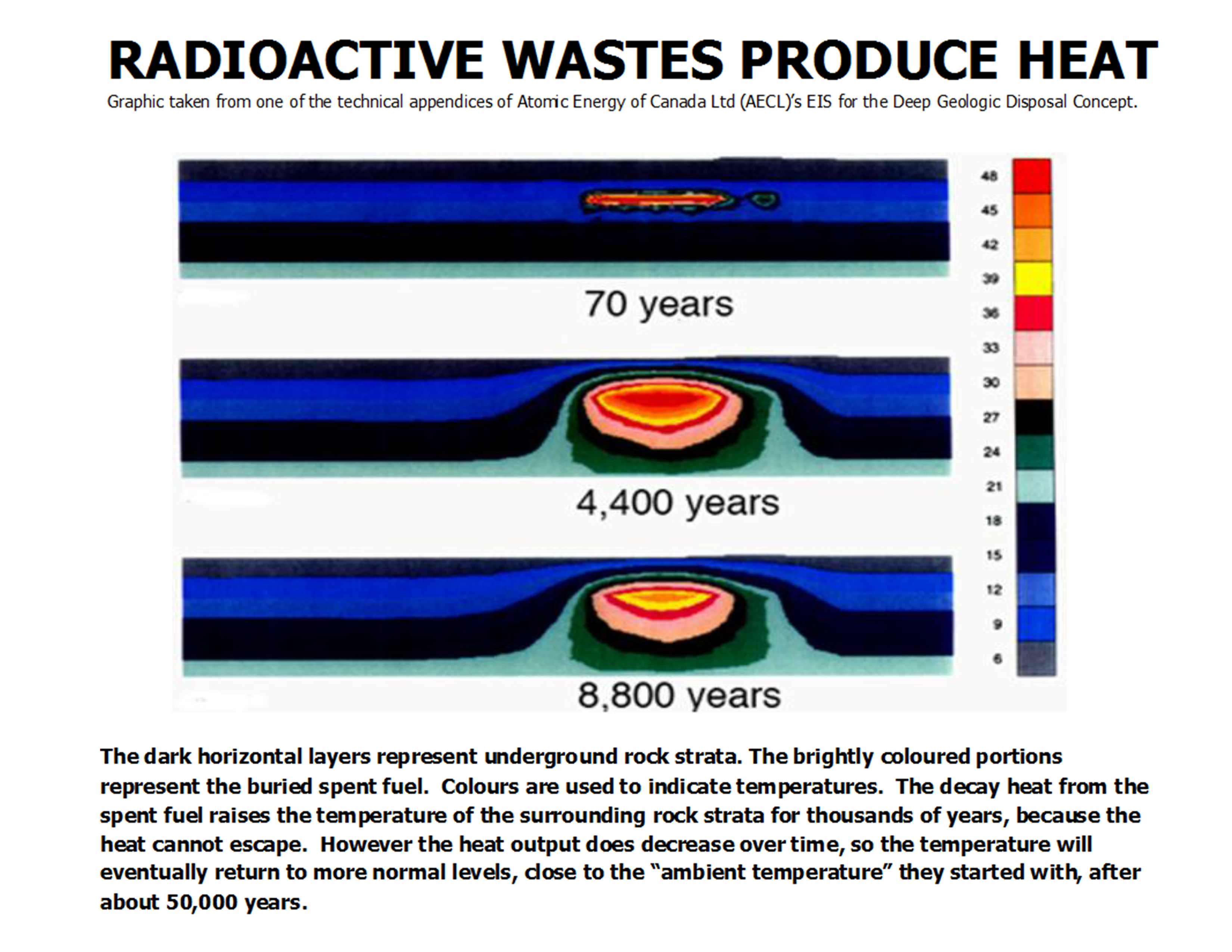
The most worrying aspect is an expected long-term “thermal pulse” from the entombed heat-producing radioactive waste. According to an Atomic Energy of Canada environmental study,1994, the DGR temperature could reach 230 degrees C. That intense heat would cause distortion and fracturing of host rock, impacting the structure of metallic containment casks.
David Geary, 19 Jan 25
In Geology 101 we learned that geology is a descriptive science, not a predictive science. Hydrology of rock is especially unpredictable. Science can not foresee what happens to a stable rock formation once disturbed by human activity. Thus, any Deep Geological Repository (DGR) cannot be counted on to maintain the required long-term stability to contain Canada’s high-level nuclear waste.
Because leaks do happen.
Canada’s Nuclear Waste Management Organization’s (NWMO) proposed DGR is a speculative unproven concept. A study of NWMO’s literature and conceptual renderings reveals numerous unresolved scientific, engineering, and modelling challenges.
Also troublesome is that Canada’s engineered ‘vertical shaft’ design vs. the European ‘inclined ramp’ approach was flagged as potentially dangerous by NWMO’s own expert international Independent Technical Review Group (ITRG), a body composed of European scientists and engineers. Vertical shafts relying on powered lift systems frequently fail.
Geologists at previous DGR hearings noted numerous NWMO deficiencies in the hydro-geological realm. For example, the integrity of host rock would be severely compromised by underground blasting required to create the extensive lattice-work of tunnels, chambers, and vertical shafts. There’d likely be rapid and unpredictable geo-hydrological changes, including water ingress, from the fracturing that ensues.
The most worrying aspect is an expected long-term “thermal pulse” from the entombed heat-producing radioactive waste. According to an Atomic Energy of Canada environmental study,1994, the DGR temperature could reach 230 degrees C. That intense heat would cause distortion and fracturing of host rock, impacting the structure of metallic containment casks.
Depicted in NWMO’s diagrams is a DGR air vent to the surface. It would carry the heat upwards while easing underground air pressure buildup. However, should nuclear waste casks become damaged or crushed by rock pressures, carcinogenic fission & activation products would leak out of them. Those radionuclides would be carried via the air vent to the surface, to the biosphere, to nearby communities, to people.
In fact, that is precisely how, in 2014, several workers near a vent far above a nuclear waste DGR in New Mexico were contaminated with radioactive plutonium.
Because geology is unpredictable.
Leaks happened and people were affected.
Dunfermline MP Graeme Downie calls for MoD commitment to dismantle dead nuclear submarines

ONE boat is being dismantled in Rosyth but there’s no commitment and no funding to deal with another 25 nuclear subs – with the total cost estimated to be around £300
million. That’s the concern of Dunfermline and Dollar MP Graeme Downie who
said a pledge to break up the other vessels would “guarantee decades of
work” at the dockyard. More than 200 people at Rosyth are already working
on HMS Swiftsure, it is being cut up and her radioactive waste removed as
part of a demonstrator project, and he said the site could become a
“worldwide centre of excellence for submarine dismantling”.
Dunfermline Press 15th Jan 2025,
https://www.dunfermlinepress.com/news/24860540.dunfermline-mp-graeme-downie-calls-mod-commitment/
Ask the locals: NFLA Chair says it is ‘prudent and proper’ for Nuclear Waste Services to consult residents over South Copeland flooding risk
The UK/Ireland Nuclear Free Local Authorities have urged Nuclear Waste
Services and the South Copeland GDF Community Partnership to ask the
residents of Millom and Haverigg for help in identifying local sites which
have been flooded.
As part of its ongoing effort to locate a potential site
for a Geological Disposal Facility, a repository into which Britain’s
legacy and future high-level radioactive waste will be dumped, NWS intends
to identity ‘Areas of Focus’ in the South Copeland Search Area which
incorporates the communities of Drigg, Haverigg, Kirksanton, and Millom.
These ‘Areas of Focus’ will be subject to more intensive geological
investigations and in the guidance published by NWS those sites ‘with
known flood risks’ will be excluded.
Becoming a responsible ancestor – about America’s nuclear wastes.
This country, with the world’s largest inventory of high-activity radioactive waste, has not fashioned even a shadow of a strategy for the material’s permanent disposition.
in any case, the burdens would fall on future generations.
Bulletin, By Daniel Metlay | January 13, 2025
After more than four decades of intense struggle, the United States found itself in an unenviable and awkward position by 2015: It no longer had even the barest blueprint of how to dispose of its growing inventory of high-activity radioactive waste.[1] Under the leadership of Rodney Ewing, former chairman of the Nuclear Waste Technical Review Board, and Allison MacFarlane, former chairman of the Nuclear Regulatory Commission, a steering committee composed of a dozen specialists set out to prepare the so-called “reset” report on how to reconstruct that enterprise.[2] In the study’s words: “Reset is an effort to untangle the technical, administrative, and public concerns in such a way that important issues can be identified, understood, and addressed (Steering Committee 2018, 2).”
One of its key recommendations was that a non-profit, single-purpose organization should be established by the owners of the country’s nuclear powerplants to replace the Department of Energy as the implementor of a fresh waste-disposal undertaking.[3]
To appreciate these suggestions, one must first understand how the United States found itself in its current predicament.
How did the United States get here
The roots of the United States’ waste-disposition program can be found in a study prepared by a panel working under the auspices of the National Academy of Sciences (National Research Council 1957). The group’s principal advice was that high-activity waste should be entombed in conventionally mined, deep-geologic repositories such as salt mines.
Early attempts to find a site for the facility met with unanticipated technical difficulties and unflinching opposition from state officials (Carter 1989). President Jimmy Carter appointed an Interagency Review Group to suggest a pathway to unsnarl the Gordian Knot (IRG 1978). Among other things, it counseled the president that a new waste-management program should be established within the Department of Energy. It should investigate multiple potential locations in a variety of geologic formations and choose the one bearing the soundest technical characteristics for development of a repository.
President Ronald Reagan signed the Nuclear Waste Policy Act in January, 1983 (NWPA 1982). The legislation captured the consensus that had emerged around the lion’s share of the Interagency Review Group’s ideas. In particular, the law contained four strategic bargains that were requisite to its passage:
Two repositories would be built, the first in the west and a second in the east, to ensure geographic equity and geologic diversity.- Site-selection would be a technically driven process in which several different hydrogeologic formations would be evaluated against pre-established guidelines.
- States would be given a substantial voice in the choice of sites.
- Upon payment of a fee, the Department of Energy would contract with the owners of nuclear powerplants to accept their waste for disposal starting in January 1998.
By the time Congress enacted the Nuclear Waste Policy Amendments Act a mere five years later, all the bargains had been breached in one way or another (NWPAA 1987; Colglazier and Langum 1988).
Derisively labeled the “Screw Nevada” bill, the new law confined site-selection to Yucca Mountain, located both on and adjacent to the weapons-testing area. Hardly surprisingly, the state mounted an implacable and sustained challenge to the actions of the Department of Energy, including investigations to evaluate the technical suitability of Yucca Mountain and opposition to the license application that the department submitted to the Nuclear Regulatory Commission (Adams 2010).
…………………………………………………………………………………… President Obama directed the new secretary of the Energy Department, Steven Chu, to empanel the Blue Ribbon Commission on America’s Nuclear Future (BRC 2012). Ostensibly not a “siting commission,” it nonetheless proposed a “consent-based” process that was dramatically at odds with the method used to choose the Yucca Mountain site. In addition, the new leadership sought, unsuccessfully as it turns out, to withdraw the license application before the Nuclear Regulatory Commission. Ultimately, funding for the project ran out even during President Donald Trump’s administration, and the Yucca Mountain Project faded into history.
Left in its wake is the current state of affairs. This country, with the world’s largest inventory of high-activity radioactive waste, has not fashioned even a shadow of a strategy for the material’s permanent disposition.
The Department of Energy detailed the consequences of the absence of a policy with its analysis of the No-Action Alternative in the Environmental Impact Statement for Yucca Mountain (DOE 2002, S-79).[4] Under this scenario, the adverse outcomes are seemingly modest—but the calculations exclude effects due to human intrusion as well as sabotage, precisely the rationales for the disposal imperative.
At best, the nation has been left with the regulator’s vague assurance that the owners of the waste can safely extend its storage on the surface for roughly 100 years (NRC 2014). This abdication of accountability—kicking the burden down the road—transforms our generation into irresponsible ancestors.
Why has the United States gotten there
Many independent and reinforcing factors have led to this nation’s precarious moral circumstances. Five of them are worthy of note.
First, striking a balance between protecting the national interest in the disposition of the waste versus state and local interest in warding off a possible calculated risk has proven to be a constant struggle. The Interagency Review Group proposed the nebulous notion of “consultation and concurrence” to suggest that a host state must provide its consent before the repository-development process could proceed to the next step.
Congress morphed that idea into the much weaker “consultation and cooperation” when it passed the Nuclear Waste Policy Amendments Act. But it did authorize the host-state to raise an objection to the president’s selection of the site. That dissent could, however, be overridden by a majority vote in each chamber. As the Yucca Mountain case illustrated, once intensive investigations at a proposed repository location gained momentum and the prospect of restarting site selection lurked in the future, sustaining a protest was only an abstract possibility.
Second, the regulatory regime for approving a repository system was plagued by controversy. In the mid-1980s, the Environmental Protection Agency promulgated radionuclide release standards, and the Nuclear Regulatory Commission issued licensing rules for a generic repository. Directed by Congress in 1992, both agencies later released Yucca Mountain-specific regulations. These protocols proved to be methodologically contested and subject to criticism for changing the “rules of the game.”
Third, the Department of Energy has failed to merit public trust and confidence. A survey conducted by the Secretary of Energy Advisory Board at the height of the Yucca Mountain controversy conclusively demonstrated this reality: None of the interested and affected parties believe that the Department of Energy is very trustworthy. See Figure 1.[on original]
Nor did that deficit of trust and confidence shrink in the coming years. The Blue Ribbon Commission’s and Reset reports underscored this endemic problem. The Department of Energy’s recent initiative to craft a consent-based procedure for siting a federal consolidated interim storage facility positioned restoring public trust at the core of its activities.
Fourth, the Department of Energy’s execution of a stepwise approach to constructing a disposal facility was practically and conceptually flawed. Its license application composed a narrative about how it would meet the Nuclear Regulatory Commission’s regulation mandating that the material be able to be retrieved from an open repository once it was emplaced. That account did not detail the conditions under which the waste might be removed; it did not suggest where it might go; nor did it indicate what might be done if the repository proved to be unworkable. Like extended storage, retrievability of the waste would somehow take place if and when necessary. But, in any case, the burdens would fall on future generations.
Fifth, the Department of Energy encountered difficulties persuasively resolving technical uncertainties. Its license application rested on the premise that the corrosion-resistant Alloy-22 waste packages and the titanium alloy drip shields, which might divert water from the packages, would function to limit the release of radionuclides into the environment. Whether those engineered structures would perform as anticipated in a hot and humid repository may still be an open question. ………………………………….
What should be done
It would be unfair to reproach the Department of Energy alone for all the difficulties that the US waste-disposition program has confronted over the years; sometimes it just was dealt a poor hand by others. Nonetheless, in this writer’s view, reviving that effort demands, among other transformations, a modification in the organization that will execute it in the future.
Indeed, institutional design in the United States is hardly a novel concern. Included in the Nuclear Waste Policy Act was a provision directing the secretary of the Department of Energy to “undertake a study with respect to alternative approaches to managing the construction and operation of all civilian radioactive waste management facilities, including the feasibility of establishing a private corporation for such purposes (NWPA 1992).” That analysis advocated a Tennessee Valley Authority-like corporation, which was labeled “FEDCORP,” to take on the responsibility of constructing and operating a repository (AMFM 1995).
The Blue Ribbon Commission also concluded that:
A new [single-purpose] organization will be in a better position to develop a strong culture of safety, transparency, consultation, and collaboration. And by signaling a clear break with the often troubled history of the U.S. waste management program it can begin repairing the legacy of distrust left by decades of missed deadlines and failed commitments (BRC 2012, 61).
It, too, advised that a FEDCORP should replace the Department of Energy.
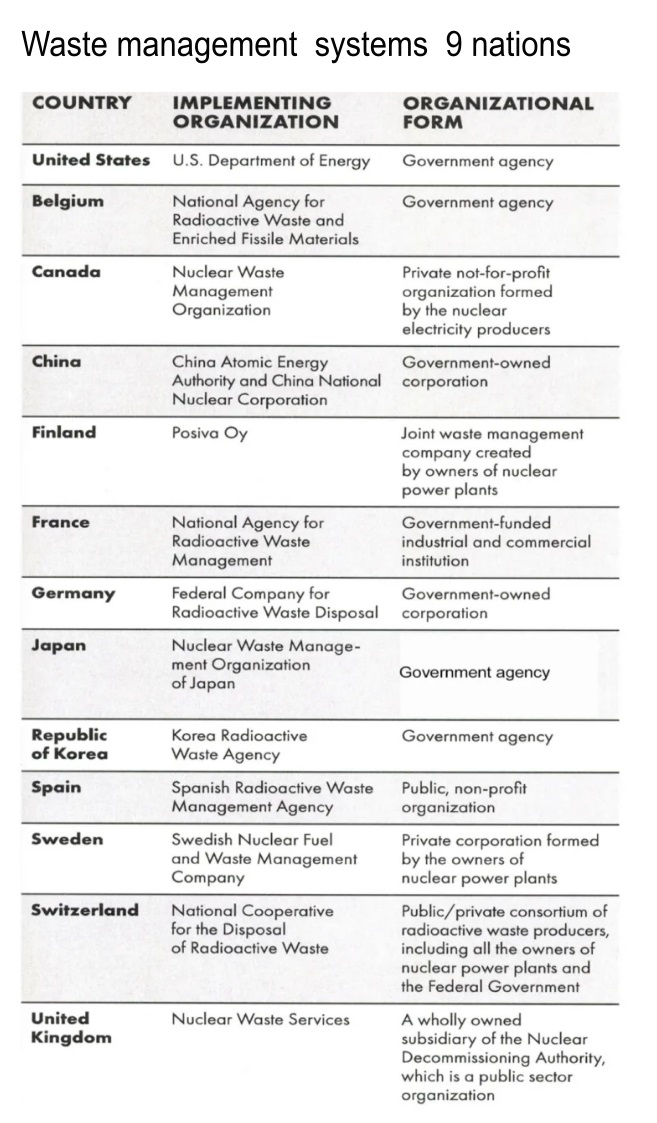
An examination of national waste-disposal undertakings indicates that countries do have several options for structuring their missions. See Figure 2 below [on original].
That multiplicity of alternatives led the majority of the Reset Steering Committee, after intense discussion and consideration, to decide that a more radical approach ought to be adopted. As the group observed: “The track record of nuclear utility-owned implementors abroad…makes at least a prima facie case for considering the creation of a not-for-profit, nuclear utility-owned implementing organization (NUCO) (Steering Committee 2018, 35).”
Of the four nations relying on nuclear utility-owned implementing organizations, three—including Finland, Sweden, and Switzerland—have selected repository sites, and another, Canada, may be on the cusp of doing so. In pointed contrast, only one of the nine countries employing other organizational designs have launched a determined set of site investigations, let along definitely and unequivocally chosen a location to build a repository.
Removing disposal authority from the Department of Energy and passing it on to a nuclear utility-owned implementing organization also permits the full integration of the nuclear fuel cycle. With the exception of disposition, every element is the responsibility of some industrial firm: uranium exploration and conversion, fuel manufacture and configuration, enrichment, reactor design and construction, spent fuel reprocessing (if permitted by law or regulation and if deemed economical), and temporary storage of spent fuel on and off reactor sites.
……………………………………………By creating a nuclear utility-owned implementing organizations, reactor owners can more easily negotiate adjustments with their industrial partners.
But transitioning from the Department of Energy to a nuclear utility-owned implementing organization is unlikely to be a frictionless process. Policymakers in government and industry will have to resolve many particulars. For instance, of central importance is the question of who should pay for the reconstructed program. Since the Nuclear Waste Policy Act’s passage four decades ago, utilities have paid a fee of $0.001 (one mil) per kilowatt of electricity produced. In addition, Congress has periodically appropriated funds to dispose of weapons-origin high-activity waste. Those resources have all been deposited in the Nuclear Waste Fund with the expectation they would pay the full life-cycle costs of the disposition effort.
At the end of Fiscal Year 2024, the Nuclear Waste Fund balance was $52.2 billion dollars (DOE 2024).[5] f a nuclear utility-owned implementing organization were established, one possibility would be to transfer the body of the fund to the new organization. However, the nuclear utility-owned implementing organization might be limited to spending for disposition only the amount of interest that the waste fund generates. In Fiscal Year 2024, that amount was roughly $1.9 billion a year. Notably that income was approximately four times what the Department of Energy spent during the last full year of the Yucca Mountain Project (Consolidated Appropriations Act 2008). Consequently, the new implementor should have sufficient resources to sustain a robust effort. (Under this approach, nuclear utilities would continue to be responsible for storing their spent fuel.)
Another question that would have to be determined is the fate of weapons-origin high-activity radioactive waste. Conceivably the Federal Government might resurrect its own repository effort, perhaps at Yucca Mountain or through a contemporary siting project. Alternatively, the most cost-effective option might be to pay the nuclear utility-owned implementing organizations a disposition fee through congressional appropriations.
Finally, given the weight to its additional responsibilities, the nuclear utility-owned implementing organization must demonstrate that it will be a trustworthy implementor……………………………………………………………….
But for this arrangement to be most effective, the Nuclear Regulatory Commission itself must be viewed more widely as trustworthy…………………………………………………………………………………
Other reforms beyond switching the implementor will urgently be necessary, such as improving the technical credibility of studies to determine the suitability of a potential repository site and structuring a sound step-by-step developmental process. Without the full slate of improvements, this generation will be stuck in the role of irresponsible ancestors. So, the reader should consider this essay as a broader call to action, if only for our children and grandchildren’s sake. https://thebulletin.org/premium/2025-01/becoming-a-responsible-ancestor/?utm_source=ActiveCampaign&utm_medium=email&utm_content=Radioactive%20fallout%20in%20Tokyo%20after%20Fukushima&utm_campaign=20250113%20Monday%20Newsletter
U.S. nuclear spent fuel liability jumps to $44.5 billion

Nov 27, 2024, https://www.ans.org/news/article-6587/us-spent-fuel-liability-jumps-to-445-billion/
The Department of Energy’s estimated overall liability for failing to dispose of the country’s commercial spent nuclear fuel jumped as much as 10 percent this year, from a range of $34.1 billion to $41 billion in 2023 to a range of $37.6 billion to $44.5 billion in 2024, according to a financial audit of the DOE’s Nuclear Waste Fund (NWF) for fiscal year 2024.
The estimated liability excludes $11.1 billion already paid out to nuclear power plant owners and utilities for the DOE’s breach of the standard contract for the disposal of spent fuel (10 CFR Part 961), which required the DOE to begin taking title of spent nuclear fuel for disposal by January 1998. Owners of spent fuel routinely sue the federal government for the continued cost of managing the fuel. The recovered costs are paid out from the Treasury Department’s Judgement Fund and not from the DOE.
According to the audit, conducted by the independent public accounting firm of KPMG, the liability estimate “reflects a range of possible scenarios” regarding the operating life of the current fleet of nuclear power reactors. The estimate is also based on when the DOE thinks it may begin taking spent fuel. In May, the DOE received initial approval (Critical Decision-0) for a consolidated interim storage facility for spent fuel that, if constructed, would be operational by 2046.
The Department of Energy Nuclear Waste Fund’s Fiscal Year 2024 Financial Statement Audit was released by the DOE Office of Inspector General on November 14.
The fund: The NWF, which was intended to finance the DOE’s disposal of spent fuel, had a balance of $52.2 billion as of September, according to the KPMG audit.
The NWF was funded through annual fees—initially, $0.001 for every kilowatt hour provided by a nuclear power plant—levied by the DOE on owners and generators of spent fuel. The DOE stopped collecting annual NWF fees, however, in 2014 following an order by the U.S. Court of Appeals for the District of Columbia Circuit, which found that the DOE failed to justify the continued imposition of the fee following the suspension of the Yucca Mountain repository project.
1 This Month

of the week – Shut Down Drone Warfare!


Tell the Ukrainian Government to Drop Prosecution of Peace Activist Yurii Sheliazhenko

Petition to revoke the licensing of the Near Surface Nuclear Disposal Facility (NSDF) at Chalk River. https://www.ourcommons.ca/petitions/en/Petition/Details?Petition=e-7247
To see nuclear-related stories in greater depth and intensity – go to https://nuclearinformation.wordpress.com
-
Archives
- April 2026 (28)
- March 2026 (251)
- February 2026 (268)
- January 2026 (308)
- December 2025 (358)
- November 2025 (359)
- October 2025 (376)
- September 2025 (257)
- August 2025 (319)
- July 2025 (230)
- June 2025 (348)
- May 2025 (261)
-
Categories
- 1
- 1 NUCLEAR ISSUES
- business and costs
- climate change
- culture and arts
- ENERGY
- environment
- health
- history
- indigenous issues
- Legal
- marketing of nuclear
- media
- opposition to nuclear
- PERSONAL STORIES
- politics
- politics international
- Religion and ethics
- safety
- secrets,lies and civil liberties
- spinbuster
- technology
- Uranium
- wastes
- weapons and war
- Women
- 2 WORLD
- ACTION
- AFRICA
- Atrocities
- AUSTRALIA
- Christina's notes
- Christina's themes
- culture and arts
- Events
- Fuk 2022
- Fuk 2023
- Fukushima 2017
- Fukushima 2018
- fukushima 2019
- Fukushima 2020
- Fukushima 2021
- general
- global warming
- Humour (God we need it)
- Nuclear
- RARE EARTHS
- Reference
- resources – print
- Resources -audiovicual
- Weekly Newsletter
- World
- World Nuclear
- YouTube
-
RSS
Entries RSS
Comments RSS
 nuclear-news