USA’s Nuclear Regulators look to New Mexico desert For Temporary Waste Storage Facility
 Nuclear Regulators Search For Temporary Storage Facility In New Mexico, NPR, April 30, 2019 NATHAN ROTT Nuclear Regulators Search For Temporary Storage Facility In New Mexico, NPR, April 30, 2019 NATHAN ROTT
|
|
|
Exploitation of foreign workers in Japan’s Fukushima nuclear clean-up
Japan needs thousands of foreign workers to decommission Fukushima plant, prompting backlash from anti-nuke campaigners and rights activists, SCMP Julian Ryall , 26 Apr, 2019
Activists are not convinced working at the site is safe for anyone and they fear foreign workers will feel ‘pressured’ to ignore risks if jobs are at risk
Towns and villages around the plant are still out of bounds because radiation levels are dangerously high

Tokyo Electric Power Co (TEPCO) has announced it will take advantage of the government’s new working visa scheme, which was introduced on April 1 and permits thousands of foreign workers to come to Japan to meet soaring demand for labourers. The company has informed subcontractors overseas nationals will be eligible to work cleaning up the site and providing food services.
About 4,000 people work at the plant each day as experts attempt to decommission three reactors that melted down in the aftermath of the March 2011 Great East Japan Earthquake and the huge tsunami it triggered. Towns and villages around the plant are still out of bounds because radiation levels are dangerously high.
Activists are far from convinced working at the site is safe for anyone and they fear foreign workers will feel “pressured” to ignore the risks if their jobs are at risk.
“We are strongly opposed to the plan because we have already seen that workers at the plant are being exposed to high levels of radiation and there have been numerous breaches of labour standards regulations,” said Hajime Matsukubo, secretary general of the Tokyo-based Citizens’ Nuclear Information Centre. “Conditions for foreign workers at many companies across Japan are already bad but it will almost certainly be worse if they are required to work decontaminating a nuclear accident site.”
Companies are desperately short of labourers, in part because of the construction work connected to Tokyo hosting the 2020 Olympic Games, while TEPCO is further hampered because any worker who has been exposed to 50 millisieverts of radiation in a single year or 100 millisieverts over five years is not permitted to remain at the plant. Those limits mean the company must find labourers from a shrinking pool.
“It has been reported that vulnerable people have been illegally deceived by decontamination contractors into conducting decontamination work without their informed consent, threatening their lives, including asylum seekers under false promises and homeless people working below minimum wage,” the statement said. “Much clean-up depends on inexperienced subcontractors with little scrutiny as the government rushes decontamination for the Olympic Games.”
Cade Moseley, an official of the organisation, said there are “very clear, very definite concerns”.
“There is evidence that foreign workers in Japan have already felt under pressure to do work that is unsafe and where they do not fully understand the risks involved simply because they are worried they will lose their working visas if they refuse,” he said……
Britain’s costly nuclear submarines – dead but not buried
Not an easy problem to solve. “………Britain has retired twenty nuclear submarines since 1980. None have been disposed of, and nine still contain radioactive fuel in their reactors, according to an audit by Britain’s National Audit Office. These subs spent an average of twenty-six years on active service—and nineteen years out of service.
Even worse is the price tag. Britain has spent 500 million pounds ($646.4 million) maintaining those decommissioned subs between 1980 and 2017. Full disposal of a nuclear sub would cost 96 million pounds ($112.1 million). As a result, the total cost for disposing of the Royal Navy’s ten active subs and twenty retired vessels would be 7.5 billion pounds ($9.7 billion), NAO calculated.
Dismantling and disposing of a nuclear sub is a complex process. The nuclear fuel must be carefully removed from the reactor using special facilities. Then the submarine itself must be dismantled, again with extra care paid to removing the radioactive parts of the vessel. Just one contractor—Babcock International Group PLC—is “currently the Department’s sole supplier capable of undertaking most of the Department’s defueling and dismantling requirements,” noted NAO. “It owns the nuclear-licensed dockyards and facilities in both Devonport and Rosyth, and also provides aspects of the related projects.”
Fuel removal ceased in 2004 after British nuclear regulators found the removal facilities didn’t meet standards. Yet the Ministry of Defense still lacks a fully-funded plan for defueling.
All of this is taking a toll on a Royal Navy already underfunded and struggling to fund new ships. “The Department pays an estimated £12 million [$15.5 million] a year to maintain and store the nine fueled submarines currently stored in Devonport,” NAO found. “Maintaining fueled, rather than unfueled, submarines also presents additional technical uncertainties and affects dock availability. ….
Until submarines are prepared, the Department must keep them partially crewed, potentially affecting the Department’s ability to redeploy its personnel.”The plan is to begin defueling subs, beginning with HMS Swiftsure, in 2023. But even then, the Ministry of Defense will have to deal with different subs that have different disposal requirements. “At present, the Department does not have a fully developed plan to dispose of Vanguard, Astute and Dreadnought-class submarines, which have different types of nuclear reactor,” NAO pointed out. “For the Vanguard and Astute-class it has identified suitable dock space which, if used, will need to be maintained.”
Interestingly, the British military gets an exemption when it comes to nuclear waste. “Within the civil nuclear sector, organizations must consider nuclear waste disposal during the design stage of power stations and nuclear infrastructure. The Department does not have a similar obligation.”
USA’s Dept of Energy fails to provide adequate funding for Hanford nuclear clean-up
“The HAB views the combined lack of compliant budget appropriations, the unanticipated problems at Hanford, and the extreme increase in estimated funding levels identified in the lifecycle cost report with great concern,” the board told DOE. Those factors will result in cleanup taking longer and costing more, putting workers, the environment, and the public at increased risk, the letter says.
“They will also result in additional discussion about reducing standards or potentially conducting a lesser quality cleanup,” according to the board.
Unanticipated problems in work at the former plutonium production complex have included the spread of radioactive contamination at the Plutonium Finishing Plant demolition in 2017 and the May 2017 collapse of the older of two PUREX Plant radioactive waste storage tunnels.
The Energy Department has addressed the issues, but the costs and schedule impacts from these and other unanticipated setbacks could compound the challenge of meeting milestones set under the legally binding Tri-Party Agreement on Hanford cleanup, the budget letter said.
The latest Hanford Lifecycle Scope, Schedule and Cost Report, released in January, “is particularly concerning,” the board said. It put the remaining cost of Hanford cleanup and the initiation of long-term stewardship at $323 billion to $677 billion, and said work could continue beyond this century. The amount of funding needed annually would increase to $4 billion starting in fiscal 2020 and later could peak as high as $16 billion in 2088 under the worst-case scenario.
“Receiving appropriation for even the low-range annual funding estimates will be extremely challenging, thereby putting the cleanup mission in further jeopardy,” the letter said.
For fiscal 2020, which begins Oct. 1, DOE is seeking $2.1 billion for the two offices at Hanford. That would be a $400 million reduction from current funding levels.
Decommissioning contracts announced for Dounreay nuclear site in Scotland.
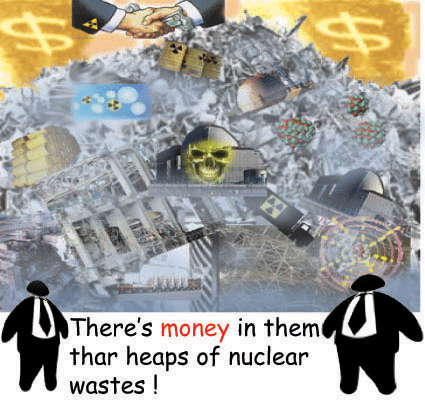
£400m decommissioning contract winners for Scotland nuclear site revealed, Infrastructure Intelligence Ryan Tute, 24 Apr 19, Dozens of companies and their supply chains have been announced as winners for six decommissioning framework contracts, worth up to £400m, at the Dounreay nuclear site in Scotland.
Dounreay Site Restoration Limited (DSRL), was the site of Britain’s former centre of nuclear fast reactor research and development for 60 years and is set to be demolished and cleaned up.
Initially for up to four years with the possibility of extensions of up to an additional three years, winners will take work at the site, delivered on behalf of the Nuclear Decommissioning Authority (NDA). ……
Full list of winners:
- AECOM E&C UK; MW Hargreaves; Kier Infrastructure and Overseas; Morson Projects; NIS; NSG Environmental; Squibb Group; Westinghouse Electrical Company UK
- Dounreay Decommissioning Framework (DDF) Alliance; Cavendish Nuclear; BAM Nuttall; KDC Contractors; JGC Engineering and Technical Services
- Dounreay Wood Alliance (DWA); Wood; Aquila Nuclear Engineering; GD Energy Services; Orano Projects
- Jacobs UK; Atkins
- Nuclear Decommissioning Ltd (NDL); James Fisher Nuclear; REACT Engineering; Shepley Engineers; WYG Engineering; JBV Demolition; RPS Consulting Services
- Nuvia; Graham Construction; Oxford Technologies; Thompson of Prudhoe http://www.infrastructure-intelligence.com/article/apr-2019/%C2%A3400m-decommissioning-contract-winners-scotland-nuclear-site-revealed
Wastes from other nuclear stations could be dumped at Hinkley Point A

 Somerset Live 23rd April 2019 Fears ‘skips of nuclear waste’ could be transported through Bridgwater to be stored at Hinkley Point A. Dozens of skips full of nuclear waste could
soon be transported through Bridgwater from other parts of the UK. Magnox
Ltd currently operates the Hinkley Point A site near Stogursey, which
includes a small area where nuclear waste is stored before being moved
elsewhere for processing. Currently, only waste which is generated on the
Hinkley site can legally be stored there. But the company is putting
forward plans to allow waste from other nuclear power stations to be
transported to Hinkley by road – via Bridgwater.
https://www.somersetlive.co.uk/news/somerset-news/fears-skips-nuclear-waste-could-2788091
Germany launches public meetings, in search of nuclear waste repository solution
Public info event kicks off search for nuclear waste repository https://www.cleanenergywire.org/news/public-info-event-kicks-search-nuclear-waste-repository
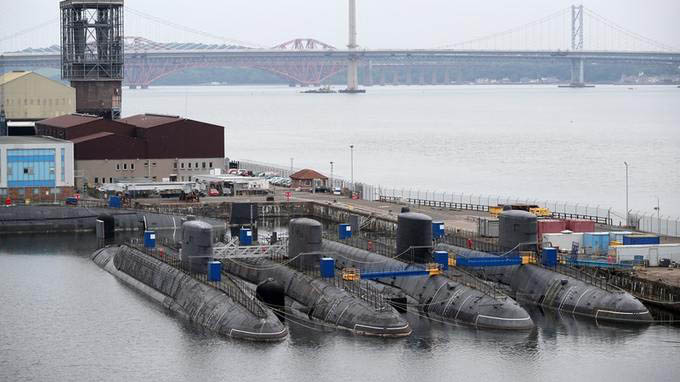
UK is stuck with 20 dead nuclear submarines – what to do with them?
|
How do you scrap a nuclear submarine? https://www.chemistryworld.com/news/how-do-you-scrap-a-nuclear-submarine/3010405.article, The UK is facing a £7.5 billion bill to dismantle its 20 defunct vessels
What is a nuclear submarine?A ‘nuclear’ submarine can refer to a submarine that carries nuclear warheads, one that is powered using nuclear energy, or both. In the UK, the Vanguard, Astute and Trafalgar class submarines are all powered using a nuclear reactor, but only the four Vanguard class submarines carry nuclear warheads – Astute and Trafalgar submarines are ‘hunter-killers’ designed to sink other ships. The UK’s current fleet relies on a reactor typically seen in power stations across the world – the pressurised water reactor (PWR). These compact power plants produce vast amounts of heat through the splitting of uranium-235 (235U). This fissile isotope exists in very small quantities (less than 1%) in natural uranium, which mainly consists of uranium-238 (238U). To use it as fuel, the 235U is increased relative to the 238U in a process known as enrichment. In the PWR, waste fission products are made, such as caesium, xenon and krypton, as neutrons split the 235U fuel, with 238U also absorbing neutrons to form plutonium. These fission products can damage the ceramic fuel and reduce the reactor’s efficiency. The vessel that contains this whole process is also bombarded with high levels of radiation over its operational life. What happens to a nuclear submarine once it is removed from service?Once a nuclear-powered submarine is decommissioned, it is placed into long-term storage. Only after monitoring the vessel will engineers begin to defuel and dismantle it. However, over the past four decades, this second part hasn’t happened in the UK.
Since 1980, the UK Ministry of Defence has taken 20 nuclear-powered submarines out of service. Of these 20 subs, the UK has not fully disposed any of them and nine still contain highly radioactive nuclear fuel. The vessels have languished at dockyards in Plymouth and Rosyth.
This is not a sustainable solution, but it is in stark contrast with other countries’ past policies. During the Cold War, the Soviet Union dumped 19 ships containing nuclear waste in the Kara Sea, as well as 14 reactors and the K-27 nuclear submarine. With such vessels continuing to rust on the seabed, there are concerns these sites could harbour a potential environmental crisis. However, the subs stored in the UK are constantly monitored in a controlled environment. Although a far cry from the Arctic submarine graveyards, the UK fleet still lies exposed to salty water, with the vessels rusting in the dockyards.
Why are the submarines still in storage?It is an incredibly complex situation, but the government stopped defueling its disbanded fleet back in 2004. The UK’s nuclear regulator deemed that the facilities were not up to standards, and the UK has been working to improve them ever since. Mired in delays and inflating budgets, the defueling may not restart until 2023 – the original start date was 2012. Even when the subs are ready for their next voyage through the disposal process, it is a journey fraught with complexity.
What is the plan for the nuclear waste?Once defueling starts, the sub will be moved to a ‘reactor access house’ on rails. In this facility, engineers will remove the spent nuclear fuel from the sub, which contains various actinides and radionuclides. The fuel is highly radioactive and generates heat, so needs to be cooled in water before any further work can begin. To cool the fuel rods, the waste is sent to a specialised plant at Sellafield, where it is stored in vast water ponds. The water acts as both an efficient coolant and radiation barrier. Historically, this spent fuel would have then been recycled to form new nuclear fuel.
During reprocessing, the fissile uranium and plutonium is separated through solvent extraction, before converting the remaining liquid waste into a glass for long-term storage. However, it is now unclear whether this will still happen. It is more likely that the spent nuclear fuel will be stored indefinitely after cooling. The current UK strategy is to bury this waste in a highly-engineered geological disposal facility, which would see more than 650,000m3 of waste stored in an underground cavern, according to recent government estimates. But plans are still ongoing and a facility is yet to be built.
What happens to the submarine after defueling?After defueling, the sub will return to the ‘wet’ dock for another period of storage and monitoring. Following this, the submarine is dismantled. Components such as pipes and pumps exposed to radiation are taken away and the reactor vessel removed. However, engineers do not simply remove the reactor. In many countries, the reactor is lifted out with the two empty compartments either side of it and then sealed off to minimise the risk of exposure. After removing this ‘three-compartment unit’, the submarine is cast off for its final voyage to a commercial shipyard for recycling. But it will be a costly endeavour. The UK may face costs of up to £7.5bn if it wants to take the entire fleet through this voyage of defueling and disposal. It remains unclear whether the plans will stay on course, but the defence department has committed to dismantling the fleet ‘as soon as reasonably practicable’.
|
|
|
Japan Atomic Power looks to big business cleaning up dead nuclear plants

Japan Atomic Power considers launching unit that specializes in scrapping nuclear plants https://www.japantimes.co.jp/news/2019/04/16/national/japan-atomic-power-considers-launching-unit-specializes-scrapping-nuclear-plants/#.XLzjyDAzbGg KYODO, APR 16, 2019
Japan Atomic Power Co. is considering setting up a subsidiary specializing in the scrapping of retired nuclear reactors at domestic power plants, sources close to the matter said Tuesday.
Japan Atomic Power, a wholesaler of electricity generated at its nuclear plants, is planning to have U.S. nuclear waste firm EnergySolutions Inc. invest in the reactor decommissioning service unit, which would be the first of its kind in Japan, the sources said.
The Tokyo-based electricity wholesaler, whose shareholders are major domestic power companies, will make a final decision by the end of this year, they said.
The plan is to support power companies’ scrapping of retired reactors using Japan Atomic Power’s expertise in decontaminating and dismantling work, in which it has been engaged in since before the 2011 nuclear disaster at Tokyo Electric Power Company Holdings Inc.’s Fukushima No. 1 complex, according to the sources.
The plan comes as a series of nuclear reactor decommissioning is expected at power companies in the country. Since stringent safety rules were introduced after the Fukushima disaster, 11 reactors, excluding those at the two Fukushima plants of Tepco, are slated to be scrapped.
Nuclear reactors are allowed to run for 40 years in Japan. Their operation can be extended for 20 years, but operators will need costly safety enhancement measures to clear the Nuclear Regulation Authority’s screening.
Decommissioning a reactor with an output capacity of 1 million kilowatts is said to take about 30 years and cost around ¥50 billion. Typically, some 500,000 tons of waste result from scrapping such a reactor, and 2 percent of the waste is radioactive.
Japan Atomic Power first engaged in decommissioning a commercial reactor in 2001 at its Tokai plant in eastern Japan. It has been conducting decommissioning work at its Tsuruga nuclear power plant in western Japan since 2017.
It is also providing support to Tepco for the decommissioning of reactors at the Fukushima No. 1 plant.
EnergySolutions, founded in 2006, has engaged in scrapping five reactors in the United States.
Japan Atomic Energy and EnergySolutions have had previous business ties, and the Japanese company has sent some employees to the Zion nuclear station in Illinois, where the U.S. partner has been conducting decommissioning work since 2010.
Britain’s Nuclear Free Local Authorities (NFLA) notes that over 70 Welsh councils formally reject hosting nuclear waste dump
 NFLA 18th April 2019 The Nuclear Free Local Authorities (NFLA) notes that over 70 Welsh unitary, county, city, town and community councils have passed resolutions formally opposing taking any interest in hosting a deep underground radioactive waste repository.
The figure was noted at a joint meeting in Menai Bridge organised by the NFLA Welsh Forum in conjunction with the groups PAWB, CADNO and CND Cymru. At a presentation provided by the NFLA Secretary, he noted that there had been real anger and frustration raised across Welsh and Northern Irish Councils in particular to the request made by the UK
Government for considering hosting a large deep underground repository to store over 60 years of higher activity radioactive waste, as well as possibly additional waste should new nuclear power stations ever be built.
Even in England, a number of nuclear site Councils have indicated their public opposition to hosting a repository. NFLA have noted some of these issues in its response to RWM regarding its consultation on how any proposed sites will be evaluated.
U.S. Department of Energy seeks new certification for its Waste Isolation Pilot Plant
Exchange Monitor 18th April 2019 , The Department of Energy is seeking another five-year certification from
the Environmental Protection Agency for its Waste Isolation Pilot Plant
near Carlsbad, N.M. The WIPP Land Withdrawal Act requires DOE to seek
recertification every five years to ensure the site’s compliance with
federal radioactive waste disposal requirements, according to an executive
summary of the application.
The package provides new data on the
underground repository, its waste inventory, and key changes since the last
update. The site was first certified for permanent disposal of transuranic
waste in 1998. The Environmental Protection Agency can “modify, revise,
or suspend” the certification, EPA supervisory environmental scientist
Thomas Peake said Tuesday during a two-day meeting in Washington, D.C., of
the National Academies’ Nuclear and Radiation Studies Board.
https://www.exchangemonitor.com/epa-recertification-sought-wipp-2024/?printmode=1
Australian rare earths company Lynas in a pickle over its radioactive wastes in Malaysia
Record result but still no breathing space for Lynas, The Age, Colin Kruger, April 20, 2019
It should have been a great week for Lynas Corp….. Despite soft prices in the rare earths market – and a forced shutdown of its operations in Decemberdue to a local Malaysian government cap on its production limits – Lynas reported a 27 per cent jump in revenue to $101.3 million in the March quarter……
the company was still “seeking clarification” on comments earlier this month by Malaysian Prime Minister Mahathir Mohamad, which appeared to solve the problem of the licence pre-condition that Lynas says it cannot meet – removal of the radioactive waste by September 2.
Mahathir said Lynas – or any potential acquirer (without explicitly naming Lynas’ estranged suitor, Wesfarmers, whose $1.5 billion indicative offer for the group was rebuffed in March) – would be able to continue to operate in Malaysia if it agreed to extract the radioactive residue from its ore before it reached the country.
Despite two cabinet meetings since that announcement, Mahathir has failed to clarify his comments, or confirm whether it means Lynas might not need to move the existing mountain of radioactive waste that has been accumulating at its $1 billion, 100-hectare processing facility in Kuantan province.
The PM’s comments – which have mired Wesfarmers in controversy over what exactly its chief executive, Rob Scott, said to Mahathir in a meeting ahead of this statement – hinted at a path Lynas could have taken instead of processing its ore in Malaysia.
Crown jewel
Lynas’ crown jewel is its world-class rare earths deposit in Mt Weld, Western Australia.
The eventual decision to set up its processing plant in Malaysia meant Lynas also exported the controversy over what happens to the toxic waste produced by the extraction process. And as the water-leached purification (WLP) residue – which contains low-level radioactive waste – has accumulated since production started in 2013, so has the push-back.
It reached its nadir in December last year when the Malaysian government made the export of the radioactive waste a pre-condition of its licence being renewed beyond September.
The Malaysian PM would be well aware that the implications of closing the rare earth processing plant extend well beyond Malaysia and Australia.
Global implications
There are significant global concerns about the fact that China dominates the supply of rare earths – a group of 17 elements crucial to the manufacture of hi-tech products like digital cars, smart phones and wind turbines.
Lynas is the only significant miner and processor of rare earths outside China.
Not that this means anything in Malaysia, where there has been no end to the negative news that has dogged the Lynas operations since it set foot in the country.
Lynas was just this week forced to deny fresh allegations it had breached Malaysian environmental regulations by storing more than 1.5 million tonnes of waste on-site for years. The worry for Lynas is that the latest complaint, by Malaysian MP Lee Chean Ching, related to the 1.13 million tonnes of non-toxic waste produced by its operations, not the 450,000 tonnes of radioactive waste.
The Sydney Morning Herald and The Age also revealed this week that Lynas was warned in a confidential 2011 report, by crisis management group Futureye, that there was an “urgent need” for it to win the local community’s support.
The report presciently warned that its operations in the country could be jeopardised if it did not change the way it dealt with environmental concerns and the government. ….
Concerns pre-date Lynas
Malaysian concerns around rare earth processing pre-date Lynas.
The long-lasting unsolved problem of Three Mile Island’s radioactive trash
Where will the nuclear waste go after Three Mile Island shuts down? The Inquirer, by Andrew Maykuth, After the infamous Three Mile Island nuclear accident 40 years ago, most of the reactor’s partially melted uranium fuel was hauled away to the Idaho National Lab, where the radioactive waste now slowly decays in steel and concrete containers, awaiting long-term disposal.
But the formal decommissioning of the damaged Unit 2 reactor near Harrisburg, site of America’s worst commercial nuclear disaster, has not yet really begun. Its owner, FirstEnergy Corp., has said that the plant would remain dormant until the surviving reactor, owned by a different company, shuts down.
FirstEnergy, in a 2013 filing with the U.S. Nuclear Regulatory Commission, said that both reactors would be decommissioned simultaneously “to achieve economies of scale, by sharing costs between the units, and coordinating the sequence of work activities.”
The timing of the final dismantlement and interment of Three Mile Island plant was thrown into uncertainty last week when the owner of the operating reactor, Exelon Generation, announced that it would take nearly 60 years to decommission its unit if it prematurely shut down operations in September. Exelon says it is losing money on the plant and has no option but to shut it down without a state rescue.
The prolonged decommissioning of the operational reactor — and by implication, the damaged reactor — could push back the final cleanup and remediation of Three Mile Island to 2079, a century after the meltdown.
“We’ve been living with this for 40 years,” said Eric Epstein, chairman of Three Mile Island Alert, a Harrisburg nuclear watchdog group. “Out of a sense of fairness, we need to have this cleaned up.”
The fate of the damaged reactor is further complicated because FirstEnergy Solutions, an Akron company that operates FirstEnergy Corp.’s power generation plants, including the Beaver Valley Power Station in Pennsylvania, last year filed for bankruptcy.
The Unit 2 decommissioning costs, which FirstEnergy last year estimated at $1.26 billion, would be paid out of a trust fund. (Exelon estimates its reactor, TMI Unit 1, would need an additional $1.2 billion to decommission, paid from a separate trust fund.)………
FirstEnergy has until 2053 to decommission the site, 60 years after operations ceased. It contracts Exelon to maintain the dormant reactor, and provide security.
FirstEnergy can request an exemption to push back its decommissioning date if it appeared the task could not be completed within 60 years, said Neil Sheehan, an NRC spokesman.
FirstEnergy, in its 2013 filing, anticipated that Exelon would run its reactor through to the expiration of its license in 2034, and then the companies would jointly complete decontamination and dismantlement of both reactors in less than 20 years.
By decommissioning both reactors simultaneously, FirstEnergy said, it can use Exelon’s fuel storage equipment to contain the “small quantities of core debris and fission products” that still remain from Unit 2′s partial meltdown, which occurred after a series of mechanical and human errors led to a loss of coolant, allowing the uranium fuel to overheat.
Any spent fuel from the operating reactor, or any remaining radioactive debris collected during decontamination of the damaged unit, could be stored in dry casks on the reactor site, at federal expense, until the federal government builds a long-term underground disposal facility. ……..
Until the issue is sorted out, most decommissioned U.S. reactors will be forced to keep their spent fuel in canisters on the former reactor sites.
But 99 percent of the fuel from Three Mile Island’s damaged reactor was already packed up and shipped to the Idaho National Laboratory after the TMI accident.
The U.S. Department of Energy stores 2,750 tons of nuclear waste at four sites in South Carolina, Washington, Colorado and Idaho from an assortment of commercial, naval, and weapons-related reactors.
The site in eastern Idaho, which holds 358 tons of spent fuel, is kind of a mausoleum of nuclear detritus. It contains 46.9 tons of waste from the Shippingport Atomic Power Station in Beaver County, Pa., the nation’s first commercial reactor. It’s also home to 1.8 tons of thorium‐uranium carbide fuel from Philadelphia Electric Co.’s Peach Bottom Unit 1, an experimental reactor in Delta, Pa., that shut down in 1974.
The 90.8 tons of ruined nuclear fuel from Three Mile Island’s damaged reactor is the biggest contributor of waste to the Idaho site. It is contained in 29 steel canisters encased in concrete containers.
But it is an unwelcome long-term resident in Idaho.
The agreement specifically includes Three Mile Island’s waste. https://www.philly.com/business/what-happened-to-three-mile-island-nuclear-waste-after-the-accident-20190414.html
USA Congressmen concerned at slow clean-up of dangerous San Onofre nuclear site
 The Nuclear Cleanup At San Onofre Isn’t Moving Fast Enough, Congressmen Say, laist.com, APRIL 17, 2019 About 8 million people live within 50 miles of San Onofre, the now-defunct, beach-adjacent nuclear plant located between Oceanside and San Clemente. Inside the plant is 1,600 tons of radioactive waste. Much of the spent nuclear fuel is currently sitting in cooling pools waiting to be moved to a safer location — specifically, one that’s less vulnerable to earthquake faults and rising sea levels.On Tuesday, Rep. Mike Levin and Orange County Rep. Harley Rouda spoke to reporters at Southern California Edison’s decommissioned facility about a proposal to speed up the removal of that waste. The Nuclear Cleanup At San Onofre Isn’t Moving Fast Enough, Congressmen Say, laist.com, APRIL 17, 2019 About 8 million people live within 50 miles of San Onofre, the now-defunct, beach-adjacent nuclear plant located between Oceanside and San Clemente. Inside the plant is 1,600 tons of radioactive waste. Much of the spent nuclear fuel is currently sitting in cooling pools waiting to be moved to a safer location — specifically, one that’s less vulnerable to earthquake faults and rising sea levels.On Tuesday, Rep. Mike Levin and Orange County Rep. Harley Rouda spoke to reporters at Southern California Edison’s decommissioned facility about a proposal to speed up the removal of that waste.
There are two moves needed. One is to get it out of the cooling ponds at San Onofre and into the dry concrete bunkers. That will enable the defunct plant to be dismantled. But the members of Congress want to accelerate another move of the spent fuel out of state to “interim” storage and eventually to permanent storage Nuclear waste cleanup at the San Onofre nuclear power plant has been on hold since last summer after a mishap involving a 50-ton container of radioactive material. Rep. Mike Levin says Congress should set new priorities for which power plants get top priority to ship the fuel elsewhere. The oceanfront San Onofre plant within his Oceanside Congressional district would be right at the top of the list, according to his proposed new criteria. “We probably shouldn’t have had a nuclear power plant here in the first place,” Levin said. “But now that we do, and we’re stuck with 1,600 tons of spent radioactive nuclear fuel, we better do everything we can do to prioritize.” He wants plants that are closed, and located near near large population centers and at risk from earthquake faults and rising sea levels to get priority permits to transport the waste out of state. Levin said he would introduce a bill when he returns to Congress that would change the criteria. He said he disagreed with current policies that call for the oldest fuel to be shipped to remote storage first, citing the higher risk to dense nearby populations. Rouda and Levin were among 15 members who called on Congress earlier this month to spend $25 million hurrying the development of interim storage spots. Two locations, in West Texas and New Mexico, are in the process of getting permits to store nuclear waste on an interim basis while the federal government seeks a permanent home for it. WHAT WENT WRONG AT SAN ONOFRE LAST AUGUST? Spent nuclear fuel is being held in cooling ponds and being transferred in giant canisters to new concrete bunkers about 100 feet from the ocean. A 28-foot high seawall is meant to keep seawater out of the bunkers. Edison contractors had already transferred 29 of 73 containers of nuclear waste to the new location. But on August 3, a 20-foot tall canister containing more than 50 tons of radioactive waste was left suspended on a metal flange 18 feet above a storage bunker floor during its transfer. Safety slings to keep the canister from falling were disabled, so the danger was that the canister could have fallen and perhaps ruptured. SCE’s contractor doing the work did not properly disclose the incident that day. The Nuclear Regulatory Commission found that from Jan. 30 to Aug. 3, 2018, workers loading the canisters into the bunkers “frequently” knocked the canister against components of the vault, potentially gouging the steel container. Again, the contractors didn’t immediately tell Edison that was happening, depriving the company and other workers of a chance to correct the loading procedure. The NRC cited “apparent weaknesses in management oversight” of how the waste canisters were stored, and fined Edison $116,000 for the violation. The company did not sufficiently oversee its contractor doing the work of moving the canisters, the NRC said. The company is waiting for the green light from the Nuclear Regulatory Commission to resume the work of transferring the waste. Here is the NRC’s November 2018 report that criticized Edison’s handling of waste………https://laist.com/2019/04/17/the_nuclear_cleanup_at_san_onofre_isnt_moving_fast_enough_congressmen_say.php |
|
Holtec’s nuclear decommissioning and wastes empire to grab Indian Point

 Holtec to snap up Indian Point nuclear units for decommissioning, Utility Dive,Iulia Gheorghiu@IMGheorghiu – 17 Apr 19 Holtec to snap up Indian Point nuclear units for decommissioning, Utility Dive,Iulia Gheorghiu@IMGheorghiu – 17 Apr 19
Dive Brief:
Dive Insight:The sale of Indian Point to a decommissioning firm marks the beginning of the end for the nuclear plant — the only one in New York not to receive subsidies under the state’s Zero Emission Credit program. “The sale of Indian Point to Holtec is expected to result in the completion of decommissioning decades sooner than if the site were to remain under Entergy’s ownership,” Leo Denault, Entergy CEO and chairman, said in a statement. The NRC is still reviewing the license transfer applications for Pilgrim and Exelon’s Oyster Creek. The regulators had not yet received any formal application regarding Indian Point and Palisades, the latter of which is set to be retired in 2022. Entergy has not announced the value of the nominal cash considerations it would receive for Indian Point or any of its other nuclear decommissioning transfers. However, another spent nuclear fuel specialist, NorthStar Group Services, took over Entergy’s closed Vermont Yankee nuclear power plant in October. In that case, the NRC required “some additional financial guarantees” beyond the plant’s nearly half a billion dollars in its decommissioning trust fund, according to NRC spokesperson Neil Sheehan …… The decision for Entergy to shut down its merchant nuclear generation early comes amid several other recent nuclear plant closures. “The plant owners have found it difficult to deal with the financial realities of low costs of natural gas, subsidies to other forms of power and other factors,” Sheehan told Utility Dive. Situated near the Hudson River in Buchanan, New York, Indian Point’s two operating units power New York City and the surrounding county. The Department of Energy is otherwise obligated to remove the waste to a permanent storage site, though selecting one has proved to be a drawn out process in Congress. Until the DOE acts or the waste can be sent to Holtec, the company plans to transfer the spent nuclear fuel to dry cask onsite storage, which will be under guard, monitored during the shutdown and decommissioning activities. …….. Two interim storage facilities for nuclear waste are currently seeking regulator approval to begin their intake of used fuel. One of them is Holtec’s proposed facility in New Mexico, HI-STORE Consolidated Interim Storage (CIS). …… https://www.utilitydive.com/news/holtec-to-snap-up-indian-point-nuclear-units-for-decommissioning/552894/ |
1 This Month
Chernobyl: The Lost Tapes – A good documentary on Chernobyl on SBS available On Demand for the next 3 weeks– https://www.sbs.com.au/ondemand/tv-program/chernobyl-the-lost-tapes/2352741955560

of the week–London Campaign for Nuclear Disarmament

Tell the Ukrainian Government to Drop Prosecution of Peace Activist Yurii Sheliazhenko
To see nuclear-related stories in greater depth and intensity – go to https://nuclearinformation.wordpress.com
-
Archives
- April 2026 (114)
- March 2026 (251)
- February 2026 (268)
- January 2026 (308)
- December 2025 (358)
- November 2025 (359)
- October 2025 (376)
- September 2025 (257)
- August 2025 (319)
- July 2025 (230)
- June 2025 (348)
- May 2025 (261)
-
Categories
- 1
- 1 NUCLEAR ISSUES
- business and costs
- climate change
- culture and arts
- ENERGY
- environment
- health
- history
- indigenous issues
- Legal
- marketing of nuclear
- media
- opposition to nuclear
- PERSONAL STORIES
- politics
- politics international
- Religion and ethics
- safety
- secrets,lies and civil liberties
- spinbuster
- technology
- Uranium
- wastes
- weapons and war
- Women
- 2 WORLD
- ACTION
- AFRICA
- Atrocities
- AUSTRALIA
- Christina's notes
- Christina's themes
- culture and arts
- Events
- Fuk 2022
- Fuk 2023
- Fukushima 2017
- Fukushima 2018
- fukushima 2019
- Fukushima 2020
- Fukushima 2021
- general
- global warming
- Humour (God we need it)
- Nuclear
- RARE EARTHS
- Reference
- resources – print
- Resources -audiovicual
- Weekly Newsletter
- World
- World Nuclear
- YouTube
-
RSS
Entries RSS
Comments RSS
 nuclear-news