Cry from soldier, unrecognised victim of depleted uranium radiation

Depleted uranium, used in some types of ammunition and military armour, is the dense, low-cost leftover once uranium has been processed….
A high-ranking official from Veterans Affairs says a handful of vets mistakenly believe their bodies have been damaged by depleted uranium…..
the Federal Court of Canada has found depleted uranium to be an issue. The court ruled the Veterans Affairs Department must compensate retired serviceman Steve Dornan for a cancer his doctors say resulted from exposure to depleted uranium residue.
Poisoned soldier plans hunger strike at minister’s office in exchange for care, Montreal CTV.ca Andy Blatchford, The Canadian Press, 30 Oct 11, MONTREAL — An ex-soldier who says he was poisoned while serving overseas is planning to go on a hunger strike outside the office of Canada’s veterans affairs minister until he gets medical treatment.

Alarm over 10 drums of uranium missing in Libya
Approximately 2.3 tonnes of natural uranium have gone missing from a site
in Libya not under government control, according to the United Nation’s
nuclear watchdog. The UN’s International Atomic Energy Agency (IAEA) has
told the organisation’s member states that 10 drums containing uranium
“were not present as previously declared” at the location in Libya.
The missing uranium stockpile could pose radiological risk and security
concerns, the agency has said. The IAEA sounded the alarm after a visit by
its inspectors to the undisclosed site earlier this week, where it found
less uranium than originally reported. Currently, officials are working to
locate the 2.3 missing tonnes.
Engineering & Technology 16th March 2023
Movie Premiere -“The Road to War”- Australia is being set up to be the US proxy in its coming war with China.
As international tensions rise to a new level, with the Ukraine war passing its first anniversary and the Albanese Government set to announce its commitment of hundreds of billions of dollars to new weaponry, nuclear propelled subs, Stealth bombers etc, The Road to War brings into sharp focus why it is not in Australia’s best interests to be dragged into an American-led war with China.]]

The Road to War is directed by one of Australia’s most respected political documentary filmmakers, David Bradbury. Bradbury has more than four decades of journalistic and filmmaking experience behind him having covered many of the world’s trouble spots since the end of the Vietnam war — SE Asia, Iraq, East Timor, revolutions and civil war in Central and South America, India, China, Nepal, West Papua.
“I was driven to make this film because of the urgency of the situation. I fear we will be sucked into a nuclear war with China and/or Russia from which we will never recover, were some of us to survive the first salvo of nuclear warheads,” says the twice Oscar-nominated filmmaker.
We must put a hard brake on Australia joining in the current arms race as the international situation deteriorates. We owe it to our children and future generations of Australians who already face the gravest existential danger of their young lives from Climate Change,” says Bradbury.
There is general concern among the Defence analysts Bradbury interviews in the film that Australia is being set up to be the US proxy in its coming war with China. And that neither the Labor nor LNP governments have learnt anything from being dragged into America’s wars of folly since World War II — Korea, Vietnam, two disastrous wars in Iraq and America’s failed 20 year war in Afghanistan which ripped that country apart, only to see the Taliban warlords return the country and its female population to feudal times.
We must put a hard brake on Australia joining in the current arms race as the international situation deteriorates. We owe it to our children and future generations of Australians who already face the gravest existential danger of their young lives from Climate Change,” says Bradbury.
There is general concern among the Defence analysts Bradbury interviews in the film that Australia is being set up to be the US proxy in its coming war with China. And that neither the Labor nor LNP governments have learnt anything from being dragged into America’s wars of folly since World War II — Korea, Vietnam, two disastrous wars in Iraq and America’s failed 20 year war in Afghanistan which ripped that country apart, only to see the Taliban warlords return the country and its female population to feudal times.
“Basing US B52 and Stealth bombers in Australia is all part of preparing Australia to be the protagonist on behalf of the United States in a war against China. If the US can’t get Taiwan to be the proxy or its patsy, it will be Australia,” says former Australian ambassador to China and Iran, John Lander.
Military analyst, Dr Richard Tanter, fears the US military’s spy base at Pine Gap near Alice Springs, will be the first target of any direct confrontation between the US and Russia or China.
“The US military base at Pine Gap is critical to the US military’s global strategy, especially nuclear missile threats in the region. The generals in Moscow and Beijing would have it as a top priority on their nuclear Hit List,” says Dr Tanter whose 40 years of ground-breaking research on Pine Gap with colleague, Dr Des Ball, has provided us with the clearest insight to the unique role Pine Gap plays for the US. Everything from programming US drone attacks to detecting the first critical seconds of nuclear ICBM’s lifting off from their deep underground silos in China or Russia, to directing crippling nuclear retaliation on its enemy.
Military analyst, Dr Richard Tanter, fears the US military’s spy base at Pine Gap near Alice Springs, will be the first target of any direct confrontation between the US and Russia or China.
“The US military base at Pine Gap is critical to the US military’s global strategy, especially nuclear missile threats in the region. The generals in Moscow and Beijing would have it as a top priority on their nuclear Hit List,” says Dr Tanter whose 40 years of ground-breaking research on Pine Gap with colleague, Dr Des Ball, has provided us with the clearest insight to the unique role Pine Gap plays for the US. Everything from programming US drone attacks to detecting the first critical seconds of nuclear ICBM’s lifting off from their deep underground silos in China or Russia, to directing crippling nuclear retaliation on its enemy.
“Should Russia or China want to send a signal to Washington that it means business and ‘don’t push us any further’, a one-off nuclear strike on Pine Gap would do that very effectively, without triggering retaliation from the US since it doesn’t take out a US mainland installation or city,” says Dr Tanter.
“It’s horrible to talk about part of Australia in these terms but one has to be a realist with what comes to us by aligning ourselves with the US,” Tanter says.
“Studies show in the event of even a very limited nuclear exchange between any of the nuclear powers, up to two billion people would starve to death from nuclear winter,” says Dr Sue Wareham of the Medical Association for the Prevention of War.
“The Australian Government, Prime Minister Anthony Albanese and Defense Minister Richard Marles, have a serious responsibility to look after all Australians. Not just those living in cities. Were Pine Gap to be hit with even one nuclear missile, Health Minister Mark Butler would be hard pressed to find any volunteer nurses and doctors willing to risk their lives to help survivors in Alice Springs, Darwin and surrounding communities from even one nuclear missile hitting this critical US target,” says Dr Wareham.
The Road to War. Latest Film by David Bradbury
Premiere in Melbourne March 22 at the Carlton Nova cinema
Hobart screening State Cinema March 23 with special guest Bob Brown
Adelaide screening Capri cinema March 29
Further information or interviews with David Bradbury:
Mobile 0409925469
Spain upholds decision to reject plan for uranium mine
Spain’s Energy Ministry has again denied Berkeley Energia permission to build a uranium mine near Salamanca. In making the ruling, the ministry referred to a statement from its previous rejection, which said the Nuclear Safety Council had expressed concerns over “poor reliability and high uncertainty of the safety analyses of the radioactive site.”
Full Story: Reuters (2/7)
https://www.reuters.com/markets/commodities/spain-sticks-with-decision-block-berkeleys-uranium-mine-2023-02-07/
Namibia orders Russian uranium exploration to stop due to environmental concerns
North Africa Post January 2, 2023 https://northafricapost.com/64030-namibia-orders-russian-uranium-exploration-to-stop-due-to-environmental-concerns.html
Namibian authorities have ordered Russia’s state atomic energy agency to stop uranium exploration over concerns about potential contamination of underground water.
Namibia’s Ministry of Agriculture, Water and Land Reform refused to grant Russia’s Rosatom subsidiary, One Uranium, a water use permit required for mining, saying the company failed to prove its uranium extraction method would not cause pollution. Namibia — the world’s second and Africa’s no. 1 producer of the nuclear fuel — granted Russia’s state atomic energy agency exploration rights in 2019.
The Namibian official Calle Schlettwein said Namibia could not grant One Uranium a permit for uranium mining. The Russian entity still needs a water use permit to begin mining.
Schlettwein said no further permit would be granted because the mining method the company proposed, known as the in-situ leaching, was raising environmental concerns. In situ mining involves recovering minerals by dissolving them in an acid pumped into the ground and then pumping the solution back to the surface.
Schlettwein said farmers in Namibia’s eastern Omaheke region had petitioned against the technique. Although One Uranium’s spokesperson, Riaan Van Rooyen, dismissed the concerns, Namibian activists maintain the mining project is not worth the risk. Rosatom’s subsidiary is expected to appeal Namibia’s decision against the water permit for uranium mining.
Bill Gates’ Natrium project stalled, lacks Russian fuel – call for tax-payer funding for nuclear fuel development
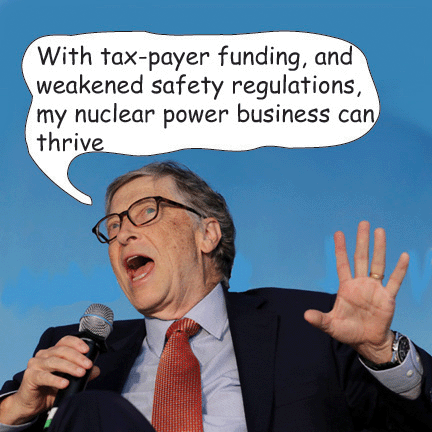
Russia’s war has stalled a next-gen US nuclear reactor backed by Bill Gates – because it’s lost its sole supplier of uranium
Markets Insider, George Glover , Dec 19, 2022,
- TerraPower has delayed a demo of its flagship nuclear reactor project in Wyoming by at least two years.
- The nuclear innovation company said it’s unable to get uranium fuel from any source other than Russia.
- TerraPower has received backing from Bill Gates and the US DOE for its advanced nuclear plant design.
……………..Its CEO Chris Levesque said the war has hit supplies of high-assay low-enriched uranium, or HALEU. That means the Natrium nuclear plant that TerraPower is building in Wyoming won’t go into demonstration service in 2028 as planned.
…………. Efforts to get US manufacturers in commercial production and to find alternative suppliers have not worked out, he said.
“Given the lack of fuel availability now, and that there has been no construction started on new fuel enrichment facilities, TerraPower is anticipating a minimum of a two-year delay to being able to bring the Natrium reactor into operation,” Levesque added.
……… Natrium project is expected to cost $4 billion to build, with around half of that funding coming from the US Energy Department.
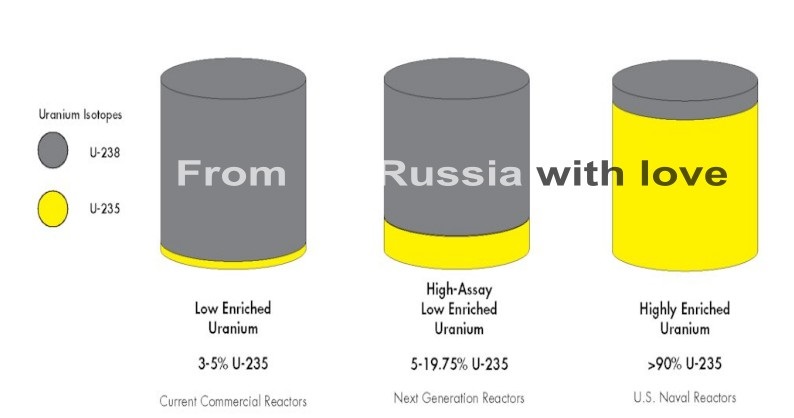
TerraPower plans to fuel Natrium with HALEU , which has a higher level of enrichment than the 5%-enriched uranium-235 fuel used by American nuclear reactors already in operation.
The company assumed it would use Russian supplies for its first core load because the US doesn’t have the capacity to enrich uranium-235 right now, according to Levesque.
But Russia’s invasion of Ukraine in February cut off the fuel source, after the US, the EU and other western allies imposed sanctions on Moscow.
TerraPower and the Department of Energy are now looking for alternative sources of HALEU – and want lawmakers to approve a $2.1 billion funding package to support low-enriched uranium production in the US, Levesque said. https://markets.businessinsider.com/news/commodities/russia-war-in-ukraine-bill-gates-nuclear-startup-uranium-fuel-2022-12
Nuclear colonialism: indigenous people say no to uranium mining at Mulga Rock, Western Australia

https://www.greenleft.org.au/content/upurli-upurli-people-say-no-uranium-mining-mulga-rock—
Sam Wainwright, Perth, November 28, 2022
Nuclear Free WA protested outside Deep Yellow’s annual general meeting on November 25 against the company’s plans to mine uranium at Mulga Rock, north west of Kalgoorlie. The Upurli Upurli traditional owners absolutely oppose it.
Deep Yellow holds the only uranium deposit in Western Australia. This was the company’s first AGM following its merger in August with Vimy Resources.
Mia Pepper, Nuclear Free Campaigner at the Conservation Council of WA (CCWA), who has been tracking the mine plans for more than 10 years, said it faces more opposition than ever.
Deep Yellow does not have “any agreement with the Native Title claim groups” and “it doesn’t have the finance”, she said.
It has just started a third Definitive Feasibility Study into the beleaguered project, expected to be completed mid-2024. The latest project delay casts further doubt on the future of the site, campaigners said.
“Deep Yellow is the only company beating the uranium drum in Western Australia and even their own executive team has been clear they have no intention to mine at the current uranium price,” Pepper said.
“For a company with a highly speculative business model, no operating mines, many regulatory hurdles still to clear, and a sizeable pricing disincentive, it’s astounding that shareholders would endorse the proposed remuneration package for the Deep Yellow executive team, with the CEO alone receiving over $1 million,” she continued
First Nations communities have been continuing their protests.
WA Greens Legislative Council member Brad Pettitt read a statement in parliament on November 17 on behalf of Upurli Upurli and Spinifex women.
“We are Upurli Upurli and Spinifex women and we are writing because we face the unprecedented threat of uranium mining at Mulga Rock, east of Kalgoorlie … We have been saying no to uranium mining at Mulga Rock for a long time”
Their statement also detailed concerns about Deep Yellow’s executive who held senior roles in companies responsible for the destruction of Juukan Gorge, as well as several incidents of environmental pollution, industrial relations controversies and workplace fatalities at uranium mines in Malawi and Namibia.
The CCWA is delivering a WA Uranium Free Charter to WA MPs. It demands they “review and remove any approval for uranium mining at Mulga Rock” as well as withdraw the approvals of the stalled proposed uranium mines at Kintyre, Yeelirrie and Wiluna.
.
Finland’s Fortum turns to U.S. in bid to replace Russian nuclear fuel
https://www.reuters.com/business/energy/finlands-fortum-turns-us-bid-replace-russian-nuclear-fuel-2022-11-22/ HELSINKI, Nov 22 (Reuters) – Finnish power company Fortum (FORTUM.HE) on Tuesday said it was planning to begin buying nuclear fuel from U.S.-based Westinghouse Electric.
Fortum began looking to replace Russian fuel, which it has been using solely since 2008, last March as a response to Moscow’s war in Ukraine.
“The new and parallel fuel supplier will diversify our fuel strategy, improve security of supply and ensure reliable electricity production,” head of Loviisa power plant Sasu Valkamo said.
Fortum has applied for a licence to run its two plants in Finland until 2050, while the current fuel-supply agreements with TVEL, a subsidiary of Russian state-owned power company Rosatom, will run until 2027 and 2030, it said.
“A tendering process will be arranged for fuel supply for the new operating licence period,” the company said.
Fortum has also put its Russian assets up for sale.
Putin’s nuclear grip on Europe could spark another energy crisis, expert warns
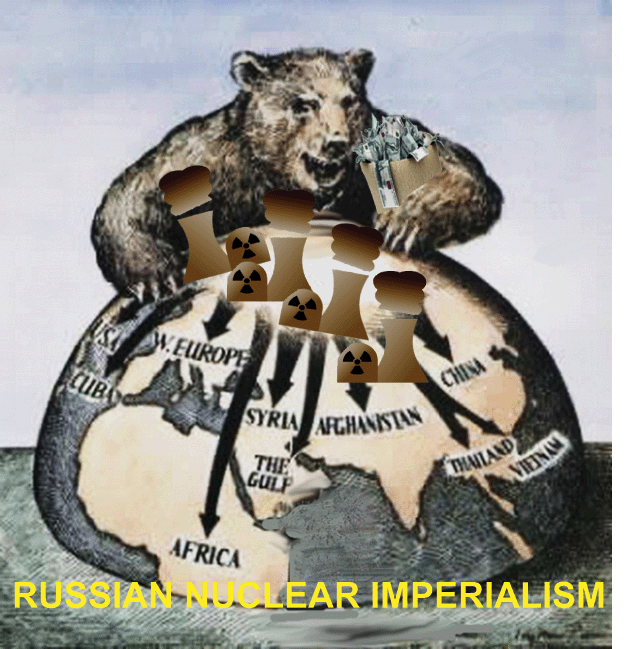
Russian President Vladimir Putin controls about 42 percent of the world’s nuclear fuel, and may be able to send electricity prices soaring if he withholds supplies.
https://www.express.co.uk/news/science/1698529/putin-nuclear-power-energy-uranium-gas-prices By JACOB PAUL, Nov 20, 2022, As global gas prices have been sent to record highs over the last year due to Russian President Vladimir Putin’s war in Ukraine and his supply cuts to Europe, nations across the continent have been scrambling to wean themselves off Russian fossil fuels to weaken Moscow’s tight grip on the energy market. But an expert has told Expess.co.uk that countries which have hedged bets on nuclear power as a means of gaining energy independence may not actually be able to escape Putin’s clutches as the Kremlin has dominance over nuclear fuel supplies, which could potentially trigger another price crisis.
While policymakers across Europe have argued that nuclear power stations can boost homegrown supplies of energy, they have failed to mention these plants require uranium to fuel them.
This is the crux of the issue as Russia, and Russia-controlled Kazakhstan currently supplies 42 percent of all uranium for all reactors worldwide. And when compared with the gas crisis, the statistics look eerily similar.
The EU for instance, got around 40 percent of its gas from Russia before Putin sent his troops into Ukraine. And when he withheld supplies to Europe, prices in Britain shot up too, despite the UK only getting four percent of its gas from Russia. This is due to the integrated nature of the gas market.
With the EU relying on Russia for 20 percent of its uranium needed to fuel supplies if Russia decided to curtail uranium deliveries to the bloc, it may spark the same problem and trigger another energy crisis.
Prof Paul Dorfman, an Associate Fellow from the Science Policy Research Unit (SPRU) at the University of Sussex told Express.co.uk: “The argument goes that nuclear provides a security of supply. In other words, ‘you don’t need to worry about Putin’s gas or the Middle East’s oil’. But this point of view is hugely problematic.
“There is no question that the whole business about the Russian invasion of Ukraine has turned the nuclear industry on its head. This whole idea of security of supply, that nuclear won’t leave us dependent on foreign problems is false.
“Putin, Russia and Russia-controlled Kazakhstan supply 42 percent of all uranium of all reactors worldwide. 20 percent for the EU, 14 percent of the US and nearly 30 percent of their enrichment services.
“The UK is different. We get our uranium from Australia and Canada and we don’t rely on Russia so we are ok.”
However, while nuclear fuel may not run short in the event of a supply cut from Russia, Prof Dorfman warned, it could send the cost of electricity in Britain soaring too.
Asked if the nuclear market was similar to the gas market in this regard, Prof Dorfman told Express.co.uk: “In my view, it certainly would have a significant impact on UK electricity prices because we live in a market world. Absolutely, yes.”
This could be a concern for the UK, given that Britain is planning to dramatically expand its number of nuclear power plants, a desire unveiled in the April energy strategy under former Prime Minister Boris Johnson.
It included the plan to set up new government body, Great British Nuclear, and a £120milion Future Nuclear Enabling Fund in a bid to build eight new reactors across the UK. Mr Johnson said: “We’re setting out bold plans to scale up and accelerate affordable, clean and secure energy made in Britain, for Britain – from new nuclear to offshore wind – in the decade ahead.
“This will reduce our dependence on power sources exposed to volatile international prices we cannot control, so we can enjoy greater energy self-sufficiency with cheaper bills.”
While it is recognised that renewable energies like wind and solar power are cheaper than other sources like oil and gas, Mr Johnson appeared to fail to take into account Putin’s grip on the global nuclear market and the prospect of sending electricity bills soaring in the UK.
Finland to continue relying on Russia for nuclear fuel
Fortum set to rely on Russian nuclear fuel until 2030, Reuters, 09 NOVEMBER 2022,
THE USE of Russian nuclear fuel is set to continue for at least a few more years at the Loviisa Nuclear Power Plant operated by Fortum, report STT and YLE.
The Finnish majority state-owned energy company has for the past roughly 15 year fuelled the nuclear power plant with uranium acquired from TVEL, a subsidiary of Russian state-owned nuclear energy company Rosatom.
Matti Kattainen, the director of nuclear power at Fortum, stated to STT that the company is operating in line with its supplier contract, declining to speculate on whether and when it could stop the use of Russian fuel. The company has previously stated that it will invite bids from supplier candidates once its operating licences, as well as the current supplier contract, come up for renewal in 2027 and 2030……………
Fortum in March submitted an application for a licence to continue operating the plant until 2050.
Juhani Hyvärinen, a professor of nuclear technology at LUT University, viewed that Fortum is in a difficult position due to the relatively low number of potential suppliers. He added on a general level that the company would likely require a year or two after signing a supplier contract to take the first delivery.
Russian nuclear fuel has accounted for roughly 20–30 per cent of the global market, he estimated in an interview with YLE. The European Commission has reported that Soviet or Russian-made reactors that are fully reliant on Russian fuel remain in use in five countries across the EU: Bulgaria, Czechia, Finland, Hungary and Slovakia.
Hyvärinen stated to both news outlets that there are no insurmountable technical obstacles to replacing the fuel. The Loviisa Nuclear Power Plant, for example, previously ran on fuel from British Nuclear Fuels Limited (BNFL)……
Nuclear fuel is presently not on the sanctions list of the European Union. The possibility of bringing it within the scope of sanctions has reportedly been discussed, but the likelihood of doing so in the midst of the energy crisis appears low. The Ministry for Foreign Affairs told YLE that adding nuclear fuel to the list would require a unanimous decision by the 27-country bloc but declined to comment on the discussions.
Also Hyvärinen refrained from commenting on what he said is a political decision……….
Use of Russia nuclear fuel became a topic of discussion in Finland on Saturday, following the emergence of news reports about police officers overseeing the loading of what turned out to be Russian nuclear fuel onto an aircraft bound for Bratislava, Slovakia, at Lappeenranta Airport………. https://www.reuters.com/business/cop/cop27-nuclear-power-industry-vies-role-decarbonizing-planet-2022-11-09/
Europe can’t cut economic ties with Russia unless it cuts nuclear power use as well

Uranium addiction . https://beyondnuclearinternational.org/2022/11/06/uranium-addiction/ By Hannes Czerulla, 6 Nov 22
The new edition of the Uranium Atlas makes it clear that Europe will not be able to detach itself economically from Russia as long as the states continue to use electricity from nuclear power. After all, both Germany and other European states obtain a large part of the uranium needed for this purpose from mines in Russia and Kazakhstan.
The recently updated version of the Uranium Atlas (in German), is published by the Bund für Umwelt und Naturschutz Deutschland (BUND) together with the Nuclear Free Future Foundation, the Rosa Luxemburg Foundation, Greenpeace and “.ausgestrahlt”. According to the report, around 40 per cent of European uranium imports come from Russia and Kazakhstan. Thus, in addition to fossil energy imports, European countries are significantly dependent on Russia.
If Europe really wants to become independent of Russia in the energy sector, “it must also stop its cooperation with Russia in the nuclear sector as soon as possible,” emphasised Uwe Witt, Senior Advisor for Climate Protection and Structural Change at the Rosa Luxemburg Foundation.
The Uranium Atlas highlights the regions of the world where uranium is mined, utilised or disposed of. The history of the uranium industry is mostly marked by exploitation and environmental destruction. In Africa, for example, foreign companies still control the mining of radioactive ore and leave behind contaminated land and a population with impaired health. In Canada and the USA, too, indigenous inhabitants are suffering from the uranium-related contamination of entire regions. Meanwhile, Central Europe is struggling with the legacy of uranium mining.
Nuclear power does not bring security of supplies
At the centre of the Russian uranium industry is the state-owned corporation Rosatom. Founded in 2007 by Russian President Vladimir Putin, it reports directly to the Kremlin and holds stakes in uranium mines mainly in Kazakhstan, but also in Canada and the USA. With an annual output of 7,122 tonnes of uranium, the company produces 15 percent of the global total and is the second-largest uranium producer in the world.
Angela Wolff, nuclear and energy policy officer at BUND, explains: “In the production of enriched uranium, which is needed for the operation of nuclear power plants, the dependency is even greater: more than a third of the global demand comes from the Russian state corporation.”
Eastern Europe in particular is also specifically dependent on Russian fuel elements because reactors in the Czech Republic, Hungary, Bulgaria, Slovakia – and Finland – can only be operated with these hexagonal fuel rods. In total, there are 18 reactors of this type in the EU.
Russia ignores environmental problems
Rosatom is silent about the details of uranium mining in Russia’s three remaining mines. The 225-page annual report contains only production and key figures on uranium mining. No details were mentioned and certainly no problems.
Uranium expert Paul Robinson reports in the Uranium Atlas: “In some houses in the vicinity of uranium mines in Krasnokamensk, radon concentrations of up to 28,000 becquerels per cubic metre have been measured; this value is 190 times above the limit at which, for example in the USA, emergency measures are prescribed by law.”
Closed mines need to be cleaned up in Russia. Environmental protection organisations that wanted to secure them are harassed by the state. The nuclear physicist Oleg Bodrov, for example, had to resign from the leadership of the organisation Green World in 2017 because he had campaigned for the decommissioning of all nuclear power plants in Russia and the cessation of uranium mining.
Import ban for Russia is not enough
While Rosatom is planning to build a total of 35 new nuclear power plants abroad – among others in Belarus, Bulgaria, China, Finland and Hungary – the EU Commission is being forced to act, explained Armin Simon of the anti-nuclear organisation .ausgestrahlt. The EU Commission has justified the inclusion of nuclear power and fossil gas in the EU taxonomy with supply security aspects, Simon said. “This justification has turned out to be false for all to see. Contrary to what is claimed, nuclear power does not contribute to security of supply.”
An import ban on nuclear fuel from Russia, as already demanded by the EU Parliament, falls short, he said. “The EU Commission must revise its position on this. Otherwise, the EU Parliament must pull the emergency brake,” Simon demanded.
BUND points out that despite the precarious situation, CDU/CSU politicians are calling for lifetime extensions for German nuclear power plants. For example, Bavaria’s Prime Minister “Markus Söder is conducting a grotesque sham debate,” said Olaf Bandt, Chairman of BUND. “His calls for nuclear power are a political and moral indictment in light of the nuclear threats from nuclear power plants in the war zone [in Ukraine] and Putin’s nuclear bomb threats.” (Editor’s note: Since this article was originally published, the German government did decide to extend the operating life of two of its remaining three reactors, but only until next April.)
Critics as enemies of the state
In the authors’ view, obtaining the uranium needed in Europe from states other than Russia is not an alternative. The conditions under which the fuel is mined are precarious everywhere. In China, anyone who criticises uranium mining is considered an enemy of the state.
The activist and Nuclear Free Future Award winner Sun Xiaodi is mentioned as an example. He had run a warehouse at one of China’s largest mines and raised questions about health hazards and radiation exposure from 1988 onwards. After giving an interview to a French journalist in 2005, he was placed under house arrest. In 2009, Sun Xiaodi was sentenced to two years in a penal camp for inciting public opinion, according to reports by the medical organisation IPPNW.
Africa does not benefit from mining
Read more: Europe can’t cut economic ties with Russia unless it cuts nuclear power use as wellNowadays, active mines in Africa are found in Niger, Namibia and South Africa. Although Niger is the world’s eighth-largest uranium producer in terms of total historical mining, the population has not benefited from the boom since the 1960s. Today, the country is one of the poorest in the world. At the same time, about 152,000 tonnes of uranium with a current market price of about 40 billion US dollars were exported.
What has been left behind – mainly by the French nuclear company Areva – is radiating waste. In the areas surrounding the mines, the radiation levels in the water are in some cases ten to a hundred times higher than recommended by the World Health Organisation (WHO). Roads have been built out of radiated rock debris. In the mining town of Arlit on the southern edge of the Sahara, 35 million tonnes of radioactive waste are lying around in the open. The background radiation there is 200 times higher. Nevertheless, three new mines are planned.
Under South Africa’s apartheid system, it was standard practice for decades that workers with suspicious symptoms of illness were given a last month’s pay and dismissed. There, uranium is only a by-product of gold mining. However, this was enough to make South Africa the most important uranium producer in Africa.
“Nuclear power contributes nothing to solving the climate crisis.”
The authors of the Uranium Atlas also warn against viewing nuclear power as a “climate saviour”, as is currently repeatedly suggested by interest groups and politicians. “Climate protection is currently the central argument for making nuclear power respectable again,” the Uranium Atlas states.
In its brochure “Nuclear Power and the Paris Agreement”, the International Atomic Energy Agency (IAEA) claims that nuclear power is also needed to achieve the goals of the Paris Climate Agreement. With this justification, the EU Commission also wants to classify nuclear energy as sustainable in the EU taxonomy (in German). (Editor’s note. Since the original publication of this article, this has now become a reality.)
From the authors’ point of view, however, these demands neglect the health and environmental dangers of uranium mining, the possibility of a catastrophe of unimaginable proportions and the still unresolved question of final storage. Horst Hamm, project manager of the Uranium Atlases, therefore declared: “Nuclear power contributes nothing to solving the climate crisis.” Moreover, the construction of new nuclear power plants is too expensive and too slow to make a difference to climate protection in the future, he said.
“Not even existing nuclear power plants are still able to compete with renewable energies, as the example of the USA in the Uranium Atlas shows,” Hamm added. Six US reactors are being shut down there ahead of schedule, and more are to follow. (Editor’s note: there are now moves afoot to subsidize and keep open reactors that planned to close and even to reopen at least one.) The nuclear industry had already been highly subsidised in the past decades and, from a purely economic point of view, was not viable.
New construction projects: Bottomless pit
Worldwide, one in eight new nuclear power plants was abandoned before it went into operation. The reason was often delays in completion and rising costs during construction. Examples include Chile, Indonesia, Jordan, Lithuania, South Africa, Thailand and Vietnam.
However, there are also reactors in Europe whose commissioning has been delayed by years and whose costs continue to rise: The construction of the first European pressurised water reactor (EPR) in Olkiluoto, Finland, started in 2005 and was supposed to be finished in 2009. Now, in the course of 2022, with a delay of 13 years, regular generation of electricity is to begin there. (Editor’s note: In October, cracks in all four feedwater pumps of Finland’s Olkiluoto 3 were found and startup is now delayed until at least late December 2022.)
The new reactor in Flamanville, France has been under construction since 2007 and should have been operational in 2012. Due to technical and industrial problems, it will now be commissioned in 2023 at the earliest. With projected costs of 19 billion Euros, the power plant is expected to be six times as expensive as planned. The costs of the Finnish EPR have risen from an estimated 3 billion Euros to almost 11 billion Euros.
Renewables cheaper than nuclear power
When calculating the costs of nuclear power, items such as the removal of damage from uranium mining as well as the dismantling and final storage of contaminated waste must also be priced in. The latter, however, are difficult to quantify. According to the Uranium Atlas, the nuclear industry has “neither determined the true price of its business nor adequately illuminated its economic situation”. Instead, state subsidies have been paid again and again due to the interconnections with the construction of nuclear bombs and the maintenance of nuclear-powered submarines and warships.
According to calculations made by the Fraunhofer Institute for Solar Energy Systems in 2021, generating electricity with the help of nuclear fission is more expensive than almost any other method. Only energy from gas and hard coal costs even more per kilowatt-hour. The researchers calculated a price of 13.5 Euro cents for a kilowatt-hour of nuclear electricity. A kilowatt-hour from hard coal costs 15.5 cents and from gas 20.2 cents.
In contrast, energy production from renewable resources is in part significantly cheaper. The price of a kilowatt-hour from offshore wind turbines is only 9.7 cents, onshore 6.1 cents, and photovoltaic plants on open land in southern Germany produce the kilowatt-hour for 3.6 cents. In sunnier countries like oil-rich Saudi Arabia, it is even cheaper. There, a 600-megawatt solar project has been connected to the grid that generates the kilowatt-hour for 1.04 US cents.
The authors see the future of sustainable energy generation not in nuclear power, but in renewables like wind and solar. “Renewable energies are now cheaper than coal, gas or nuclear power plants, even if you don’t count their follow-up costs,” said Heinz Smital, nuclear campaigner for Greenpeace. Even old and depreciated plants often cannot keep up.
Last April marked the 36th anniversary of the April 26, 1986 Chernobyl reactor disaster. Nevertheless, nuclear energy is once again being presented as the solution in Europe (in German) today. In light of this, BUND calls on the federal government to stand by its refusal to extend the operating lives of nuclear power plants and to complete the phase-out of nuclear power.
Studies on nuclear radiation’s impact on people necessary: BRIN
https://en.antaranews.com/news/258613/studies-on-nuclear-radiations-impact-on-people-necessary-brin 4 Nov 22, Jakarta (ANTARA) – Environmental and health studies on the impact of radiation exposure on people living in areas of high natural radiation, such as Mamuju, West Sulawesi, are necessary, the National Research and Innovation Agency (BRIN) has said.
A researcher from BRIN’s Research Center for Metrology Safety Technology and Nuclear Quality, Eka Djatnika Nugraha, said that in some places in Indonesia, such as Mamuju, people have been exposed to natural radiation that is several times higher than the global average at around 2.4 millisieverts per year.
“This situation may pose a health risk to the public due to chronic external and internal exposure,” Nugraha said in a statement received on Friday.
Mamuju is an area of high natural background radiation due to the high concentration of uranium and thorium in the rocks and soil, he observed.
Thus, studies on the health of people living in such areas could serve as a potential source of information about the effects of chronic low-dose exposure, he added.
In order to obtain scientific evidence on the effects of chronic low-dose radiation exposure on health, it is necessary to conduct a comprehensive environmental assessment of the exposure situation in areas of high natural radiation, he elaborated.
Meanwhile, head of BRIN’s Nuclear Energy Research Organization, Rohadi Awaludin, said that it is important to know and understand the safety and protection measures against nuclear radiation technology, especially for everyone involved or in contact with it.
“Nuclear radiation technology, including ionization, has been used and applied to various aspects, including industry and health, food, and others. This technology is the answer to the problems we have, but there are also risks that (one) must be (aware of) from this technology,” he added.
American companies might make fuel for small nuclear reactors, except that there seems to be no market for them.
Russia’s Uranium Dominance Threatens America’s Next-Gen Nuclear Plans, By Tsvetana Paraskova – Oct 23, 2022, 10:00 AM CDT
- The United States has ambitious plans for its nuclear power industry.
- Russia’s stranglehold on the uranium market threatens to delay progress in nextgen nuclear power projects.
- U.S. companies are scrambling to develop the domestic uranium supply chain needed to fuel nuclear power ambitions.
……………………..
there is one major hurdle to the construction of most advanced reactors under development in the United States—the uranium type of fuel on which those reactors are designed to run is currently sold commercially by only one company in the world. And that company is a subsidiary of Russia’s ROSATOM, the Russian State Atomic Energy Corporation.
The federal government and U.S. companies developing advanced nuclear reactors—including Bill Gates’ TerraPower—recognize the urgent need to eliminate reliance on a Russian state corporation for nuclear fuel for America’s next-generation nuclear reactors.
The association Uranium Producers of America noted during a Senate committee hearing after the Russian invasion of Ukraine that “almost none of the fuel needed to power America’s nuclear fleet today comes from domestic producers, while U.S. nuclear utilities purchase nearly half of the of the uranium they consume from state-owned entities (SEO) in Russia, Kazakhstan, and Uzbekistan.”
“We estimate that there is more than $1 billion in annual U.S. dollar purchases of nuclear fuel flowing to ROSATOM,” said Scott Melbye, president of the association and Executive Vice President at Uranium Energy Corp.
ROSATOM is not under Western sanctions after the Russian invasion of Ukraine because of the Russian state firm’s importance in the supply chain of the global nuclear power industry. But the U.S. firms developing the next generation of more efficient, cheaper, and more environmentally friendly nuclear reactors don’t want to do business with Russia anymore.
Hence, the need for a commercially viable and stable domestic supply chain of the fuel for those advanced reactors—HALEU, or high assay low enriched uranium. ……………………………………….
the U.S. government faces the “chicken and egg” dilemma in HALEU supply, Matt Bowen, Research Scholar at the Center on Global Energy Policy at Columbia University SIPA, and Paul M. Dabbar, Distinguished Visiting Fellow at the same center, wrote in a paper in May this year/
“Existing enrichment companies, such as Urenco, Orano, GLE, and Centrus, could make HALEU, but these companies would likely be hesitant to invest too much in building HALEU infrastructure and completing NRC licensing without being confident there will in fact be a profitable market for the product,” they say.
America’s new nuclear power industry has a Russian problem
Kitco News Reuters Friday October 21, 2022,

WASHINGTON/LONDON, Oct 20 (Reuters) – U.S. firms developing a new generation of small nuclear power plants to help cut carbon emissions have a big problem: only one company sells the fuel they need, and it’s Russian.
That’s why the U.S. government is urgently looking to use some of its stockpile of weapons-grade uranium to help fuel the new advanced reactors and kick-start an industry it sees as crucial for countries to meet global net-zero emissions goals.
Production of HALEU is a critical mission and all efforts to increase its production are being evaluated,” a spokesperson for the U.S. Department of Energy (DOE) said……..
without a reliable source of the high assay low enriched uranium (HALEU) the reactors need, developers worry they won’t receive orders for their plants. And without orders, potential producers of the fuel are unlikely to get commercial supply chains up and running to replace the Russian uranium……
The fact that Russia has a monopoly on HALEU has long been a concern for Washington but the war in Ukraine has changed the game, as neither the government nor the companies developing the new advanced reactors want to rely on Moscow.
HALEU is enriched to levels of up to 20%, rather than around 5% for the uranium that powers most nuclear plants. But only TENEX, which is part of Russian state-owned nuclear energy company Rosatom, sells HALEU commercially at the moment.
While no Western countries have sanctioned Rosatom over Ukraine, mainly because of its importance to the global nuclear industry, U.S. power plant developers such as X-energy and TerraPower don’t want to be dependent on a Russian supply chain.
“We didn’t have a fuel problem until a few months ago,” said Jeff Navin, director of external affairs at TerraPower, whose chairman is billionaire Bill Gates. “After the invasion of Ukraine, we were not comfortable doing business with Russia.”
………….. with large-scale projects still challenging for reasons including huge up-front costs, project delays, cost overruns and competition from cheaper energy sources such as wind, several developers have proposed so-called small modular reactors (SMR).
While the SMRs on offer from companies such as EDF (EDF.PA) and Rolls-Royce (RR.L) use existing technology and the same fuel as traditional reactors, nine out of 10 of the advanced reactors funded by Washington are designed to use HALEU…….
Companies in the United States and Europe have plans to produce HALEU on a commercial scale but even in the most optimistic scenarios, they say it would take at least five years from the point they decide to proceed……
“Nobody wants to order 10 reactors without a fuel source, and nobody wants to invest in a fuel source without 10 reactor orders,” said Daniel Poneman, chief executive of U.S. nuclear fuel supplier Centrus Energy Corp (LEU.A)…..
TerraPower, for example, said it will need 15 tonnes of HALEU for the first fuel load of its advanced reactor.
Other potential HALEU producers are further behind.
French state-owned uranium mining and enrichment company Orano says it could start producing HALEU in five to eight years, but will only apply for a production licence once it has customers with long-term contracts.
In a response to a DOE request for information about how to establish a programme to support HALEU production, Orano said it would be down to the U.S. government to kick-start the industry.
“Orano’s assessment shows that the single most important factor enabling success is the DOE guaranteeing a certain volume of demand,” the company said in a statement on its website.
European uranium enrichment company Urenco, meanwhile, says it is considering sites in the United States and Britain for HALEU production but has yet to apply for licences.
CLOCK IS TICKING
For TerraPower and X-energy, which have projects planned in the U.S. states of Wyoming and Washington respectively, the clock is ticking.
Washington awarded them contracts to build two demonstration rectors by 2028 and shared the costs. But without Russian fuel, that deadline will fall well before any alternative commercial suppliers would be up and running.
While the 20% enrichment levels for HALEU are well below the roughly 90% level needed for weapons, companies need special licences to produce it. Additional security and certification requirements are also required for production sites, packaging and transportation of the fuel.
To speed up the process and break the deadlock, the U.S. government is looking to “downblend” weapons-grade highly enriched uranium sitting in its stockpile, though that will also take time…..
The Inflation Reduction Act U.S. President Joe Biden signed in August contained $700 million to secure HALEU supplies from the government and a consortium partnered with the DOE for use in advanced reactors and research.
In September, the White House asked Congress for another $1.5 billion in a temporary government funding bill to boost domestic supply of low enriched uranium and HALEU, to address potential difficulties in accessing Russian fuel.
Lawmakers took the measure out of the bill over concerns about costs, though it remains a priority for some Biden officials, including Energy Secretary Jennifer Granholm.
Last year, nuclear power stations in the United States imported about 14% of their uranium from Russia, along with 28% of their enrichment services, according to the U.S. Energy Information Administration.
Reporting by Sarah McFarlane and Susanna Twidale in London and Timothy Gardner in Washington; Editing by Veronica Brown and David Clarke https://www.kitco.com/news/2022-10-21/America-s-new-nuclear-power-industry-has-a-Russian-problem.html
USA’s planned small nuclear reactors must have special uranium fuel – from Russia!
Putin holds the key to Biden’s nuclear dreams as Russian fuel needed for
new US plants. The West has been scrambling to wean itself off Russian
energy amid the war in Ukraine, but a Kremlin-controlled firm has a tight
grip on a crucial part of the nuclear industry.
The US is vying to roll out its new small nuclear power plants amid the global energy crisis as it weans
itself off fossil fuels, but Russia is the only country which has the fuel
needed to power the next-generation reactors. Now, the US is scrambling to
use some of its stockpile of weapons-grade uranium, (uranium is the fuel
widely used in nuclear plants) as an alternative as it hopes to kickstart
the nuclear revolution.
Express 20th Oct 2022
1 This Month
23-25 October – on Zoom – World BEYOND War’s annual global conferenc


Shut down the radiation-damaged Heysham nuclear reactors now
To see nuclear-related stories in greater depth and intensity – go to https://nuclearinformation.wordpress.com

Say No to NASA’s Reckless Nuclear Reactor on the Moon
Say No to NASA’s Reckless Nuclear Reactor on the Moon

-
Archives
- October 2026 (247)
- September 2026 (339)
- August 2026 (330)
- July 2026 (355)
- June 2026 (287)
- May 2026 (306)
- April 2026 (356)
- March 2026 (251)
- February 2026 (267)
- January 2026 (308)
- December 2025 (358)
- November 2025 (359)
-
Categories
- 1
- 1 NUCLEAR ISSUES
- business and costs
- climate change
- culture and arts
- ENERGY
- environment
- health
- history
- indigenous issues
- Legal
- marketing of nuclear
- media
- opposition to nuclear
- PERSONAL STORIES
- politics
- politics international
- Religion and ethics
- safety
- secrets,lies and civil liberties
- spinbuster
- technology
- Uranium
- wastes
- weapons and war
- Women
- 2 WORLD
- ACTION
- AFRICA
- Atrocities
- AUSTRALIA
- Christina's notes
- Christina's themes
- culture and arts
- Events
- Fuk 2022
- Fuk 2023
- Fukushima 2017
- Fukushima 2018
- fukushima 2019
- Fukushima 2020
- Fukushima 2021
- general
- global warming
- Humour (God we need it)
- Nuclear
- RARE EARTHS
- Reference
- resources – print
- Resources -audiovicual
- Weekly Newsletter
- World
- World Nuclear
- YouTube
-
RSS
Entries RSS
Comments RSS

