Russia calls on North Korea to stop nuclear program
Russia Urges North Korea to Halt Nuclear Activities, VOA, December 1st, 2011 Russia has urged North Korea to halt its uranium enrichment program and re-admit United Nations nuclear monitors to pave the way for international disarmament talks.
The Russian Foreign Ministry said in a statement Thursday that consistent implementation of the uranium program in North Korea cannot but create serious worry. It called on Pyongyang to announce a moratorium on all of its nuclear activities including the uranium enrichment program.
Moscow is also urging its communist neighbor to invite inspectors from the International Atomic Energy Agency to examine its nuclear program and verify that it is purely peaceful. The call comes after North Korea Wednesday announced progress in producing enriched uranium for its light-water nuclear reactor at the Yongbyon nuclear facility.
U.S. Secretary of State Hillary Clinton called on North Korea Wednesday to take concrete steps to abandon its nuclear program and promote peace and stability….. http://blogs.voanews.com/breaking-news/2011/12/01/russia-urges-north-korea-to-halt-nuclear-activities/
Appeal to save Grand Canyon’s sacred lands, biodiversity, water – from uranium mining
Pollution from past uranium mining already plagues the Grand Canyon and surrounding region. Proposals for new mining have prompted protests, litigation and proposed legislation. Scientists, tribal and local governments and businesses have voiced opposition. Additional mining threatens to industrialize iconic and regionally sacred wildlands, destroy wildlife habitat and permanently pollute or deplete aquifers feeding Grand Canyon’s biologically rich springs and creeks.
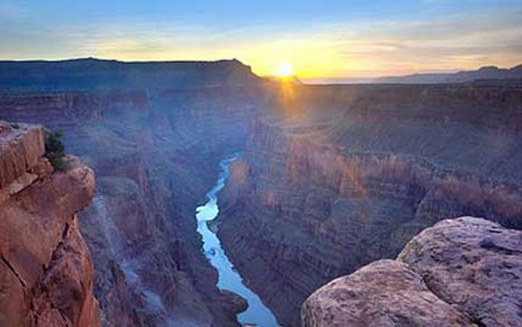
Appeal Challenges Uranium Mine Threatening Grand Canyon, 1 Dec 11, GRAND CANYON NATIONAL PARK, Ariz—Conservation groups and American Indian tribes today filed an appeal in the 9th Circuit Court challenging a lower court ruling that allowed a uranium mine near Grand Canyon National Park to re-open without updating decades-old environmental reviews. The Arizona 1 uranium mine is located near Kanab Creek immediately north of Grand Canyon National Park. Continue reading
Failure of nuclear “renaissance” makes loans to uranium company unwise
Henry D. Sokolski, the executive director of the Nonproliferation Policy Education Center, said Piketon was not a good bargain for taxpayers. “This thing has got more than nine lives, and none of them are worth living,” he said. “It will not do to whine about Solyndra
and wink at this.”……
John R. Longenecker, a consultant in the nuclear fuel business, said…. the industry had hoped for a renaissance that would result in many more reactors, he said, but “if that happened, I blinked and missed it.”
Loan Request by Uranium-Enrichment Company Scrambles Politics as Usual, NYT By MATTHEW L. WALD, November 24, 2011 WASHINGTON — The only American-owned company capable of enriching uranium is asking for government help to modernize its plant and remain in business. Continue reading
More uranium produced, but prices continue downward
Uranium Stocks Build Momentum but Prices Remain Weak, Equity Research on Cameco Corp & Denison Mines NEW YORK, NY, Nov 24, 2011 (MARKETWIRE via COMTEX) — “………While uranium stocks are on the upswing on long term optimism and takeover speculation, the spot price for uranium remains low. The spot uranium price dropped to slightly below $53 a pound U3O8, according to price publishers TradeTech and Ux Consulting, as little new buying interest emerged over the past week in the spot uranium market. Ux noted in its Monday report that a number of buyers and sellers already have met their volume expectations for the year — not surprising given volume levels posted since July…..
Independent report on water concerns in uranium mining and milling
 “The most powerful influences in any decision on uranium mining and processing are likely to be financial and political,”
“Thus, it is imperative that the public evaluate the long-term ‘big picture’ because the actual impacts will be paid for by numerous future generations.”..
Uranium mining, milling threatens water, report claims, By TIM DAVIS/Star-Tribune, November 22, 2011 A report funded by the Roanoke River Basin Association warns that a proposed uranium mining and milling project in Pittsylvania County could be a serious threat to water quality and may increase competition for water in the future.
The 39-page report, “Site-Specific Assessment of the Proposed Uranium Mining and Milling Project at Coles Hill, Pittsylvania County, Va.,” was released Thursday.
It was written by Colorado scientist Robert E. Moran, PhD., who has 40 years of experience and served as a hydrogeological and water quality consultant to Marline Uranium and Union Carbide on the Coles Hill project in the early 1980s. Continue reading
Silex laser uranium enrichment may open the door to nuclear weapons proliferation
many of the good things GE is using to make a case about Silex—less use of resources and electricity and increased efficiency—are actually negatives that make it easier for rogue states to hide clandestine plants…..methods for the production and use of nuclear materials that would be more difficult to detect,” the report states
New Uranium Enrichment Technology Alarms Aviation Week, By Kristin Majcher Washington 23 Nov 11 General Electric says it has successfully tested a faster, cheaper way to produce nuclear reactor fuel, and is planning to commercialize the technology by building a facility in Wilmington, N.C. While the prospect of saving resources to generate energy at a lower price sounds like a breakthrough, scientists are concerned that the top-secret method of enrichment that GE is using will indirectly elevate proliferation risks around the world, thus inspiring rogue states to develop their own laser enrichment facilities for nuclear weapons.
The enrichment technology is the Separation of Isotopes by Laser Excitation (Silex). It was developed by Silex of Australia in 1992. The technology company USEC funded early research on Silex, but abandoned it in favor of focusing on centrifuge enrichment. In 2006, GE signed an exclusive agreement to commercialize and license the technology and spearhead further research and development. Continue reading
A site specific report on uranium mining, milling, in Pittsylvania County,

 Uranium mining, milling threatens water, report claims, By TIM DAVIS/Star-Tribune , November 22, 2011 “………Moran’s study is one of the few reports on the potential impact of uranium mining not funded by the mining industry,…
Moran’s site-specific findings include:
Virginia Uranium has failed to present any sort of detailed project proposal in writing.
The verbally described plans have changed constantly, depending on the audience.
Hence, the public has no way of reliably knowing the details of the proposed mining and mineral processing methods or the related impacts.
The project as proposed may generate at least 28 million tons of solid uranium mill tailings and roughly the same amount of liquid waste.
The solid wastes would remain on site forever, requiring maintenance forever.
Uranium mill tailings would contain radionuclides, heavy metals, and other toxic elements.
Undiluted tailings liquids may contain 1,160 to 1,460 times the existing Safe Drinking Water Act standard for uranium.
The confirmed presence of sulfides in the Coles Hill rock raises the possibility that long-term, active water treatment may be required, in perpetuity.
Numerous factors combine to provide long-term pathways for the migration of contaminants into local waters.
As proposed, the Coles Hill project would require over 5 billion gallons of water. During the start-up period, the project would use at least 525.6 million gallons per year.
It has been estimated that at least 136 million gallons of groundwater would flow into the open pit per year.
This water would become contaminated with numerous radioactive and non-radioactive contaminants.
To allow mining, this contaminated water must be pumped out of the open pit and discharged to some undefined location.
The Coles Hill project may use over 2,030 tons of explosives per year, releasing potentially toxic concentrations of nitrate, ammonia, and other organic compounds into the environment.
Such a project would cause long-term, chronic degradation of water quality and increase wate competition in the region.
Statistically adequate baseline data (water quality, quantity, etc.) have never been collected, compiled, and interpreted, or released to the public.
Thus, the public has no reliable “yardstick” against which to demonstrate that changes have occurred or not.
There is no credible evidence to indicate that either the federal or state regulatory agencies have sufficient staff, budgets, or political clout to adequately oversee and enforce the appropriate regulations…. http://www.wpcva.com/articles/2011/11/23/chatham/news/news43.txt
Outside safeguards, India pursues plutonium production, enriched uranium, nuclear missiles

 This power play fails to charm, The Age, M.V. Ramana, November 18, 2011“……… in the past few years, the Indian government has continued with its production of plutonium for weapons purposes at the 100-megawatt Dhruva reactor. It has also kept many of its power reactors outside of International Atomic Energy Agency safeguards, and even by 2014, when it is supposed to put a total of 14 heavy-water reactors under safeguards, eight reactors will be available for potentially military purposes.
Also outside IAEA safeguards is the prototype fast breeder reactor that is under construction and that could produce about 140 kilograms of high-quality, weapon-grade plutonium, sufficient for nearly 30 Nagasaki-type bombs, every year. In 2010, the International Panel on Fissile Materials estimated India had stockpiled 300 to 700 kilograms of weapon-grade plutonium and 3300 to 3900 kilograms of reactor-grade plutonium.
India is also expanding its capacity to enrich uranium, reportedly for use in a nuclear submarine reactor. Recent Google Earth images suggest that new centrifuge halls, roughly twice the size of the existing facility, are being built.
Last year the chief of the navy said India would soon have an operational triad of aircraft, land-based missiles and (nuclear-powered) submarine-launched missiles for delivery of nuclear warheads.
Pakistan and China are expected to react to this by further developing their own arsenals and military strategies….http://www.theage.com.au/opinion/politics/this-power-play-fails-to-charm-20111117-1nl17.html#ixzz1e7A9KnGx
Australian uranium companies further down the drain
Oz Minerals pulls out of Toro uranium JV,9 News, 19 Nov 11 OZ Minerals has pulled out of a uranium exploration joint venture with Toro Energy in South Australia, saying no economic uranium has yet been found at the Mt Woods project.
The Toro board has accepted a $3.75 million cash offer from OZ Minerals as consideration for the termination, Toro said in astatement on Friday. ”No potentially economic uranium results have been reported from the Mt Woods project,” Toro said…. Shares in Toro were down 3.41 per cent at 8.5 cents at 1540 AEDT while OZ Mineral shares were 1.89 per cent weaker, compared to losses in the broader market of about 1.8 per cent.
http://finance.ninemsn.com.au/newsbusiness/aap/8376270/oz-minerals-pulls-out-of-toro-uranium-jv
Opposition to uranium mining in India
| Minister opposes uranium mining | |
| Deccan Herald, Bangalore, Nov 16, DHNS: | |
| Yadgir district in-charge minister Raju Gouda on Wednesday said he would appeal to Chief Minister D V Sadananda Gowda to cancel the permission granted to the Uranium Corporation of India Limited (UCIL) to take up uranium mining in Gogi village of Yadgir district. | |
| Addressing the media, Gouda said he would take a delegation to meet the chief minister on Thursday, and submit a memo- randum urging the government to drop the project as it would pose serious health hazards to the people of the region.
The minister said the project was not only hazardous to human beings but would also adversely impact the environment and the wildlife, and fertile land in the radius of over 100 km in and around the project would turn barren. The government has agreed to allot about 102 hectares of land to UCIL for taking up mining activities in Gogi, where rich deposits of Uranium have been found. UCIL had already dug up a 273-metre deep tunnel. The effluents generated are being discharged into a nearby water body, which was a water source for the people. Both humans and cattle have been taking ill after consuming this water, he said. .. |
|
Uranium mining industry now facing a gloomy future
 Canada’s Cameco, the world’s biggest uranium miner by market value, has seen its share price tumble 48 per cent since the beginning of March.
A drop in supply may also be met by a drop in demand, according to UxC. “The reduction in uranium demand will extend to the longer term as some of the reactors taken offline will be permanently shut down,” it says in its report. “In addition, other new reactors under construction or planned will likely be delayed, leading to a further reduction in demand.”….
Uranium miners hamstrung by price and demand By William MacNamara, FT.com November 16, 2011 The uranium industry, suppliers of the fuel that powers nuclear plants, is processing a few hard numbers.
These start with the benchmark spot price for uranium. Since the Fukushima disaster in March, when the price was hovering about $70 per pound, uranium has fallen to a range of $50-$55 per pound. The costs of extracting uranium are rising, and lower prices are affecting producers’ profitability and plans to invest in future supply. Continue reading
Obama sets uranium policy for Australia as he flips by
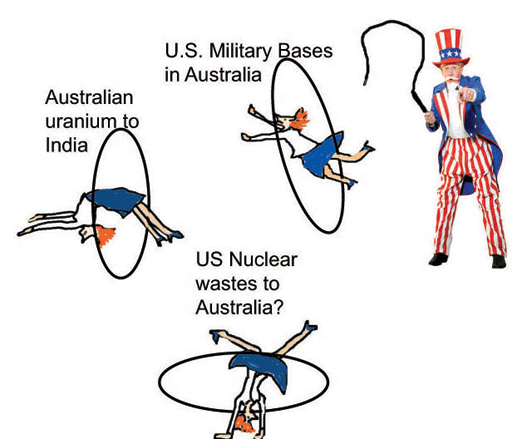 Gillard uranium move linked to US: report, Business Spectator, 16 Nov 2011 Prime Minister Julia Gillard’s move to open the door to uranium exports to India reportedly follows talks with the Obama administration. The US has been pursuing a closer partnership with India and considers Australia a key part of its strategy, The Australian reported on Wednesday.
Ms Gillard has denied that the decision was made to coincide with President Barack Obama’s visit to Australia and said it was her decision alone.The Australian, however, reported that US and Australian officials have been in intense strategic discussions about India for several months. http://www.businessspectator.com.au/bs.nsf/Article/Gillard-uranium-move-linked-to-US-report-NMLD2?OpenDocument&src=hp3
 India can thank Uncle Sam for Julia Gillard’s uranium backflip, First Post India, 16 Nov 11 Uttara Choudhury New York: Australian Prime Minister Julia Gillard’s dramatic decision to open the door to uranium exports to India came after talks with the Obama administration, which viewed the ban as a “fly in the ointment” to greater engagement between Washington, New Delhi and Australia in the Indian Ocean region…….
Gillard announced on Tuesday that she will ask the Australian Labour Party to dump its ban on uranium sales to India, at its national conference next month. The ban was imposed by former prime minister Kevin Rudd in 2008 as India wasn’t a signatory to the Nuclear Non-proliferation Treaty. Gillard has denied her decision to seek to overturn the ban is in order to fall in line with the US. She bristled when questioned on the timing of the announcement which coincided with Obama’s state visit to Australia. Gillard said the decision was hers alone…..
She did, however, point to the US-India civil nuclear agreement of 2008, which lifted the “de facto international ban” on the sale of uranium to India….. While Beijing has learned to live with American forces on its eastern periphery, the possibility of an intimate US-India military relationship, as well as India’s position astride China’s key maritime shipping lanes, has generated fears of encirclement…
Thorium nuclear reactors 50 years away, if ever
Technology transitions always happen faster than the conventional market predicts PV MAGAZINE 14. NOVEMBER 2011 BY: RAY WILLS “……Some bang on about nuclear – yes, China, in raw numbers, is planning a lot – but the country is comparatively modest in the scale of things: it is planning 70 GW of nuclear by 2020, but 200 GW of renewables, also by 2020! Also, a decision hasn’t been announced over what is being done post-Fukushima, but the analysts expect the country to proceed at a more modest scale. The 12th five-year plan was released post-Fukushima and it was in that that China increased its renewables target on solar from one GW to 10 GW by 2015,…
Thorium is the latest suggestion from those attempting to distract us from renewables as the solution, but according to those in the nuclear research arena, thorium realistically is at least 50 years away from being realized. Nevertheless, I note India talking about building a 300 megawatt (MW) prototype – it’s being played up in some parts of the press – but when you look at the detail, the proponents note, “if all goes to plan, the […] reactor could be operational by the end of the decade”. That’s just a prototype. My view is that by 2025, the game will be over, we will have solved intermittency through storage, and electricity from solar will be cheaper than coal. I don’t believe I’m dreaming, simply looking at technology shifts and the capacity for rapid technology shifts in the past – go back 100 years ago and tell the buggy and whip manufacturers they will soon be out of business and imagine the response.
http://www.pv-magazine.com/opinion-analysis/blogdetails/beitrag/technology-transitions-always-happen-faster-than-the-conventional-market-predicts_100004940/
U.S. army and depleted uranium

 Gulf War Syndrome and the Army’s Depleted Uranium Training Videos, Motherboard by DerekMead , Nov 12, 2011 Depleted uranium, a bi-product of enriched uranium that was used in American munitions, was the focus of military preparations before the war. We dug up some old Army videos for “Depleted Uranium General Awareness Training” that shows just how under-prepared soldiers may have been to the hazards of this potentially pretty nasty stuff. Continue reading
Mounting pile of uranium not really secure in Denver uranium mine
Uranium sifted from groundwater piles up inside mine west of Denver, By Bruce Finley, The Denver Post, 13 Nov 11 Nearly three-quarters of a ton of concentrated uranium removed from groundwater to protect metro-area drinking water is piling up at Cotter Corp.’s defunct mine west of Denver.
Cotter workers are storing it in plastic tanks inside a building at the Schwartzwalder mine, which is staffed by day but unguarded at night. State environmental overseers were notified last month of the mounting uranium. On Thursday, state officials could not address disposal, whether the uranium could be sold or whether there are security concerns.
However, on Friday morning, state health department spokesman Mark Salley said Cotter has a “radioactive materials license for management of residuals from contaminated groundwater treatment. The license specifies disposal at a licensed facility off-site, but a licensee could take the material for reprocessing if their license allowed it.
“There are no such licensees in Colorado,” Salley said.
Concentrated uranium that later is enriched can be used as fuel for nuclear power plants or to make weapons…Uranium sifted from groundwater piles up inside mine west of Denver – The Denver Posthttp://www.denverpost.com/news/ci_19312125#ixzz1djT67722
1 This Month


Website of the Week
Now until to February 10, 2026 Radioactive waste storage in France: the debate is finally open! How to participate?
-
Archives
- January 2026 (148)
- December 2025 (358)
- November 2025 (359)
- October 2025 (377)
- September 2025 (258)
- August 2025 (319)
- July 2025 (230)
- June 2025 (348)
- May 2025 (261)
- April 2025 (305)
- March 2025 (319)
- February 2025 (234)
-
Categories
- 1
- 1 NUCLEAR ISSUES
- business and costs
- climate change
- culture and arts
- ENERGY
- environment
- health
- history
- indigenous issues
- Legal
- marketing of nuclear
- media
- opposition to nuclear
- PERSONAL STORIES
- politics
- politics international
- Religion and ethics
- safety
- secrets,lies and civil liberties
- spinbuster
- technology
- Uranium
- wastes
- weapons and war
- Women
- 2 WORLD
- ACTION
- AFRICA
- Atrocities
- AUSTRALIA
- Christina's notes
- Christina's themes
- culture and arts
- Events
- Fuk 2022
- Fuk 2023
- Fukushima 2017
- Fukushima 2018
- fukushima 2019
- Fukushima 2020
- Fukushima 2021
- general
- global warming
- Humour (God we need it)
- Nuclear
- RARE EARTHS
- Reference
- resources – print
- Resources -audiovicual
- Weekly Newsletter
- World
- World Nuclear
- YouTube
-
RSS
Entries RSS
Comments RSS
 nuclear-news