Saudi Arabia plans to enrich and sell uranium as Iran commences nuclear talks with E3

Jan 13, 2025,
https://www.iranintl.com/en/202501135824
audi Arabia plans to monetize all its mineral resources, including uranium, by enriching and selling it, while Iran begins nuclear talks with the E3 in Geneva.
Speaking at a conference in Dhahran, Saudi energy minister Prince Abdulaziz bin Salman said on Monday, “We will enrich it and we will sell it and we will do a ‘yellowcake,'” referring to the powdered concentrate used to prepare uranium fuel for nuclear reactors.
According to Iranian media, Iran’s two-day discussions with the E3 (Britain, France, and Germany), along with a European Union representative, will focus on negotiations for a nuclear deal and regional issues.
The talks follow November meetings amid tensions following the UN nuclear watchdog’s Board of Governors’ resolution censuring Iran, demanding that Tehran resolve outstanding issues with the IAEA over its advancing nuclear program.
US to study proliferation risk of HALEU nuclear fuel, after warning by scientists

By Timothy Gardner January 10, 2025
WASHINGTON, Jan 8 (Reuters) – The U.S. agency in charge of nuclear security is commissioning a study on the proliferation risks of a more-enriched uranium fuel that nuclear power developers want to fuel new high-tech reactors, the head of the agency said this week.
Jill Hruby, administrator of the National Nuclear Security Administration, said in a statement published in the journal Science that it is important to address proliferation concerns of so-called high assay, low-enriched uranium fuel, or HALEU.
“NNSA recognizes that reactor type, fuel enrichment level, fuel quantity, and fuel form are important factors in evaluating proliferation risks and believes that risk-informed and adaptive approaches to the proliferation challenges inherent in nuclear energy are warranted,” Hruby said.
Planned new nuclear plants, known as small modular reactors, or advanced reactors, must set high standards for safety and security, “especially considering Russia’s takeover of Ukraine’s largest nuclear power plant,” she said.
Russia in 2022 took the Zaporizhzhia plant, the largest nuclear plant in Europe, by force after it invaded Ukraine.
Hruby’s statement was in response to an article published last year in which scientists said HALEU poses a security risk because it can be used without further enrichment as fissile material in a crude nuclear weapon.
HALEU is uranium fuel enriched up to 20% instead of the 5% level of uranium fuel used in today’s commercial reactors.
Several companies are hoping to develop a wave of reactors that would use HALEU, including the Bill Gates-backed TerraPower, which wants to build a $4 billion plant in Wyoming by 2030. Nuclear has gotten attention from technology companies seeking new ways to power data centers and as U.S. power demand is growing for the first time in decades. None of the plants have yet to be built.
TerraPower did not immediately respond to a request for comment.
In October, the U.S. Energy Department rolled out initial contracts to four companies hoping to produce HALEU domestically. Currently, commercial amounts of HALEU are only produced in Russia. The U.S. contracts will last up to 10 years and each awardee received a minimum of $2 million, with up to $2.7 billion available subject to congressional appropriations.
Hruby said NNSA has regularly collected data and evaluated HALEU risks, and is finalizing plans to commission a National Academies report. The reports are largely classified, she said. But the information will be used to inform programs, develop actions, and make recommendations to stakeholders.
Edwin Lyman, a physicist at the Union of Concerned Scientists and an author of last year’s report, said he appreciated that Hruby is asking for the independent review of HALEU by the National Academies. “We are hopeful that this effort will lead to tighter security controls on HALEU to prevent its misuse by proliferators and terrorists.”
The authors had written that if HALEU enrichment is limited to 10% to 12%, the supply chain would be far safer with only modest costs.
Nuclear company Orano seeks arbitration over Niger mining licence
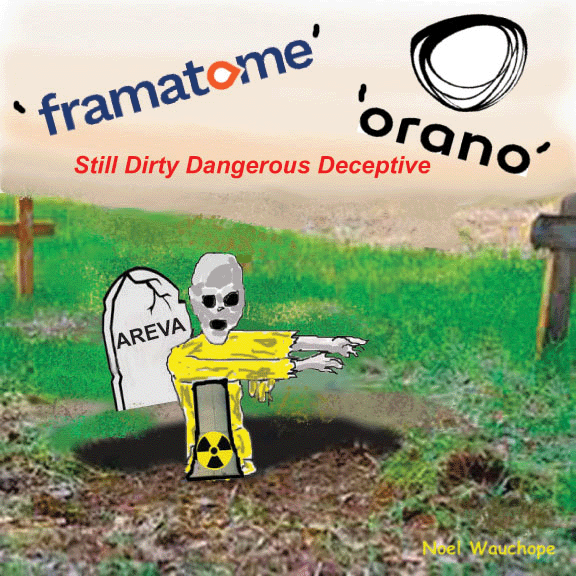
World Nuclear News 20th Dec 2024, https://www.world-nuclear-news.org/articles/orano-seeks-arbitration-over-niger-mining-licence
The French company has opened international arbitration proceedings against the State of Niger following the withdrawal of its mining licence for the Imouraren project in June.
“This move comes after several months of unsuccessful attempts at mediation and conciliation,” the company said.
The Imouraren project is about 80km south of Arlit and about 160km north of Agadez and, with mineral reserves of over 200,000 tU, is one of the largest known uranium reserves in the world. Operating company Imouraren SA – owned 66.65% by Orano Expansion and 33.35% by Niger state interests – was awarded an operating permit to mine the deposit in 2009, but development work was suspended in 2015 due to market conditions at the time.
Earlier this year, the company announced it had restarted preparatory work for the project, but within days the Nigerien authorities withdrew the Orano subsidiary’s operating permit.
“The announcement of the withdrawal of the licence took place when Orano presented the State of Niger with a concrete, technical proposal, which would have allowed the IMOURAREN deposit to be exploited as quickly as possible, and after works had resumed since June 2024,” Orano said today. It has engaged law firm Clay Arbitration as its representative.
In July, the Nigerien authorities also withdrew Canadian company GoviEx Uranium’s mining rights for the Madouela uranium project. Earlier this month, the company and its fully owned subsidiary GoviEx Niger Holdings Ltd started proceedings against Niger under the Convention on the Settlement of Investment Disputes Between States and Nationals of Other States, on the basis the state had breached its legal obligations in withdrawing the permit.
How a uranium mine became a pawn in the row between Niger and France

Paul Melly, BBC 8th Dec 2024
In the latest sign of a dramatic deterioration in relations, Niger’s military rulers appear increasingly determined to drive France out of any significant sector in their economy – and particularly uranium mining.
This week the French state nuclear company Orano announced that the junta – which deposed France’s ally, President Mohamed Bazoum, in a coup in July 2023 – had taken operational control of its local mining firm, Somaïr.
The company’s efforts to resume exports have for months been blocked by the regime and it is being pushed into financial crisis.
And the impact could be felt more widely – although Niger accounts for less than 5% of the uranium produced globally, in 2022 it accounted for a quarter of the supply to nuclear power plants across Europe.
So the timing could hardly be more awkward, as Western countries struggle to meet the challenge of climate change and cut their carbon emissions from electricity generation.
For French President Emmanuel Macron, already wrestling with political crisis at home, the potential departure of Orano from Niger is certainly awkward in image terms…………………………………………………………………………………………………………
In this poisonous atmosphere of hostility and mistrust, Orano was an obvious and convenient target for junta retaliation.
The French company’s predominant role in the uranium sector had for years fuelled resentment among many Nigériens, amidst claims that the French company was buying their uranium on the cheap, despite periodic renegotiations of the export deal. Although the mining operations only started years after independence, they were seen as emblematic of France’s ongoing post-colonial influence.
……………….Niger’s junta feels no need to make concessions to Orano because it is now buoyed by a sharp rise in oil exports, thanks to a new Chinese-built pipeline.
With that financial cushion, the regime appears prepared to bear the cost of paralysing and probably dismantling the traditional uranium partnership with France – now its main international opponent.
https://www.bbc.co.uk/news/articles/czjd70mzge2o
Relationship Between Urinary Uranium and Cardiac Geometry and Left Ventricular Function: The Strong Heart Study
Uranium is a potentially cardiotoxic, nonessential element commonly found
in drinking water throughout the United States. The purpose of this study
was to evaluate if urinary uranium concentrations were associated with
measures of cardiac geometry and function among American Indian young
adults from the Strong Heart Family Study.
Urinary uranium levels were
adversely associated with measures of cardiac geometry and LV function
among American Indian adults, including increases in pulse pressure and LV
hypertrophy.
These findings support the need to determine the potential
long-term subclinical and clinical cardiovascular effects of chronic
uranium exposure, and the need for future strategies to reduce exposure.
JACC Journals 3rd Dec 2024 https://www.jacc.org/doi/10.1016/j.jacadv.2024.101408
Niger takes control of French nuclear firm’s uranium mining operations
Morning Star 5th Dec 2024, https://morningstaronline.co.uk/article/niger-takes-control-french-nuclear-firms-uranium-mining-operations
AUTHORITIES in Niger have taken control of the uranium mining operations of a French nuclear firm, it was reported on Wednesday.
After coming to power in July last year, Niger’s military leaders said they intended to seize back the natural resources of the west African country for the benefit of the people rather than Western interests.
The government said they would revamp rules regulating the mining of raw materials by foreign countries and earlier this year withdrew the permit for French nuclear company Oreno to mine one of the world’s largest uranium deposits.
Orano responded by suspending production of uranium in Niger.
Niger accounts for about 5 per cent of global uranium output, making it one of the world’s top 10 producers of uranium vital for the generation of nuclear weapons and the generation of nuclear power.
Last month, Niger’s Minister of Mines, Colonel Abarchi Ousmane said: “The French state, through its head of state, has declared that it does not recognise the current authorities in Niger. Does it seem possible to you that we, the state of Niger, would allow French companies to continue extracting our natural resources?”
Orano said that it intended “to defend its rights,” but also wanted to work with “stakeholders to re-establish a stable and sustainable mode of operation.”
Ironic Dependency: Russian Uranium and the US Energy Market
November 27, 2024, by: Dr Binoy Kampmark, https://theaimn.com/ironic-dependency-russian-uranium-and-the-us-energy-market/
Be careful who you condemn and ostracise. They just might be supplying you with a special need. While the United States security establishment deems Russia the devil incarnate helped along by aspiring, mischief–making China, that devil continues supplying the US energy market with enriched uranium.
This dependency has irked the self-sufficiency patriots in Washington, especially those keen to break Russia’s firm hold in this field. That, more than any bleeding-heart sentimentality for Ukrainian suffering at the hands of the Russian Army, has taken precedence. For that reason, US lawmakers sought a ban on Russian uranium that would come into effect by January 1, 2028, by which time domestic uranium enrichment and conversion is meant to have reached sustainable levels.
The May 2024 Prohibiting Russian Uranium Imports Act, signed by President Joe Biden as law H.R.1042, specifically bans unirradiated low-enriched uranium produced in Russia or by any Russian entity from being imported into the US. It also bars the importation of unirradiated low-enriched uranium that has been swapped for the banned uranium or otherwise obtained in circumstances designed to bypass the restrictions.
At the time, Secretary of Energy Jennifer M. Granholm struck a note of hollering triumphalism. “Our nation’s clean energy future will not rely on Russian imports,” she declared. “We are making investments to build out a secure nuclear fuel supply chain here in the United States. That means American jobs supporting the Biden-Harris Administration’s commitment to a clean, safe, and secure energy economy.”
This does not get away from current circumstances, which see Russia’s provision of some 27% of enrichment service purchases for US utilities. The Russian state-owned company Rosatom is alone responsible for arranging imports of low-enriched uranium into the US market at some 3 million SWU (Separative Work Units) annually. Alexander Uranov, who heads the Russian analytical service Atominfo Center, puts this figure into perspective: that amount would be the equivalent of the annual uranium consumption rate of 20 large reactors.
Given this reliance, some legroom has been given to those in the industry by means of import waivers. H.R.1042 grants the Department of Energy the power to waive the ban in cases where there is no alternative viable source of low-enriched uranium available to enable the continued operation of a nuclear reactor or US nuclear energy company and in cases where importing the uranium would be in the national interest.
The utility Constellation, which is the largest operator of US nuclear reactors, along with the US enrichment trader, Centrus, have received waivers. The latter also has on its book of supply, the Russian state-owned company Tenex, its largest provider of low-enriched uranium as part of a 2011 contract.
No doubt knowing such a state of play, Moscow announced this month that it would temporarily ban the export of low-enriched uranium to the US as an amendment to Government Decree No 313 (March 9, 2022). The decree covers imports “to the United States or under foreign trade contracts concluded with persons registered in the jurisdiction of the United States.”
According to the Russian government, such a decision was made “on the instructions of the President in response to the restriction imposed by the United States for 2024-2027, and from 2028 – a ban on the import of Russian uranium products.” Vladimir Putin had accordingly given instructions in September “to analyse the possibility of restricting supplies to foreign markets of strategic raw materials.” The Russian state nuclear corporation Rosatom confirmed that the ban was a “tit-for-tat response to actions of the US authorities” and would not affect the delivery of Russian uranium to other countries.
In a Russian government post on Telegram, the ban is qualified. To make matters less severe, there will be, for instance, one-time licenses issued by the Russian Federal Service for Technical and Export Control. This is of cold comfort to the likes of Centrus, given that most of its revenue is derived from importing the enriched uranium before then reselling it. On being notified by Tenex that its general license to export the uranium to the US had been rescinded, the scramble was on to seek a specific export license for remaining shipments in 2024 and those scheduled to take place in 2025.
In a filing with the US Securities and Exchange Commission, Centrus warned that any failure by Tenex “to secure export licences for our pending or future orders […] would affect our ability to meet our delivery obligations to our customers and would have a material adverse effect on our business, results in operations, and competitive position.” While Tenex had contacted Centrus of its plans to secure the required export licenses in a timely manner, a sense of pessimism was hard to dispel as “there is no certainty whether such licenses will be issued by the Russian authorities and if issued, whether they will be issued in a timely manner.” The sheer, sweet irony of it all.
The enriched uranium market is all at sea, with USA the largest importer of Russian material
Five days after Russia imposed tit-for-tat restrictions on exports of
enriched uranium to the US, a 14-year old vessel remains anchored outside
the port of Saint Petersburg, its crew presumably unsure whether the
radioactive cargo they were due to collect for a US-based client can still
be shipped.
Moscow’s new measures, announced on Friday, come with
caveats. Just as US import restrictions introduced in May still allow
companies to seek waivers allowing uranium shipments when they can’t
obtain supplies elsewhere, so the Russians “didn’t say they’re
outright ending all deliveries to the US,” says Jonathan Hinze, president
of UxC, a consultancy specialising in the nuclear industry.
Russia’s cash requirements and control of almost half of global enrichment capacity,
coupled with the energy needs of the world’s biggest economy, mean “the
US stands out conspicuously as the largest importer of Russian material,
both prior to Moscow’s invasion of Ukraine and since,” writes Darya
Dolzikova, a research fellow at Royal United Services Institute.
FT 20th Nov 2024,
https://www.ft.com/content/ec09bcff-3771-4679-b0d0-4ec7062b7072
Nuclear Energy Firm Orano Halts Niger Uranium Production
By Boureima HAMA avec Nathalie ALONSO à Paris, October 24, 2024, https://www.barrons.com/news/nuclear-energy-firm-orano-halts-niger-uranium-production-ed2fd6b6
French nuclear fuel firm Orano said on Wednesday it was halting its uranium production in junta-ruled Niger from October 31, citing a “highly deteriorated” situation and its inability to operate.
The Nigerien government, whose leader Abdourahamane Tiani seized power in a July 2023 coup, has previously made clear it would overhaul rules regulating the mining of raw materials by foreign companies.
Orano-owned mining subsidiary “Somair’s worsening financial difficulties have compelled the company to suspend its operations,” in the Artlit region of north Niger where Orano has operated since 1971, the French group’s Paris spokeswoman told AFP on Wednesday.
The Sahel nation’s military rulers have turned their backs on Paris, ordering French troops deployed there to leave and instead forging ties with fellow juntas in Burkina Faso and Mali — as well as Iran and Russia.
Niger’s position as the world’s seventh-largest uranium producer plays an important role in the shifting relations.
Iran has significantly increased its stock of enriched uranium in recent months, while strengthening ties with Niger, according to the International Atomic Energy Agency.
The production of uranium concentrate will cease from October 31 as Orano was unable to export the commodity, in part due to landlocked Niger’s closed border with coastal Benin, the firm said.
“Despite all the efforts deployed” with the military regime “to try and resolve the situation” and obtain export licenses, “all of our proposals were left unanswered”, said the spokeswoman of the group, which specialises in nuclear fuel.
Nigerien authorities did not follow up on an Orano proposal to export uranium by air via Namibia.
“Maintenance will continue but there will be no more production,” she added.
Nigerien authorities did not comment on the matter.
Niamey in June rescinded Orano’s licence to operate in one of the largest deposits in the world, Imouraren, with estimated reserves of 200,000 metric tonnes (220,000 US tons).
Niger’s Council of Ministers on September 19 passed a draft decree proposing to create a state company named “Timersoi National Uranium Company”, without detailing the move.
Japan and 11 other countries call for early start of fissile material ban talks

New York – https://www.japantimes.co.jp/news/2024/09/24/japan/politics/kishida-nuke-material-ban-treaty/
Japan and 11 other countries on Monday agreed to work together to launch negotiations immediately on a proposed treaty banning the production of fissile materials, including highly enriched uranium and plutonium, for nuclear weapons.
A Fissile Material Cut-off Treaty will significantly contribute to nuclear disarmament and nonproliferation, high-level representatives from the 12 countries, including Prime Minister Fumio Kishida, said in a joint statement after a meeting in New York.
“A nondiscriminatory, multilateral and effectively verifiable treaty banning the production of fissile material for nuclear weapons and other nuclear explosive devices would represent a significant practical contribution to nuclear disarmament and nonproliferation efforts,” the statement said.
“The participants confirmed that they would work closely together…for the immediate commencement of negotiations on an FMCT,” the statement said. The 12 countries included three nuclear powers — the United States, Britain and France.
Kishida told the meeting that a strong political will is needed to start FMCT negotiations. Creating a momentum for an early start of the negotiations will help to maintain and strengthen the Nuclear Non-Proliferation Treaty regime, he said.
He also said Japan will send hibakusha atomic bomb victims abroad to promote the understanding of the reality of exposure to nuclear weapons. Next year marks 80 years since the U.S. atomic bombing of Hiroshima and Nagasaki.
Surge in Russian uranium sent to China
https://www.telegraph.co.uk/world-news/2024/09/17/ukraine-russia-war-latest-news27/
Washington fears Russia is sending large quantities of enriched uranium to China in an effort to evade sanctions imposed after its invasion of Ukraine.
Chinese imports of enriched uranium from Russia, the world’s largest exporter of the radioactive metal, soared in 2022 and 2023, according to data released by the World Bank.
The US is now investigating whether the uranium, used as nuclear power plant fuel, is then being imported to America.
China only started to send vast quantities of enriched uranium to the US after Congress passed a ban on the import of the metal from Russia after the Ukraine invasion.
“As China may be seeking to carve out a greater role for itself in world enriched uranium markets, increased imports of Russian enriched uranium may facilitate the pursuit of Beijing’s ambitions,” said a report in March by the London-based Royal United Services Institute think tank.
Boris Johnson goes into business with Steve Bannon, Charlotte Owen and a uranium entrepreneur
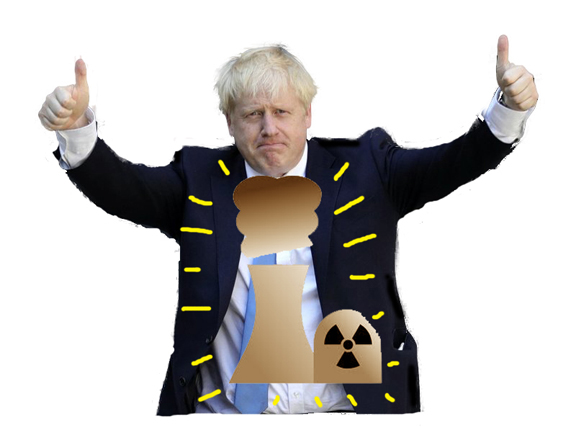
Owen, who was elevated to the House of Lords last year at the age of 29, now has a plum job despite having no energy sector experience.
by Jack Peat, 2024-09-09, https://www.thelondoneconomic.com/business-economics/boris-johnson-goes-into-business-with-steve-bannon-charlotte-owen-and-a-uranium-entrepreneur-382535/
Boris Johnson has been added as the director and co-chairman of Better Earth, a company that lists Charlotte Owen, Steve Bannon and a uranium entrepreneur among its staffers.
Better Earth was incorporated by Amir Adnani in December last year and now includes a high-profile roster of employees, including a former prime minister, a controversial media strategist and Britain’s youngest peer.
Adnani, a Canadian citizen of Iranian heritage, is the director of a network of offshore companies based in the British Virgin Islands and is president and CEO of Uranium Energy Corp, a US-based mining and exploration company, championed by former Donald Trump adviser Bannon.
On 1st May, Companies House filings reveal that “the Rt Hon Alexander Boris de Pfeffel Johnson” was added as a director and co-chairman, shortly followed by Charlotte Owen – now Baroness Owen of Alderley Edge – who joined the company to work alongside him despite having a lack of energy sector experience.
Headquartered in a serviced office building in Sevenoaks, Better Earth describes itself as an “energy transition company”.
Its website, which is currently under construction, says it will “work directly with national governments and regions that are seeking both inward investment and/or to reduce their emissions ahead of 2030”.
In 2022, just days before leaving office, Johnson announced a £700 million investment in the controversial Sizewell C reactor stating the country needed to “Go nuclear, go large!”.
At the time, Caroline Lucas, the then Green MP and former party leader, described Sizewell C as “massively costly, achingly slow and carries huge unnecessary risks”.
Among those who cheered the Sizewell C investment was Adnani. He excitedly posted the announcement on his Twitter account: “Boris Johnson plans to sign off on new £30bn nuclear plant in his final week in power! #uranium.”
Adnani has appeared at least twice on former Donald Trump adviser Steve Bannon’s War Room podcast, and on one occasion told him that his ambition was to achieve “full spectrum energy dominance”.
Doesn’t sound scary at all!
World’s largest uranium miner warns Ukraine war makes it harder to supply west
Kazatomprom’s chief executive has warned that Russia’s war on
Ukraine is making it harder for the world’s largest uranium producer.
Kazatomprom’s chief executive has warned that Russia’s war on Ukraine
is making it harder for the world’s largest uranium producer to keep
supplying the west as the gravitational pull towards Moscow and Beijing
grows stronger.
Meirzhan Yussupov, chief of the Kazakh state miner, said
that sanctions caused by the war had created obstacles to supplying western
utilities. “It is much easier for us to sell most, if not all, of our
production to our Asian partners — I wouldn’t call [out] the specific
country . . . They can eat up almost all of our production, or our
partners to the north,” he told the FT.
FT 10th Sept 2024
https://www.ft.com/content/b8b34ec4-20ca-4c00-937b-fc620ae7503e
While Cumbrian MPs Blindly Agitate for More Uranium Mining to Feed More Nuclear New Build, Indigenous Australians are celebrating Halt to Poisoning of their Lands

On By mariannewildart, https://mariannewildart.wordpress.com/2024/08/07/while-cumbrian-mps-blindly-agitate-for-more-uranium-mining-to-feed-more-nuclear-new-build-indigenous-australians-are-celebrating-halt-to-poisoning-of-their-lands/
Here in Cumbria MPs, most especially the new MP for Sellafield (apologies, MP for Whitehaven and Workington, Josh MacAlister) are agitating for new nuclear build on the floodplain of the River Ehen next to the bursting at the seams Sellafield nuclear waste site. New nuclear, even the so called “Small Modular Reactors” (actually near the size of the original Calder Hall reactors) would require new uranium – this is not a “home grown” or “clean” industry as its cheerleaders claim, the profligate amounts of uranium, high tensile steel, copper and a whole smorgasbord of toxic chemicals are shipped in and they outstrip any other industry in quantities and toxicity.
The start of the toxic uranium fuel cycle begins on the lands of indigenous peoples worldwide. In Australia a battle has been raging to stop ever more uranium mining, this time at Jabiluka. Now that battle has been won but the MP for Whitehaven and Workington wants indigenous peoples worldwide to carry on paying the price of polluted waters, poisoned lands and damaged health in order to continue with nuclear business as usual despite the fact that nuclear power’s most long lasting legacy is not “free electricity” far from it, energy bills will go up because successive governments’ have had an obsession with funding the nuclear industry at any price even asking consumers now to pay the price before they recieve any electricity and for generations after to try and ‘keep the wastes safe’.
“The announcement has been made that the mining lease will not be extended and the process to get Jabiluka into world heritage and Kakadu National Park can begin. A big shout out to the Traditional Owners, the @Mirarr for standing strong for this for generations, and thousands of people around the country standing with them.”
Meanwhile here in Cumbria this is what the local press fizzingly tell us “Cumbrian leaders put pressure on NDA over land at Moorside for SMRs. A letter signed by more than 100 political, business and union leaders is calling for urgent action to resolve land issues at Moorside so that new nuclear power stations can be built. Whitehaven and Workington MP Josh MacAlister wrote the letter, which has been signed by fellow Cumbrian MPs Julie Minns and Markus Campbell-Savours, local members of the House of Lords, Cumberland Council leader Mark Fryer, trade union leaders in the nuclear industry and dozens of local business leaders. Mr MacAlister says that unless urgent action is taken to resolve issues about land use at Moorside, west Cumbria will lose out in a competitive process that is now underway. Mr MacAlister says GBN will only select sites that have enough land available and the NDA (who own Sellafield) want to use much of the Moorside site for other decommissioning purposes. This has resulted in an impasse that, if left unresolved, will leave Cumbria behind in the race for new nuclear. The NDA says it is working with the government to consider how the land at Moorside may be used to enable new nuclear energy facilities, while taking into account how it might need to utilise the land in order to successfully deliver its mission. Mr MacAlister said: “In my first few weeks as an MP I’ve met with ministers, the NDA, GBN and leading industry figures. It’s become clear that there’s been a conspiracy of silence for years over plans for new nuclear in our area.In Cumbria 7th Aug 2024 https://www.in-cumbria.com/news/24501223.cumbrian-leaders-put-pressure-nda-land-moorside-smrs/“
No doubt Josh MacAlister MP for Whitehaven and Workington will be absolutely delighted to hear that as is the way of all ruthless corporations, yesterday “Mining company Energy Resources Australia (ERA) has launched legal action against the Commonwealth and Northern Territory governments over a decision not to renew its lease over the Jabiluka uranium mine. Surrounded by Kakadu National Park, the site at Jabiluka is one of the world’s largest and richest uranium deposits.”
Josh Macalister MP is the smiling assassin agitating to rip uranium out of the earth to fuel new nuclear on land next to Sellafield (on the flood plain of the river Ehen). Nice!
French nuclear giant ORANO slips into the red following Niger-French breakup
French nuclear giant Orano ended the first half of the year with a loss of €133 million, weighed down by difficulties in its mining activities in Niger due to a “highly degraded” political context since a military regime came to power a year ago.
Radio Free Europe: 29/07/2024 –
At the end of June 2024, the group noted “the deteriorated situation affecting mining operations in Niger,” Orano’s chief financial officer, David Claverie, said in a statement.
The coup d’état in Niger on 26 July last year led to a halt in imports of critical materials necessary for uranium exploitation in Orano’s Somaïr mine, such as soda ash, carbonate, nitrates and sulphur.
And although uranium extraction continued in the first quarter of 2024 “after several months of early maintenance,” Somaïr’s sales were unable to resume “due to a lack of logistics solutions approved by the Niger authorities”.
The blockage led the mine into “financial difficulty … weighing on its ability to continue its operations”, the statement read.
In late June, Niger decided to withdraw the licence of Imouraren SA, a company jointly operated by Orano, Niger Mining and Korea Electric Power, and which ran the Somaïr mine.
The situation could eventually lead to “insolvency in the short to medium term, in the coming months”, Claverie said……………………………… https://www.rfi.fr/en/international/20240729-french-nuclear-giant-slips-into-the-red-following-niger-french-breakup
1 This Month
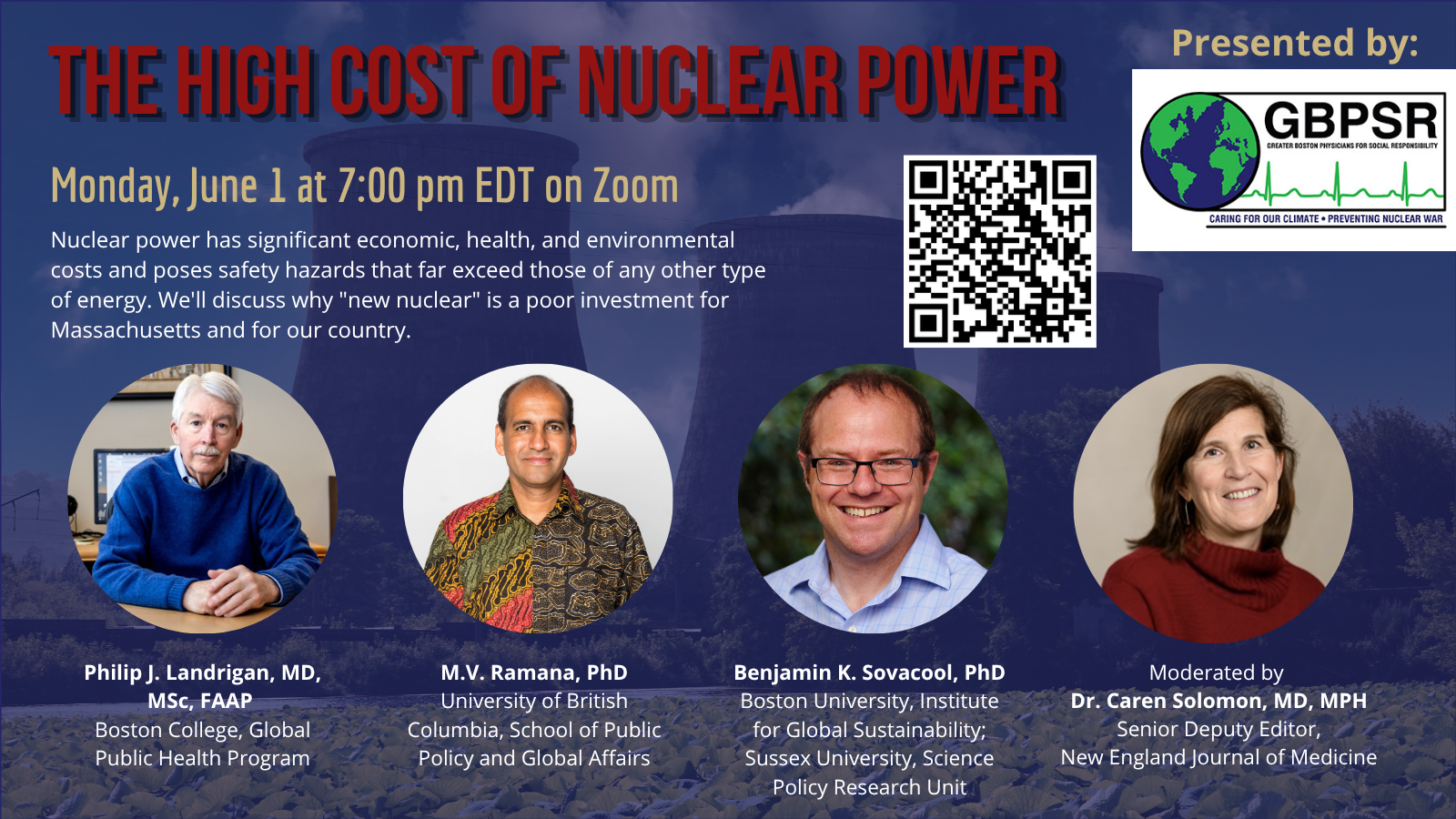
1 June Webinar – The High Cost of Nuclear Power – Register
6 June – WEBINAR- Get Inspired by Protests Against Military Bases!


Cuba Is Not a Failed State – It Is a Besieged State
PETITION: “Global Appeal to Endorse Palestinian Right of Return of Refugees”


of the week– Nuclear Reactor Information Task Force
To see nuclear-related stories in greater depth and intensity – go to https://nuclearinformation.wordpress.com
-
Archives
- June 2026 (27)
- May 2026 (306)
- April 2026 (356)
- March 2026 (251)
- February 2026 (268)
- January 2026 (308)
- December 2025 (358)
- November 2025 (359)
- October 2025 (376)
- September 2025 (257)
- August 2025 (319)
- July 2025 (230)
-
Categories
- 1
- 1 NUCLEAR ISSUES
- business and costs
- climate change
- culture and arts
- ENERGY
- environment
- health
- history
- indigenous issues
- Legal
- marketing of nuclear
- media
- opposition to nuclear
- PERSONAL STORIES
- politics
- politics international
- Religion and ethics
- safety
- secrets,lies and civil liberties
- spinbuster
- technology
- Uranium
- wastes
- weapons and war
- Women
- 2 WORLD
- ACTION
- AFRICA
- Atrocities
- AUSTRALIA
- Christina's notes
- Christina's themes
- culture and arts
- Events
- Fuk 2022
- Fuk 2023
- Fukushima 2017
- Fukushima 2018
- fukushima 2019
- Fukushima 2020
- Fukushima 2021
- general
- global warming
- Humour (God we need it)
- Nuclear
- RARE EARTHS
- Reference
- resources – print
- Resources -audiovicual
- Weekly Newsletter
- World
- World Nuclear
- YouTube
-
RSS
Entries RSS
Comments RSS
 nuclear-news