Nuclear Energy Firm Orano Halts Niger Uranium Production
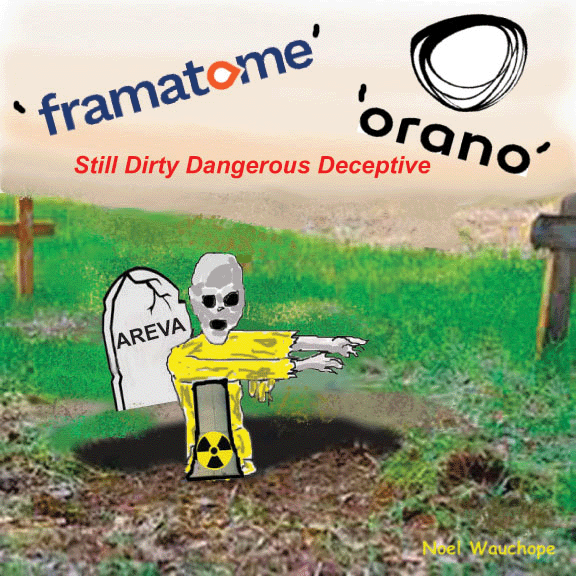
By Boureima HAMA avec Nathalie ALONSO à Paris, October 24, 2024, https://www.barrons.com/news/nuclear-energy-firm-orano-halts-niger-uranium-production-ed2fd6b6
French nuclear fuel firm Orano said on Wednesday it was halting its uranium production in junta-ruled Niger from October 31, citing a “highly deteriorated” situation and its inability to operate.
The Nigerien government, whose leader Abdourahamane Tiani seized power in a July 2023 coup, has previously made clear it would overhaul rules regulating the mining of raw materials by foreign companies.
Orano-owned mining subsidiary “Somair’s worsening financial difficulties have compelled the company to suspend its operations,” in the Artlit region of north Niger where Orano has operated since 1971, the French group’s Paris spokeswoman told AFP on Wednesday.
The Sahel nation’s military rulers have turned their backs on Paris, ordering French troops deployed there to leave and instead forging ties with fellow juntas in Burkina Faso and Mali — as well as Iran and Russia.
Niger’s position as the world’s seventh-largest uranium producer plays an important role in the shifting relations.
Iran has significantly increased its stock of enriched uranium in recent months, while strengthening ties with Niger, according to the International Atomic Energy Agency.
The production of uranium concentrate will cease from October 31 as Orano was unable to export the commodity, in part due to landlocked Niger’s closed border with coastal Benin, the firm said.
“Despite all the efforts deployed” with the military regime “to try and resolve the situation” and obtain export licenses, “all of our proposals were left unanswered”, said the spokeswoman of the group, which specialises in nuclear fuel.
Nigerien authorities did not follow up on an Orano proposal to export uranium by air via Namibia.
“Maintenance will continue but there will be no more production,” she added.
Nigerien authorities did not comment on the matter.
Niamey in June rescinded Orano’s licence to operate in one of the largest deposits in the world, Imouraren, with estimated reserves of 200,000 metric tonnes (220,000 US tons).
Niger’s Council of Ministers on September 19 passed a draft decree proposing to create a state company named “Timersoi National Uranium Company”, without detailing the move.
Japan and 11 other countries call for early start of fissile material ban talks

New York – https://www.japantimes.co.jp/news/2024/09/24/japan/politics/kishida-nuke-material-ban-treaty/
Japan and 11 other countries on Monday agreed to work together to launch negotiations immediately on a proposed treaty banning the production of fissile materials, including highly enriched uranium and plutonium, for nuclear weapons.
A Fissile Material Cut-off Treaty will significantly contribute to nuclear disarmament and nonproliferation, high-level representatives from the 12 countries, including Prime Minister Fumio Kishida, said in a joint statement after a meeting in New York.
“A nondiscriminatory, multilateral and effectively verifiable treaty banning the production of fissile material for nuclear weapons and other nuclear explosive devices would represent a significant practical contribution to nuclear disarmament and nonproliferation efforts,” the statement said.
“The participants confirmed that they would work closely together…for the immediate commencement of negotiations on an FMCT,” the statement said. The 12 countries included three nuclear powers — the United States, Britain and France.
Kishida told the meeting that a strong political will is needed to start FMCT negotiations. Creating a momentum for an early start of the negotiations will help to maintain and strengthen the Nuclear Non-Proliferation Treaty regime, he said.
He also said Japan will send hibakusha atomic bomb victims abroad to promote the understanding of the reality of exposure to nuclear weapons. Next year marks 80 years since the U.S. atomic bombing of Hiroshima and Nagasaki.
Surge in Russian uranium sent to China
https://www.telegraph.co.uk/world-news/2024/09/17/ukraine-russia-war-latest-news27/
Washington fears Russia is sending large quantities of enriched uranium to China in an effort to evade sanctions imposed after its invasion of Ukraine.
Chinese imports of enriched uranium from Russia, the world’s largest exporter of the radioactive metal, soared in 2022 and 2023, according to data released by the World Bank.
The US is now investigating whether the uranium, used as nuclear power plant fuel, is then being imported to America.
China only started to send vast quantities of enriched uranium to the US after Congress passed a ban on the import of the metal from Russia after the Ukraine invasion.
“As China may be seeking to carve out a greater role for itself in world enriched uranium markets, increased imports of Russian enriched uranium may facilitate the pursuit of Beijing’s ambitions,” said a report in March by the London-based Royal United Services Institute think tank.
Boris Johnson goes into business with Steve Bannon, Charlotte Owen and a uranium entrepreneur

Owen, who was elevated to the House of Lords last year at the age of 29, now has a plum job despite having no energy sector experience.
by Jack Peat, 2024-09-09, https://www.thelondoneconomic.com/business-economics/boris-johnson-goes-into-business-with-steve-bannon-charlotte-owen-and-a-uranium-entrepreneur-382535/
Boris Johnson has been added as the director and co-chairman of Better Earth, a company that lists Charlotte Owen, Steve Bannon and a uranium entrepreneur among its staffers.
Better Earth was incorporated by Amir Adnani in December last year and now includes a high-profile roster of employees, including a former prime minister, a controversial media strategist and Britain’s youngest peer.
Adnani, a Canadian citizen of Iranian heritage, is the director of a network of offshore companies based in the British Virgin Islands and is president and CEO of Uranium Energy Corp, a US-based mining and exploration company, championed by former Donald Trump adviser Bannon.
On 1st May, Companies House filings reveal that “the Rt Hon Alexander Boris de Pfeffel Johnson” was added as a director and co-chairman, shortly followed by Charlotte Owen – now Baroness Owen of Alderley Edge – who joined the company to work alongside him despite having a lack of energy sector experience.
Headquartered in a serviced office building in Sevenoaks, Better Earth describes itself as an “energy transition company”.
Its website, which is currently under construction, says it will “work directly with national governments and regions that are seeking both inward investment and/or to reduce their emissions ahead of 2030”.
In 2022, just days before leaving office, Johnson announced a £700 million investment in the controversial Sizewell C reactor stating the country needed to “Go nuclear, go large!”.
At the time, Caroline Lucas, the then Green MP and former party leader, described Sizewell C as “massively costly, achingly slow and carries huge unnecessary risks”.
Among those who cheered the Sizewell C investment was Adnani. He excitedly posted the announcement on his Twitter account: “Boris Johnson plans to sign off on new £30bn nuclear plant in his final week in power! #uranium.”
Adnani has appeared at least twice on former Donald Trump adviser Steve Bannon’s War Room podcast, and on one occasion told him that his ambition was to achieve “full spectrum energy dominance”.
Doesn’t sound scary at all!
World’s largest uranium miner warns Ukraine war makes it harder to supply west
Kazatomprom’s chief executive has warned that Russia’s war on
Ukraine is making it harder for the world’s largest uranium producer.
Kazatomprom’s chief executive has warned that Russia’s war on Ukraine
is making it harder for the world’s largest uranium producer to keep
supplying the west as the gravitational pull towards Moscow and Beijing
grows stronger.
Meirzhan Yussupov, chief of the Kazakh state miner, said
that sanctions caused by the war had created obstacles to supplying western
utilities. “It is much easier for us to sell most, if not all, of our
production to our Asian partners — I wouldn’t call [out] the specific
country . . . They can eat up almost all of our production, or our
partners to the north,” he told the FT.
FT 10th Sept 2024
https://www.ft.com/content/b8b34ec4-20ca-4c00-937b-fc620ae7503e
While Cumbrian MPs Blindly Agitate for More Uranium Mining to Feed More Nuclear New Build, Indigenous Australians are celebrating Halt to Poisoning of their Lands

On By mariannewildart, https://mariannewildart.wordpress.com/2024/08/07/while-cumbrian-mps-blindly-agitate-for-more-uranium-mining-to-feed-more-nuclear-new-build-indigenous-australians-are-celebrating-halt-to-poisoning-of-their-lands/
Here in Cumbria MPs, most especially the new MP for Sellafield (apologies, MP for Whitehaven and Workington, Josh MacAlister) are agitating for new nuclear build on the floodplain of the River Ehen next to the bursting at the seams Sellafield nuclear waste site. New nuclear, even the so called “Small Modular Reactors” (actually near the size of the original Calder Hall reactors) would require new uranium – this is not a “home grown” or “clean” industry as its cheerleaders claim, the profligate amounts of uranium, high tensile steel, copper and a whole smorgasbord of toxic chemicals are shipped in and they outstrip any other industry in quantities and toxicity.
The start of the toxic uranium fuel cycle begins on the lands of indigenous peoples worldwide. In Australia a battle has been raging to stop ever more uranium mining, this time at Jabiluka. Now that battle has been won but the MP for Whitehaven and Workington wants indigenous peoples worldwide to carry on paying the price of polluted waters, poisoned lands and damaged health in order to continue with nuclear business as usual despite the fact that nuclear power’s most long lasting legacy is not “free electricity” far from it, energy bills will go up because successive governments’ have had an obsession with funding the nuclear industry at any price even asking consumers now to pay the price before they recieve any electricity and for generations after to try and ‘keep the wastes safe’.
“The announcement has been made that the mining lease will not be extended and the process to get Jabiluka into world heritage and Kakadu National Park can begin. A big shout out to the Traditional Owners, the @Mirarr for standing strong for this for generations, and thousands of people around the country standing with them.”
Meanwhile here in Cumbria this is what the local press fizzingly tell us “Cumbrian leaders put pressure on NDA over land at Moorside for SMRs. A letter signed by more than 100 political, business and union leaders is calling for urgent action to resolve land issues at Moorside so that new nuclear power stations can be built. Whitehaven and Workington MP Josh MacAlister wrote the letter, which has been signed by fellow Cumbrian MPs Julie Minns and Markus Campbell-Savours, local members of the House of Lords, Cumberland Council leader Mark Fryer, trade union leaders in the nuclear industry and dozens of local business leaders. Mr MacAlister says that unless urgent action is taken to resolve issues about land use at Moorside, west Cumbria will lose out in a competitive process that is now underway. Mr MacAlister says GBN will only select sites that have enough land available and the NDA (who own Sellafield) want to use much of the Moorside site for other decommissioning purposes. This has resulted in an impasse that, if left unresolved, will leave Cumbria behind in the race for new nuclear. The NDA says it is working with the government to consider how the land at Moorside may be used to enable new nuclear energy facilities, while taking into account how it might need to utilise the land in order to successfully deliver its mission. Mr MacAlister said: “In my first few weeks as an MP I’ve met with ministers, the NDA, GBN and leading industry figures. It’s become clear that there’s been a conspiracy of silence for years over plans for new nuclear in our area.In Cumbria 7th Aug 2024 https://www.in-cumbria.com/news/24501223.cumbrian-leaders-put-pressure-nda-land-moorside-smrs/“
No doubt Josh MacAlister MP for Whitehaven and Workington will be absolutely delighted to hear that as is the way of all ruthless corporations, yesterday “Mining company Energy Resources Australia (ERA) has launched legal action against the Commonwealth and Northern Territory governments over a decision not to renew its lease over the Jabiluka uranium mine. Surrounded by Kakadu National Park, the site at Jabiluka is one of the world’s largest and richest uranium deposits.”
Josh Macalister MP is the smiling assassin agitating to rip uranium out of the earth to fuel new nuclear on land next to Sellafield (on the flood plain of the river Ehen). Nice!
French nuclear giant ORANO slips into the red following Niger-French breakup
French nuclear giant Orano ended the first half of the year with a loss of €133 million, weighed down by difficulties in its mining activities in Niger due to a “highly degraded” political context since a military regime came to power a year ago.
Radio Free Europe: 29/07/2024 –
At the end of June 2024, the group noted “the deteriorated situation affecting mining operations in Niger,” Orano’s chief financial officer, David Claverie, said in a statement.
The coup d’état in Niger on 26 July last year led to a halt in imports of critical materials necessary for uranium exploitation in Orano’s Somaïr mine, such as soda ash, carbonate, nitrates and sulphur.
And although uranium extraction continued in the first quarter of 2024 “after several months of early maintenance,” Somaïr’s sales were unable to resume “due to a lack of logistics solutions approved by the Niger authorities”.
The blockage led the mine into “financial difficulty … weighing on its ability to continue its operations”, the statement read.
In late June, Niger decided to withdraw the licence of Imouraren SA, a company jointly operated by Orano, Niger Mining and Korea Electric Power, and which ran the Somaïr mine.
The situation could eventually lead to “insolvency in the short to medium term, in the coming months”, Claverie said……………………………… https://www.rfi.fr/en/international/20240729-french-nuclear-giant-slips-into-the-red-following-niger-french-breakup
In New Mexico, a Walk Commemorates the Nuclear Disaster Few Outside the Navajo Nation Remember
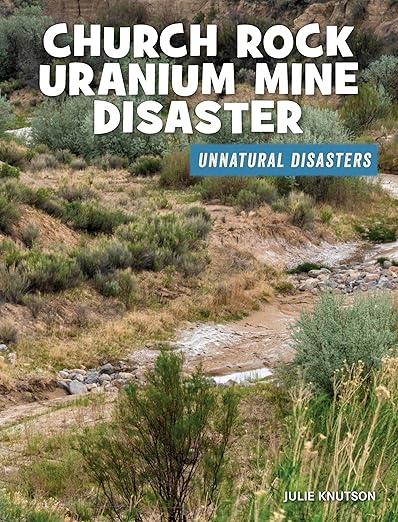
the Navajo Birth Cohort Study, which since 2010 has been looking at the relationship between uranium exposures, birth outcomes and child development on the Navajo Nation. Among the findings is that mothers were deficient in key nutrients for babies’ developing nervous systems.
The Church Rock spill released more radioactive material than the partial meltdown at Three Mile Island four months earlier. Last week’s walk highlights the continuing cleanup and the ongoing hazards uranium mining poses to tribal lands.
Inside Climate News, By Noel Lyn Smith, July 20, 2024
RED WATER POND ROAD, New Mexico—As Tony Hood walked along New Mexico Highway 566 last Saturday, he thought about where he was 45 years earlier, when an earthen dam broke at the site of a uranium mill operated by the United Nuclear Corp., releasing 94 million gallons of radioactive water and 1,100 tons of uranium waste across portions of New Mexico, Arizona and the Navajo Nation.
Hood was working inside a nearby underground mine owned by the Kerr-McGee Corp. when the dam broke on July 16, 1979. He didn’t learn about the spill until after returning to the surface.
As he walked in this month’s event commemorating the spill, he pointed to the spot where the dam was located.
“I guess they observed there was some cracks in the earthen dam but they didn’t do nothing about it,” he said. “Finally, the dam collapsed, breached.”
The dam failure at the processing mill north of Church Rock, New Mexico, released radioactive liquid that eventually flowed into the Rio Puerco and through areas on the Navajo Nation, nearby Gallup, New Mexico, and, finally, Arizona. Now known as the Church Rock spill, the accident released the most radioactive material in U.S. history—more than the notorious partial meltdown at the Three Mile Island Nuclear Generating Station four months earlier—yet remains largely unknown to the American public.
The nonprofit Red Water Pond Road Community Association tries to remedy that lack of awareness by organizing the annual walk by the site of the spill, during which current and former area residents, supporters and advocates remember what happened that day. They also talk about the aftermath, including what federal and tribal agencies have done and need to do to clean up the communities affected by the accident.
……………………………………………………………………………………………………….. A report in May 2014 by the U.S. Government Accountability Office found that “Navajo people continue to live with the environmental and health effects from mining operations: more than 500 abandoned mines are located across the reservation, some close to homes and communities, and an unknown number of homes and drinking water sources contain radioactive elements.”
Educational materials distributed by the Red Water Pond Road Community Association mention some health studies that residents participated in. One is the Navajo Birth Cohort Study, which since 2010 has been looking at the relationship between uranium exposures, birth outcomes and child development on the Navajo Nation. Among the findings is that mothers were deficient in key nutrients for babies’ developing nervous systems. The association notes that a comprehensive study still needs to be done about the effects of uranium on Navajo health.
“We sacrificed our lives, our bodies to mine that ore,” Hood said…………………………………………………………………………………………………………………………………. Link: https://insideclimatenews.org/news/20072024/new-mexico-walk-commemorates-navajo-nation-nuclear-disaster/
Tribes and Environmentalists Press Arizona and Federal Officials to Stop Uranium Mining Near the Grand Canyon

Activists hope to shut down an existing mine within a new national monument and to prevent the transportation of uranium on state and federal roads across Navajo Nation lands.
Inside Climate News, By Noel Lyn Smith, July 17, 2024
PHOENIX—Members of environmental groups stood together in the lobby of the Arizona State Capitol Executive Tower late last month to deliver a petition to Arizona Gov. Katie Hobbs, requesting that she stop uranium mining activities near the Grand Canyon National Park.
The Sierra Club, Center for Biological Diversity, National Parks Conservation Association, Wild Arizona, Chispa Arizona and Haul No!, a group formed to fight the mining and transport of uranium, delivered a petition with more than 17,500 signatures to the governor.
They are seeking closure of the Pinyon Plain Mine, located less than 10 miles from the Grand Canyon. It is inside the Baaj Nwaavjo I’tah Kukveni—Ancestral Footprints of the Grand Canyon National Monument, which President Joe Biden established in August 2023. The removal of uranium ore from the mine started in late December.
Although the designation prohibits new mining claims and development, it allows prior claims with valid existing rights like Pinyon Plain to continue their operations. Energy Fuels Resources owns the mine, which is approximately 17 acres, and operates it on land managed by the U.S. Forest Service.
“This mine threatens to pollute the groundwater that feeds the seeps and springs in Grand Canyon, supporting plants, animals and people,” the petition states.
People can develop respiratory disease and toxicity in the kidneys due to uranium exposure, according to the federal Agency for Toxic Substances and Disease Registry. There are more than 500 abandoned uranium mines on the Navajo Nation, and the tribe continues to confront the ramifications of mining activities on tribal members and the environment. This includes advocating for federal money to clean up abandoned mines and compensation for former mine workers.
No one from Hobbs’ office met the group or accepted the written requests in person. Instead, the activists left the petition, the groups’ latest action attempting to get the Democratic governor’s attention, with the executive receptionist on the first floor. In January, the groups sent a letter to Hobbs urging her to revisit permits issued for Pinyon Plain Mine and seeking her help closing it. They said she has not responded to the letter.
A spokesperson with the governor’s office confirmed on July 11 that the petition was received…………………………………………………………………………..
Vania Guevara is the advocacy and political director with Chispa Arizona, a program under the League of Conservation Voters that is dedicated to increasing Latinx voices in policies that address climate change and the environment. Guevara said it is urgent for Hobbs to address uranium mining because it threatens the health and safety of Indigenous communities.
A dozen tribes have ancestral, ceremonial and traditional connections to the region, including the Havasupai Tribe, Hopi Tribe, Hualapai Tribe, Kaibab Band of Paiute Indians, Las Vegas Paiute Tribe, Moapa Band of Paiutes, Paiute Indian Tribe of Utah, Navajo Nation, San Juan Southern Paiute Tribe, Yavapai-Apache Nation, Pueblo of Zuni and the Colorado River Indian Tribes…………………………………. https://insideclimatenews.org/news/17072024/arizona-activists-press-officials-to-stop-uranium-mining-near-grand-canyon/
France’s Orano loses operating licence at major uranium mine in Niger.
Niger has removed the mining permit of French nuclear fuel producer Orano
at one of the world’s biggest uranium mines, the company said Thursday,
highlighting tensions between France and the African country’s ruling
junta.
RFI 21st June 2024
Iran’s Nuclear Point Man : We Won’t Bow to Pressure

Friday, 06/14/2024, https://www.iranintl.com/en/202406149313—
Ali Shamkhani, advisor to the Supreme Leader and apparent nuclear negotiator, stated on Friday that Iran “won’t bow to pressure” amidst US warnings regarding its uranium enrichment activities.
“Iran’s nuclear program relies on national will and development strategy,” Shamkhani wrote on X. “The US and some Western countries would dismantle Iran’s nuclear industry if they could.”
The US issued a warning to Iran, stating they will “respond accordingly” if Iran continues to accelerate its nuclear program. This came shortly after the UN nuclear watchdog, the International Atomic Energy Agency (IAEA), highlighted Tehran’s expanding uranium enrichment.
The IAEA’s report revealed Iran’s response to a censure resolution, indicating expanded uranium enrichment at two underground sites. Iran rapidly installed more uranium-enriching centrifuges at its Fordow site and began work on additional ones at its Natanz facility, the report said.
A week ago, The IAEA’s Board passed a resolution urging Iran to cooperate and reverse its decision to bar inspector visits, with the US stressing the need for Iran’s compliance. Britain, France, and Germany tabled the resolution, which the US reportedly opposed but later endorsed. Only Russia and China voted against the measure.
Shamkhani, an old-guard military figure who served as the secretary of Iran’s Supreme National Security Council until last year, had previously warned of a “serious and effective response” if European nations pursued the resolution.
According to an IAEA assessment, Iran is enriching uranium to 60% purity, approaching the 90% threshold typical of weapons-grade material. Additionally, it has accumulated enough material for additional enrichment, potentially resulting in three nuclear warheads.
From the Hiroshima bomb to Israel’s nuclear weapons, the path leads back to Congo’s uranium
Conspiracies in the Congo Linda Pentz Gunter 16 June 24 https://beyondnuclearinternational.org/2024/06/16/conspiracies-in-the-congo/
It involved the Democratic Republic of Congo (DRC); a Belgian mining company; a fictitious Liberian trading company; a German-named ship — the Scheersberg A; a Spanish crew; a German petrochemical official; an Italian paint company; an Israeli freighter; the Greek island of Crete; a Turkish port; and a confession made in Norway.
If this sounds like the plot for an elaborate work of fiction, it was — it formed the basis of Ken Follett’s 1979 thriller, Triple. But it was also all true. The clandestine operation, which took place in November 1968, smuggled an estimated 200 tonnes of uranium yellowcake out of the DRC, transporting it to Israel. It was orchestrated by Mossad, the Israeli secret intelligence service and came to be known as Operation Plumbat, since the illicit cargo was marked as lead.
The scheme was set in motion when, after the 1967 Arab-Israeli War, France curtailed its weapons supplies to Israel and likely the uranium fuel as well needed for Israel’s Dimona reactor, believed then and still to be at the heart of the country’s nuclear weapons program. The operation concluded with an exchange of ships and cargos on the high seas, the Scheersberg A eventually docking empty in Turkey while the uranium, now aboard an Israeli freighter, made its way to Haifa and eventually to Dimona.
The Plumbat operation was first exposed in April 1977 at a non-proliferation conference in Salzburg, Austria by Paul Leventhal, who went on to found the Nuclear Control Institute in 1981.
Israel officially denies that any of this took place, despite ample documentation and the later confession of one of its Mossad officers after his arrest in Norway. This was yet another bizarre twist in the tale when a Mossad operation in Lillehammer to assassinate one of the 1973 Munich Olympic attackers instead mistakenly took out an innocent Moroccan waiter on his way home from work. One of the agents, in order to prove to Norwegian authorities that he was indeed with Mossad, related the story of Operation Plumbat.
Of course, Israel also officially denies the existence of its nuclear weapons arsenal.
The uranium bound for Israel came from the Shinkolobwe mine in DRC’s Katanga province. The veins of uranium that run through Shinkolobwe bleed everywhere. And so do its victims.
The DRC is the site of the present day genocide that no one talks about. As many as six million people have now died in the ongoing fighting there, mostly over mineral rights. That long and bloody history began in the 1880s when the despotic Belgian king, Leopold II, enslaved and brutalized the country’s population, violence that continued under the subsequent Belgian government that took control in 1908.
The Belgians first began mining uranium at Shinkolobwe in 1921. In 1939, Albert Einstein, by then aware that a nuclear bomb could potentially be built and that Nazi Germany might be pursuing one, alerted President Roosevelt to the need for access to a rich uranium supply. The best such, Einstein said, could be found in what was then known as the Belgian Congo.
Once Nazi Germany had occupied Belgium in 1940, concerns grew that the uranium stockpiled at Shinkolobwe could fall into Hitler’s hands. A plan was quickly developed to ship 1,200 tons of uranium ore to the US where it was first stored on Staten Island and eventually transported to the Manhattan Project’s nuclear bomb factory at Los Alamos in New Mexico.
As recounted in Susan Williams’s non-fiction book, Spies in the Congo, US agents in various guises slipped in and out of the Congo, secretly shepherding the uranium back to the Manhattan Project. A second shipment of 1,000 tons of stockpiled ore soon followed. Wrote Williams, citing Gabrielle Hecht’s book, Being Nuclear, Africans and the Global Uranium Trade: “The miners sorted and packed up the uranium ore by hand and, according to estimates, they could have been exposed to a year’s worth of radiation in about two weeks.”
Seventy percent of the uranium in the Hiroshima atomic bomb came from Shinkolobwe and another ten percent was used in the plutonium bomb dropped on Nagasaki.
However, the colonialist skulduggery didn’t end there. When the DRC gained its independence in June 1960 and Patrice Lumumba became the country’s first democratically elected prime minister, Katanga province abruptly seceded from the country. In an effort to quell the rebellion, Lumumba appealed to the United Nations but was rebuffed. He then turned to the Soviet Union for help, sealing his fate.
The assassination of Lumumba on January 17, 1961 after barely six months in office, appears to have come on direct orders from President Eisenhower, officially out of concerns that Lumumba’s association with the Soviets would create a communist stronghold in the region.
But uranium was also at the heart of the plot and the US may not have acted alone. UK Labour Party peer, David Lea, reported in 2013 that a former MI6 operative, Daphne Park, told him she and MI6 orchestrated the assassination to protect the uranium supply. “Lumumba would have handed over the whole lot to the Russians,” said Park according to Lea.
All of these schemes and intrigues have come about at the price of peace and stability for the Congolese people. Contamination from the radioactive and heavy metals left behind at the mine site continues to poison people and the environment. Other minerals, especially cobalt and copper, have invited further plunder and conflict.
And there could soon be renewed interest in Shinkolobwe’s uranium. “At a time when many nations are engaged in an arms race, stockpiling weapons of mass destruction to prove their ‘strength’, Shinkolobwe mine still risks being seen as an attractive prospect,” wrote young Congolese climate activist, Remy Zahiga in a paper for the Heinrich Böll Stiftung.
Renewed interest may be coming from countries such as France (which inked a deal, thus far unexploited, in 2008) and China, eager to continue and expand their nuclear power programs under the false premise of climate mitigation. China already owns other mines in the DRC. “The existence of hidden entrances and ownership of all surrounding infrastructure would make the Shinkolobwe mine an attractive location should China decide to supplement its current uranium imports,” writes Daniel Allen in his 2024 paper, Uranium Security in the DRC.
And yet, the world looks away.
During an online event hosted by the Peace & Justice Project, an initiative of former UK Labour Party leader, Jeremy Corbyn, and his wife Laura Alvarez, Congo-born London councillor, Michelline Safi-Ngongo, asked with rightful indignation and somewhat rhetorically why the media never talked about the on-going genocide in her country?
The answer was sadly all too obvious, including to her. Black faces. Far away places. Africa, where these things “happen all the time”. Worthy of a shrug, then forgotten. When the West needs uranium or cobalt or copper, workers in the Congo and their families become suddenly expendable.
Linda Pentz Gunter is the international specialist at Beyond Nuclear and writes for and edits Beyond Nuclear International. You can learn more about the Congo’s uranium history in her forthcoming book, Hot Stories. Reflections from a Radioactive World, will be published in autumn 2024. https://beyondnuclearinternational.org/2024/06/16/conspiracies-in-the-congo/
Proliferation warnings over enriched nuclear fuel for advanced reactors

BY JULIA ROBINSON, 13 JUNE 2024, https://www.chemistryworld.com/news/proliferation-warnings-over-enriched-nuclear-fuel-for-advanced-reactors/4019621.article—
Governments and others promoting the use of high-assay low-enriched uranium (HALEU) for nuclear power have not considered the potential terrorism risk that widespread adoption of this fuel creates, nuclear scientists have warned.
HALEU is a nuclear reactor fuel enriched with uranium-235 to between 5 and 20%. At 20% uranium-235 and above, the mixture is called highly-enriched uranium (HEU) and it is internationally recognised that it can be employed in nuclear weapons.
Historically, HALEU use has been limited to research reactors, where it is used in small quantities, while commercial reactors typically use fuels with low enrichments, in the range of 3 to 5% uranium-235, which cannot sustain an explosive chain reaction.
However, new advanced reactors are being designed to run on HALEU – most favouring 19.75% uranium-235 HALEU – in the hope that these reactors will be smaller, more flexible and less expensive.
In the US, the Department of Energy (DOE) and US Department of Defense are providing funds for more than 10 reactor concepts, while the UK’s Civil Nuclear Roadmap, announced on 11 January, promised up to £300 million of investment specifically to develop HALEU fuel production.
However, in a policy forum in Science, experts in nuclear science and global security highlight that in many of the designs, the amount of HALEU needed is ‘hundreds to thousands of kilograms’, which may mean that a single reactor contains enough HALEU to make a nuclear weapon.
The authors said that estimates indicate that quantities ranging from several hundred kilograms to about a tonne of 19.75% HALEU could produce explosive yields similar to or greater than that of the Little Boy bomb dropped on Hiroshima.
If this is the case, they said, commercialising HALEU fuels without ensuring that the material is ‘appropriately protected against diversion by national governments or theft by terrorists would pose a serious threat to security’.
‘The time has come to review policies governing the use of this material,’ the authors write. ‘We recommend that the US Congress direct the DOE’s National Nuclear Security Administration to commission a fresh review of HALEU proliferation and security risks by US weapons laboratory experts.’
They also suggested that, according to the information available, a reasonable balance of the risks and benefits could be struck if enrichment of uranium-235 was restricted to 12% or less.
Gates-backed nuclear plant breaks ground without guarantee it’ll have fuel
TerraPower’s atomic facility needs lots of low-enriched uranium and who mainly makes it … ah, jeez
The Register Brandon Vigliarolo, Tue 11 Jun 2024
Unwilling to let a little thing like reality stand in its way, Bill Gates’ TerraPower has broken ground on its Wyoming nuclear power plant without any guarantee it’ll have the fuel needed to run the thing once it’s finished.
The Microsoft tycoon made no mention of that supply issue in a memo he published on Monday announcing the ground breaking in the former coal town of Kemmerer in western Wyoming.
Instead of dwelling on the fact that the world’s large-scale producers of high-assay low-enriched uranium (HALEU) – needed for the plant’s liquid-sodium-cooled reactor – are right now located in Russia and China and that difficulties in getting that fuel into the United States have already delayed his project, Gates chose instead to wax philosophical about the future of nuclear energy.
“As I looked at the plans for this new reactor [before the founding of TerraPower in 2006], I saw how rethinking nuclear power could overcome the barriers that had hindered it — and revolutionize how we generate power in the US and around the world,” Gates, who co-founded TerraPower, wrote.
“That technology was just an idea in a lab and on a computer screen until today.”
We note that the reactor which so captivated the Windows billionaire prior to TerraPower’s founding is still just an idea in a lab, however. The original plan was for TerraPower to develop a traveling-wave reactor (TWR) that slowly burns columns of depleted uranium as a safe power source.
TerraPower planned to have an experimental TWR online in 2022, which never happened. Instead, the biz turned its focus away from TWR to the HALEU-fueled “Natrium” sodium fast reactor now under early construction in Wyoming, trading a development impediment for a fuel one.
Two years ago, there was only a single concern in the US able to produce the needed HALEU fuel. Not much has improved on the nuclear fuel front since then, as President Biden signed a total ban on Russian uranium imports just last month, meaning US companies won’t be able to go to Russia, at least, for their HALEU ingredients.
We can’t imagine procuring HALEU from China will be particularly fun for American entities, either, assuming the Middle Kingdom can produce the goods at all at scale.
The one business we’re aware of in the US producing HALEU fuel – American Centrifuge Operating (ACO) – only shifted its first HALEU in November 2023 – and a mere 20 kilograms of it at that. ACO parent Centrus reported it produced an additional 135kg in the first quarter of 2024, but that’s still not enough.
The US Dept of Energy reckons America needs more than 40 metric tons of the stuff by the end of the decade to “deploy a new fleet of advanced reactors,” and that amount is just for starters: Additional fuel will be needed each year. If ACO continued to produce 135kg of fuel each quarter for the rest of the decade, we’d still only be at around three metric tons by 2030.
Luckily, Centrus tells us it’s ready to start scaling up production as soon as it gets necessary funding from the federal government.
“There’s a request for proposal out right now for the DoE’s HALEU availability program,” Centrus VP of corporate communications Dan Leistikow told The Register. Proposals were due back in March, Leistikow said, and he expects to hear something back within the next few months.
“We can be at a commercial scale within four years of receiving funding,” Leistikow said.
There’s also a British HALEU plant on the cards, scheduled to go online in the early 2030s, which might be able to supply the likes of TerraPower in America……………………………………………………………..
That’s still one tight timeline
When TerraPower announced in late 2022 that its now-HALEU-based Wyoming plant had been delayed due to being able to secure uranium fuel supplies, the biz also said it was going to at least break ground in the state in 2023 – and it couldn’t even get that started on time.
Gates’s sodium-cooled HALEU reactor doesn’t have the same challenging form-factor as a small modular reactor (SMR) – the other new hotness in nuclear power – but its delays remind us of difficulties encountered by operators of SMRs and larger-scale plants.
A study by the Institute for Energy Economics and Financial Analysis (IEEFA) found that nuclear plants – regardless of their form factor – pretty much never meet expected budgets or timelines.
Of the four SMRs online or under construction, the IEEFA noted none were supposed to take longer than four years to build, yet none took less than 12 years to complete. Looking to older generations of nuclear power, similar issues arose when building Vogtle Unit 3, the first nuclear power reactor to come online in the US this century. That reactor was more than half a decade late and nearly bankrupted US nuclear giant Westinghouse.
In other words, as much as we’re fans of harnessing the atom, nuclear power goalposts have a history of being rather mobile, and so far TerraPower is readily embracing that. https://www.theregister.com/2024/06/11/terrapower_nuclear_plant/#:~:text=Unwilling%20to%20let%20a%20little,the%20thing%20once%20it’s%20finished.
The weapons potential of high-assay low-enriched uranium
Recent promotion of new reactor technologies appears to disregard decades-old concerns about nuclear proliferation
R. SCOTT KEMP , EDWIN S. LYMAN, MARK R. DEINERT, RICHARD L. GARWIN, AND FRANK N. VON HIPPEL, https://www.science.org/doi/10.1126/science.ado8693 6 June 24
Preventing the proliferation of nuclear weapons has been a major thrust of international policymaking for more than 70 years. Now, an explosion of interest in a nuclear reactor fuel called high-assay low-enriched uranium (HALEU), spurred by billions of dollars in US government funding, threatens to undermine that system of control.
HALEU contains between 10 and 20% of the isotope uranium-235. At 20% 235U and above, the isotopic mixture is called highly enriched uranium (HEU) and is internationally recognized as being directly usable in nuclear weapons. However, the practical limit for weapons lies below the 20% HALEU-HEU threshold. Governments and others promoting the use of HALEU have not carefully considered the potential proliferation and terrorism risks that the wide adoption of this fuel creates.
1 This Month
To see nuclear-related stories in greater depth and intensity – go to https://nuclearinformation.wordpress.com/
12 February – Webinar The Big Push: New Nuclear Projects in Canada
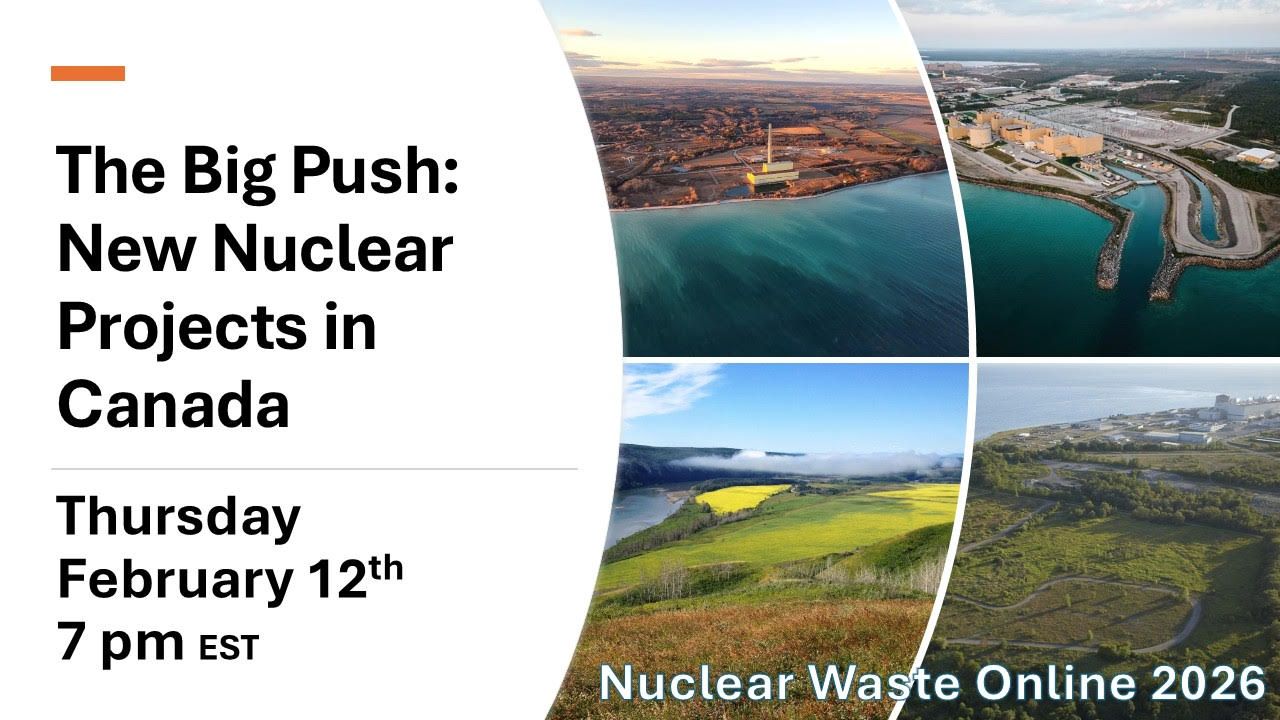
Thursday, February 12, 7 pm Eastern | 2nd of 4 sessions in the 2026 Nuclear Waste Online webinar series
Join a webinar on the push for new nuclear generation in Canada. Go to Northwatch.org to register or use the registration link https://us02web.zoom.us/webinar/register/WN_ZfWOf1GITqSRIZX8CB-A9w
-
Archives
- February 2026 (115)
- January 2026 (308)
- December 2025 (358)
- November 2025 (359)
- October 2025 (376)
- September 2025 (258)
- August 2025 (319)
- July 2025 (230)
- June 2025 (348)
- May 2025 (261)
- April 2025 (305)
- March 2025 (319)
-
Categories
- 1
- 1 NUCLEAR ISSUES
- business and costs
- climate change
- culture and arts
- ENERGY
- environment
- health
- history
- indigenous issues
- Legal
- marketing of nuclear
- media
- opposition to nuclear
- PERSONAL STORIES
- politics
- politics international
- Religion and ethics
- safety
- secrets,lies and civil liberties
- spinbuster
- technology
- Uranium
- wastes
- weapons and war
- Women
- 2 WORLD
- ACTION
- AFRICA
- Atrocities
- AUSTRALIA
- Christina's notes
- Christina's themes
- culture and arts
- Events
- Fuk 2022
- Fuk 2023
- Fukushima 2017
- Fukushima 2018
- fukushima 2019
- Fukushima 2020
- Fukushima 2021
- general
- global warming
- Humour (God we need it)
- Nuclear
- RARE EARTHS
- Reference
- resources – print
- Resources -audiovicual
- Weekly Newsletter
- World
- World Nuclear
- YouTube
-
RSS
Entries RSS
Comments RSS
 nuclear-news