Kentucky’s dangerous, toxic, nuclear brew and the failure of USEC Inc
 The Paducah plant cannot legally stay open, and it can’t safely be shut down—a lovely metaphor for the end of the Atomic Age and a perfect nightmare for the people of Kentucky.
 Countdown to Nuclear Ruin at Paducah EcoWatch May 22, 2013 by Geoffrey Sea Disaster is about to strike in western Kentucky, a full-blown nuclear catastrophe involving hundreds of tons of enriched uranium tainted with plutonium, technetium, arsenic, beryllium and a toxic chemical brew. But this nuke calamity will be no fluke. It’s been foreseen, planned, even programmed, the result of an atomic extortion game played out between the U.S. Department of Energy (DOE) and the most failed American experiment in privatization, the company that has run the Paducah plant into the poisoned ground, USEC Inc.
As now scheduled, main power to the gargantuan gaseous diffusion uranium plant at Paducah, Kentucky, will be cut at midnight on May 31, just nine days from now—cut because USEC has terminated its power contract with TVA as of that time [“USEC Ceases Buying Power,” Paducah Sun, April 19, page 1] and because DOE can’t pick up the bill.
DOE is five months away from the start of 2014 spending authority, needed to fund clean power-down at Paducah. Meanwhile, USEC’s total market capitalization has declined to about $45 million, not enough to meet minimum listing requirements for the New York Stock Exchange, pay off the company’s staggering debts or retain its operating licenses under financial capacity requirements of the Nuclear Regulatory Commission. Continue reading
The heavy footprint of uranium company AREVA, in impoverished Niger
 Areva, world’s 2nd uranium company heavily present in Niger, Expatica.comm 23 May 13 French nuclear group Areva, the world’s second-largest uranium producer whose mine in northern Niger was hit by a car bomb on Thursday, extracts more than a third of its mineral in the impoverished west African country.
Areva has been present in Niger for more than 40 years, operating two big mines near the northern town of Arlit through two affiliated companies — Somair and Cominak — which represent 37 percent of its total uranium production. Continue reading
Exploitation in Malawi: Paladin’s Kayelekera Uranium Project
THE CASE OF PALADIN’S KAYELEKERA URANIUM MINE: REPORT RELEASED ON THE REVENUE COSTS AND BENEFITS TO MALAWI, Mining in Malawi, 23 May 13 The Australian mining company Paladin Energy and its subsidiaries along with the Malawi-based Kayelekera Uranium Project, in which it has an 85% stake, were the subject of much discussion this evening in Lilongwe at the launch of the report The Revenue Costs and Benefits of Foreign Direct Investment in the Extractive Industry in Malawi: The Case of Kayelekera Uranium Mine. The report explores what it describes as Malawi’s largest Foreign Direct Investment* and the extent to which Malawi is benefiting. It concludes that ”Malawi is getting a raw deal from the mining and exploitation of uranium by Kayelekera Mine”…….
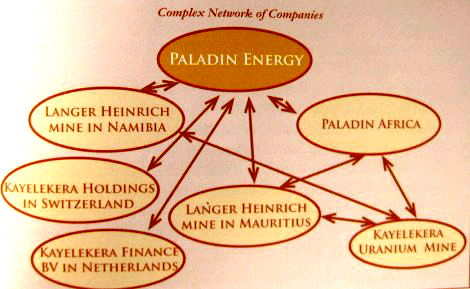
At the launch of the report, Dalitso Kubalasa and Collins Magalasi, the executive directors of MEJN and AFRODAD respectively, spoke briefly before AFRODAD’s Tafadzwa Chikumbu presented the research findings. This paved the way for a lively question and answer session with questions raised about whether or not parliament is ready to renegotiate the terms of the agreement with Paladin, what has happened to the man who lost his sight due to “kayelekera radiation” and if mining revenue in Malawi therefore “dirty money”.
This discussion was followed by the official launch of the report by the Second Deputy Speaker of Parliament Juliana Mphande who exclaimed that she was “appalled to note that incentives offered to Paladin have severe implication to Government revenue and require attention of parliament”. She outlined the areas requiring parliamentary investigation and debate…..
Below is a summary of the main findings: Continue reading
Uranium enrichment – how crooked deals on USEC enrich the private sector
 To keep a large campaign contributor out of bankruptcy court for a few more months, the Paducah plant was permitted to reach the current crisis state. And the people of Kentucky were sent straight to nuclear hell.
Countdown to Nuclear Ruin at Paducah EcoWatch May 22, 2013 by Geoffrey Sea “……….Murphie’s Law So how did it come to this? Since the plant was originally scheduled to cease operations on May 31, 2012, why didn’t USEC and DOE have plenty of time to plan for orderly and funded clean power-down, which was precisely what the sleazy one-year extension deal was supposed to give time to accomplish.
The answer is that the entire uranium enrichment enterprise of the U.S. has become a sham operation, a sham designed to funnel U.S. Treasury funds to private companies including USEC and its partners, a sham designed to convert any problem or scandal into additional contractor award fees, a sham designed to keep the fig-leaf of a privatized USEC Inc. from blowing away and exposing all the naughty bits.
Those became the goals of the operation, not enriching uranium, developing new technology or achieving safe operations or cleanup of the sites. Murphie’s Law is that if anything can go wrong, it will boost contractor award fees, for a select group of companies hand-picked by Murphie himself. Thus, the principal “cleanup” contractors at Piketon are Fluor and Babcock & Wilcox (B&W), both of which are suppliers to USEC’s fake “American Centrifuge Project,” and B&W is a strategic partner of USEC with a large share of USEC preferred stock, poised to take over USEC’s operations if the latter goes under. Continue reading
Virginia gubernatorial candidate Terry McAuliffe against uranium minng
Anti-uranium forces press Va. candidates for gov News Leader, May 21, 2013 RICHMOND — Opponents of uranium mining in Virginia met with Democratic gubernatorial candidate Terry McAuliffe on the issue and they said he’s solidly in their corner, while a meeting with Republican nominee Ken Cuccinelli has yet to be arranged.
Gov. Bob McDonnell, in the meantime, has not decided his response to a February suggestion that he direct state agencies to put uranium mining regulations in place to help guide the 2014 General Assembly if it considers ending a decades-old prohibition on uranium mining in Virginia.
The two pro-mining legislators who proposed the approach after legislation fell flat in the 2013 session are divided on whether the issue will emerge in the next session of the Legislature. The meeting between mining opponents and McAuliffe occurred in Danville about three weeks ago. Two who attended said McAuliffe was clearly opposed to ending the state’s 1982 moratorium on uranium mining.
“He said he had studied the issue and that it made absolutely no sense, either economically or scientifically,” said Jack Dunavant, a longtime opponent of uranium mining from Halifax County. “He was opposed to it and he said you can quote me on that.”
Andrew Lester, executive director of the Roanoke River Basin Association, said McAuliffe called uranium mining a “horrible idea.”
Lester, who was not representing the association at the meeting, said McAuliffe assured him, “I’ll tell you right off the bat you don’t have to worry about me. I am against this thing.”….. http://www.newsleader.com/viewart/20130521/NEWS01/305210004/Anti-uranium-forces-press-Va-candidates-gov
Down she goes again – the uranium price
Spot uranium price slides to near $40.50/lb: market sources Washington (Platts Jasmin Melvin )–21May2013 The uranium spot price has been pushed down slightly to $40.50/lb or lower in a market with ample supply but few buyers looking to make deals, market sources said Tuesday.
Three market sources said Tuesday that the spot uranium price could be stuck within a $40/lb to $41/lb range for the next couple of weeks.
“There’s a very limited number of buyers, and there seems to be more interest on the selling side — again not large numbers but enough that if someone comes in and says they want to sell, it’s pushing the price down a little,” one of the sources said. Price publisher Ux Consulting said in its weekly report Monday that the market “can be characterized as rather quiet with a forward price curve that is about as flat as a pancake.” …. http://www.platts.com/RSSFeedDetailedNews/RSSFeed/ElectricPower/21056634
Human Rights Forum urges stop to new uranium mining in Kadapa, India
Excessive mining in AP uranium plant opposed http://www.deccanherald.com/content/333841/excessive-mining-ap-uranium-plant.html Hyderabad, May 21, 2013, DHNS:
The HRF has been opposing the proposed 4,500 TPD (tonnes per day) in comparison with the current 3,000 TPD.
The HRF, in a press release, stated that the excessive mining of uranium will make the land futile and deplete the groundwater. The scars left by increased uranium mining will be permanent. HRF’s claims are backed by the Environmental Impact Assessment (EIA) reports.
The uranium mining can eventually harm individuals. To evaluate the aftereffects of uranium mining, one has just to visit Jaduguda in Jharkhand where uranium mining takes place.
Radiation exposure led to blindness in Kayelekera uranium mine worker
 Man loses sight due to Kayelekera radiation, SUNDAY TIMES, 19 MAY 2013 KAREN MSISKA It is all doom and gloom for a Kayelekera Uranium Mine ex-employee who has lost his sight, his job and any means of eking out a leaving to fend for his extended family.
On July 7, 2010, Abraham Siliwonde started working as a labourer at [Australian] Paladin Africa’s Kayelekera Mine in Karonga bubbling with hope that he would use the remuneration to improve living standards in his household.
But less than three years later, the 31-year-old, along with his six children and five wards from his deceased relatives, is a mere dependent on a small banana business his wife conducts at Karonga town market.
He lost sight in July 2012 and medical examinations have linked his condition, uveitis or inflammation of the uvea – the part of the eye that contains the iris and ciliary body and choroid – to exposure to radioactive chemicals.
Uranium ore is known to be highly radioactive.”In February 2012, I was moved to spotting. This is where one stands and guides the dumpers on where to drop the uranium ore from the pit as it is set to get into the crusher, the first point in uranium processing,” said Siliwonde on Friday.
“I was guiding dumpers carrying high grade uranium ore; the other grades are low and medium. I could feel intense heat from lumps of uranium ore and the next day I would be passing yellowish urine and feeling malarial symptoms.” He said regardless of the gear one puts on while at spotting, they feel the heat being emitted by the uranium ore, stressing “the situation is worsened by supervisors who keep people there longer than more productive.”
He said he was drafted into driving dumpers in January 2012 but by July, he had lost his vision and instead of working, he was a continuous visitor to health facilities seeking to restore his vision. ”After a series of visits to the mine clinic at Kayelekera, I was referred to Karonga district hospital where I was further referred to Mzuzu central hospital on 30 November 2012,” he added.
“At Mzuzu Central Hospital, they asked whether I had an eye operation before because they said my eyes had cracks. I underwent strenuous tests but after telling them the environment I was working in, they identified exposure to radiation as the possible cause and referred me to Kamuzu Central Hospital.”
According to medical documents The Sunday Times has seen, Siliwonde’s reference to Kamuzu Central Hospital’s Lions Sight First Eye Hospital was “to determine if patient’s condition may indeed be due to uranium dust exposure.” His situation was not improving even with spectacles. A reference report dated April 15, 2013 indicates that Siliwonde’s acuity (sharpness of vision) for both eyes had slightly improved to 6/36 from 6/60.
A report signed by Dr J Msosa, Chief Ophthalmologist at Lions Sight First Eye hospital, confirms exposure to radiation as the possible cause.
Part of the report reads: “The vitritis (posterior uveitis) may indeed be due to exposure to radiation. It is well known that all radioactive substances can cause radiation retinopathy which appears like posterior uveitis………
“The only source of income is a small banana business my wife conducts. It’s a pity that the situation at Kayelekera is not closely monitored. A lot of people are suffering because they are exposed to radioactive dust blowing from the pit area since the surface is not kept wet as per agreement.”
However, Paladin officials pushed the bucket to one of their contractors. In response to an emailed questionnaire, Paladin Energy Limited’s General Manager – International Affairs, Greg Walker, said Siliwonde was employed by one of their contractors at the mine. He added that the issue has not been brought to Paladin’s attention……http://www.bnltimes.com/index.php/sunday-times/headlines/national/15108-man-loses-sight-due-to-kayelekera-radiation
Judge rules to keep ban on new uranium mining in grand Canyon
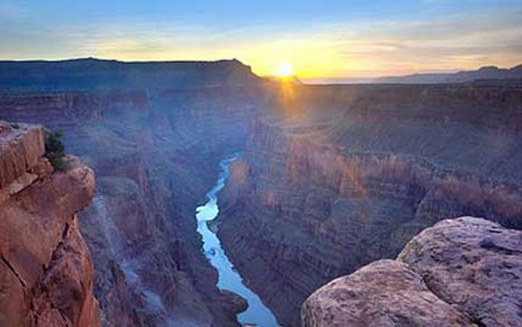 Judge Rejects Uranium Mining Industry Attempt to Repeal Ban on Grand Canyon Mining, Earth Justice Ted Zukoski Ruling again rejects attack on DOI’S authority to temporarily protect lands MAY 16, 2013 GRAND CANYON NATIONAL PARK, AZ —
Bad news for some years for the uranium ndustry
 Uranium on the nose, The Motley Fool By Mike King – May 16, 2013 More than 26 months after the nuclear accident at Fukushima, Japan, the nuclear industry is still feeling the effects with depressed uranium prices and cost pressures that are squeezing margins……
The price for uranium has fallen 40% since Fukushima to US$40 a pound, as Japan suspended its fleet of nuclear plants, while Germany…
….. the uranium price could stagnate at current levels for many years, much like it did after previous nuclear incidents. Japan may not restart its reactors, preferring instead to seek other energy alternatives, and reactors currently under construction could still be cancelled or postponed.
That is not good news for ASX listed uranium miners Paladin, Energy Resources of Australia (ASX: ERA), Toro Energy (ASX: TOE) or Deep Yellow Limited (ASX: DYL). http://www.fool.com.au/2013/05/16/uranium-on-the-nose/
USA’s dependence on foreign uranium
Not Just Oil: The US is also Dependent on Foreign Uranium Oil Price.com, By MINING.com | , 14 May 2013 What most Americans don’t realize is that dependence on foreign oil isn’t the main obstacle to US energy autonomy. If you think America’s energy supply issues begin and end with the Middle East, think again. One of the most critical sources of foreign energy is due to dry up this year, and the results could mean spiking electricity prices across the country.
In 2011, the US used 4,128 billion kilowatt hours (kWh) of electricity. Nuclear power provided 790.2 billion kWh, or 19% of the total electrical output in the US. Few people know that one in five US households is powered by nuclear energy, and that the price of that nuclear power has been artificially stabilized. Unfortunately for us, the vast majority of the fuel used for powering our homes must be imported……
If this information is news to you, you are not alone. While the mainstream media focus on the US’s “Middle Eastern energy dependence,” the real story remains unnoticed. That’s why Casey Research invited the field’s top experts – including former US Secretary of Energy Spencer Abraham and Chairman Emeritus of the UK Atomic Energy Authority Lady Barbara Judge – for a frank discussion of what we think is America’s greatest energy challenge.
By. Casey Research via Mining.com http://oilprice.com/Alternative-Energy/Nuclear-Power/Not-Just-Oil-The-US-is-also-Dependent-on-Foreign-Uranium.html
Time to tighten regulation of the uranium market
The Global Market in Natural Uranium—From Proliferation Risk to Non-Proliferation Opportunity U
ranium remains a critical component of civil-military nuclear programs. Today, Ian Anthony and Lina Grip reveal that the global market for natural uranium remains relatively unchecked, as does the activities of new exporters from the developing world.
ISN, By Ian Anthony and Lina Grip for SIPRI, 13 May 13,
The effort to cap the number of nuclear armed states in the world has largely focused on limiting the spread of the industrial items and processes needed for the stages of the fuel cycle that can turn uranium or plutonium into forms that could be used to make a nuclear weapon: enrichment or reprocessing.
The most important suppliers of nuclear technology have recently agreed guidelines to restrict access to the most sensitive industrial items, in the framework of the Nuclear Suppliers Group (NSG). Nevertheless, the number of countries proficient in these industrial processes has increased over time, and it is now questionable whether a strategy based on close monitoring of technology ‘choke points’ is by itself a reliable barrier to nuclear proliferation.
Time to tighten regulation of the uranium market?……Restricting access to natural uranium could be an important aspect of the global efforts to obstruct the spread of nuclear weapons. The time is ripe to start thinking seriously about the design of such control measures and how responsibility can be shared across the non-proliferation regime.http://www.isn.ethz.ch/isn/Digital-Library/Articles/Detail/?lng=en&id=163968
Loss posted for Mega Uranium
Mega Uranium Ltd. Releases Unaudited Results for the Three and Six Months Ended March 31, 2013, Market watch, 14 May 13, “…….Summary results for the three months ended March 31, 2013, as compared to the three months ended March 31, 2012:
        --  Net loss for the three months ended March 31, 2013 was $2.6 million
            ($0.01 per common share) compared to a net loss of $0.4 million for the
            three months ended March 31, 2012 ($0.00 per common share).
….Summary results for the six months ended March 31, 2013, as compared to the six months ended March 31, 2012:
        --  Net loss for the six months ended March 31, 2013 was $4.2 million ($0.02
            per common share) compared to a net loss of $1.1 million for the six
            months ended March 31, 2012 ($0.00 per common share).......
Loss posted for Uranium One
Uranium One posts $9.5m Q1 loss, production up 10% Mining Weekly, By: Natasha Odendaal 14th May 2013 JOHANNESBURG (miningweekly.com) – JSE- and TSX-listed Uranium One on Monday reported a net loss of $9.5-million for the first quarter ended March 31.
This was down from earnings of $4.5-million recorded in the comparative period the year before.
The group, which owns assets in Kazakhstan, the US, Australia and Tanzania, recorded a 60% drop in earnings from mine operations, including joint ventures (JVs), reaching $19.6-million during the first quarter, compared with the $49.3-million achieved in the corresponding period the year before.
Revenue for the period dipped to $5.2-million, from $5.3-million in the first quarter of 2012, while its JV operations contributed revenue of $57.4-million, down from the $90.6-million earned in the comparative quarter last year.
Uranium sales also declined year-on-year with 1.38-million pounds of uranium sold at an average price of $45/lb in the first quarter, compared with the 1.8-million pounds sold at $53/lb in the first quarter of 2012…… the company warned that the year ahead would be capital intensive as it incurred capital expenditure of $164-million on its assets in Kazakhstan, the US and Australia.
About $98-million was allocated for wellfield development, and the remaining $66-million for plant and equipment.
Uranium One noted that general and administrative expenses – excluding noncash items – were expected to reach about $40-million.
Exploration expenses were expected to reach $8-million. http://www.miningweekly.com/article/uranium-one-posts-95m-q1-loss-production-up-10-2013-05-14
Navajo’s continuing fight against nuclear corporations, uranium companies
The Navajo people’s struggle to prevent the re-entry of mining corporations has so far been successful. It is fair to assume that as long as valuable resources remain on Indigenous lands profit-hungry corporations will continue to circle like vultures.
 Navajo Nation battles uranium corporations, nuclear industry Decades of dealing with environmental degradation, racism, Liberation, By Bethany Woody MAY 8, 2013 “……….In early 2013, uranium companies approached the Navajo Nation in hopes they will allow them to renew mining operations on their land. These companies claim that they have developed newer and safer methods for extracting uranium, after decades of environmental destruction and abuse led the Navajo Nation to officially ban their mining. Continue reading
1 This Month

of the week – Shut Down Drone Warfare!


Tell the Ukrainian Government to Drop Prosecution of Peace Activist Yurii Sheliazhenko

Petition to revoke the licensing of the Near Surface Nuclear Disposal Facility (NSDF) at Chalk River. https://www.ourcommons.ca/petitions/en/Petition/Details?Petition=e-7247
To see nuclear-related stories in greater depth and intensity – go to https://nuclearinformation.wordpress.com
-
Archives
- April 2026 (103)
- March 2026 (251)
- February 2026 (268)
- January 2026 (308)
- December 2025 (358)
- November 2025 (359)
- October 2025 (376)
- September 2025 (257)
- August 2025 (319)
- July 2025 (230)
- June 2025 (348)
- May 2025 (261)
-
Categories
- 1
- 1 NUCLEAR ISSUES
- business and costs
- climate change
- culture and arts
- ENERGY
- environment
- health
- history
- indigenous issues
- Legal
- marketing of nuclear
- media
- opposition to nuclear
- PERSONAL STORIES
- politics
- politics international
- Religion and ethics
- safety
- secrets,lies and civil liberties
- spinbuster
- technology
- Uranium
- wastes
- weapons and war
- Women
- 2 WORLD
- ACTION
- AFRICA
- Atrocities
- AUSTRALIA
- Christina's notes
- Christina's themes
- culture and arts
- Events
- Fuk 2022
- Fuk 2023
- Fukushima 2017
- Fukushima 2018
- fukushima 2019
- Fukushima 2020
- Fukushima 2021
- general
- global warming
- Humour (God we need it)
- Nuclear
- RARE EARTHS
- Reference
- resources – print
- Resources -audiovicual
- Weekly Newsletter
- World
- World Nuclear
- YouTube
-
RSS
Entries RSS
Comments RSS
 nuclear-news