Saudi Arabia is seeking to enrich its own uranium
 Times 12th May 2018 Saudi Arabia is seeking to enrich its own uranium, prompting fears of a nuclear arms race in the Middle East after President Trump’s withdrawal from the Iran deal. Riyadh says it wants to make nuclear fuel to diversify its energy sources but recent public warnings from Saudi leaders about acquiring a nuclear bomb have raised doubts about their commitment to non-proliferation as the Iran nuclear agreement teeters.
Saudi Arabia’s Crown Prince Mohammed bin Salman warned during a trip to the US in March that if Iran developed a nuclear bomb his country would “follow suit as soon as possible”. That warning was repeated by his foreign minister this
week after Mr Trump withdrew from the deal with Iran and its leaders threatened to resume enrichment. Saudi Arabia would “do whatever it takes to protect our people,” Adel al-Jub eir told CNN. “We have made it very clear that if Iran acquires a nuclear capability we will do everything we can to do the same.”
https://www.thetimes.co.uk/edition/world/saudis-bid-to-match-iran-by-enriching-uranium-vrj7q9rms
The uses of enriched uranium
 Times 12th May 2018 Uranium is mined and then processed as nuclear fuel for military or civilian purposes. The ore is ground up and chemically treated to yield “yellowcake”, a coarse powder of uranium oxide. Converted into purified fuel rods, it can be used in pressurised heavy water reactors.
For other uses, the uranium oxide is converted into uranium hexafluoride gas so that it can be enriched. The enrichment process increases the percentage of a particular isotope, uranium-235, which makes up 0.7 per cent of natural uranium. The rest is uranium-238. The commonest method of enrichment is isotope separation by gas centrifuge. Centrifuges rotate at high speed, separating the isotopes by weight and sending the heavier uranium-238 to the outside of the cylinder while the lighter 235 collects at the centre.
The slightly enriched stream is extracted and fed into the next centrifuge, where the process is repeated, enriching it further. Most nuclear power reactors use uranium that has been enriched to a composition of between 3 and 5 per cent uranium-235. Anything up to 20 per cent uranium-235 is called low-enriched uranium. Uranium enriched to between 12 and 19.75 per cent is used in the production of medical isotopes in research reactors.
Uranium enriched above 20 per cent is called highly enriched uranium, while 20 per cent is the lowest theoretical threshold for weapons-grade uranium. Most weapons use uranium that is 90 per cent enriched. The first stages
require more centrifuges due to the volume of uranium. The process gets easier as purity increases, making the leap from low to high-enrichment easier than the leap from natural uranium to low-enriched. Once the 20 per cent threshold is breached, weapons grade is within reach.
https://www.thetimes.co.uk/edition/world/iran-saudi-arabia-uranium-from-ore-to-weapons-grade-mf0jdqr86
Uranium market looking crook – again!
The price of U3O8, a common uranium compound used mainly in nuclear-power generation, has already sunk 12% this year to roughly $21 a pound—near its 12-year low of $18, struck in 2016—according to the Ux Consulting Co….. (subscribers only) https://www.wsj.com/articles/uranium-loses-power-as-u-s-miners-seek-protection-1525424829
Pretty much permanent now- the slump in the uranium industry
 Uranium industry slumps, nuclear power dead in the water, Chain Reaction magazine, Dr Jim Green, April 2018
Very few mines could operate at a profit at current prices. Some mines are profitable because earlier contracts stipulated higher prices, while many mines are operating at a loss. Many companies have been loathe to close operating mines, or to put them into care-and-maintenance, even if the only other option is operating at a loss. They have been playing chicken, hoping that other companies and mines will fold first and that the resultant loss of production will drive up prices. “We have to recognise that we over-produce, and we are responsible for this fall in the price,” said Areva executive Jacques Peythieu in April 2017.
Current prices would need to more than double to encourage new mines ‒ a long-term contract price of about US$70–$80 is typically cited as being required to encourage the development of new mines.
The patterns outlined above were repeated in 2017. It was another miserable year for the uranium industry. A great year for those of us living in uranium producing countries who don’t want to see new mines open and who look forward to the closure of existing mines. And a great year for the nuclear power industry ‒ in the narrow sense that the plentiful availability of cheap uranium allows the industry to focus on other problems.
Cut-backs announced
The patterns that have prevailed over the past five years or so might be changed by decisions taken by Cameco and Kazatomprom (Kazakhstan) in late 2017 to significantly reduce production. Canada closed McArthur River in Canada in January and plans to keep it closed for around 10 months ‒ it had been producing more uranium than any other mine in the world. Kazakhstan has been producing almost 40% of world supply in recent years and plans to reduce production by 20% from 2018‒2020.
Previous cut-backs in Canada and Kazakhstan have had little or no effect, and so far the late-2017 announcements have had no effect. But the cut-backs are significant and their impact might yet be felt.
A late-2017 report by Cantor Fitzgerald equity research argued that the decisions by Cameco and Kazatomprom could result in a “step change” for uranium prices. But Warwick Grigor from Far East Capital was downbeat about Cameco’s announcement. “I don’t see this as a turnaround for the uranium price; at best they will stay where they are, but it doesn’t signal a boom in price,” he said in November 2017.
BHP marketing vice-president Vicky Binns said in December 2017 that uranium markets would remain oversupplied for close to a decade, with downward pressure remaining on uranium prices despite Cameco’s production cuts. She said that demand for uranium could outstrip supply by the late 2020s but that could change if developed nations close their nuclear reactors earlier than expected, or if renewables take a larger than expected market share.
Equally downbeat comments have been made by other industry insiders and analysts in recent years. Former Paladin Energy chief executive John Borshoff said in 2013 that the uranium industry “is definitely in crisis” and “is showing all the symptoms of a mid-term paralysis”. Former World Nuclear Association executive Steve Kidd in May 2014 predicted “a long period of relatively low prices”. Nick Carter from Ux Consulting said in April 2016 that he did not see a supply deficit in the market until “the late 2020s”.
Perhaps a uranium price increase is on the way but it will do little to salvage Australia’s uranium industry. Apart from BHP’s Olympic Dam mine in SA, the only other operating uranium mine in Australia is Beverley Four Mile in SA. At Ranger in the NT, mining has ceased, stockpiles of ore are being processed, and ERA is planning a $500 million project to decommission and rehabilitate the mine site.
And with the cost of a single power reactor climbing to as much as $20 billion, proposals to introduce nuclear power to Australia seem more and more quixotic and are now largely limited to the far right ‒ in particular, Australians Conservatives’ luminary Senator Cory Bernardi and the Minerals Council of Australia.
Even Dr Ziggy Switkowski ‒ who used to be nuclear power’s head cheerleader in Australia and was appointed to lead the Howard government’s review of nuclear power ‒ recently said that “the window for gigawatt-scale nuclear has closed”. He said nuclear power is no longer cheaper than renewables and the levelised cost of electricity is rapidly diverging in favour of renewables. https://www.foe.org.au/uranium_industry_slumps
Jim Green is the national nuclear campaigner with Friends of the Earth Australia and editor of the Nuclear Monitor newsletter produced by the World Information Service on Energy and the Nuclear Information & Resource Service.
Published in Chain Reaction #132, April 2018. National magazine of Friends of the Earth Australia. www.foe.org.au/chain_reaction_132

Australian uranium company Paladin looks to closing its loss-making Langer Heinrich uranium mine
Paladin Energy has flagged the potential closure of its flagship Langer Heinrich uranium mine, just two months after it returned to the Australian Stock Exchange after an $800 million debt restructuring. … (subscribers only)
https://www.theaustralian.com.au/business/mining-energy/paladin-may-shut-lossmaking-langer-heinrich-uranium-mine/news-story/53c1dda5b5b01ff36771af7b683aaafc
Who REALLY benefits from uranium mining in Grand Canyon country?
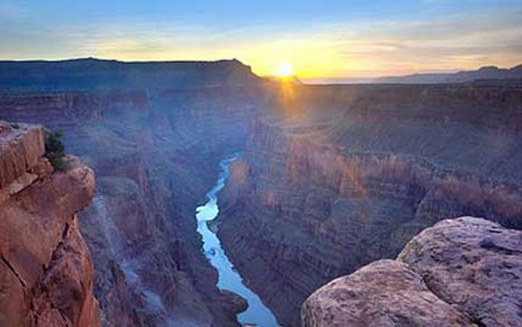 Uranium in Canyon Country: Part 2 of 2: Who benefits from uranium mining? Grand Canyon News, By Erin Ford , 27 Mar 18, GRAND CANYON, Ariz. — There are currently 831 mining claims in the roughly 1 million acres withdrawn by former Interior Secretary in 2012, according to the Bureau of Land Management (BLM).
There may be a healthy profit to be made on the claims, as legal action by mining industry groups and a recommended review of the ban by the Forest Service seems to indicate. But who is making the profit?
The BLM’s report indicates that only about 2 percent of the 831 mining claims are held by U.S.-based companies – those belong to Liberty Star Uranium and Metals in Tucson, Arizona. The rest, discounting privately-held claims (5 percent), belong to foreign-based companies. Of the remaining 93 percent, companies based out of Canada hold 712 claims (86 percent) and a UK-based Vane Minerals holds 60 claims (7 percent).
Uranium production in the U.S. has not been a profitable enterprise since the bottom fell out of the uranium market in the early 1990s. According to the Energy Information Administration (EIA), there are currently 61 nuclear-based power plants in the U.S. — no new plants have been commissioned since the near-catastrophic incident at Pennsylvania’s Three Mile Island facility in 1979. The end of the Cold War in 1991 meant that proliferation of nuclear weapons was suspended, a pact that remains largely in place. As a result, demand for uranium fell sharply, prices bottomed out and uranium extraction became a pricey enterprise with low return on investment.
………Where’s the profit?
In a petition filed with the U.S. Department of Commerce (DOC), Energy Fuels Inc., a Canadian company with a 12 percent stake in uranium mining claims around Grand Canyon, asserts that the commercial uranium stockpile was 6 percent higher than 2015 levels.
If demand is lower and supplies are higher, how do these companies plan to profit off increased mining activity?
The answer may lie in three things: President Donald Trump’s energy dominance agenda, potential U.S. Supreme Court ruling and Energy Fuels’ petition to the DOC……….
Who benefits?
Energy Fuels, Inc. recently filed a petition with the DOC for relief under Section 232 of the Trade Expansion Act of 1962. In simplest terms, the company is asking the administration to issue a buy American requirement by limiting uranium imports as a threat to national security. The premise is the same as the tariffs to be potentially imposed on steel and aluminum imports — to revive a U.S.-based industry by steeply taxing competitors or eliminating them altogether.
But Reimondo points out that uranium mining isn’t a strong economic driver in northern Arizona, and even if it was, the U.S. doesn’t reap any rewards. The government, which receives royalty payments from industries that extract minerals or other commodities from federal lands, doesn’t receive royalties from uranium mining.
Comparatively, the tourism and travel economy pumps more than 900 million into the region each year, and supports nearly 20,000 jobs, according to a joint 2011 report by the U.S. Geological Survey, U.S. Fish and Wildlife Service, National Park Service, Forest Service and BLM. The report also estimates that uranium mining could support only about 650 local jobs — and those jobs aren’t permanent. Once a mine is depleted, on-site jobs will evaporate. Energy Fuels says its Canyon mine, which is currently permitted to operate near Red Butte about six miles from the South Rim, is expected to employ about 60 people at peak production.
“Mining does not drive our economy here,” said Coconino County Supervisor Art Babbott in an interview. “Access to public lands, that’s what is our important economic driver here.” https://www.grandcanyonnews.com/news/2018/mar/27/uranium-canyon-country-part-2-2-who-benefits-urani/
U.S. mining industry files petitions to overturn prohibition on uranium mining near Grand Canyon
Guardian 10th March 2018, The US mining industry has asked the supreme court to overturn an Obama-era
rule prohibiting the mining of uranium on public lands adjacent to the
Grand Canyon. The National Mining Association (NMA) and the American
Exploration and Mining Association (AEMA) filed petitions on Friday asking
the court to reverse the 2012 ban on new uranium mining claims on more than
1 million acres of public land surrounding Grand Canyon national park.
https://www.theguardian.com/environment/2018/mar/10/grand-canyon-uranium-mining-ban-supreme-court
INTERVIEW: Niger: “In Arlit, people drink water contaminated by radioactivity”
 This fear is also present in
The word Areva is scary. It’s a taboo subject unless it’s to magnify the business. People want to talk, but like the Nigerian government, they feel helpless against this multinational. When I was doing my scouting, many people told me that I was putting myself in danger. Here, when you talk about Areva, it’s like a God, you should not call your name out loud.
In the documentary, you show this radioactive dust, poisoned water, houses built with land mines, contaminated food, livestock dying .
Houses must even be destroyed because the clay walls contain radioactivity.
 The uranium deposits exploited by Orano (formerly Areva) are poisoning the population, explains Amina Weira, author of a documentary on the subject.

Interview by Matteo Maillard (Dakar, correspondence) http://www.lemonde.fr/afrique/article/2018/02/26/niger-a-arlit-les-gens-boivent-de-l-eau-contaminee-par-la-radioactivite_5262875_3212.html THE WORLD 27.02.2018
It was a Tuareg encampment swept by bursts of Saharan simoun. Today it is a city that bears the mark of its development as its decadence. In Arlit, in northern Niger, uranium has been a source of hope since the French group Areva (renamed Orano in January) began mining the deposits in the 1970s.
Many nomads and workers came to this arid region. the workers’ city which was then called “the second Paris”. None knew the invisible danger of radioactivity.
Forty years later, Niger became the second largest supplier of uranium to Areva, but the mining of Cominak and Somair contaminated the population in its daily activities. It is in the sanded streets of her childhood that Amina Weira, a 29-year-old Nigerian filmmaker, posed her camera in front of the elders who lived through the early days of mining. In this film entitled La Rage dans le vent, presented in Dakar as part of the Films Femmes Afrique festival, she shows the invisible threat hanging over Arlit. Interview.
In your movie, the main protagonist is your father. You visit your relatives and tell the city of your childhood. Why did you choose this intimate setting?
Amina Weira: Because mine has always been part of our lives. My father worked there as an electrician. When my sisters and I saw him go to work, we imagined he was going to an office. The mine was visible from a distance, until in 2010 we visited his place of work and realized that he was going down into this big hole. I decided to make a film about it. I quickly understood, after research, that behind this activity was hiding something else less visible: irradiation. So I directed my film on the health aspect.
How did you realize the impact of the mine on the health of the inhabitants?
When I was little already, the mother of one of my classmates had health problems every time she came to Arlit. It was necessary to evacuate it to Niamey, more than a thousand kilometers, to cure it. I did not understand why she could not live here. Later, when I wanted to do the film, I asked scientists and doctors about the dangers of mining. In Arlit, there are many health problems. Respiratory difficulties, cancers, women who give birth to poorly trained children … Small, we saw all that, but we did not make the link. People used to say, as often in Africa, “it’s his destiny, it’s God who gave him a child like that”. It is mostly mine retirees who are affected. Many die of paralysis and strange diseases.
In the documentary, you show this radioactive dust, poisoned water, houses built with land mines, contaminated food, livestock dying …
I wanted to bring out everyday life, show all the activities of the city. We see the manufacture of pots: people recover the scrap metal from the mine, melt it and transform it into kitchen utensils that they sell to the population or export to Nigeria. They do not measure the danger of this activity. When they melt iron, the radioactivity is released. This is where Areva must intervene, preventing the population from recovering this contaminated scrap metal.
Houses must even be destroyed because the clay walls contain radioactivity.
It should be understood that in the beginning, Arlit was a camp, a city of miners, then people came to settle, hoping to take advantage of this activity. Today, there are nearly 150,000 inhabitants, including about 4,000 mine workers. Areva created this city from scratch. The workers had to have all the conditions to stay. They had children, it took schools. They were sick, it took hospitals. To build, the inhabitants used the contaminated clay around them. Some neighborhoods are within 200 meters of the mine. The standards are not respected. And sandstorms propagate radioactivity in the city.
We also see women whose livestock die inexplicably.
When we drink Arlit’s water, we feel that it is not quite drinkable, that it is different from the rest of the country. The women talk about Areva employees who only drink mineral water, when they can not afford it. One of the mines is below the water table. Some are therefore deliver water from neighboring regions. A water tower has just been built, but it is not enough to supply the entire city.
You do not present your film as an investigation, there are no scientists or organizations that support your remarks. Why ?
I did not want to dwell on the numbers, but to give the floor to the people. Too often, we give the floor to the leaders of Areva. But many organizations have researched and analyzed radioactivity in the region, such as the Criirad [Commission for Independent Research and Information on Radioactivity], Greenpeace, WHO [World Health Organization]. Radioactivity levels are higher than the rest of the country.
What do you say to Areva?
That they have monopolized our wealth without warning the workers of the risks incurred. They have relied on the ignorance of the people to make profit. The workers live in a city where they pay neither water nor electricity nor rent. There is a certain luxury that keeps them in silence, because it is difficult to spit in the soup. Niger has a very high unemployment rate. An unemployed youth is not going to think twice about offering these benefits. He gets used to this luxury and even if he realizes the harmful effects on his health, he will not say anything for fear of losing his job.
Have you been pressured by Areva during filming?
No, not at all, it is rather the Nigerian authorities who wanted to block me. I had obtained filming authorizations from the National Film Center and Arlit Town Hall. We were arrested twice, but since I was in good standing, they left me alone. The title of the movie, Anger in the Wind, helped me a lot. They thought I was making a film about the wind, the desert, without much knowledge of the synopsis.
Why was the film censored in Niger?
By fear. When I propose the film to movie theater operators, they say they do not want any problems. They are afraid that my producers, who are part of the alternative environment, are perceived as opponents. I broadcast my film in several French institutes in Africa. That of Niamey also wanted to disseminate it, but it has not received the approval of the Embassy of France.
This fear is also present in the population?
The word Areva is scary. It’s a taboo subject unless it’s to magnify the business. People want to talk, but like the Nigerian government, they feel helpless against this multinational. When I was doing my scouting, many people told me that I was putting myself in danger. Here, when you talk about Areva, it’s like a God, you should not call your name out loud.
Has the film been successful abroad?
Yes, it has been around the world since 2016 and has won a dozen awards. After Brazil and the United States, I was invited to Japan. I did not think one day make a movie that would be seen until there. It’s a pride, I tell myself that my work has served something. But I made this film for my country first and I hope that someday it can be seen there.
Towards the end of the film, a group of young Nigerians said, “We have richness in our basement, but all we are left with is radioactivity. Is it a shared feeling?
These young people are part of an association whose slogan is “the post-mine”. They say that uranium is a natural resource that will run out one day or another. In Arlit, which exists only by uranium, if this resource disappears or if Areva decides to no longer exploit it, what will become of it? Will the city continue to exist? If Areva leaves today, the only legacy left to them is this radioactive waste. This “post-mine” must be planned now. You have to prepare for that.
Navajo, Havasupai resist uranium mining
By Williams-Grand Canyon News , 27 Feb 18, SUPAI, Ariz. – Vice President Jonathan Nez joined Arizona State Rep. Eric Descheenie and six other runners on a run to the village of Supai Feb. 14 to collect handwritten letters from the students of Havasupai Elementary School.
The letters are addressed to U.S. President Donald Trump in response to speculation that he plans to lift a 20-year ban on uranium mining in the greater Grand Canyon region, which was established by the Obama administration in 2012.
“We came to support the efforts of Representative Eric Descheenie and the Havasupai tribe to elevate the voice of the Havasupai youth.” Vice President Jonathan Nez said. “Their voice needs to be heard, especially on issues that impact their health and way of life.”
“Uranium has killed fathers and grandfathers and great-grandfathers across the Navajo Nation. It has contaminated the water supply in numerous areas poisoning plants, animals and people. For this reason, mining and transportation of uranium are banned on Diné Bikéyah, said Vice President Nez.
At an assembly held at the school Rep. Descheenie said, “We are going to make sure your words are received and read by the president of the United States so when he makes decisions that impact your lives he does so with you in mind. You have a powerful voice and it must be heard.”
Rep. Eric Descheenie and Havasupai Chairwoman Carletta Tilousi are scheduled to hand-deliver the letters to the White House Feb. 14 at 9 p.m. …….. https://www.grandcanyonnews.com/news/2018/feb/27/navajo-havasupai-resist-uranium-mining/
Yet another loss for uranium mining company Cameco
Uranium miner Cameco Corp. reports $62-million Q4 loss, revenue down, SASKATOON 11 Feb 18, — Cameco Corp. lost $62 million in its latest quarter, an improvement from the year-earlier loss of $144 million…… Revenue in what was its fourth-quarter totalled $809 million compared with $887 million in the year-earlier quarter. http://business.financialpost.com/pmn/business-pmn/uranium-miner-cameco-corp-reports-62-million-q4-loss-revenue-down
Research into effects of uranium waste exposure on Native Americans
 Albuquerque Journal 5th Feb 2018, Researchers hope to measure the effects of mixed metals and uranium waste
exposure on Native American populations living in close proximity to
abandoned mines, and better understand how these toxins spread through the
environment.
That’s the objective of the newly created Superfund Research
Center at the University of New Mexico, which is funded by $1.2 million a
year for five years from the National Institute of Environmental Health
Sciences.
There are more than 4,000 abandoned uranium mines — some 500 on
the Navajo Nation alone — and some 160,000 abandoned hard rock mines
scattered throughout the West, and some 600,000 Native Americans who live
within about six miles of those sites, said center director Johnnye Lynn
Lewis, a research professor in the UNM College of Pharmacy.
https://www.abqjournal.com/1129580/researchers-to-measure-mixed-metals-mining-contamination-on-native-americans.html
The woes of Australian uranium company Paladin – 98% of shares transferred to creditors
 Paladin to return to ASX, most shares in hands of creditors http://www.miningweekly.com/article/paladin-to-return-to-asx-most-shares-in-hands-of-creditors-2018-02-02/rep_id:3650 2ND FEBRUARY 2018 BY: MARIAAN WEBB CREAMER MEDIA SENIOR RESEARCHER AND DEPUTY EDITOR ONLINE JOHANNESBURG (miningweekly.com) – Uranium miner Paladin Energy will apply for its securities to be reinstated to official quotation on the ASX, the Australia-based company said on Friday, announcing the completion of its restructuring and the appointment of two new directors.
No uranium mining for Čermeľ-Jahodná locality in Slovakia
Slovak Spectator 1st Feb 2018, Uranium ore will not be mined in the Čermeľ-Jahodná locality in the Košice Region. This stems from the final ruling issued by the Supreme
Court, which decided not to extend a permit for a geological survey of
uranium ore at the site close to Košice, the TASR newswire reported. The
court has thus ended the legal proceedings and upheld a decision by the
Environment Ministry.
https://spectator.sme.sk/c/20751213/uranium-mining-near-kosice-definitely-rejected.html
Shame on Trump – Uranium mines in Bears Ears?
The implications of the story written by Hiroko Tabuchi were staggering: an area of long-held federal land only recently protected by President Barack Obama at the end of his administration for its significance to five Native American tribes could one day be pocked with uranium mines.
Tabuchi found that there are more than 300 uranium mining claims inside Obama’s boundaries for the national monument, nearly a third of which are tied to the Lakewood-based Energy Fuels Resources.
“The vast majority of those claims fall neatly outside the new boundaries of Bears Ears,” Tabuchi wrote…….
The valleys, buttes and desert landscape of Bears Ears are largely untouched and full of historical significance to the five Indian nations whose ancestors left their artifacts, ruins and hieroglyphics across the land as evidence that they were there first. Bears Ears deserves protection.
As Trump celebrated shrinking Bears Ears last month at the Utah Capitol, he said: “I’ve come to Utah to take a very historic action to reverse federal overreach and restore the rights of this land to your citizens.”
Trump is wrong. The land is still all federally owned, outside of the control and taxation of local entities. What Trump’s ruling did do was open up the possibility of private interests taking what they want from the land. Until Tabuchi’s reporting, we were all supposed to believe no one wanted this land for private gain. Now we all know the sad truth. https://www.denverpost.com/2018/01/20/uranium-mines-in-bears-ears-shame-on-trump/
Uranium pollution dispels the grand illusion of “clean America”
Ken commented on Navajo town remembers water pollution due to uranium mining – fears of new mines Uranium Miners Pushed Hard for a Comeback. They Got Their Wish. NYT, By HIROKO TABUCHIJAN. 13, 2018 “………The Navajo …
There are 10 or eleven towns in Colorado, Wyoming, Utah, Arizona, and New Mexicothat had Uranium mills, right in the middle of town. That means that Uranium dust, polonium, thorium, radium, and radon blew freely, thoughout thewe towns, 24 hours a day for years. Most of the water, drained into the Colorado ariver. Many of these towns were downwinder towns, from open air blasting of nucler bombs in Nevada from 1949 to 1962. Many, of the towns had the misfortune of having underground nuclear bombs detonated close to them as well, to try to track natural gas. Especially in New Mexico and Colorado. In the 60s Hilibutron was also tracking nuclear waste into areas in Nevada, and Wyoming. More recently there has been fracking for oil and gas in UtAh, Wyoming, Colorado, New Mexico, Arizona. This means the radioactive burden to their water tables has been increased again substantially , along with 60 years of radioactive burden on the Colorado River. There are also the 1000 or so uranium mines draining into the Colorado River and Green driver from Utah, the western slope, Shiprock New Mexico, Wyoming, The Grand Canyon Area.
I think Helen Caldicotts and Christina Macphersons estimates of a few million tons of radioactive sediment in Lake Mead and even lake Powell is wrong. https://nuclear-news.net/2017/12/22/uranium-tailings-pollution-in-lake-mead-and-lake-powell-colorado/
Consider underground nuclear destinations in Rangely Colorado and Northen New Mexico. I think it is more like a half billion or billions of ons of nuclear waste sediment in Lake Powell and lake mead..
There were Uranium Mills on the Navajo nation by Ship Rock and Halchita which is by the Colorado river. There were Uranium Mills right in the middle of town in Canyon City.Colorado, Moab.Utah, Uravan.Colorado, White Mesa.Utah, Monticello.Utah, by Grand Junction.Colorado. Many in Wyoming.
Uranium mining in Wyoming – Wikipedia
https://en.m.wikipedia.org/wiki/Uranium_mining_in_Wyoming.
There are dense cancer clusters in these little towns on the Navajo Nation, in Utah, in Nevada, in Colorado, in Wyoming, in New Mexico. There are Genetic mutations that should not exist. Some people, like those in St George or Monticello Utah got the mere pittance of 50,000 dollars, after having lived in downwinder areas and surviving cancer. Generations of families wiped-out in many instances. Clarke county Nevada, by Las Vegas has one of the highest incidences of cancer in the US. Is it any wonder, with all the radiation in their primary drinking water supplies?
Many little Colorado Plateau towns, in the west are hit with quintuple curses: bomb blasts above ground, bomb blasts below ground-poisoning their head waters, uranium mills and waste in town, their river water radioacively poisoned from inderground nuclear blasts, from uranium mines, from cold war nuclear bomb detonations.
There has recently, been a great deal of cracking in these areas, releasing radioactivity into their desert rivers and water tables.
Americans live in a grand delusion, thinking how clean the western United States, and the rest of the USA is, with a hundred rickety old nuclear plants belching tritium, into the environment. The United State is the most radioactive shithole in the world. How Trump has the gall to call other countries shitholes, is beyond me.
1 This Month

of the week – Shut Down Drone Warfare!


Tell the Ukrainian Government to Drop Prosecution of Peace Activist Yurii Sheliazhenko

Petition to revoke the licensing of the Near Surface Nuclear Disposal Facility (NSDF) at Chalk River. https://www.ourcommons.ca/petitions/en/Petition/Details?Petition=e-7247
To see nuclear-related stories in greater depth and intensity – go to https://nuclearinformation.wordpress.com
-
Archives
- April 2026 (44)
- March 2026 (251)
- February 2026 (268)
- January 2026 (308)
- December 2025 (358)
- November 2025 (359)
- October 2025 (376)
- September 2025 (257)
- August 2025 (319)
- July 2025 (230)
- June 2025 (348)
- May 2025 (261)
-
Categories
- 1
- 1 NUCLEAR ISSUES
- business and costs
- climate change
- culture and arts
- ENERGY
- environment
- health
- history
- indigenous issues
- Legal
- marketing of nuclear
- media
- opposition to nuclear
- PERSONAL STORIES
- politics
- politics international
- Religion and ethics
- safety
- secrets,lies and civil liberties
- spinbuster
- technology
- Uranium
- wastes
- weapons and war
- Women
- 2 WORLD
- ACTION
- AFRICA
- Atrocities
- AUSTRALIA
- Christina's notes
- Christina's themes
- culture and arts
- Events
- Fuk 2022
- Fuk 2023
- Fukushima 2017
- Fukushima 2018
- fukushima 2019
- Fukushima 2020
- Fukushima 2021
- general
- global warming
- Humour (God we need it)
- Nuclear
- RARE EARTHS
- Reference
- resources – print
- Resources -audiovicual
- Weekly Newsletter
- World
- World Nuclear
- YouTube
-
RSS
Entries RSS
Comments RSS
 nuclear-news