Much hyping for France’s NUWARD small modular reactor (SMR) design: construction to start in 2030 (but will it be a lemon?)

France’s NUWARD SMR Will Be Test Case for European Early Joint Nuclear Regulatory Review, Power, 5 June 22. The French Nuclear Safety Authority (ASN), the Czech State Office for Nuclear Safety (SUJB), and Finland’s Radiation and Nuclear Safety Authority (STUK) have picked France’s NUWARD small modular reactor (SMR) design as a test case for an early joint regulatory review for SMRs. The development marks a notable step by European regulators to align practices in a bid to harmonize licensing and regulation for SMRs in the region.
EDF, an entity that is majority held by the French government, on June 2 announced the reactor design will be the subject of the review, which “will be based on the current set of national regulations from each country, the highest international safety objectives and reference levels, and up-to-date knowledge and relevant good practice.”
The technical discussions and collaborative efforts associated with the review will both help ASN, STUK, and SUJB “increase their respective knowledge of each other’s regulatory practices at the European level,” as well as “improve NUWARD’s ability to anticipate the challenges of international licensing and meet future market needs,” it said.
A European Frontrunner
NUWARD, which is still currently in the conceptual design phase, may be a frontrunner in the deployment of SMRs in Europe. It was unveiled in 2019 by EDF, France’s Alternative Energies and Atomic Energy Commission (CEA), French defense contractor Naval Group, and TechnicAtome, a designer of naval propulsion nuclear reactors and an operator of nuclear defense facilities. The consortium in May tasked Belgian engineering firm Tractabel with completing—by October 2022—conceptual design studies for parts of the conventional island (turbine hall), the balance of plant (water intake and servicing system), and the 3D modeling of the buildings that will house those systems.
Launched as a design that derives from the “best-in-class French technologies” and “more than 50 years of experience in pressurized water reactor (PWR) design, development, construction, and operation,” the design proposes a 340-MWe power plant configured with twin 170-MWe modules. NUWARD is based on an integrated PWR design with full integration of the main components within the reactor pressure vessel, including the control rod drive mechanisms, compact steam generators, and pressurizer, CEA says.
As “the most compact reactor in the world,” the design is well-suited for power generation, including replacing coal and gas-fired generation, as well as for electrification of medium-sized cities and isolated industrial sites, CEA says. According to Tractabel, the next phase of the NUWARD project—the basic design completion—is slated to begin in 2023. Construction of a reference plant is expected to start in 2030.
Crucial to SMR Deployment: Harmonization of Regulations
On Thursday, EDF noted that while SMR technology innovation is important, deployment of SMRs, which will be integral to the energy transition toward carbon neutrality, will require “a serial production process and a clear regulatory framework.” Harmonization of regulations and requirements in Europe and elsewhere will be “an essential element to support aspirations of standardization of design, in-factory series production and limited design adaptations to country-specific requirements,” it said.
Several efforts to encourage collaboration on SMR licensing and regulatory alignment are already underway in Europe. These include the European SMR Partnership led by FORATOM, the Brussels-based trade association for the nuclear energy industry in Europe, and the Sustainable Nuclear Energy Technology Platform (SNETP), as well as the Nuclear Harmonisation and Standardisation Initiative (NHSI), which the International Atomic Energy Agency launched in March.
The European Union is separately spearheading the ELSMOR project, which aims to enhance the European capability to assess and develop the innovative light water reactor (LWR) SMR concepts and their safety features, as well as sharing that information with policymakers and regulators.
SMRs Part of Future Plans for France, Czech Republic, Finland
Participation of the three countries—France, the Czech Republic, and Finland—is noteworthy for their near-term plans to expand generation portfolios with new nuclear. French President Emmanuel Macron on Feb. 10 said France will build six new nuclear reactors and will consider building eight more. Macron also notably said $1.1 billion would be made available through the France 2030 re-industrialization plan for the NUWARD SMR project.
In the Czech Republic, which has six existing nuclear reactors that generate about a third of its power, energy giant ČEZ has designated a site at the Temelín Nuclear Power Plant as a potential site for an SMR. ČEZ has signed a memorandum of understanding on SMRs with NuScale, and it also has cooperation agreements with GE Hitachi, Rolls-Royce, EDF, Korea Hydro and Nuclear Power, and Holtec.
Finland has five operating reactors, and it is in the process of starting up Olkiluoto 3, a 1.6-GW EPR (EDF’s next-generation nuclear reactor), whose construction began in 2005. Two others were planned: Olkiluoto 4 and Hanhikivi 1. Early in May, however, Finnish-led consortium Fennovoima said it had scrapped an engineering, procurement, and construction contract for Russia’s state-owned Rosatom to build the 1.2-GW Hanhikivi 1, citing delays and increased risks due to the war in Ukraine. On May 24, Fennovoima withdrew the Hanhikivi 1 nuclear power plant construction license application.
The VTT Technical Research Centre of Finland is actively developing an SMR intended for district heating. While Finland now mostly relies on coal for district heat, it has pledged to phase out coal by 2029. VTT, notably, coordinates with the ELSMOR project for European SMR licensing practices. In addition, VTT says it is leading a work package related to the new McSAFER project, which is developing next-generation calculation tools for the modeling of SMR physics.
—Sonal Patel is a POWER senior associate editor (@sonalcpatel, @POWERmagazine).
South Korean government to massively fund developing small nuclear reactors, partnering with USA companies NuScam and Terra Power.
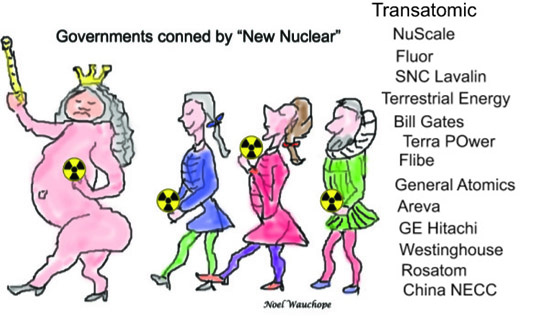
Policymakers endorse massive injection of state money for SMR development
Lim Chang-won Reporter(cwlim34@ajunews.com) | Lim Chang-won Reporter, email : cwlim34@ajunews.com© Aju Business Daily & www.ajunews.com
June 2, 2022, SEOUL — With the blessing of President Yoon Suk-yeol, South Korea’s nuclear power industry grabbed a new opportunity to rebound after policymakers endorsed a massive injection of state money for the development of a relatively safe small modular reactor called “i-SMR” that can be operated in an underground water tank and cooled naturally in case of emergency.
Yoon, who took office in early May, dumped his predecessor’s “nuclear-exit” policy of phasing out nuclear power plants and vowed to actively revitalize South Korea’s struggling nuclear power industry and develop next-generation reactors, insisting that nuclear power plants are an essential factor in restoring industrial competitiveness.
Up to Yoon’s expectations, the proposed development of i-SMRs has passed a preliminary feasibility study, according to the Ministry of Science and ICT. Some 399.2 billion won ($319.9 million) will be spent from 2023 to 2028 for the i-SMR project aimed at developing a reactor with a power generation capacity of less than 300 megawatts. ……..
Mainly through partnerships with American companies, South Korean companies have jumped into the SMR market, such as Hyundai E&C and Doosan Enerbility, a key player in South Korea’s nuclear industry that tied up with NuScale Power, an SMR company in the United States.
In May 2022, Samsung C&T strengthened its partnership with NuScale Power to cooperate in SMR projects in Romania and other East European countries. SK Group tied up with TerraPower for cooperation in the development and commercialization of SMR technology.
Separately, the government approved the proposed spending of 348.2 billion won from 2023 to 2030 to develop technologies for the dismantling of defunct reactors………
Hyundai E&C has tied up with its American partner, Holtec International, for the decommissioning of defunct nuclear power plants, starting with the Indian Point Energy Center in Buchanan in Westchester County. https://www.ajudaily.com/view/20220602110820983
Co-Founder of Green and Blacks Calls Out Small Modular Reactors: They Would Produce 30 Times As Much Nuclear Waste
While Nuclear Luvvies and Lords in Cumbria Big Up Small Modular Reactors being touted by Rolls Royce, science is stacked against them. IF science is genuinely allied to ethics and a living planet then Small Modular Reactors (or any nuclear fuelled plan ) should not even be on the table.
Co-Founder of Green and Blacks Calls Out Small Modular Reactors: They Would Produce 30 Times As Much Nuclear Waste — RADIATION FREE LAKELAND
ular Reactors
(or any nuclear fuelled plan) should not even be on the table. Craig Sams
the co-founder of Green and Blacks has written on social media: “This was
what I wrote 12 years ago. The New Scientist now reports that SMRs (Small
Modular Reactors) produce 30 times as much nuclear waste for the amount of
electricity produced and its more complex. I realise Boris upset everyone
by boozing when he should’ve been following his own rules, but condemning
future generations to even worse nuclear waste problems than we already
have is the real crime against humanity. No more nuclear. The French
nuclear power stations are corroding badly and nobody’s sure what to do.
The Irish Sea is still contaminating fish. We had to stop serving laver
bread in our restaurant Seed back in 1970 because of radioactive waste
contamination and things have only got worse since then. Wind, solar,
geothermal, oil,gas, anything but nuclear”
Radiation Free Lakeland 2nd June 2022
Small nuclear reactors produce ’35x more waste’ than big plants

Mini nuclear reactors that are supposed to usher in an era of cheaper and
safer nuclear power may generate up to 35 times more waste to produce the
same amount of power as a regular plant, according to a study.
A team of researchers at Stanford University and the University of British Columbia
came to this conclusion after studying a design from each of three small
modular reactor (SMR) manufacturers: NuScale Power, Toshiba, and
Terrestrial Energy.
The study, published this week, found that not only did
those particular SMR approaches generate five times the spent nuclear fuel
(SNF), 30 times the long-lived equivalent waste, and 35 times the low and
intermediate-level waste (LILW), their waste is also more reactive,
therefore more dangerous and consequently harder to dispose of.
The Register 2nd June 2022
https://www.theregister.com/2022/06/02/nuclear_reactors_waste/
Nuclear waste from small modular reactors

Lindsay M. Krall https://orcid.org/0000-0002-6962-7608 Lindsay.Krall@skb.se, Allison M. Macfarlane https://orcid.org/0000-0002-8359-9324, and Rodney C. Ewing https://orcid.org/0000-0001-9472-4031Authors Info & Affiliations
May 31, 2022 Small modular reactors (SMRs), proposed as the future of nuclear energy, have purported cost and safety advantages over existing gigawatt-scale light water reactors (LWRs). However, few studies have assessed the implications of SMRs for the back end of the nuclear fuel cycle. The low-, intermediate-, and high-level waste stream characterization presented here reveals that SMRs will produce more voluminous and chemically/physically reactive waste than LWRs, which will impact options for the management and disposal of this waste. Although the analysis focuses on only three of dozens of proposed SMR designs, the intrinsically higher neutron leakage associated with SMRs suggests that most designs are inferior to LWRs with respect to the generation, management, and final disposal of key radionuclides in nuclear waste.
Abstract
Small modular reactors (SMRs; i.e., nuclear reactors that produce <300 MWelec each) have garnered attention because of claims of inherent safety features and reduced cost. However, remarkably few studies have analyzed the management and disposal of their nuclear waste streams. Here, we compare three distinct SMR designs to an 1,100-MWelec pressurized water reactor in terms of the energy-equivalent volume, (radio-)chemistry, decay heat, and fissile isotope composition of (notional) high-, intermediate-, and low-level waste streams. Results reveal that water-, molten salt–, and sodium-cooled SMR designs will increase the volume of nuclear waste in need of management and disposal by factors of 2 to 30. The excess waste volume is attributed to the use of neutron reflectors and/or of chemically reactive fuels and coolants in SMR designs. That said, volume is not the most important evaluation metric; rather, geologic repository performance is driven by the decay heat power and the (radio-)chemistry of spent nuclear fuel, for which SMRs provide no benefit.
SMRs will not reduce the generation of geochemically mobile 129I, 99Tc, and 79Se fission products, which are important dose contributors for most repository designs. In addition, SMR spent fuel will contain relatively high concentrations of fissile nuclides, which will demand novel approaches to evaluating criticality during storage and disposal. Since waste stream properties are influenced by neutron leakage, a basic physical process that is enhanced in small reactor cores, SMRs will exacerbate the challenges of nuclear waste management and disposal.
In recent years, the number of vendors promoting small modular reactor (SMR) designs, each having an electric power capacity <300 MWelec, has multiplied dramatically (1, 2). Most recently constructed reactors have electric power capacities >1,000 MWelec and utilize water as a coolant. Approximately 30 of the 70 SMR designs listed in the International Atomic Energy Agency (IAEA) Advanced Reactors Information System are considered “advanced” reactors, which call for seldom-used, nonwater coolants (e.g., helium, liquid metal, or molten salt) (3). Developers promise that these technologies will reduce the financial, safety, security, and waste burdens associated with larger nuclear power plants that operate at the gigawatt scale (3). Here, we make a detailed assessment of the impact of SMRs on the management and disposal of nuclear waste relative to that generated by larger commercial reactors of traditional design.
Nuclear technology developers and advocates often employ simple metrics, such as mass or total radiotoxicity, to suggest that advanced reactors will generate “less” spent nuclear fuel (SNF) or high-level waste (HLW) than a gigawatt-scale pressurized water reactor (PWR), the prevalent type of commercial reactor today. For instance, Wigeland et al. (4) suggest that advanced reactors will reduce the mass and long-lived radioactivity of HLW by 94 and ∼80%, respectively. These bulk metrics, however, offer little insight into the resources that will be required to store, package, and dispose of HLW (5). Rather, the safety and the cost of managing a nuclear waste stream depend on its fissile, radiological, physical, and chemical properties (6). Reactor type, size, and fuel cycle each influence the properties of a nuclear waste stream, which in addition to HLW, can be in the form of low- and intermediate-level waste (LILW) (6–8). Although the costs and time line for SMR deployment are discussed in many reports, the impact that these fuel cycles will have on nuclear waste management and disposal is generally neglected (9–11).
Here, we estimate the amount and characterize the nature of SNF and LILW for three distinct SMR designs. From the specifications given in the NuScale integral pressurized water reactor (iPWR) certification application, we analyze basic principles of reactor physics relevant to estimating the volumes and composition of iPWR waste and then, apply a similar methodology to a back-end analysis of sodium- and molten salt–cooled SMRs. Through this bottom-up framework, we find that, compared with existing PWRs, SMRs will increase the volume and complexity of LILW and SNF. This increase of volume and chemical complexity will be an additional burden on waste storage, packaging, and geologic disposal. Also, SMRs offer no apparent benefit in the development of a safety case for a well-functioning geological repository.
1. SMR Neutronics and Design………………
2. Framework for Waste Comparison………….
3. SMR Waste Streams: Volumes and Characteristics………….
…………..
3.3.2. Corroded vessels from molten salt reactors.
Molten salt reactor vessel lifetimes will be limited by the corrosive, high-temperature, and radioactive in-core environment (23, 24). In particular, the chromium content of 316-type stainless steel that constitutes a PWR pressure vessel is susceptible to corrosion in halide salts (25). Nevertheless, some developers, such as ThorCon, plan to adopt this stainless steel rather than to qualify a more corrosion-resistant material for the reactor vessel (25).
Terrestrial Energy may construct their 400-MWth IMSR vessel from Hastelloy N, a nickel-based alloy that has not been code certified for commercial nuclear applications by the American Society of Mechanical Engineers (26, 27). Since this nickel-based alloy suffers from helium embrittlement (27), Terrestrial Energy envisions a 7-y lifetime for their reactor vessel (28). Molten salt reactor vessels will become contaminated by salt-insoluble fission products (28) and will also become neutron-activated through exposure to a thermal neutron flux greater than 1012 neutrons/cm2-s (29). Thus, it is unlikely that a commercially viable decontamination process will enable the recycling of their alloy constituents. Terrestrial Energy’s 400-MWth SMR might generate as much as 1.0 m3/GWth-y of steel or nickel alloy in need of management and disposal as long-lived LILW (Fig. 1, Table 1, and SI Appendix, Fig. S3 and section 2) [on original]…………
4. Management and Disposal of SMR Waste
The excess volume of SMR wastes will bear chemical and physical differences from PWR waste that will impact their management and final disposal. …………………….
5. Conclusions
This analysis of three distinct SMR designs shows that, relative to a gigawatt-scale PWR, these reactors will increase the energy-equivalent volumes of SNF, long-lived LILW, and short-lived LILW by factors of up to 5.5, 30, and 35, respectively. These findings stand in contrast to the waste reduction benefits that advocates have claimed for advanced nuclear technologies. More importantly, SMR waste streams will bear significant (radio-)chemical differences from those of existing reactors. Molten salt– and sodium-cooled SMRs will use highly corrosive and pyrophoric fuels and coolants that, following irradiation, will become highly radioactive. Relatively high concentrations of 239Pu and 235U in low–burnup SMR SNF will render recriticality a significant risk for these chemically unstable waste streams.
SMR waste streams that are susceptible to exothermic chemical reactions or nuclear criticality when in contact with water or other repository materials are unsuitable for direct geologic disposal. Hence, the large volumes of reactive SMR waste will need to be treated, conditioned, and appropriately packaged prior to geological disposal. These processes will introduce significant costs—and likely, radiation exposure and fissile material proliferation pathways—to the back end of the nuclear fuel cycle and entail no apparent benefit for long-term safety.
Although we have analyzed only three of the dozens of proposed SMR designs, these findings are driven by the basic physical reality that, relative to a larger reactor with a similar design and fuel cycle, neutron leakage will be enhanced in the SMR core. Therefore, most SMR designs entail a significant net disadvantage for nuclear waste disposal activities. Given that SMRs are incompatible with existing nuclear waste disposal technologies and concepts, future studies should address whether safe interim storage of reactive SMR waste streams is credible in the context of a continued delay in the development of a geologic repository in the United States.
Supporting Information
Appendix 01 (PDF)
Note
This article is a PNAS Direct Submission. E.J.S. is a guest editor invited by the Editorial Board.
References…………………………….. https://www.pnas.org/doi/10.1073/pnas.2111833119
Don’t hold your breath waiting for NuScam’s small nuclear reactors to be profitable

As for valuation, the company is being valued on significant growth occurring in the potentially far distant future, so prospective investors would essentially be betting on the company’s ability to sell operating units at scale and profitably…and to do so in the coming near-to-medium term rather than the 2030s or beyond.
Spring Valley Completes NuScale Merger, But Growth Timing Is Unknown, Donovan JonesMarketplace, Author of IPO Edge. May 18, 2022 A Quick Take On NuScale.
Spring Valley Acquisition Corp. (NYSE:SMR) has announced the closing of its initial business combination with NuScale Power for an estimated enterprise value of approximately $1.9 billion.
NuScale has developed proprietary nuclear small modular reactors for utilities and industrial customers.
It is likely that NuScale will require significant time to generate material revenue growth and even longer for profits
……………. Business Combination Terms
The Spring Valley Acquisition SPAC originally raised $230 million in gross proceeds in its IPO in late 2020, selling a total of 23 million units including underwriter allotments.
The previously announced transaction included a PIPE (Private Investment in Public Equity) which rose to $235 million from Samsung C&T, DS Private Equity, Segra Capital Management and Spring Valley’s sponsor Pearl Energy.
The deal will provide NuScale with gross proceeds of up to $413 million to pursue its commercialization initiatives and growth plans.
Major NuScale investor Fluor Corporation will retain approximately 60% ownership of NuScale, with other legacy shareholders retaining approximately 20.4%, the Spring Valley SPAC public shareholders having 6.5%, the Spring Valley Acquisition Sponsor retaining 2.4% and PIPE investors purchasing 10.7% of the outstanding NuScale stock.
………………. As for valuation, the company is being valued on significant growth occurring in the potentially far distant future, so prospective investors would essentially be betting on the company’s ability to sell operating units at scale and profitably…and to do so in the coming near-to-medium term rather than the 2030s or beyond.
…………….. In any event, it is likely that NuScale will require significant time to generate material revenue growth and even longer for profits, so I’m on Hold over the near term for SMR. https://seekingalpha.com/article/4512948-spring-valley-completes-nuscale-merger-but-growth-timing-is-unknown
Canada’s Green Party speaks out persuasively against small nuclear reactors

Sask. government criticized over exploration of SMR technology, David Prisciak, CTV News Regina Digital Content Producer, May 10, 2022 Saskatchewan Green Party Leader Naomi Hunter accused the government of “kicking the climate crisis down the road,” by exploring small modular reactor (SMR) technology in a press conference Monday.
Hunter was present for a Monday morning event in front of the legislature, where she called on the provincial government to scrap its bid to explore SMR technology.
“We do not have the time for fairy tales that take us far into the future,” she said. “We don’t have 10 years to come up with a solution. (Premier) Scott Moe and the Sask. Party, they’re just kicking the climate crisis down the road like they always do.”
Hunter argued that the government’s move towards nuclear energy is not aiding the fight against climate change.
They claim that this is because they suddenly care about the climate crisis and are looking for solutions,” she said. “If that was the case, we would be installing immediate solutions of green energy: solar, wind, geothermal.”
“This province has the best solar gain in all of Canada and we have some of the best opportunities for wind energy.”…………………
Amita Kuttner, the interim leader of the Green Party of Canada, also attended the event in front of the legislature, and criticized the proposed move to SMR technology as the wrong approach.
What you are trading it for is again corporate power,” they explained. “Which is not solving the underlying causes of the climate emergency.”
Saskatchewan is currently in a partnership with British Columbia, Alberta and Ontario to collaborate on the advancement of SMR technology. …….. https://regina.ctvnews.ca/sask-government-criticized-over-exploration-of-smr-technology-1.5895830
Diseconomics and other factors mean that small nuclear reactors are duds

Such awkward realities won’t stop determined lobbyists and legislators from showering tax funds on SMR developers, seen as the industry’s last hope of revival (at least for now). With little private capital at stake, taxpayers bearing most of the cost, and customers bearing the cost-overrun and performance risks190 (as they did in the similarly structured WPPSS nuclear fiasco four decades ago), some SMRs may get built. I expect they’ll fail for the same fundamental reasons as their predecessors, then be quickly forgotten as marketers substitute the next shiny object.
A lifetime of such disappointments has not yet induced sobriety. As long as the industry can fund potent lobbying that leverages orders of magnitude more federal funding, the party will carry on.
US nuclear power: Status, prospects, and climate implications, Science Direct, Amory B.Lovins, Stanford University, USA The Electricity Journal, Volume 35, Issue 4, May 2022,
”…………………………………………………….. Advanced” or “Small Modular Reactors,” SMRs174, seek to revive and improve concepts generally tried and rejected decades ago due to economic175, technical176, safety177, or proliferation178 flaws179. BNEF estimates that early SMRs might generate at ~10× current solar prices, falling by severalfold after tens of GW were built, but not by enough to come anywhere near competing. Despite strong Federal support, proposed projects are challenged to find enough customers180 and markets181. Developers and nations are also pursuing >50 diverse designs—a repeatedly reproven failure condition.
SMRs’ basic economics are worse than meets the eye, because their goalposts keep receding. Reactors are built big because, for physics reasons, they don’t scale down well. Small reactors, say their more thoughtful advocates, will produce electricity initially about twice as costly as today’s big ones, which in turn, as noted earlier, are ~3–13× costlier per MWh than modern renewables (let alone efficiency). But those renewables will get another ~2× cheaper (say BNEF and NREL) by the time SMRs could be tested and start to scale toward the mass production that’s supposed to cut their costs. High volume cannot possibly cut SMRs’ costs by 2 × (3 to 13) × 2-fold, or ~12× to ~52×.
Indeed, SMRs couldn’t compete even if the steam they produce to turn the turbine were free. Why not? In big light-water reactors, ~78–87% of the prohibitive capital cost buys non-nuclear components like the turbine, generator, heat sink, switchyard, and controls. Thus even if the nuclear island were free and a shared non-nuclear remainder were still at GW scale so it didn’t cost more per unit182, the whole SMR complex would still be manyfold out of the money.
SMRs are also too late. Despite streamlined (if not premature) licensing and many billions in Federal funding commitments, the first SMR module delivery isn’t expected until 2029. That’s in the same smaller-LWR project that just lost over half its subscribed sales as customers considered cost, timing, and risk183, and may lose the rest if they read a soberly scathing 2022 critique184. That analysis found that the vendor claims very low financial and performance risks but opaquely imposes them all on the customers. The first “advanced” reactors (a sodium-cooled fast reactor and a high-temperature gas reactor), ambitiously skipping over prototypes, are hoped by some advocates to start up in 2027–28. DOE in 2017 rosily assessed that if such initial projects succeeded, a first commercial demonstrator would then take another 6–8 years’ construction and 5 years’ operation before commercial orders, implying commercial generation at earliest in the late 2030s, more plausibly in the 2040s. But the US Administration plans to decarbonize the grid with renewables by 2035, preëmpting SMRs’ climate mission185.
An additional challenge would be siting new SMRs or clusters of them (which cuts cost but means that a problem with one SMR can affect, or block access to, others at the same site, as was predicted and experienced at Fukushima Daiichi). It looks harder to secure numerous sites and offtake agreements than a few. It would take roughly 50 SMR orders to justify building a factory to start capturing economies of production scale, and hundreds or thousands of SMRs to start seeing meaningful, though inadequate, cost reductions. A study assuming high electricity demand and cheap SMRs estimated a US need for just 350 SMRs by 2050186; some advocates expect far more. It’s hard to imagine how dozens of States and hundreds of localities could quickly approve those sites, especially given internal NRC dissension on basic SMR safety187 and the obvious financial risks188.
No credible path could deploy enough SMR capacity to replace inevitably retiring reactors timely and produce significant additional output by then—but efficiency and renewables could readily do that and more, based on their deployment rates and price behaviors observed in the US and global marketplace. For example189, through 2020, CAISO (wholesale power manager for a seventh of the US economy) reported 120 GW of renewables and storage in its interconnection queue, plus 158 GW in the non-ISO West; just solar-paired-with-storage projects in CAISO rose to over 71 GW by 5 Jan 2022, with the paired solar totaling nearly 64 GW—all three orders of magnitude more than the first 77-MW NuScale module hoped to enter service many years later.
Such awkward realities won’t stop determined lobbyists and legislators from showering tax funds on SMR developers, seen as the industry’s last hope of revival (at least for now). With little private capital at stake, taxpayers bearing most of the cost, and customers bearing the cost-overrun and performance risks190 (as they did in the similarly structured WPPSS nuclear fiasco four decades ago), some SMRs may get built. I expect they’ll fail for the same fundamental reasons as their predecessors, then be quickly forgotten as marketers substitute the next shiny object.
A lifetime of such disappointments has not yet induced sobriety. As long as the industry can fund potent lobbying that leverages orders of magnitude more federal funding, the party will carry on. But where does its seemingly perpetual disappointment leave the Earth’s imperiled climate?…………………………. https://www.sciencedirect.com/science/article/pii/S1040619022000483
Safety concerns about NuScam’s much touted ”small nuclear reactor”
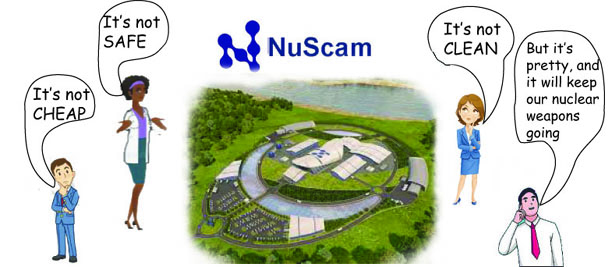
U.S. nuclear power agency seeks staff documentation of NuScale’s quake protection, By Timothy Gardner, WASHINGTON, April 27 (Reuters) – An official with the U.S. nuclear power regulator has ordered staff to supply documents that could lead to a review of a 2020 approval of a new type of nuclear power reactor after an engineer raised concerns about its ability to withstand earthquakes, documents showed on Wednesday. Reporting by Timothy Gardner; Editing by Chris Reese, Kenneth Maxwell and Lisa Shumaker .
Dan Dorman, the executive director for operations at the Nuclear Regulatory Commission (NRC), reviewed a complaint by John Ma, an engineer at the agency, about its approval of the design of NuScale’s nuclear power plant.
NuScale, majority owned by construction and engineering company Fluor Corp (FLR.N), which got approval for the design of a 50-megwatt small modular reactor (SMR), is hoping to build the Carbon Free Power Project with multiple reactors at the Idaho National Laboratory, with the first coming online in 2029 and full plant operation in 2030.
Some see SMRs such as NuScale’s as a way to cut emissions from fossil fuels and to potentially reduce Europe’s dependency on Russian oil and gas. NuScale also wants to build the plants in Poland and Kazakhstan.
In an internal document Ma wrote to NRC officials soon after the 2020 approval, he alleged the design of the building intended to enclose the reactor units and its spent fuel pool did not provide assurance it could withstand the largest earthquake considered without collapsing and may be vulnerable to smaller earthquakes.
“Collapse of the reactor building … could potentially cause an early and large release of radioactive materials into the atmosphere and ground, which could kill people,” Ma wrote.
In February, Dorman wrote to Ma that he concluded the NRC’s basis for accepting NuScale’s measure of strength for the reactor’s building design “was not sufficiently documented,” documents posted on the NRC website on Wednesday showed.
Dorman ordered the agency’s Office of Nuclear Reactor Regulation to document its evaluation of NuScale’s “stress averaging approach” and, if necessary, to update the application and evaluate whether there are “any impacts” to the 2020 design approval.
It was uncertain whether the additional actions would affect the project’s timeline which has been delayed several times………….
A science advocacy group said the concerns Ma raised were troubling.
“NuScale’s business case is based on its assertion that it is a safer nuclear reactor. Now it’s time to prove it by addressing these safety concerns,” said Edwin Lyman, director of nuclear power safety at the Union of Concerned Scientists. https://www.reuters.com/world/us/us-nuclear-power-regulator-seeks-documents-nuscales-protection-against-quakes-2022-04-27/
NuScale: Not new, not needed — Beyond Nuclear International.

Costs, delays and competition will likely kill SMR
NuScale: Not new, not needed — Beyond Nuclear International Risks of rising costs, likely delays, and increasing competition cast doubt on long- running development effort
By David Schlissel and Dennis Wamsted
In a new analysis, the Institute for Energy Economics and Financial Analysis looked at NuScale’s proposed Small Modular Reactor, concluding that its costs will be far higher than NuScale predicts and that the reactor is fundamentally not needed. What follows are the Executive Summary and Conclusions sections of the report. The full report can be read and downloaded here.
Executive Summary

The second set of problems with the NuScale proposal are contractual. As the power sale agreement is currently structured, anyone who signs on to buy power from NuScale’s SMR will have to pay the actual costs and expenses of the project, not just the $58 per MWh estimated target price now being promoted by NuScale and UAMPS. And participants would have to continue to do so for decades, even if the price of the electricity from the SMR is much more expensive than NuScale and UAMPS now claim or even if participants don’t receive any power from the project for a significant part of its forecast operating life. These are risks that far outweigh any potential project benefits.
Too late, too expensive, too risky and too uncertain. That, in a nutshell, describes NuScale’s planned small modular reactor (SMR) project, which has been in development since 2000 and will not begin commercial operations before 2029, if ever.
As originally sketched out, the SMR was designed to include 12 independent power modules, using common control, cooling and other equipment in a bid to lower costs. But that sketch clearly was only done in pencil, as it has changed repeatedly during the development process, with uncertain implications for the units’ cost, performance and reliability.
For example, the NuScale power modules were initially based on a design capable of generating 35 megawatts (MW), which grew first to 40MW and then to 45MW. When the company submitted its design application to the Nuclear Regulatory Commission in 2016, the modules’ size was listed at 50MW.
Subsequent revisions have pushed the output to 60MW, before settling at the current 77MW. Similarly, the 12-unit grouping has recently been amended, with the company now saying it will develop a 6-module plant with 462MW of power. NuScale projects that the first module, once forecast for 2016, will come online in 2029 with all six modules online by 2030.
While these basic parameters have changed, the company has insisted its costs are firm, and that the project will be economic.
Based on the track record so far and past trends in nuclear power development, this is highly unlikely. The power from the project will almost certainly cost more than NuScale estimates, making its already tenuous economic claims even less credible.
Worse, at least for NuScale, the electricity system is changing rapidly. Significant amounts of new wind, solar and energy storage have been added to the grid in the past decade, and massive amounts of additional renewable capacity and storage will come online by 2030. This new capacity is going to put significant downward pressure on prices, undercutting the need for expensive round-the-clock power. In addition, new techniques for operating these renewable and storage resources, coupled with energy efficiency, load management and broad efforts to better integrate the western grid, seriously undermine NuScale’s claims that its untested reactor technology will be needed for reliability reasons.
This first-of-a-kind reactor poses serious financial risks for members of the Utah Associated Municipal Power System (UAMPS), currently the lead buyer, and other municipalities and utilities that sign up for a share of the project’s power.
NuScale is marketing the project with unlikely predictions regarding its final power costs, the amount of time it will take to construct and its performance after entering commercial services:
- There is significant likelihood that the project will take far longer to build than currently estimated;
- There is significant likelihood that its final cost of power will be much higher than the current $58 per megawatt-hour claim;
- There is significant likelihood that the reactor will not operate with a 95% capacity factor when it enters commercial service.
As currently structured, those project risks will be borne by the buying entities (participants), not NuScale or Fluor, its lead investor. In other words, potential participants need to understand that they would be responsible for footing the bill for construction delays and cost overruns, as well as being bound by the terms of an expensive, decades-long power purchase contract.
These compelling risks, coupled with the availability of cheaper and readily available renewable and storage resources, further weaken the rationale for the NuScale SMR.
Conclusions
There are serious problems with the proposed NuScale SMR project.
The first set of problems revolve around the company’s optimistic assumptions regarding its untested, first-of-a-kind reactor. NuScale claims it will be able to accomplish a performance trifecta that has never been accomplished:
- Completing construction at the new facility in 36 months or less;
- Keeping construction costs in check and thereby meeting a target power
price of less than $60/MWh; and - Operating the plant with a 95% capacity factor from day one.
As this report has demonstrated, these are unduly optimistic assumptions. Costs and construction times for all recent nuclear projects have vastly exceeded original estimates and there is no reason to assume the NuScale project will be any different. For example, costs at Vogtle, the project most like NuScale in terms of modular development, now are 140% higher than the original forecast and construction is years late with significant uncertainty about a final completion date.
The second set of problems with the NuScale proposal are contractual. As the power sale agreement is currently structured, anyone who signs on to buy power from NuScale’s SMR will have to pay the actual costs and expenses of the project, not just the $58 per MWh estimated target price now being promoted by NuScale and UAMPS. And participants would have to continue to do so for decades, even if the price of the electricity from the SMR is much more expensive than NuScale and UAMPS now claim or even if participants don’t receive any power from the project for a significant part of its forecast operating life. These are risks that far outweigh any potential project benefits.
The second set of problems with the NuScale proposal are contractual. As the power sale agreement is currently structured, anyone who signs on to buy power from NuScale’s SMR will have to pay the actual costs and expenses of the project, not just the $58 per MWh estimated target price now being promoted by NuScale and UAMPS. And participants would have to continue to do so for decades, even if the price of the electricity from the SMR is much more expensive than NuScale and UAMPS now claim or even if participants don’t receive any power from the project for a significant part of its forecast operating life. These are risks that far outweigh any potential project benefits.
The Institute for Energy Economics and Financial Analysis (IEEFA) examines issues related to energy markets, trends and policies. The Institute’s mission is to accelerate the transition to a diverse, sustainable and profitable energy economy. www.ieefa.org. Director of Resource Planning Analysis David Schlissel is a long-time consultant, expert witness, and attorney on engineering and economic issues related to energy. He has testified in more than 100 court proceedings or cases before regulatory bodies. Analyst/Editor Dennis Wamsted has covered energy and environmental policy and technology issues for 30 years. He is the former editor of The Energy Daily, a Washington, D.C.-based newsletter.
Elon Musk joins the frenzy for small nuclear reactors in Wales, despite local opposition to nuclear development.

A company backed by investor in Elon Musk’s businesses is the latest to
say that it wants to build a nuclear power plant in Wales. Last Energy is
now the third company that wants to build nuclear power plants in Wales,
having settled on a not yet named site within the country.
They would join a Rolls-Royce led consortium who have mooted Wylfa on Anglesey and
Trawsfynydd in Gwynedd as the locations of new modular reactors. US nuclear
company Westinghouse have also put together a consortium with construction
group Bechtel to revive plans for two nuclear reactors at Wylfa since
Hitachi, a Japanese conglomerate, abandoned their own plans in 2019.
According to the Sunday Telegraph, Last Energy’s plans are very similar
to those of Rolls-Royce. They want to build a first “mini-nuclear”
power plant in Wales by 2025, as part of a plan to spend £1.4bn on 10
reactors by the end of the decade. Elon Musk, who is the world’s richest
person with assets worth an estimated £220bn, said on Twitter last month
that he was keen on investing in nuclear energy.
More nuclear power at Wylfa is not without its critics with campaign groups CADNO and PAWB among
the local opposition. Writing for Nation.Cymru, Dylan Morgan of PAWB
(People Against Wylfa B) warned that “nuclear power is a dirty, outdated,
dangerous, vastly expensive technology which threatens both human and
environmental health”. “It would also steal much-needed resources from
renewable technologies which are cheaper, much quicker to build and more
effective to combat the effects of climate change.”
Plaid Cymru leader Adam Price, whose party currently controls Anglesey Council, also spoke out
against nuclear power last week, calling it “the wrong answer” to
Wales’ energy needs. “We do not support nuclear power. It’s the wrong
answer. Renewables absolutely is the way to go. And I fear that, you know,
nuclear power, very expensive and unnecessary distraction,” he said.
NuScale’s small modular nuclear reactor – ”too late, too expensive, too risky and too uncertain” – Institute for Energy Economics and Financial Analysis

A small modular reactor (SMR) that NuScale has been developing since the turn of the century is “too late, too expensive, too risky and too uncertain,” according to an analysis of the project by the Institute for Energy Economics and Financial Analysis.
The first-of-its-kind SMR is a serious financial threat to the member communities of the Utah Associated
Municipal Power System that have signed up for a share of its power and to any other communities and utilities thinking about doing so. NuScale has optimistically targeted the cost of power from the new plant at $58 per megawatt-hour (MWh), although some estimates predict costs for the power from new SMRs could reach $200/MWh.
IEEFA 17th Feb 2022
Getting bigger but not safer or cheaper – the myth of Rolls Royce and its very big non-modular reactor

Rolls Royce are now starting a ‘Generic Design Assessment’ (GDA) process with the ONR which will take around 5 years. After then they will be asking the UK Government for a blank cheque for the project.
https://100percentrenewableuk.org/getting-bigger-but-not-safer-or-cheaper-the-myth-of-rolls-royce-and-its-very-big-non-modular-reactor By David Toke, 30 Mar 22, Rolls Royce’s so-called small modular reactor (SMR) is getting bigger, but is likely to have fewer special safety features compared to EDF’s increasingly pricey design for Hinkley C.
In 2017 Rolls Royce said that its small modular reactor would be between 220 and 440 MW, but the latest design is bigger, at 470 MW. It is strange to call this small. Reactors in service at the moment (the so-called AGR reactors) were around the 600 MW size for each unit and, strange as it might seem, most of the first generation of so-called ‘Magnox’ nuclear reactors built in the UK were actually smaller than 470 MW. They were not called ‘small’. So why is Rolls Royce calling this a SMR? There’s no reason for this other than public relations.
Rolls Royce claim that the parts will be mainly built in factories. Well, of course they will, that’s always the case with nuclear power plant. The difference with building a relatively smaller plant of course is that you get less of the economies of scale in doing this. That is why nuclear power plant have got bigger.

So the fact that the Rolls Royce unit will be about a third the size of the EPR is likely to make them cost more. But there is one way that Rolls Royce will be able to economise compared to the European Pressurised Reactor (EPR) being built at Hinkley C, and that is because I have seen no sign that Rolls Royce will include some special safety features that have been included in the EPR.
The best known of these safety features are a) a ‘double containment’ feature that is designed to stop material from the inside getting out (as well as another external shell to shield from aircraft) and b) a ‘core catcher’ to stop a melting core eating its way into the ground and potentially contaminating water courses. I am assuming Rolls Royce will not be including either of these features, although it will have to satisfy the Office for Nuclear Regulation (ONR) that it has other ways of stopping radioactive releases from accidents.
Rolls Royce are now starting a ‘Generic Design Assessment’ (GDA) process with the ONR which will take around 5 years. After then they will be asking the UK Government for a blank cheque for a project.
Of course there is another factor and that is that EDF have some experience (admittedly not very successful of late) of building nuclear power plant. Rolls Royce do not have experience of building large nuclear power plant (which is what they are really hoping to do). Producing small (and, it must be said extremely expensive) genuinely small reactors for nuclear submarines is not the same thing at all! So Rolls Royce are likely not to have the skills to build large nuclear power plant. That is a bad sign!
The so-called SMRs proferred by Rolls Royce will just be the latest in a long line of very expensive, very lately delivered nuclear power stations in the UK. It is unlikely to be any cheaper than the reactor that EDF is building at Hinkley C (becoming more expensive as time goes on). But it will have fewer safety features.
Robert (Bob) Hoggar comments: Small Mod Reactors scattered about Britain will also have lots of nuclear waste scattered about Britain which will need careful looking after and that is guaranteed to be an additional rusk to the nation.
Ottawa’s Nuclear Funding Delays Climate Action, Ignores Indigenous Objections, Opponents Warn
Ottawa’s Nuclear Funding Delays Climate Action, Ignores Indigenous Objections, Opponents Warn The Energy Mix March 20, 2022
The federal government is delaying climate action by subsidizing small, modular nuclear reactor (SMR) development, over the objections of the remote, Indigenous communities the technology is supposed to serve as an alternative to diesel generators, opponents warned last week.
“There is no guarantee SMRs will ever produce energy in a safe and reliable manner in Canada,” the groups said in a release, after Innovation Minister François-Philippe Champagne announced a C$27.2-million grant for Westinghouse Electric’s $57-million bid to move its e-Vinci reactor toward licencing. They said systems of the type Westinghouse is developing “are not the energy answer for remote communities”, since they “do not compete when compared with other alternatives.”
In a study conducted in 2020, “the cost of electricity from SMRs was found to be much higher than the cost of wind or solar, or even of the diesel supply currently used in the majority of these communities,” the release added.
“Canadians want affordable energy that does not pollute the environment,” said Susan O’Donnell, spokesperson for the Coalition for Responsible Energy Development in New Brunswick. “Why would we invest in unproven technologies that, if they ever work, will cost two to five times more than building proven renewables?”
“The nuclear industry is promoting a nuclear fantasy to attract political support while purging past failures—like cost overruns and project delays—from public debate,” said Kerrie Blaise, northern services legal counsel at the Canadian Environmental Law Association. “Before Canada invests any public dollars in this yet-to-be-developed technology, they must fully evaluate the costs of nuclear spending and liabilities associated with the construction, oversight, and waste of this novel technology.”
“Studies have shown that electricity from small modular reactors will be more expensive than electricity from large nuclear power plants, which are themselves not competitive in today’s electricity markets,” said M. V. Ramana, a professor at the University of British Columbia School of Public Policy and Global Affairs, one of the co-authors of the 2020 study. “There is no viable market for small modular reactors, and even building factories to manufacture these reactors would not be a sound financial investment……………….
Last week’s government release added that SMR development will “help communities that rely on heavy-polluting diesel fuel to transition to a cleaner source of energy.” But the opposing groups say many of those remote settings are Indigenous communities, and SMR development isn’t the help they’re looking for. A December, 2018 resolution by the Assembly of First Nation Chiefs asked the industry to stop pursuing SMR development and the government to stop funding it, and “other Indigenous communities, including the Chiefs of Ontario, have passed resolutions opposing funding and deployment of SMRs”. https://www.theenergymix.com/2022/03/20/ottawas-nuclear-funding-delays-climate-action-ignores-indigenous-objections-opponents-warn%ef%bf%bc/
British public in the dark about what ”Modular” nuclear reactors really means (hint -they’re like Lego pieces)
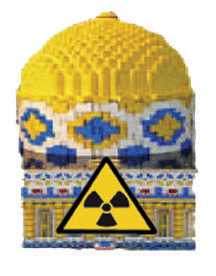
What does “modular” mean here? I haven’t the faintest. Isn’t it to
do with university courses? I’ve been quizzing friends and so far only
two even took a stab: one thought it might mean being able to have them
together, or not, or something. The other thought it might mean
“portable”. My guess is that the British population shares my
ignorance, but thinks you don’t say “small reactors” without
inserting “modular”. Obviously, we’ll have to ramp these modularities
up. On multiple occasions. Onwards, then, to my next small, modular item.
Times 23rd March 2022
https://www.thetimes.co.uk/article/this-craze-for-modular-must-be-a-fission-thing-s35qx0ktq
1 This Month



26 September – International Day for the Total Elimination of Nuclear Weapons


PLEASE OPPOSE HR 8255 AND S.3639 – bills would accelerate satellite deployment, with no environmental review or safeguards – https://ncstd5li.quorum.us/campaign/169331/
To see nuclear-related stories in greater depth and intensity – go to https://nuclearinformation.wordpress.com
-
Archives
- September 2026 (219)
- August 2026 (330)
- July 2026 (355)
- June 2026 (287)
- May 2026 (306)
- April 2026 (356)
- March 2026 (251)
- February 2026 (267)
- January 2026 (308)
- December 2025 (358)
- November 2025 (359)
- October 2025 (375)
-
Categories
- 1
- 1 NUCLEAR ISSUES
- business and costs
- climate change
- culture and arts
- ENERGY
- environment
- health
- history
- indigenous issues
- Legal
- marketing of nuclear
- media
- opposition to nuclear
- PERSONAL STORIES
- politics
- politics international
- Religion and ethics
- safety
- secrets,lies and civil liberties
- spinbuster
- technology
- Uranium
- wastes
- weapons and war
- Women
- 2 WORLD
- ACTION
- AFRICA
- Atrocities
- AUSTRALIA
- Christina's notes
- Christina's themes
- culture and arts
- Events
- Fuk 2022
- Fuk 2023
- Fukushima 2017
- Fukushima 2018
- fukushima 2019
- Fukushima 2020
- Fukushima 2021
- general
- global warming
- Humour (God we need it)
- Nuclear
- RARE EARTHS
- Reference
- resources – print
- Resources -audiovicual
- Weekly Newsletter
- World
- World Nuclear
- YouTube
-
RSS
Entries RSS
Comments RSS
 nuclear-news