Great British Nuclear competition winners announcement still ‘around Spending Review’

13 Feb, 2025 By Tom Pashby
Great British Nuclear (GBN) has confirmed that the winners of its small modular reactor (SMR) competition will still be announced around the time of the Spending Review on 11 June 2025, despite reports that it would take place on 26 March at the Spring Statement.
GE-Hitachi, Holtec Britain, Rolls-Royce SMR and Westinghouse Electric Co. were announced as the final four companies in contention following the conclusion of the initial tender
stage at the end of September. NuScale dropped out at this point, while EDF
exited the competition in July when it failed to submit documents before
the deadline.
GBN completed two rounds of assessment with the four
shortlisted companies and is now entering negotiations ahead of the
submission of final tenders. The nuclear body said in November 2024 it had
started “detailed negotiations” with the four small modular reactor
(SMR) developers remaining in its competition for deployment in the UK. GBN
debunks financial news site report. Financial news site The Motley Fool
reported on 11 February that the announcement was “expected to be
announced by Great British Nuclear on or around the time of the Spring
Budget Statement, scheduled for 26 March”.
New Civil Engineer 13th Feb 2025, https://www.newcivilengineer.com/latest/great-british-nuclear-competition-winners-announcement-still-around-spending-review-13-02-2025/
Sam Altman’s Fusion Power Startup Is Eyeing Trump’s $500 Billion AIPlay.

Few energy startups are better positioned to cash in on Stargate than
Helion, which has raised major funding from the AI initiative’s leaders,
and signed a contract with another. Sam Altman announced the $500 billion
Stargate initiative at the White House last month, with a plan to build the
world’s largest AI infrastructure project.
Stargate, the $500 billion effort to secure American AI supremacy for perpetuity backed by OpenAI’s Sam Altman and SoftBank founder Masa Son, among others, will require a
gargantuan amount of energy to power it. As it happens, Altman and Son are
backing a startup that says it can provide it. It’s a fusion energy
company called Helion that recently raised $425 million in a funding round
backed by SoftBank. Prior to that it banked $375 million from Altman, who
serves as Helion’s chairman. It was the single largest investment check
the AI billionaire has written so far. And Microsoft, a Stargate partner,
was the first company to contract with Helion for a fusion power plant by
2028 — a timeline that has some physicists skeptical.
Forbes 5th Feb 2025 https://www.forbes.com/sites/davidjeans/2025/02/05/stargate-sam-altman-fusion-helion/
Google deletes policy against using AI for weapons or surveillance

The pledge had been in place since 2018.
Mashable By Amanda Yeo on February 5, 2025
Google has quietly deleted its pledge not to use AI for weapons or surveillance, a promise that had been in place since 2018.
First spotted by Bloomberg, Google has updated its AI Principles to remove an entire section on artificial intelligence applications it pledged not to pursue. Significantly, Google’s policy had previously stated that it would not design nor deploy AI technology for use in weapons, or in surveillance technology which violates “internationally accepted norms.”
Now it seems that such use cases might not be entirely off the table.
“There’s a global competition taking place for AI leadership within an increasingly complex geopolitical landscape,” read Google’s blog post on Tuesday. “We believe democracies should lead in AI development, guided by core values like freedom, equality, and respect for human rights. And we believe that companies, governments, and organizations sharing these values should work together to create AI that protects people, promotes global growth, and supports national security.”
While Google’s post did concern its AI Principles update, it did not explicitly mention the deletion of its prohibition on AI weapons or surveillance. ……………………..
Google first published its AI Principles in 2018, following significant employee protests against its work with the U.S. Department of Defense. (The company had already infamously removed “don’t be evil” from its Code of Conduct that same year.) Project Maven aimed to use AI to improve weapon targeting systems, interpreting video information to increase military drones’ accuracy.
In an open letter that April, thousands of employees expressed a belief that “Google should not be in the business of war,” and requested that the company “draft, publicize and enforce a clear policy stating that neither Google nor its contractors will ever build warfare technology.”
The company’s AI Principles were the result, with Google ultimately not renewing its contract with the Pentagon in 2019. However, it looks as though the tech giant’s attitude toward AI weapons technology may now be changing.
Google’s new attitude toward AI weapons could be an effort to keep up with competitors. Last January, OpenAI amended its own policy to remove a ban on “activity that has high risk of physical harm,” including “weapons development” and “military and warfare.” In a statement to Mashable at the time, an OpenAI spokesperson clarified that this change was to provide clarity concerning “national security use cases.”
“It was not clear whether these beneficial use cases would have been allowed under ‘military’ in our previous policies,” said the spokesperson……………
Now Google’s revised policy has consolidated this list to just three principles, merely stating that its approach to AI is grounded in “bold innovation,” “responsible development and deployment,” and “collaborative process, together.” The company does specify that this includes adhering to “widely accepted principles of international law and human rights.” Still, any mention of weapons or surveillance is now conspicuously absent. https://mashable.com/article/google-ai-weapons-surveillance-policy
OpenAI Strikes Deal With US Government to Use Its AI for Nuclear Weapon Security
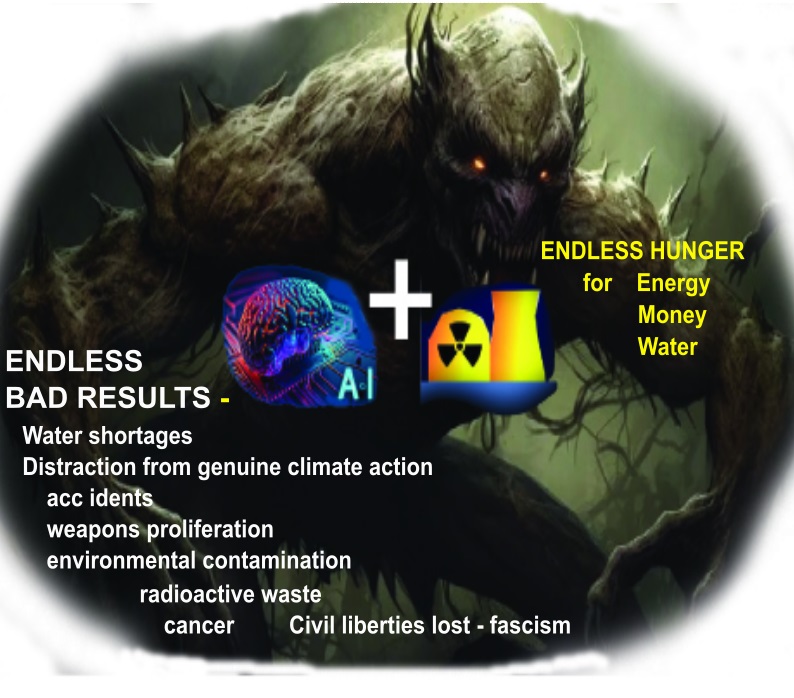
31 Jan24, https://futurism.com/openai-signs-deal-us-government-nuclear-weapon-security
Wait, isn’t this the plot to the “Terminator” movies?
“There was a nuclear war,” a character explains. “Defense network computers. New… powerful… hooked into everything, trusted to run it all. They say it got smart, a new order of intelligence. Then it saw all people as a threat, not just the ones on the other side. Decided our fate in a microsecond: extermination.”
It seems like either the execs at OpenAI have never seen it or they’re working overtime to make that premise a reality.
Don’t believe us? OpenAI has announced that the US National Laboratories will use its deeply flawed AI models to help with a “comprehensive program in nuclear security.”
As CNBC reports, up to 15,000 scientists working at the institutions will get access to OpenAI’s latest o1 series of AI models — the ones that Chinese startup DeepSeek embarrassed on the world stage earlier this month.
According to OpenAI CEO Sam Altman, who announced the partnership at an event in Washington, DC, the tech will be “focused on reducing the risk of nuclear war and securing nuclear materials and weapons worldwide,” as quoted by CNBC.
If any alarm bells are ringing by this point, you’re not alone. We’ve seen plenty of instances of OpenAI’s AI models leaking sensitive user data and hallucinating false claims with abandon.
OpenAI’s been making a huge push into government. Earlier this week, the Sam Altman-led company released ChatGPT Gov, a platform specifically designed for US government use that focuses on security.
But whether the company can deliver on some sky-high expectations — while also ensuring that its frequently lying AI chatbots won’t leak the nuclear codes or trigger the next nuclear war — is anyone’s guess.
The news comes after the Wall Street Journal reported that OpenAI is in early talks for a new round of funding that would value it at a gargantuan $340 billion, double its previous valuation last year.
Altman has also fully embraced president Donald Trump, gifting him $1 million for his inauguration and claiming that he had “really changed my perspective on him” after trashing him in years past.
OpenAI also signed onto Trump’s $500 billion AI infrastructure deal, dubbed Stargate, with the plan of contributing tens of billions of dollars within the next year.
Whether the company’s o1 reasoning models will prove useful in any meaningful way to the researchers at the US National Laboratories remains to be seen.
But given the widespread dismantling of regulations under the Trump administration, it also feels like an unbelievably precarious moment to be handing over any amount of control over nuclear weapons to a busted AI system.
AI’s Energy Demands Threaten a Nuclear Waste Nightmare
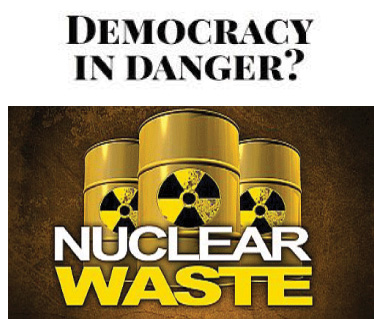
Reviving nuclear power plants to power AI threatens an avalanche of nuclear waste
By Michael Riordan , https://www.scientificamerican.com/article/ais-energy-demands-threaten-a-nuclear-waste-nightmare/ January 31, 2025
Long in decline, the U.S. nuclear industry is hoping for resurrection at two sites of its greatest failures: Three Mile Island in Pennsylvania and the Hanford Site in Washington state. Nuclear power, the industry claims, will help satisfy the surging power demands from data centers and the growing AI economy. But such a wrong turn ignores the long-unresolved problems of radioactive nuclear wastes that AI cannot wish away.
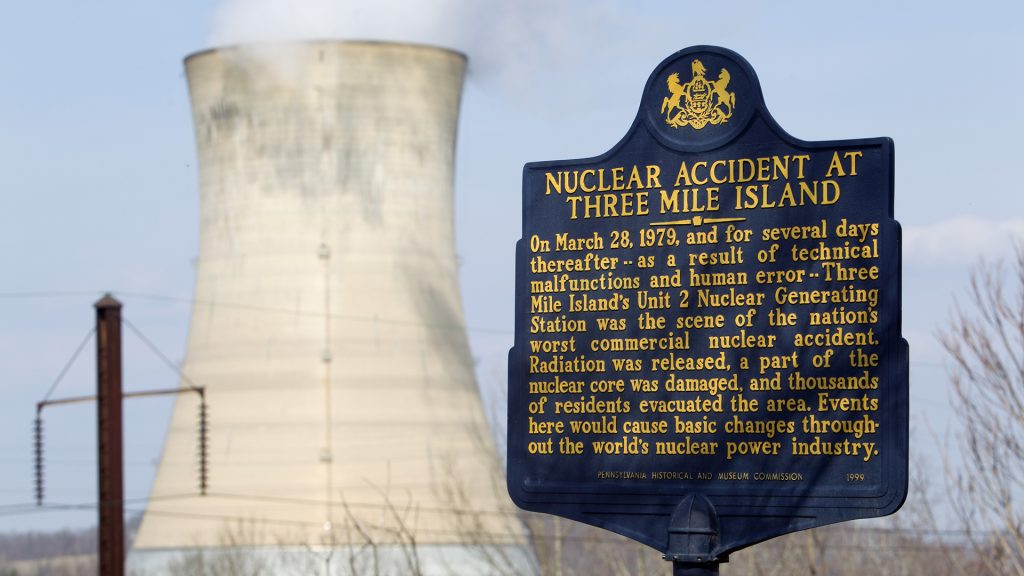
In September Constellation Energy announced plans to restart a shuttered reactor at Three Mile Island, prodded by Microsoft, which will need many gigawatts of power to perform extensive AI calculations in its expanding fleet of data centers. Amazon followed suit and announced in November that it will invest $334 million to develop small modular nuclear reactors (SMRs) at Hanford, site of the world’s first plutonium-production facility.
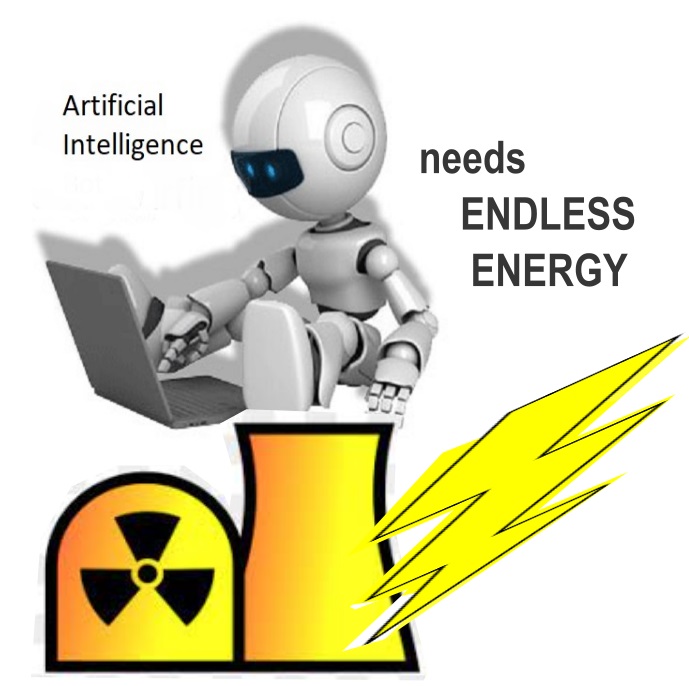
Google and Meta are also hoping to bring nuclear power back. In October 2024 Google announced it eventually plans to purchase 500 megawatts of electricity from Kairos Power, which is developing a novel SMR in Oak Ridge, Tenn., on the site of the national lab that long refined uranium for the nuclear industry. And Facebook parent Meta is seeking bids for nuclear power plants for its data centers.
These tech giants recognize that the next generation of microprocessors to be used for AI calculations at data centers will require oodles of electricity to power and cool them. A single Nvidia Blackwell chip, for example, can draw up to two kilowatts, more than what is needed for a typical house. Cram thousands of them in servers inside a data center, and they will need as much power as a small city.

So-called hyperscale data centers require over 100 megawatts (100 MW)—a sizeable fraction of the output of a major power plant. And that power should be cheap, steady and reliable.
An authoritative December 2024 report from the U.S. Department of Energy, written by energy experts at the Lawrence Berkeley National Laboratory, is especially illuminating. The growth in U.S. data-center energy usage over the next five years, they state, would correspond “to a total power demand for data centers between 74 and 132 [gigawatts].” That would represent some 7 to 12 percent of the U.S. electricity consumption forecast for 2028.
Where on Earth is all this power going to come from? Given the challenges electric utilities face in supplying electricity to meet other growing needs, including electric vehicles, it’s small wonder that big tech has turned back to the atomic nucleus. But the power demands outlined in the DOE report would require building or resurrecting the equivalent of at least 40 Three Mile Island reactors over the next five years. That’s impossible.
Several years ago Amazon, Google, Meta and Microsoft promised not to exacerbate atmospheric carbon-dioxide levels. But that laudable goal is becoming increasingly difficult to achieve, given their data centers’ exploding electricity consumption. So they have instead begun touting a return to nuclear power to avert this thorny problem. That’s a huge mistake.
Nuclear power is indeed a source of carbon-emission-free energy, but it is hardly a clean energy source, and it is definitely not renewable. All along the uranium supply chain—from mining to enrichment to the fabrication of fuel rods or pellets—opportunities abound for radioactive releases. In South Texas, for example, landowners worry about contamination of their groundwater by renewed uranium mining activities nearby.
The diagram below illustrates carbon emissions – but the same picture applies also to radioactive emissions

Since 1989, the DOE has spent hundreds of billions of taxpayer dollars cleaning up the original nuclear complex—including the gargantuan Oak Ridge factory that enriched much of the uranium used for commercial nuclear power. And despite decades of trying, the department has yet to fully clean up and dismantle the oozing, disintegrating tanks of highly radioactive wastes left over from plutonium processing at Hanford.

The storage and containment of spent nuclear fuel is in fact the crucial unresolved challenge of the U.S. nuclear industry. Over 90,000 tons of these wastes are stored at 77 sites in 35 states—an amount increasing by over 2,000 tons a year.
Small modular reactors, promoted by Microsoft co-founder Bill Gates and others, will only add to this growing burden. As former U.S. Nuclear Regulatory Commission (NRC) chair Allison Macfarlane and Rodney C. Ewing of Stanford University stated, “In some cases these new reactors may make it worse by creating more waste that’s more costly to manage, new kinds of complex waste, or just more waste, period.”
Elsewhere, Macfarlane stressed the procedural and practical difficulties faced by novel nuclear reactor technologies in gaining NRC acceptance and achieving commercial success. Shortly after it had received NRC certification in 2023, for example, the much-touted NuScale SMR project was abandoned after anticipated construction costs more than doubled to $9.3 billion. Leaving aside the waste problem, a commercially successful SMR design is probably over a decade away.
But the relentless AI gold rush, if left unchecked, will impose unattainable demands on projected power supplies well before that. Meanwhile, electricity rates will rise inexorably in light of the law of supply and demand. That looming energy crisis explains big tech’s efforts to slow shutdowns of fossil-fueled power plants and to resurrect shuttered reactors.
Amazon, Google, Meta and Microsoft executives should instead take a deep breath and begin reevaluating their options. Do they really need to build and upgrade data centers at such a breakneck pace? Or is this devil-take-the-hindmost AI arms race just the result of bitter competition, prodded by recent advances in semiconductor technology?
And what about the truly clean, renewable energy sources they once embraced—especially solar, wind and geothermal? Yes, the variability of solar and wind energy makes them a poor match to the steady power requirements of data centers. But energy storage has come a long way recently and has a promising future. And the recent startling success of the Chinese DeepSeek AI program demonstrates that software efficiency will play an important role in this effort.
Given the dark clouds still lingering over nuclear power, especially its unresolved waste problem, these renewable alternatives deserve renewed consideration.
China AI startup rattles US new nukes plan
January 30, 2025, https://beyondnuclear.org/china-ai-startup-rattles-us-new-nuke-plan/
Innovative computer modelling with AI doesn’t need the most expensive and dangerous energy from nukes
The much touted second-coming of a “nuclear renaissance” in the United States fueled by the projected soaring global demand to power artificial intelligence (AI) just got a major setback with the surprise January 20, 2025 overnight emergence of an apparently more competitive and efficient Chinese AI startup company, DeepSeek. The US stock market plummeted for the S&P 500 nuclear power companies that have been financially scaling up as the most reliable 24/7 electricity supply for a massive expansion of energy intensive data centers. China’s surprise rollout of DeepSeek and sudden rise to international acclaim at the start of 2025 has seriously disrupted the US claim to global dominance in cloud computing, networking and data storage services powered by extravagantly expensive atomic energy.
US-based AI technology firms, including Nvidia, which lost nearly $600 billion in the January 27th record breaking single day’s largest stock selloff, have led the way in rebranding nuclear power as the preferred choice as the 24/7 power supplier for a massive AI surge. The sudden emergence of DeepSeek, only two months in the making, is being compared to a “sputnik moment” for the US AI market, referencing the former Soviet Union’s launch of the first artificial satellite into orbit in 1959 that triggered a US technological panic and launched America into a “space race” with Russia. DeepSeek has just as suddenly now laid claim to competitively take the technological lead to advance mere computer modelling to an innovative era of computer reasoning.
Starting in 2023 and swelling in 2024, there was sort of a “gold rush” of fast money that sprang up to finance AI deals with new reactor licensing and construction of still unproven Small Modular Reactor (SMR) designs as well as repowering uneconomical, permanently closed reactors like Three Mile Island Unit 1. The Big Tech corporate promotion was primarily driven by the leading hyperscalers including Google, Amazon, MicroSoft, Meta Platforms (aka Facebook) and Oracle. A series of deals have since been cut with the established S&P 500 nuclear corporations led by Constellation Energy, Vistra, and the usual suspects of nuclear start-ups including Oklo Power, NuScale, Talen Energy Corp and TerraPower.
However, like a bolt from the blue, the US nuclear industry has been rattled on the stock market. The S&P 500 nuclear power giants Constellation Energy (CEG) and Vistra (VST) are under scrutiny as international energy analysts reevaluate the energy needs of AI data centers along with that same host of nuclear power start-ups.
Do AI and Nukes Mix? Hint: Keep ‘Human Decision in the Loop’

By: Andrew Rice, Jan 31, 2025, https://www.meritalk.com/articles/do-ai-and-nukes-mix-hint-keep-human-decision-in-the-loop/
Federal agencies across the government are increasingly adapting new uses of artificial intelligence to streamline processes, aggregate data, and even complete tasks designed for human resources staff. And while some have openly embraced AI and its uses, others still don’t believe it can be trusted for operations in nuclear controls.
The Department of Defense in its 2022 Nuclear Posture Review outlined efforts to implement AI with department data and software. Since then, AI has rapidly developed and brought along with that many questions about its future use.
In October, U.S. Strategic Command General Anthony Cotton said implementing AI in Nuclear Command, Controls and Communications (NC3) helps to make those more resilient to adversarial threats and increases decision making capabilities.
“Advanced AI and robust data analytics capabilities provide decision advantage and improve our deterrence posture,” Cotton said, adding that NC3 must maintain “human decision in the loop” to “maximize the adoption of these capabilities and maintain our edge over our adversaries.”
Cotton’s comments have prompted much discussion about AI’s role in nuclear command and controls. The Center for Strategic and International Studies hosted a debate on AI’s role in nuclear command and controls on Jan. 24 as part of its Project on Nuclear Issues (PONI) debate series.
Sarah Mineiro, senior associate at the Aerospace Security Project, and Paul Scharre, executive vice president and director of studies at the Center for a New American Security, debated the question: “Should the United States increase its reliance on artificial intelligence to enhance resilient decision-making in its NC3 systems to prevent inadvertent escalation?”
Mineiro argued for increased reliance on AI except for its use in nuclear weapons deployment whereas Scharre argued against all uses of AI in nuclear command and controls.
Mineiro pointed to the various use cases of AI in NC3 including designing and engineering CPUs and GPUs, image and signal processing, nuclear attack assessment algorithms, and modeling nuclear weapons use scenarios. She said she would never want AI to be involved in nuclear weapons deployment.
“I think we need everything, every tool that American innovation can give us to preserve our security,” she said. “I think AI in NC3 is an appropriate use.”
Scharre said AI cannot be trusted in nuclear command controls because it lacks the novelty of human judgment, it can be hacked or manipulated, and it cannot handle zero tolerance mistake policies.
“It will degrade our decision making, make the risk of inadvertent installation more likely, and undermine nuclear stability,” Scharre said.
Scharre continued and pointed out that AI can be used in tasks which are more repeatable – such as taking off or landing an airplane – but cannot be trusted in nuclear command and controls scenarios.
“We never want a situation where there is an accidental or unauthorized use, and there is just no way AI is good enough to meet that correction,” Scharre said.
Mineiro agreed with Scharre that zero risk tolerance within nuclear command and controls should be kept in place. She pointed out, however, the various other operations AI can be reliably used for which do not include nuclear weapons release.
Mineiro said she is “optimistic” about the Pentagon’s ability to balance integrating emerging technology to boost the American economy and national security while also strictly adhering to nuclear peace agreements.
“I’m a relatively risk tolerant person,” Mineiro said. “The one area I will never choose to accept risk is nuclear command and control.”
The two debaters ultimately came to agree that safeguards must be implemented when integrating AI into NC3 because AI cannot replace human thinking, as much as it may appear to do so.
“Even if the outputs sort of look like humans, that’s what it’s designed to do,” Scharre said. “What’s going on under the hood is not and that’s what we need to be conscious of when we’re using this technology.”
Drones, Nukes, and the Myth of Reactor Safety

The advent of drone warfare has taken the always-present danger of nuclear power plant catastrophe to a terrifying new level.
by Harvey Wasserman , January 29, 2025 https://progressive.org/latest/drones-nukes-and-the-myth-of-reactor-safety-wasserman-20250129/
Recent events on the Ukraine-Russia war front have drawn widespread attention to a terrifying new reality: According to a dispatch from C.J. Chivers published by The New York Times Magazine in December, remote drone operators can now overcome virtually any defensive barrier or evasive maneuver, fundamentally altering the nature of warfare between the two countries and raising new concerns about nuclear reactor safety in the region.
From safe bunkers that are sometimes as far as miles away, Ukrainian operators have begun sending small unmanned devices that cost as little as US $400 to destroy tanks and heavy artillery pieces worth millions. While militaries have traditionally relied on larger, “purpose-built” drones in the past, fighters in Ukraine have recently turned to small, relatively inexpensive hobbyist drones used around the world for everything from firefighting to aerial photography. Many of the drone operators are young and not extensively trained. But their work has allowed the vastly outnumbered Ukrainian fighters to overcome highly complex, sophisticated defensive barriers, and inflict brutal, lethal, and enormously expensive damage with shocking ease.
This new turn in weaponized drone use bears startling implications in relation to nuclear reactor safety. There are eight atomic power plants in the Russo-Ukrainian war zone—six at the Zaporizhzhia site in Ukraine, and two at Kursk in Russia—whose security is continually threatened by the ongoing conflict and by a lack of skilled, reliable operators in the area. If severely damaged, deprived of cooling water, or cut off from back-up power supplies, any one of these plants could melt or explode. Such an event could blanket large swaths of the planet and many of Europe and Asia’s largest cities with deadly radiation, inflicting tremendous human suffering as well as permanent ecological devastation. The damage could exceed that of the 1986 explosion at Chernobyl Unit Four, which contained significantly less core radiation than at Zaporizhzhia and Kursk, both of which have operated far longer.
Reactor containment domes are often constructed with thick, reinforced concrete. But they are far from invulnerable. The routes to major catastrophe—from loss of coolant and back-up power to operator error and structural defects—are too numerous to delineate or discount. A combination of these risks plagues each of the more than 400 nuclear power plants licensed worldwide, including the more than ninety in the United States.
Another recent Times report warns that weaponized drones have become part of a “hybrid” global conflict operating in an amorphous “Gray Zone.” The ability of these drones to wreak lethal and exorbitantly expensive havoc is virtually unlimited. With easily deployed drones like those now ravaging Eastern Europe, hostile nations, rogue armies, small terror groups, or even a lone psychopath could handily turn any number of commercial reactors into lethal engines of a radioactive apocalypse.
Atomic technology has been in civilian use since the 1957 opening of Pennsylvania’s Shippingport reactor. The U.S. Congress at the time promised the public that the “Peaceful Atom” would have comprehensive liability insurance within fifteen years. But nearly seven decades later, no commercial U.S. atomic power plant has blanket private accident insurance against a major catastrophe. Homeowners policies nationwide specifically exempt a nuclear disaster: When push comes to shove, homeowners will pay for their own irradiation.
All atomic power plants cause environmental damage on both the local and global level. They emit radioactive Carbon-14, expand global CO2 levels in the mining and fuel fabrication process, burn at 540-plus degrees Fahrenheit that heats the atmosphere and nearby bodies of water, bathe their neighborhoods in “low level” radiation, and create unmanageable wastes. What’s more, they cost far more than renewables by factors of 2 to 400 percent, while producing inflexible “baseload” power that clogs the grid.
Atomic power plants have always been vulnerable to explosion due to natural disasters such as the one at Fukushima in 2011, systemic mismanagement such as that at Chernobyl, or military and terror attacks. The advent of drone warfare in addition to all of this has raised the threat level to a terrifying new height. But in spite of this, Congress approved a forty-year extension of the original federal insurance exemption in 2024. This means that by the 2060s, the industry may have operated an entire century without ever obtaining the basic private insurance necessary to protect the public from a major radiation release.
A new level of terror is now being inflicted in the Ukraine-Russian war zone by drones once considered to be harmless, frivolous techno-gadgets. The nuclear industry’s insistence that we have nothing to fear from military or terror attacks on its uninsured fleet has lost any residual credibility. Given the horrific new reality of drone warfare, generating hyper-expensive radioactive power and waste from hot, dirty, decrepit reactors is less defensible than ever.
DeepSeek: how a small Chinese AI company is shaking up US tech heavyweights.
DeepSeek’s models and techniques have been released under the free MIT License, which means anyone can download and modify them.
https://www.sydney.edu.au/news-opinion/news/2025/01/29/deepseek-ai-china-us-tech.html January 28, 2025
Chinese artificial intelligence (AI) company DeepSeek has sent shockwaves through the tech community, with the release of extremely efficient AI models that can compete with cutting-edge products from US companies such as OpenAI and Anthropic.
Founded in 2023, DeepSeek has achieved its results with a fraction of the cash and computing power of its competitors.
DeepSeek’s “reasoning” R1 model, released last week, provoked excitement among researchers, shock among investors, and responses from AI heavyweights. The company followed up on January 28 with a model that can work with images as well as text.
What DeepSeek did
In December, DeepSeek released its V3 model. This is a very powerful “standard” large language model that performs at a similar level to OpenAI’s GPT-4o and Anthropic’s Claude 3.5.
While these models are prone to errors and sometimes make up their own facts, they can carry out tasks such as answering questions, writing essays and generating computer code. On some tests of problem-solving and mathematical reasoning, they score better than the average human.
V3 was trained at a reported cost of about US$5.58 million. This is dramatically cheaper than GPT-4, for example, which cost more than US$100 million to develop.
DeepSeek also claims to have trained V3 using around 2,000 specialised computer chips, specifically H800 GPUs made by NVIDIA. This is again much fewer than other companies, which may have used up to 16,000 of the more powerful H100 chips.
On January 20, DeepSeek released another model, called R1. This is a so-called “reasoning” model, which tries to work through complex problems step by step. These models seem to be better at many tasks that require context and have multiple interrelated parts, such as reading comprehension and strategic planning.
The R1 model is a tweaked version of V3, modified with a technique called reinforcement learning. R1 appears to work at a similar level to OpenAI’s o1, released last year.
DeepSeek also used the same technique to make “reasoning” versions of small open-source models that can run on home computers.
This release has sparked a huge surge of interest in DeepSeek, driving up the popularity of its V3-powered chatbot app and triggering a massive price crash in tech stocks as investors re-evaluate the AI industry. At the time of writing, chipmaker NVIDIA has lost around US$600 billion in value.
How DeepSeek did it
DeepSeek’s breakthroughs have been in achieving greater efficiency: getting good results with fewer resources. In particular, DeepSeek’s developers have pioneered two techniques that may be adopted by AI researchers more broadly.
The first has to do with a mathematical idea called “sparsity”. AI models have a lot of parameters that determine their responses to inputs (V3 has around 671 billion), but only a small fraction of these parameters is used for any given input.
However, predicting which parameters will be needed isn’t easy. DeepSeek used a new technique to do this, and then trained only those parameters. As a result, its models needed far less training than a conventional approach.
The other trick has to do with how V3 stores information in computer memory. DeepSeek has found a clever way to compress the relevant data, so it is easier to store and access quickly.
What it means
DeepSeek’s models and techniques have been released under the free MIT License, which means anyone can download and modify them.
While this may be bad news for some AI companies – whose profits might be eroded by the existence of freely available, powerful models – it is great news for the broader AI research community.
At present, a lot of AI research requires access to enormous amounts of computing resources. Researchers like myself who are based at universities (or anywhere except large tech companies) have had limited ability to carry out tests and experiments.
More efficient models and techniques change the situation. Experimentation and development may now be significantly easier for us.
For consumers, access to AI may also become cheaper. More AI models may be run on users’ own devices, such as laptops or phones, rather than running “in the cloud” for a subscription fee.
For researchers who already have a lot of resources, more efficiency may have less of an effect. It is unclear whether DeepSeek’s approach will help to make models with better performance overall, or simply models that are more efficient.
NuScale Power Corporation (SMR) Stock Plunges 25% Amid DeepSeek AI Concerns and Reevaluation of AI-Driven Energy Demand

Yahoo! Finance, Ghazal Ahmed, Thu, January 30, 2025
We recently published an article titled These 29 AI Electricity, Infrastructure Stocks Are Crashing Due to DeepSeek News. In this article, we are going to take a look at where NuScale Power Corporation (NYSE:SMR) stands against the other AI stocks.
Investors are pulling back from the artificial intelligence trade. Previously, a report by the Lawrence Berkeley National Laboratory highlighted that US data centers are expected to use 6.7% to 12% of all power by 2028. However, one artificial intelligence startup has upended these estimates, leaving investors wondering whether the anticipated surge in power demand and data center expansion still holds.
Energy, infrastructure, and real-estate stocks were tanking on Monday, even though they were known to be less crowded alternatives to stocks such as Nvidia. Monday’s broad-market selloff has revealed how a vast number of energy-related companies have been banking on the AI boom and the anticipated power surge it was expected to bring.
DeepSeek, an artificial intelligence startup from China, caused a frenzy in the AI world after launching its latest AI models. The company claims that these models built are at par or better than industry-leading models in the United States. They require fewer chips and are made at a fraction of the cost. All of these updates are now threatening to upset the technology world. Once the best-performing securities over the past 18 months, US electricity providers are now one of the hardest hit sectors with investors reevaluating their outlooks toward artificial intelligence and the magnitude of money that they are spending………………………………….
DeepSeek AI is also threatening the dominance of current leaders in the artificial intelligence world. This could potentially slow down the deployment of their data centers. However, an energy economist at the University of Houston noted that the wider adoption of AI could be positive news…………………………………………………………
NuScale Power Corporation (NYSE:SMR)
Number of Hedge Fund Holders: 18
Share Price Decline: (25.02%)
NuScale Power Corporation (NYSE:SMR) designs and markets small modular reactors (SMRs). Another stock heavily tied to the AI world, Corvallis-based NuScale has previously benefited from the idea that AI-driven electricity demand increases could boost its small modular reactor business. Now that Wall Street is reevaluating the energy requirements of AI, energy and related utilities stocks have been tanking. In particular, NuScale saw its shares plunge by 25% following the news regarding DeepSeek. Not only do DeepSeek’s AI models use less computing power and chips, but the model released is also open-source. This move has made it harder for competitors to justify the huge costs that they have been spending on hardware, software, and expertise needed to develop similar systems…………….https://finance.yahoo.com/news/nuscale-power-corporation-smr-stock-015431414.html
Nuke Mars, Elon? Not with your Outer Space Treaty

27th January 2025,
https://www.nuclearpolicy.info/news/nuke-mars-elon-not-with-your-outer-space-treaty/
The CEO of Tesla Motors and space entrepreneur Elon Musk may not be celebrating today’s 58th anniversary of the Outer Space Treaty because it stands between him and his ambition to ‘Nuke Mars’.
In September 2015, the eccentric billionaire first spoke on US chat show The Late Show with Stephen Colbert of ‘nuking Mars’. In later interviews later that year, Mr Musk described exploding nuclear weapons over the Martian poles every few seconds to create two pulsing ‘suns’ that would warm up the surface as a prelude to his plan to initiate human colonization of the Red Planet.
Mr Musk appeared to marginalise the ethics, excusing the exercise as the explosions would take place “above the planet, not on the planet” – the atomic bomb explosions in Japan were also airbursts – and, of the challenge of establishing fusion weapons in orbit above the surface and then sequentially exploding them, he said: “Yeah absolutely no problem.”
Clearly at that time Mr Musk was unaware, or dismissive, of the Outer Space Treaty – or Treaty on Principles Governing the Activities of States in the Exploration and Use of Outer Space, including the Moon and Other Celestial Bodies – which first opened for signature on 27 January 1967 and became effective on the 10 October of that year. 115 states parties have signed the treaty, including all space-faring nations.
Intended to annul fears that, in the missile age, space could become yet another contested battleground and a further location in which to station weapons of mass destruction, the treaty contains several key provisions, specifically the prohibition of nuclear weapons in space, limiting the use of the moon and other celestial bodies to peaceful purposes, and banning military bases, testing weapons or conducting military manoeuvres on such bodies.
Clearly then deploying and using nuclear weapons in space is prohibited under international law, and Mr Musk being an Earth-bound US citizen is subject to the laws and obligations applicable to the United States.
Whether the treaty would prevent Mr Musk establishing a ‘colony’ is debatable, even if in name only. The treaty provides for space and any celestial body to be freely explored and used by all nations, but on whether he could claim hegemony the treaty is moot for it only precludes nations from claiming sovereignty over space and celestial bodies, not individuals.
Clearly at the time the idea of a powerful individual in the future becoming sole ruler of an entire planet was regarded as inconceivable, which seems a little bizarre when many of the legislators would have been brought up on a cinematic diet of Flash Gordon with the Emperor Ming and Dan Dare with the Mekon.
Unsurprisingly in 2015, Mr Musk’s pronouncements led to him being branded a ‘Bond villain’ in certain quarters, but he was clearly comfortable with it as he took to wearing a tee shirt specifying his ambition. Now with his recent ‘elevation’ to become President Trump’s special advisor on government efficiency and, seemingly, space, his ambition may be one step closer to becoming reality for in President Trump, he has found an ally reported to have also advocated for using nuclear weapons to overcome geographical challenges.
In August 2019, the news website Axios wrote that Trump had asked his top national security officials to “consider using nuclear bombs to weaken or destroy hurricanes.” Axios alleged that in a briefing on hurricanes, the 45th President postulated: “[Hurricanes] start forming off the coast of Africa, as they’re moving across the Atlantic, we drop a bomb inside the eye of the hurricane, and it disrupts it. Why can’t we do that?” It was reported that attendees were astonished, but the President later claimed it to be ‘Fake News.’
Who knows? But with an office holder restored to the White House with little regard for international institutions and with a reputation for making outrageous utterances, counselled by an advisor with a proclaimed desire to conquer space and nuke and colonise planets, the Nuclear Free Local Authorities would not be surprised if US diplomats are instructed to seek amendments to the treaty to enable Mr Musk’s ambitions to made legal, even if, for now, they remain impractical.
The Evolution of the Militarized Data Broker

As the front of modern warfare slowly evolved from direct military action into weaponized financial speculation, the market for data became just as valuable as the defense budget itself.
Facebook, not unlike Palantir, was one of the vehicles used to privatize controversial U.S. military surveillance projects
While often mythologized as having been created to champion human freedom, the internet and many of its most popular companies were directly birthed out of the national security apparatus of the United States.
UNLIMITED HANGOUT, by Mark Goodwin, January 16, 2025
Today, the world’s economy no longer runs on oil, but data. Shortly after the advent of the microprocessor came the internet, unleashing an onslaught of data running on the coils of fiber optic cables beneath the oceans and satellites above the skies. While often posited as a liberator of humanity against the oppressors of nation-states that allows previously impossible interconnectivity and social organization between geographically separated cultures to circumnavigate the monopoly on violence of world governments, ironically, the internet itself was birthed out of the largest military empire of the modern world – the United States.
The ARPANET
Specifically, the internet began as ARPANET, a project of the Advanced Research Projects Agency (ARPA), which in 1972 became known as the Defense Advanced Research Projects Agency (DARPA), currently housed within the Department of Defense. ARPA was created by President Eisenhower in 1958 within the Office of the Secretary of Defense (OSD) in direct response to the U.S.’ greatest military rival, the USSR, successfully launching Sputnik, the first artificial satellite in Earth’s orbit with data broadcasting technology. While historically considered the birth of the Space Race, in reality, the formation of ARPA began the now-decades-long militarization of data brokers, quickly leading to world-changing developments in global positioning systems (GPS), the personal computer, networks of computational information processing (“time-sharing”), primordial artificial intelligence, and weaponized autonomous drone technology.
In October 1962, the recently-formed ARPA appointed J.C.R. Licklider, a former MIT professor and vice president of Bolt Beranek and Newman (known as BBN, currently owned by defense contractor Raytheon), to head their Information Processing Techniques Office (IPTO). At BBN, Licklider developed the earliest known ideas for a global computer network, publishing a series of memos in August 1962 that birthed his “Intergalactic Computer Network” concept. Six months after his appointment to ARPA, Licklider would distribute a memo to his IPTO colleagues – addressed to “Members and Affiliates of the Intergalactic Computer Network”– describing a “time-sharing network of computers” – building off a similar exploration of communal, distributed computation by John Forbes Nash, Jr. in his 1954 paper “Parallel Control” commissioned by defense contractor RAND – which would build the foundational concepts for ARPANET, the first implementation of today’s Internet.
Prior to the technological innovations explored by Licklider and his ARPA colleagues, data communication – at this time, mainly voice via telephone lines – were based on circuit switching, in which each telephone call would be manually connected by a switch operator to establish a dedicated, end-to-end analog electrical connection between the two parties. The RAND Corporation’s Paul Baran, and later ARPA itself, would begin to work on methods to allow formidable data communication in the event of a partial disconnection, such as from a nuclear event or other act of war, leading to a distributed network of unmanned nodes that would compartmentalize the desired information into smaller blocks of data – today referred to as packets – before routing them separately, only to be rejoined once received at the desired destination.
While certainly unbeknownst to the technologists at the time, this achievement of both distributed routing and global information settlement via data packets created an entirely new commodity – digital data.
A Brief History of Weaponized Financial Intelligence
Long before the USSR spooked the United States into formalizing ARPA due to fears of militarized satellite applications post-Sputnik launch, data brokers have played a significant role in warfare and specifically the markets surrounding military conflict……………………………………………….
As the front of modern warfare slowly evolved from direct military action into weaponized financial speculation, the market for data became just as valuable as the defense budget itself. It is for this reason that the necessity of sound data emerged as the foremost issue of national security, leading to a proliferation of advanced data brokers coming out of DARPA and the intelligence community, akin to the 21st century’s Manhattan Project.
The San Jose Project: Google, Facebook, and PayPal
Exemplified by the creation of the CIA’s venture firm, In-Q-Tel, and the proliferation of Silicon Valley-based venture firms coalescing on Sand Hill Road in Palo Alto, CA, the financialization of a new crop of American data brokers was complete. The first firm to grace Sand Hill Road was Kleiner Perkins Caufield & Byers, better known as KPCB, which participated in funding internet pioneers Amazon, AOL, and Compaq, while also directly seeding Netscape and Google. KPCB partners have included such government stalwarts as former Vice President Al Gore, former Secretary of State Colin Powell, and Ted Schlein – the latter being a board member of In-Q-Tel and member of the NSA’s advisory board. KPCB also had an intimate connection with internet networking pioneer Sun Microsystems, best known for building out the majority of network switches and other infrastructure needed for a modern broadband economy.
……………………… Perhaps the world’s most famous data broker, Google, whose founders both came out of Stanford University, was seeded by former Sun Microsystems founder Andy Bechtolsheim and his partner at the Ethernet switching company Granite Systems (later acquired by Cisco), David Cheriton, with Google’s most iconic CEO, Eric Schmidt, being the former CTO of Sun Microsystems.
The emergence of Silicon Valley out of the academic circuit in Northern California was no accident, and in fact was directly influenced by an unclassified program known as the Massive Digital Data Systems (MDDS) project. The MDDS was created with direct participation from the CIA, NSA, and DARPA itself within the computer science programs at Stanford and CalTech, alongside MIT, Harvard and Carnegie Mellon……………… over a few years, more than a dozen grants of several million dollars each were distributed via the NSF (the National Science Foundation) in order to capture the most promising efforts, ensuring that those efforts would become intellectual property controlled by the United States regulatory regime.
……………………………………………….The first unclassified briefing for scientists was titled “birds of a feather briefing” and was formalized during a 1995 conference in San Jose, CA, which was titled the “Birds of a Feather Session on the Intelligence Community Initiative in Massive Digital Data Systems.” That same year, one of the first MDDS grants was awarded to Stanford University, which was already a decade deep in working with NSF and DARPA grants. The primary objective of this grant was to “query optimization of very complex queries,” with a closely-followed second grant that aimed to build a massive digital library on the internet. These two grants funded research by then-Stanford graduate students and future Google cofounders, Sergey Brin and Larry Page. Two intelligence-community managers regularly met with Brin while he was still at Stanford and completing the research that would lead to the incorporation of Google, all paid for by grants provided by the NSA and CIA via MDDS.
…………………………………………………………………………………………….It was also during these formative years that the PayPal team worked closely with the intelligence community. …………………………………………………………………..In 2003, a year after PayPal was sold to eBay, Thiel approached Alex Karp, a fellow alumnus of Stanford with a new venture concept: “Why not use Igor to track terrorist networks through their financial transactions?” Thiel took funds from the PayPal sale to seed the company, and after a few years of pitching investors, the newly-formed Palantir received an estimated $2 million investment from the CIA’s venture capital firm, In-Q-Tel.
………………………………..As of 2013, Palantir’s client list included “the CIA, the FBI, the NSA, the Centre for Disease Control, the Marine Corps, the Air Force, Special Operations Command, West Point and the IRS” with around “50% of its business” coming from public sector contracts…………… As The Guardian reports: “Palantir does not just provide the Pentagon with a machine for global surveillance and the data-efficient fighting of war, it runs Wall Street, too.”
Facebook, not unlike Palantir, was one of the vehicles used to privatize controversial U.S. military surveillance projects after 9/11, having also been birthed out of one of the MDDS partners, Harvard University. PayPal and Palantir co-founder Peter Thiel became Facebook’s first significant investor at the behest of file-sharing pioneer Sean Parker, whose first contact with the CIA took place at age 16. ………………………… Facebook’s long-standing ties to the military and intelligence communities go far beyond its origins, including revelations about its collaboration with spy agencies as part of the Snowden leaks and its role in influence operations – some have even directly involved Google and Palantir.
The Military Origins of Facebook
Facebook’s growing role in the ever-expanding surveillance and “pre-crime” apparatus of the national security state demands new scrutiny of the company’s origins and its products as they relate to a former, controversial DARPA-run surveillance program that was essentially analogous to what is currently the world’s largest social network.
An unspoken outcome of the global proliferation of Facebook was the sly, roundabout creation of the first digital ID system – a necessity for the coming digital economy. Users would set up their profiles by feeding the social network with a plethora of personal information, with Facebook being able to use this data to generate large webs of connectivity between otherwise unknown social groups. There is even evidence that Facebook generated placeholder accounts for individuals that appeared in user data but did not have a profile of their own. Both Google and PayPal would also use similar digital identification methods to allow users to sign into other websites, creating interoperable identification systems that could permeate the internet.
A similar evolution is occurring in the financial sector, as data broker social networks – including Facebook and Musk’s X (formerly Twitter) – are posturing themselves as the future of financial service companies. ……………………………
From Public-Private, to Private-Public
As outlined above, it is clear that the public sector’s intelligence community used the veil of the private sector to establish financial incentives and commercial applications to build out the modern data economy. A simple glance at the seven largest stocks in the American economy demonstrate this concept, with Meta (Facebook), Alphabet (Google), and Amazon – with founder Jeff Bezos being the grandson of ARPA founder Lawrence Preston Gise – leading the software side, and Microsoft, Apple, NVIDIA and Tesla leading the hardware component. While many of these companies have egregious ties to the intelligence community and the public sector during their incubation, now these private sector companies are driving the globalization and national security interests of the public sector.
The future of the American data economy is firmly situated between two pillars – artificial intelligence and blockchain technology. With the incoming Trump administration’s close advisory ties to PayPal, Tether, Facebook, Palantir, Tesla and SpaceX, it is clear that the data brokers have returned to roost at Pennsylvania Avenue. AI requires massive amounts of sound data to be of any use for the technologists, and the data provided by these private sector stalwarts is poised to feed their learning modules – surely after securing hefty government contracts. Private companies using public blockchains to issue their tokens generates not only significant opportunities for the United States to address its debt problem, but simultaneously serves as a “boon in surveillance”, as stated by a former CIA director.
Trump Embraces the “Bitcoin-Dollar”, Stablecoins to Entrench US Financial Hegemony

Trump’s recent speech on bitcoin and crypto embraced policies that will seek to mold bitcoin into an enabler of irresponsible fiscal policy and will employ programmable, surveillable stablecoins to expand and entrench dollar dominance.
Within the Trump administration’s embracing of the blockchain – itself the final iteration of the public-private commercialization of data, despite its libertarian posturing – reveals the culmination of a decades-long technocratic dialectic trojan horse. Nearly all of the foundational technology needed to push the world into this new financial system was cultivated in the shadows by the military and intelligence community of the world’s largest empire. While technology can surely offer solutions for greater efficiency and economic prosperity, the very same tools can also be used to further enslave the citizens of the world.
What once appeared as a guiding light beckoning us towards free speech and financial freedom has revealed itself to be nothing but the shine of Uncle Sam’s boot making its next step. https://unlimitedhangout.com/2025/01/investigative-reports/the-evolution-of-the-militarized-data-broker/
Nuclear Waste: The Dark Side of the Microreactor Boom

By Haley Zaremba – Jan 15, 2025, https://oilprice.com/Alternative-Energy/Nuclear-Power/Nuclear-Waste-The-Dark-Side-of-the-Microreactor-Boom.html
The nuclear energy sector is experiencing a revival, driven by factors such as increased energy demand and support from governments and tech companies.
Microreactors, a new form of nuclear technology, are being touted for their lower costs and smaller size, but they produce a significantly higher volume of nuclear waste.
Despite concerns about nuclear waste, the development and deployment of microreactors continue to gain momentum, driven in part by the growing energy needs of AI.
Nuclear energy is ready for its close-up. After decades of steep decline in the sector and relatively high levels of public mistrust for the controversial technology, the tides are turning in favor of a nuclear energy renaissance. The public memory of disasters like Fukushima, Three Mile Island, and Chernobyl is fading, and the benefits of nuclear – a zero-carbon, baseload energy source – are getting harder to ignore as deadlines for climate commitments grow closer and energy demand ticks ever higher. But the future of the nuclear energy sector will look a bit different than its last boom time, from technological advances to the makeup of its biggest backers.
In Russia and Asia, nuclear energy has stayed popular, but in the West, nuclear had almost entirely fallen out of favor up until the last few years. In the United States, the Biden administration helped to build momentum for a nuclear comeback through its flagship Inflation Reduction Act, which included tax breaks and other incentives for various nodes of the nuclear sector. Over in Europe, nuclear advocates are trying to push through policy supporting nuclear power as Europe reconfigures its energy landscape to contend with energy sanctions on Russia. Public opinion in the West is also shifting in favor of nuclear power. As of 2023, a Gallup poll showed that support for nuclear energy in the United States was at a 10-year high.
Some of the biggest proponents of the nuclear energy renaissance are big tech bigwigs, who point to the power source as a critical solution to feed the runaway power demand of Artificial Intelligence. In fact, the growth trend of data centers’ energy demand is so extreme that it will soon outstrip the United States’ production potential if nuclear energy – and a host of other low-carbon solutions – are not utilized, and soon. Tech bigwigs, therefore, have good reason to back nuclear energy – oh, and they also just so happen to be behind a rash of nuclear energy startups.
But the new kind of nuclear that these companies are trying to bring onto the scene will not be the same as the nuclear technologies that had so solidly fallen out of favor over the last few decades. Traditional nuclear energy has a number of drawbacks, most notably its extremely high up-front costs and the additional costly burden of storing hazardous nuclear waste. New nuclear advocates want to confront the former challenge by rolling out much smaller versions of nuclear reactors, which can essentially be mass-produced and then installed on site for much lower development costs.
Currently, the industry is undergoing a competitive race to corner the market on nuclear microreactors, which are about the size of a shipping container and function somewhat like a giant battery pack. “Microreactors have the ability to provide clean energy and have passive safety features, which decrease the risk of radioactive releases,” Euro News recently reported. “They are also much cheaper than bigger plants as they are factory-built and then installed where they are needed in modules.”
These microreactors can be used in a huge range of applications and do not require any on-site workers for their operation and maintenance. Instead, they can be operated remotely and autonomously. As a result, they have much lower overhead costs as well as lower up-front costs. So what’s the downside?
Well, it’s a big one. Scientists have found that, contrary to what nuclear advocates have touted, small nuclear reactors produce extremely high levels of nuclear waste, and could even be worse for the planet than their full-sized predecessors. “Our results show that most small modular reactor designs will actually increase the volume of nuclear waste in need of management and disposal, by factors of 2 to 30,” said Stanford study lead author Lindsay Krall. “These findings stand in sharp contrast to the cost and waste reduction benefits that advocates have claimed for advanced nuclear technologies.”Some members of the scientific community have taken notice: “Say no to small modular reactors,” blasted a recent headline from the Bulletin of Atomic Scientists.
However, the voices decrying the rollout of small- and microreactors seem to be in the minority, as the Silicon Valley-backed industry barrels full speed ahead. Countries across Europe have jumped into the race as well, and its high levels of momentum – fuelled by the seemingly unstoppable expansion of AI – are unlikely to be impeded by the scientists yelling doomsday warning, however well-founded, from the sidelines.
America’s ‘zombie’ nuclear reactors to be revived to power Trump golden age

By ELLYN LAPOINTE FOR DAILYMAIL.COM, 24 January 2025 https://www.dailymail.co.uk/sciencetech/article-14317459/zombie-nuclear-reactors-revived-ai-demand-trump-stargate-south-carolina.html
A defunct nuclear power plant will be revived to power Donald Trump‘s new half-trillion-dollar project to make America the world’s artificial intelligence powerhouse.
The state-owned utility Santee Cooper — the largest power provider in South Carolina — said Wednesday that it is seeking buyers to complete construction on a partially-built project that was abandoned in 2017.
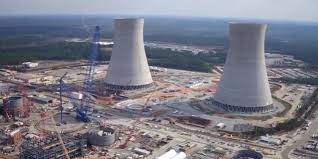
The VC Summer Nuclear Power Station, which houses two unfinished nuclear reactors, was scrapped following years of lengthy, costly delays and bankruptcy by its contractor, according to a company statement.
But now, the utility is hoping tech giants such as Amazon and Microsoft will be willing to finish the project, as they are seeking clean energy sources to fuel data centers for AI.
‘We are seeing renewed interest in nuclear energy, fueled by advanced manufacturing investments, AI-driven data center demand, and the tech industry’s zero-carbon targets,’ said Santee Cooper President and CEO Jimmy Staton.
This announcement came as President Donald Trump unveiled a $500bn AI project which he says will jumpstart America’s ‘golden age.’

The project, dubbed the ‘Stargate Initiative,’ is a massive private sector deal to expand the nation’s AI infrastructure, led by Big Tech companies such as OpenAI, SoftBank and Oracle. It is the largest AI infrastructure project in history.
Trump stated that Stargate will create over 100,000 new jobs ‘almost immediately.’
‘This monumental undertaking is a resounding declaration of confidence in America’s potential under a new president,’ he said during a Tuesday briefing.
Trump emphasized that the project aims to sharpen the country’s technological edge against competitors, notably China.
He held the briefing in the White House’s Roosevelt Room alongside SoftBank CEO Masayoshi Son, Oracle’s Larry Ellison and OpenAI’s Sam Altman.
The US AI industry has already grown rapidly in recent years, but one of the biggest hurdles to expansion is the energy cost of running data centers.
A recent Department of Energy (DOE) report found that total data center electricity usage more than tripled from from 2014 to 2023, rising from 58 TWh to 176 TWh.
The DOE estimates that by 2028, data center energy demand will increase between 325 to 580, consuming up to 12 percent of US electricity.
‘This monumental undertaking is a resounding declaration of confidence in America’s potential under a new president,’ he said during a Tuesday briefing.
Trump emphasized that the project aims to sharpen the country’s technological edge against competitors, notably China.
He held the briefing in the White House’s Roosevelt Room alongside SoftBank CEO Masayoshi Son, Oracle’s Larry Ellison and OpenAI’s Sam Altman.
The US AI industry has already grown rapidly in recent years, but one of the biggest hurdles to expansion is the energy cost of running data centers.
A recent Department of Energy (DOE) report found that total data center electricity usage more than tripled from from 2014 to 2023, rising from 58 TWh to 176 TWh.
The DOE estimates that by 2028, data center energy demand will increase between 325 to 580, consuming up to 12 percent of US electricity.
Santee Cooper said it was working with the investment firm Centerview Partners LLC to vet buyer proposals, which they will accept until May 5.
The exact asking price has not been publicly named, but the Wall Street Journal reported that completion of the reactors would cost the buyer billions of dollars over several years.
This would not be the first time that Big Tech bankrolled a nuclear energy project. Last September, Microsoft struck a deal with the New York utility Constellation Energy to restart the Three Mile Island nuclear plant in Pennsylvania.
This plant was the site of the worst nuclear power accident in US history, when its Unit 2 reactor partially melted down in 1979 and released radioactive gases and iodine into the environment.
Amazon, Meta and Google also sought or signed deals to back nuclear energy projects in 2024, similarly motivated by their AI endeavors.
The federal government has also shown support for the resurgence of nuclear power.
In September, the DOE finalized a $1.52 billion loan guarantee to help Holtec International, a New Jersey manufacturing company, recommission the Palisades nuclear plant in Michigan, marking the first-ever revival of a nuclear power plant in the US.
The Biden administration and Congress also offered billions of dollars in subsidies to maintain older nuclear plants and fund the construction of new reactors.
President Trump has largely opposed and sought to repeal the former president’s energy and climate policies, but has said he supports nuclear energy.
In its first actions this week, the new administration signed an executive order directing the heads of ‘all agencies’ to identify regulations that ‘impose an undue burden’ on domestic energy resources, including nuclear power.
It also instructs the US Geological Survey ‘to consider updating the Survey’s list of critical minerals, including for the potential of including uranium,’ which can be refined into nuclear fuel.
Nuclear fusion: it’s time for a reality check

Significant obstacles lie ahead in the quest for commercially viable nuclear fusion, writes Luca Garzotti, https://www.theguardian.com/science/2025/jan/22/nuclear-fusion-its-time-for-a-reality-check
I can’t help thinking Ed Miliband has not been accurately briefed when he says a government funding pledge means Britain is within “grasping distance” of “secure, clean, unlimited energy” from nuclear fusion (Ministers pledge record £410m to support UK nuclear fusion energy, 16 January).
Before we start talking about nuclear fusion via magnetic confinement as a commercially viable source of energy, five main challenges have to be met by the scientific community, each one of them a potential showstopper. We have to demonstrate:
1) That we can run a burning plasma for hours (if not in steady state) with Q=40 (Q being the ratio between power coming from the fusion reactions and power used to heat the plasma) without disruptions. If all goes well, at some point in the future, the ITER fusion project your article mentions will run a burning plasma with Q=10 for about 10 minutes.
2) That we can handle and exhaust the heat escaping from such a plasma and impinging on the first wall of the confining device.
3) That we can breed in the blanket of a power plant more tritium than we burn in the plasma. (Tritium is not readily available in nature and must be produced.)
4) That the materials used to build such a plant can withstand the neutron fluence coming from the burning plasma without losing their structural properties and without becoming excessively radioactive.
5) That a fusion reactor can be operated reliably and maintained by remote handling, minimising the downtime needed for maintenance.
These are massive scientific and technological challenges, the solution of which (despite progress being made) is not in the near future. The reward for finding a solution will be immense and therefore research must continue with humility and tenacity, but there is no room for overoptimistic or triumphalist statements, which can only undermine the credibility of the scientists and engineers working on the problem.
1 This Month

of the week – Shut Down Drone Warfare!


Tell the Ukrainian Government to Drop Prosecution of Peace Activist Yurii Sheliazhenko

Petition to revoke the licensing of the Near Surface Nuclear Disposal Facility (NSDF) at Chalk River. https://www.ourcommons.ca/petitions/en/Petition/Details?Petition=e-7247
To see nuclear-related stories in greater depth and intensity – go to https://nuclearinformation.wordpress.com
-
Archives
- March 2026 (251)
- February 2026 (268)
- January 2026 (308)
- December 2025 (358)
- November 2025 (359)
- October 2025 (376)
- September 2025 (257)
- August 2025 (319)
- July 2025 (230)
- June 2025 (348)
- May 2025 (261)
- April 2025 (305)
-
Categories
- 1
- 1 NUCLEAR ISSUES
- business and costs
- climate change
- culture and arts
- ENERGY
- environment
- health
- history
- indigenous issues
- Legal
- marketing of nuclear
- media
- opposition to nuclear
- PERSONAL STORIES
- politics
- politics international
- Religion and ethics
- safety
- secrets,lies and civil liberties
- spinbuster
- technology
- Uranium
- wastes
- weapons and war
- Women
- 2 WORLD
- ACTION
- AFRICA
- Atrocities
- AUSTRALIA
- Christina's notes
- Christina's themes
- culture and arts
- Events
- Fuk 2022
- Fuk 2023
- Fukushima 2017
- Fukushima 2018
- fukushima 2019
- Fukushima 2020
- Fukushima 2021
- general
- global warming
- Humour (God we need it)
- Nuclear
- RARE EARTHS
- Reference
- resources – print
- Resources -audiovicual
- Weekly Newsletter
- World
- World Nuclear
- YouTube
-
RSS
Entries RSS
Comments RSS
 nuclear-news