Campaigner hits out at ‘PR trick’ nuclear energy poll of SNP members

By Laura Pollock, Multimedia Journalist, 1 May 25, https://www.thenational.scot/news/25131226.campaigner-hits-pr-trick-nuclear-energy-poll-snp-members/
A LEADING independence activist has hit out at a recent poll suggesting roughly half of the SNP’s voters believe nuclear power should be part of Scotland’s mix of clean energy generation.
Robin McAlpine, founder of pro-independence think tank Common Weal, has branded the polling a “PR trick based on deliberately withholding crucial information”, claiming people who responded were not given “the basic facts”.
Polling for the campaign group Britain Remade, founded by a former energy adviser to Boris Johnson, found 52% of those who voted for the party in 2021 believe nuclear power should be included in Scotland’s energy mix to meet the 2045 net zero target.
Meanwhile, 57% of those who voted for the party in last year’s general election felt the same way, the poll found. A total of 56% of Scots thought nuclear power should be part of Scotland’s clean energy mix to meet the targets, while 23% disagreed, and 21% said they did not know.
Opinium surveyed 1000 Scottish adults between April 22 and 25.
However, McAlpine argues those quizzed on the topic were not aware of key points as laid out in a blog post for pro-independence Common Weal Common Weal.
He highlights the price of hydrogen electricity being cheaper than nuclear, as well as the hidden costs of building and decommissioning nuclear infrastructure.
“Would SNP voters back nuclear if it was explained that it will cost them three times as much as renewables and then also cost nearly £5000 per household just to clean them up?” McAlpine told The National.
He further questioned: “Do people know that it is much cheaper to run a renewable system with battery storage for short-term load balancing and hydrogen storage for long term battery storage? Are they aware that you can’t turn nuclear power on and off and that it has to run at full power all the time? So it can’t balance renewables when the wind isn’t blowing, it can only displace renewables from the grid.
“The only conceivable purpose of nuclear in Britain is to power the south of England. Look at Fukushima, look at the power stations in Ukraine, how much risk do you want to take when you have absolutely no need to do it?
“If people are told ‘more expensive, much more dangerous, can’t be switched up or down or turned off, costs an absolute fortune to decommission at the end’, I think you’ll find they answer differently.”
Britain Remade has been approached for comment.
The SNP have argued nuclear power projects remain too expensive to be a viable alternative to renewable power.
Responding to the polling, SNP MSP Bill Kidd said: “Our focus is delivering a just transition that supports communities and creates long-term economic opportunities to build a truly sustainable future.
“Nuclear remains one of the most costly forms of energy with projects like Hinkley Point C running billions over budget and years behind schedule.
“In contrast, Scotland’s net zero transition is already delivering thousands of green jobs across energy, construction, innovation, and engineering. This number will continue to grow.
“Simply, renewables are cheaper to produce and develop, create more jobs, and are safer than nuclear as they don’t leave behind radioactive waste that will be deadly for generations.
“While Labour funnels billions into slow, centralised projects, the SNP is focused on creating real, sustainable jobs in Scotland now.”
Awash in AI propaganda
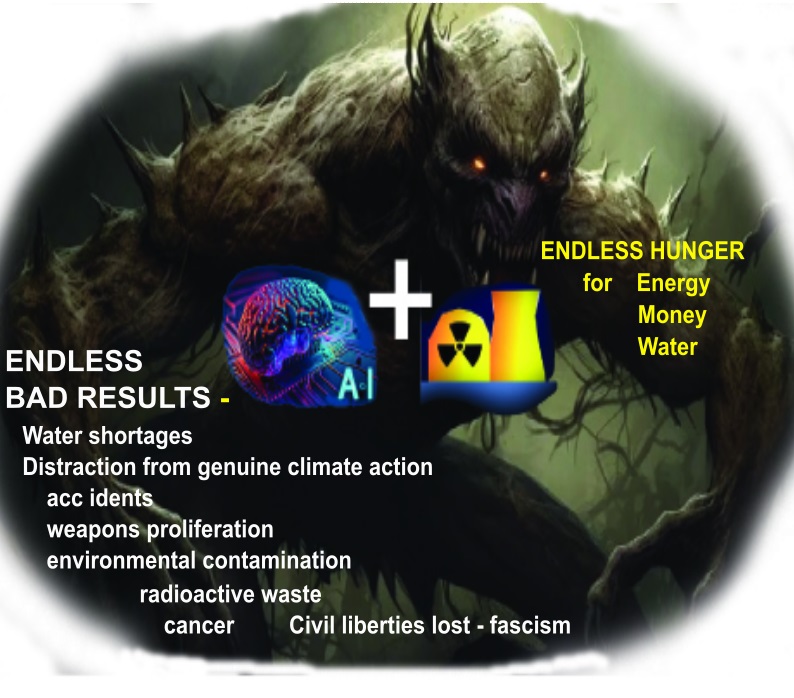
we have been here before. Consider, for example, the arguments made for building the V. C. Summer nuclear project in South Carolina.
“our technocrats are so committed to the worship of the sacred cow of technology that they say in effect: Let the machine prevail, though the earth be poisoned, the air be polluted, the food and water be contaminated, and mankind itself be condemned to a dreary and useless life, on a planet no more fit to support life than the sterile surface of the moon”.
by beyondnuclearinternational, https://beyondnuclearinternational.org/2025/04/21/awash-in-ai-propaganda/
The hype about massive data centers delivered by nuclear companies eager to power them, is probably just that, writes M.V. Ramana
One bright spot amidst all the terrible news the last couple of months was the market’s reaction to DeepSeek, with BigTech firms like Nvidia and Microsoft and Google taking major hits in their capitalizations. Billionaires Nvidia’s Jensen Huang and Oracle’s Larry Ellison—who had, just a few days back, been part of Donald Trump’s first news conference—lost a combined 48 billion dollars in paper money. As a good friend of mine, who shall go unnamed because of their use of an expletive, said “I hate all AI, but it’s hard to not feel joy that these asshats are losing a lot of money.”
Another set of companies lost large fractions of their stock valuations: U.S. power, utility and natural gas companies. Electric utilities like Constellation, Vistra and Talen had gained stock value on the basis of the argument that there would be a major increase in demand for energy due to data centers and AI, allowing them to invest in new power plants and expensive nuclear projects (such as small modular reactors), and profit from this process. [The other source of revenue, at least in the case of Constellation, was government largesse.] The much lower energy demand from DeepSeek, at least as reported, renders these plans questionable at best.
Remembering Past Fanfare
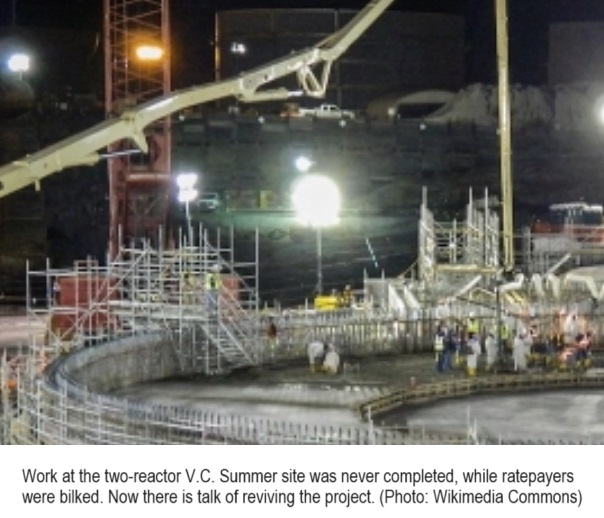
But we have been here before. Consider, for example, the arguments made for building the V. C. Summer nuclear project in South Carolina. That project came out of the hype cycle during the first decade of this century, during one of the many so-called nuclear renaissances that have been regularly announced since the 1980s. [In 1985, for example, Oak Ridge National Laboratory Director Alvin Weinberg predicted such a renaissance and a second nuclear era—that is yet to materialize.] During the hype cycle in the first decade of this century, utility companies proposed constructing more than 30 reactors, of which only four proceeded to construction. Two of these reactors were in South Carolina.
As with most nuclear projects, public funding was critical. The funding came through the 2005 Energy Policy Act, the main legislative outcome from President George W. Bush’s push for nuclear power, which offered several incentives, including production tax credits that were valued at approximately $2.2 billion for the South Carolina nuclear plant project at V. C. Summer.
The justification offered by the CEO of the South Carolina Electric & Gas Company to the state’s Public Service Commission was the expectation that the company’s energy sales would increase by 22 percent between 2006 and 2016, and by nearly 30 percent by 2019.
In fact, South Carolina Electric & Gas Company’s energy sales declined by 3 percent by the time 2016 rolled in. [Such mistakes are standard in the history of nuclear power. In the 1970s, the U.S. Atomic Energy Commission and utility companies were projecting that “about one thousand large nuclear power reactors” would be built “by the year 2000 and about two thousand, mostly breeder reactors, by 2010” on the basis of the grossly exaggerated estimates of how rapidly electricity production would grow during the same period. It turned out that “utilities were projecting four to nine times more electric power would be produced in the United States by nuclear power in 2000 than actually happened”.] In the case of South Carolina, the wrong projection about energy sales was the basis of the $9 billion plus spent on the abandoned V. C. Summer project.
The Racket Continues
With no sense of shame for that failure, one of the two companies involved in that fiasco recently expressed an interest in selling this project. On January 22, Santee Cooper’s President and CEO wrote, “We are seeing renewed interest in nuclear energy, fueled by advanced manufacturing investments, AI-driven data center demand, and the tech industry’s zero-carbon targets…Considering the long timelines required to bring new nuclear units online, Santee Cooper has a unique opportunity to explore options for Summer Units 2 and 3 and their related assets that could allow someone to generate reliable, carbon emissions-free electricity on a meaningfully shortened timeline”.
A couple of numbers to put those claims about timelines in perspective: the average nuclear reactor takes about 10 years to go from the beginning of construction—usually marked by when concrete is poured into the ground—to when it starts generating electricity. But one cannot go from deciding to build a reactor to pouring concrete in the ground overnight. About five to ten years are needed before the physical activities involved in building a reactor to obtain the environmental permits, and the safety evaluations, carry out public hearings (at least where they are held), and, most importantly, raise the tens of billions of dollars needed. Thus, even the “meaningfully shortened timeline” will mean upwards of a decade.
Going by the aftermath of the Deepseek announcement, the AI and data center driven energy demand bubble seems to have crashed on a timeline far shorter than even that supposedly “meaningfully shortened timeline”. There is good reason to expect that this AI bubble wasn’t going to last, for there was no real business case to allow for the investment of billions. What DeepSeek did was to also show that the billions weren’t needed. As Emily Bender, a computer scientist who co-authored the famous paper about large language models that coined the term stochastic parrots, put it: “The emperor still has no clothes, but it’s very distressing to the emperor that their non-clothes can be made so much more cheaply.”
But utility companies are not giving up. At a recent meeting organized by the Nuclear Energy Institute, the lobbying organization for the nuclear industry, the Chief Financial Officer of Constellation Energy, the company owning the most nuclear reactors in the United States, admitted that the DeepSeek announcement “wasn’t a fun day” but maintained that it does not “change the demand outlook for power from the data economy. It’s going to come.” Likewise, during an “earnings call” earlier in February, Duke Energy President Harry Sideris maintained that data center hyperscalers are “full speed ahead”.
Looking Deeper
Such repetition, even in the face of profound questions about whether such a growth will occur, is to be expected, for it is key to the stock price evaluations and market capitalizations of these companies. The constant reiteration of the need for more and more electricity and other resources also adopts other narrative devices shown to be effective in a wide variety of settings, for example, pointing to the possibility that China would take the lead in some technological field or other, and explicitly or implicitly arguing how utterly unacceptable that state of affairs would be, while never asking whether it even matters who wins this race for AI. These tropes and assertions about running out of power contribute to creating the economic equivalent of what Stuart Hall termed “moral panic”, thus allowing possible opposition to be overruled.
One effect of this slew of propaganda has been the near silence on the question of whether such growth of data centers or AI is desirable, even though there is ample evidence of the enormous environmental impacts of developing AI and building hyperscale data centers. Or for that matter the desirability of nuclear power.
As Lewis Mumford once despaired: “our technocrats are so committed to the worship of the sacred cow of technology that they say in effect: Let the machine prevail, though the earth be poisoned, the air be polluted, the food and water be contaminated, and mankind itself be condemned to a dreary and useless life, on a planet no more fit to support life than the sterile surface of the moon”.
But, of course, we live in a time of monsters, a time when the levers of power are wielded by a megalomaniac who would like to colonize Mars, and despoil its already sterile environment.
M. V. Ramana is the Simons Chair in Disarmament, Global and Human Security at the School of Public Policy and Global Affairs, University of British Columbia and the author of The Power of Promise: Examining Nuclear Energy in India.
Ministry of Defence awards £2.6m contract for nuclear apprentice training

The Ministry of Defence has awarded a contract worth nearly £2.6 million
to Bridgwater & Taunton College for the provision of nuclear degree
apprentice training, according to a contract award notice published on 15
April 2025. The contract supports the enrolment of up to 30 students per
year, over three annual cohorts, into the ST0289 Nuclear Scientist and
Nuclear Engineer integrated degree programme—an apprenticeship standard
recognised by the Institute for Apprenticeships and Technical Education
(IfATE).
UK Defence Journal 19th April 2025,
https://ukdefencejournal.org.uk/mod-awards-2-6m-contract-for-nuclear-apprentice-training/
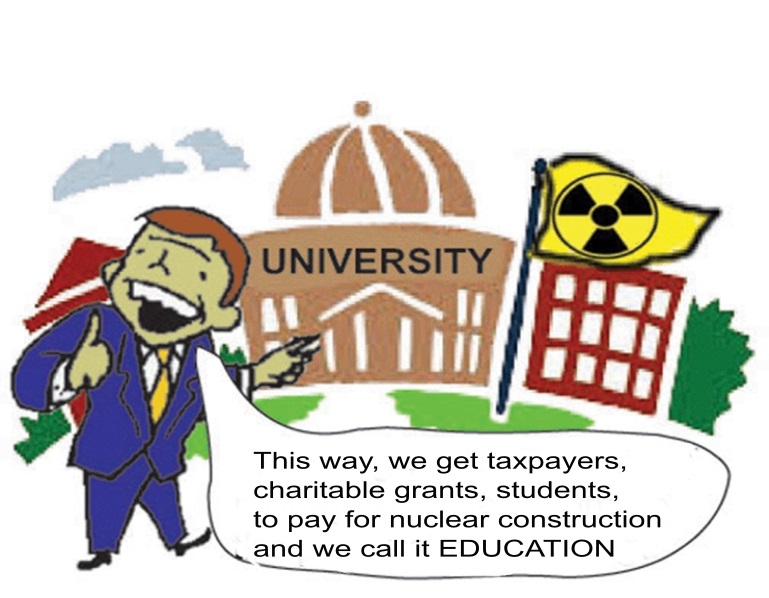
Westinghouse and McMaster University deepen eVinci microreactor collaboration
WNN, 17 Apr 25
A memorandum of understanding and a master services agreement signed by Westinghouse Electric Company and McMaster University aim to move the eVinci microreactor towards commercialisation.
Under the agreements Westinghouse and McMaster University, which is based in Hamilton, Ontario, Canada, will collaborate on the research and development of the eVinci microreactor, including material irradiation and examination studies.
They build on existing collaboration since 2022 which has included McMaster “completing a material properties literature review along with corresponding material handbooks to inform engineering design and determine future testing needs”………………………………………….. https://www.world-nuclear-news.org/articles/westinghouse-and-mcmaster-university-mou-on-evinci-microreactor
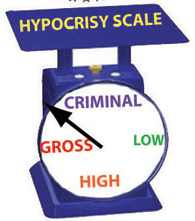
Hinkley C nuclear power station site teaches A Level students about “clean” energy !!
By John Thorne Wednesday 2nd April 2025 ,https://www.wellington-today.co.uk/news/hinkley-c-nuclear-power-station-site-teaches-a-level-students-about-clean-energy-780053
A LEVEL students from Bridgwater and Taunton College (BTC) explored the UK’s clean energy future during an educational tour of the under-construction Hinkley Point C nuclear power station.
The trip was an opportunity for students studying subjects such as business, economics, mathematics, physics, and chemistry to witness first hand one of Europe’s most significant infrastructure projects.
Australia’s MUMS FOR NUCLEAR – propaganda wheels within wheels.
March 30, 2025, https://theaimn.net/australias-mums-for-nuclear-propaganda-wheels-within-wheels/
I’ve only just discovered “Mums for Nuclear” – and they sound just so lovely. They are an Australian offshoot of “Mothers for Nuclear”, which is a very lovely global organisation, full of joy and delight in nature, and of course – all are lovely ladies with lovely children. Here’s a sample of their philosophy:
“I personally went from a fear of nuclear to understanding how many of my assumptions about it were astonishingly far from the truth. The more I read, the more I realized that we direly need more nuclear power to help solve some of the greatest threats to the environment and humanity, including mitigation of climate change, protection of natural resources, reductions in air pollution, and lifting people from poverty. I joined Mothers for Nuclear because I want to help leave a better world for our children.”
That was written by Iida Ruishalme – A Finnish mother, and one of nine women featured on the Mothers for Nuclear website She works as a science writer, and by the way, is the only one who is not directly involved with the nuclear industry. Most of the others are nuclear engineers.
Anyway, the website is beautiful – and it’s easy to come away from it with enthusiasm for nuclear power.
Those nine women represent the USA, Finland, Germany, and the UK. You don’t learn how many members the organisation has, nor where it gets its funding.
From their website:
“In 2022 Mothers for Nuclear became a fiscal sponsor of Stand Up for Nuclear. Stand Up for Nuclear is the world’s 1st global initiative that fights for the protection and expansion of nuclear energy. We are long-term partners who have worked together on multiple campaigns including in California, Europe, Kenya, and many others.”
Mmm..mm – I wondered – “What is a fiscal sponsor“?
“Fiscal sponsorship refers to the practice of non-profit organizations offering their legal and tax-exempt status to groups – typically projects – engaged in activities related to the sponsoring organization’s mission. It typically involves a fee-based contractual arrangement between a project and an established non-profit.”
Mmmmm – sounds as though Mothers for Nuclear is a real help to the nuclear industry, and quite useful to its own members. Though I don’t for a moment doubt their sincerity.
Now we come to the new – and what a timely newness – Australian version – the more relaxed sounding “Mums for Nuclear“. It has joined the “charity” nuclear front group Nuclear for Australia.
Once again, I’ve found it hard to discover just how many members are in Mums for Nuclear. And also – where it gets its funding.
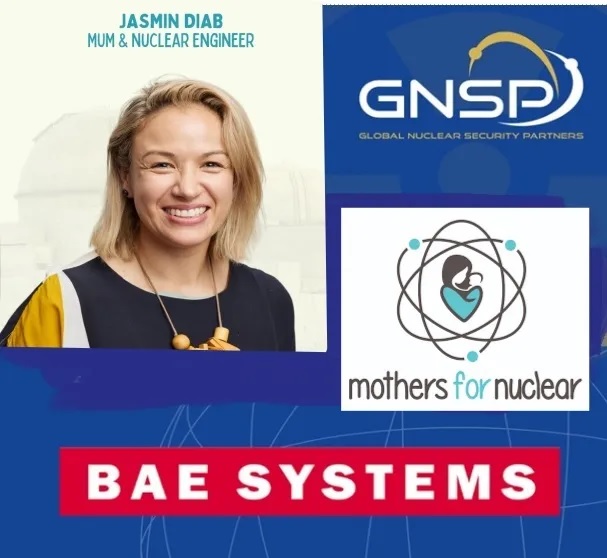
I have found one member, Jasmin Diab, who is the face of the outfit, but doesn’t call herself a CEO or anything formal like that: “Hi, I’m Jaz! I’m a mum of one human and two dogs.”
However, Jaz does have another role, which is quite a bit more formal.
Jasmin Diab is a nuclear engineer and is the Managing Director for Global Nuclear Security Partners (GNSP) in Australia. Global Nuclear Security Partners is a world leading nuclear management consultancy:
“We work with partners, clients and relevant authorities to ensure that novel technology is secure. Across SMR, AMR and fusion we work to make sure that projects, programmes, processes and products are protected and commercially viable.”
“Our clients include: the UK Department for Energy Security and Net Zero; the UK Ministry of Defence; UK National Nuclear Laboratory; the Canadian Nuclear Waste Management Organistion; the Ukrainian Government and nuclear industry; Magnox; Babcock International; BAE Submarines; University of Bristol; University of Manchester and SMR developers. We’ve worked with the armed police capability of the Ministry of Defence Police, Civil Nuclear Constabulary and US teams in protecting nuclear material and developing doctrine, and with the infrastructure police of some Middle Eastern Governments.”
I don’t doubt that Jasmin Diab is sincere, and that she is a good mum to one human and two dogs. And she can provide for them well, with that good job with GNSP. I’m not sure that her message will go down that well with Australian women. A recent national survey shows that Australian women are strongly opposed to nuclear energy and are most concerned any consideration of the controversial power source will delay the switch to renewables.
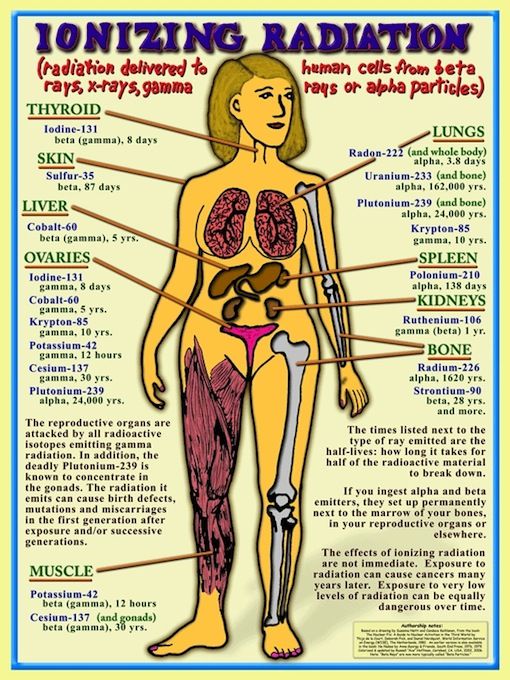
The Mums for Nuclear groups seem curiously uninterested in the fact that women, and children, are significantly more vulnerable to illness from nuclear radiation than men are.
Nuclear plant boss Julia Pyke: ‘It’s a tough gig, developing big infrastructure projects in the UK’.

Julia Pyke is on a mission to show the nuclear industry is filled with “nice, normal people”. As joint managing director of Sizewell C, a planned nuclear power station on
England’s Suffolk coast, she has to win over campaigners, as well as the
UK government, which has already committed billions of pounds towards the
project.
Her attempts have included an unconventional move to set up a
choir at the facility. “We want to make ourselves much more
accessible,” says Pyke, herself a former choral scholar. She brought the
singers to London for the nuclear industry’s annual bash to perform
“Let it Be, Sizewell C”, a take on The Beatles’ song, to assembled
dignitaries. “It made me laugh,” she says. “Obviously people were
drunk, but by the end of it they were waving their phones in the air.”
Pyke’s affability, she hopes, is an advantage as the company seeks to
improve the perception of the nuclear industry — which she says has
“really undersold itself”.
Amid fierce opposition from many in the
local community, Pyke must convince detractors not just of the importance
of Sizewell C in Britain’s transition to cleaner energy but also as an
economic hub that creates jobs.
The stakes are high as officials are set to
make the final funding decision within months. Industry and Whitehall
figures estimate build costs could rise to as much as £40bn, double the
£20bn estimate given by developer EDF and the UK government in 2020. Pyke
points to the government’s earlier statement that it does not recognise
the figure.
Sizewell’s sister project, the Hinkley Point C plant in
Somerset, is billions of pounds over budget and several years delayed,
contributing to widespread scepticism about the nuclear industry’s
ability to deliver. Meanwhile, the UK’s reputation for building big
infrastructure projects has been tarnished by delays and high costs on
other developments.
FT 16th March 2025,
https://www.ft.com/content/8613326a-213c-44a3-9e01-a2c8db078919
Delusional, ruinous and obsolete -the ITER nuclear fusion project
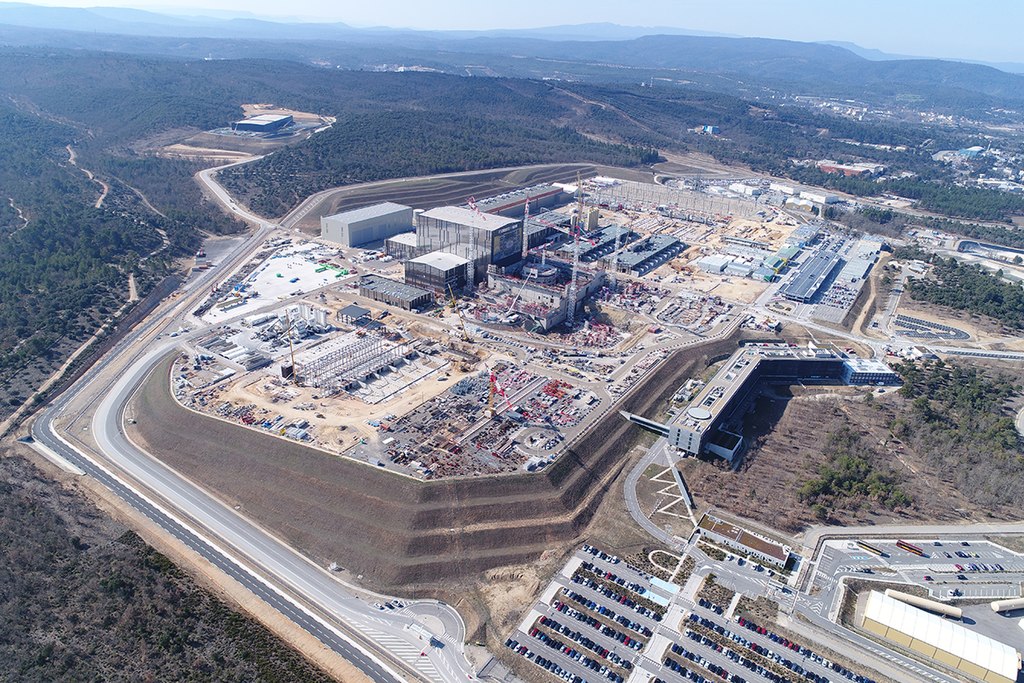
The ITER fusion project is 18 years late and can do nothing about climate change, writes Antoine Calandra
https://beyondnuclearinternational.org/2025/03/16/delirante-ruineuse-et-obsolete/
ITER (International Thermonuclear Experimental Reactor) is an international tokamak nuclear fusion research and engineering project, which has been significantly over budget and schedule, and is currently under construction next to the Cadarache nuclear facility in southern France.
India is one of the seven partner countries in the ITER project, along with the European Union, Russia, Japan, the United States, China, and South Korea. Macron may boast as much as he likes, but ITER is a complete fiasco, a delusional, ruinous, and obsolete project.
On November 14, 2024, the annual public meeting entitled: ITER, 15 years: what assessment? was held in Peyrolles.
I was expecting a big event and to get some recent information on the ITER construction site…But surprise, none of that!
A nondescript multipurpose room, no decor, no documents available, unpleasant white light, around forty people present, only interns (CEA ITER* employees, CLI members, local elected officials, a few union members)
For the event, the tables and chairs were arranged differently, “for a more convivial, cabaret-like atmosphere,” I heard. Oh!?
Pietro Barabaschi, Director General of ITER, was not there.
No agenda to announce the evening’s schedule with the names of the speakers, as in previous occasions. A very meager presentation of the ITER project (5 or 6 images) and that was it. And “time for questions from the audience.” Ah!
In short, the most pathetic ITER public meeting I have ever attended. A public meeting that reflects the ITER assessment.
ITER, what is the outcome?….a disaster!
We already wrote in 2005 with the MEDIANE association: “ITER, a dangerous, ruinous and doomed nuclear project”
The latest important news regarding ITER came on July 3, 2024, during the press conference of Pietro Barabaschi, the current ITER Director General, news that had been expected for a year.
A new calendar: 9 more years late!
The first plasma was originally scheduled for 2016, then postponed to 2025. It has been postponed to 2034. We are 18 years behind schedule.
And with the new calendar, an additional cost of €5 billion!
That’s at least €25 billion of public money to date, a cost multiplied by five. And in reality, more than €40 billion, including the in-kind contributions from the project’s partner countries.
The ITER Director acknowledged that “Fusion cannot come in time to solve the problems our planet faces today, and investments in other technologies, both known and unknown, are absolutely necessary.”
However, the speeches and commitments to get this nuclear fusion project accepted were completely different in 2006 at the time of this charade of public debate.
It was even possible to read that after ITER, DEMO, a pre-industrial demonstrator, was planned to “prove the industrial feasibility of this technology around 2040 and demonstrate that fusion can, by 2050, produce electricity on an industrial scale.”
Once again, the seven partner countries (the European Union, Russia, Japan, the United States, China, India, and South Korea) have agreed to pay more. But the ITER Director is now considering finding private actors to try to fill this financial gap.
Several private companies no longer expect anything from ITER, but they firmly believe in nuclear fusion and promise electricity production in a shorter timeframe.
Some even claim that ITER will be obsolete by the time it is commissioned.
I would add that ITER will probably not work and that there will never be industrial production of electricity through nuclear fusion.
Nuclear fusion will be neither “a revolution for humanity” nor “the energy of the future.”
It is not clean energy, nor even abundant energy. It is dangerous to human health and produces radioactive waste.
Its interest is above all military and to try to save the nuclear industry which has been in a bad state for several years.
ITER will probably never work and will end in total fiasco, worse than SuperPhénix*, which was supposed to be the flagship of the French nuclear industry.
But by squandering all these billions, the ITER monster will have succeeded in blocking any progress towards another energy model and imposing the continuation of the nuclear industry for years to come.
This myth of free and inexhaustible energy that allows for indefinite consumption and waste must be eradicated from people’s minds once and for all. It is also time to put an end to this gigantism and centralization of production in the hands of powerful, commanding states that serve the richest.
The solutions for the future have been known for a long time:
save energy, put an end to waste, develop and improve renewable energies (solar, wind, hydraulic) the only truly clean and future energies.
And not to develop them in an industrial and centralized manner, which is obviously and unfortunately the case.
The industrialization of the world must be fought. A new social project is a prerequisite for any energy project.
The future lies in small production units, local or regional, with technology accessible to the greatest number, low energy consumption, avoiding the cost of distribution.
Nuclear fusion, like fission, is a dangerous, dirty, and expensive energy source. It’s a complex, centralized technology reserved for wealthy countries, leading to proliferation, dependency, injustice, and war.
* CEA: Atomic Energy Commission
* CLI: Local information commission
* SuperPhénix, a former nuclear reactor, commissioned in 1986 and definitively shut down in 1997, is a prototype of a sodium-cooled fast neutron reactor. A dangerous machine that consumed more than 60 billion francs while operating for only thirty months in its twelve years of existence.
Antoine Calandra is a former administrator of the “Sortir du nucléaire” network and a member of the Médiane association. This article was first published in French on Mediapart.
Continued Propaganda About AI and Nuclear Power
One effect of this slew of propaganda has been the near silence on the question of whether such growth of data centers or AI is desirable, even though there is ample evidence of the enormous environmental impacts of developing AI and building hyperscale data centers. Or for that matter the desirability of nuclear power.
M.V. Ramana, 13 Mar 25, https://www.counterpunch.org/2025/03/13/continued-propaganda-about-ai-and-nuclear-power/
One bright spot amidst all the terrible news last couple of months was the market’s reaction to DeepSeek, with BigTech firms like Nvidia and Microsoft and Google taking major hits in their capitalizations. Billionaires Nvidia’s Jensen Huang and Oracle’s Larry Ellison—who had, just a few days back, been part of Donald Trump’s first news conference—lost a combined 48 billion dollars in paper money. As a good friend of mine, who shall go unnamed because of their use of an expletive, said “I hate all AI, but it’s hard to not feel joy that these asshats are losing a lot of money.”
Another set of companies lost large fractions of their stock valuations: U.S. power, utility and natural gas companies. Electric utilities like Constellation, Vistra and Talen had gained stock value on the basis of the argument that there would be a major increase in demand for energy due to data centers and AI, allowing them to invest in new power plants and expensive nuclear projects (such as small modular reactor), and profit from this process. [The other source of revenue, at least in the case of Constellation, was government largesse.] The much lower energy demand from DeepSeek, at least as reported, renders these plans questionable at best.
Remembering Past Ranfare
But we have been here before. Consider, for example, the arguments made for building the V. C. Summer nuclear project in South Carolina. That project came out of the hype cycle during the first decade of this century, during one of the many so-called nuclear renaissances that have been regularly announced since the 1980s. [In 1985, for example, Oak Ridge National Laboratory Director Alvin Weinberg predicted such a renaissance and a second nuclear era—that is yet to materialize.] During the hype cycle in the first decade of this century, utility companies proposed constructing more than 30 reactors, of which only four proceeded to construction. Two of these reactors were in South Carolina.

As with most nuclear projects, public funding was critical. The funding came through the 2005 Energy Policy Act, the main legislative outcome from President George W. Bush’s push for nuclear power, which offered several incentives, including production tax credits that were valued at approximately $2.2 billion for V. C. Summer.
The justification offered by the CEO of the South Carolina Electric & Gas Company to the state’s Public Service Commission was the expectation that the company’s energy sales would increase by 22 percent between 2006 and 2016, and by nearly 30 percent by 2019. In fact, South Carolina Electric & Gas Company’s energy sales declined by 3 percent by the time 2016 rolled in. [Such mistakes are standard in the history of nuclear power. In the 1970s, the U.S. Atomic Energy Commission and utility companies were projecting that “about one thousand large nuclear power reactors” would be built “by the year 2000 and about two thousand, mostly breeder reactors, by 2010” on the basis of the grossly exaggerated estimates of how rapidly electricity production would grow during the same period. It turned out that “utilities were projecting four to nine times more electric power would be produced in the United States by nuclear power in 2000 than actually happened”.] In the case of South Carolina, the wrong projection about energy sales was the basis of the $9 billion plus spent on the abandoned V. C. Summer project.
The Racket Continues
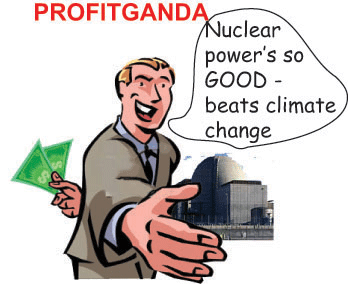
With no sense of shame for that failure, one of the two companies involved in that fiasco recently expressed an interest in selling this project. On January 22, Santee Cooper’s President and CEO wrote, “We are seeing renewed interest in nuclear energy, fueled by advanced manufacturing investments, AI-driven data center demand, and the tech industry’s zero-carbon targets…Considering the long timelines required to bring new nuclear units online, Santee Cooper has a unique opportunity to explore options for Summer Units 2 and 3 and their related assets that could allow someone to generate reliable, carbon emissions-free electricity on a meaningfully shortened timeline”.

A couple of numbers to put those claims about timelines in perspective: the average nuclear reactor takes about 10 years to go from the beginning of construction—usually marked by when concrete is poured into the ground—to when it starts generating electricity. But one cannot go from deciding to build a reactor to pouring concrete in the ground overnight. It takes about five to ten years needed before the physical activities involved in building a reactor to obtain the environmental permits, and the safety evaluations, carry out public hearings (at least where they are held), and, most importantly, raise the tens of billions of dollars needed. Thus, even the “meaningfully shortened timeline” will mean upwards of a decade.
Going by the aftermath of the Deepseek, the AI and data center driven energy demand bubble seems to have crashed on a timeline far shorter than even that supposedly “meaningfully shortened timeline”. There is good reason to expect that this AI bubble wasn’t going to last, for there was no real business case to allow for the investment of billions. What DeepSeek did was to also show that the billions weren’t needed. As Emily Bender, a computer scientist who co-authored the famous paper about large language models that coined the term stochastic parrots, put it: “The emperor still has no clothes, but it’s very distressing to the emperor that their non-clothes can be made so much more cheaply.”
But utility companies are not giving up. At a recent meeting organized by the Nuclear Energy Institute, the lobbying organization for the nuclear industry, the Chief Financial Officer of Constellation Energy, the company owning the most nuclear reactors in the United States, admitted that the DeepSeek announcement “wasn’t a fun day” but maintained that it does not “change the demand outlook for power from the data economy. It’s going to come.” Likewise, during an “earnings call” earlier in February, Duke Energy President Harry Sideris maintained that data center hyperscalers are “full speed ahead”.
Looking Deeper
Such repetition, even in the face of profound questions about whether such a growth will occur, is to be expected, for it is key to the stock price evaluations and market capitalizations of these companies. The constant reiteration of the need for more and more electricity and other resources also adopts other narrative devices shown to be effective in a wide variety of settings, for example, pointing to the possibility that China would take the lead in some technological field or the other, and explicitly or implicitly arguing how utterly unacceptable that state of affairs would be. Never asking whether it even matters who wins this race for AI. These tropes and assertions about running out of power contribute to creating the economic equivalent of what Stuart Hall termed “moral panic”, thus allowing possible opposition to be overruled.
One effect of this slew of propaganda has been the near silence on the question of whether such growth of data centers or AI is desirable, even though there is ample evidence of the enormous environmental impacts of developing AI and building hyperscale data centers. Or for that matter the desirability of nuclear power.
As Lewis Mumford once despaired: “our technocrats are so committed to the worship of the sacred cow of technology that they say in effect: Let the machine prevail, though the earth be poisoned, the air be polluted, the food and water be contaminated, and mankind itself be condemned to a dreary and useless life, on a planet no more fit to support life than the sterile surface of the moon”.
But, of course, we live in a time of monsters. At a time when the levers of power are wielded by a megalomaniac who would like to colonize Mars, and despoil its already sterile environment.
M. V. Ramana is the Simons Chair in Disarmament, Global and Human Security at the School of Public Policy and Global Affairs, University of British Columbia and the author of The Power of Promise: Examining Nuclear Energy in India.
The nuclear industry continues to infiltrate education.

COMMENT. Well, there will always be a need for workers to shut down this poisonous industry, and deal with the radioactive trash
1 Future innovators with the ‘Evolve’ work experience programme. Sellafield Ltd invites Year 10 learners with an interest in robotics and
artificial intelligence (AI) to participate in the ‘Evolve’ work
experience programme. So far, more than 100 students have been involved in
Evolve, with participants currently coming from 11 different schools in
West Cumbria, as well as home-educated learners. This 5-day programme takes
place on selected weeks throughout the year and aims to equip students with
essential skills for their future careers.
Sellafield Ltd, 13th March 2025,
https://www.gov.uk/government/news/future-innovators-with-the-evolve-work-experience-programme
Let’s hear it for the ‘blockers’ – support common sense, not nonsense!
BANNG.info 10 March 2025 Andrew Blowers discusses this in the March 2025 edition of Regional Life, https://www.banng.info/news/regional-life/blockers/
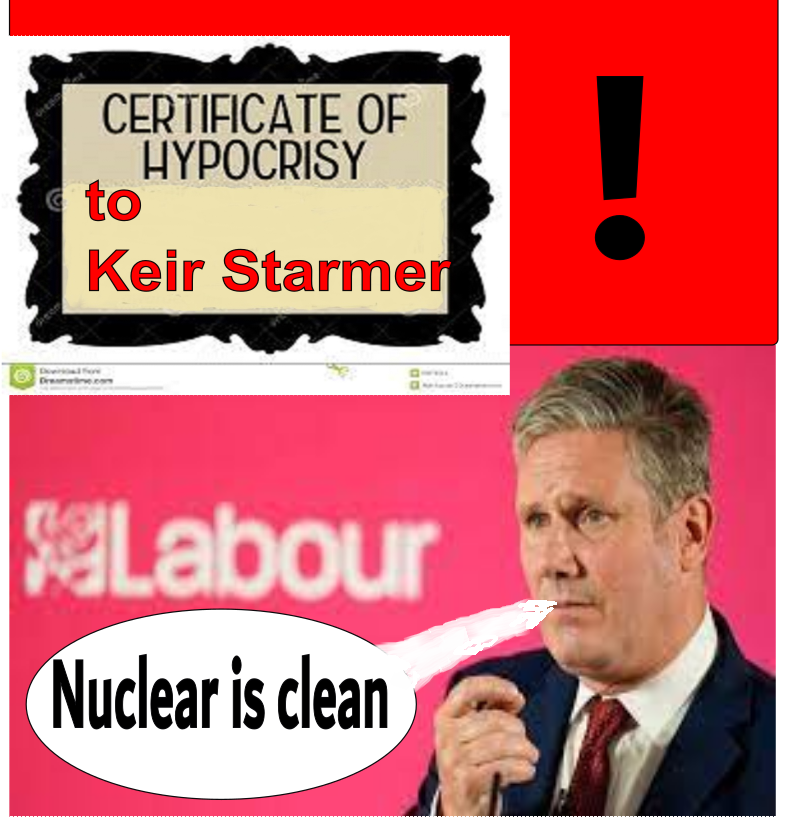
With the headline ‘Government rips up rules to fire-up nuclear power’, the Prime Minister launched an intemperate assault on the ‘blockers who have strangled our chances of cheaper energy, growth and jobs for far too long.’
If blocking means using common sense to protect the public and environments from dangerous, destructive developments like new nuclear, then BANNG along with many other groups is proud to be a ‘blocker’.
The PM’s outrageous attack on environmentalists, conservation groups, councils and even regulators was a stream of assertions, misjudgements, half-truths and nonsense.
Let’s look at some of the claims made and our responses:
1) ‘Blockers create delay and obstruction’: Big infrastructure projects must be properly scrutinised to ensure safety and environmental protection.
2) ‘Investors are held back’: On the contrary, it is investors who hold back, pulling out of major projects at Sellafield, Wylfa and Bradwell and still no sign of investors chomping at the bit to get Sizewell C off the ground.
3) ‘Projects are suffocated by regulations’: Regulation focuses on public safety and environmental protection. Cutting rules or corners is a charter for unconstrained development and can lead to disasters like Grenfell Tower. More regulation not less is needed to achieve net zero.
4) ‘Growth is blocked by trivial objections’: The PM scoffs at the campaign by ‘blockers’ to ensure acoustic deterrents are installed to prevent millions of fish being killed at Hinkley Point C through entrapment in the cooling pipes. He is offended when Sizewell C campaigners take EDF to court for destroying a precious native woodland or for failing to secure adequate water supply for the gigantic power station before the go-ahead has been given. Efforts to protect species, heritage and environments from destruction should be supported, not denigrated by uninformed politicians.
5) ‘Rip up planning rules to prioritise growth’: For years nuclear development was ‘restricted’ to eight “potentially suitable” sites [including Bradwell] as part of archaic planning rules that haven’t been looked at since 2011. In fact, apart from Hinkley Point C and Sizewell C, it was developers who shied away from the eight sites, not planners who blocked development.
6) ‘Build nuclear stations in the places that need them’: In effect, the Government has now conceded by scrapping the set list of eight sites and introducing an alternative siting strategy – effectively a developer-led free-for-all so firms can start building nuclear stations ‘in the places that need them.’ Even so, some of the eight sites are already earmarked for clusters of Small Modular reactors (SMRs) – the (not so) mini nuclear power stations that have yet to be developed, let alone deployed. Finding locations where they are supposedly needed is not the same as finding sites where they are wanted. The old problems of safety, radioactive waste and cooling water will arise and provoke resistance from local ‘blockers’.
Paradoxically, Bradwell is likely to be by-passed in the surge for new sites. It is, at long last, delisted and its remote location and vulnerable coastal conditions make it absolutely unsuitable.
So, let’s hear it for the ‘blockers like BANNG and the 10,000 signatories from around the Blackwater of our face-to-face Petition, who put common sense before nonsense to protect local environments and communities.
Nuclear power’s global stagnation


There were no ‘small modular reactor’ (SMR) startups in 2024. Indeed there has never been a single SMR startup.
If you count so-called SMRs that are not built using factory ‘modular’ construction techniques, then there has still been just one each in China and Russia.
Dr Jim Green , 10th March 2025 ,
https://theecologist.org/2025/mar/10/nuclear-powers-global-stagnation
The proponents of nuclear power rely on an excessive optimism which, once again, sits in stark contrast to the reality of the decades-long stagnation the industry worldwide. That contrast is the subject of our new report for the EnergyScience Coalition.
The latest nuclear proposals are built on three speculations, each of which is a castle built on sand.
First, we have the projected AI-related energy demand. This ignores emerging evidence that such projections are overblown. For example, the new leading AI entrant DeepSeek requires just 10 percent of the energy of competitors. This is a repeat of the claims of the nuclear power proponents of the 1970’s whose projected demand that never eventuated.
Grids
Second, then we see speculative techno-optimism that new technologies such as small modular reactors will resolve industry project management issues. These small reactors are unproven.
Third, finally we note the prospective wish fulfilment, where dozens of nuclear ‘newcomer’ countries are offered as saviours. This is despite the hero countries in a large majority of cases not having reactor approvals and funding in place.
So what is the actual state of nuclear power in 2025? Worldwide nuclear power capacity was 371 gigawatts (GW) at the end of last year. That figure is near-identical to capacity of 368 GW two decades earlier in 2005.
A review by the World Nuclear Industry Status Report notes that seven new reactors were connected to grids last year while four reactors were permanently closed. The net increase in operating nuclear capacity was 4.3 gigawatts (GW).
Ageing reactors
The industry faces a daunting challenge just to maintain its pattern of stagnation, let alone achieve any growth. As of Wednesday, 1 January 2025, the mean age of the nuclear power reactor fleet was 32.1 years. In 1990, the mean age was just 11.3 years.
The International Atomic Energy Agency projects the closure of 325 GW of nuclear capacity from 2018 to 2050 due simply to the ageing of the reactor fleet ‒ that’s 88 percent of current worldwide capacity.
There were no ‘small modular reactor’ (SMR) startups in 2024. Indeed there has never been a single SMR startup. If you count so-called SMRs that are not built using factory ‘modular’ construction techniques, then there has still been just one each in China and Russia.
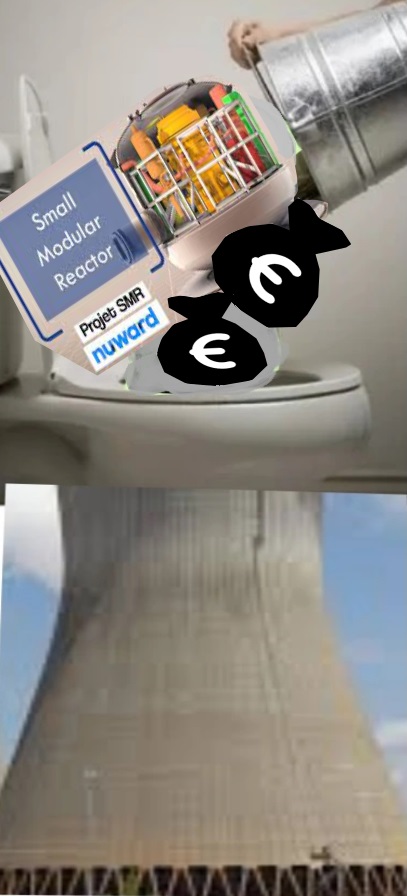
The SMR sector continues to go nowhere, with further setbacks in 2024. The Nuward project in France has been suspended. This followed previous decisions to abandon four other SMR projects and the bankruptcy of US company Ultra Safe Nuclear.
Renewables
In striking contrast to nuclear power’s marginal gain of 4.3 GW in 2024, the International Energy Agency’s October 2024 ‘Renewables 2024’ report estimates 666 GW of global renewable capacity additions in 2024.
Based on the Agency’s estimate, renewables capacity growth was 155 times greater than that of nuclear power. In China, the ratio was 100:1 last year.
The International Energy Agency expects renewables to jump sharply from 30 percent of global electricity generation in 2023 to 46 percent in 2030.
Conversely, nuclear power’s share of global electricity generation has fallen steadily since the 1990s. As of 2025, nuclear power accounted for 9.15 percent of global electricity production, barely half of its peak of 17.5 percent in 1996.
Renewable investments were 21 times greater than nuclear investments. A Bloomberg analysis finds that renewable energy investments reached $US728 billion in 2024, up eight percent on the previous year. This compares with nuclear investment that remains flat at US$34.2 billion.
Renewable costs have fallen sharply, in contrast to massive cost overruns with nuclear projects. Lazard investment firm data shows that utility-scale solar and onshore wind became cheaper than nuclear power from 2010‒2015.
From 2009‒2024, the cost of utility-scale solar fell 83 percent; the cost of onshore wind fell 63 percent; while nuclear costs increased 49 percent.
Newcomer
Claims that between 40 and 50 countries are actively considering or planning to introduce nuclear power, in addition to the 32 countries currently operating reactors, do not withstand scrutiny.
At the start of this year reactors were under construction in just 13 countries, two less than a year earlier. Seven percent of the world’s countries are building reactors – 93 percent are not.
Of the 13 countries building reactors, only three are potential nuclear newcomer countries building their first plant: Egypt, Bangladesh and Turkiye. In those three countries, the nuclear projects are led by Russian nuclear agencies with significant up-front funding from the Russian state.
The World Nuclear Association observes that apart from those three countries, no countries meet its criteria of having ‘planned’ reactors: those with “approvals, funding or commitment in place, mostly expected to be in operation within the next 15 years”.
The number of potential newcomer countries with approvals and funding in place, or construction underway, is just three and those projects are funded heavily by the Russian state.
Phase-outs
There is no evidence of a forthcoming wave of nuclear newcomer countries.
At most there will be a trickle, as has been the historical pattern. There has in fact been just seven newcomer countries over the past 40 years, and just three in the current century.
The number of countries operating power reactors in 1996–1997 reached 32. Since then, newcomer countries have been matched by countries completing nuclear phase-outs and thus the number is stuck at 32. And less than one-third of those countries are building reactors.
It is doubtful whether the number of nuclear newcomer countries will match the number of countries completing phase-outs in 20 to 30 years’ time.
Capital strike

Nuclear power just can’t compete economically. The industry’s greatest problem at the moment is a recognition of this by investors, resulting in a capital strike.
Even with generous government and taxpayer subsidies, it has become difficult or impossible to fund new reactors ‒ especially outside the sphere of China and Russia’s projects at home and abroad.
Who would bet tens of billions of dollars on nuclear power projects when the recent history in countries with vast expertise and experience has been disastrous?
In France, the latest cost estimate for the only recent reactor construction project, the 1.6 GW Flamanville EPR, increased seven-fold from €3.3 billion to €23.7 billion for just one reactor. Construction took 17 years. No reactors are currently under construction in France.
And this problem sits alongside the risk of Fukushima-scale disasters, the risk of weapons proliferation, the risk of attacks on nuclear plants and the risks from the intractable nuclear waste legacy.
Some of these risks have already come to pass, as with the reality of attacks on nuclear plants in Ukraine.
Bankruptcy
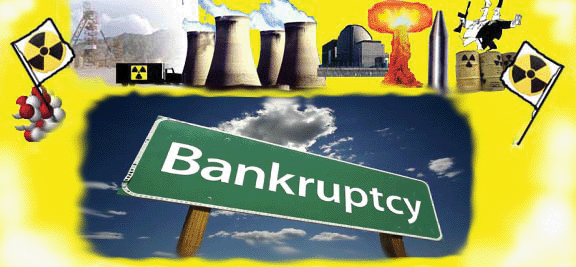
In the US, one project in South Carolina, comprising two Westinghouse AP1000 reactors, was abandoned in 2017 after at least US$9 billion was spent.
Westinghouse declared bankruptcy immediately after the cancellation of the South Carolina project, and its debts almost forced its parent company Toshiba into bankruptcy. All that remains is the nukegate scandal: an avalanche of legal action, including criminal cases.
The only other reactor construction project in the US ‒ the twin-reactor Vogtle project in the state of Georgia ‒ reached completion at a cost 12 times higher than early estimates. The final cost of the Vogtle project was at least US$17 billion per reactor. Completion was about seven years behind schedule.
No power reactors are currently under construction in the US. Thirteen reactors have been permanently shut down over the past 15 years.
Subsidies
The situation is just as bleak in the UK where there have been 24 permanent reactor shut-downs since the last reactor startup 30 years ago, in 1995.
The 3.2 GW twin-reactor Hinkley Point project in Somerset was meant to be complete in 2017 but construction didn’t even begin until 2018. The estimated completion date has been pushed back to as late as 2031. The latest cost estimate ‒ £23 billion per reactor ‒ is 11.5 times higher than early estimates.
The UK National Audit Office estimates that taxpayer subsidies for the Hinkley Point project could amount to A$60.8 billion and the UK Parliament’s Public Accounts Committee said that “consumers are left footing the bill and the poorest consumers will be hit hardest.”
The estimated cost of the planned 3.2 GW twin-reactor Sizewell C project in the UK has jumped to nearly £40 billion – or £20 billion per reactor – which is twice the cost estimate in 2020.
Securing funding to allow construction to begin at Sizewell is proving to be difficult and protracted despite a new ‘Regulated Asset Base’ funding model which foists the enormous risk of enormous cost overruns onto taxpayers and electricity bill payers. Securing funding to complete the Hinkley Point project is also proving difficult.
Lessons
France, the US and the UK have vast nuclear expertise and experience. They all enjoy synergies between civil and military nuclear programs ‒ President Macron said in a 2020 speech that without nuclear power in France there would be no nuclear weapons, and vice versa.
All of the above-mentioned construction projects were or are on existing nuclear sites. All projects were or are long delayed and tens of billions of dollars over-budget.
Claims that potential nuclear newcomer countries, without any of those advantages, could build reactors quickly and cheaply are simply not credible.
This Author
Dr Jim Green, national nuclear campaigner with Friends of the Earth Australia and a member of the Nuclear Consulting Group.
A report expanding on these issues is posted at the EnergyScience Coalition website. The report is co-authored by Darrin Durant, associate professor in science and technology studies at the University of Melbourne, Jim Falk, professorial fellow in the school of geography, earth and atmospheric sciences at the University of Melbourne and emeritus professor at the University of Wollongong and Dr Jim Green.
University of Suffolk co-opted by the nuclear industry.

Ipswich jobs fair showcases Sizewell C opportunities
The University of Suffolk hosted a jobs fair showcasing Sizewell C
opportunities. More than 200 people attended the event, organised by the
Department of Work and Pensions (DWP) and Sizewell C. The fair provided
information on the thousands of jobs, apprenticeships, and training
opportunities available at the nuclear power plant. Attendees had the
chance to connect with local companies in the Sizewell C supply chain, as
well as colleges and charities.
Ipswich Star 7th March 2025 https://www.ipswichstar.co.uk/news/24986367.ipswich-jobs-fair-showcases-sizewell-c-opportunities/
Anas Sarwar’s insistences on nuclear energy serves wrong people.

Last week, Anas Sarwar challenged John Swinney over his
determination to continue SNP policy that uses planning to veto new nuclear
power plants in Scotland. Sarwar announced at FMQs that 29% of the energy
mix that morning came from nuclear.
John Swinney pointed out 70% came from
renewables and suggested Labour would only muddy the water for investors in
Scotland if they focused unduly on the “junior partner” in the energy
mix.
Sarwar then pointed out China has built 29 nuclear power plants. Fine
– China has also built two-thirds of the world’s wind and solar
resource, yet its use of coal also makes it the world’s largest emitter.
Which tells us what precisely? Forget China – focus on Scotland. Scotland
backing nuclear is like geothermal and hydro-powered Iceland backing gas.
It makes no sense at all. Our destiny is to develop clean, green baseload
energy sources for ourselves and the rest of the world.
What’s so wrong with nuclear?
Jings, where to start? Nuclear costs more to produce, plants
take far longer to construct, leave behind radioactive waste and depend
largely on highly enriched uranium derived from Russia and workers forced
to risk radiation and exploitation.
Wind critics complain that
intermittency means baseload (flick of a switch) energy like gas must be
ready for wind-free days. But nuclear isn’t flick of a switch either –
it takes too long to power up and down so stays permanently on (apart from
planned maintenance) even when wind is high.
Last year, six international
academics were so worried about Labour’s new stance, they issued a joint
statement. Maybe it didn’t reach the new Prime Minister, but it was
published in The National. Professor Steve Thomas, Dr Paul Dorfman,
Professor MV Ramana, Professor Amory Lovins and Tetsunari Iida stated that
after 60 years of commercial history, “nuclear power is further from, not
nearer to, survival without massive public subsidies”, and contributes as
much electricity in one year as renewables add in three days.
Nuclear isn’t cheaper – anywhere. The German Institute for Economic Research
examined 674 nuclear power plants built across the world since 1951 and
found the average plant made a loss of €4.8 billion. It also isn’t
greener – the International Panel on Climate Change says renewables are
now 10 times more efficient than nuclear at CO2 mitigation.
And it certainly isn’t quicker. Professor Naomi Oreskes from Harvard University
wrote in Scientific American: “The most recent US nuclear power reactors
were started in 2013 and are still not finished. That’s the problem with
imagined ‘breakthrough’ technologies. The breakthrough can be sudden,
but implementation is slow.” [Sarwar] wrote a column for the Daily Record
which insisted: “John Swinney could end the SNP’s ideological
opposition to nuclear power, with the stroke of a pen.” Ah, Anas. The
boot’s on the other foot.
Opposition to nuclear in Scotland isn’t
ideological. But Labour’s deep attachment certainly is. Anas Sarwar also
contended that if Swinney backed nuclear, “he could unlock billions of
pounds of investment in Scotland and create spates of new quality jobs”.
Mmm. Spates. Maybe this was written in a hurry. Like the billions not
invested by the City of London in Sizewell or Hinkley C over the past
decade? Come on.
So, what’s Labour’s nuclear love-in really about? Some
think Starmer inherited “an absolute monster” after the Tories’ bad
decision to put billions of public cash into Sizewell. But others like
Professor Andrew Stirling and senior research fellow Philip Johnstone
advanced a different theory in the latest edition of the European:
“Nuclear affections are a military romance. Powerful defence interests
– with characteristic secrecy and highly active PR – are mostly driving
the dogged persistence.”
The National 13th Feb 2025, https://www.thenational.scot/politics/24931561.anas-sarwars-insistences-nuclear-energy-serves-wrong-people/
Nimbys. Naysayers. Traitors. Children take note, why learn oracy when insults will do?
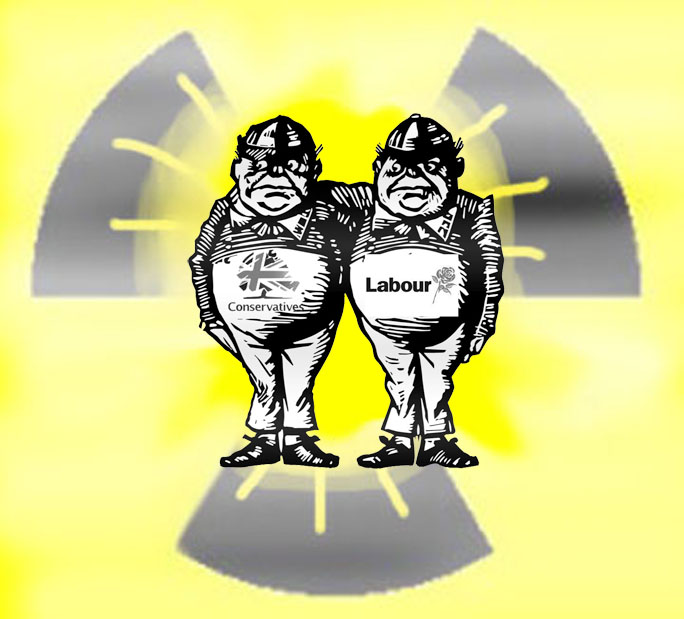
Catherine Bennett, Guardian, 9th Feb 2025
Keir Starmer’s rhetoric against green campaigners appears to have taken a playground turn.
Before the last election, in what was billed as his “most personal interview yet”, Keir Starmer said: “I’m not in the habit of bandying insults around”. It was once part of his appeal, or meant to be, that his speech was polite, even to the point of colourless, in contrast to the ugly gibberish streaming out of Boris Johnson, then Liz Truss. When the Tories went low, Starmer went sorrowful headteacher. “I don’t think Boris Johnson is a bad man,” he said in one speech, “I think he is a trivial man.”
His favourite word, these days, is “nimbys”. Starmer uses it so freely he’s personally breathed new life into the original acronym (“not in my back yard”), revealing along the way its largely unexplored potential to create national disharmony. Why restrict such a genius jibe to arguments about ring roads and executive homes?
Last week’s headlines about his plan for nuclear power expansion – typically, “Starmer to ‘push past nimbyism’ in pledge to expand nuclear power sites” – are only the latest in which Starmer demonstrates how any opposition to any scheme with environmental consequences can be represented, by a skilled litigator like himself, as nimbyism: purely selfish, irrational and against the common good. Unlike the visionary tech overlords such as Google, Meta and Amazon, which Starmer invited, in the same speech, to profit, with their data centres, from the UK nimbys’ certain defeat. His government’s pro-nuclear press release featured praise from similarly patriotic, non-nimby-infested corporations, such as EDF and Microsoft.
It is thanks to Starmer we now understand that Greenpeace and other environmental campaigners – actually anyone with questions about, for instance, the disposal of nuclear waste – are essentially indistinguishable from other varieties of nimby he has been insulting for a while, so as to trivialise in advance any disquiet about Labour’s plans to tear up planning regulations.
Look beyond the acronym’s “back yard” element: now any non-local objection to 150 infrastructure projects, all evidently beyond criticism, also identifies a person as, in his eyes, the enemy of his “working people”.
…………………………..“There are countless more examples of Nimbys and zealots gumming up the legal system,” he wrote, “often for their own ideological blindspots to stop the Government building the infrastructure the country needs.” Anti-growth traitors, the lot of them. “They want to win for themselves,” Starmer raved, “not for the country.”………………………………………..
For prominent Tory idealists, there must be validation in Starmer’s promise to fulfil their dreams, never properly realised, of humbling environmentalists and trashing planning restrictions (in places where they don’t live). Not forgetting the satisfaction of seeing Starmer recycle, for Labour, their exact same phrases, sometimes wearing the same accessories – hard hats and hi-vis jackets – for the benefit of vanity photographers recently declassified as a Tory outrage.
Since it can’t be plagiarism, only shared passion can explain why Starmer and David Cameron have phrased their ambitions in identical terms, in wanting, say, a “bonfire of red tape” (Starmer 2024; Cameron 2014). Starmer thinks regulations are “suffocating” (likewise Cameron); Starmer says “we are the builders” (ditto George Osborne); Starmer wants to end “dithering” (Cameron, “cut through the dither”); Starmer declares Britain “open for business” (Cameron, same, 2012); Starmer confronts those “talking our country down” (so did Cameron, 2011).
To judge by their interchangeable expressions of annoyance, hostility to environmental protections is also common ground for Reeves and Osborne. For him, they placed “ridiculous costs on British businesses”; for her, they make “delivering major infrastructure in our country far too expensive”. In 2012, the vice-president of the RSPB, Britain’s largest nature conservation charity, called Osborne “a bloody idiot”.
…………………………The teaching of “oracy” in schools was once a priority for Starmer. Confident speaking, he said, gives “an inner belief to make your case in any environment”. Whatever explains his recent change in style, the debacle is not without educational value. Kids, if you go in for name-calling, offensive misrepresentation and unconvincing assertions of your superior judgement, the finest voice coach may struggle to transform it into persuasive oracy. Even when, as with Starmer’s nimbys, your targets were, only months ago, your friends. https://www.theguardian.com/commentisfree/2025/feb/09/nimbys-naysayers-traitors-children-take-note-why-learn-oracy-when-insults-will-do
1 This Month

18 March Webinar @ 1 PM EST: An Assessment of SMR Projects: The Case of Canada
register for the zoom:
https://us02web.zoom.us/webinar/register/WN_o8BIIOUvQ2ONJR1nta65DQ#/registration

of the week – STOP SMALL MODULAR REACTORS IN CANADA
To see nuclear-related stories in greater depth and intensity – go to https://nuclearinformation.wordpress.com
-
Archives
- February 2026 (256)
- January 2026 (308)
- December 2025 (358)
- November 2025 (359)
- October 2025 (376)
- September 2025 (258)
- August 2025 (319)
- July 2025 (230)
- June 2025 (348)
- May 2025 (261)
- April 2025 (305)
- March 2025 (319)
-
Categories
- 1
- 1 NUCLEAR ISSUES
- business and costs
- climate change
- culture and arts
- ENERGY
- environment
- health
- history
- indigenous issues
- Legal
- marketing of nuclear
- media
- opposition to nuclear
- PERSONAL STORIES
- politics
- politics international
- Religion and ethics
- safety
- secrets,lies and civil liberties
- spinbuster
- technology
- Uranium
- wastes
- weapons and war
- Women
- 2 WORLD
- ACTION
- AFRICA
- Atrocities
- AUSTRALIA
- Christina's notes
- Christina's themes
- culture and arts
- Events
- Fuk 2022
- Fuk 2023
- Fukushima 2017
- Fukushima 2018
- fukushima 2019
- Fukushima 2020
- Fukushima 2021
- general
- global warming
- Humour (God we need it)
- Nuclear
- RARE EARTHS
- Reference
- resources – print
- Resources -audiovicual
- Weekly Newsletter
- World
- World Nuclear
- YouTube
-
RSS
Entries RSS
Comments RSS
 nuclear-news