Russia’s Rosatom launches the nuclear lobby’s propaganda push for ”climate change credibility” – ”Atoms For Humanity”
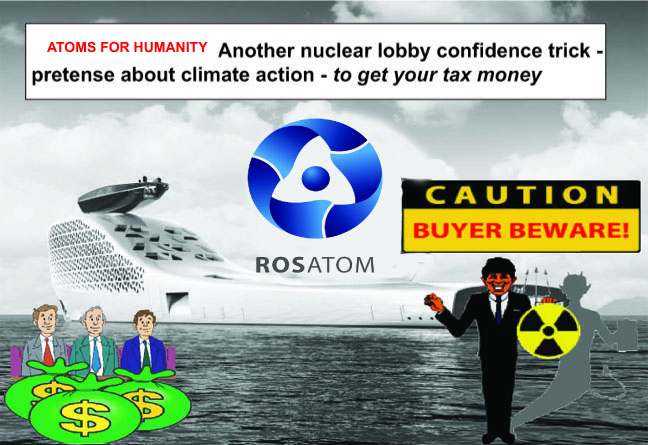
Thousands Join Launch Of Rosatom’s Atoms For Humanity Nuclear Awareness Campaign, By India Education Diary Bureau Admin May 3, 2021 Moscow: On April 30, over 3200 people from some 40 countries watched Rosatom’s Atoms for Humanity new nuclear awareness campaign launch event. The project is aimed at demonstrating the importance of nuclear technologies in achieving the UN Sustainable Goals through human-centered stories.
The project launch event Why Humanity Needs Nuclear brought together Polina Lion, Chief Sustainability Officer at Rosatom, Sama Bilbao y León, Director General of the World Nuclear Association, Dr. Maher Aziz, member of the World Energy Council, Ben Heard, founder of the Bright New World and Sergio Orlandi and Head of Central Engineering and Plant Directorate at ITER. Heroes of Atoms for Humanity joined the event to share their experiences participating in the campaign.
The [?] esteemed speakers discussed social, economic and environmental benefits of nuclear technologies and their invaluable contribution to solving the most urgent challenges of today and tomorrow.
Growing aggressive behaviour by nuclear proponents – is nuclear facing obsolescence?
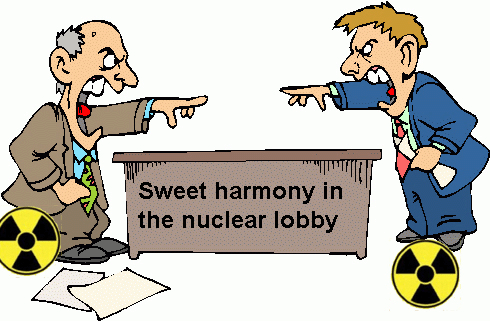
Nuclear Engineering International 29th April 2021, Extract from Letter Andy Stirling, Science Policy Research Unit, University of Sussex.
It is reasonable to give particular scrutiny both to the style and content of a commentary by Jeremy Gordon published on an article issued last year in the peer-reviewed journal Nature Energy. This is sadly especially so, because what we see as Jeremy Gordon’s aggressive tone and superficial arguments display behaviour that is sadly growing among nuclear proponents.
These are worrying signs of a wider malaise in current nuclear debates. It is a growing problem in nuclear advocacy that those holding contrasting informed and measured views – or who simply question the comparative merits of nuclear power – are so often smeared as ‘anti-nuclear’.
It is hysterical to brand someone raising evidence of a problem with something, as being somehow intrinsically ‘anti’ that thing. Yet on nuclear, this is a norm. Even to raise questions about relative pros and cons of nuclear versus renewable based strategies is treated by Gordon as if inherently biased.
Gordon criticises us for not analysing coal, oil or gas. Our purpose is to examine associations between carbon emissions and the uptake of two families of technologies that are variously claimed as “zero carbon”: nuclear and renewables. We are ourselves clear in urging further more specific work addressing finer details and wider dimensions
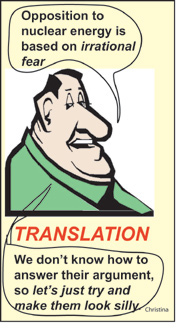
But it is not unreasonable that this pioneering study focuses specifically on technologies for which zero carbon
claims are actually made. Whatever ‘side’ one is on, it is striking that as the relative position of nuclear power deteriorates, the invective grows more intense. But perhaps all may agree (on any side), that spurious caricatures and personal attacks undermine themselves?
No technology is entitled to immunity either from criticism or obsolescence. Whether nuclear power faces this latter fate is unsure. But if (like many earlier technologies) its time has come, then this past quintessential icon of scientific prowess should not bring down with it the reasoned policy discourse that forms the lifeblood of democracy itself.
Paul Beckwith on the failure of universities to address real world problems
1 May 21, I have often wondered how humanity, in our present day and age, can be facing total and utter catastrophe from abrupt climate system change, and still have the vast multitudes of citizens, governments, and nations not even want to recognize the grave dangers that we face. These are not long term risks, in fact we face the imminent complete loss of Arctic Sea Ice, enormous outbursts of methane gas, mass extinctions of our plants and animals, and global food shortages leading to deadly widespread famine within a decade. How is this possible? How can society be so stupid? Why am I cursed to recognize the imminent and complete collapse of our society?
Having been within the university system and academia for many years, I have been constantly puzzled as to why there is no sense of societal danger and risk of near term collapse. The Ivory Towers of Academia have been completely oblivious to the existential crisis, and has done absolutely nothing to educate the public to these risks. The university is essentially a knowledge-factory to push forward the boundaries of knowledge in a vast array of independently siloed fields, while it has completely lacked the wisdom to recognize let alone address the real world problems that are right in front of our face. As a result, with zero wisdom from our esteemed institutes of learning, our society is teetering on the brink of complete and utter collapse from abrupt climate system change. The best paper that I have read on this failure of our university system to address real world and imminent global problems was published two weeks ago and is called “How Universities Have Betrayed Reason and Humanity – And What’s to Be Done About It” by Nicolas Maxwell.
Mobile nuclear reactors? Scathing report slams ‘disturbing’ military program
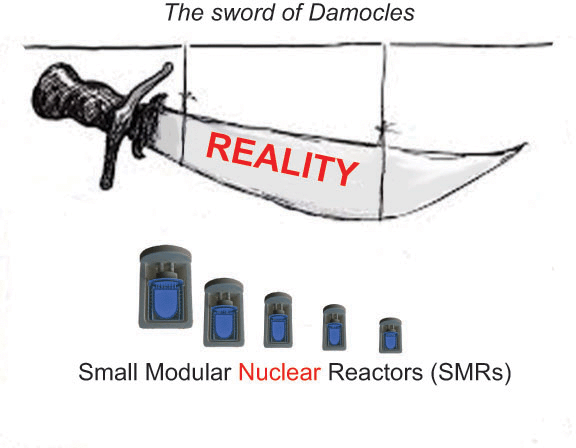
Mobile nuclear reactors? Scathing report slams ‘disturbing’ military program, Times, 1 May 21, Todd South The author of an academic report on Pentagon plans to build mobile nuclear reactors to power future combat bases called the effort “extremely disturbing” and “based on a lie.”
The report released Thursday slams the Pentagon and Army G-4, logistics — specifically the Army office’s 2018 report that lays out the potential uses and needs for such mobile nuclear reactors in future operations.
Alan J. Kuperman wrote the 21-page report titled, “Proposed U.S. Army Mobile Nuclear Reactors: Costs and Risks Outweigh Benefits,” in his role as coordinator of the University of Texas at Austin’s Nuclear Proliferation Prevention Project.
“They don’t reduce casualties, they increase costs and they increase threats to the lives of U.S. service members,” Kuperman said.
The program, known as “Project Pele,” is prototyping the mobile advanced microreactor concept under the Pentagon’s Strategic Capabilities Office……..
The DoD spokesman pointed out that the project is part of a collaboration involving the Department of Energy, Nuclear Regulatory Commission, U.S. Army Corps of Engineers and private industry. Project Pele is not being designed for a specific military service branch but does include experts across defense for a variety of requirements.
Army officials for G-4 deferred comment on the program to DoD……..
Congress approved funding for prototype reactors and the Army awarded $40 million in contracts to three nuclear reactor companies in March 2020 for Project Pele, according to the NPPP report.
Kuperman struck at the Army’s rationale, calling the project unnecessary and dangerous. He counters some of the main justifications that have been provided by DoD and Army reports:
High cost – Kuperman said the Army’s claims that nuclear power can provide cheaper electricity for powering future forward bases is “based on unrealistic assumptions.” Those include that such a reactor would have low construction costs and operate for 18 hours a day over 40 years. The more likely scenario is a mobile reactor would run for half that time over about 10 years, meaning nuclear electricity could cost 16 times more than estimates and still seven times more than diesel-generated power.- Vulnerability to missile attacks – The report points to the 2020 missile attack on forces at al-Asad air base in Iraq. Even with warnings hours ahead of time, more than 100 U.S. personnel suffered traumatic brain injury from the 11 strikes that hit the facility. And the missiles were 10 times more accurate than the Army has predicted in its report on the vulnerability of reactors to precision strikes. The service admits that a direct hit on a reactor would destroy the device. Kuperman notes that even the Army’s plans to protect the reactors, by burying them underground, could inadvertently cause meltdowns by impeding air cooling and causing overheating. A similar strike on an similar such future base with a reactor could cause far more devastating consequences.
Captured reactors – Should a U.S. base housing a mobile reactor be overrun or abandoned, the radioactive waste from the reactor could be used in “dirty bomb” terror attacks.- No mission for reactors – One of the chief purposes of pursing such reactor programs was to reduce casualties from diesel transport to remote bases. But Defense Department data shows a dramatic drop in casualties of five per 1 million gallons of fuel delivered in 2005 to nearly zero by 2013.
- High-energy weapons don’t need reactors – Kuperman states that the justification that future high-energy or laser weapons that the Army hopes to have protecting bases don’t require a reactor to power. “A high energy weapon would have to be fired millions of times to justify a reactor,” Kuperman said. “In reality such a weapon would be fired perhaps hundreds of times in its lifetime.”
- Transport problems – The Army wants to air deliver these reactors to combat posts. Kuperman questions the “regulatory nightmare” that would create. The program calls for initial tests flying the reactors domestically to run then returning them, and their radioactive waste, to another domestic location. Foreign transport would require approval of countries airspace traversed and the approval of a host nation where the reactor would be placed, he said. Other Army recommendations include truck or rail transport domestically and either ship or over-the-ocean flights to friendly ports to then move the reactors again via truck or rail.
Army Times reported on the proposed program in 2019, which had drawn backlash from the Union of Concerned Scientists and its then-director of the Nuclear Safety Project, Edwin Lyman, who called the proposal, “naïve.”The original proposal, approved by the Pentagon’s Strategic Capabilities Office asked for industry solutions in January 2019 on providing a less than 40-ton small, mobile nuclear reactor design that could operate for three years or more and provide 1 to 10 megawatts of power.Planners want the reactor to fit inside a C-17 cargo plane for air transport to theater. More recent moves have reduced the power output to 5 megawatts……..
Lyman notes a major failure with one of the original eight designs in 1961 when a core meltdown and explosion of the ML-1 reactor in Idaho killed three operators.
The three deployed to Antarctica, Greenland and Alaska proved “unreliable and expensive to operate,” Lyman wrote in his response to the Army’s 2018 report on the mobile reactor program.Lyman told Army Times on Thursday that a number of those old reactors required decades of decommissioning and one used at Fort Belvoir, Va., near Washington D.C. is finally scheduled for decommissioning in late 2021……….. https://www.armytimes.com/news/your-army/2021/04/30/mobile-nuclear-reactors-scathing-report-slams-disturbing-military-program/
Extinction Rebellion exposes Zion Lights as yet another nuclear propaganda front

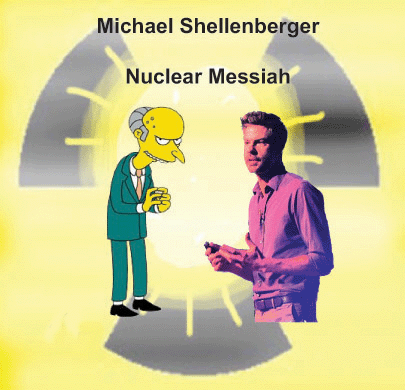
Extinction rebellion 16th Sept 2020, There have been a number of stories in the press in the last few weeks with criticisms about Extinction Rebellion by Zion Lights, UK director of the pro-nuclear lobby group Environmental Progress. It appears that Lights is engaged in a deliberate PR campaign to discredit Extinction Rebellion.
lobbyists such as The Global Warming Policy Foundation and the Genetic Literacy Project (formally funded by Monsanto). The founder of Environmental Progress, Michael Shellenberger, has a record of spreading misinformation around climate change and using marketing techniques to distort the narrative around climate science. He has a reputation for downplaying the severity of the climate crisis and promoting aggressive economic growth and green technocapitalist solutions.
Puerile publicity tactics of pro nuclear publicist “Think Atom”
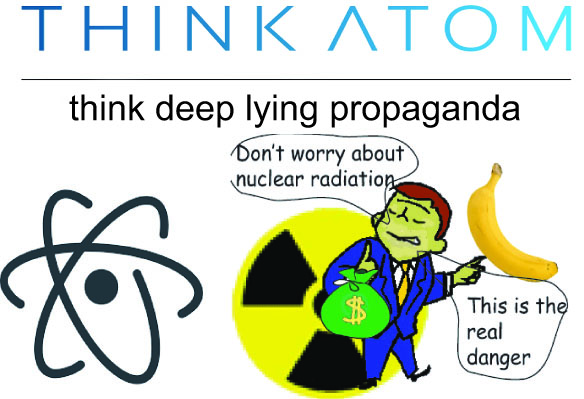
The keynote speexh at the World Nuclear Cycle Forum was so absurd as to be almost funny. It avoided consideration of nuclear power’s huge costs, safety problems, weapons connection, terrorism risk, – and above all, the fact that the nucleare fuel cycle is highly carbon-emitting. It also sidesteps the fact that nuclear power , even if it did combat climate change, could never be operating fast enough to be of any use anyway.
But that didn’t stop gee-whiz nuclear spinner ”Think Atom” from insulting our intelligence by recommending the most puerile publicity tactics to win over the hearts and minds of the general public.
********************************************************************
You need to put it in context: ‘The worst case scenario is a similar dose that you get from eating a bag of chips or a couple of bananas.’ And use emotion: ‘But that’s ridiculous! Yes, but it’s true!’ This context gives you an image of something. It’s easier [to convince people]/
Nuclear industry must change the way it communicates, says Think Atom, World Nuclear News, 15 April. 21, ”……….The fact that nuclear is clean [really?] energy is already “out there” and so the issue is not a lack of information, Rauli Partanen, the CEO of Think Atom, said, but rather of believing that information and then acting on those beliefs. For that to happen, data and reports proving the science are not enough. There also needs to be emotion and an alignment of values, he said, which will turn the information into something that has value.
“Why do people dislike nuclear? Forty years ago, the nuclear industry left the public discussion to those who opposed nuclear. These people, groups and organisations said that nuclear is dangerous and irresponsible, ……..
There has therefore been no progress in having a vision for the nuclear industry and instead it has focused on fighting against the premature closure of reactors or on decommissioning.
“That’s not very inspiring. How many young people are going to go into a field that’s focused on getting rid of itself? Not many……
The nuclear industry needs to start talking publicly about a “mission of expansion”, he said…… the nuclear industry should demand support from policymakers and legislators to create a fair market in clean [really?] energy, ……. enabling the nuclear industry to enjoy access to low-cost finance the way that other clean energy technologies already do.
The high rate of nuclear power plant construction seen in the 1970s and 1980s should be repeated over the next 40 years because “even when we get to net zero, we need to get into negative emissions, and that is not going to happen by itself, it will need a lot of energy”, he said.
“The key point is that, if the nuclear industry doesn’t have a big vision on its role, potential and importance in stopping climate change, how can it expect the rest of us to have that vision for them?”……
World Nuclear Association’s Harmony goal – the addition of 1000 GWe of new nuclear capacity and a 25% share in the global electricity mix, by 2050………. It needs to spread out from World Nuclear Association onto the slide presentations of utilities, with statements like; ‘We’re looking forward to doubling our fleet’.”…………
“He is certainly an influencer and thought leader in some circles, but we also need others – rock stars, famous politicians, climate scientists. The issue is you cannot have one single message for everyone. Know your audience.”
The message however needs to make clear that being ‘anti-nuclear’ effectively means being against a proven way to mitigate climate change……….
Asked how attitudes towards nuclear energy could be changed at the political level, he said this was difficult, but “when change starts it can happen pretty fast”……..”One of the catalysts for this has been advanced nuclear reactors and small modular reactors, which is a new way of thinking about nuclear. It can give people a second chance to rethink nuclear…”’
,,,,,, The anti-nuclear countries, like Austria, Germany and Luxembourg, are constantly joining up and bullying other nations
……….. The answers to those questions [about radioactive wastes] must be in a context the audience can understand, he said. For example, “the worst-case scenario” of radiation leaking from the Onkolo final repository would be a tiny number of millisieverts per year.
“Nobody will understand that. You need to put it in context: ‘The worst case scenario is a similar dose that you get from eating a bag of chips or a couple of bananas.’ And use emotion: ‘But that’s ridiculous! Yes, but it’s true!’ This context gives you an image of something. It’s easier than ‘many zeros of millisieverts’, which means nothing to the non-nuclear engineer.”
Iran and Israel – the situation shows the strong connection between nuclear power and nuclear weapons- small nuclear reactors with enriched uranium fuel.
Nuclear Alert: Iran & Israel Playing High-Stakes Poker with Nuclear Power & Nuclear Weapons Fairewinds, Maggie Gunderson, 14 Apr 21, Fairewindsy now, Fairewinds is sure you know that an explosion at an Iranian nuclear enrichment plant has slowed Iran’s progress to enrich uranium. The crisis shows a very blurry line between Civilian Atomic Power and Military Atomic Bombs!………..
For decades, we are informed there is no correlation between weapons and civilian power. This standoff between Iran and Israel highlights the strong connection between nuclear weapons and nuclear power, like hand-in-glove.
The borderline between bomb-grade uranium and civilian power-grade uranium is determined by how much the isotope Uranium-235 (U-235) is enriched. Traditionally, if uranium enrichment is above 20%, that is considered the low-end of weapons-grade enrichment, which falls between 20% and 100% enrichment for bombs. Therefore, the higher the percent of enrichment of U-235, the easier it is to manufacture a nuclear bomb.
To be cost-effective, the nuke industry claims its U-235 must be more enriched to prevent atomic power reactors from refueling as often. Currently, uranium fuel used worldwide in operating nuclear power plants is enriched to about 6%. But the nuclear industry’s new designs for proposed Small Modular Reactors (SMRs) will use fuel enriched to about 20%.
Yes, as Fairewinds quoted above, SMRs will use nuclear fuel that is “one step away from weapons-grade uranium” used to make bombs!
At Fairewinds, we have two questions today:
- First, what are Iran’s plans for gaining that much enrichment? Iran claims that this centrifuge produced fuel is for peaceful purposes only, then why does the uranium have to be enriched to almost bomb-grade? Is Iran building SMRs?
- Where does that place the United States in world politics with its creation of SMRs? The U.S. plans to build tens of thousands of these allegedly new Small Modular Reactors. Moreover, SMRs use HALEU fuel (High-Assay Low-Enriched Uranium) enriched to almost 20% Uranium-235.
- How does this action make the U.S. any different from what Iran is doing when the U.S. SMRs will contain high-test Uranium identical to what is being enriched in Iran?
- Is this federal push for this new SMR design some type of ploy to spread atomic bomb-grade fuel all over the world?
- The U.S. nuclear power industry is looking at SMRs as its latest cash cow, expecting to sell and build SMRs all over the world! What kind of international threat is this if thousands of proposed SMRs are located all over the U.S. and worldwide?

As a result of the attack on its enrichment facility, Iran has further changed its mind and said it would enrich uranium to 60%. According to the BBC:
Iran will produce 60%-enriched uranium in retaliation for a suspected Israeli attack on a nuclear site, President Hassan Rouhani says, bringing it closer to the purity required for a weapon. … But he reiterated that Iran’s nuclear activities were “exclusively peaceful”.
France, Germany and the U.K. expressed “grave concern” at the move, saying Iran had “no credible civilian need for enrichment at this level”.
Fairewinds is clear that the 20% enriched fuel planned to be used in SMRs is only one easy step away from creating bomb-grade atomic fuel! Now that Iran has informed the world that it intends to enrich its uranium to 60%, scientists worldwide know that there is no peaceful civilian atomic reactor of any kind using U-235 enriched to 60%!
Fairewinds hopes that diplomats will resolve this enrichment conundrum before the military situation escalates further. https://www.fairewinds.org/demystify/nuclear-alert-iran-israel-playing-high-stakes-poker-with-nuclear-power-nuclear-weapons
Unrelenting dishonest propaganda leading us to war against China
Not sleepwalking but marching with eyes wide open to war. Independent Australia, By William Briggs | 13 April 2021 While the USA moves towards war, anti-China rhetoric grows on a daily basis and the idea of war is being sold as the “right” thing, writes Dr William Briggs.
A LIE told often enough can become accepted, but it can never be the truth. China has been declared a threat to all that we hold dear, but it is just not so. China, for all its faults, is not a threat and nor is it practising genocide!
The Uyghur genocide claim gets bigger as each day dawns. Peter Hartcher, in The Age on the 10 April, writes of this genocide and of ‘the evil genius of the system of genocide with Chinese characteristics.’ The “genius” according to Hartcher is that the Chinese are allowing the Uyghurs to live. What a clever and cunning genocide that is!
The plight of the Uyghurs is but the latest lurid episode in a sustained and enormously successful push to demonise China in the eyes of the world. The motivations behind this are simple enough. China’s economic star is rising and America’s best days are behind it.
The world is certainly on the edge of a precipice. There is a broad acceptance, despite an embarrassing lack of evidence, that China is an enemy and, as an enemy, a threat. Nobody is ever eager for war, but people have often enough been persuaded that war is an acceptable option. This is particularly so when an existential threat exists, or in this case, is manufactured. The potential for war, justifications for it and warnings of how it might almost “accidentally” become a reality have come to dominate thought……..
If the USA goes to war with China, it will not be by chance. It has been meticulously planned, costed, budgeted for and the weapons, including “low-yield” nuclear weapons, have been manufactured and deployed by the USA. The world should be aghast at such blatant preparations, but it is not. Those who would take us to war need first to convince us that we have no option, that we are protecting freedom, that we are standing for justice and that a threat exists that the enemy is engaging in genocide.
In the space of just a decade, the people have come to accept this. China has gone from economic saviour of the world to arch enemy. Governments begin the process but could not be expected to convince the people alone. Television and print media: editorials, opinion pieces from leading journalists and international editors, columnists and experts, have all played a decisive role.
A recent poll by the Lowy Institute showed that in 2018, 52 per cent of Australians believed that China would act responsibly in the world. Two very short years later and that figure had dropped to just 23 per cent! The polls are then used by the same anti-China crusaders to prove that a problem exists. They are happy to ignore the effect that a daily barrage of anti-China campaigning can do and how it can shift people’s views…….
The most recent reporting of the treatment of the Uyghurs is that the Chinese are engaged in a campaign of genocide. Genocide was practised in Nazi Germany, in Kampuchea, in Rwanda, in Armenia, in Australia, but to suggest that the Chinese behaviour towards the Uyghurs, while quite possibly repressive, even reprehensible, is genocidal is ludicrous.
There has been discrimination and persecution. Life, for the Uyghurs, has never been easy. However, the West paid little or no attention to these people until about the time that the USA began to talk of “containing” China. It was, for the USA, a fortuitous discovery.
The Chinese, at the end of the 20th Century, waged a campaign against Islamist separatist groups that had become active within the Uyghur population. Violence met violence and conditions worsened for the Uyghurs. None of this concerned Washington. What happened to make things change so dramatically? The Chinese, in all likelihood, did step up repressions but the USA have manipulated events to suit a specific propaganda purpose.
Uyghur stories become more and more horrifying. The Western media was once content to rail against the existence of “re-education” camps. Then it was reports of campaigns of mass rape and then mass sterilisation programs. This morphed into claims of social genocide. Reports of forced labour emerged and evolved into stories of slave labour. The term “social” genocide came into use but has now been shortened to genocide.
This ramping up of rhetoric has one real purpose. China must, at every turn, be shown to be a malignant force. The editorialists, international editors, columnists and journalists have become a willing and shameless weapon in this campaign. If it all ends in war it will not be a chance thing. The world will not be “sleepwalking”.
Nobody wants war but we are being prepared for it. https://independentaustralia.net/politics/politics-display/not-sleepwalking-but-marching-with-eyes-wide-open-to-war,14982#.YHZ_2MRzAdY.twitter
How the British government reacted to the Fukushima catastrophe – with propaganda promoting the nuclear industry
 Revealed: British government’s plan to play down Fukushima Revealed: British government’s plan to play down Fukushima
https://www.theguardian.com/environment/2011/jun/30/british-government-plan-play-down-fukushima
Internal emails seen by Guardian show PR campaign was launched to protect UK nuclear plans after tsunami in Japan Rob Edwards Fri 1 Jul 2011
British government officials approached nuclear companies to draw up a co-ordinated public relations strategy to play down the Fukushima nuclear accident just two days after the earthquake and tsunami in Japan and before the extent of the radiation leak was known.
Internal emails seen by the Guardian show how the business and energy departments worked closely behind the scenes with the multinational companies EDF Energy, Areva and Westinghouse to try to ensure the accident did not derail their plans for a new generation of nuclear stations in the UK. “This has the potential to set the nuclear industry back globally,” wrote one official at the Department for Business, Innovation and Skills (BIS), whose name has been redacted. “We need to ensure the anti-nuclear chaps and chapesses do not gain ground on this. We need to occupy the territory and hold it. We really need to show the safety of nuclear.” Officials stressed the importance of preventing the incident from undermining public support for nuclear power. The Conservative MP Zac Goldsmith, who sits on the Commons environmental audit committee, condemned the extent of co-ordination between the government and nuclear companies that the emails appear to reveal. “The government has no business doing PR for the industry and it would be appalling if its departments have played down the impact of Fukushima,” he said. Louise Hutchins, a spokeswoman for Greenpeace, said the emails looked like “scandalous collusion”. “This highlights the government’s blind obsession with nuclear power and shows neither they, nor the industry, can be trusted when it comes to nuclear,” she said. The Fukushima accident, triggered by the Japan earthquake and tsunami on 11 March, has forced 80,000 people from their homes. Opinion polls suggest it has dented public support for nuclear power in Britain and around the world, with the governments of Germany, Italy, Switzerland, Thailand and Malaysia cancelling planned nuclear power stations in the wake of the accident. The business department emailed the nuclear firms and their representative body, the Nuclear Industry Association (NIA), on 13 March, two days after the disaster knocked out nuclear plants and their backup safety systems at Fukushima. The department argued it was not as bad as the “dramatic” TV pictures made it look, even though the consequences of the accident were still unfolding and two major explosions at reactors on the site were yet to happen. “Radiation released has been controlled – the reactor has been protected,” said the BIS official, whose name has been blacked out. “It is all part of the safety systems to control and manage a situation like this.”
The official suggested that if companies sent in their comments, they could be incorporated into briefs to ministers and government statements. “We need to all be working from the same material to get the message through to the media and the public. Anti-nuclear people across Europe have wasted no time blurring this all into Chernobyl and the works,” the official told Areva. “We need to quash any stories trying to compare this to Chernobyl.” Japanese officials initially rated the Fukushima accident as level four on the international nuclear event scale, meaning it had “local consequences”. But it was raised to level seven on 11 April, officially making it a major accident” and putting it on a par with Chernobyl in 1986. The Department for Energy and Climate Change (DECC) has released more than 80 emails sent in the weeks after Fukushima in response to requests under freedom of information legislation. They also show: Westinghouse said reported remarks on the cost of new nuclear power stations by the deputy prime minister, Nick Clegg, were “unhelpful and a little premature”. The company admitted its new reactor, AP1000, “was not designed for earthquakes [of] the magnitude of the earthquake in Japan”, and would need to be modified for seismic areas such as Japan and California. The head of the DECC’s office for nuclear development, Mark Higson, asked EDF to welcome the expected announcement of a safety review by the energy secretary, Chris Huhne, and added: “Not sure if EDF unilaterally asking for a review is wise. Might set off a bidding war.” EDF promised to be “sensitive” to how remediation work at a UK nuclear site “might be seen in the light of events in Japan”. It also requested that ministers did not delay approval for a new radioactive waste store at the Sizewell nuclear site in Suffolk, but accepting there was a “potential risk of judicial review”. The BIS warned it needed “a good industry response showing the safety of nuclear – otherwise it could have adverse consequences on the market”. On 7 April, the office for nuclear development invited companies to attend a meeting at the NIA’s headquarters in London. The aim was “to discuss a joint communications and engagement strategy aimed at ensuring we maintain confidence among the British public on the safety of nuclear power stations and nuclear new-build policy in light of recent events at the Fukushima nuclear power plant”. Other documents released by the government’s safety watchdog, the office for nuclear regulation, reveal that the text of an announcement on 5 April about the impact of Fukushima on the new nuclear programme was privately cleared with nuclear industry representatives at a meeting the previous week. According to one former regulator, who preferred not to be named, the degree of collusion was “truly shocking”. A spokesman for the DECC and BIS said: “Given the unprecedented events unfolding in Japan, it was appropriate to share information with key stakeholders, particularly those involved in operating nuclear sites. The government was very clear from the outset that it was important not to rush to judgment and that a response should be based on hard evidence. This is why we called on the chief nuclear inspector, Dr Mike Weightman, to provide a robust and evidence-based report.” A DECC source played down the significance of the emails from the unnamed BIS official, saying: “The junior BIS official was not responsible for nuclear policy and his views were irrelevant to ministers’ decisions in the aftermath of the Japanese earthquake.”
“I would be much more reassured if DECC had been worrying about how the government would cope with the $200bn-$300bn of liabilities from a catastrophic nuclear accident in Britain.” The government last week confirmed plans for eight new nuclear stations in England and Wales. “If acceptable proposals come forward in appropriate places, they will not face unnecessary holdups,” said the energy minister, Charles Hendry. The NIA did not comment directly on the emails. “We are funded by our member companies to represent their commercial interests and further the compelling case for new nuclear build in the UK,” said the association’s spokesman. “We welcome the interim findings of the independent regulator, Dr Mike Weightman, who has reported back to government that UK nuclear reactors are safe.” This article is more than 9 years old
Internal emails seen by Guardian show PR campaign was launched to protect UK nuclear plans after tsunami in Japan |
|
Don’t believe hydrogen and nuclear hype – they can’t get us to net zero carbon by 2050
 Don’t believe hydrogen and nuclear hype – they can’t get us to net zero carbon by 2050 https://www.theguardian.com/commentisfree/2021/mar/16/hydrogen-nuclear-net-zero-carbon-renewables
ow that the whole world seems to be aligned behind the goal of net zero carbon emissions by 2050, the nuclear industry is straining every sinew to present itself as an invaluable ally in the ambitious aim. Energy experts remain starkly divided on whether or not we can reach this global net zero target without nuclear power, but regardless, it remains a hard sell for pro-nuclear enthusiasts.
The problems they face are the same ones that have dogged the industry for decades: ever-higher costs, seemingly inevitable delays, no solutions to the nuclear waste challenge, security and proliferation risks.
The drawbacks to nuclear are compounded by the burgeoning success of renewables – both solar and wind are getting cheaper and more efficient, year after year. There is also a growing realisation that a combination of renewables, smart storage, energy efficiency and more flexible grids can now be delivered at scale and at speed – anywhere in the world.
While the majority of environmentalists continue to oppose nuclear power, there is now a significant minority, increasingly concerned about accelerating climate change, who just don’t see how we can get to that net zero comfort zone without it. They’re right to be concerned – it is a truly daunting challenge. All emissions of greenhouse gases (across the entire economy, including those from transport, heating, manufacturing and refining, farming and land use, as well as from shipping and aviation) must be brought down to as close to zero as possible, with all residual emissions compensated for by the removal of an equivalent amount of CO2 from the atmosphere.
It’s the sheer scale of that challenge that has led a lot of people (including Boris Johnson with the government’s 10-point plan in November) not just to keep a flag flying for the nuclear industry, but to revisit the idea of hydrogen doing some of the heavy lifting. Hydrogen hype has become all the rage over the last 18 months, with some offering up this “clean energy technology”, as government officials insist on describing it, as the answer to all our net zero prayers.
For those prayers to be answered, there will need to be a complete revolution in the way in which hydrogen is produced. As it is, 98% of the 115m tonnes used globally is “grey hydrogen”, made from natural gas or coal, that emits around 830m tonnes of CO2 per annum – 2% of total global greenhouse gas emissions. Beyond that, there’s a tiny amount of so-called “blue hydrogen” – essentially grey hydrogen but with its CO2 emissions captured and stored – and an even tinier amount of “green hydrogen” from electrolysing water, both of which are much more expensive than the climate-wrecking grey hydrogen.
The gulf between that current reality, one rarely mentioned by hydrogen enthusiasts, and the prospect of readily available and affordable green hydrogen that could help us get to net zero, is absolutely vast.
Don’t get me wrong: we will indeed need significant volumes of green hydrogen and it’s good that the government has set an ambitious target for 2030, in the hope that this will significantly reduce the costs of electrolysis to create it. But we need to be clear about what that green hydrogen should be used for: not for electricity; not for heating homes and non-domestic buildings; and not for cars, where electric vehicles will always be better. Instead we will need it for what are called the “hard-to-abate” sectors: for steel – replacing carbon-intensive coking coal – cement and shipping.
Much of the hype for hydrogen is coming from the oil and gas sector, in the hope that gullible politicians, seduced by an unattainable vision of limitless green hydrogen, will subsidise the vast investments needed to capture the emissions from gas-powered hydrogen. Their motivation couldn’t be clearer: to postpone the inevitable decline of their industry.
The nuclear industry is also desperate to get in on that game. One has to admire its capacity to pivot opportunistically. In February, the Nuclear Industry Council (made up of both industry and government representatives in the UK) published a shiny new Hydrogen Roadmap, exploring how either large-scale nuclear or small modular reactors could generate both the electricity and the heat needed to produce large amounts of green hydrogen. But the entire plan is premised on spectacular and totally speculative reductions in the cost of electrolysis.
Rather than being the solution we have been waiting for, this nuclear/hydrogen development would actually be a disastrous techno-fix. Low-carbon nuclear power will always be massively more expensive than renewables and we can never build enough reactors to replace those coming offline over the next decade. We also know that producing hydrogen is always going to be very expensive. The truth is, you need a lot of electricity to produce not a lot of hydrogen. All of which makes pipe-dreams about substituting hydrogen for conventional gas in the UK’s gas grid, or of producing millions of tonnes of blue hydrogen, look almost entirely absurd.
This, then, could lead to a double economic whammy of quite monstrous proportions. It would either have to be paid for through general taxation or through higher bills for consumers. That’s particularly problematic from the perspective of the 10% of households in England still living in cruel and degrading fuel poverty.
Environmentalists who are tempted by this new nuclear/hydrogen hype should remember that our transition to a net zero world has to be a just transition. Every kilowatt hour of nuclear-generated power will be a much more expensive kilowatt hour than one delivered from renewables plus storage.
So let’s just hold back on both the hydrogen hype and the nuclear propaganda, and concentrate instead on ramping up what we already know is cost-effectively deliverable: renewables. We need to do it as fast as we possibly can.
- Jonathon Porritt is an environmentalist and founder-director of Forum for the Future. His latest book is Hope in Hell: A Decade to Confront the Climate Emergency
Review of Michael Shellenberger’s book on ”Why Environmental Alarmism Hurts Us All”
Book review: Bad science and bad arguments abound in ‘Apocalypse Never’ by Michael Shellenberger’, Yale Climate Connections , By Dr. Peter H. Gleick | Wednesday, July 15, 2020 ”……………….. A recent entry in this debate is Michael Shellenberger’s “Apocalypse Never: Why Environmental Alarmism Hurts Us All” (HarperCollins Publishers, 2020). Shellenberger explains in his introduction that he seeks to counter and dismiss what he considers irrational, overwrought arguments of pending Malthusian catastrophes; instead, he seeks to promote the Cornucopian view that environmental problems can be eliminated if we’d just pursue aggressive economic growth, simple technological advances, and increased tapping of abundant natural resources. In doing so, he echoes previous efforts of authors like Herman Kahn, Julian Simon, and Bjørn Lomborg.
Shellenberger self-describes as an environmentalist activist and a bringer of facts and science to counter “exaggeration,
Two Cornucopian ideas lie at the heart of this book: The first idea is that there are no real “limits to growth” and environmental problems are the result of poverty and will be solved by having everyone get richer. This idea isn’t original and has long been debunked by others (for a few examples see here, here, here, and here).
View that nuclear alone can address needs
The second idea – and the focus of much of Shellenberger’s past writings – is that climate and energy problems can and should be solved solely by nuclear power. He writes, “Only nuclear, not solar and wind, can provide abundant, reliable, and inexpensive heat,” and, “Only nuclear energy can power our high-energy human civilization while reducing humankind’s environmental footprint.” (“Apocalypse Never” – hereafter “AN” – pp. 153 and 278) The many economic, environmental, political, and social arguments levied against nuclear are simply dismissed as having no merit, for example: “As for nuclear waste, it is the best and safest kind of waste produced from electricity production. It has never hurt anyone and there is no reason to think it ever will.” (AN, p. 152) ……….
Using the facade of ‘strawman arguments’
Shellenberger regularly sets up other strawman arguments and then knocks them down. [A strawman argument is an effort to refute an argument that hasn’t been made by replacing your opponent’s actual argument with a different one.] One of the most prevalent strawman arguments in the climate debate is that scientists claim climate change “causes” extreme events, when in fact, climate scientists make careful distinctions between “causality” and “influence” – two very different things. This area, called “attribution science,” is one of the most exciting aspects of climate research today.
Shellenberger sets up the strawman argument that people are incorrectly claiming recent extreme events (like forest fires, floods, heat waves, and droughts) were caused by climate change, and then he debunks this strawman. “Many blamed climate change for wildfires that ravaged California” (AN, p.2) and “the fires would have occurred even had Australia’s climate not warmed.” (AN p. 21) He misrepresents how the media reported on the fires, describing a New York Times story on the 2019 Amazon fires: “As for the Amazon, The New York Times reported, correctly, that the ‘fires were not caused by climate change.’” But here Shellenberger is cherry-picking a quote: If you look at the actual article he cites, the journalist makes clear the “influence” of climate change just two sentences later:
These fires were not caused by climate change. They were, by and large, set by humans. However, climate change can make fires worse. Fires can burn hotter and spread more quickly under warmer and drier conditions. (emphasis added)
He also misunderstands or misrepresents the extensive and growing literature on the links between climate change and extreme events, ……
……. Another example of a serious conceptual confusion is his chapter dismissing the threat of species extinctions. The chapter is full of misunderstandings of extinction rates, ecosystem and biological functions, confusions about timescales, and misuses of data. For example, Shellenberger confuses the concept of species “richness” with “biodiversity” and makes the astounding claim that
Around the world, the biodiversity of islands has actually doubled on average, thanks to the migration of ‘invasive species.’ The introduction of new plant species has outnumbered plant extinctions one hundred fold. (AN, p. 66)
By this odd logic, if an island had 10 species of native birds found only there and they went extinct, but 20 other invasive bird species established themselves, the island’s “biodiversity” would double. This error results from a misunderstanding of the study he cites, which properly notes that simply assessing species numbers (richness not biodiversity) on islands ignores the critical issues of biodiversity raised by invasive species, including the disruption of endemic species interactions, weakening of ecosystem stability, alteration of ecosystem functions, and increasing homogenization of flora and fauna………………
Another classic logical fallacy is to try to discredit an opponent’s argument by attacking the person and her or his motives, rather than the argument – hence the Latin “ad hominem” (“against the man”). Ad hominem attacks are pervasive in this book and detract from its tone and the content.
Shellenberger attacks “apocalyptic environmentalists” as “oblivious, or worse, unconcerned” about poverty (AN, p. 35) or for opposing a massive dam on the Congo river. (AN, p. 276) He attacks the finances of leading environmental groups and leaders like the late David Brower, arguing they have taken donations from fossil fuel companies to “greenwash the closure of nuclear plants.” (AN, p. 205) And he attacks the motives, reputations, and science of many individual environmental and geophysical scientists whose work contradicts his arguments……
Shellenberger has a special level of animosity for the press:
News media, editors, and journalists might consider whether their constant sensationalizing of environmental problems is consistent with their professional commitment to fairness and accuracy, and their personal commitment to being a positive force in the world…….
In the most disturbing examples of vicious personal attacks, he paints broad categories of people who disagree with him as motivated by a hatred of humanity:
”When we hear activists, journalists, IPCC scientists, and others claim climate change will be apocalyptic unless we make immediate, radical changes, including massive reductions in energy consumption, we might consider whether they are motivated by love for humanity or something closer to its opposite (AN, p. 275, emphasis added). We must fight against Malthusian and apocalyptic environmentalists who condemn human civilization and humanity itself. (AN, p. 274) (emphasis added).”
He argues in his closing sections that people worried about environmental disasters are playing out “a kind of subconscious fantasy for people who dislike civilization” (AN, p. 270) and suggests that people who oppose the solutions he prefers do so because they long for the destruction of civilization – a nasty attack on the motives of all those working in this field.
Finally, the book is riddled with a variety of simple errors……. the number and scope of them here is problematic. …. one example is a massive misstatement of the amount of water required to produce energy. ….. in an important omission, he fails to note that key renewable energy sources such as wind and solar photovoltaics require far less water per unit of electricity produced than all fossil fuel and nuclear thermal plants. …. He claims, twice (AN pp. 211 and 241), that nuclear power plants produce “zero pollution” ………
Dr. Peter H. Gleick is president emeritus of the Pacific Institute, a member of the U.S. National Academy of Sciences, a MacArthur Fellow, and winner of the 2018 Carl Sagan Prize for Science Popularization. https://yaleclimateconnections.org/2020/07/review-bad-science-and-bad-arguments-abound-in-apocalypse-never/?fbclid=IwAR2jUB12zAF9WbluEtglePOQlOSKbLkIxdbWeeh9eSWbc366JXrHNIERzzY
Billionaire Bill Gates’ nuclear ambitions would make climate disaster worse

His nuclear path would lead to, not prevent, a climate disaster
Why Bill Gates is wrong — Beyond Nuclear International
Billionaire’s nuclear ambitions would make climate disaster worse, https://wordpress.com/read/feeds/72759838/posts/3231823855 By Linda Pentz Gunter, 14 Mar 21,
In an interview for the Washington Post Magazine during his current book tour, billionaire Bill Gates, whom we are now expected to accept as an authority on climate change, said: “I’ll be happy if TerraPower was a waste of money.” TerraPower is Gates’s nuclear power company pushing so-called “advanced” reactors. His book is called How to Avoid a Climate Disaster.
Well, Bill, I have some good news for you. You can start celebrating! Because, yes, TerraPower is indeed a colossal waste of money. It’s also a waste of precious time. And the idea that nuclear power could “lift billions out of poverty” as the TerraPower website boats, is on a par with any number of outlandish theories, conspiratorial or otherwise, that are making the all too frequent rounds these days.So has Gates really drunk the Kool-Aid (OK it wasn’t actually Kool-Aid but Flavor Aid that was consumed at the 1978 Jonestown massacre)? Does he really plan to throw away $1 billion of his own money, plus an equal match from investors and possibly some state funding, too, and then just shrug it off when the whole thing proves redundant? Is that really true stewardship of the climate?
You don’t need to be a mathematician to work out what $2 billion plus would buy in renewables, and how much faster that particularly delivery would arrive at the doorsteps of the world’s poor, whom Gates claims he aims to protect.
Here is what Lazard’s estimated in terms of costs comparisons for new nuclear plants and other energy options, as laid out by Amory Lovins in his landmark Forbes article:
New nuclear power would cost $118–192/MWh (of which $29 is typical operating cost) while utility-scale solar power would cost $32–42/MWh and onshore windpower $28–54/MWh.
As Lovins has consistently pointed out: “To protect the climate, we must save the most carbon at the least cost and in the least time, counting all three variables—carbon and cost and time.”
And, “costly options save less carbon per dollar than cheaper options. Slow options save less carbon per year than faster options. Thus even a low- or no-carbon option that is too costly or too slow will reduce and retard achievable climate protection.”
Right now, a so-called “advanced” TerraPower reactor is just a glimmer in Gates’s eye. Like the prevailing fantasies about life on Mars, his toy reactor won’t materialize anywhere near soon enough to ease the agonies of the climate crisis. And even if it eventually shows up, and passes the necessary safety requirements, it will demonstrate only a triumph in physics, having by then no economical or practical utility whatsoever.
As the absence of progress on small modular reactors has shown, there is simply no viable market for new reactors, “advanced” or otherwise. Even the enticing prospect of rolling hundreds of small reactors off assembly lines (a jobs killer for on-site workers), is pie-in-the-sky, given the huge upfront costs that could never be recouped unless there were hundreds, possibly thousands, of orders.
To show just how detached from nuclear reality Bill Gates has become, he is happy to throw in the towel on TerraPower if fusion triumphs instead. Fusion, he says along with fission and “a miracle in storage” are the “only” ways to “make electricity cheap and reliable.”
Yes, this is the same fusion that has been thirty years away for countless decades. And still is. This is the fusion that uses more energy to create electricity than it delivers; that is sucking billions of dollars into research that could be applied to instant fixes in the renewable energy sector.
This is the same “cheap” that saw the costs at the two still unfinished new nuclear reactors in Georgia balloon to $21 billion in 2021, more than double the original cost and counting. And it’s the same “reliable” that resulted in Texans shivering in the dark during the recent big freeze (and no, it wasn’t frozen wind turbines, and I don’t have a fire-starting space laser, either).
There is a reason we are no longer searching for gold in them thar hills. We don’t need to waste years panning for a few elusive grams, hoping eventually to build a fortune. The Gold Rush is over. So, if there ever was one, is the Nuclear Rush.
Gates wants to save lives conquering malaria. But he’s fine with exposing people to radiation and leaving a legacy of toxic waste with no known solution.
Take a look around. In addition to the Vogtle debacle, a similar project in South Carolina was abandoned unfinished with ratepayers footing the bill. In the UK, Hitachi has fled for the Welsh hills, ditching its new reactor plans in that country. Before that, a proposed three-reactor site in Cumbria in north west England saw a similar corporate exodus. The new reactor at Bradwell, UK, is on “pause.”
Meanwhile, as nuclear costs — largely due to their equally huge risks — continue to soar, renewable prices are plummeting. Solar and wind are the cheapest and fastest forms of new energy. Nuclear power is the most expensive and the slowest. So if you choose to spend your next $2 billion on trying to invent the better nuclear mousetrap, then you are not helping to avoid a climate disaster. You are enabling it.https://wordpress.com/read/feeds/72759838/posts/3231823855
United Nations Scientific Committee on Atomic Radiation (UNSCEAR) report on Fukushima health effects -rushed, inadequate, inconsistent

Dr Ian Fairlie, 12 Mar 21, more https://www.ianfairlie.org/news/latest-unscear-report-on-the-fukushima-nuclear-disaster-in-2011/ On March 9, the United Nations Scientific Committee on Atomic Radiation (UNSCEAR) published an advance copy of its latest (third) report on the health effects from the Fukushima Daichi nuclear accident which commenced on March 11, 2011. UNSCEAR 2020 Report – Annex B – Advance Copy
The report shows signs of having been rushed out as it is an advance copy and is unfinished. It states 23 electronic attachments with supplementary information on detailed analyses of doses to the public and their outcomes are currently in production and will be available soon on the UNSCEAR website.
I shall look at the Report in more detail when the additional information is published. However at the 10th anniversary of the nuclear catastrophe at Fukushima in 2011, it’s necessary to have an initial look at the Report’s comments on contentious issues arising from the accident – (a) the number of expected fatal cancers and (b) the continuing controversy over the cause(s) of the large observed increases in thyroid cancers (TCs) in Japan since 2011.
On (a), the 2020 Report concludes that there are no observed ill health effects from the accident but this conclusion is inconsistent with UNSCEAR’s own estimates of high collective doses from the accident. Table 13 (page 72) of UNSCEAR’s 2020 report shows that, in the first 10 years after the accident, the whole body collective dose from the accident was 32,000 man Gy. When we apply the widely-accepted fatal cancer risk estimate of 10% per Gy to this figure, we see that about 3,000 fatal cancers will have occurred due to the accident, correct to one significant figure. The report’s strange, unscientific conclusion to the contrary is inconsistent with these estimates. The only assumption used here is that radiation’s dose-response relationship follows the linear-no-threshold model, as recognised and used by all the world’s radiation protection authorities.
On (b), the 2020 Report (page 107, para q) concludes that the sharp increase in observed thyroid cancers post-Fukushima was not due to thyroid intakes of iodine isotopes from the accident but due to increased surveillance.
However large collective doses to the thyroid are also published in UNSCEAR’s new 2020 report. In the first 10 years after the accident, the 2020 report states the collective thyroid dose to the Japanese population from the accident was 44,000 man Gy. Again, this is a high number, but the absence of an authoritative risk factor for thyroid cancer – especially among young children aged 0 to 4 who were exposed to both internal intakes of radioactive iodine plus external exposures to ground-deposited Cs-134 and C-137 means that reliable estimates of the actual numbers of thyroid cancer cases due to the accident are unfortunately not possible. The supplementary information yet to be released may enable such calculations to be made. However the large collective dose to the thyroid from Fukushima casts doubt on UNSCEAR’s conclusion that the observed increases are not due to the accident.
I would not be surprised to learn that the negative conclusions in the UNSCEAR 2020 Report might be a reason why an advance copy was rushed out in unfinished form before the anniversary of the Fukushima accident.
I add the caveat that the above analysis is a (second) draft and has not yet been fully peer-reviewed. However many requests have been made for views on the UNSCEAR’s 2020 report, so I’m publishing this quickly. Any errors which are pointed out will be corrected in a later post.
UN report claiming no connection between thyroid cancer and Fukushima disaster is not credible

|
Beyond Nuclear 11th March 2021, A new UN report which dismisses the March. 11, 2011 Fukushima disaster as the cause of elevated rates of thyroid cancer in that region’s childrennleaves serious questions unanswered and appears to be a rush to press to maximize publicity around the nuclear accident’s 10th anniversary, concluded Beyond Nuclear today. An advance publication of a section of the 2020 United Nations Scientific Committee on Atomic Radiation (UNSCEAR) report —Sources, effects and risks of ionizing radiation, Scientific Annex B, Advance Copy — claims that “a rise in thyroid cancer among children in the last decade was not related to increased radiation,” and nstead attributes the increases to more thorough and sophisticated testing.
But according to Dr. Ian Fairlie, a leading radiation scientist, the doses delivered by the Fukushima disaster — and as established by UNSCEAR’s own estimates— would be high enough to cause thyroid cancer among exposed children. Dr.Fairlie asserts the report’s conclusion, that “the increase…is not the result of radiation exposure”, is
“scientifically unsound..[and] inconsistent with UNSCEAR!s own estimates of high collective doses to the thyroid published in its 2012 and 2013 reports.”–http://www.beyondnuclear.org/home/2021/3/11/un-report-claiming-no-connection-between-thyroid-cancer-and.html |
|
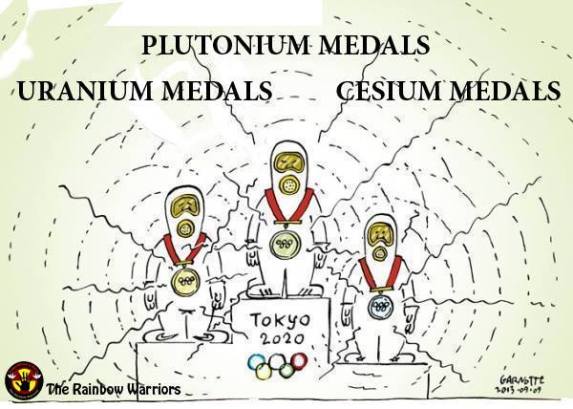
Tokyo Olypics: is it safe to promote Japan’s so-called “recovery” by sending athletes into a nuclear exclusion zone?
|
‘Fukushima today: “I’m glad that I realized my mistake before I died.” Bulletin of the Atomic Scientists, By Thomas A. Bass | March 10, 2021”……….After a lighting ceremony at J-Village, the Olympic torch will be run for three days through Fukushima’s nuclear exclusion zone. The zone is now a checkerboard of remediated areas and other places that are closed off behind accordion fences. Japan hopes to focus our attention on the refurbished schools and town halls, re-opened train stations, and two new museums that have been built in Fukushima, while trying to keep the TV cameras away from the ruined houses and radioactive cars lying nearby. The torch will then be run to Fukushima City, 40 miles to the northwest, where the first six Olympic games in softball and baseball are scheduled to be played after the games officially open July 23. But is it safe to promote Japan’s so-called “recovery” by sending athletes into a nuclear exclusion zone? The area has been tidied up and dotted with LED monitors showing the latest cesium releases from F1, comparable to the devices that measure airborne radiation levels found in other parts of the world. But these airborne releases are only part of the story—and not the most worrisome part. In 2013, scientists discovered that Fukushima’s exploding reactors had showered Japan with microparticles, or little glassy beads, of radioactive cesium and uranium. Hot spots from these microparticles can be found in vacuum cleaner bags and automobile air filters as far away as Tokyo. Fukushima prefecture is full of radioactive hot spots, and these hot spots keep moving as microparticles are washed down from the forested mountains that make up 70 percent of the prefecture, researchers said in Nature Scientific Reports. In 2019, a survey conducted for Greenpeace found hot spots in the J-Village parking lot, where children participating in a youth soccer match were eating their lunch. Greenpeace measured radiation levels at over 71 microSieverts per hour (one microSievert is one-millionth of a Sievert, or one-thousandth of a milliSievert)—1,775 times higher than the normal reading in this area before the Fukushima disaster of about 0.04 microSieverts per hour. The elevated reading, which translates to roughly about 0.62 Sieverts over the course of a year, meant that anyone breathing dust from the J-Village playing fields could be ingesting radioactive particles—little death stars lighting the way to cancer and genetic mutation. Since then, researchers have found radioactive hot spots at the Azuma baseball stadium in Fukushima City and all along the route to be run by the Olympic torch bearers….. https://thebulletin.org/2021/03/fukushima-today-im-glad-that-i-realized-my-mistake-before-i-died/?utm_source=Newsletter&utm_medium=Email&utm_campaign=ThursdayNewsletter032021&utm_content=NuclearRisk_Bass_03102021 |
|
1 This Month
Chernobyl: The Lost Tapes – A good documentary on Chernobyl on SBS available On Demand for the next 3 weeks– https://www.sbs.com.au/ondemand/tv-program/chernobyl-the-lost-tapes/2352741955560

of the week–London Campaign for Nuclear Disarmament

Tell the Ukrainian Government to Drop Prosecution of Peace Activist Yurii Sheliazhenko
To see nuclear-related stories in greater depth and intensity – go to https://nuclearinformation.wordpress.com
-
Archives
- April 2026 (139)
- March 2026 (251)
- February 2026 (268)
- January 2026 (308)
- December 2025 (358)
- November 2025 (359)
- October 2025 (376)
- September 2025 (257)
- August 2025 (319)
- July 2025 (230)
- June 2025 (348)
- May 2025 (261)
-
Categories
- 1
- 1 NUCLEAR ISSUES
- business and costs
- climate change
- culture and arts
- ENERGY
- environment
- health
- history
- indigenous issues
- Legal
- marketing of nuclear
- media
- opposition to nuclear
- PERSONAL STORIES
- politics
- politics international
- Religion and ethics
- safety
- secrets,lies and civil liberties
- spinbuster
- technology
- Uranium
- wastes
- weapons and war
- Women
- 2 WORLD
- ACTION
- AFRICA
- Atrocities
- AUSTRALIA
- Christina's notes
- Christina's themes
- culture and arts
- Events
- Fuk 2022
- Fuk 2023
- Fukushima 2017
- Fukushima 2018
- fukushima 2019
- Fukushima 2020
- Fukushima 2021
- general
- global warming
- Humour (God we need it)
- Nuclear
- RARE EARTHS
- Reference
- resources – print
- Resources -audiovicual
- Weekly Newsletter
- World
- World Nuclear
- YouTube
-
RSS
Entries RSS
Comments RSS
 nuclear-news