Open Democracy busts the spin of nuclear front group ”Young Generation Network”

Why is support for nuclear power noisiest just as its failures become most clear? The UK government and mainstream media agree we need nuclear to avoid the worst climate change. They’re wrong – so why aren’t we hearing that? Open Democracy, Andrew Stirling, Phil Johnstone, 9 January 2022,
At Edinburgh’s Haymarket station, on the route used by COP26 delegates hopping across to Glasgow in November, a large poster displayed a vista from the head of Loch Shiel. In the foreground, a monument to the Jacobite rebellion towers from the spot where Bonnie Prince Charlie raised his standard. From there, the water sweeps back to a rugged line of hills.
This is one of Scotland’s most iconic views, famous for both its history and its role in the Harry Potter films.
On the poster, written in the sky above the loch are the words: “Keep nature natural: more nuclear power means more wild spaces like these.” At the bottom is a hashtag – #NetZeroNeedsNuclear – with no further mention of who might be behind this advert.
But it’s not hard to find a website for this group, which claims to be run by “a team of young, international volunteers made up of engineers, scientists and communicators”, all with the engagingly smiley profile pictures to be expected from citizen activists.
Only when you scroll to the end do you see these activities are ‘sponsored’ by nuclear companies EDF and Urenco. At the bottom, it is explained that Nuclear Needs Net Zero is part of the Young Generation Network (YGN) – “young members of the Nuclear Institute (NI), which is the professional body and learned society for the UK nuclear sector”. The website asserts that the Nuclear4Climate campaign – described as “grassroots” both on the site and in a presentation to an International Atomic Agency conference in 2019 – is in fact “coordinated via regional and national nuclear associations and technical societies”.
Of course, all this is par for the course in the creative world of PR. But there are more substantive grounds why nuclear advocates might wish to avoid too much public scrutiny at the moment. One reality, which can be agreed on from all sides, is that this is by far the worst period in the 70-year history of this ageing industry. So how come it is benefitting from growing and noisy support in mainstream and social media? Why are easily refuted arguments still being deployed to justify new nuclear power alongside renewables in the energy supply mix? And why has the media seized so enthusiastically on a few prominent converts to the nuclear cause?
Nuclear loses out to renewables
At current prices, atomic energy now costs around three times as much as wind or solar power. And that’s before you consider the full expense of waste management, elaborate security, anti-proliferation measures or periodic accidents. For more than a decade, nuclear has been plagued by escalating costs, expanding build times and crashing orders. Trends in recent years are all steeply in the wrong direction.
So the rising clamour of advocacy seems to be in inverse proportion to performance. Whatever view one takes, nuclear power is in a worse position than it’s ever been compared with low-carbon alternatives – and a position that is rapidly declining further.
Among those few countries still pursuing large-scale nuclear new-build programmes, most (like the UK) are either equipped with, or actively chasing, nuclear weapons. But even in the UK (home to one of the proportionally most ambitious nuclear programmes in the world), official data unequivocally shows that renewable energy seriously outpaces nuclear power as a pathway to zero-carbon energy.
Why are easily refuted arguments still being deployed to justify new nuclear power?
In fact, despite misleading suggestions to the contrary by senior figures, background government data has for decades shown that the massive scale of viable UK renewable resources is clearly adequate for all foreseeable needs. Even with storage and flexibility costs included, renewables are available far more rapidly and cost-effectively than nuclear power.
So, for all the breakdancing, it really is a conundrum why persistently bullish government and industry claims on nuclear power remain so seriously under-challenged in the wider debate. It is becoming ever more clear that nuclear plans are diverting attention, money and resources that could be far more effective if used in other ways.
One impact of this continuing official nuclear support is that climate action is being diminished and slowed. As a paper in Nature Energy (which one of us co-authored) showed last year, in worldwide data over the past three decades, the scales of national nuclear programmes do not tend to correlate with generally lower carbon emissions. The building of renewables does.
In fact, this study found “a negative association between the scales of national nuclear and renewables attachments. This suggests nuclear and renewables… tend to crowd each other out.”
The issues are, of course, complex. But this finding supports what the dire performance picture also predicts: that nuclear power diverts resources and attention away from more effective strategies, increasing costs to consumers and taxpayers. So it is even odder that loud voices continue to make naïve calls to ‘do everything’ – that nuclear must on principle be considered ‘part of the mix’ – as if expense, development time, limited resources and diverse preferable alternatives are not all crucial issues…… …. . https://www.opendemocracy.net/en/opendemocracyuk/why-is-support-for-nuclear-power-noisiest-just-as-its-failures-become-most-clear/
A warning against fetishizing nuclear power so it’s part of every solution

the enthusiasm overlooks some ugly truths about nuclear power.
Many alternative reactor designs are pitched as if they’re novel. They’re not. A good example is the Natrium reactor
The drawbacks of sodium technology should resonate especially loudly for Californians.
The 1959 explosion of a sodium-cooled test reactor at the government’s secretive Santa Susana Field Laboratory outside Simi Valley remains the worst nuclear accident in U.S. history
Today’s younger environmental activists may be more inclined to accept these promises today because their thinking wasn’t forged in the anti-nuclear protests of the 1960s and 1970s, as was that of their older colleagues.
The danger is that they, and society, may have to learn the harsh lessons of nuclear power’s past all over again.
Nuclear energy backers say it’s vital for the fight against global warming. Don’t be so sure, Los Angeles Times, BY MICHAEL HILTZIKBUSINESS COLUMNIST , JAN. 6, 2022
No one would have believed this possible only a few years ago, but nuclear energy has been creeping up in public estimation, despite its long record of unfulfilled promise and cataclysmic missteps.
The impetus has come from government and big business, among other sources.
Billions of dollars in incentives to keep existing nuclear plants operating and to get new nuclear technologies off the drawing board were enacted as part of the $1.2-trillion infrastructure bill signed late last year by President Biden.
You don’t compromise safety to keep a nuclear plant open so you can meet a carbon target—you need to have minimum, stringent safety standards. – EDWIN LYMAN, UNION OF CONCERNED SCIENTISTS……………

Some celebrity entrepreneurs have weighed in, without demonstrating that they have given the issue the thorough consideration it deserves. Elon Musk last month tweeted that “unless susceptible to extreme natural disasters, nuclear power plants should not be shut down.”Musk didn’t, however, define “extreme natural disasters” or mention the myriad other reasons that a plant might need to be shuttered, such as advanced age, upside-down economics or dangers in its own design or operation……………..
the enthusiasm overlooks some ugly truths about nuclear power.
The history of nuclear power in America is one of rushed and slipshod engineering, unwarranted assurances of public safety, political influence and financial chicanery, inept and duplicitous regulators, and mismanagement on a grand scale.
Many of the problems originated in the government’s decision to place the technology in the hands of the utility industry, which was ill-equipped to handle anything so complicated.
This record accounts for the technology’s deplorable public reputation, which has made it almost impossible to build a new nuclear plant in the U.S. for decades. Forgetting the history threatens to stage the same drama over again.
The debate over the nuclear power future is really two separate debates.
First, there are the optimistic expectations raised by alternatives to the design of the 93 reactors currently in operation in the U.S. — reactors in which a radioactive core heats water, producing steam to drive electricity-generating turbines.
Then there’s the question of what to do with the existing reactors, many of which have lasted well beyond their design lives. Only 28 of these have remained “competitive” — that is, economically viable — according to energy expert Amory Lovins.

That existing fleet includes Diablo Canyon, whose owner, PG&E, said the plant was facing an unprofitable future when it made the decision to abandon plans to seek a permit renewal from the Nuclear Regulatory Commission.
Many alternative reactor designs are pitched as if they’re novel. They’re not. A good example is the Natrium reactor, which is cooled not by water but liquid sodium and is being promoted by TerraPower, a firm founded by Microsoft billionaire Bill Gates.
Far from an advanced new technology, sodium-cooled reactors date from the very dawn of the nuclear power age. They were considered as an alternative to water-cooled reactors for submarine power plants, for example, by Adm. Hyman Rickover, the founder of America’s nuclear navy.
Rickover, whose rigorous standards for technology and crew training made the nuclear navy a success, ordered a prototype sodium reactor for the submarine Seawolf. Almost instantly, the technology demonstrated its flaws.
While the Seawolf was still at the dock, the reactor sprung a leak. “It took us three months, working 24 hours a day, to locate and correct” the leak, Rickover told a congressional committee in 1957.
Rickover abandoned any thought of using the reactors in his submarines, finding them “expensive to build, complex to operate, susceptible to prolonged shut down as a result of even minor malfunctions, and difficult and time-consuming to repair,” as he advised his Navy superiors and technical experts at the Atomic Energy Commission in late 1956 and early 1957.
The drawbacks of sodium technology should resonate especially loudly for Californians.
The 1959 explosion of a sodium-cooled test reactor at the government’s secretive Santa Susana Field Laboratory outside Simi Valley remains the worst nuclear accident in U.S. history, venting an immense amount of radioactivity into the air and creating what former California EPA Director Jared Blumenfeld called “one of the most toxic sites in the United States by any kind of definition.”

The three entities controlling portions of the site — Boeing Co., the U.S. Department of Energy and NASA — reached agreements with the state in 2007 and 2010 binding them to restore the site to “background” standards. Much of the work still hasn’t begun.
“There’s been a kind of cult that’s been trying to keep this technology alive for decades” despite persistent evidence of its inadequate reliability or sustainability, says Edwin Lyman, director of nuclear power safety at the Union of Concerned Scientists and the author of a report challenging safety and efficiency claims made for Natrium, among other alternative technologies.
“Pretty effective lobbyists” push the idea that “this is somehow a breakthrough technology that’s going to transform nuclear power,” Lyman said of sodium-cooled reactors.
“History tells us that it’s not a very reliable source of power and has a number of safety and security disadvantages that make one wonder why there’s such enthusiasm for it,” he said. None of the other alternatives, he adds, solve the most pressing problem of nuclear power: what to do with the radioactive waste produced by every plant.
………. TerraPower’s utility partner, PacifiCorp, a unit of Berkshire Hathaway (the conglomerate controlled by Warren Buffett), which is to take over the project once it’s operational, has no experience running a nuclear plant.
In any case, the Natrium reactor won’t become operational until 2028 at the earliest. That’s a deadline imposed by the government’s Advanced Reactor Demonstration Program, which is providing some of the funding…….
He cautions against “fetishizing nuclear power so it’s part of every solution.” His view is “you don’t compromise safety to keep a nuclear plant open so you can meet a carbon target — you need to have minimum, stringent safety standards.”
By that measure, there’s hardly any doubt that Diablo Canyon should be shut down, and the sooner the better.
The plant’s history makes that case…………………………………………….
The danger is that claims for the future of nuclear energy — that it will be a cheap and efficient path to a carbon-free future — will be as illusory as those of the past, when nuclear power was also promoted as safe and “too cheap to meter.”
Today’s younger environmental activists may be more inclined to accept these promises today because their thinking wasn’t forged in the anti-nuclear protests of the 1960s and 1970s, as was that of their older colleagues. The danger is that they, and society, may have to learn the harsh lessons of nuclear power’s past all over again. https://www.latimes.com/business/story/2022-01-06/column-nuclear-energy-backers-say-its-vital-for-the-fight-against-global-warming-dont-believe-them?fbclid=IwAR015ej03ZDoUA2kcNoc_mAqJS3D2N8T
EU Commission’s draft taxonomy plan – ”a licence to greenwash”

 |
EU Commission’s taxonomy plan is “licence to greenwash” Greenpeace European Unit
https://www.greenpeace.org/eu-unit/issues/climate-energy/45988/nuclear-gas-eu-taxonomy-licence-to-greenwash/ 01/01/2022 Brussels – The European Commission intends to label certain fossil gas and nuclear activities as “sustainable” investments in the EU’s taxonomy of green economic activities, according to a draft communication released late on 31 December 2021.
According to the Commission document, nuclear projects with a construction permit issued by 2045 would be eligible for private investments, as long as they can provide plans for the management of radioactive waste and for decommissioning.
Gas projects with permits issued until 2030 would also be eligible, provided they fulfil a series of conditions, including emissions under 270g CO₂e/kWh. These provisions would deal a significant blow to the EU’s climate and environment action.
Nuclear power generates high-level radioactive waste, and a commercially viable long-term solution has yet to be found. Fossil gas is already the leading source of greenhouse gas emissions from power generation in Europe. Encouraging investments in fossil gas by giving it a green label will only exacerbate its devastating climate impact, warned Greenpeace.
In both cases, renewables are cheaper and faster to deploy, meaning that sending the wrong signal to private investors could disrupt the energy transition towards 100% renewables and delay the EU’s progress on its climate commitments.
The development comes after the EU had already severely undermined the taxonomy last year by labelling the burning of trees for energy as another sustainable activity.
Greenpeace EU programme director Magda Stoczkiewicz said: “The Commission’s taxonomy is a licence to greenwash. Polluting companies will be delighted to have the EU’s seal of approval to attract cash and keep wrecking the planet by burning fossil gas and producing radioactive waste. Promoting these toxic and expensive forms of energy for decades to come is a real threat to Europe’s energy transition. The Commission has shown a shocking disregard for the climate crisis, nature and the people of Europe. The European Parliament and governments need to stop this plan.”
Next steps
Following feedback from government representatives and experts, the Commission will present the final text later in January.
National governments and the European Parliament have the power to reject the proposal to stop it from automatically entering into force.
Contacts:Magda Stoczkiewicz – Greenpeace EU programme director: +32 (0)495 290028, magda.stoczkiewicz@greenpeace.orgGreenpeace EU press desk: +32 (0)2 274 1911, pressdesk.eu@greenpeace.org
Natalie Bennett, a Green member of UK Parliament deftly separates nuclear facts from nuclear fantasy

Separating fact from fission, https://theecologist.org/2021/dec/15/separating-fact-fission Natalie Bennett , 15th December 2021 Nuclear is no panacea for the climate crisis – even if we build new power plants they will come on line too late. Natalie Bennett is a member of the House of Lords, and a member of the Green party.
“The role of civil nuclear power in meeting the UK’s electricity needs and energy security” has just been debated by peers in the House of Lords. Had a television inquisitor put that question to me, I’d start by saying that I don’t accept the terms of the question.
New nuclear should have no role in the UK’s electricity generation, and policies promoting new plants – far from offering any hope of security – present a threat to that essential provision in this age of shocks.
The failed 20th century technology that is nuclear power is something I’ve been debating for a long time. So I could go on at length about the failure to find a solution to the pressing issue of nuclear waste – as Lib Dem Lord Oates did very effectively in the debate.
Cleanest
I could talk about safety issues – from Three Mile Island to Chernobyl to Fukushima. And while many in the debate tried to say, well “not so many people died” on those occasions, that fails to address the huge risks, and in our age of shocks, the increasing dangers presented by multiple climate, human and physical threats that could hamper recovery efforts when things start to go wrong.
I could talk to the links of “civil” nuclear to nuclear weapons – those hideous weapons of mass destruction. I could talk about the handing of enormous sums of money to multinational companies – or foreign governments.
But there are two important arguments less often aired that deserve to be put.
First, that new nuclear power plants are a distraction from what we should be doing. Think about how often you hear ministers talking about new nuclear – such as the latest championing of the – rather modest – government investment in the Rolls Royce fantasy of “small” nuclear reactors.

You also rarely hear ministers talking about renewables. And consider how seldom you hear the politicians in government in serious discussion about energy conservation. For the cleanest, greenest, energy you can possibly have is the energy that you don’t need to use.
Resilient
The fact that government ministers are not talking about this is unsurprising, given that the Green Homes Grant was such an utter disaster. But, in fact, the silence predates that particular Rishi Sunak mess.
Talking about – and acting on – new nuclear power swallows up the space where the renewables and conservation should be.
That’s something that’s true on a global scale, as a brilliant University of Sussex study last year demonstrated. There are, in the academic jargon, path dependencies that see renewables and nuclear crowding each other out.
And it is most painfully evident in the UK in the failure to pursue the most obvious, and productive, path for renewables, community energy.
Despite promises – and recommendations from the Environmental Audit Committee, the Net Zero Strategy contained no plan of action for a key means of spreading prosperity around the country, as well as helping to secure a resilient, decentralised energy system and engaging people directly in the essential drive to Net Zero.
Fission
Secondly, nuclear power projects are too slow. This is a killer argument for which nuclear proponents can have no answer.
Continue readingDr Jim Green dissects the hype surrounding Small ”Modular” Nuclear Reactors

Nuclear power’s economic failure, Ecologist, Dr Jim Green, 13th December 2021 Small modular reactors
Small modular reactors (SMRs) are heavily promoted but construction projects are few and far between and have exhibited disastrous cost overruns and multi-year delays.
It should be noted that none of the projects discussed below meet the ‘modular’ definition of serial factory production of reactor components, which could potentially drive down costs.
Using that definition, no SMRs have ever been built and no country, company or utility is building the infrastructure for SMR construction.
In 2004, when the CAREM SMR in Argentina was in the planning stage, Argentina’s Bariloche Atomic Center estimated a cost of US$1 billion / GW for an integrated 300 MW plant (while acknowledging that to achieve such a cost would be a “very difficult task”).

Now, the cost estimate for the CAREM reactor is a mind-boggling US$23.4 billion / GW (US$750 million / 32 MW). That’s a truckload of money for a reactor with the capacity of two large wind turbines. The project is seven years behind schedule and costs will likely increase further.
Russia’s floating plant
Russia’s floating nuclear power plant (with two 35 MW reactors) is said to be the only operating SMR anywhere in the world (although it doesn’t fit the ‘modular’ definition of serial factory production).
The construction cost increased six-fold from 6 billion rubles to 37 billion rubles (US$502 million).
According to the OECD’s Nuclear Energy Agency, electricity produced by the Russian floating plant costs an estimated US$200 / MWh, with the high cost due to large staffing requirements, high fuel costs, and resources required to maintain the barge and coastal infrastructure.

The cost of electricity produced by the Russian plant exceeds costs from large reactors (US$131-204) even though SMRs are being promoted as the solution to the exorbitant costs of large nuclear plants.
Climate solution?
SMRs are being promoted as important potential contributors to climate change abatement but the primary purpose of the Russian plant is to power fossil fuel mining operations in the Arctic.
A 2016 report said that the estimated construction cost of China’s demonstration 210 MW high-temperature gas-cooled reactor (HTGR) is about US$5 billion / GW, about twice the initial cost estimates, and that cost increases have arisen from higher material and component costs, increases in labour costs, and project delays.
The World Nuclear Association states that the cost is US$6 billion / GW.
Those figures are 2-3 times higher than the US$2 billion / GW estimate in a 2009 paper by Tsinghua University researchers.
China reportedly plans to upscale the HTGR design to 655 MW but the Institute of Nuclear and New Energy Technology at Tsinghua University expects the cost of a 655 MW HTGR will be 15-20 percent higher than the cost of a conventional 600 MW pressurised water reactor.
HTGR plans dropped
NucNet reported in 2020 that China’s State Nuclear Power Technology Corp dropped plans to manufacture 20 HTGR units after levelised cost of electricity estimates rose to levels higher than a conventional pressurised water reactor such as China’s indigenous Hualong One.
Likewise, the World Nuclear Association states that plans for 18 additional HTGRs at the same site as the demonstration plant have been “dropped”.
In addition to the CAREM reactor in Argentina and the HTGR in China, the World Nuclear Association lists just two other SMR construction projects.
In July 2021, China National Nuclear Corporation (CNNC) New Energy Corporation began construction of the 125 MW pressurised water reactor ACP100.
According to CNNC, construction costs per kilowatt will be twice the cost of large reactors, and the levelised cost of electricity will be 50 percent higher than large reactors.
Fast reactor
In June 2021, construction of the 300 MW demonstration lead-cooled BREST fast reactor began in Russia.
In 2012, the estimated cost for the reactor and associated facilities was 42 billion rubles; now, the estimate is 100 billion rubles (US$1.36 billion).
Much more could be said about the proliferation of SMRs in the ‘planning’ stage, and the accompanying hype.
For example a recent review asserts that more than 30 demonstrations of different ‘advanced’ reactor designs are in progress across the globe.

In fact, few have progressed beyond the planning stage, and few will. Private-sector funding has been scant and taxpayer funding has generally been well short of that required for SMR construction projects to proceed.
Subsidies

Large taxpayer subsidies might get some projects, such as the NuScale project in the US or the Rolls-Royce mid-sized reactor project in the UK, to the construction stage.

Or they may join the growing list of abandoned SMR projects:
* The French government abandoned the planned 100-200 MW ASTRID demonstration fast reactor in 2019.
* Babcock & Wilcox abandoned its Generation mPower SMR project in the US despite receiving government funding of US$111 million.
* Transatomic Power gave up on its molten salt reactor R&D in 2018.
* MidAmerican Energy gave up on its plans for SMRs in Iowa in 2013 after failing to secure legislation that would require rate-payers to partially fund construction costs.
* TerraPower abandoned its plan for a prototype fast neutron reactor in China due to restrictions placed on nuclear trade with China by the Trump administration.
* The UK government abandoned consideration of ‘integral fast reactors’ for plutonium disposition in 2019 and the US government did the same in 2015.
Hype
So we have a history of failed small reactor projects.
And a handful of recent construction projects, most subject to major cost overruns and multi-year delays.
And the possibility of a small number of SMR construction projects over the next decade.
Clearly the hype surrounding SMRs lacks justification.
Moreover, there are disturbing, multifaceted connections between SMR projects and nuclear weapons proliferation, and between SMRs and fossil fuel mining.
Hype cycle
Dr Mark Cooper connects the current SMR hype to the hype surrounding the ‘nuclear renaissance’ in the late 2000s:
“The vendors and academic institutions that were among the most avid enthusiasts in propagating the early, extremely optimistic cost estimates of the “nuclear renaissance” are the same entities now producing extremely optimistic cost estimates for the next nuclear technology. We are now in the midst of the SMR hype cycle.
* Vendors produce low-cost estimates.
* Advocates offer theoretical explanations as to why the new nuclear technology will be cost competitive.
* Government authorities then bless the estimates by funding studies from friendly academics.” ………………. https://theecologist.org/2021/dec/13/nuclear-powers-economic-failure
Gordon Edwards discusses a Canadian documentary on the ”Nuclear Revival” and small nuclear reactors.

Gordon Edwards, 1 December 21, On November 24, 2021, APTN broadcast a half-hour TV documentary about High Level Nuclear Waste in Canada, with some extra attention paid to the new, unorthodox irradiated fuels that would result from the proposed new reactors called SMRs. Here is a link to the program, entitled Nuclear Revival: https://youtu.be/uLhPwAWejzc
A couple of observations that crossed my mind while watching the report by Journalist Christopher Read –
(1) The fuel bundles should be thought of as CONTAINERS of the actual radioactive wastes, which are locked up inside those solid bundles. There are many different radioactive elements (all of them human-made, most of them not found in unspoiled nature) that can escape from the fuel bundles as gases, liquids or solids. They all have different chemical and biological properties but they are all cancer-causing elements and can damage genetic materials like DNA molecules.
Even though the fuel bundles may not move an inch from where they have been emplaced, these other materials can leak out or leach out and find their way to the environment of living things. Time is on their side!! Damaged fuel bundles are analogous to a broken bottle – the container is still there, but the contents (some at least) have escaped.
(2) Concerning SMRs, even if these new nuclear reactors all worked very well, which is doubtful, they will be terribly expensive and very slow to reach a level of commercial deployment (and profitability) – at least 10 to 20 years – so they are too costly and too slow to respond to the climate crisis TODAY.
Solar and wind are much cheaper than nuclear, they are proven and can be quickly deployed, while energy efficiency measures are even cheaper and even faster to implement. We do not yet know how much progress can be made using these alternatives but clearly they should have the first priority – with nuclear as a wait-and-see backup possibility which very likely will not be needed at all (as in the case of Germany, which has phased out nuclear – nearly finished – and now is focussed on phasing out coal, using renewables and efficiency.)
Nuclear industry handouts to universities continue

Duke Energy Gives $150K of Nuclear Scholarships to SC State
Duke Energy is giving a historically Black South Carolina university $150,000 in scholarships to help train and educate new nuclear engineers. U.S. News By Associated Press|Nov. 29, 2021, ORANGEBURG, S.C. (AP) — Duke Energy is giving a historically Black South Carolina university $150,000 in scholarships to help train and educate new nuclear engineers.
South Carolina State University said that money will provide about 15 scholarships over three years in its nuclear engineering program, which is the only undergraduate one of its kind in the state, interim university President Alexander Conyers said…. .. https://www.usnews.com/news/best-states/south-carolina/articles/2021-11-29/duke-energy-gives-150k-of-nuclear-scholarships-to-sc-state
Nuclear power being hyped in the media, but its prospects are grim

| |||
whether contracting or expanding, there is always a lot of money involved, and, judging by a new section in this years WNISR, looking at the prevalence of crime in the industry, the nuclear sector has had its fair share of corporate and financial corruption and fraud. It says ‘huge contract size and multiple layers of subcontractors make the sector attractive for people with malicious intentions’ and it reports on cases of ‘bribery and corruption, counterfeit and fraud in manufacturing and quality control’, the latter being particularly sensitive given the safety risks involved with nuclear plants and wastes.
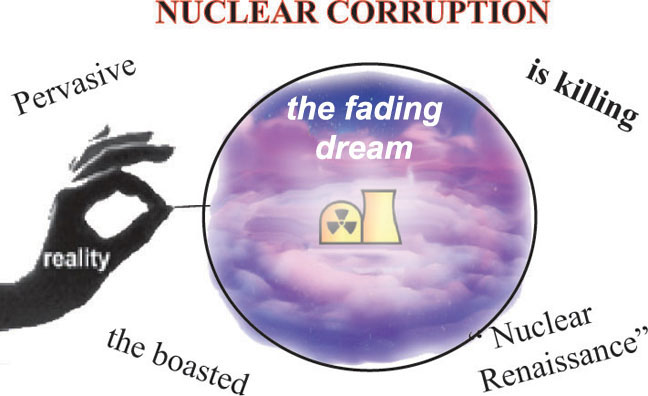
While there are obviously cases of fraud and corruption in other sectors with large infrastructure investments, WNISR suggest that ‘in the past decade, there has been growing evidence of criminality in the nuclear industry’. As well as cases of sabotage via internal and external action. Not a happy thought.
https://renewextraweekly.blogspot.com/2021/11/nuclear-power-global-prospects.html Despite its economic problems, construction delays and cost overshoots, the prospect for nuclear power have been talked up of late. It is being portrayed as a way to respond to climate change and ensure continued energy security in a world where energy demand continues to rise, the use of fossil fuels is increasingly reduced and the use of variable renewables increases. The global lobby group, the World Nuclear Association, says that nuclear generation globally will grow by 2.6% annually, reaching 615 GWe by 2040, up from 394 GW now. Indeed, its upper scenario sees nuclear capacity growing faster, to 839 GWe in 2040. Even under the Lower Scenario, a steady increase is seen over the entire reporting period.
That is all very optimistic judging by the views presented in the latest edition of the independent World Nuclear Industry Status Report, which assesses the status and trends of the international nuclear industry. It reports that, in 2020, nuclear power generation output plunged by around 100 TWh, while net nuclear capacity additions (new startups minus closures), declined to 0.4 GW- compared to a net rise of over 150 GW for renewables. It also didn’t see things improving much. Small Modular Reactors (SMRs) were so far unavailable commercially and would not be for another 10-15 years, ‘if ever’. So overall WNISR says ‘nuclear is irrelevant in today’s electricity capacity new-build market’.
By contrast, non-hydro renewables, mainly wind, solar and biomass, out-performed nuclear plants in electricity generation on a global scale. Hydro alone has been generating more power than nuclear for most of the past three decades. And now, for the first time, non-hydro renewables generated more power in the European Union than nuclear, while renewables, including hydro, generated more power than all fossil fuels combined.
Continue reading”Nuclear Revival” for Canada? Gordon Edwards discusses the latest propaganda.
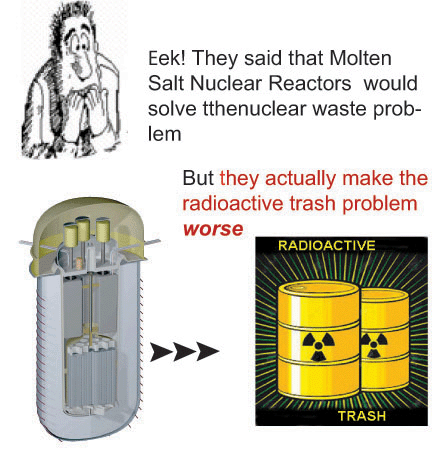
Gordon Edwards, 27 Nov 21, Christopher Read’s latest half-hour documentary on the Nuclear Waste Management Organization (NWMO) discusses its efforts to convince some small community in Ontario to receive all of Canada’s high level radioactive wastes for deep burial.
These are the most toxic materials ever produced by any industry. Of the hundreds of kinds of radioactive poisons contained in the used nuclear fuel, only a handful existed on Earth in significant amounts before 1939. They are created in large quantities inside nuclear reactors.
NWMO is owned by the same companies that make the radioactive poisons in the first place – and they have no intention of stopping. They want to keep right on mass-producing the highly dangerous byproducts indefinitely. Because they have to wait 30 years before moving these deadly wastes – they are literally and figuratively “too hot” to move sooner — there will always be a catastrophic amount left unburied at the surface no matter how fast they bury the older, somewhat cooler wastes.
Meanwhile they will be burdening communities with a permanent radioactive legacy, including contamination caused by unpacking and repackaging millions of embrittled fuel bundles right at the surface, beside the proposed waste dump. Any damage to any of these fuel bundles during handling, even small cracks, will allow radioactive materials to escape and some of it will inevitably enter the sir we breathe, the water we drink, the food we eat, or the soil we walk on.
New reactors are untested, exorbitantly expensive, and will take 10 to 20 years to become available, if ever. They are a DDD = Dirty, Dangerous Distraction from the real job of cutting greenhouse gases now, not 10 years from now. Energy efficiency and renewables can be implemented in a single building season. Wind and solar and efficiency measures are far cheaper and much faster to implement than new nuclear.
When your house is on fire, it is time to grab a bucket or a fire hose and pour water on it – out the fire out! This is no time to sit down and design a new, improved sprinkler system for future use.
Climate change is here now. Action is urgent.
Investing in new nuclear plants is just “kicking the can down the road”. Canada’s Environment Commissioner points out that Canada has the worst record for fighting climate change of any country in the G7, as our greenhouse gas emissions have increased steadily since Trudeau was first elected in 2915. Five of the G7 countries have reduced their GHG emissions, while the sixth has increased GHG emissions at a much slower rate than Canada has.
To invest in unproven and dangerous nuclear plants now will guarantee that no progress will be made for at least 10 to 20 years, minimum. And it will give us more radioactive waste, much of it even more dangerous than the waste we already have. Can we afford to encourage this kind of behaviour with lavish government subsidies?
Heritage Foundation – murky think tank funded by the nuclear weapons industry, wants weapons-makers to be exempt from climate and pandemic regulations

“Defense industrial base” is a buzzword that has picked up steam during the pandemic: It sends the message that, whatever happens with the economy and pandemic, we need to make sure we are in “fighting shape” — by keeping military contractors afloat. This concept was invoked to explain why, at the beginning of the pandemic, factories that produce bombs and tankers should be allowed to stay open, even amid the outbreak risk to workers. And it was also used to justify subsidies to contractors during the hardship of the pandemic.
Lockheed Martin is just one of numerous weapons manufacturers that has directly funded the Heritage Foundation. According to a report by the think tank Center for International Policy (CIP), the Heritage Foundation ranks ninth among the top think tanks that received funding from military contractors and the U.S. government from 2014 to 2019. Lockheed Martin and Raytheon were two of those major funders, both of which are among the largest weapons companies in the world and would be impacted by the new regulation.
This case provides a window into the murky world of think tanks, which are often viewed as academic and above-the-fray institutions but operate more as lobbying outfits.
Think Tank Funded by the Weapons Industry Pressures Biden Not to Regulate Military Contractors’ Emissions https://www.rsn.org/001/think-tank-funded-by-the-weapons-industry-pressures-biden-not-to-regulate-military-contractors-emissions.html
Sarah Lazare/In These Times 19 November 21The Heritage Foundation has received considerable donations from the arms industry. And now it’s trying to shield that industry from climate regulations targeting military contractors.
The Heritage Foundation, a prominent conservative think tank, is publicly opposing a new Biden administration regulation that would force the weapons industry to report its greenhouse gas emissions related to federal contracts. It turns out the Heritage Foundation also receives significant funding from the weapons industry, which makes the case worth examining — because it reveals how the arms industry pays supposedly respectable institutions to do its policy bidding at the expense of a planet careening toward large-scale climate disaster.
The regulation in question was first proposed in an executive order in May. It would require federal contractors to disclose their greenhouse gas emissions and their “climate-related financial risk,” and to set “science-based reduction targets.” In other words, companies like Lockheed Martin would have to disclose how much carbon pollution its F‑35 aircraft and cluster bombs actually cause.
In October, the Biden administration started the process to amend federal procurement rules to reflect these changes. “Today’s action sends a strong signal that in order to do business with the federal government, companies must protect consumers by beginning to mitigate the impact of climate change on their operations and supply chains,” Shalanda Young, acting director of the White House Office of Management and Budget, said at the time.The Department of Defense is the world’s biggest institutional consumer of fossil fuels and a bigger carbon polluter than 140 countries. Yet its emissions (and those of other armed forces) are excluded from UN climate negotiations, including the recent COP26 talks. The Biden administration itself supports a massive military budget, initially requesting $753 billion for the 2022 National Defense Authorization Act, a number that has since ballooned, with the Senate set to vote on a $778 billion plan. Organizers and researchers argue that, to curb the climate crisis, it is necessary to roll back U.S. militarism and dismantle the military budget.
But according to the Heritage Foundation, even this modest proposal is a bridge too far.
Continue readingThe fairy tale of cheap French nuclear power.
The fairy tale of cheap French nuclear power. “Bread and Games” (Panem et circenses) were the strategies used in the Roman Empire to maintain power. “Cheap gasoline, inexpensive electricity and football” are election campaign strategies that are often propagated in a democracy.
In France, the nuclear industry is in decline and the nuclear company EDF is heavily indebted. At the same time, President Macron is once again promising cheap nuclear power and wants to have new small nuclear power plants built.
A small part of the financial problems of the French nuclear industry is to be solved with EU money. In this context, the fairy tale of cheap French nuclear power is popular in France and Germany, and the use of nuclear energy is praised as a miracle weapon in the lost war against nature and the environment.
Sonnenseite 18th Nov 2021
Nuclear lobby infiltrating Casper College Wyoming, or maybe not?

CASPER COLLEGE HOSTING PRESENTATION ON WYOMING’S PENDING NATRIUM NUCLEAR REACTOR https://oilcity.news/wyoming/education/2021/11/11/casper-college-hosting-presentation-on-wyomings-pending-natrium-nuclear-reactor/
By Brendan LaChance on November 11, 2021 CASPER, Wyo. — Casper College will be hosting a presentation titled “Perceptions of Nuclear Progress” in December that will focus on the Natrium nuclear reactor that is expected to be built in Wyoming.
Dr. Glen Hansen, an adjunct engineering instructor at Casper College, will discuss the Natrium reactor during the presentation and discuss the science behind nuclear reactors. Hansen will also discuss safety issues related to nuclear plants.
“Hansen’s presentation will be followed by a discussion on the pros and cons of having the country’s very first Natrium power plant in Wyoming,” Casper College says. “The evening will conclude with a Q&A session moderated by Erich Frankland, political science instructor.”
When Governor Mark Gordon announced this June that Wyoming had been selected for the construction of a new “advanced” nuclear reactor, he said it would be “game-changing and monumental” for Wyoming.
The Natrium system, expected to be built at one of four sites in Wyoming, was co-developed by TerraPower, founded by Bill Gates and GE Hitachi Nuclear Energy.
Proponents tout the Natrium reactor as “advanced” technology with TerraPower claiming it can offer “improved reactor economics, greater fuel efficiency, enhanced safety and lower volumes of waste.”
The Union of Concerned Scientists, on the other hand, has expressed some hesitation in regard to the rosy picture TerraPower and other players in the field of new nuclear technology have been painting.
In a March 2021 report titled “‘Advanced’ Isn’t Always Better: Assessing the Safety, Security, and Environmental Impacts of Non-Light-Water Nuclear Reactors” the Union of Concerned Scientists points to a number of potential problems in regard to claims about new “advanced” nuclear technology.
The issue of whether the Natrium reactor would actually be an improvement on existing nuclear technology is explored further in this article.
Hansen’s presentation at Casper College is scheduled to take place at 7 p.m. Tuesday, December 7 in the Durham Auditorium. The presentation is being hosted by the Zeta Alpha Chapter of Phi Theta Kappa at Casper College, of which Hansen is an adviser.
Hansen previously managed the Computational Multiphysics Department at Sandia National Laboratories. Casper College adds that he also led development of computational nuclear engineering software at Idaho National Laboratory and was a deputy group leader X-Division at Los Alamos National Laboratory.
“For more information, contact Bowden at jbowden@caspercollege.edu or 307-268-2064 or Teresa Stricklin, PTK adviser and mathematics instructor, at tstricklin@caspercollege.edu or 307-268-2615,” Casper College said.
Nuclear power, fossil fuel companies represented at COP26 climate talks

Revealed: 1,000 fossil fuel and big business reps at COP26, The Ferret, Rob Edwards November 6, 2021,

As many as 141 people registered for COP26 from the nuclear power industry across the globe, including the UK’s Nuclear Industry Association and the World Nuclear Association.
More than 20 were part of the Young Generation Network of nuclear professionals.
Nearly 1,000 representatives from the fossil fuel industry, big business and nuclear power companies have registered to attend the COP26 climate summit in Glasgow, according to an analysis by The Ferret.
They include executives from Shell, BP, Equinor, Chevron, Total, Gazprom and other major oil and gas companies, as well as multinational corporations such as McDonald’s, Bayer, Walmart, HSBC, PepsiCo, Nestlé and Microsoft.
There are also delegations from the coal industry, tobacco companies and pesticide manufacturers. Eleven people from two climate sceptic think-tanks have registered for the summit.
Campaigners are outraged that the oil and nuclear industries were being allowed to influence COP26, and called for polluters to be kept away from the summit. They warned of the “corporate capture of climate policies”….. They include executives from Shell, BP, Equinor, Chevron, Total, Gazprom and other major
oil and gas companies, as well as multinational corporations such as McDonald’s, Bayer, Walmart, HSBC, PepsiCo, Nestlé and Microsoft. There are also delegations from the coal industry, tobacco companies and pesticide manufacturers. Eleven people from two climate sceptic think-tanks have registered for the summit. [details of these participants is given]…………………..
As many as 141 people registered for COP26 from the nuclear power industry across the globe, including the UK’s Nuclear Industry Association and the World Nuclear Association. More than 20 were part of the Young Generation Network of nuclear professionals.
The nuclear industry promotes itself as a low-carbon solution to the climate crisis. But some environmentalists argue that it’s too expensive, unreliable and dangerous, compared to renewable energy……..
This list is described as “provisional”, with a final version due to be issued after COP26 has closed. It does not include so-called “overflow” delegates which under UN rules can been added by countries without their names appearing on the official list of participants.
Friends of the Earth Scotland called for polluters to be kept out of COP26. “Many different groups in society need to talk and work together to tackle the climate crisis,” said the environmental group’s director, Dr Richard Dixon.
“But the last people you want at the COP are the big oil firms who continue to profit from fuelling climate change and the nuclear, carbon capture and carbon market enthusiasts who are peddling solutions that are no solution at all.”
The campaign group, Glasgow Calls Out Polluters, decried “political failure” at COP26. “These big polluters’ climate plans are a death sentence for many, but they are nevertheless appeased by the authorities at the COP,” said the group’s Scott Tully from Glasgow.
“The presence and access of these big polluters is in stark contrast with the exclusion of civil society, which draws into disrepute the legitimacy of these talks.”
The anti-poverty charity, Oxfam Scotland, said it was “worrying” that those who have fuelled the climate crisis were given so much access. “Civil society groups, in particular from poorer countries in the south, have found it so hard to attend or even to observe the talks,” said the group’s head, Jamie Livingstone.
“Unless COP26 prioritises the voices of those facing the consequences of climate inaction, it will be impossible for the talks to deliver climate justice.”
Dr Will Dinan, an expert on lobbying from the University of Stirling, accused fossil fuel companies of lobbying to delay action to cut climate pollution. “Climate campaigners have long been concerned about corporate influence on UN environmental decision-making in general, and the corporate capture of climate policies in particular,” he said………….. https://theferret.scot/1000-fossil-fuel-big-business-cop26/
International Thermonuclear Experimental (fusion) Reactor (ITER) will consume as much power as it will generate
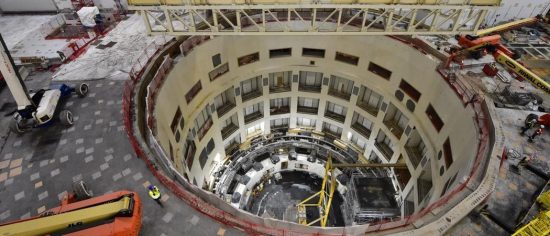
The ITER organization has confirmed that the International Thermonuclear Experimental Reactor is not designed to produce net power. This disclosure comes four years after articles in New Energy Times revealed that the ITER design is equivalent to a zero-net-power reactor.
In an article in the French newspaper Le Canard Enchainé last week, Michel Claessens, the former ITER organization spokesman, explained the ITER power discrepancy.
“For many years, it was claimed that the reactor will generate ten times the power injected. It is completely wrong. Thanks to a patient investigation, the American journalist Steven Krivit showed that ITER will consume as much [power] as it will generate,” Claessens said. “We know now that the net [power] balance will be close to zero.”
New Energy Times 3rd Nov 2021
Hidden agenda: Will COP26 let nuclear power in the door and, if so, why?

Hidden agenda — Beyond Nuclear International October 31, 2021 https://beyondnuclearinternational.org/2021/10/31/hidden-agenda/
— The unspoken argument for more nuclear power, By Linda Pentz Gunter

Not that the two things are unconnected. The civilian nuclear power industry is desperately scrambling to find a way into the COP climate solutions. It has rebranded itself as “zero-carbon”, which is a lie. And this lie goes unchallenged by our willing politicians who blithely repeat it. Are they really that lazy and stupid? Possibly not. Read on.
Nuclear power isn’t a climate solution of course. It can make no plausible financial case, compared with renewables and energy efficiency, nor can it deliver nearly enough electricity in time to stay the inexorable onrush of climate catastrophe. It is too slow, too expensive, too dangerous, hasn’t solved its lethal waste problem and presents a potentially disastrous security and proliferation risk.
New, small, fast reactors will make plutonium, essential to the nuclear weapons industry as Henry Sokolski and Victor Gilinsky of the Nonproliferation Policy Education Center continue to point out. Some of these so-called micro-reactors would be used to power the military battlefield. The Tennessee Valley Authority is already using two of its civilian nuclear reactors to produce tritium, another key “ingredient” for nuclear weapons and a dangerous blurring of the military and civil nuclear lines.

So here we are again at another COP (Conference of the Parties). Well, some of us are in Glasgow, Scotland at the COP itself, and some of us, this writer included, are sitting at a distance, trying to feel hopeful.
But this is COP 26. That means there have already been 25 tries at dealing with the once impending and now upon us climate crisis. Twenty five rounds of “blah, blah, blah” as youth climate activist, Greta Thunberg, so aptly put it.
So if some of us do not feel the blush of optimism on our cheeks, we can be forgiven. I mean, even the Queen of England has had enough of the all-talk-and-no-action of our world leaders, who have been, by and large, thoroughly useless. Even, this time, absent. Some of them have been worse than that.
Not doing anything radical on climate at this stage is fundamentally a crime against humanity. And everything else living on Earth. It should be grounds for an appearance at the International Criminal Court. In the dock.
But what are the world’s greatest greenhouse gas emitters consumed with right now? Upgrading and expanding their nuclear weapons arsenals. Another crime against humanity. It’s as if they haven’t even noticed that our planet is already going quite rapidly to hell in a handbasket. They’d just like to hasten things along a bit by inflicting a nuclear armageddon on us as well.
Not that the two things are unconnected. The civilian nuclear power industry is desperately scrambling to find a way into the COP climate solutions. It has rebranded itself as “zero-carbon”, which is a lie. And this lie goes unchallenged by our willing politicians who blithely repeat it. Are they really that lazy and stupid? Possibly not. Read on.
Nuclear power isn’t a climate solution of course. It can make no plausible financial case, compared with renewables and energy efficiency, nor can it deliver nearly enough electricity in time to stay the inexorable onrush of climate catastrophe. It is too slow, too expensive, too dangerous, hasn’t solved its lethal waste problem and presents a potentially disastrous security and proliferation risk.
Nuclear power is so slow and expensive that it doesn’t even matter whether or not it is ‘low-carbon’ (let alone ‘zero-carbon’). As the economist, Amory Lovins, says, “ Being carbon-free does not establish climate-effectiveness.” If an energy source is too slow and too costly, it will “reduce and retard achievable climate protection,” no matter how ‘low-carbon’ it is.
New, small, fast reactors will make plutonium, essential to the nuclear weapons industry as Henry Sokolski and Victor Gilinsky of the Nonproliferation Policy Education Center continue to point out. Some of these so-called micro-reactors would be used to power the military battlefield. The Tennessee Valley Authority is already using two of its civilian nuclear reactors to produce tritium, another key “ingredient” for nuclear weapons and a dangerous blurring of the military and civil nuclear lines.
Keeping existing reactors going, and building new ones, maintains the lifeline of personnel and know-how needed by the nuclear weapons sector. Dire warnings are being sounded in the halls of power about the threat to national security should the civil nuclear sector fade away.
This is more than a hypothesis. It is all spelled out in numerous documents from bodies such as The Atlantic Council to The Energy Futures Initiative. It has been well researched by two stellar academics at the University of Sussex in the UK — Andy Stirling and Phil Johnstone. It’s just almost never talked about. Including by those of us in the anti-nuclear power movement, much to Stirling and Johnstone’s consternation.
But in a way it’s just glaringly obvious. As we in the anti-nuclear movement wrack our brains to understand why our perfectly empirical and compelling arguments against using nuclear power for climate fall perpetually on deaf ears, we are maybe missing the fact that the nuclear-is-essential-for-climate arguments we hear are just one big smokescreen.
At least, let’s hope so. Because the alternative means that our politicians really are that lazy and stupid, and also gullible, or in the pockets of the big polluters, whether nuclear or fossil fuel, or possibly all of the above. And if that’s the case, we must brace ourselves for more “blah, blah, blah” at COP 26 and a truly horrible outlook for present and future generations.
We are grateful, therefore, to our colleagues attending COP 26, who will be promoting— rather than tilting at —windmills as they make their case, one more time, that nuclear power has no place in, and in fact hinders, climate solutions.
And I hope they will also point out that expensive and obsolete nuclear power should never be promoted — under the false guise of a climate solution — as an excuse to perpetuate the nuclear weapons industry.
Linda Pentz Gunter is the International specialist at Beyond Nuclear and writes for and edits Beyond Nuclear International.
1 This Month
Chernobyl: The Lost Tapes – A good documentary on Chernobyl on SBS available On Demand for the next 3 weeks– https://www.sbs.com.au/ondemand/tv-program/chernobyl-the-lost-tapes/2352741955560

of the week–London Campaign for Nuclear Disarmament

Tell the Ukrainian Government to Drop Prosecution of Peace Activist Yurii Sheliazhenko
To see nuclear-related stories in greater depth and intensity – go to https://nuclearinformation.wordpress.com
-
Archives
- April 2026 (126)
- March 2026 (251)
- February 2026 (268)
- January 2026 (308)
- December 2025 (358)
- November 2025 (359)
- October 2025 (376)
- September 2025 (257)
- August 2025 (319)
- July 2025 (230)
- June 2025 (348)
- May 2025 (261)
-
Categories
- 1
- 1 NUCLEAR ISSUES
- business and costs
- climate change
- culture and arts
- ENERGY
- environment
- health
- history
- indigenous issues
- Legal
- marketing of nuclear
- media
- opposition to nuclear
- PERSONAL STORIES
- politics
- politics international
- Religion and ethics
- safety
- secrets,lies and civil liberties
- spinbuster
- technology
- Uranium
- wastes
- weapons and war
- Women
- 2 WORLD
- ACTION
- AFRICA
- Atrocities
- AUSTRALIA
- Christina's notes
- Christina's themes
- culture and arts
- Events
- Fuk 2022
- Fuk 2023
- Fukushima 2017
- Fukushima 2018
- fukushima 2019
- Fukushima 2020
- Fukushima 2021
- general
- global warming
- Humour (God we need it)
- Nuclear
- RARE EARTHS
- Reference
- resources – print
- Resources -audiovicual
- Weekly Newsletter
- World
- World Nuclear
- YouTube
-
RSS
Entries RSS
Comments RSS
 nuclear-news