Do the research and end the nuclear hype in New Brunswick
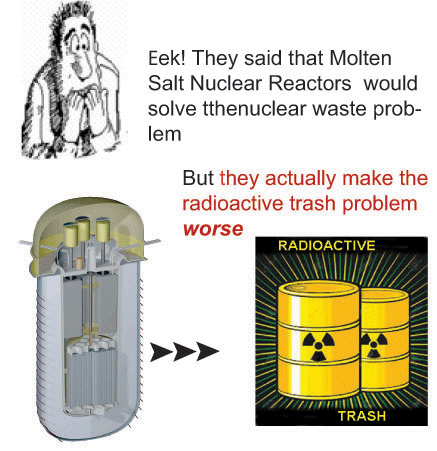
by Susan O’Donnell, June 29, 2024, https://nbmediacoop.org/2024/06/29/do-the-research-and-end-the-nuclear-hype-in-new-brunswick/
New Brunswick’s ARC nuclear project is in trouble. This situation highlights the lack of critical knowledge about nuclear reactor designs within NB Power and the New Brunswick government.
The ARC project goal is to design and build a nuclear reactor cooled with liquid sodium metal at the Point Lepreau site on the Bay of Fundy. NB Power also plans a second reactor at the site, the Moltex reactor design cooled with molten salt.
The proposed nuclear reactor designs lack commercial viability
If NB Power and the provincial government reviewed available research, they would learn that both sodium-cooled and molten salt reactors have never operated successfully on a commercial electricity grid.
An expert report from the U.S. National Academies of Sciences, Engineering, and Medicine stated that inherent problems with sodium-cooled and molten salt reactors means new builds will have difficulty reaching commercial viability by the year 2050, far later than the federal 2035 deadline for utilities to transition to a net-zero electricity grid.
For sodium-cooled reactors like the ARC design, tens of billions of dollars have been spent over decades trying to make them work in a commercial setting, by companies in other countries with considerable experience building nuclear reactors. The failures are well-documented.
Liquid sodium metal is reactive and burns when exposed to air or water. The first commercial sodium-cooled reactor in the U.S. had a partial meltdown and was quickly scrapped.
In other countries, sodium fires and unpredictable performances led to sodium-cooled reactors being abandoned in France (the Superphénix), Japan (the Monju breeder), Germany (the Kalkar plant), and Scotland (the Dounreay reactor).
All these shut-down sodium-cooled reactors cost far more to decommission than they did to build, partly due to the expense of removing the sodium from the reactors’ radioactive waste material so it could be safely disposed without causing underground explosions due to sodium-water reactions, as happened for Scotland’s Dounreay reactor.
The proposed reactor designs lack financing
The ARC sodium-cooled design is in its preliminary stage. Bill Labbe, the ARC CEO who suddenly left the company recently, said in 2023 that $500 million is needed to develop the ARC reactor design, and a further $600 million in power purchase agreements to move the project forward. The money raised to date for the ARC project is only a tiny fraction of that.
Since 2018 the provincial government has handed $25 million to ARC and $10 million to Moltex, as ‘seed’ funding to attract private investment. The federal government gave Moltex $50.5 million in 2021 and ARC $7 million in 2023.
However, six years of trying to entice private investors to the ARC and Moltex projects has not yielded results. Globally, private investment in the energy sector is going into renewable – not nuclear – energy.
Misplaced government hype
Despite the ARC company’s financial difficulties, according to news reports both NB Power and the New Brunswick government continue to support the ARC project.
Since the two start-up companies arrived in Canada and landed in Saint John in 2018, the government’s hype around the ARC and Moltex projects at times has been intense, surprisingly so, given that neither company has ever built a nuclear reactor.
In the past, Energy Minister Mike Holland has been the biggest booster of the ARC and Moltex “advanced” reactor designs.
However, in a curious coincidence, Holland quit the cabinet and gave up his MLA seat just days before the troubles at the ARC company hit the news, after previously announcing he would not stand in the upcoming election.
New Brunswick’s money-losing Point Lepreau nuclear plant
NB Power wants to build the ARC reactor near its existing Point Lepreau nuclear reactor, a consistent money loser for the utility.
According to the NB Auditor General, about three-quarters of NB Power’s $5 billion debt is from cost over-runs on the original CANDU reactor build 40 years ago and the re-build more than a dozen years ago.
At the recent Energy and Utility Board hearings, it was clear that the ongoing poor performance of the Lepreau plant is contributing to the utility’s financial difficulties and its request for an unprecedented rate hike.
Nuclear: the most expensive option for generating electricity
New Brunswick’s abysmal prior experience with nuclear reactors raises an obvious question: why is the province intent on trying to develop experimental nuclear reactors as part of its energy transition plans?
Nuclear power is a more expensive way to generate electricity than renewable energy with storage. Nuclear plants take much longer to build than solar or wind farms. These facts are well-known.
Even the right-wing magazine The Economist recognizes the global trend toward renewables and away from nuclear energy, stating in its most recent issue that: “the next ten-fold increase (in solar energy) will be equivalent to multiplying the world’s entire fleet of nuclear reactors by eight, in less than the time it typically takes to build one of them.”
New Brunswick: clinging to an outdated vision of electricity production
The challenge for New Brunswick is that our public utility NB Power is stuck, along with Ontario Power Generation, in the Jurassic era, feeding their nuclear dinosaurs while the rest of the utility world is getting on with their renewables and storage rollouts.
Across the globe, countries are focused on technological revolutions in energy efficiency and productivity, building smart grids with demand management and response and distributed renewable energy and storage resources. These offer lower-cost, lower-risk, faster and more flexible pathways for decarbonized electricity grids without large centralized nuclear systems.
Building more nuclear reactors and increasing power rates is not compatible with what many commentators in the province want in our shared economic, social and cultural future. It’s time for New Brunswick to end the nuclear hype.
Susan O’Donnell is the principal investigator with teammates of the CEDAR project, St. Thomas University in Fredericton.
Complete BS from the IAEA about the non-existent “global consensus” on nuclear power.

The latest (today) International Atomic Energy Agency newsletter includes this BS info about a fantasy “global consensus” on nuclear power.
The World Bank and other MDBs currently do not contribute financing to nuclear power new build projects, although some MDBs have provided lending for upgrades to existing nuclear power reactors or their decommissioning. Mr Grossi said that financing nuclear power would better align MDBs with the “new global consensus” forged at last year at COP28 in Dubai, where the world called for accelerating the deployment of nuclear power along with other zero emission energy technologies to achieve deep and rapid decarbonization.
Dozens of countries have also signed on to a pledge made at COP28 to work towards tripling global nuclear power capacity to achieve net zero by 2050. The pledge also called on the World Bank, regional development banks and international financial institutions to include nuclear in their lending. That call was echoed by scores of countries at the first-ever Nuclear Energy Summit organized by the IAEA and Government of Belgium in March.
**
The statement supporting nuclear power was made at a private media event at COP 28 and was not part of the official COP proceedings. Canada’s nuclear industry booster NRCan has it on its website but it is not on the site of Environment Canada, which is responsible for COP declarations.
There is no “global consensus” on nuclear energy. Here’s the full IAEA statement:
How I read this: the nuclear industry is desperate. If you read the full item above, you will see a desperate plea for the World Bank and others that do not currently fund nuclear projects to begin doing it. What’s not here is why the private sector is not funding nuclear projects but rather putting their money into solar and wind development, which is that nuclear is a terrible investment and renewables are a good investment.
Australia’s Nuclear debate is getting heated, but whose energy plan stacks up?

by Mike Foley, June 24, 2024, https://www.smh.com.au/politics/federal/nuclear-debate-is-getting-heated-but-whose-energy-plan-stacks-up-20240624-p5jo45.html
The Coalition’s nuclear power policy is less than a week old, but the political debate about Australia’s energy future has been raging since. The opposition’s claims about both its policy and the renewables-focused government plan have prompted plenty of questions about their veracity.
We take a look through the biggest of those talking points to see whether they stack up.
*** Labor’s ‘renewables-only’ plan will cost more than $1 trillion: False
The opposition says it will cost more than $1 trillion for the Albanese government to reach its target of boosting renewables to 82 per cent of the electricity grid by 2030. Currently, about 40 per cent of the grid is renewable electricity.
Nationals Leader David Littleproud on Sunday attributed the numbers to Net Zero Australia: a think tank of academics from University of Melbourne, University of Queensland and Princeton University.
The think tank calculated the estimated cost of reaching net zero across the entire economy, not just the electricity grid.
They found that it would cost more than $1 trillion by 2030 and up to $9 trillion by 2050, largely driven by private investment. The figure includes a range of actions, from integrating electric vehicles into the transport fleet to heavy industry, such as smelting switching from gas to electric power.
The Australian Energy Market Operator (AEMO) forecasts that the cost of reaching 82 per cent renewables, again largely driven by private investment in wind and solar farms and transmission lines, will cost $121 billion in today’s money.
The Albanese government has also committed $20 billion to underwrite transmission-line construction and has set up a fund called the Capacity Investment Scheme, estimated to be worth tens of billions of dollars. It will underwrite new renewable projects, and if private investors fail to achieve forecast returns, taxpayers could be on the hook to subsidise operations but will get a cut of the profits when they exceed a set threshold.
*** Nuclear energy will deliver cheaper power bills: False
Dutton said on Wednesday last week his plan would “see Australia achieve our three goals of cheaper, cleaner and consistent power”.
The opposition has committed to release the costings of their plan before the next election.
Many experts disagree, arguing nuclear power delivers the most expensive form of electricity.
The same report cited by the opposition for a $1 trillion cost of the renewables rollout said there is “no role” for nuclear power in Australia’s energy mix.
“We only see a potential role for nuclear electricity generation if its cost falls sharply and the growth of renewables is constrained,” Net Zero Australia’s report in July last year said.
Internationally recognised financial services firm Lazard also found renewable energy sources continued to be much cheaper than nuclear. It said onshore wind was the cheapest, with a cost between $US25 and $US73 per megawatt hour. The second cheapest was large-scale solar at between $US29 and $US92. Nuclear was the most expensive, at between $US145 and $US222.
The CSIRO found the cheapest electricity would come from a grid that draws 90 per cent of its power from renewables, which would supply electricity for a cost of between $89 and $128 per megawatt hour by 2030 – factoring in $40 billion in transmission lines and batteries to back up renewables.
CSIRO calculated that a large-scale nuclear reactor would supply power for $136 to $226 per megawatt hour by 2040.
** The renewables rollout needs 28,000 kilometres of transmission lines: False
“Labor has promised 28,000 kilometres of new poles and wires, there’s no transparency on where that will go, and we’ve been very clear about the fact that we don’t believe in that model,” Opposition Leader Peter Dutton said last week.
The AEMO releases a document each year called the Integrated System Plan, after consulting private industry, that details a road map of what the most efficient energy system will look like in coming years, including new infrastructure, up to 2050.
The Integrated System Plan includes directives set by policymakers, like the Albanese government’s commitment to reach 82 per cent of energy generation coming from renewables by 2030, and to hit net zero emissions by 2030.
The most recent plan, from January, says around 5000 kilometres of transmission lines are needed in the next 10 years to deliver the Albanese government’s goals, including 4000 kilometres of new lines and upgrading 1000 kilometres of existing lines. AEMO said 10,000 kilometres of transmission lines will be needed for Australia to reach net zero by 2050.
The 28,000-kilometre figure cited by the opposition resembles the 26,000 kilometres of transmission AEMO said would be needed by 2050 if Australia was to transform its economy to a clean energy export powerhouse, including large-scale production of green hydrogen and decarbonisation of other industrial processes.
*** The first reactor would be built before 2037: Questionable
The opposition says if elected, they would build a nuclear reactor and have it hooked up to the grid within 12 years of forming a government.
Its nuclear energy policy document, released last week, states that depending on what technology it chooses to prioritise, a large-scale reactor would start generating electricity by 2037 and a small modular reactor (SMR) by 2035. SMRs are a developing design not yet in commercial production.
This rollout would be as quick as anywhere in the world. The United Arab Emirates has set the global pace. It announced in 2008 that it would build four reactors under contract from Korean company KEPCO. Construction began in 2012, and the first reactor connected to the grid in 2020.
There are significant differences between the UAE and Australia. The former is a dictatorship without comparable labour laws or planning regulations that relies on cheap imported labour, whereas the latter has rigorous workforce protections, environmental laws and planning processes.
Opposition energy spokesman Ted O’Brien said a Coalition government would establish a Nuclear Energy Coordinating Authority that would assess each of the seven nuclear sites it has identified and determine what specific type of reactor would be built where, while also committing to two and half years of community consultation. A new safety and management regime would need to be developed, and parliament would have to repeal the current federal ban on nuclear energy within this timeframe.
If the Coalition forms government in May next year, following the consultation phase, it assumes construction could begin in late 2027 and would take 10 years for a large-scale reactor. That is far quicker than other Western nations have achieved recently.
The UK’s Hinkley Point nuclear plant began construction in 2018 and is not expected to be completed until at least 2030. The only reactor now under construction in France is the Flamanville EPR. Construction began in 2007 and is currently incomplete. A reactor at Olkiluoto Island, Finland, began in 2005 and was completed in 2022.
*** The annual waste from a reactor fits into a Coke can: False
Opposition Leader Peter Dutton’s claim that the annual waste generated by an SMR amounts to the size of a Coke can is incorrect, experts say, with such facilities likely to generate multiple tonnes of high-level radioactive waste each year.
“If you look at a 450-megawatt reactor, it produces waste equivalent to the size of a can of Coke each year,” Dutton said on Tuesday.
Multiple experts told this masthead a 450-megawatt reactor referenced by Dutton would generate many tonnes of waste a year.
Large-scale reactors, which have been deployed in 32 countries around the world, have a typical capacity of 1000 megawatts and generate about 30 tonnes of used fuel a year. This includes high-level radioactive waste toxic to humans for tens of thousands of years and weapons-grade plutonium.
SMRs are still under commercial development, and expert opinion is divided over whether they would produce more or less waste per unit of energy compared to a large reactor.
Emeritus Professor Ian Lowe of Griffith University’s School of Environment and Science said it was safe to assume an SMR would generate many tonnes of waste per year, and it was likely that waste would be more radioactive than the waste from a large-scale reactor.
“For a 400-megawatt SMR, you’d expect that to produce about six tonnes of waste a year. It could be more or less, depending on the actual technology, but certainly multiple tonnes a year,” he said.
Mike Foley is the climate and energy correspondent for The Age and The Sydney Morning Herald. Connect via email.
The day the West defined ‘success’ as a massacre of 270 Palestinians

Jake Sullivan, President Joe Biden’s national security adviser, was keen to take credit for the mass carnage – or what he termed a “daring operation”.
Israelis dance in the streets, the White House hails a ‘daring’ operation, Rishi Sunak expresses relief. How carnage in Gaza has become the new normal
JONATHAN COOK, JUN 12, 2024
Israel hasn’t just crossed the Biden administration’s pretend “red lines” in Gaza. With its massacre at Nuseirat refugee camp at the weekend, Israel drove a bulldozer through them.
On Saturday, an Israeli military operation to free four Israelis held captive by Hamas since its 7 October attack on Israel resulted in the killing of more than 270 Palestinians, many of them women and children.
The true death toll may never be known. Untold numbers of men, women and children are still under rubble from the bombardment, crushed to death, or trapped and suffocating, or expiring slowly from dehydration if they cannot be dug out in time.
Many hundreds more are suffering agonising injuries – should their wounds not kill them – in a situation where there are almost no medical facilities left after Israel’s destruction of hospitals and its mass kidnap of Palestinian medical personnel. Further, there are no drugs to treat the victims, given Israel’s months-long imposition of an aid blockade.
Israelis and American Jewish organisations – so ready to judge Palestinians for cheering attacks on Israel – celebrated the carnage caused in freeing the Israeli captives, who could have returned home months ago had Israel been ready to agree on a ceasefire.
Videos even show Israelis dancing in the street.
According to reports, the bloody Israeli operation in central Gaza may have killed three other captives, one of them possibly an American citizen.
In comments to the Haaretz newspaper published on Sunday, Louis Har, a hostage freed back in February, observed of his own captivity: “Our greatest fear was the IDF’s planes and the concern that they would bomb the building we were in.”
He added: “We weren’t worried that they’d [referring to Hamas] do something to us all of a sudden. We didn’t object to anything. So I wasn’t afraid they’d kill me.”
The Israeli media reported Israeli Defence Minister Yoav Gallant describing Saturday’s operation as “one of the most heroic and extraordinary operations I have witnessed over the course of 47 years serving in Israel’s defence establishment”.
The chief prosecutor of the International Criminal Court is currently seeking an arrest warrant for Gallant, as well as Prime Minister Benjamin Netanyahu, for war crimes and crimes against humanity. The charges include efforts to exterminate the people of Gaza through planned starvation.
State terrorism
Israel has been wrecking the established laws of war with abandon for more than eight months.
At least 37,000 Palestinians are known to have been killed so far in Gaza, though Palestinian officials lost the ability to properly count the dead many weeks ago following Israel’s relentless destruction of the enclave’s institutions and infrastructure.
Israel has additionally engineered a famine that, mostly out of view, is gradually starving Gaza’s population to death.
The International Court of Justice put Israel on trial for genocide back in January. Last month, it ordered an immediate halt to Israel’s attack on Gaza’s southern city of Rafah. Israel has responded to both judgments by intensifying its killing spree.
In a further indication of Israel’s sense of impunity, the rescue operation on Saturday involved yet another flagrant war crime.
Israel used a humanitarian aid truck – supposedly bringing relief to Gaza’s desperate population – as cover for its military operation. In international law, that is known as the crime of perfidy.
For months, Israel has been blocking aid to Gaza – part of its efforts to starve the population. It has also targeted aid workers, killing more than 250 of them since October.
But more specifically, Israel is waging a war on Unrwa, claiming without evidence that the UN’s main aid agency in Gaza is implicated in Hamas “terror” operations. It wants the UN, the international community’s last lifeline in Gaza against Israel’s wanton savagery, permanently gone.
By hiding its own soldiers in an aid truck, Israel made a mockery of its supposed “terrorism concerns” by doing exactly what it accuses Hamas of.
But Israel’s military action also dragged the aid effort – the only way to end Gaza’s famine – into the centre of the battlefield. Now Hamas has every reason to fear that aid workers are not what they seem; that they are really instruments of Israeli state terrorism.
Nefarious motive
In the circumstances, one might have assumed the Biden administration would be quick to condemn Israel’s actions and distance itself from the massacre.
Instead, Jake Sullivan, President Joe Biden’s national security adviser, was keen to take credit for the mass carnage – or what he termed a “daring operation”.
He admitted in an interview on Sunday that the US had offered assistance in the rescue operation, though he refused to clarify how. Other reports noted a supporting British role, too.
…………………………………………………………. ‘Successful’ massacre
As ever, for western media and politicians – who have stood firmly against a ceasefire that could have brought the suffering of the Israeli captives and their families to an end months ago – Palestinian lives are quite literally worthless.
The German Chancellor Olaf Scholz thought it appropriate to describe the killing of 270-plus Palestinians in the freeing of the four Israelis as an “important sign of hope”, while the British Prime Minister Rishi Sunak expressed his “huge relief”. The appalling death toll went unmentioned.
………………………………………..Media outlets uniformly hailed the operation as a “success” and “daring”, as though the killing and maiming of around 1,000 Palestinians – and the serial war crimes Israel committed in the process – need not be factored in.
BBC News’ main report on Saturday night breathlessly focused on the celebrations of the families of the freed captives, treating the massacre of Palestinians as an afterthought. The programme stressed that the death toll was “disputed” – though not mentioning that, as ever, it was Israel doing the disputing.
……………………………………….. The focus on Israeli politicking – rather than US complicity in the Nuseirat massacre – will doubtless provide a welcome distraction, too, as US Secretary of State Antony Blinken tours the region. He will once again wish to be seen rallying support for a ceasefire plan that is supposed to see the Israeli captives released – a plan Netanyahu will be determined, once again, to stymie.

Blinken’s efforts are likely to be even more hopeless in the immediate wake of the Biden administration’s all-too-visible involvement in the killing of hundreds of Palestinians
…………………………………………Israel needs to finish pulverising Gaza, making it permanently uninhabitable, so that the population will be faced with a stark dilemma: remain and die, or leave by any means possible.
The same US “humanitarian pier” that was pressed into service for Saturday’s massacre may soon be the “humanitarian pier” that serves as the exit through which Gaza’s Palestinians are ethnically cleansed, shipped out of a death zone engineered by Israel.
Nuclearisation of universities
Helping youngsters start a nuclear career
by Business Crack, June 9, 2024
“………..The Nuclear Sponsorship Scheme offers 50 students a series of summer placements after each year of their degree as well as funding worth £42,000 – £27,000 in university fees and a £15,000 subsistence bursary – £5,000 per year for three years.
The scheme is means-tested and aimed at increasing social mobility among young people from lower socio-economic backgrounds………………… https://businesscrack.co.uk/2024/06/09/helping-youngsters-start-a-nuclear-career/
University of Ghent to cease all collaboration with Israeli institutions
Friday 31 May 2024, By The Brussels Times with Belga
Ghent University (UGent) plans to end all partnerships with Israeli institutions, citing serious human rights violations and breaches of international law in Gaza, according to chancellor Rik Van de Walle.
Pro-Palestinian activists have occupied the UFO building at UGent for several weeks, demanding a comprehensive boycott against Israeli academic bodies. Hundreds of students have set up encampments in the building’s entrance hall, hoisting flags in protest.
Van de Walle had asked the university’s human rights commission to review all cooperations with Israeli universities and research centres, to bolster Ghent University’s human rights policy. Previously, the university terminated three contracts involving Israeli organisations suspected of involvement in human rights violations……………………………………………
UGent explained that the connection with other organisations or authorities prevents further cooperation. “UGent doesn’t want to be implicated in the very serious human rights and international law violations in Gaza… [or] cooperate with partners involved in these serious human rights violations,” the Flemish institution declared.
The university’s human rights commission – support by the chancellor – advises that for ongoing projects, the consortium should ascertain whether collaboration with the Israeli partner can be ended and take appropriate measures. If this isn’t feasible, “UGent must take the necessary steps to withdraw from the project” itself…….. https://www.brusselstimes.com/1070115/university-of-ghent-to-cease-all-collaboration-with-israeli-institutions
Ukrainian Grad Students Complete Nuclear Internship Program in the United States

MAY 28, 2024
Eight university students from Ukraine recently completed their nuclear energy internship program with the U.S. Department of Energy (DOE).
The program was implemented through Argonne National Laboratory and is designed to assist Ukraine’s nuclear power industry in growing its nuclear energy workforce.
A Long Overdue Visit
The two-year internship program was tailored to Ukrainian university graduate students pursuing nuclear energy-related degrees that specialize in areas such as small modular reactors, accident tolerant fuels, and even misconceptions of nuclear energy.
The students selected for the program were supposed to spend their first summer in the United States taking extra courses and the second summer working with U.S. nuclear energy companies.
A Country Rebuilding
Ukraine’s 15 nuclear reactors generate more than half of the country’s electricity, but the plants are old and so is the country’s aging nuclear workforce.
The grad students returned to their country to continue their studies and careers in Ukraine’s nuclear energy program as they work to pursue new technologies independent of Russia.
Ukraine’s entire fleet of reactors is based on old Russian VVER pressurized water reactor technology. Six of the reactors were seized by Russian forces during the war and placed in cold shutdown.
The U.S.-Ukraine nuclear energy internship program was funded by the Office of Nuclear Energy’s Office of International Cooperation, which collaborates with international partners to support the safe, secure, and peaceful use of nuclear energy. https://www.energy.gov/ne/articles/ukrainian-grad-students-complete-nuclear-internship-program-united-states—
Texas A&M University System To Bring Nuclear Reactors To Texas A&M-RELLIS

Initiative aims to enhance Texas’ power grid and support technological growth with advanced nuclear energy solutions.
By Texas A&M University System, MAY 29, 2024
Leaders at The Texas A&M University System announced plans Wednesday to bring the latest nuclear reactors to Texas A&M-RELLIS.
John Sharp, chancellor of the Texas A&M System, said the System seeks to provide a platform for companies to test the latest reactors and technologies. It also will address the pressing need for increased power supply…………………………………….
To kickstart the latest nuclear initiative, the Texas A&M System will be seeking information — and later proposals — from manufacturers of nuclear reactors. Ultimately, the site could host multiple electrical power-generating facilities, and it could host first-of-a-kind reactors with a net increase of up to 1 GW of capacity that will have a direct connection to the grid operated by Electric Reliability Council of Texas, Inc., or as it is more commonly called, ERCOT..
Representatives from the System and from the companies hope to stand up operational reactors within the next five to seven years. https://today.tamu.edu/2024/05/29/texas-am-university-system-to-bring-nuclear-reactors-to-rellis/
Follow the Money: How Israel-Linked Billionaires Silenced US Campus Protests
Scheerpost, By Alan MacLeod / MintPress News, May 23, 2024
Thousands of students face severe consequences for protesting Gaza violence. Alan Macleod investigates the powerful financial and ideological ties to Israel driving the harsh responses from America’s top universities.
America’s universities are on fire. A protest movement against the violence in Gaza and U.S. colleges’ complicity in them has swept the nation, with encampments on college campuses in 45 of America’s 50 states. The crackdown has been swift; thousands of students have been arrested, charged, fined, lost their degrees, or even deported. Amid corporate media demanding a “Kent State 2.0”, riot police, armored vehicles and snipers have been deployed across the country to terrify those campaigning for justice into silence.
Why have overwhelmingly peaceful demonstrations against a foreign power’s actions been met with such a heavy-handed response? A MintPress News investigation finds that those same elite institutions have deep financial and ideological ties to the state of Israel, are funded by pro-Israel billionaires who have demanded they take action to crush the student movement, are partially funded by the Israeli government, and exist in a climate where Washington has made it clear that the protests should not be tolerated.
ISRAEL’S BILLIONAIRE BACKERS
The movement began on April 17 at Columbia University, where a modest Gaza solidarity encampment was established. Protestors hardly expected to be welcomed by university authorities but were shocked as university president Minouche Shafik immediately called in the NYPD – the first time the university had allowed police to suppress dissent on campus since the famous 1968 demonstrations against the Vietnam War.
Shafik’s decision was no doubt influenced by the enormous pressure put on her by the university’s top donors – many of whom have deep connections to the Israeli state and its military
The turning point, Kraft said, was watching a publicity stunt by Shai Davidai, an Israeli-American academic at Columbia, who claimed his access to campus was revoked. Davidai had previously called the student protestors “Nazis” and “terrorists” and called for the National Guard to be set upon the encampment, obliquely referencing the Kent State University Massacre while doing so.
Kraft is one of Columbia’s most important donors, giving the institution millions of dollars, including $3 million to fund the Kraft Center for Jewish Student Life.
He also has deep connections to Israel, having visited the country over 100 times, including to have private lunch with his friend, Prime Minister Benjamin Netanyahu, who said, “Israel does not have a more loyal friend than Robert Kraft.”
Netanyahu is correct. Kraft is one of the Israel lobby’s primary benefactors, donating millions to groups such as the American Israel Public Affairs Committee (AIPAC), The Israel Project and StandWithUs. He pledged a gigantic $100 million to his own Foundation to Combat Antisemitism – a group that presents critics of Israeli policy with the charge of anti-Jewish racism. He has also funded a host of pro-Israel politicians in races against progressive, anti-war challengers. A recent MintPress News investigation took a closer look at how Kraft is a key actor in trying to launder Israel’s image in America.
LEON COOPERMAN
Another billionaire benefactor pulling his Columbia funding is Leon Cooperman………………………………………
LEN BLAVATNIK
A third billionaire backer using his financial clout to pressure Columbia is Soviet-born oligarch Len Blavatnik, who demanded that the university protestors be “held to account.” Leaked messages reveal that for Blavatnik, this meant using the full weight of the law against protestors………………………………………….
IDAN OFER
From Columbia, the protests quickly spread across America, including to many of the country’s most prestigious institutions, including Harvard.
LESLIE WEXNER
Another billionaire apparently “stunned and sickened” by Harvard’s pro-Hamas positions is former Victoria’s Secret CEO Leslie Wexner. Apart from Wexner’s exceptionally close and well-publicized connections to child sex traffickers and Israeli intelligence asset Jeffrey Epstein, Wexner is a major donor to Israeli causes……………………………………………
MARC ROWAN
Nowhere, however, has the elite backlash to student protests been as bitter as at the University of Pennsylvania. Leading the charge to suppress pro-Palestine sentiment on campus there has been Marc Rowan. The billionaire investor demanded that his side must “exact a price” on students who express solidarity with Palestine. ……………………………………………………………………
ACADEMIC COLLABORATION
In addition to pressure from donors, elite U.S. universities have close academic and business ties to Israel………………………………………………………………………………………………………………………………
PAID FOR BY ISRAEL
However, more controversial than the academic collaboration is the Israeli government’s direct funding of American educational institutions. MIT, for example, is awash in Israeli cash. Scientists Against Genocide, a group at MIT, report that, since 2015, the university has received over $11 million in authorized research funding from the Israeli Ministry of Defense. This cash has reached various departments, including Electrical Engineering and Computer Science, Biological Engineering, Physics, Aeronautics and Astronautics, Materials Science and Engineering, and Civil and Environmental Engineering…………………………………………………………………….
TIES TO THE MILITARY INDUSTRIAL COMPLEX
It could be argued that MIT could reasonably be accused of directly abetting a genocide in Gaza. However, MIT and other elite institutions are under enormous governmental pressure from the other side. Its president, Sally Kornbluth, as well as Harvard president Claudine Gay and Pennsylvania’s Magill, were brought before Congress and grilled on their universities’ alleged support for Hamas and indifference to antisemitism. The case made national news and focused waves of pressure on universities nationwide………………………………………………….
While corporate media has demonized the students as out-of-touch supporters of terrorism, they enjoy widespread support among their peers. Students approved a resolution calling on MIT to cut all research and financial ties to the Israeli military, with 63.7% of undergraduates and 70.5% of graduates voting in favor of it. American adults aged between 18 and 44 support the nationwide protests by a ratio of 4:3.
THE CRACKDOWN
Authorities, however, have been in little mood to negotiate, and images of black-clad riot police beating up and dragging away students and faculty members have gone viral across the globe………………………………………………………………………………………..
SHREDDING THE FIRST AMENDMENT…………………………………………………………
Despite the campus demonstrations being overwhelmingly peaceful, authorities have chosen to crack down harshly upon them, shredding the First Amendment in the process. Why have both universities and the government shown virtually zero tolerance towards those protesting against genocide? Firstly, because so many big-money university benefactors are themselves committed Zionists and have deep ties to the Israeli state………………………………………… https://scheerpost.com/2024/05/23/follow-the-money-how-israel-linked-billionaires-silenced-us-campus-protests/—
Hinkley C – don’t say I didn’t warn you!

It is worth remembering that while construction costs are in the £42 to £48 billion range, the 35 years of electricity at £87.50 or £92.50/MW in 2012 money, adjusted for inflation will cost UK energy users a gargantuan £111 or £116 billion over the next 35 years. Could we use that money better? You bet.
2016 was a missed opportunity, most likely the last opportunity to scrap the benighted project, one of the worst blunders in the history of public procurement and of the UK’s energy industry
In 2016, I called for Hinkley C to be scrapped. Now its commissioning has been pushed back to the end of the decade and its costs have ballooned to as much as £48 billion in 2024 money. I was right.
Thoughts of Chairman Michael , MICHAEL LIEBREICH, JAN 25, 2024
by EDF in 2017), announced a “Nuclear Renaissance” and was lobbying for a new build programme in the UK to replace aging plants set for retirement. In the absence of evidence, they claimed new plants would produce power for £24 per MWh (£39/MWh in 2024 money, or $50/MWh).
The Labour Party, long dead set against nuclear power, were convinced. In January 2008, Prime Minister Gordon Brown declared, in the preface to a White Paper on nuclear power entitled “Meeting the Energy Challenge” that “nuclear should have a role to play in the generation of electricity, alongside other low carbon technologies.” The White Paper estimated the total cost of building a 1.6GW nuclear plant at £2.8 billion – which would translate into £5.6 billion for Hinkley C’s 3.2GW (£9.0 billion or $11.5 billion in 2024 money).
EDF’s UK CEO Vincent de Rivaz was cock-a-hoop, predicting that Brits would be cooking their turkeys with power from Hinkley C by Christmas 2017. But remember that figure – £9.0 billion for 3.2GW.
By October 2013, Osborne and Davey had agreed a Contract for Difference with EDF for electricity production at a strike price of £92.50/MWh in 2012 money (£132/MWh in today’s money or $169/MWh) – rising with inflation for 35 years, but dropping to £87.50 (£125/MWh in today’s money or $173/MWh) if a second EPR were to be built. That EPR is Sizewell C – of which more later.
At that point, Hinkley C was expected to cost £16 billion in 2015 money (£22 billion in 2024 money or $28 billion). It was due to come online in 2023 and continue cooking Christmas turkeys for 60 years.
Since then, on five separate occasions EDF has announced that costs have increased, and the commissioning date pushed back. The only delay which was not fully in the control of EDF and it suppliers in the nuclear and construction industries was Covid – which can be blamed for around a year of delay and a couple of billion of cost increase, but not more.
Last week – yet another delay and cost increase
So then last week, we learned that the plant would be lucky to open much before 2030 – that’s 13 years after de Rivaz’s 2017 promise – and costs would be between £31 and £35 billion in 2015 terms (2015 is used because the CfD figures were set in 2015 money). That is £42 to £48 billion in 2024 money, or up to $61.4 billion).
Remember, we were first promised it would cost £9 billion in today’s money, so that’s an increase of between 4.6 and 5.4 times.
Now, I know that supporters of the project and hard-core nuclear fans will be bursting blood vessels at this point, desperate to jump in an explain that most of the difference between £9 billion and nearly £50 billion is down to financing cost resulting from the use of the CfD mechanism, regulatory cost, delay in government decision-making and so on. But I’m going to say it: I don’t care.
If the nuclear industry says it can build something for £9 billion, it needs to build it for £9 billion. That’s what happens in other industries. If the right number, including finance costs was £22 billion, it should have said so all along. And if it knows that there is a good chance of cost over-runs more than doubling the cost, it should include an appropriate contingency when it promotes and negotiates projects.
How big things (don’t) get done
It is not like cost over-runs in nuclear projects are a big secret. The world’s leading academic expert on project management is Danish Professor Bent Flyvbjerg, author of How Big Things Get Done, who joined me on Cleaning Up last year. Having build a huge database of projects of different sources, he can definitively show that nuclear plants are worse only than Olympic Games in terms of cost over-runs. On average they go 120% over the budget, with 58% of them going a whopping 204% over budget.
The common trope among nuclear fans is that it is only in the western world that nuclear new build is either problematic or exorbitantly expensive, and this is driven by excessive regulation.
While excessive delays in emerging nuclear powers are certainly less common, there is no transparency over how this is achieved. There are ample examples of problems: the use of fake certification documents, the sealing of deals for reactor sales by military inducements, cutting corners on safety, failure to maintain control of the fuel supply chain, failure to disclose problems and accidents; unexplained accidents on aging plants.
There is also no transparency over the real cost of their plants. Put simply, these are are whatever their leaders say they are: it is they who decide the cost of capital, state guarantees, whether safety standards meet or exceed international standards, whether safety standards are enforced, the environmental standards applied to the supply chain, the speed projects proceed through licencing, the need or not to provision for decommissioning costs, the diversion of costs to military, energy or industrial budgets, and so on.
Back to 2016
Now let’s get back to Hinkley C, and 2016. One of the first things Theresa May did when she took over from David Cameron was to ask her security advisors to review the wisdom of allowing state-owned China General Nuclear to invest £6 billion in the project. In the end May backed down and allowed the investment to go ahead, but that is the background to my piece: the project’s future was in doubt, and it was the last realistic chance to kill it before tens of billions of pounds had been invested. And this is what I wrote: The case for Hinkley Point C has collapsed: It’s time to scrap it.
Perhaps of most interest, given the recent breathless announcements by French ministers of their desire to build a lot more new nuclear power stations, and the money being thrown by the UK government at Sizewell C before it has reached a final investment decision, is this section:
There are at least three ways in which [Greg Clark, the freshly-appointed Minister at BEIS] could potentially replace its supply contribution more cheaply, more quickly, and with more impact on UK industry and exports.
He could mandate more renewable generating capacity, paired with interconnections and a range of technologies to manage intermittency. He could push through a fleet of new gas power stations and get serious about carbon capture and storage. Or he could spend a lot less than £37bn on energy efficiency, simply removing the demand for 3.2 GW of base-load power.
Alternatively, if the government still has a nuclear itch, Clark needs to ask why Hinkley C is the right way to scratch it. After decades of technological stagnation, new nuclear technologies are approaching commercialisation, offering passive safety, so they can’t melt down in the event of a power failure, and smaller scale, so they shouldn’t take 15 years to see the light of day.
It is worth remembering that while construction costs are in the £42 to £48 billion range, the 35 years of electricity at £87.50 or £92.50/MW in 2012 money, adjusted for inflation will cost UK energy users a gargantuan £111 or £116 billion over the next 35 years. Could we use that money better? You bet.
Summary
So there you have it. 2016 was a missed opportunity, most likely the last opportunity to scrap the benighted project, one of the worst blunders in the history of public procurement and of the UK’s energy industry……………… https://mliebreich.substack.com/p/hinkley-c-dont-say-i-didnt-warn-you
Yet another university co-opted by the nuclear industry
Teesside University to set out benefits of X-energy site at Hartlepool
Teesside University is to help set out the huge regional economic benefits of a multi-billion pound nuclear power station project in Hartlepool.
Northern Echo, Mike Hughes, 22nd May 24
X-energy and Cavendish Nuclear have commissioned the university to look at the opportunities – including jobs, skills, supply chain contracts, and investment – led by Professor Matthew Cotton, Professor of Public Policy.
The work is part funded by the UK Government which awarded the firms £3.34m in April this year from the Department of Energy Security and Net Zero’s Future Nuclear Enabling Fund.
This was matched by X-energy which aims to build its Xe-100 advanced modular reactor plant, by the early 2030s, next to Hartlepool’s existing Nuclear Power Station which is scheduled to close this decade.
The assessment is part of a £6.68m programme of work the companies are jointly undertaking to prepare for the proposed roll out of around 40 Xe-100 power stations across the UK………………………………. https://www.thenorthernecho.co.uk/news/24333214.teesside-university-set-benefits-x-energy-site-hartlepool/
University of Sheffield gets into the nuclear debt web, partnering with Rolls Royce to make “small” nuclear reactors
New facility will help de-risk and underpin the Rolls-Royce SMR programme
( De-Risking, is a strategy that companies apply when they cannot manage the money laundering risks that they have obligations to. )
Mirage News, 21 May 24
- The University of Sheffield and Rolls-Royce SMR are setting up a multi-million pound manufacturing and testing facility in South Yorkshire
- Based in the University of Sheffield AMRC’s Factory 2050, the new facility will produce prototype modules for small modular reactors (SMRs)
- New facility will help de-risk and underpin the Rolls-Royce SMR programme that aims to deploy a fleet of factory-built nuclear power plants in the UK and across the world
…………………… The first phase, announced today, is worth £2.7 million and will be part of a wider £15+ million package of work that will further de-risk and underpin the Rolls-Royce SMR programme.
The new facility at the University of Sheffield AMRC will produce working prototypes of individual modules that will be assembled into Rolls-Royce SMR power plants.
The Rolls-Royce SMR programme is UK’s first home-grown nuclear technology for over a generation and today’s announcement is another vital step towards deploying a fleet of factory-built nuclear power plants in the UK and around the globe.
Victoria Scott, Rolls-Royce SMR’s Chief Manufacturing Engineer, said: “Our investment in setting up this facility and building prototype modules is another significant milestone for our business.
“Our factories will produce hundreds of prefabricated and pre-tested modules ready for assembly on site. This facility will allow us to refine our production, testing and digital approach to manufacturing – helping de-risk our programme and ensure we increase our delivery certainty. https://www.miragenews.com/rolls-royce-smr-sheffield-uni-launch-new-1238675/
NuScale ($SMR) Has Deceived Investors about the Certification of its Reactor.
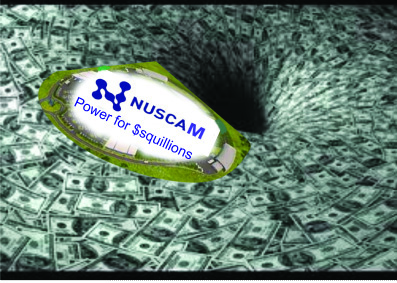
May 16, 2024 https://iceberg-research.com/2024/05/16/nuscale-smr-has-deceived-investors-about-the-certification-of-its-reactor/
NuScale is a developer of small modular reactors (“SMR”) with no credible orders. The company has not landed a single deal since the termination of the UAMPS contract, caused by cost overruns. Without any serious customer, NuScale’s marketing now leans heavily on one claim: having the first and only SMR design certified by the US Nuclear Regulatory Commission (“NRC”).
This statement is everywhere. It features on NuScale’s website, investor presentations, and on earnings calls. Unfortunately, journalists have also echoed this story, without questioning its meaning.

This claim is important. Certification is notoriously long and demanding in the nuclear industry, so NuScale wants investors to believe that it is ready to sell reactors now to meet AI’s rising demand for energy, while competitors are still engaged in the lengthy process.
The problem is that this claim is grossly misleading. NuScale’s design certification was for the original 50-MWe reactor design that was obtained in 2023. The company was forced to upsize its SMR to 77-MWe after it found that the economics of the 50-MWe version didn’t work. The new 77-MWe that NuScale wants to commercialize has zero approval. NuScale has recognized that it does not plan to commercialize the old 50-MWe version anymore (Pg 5).
The regulatory process for the new reactor is more complex and lengthier than what NuScale presents:
- The 77-MWe reactor is not a simple update of the previous design, as increasing the power output by ~50% will cause more stress to critical components of the reactor.
- The company requested for a Standard Design Approval (“SDA”) and not full certification. SDA is a less rigorous step in the approval process. It does not prevent issues resolved by the design review process from being reconsidered during a rulemaking for a design certification, or during hearings associated with a construction permit, or combined license application (Source). SDA progress stands at 40% as of today with approval expected in July 2025. Then, if NuScale seeks full certification to mitigate the above mentioned regulatory uncertainty, we estimate this would take an additional two years.
NRC certified the previous 50-MWe design under the condition that three issues had to be addressed by the constructor/operator of the power plant (Pg 3 of Design Certification). These were the design of the shielding wall, containment leakage from the combustible gas monitoring system, and steam generator stability. It is quite puzzling that NuScale has never resolved these issues, despite being exactly the same ones when it got the SDA in 2020 (Pg 5 of SDA letter).
NuScale deliberately misleads investors into believing that its current design has been certified, which is absolutely incorrect. The regulatory process in reality will take years before NuScale can commercialize its SMR, provided demand exists.
Elusive Clients
NuScale still does not have any binding licensing contract.
- Standard Power
We called the Standard Power contract a pipe dream. Even some sell-side analysts found it hard to take this client seriously. This seems even more like wishful thinking now. NuScale’s 10-K reveals that Standard Power is merely a potential customer.
- RoPower
In January 2023, Romanian nuclear energy firm RoPower Nuclear SA — a joint venture established by Nuclearelectrica and Nova Power & Gas — awarded a front-end engineering and design (“FEED”) work contract to NuScale to develop an SMR plant in Romania. As of now, NuScale has completed work for phase 1, but phase 2 hangs in the balance. Nuclearelectrica shareholders were expected to vote on continuing with the NuScale project at a meeting last month. However, the controlling shareholder, the Ministry of Energy, did not vote. This halted the project’s progress, and as reported in Romanian media (1, 2), the abstention meant the project’s FEED 2 study, the signing of key contracts, and the Ministry of Energy’s decision to raise the loan ceiling for the project’s financing were not approved. The Ministry of Energy later stated that these matters will be put back on the agenda but the uncertainty is starting to look like version 2 of the UAMPS debacle.
- Ukraine
NuScale even claims to be in talks to deploy its technology in Ukraine for ammonia production, but wishes that ‘the bombs stop falling’. The country probably has other priorities.
Fluor the long-suffering shareholder
Fluor is NuScale’s largest shareholder and invested more than $600m in the company between 2011 and 2021. However, it is no secret that Fluor wants to offload a significant chunk of NuScale. As an insider, Fluor is familiar with the regulatory struggles, and most likely expects a litany of cost overruns – all too common in this industry.
The loss of faith in NuScale began as early as twelve years ago. In 2012, David Seaton, Fluor’s CEO at the time, told analysts that the company was ‘keenly focused on bringing in additional investors’ for NuScale. Since then, Fluor has made multiple attempts to substantially get rid of NuScale, without much success, finding some relief only during the SPAC boom, which provided a once-in-a lifetime opportunity to cut bad asset exposure.
Fluor has made clear since the start of 2021 about its long-term plan to hold just 20%-25% of NuScale. This stems from a desire to stop funding NuScale’s losses and deconsolidate the company to get rid of the drag on earnings. In 2019, former CEO Carlos Hernandez told analysts that the company does not ‘expect to provide any additional funding out of Fluor for NuScale’, and added that NuScale was ‘going to affect earnings because we have to consolidate…’.
The disinvestment plan is not going well. As of 1Q23, the company told investors to expect news on strategic investment in NuScale ‘near the end of the year’. The timeline keeps shifting, to ‘end of the year or early in the new year’ in 3Q23, and then to ‘update in the first half of this year’ during the 4Q23 call held on 20 February 2024. Most recently, on the 1Q24 call, management said Fluor will ‘continue to provide updates on this front in the coming quarters of 2024’.
This lack of buyer interest is unsurprising, for a company with no orders, no certification for its new design, and dwindling cash balances.
Cash burn update
Our estimates show that NuScale has 14-21 months of cash. We expect cash outflows of ~$118m, and liquidity to vary, depending on whether or not the company draws down on its at-the-market facility.
Promising the Impossible: Blinken’s Out of Tune Performance in Kyiv

On May 14, in his address to the Igor Sikorsky Kyiv Polytechnic Institute, Blinken described what could only be reasoned as a vast mirage…….. This astonishingly irresponsible statement makes Washington’s security agenda clear and Kyiv’s fate bleak: Ukraine is to become a pro-US, anti-Russian bastion, with an open cheque book at the ready.
The gong of deceit and delusion must.. go to Blinken.
May 18, 2024, Dr Binoy Kampmark, https://theaimn.com/promising-the-impossible-blinkens-out-of-tune-performance-in-kyiv/
Things are looking dire for the Ukrainian war effort. Promises of victory are becoming even hollower than they were last summer, when US President Joe Biden could state with breathtaking obliviousness that Russia had “already lost the war.” The worst offender in this regard remains the United States, which has been the most vocal proponent of fanciful victory over Russia, a message which reads increasingly as one of fighting to the last Ukrainian.
Such a victory is nigh fantasy, almost impossible to envisage. For one thing, domestic considerations about continued support for Kyiv have played a stalling part. In the US Congress, a large military aid package was stalled for six months. Among some Republicans, in particular, Ukraine was not a freedom loving despoiled figure needing props and crutches. “From our perspective,” opines Kentucky Republican Senator Rand Paul, “Ukraine should not and cannot be our problem to solve. It is not our place to defend them in a struggle with their longtime adversary, Russia.” The assessment, in this regard, was a matter of some clarity for Paul. “There is no national security interest for the United States.”
Despite this, the Washington foreign policy and military elite continue to make siren calls of seduction in Kyiv’s direction. On April 23, the Senate finally approved a $US95.3 billion aid package for Ukraine, Israel and Taiwan, with the lion’s share – some US$61 billion – intended for Ukraine’s war effort.
On April 24, a press release from US Secretary State Antony Blinken announced a further US$1 billion package packed with “urgently needed capabilities including air defense missiles, munitions for HIMARS, artillery rounds, armored vehicles, precision aerial munitions, anti-armor weapons, and small arms, equipment, and spare parts to help Ukraine defend its territory and protect its people.”
On May 14, in his address to the Igor Sikorsky Kyiv Polytechnic Institute, Blinken described what could only be reasoned as a vast mirage. “Today, I’m here in Kyiv to speak about Ukraine’s strategic success. And to set out how, with our support, the Ukrainian people can and will achieve their vision for the near future: a free, prosperous, secure democracy – fully integrated into the Euro-Atlantic community – and fully in control of its own destiny.” This astonishingly irresponsible statement makes Washington’s security agenda clear and Kyiv’s fate bleak: Ukraine is to become a pro-US, anti-Russian bastion, with an open cheque book at the ready.
Russia’s President Vladimir Putin has made the prevention of that vision an article of faith. While Russian forces, in men and material, have suffered horrendous losses, the attritive nature of the conflict is starting to tell. While Blinken was gulling his audience, the military realities show significant Russian advances, including a threatening push towards Kharkiv, reversing Ukrainian gains made in 2022.
There are also wounding advances being made in other areas of the conflict. US and NATO artillery and drones supplied to Ukraine’s military forces have been countered by Russian electronic warfare methods. GPS receivers, for instance, have been sufficiently deceived to misdirect missiles shot from HIMARS launchers. In a number of cases, the Russian forces have also identified and destroyed the launchers.
Russian airpower has been brought to bear on critical infrastructure. Radar defying glide bombs have been used with considerable effect. On the production and deployment front, Colonel Ivan Pavlenko, chief of EW and cyber warfare at Ukraine’s general staff, lamented in February that Russia’s use of drones was also “becoming a huge threat”. Depleted stocks of weaponry are being replenished, and more soldiers are being called to the front.
Despite concerns, one need not scour far to find pundits who insist that such advances and gains can be neutralised. Michael Kofman of the Carnegie Endowment for International Peace admits to current Russian “material advantage” and holding “the strategic initiative,” though goes on to speculate that this “may not prove decisive.”
The gong of deceit and delusion must, however, go to Blinken. Americans, he claimed, understood “that our support for Ukraine strengthens the security of the United States and our allies.” Were Putin to win – and here, that old nag of appeasement makes an undesirable appearance – “he won’t stop with Ukraine; he’ll keep going. For when in history has an autocrat been satisfied with carving off just part, or even all, of a single country?”
Towards that end, “we do have a plan,” he coyly insisted. This entailed ensuring Ukraine had “the military that it needs to succeed on the battlefield.” Biden was encouraged by Ukrainian mobilisation efforts, skipping around the logistical delays that had marred it. Washington’s “joint task” was to “secure Ukraine’s sustained and permanent strategic advantage”, enabling it to win the current battles and “defend against future attacks. As President Biden said, we want Ukraine to win – and we’re committed to helping you do it.”
Even by the standards of US Secretaries of States, Blinken’s conduct in Kyiv proved brazen and shameless. A perfect illustration of this came with his musical effort alongside local band, 19.99, involving a rendition of Neil Young’s “Rockin’ in the Free World.”
Local indignation was quick to follow. “Six months of waiting for the decision of the American Congress” had, fumed Bohdan Yaremenko, legislator and former diplomat with Ukrainian President Volodymyr Zelenskyy’s party, “taken the lives of very, very many defenders of the free world.” What the US was performing “for the free world is not rock ’n’ roll, but some other music similar to Russian chanson.”
As for the performance itself, the crowd at Barman Dictat witnessed yet another misreading – naturally by a US politician – of an anthem intended to excoriate American failings, from homelessness to “a kinder, gentler machine gun hand.” Appropriately, the guitar, much like the performer, was out of tune.
The plutonium connection: Why I no longer conduct my research at the University of New Brunswick

I had already learned enough about the power and influence of the nuclear industry to know that I would be fighting a losing battle if I kept my research at UNB
Once during my 13 years at the NRC I was asked to work on a military technology project, and I refused. I had a visceral negative reaction to doing research that could potentially be implicated in mass killing.
by Susan O’Donnell, May 17, 2024, https://nbmediacoop.org/2024/05/17/the-plutonium-connection-why-i-no-longer-conduct-my-research-at-the-university-of-new-brunswick/
On Thursday this week, two very different emails landed in my inbox minutes apart. The juxtaposition jolted me, and I thought: it’s time to share my story about my departure from the University of New Brunswick.
The first email, from the NB Media Co-op, informed me that my commentary written with Gordon Edwards was just published. Our article marked the 50th anniversary of an event that had shocked the world: India’s test nuclear explosion made with plutonium extracted from a ‘peaceful’ nuclear reactor, a gift from Canada. We questioned if Canada was making the same mistake by backing the Moltex project to extract plutonium from used nuclear fuel at the Point Lepreau site on the Bay of Fundy in New Brunswick.
A UNB professor friend sent the second email. He wrote: ‘This will be aggravating to read, but I thought you’d want to see it. I’m attaching the announcement about Arthur Irving’s death coming from UNB’s President. Arthur Irving is celebrated for his commitment and dedication to the environment. Meanwhile, people who are actually committed to the environment (e.g., you) are blacklisted.’
The two emails had this connection: My research and writing about plutonium and Moltex is the main reason why in 2023 I moved my research program from the University of New Brunswick, the largest university in the province, over to St. Thomas University, a small liberal arts undergraduate institution that shares the campus with UNB in Fredericton.
My journey from UNB to STU began in 2020. At that point, I had been with the UNB Sociology department for almost 16 years as an adjunct professor, on faculty but not on staff and so not in the faculty union. During those years, I brought considerable federal research funding into UNB and hired and trained more than a dozen UNB graduate students. My research expertise includes technology adoption: analyzing the social, political, environmental and economic contexts in which people deploy technologies. I joined UNB in 2004 while employed at the National Research Council of Canada on the Fredericton UNB campus, as a senior researcher and vice-chair of the NRC’s research ethics board. Once during my 13 years at the NRC I was asked to work on a military technology project, and I refused. I had a visceral negative reaction to doing research that could potentially be implicated in mass killing.
At the start of 2020, I could not have imagined a connection between NB Power’s Point Lepreau nuclear reactor and weapons of mass destruction. That February, my UNB research project RAVEN was invited to partner with local groups to bring nuclear expert Gordon Edwards, president of the Canadian Coalition for Nuclear Responsibility, to New Brunswick to give public talks in Saint John and Fredericton. I readily agreed. Several months previously, I had read Gordon’s article in the NB Media Co-op about ‘small modular nuclear reactors (SMRs)’ and wanted to learn more. I put up posters around the UNB campus promoting Gordon’s upcoming talk. I asked the UNB communications office to help me promote Gordon’s visit, but they never came through, and I assumed they were too busy to help.
Gordon Edward’s talk, moved online when the pandemic hit in March 2020, sparked my research interest in the adoption of nuclear technology. I began looking into the two small nuclear reactor projects planned for New Brunswick, Moltex and ARC. In July that year, I co-wrote my first commentary with Gordon that mentioned our concerns about the Moltex project and plutonium extraction from used nuclear fuel. The same day that our piece was published in The Hill Times, the newspaper on Parliament Hill in Ottawa, the CEO of Moltex emailed, asking to meet with me. I agreed, and during a break in the pandemic that month, we met outside at Picaroons Roundhouse along with Janice Harvey, the coordinator of the Environment & Society program at St. Thomas University and a co-investigator on my RAVEN project. At the meeting, Janice and I disagreed with the Moltex CEO about the wisdom of his project to extract plutonium from the used nuclear fuel at Point Lepreau.
I continued my research into small nuclear reactors and plutonium extraction by reading research articles and consulting with Gordon and other experts across Canada and internationally. In May 2021, the federal government gave Moltex a $50.5 million grant to develop its technology that could be exported globally. Shortly after, nine U.S. non-proliferation experts wrote an open letter to Prime Minister Trudeau expressing concern about the Moltex project, writing that by ‘backing spent-fuel reprocessing and plutonium extraction, the Government of Canada will undermine the global nuclear weapons non-proliferation regime that Canada has done so much to strengthen.’ The Globe and Mail published an article about the nuclear weapons proliferation concerns with the Moltex project, and Gordon and I published commentaries in The Hill Times, the Bulletin of the Atomic Scientists and the NB Media Co-op.
During this time, I co-founded a public interest group with local activists, the Coalition for Responsible Energy Development in New Brunswick (CRED-NB), to advocate for a nuclear-free renewable energy future. Janice Harvey invited me to join her in the STU Environment & Society program as an adjunct research professor, and in June 2021 I was appointed to the STU faculty in addition to my UNB faculty appointment.
In August 2021, I received a phone call that augured the end of my research program at UNB. On the phone, a friend told me about overhearing the UNB president say: ‘Susan O’Donnell is spreading misinformation about nuclear energy.’ That shocked me for several reasons. First, I would never knowingly spread misinformation. Second, I’d never met the UNB president and didn’t know he knew I existed. Third, why the heck would he say such a thing? To find out, I filed a Right to Information request with UNB, asking for all communications received by the UNB President and the Vice-President Research that mentioned me or my research project RAVEN.
UNB released the information to me in November 2021. The release package, HERE, is dozens of pages, almost all of it redacted. Just enough information was left for me to know that the UNB senior administration’s concern about me began in February 2020, while I was putting up posters around UNB for Gordon Edwards’ talk about small nuclear reactors. Over the weeks leading up to Gordon’s event, a flurry of emails – involving the UNB president, his chief of staff, several vice-presidents, the UNB secretary, two UNB professors I’ve never met, numerous people in UNB communications, and the Atlantica Centre for Energy, a lobby group funded by the energy industry – fretted about the upcoming ‘anti-nuclear event,’ imagining that it was linked to the Green Party and would jeopardize funding for nuclear research at UNB. I finally realized why the UNB communications office had not responded to my request to help publicize Gordon’s talk.
Most interesting to me in the package was an email from the CEO of Moltex to the UNB vice-president research on July 6, 2020, the same day the CEO wrote to me requesting a meeting. To the VP research, the CEO wrote:
‘You may have seen the article recently written by Dr Susan O’Donnell and her group in NB media coop. It was today issued in the Hill Times which gives it significant exposure and credibility. I understand she is a lecturer at UNB. I have emailed her to request a meeting… I do have concerns that her group RAVEN is supported by SSHRC and yet it is being used as an advocacy group and she is using her Academic Freedom to express views without scientific credibility and in conjunction with political parties but I don’t plan on bringing that up with her. I greatly appreciate debate around nuclear and clean energy (I used to be anti nuclear) but it is hard to compete with misinformation backed by a university.’
There it was: the accusation that I was spreading ‘misinformation’ – the same accusation repeated later by the UNB president that my friend had overheard. Finally, I understood why the heck the president had said that: Moltex had stated it as a fact. I knew that Moltex was collaborating with UNB’s Centre for Nuclear Energy Research, and that in addition to the federal grant to Moltex of $50.5 million, UNB received more than $560,000. The Right to Information request showed me that half a million bucks buys a lot at UNB.
To learn more, I filed a complaint in December 2021 with the New Brunswick Ombuds office, asking UNB to release the redacted information. In April 2022, my complaint was dismissed, and I decided to drop it there.
I had already learned enough about the power and influence of the nuclear industry to know that I would be fighting a losing battle if I kept my research at UNB. I was due to write another application for federal research funding. My main concern was that the UNB VP research – who had written many emails about me (that had been redacted) and who would need to sign off on my future requests for federal research funding – was also on the advisory board of the UNB Centre for Nuclear Energy Research. An application for federal research funding takes months of work, and I was not willing to take the risk that after preparing the application, it could be vetoed at the final stage. I asked my UNB Sociology chair not to renew my faculty appointment when it expired in 2023, and I submitted my funding application via the research office at St. Thomas University.
When my UNB appointment ended, the Social Sciences and Humanities Research Council of Canada awarded me a five-year research grant at STU for the CEDAR project – Contesting Energy Discourses through Action Research. CEDAR has excellent co-investigators, collaborators and research assistants. We research the energy transition – focusing on nuclear energy – with the support of my new university administration.
As a bonus, my experience with the Right to Information system raised my awareness of how access to information requests could be useful for research. I’ve since filed more than two dozen requests with different federal and provincial government departments and agencies to learn what goes on behind the scenes between the nuclear industry and governments related to plutonium extraction from used nuclear fuel. As the release packages arrive, many heavily redacted, I’m making them available to other researchers, journalists, and anyone interested, via a page on the CEDAR project website, HERE. Using that information, The Globe and Mail published an article last September, and Gordon Edwards and I published another in March this year in The Bulletin of the Atomic Scientists about the collusion between the nuclear industry and the federal government to develop a policy on nuclear fuel reprocessing. My research continues.
Susan O’Donnell is the primary investigator of the CEDAR project at St. Thomas University.
1 This Month

18 March Webinar @ 1 PM EST: An Assessment of SMR Projects: The Case of Canada
register for the zoom:
https://us02web.zoom.us/webinar/register/WN_o8BIIOUvQ2ONJR1nta65DQ#/registration

of the week – STOP SMALL MODULAR REACTORS IN CANADA
To see nuclear-related stories in greater depth and intensity – go to https://nuclearinformation.wordpress.com
-
Archives
- February 2026 (256)
- January 2026 (308)
- December 2025 (358)
- November 2025 (359)
- October 2025 (376)
- September 2025 (258)
- August 2025 (319)
- July 2025 (230)
- June 2025 (348)
- May 2025 (261)
- April 2025 (305)
- March 2025 (319)
-
Categories
- 1
- 1 NUCLEAR ISSUES
- business and costs
- climate change
- culture and arts
- ENERGY
- environment
- health
- history
- indigenous issues
- Legal
- marketing of nuclear
- media
- opposition to nuclear
- PERSONAL STORIES
- politics
- politics international
- Religion and ethics
- safety
- secrets,lies and civil liberties
- spinbuster
- technology
- Uranium
- wastes
- weapons and war
- Women
- 2 WORLD
- ACTION
- AFRICA
- Atrocities
- AUSTRALIA
- Christina's notes
- Christina's themes
- culture and arts
- Events
- Fuk 2022
- Fuk 2023
- Fukushima 2017
- Fukushima 2018
- fukushima 2019
- Fukushima 2020
- Fukushima 2021
- general
- global warming
- Humour (God we need it)
- Nuclear
- RARE EARTHS
- Reference
- resources – print
- Resources -audiovicual
- Weekly Newsletter
- World
- World Nuclear
- YouTube
-
RSS
Entries RSS
Comments RSS
 nuclear-news