Taxpayers to cough up £65.6 million for nuclear “industry-informed” education in British universities
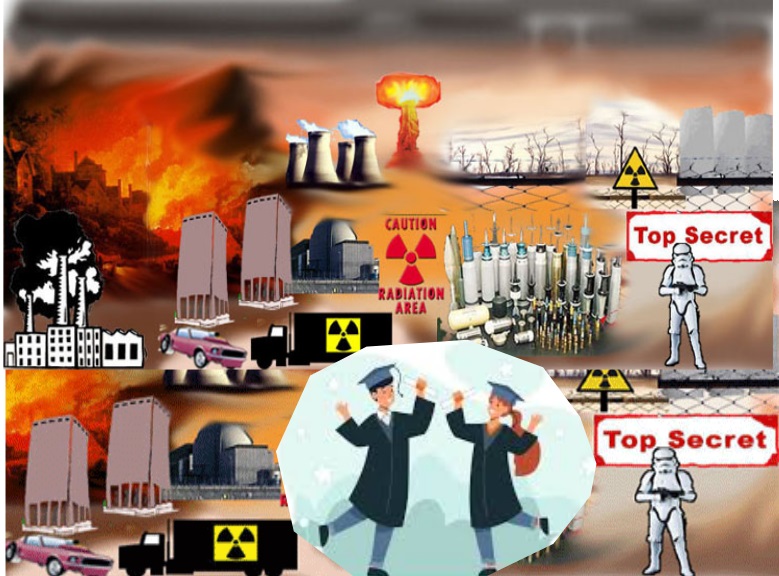
University of Derby helps drive UK nuclear skills expansion
The University of Derby is part of two university consortia that have been awarded funding to lead new doctoral training programmes designed to develop the UK’s future nuclear workforce. The Government has announced a £65.6 million investment for a bespoke nuclear Doctoral Focal Award
Delivered by UK Research and Innovation (UKRI) and match-funded by industry, the programmes will train more than 500 doctoral students at universities across the country, over the next four academic intakes. The University of Derby is a partner in two of the six new national doctoral training programmes announced.
The first consortium, led by Bangor University, has secured funding to establish PANDA (the Programme for Accelerating Nuclear Development and Applications), which will train up to 100 doctoral researchers. PANDA will be delivered in partnership with the UK National Nuclear Laboratory and the universities of Bristol, Birmingham, Cambridge, Derby, Imperial College London and Manchester. Together, these partners will support a new generation of researchers equipped to meet the UK’s future nuclear and clean‑energy needs, including a specific focus on defence.
Derby is also a partner in the STAND-UP (Skills and Training driving availability of National Defence Assets UP skilling) programme, led by the University of Strathclyde, which will train 80 Engineering Doctorate researchers.
This programme aims to develop the next generation of nuclear engineers and support the transition to ‘net zero’. It will help strengthen the UK’s capabilities in nuclear engineering, advanced manufacturing, digital technologies and nuclear decommissioning, bringing together partner universities Cumbria, Lancaster, Nottingham, Birmingham and Surrey.
Professor Kathryn Mitchell, vice-chancellor and chief executive of the University of Derby, said: “Developing the skills and expertise of the next generation is essential to securing a sustainable talent pipeline for the nuclear sector. The University of Derby is committed to working with partners to drive bold action on the UK’s nuclear skills shortage.”
She continued: “Together with our partners, we are creating clear pathways into specialised careers, delivering industry-informed education, and supporting cutting edge research. Through this work, we are helping to build a stronger national workforce and ensuring the future success of this vital sector.”
The announcement follows the Nuclear Skills Plan, launched in May 2024, which contained a recommendation to quadruple the number of nuclear fission doctoral students to address the shortage of high-level nuclear skills across both civil and defence and replace an aging workforce.
Over 500 doctoral students will be trained at universities across the country in academic years 2026/27 to 2033/34, quadrupling today’s intake of nuclear doctoral students. These doctoral students will be equipped with a broad range of advanced technical skills essential for the UK’s future civil and defence nuclear programmes, supporting the UK’s economic growth, energy and national security, and ‘net zero’ objectives.
UK universities getting more enmeshed in the nuclear lobby

Swansea University will play a key role in a new £65.6 million UK Research
and Innovation (UKRI) Doctoral Focal Award in Nuclear Skills, helping to
train specialists essential to future clean energy, national security and
advanced nuclear technologies. As part of DRIVERS (Developing Researchers
with an Interdisciplinary Vision for Engineering Reactor Systems), experts
from the School of Engineering and Applied Sciences will train more than 80
PhD researchers over the next seven years in reactor physics, thermal
hydraulics and through-life structural integrity.
Swansea University 18th March 2026, https://www.swansea.ac.uk/press-office/news-events/news/2026/03/swansea-university-part-of-major-656-million-ukri-investment-to-train-next-generation-of-nuclear-engineers-and-scientists.php
University of Cumbria, Nuclear Waste, AI / Bitcoin and a Strange Tale of Tapping Epstein for Money.

On By mariannewildart, https://mariannewildart.wordpress.com/2026/02/05/university-of-cumbria-nuclear-waste-ai-bitcoin-and-a-strange-tale-of-tapping-epstein-for-money/
The University of Cumbria is playing a “central role in a new £4.9 million nuclear robotics and AI cluster,” part of a consortium with the UK Atomic Energy Authority, University of Oxford and University of Manchester to develop a new nuclear robotics and AI cluster, linking Cumbria and Oxfordshire.
Awarded £4.9 million, the cluster is the largest of seven new research projects supported through an overall funding package of £22 million. This is from the UK Research and Innovation (UKRI), Engineering and Physical Sciences Research Council (EPSRC) and the Place Based Impact Acceleration Account (PBIAA) scheme. The robotics will of course end up as nuclear waste with the ultimate plan to dump the radioactive doggy robots in a big hole under the Lake District coast. The University of Cumbria has never made any comments that there should be no nuclear waste dump under the Lake District coast or that there should be no new nuclear waste, no new nuclear build. This latest nuclear complicity means that they are now hugely compromised and it would be a brave university professor (we do live in hope) to speak out against using the Lake District coast as a giant heat sink in which to dump hot nuclear robots.
Some years ago I was stood outside Gail Bradbrook’s (XR Leader) talk in Kendal leafletting against the (now rejected) coal mine near Sellafield with a nuclear waste barrel costume on. Professor Bendell walked past with his head down clearly not wanting to take a leaflet from a person in a nuclear waste barrel. When I did a bit of research I found that Professor Bendell is known is some circles as “Professor Bitcoin.” The University of Cumbria where he is “Professor of Sustainability Leadership” was the first in the world to accept student’s tuition fees in bitcoin. Whats wrong with that?Bitcoin and cryptocurrencies use enormous amounts of energy and are also the key to AI.
Prof Bendell has written long-winded deflections online regarding his connection to Epstein. Prof Bendell said he was introduced to Epstein through the Gates Foundation which does seem to be the case. Telling Epstein that his past was a problem in 2013 however does not seem to be reflected in the released files. Correspondence continues over several years.
The explanation above has been accepted by Jem’s followers of whom there are many.
A closer look reveals that Prof Bendell was keen to tap Epstein for money on behalf of the University of Cumbria in order to fund the Professor’s and the Uni’s interests in Bitcoin. This keenness for Epstein funds went so far as to the Professor sourcing a 5013c ( a United States corporation, trust, unincorporated association, or organisation exempt from federal income tax) through which to accept “donation/s from Epstein.
This was in 2012 a full four years after Epstein pleading guilty in 2008 of procuring a child for prostitution, amongst other things. Epstein was convicted of only two crimes as part of a controversial plea deal agreed by the U.S. This was widely reported in 2008 but in 2012 was not a red flag for Bendell despite the University of Cumbria’s safeguarding policy.
Bizarrely, one of the exchanges between Jem and Jeffrey includes both men saying they would not want to go to jail for the sake of “alternative exchange systems’ ie digital currency.
Government funding for Saskatchewan SMR test facility
World Nuclear News 20th Jan 2026
Western Canada’s first Small Modular Reactor Safety, Licensing, and Testing Centre at the University of Regina is to receive nearly CAD6 million (USD4.3 million) in funding from the federal and provincial governments.
The facility – the SMR-SLT – will be located at the Innovation Saskatchewan Research and Technology Park. It will house two test loops that simulate a part of a small modular reactor (SMR), modelling water-cooled systems using electrical heat, allowing researchers to test components under conditions similar to those in operating reactors.
The funding was announced by Buckley Belanger, Canada’s Secretary of State (Rural Development), on behalf of Minister of Emergency Management and Community Resilience and Minister responsible for Prairies Economic Development Canada Eleanor Olszewski. The federal government is investing CAD1.96 million (USD1.4 million) in the SMR-SLT through Olszewski’s department, PrairiesCan – a federal government department supporting business growth, innovation and community economic development across Alberta, Saskatchewan and Manitoba.
Provincial government support for the project is through SaskPower, the principal supplier of electricity in Saskatchewan, and a Crown Corporation – a commercial entity owned by the Government of Saskatchewan. It will be investing CAD4 million in the SMR-LT……………………..
Innovation Saskatchewan is contributing CAD1 million plus an in-kind contribution of the leased space at the Innovation Saskatchewan R+T Park for the first three years of operation. Canadian Nuclear Laboratories (CNL) will also provide in-kind design support. The centre will be led by University of Regina researchers, with the Global Institute for Energy, Minerals and Society (GIEMS) partnership between the University of Regina, University of Saskatchewan, and Saskatchewan Polytechnic playing a key role to ensure all three institutions have access to the test loops for training and research, SaskPower said.
The government of Saskatchewan signalled its commitment to incorporating nuclear capacity into its provincial electricity system in a long-term policy document released last year. SaskPower has previously selected GE Hitachi Nuclear Energy’s BWRX-300 SMR for potential deployment in the province in the mid-2030s and has identified two potential sites for SMR deployment, both in the Estevan area in the south-east of the province…………………
Arthur Situm, Canada Research Chair in SMR Safety and Licensing at the University of Regina, said the facility will help train the next generation of nuclear professionals by providing hands-on experience with safety systems and processes that define modern nuclear technology.
“Together, this work positions the University of Regina and Saskatchewan as a leader in safe, responsible, small modular reactor research with a global impact,” he said on YouTube…….
https://www.world-nuclear-news.org/articles/government-funding-for-saskatchewan-smr-test-facility
Academic Freedom on Life Support: Trump’s War on Knowledge Exposed
January 6, 2026 https://scheerpost.com/2026/01/06/academic-freedom-on-life-support-trumps-war-on-knowledge-exposed/
In this episode of Scheer Intelligence, Robert Scheer speaks with Professor Steve Macek about what he calls an unprecedented assault on academic freedom in the United States. From federal investigations into Columbia and UCLA to state‑level crackdowns in Florida and Texas, Macek argues that the country is witnessing a new form of political interference — one that targets universities, scholars, and even entire fields of study.
Scheer and Macek trace the historical lineage from McCarthyism to the present, examining how both major political parties have contributed to a climate of fear, surveillance, and self‑censorship on campus. They discuss the weaponization of antisemitism accusations, the precariousness of adjunct faculty, the chilling effect on student activism, and the broader erosion of institutions that produce knowledge.
This conversation is essential for anyone concerned about free inquiry, democratic debate, and the future of higher education.
The Israeli army is creating a ‘new security reality’ in the northern West Bank to advance colonization
In recent weeks, the Israeli army has launched a renewed military campaign in the northern West Bank. Palestinians say these operations aim to establish a new “security reality” to facilitate the rebuilding of Israeli settlements dismantled in 2005.
Mondoweiss, By Shatha Hanaysha December 16, 2025
On December 3, Israeli forces raided a home in the town of Qabatiya, south of Jenin, tearing down a map of Palestine hanging on the wall and confiscating another. The homeowners, a woman and her 11-year-old daughter, were detained for several hours and subjected to on-site field interrogations as Israeli troops vandalised the rest of the house before eventually withdrawing.
Noura Muhammad, the homeowner, told Mondoweiss that Israeli soldiers broke down the front door when they arrived, immediately asking her whether there was any “gold or money” in the house.
She added that after detaining her and her daughter alongside their neighbors, the soldiers interrogated the child, asking, “What do you want to be when you grow up?”
“They were attempting to get inside my daughter’s head to understand the future,” Noura told Mondoweiss, explaining that this is a common question that Israeli soldiers ask children to see whether they answer that they want to become resistance fighters. “They’re asking because they’re afraid of that future,” she explains.
In another home, a Palestinian youth with EU citizenship who spoke to Mondoweiss on the condition of anonymity said that Israeli soldiers had detained and interrogated him for hours, while telling him, “Why are you here? Leave the land of Israel.”
These are not isolated incidents. Over the past several weeks, the Israeli army has launched a renewed military campaign in the northern West Bank, first in Tubas and its neighboring villages and then extending to areas such as Jenin, where Israeli soldiers executed two young men in late November. Since then, Israeli forces have repeatedly conducted raids into cities and towns, imposed curfews, invaded homes before converting them into military outposts, forcibly displaced residents, and detained, interrogated, and arrested hundreds of young men.
But what is behind this renewed military campaign, and why is it unfolding only now? While the official Israeli narrative claims that it is “combating terrorism,” locals in Jenin and other parts of the north say it is really about establishing a new reality on the ground of total Israeli dominance. The objective: to create the necessary “security conditions” to allow the unhindered resettlement of areas of Jenin that Israel had evacuated in 2005.
Military escalation as land confiscation
Israel is attempting to create a new status quo in the West Bank as part of its objective of altering the north’s geography. It is doing so by seizing and repurposing Palestinian land to serve colonization and settler infrastructure, and the ongoing military activities in these areas are a part of that effort, locals say…………………………………………………………………………………………………………..
Israel moves to reinstate evacuated settlements
The colonization of these lands occurs through both military and semi-legal means, according to Amir Daoud, Director of Publishing and Documentation at the Colonization & Wall Resistance Commission. The first stage of the colonization process starts with the seizure of land following the issuing of a military order related to road construction, Daoud says. He explains that such orders aim to establish an Israeli military foothold over the land before eventually handing it over to settler groups, complete with a permanent infrastructure that the army would have built for ostensibly military purposes. In the second stage of this process, Daoud continues, settlement activity gradually yet systematically returns to the area under the army’s control following the passing of amendments to Israeli laws
regulating settlement construction. In the case of the Jenin area, this was achieved through the amendment (and eventual repeal) of the Disengagement Law of 2005, which led in that year to the unilateral Israeli withdrawal of all settlements from Gaza and four settlements from the northern West Bank……………………………………………………………………………………………………..
‘Functional coordination’ between settlers and the army
Daoud explains that the pattern has become clear: settlers build a road illegally, after which the army intervenes by issuing a military order that declares it a closed military zone, thereby granting the road “legal cover.” Later, it becomes a civilian settlement or is used to expand settlement infrastructure…………………..
For this strategy to be effective, there must be a degree of coordination between settlers and the military. Daoud describes this as “functional coordination,” and the way it works is that settlers first impose their presence on the ground by constructing supposedly “unauthorized” outposts, and then the army converts it into a fixed reality by converting it into a closed military zone, only to later be opened up for civilian use.
Daoud also stresses that the ongoing military operations in the north can only be understood as part of the effort to create a “new security reality” that is more conducive to settlement expansion……….
The resulting picture is one in which military and settler activities are proceeding in an integrated manner, Daoud stresses; it is all part of a single project aimed at “reshaping the geography and demography” of the northern West Bank………………………………………………….. https://mondoweiss.net/2025/12/the-israeli-army-is-creating-a-new-security-reality-in-the-northern-west-bank-to-advance-colonization/
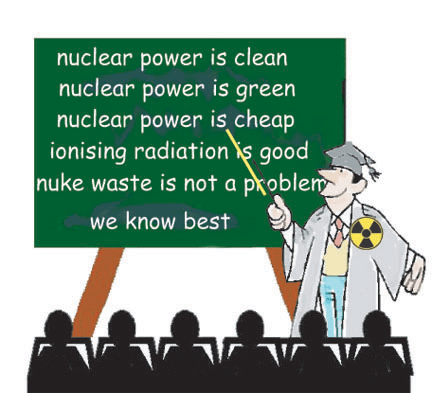
Torness Nuclear Power Station welcomes East Lothian schoolchildren.
East Lothian Courier, By Cameron Ritchie, 15th December
MORE than 100 pupils from three primary schools have swapped the classroom for touring Scotland’s nuclear power station.
Torness Power Station, near Dunbar, welcomed youngsters from Haddington’s Letham Mains Primary School, as well as Coldstream Primary School and Berwick Middle School, as part of its annual ‘Christmas Cracker’ event.
The scheme offers a unique insight into life at the station and the wide variety of roles that keep it running.
Faith Scott, visitor centre co-ordinator at the power station, said: “The Christmas Cracker event is one of the highlights of our calendar.
“It is a fantastic opportunity for pupils to see how the station operates and discover the range of careers available on site.”
While nearly all primary pupils study science, technology, engineering and maths (STEM) subjects, only a small fraction continue into STEM careers.
Events like the ‘Christmas Cracker’ are designed to encourage pupils to continue studying STEM subjects.

Educators Worry Palestine Censorship Could Reshape Public Education Entirely.

lawmakers who sponsored House Bill (HB) 937 seemed more committed to preventing teachers and pupils from criticizing Israel than preventing discrimination against Jewish students
New efforts to shut down honest discussion of Palestine could restrict everything from literature to science classes.
By Marianne Dhenin , Truthout, November 29, 2025
A wave of bills introduced this year in state legislatures across the country sought to censor Palestine-related education in public schools. Several passed with the support of pro-Israel Democratic lawmakers, a trend that educators and First Amendment advocates told Truthout reflects the alignment of pro-Israel groups with MAGA forces. As these efforts continue, many said they fear public education could be reshaped far beyond social studies classrooms and the topics of Israel and Palestine.
“The censorship of Palestinians is the same as the ‘Don’t Say Gay,’ and the anti-critical race theory attacks on Black history,” Nora Lester-Murad, an organizer with the #DropTheADLfromSchools effort, told Truthout. The Anti-Defamation League (ADL) is one of a number of pro-Israel groups supporting regressive public education legislation across the country. “Yes, it’s Zionist, and yes, it’s promoting Israel, but it’s also part of this right-wing effort to take public education in a direction that’s away from critical thinking and that’s anti-liberatory.”
This year, legislators in at least eight states — including Arizona, Arkansas, Kansas, Kentucky, Missouri, Nebraska, Oklahoma, and Tennessee — introduced bills that would directly adopt the International Holocaust Remembrance Alliance (IHRA) definition of antisemitism in public schools. That definition equates criticism of Israel with antisemitism. Dozens of civil society and rights groups, as well as unions of educators, have warned against its adoption because of its power to chill or suppress speech critical of Israel or Zionism.
Michael Berg, an organizer with Jewish Voice for Peace (JVP) in Missouri, said lawmakers who sponsored House Bill (HB) 937 seemed more committed to preventing teachers and pupils from criticizing Israel than preventing discrimination against Jewish students. “They were attached to the IHRA definition, so it shows that it’s very specifically about speech about Israel,” he said. Organizers succeeded in stopping HB 937 in Missouri this year, but Berg told Truthout they are already preparing to fight a new iteration of the bill in the upcoming legislative session.
Other states have made similar efforts, including California, where Democrats hold a supermajority in the state assembly. There, this year’s Assembly Bill (AB) 715 was the latest in a series introduced under the guise of curbing antisemitism, but whose critics argue are censorship bills that undermine the implementation of earlier legislation mandating ethnic studies courses in public schools. AB 715 does not define antisemitism, but calls for using the Biden-era United States National Strategy to Counter Antisemitism as “a basis to inform schools on how to identify, respond to, prevent, and counter antisemitism.” That white paper claims that “the United States has embraced” IHRA’s definition as a “valuable tool” in countering antisemitism. Gov. Gavin Newsom signed AB 715 into law in October; the American-Arab Anti-Discrimination Committee (ADC) filed a suit challenging the law in federal court in November.
Meanwhile, this August in Massachusetts, another Democratic stronghold, the state’s Special Commission on Combating Antisemitism approved recommendations meant to curb antisemitism in schools. The recommendations call on districts to teach IHRA’s definition of antisemitism in anti-bias trainings for teachers and school administrators. A statewide coalition of labor unions, civil rights groups, and progressive Jewish organizations warned that rather than countering antisemitism, the recommendations “pit some Jewish students against other marginalized populations” and will likely “undermine safe learning and working environments for students and teachers.”
These moves dovetail with a federal agenda to remake the nation’s public schools and historical programming at other public institutions, such as museums and national parks. Since his return to office, President Donald Trump has signed executive orders demanding an end to “radical indoctrination in K-12 schooling” and “restoring truth and sanity to American history.” The administration advocates teaching a whitewashed and aggrandizing version of the nation’s past that Trump, in one executive order, called “patriotic education.”…………………………………………………………………………………………………………………………………………………..
The recent wave of bills limiting Palestine-related speech in public schools also harms students. “We believe that antisemitism is being used to censor education on Palestine, and we believe that our students have a right to understand both sides of an issue,” Seth Morrison, spokesperson for JVP’s Bay Area chapter and an organizer with CCDPE, told Truthout. “We’re not saying don’t talk about Israel or don’t talk about the Holocaust. What we’re saying is that there are many open issues here and that Arab and Muslim students especially are being intimidated and censored because of IHRA and related activities.”…………………………………………………………………………………….. https://truthout.org/articles/educators-worry-palestine-censorship-could-reshape-public-education-entirely/
Torness Power Station welcomes female school pupils.

25th November, by Cameron Ritchie, https://www.eastlothiancourier.com/news/25636675.torness-power-station-welcomes-female-school-pupils/
MORE than 60 female pupils from East Lothian’s secondary schools have been given a unique insight into the world of engineering.
The youngsters were given a tour of Torness Power Station while also enjoying a series of interactive workshops designed to showcase the variety of careers available in science, technology, engineering and maths (STEM).
Students from nearby Dunbar Grammar School were joined by counterparts from Wallyford’s Rosehill High School; Musselburgh Grammar School; Ross High School, Tranent; Preston Lodge High School, Prestonpans; Knox Academy, Haddington; and North Berwick High School.
The day was opened by Kiran Basra-Steele, EDF’s safety and assurance director, and Samaneh Nouraei, an inspector with the Office for Nuclear Regulation (ONR), who shared their career journeys and experiences of working in STEM industries.
Kiran said: “The number of women working in STEM is increasing, but we still face a significant skills gap.
“We need to ensure everyone has the opportunity to learn about the careers available and feels empowered to pursue them.
“My hope is that one day we won’t need to run female-focused STEM days because the gender balance will have been achieved.
“There are huge opportunities within the existing nuclear fleet and exciting prospects ahead with new nuclear developments in the UK.”
During the visit, the pupils carried out activities, including dismantling flanges to test their ability to follow work instructions and building droids using mobile phones and circuits.
They also heard first-hand from female apprentices, technicians and engineers currently working at the station.
The event forms part of the nuclear power station’s ongoing efforts to encourage more women to apply for its apprenticeship programme.
The four-year scheme begins with two years at the National College for Nuclear in Somerset, where apprentices learn core engineering skills before specialising in their chosen trade.
The programme also includes opportunities to travel within the UK and abroad as part of its ‘life skills’ element, before returning to Torness for the final two years of training.
According to Equate Scotland, the national expert in equality, diversity and inclusion in the STEM sector, it is estimated that only 25 per cent of the STEM sector are women.
Paul Forrest, station director, said: “This is the second year we’ve run the event, and it’s been fantastic to see the enthusiasm from everyone involved.
“We hope we’ve given these students something to think about when considering their future career choices.”
Applications will be open for EDF’s apprenticeship programme from January 26 to February 20 next year, with an open day being held in Dunbar’s Harbour Chapel on January 30.
Lancaster University to create £2m nuclear power station control room simulator.
r. Funded through a £2 million grant as part of an £88.5 million
capital investment by the Office for Students (OfS) into Universities and
colleges across England, Lancaster University will address a critical gap
by developing a nationally-unique educational facility designed to train
future professionals in nuclear engineering, cyber security and related
disciplines.
Lancaster Guardian 18th Nov 2025.
https://www.lancasterguardian.co.uk/news/national/lancaster-university-to-create-ps2m-nuclear-power-station-control-room-simulator-5407049
Manchester launch for Labrats nuclear test education programme
Nuclear Free Local Authorities, 13th November 2025
Manchester was honoured to host nuclear test veterans, family members and former Councillors at a very special event held in the City Council Chamber on Friday 7 November. The event was organised by the NFLAs and LABRATS.
The event had two objectives – to mark the occasion of the 45th anniversary of the City Council passing a resolution declaring Manchester the world’s first nuclear-free city and to launch the latest education package recently published by Labrats, a group representing nuclear test veterans and family members in their continued campaign for recognition, access to medical records, and compensation.
The Lord Mayor of Manchester Councillor Carmine Grimshaw opened the event, with additional comments by Manchester City Council’s military veterans lead, Councillor Tommy Judge. NFLA Secretary Richard Outram then outlined the circumstances which led to the City Council’s historic declaration on 5 November 1980……………………………………… https://www.nuclearpolicy.info/news/manchester-launch-for-labrats-nuclear-test-education-programme/
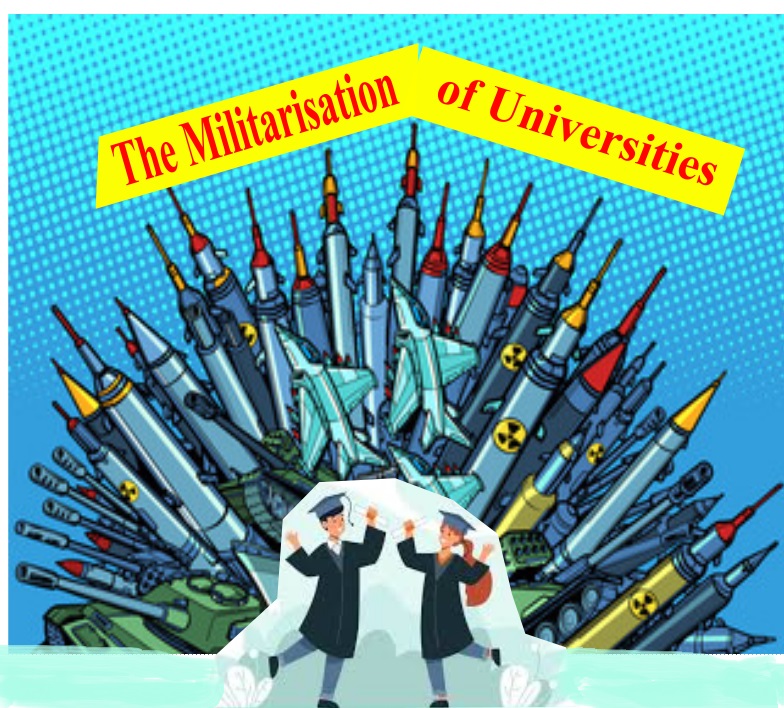
Exposed! The University of Sheffield’s role in Britain’s nuclear weapons
“It’s disappointing that there has been no public discussion of the university’s participation in Britain’s nuclear weapons system.”
By Sam Legg, 15 Oct 25, https://labouroutlook.org/2025/10/15/exposed-the-university-of-sheffields-role-in-britains-nuclear-weapons/
Working with local peace groups (such as Sheffield Action Group and Rotherham Friends of Palestine) we organised a protest outside the gates of the University of Sheffield’s Advanced Manufacturing Research Centre (AMRC). This is because of what was uncovered in the Sheffield Tribune’s article. So far, we know the following about the role of the AMRC in Britain’s nuclear weapons system:
- The AMRC is working with the Atomic Weapons Establishment (AWE) to design the Astraea, a new generation nuclear warhead.
- This research has been taking place for at least the past three years.
- The weapon being designed with AWE is expected to be 30 times as powerful as the bomb that was dropped on Hiroshima.
- This research is receiving government support from the South Yorkshire Mayoral Authority and 10 Downing Street.
Sheffield University was built thanks to the generosity of local residents (including steel and factory workers) in 1904, establishing itself as a civic university that aims to deeply connect and engage with its local community. Therefore, it’s disappointing that there has been no public discussion of the university’s participation in Britain’s nuclear weapons system. We are supporting calls for the AWE and AMRC to provide the public with an explanation.
One of the signs at the protest read ‘Make something useful instead’, harking back to the ideas laid out in the Lucas Plan and by Common Wealth to emphasise that the engineering skills being developed at the University of Sheffield should be put to better use. Minesh Parekh, a local councillor who attended the protest, told The Sheffield Tab that “there are so many areas that need cutting-edge research that could drive forwards our health and wellbeing, our net-zero transition, that are needed far more than nuclear weapons”.
With this year marking 80 years since the first atomic bombs were dropped on the cities of Hiroshima and Nagasaki, we need to urgently reflect on whether more weapons of mass destruction is what we want the skills of our talented researchers and workers to be used for. Sheffield was once a nuclear-free zone (declared in the 1980s), yet today we are concerned that the message of the film Threads (based in the city) is being forgotten by the people of Sheffield.
Yorkshire CND will continue to discuss future action to be taken. Alongside this, we are supporting efforts for local councils to adopt motions in favour of a world without nuclear weapons. Get in touch if you would like to find out more – info@yorkshirecnd.org.uk
University of Stirling hosts Hiroshima and Nagasaki exhibition
The University of Stirling is hosting the UK debut of Remembered: 80 years
since the bombing of Hiroshima and Nagasaki, marking eight decades since
the atomic bombings of Japan at the end of the Second World War.
The exhibition, curated by the Nagasaki National Peace Memorial Hall for the
Atomic Bomb Victims, offers a deeply moving account of the destruction
caused by the bombings and their long-term human and environmental
consequences.
Stirling News 8th Oct 2025, https://www.stirlingnews.co.uk/news/25528466.university-stirling-hosts-hiroshima-nagasaki-exhibition/
Extra funding revealed to fuel nuclear fusion energy training and research

The UK Atomic Energy Authority (UKAEA), University of York and University
of Edinburgh, will invest £7.8m over the next five years to advance fusion
energy research and post-graduate training. The funding will be distributed
through UKAEA’s Fusion Opportunities in Skills, Training, Education and
Research (FOSTER) Programme, which aims to develop the next generation of
fusion energy specialists. This investment is intended to create new
opportunities across collaborating universities for students to access
level Seven (master’s degree) qualifications in fusion and relevant
fields, supporting the FOSTER Programme’s mission to build a diverse
fusion skills ecosystem.
Business Desk 3rd Sept 2025, https://www.thebusinessdesk.com/yorkshire/news/2143485-extra-funding-revealed-to-fuel-nuclear-fusion-energy-training-and-research
Sizewell C to build further education campus in Leiston.
Education and employment leaders have hailed new plans for an education campus in Leiston as a “landmark moment”.
The education campus will include College on the Coast, a new permanent further education college delivered in partnership with Suffolk New College, that will provide technical, vocational, and academic pathways aligned to the workforce needs of the new nuclear power plant and the wider energy, infrastructure and engineering sectors.
Sizewell C announced further details of the centre, which will include a post-16 college, at a well-attended public exhibition in July.
A planning application for the College on the Coast and Apprentice Hub, on the eastern edge of Leiston, will be submitted in the coming months. ………..
East Anglian Daily Times 31st July 2025, https://www.eadt.co.uk/news/25353049.sizewell-c-build-education-campus-leiston/
1 This Month

of the week – Shut Down Drone Warfare!


Tell the Ukrainian Government to Drop Prosecution of Peace Activist Yurii Sheliazhenko

Petition to revoke the licensing of the Near Surface Nuclear Disposal Facility (NSDF) at Chalk River. https://www.ourcommons.ca/petitions/en/Petition/Details?Petition=e-7247
To see nuclear-related stories in greater depth and intensity – go to https://nuclearinformation.wordpress.com
-
Archives
- March 2026 (237)
- February 2026 (268)
- January 2026 (308)
- December 2025 (358)
- November 2025 (359)
- October 2025 (376)
- September 2025 (257)
- August 2025 (319)
- July 2025 (230)
- June 2025 (348)
- May 2025 (261)
- April 2025 (305)
-
Categories
- 1
- 1 NUCLEAR ISSUES
- business and costs
- climate change
- culture and arts
- ENERGY
- environment
- health
- history
- indigenous issues
- Legal
- marketing of nuclear
- media
- opposition to nuclear
- PERSONAL STORIES
- politics
- politics international
- Religion and ethics
- safety
- secrets,lies and civil liberties
- spinbuster
- technology
- Uranium
- wastes
- weapons and war
- Women
- 2 WORLD
- ACTION
- AFRICA
- Atrocities
- AUSTRALIA
- Christina's notes
- Christina's themes
- culture and arts
- Events
- Fuk 2022
- Fuk 2023
- Fukushima 2017
- Fukushima 2018
- fukushima 2019
- Fukushima 2020
- Fukushima 2021
- general
- global warming
- Humour (God we need it)
- Nuclear
- RARE EARTHS
- Reference
- resources – print
- Resources -audiovicual
- Weekly Newsletter
- World
- World Nuclear
- YouTube
-
RSS
Entries RSS
Comments RSS
 nuclear-news