Employee faked radiation test data at Swiss nuclear plant
https://www.swissinfo.ch/eng/safety-protocols_employee-faked-radiation-test-data-at-swiss-nuclear-plant/44723344T JANUARY 31, 2019 2:43 PMJAN 31, 2019 A worker at the Leibstadt nuclear power plant near Zurich was found to have fabricated data on safety tests that were not even performed. The authorities claim this did not affect the safe operation of the plant.
The employee concerned failed to perform biannual tests on three mobile radiation measuring devices since 2016. The devices need to be tested to ensure they function properly. Instead, the worker entered fabricated data into the inspection logs.
The devices in question are used to measure radiation from containers for radioactive fuel before they are transported to an interim storage facility at another location. Once at the interim storage facility, the radiation levels of the containers are measured again.
According to the Swiss Federal Nuclear Safety Inspectorate (SFNSI)external link, no significant differences in radiation levels were observed between the plant and the interim storage facility, indicating that the error did not pose a threat to safety. Personnel transporting the radioactive fuel did not show any unexpected level of exposure.
Axpo, the company that operates and owns the plant, will have to submit a detail report SFNSI by February and the latter will make the final conclusions public. A review of other inspection protocols will later be conducted by an independent body.
“Unfortunately, this case is not an isolated one. It is part of a series of incidents at the Leibstadt power plant linked to human error,” said Georg Schwarz, deputy director of SFNSI in a statement on Wednesday. “Steps must now be taken to sustainably improve the safety culture at this facility.”
SFNSI already conducts around a 100 announced and unannounced inspection of the plant every year. This number is expected to increase significantly in the current year.
South Africa’s Jacob Zuma and corruption
The claim was made during extraordinary testimony by a whistleblower from a security company said to have bankrolled the extravagant lifestyles of Mr Zuma and other leading African National Congress (ANC) figures.
Angelo Agrizzi told the Zondo commission investigating South Africa’s biggest post-apartheid scandal that he personally organised much of the cash counting, gift buying and “special services” to Mr Zuma and his acolytes on behalf of a company, Bosasa, in return for state contracts……(Subscribers only) ……https://www.thetimes.co.uk/article/south-africa-jacob-zuma-given-bags-stuffed-with-cash-every-month-for-years-inquiry-told-z0cw3n6l0
UK government waits for nuclear test veterans to die, covers up research on genetic effects
Tory Defence Secretary breaks promise and refuses study on nuclear test guinea pigs’ families https://www.mirror.co.uk/news/politics/tories-break-promise-refuse-tests-13876749
Gavin Williamson has been accused of betrayal just six months after promising campaigners he’d help, Susie Boniface,19 JAN 2019, The Tories have refused to order a study into genetic damage suffered by children of servicemen in the British nuclear tests.
Defence Secretary Gavin Williamson’s decision came days after his department finally admitted it never warned the men used in Cold War radiation experiments that their families might have been harmed.
Shirley Denson, 84, who told the minister her husband Eric was ordered to fly through the mushroom cloud of a massive H-bomb, said: “I’m disgusted the man who seemed to listen so carefully has let us down so badly.
“A fifth of the children and grandchildren Eric and I had have deformities, including missing and extra teeth. Our family is just one of thousands and Williamson knows this.”
Eric killed himself after years of crippling headaches, and Shirley later uncovered proof he had been exposed to 165 years’ worth of background radiation to his brain in just 6 minutes.
Campaigners and cross-party MPs had asked for research into all the children’s health problems, but instead Williamson has spent a six-figure sum on repeating an old study into the veterans’ cancer rates.
It is expected to take a year to report back, and in the meantime veterans, who are mostly in their 80s, are dying at the rate of one a week.
Labour deputy leader Tom Watson, who is backing the vets’ campaign for justice, said: “The earlier study failed to note the miscarriages, ill health, infant mortality and childhood illness which so many veteran families experienced. As a result it showed few problems, when the veterans’ experience was very different.
“By raising their hopes then dashing them with science designed to fail, the Defence Secretary has shown scant regard for the survivors, widows and children he promised to help.”
The announcement followed an admission in Parliament the MoD had never warned the men that exposure to radiation might damage their DNA.
Junior minister Tobias Ellwood confessed after a search of the archives that he was “unable to locate” any proof servicemen were made aware of the dangers.
Yet there are documents showing those in charge knew of the risks.
The Medical Research Council reported in 1947 that “even the smallest doses of radiation produce a genetic effect.”
A 1953 memo stated chiefs of staff wanted to “discover the detailed effect of various types of explosion on equipment, stores and men, with and without various types of protection”.
Another states Downing Street considered how “to limit the genetic hazards”.
And a No10 letter discovered in the archives proves that in 1955, when warned about the genetic dangers, PM Anthony Eden responded: “A pity, but we cannot help it.”
When he met campaigners Mr Williamson also promised them a speedy review into a medal for the veterans’ exceptional service.
But 6 months later, a medal review committee has yet to be formed and neither the MoD nor Cabinet Office, which is in charge of honours, can give a timescale for when it will meet to hear the veterans’ evidence.
Just before Christmas, thousands of bomb test documents were removed from the National Archives without explanation.
Some had been scheduled for immediate release under Freedom of Information requests by campaigners.
History of Israel’s Secret Nuclear Reactor
Israel’s Secret Nuclear Reactor https://www.jerusalemonline.com/israels-secret-nuclear-reactor/ By JOL Staff -January 20, 2019, Israel began work on the Dimona nuclear reactor in 1958 without informing members of the government or the country’s parliament, Israeli historian and Haaretz contributor Adam Raz revealed, citing a trove of primary documents he reportedly received from a secret source at an academic event.
The papers, which include notes, memorandums, drafts and summaries by senior Israeli officials of the time, including Israel Galili, an adviser to prime ministers Levi Eshkol and Golda Meir, Eshkol himself, cabinet member Yigal Allon and IDF commander Moshe Dayan, defence chief-turned prime minister Shimon Peres, and senior diplomat Abba Eban, helped Raz piece together important details about the clandestine project.
Moral Qualms and Cost Concerns
The papers revealed that Galili had several concerns about the nuclear endeavour, known as “the enterprise,” including its potential to undermine Israel’s “moral status,” or cause then-Egyptian President Gamal Abdel Nasser to attack Israel to try to take out a “justified target.” Finally, he feared that the program could incite Cairo to start work on its own nuclear program.
The documents also indicated that the cost of the Dimona reactor, estimated at about $53 million by Peres in April 1962, was revised upwards by Alon to “three times” the $60 million discussed by the cabinet in 1964. An undated note, presumably written sometime between 1963 and 1966, indicated that the real cost may have been as much as $340 million (about $2.75 billion in present day dollars, accounting for inflation).
“If it were known in advance that it would cost $340 million – would we have voted for Dimona?” the note, written by Eban to Galili, reads.
Meir Proposes Switching From Defense to Offense
The documents showed that after Eshkol succeeded David Ben-Gurion as prime minister in 1963, the new PM’s foreign minister, Golda Meir, proposed admitting the existence of the program in a bid to get support from America’s Jews.
“Our situation will be stronger when the struggle becomes public,” she insisted, adding the need to “switch to offence instead of defence.”
Interestingly, the papers reportedly show that Israeli leaders had to resist pressures to place the project under international supervision, not only from Charles de Gaulle of France, but even from the Kennedy, Johnson and Nixon administrations, who urged Israel to sign on to the non-Proliferation Treaty, which was being developed at the time. In one memo, Peres reportedly told Galili that “in order to overcome the supervision [that the US wanted], cooperation by both sides is needed.”
Nuclear Status Undefined
One particularly important note, again by Galili, seems to indicate that even several years into the reactor’s construction, Tel Aviv did not commit to building actual nuclear bombs. “There is no decision by the government of Israel to manufacture atomic weapons,” the note says.
In another bombshell document cited by Raz, Yigal Allon refers to a phraseology agreed between himself and Nixon Secretary of State Henry Kissinger, whereby a nuclear state is defined as “a state that has exploded a bomb or a device.” This definition allowed the US not to classify Israel as a nuclear state subject to the NPT.
“I am constantly using a phrase agreed with Kissinger — that Israel is not a nuclear state,” Allon wrote in one of the papers.
Nuclear Option in 1973
Finally, without providing any direct quotations from the documents, Raz noted that the subject of the possible use of nuclear weapons during the 1973 Yom Kippur War, in which Israel came dangerously close to defeat at the hands of Egypt and Syria, was also discussed in the papers. In brief, Raz confirmed that Defence Minister Dayan had arrived at defence headquarters in Tel Aviv on the afternoon of 8 October 1973 to recommend preparations to activate the nuclear option.
On October 9, Meir told Israeli Atomic Energy Commission Chief Shalhevet Freier that preparations would not be made without her explicit authorisation. Israel Lior, Meir’s military secretary, similarly indicated to Dayan and Freier that the nuclear option was a no-go.
Citing censorship, Raz indicated that the information he provided addresses “only a small portion of the subject that came up in the notes,” and urged Israeli authorities to allow for a more open discussion of the country’s nuclear program.
UK government’s proposed ‘Regulated Asset Base’ (RAB) financing – a cover-up for a nuclear bailout
![]() Dave Toke’s Blog 14th Dec 2019 There’s a bunch of highly misleading statements that the Government is to adopt so-called ‘Regulated Asset Base’ (RAB) financing of nuclear power projects.Yes, some of the mechanisms that are being proposed are also used in RAB, but the term is being grotesquely distorted to hide the fact that this is a cover for the Government risking very large sums of money to be lent to nuclear power developers.
Put simply, if the nuclear power projects are as expensive as they usually are the electricity consumer will lose an awful lot of money and prices will be jerked upwards. Either that or the
taxpayer takes a hit and funding of public services suffer big time. You can see the cover up printed in the Sunday Times yesterday where, we are told that ‘Ministers are expected to accelerate plans to introduce regulated asset base (RAB) financing, which is popular in the water and infrastructure sectors, for nuclear plants including the Horizon project’.
Under such schemes the developers are allowed to charge consumers in advance for the capital building projects. What Ministers are not emphasising of course, is that in industries such as water the Government does not lend lots of money to the privatised companies. They raise this on private markets. But in the case of nuclear power plants the bulk of the money needed to build them will be borrowed from the Government.
So if the nuclear plant has very big delays and cost overruns (as has happened to ALL nuclear power plant built in the West this century), the Government loses shedloads of money. The Treasury is likely to insist that this gets paid for by adding the (large) sums to electricity consumer bills. RAB has been used to try to finance nuclear power plant in the USA, in the states of Georgia and South Carolina recently.
The result was disaster and the developing company, Westinghouse, went bust. But this was ‘normal’ RAB where the developer takes the risk of cost overruns. But in the proposed UK
nuclear version it will be the electricity consumer who goes bust when the almost inevitable cost-overruns set in! The nuclear RAB is really a cover for a nuclear bailout. So let’s call it a ‘nuke bailout RAB’.
https://realfeed-intariffs.blogspot.com/2019/01/government-spreads-big-lie-about-rab.html |
Japanese people losing trust in government, as the Fukushima nuclear catastrophe still poses health risks
Fukushima Residents Return Despite Radiation Eight years after the nuclear meltdown, wary citizens are moving back to contaminated homesteads—some not by choice, SCIENTIFIC AMERICAN, BY JANE BRAXTON LITTLE JANUARY 16, 2019
“………. LACK OF PUBLIC TRUST
In the year after the accident Koriyama was one of 12 communities where the ongoing radiation rate measured between 3 and 5 mSv above background, but the town had not been evacuated. Today’s levels have stabilized at 1.5 mSv, but doubts remain. Skeptical of the government’s readings, Shigeru Otake, 49, takes his own. A slim man who wears a Dollar Store rope belt to give him “strength like a samurai,” he says he has measured radiation spikes at 15 mSv in Koriyama, where his family has lived for generations. Sakuma walks her sons, now eight and 10 years old, to school past a government monitoring post that she claims reads six times lower than her own dosimeter does.
Misgivings about government assurances of safety drove Hiroshi Ueki, 48, to move his family to Nagano Prefecture, where he is now growing “the best grapes in the world.” His parents stayed behind in Fukushima Prefecture. Ueki says he will never move back. “The prime minister says the accident is over but I won’t ever feel safe until the Daiichi plant itself is finally shut down. That will take 100 years.”
In spite of these concerns, Japan has continued to showcase repatriation as a barometer of progress toward recovery. By April 2017, the government had lifted all evacuations except for the most contaminated places closest to Daiichi. That decision also ended rent-free housing provided to people who were forced to leave as well as to some 26,600 people like Ueki who vacated voluntarily. Left without the $10,000 monthly subsidy provided by Tokyo Electric Company, some people have been forced to return home despite their safety concerns. They have no other economic options, says Hajime Matsukubo, general manager of the Citizens’ Nuclear Information Center. Some 16,000 people who refuse to return have been financially abandoned, according to the center.
Scientists generally agree on a few basics: The risks of getting leukemia or other cancers are higher for children than adults, and the risks for everyone increase significantly with exposure above 100 mSv annually. Various national agencies have set 20 mSv per year as a maximum for occupational exposure. Public exposure should be no more than 1 mSv per year above background levels, according to the International Commission for Radiological Protection. That raises questions about Japan’s 2011 emergency declaration of 20 mSv per year as the allowable exposure. …….
The public perception is that the Daiichi nuclear accident continues to pose health risks and, significantly, nuclear power is not safe. More than 80 percent of the Japanese public wants to phase it out, according to an October 2018 study by Suzuki, the former Japan Atomic Energy commissioner. He calls the erosion of public trust “the most unfortunate impact of the accident.”
Sakuma, the Koriyama mother, is using the Daiichi accident as a lesson in radical civic involvement. She intends to keep her sons in Koriyama despite radiation concerns. “I want them to grow up here so they can learn what the government does. I want them to tell other people about how it is to live with radiation,” she says. “This accident is not over.” https://www.scientificamerican.com/article/fukushima-residents-return-despite-radiation/
Call on judge to make public the documents on ex-nuclear weapons plant
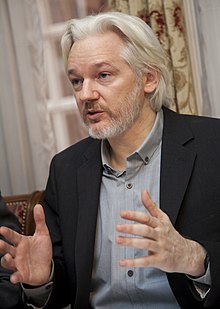
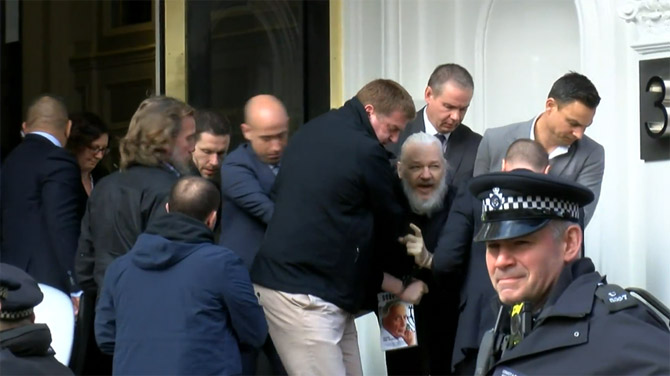
New danger for Julian Assange as Ecuador toes the USA line (and Australia won’t help him, though he’s their citizen)
More troubles for Julian Assange as Ecuador bows to pressure to extradite him following this letter, http://thewikidaily.com/more-troubles-for-julian-asange-as-ecuador-bows-to-pressure-to-extradite-him-following-this-letter/ We have been monitoring Julian asange’s asylum in Ecuadorian embassy in britain to outline the dangers the computer proggrammer and wikileaks founder face in coming future and it seems alot have been happening lately than the mainstream media’s are reporting.
Ecuador has begun a “Special Examination” of Julian Assange’s asylum and citizenship as it looks to the IMF for a bailout, the whistleblowing site reports, with conditions including handing over the WikiLeaks founder.
Former Ecuadorian President Rafael Correa tweeted an image of the letter he received from the State Comptroller General on December 19, which outlines the upcoming examination by the Direction National de Auditoria.
The audit will “determine whether the procedures for granting asylum and naturalization to Julian Assange were carried out in accordance with national and international law,” and will cover the period between January 1, 2012 and September 20, 2018.
Assange has been in the Ecuadorian Embassy in London since he sought asylum there in 2012. He was granted Ecuadorian citizenship last December in a bid to protect him from being extradited to the US where he fears he faces secret charges for publishing US government cables and documents.
WikiLeaks tweeted the news on Wednesday, joining the dots between the audit and Ecuador’s consideration of an International Monetary Fund bailout. The country owes China more than $6.5 billion in debt and falling oil prices have affected its repayment abilities.
According to WikiLeaks, Ecuador is considering a $10 billion bailout which would allegedly come with conditions such as “the US government demanded handing over Assange and dropping environmental claims against Chevron,” for its role in polluting the Amazon rainforest.
Assange’s position has increasingly been under threat under Correa’s successor, President Lenin Moreno, with Ecuadorian authorities restricting his internet access and visitors.“I believe they are going to turn over Assange to the US government,
A nuclear cover-up? Britain removes from public access, files on atomic bomb tests in Australia
“To now withdraw previously available documents is extremely unfortunate and hints at an
attempted cover-up.”
“worrying that properly released records can suddenly be removed from public access without notice or explanation.”
Review or ‘cover up’? Mystery as Australia nuclear weapons tests files withdrawn https://edition.cnn.com/2019/01/11/australia/uk-australia-nuclear-archives-intl/index.html, By James Griffiths, CNN
More than 65 years since the UK began conducting secret nuclear weapons testing in the Australian Outback, scores of files about the program have been withdrawn from the country’s National Archives without explanation.
The unannounced move came as a shock to many researchers and historians who rely on the files and have been campaigning to unseal the small number which remain classified.
“Many relevant UK documents have remained secret since the time of the tests, well past the conventional 30 years that government documents are normally withheld,” said expert Elizabeth Tynan, author of “Atomic Thunder: The Maralinga Story”.
“To now withdraw previously available documents is extremely unfortunate and hints at an attempted cover-up.”
Withdrawal of the files was first noted in late December. Access to them has remained closed in the new year.
Dark legacy The UK conducted 12 nuclear weapons tests in Australia in the 1950s and 1960s, mostly in the sparsely populated Outback of South Australia.
Information about the tests remained a tightly held secret for decades. It wasn’t until a Royal Commission was formed in 1984 — in the wake of several damning press reports — that the damage done to indigenous people and the Australian servicemen and women who worked on the testing grounds became widely known.
Indigenous people living nearby had long complained of the effects they suffered, including after a “black mist” settled over one camp near Maralinga in the wake of the Totem I test in October 1953. The mist caused stinging eyes and skin rashes. Others vomited and suffered from diarrhea.
These claims were dismissed and ridiculed by officials for decades — until, in the wake of the Royal Commission report, the UK agreed to pay the Australian government and the traditional owners of the Maralinga lands about AU$46 million ($30 million). The Australian authorities also paid indigenous Maralinga communities a settlement of AU$13.5 million ($9 million).
While the damage done to indigenous communities was acknowledged, much about the Totem I test — and other tests at Maralinga and later at Emu Field — remained secret, even before the recent withdrawal of archive documents.
“The British atomic tests in Australia did considerable harm to indigenous populations, to military and other personnel and to large parts of the country’s territory. This country has every right to know exactly what the tests entailed,” Tynan said. “Mysteries remain about the British nuclear tests in Australia, and these mysteries have become harder to bring to light with the closure of files by the British government.”
Alan Owen, chairman of the British Nuclear Test Veterans Association, which campaigns on behalf of former servicemen, said “the removal of these documents affects not only our campaign, but affects the many academic organizations that rely on this material.”
“We are very concerned that the documents will not be republished and the (Ministry of Defense) will again deny any responsibility for the effects the tests have had on our membership,” Owen told CNN.
Unclear motives Responding to a request for comment from CNN, a spokeswoman for the National Archives said the withdrawal of the Australian nuclear test files was done at the request of the Nuclear Decommissioning Authority (NDA), which has ultimate responsibility over them.
The NDA said that “a collection of records has been temporarily withdrawn from general access via The National Archive at Kew as part of a review process.”
“It is unclear, at this time, how long the review will take, however NDA anticipates that many of the documents will be restored to the public archive in due course,” a spokeswoman said.
Jon Agar, a professor of science and technology at University College London, said the withdrawal “is not just several records but two whole classes of files, many of which had previously been open to researchers at the National Archives.”
“These files are essential to any historian of the UK nuclear projects — which of course included tests in Australia. They have been closed without proper communication or consultation,” he added.
Agar shared correspondence he had with the NDA in which a spokeswoman said some files would be moved to a new archive — Nucleus — in the far north of Scotland. However the Nucleus archives focus on the British civil nuclear industry, and it is unclear why files on military testing would be moved there, or why those files would need to be withdrawn to do so.
Nucleus also does not offer the type of online access to its records as the National Archives does.
“Why not just copy the files if the nuclear industry needs them at Nucleus for administrative reasons? Why take them all out of public view?” Agar wrote on Twitter.
Information freedom In correspondence with both CNN and Agar, the NDA suggested those interested in the files could file freedom of information (FOI) requests for them.
Under the 2000 Freedom of Information Act, British citizens and concerned parties are granted the “right to access recorded information held by public sector organizations.”
FOI requests can be turned down if the government deems the information too sensitive or the request too expensive to process. Under a separate rule, the UK government should also declassify documents between 20 and 30 years after they were created.
According to the BBC, multiple UK government departments — including the Home Office and Cabinet Office — have been repeatedly condemned by auditors for their “poor,” “disappointing” and “unacceptable” treatment of FOI applications.
Commenting on the nuclear documents, Maurice Frankel, director of the Campaign for Freedom of Information, a UK-based NGO, said it was “worrying that properly released records can suddenly be removed from public access without notice or explanation.”
“It suggests that the historical record is fragile and transient and liable to be snatched away at any time, with or without good reason,” he added.
Bill Gates’ dangerous love affair with plutonium
Bill Gates’ nuclear ambitions go beyond mere ideas. He actually possesses financial holdings in one very dangerous situation indeed – a situation that is presently causing residents around St. Louis, Missouri to live under an all-out nuclear nightmare
Bill Gates’ Plutonium Pipe Dream: Convert Mountains of Depleted Uranium at Paducah to Power Earth for Centuries (Pt. 2) EnviroNews DC News Bureau on March 14, 2016
Voice of Bill Gates – Excerpt #2: The concept of this so-called “TerraPower reactor” is that you, in the same reactor, you both burn and breed. So, instead of making plutonium and then extracting it, we take uranium – the 99.3 percent that you normally don’t do anything with – we convert that, and we burn it.
[Editor’s Note: Bill Gates is the current Chairman of the Board of TerraPower — a Washington-based nuclear power technology company.]
Cunnings:Now get this, only 60 seconds after Gates acknowledges the tremendous problem of bringing more plutonium into this world, he turns around and makes a joke about it to a crowd filled with university students from nuclear programs – all this, only a few months after the catastrophic triple melt-through at Fukushima Daiichi.
Bill Gates – Excerpt #3: Our flame is taking the normal depleted uranium – the 99.3 percent that’s cheap as heck, and there’s a pile of it sitting in Paducah, Kentucky that’s enough to power the United States for hundreds and hundreds of years. You’re taking that and you are converting it to plutonium (humorously under his breath) – and then you’re burning that.
Cunnings: Oh yes, Mr. Gates seems to have a little love affair going on with plutonium – and the notion is that we need nuclear power to save ourselves from climate change. ……
Bill Gates Excerpt #8: I love nuclear. It does this radiation thing that’s tricky (laughter). But they’re good solutions. You know, it was interesting; recently, in Connecticut this natural gas plant blew up 11 guys. It just blew them up.
Bill Gates Excerpt #8: Murray: But you are personally investing in nuclear?
Gates: Right.
Cunnings: EnviroNews Editor-in-Chief Emerson Urry chatted with the esteemed nuclear industry expert and whistleblower Arnie Gundersen to explore whether Gates’ plan is a good idea or not.
Emerson Urry: Let’s go back to Bill Gates again, [and] the fourth generation nuclear power. I’ve heard him out there speaking about this, and essentially his ambition to, let’s say, convert Paducah, Kentucky [to plutonium]..
……….. the Paducah site is a very expensive cleanup that is going to take 20 or 30 years to decontaminate. You know, it’s like all of these bomb legacy sites – Hanford in Washington State…
Gundersen: Hanford is going to take 70 years and cost 110 billion dollars to clean up. So, here we are paying over half of a century for the legacy of building bombs for five years in 1940. And so, Paducah is another one of those sites. It was built to enrich uranium. Why did we do that? Because we had a bomb program. And now we’re stuck with these huge costs that are underfunded or unfunded by Congress. That plant is going to sit there for 30 years. It will create a lot of employment for a lot of people knocking it down, but it also is highly radioactive, and it’s got to be done so cautiously, and it’s a really difficult problem.
Cunnings: There’s no known disintegration of plutonium small enough that doesn’t possess the ability to cause cancer. To be clear, there is no safe amount to be exposed to whatsoever.
Plutonium, though a naturally occurring element was virtually non-existent on planet earth before the dawn of the nuclear age. Now, each of the roughly 400 uranium-powered nuclear reactors in the world create approximately 500 pounds of plutonium each year – or enough to create about 100 nuclear warheads each.
…….. Bill Gates’ nuclear ambitions go beyond mere ideas. He actually possesses financial holdings in one very dangerous situation indeed – a situation that is presently causing residents around St. Louis, Missouri to live under an all-out nuclear nightmare……https://www.environews.tv/031416-paducah-bill-gates-nuclear-pipedream-convert-mountains-depleted-uranium-plutonium-power-earth-centuries/
Brave environmental journalists face increasing threats and dangers
Journalists reporting on the environment faced increased dangers in 2018, Monga Bay, by Kaamil Ahmed on 4 January 2019
- Journalists describe some of the threats and dangers they faced in 2018.
- These range from intimidation to legal threats to outright violence.
- At least 10 journalists covering the environment were killed between 2010 and 2016, according to Reporters without Borders — all but two of them in Asia.
A pair of “French spies” had infiltrated India by sea to commit a “treasonous conspiracy,” an Indian minister claimed in late November. In reality, they were two visiting journalists, and their mission was an investigation into allegations of illegal sand mining in the southern state of Tamil Nadu. They had merely tried and failed to visit the site of a major mining company through legal means.
Their presence set off alarm bells among some connected to the industry, and the fallout has been significant. It’s included a police investigation, a politically fueled propaganda campaign, and the arrests of two local translators who had been working for them.
This heavy-handed response is familiar to Indian journalist Sandhya Ravishankar, who has reported on sand mining since 2013 and found that her probing into allegations of major business interests damaging the local environment has resulted in stalking and various types of harassment – some of it reportedly directed by the head of one of the mining companies.
“I got rape threats, my bike was vandalized, the miner has openly admitted that there are five detective agencies trailing me wherever I go, CCTV visuals of me having coffee with a source at a cafe have been made public,” Ravishankar said, adding that she also discovered government documents showing “officials have colluded to slander me.”
Ravishankar’s case is just one example of the growing dangers for journalists reporting environmental stories. Even as environmental journalism becomes increasingly important in the face of destructive business and political interests and practices, the inherent safety risks remain.
There are also the more routine challenges of accessing crucial information and convincing editors and readers of their importance.
“Journalists I’ve interviewed have been arrested, sued, fired, threatened, harassed, interrogated by police, interrogated by the military, physically assaulted and a number of them have been killed while covering logging, mining, development,” said journalism professor Eric Freedman in an interview. Freedman is the Knight Chair in Environmental Journalism and director of the Knight Center for Environmental Journalism at Michigan State University.
Freedman said environmental journalism came with its own set of challenges, many of which evolve with the story.
“Environmental controversies frequently involve power, political and economic power,” he said. “They involve money, whether mines or fracking or hydropower.
“Covering these kinds of beats, particularly in areas where journalists are not respected and protected takes a great deal of courage and bravery.”…………https://news.mongabay.com/2019/01/journalists-reporting-on-the-environment-faced-increased-dangers-in-2018/
Putin puts shipping safety regulation in the Arctic into the hands of the nuclear industry!
It’s a law – Russian Arctic shipping to be regulated by Rosatom https://thebarentsobserver.com/en/arctic/2019/01/its-law-russian-arctic-shipping-be-regulated-rosatom
President Putin signs the bill that makes the country’s state nuclear power company top regulator of the Northern Sea Route.By Atle Staalesen, January 02, 2019
Rosatom has officially been granted the leading role in the development of the vast Russian Arctic. The company that employs more than 250,000 people and engages in a multitude of activities related to nuclear power development and production is now formally Russia’s management authority for the Northern Sea Route.
The law was adopted by the State Duma on the 11th December and on the 28th signed by Vladimir Putin.
The new legislation comes as Russian Arctic shipping is on rapid increase. In 2018, about 18 million tons of goods was transported on the sea route, an increase of almost 70 percent from 2017. And more is to come. According to Vladimir Putin so-called May Decrees, the top national priorities, shipping on the Northern Sea Route is to reach 80 million tons already by year 2024.
Rosatom’s new powers in the Arctic include development and operational responsibilities for shipping, as well as infrastructure and sea ports along the northern Russian coast.
The responsibilities of the Northern Sea Route Administration, that until now has operated under the Ministry of Transport, will now be transferred to Rosatom.
It was Putin himself who in early 2017 made clear that a coordinating government agency for the Northern Sea Route was needed. A battle between Rosatom and the Ministry of Transport followed. In December 2017, it became clear that the nuclear power company had won that fight.
A central person in the new structure will be Vyacheslav Ruksha, the former leader of nuclear icebreaker base Atomflot.
The nuclear power company has since 2008 operated the fleet of nuclear-power icebreakers. Currently, five icebreakers are based in Atomflot, Murmansk, and several more ships are under construction, including four powerful LK-60 vessels.
Rosatom is also in the planning process of the «Lider», the 120 MW capacity super-powerful ship that can break through two meter thick ice at an unprecedented 10-12 knot speed.
Why has Britain not participated in international disarmament talks? Why are relevant documents kept secret?
David Lowry’s Blog 29th Dec 2018, I agree with academic researcher Sue Rabbitt Roff that researchers into the UK’s nuclear history should be alarmed that the publicly-funded Nuclear
Decommissioning Authority has ordered certain sensitive documents to be withheld from the regular release of official documents that always takes place in the final week of the year from the National Archives.
The Soviet Union/Russia has participated successively in the SALT, START and INF
nuclear disarmament negotiations. Meantime, the UK has not taken part in any multilateral or bilateral nuclear reduction or disarmament talks.
Future researchers may wish to find out from the atomic Archives why not.
Will they be able to do so?
http://drdavidlowry.blogspot.com/2018/12/why-british-atomic-archives-should-not.html
The South Carolina Office of Regulatory Staff wants regulators to declare SCE&G lied about nuclear project
SC utility watchdog wants regulators to declare SCE&G lied about nuclear project, The State, BY TOM BARTON AND AVERY G. WILKS, DECEMBER 28, 2018, COLUMBIA, S.C.
South Carolina’s utility watchdog has asked the S.C. Public Service Commission reconsider its decision not to rule that SCE&G intentionally misled regulators years ago about its doomed nuclear plant construction project. The S.C. Office of Regulatory Staff filed a petition late Friday asking the PSC for an explicit finding that SCE&G imprudently moved ahead with construction of the V.C. Summer Nuclear Station expansion in March 2015 despite warnings about the project’s cost and flaws. Earlier this month, the PSC issued a ruling allowing Virginia-based Dominion Energy to buy SCE&G’s parent company, SCANA, and slash SCE&G’s nuclear-bloated electric rates by about $22 a month. But after some internal debate, the PSC stopped short of calling out SCE&G for withholding important information to win rate-hike cases and keep the foundering project alive. Regulatory Staff wrote Friday “it is beyond dispute that SCE&G failed to disclose any iteration of the Bechtel Report to ORS or the Commission.” The agency said the “Commission cannot side-step the issue of prudence or imprudence” but instead must “make a clear finding” that SCE&G could have acted to anticipate, avoid or minimize nuclear construction costs. Regulatory Staff Director Nanette Edwards said such a finding is needed “to restore public trust and hold the utility accountable.” A SCANA spokesman said the utility would need to review the petition and would not comment Friday night. “The commission’s thoughtful, well-reasoned order speaks for itself,” Dominion Energy spokesman Ryan Frazier said. Ratepayers have paid more than $2 billion in higher power bills for the unfinished reactors in Fairfield County. And SCE&G’s roughly 730,000 customers will pay another $2.3 billion for the failed project over the next 20 years under the approved Dominion deal. Regulatory Staff also want the PSC to clarify that Dominion must track and pass down to customers all of its savings from the recent federal tax cuts. It also is pushing the PSC to lower slightly how much profit Dominion can earn while paying down the nuclear debt, and return close to $400 million previously collected from customers for costs that are now disallowed. Regulatory Staff wrote that it wants the PSC to impose conditions requiring a review prior to any possible expansion by Dominion’s of the Atlantic Coast Pipeline into South Carolina. ……… The PSC has 20 days to grant or refuse Regulatory Staff’s request. https://www.thestate.com/news/politics-government/article223663510.html |
-
Archives
- April 2026 (181)
- March 2026 (251)
- February 2026 (268)
- January 2026 (308)
- December 2025 (358)
- November 2025 (359)
- October 2025 (376)
- September 2025 (257)
- August 2025 (319)
- July 2025 (230)
- June 2025 (348)
- May 2025 (261)
-
Categories
- 1
- 1 NUCLEAR ISSUES
- business and costs
- climate change
- culture and arts
- ENERGY
- environment
- health
- history
- indigenous issues
- Legal
- marketing of nuclear
- media
- opposition to nuclear
- PERSONAL STORIES
- politics
- politics international
- Religion and ethics
- safety
- secrets,lies and civil liberties
- spinbuster
- technology
- Uranium
- wastes
- weapons and war
- Women
- 2 WORLD
- ACTION
- AFRICA
- Atrocities
- AUSTRALIA
- Christina's notes
- Christina's themes
- culture and arts
- Events
- Fuk 2022
- Fuk 2023
- Fukushima 2017
- Fukushima 2018
- fukushima 2019
- Fukushima 2020
- Fukushima 2021
- general
- global warming
- Humour (God we need it)
- Nuclear
- RARE EARTHS
- Reference
- resources – print
- Resources -audiovicual
- Weekly Newsletter
- World
- World Nuclear
- YouTube
-
RSS
Entries RSS
Comments RSS