The injustice of the prosecution of Julian Assange
The international witch-hunt of Julian Assange, World Socialist Website, Eric London and Thomas Scripps, 14 January 2020 The prosecution of WikiLeaks founder Julian Assange at London’s Westminster Magistrates Court is a travesty of justice that will forever stain the governments of the United States, the United Kingdom, Australia, Sweden and Ecuador, as well as all the individuals involved.Appearing alongside Assange in court Monday morning, Assange’s attorneys revealed that they had been given only two hours to meet with their client at Belmarsh prison to review what lawyer Gareth Peirce called “volumes” worth of evidence.
Expressing the practiced cynicism of British class justice, District Judge Vanessa Baraitser said this was “not an unreasonable position,” citing a lack of space in the prison interview room. With the bang of her gavel, Baraitser sent Assange back to his dungeon at Belmarsh, where he awaits his February extradition hearing under conditions UN Rapporteur Nils Meltzer has called “torture.”
At this stage in the near decade-long international witch-hunt of Assange, nobody should be surprised by such shameless lawlessness on the part of the world’s most powerful governments. Ever since Swedish, British and American prosecutors conspired in 2010 to issue a warrant for Assange’s arrest in connection with an investigation into bogus sexual misconduct allegations, these “advanced democracies” have trampled on their own laws and traditions, subjecting the journalist to a pseudo-legal process that would have been deemed unfair even by the standards of the Middle Ages.
Monday’s mockery of justice is an escalation of the attack on Assange’s right to counsel. It takes place after the Spanish newspaper El País published a detailed account of how a security firm, UC Global, secretly spied on Assange’s privileged discussions with his lawyers and fed the illegally obtained surveillance to the CIA. UC Global also shared footage from cameras it installed throughout the Ecuadorian Embassy in London, where Assange was forced to seek refuge from 2012 to 2019 to avoid US extradition. El País’ reporting showed that UC Global recorded every word Assange spoke and live-streamed these conversations to the CIA.
o 2019 to avoid US extradition. El País’ reporting showed that UC Global recorded every word Assange spoke and live-streamed these conversations to the CIA.
Despite the support of a criminally compliant media, it is becoming increasingly difficult for the US and British governments to downplay the profoundly anti-democratic precedents they intend to set through the Assange prosecution.
In an opinion article published Monday in the Hill, titled “Will alleged CIA misbehavior set Julian Assange free?” American attorney James Goodale wrote a scathing attack on the CIA’s spying on Assange’s privileged attorney-client communications.
Goodale is among the most prominent and well respected attorneys in the US, best known for representing the New York Times when the newspaper was sued by the Nixon administration for publishing the Pentagon Papers in 1971. The Pentagon Papers were leaked by RAND Corporation analyst Daniel Ellsberg, who has also called for the release of Assange and whistleblower Chelsea Manning.
The Pentagon Papers revealed how the US government for years lied to the public in expanding the Vietnam War, which led to the deaths of 55,000 US soldiers and 3 million Vietnamese people. Their publication triggered an explosion of public anger and fueled anti-war protests.
Goodale wrote: “Can anything be more offensive to a ‘sense of justice’ than an unlimited surveillance, particularly of lawyer-client conversations, livestreamed to the opposing party in a criminal case? The alleged streaming unmasked the strategy of Assange’s lawyers, giving the government an advantage that is impossible to remove. Short of dismissing Assange’s indictment with prejudice, the government will always have an advantage that can never be matched by the defense.”
Goodale explained that “the Daniel Ellsberg case may be instructive.”
Ellsberg, like Assange, was prosecuted under the Espionage Act for leaking documents to the Times and the Washington Post. During the trial, Nixon’s “plumbers” broke into the office of Ellsberg’s psychiatrist and wiretapped his phone. In that case, Judge William Matthew Byrne ruled that the surveillance had “incurably infected the prosecution” and dismissed the charges, setting Ellsberg free.
Goodale wrote that “for similar reasons, the case against Assange should be dismissed.”……https://www.wsws.org/en/articles/2020/01/14/pers-j14.html
UK’s competition watchdog to investigate Jacobs’ acquisition of Wood Nuclear Limited
Times and Star 9th Jan 2020, The proposed £250 million acquisition of a major player in the clean-up of the Sellafield site in West Cumbria could be blocked. The Competition and Markets Authority (CMA) has launched an investigation into global engineering firm Jacobs’ acquisition of Wood Nuclear Limited – the nuclear arm of the Wood Group.
The proposal deal – announced in August last year – would see Wood Nuclear Limited along with “subsidiary and certain affiliated companies” come under control of Jacobs’ UK division. Jacobs would also take on existing contracts held by the business – which include managing the Design and Engineering lot for the Programme and Project Partners (PPP) framework.
20-year contract awarded last year by Sellafield Limited as part of its push to “revolutionise” the decommissioning of the site, could be worth up to £769 million. Wood’s nuclear division is already a long-standing big tier company at Sellafield and, in December was awarded a £50m contract to provide programmable digital control technologies to the plant.
Secrecy in proceedings of Japan nuclear regulator about Kansai Electric’s three nuclear power plants
Japan nuclear regulator effectively made safety measure decision behind closed doors, https://mainichi.jp/english/articles/20200104/p2a/00m/0na/013000c, January 4, 2020 (Mainichi Japan) TOKYO — Decisions were effectively made at a closed-door pre-meeting hearing about Kansai Electric Power Co. at the Nuclear Regulation Authority (NRA), prompting experts to argue that closed-door pre-meeting hearings have effectively become the body’s decision-making organ, and that the NRA’s actions violate the Public Records and Archives Management Act.
In December 2018, at a preliminary hearing of a meeting in which the NRA was to decide on countermeasures against volcanic ash that it would require from Kansai Electric Power Co. (KEPCO) for its nuclear power plants, the NRA slashed one of two proposals that had come up. The organization, however, did not create minutes of the preliminary hearing in which this occurred, and collected and disposed of documents distributed to the participants.
At a public meeting held six days later, the NRA presented the remaining proposal and approved it — as if the other proposal had never existed. Meanwhile, the NRA claims that all decision-making is done at committee meetings.
In December 2018, at a preliminary hearing of a meeting in which the NRA was to decide on countermeasures against volcanic ash that it would require from Kansai Electric Power Co. (KEPCO) for its nuclear power plants, the NRA slashed one of two proposals that had come up. The organization, however, did not create minutes of the preliminary hearing in which this occurred, and collected and disposed of documents distributed to the participants.
At a public meeting held six days later, the NRA presented the remaining proposal and approved it — as if the other proposal had never existed. Meanwhile, the NRA claims that all decision-making is done at committee meetings.
Kansai Electric’s three nuclear power plants — Takahama, Oi, and Mihama — had obtained authorization for its nuclear reactors according to new standards instituted in response to the March 2011 meltdowns at the Fukushima Daiichi nuclear station. Some researchers, however, had pointed out that the amount of volcanic ash that would be generated in the event of an eruption at Mount Daisen in Tottori Prefecture, western Japan, had been underestimated. At an open meeting on Nov. 21, 2018, the NRA agreed, and was deliberating how to handle the authorization it had already given Kansai Electric.
The Mainichi Shimbun obtained a document that had been distributed to participants of the pre-meeting hearing in December 2018 titled “Procedures for using the new findings to have (KEPCO) apply for authorization of nuclear reactors (proposals)” from a source connected to the case. “Notes for discussion” was printed at the top right-hand side of the sheet of paper, along with a chart showing possible procedures for two proposals: 1. Swiftly prompt an application through written instruction, and 2. Order a re-evaluation of estimated volcanic ash volume. According to the source, the discussion in the pre-meeting hearing was based on this document, and participants made the decision to go with proposal 2.
Both proposals 1 and 2 ultimately seek that the utility apply for authorization. But the document says that while proposal 1 means that the NRA has determined that the nuclear reactors would fail to meet standards, proposal 2 means that the NRA will have not gone so far as to make a decision until it accepted KEPCO’s re-evaluation. If the NRA determined that a reactor did not meet standards, it was possible that calls for a stop to the project may have spread.
According to the NRA Secretariat’s public relations department, the pre-meeting hearings are called “chairman lectures,” in which the NRA Secretariat’s administrative staff explain the contents of documents to the NRA chairman. A total of 11 people, including Chairman Toyoshi Fuketa; Akira Ishiwatari, who is in charge of volcanic ash issues; then secretary-general Masaya Yasui; and then deputy secretary-general and current secretary-general, Toru Ogino, participated in a pre-meeting hearing held on Dec. 6, 2018.
As for the reason that no minutes of the meeting were taken, an NRA Secretariat PR representative explained, “It was a brainstorming session in which participants spoke freely about the issues and their views, and in which no conclusion was drawn. The session does not correspond to a decision-making process as defined in the Public Records and Archives Management Act.”
At the public meeting held Dec. 12, only proposal 2 was presented, and all five commissioners agreed to it. In March 2019, Kansai Electric submitted a report that raised the maximum estimated amount of volcanic ash to about twice that of the original volume. However, because the utility showed no intention of applying for authorization, the NRA ordered an application that June.
(Japanese original by Kosuke Hino, Tokyo Bureau, and Ryuji Tanaka, Special Reports Department)
Tennessee Valley Authority unfairly fired a nuclear whistleblower
|
Labor department rules TVA cooked up cause to fire nuclear whistleblower, Jamie Satterfield, Knoxville News Sentinel Jan. 3, 2020 The U.S. Department of Labor says the Tennessee Valley Authority fired a nuclear engineer who blew the whistle on safety concerns and lied about it.The labor department is ordering TVA to give Beth Wetzel her job back and shell out more than $200,000 in back pay, lost bonuses and benefits, compensatory damages and legal fees.
TVA said it fired Wetzel for badmouthing supervisor Erin Henderson, but the labor department ruled Wetzel properly raised safety concerns about the nuclear program and – when asked by a TVA attorney – gave her “honest” opinion Henderson was too inexperienced for her post and ignored safety complaints…….. https://www.knoxnews.com/story/news/crime/2020/01/03/labor-department-tva-cooked-up-cause-fire-nuclear-whistleblower/2794793001/ |
|
|
Scientists track down the source of radioactive plume, – Russian cover-up of a nuclear accident

|
Russia appears to have kept a major nuclear accident secret. But scientists called the ‘Ring of 5’ tracked the plume of radiation to its source. https://www.businessinsider.com.au/russia-nuclear-accident-radiation-timeline-2017-2019-12?r=US&IR=T, ARIA BENDIX DEC 21, 2019
A group of scientists called the “Ring of Five” noticed something unusual in the atmosphere in late 2017: Air across Europe showed “unprecedented” levels of the radioactive isotope ruthenium-106.
The isotope is often made when reprocessing nuclear fuel. “We were stunned,” Georg Steinhauser, a professor at the University of Hanover in Germany who is part of the group, told Business Insider in August. “We did not have any anticipation that there might be some radioactivity in the air. We were just measuring air filters as we do on a weekly basis, 52 times a year, and suddenly there was an unexpected result.” The Ring of Five, which had been monitoring Europe’s atmosphere for elevated levels of radiation since the mid ’80s, spent the next two years looking for the cause of the spike.
The culprit, according to a study released in July, was an undisclosed nuclear accident at the Mayak nuclear facility in Russia, which was once the centre of the Soviet nuclear-weapons program. Mayak was also the site of the 1957 Kyshtym explosion, the world’s third-worst nuclear accident. More than 10,000 nearby residents were forced to evacuate at the time. Russia has never acknowledged that any nuclear accident happened at the Mayak facility in 2017, and has not responded to any findings from the Ring of Five. But now, the scientists have unravelled the mystery even further.A second study published last month offers even more evidence that an accident occurred at Mayak in 2017. It even pinpoints a timeline: Most of the ruthenium was emitted on September 26, 2017.
Tracing a radioactive plume across EuropeThe Ring of Five is so named because the group was originally made up of scientists from five nations – Sweden, Germany, Finland, Norway, and Denmark – but it now includes researchers from 22 countries. Their monitoring work takes takes place 24 hours a day, 365 days a year. The new study suggests that the Mayak facility likely released 250 terabecquerels (a measurement of radioactivity) of ruthenium into the atmosphere. The Kyshtym explosion, by comparison, released around 2,700 terabecquerels of ruthenium. The world’s worst nuclear accident, Chernobyl, released around 5.3 million terabecquerels of radioactive material, according to a 2013 analysis.
To find out where the 2017 radioactive plume came from, scientists traced the path of the wind at the time using more than 1,100 measurements from the fall of that year. That required studying the wind’s altitude and direction, as well as weather conditions that may have changed its course.
The scientists determined that the plume started out in the Southern Urals, where the Mayak facility is located, then was driven towards southwest Russia. It arrived in Romania on September 29, then split in two. The main part of the plume spread toward Central Europe, where it encountered rain in Bulgaria. Plant and soil samples taken in the country showed elevated levels of ruthenium at the time. After that, the plume moved north to Scandinavia before arriving in Italy on October 2, 2017. That day, Italian scientists sent an alert to the Ring of Five about elevated levels of ruthenium in Milan. Steinhauser called this the “single greatest release from nuclear-fuel reprocessing that has ever happened.” Russia has not responded to the Ring of Five’s findingsAt the time of the alleged accident in 2017, Russian officials said the Mayak facility wasn’t the source of the release, even though the nation showed elevated levels of ruthenium. Instead, officials in Russia attributed the radiation to a satellite that burned up in the atmosphere. Russia still hasn’t issued a response to either of the studies the Ring of Five published this year. “We should not forget that Mayak is a military facility – and, of course, the Russian Federation is very reluctant when it comes to talking about military facilities,” Steinhauser said. “I presume this would not be much different for other superpower nations.” The scientists don’t consider the levels of radiation they detected to be an immediate threat to people’s health. Last year, France’s Institute for Radiological Protection and Nuclear Safety determined that the levels of ruthenium-106 in the atmosphere do not pose danger to human health or the environment. But the long-term consequences are unknown. Another unanswered question, Steinhauser said, is whether the population near the Mayak facility breathed any radiation into their lungs. He added that there could be reason to monitor food safety if radiation leaked into the soil and water. “We would like to get some more in-depth information on what actually happened,” he said. “There’s a good chance that we’ll catch every single accident – but, in the present case, surprise was on our side.” |
|
USA’s Patriot Act destroys civil liberties
 Who Will Protect Us From an Unpatriotic Patriot Act?
 https://www.counterpunch.org/2019/12/11/who-will-protect-us-from-an-unpatriotic-patriot-act/ by JOHN W. WHITEHEAD
While Congress subjects the nation to its impeachment-flavored brand of bread-and-circus politics, our civil liberties continue to die a slow, painful death by a thousand cuts.
Case in point: while Americans have been fixated on the carefully orchestrated impeachment drama that continues to monopolize headlines, Congress passed and President Trump signed into law legislation extending three key provisions of the USA Patriot Act, which had been set to expire on December 15, 2019.
As Congressman Thomas Massie (R-Ky.) predicted:
Today, while everyone is distracted by the impeachment drama, Congress will vote to extend warrantless data collection provisions of the #PatriotAct, by hiding this language on page 25 of the Continuing Resolution (CR) that temporarily funds the government. To sneak this through, Congress will first vote to suspend the rule which otherwise gives us (and the people) 72 hours to consider a bill. The scam here is that Democrats are alleging abuse of Presidential power, while simultaneously reauthorizing warrantless power to spy on citizens that no President should have… in a bill that continues to fund EVERYTHING the President does… and waiving their own rules to do it. I predict Democrats will vote on a party line to suspend the 72 hour rule. But after the rule is suspended, I suspect many Republicans will join most Democrats to pass the CR with the Patriot Act extension embedded in it.
Former Australian PM Kevin Rudd says Assange faces ‘unacceptable’ and ‘disproportionate’ punishment
Rudd says Assange faces ‘unacceptable’ and ‘disproportionate’ punishment https://www.theage.com.au/politics/federal/rudd-says-assange-faces-unacceptable-and-disproportionate-punishment-20191125-p53duj.html By Rob Harris, Kevin Rudd says Julian Assange would pay an “unacceptable” and “disproportionate” price if he is extradited to the United States, arguing the WikiLeaks founder should not take the fall for Washington’s failures to secure its own classified documents.
In a significant intervention into Mr Assange’s extradition fight, the former Australian prime minister said US prosecutors had not made any specific allegations that anyone was seriously harmed as a consequence of the release of highly classified documents relating to the Iraq and Afghanistan wars in 2010.
The Morrison government is resisting a rising tide of demands to intervene in the case of the 48-year-old Australian citizen, as his supporters grow increasingly concerned over his deteriorating health in a British prison.
Mr Rudd, himself targeted in WikiLeaks’ publication of more than 250,000 leaked diplomatic cables nine years ago, said while he had “serious reservations” about Mr Assange’s character and conduct, he did not believe he should be extradited to face an “effective life sentence” in the US.
In a letter to the Bring Julian Assange Home Queensland Network, seen by The Age and The Sydney Morning Herald, Mr Rudd said he could not see the difference between Mr Assange and the editors of many American media outlets that reported the material he had provided them.
“If [the US prosecutors’] case is essentially that Mr Assange broke the law by obtaining and disclosing secret information, then I struggle to see what separates him from any journalist who solicits, obtains and publishes such information,” Mr Rudd wrote.
“In other words, why should Mr Assange be tried, convicted and incarcerated while those who publicly released the information are afforded protection under provisions of the US constitution concerning press freedom?”
The group was briefed by barrister Jen Robinson, a member of Mr Assange’s London legal team, as well as Greg Barns from the Australian Assange Campaign and human rights and due process advocate Aloysia Brooks.
Mr Rudd said he was “deeply opposed” to the leaking of classified diplomatic or intelligence communications, which needed to be protected to maintain Australia’s national security interests and that of its allies.
“Ultimate responsibility for keeping sensitive information secure rests with governments. The United States government demonstrably failed to effectively secure the classified documents relevant to this case,” he wrote.
“The result was the mass leaking of sensitive diplomatic cables, including some that caused me some political discomfort at the time. However, an effective life sentence is an unacceptable and disproportionate price to pay. I would therefore oppose his extradition.”
More than 60 doctors from the United Kingdom, Australia, Europe and Sri Lanka, wrote to British Home Secretary Priti Patel on Monday asserting that Mr Assange urgently needs medical treatment at a university hospital.
The doctors said in a letter, distributed by WikiLeaks on Monday, that he was suffering from psychological problems including depression as well as dental issues and a serious shoulder ailment.
Mr Barns welcomed Mr Rudd’s intervention saying his comments, like his former colleague Bob Carr, rightly pointed to the threat to freedom of the media.
“The Australian government and all MPs we hope will place pressure on the US to make it understand that the treatment of an Australian citizen this way is not something that should happen,” Mr Barns said.
“Mr Rudd and Mr Carr could never be described as anti-Washington but they clearly understand the need for Canberra to take action to prevent this gross injustice.”
Mr Assange will return to court briefly next month before a full hearing of a US extradition request in which he faces a 175-year jail sentence if found guilty on 18 charges relating to computer fraud and obtaining and disclosing national defence information.
Appeal from former political prisoner to Australia’s Prime Minister to help Julian Assange
“This is how diplomacy works,” “You can pick up the phone, Mr Morrison, and  speak with whoever the United Kingdom’s next prime minister is; requesting that Julian Assange not be extradited to the United States to face the very real possibility, if not the certainty, that he will die in prison.” at right, Prime Minister Morrison
 Former political prisoner pleads for Scott Morrison to not let Assange ‘die in jail’, The Age By Rob Harris, Filmmaker James Ricketson, who spent 15 months as a political prisoner in a Cambodian jail, has implored Prime Minister Scott Morrison to “pick up the phone” to his British counterpart to ensure Julian Assange does not die in prison.
There are growing fears for the psychical and mental health of the 48-year-old WikiLeaks founder, who is in a London prison fighting an extradition request to the United States, where he faces espionage charges relating to the release of classified files on the Iraq and Afghanistan wars.
In an open letter to Mr Morrison, Mr Ricketson has joined a “rising tide of voices” in support of Australian government intervention to bring Mr Assange back to Australia before full extradition proceedings in February.
“The evidence that Julian Assange is not being ‘treated fairly’ in accordance with UK law is now overwhelming, as is evidence of the psychological torture he is being subjected to in Belmarsh Prison,” Mr Ricketson writes.
“If Julian Assange does die in prison, will you, with a clear Christian conscience, be able to inform the Australian public, in all honesty, that you did all within your power (and more) to protect Assange’s legal and human rights.”
Mr Ricketson was arrested and charged with espionage in June 2017 for flying a drone over an anti-government rally in Phnom Penh. He was held in the notoriously overcrowded Prey Sar prison for 15 months until he was pardoned by Cambodian authorities.
The filmmaker said it was former prime minister Malcolm Turnbull who intervened to secure his release, despite the Department of Foreign Affairs and Trade’s insistence that it could not interfere with another country’s legal proceedings.
“This is how diplomacy works,” he writes. “You can pick up the phone, Mr Morrison, and speak with whoever the United Kingdom’s next prime minister is; requesting that Julian Assange not be extradited to the United States to face the very real possibility, if not the certainty, that he will die in prison.”
A newly formed federal cross-party parliamentary group, comprising 11 MPs dedicated to advocating for the return of Mr Assange, will meet formally for the first time on Monday in Canberra. ….
Mr Morrison and Foreign Minister Marise Payne have repeatedly ruled out any intervention in the case, with the PM saying last month he believed Mr Assange should “face the music” in court.
The former Australian high commissioner to Britain earlier this month mocked the idea of Mr Morrison acting on calls from Mr Assange’s supporters to do all he could to bring him home from Belmarsh Prison, where he has been held since his April 11 arrest at the Ecuadorian embassy, which gave him asylum for almost seven years. https://www.theage.com.au/politics/federal/former-political-prisoner-pleads-for-scott-morrison-to-not-let-assange-die-in-jail-20191124-p53dks.html
Why is the UK government now hiding its nuclear history files?
 Nuclear X-files? Academics baffled as UK govt. pulls docs from national archives https://stockdailydish.com/nuclear-x-files-academics-baffled-as-uk-govt-pulls-docs-from-national-archives/ SDD Contributor on November 22, 2019 Nuclear X-files? Academics baffled as UK govt. pulls docs from national archives Thousands of national archive files on Britain’s atomic and nuclear weapons energy programs have been withdrawn from public view by order of the UK government without any explanation, alarming academics. Nuclear X-files? Academics baffled as UK govt. pulls docs from national archives https://stockdailydish.com/nuclear-x-files-academics-baffled-as-uk-govt-pulls-docs-from-national-archives/ SDD Contributor on November 22, 2019 Nuclear X-files? Academics baffled as UK govt. pulls docs from national archives Thousands of national archive files on Britain’s atomic and nuclear weapons energy programs have been withdrawn from public view by order of the UK government without any explanation, alarming academics.
Researchers reported that the documents, dating from 1939 to the 1980s, were unexpectedly withdrawn by the National Archives last week. The files relate to, among other subjects, the creation of Britain’s first nuclear bombs and the private papers of the Nobel Prize-winning physicist who split the atomic nucleus, Sir John Cockcroft. A spokesperson for the NDA stated that they are “absolutely committed to openness and transparency,” though no reason has been forthcoming, leading to speculation among academics that the files contained previously overlooked sensitive information, which should be withheld from public view. The papers in question are divided into two sections; records of the Atomic Weapons Establishment (AWE) and the records of the United Kingdom Atomic Energy Authority. The AWE documents concern the development of the UK atomic weapons. Bomb tests, feasibility reports and notes on the theoretical physics of nuclear weapons are all included. Jon Agar, a professor of history of science and technology at University College London, spoke of his ‘alarm’ at the situation to the Guardian. “We would like to know what is going on. We would be alarmed as historians that it has been taken out of public view. “These are important records for understanding the nuclear project in the UK. A couple of days ago a PhD student noticed that everything in the catalogue is coming up as temporarily retained. We are scratching our heads. It is all a bit mysterious.” |
|
Gizmodo thoroughly debunks the false story of a nuclear explosion in the South China Sea
 No, China Did Not Secretly Detonate A Nuke In The South China Sea To Signal The Start Of WWIII, Gizmodo Tom McKay, Nov 22, 2019, The Chinese government has almost certainly not secretly detonated a tactical nuclear weapon in the South China Sea to send a warning signal to the United States, experts told Gizmodo, regardless of widespread claims to the contrary on social media.
The source of this particular rumour appears to be Hal Turner, a far-right New Jersey radio host and former FBI informant considered a white supremacist by the Anti-Defamation League and the Southern Poverty Law Centre (and who once was sentenced to over nearly three years in prison for calling for the murder of three federal judges). A post on Turner’s website claimed that unidentified “military sources” had said that around 6:22 p.m. ET on Wednesday, a nuclear explosion of some kind 50 meters below the surface of the South China sea had “caused an underwater shock wave of such sudden presence, and of such strength, that the explosion itself ‘had to be between 10 and 20 Kilotons.’” Later, the article on Turner’s website was updated to claim that the uRADMonitor Global Environmental Monitoring Network had detected “significant” radiation readings on the southern coast of China near Zhangjiang and Hong Kong, as well as Taiwan.
Turner speculated that the Chinese government had detonated a nuclear weapon to quietly send a signal to the U.S. government that it was fed up with intervention against Chinese oppression of pro-democracy protests in Hong Kong, the ongoing U.S.-China trade war, or perhaps simply to suggest that World War III was around the corner:
Did China detonate a small, tactical, nuclear device to send a warning to the United States over the US Senate and US House approving the Hong Kong Democracy Act, which China views as an “assault” upon China’s internal affairs?
Has China had enough of US “freedom of navigation” exercises in the South China Sea?
Is China feeling the sting of economic downturn from its Trade War with the USA, and are they “upping-the-ante” signalling actual war?
This is normally the kind of thing that reasonable people would simply ignore. But thanks in part to a series of tweets from an account using the official-sounding handle “IndoPacific_SCS_Info” and others, Turner’s claims gathered the attention of thousands on Twitter. [Numerous Twitter examples given]
It should come as no surprise that this is hot bullshit. For one, the uRADMonitor site itself pegs the supposedly gigantic radiation spike at 0.24 microsieverts per hour. That’s about the same as in South India, parts of the southwestern U.S., and Mexico—and it is an absolutely negligible amount of radiation. For comparison, the World Nuclear Association estimates the global average of naturally occurring background radiation at 0.17-0.39 microsieverts per hour, according to Reuters. If one were exposed to 0.24 microsieverts per hour, that would equate to around 2,100 microsieverts a year, or just over two millisieverts. The U.S. defines the upper boundary of safe occupational exposure at 50 millisieverts per year.
One university radiation safety specialist, who spoke anonymously with Gizmodo because they were not authorised to talk to the media, confirmed that the supposedly ominous uRADMonitor readings appeared to reflect normal background radiation levels and called the claims “unsupported wild-arse speculation.” (That specialist also warned that uRADMonitor was not a reliable source.) Readings of airborne radioactive particles posted on the Environmental Protection Agency’s RadNet Honolulu page, as well as the Institute for Information Design Japan’s Japan Radiation Map, also seemed to show nothing out of the ordinary (other than elevated levels in the area of the 2011 Fukushima Daiichi nuclear disaster).
That’s generously assuming that those readings even matter in the context of a covert underwater Chinese nuclear explosion, which Gizmodo has it on good authority they don’t
Gizmodo spoke with Robert Rosner, a former Department of Energy scientist and current University of Chicago theoretical physicist who chairs the Bulletin of the Atomic Scientists’ Science and Security Board. Rosner laughed at the idea that anyone would be able to identify an underwater nuclear test from ground-based detectors, or that anyone would be stupid enough to conduct such a test in the South China Sea.
“I would be amazed if there had been an event that somebody would then identify as an event based on a radioactive signature,” Rosner told Gizmodo via phone. “That’s unbelievably unlikely.”
Rosner added that the primary way of detecting such an event would be seismic; the first underwater nuclear tests in the world, the 23-kiloton Baker nuke at Bikini Atoll in 1945, set off seismographs the world over. There’s been no such indication that any kind of similar event happened on Wednesday……..
In addition to security concerns, Rosner said, the region is also monitored for seismic events because of “really deadly tsunamis” like the 2004 Indian Ocean earthquake and tsunami. Rosner said that a 10-20 kiloton blast would “definitely be notable” on that scale, noting that the nuclear bombs dropped on Hiroshima and Nagasaki were of similar magnitude.
In other words: You should not believe a racist radio host who says completely unremarkable background radiation readings are evidence that China is about to start World War III……..https://www.gizmodo.com.au/2019/11/no-china-did-not-secretly-detonate-a-nuke-in-the-south-china-sea-to-signal-the-start-of-wwiii/
Swedish accusations against Assange – always a political motive on behalf of USA
We need to ask ourselves why the focus is not on the crimes perpetrated by those involved in war crimes. Why is an Australian citizen being subjected to US espionage laws even though he was never on US soil? More importantly, why should an Australian citizen have allegiance to the US?
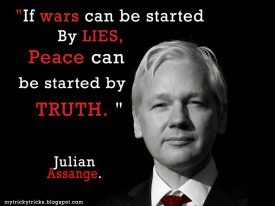 The Swedish case against Assange was always political, https://www.theage.com.au/national/the-swedish-case-against-assange-was-always-political-20191120-p53cgs.html,By Greg Barns and Alysia Brooks, November 20, 2019 It is almost a decade since Julian Assange woke to discover, on the front page of a Swedish newspaper, that Swedish authorities had decided to pursue him on allegations of sexual misconduct. Immediately, Julian presented himself to the police station to make a statement and clear his name. After speaking with prosecutors, he was told he could leave the country; so he did.
Currently, Assange is held on remand in Belmarsh prison, in conditions that are exacerbating his already fragile health, and impeding his ability to prepare his defence. He is facing unprecedented charges under the US Espionage Act, for allegedly carrying out actions that journalists and publishers engage in as a part of their work. He is facing 175 years – an effective death sentence – for allegedly engaging in journalism.
And let’s not forget the material that was exposed by WikiLeaks. The releases included evidence of war crimes, including torture and unlawful killings, perpetrated during the Iraq and Afghanistan wars, and the Guantanamo files, which demonstrated that the majority of men, and children, were being held and tortured at the prison, even though they were innocent of any crime.
We need to ask ourselves why the focus is not on the crimes perpetrated by those involved in war crimes. Why is an Australian citizen being subjected to US espionage laws even though he was never on US soil? More importantly, why should an Australian citizen have allegiance to the US?
Greg Barns is a barrister and adviser to the Australian Assange Campaign. Dr Alysia Brooks is a human rights and due process advocate.
If Julian Assange is extradited to the United States, journalism will be incarcerated, too
JOHN PILGER: Assange’s case will define the future of free journalism, https://independentaustralia.net/life/life-display/john-pilger-assanges-case-will-define-the-future-of-free-journalism,13324 By John Pilger | 18 November 2019 John Pilger describes the disturbing scene inside a London courtroom last week when the WikiLeaks publisher, Julian Assange, appeared at the start of a landmark extradition case that will define the future of free journalism.
THE WORST MOMENT was one of a number of “worst” moments. I have sat in many courtrooms and seen judges abuse their positions. This judge, Vanessa Baraitser – actually she isn’t a judge at all; she’s a magistrate – shocked all of us who were there.
Her face was a progression of sneers and imperious indifference; she addressed Julian Assange with an arrogance that reminded me of a magistrate presiding over apartheid South Africa’s Race Classification Board. When Julian struggled to speak, he couldn’t get words out, even stumbling over his name and date of birth.
When he spoke truth and when his barrister spoke, Baraister contrived boredom; when the prosecuting barrister spoke, she was attentive. She had nothing to do; it was demonstrably preordained. In the table in front of us were a handful of American officials, whose directions to the prosecutor were carried by his — back and forth this young woman went, delivering instructions.
Having ignored Julian’s barrister’s factual description of how the CIA had run a Spanish security firm that spied on him in the Ecuadorean embassy, she didn’t yawn, but her disinterest was as expressive. She then denied Julian’s lawyers any more time to prepare their case — even though their client was prevented in prison from receiving legal documents and other tools with which to defend himself.
Her knee in the groin was to announce that the next court hearing would be at remote Woolwich, which adjoins Belmarsh Prison and has few seats for the public. This will ensure isolation and be as close to a secret trial as it’s possible to get. Did this happen in the home of the Magna Carta? Yes, but who knew?
Who will then dare to expose anything of importance, let alone the high crimes of the West? Who will dare publish ‘Collateral Murder’? Who will dare tell the public that democracy, such as it is, has been subverted by a corporate authoritarianism from which fascism draws its strength?
Once there were spaces, gaps, boltholes, in mainstream journalism in which mavericks, who are the best journalists, could work. These are long closed now. The hope is the samizdat on the internet, where fine disobedient journalism is still practised.
The greater hope is that a judge or even judges in Britain’s court of appeal, the High Court, will rediscover justice and set him free. In the meantime, it’s our responsibility to fight in ways we know but which now require more than a modicum of Julian Assange’s courage.
Jared Kushner’s, Donald Trump’s secretive meetings with Saudi Arabia, Putin, Kim Jong Un
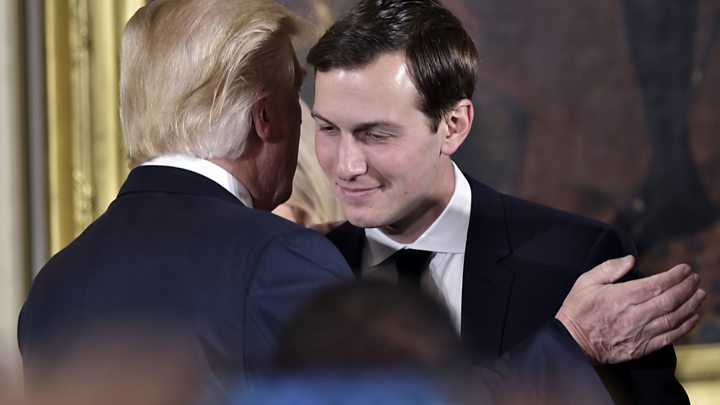 JARED KUSHNER, DONALD TRUMP BROKE THE LAW BY MEETING SAUDIS, PUTIN, KIM OFF THE RECORD: WATCHDOGS https://www.newsweek.com/jared-kushner-donald-trump-broke-law-saudis-putin-kim-1418596
In a lawsuit filed Tuesday against Trump and the executive office of the president, the watchdog Citizens for Responsibility and Ethics in Washington (CREW) alleged that White House officials including the president and Kushner seem to have violated the Presidential Records Act and the Federal Records Act by intentionally neglecting to create and keep records of meetings with Putin and Kim, among other foreign officials.
“There are a lot of questions surrounding Jared Kushner and the extent to which he, like the president, has an agenda that also serves his own personal and family business interests,” CREW’s chief FOIA counsel Anne Weismann told Newsweek on Tuesday.
The suit cites news reports that Trump had at least five different meetings with Putin with no notetaker in the room, meaning an official record of the meeting does not exist. Trump also confiscated a State Department interpreter’s notes after meeting with Putin in Germany, and had a private meeting with Kim in Vietnam with two interpreters but no record was produced, according to the suit.
In addition, the suit raises a recent meeting Kushner had with top Saudi officials that did not include State Department officials, and from which no record was created.
“The absence of records in these circumstances when the President and his top advisers are exercising core constitutional and statutory powers causes real, incalculable harm to our national security and the ability of our government to effectively conduct foreign policy,” the suit states, “Because the documentary record of this administration’s foreign policy regarding Russia, North Korea, and Saudi Arabia will be unavailable to policy makers and forever lost to history.”
Weismann said Kushner—whom Trump tasked with creating a supposedly soon-to-be-released Middle East peace plan—is meeting with very sophisticated and possibly adversarial foreign leaders and “that alone raises concerns.”
“He may be compromising American interests in ways that we don’t know about,” Weismann said. “Even if he’s not acting to pursue his business or financial interests, he doesn’t come to the job with experience in foreign relations.”
The White House did not immediately respond to a request for comment from Newsweek on Tuesday.
Co-plaintiffs in the suit are the National Security Archive and the Society for Historians of American Foreign Relations, which has nearly 1,000 members.
“The problem goes beyond improperly shredding records, to the deliberate failure to create the records in the first place,” stated Tom Blanton, director of the archive, which has sued past presidents who failed to keep records.
Neglecting to make and preserve records “undermines the principle of government accountability that is the very bedrock of democracy,” the historians society president Barbara Keys stated.
In framing Julian Assange, The FBI tried to make Iceland a complicit
The FBI tried to make Iceland a complicit ally in framing Julian Assange https://independentaustralia.net/life/life-display/the-fbi-tried-to-make-iceland-a-complicit-ally-in-framing-julian-assange,13277
By Sara Chessa | 5 November 2019 Former Icelandic Interior Minister tells Independent Australia how he blocked U.S. interference in 2011 in order to defend WikiLeaks and its publisher Julian Assange. Sara Chessa reports.
Former Icelandic Interior Minister tells Independent Australia how he blocked U.S. interference in 2011 in order to defend WikiLeaks and its publisher Julian Assange. Sara Chessa reports.
A MINISTER OF THE INTERIOR wakes up one summer morning and finds out that a plane full of United States Federal Bureau of Investigation (FBI) agents has landed in his country, aiming to carry out police investigations without proper permission from the authorities.
How many statesmen would have the strength to say, “No, you can’t do this”, to the United States? Former Icelandic Interior Minister Ögmundur Jónasson, in fact, did this — and for the sake of investigative journalism. He understood that something wrong with the sudden FBI mission in Reykjavik, and that this had to do with the whistleblowing website WikiLeaks and its publisher Julian Assange. Continue reading
1 This Month
Chernobyl: The Lost Tapes – A good documentary on Chernobyl on SBS available On Demand for the next 3 weeks– https://www.sbs.com.au/ondemand/tv-program/chernobyl-the-lost-tapes/2352741955560

of the week–London Campaign for Nuclear Disarmament

Tell the Ukrainian Government to Drop Prosecution of Peace Activist Yurii Sheliazhenko
To see nuclear-related stories in greater depth and intensity – go to https://nuclearinformation.wordpress.com
-
Archives
- April 2026 (139)
- March 2026 (251)
- February 2026 (268)
- January 2026 (308)
- December 2025 (358)
- November 2025 (359)
- October 2025 (376)
- September 2025 (257)
- August 2025 (319)
- July 2025 (230)
- June 2025 (348)
- May 2025 (261)
-
Categories
- 1
- 1 NUCLEAR ISSUES
- business and costs
- climate change
- culture and arts
- ENERGY
- environment
- health
- history
- indigenous issues
- Legal
- marketing of nuclear
- media
- opposition to nuclear
- PERSONAL STORIES
- politics
- politics international
- Religion and ethics
- safety
- secrets,lies and civil liberties
- spinbuster
- technology
- Uranium
- wastes
- weapons and war
- Women
- 2 WORLD
- ACTION
- AFRICA
- Atrocities
- AUSTRALIA
- Christina's notes
- Christina's themes
- culture and arts
- Events
- Fuk 2022
- Fuk 2023
- Fukushima 2017
- Fukushima 2018
- fukushima 2019
- Fukushima 2020
- Fukushima 2021
- general
- global warming
- Humour (God we need it)
- Nuclear
- RARE EARTHS
- Reference
- resources – print
- Resources -audiovicual
- Weekly Newsletter
- World
- World Nuclear
- YouTube
-
RSS
Entries RSS
Comments RSS
 nuclear-news