The complexities and pitfalls of citizen science
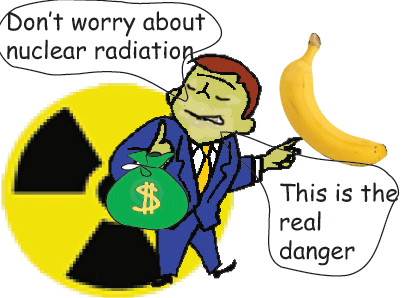
One such tactic, which was witnessed after Fukushima, occurred through the reframing of radiation risks as simplistic and natural, unrelated to the specific risks associated with Fukushima. For instance, the government distributed pamphlets that explained that radiation naturally exists in our food, ch as the potassium levels present in bananas.
Yet such information is irrelevant to the hazards of internalizing fission products from a nuclear power plant. While bananas have naturally occurring potassium, it would require eating around 20 million bananas to get radiation poisoning. On the other hand, each radionuclide released during nuclear meltdown events like Fukushima possesses specific biological signatures and presents particular risks when inhaled or ingested.
Being Clear-Eyed About Citizen Science in the Age of COVID-19, Sapiens MAXIME POLLERI / 15 JUL 2020
“……..there are inherent political complexities involved when citizens or nongovernmental organizations step in and claim expertise in areas typically reserved for state agencies and experts. Like those entities, citizen science has its own potential pitfalls.
For one, corporate polluters or state agencies can potentially exploit citizen science, delegating the monitoring of contamination to the victims of a disaster. For instance, by the end of this year, Japan’s Nuclear Regulation Agency plans to remove 80 percent of radiation monitoring posts in Fukushima, arguing that the radiation levels in many areas have stabilized themselves—owing also in part to the presence and efficiency of monitoring networks provided by citizens. This decision has been controversial, since problems of radioactive contamination persist in Fukushima. For instance, one of the main radioactive pollutants, Cesium-137, has a long lifespan and can emit radiation for nearly 300 years.
Retiring these posts will force citizen scientists to take on the burden of monitoring, shifting liability for ensuring safe living conditions onto the shoulders of the nuclear victims. In addition, the growing impact of citizen science can lead to reduced public expenditure, minimal government intervention, and risk privatization, meaning that risk becomes individual and private. Too much delegation to citizens runs the risk of creating societies where individuals have to take care of themselves in increasingly polluted environments, while interpreting complex data about controversial environmental dangers. And not every community can afford to purchase expensive monitoring devices or test food in a consistent manner.
Citizen scientists also risk reproducing forms of ignorance around certain hazards. n post-Fukushima Japan, what is meant by the “science” of citizen science is often synonymous with a tracking and monitoring agenda, where individuals resort to the very same technologies and knowledge forms used by states, nuclear lobbies, or radiological protection agencies.
Yet many anthropologists and historians have argued that what we know (and don’t know) about the extent of radiation hazards and dangers was embedded in a culture of secrecy, denial, and propaganda that was shaped by the nuclear arms race of the Cold War. Considerations over international security and political stability were often prioritized over the safety of workers or citizens who had been exposed to radiation. As a result, some of the negative effects of radiation were downplayed through different tactics.
One such tactic, which was witnessed after Fukushima, occurred through the reframing of radiation risks as simplistic and natural, unrelated to the specific risks associated with Fukushima. For instance, the government distributed pamphlets that explained that radiation naturally exists in our food, ch as the potassium levels present in bananas.
Yet such information is irrelevant to the hazards of internalizing fission products from a nuclear power plant. While bananas have naturally occurring potassium, it would require eating around 20 million bananas to get radiation poisoning. On the other hand, each radionuclide released during nuclear meltdown events like Fukushima possesses specific biological signatures and presents particular risks when inhaled or ingested. During my fieldwork in Fukushima, I witnessed that this legacy of misinformation was carried on by some citizens who unwittingly replicated these propagandist forms of knowledge by making similar naturalistic or overly simplistic comparisons.
As citizen science efforts grow, it is also critical to consider to what extent citizen involvement might put individuals at risk of adverse health effects. This is a tricky question when one considers that certain members of the population, like children, are more sensitive to radiation than others. In Fukushima, some Japanese parents have understandably opted to evacuate rather than rely on citizen science, arguing that doing so would expose their children to unacceptable levels of radiation and that forcing children to be responsible for their own safety is unethical.
Citizen scientists are hardly homogeneous groups, as mothers, farmers, and urban citizens do not experience hazards and recovery in the same way. In that regard, factors such as gender, employment, and social class strongly influence why people enter citizen science, how science is mobilized, and how data about a controversial hazard ends up being interpreted. For instance, people like Natsuo have used the results gathered by citizen science to highlight the dangers of living in Fukushima, while other citizen science organizations help bring people back to their beloved region. These conflicts can result in even more fragmented communities and conflicts within and around citizen science. ……
In Japanese, two words—shiru and wakaru—can be used for the verb “knowing.” Shiru means “to find out” or “to learn.” It implies a process of acquisition of knowledge and information. Wakaru, on the other hand, is closer to “understanding this knowledge.” Shiru comes before wakaru, and in a way, one can know but not necessarily understand. Wakaru consequently shows a greater and more personal level of comprehension often based on a given context.
For Masayuki, state institutional experts possessed shiru, but not wakaru. Having been directly affected by radioactive contamination, Masayuki strongly believed that the inhabitants of a place, the jūmin (literally, the people who resided) were best suited to manage their life in a post-Fukushima Japan. https://www.sapiens.org/culture/fukushima-citizen-science/
Fear and loathing and deception in the world of nuclear fusion research

 I was disappointed that the New Energy Times had the DCMA take down a post on this site. It was- “Nuclear fusion: American Association for the Advancement of Science deceived by ITER propagandists”. But of course, they had every right to do so, as it was their article.
Here at nuclear-news, we strive to get out all the information we can, on the often weird and wonderful, not to say dangerous and secretive, world of the nuclear industry.
When it comes to nuclear fusion, the story is extra muddied, because the ordinary peasant, including myself, has trouble trying to understand the ins and outs of this extraordinary technology, which has great promise for clean energy, – or maybe not.
What I did glean from the now-disappeared article, was that the International Thermonuclear Experimental Reactor (ITER) program, or some of its proponents have misled non-experts about the potential power output of the ITER experimental nuclear fusion reactor. It’s a complicated story, involving various people, including Professor Ian Chapman, Chief Executive Officer of the UK Atomic Energy Agency. And – it’s a story of widespread, consistent, and long-standing deception, repeated in many prestigious websites and reputable journals.
Anyway – this story of murky competition in the nuclear fission drive, is detailed in another article in the New Energy Times – more http://news.newenergytimes.net/2017/12/11/evidence-of-the-iter-power-deception/
It doesn’t increase our faith in costly nuclear high tech research.
SCANA’s ex-top executive to plead guilty in a $9 billion nuclear fraud.

EXECUTIVE TO PLEAD GUILTY TO $9 BILLION NUCLEAR FRAUD, https://www.lexingtonchronicle.com/news/executive-plead-guilty-9-billion-nuclear-fraud Possible 5 years in prison and $1 million in fines, By Jerry Bellune, JerryBellune@yahoo.com, 13 July 20,
An ex-SCANA executive is to plead guilty tomorrow in a $9 billion nuclear fraud.
SCANA’s top nuclear executive, Steve Byrne, is accused of conspiracy in a failed nuclear project which cost investors – including his own employees – millions in stock losses.
The joint SCANA-Santee Cooper project:
1. Saddled more than 725,000 SC Electric & Gas ratepayers with $2 billion in costs.
2. Led to a near bankruptcy of Lexington County-based SCE&G and its sale to Dominion Energy.
3. Damaged the future of nuclear power in SC.
Byrne’s guilty plea will be entered Tuesday, July 14, at the federal courthouse in Columbia.
As Chief Operating Officer of SCANA, the owners of SCE&G, Byrne has admitted to knowingly engaging with others in fraud during construction of 2 Westinghouse AP100 reactors.
Byrne may face 5 years in prison and fines of not more than $1 million although the court could fine him more.
Federal officials are believed to have offered him a deal to testify against fellow executives and their lawyers who may have participated in the conspiracy.
To assure that Byrne, a former Irmo resident, follows the terms, sentencing will occur later.
Byrne has signed a plea agreement with federal agents which stipulate what he must do.
According to court postings, a bond hearing will immediately follow before Magistrate Judge Shiva V. Hodges
The failed nuclear project and a state law that allowed SCE&G to bilk rqtepayers of $2 billion was formally opposed before the Public Service Commission by Friends of the Earth, the Sierra Club, the SC Small Business Chamber and the Coalition to Stop the Blank Check.
Byrne agreed to be “fully truthful” about “criminal activities about which he has knowledge” and to provide documentation and testify at the trial of others.
Court documents reveal that the federal attorney believes other executives and lawyers:
1. Were involved in the conspiracy to cover-up problems at the failing nuclear project.
2. Made “false and misleading statements” about it to the PSC.
3. Took advantage of the Base Load Review Act in which SC lawmakers allowed SCE&G to pass all costs and risks to ratepayers.
State regulators inadequately reviewed the fraud due to a bias for SCE&G and against ratepayers, said Tom Clements, director Savannah River Site Watch.
“Byrne’s plea for his role in the reactor construction boondoggle will be historic as officials responsible for such failed projects rarely get caught and never confess to their crimes,” he said.
Clements was a main intervenor at the start and finish of the project.
“Byrne, who should serve prison time, must fully reveal the criminal role of others in the conspiracy that has been so disastrous for ratepayers, Clements said.
These include former CEO Kevin Marsh and former CFO Jimmy Addison,” he said.
Court documents imply that other individuals are being investigated,.
That means they and “lawyers who advised them” may face criminal charges, Clements said.
Court reveals that EDF deceived UK about the true financial risks of Hinkley Point nuclear project
EDF boss suppressed report calling Hinkley Point ‘risky’Adam Sage, The Times, 10 July 20, thetimes.co.uk/article/edf-boss-suppressed-report-calling-hinkley-point-risky-gd5vcdhrx
The Times reports that the chief executive of the French company building the UK’s new nuclear reactors won boardroom approval for the project after suppressing an internal review labelling it as risk-laden. In a “highly critical report on the European Pressurised Reactors”, France’s Court of Audit said that the Hinkley Point project in Somerset, led by EDF, represented a “high financial risk” for the French state electricity group, the Times adds.
The court uncovered that the risks had been pointed out in a 2015 review that warned there “were not efficient enough to guarantee that risks would be controlled”. The Times continues: “The court said that Jean-Bernard Lévy, EDF’s executive chairman, had ‘refused to transmit the full report’ to directors or the government, even though the state has an 83.7% stake. They received only a synopsis.” The project received approval from the EDF board in 2016. The court also said that EDF must establish the financing and profitability of nuclear reactors before launching projects, reports Reuters, “dealing a blow to the state-owned utility’s ambitions to build new units”. And Reuters also reports that nuclear power generation at its reactors in France plunged 25.1% in June (compared to 2019) due to the effects of the coronavirus pandemic.
Meanwhile, writing in the Daily Telegraph, Sir Iain Duncan-Smith – MP and former leader of the Conservative Party – argues that the UK should “unwind its dependence on China” for “cheap goods and nuclear power”. He says: “The UK has enormous home grown tidal power potential, yet both tidal and hydrogen seem to have been brushed aside in favour of our growing dependence on large Chinese-run nuclear projects.” He concludes: “From Huawei to hydrogen and Hong Kong, we need to recognise the strategic threat China poses and, together with our allies, decide what we will do to reduce it, otherwise we risk repeating the failed lessons of the past.” And also in the Daily Telegraph, chief city commentator Ben Marlow says that the government should be stimulating manufacturing demand to contain the damage caused by Covid-19 to Rolls Royce – “Britain’s most illustrious engineering company”. He says: “It should start with nuclear where enlisting the expertise of Rolls-Royce in building so-called mini-nukes would help to solve its current geo-political nightmare with China. It would make it easier to ditch China General Nuclear Power Group from the plans to build giant new plants at Sizewell on the Suffolk coast and Bradwell in Essex, or scrap the proposals altogether.” These decisions would “also offer a greener and cheaper alternative to a technology that looks decidedly out of date already, and it would create jobs at a company in desperate need of a leg up – three birds with one stone”.
Explosion at Iran’s nuclear facility probably caused by Israel
What caused the explosion at a nuclear facility in central Iran?, The Strategist 10 Jul 2020|, Connor Dilleen It seems increasingly likely that the 2 July explosion at the Iran Centrifuge Assembly Centre, located near the Natanz Pilot Fuel Enrichment Plant, was the result of sabotage. And, despite initial speculation that it was the result of a cyberattack against critical operational control systems—and thus of a similar vein to the Stuxnet attack that took down multiple centrifuge cascades at Natanz in 2010—the simpler and more plausible explanation is that the explosion was caused by a bomb.
Despite claims of responsibility by a previously unknown group calling itself the Homeland Cheetahs that supposedly comprises disgruntled Iranian former military and security services personnel, it now appears widely accepted that Israel was behind the attack. There has been further speculation that Israel was also behind other curious incidents that have occurred at Iranian facilities in recent weeks—including explosions at the gas storage area near the Khojir missile facility at Parchin, at a medical facility in Tehran, and at a factory south of Tehran—although there is as yet no evidence of foul play in these events.
Multiple media outlets—including the New York Times and the Washington Post—have referenced intelligence officials attributing the Natanz attack to Israel. And while Tehran was slow in apportioning blame, on 7 July it accused Israel of being behind the attack, saying it was ‘a “wake-up call” meant to deter Iran amid advancements in its nuclear program, and … [that] those who planted the explosives had significant insight into the country’s nuclear program’.
Israel has form in using lethal force against high-value nuclear targets in the Middle East. Between 2010 and 2012, Israeli agents murdered four Iranian nuclear scientists. Earlier, Israel launched military strikes that destroyed the Iraqi nuclear reactor at Osirak in 1981 and the Syrian Al Kibar reactor in 2007, the two most obvious manifestations of the Begin doctrine, which stipulates that Israel cannot allow any of its regional adversaries to develop a nuclear weapons capability.
However, two key issues remain unresolved. First, it’s not clear that the explosion at the centrifuge assembly centre will be a significant a setback for Iran’s enrichment capabilities. Second, if it is accepted that Israel was behind the incident, it’s difficult to assess whether the Natanz attack was merely a warning to Tehran or represents a new stage in Israeli efforts to curtail Tehran’s nuclear program. It’s possible that the attacks were also intended to provoke a reaction from Tehran that would justify more punitive and definitive military strikes against Iranian nuclear facilities by either Israel or the US…….. https://www.aspistrategist.org.au/what-caused-the-explosion-at-a-nuclear-facility-in-central-iran/
Fukushima nuclear waste decision also a human rights issue
Fukushima nuclear waste decision also a human rights issue https://english.kyodonews.net/news/2020/07/1145e5b3970f-opinion-fukushima-nuclear-waste-decision-also-a-human-rights-issue.html
By Baskut Tuncak, KYODO NEWS – In a matter of weeks, the government of Japan will have the opportunity to demonstrate to the world how much it values protecting human rights and the environment and to meet its international obligations.
In the aftermath of the Fukushima Daiichi nuclear disaster, myself and other U.N. special rapporteurs consistently raised concerns about the approaches taken by the government of Japan. We have been concerned that raising of “acceptable limits” of radiation exposure to urge resettlement violated the government’s human rights obligations to children.
We have been concerned of the possible exploitation of migrants and the poor for radioactive decontamination work. Our most recent concern is how the government used the COVID-19 crisis to dramatically accelerate its timeline for deciding whether to dump radioactive wastewater accumulating at Fukushima Daiichi in the ocean.
Setting aside the duties incumbent on Japan to consult and protect under international law, it saddens me to think that a country that has suffered the horrors of being the only country on which not one but two nuclear bombs were dropped during war, would continue on a such a path in dealing with the radioactive aftermath of the Fukushima Daiichi disaster.
Releasing the toxic wastewater collected from the Fukushima nuclear plant would be, without question, a terrible blow to the livelihood of local fishermen. Regardless of the health and environmental risks, the reputational damage would be irreparable, an invisible and permanent scar upon local seafood. No amount of money can replace the loss of culture and dignity that accompany this traditional way of life for these communities.
The communities of Fukushima, so devastated by the tragic events of March 11, 2011, have in recent weeks expressed their concerns and opposition to the discharge of the contaminated water into their environment. It is their human right to an environment that allows for living a life in dignity, to enjoy their culture, and to not be exposed deliberately to additional radioactive contamination. Those rights should be fully respected and not be disregarded by the government in Tokyo.
The discharge of nuclear waste to the ocean could damage Japan’s international relations. Neighboring countries are already concerned about the release of large volumes of radioactive tritium and other contaminants in the wastewater.
Japan has a duty under international law to prevent transboundary environmental harm. More specifically, under the London Convention, Japan has an obligation to take precaution with the respect to the dumping of waste in the ocean. Given the scientific uncertainty of the health and environmental impacts of exposure to low-level radiation, the disposal of this wastewater would be completely inconsistent with the spirit, if not the letter, of this law.
ndigenous peoples have an internationally recognized right to free, prior and informed consent. This includes the disposal of waste in their waters and actions that may contaminate their food. No matter how small the Japanese government believes this contamination will be of their water and food, there is an unquestionable obligation to consult with potentially affected indigenous peoples that it has not met.
The Japanese government has not, and cannot, assure itself of meaningful consultations as required under international human rights law during the current pandemic. There is no justification for such a dramatically accelerated timeline for decision making during the covid-19 crisis. Japan has the physical space to store wastewater for many years.
I have reported annually to the U.N. Human Rights Council for the past six years. Whether the topic was on child rights or worker’s rights, in nearly each and every one of those discussion at the United Nations, the situation of Fukushima Daiichi is raised by concerned observers for the world to hear. Intervening organizations have pleaded year-after-year for the Japanese government to extend an invitation to visit so I can offer recommendations to improve the situation. I regret that my mandate is coming to an end without such an opportunity despite my repeated requests to visit and assess the situation.
The disaster of 2011 cannot be undone. However, Japan still has an opportunity to minimize the damage. In my view, there are grave risks to the livelihoods of fishermen in Japan and also to its international reputation. Again, I urge the Japanese government to think twice about its legacy: as a true champion of human rights and the environment, or not.
(Baskut Tuncak has served as U.N. special rapporteur on the implications for human rights of the environmentally sound management and disposal of hazardous substances and wastes since 2014.)
Julian Assange’s father calls on Australia’s Prime Minister Scott Morrison to help this Australian citizen
 Assange’s father calls extradition process ‘disgrace’ https://telanganatoday.com/assanges-father-calls-extradition-process-disgrace?fbclid=IwAR1a7bQ0W_Xcgc9EIeGaAHVP7Zmm2cM6nNV65ZXtkhCwNUlarqIYTJVw6xo1 July 20, The 80-year-old is organizing public events in Australia despite the ongoing coronavirus pandemic and hopes to travel to London in August to support Assange during his extradition trial.
Sydney: WikiLeaks founder Julian Assange’s father, John Shipton, is fighting tirelessly for the release and return of his son, who is facing an extradition trial in London for publishing classified information, a process he described as abuse.
“We maintain that the extradition request is a fraud in the English court… It’s a fraud in the English legal system, it’s a case of abuse of process, it is a disgrace,” Shipton, who travelled from Melbourne to Sydney to campaign for his son’s release, told Efe news in an interview.
The 80-year-old is organizing public events in Australia despite the ongoing coronavirus pandemic and hopes to travel to London in August to support Assange during his extradition trial which, he says, is being carried out under “dire” circumstances.
In May 2019, the UN Special Rapporteur on Torture, Nils Melzer, said, after visiting Assange in the Belmarsh prison along with two medical experts, that he showed “all symptoms typical for prolonged exposure to psychological torture, including extreme stress, chronic anxiety and intense psychological trauma”.
Assange has spent almost a decade in confinement, first under house arrest in a British town and then at the Ecuadorian embassy in London between 2012 until 2019, when Ecuador withdrew his political asylum status.
Shipton has urged the Australian government to mediate with the UK administration for the release of his son, who is wanted in the US on 18 charges of espionage and computer intrusion, for which he could be sentenced to prison for up to 175 years.
“I believe the government can, if it wishes to, assist us in bringing Julian home. I believe that (it) is very simple for the Prime Minister (Scott Morrison) to pick up the phone and ring (his UK counterpart) Boris Johnson and say Julian Assange is an Australian citizen in dire circumstances.
“This will resolve this immediately and that’s easily possible,” he told Efe news during the interview.
Scepticism over USA Dept Energy report that the Runit nuclear waste dome is “safe”
The new report does not include a plan to repair the dome, which was required by Congress.
In 1981, the U.S. government declared in a report that the island should be quarantined indefinitely and that the “possibility would always exist that high levels of plutonium-contaminated subsurface soil could be exposed by wave or storm action.”
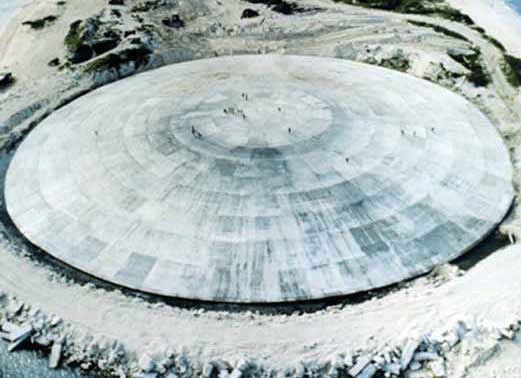
The DOE report found that Runit Dome, a repository for atomic waste the United States produced during Cold War weapons testing, is sound and that radioactive leakage into the nearby lagoon is not significant.
After Congress grew concerned last year about the leaking dome, it ordered the DOE to produce a report on the dome’s structural integrity amid climate change and rising sea levels.
The report noted that while sea level rise could increase storm surge, swells, and “lead to wave-induced over-wash of lower sections of the dome,” there is not enough definitive data to determine “how these events might impact on the environment.”
One Marshallese leader was disappointed the DOE again downplayed the risks and declined to take responsibility for Runit Dome and its leaking contents.
“We don’t expect the Enewetak community to feel any safer based on this report as it doesn’t contain any new information from what they’ve seen…and don’t trust,” said Rhea Christian-Moss, the chairperson of the Marshall Islands’ National Nuclear Commission, a government-operated nuclear waste and radiation oversight panel.
“The report offers nothing new and is more or less what we expected to see,” she said, lamenting the Senate’s redaction of a critical line in the House’s mandate, which stipulated that the Department of Energy provide a plan detailing the removal of the radioactive waste into a “safer and more stable location.”
The Department of Energy report is signed by Dan Brouillette, the agency’s secretary. Terry Hamilton, the department’s lead contractor on the project, was not available for comment.
In November last year, The Times published an investigation of the lingering radiation legacy in the Marshall Islands, and the refusal of U.S. authorities to take ownership for the hazards posed by Runit Dome
In December, Congress signed the National Defense Authorization Act for 2020, which required the DOE to provide a plan to repair the dome, evaluate the environmental effects of the dome on the lagoon over the next 20 years, and assess its structure and the potential risk to the people who live near it.
The department was also required to assess how rising sea levels could affect the dome.
Christian-Moss noted data gaps in the report, as well, including the level of radiation in groundwater leaking from the dome into the lagoon.
In 2019, at a presentation delivered in the Marshall Islands to Marshallese and U.S. officials, the DOE’s contractor, Hamilton, mentioned elevated levels of radioactivity in giant clams living near the dome.
The new report does not mention the clams but states that not enough information is available to understand how leakage from the dome is affecting marine life. However, according to the energy department, studies of people living nearby show normal levels of radiation — suggesting they are not being adversely affected.
“The absence of data to show any risk does not mean that there is no risk.” she said. “So my main takeaway from the report is that many risks are still ‘unknown.’”
Nowhere else has the United States saddled another country with so much of its nuclear waste, a product of its Cold War atomic testing program.
The waste site, known alternatively as the Tomb, holds more than 3.1 million cubic feet — or 35 Olympic-size swimming pools — of U.S.-produced radioactive soil and debris, including lethal amounts of plutonium.
The radioactive material was collected, moved and contained by U.S. soldiers during the late 1970s. Many of those veterans say they were unaware of the contents and did not wear protective equipment.
“All in all the message seems to be that we should be concerned but not alarmed,” said Michael Gerrard, a legal scholar at Columbia University’s law school. “It is as if Runit is like a radioactive sore in the middle of the Pacific, but one that can get by with band-aids for the foreseeable future unless they find more bleeding.”
The DOE authors also maintain that the lagoon’s sediments are so contaminated with radioactive elements that any additional spillage from the dome would be undetectable.
“It remains to be seen whether the Marshallese will accept this report by the Americans, given how poorly the U.S. has treated the Marshallese in so many ways since 1945,” said Gerrard.
In July 2019, DOE officials responded claiming they didn’t have the funding to build a fence and installation of a perimeter would be logistically too complex.
In 1981, the U.S. government declared in a report that the island should be quarantined indefinitely and that the “possibility would always exist that high levels of plutonium-contaminated subsurface soil could be exposed by wave or storm action.”
Is South Korea’s nuclear industry a model for others to follow?
 Jim Green, Nuclear Monitor #844, 25 May 2017, https://www.wiseinternational.org/nuclear-monitor/844/south-koreas-nuclear-industry-model-others-follow
As the nuclear power crisis has unfolded in recent months ‒ engulfing major nuclear companies and utilities in the US, Japan and France ‒ South Korea’s nuclear industry has been held up as a model for others to follow. US nuclear lobbyist Michael Shellenberger, for example, explains ‘why Korea won’: “Korea is winning the global competition to build new nuclear plants against China and Russia despite being a fraction of the size, at just 50 million people, and energy-poor. It has done so through focus: standard design, standard construction of plants, standard operation and standard regulation.”1
But South Korea’s nuclear industry is scandal-plagued, it hasn’t won any bids to build reactors overseas since 2009, and it is more than a stretch to describe it as “world class” as nuclear advocate Rod Adams would have you believe.2 Public and political support has been in freefall over the past five years because of the Fukushima disaster and a domestic nuclear corruption scandal (see the following article in this issue of the Nuclear Monitor). In the coming years, nuclear power’s contribution to domestic electricity supply is likely to decline and there is little likelihood that an export industry will flourish. Moreover, with public support for the nuclear industry in freefall, the government has little hope of achieving its aim of securing a site for a high-level nuclear waste repository by 2028.
Korea Times noted on April 21 that every major candidate in South Korea’s presidential election promised to stop building new nuclear reactors and to close down older ones.3 The winner of the May 9 presidential election, Moon Jae-in, who stood as the candidate of the Democratic Party of Korea, is a former human rights lawyer. World Nuclear News reported that Moon was one of seven presidential candidates who signed an agreement in March for a “common policy” to phase out nuclear power.4 During the election campaign, Moon said he would scrap plans for new reactors ‒ including Shin Kori units 5 and 6 ‒ while immediately closing the Wolsong-1 reactor.4 (In February 2017, the Seoul Administrative Court ordered the Nuclear Safety and Security Commission to cancel its decision to extend the lifespan of Wolsong-1 because legal procedures had not been followed in the decision-making process.) Moon also said he would block lifespan extensions for the older reactors at the Kori plant5 ‒ the four Kori reactors were grid-connected between 1977 and 1985. Continue reading
USA adds a new indictment to its charges against Julian Assange
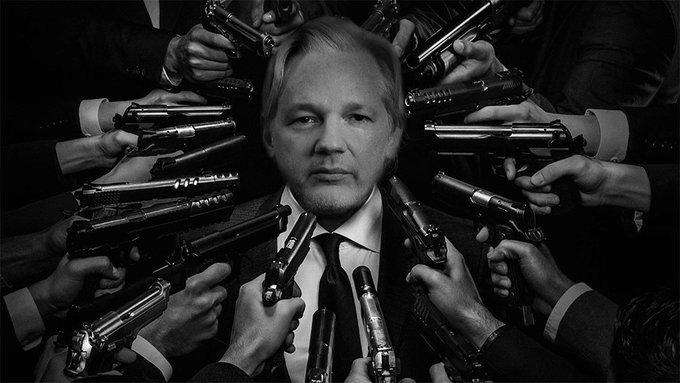 WikiLeaks founder Assange faces new indictment in US, By ERIC TUCKER, 29 June 20, WASHINGTON (AP) — WikiLeaks founder Julian Assange sought to recruit hackers at conferences in Europe and Asia who could provide his anti-secrecy website with classified information, and conspired with members of hacking organizations, according to a new Justice Department indictment announced Wednesday.
The superseding indictment does not contain additional charges beyond the 18 counts the Justice Department unsealed last year. But prosecutors say it underscores Assange’s efforts to procure and release classified information, allegations that form the basis of criminal charges he already faces.
Beyond recruiting hackers at conferences, the indictment accuses Assange of conspiring with members of hacking groups known as LulzSec and Anonymous. He also worked with a 17-year-old hacker who gave him information stolen from a bank and directed the teenager to steal additional material, including audio recordings of high-ranking government officials, prosecutors say.
Assange’s lawyer, Barry Pollack, said in a statement that “the government’s relentless pursuit of Julian Assange poses a grave threat to journalists everywhere and to the public’s right to know.”
“While today’s superseding indictment is yet another chapter in the U.S. Government’s effort to persuade the public that its pursuit of Julian Assange is based on something other than his publication of newsworthy truthful information,” he added, “the indictment continues to charge him with violating the Espionage Act based on WikiLeaks publications exposing war crimes committed by the U.S. Government.”
Assange was arrested last year after being evicted from the Ecuadorian Embassy in London, where he had sought refuge to avoid being sent to Sweden over allegations of rape and sexual assault, and is at the center of an extradition tussle over whether he should be sent to the United States.
The Justice Department has already charged him with conspiring with former U.S. Army intelligence analyst Chelsea Manning in one of the largest compromises of classified information in U.S. history by working together to crack a password to a government computer.
Prosecutors say the WikiLeaks founder damaged national security by publishing hundreds of thousands of classified documents, including diplomatic cables and military files on the wars in Iraq and Afghanistan, that harmed the U.S. and its allies and aided its adversaries.
Assange maintains he was acting as a journalist entitled to First Amendment protection. His lawyers have argued the U.S. charges of espionage and computer misuse were politically motivated and an abuse of power.
Assange generated substantial attention during the 2016 presidential election, and in investigations that followed, after WikiLeaks published stolen Democratic emails that U.S. authorities say were hacked by Russian military intelligence officials. An investigation by special counsel Robert Mueller revealed how Trump campaign associates eagerly anticipated the email disclosures. One Trump ally, Roger Stone, was found guilty last year of lying about his efforts to gain inside information about the emails. Assange, however, was never charged in Mueller’s Russia investigation.
The allegations in the new indictment center on conferences, in locations including the Netherlands and Malaysia in 2009, at which prosecutors say he and a WikiLeaks associate sought to recruit hackers who could locate classified information, including material on a “Most Wanted Leaks” list posted on WikiLeaks’ website.
According to the new indictment, he told would-be recruits that unless they were a member of the U.S. military, they faced no legal liability for stealing classified information and giving it to WikiLeaks “because ‘TOP SECRET’ meant nothing as a matter of law.”
At one conference in Malaysia, called the “Hack in the Box Security Conference,” Assange told the audience, “I was a famous teenage hacker in Australia, and I’ve been reading generals’ emails since I was 17.”
The Anthropocene, begun in 16th Century colonialism, slavery -? for repair in 21st Century post-Covid-19 recovery
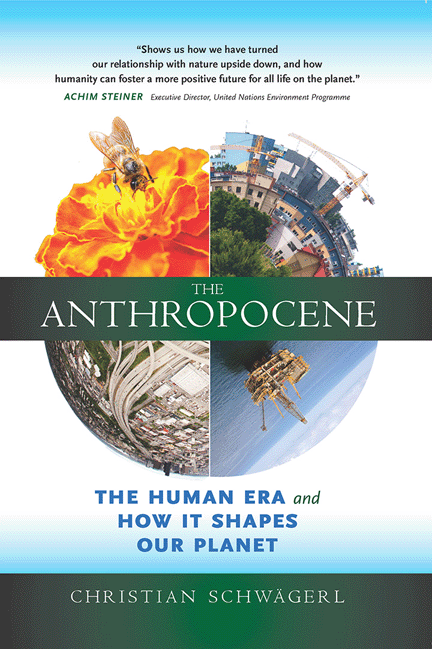
Why the Anthropocene began with European colonisation, mass slavery and the ‘great dying’ of the 16th century, The Conversation, Mark Maslin, Professor of Earth System Science, UCL, Simon Lewis, Professor of Global Change Science at University of Leeds and, UCL June 25, 2020 The toppling of statues at Black Lives Matter protests has powerfully articulated that the roots of modern racism lie in European colonisation and slavery. Racism will be more forcefully opposed once we acknowledge this history and learn from it. Geographers and geologists can help contribute to this new understanding of our past, by defining the new human-dominated period of Earth’s history as beginning with European colonialism.Today our impacts on the environment are immense: humans move more soil, rock and sediment each year than is transported by all other natural processes combined. We may have kicked off the sixth “mass extinction” in Earth’s history, and the global climate is warming so fast we have delayed the next ice age.
We’ve made enough concrete to cover the entire surface of the Earth in a layer two millimetres thick. Enough plastic has been manufactured to clingfilm it as well. We annually produce 4.8 billion tonnes of our top five crops and 4.8 billion livestock animals. There are 1.4 billion motor vehicles, 2 billion personal computers, and more mobile phones than the 7.8 billion people on Earth.
All this suggests humans have become a geological superpower and evidence of our impact will be visible in rocks millions of years from now. This is a new geological epoch that scientists are calling the Anthropocene, combining the words for “human” and “recent-time”. But debate still continues as to when we should define the beginning of this period. When exactly did we leave behind the Holocene – the 10,000 years of stability that allowed farming and complex civilisations to develop – and move into the new epoch?
Five years ago we published evidence that the start of capitalism and European colonisation meet the formal scientific criteria for the start of the Anthropocene.
Our planetary impacts have increased since our earliest ancestors stepped down from the trees, at first by hunting some animal species to extinction. Much later, following the development of farming and agricultural societies, we started to change the climate. Yet Earth only truly became a “human planet” with the emergence of something quite different. This was capitalism, which itself grew out of European expansion in the 15th and 16th century and the era of colonisation and subjugation of indigenous peoples all around the world.
In the Americas, just 100 years after Christopher Columbus first set foot on the Bahamas in 1492, 56 million indigenous Americans were dead, mainly in South and Central America. This was 90% of the population. Most were killed by diseases brought across the Atlantic by Europeans, which had never been seen before in the Americas: measles, smallpox, influenza, the bubonic plague. War, slavery and wave after wave of disease combined to cause this “great dying”, something the world had never seen before, or since.
In North America the population decline was slower but no less dramatic due to slower colonisation by Europeans. US census data suggest the Native American population may have been as low as 250,000 people by 1900 from a pre-Columbus level of 5 million, a 95% decline.
This depopulation left the continents dominated by Europeans, who set up plantations and filled a labour shortage with enslaved workers. In total, more than 12 million people were forced to leave Africa and work for Europeans as slaves. ……….
In addition to the critical task of highlighting and tackling the racism within science, perhaps geologists and geographers can also make a small contribution to the Black Lives Matter movement by unflinchingly compiling the evidence showing that when humans started to exert a huge influence on the Earth’s environment was also the start of the brutal European colonisation of the world.
In her insightful book, A Billion Black Anthropocenes or None, the geography professor Kathryn Yusoff makes it very clear that predominantly white geologists and geographers need to acknowledge that Europeans decimated indigenous and minority populations whenever so-called progress occurred.
Defining the start of the human planet as the period of colonisation, the spread of deadly diseases and transatlantic slavery, means we can face the past and ensure we deal with its toxic legacy. If 1610 marks both a turning point in human relations with the Earth and our treatment of each other, then maybe, just maybe, 2020 could mark the start of a new chapter of equality, environmental justice and stewardship of the only planet in the universe known to harbour any life. It’s a struggle nobody can afford to lose. https://theconversation.com/why-the-anthropocene-began-with-european-colonisation-mass-slavery-and-the-great-dying-of-the-16th-century-140661
Trump’s Justice Department drumming up new allegations against Julian Assange
ASSANGE EXTRADITION: Assange Hit With New Superseding Indictment, Reflecting Possible FBI Sting Operation The U.S. Justice Department on Wednesday unveiled the new superseding indictment against the WikiLeaks publisher, adding to existing computer intrusion charges. By Joe Lauria, Consortium News June 24, 2020 The Justice Department on Wednesday said it had filed a second superseding indictment against imprisoned WikiLeaks publisher Julian Assange, adding to existing computer intrusion charges.“The new indictment does not add additional counts to the prior 18-count superseding indictment returned against Assange in May 2019,” the DOJ said in a press release.
“It does, however, broaden the scope of the conspiracy surrounding alleged computer intrusions with which Assange was previously charged,” the release said. “According to the charging document, Assange and others at WikiLeaks recruited and agreed with hackers to commit computer intrusions to benefit WikiLeaks.”…….
The indictment quotes Assange at hacking conferences encouraging hackers to obtain a “Most Wanted Leaks” list of classified materials that WikiLeaks sought to publish.
It provides new allegations that Assange instructed a “teenager” from an unnamed NATO country to conduct various hacks “including audio recordings of phone conversations between high-ranking officials” of the NATO nation as well as members of parliament from that country. The indictment claims Manning “downloaded classified State Department materials” about this country.
WikiLeaks has identified the “teenager” as Sigurdur Thordarson, “a diagnosed sociopath, a convicted conman, and sex criminal” who had impersonated Assange to embezzle money from WikiLeaks………..
Thordarson, an Icelander, became an FBI informant, and was flown to Washington in May 2019 for an interview with the FBI.
The superseding indictment says Assange was allegedly able to learn from “unauthorized access” to a website of this government that police from that country were monitoring him. The indictment says the source of this information was a former member of Anonymous who worked with WikiLeaks named Sabu, identified in the press as Hector Monsegur, who became an FBI informant after being arrested in June 2011.
In the same month, Iceland’s Interior Minister Ögmundur Jonasson prevented FBI agents from entering Iceland, testifying that “FBI dirty-tricks operations were afoot against WikiLeaks.” He said the agents had been sent to seek “our cooperation in what I understood as an operation to set up, to frame Julian Assange and WikiLeaks.” The possibility remains that the new evidence against Assange was obtained in an FBI sting operation.
Jeremy Hammond, a hacker arrested for obtaining the Stratfor files, is named in the new indictment has having revealed information about his activities with Assange to Sabu in December 2011. Last September, Hammond, who was serving a 10-year sentence in Memphis, TN, was brought by prosecutors investigating Assange to Alexandria, VA to compel him to give testimony against Assange. Hammond has refused.
Reiterates Original Charges
The new indictment repeats the existing espionage and computer intrusion charges………
In 2010, Robert Parry, one of the best investigative reporters of his era, and the founder of this website, wrote that the then pending plans of the Obama administration to indict Assange “for conspiring with Army Pvt. Bradley Manning to obtain U.S. secrets strikes at the heart of investigative journalism on national security scandals.”
Parry added:
“That’s because the process for reporters obtaining classified information about crimes of state most often involves a journalist persuading some government official to break the law either by turning over classified documents or at least by talking about the secret information. There is almost always some level of ‘conspiracy’ between reporter and source.” [Emphasis added.]
Parry thus admitted to encouraging his sources to turn over classified information even if it meant committing the lesser crime of leaking classified information if it could help prevent a larger crime from being committed. In this way Assange encouraged Manning to turn over material such as the “Collateral Murder” video in the hope that it could end the illegal war in Iraq…….
The New York Times reported at the time that “federal prosecutors were reviewing the possibility of indicting Assange on conspiracy charges for allegedly encouraging or assisting Manning in extracting ‘classified military and State Department files from a government computer system,’” Parry wrote.
“The Times article by Charlie Savage notes that if prosecutors determine that Assange provided some help in the process, ‘they believe they could charge him as a conspirator in the leak, not just as a passive recipient of the documents who then published them,” wrote Parry.
This is precisely what the Trump Justice Department has done in the first computer intrusion indictment against Assange and now with this superseding one. https://consortiumnews.com/2020/06/24/assange-extradition-assange-hit-with-new-superseding-indictment-broadening-computer-intrusion-charges/?fbclid=IwAR3uZdqQkMLxeheGyUVLpkUYPIo0ywUZwFiQcu6pD9woYSYyPhZtyh3kiw4
LAWSUIT ALLEGES COVERUP AT US NUCLEAR WEAPON FACILITY
Nuclear Coverup
A physicist who was fired by the Lawrence Livermore National Laboratory is suing over an alleged coverup that he claims could have compromised the U.S.’s ability to predict the behavior of nuclear weapons.
Peter Williams, the plaintiff, claims in the lawsuit that he was terminated in retaliation after complaining that his superiors tinkered with his models of nuclear weapon explosions, Science Magazine reports. In doing so, Williams alleges, his superiors were trying to make data align with the models rather than improving their accuracy — leaving the U.S. clueless as to how the weapons would actually behave when actually detonated.
Difficult Math
While he was at Livermore, Williams modeled the behavior of an explosive called a PBX 9502. When equipped to a nuclear warhead, the explosive first triggers a nuclear fission explosion that, in turn, sets off an even more powerful fusion blast, Science reports.
It’s a particularly-difficult dynamic to model, especially because the PBX 9502 is relatively slow-burning, and models also need to account for how the explosion travels through the sample of PBX.
Routine Maintenance
Williams’ central allegation, Science reports, is that supervisors would adjust the parameters of tests after the fact to make the models seem more accurate than they were — rendering them incapable of making meaningful predictions.
But astrophysicist Robert Rosner, a Livermore board member, told Science that modeling adjustments of that sort are commonplace and an expected part of improving them. Still, Williams sees his lawsuit as a matter of duty.
“I couldn’t look myself in the mirror if I didn’t do it,” he told Science.
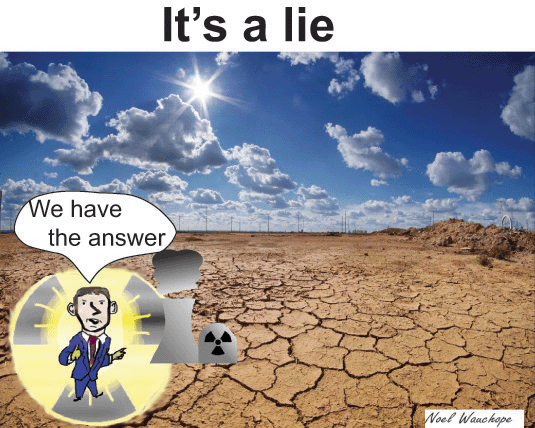
NUCLEAR’s WHOPPING CLIMATE LIE – theme for July 2020
 “If you tell a lie big enough and keep repeating it, people will eventually come to believe it. A lie told once remains a lie but a lie told a thousand times becomes the truth ”
Dr Goebbels would be delighted with the nuclear lobby’s lie that nuclear power is zero carbon and will fix climate change. He would be even more delighted with the current success of this lie.
“Think of the press as a great keyboard on which the government can play.”
The failing nuclear industry is fighting for its life. It now pitches its salvation on its claim to halt climate change. Even if 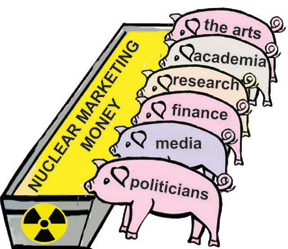
that were true (which it isn’t) the world would have to construct several thousand ‘conventional’ reactors, or several millions of Small Modular Reactors (SMRs) very quickly, within a decade or two.
How is it that politicians , media, academics have swallowed this lie?
1 This Month
Chernobyl: The Lost Tapes – A good documentary on Chernobyl on SBS available On Demand for the next 3 weeks– https://www.sbs.com.au/ondemand/tv-program/chernobyl-the-lost-tapes/2352741955560

of the week–London Campaign for Nuclear Disarmament

Tell the Ukrainian Government to Drop Prosecution of Peace Activist Yurii Sheliazhenko
To see nuclear-related stories in greater depth and intensity – go to https://nuclearinformation.wordpress.com
-
Archives
- April 2026 (139)
- March 2026 (251)
- February 2026 (268)
- January 2026 (308)
- December 2025 (358)
- November 2025 (359)
- October 2025 (376)
- September 2025 (257)
- August 2025 (319)
- July 2025 (230)
- June 2025 (348)
- May 2025 (261)
-
Categories
- 1
- 1 NUCLEAR ISSUES
- business and costs
- climate change
- culture and arts
- ENERGY
- environment
- health
- history
- indigenous issues
- Legal
- marketing of nuclear
- media
- opposition to nuclear
- PERSONAL STORIES
- politics
- politics international
- Religion and ethics
- safety
- secrets,lies and civil liberties
- spinbuster
- technology
- Uranium
- wastes
- weapons and war
- Women
- 2 WORLD
- ACTION
- AFRICA
- Atrocities
- AUSTRALIA
- Christina's notes
- Christina's themes
- culture and arts
- Events
- Fuk 2022
- Fuk 2023
- Fukushima 2017
- Fukushima 2018
- fukushima 2019
- Fukushima 2020
- Fukushima 2021
- general
- global warming
- Humour (God we need it)
- Nuclear
- RARE EARTHS
- Reference
- resources – print
- Resources -audiovicual
- Weekly Newsletter
- World
- World Nuclear
- YouTube
-
RSS
Entries RSS
Comments RSS
 nuclear-news