Assange facing extradition to US: where is the outrage?
“How can it be fair, how can it be right, how can it be possible, to extradite Julian to the very country which plotted to kill him?”
Assange facing extradition to US: where is the outrage? https://redflag.org.au/article/assange-facing-extradition-us-where-outrageTom Gilchrist11 December 2021
The US government has won its appeal against Wikileaks founder Julian Assange, with the UK’s High Court overturning an earlier decision to block Assange’s extradition to the US. The case will now be sent back to the Magistrates Court with instructions to allow the UK Home Secretary Priti Patel to approve or deny the extradition request.
This is a massive blow to press freedom. Assange faces one charge of conspiracy and 17 espionage charges, begun by the Trump administration but continued by the Biden administration. These 17 espionage charges relate to the publication and release of secret government documents, a crucial right for serious journalists trying to hold governments to account. As a statement from Wikileaks in response to the ruling puts its, Assange is “accused of publishing true information revealing crimes committed by the US government in the Guantanamo Bay detention camp, Iraq, and Afghanistan, and details of CIA torture and rendition”.
For telling the truth about these war crimes Assange has faced a decade long campaign of persecution. As Amnesty International’s Europe Director Nils Muižnieks said in response to the High Court decision: “The US government’s indictment poses a grave threat to press freedom both in the United States and abroad. If upheld, it would undermine the key role of journalists and publishers in scrutinising governments and exposing their misdeeds, and would leave journalists everywhere looking over their shoulders.” Muižnieks has labelled the decision a “travesty of justice”.
In the earlier decision in January which blocked Assange’s extradition, District Judge Vanessa Baraitser ruled that the harsh conditions of the US prison system would put Assange at an unreasonable risk of suicide. The High Court has allowed the appeal against this decision on the basis of various “assurances” given by the US government to Assange. These included assurances that he would not be subjected to Special Administrative Measures which restrict contact with the outside world, and that he would be allowed to serve his sentence in Australia if the Australian government made such a request.
These assurances, however, come with caveats. The US government has said that they must be allowed to hold Assange in these restrictive conditions if they fear he could be responsible for a “breach” of “national security”. As Muižnieks argues “The fact that the US has reserved the right to change its mind at any time means that these assurances are not worth the paper they are written on”.
Earlier this year an investigative report from Yahoo! News revealed that leading figures in the US government had discussed the possibility of kidnapping or assassinating Assange during the seven years he was taking refuge in the Ecuadorian embassy in London. Over the last decade it has subjected Assange to a campaign of persecution which Nils Melzer, the United Nations special rapporteur on torture, says amounts to psychological torture. The idea that this same government is now able to give assurances that it cares about the health and safety of Assange is absurd. As Stella Moris, Assange’s partner, says “How can it be fair, how can it be right, how can it be possible, to extradite Julian to the very country which plotted to kill him?”
Moris is a part of Assange’s legal team and says they will be appealing the decision. Such an appeal would be heard by the UK Supreme Court. Assange, meanwhile, remains imprisoned indefinitely in a maximum-security UK prison.
As one of the world’s most high-profile political prisoners, and an Australian national, the Australian media and government might be expected to be up in arms over the plight of Assange. But the shameful lack of concern about his fate persists. Loyalty to the US empire, and willingness to cover up its many crimes, comes first for Australian capitalism.
Appeal to UK’s Supreme Court will just lengthen Julian Assange’s legal torment
Edward Fitzgerald QC, for Assange, previously told the High Court that Australia had not indicated whether it would accept Assange, who “will most likely be dead before it can have any purchase, if it ever could”……..
Assange lawyers eye UK Supreme Court, The North West Star.Jess Glass and Tom Pilgrim, PA
11 Dec 21, Julian Assange’s lawyers intend to take his case to the Supreme Court, his fiancee says, after the High Court allowed the WikiLeaks founder’s extradition to the United States.
Assange, 50, is wanted in the US over an alleged conspiracy to obtain and disclose classified information following WikiLeaks’ publication of hundreds of thousands of leaked documents relating to the Afghanistan and Iraq wars
US authorities brought a High Court challenge against a January ruling by then-district judge Vanessa Baraitser that Assange should not be sent to the US, in which she cited a real and “oppressive” risk of suicide.
After a two-day hearing in October, the Lord Chief Justice Lord Burnett, sitting with Lord Justice Holroyde, ruled in favour of the US on Friday………..
The judges ordered that the case must return to Westminster Magistrates’ Court for a district judge to formally send it to UK Home Secretary Priti Patel.
Assange’s fiancee Stella Moris called the ruling “dangerous and misguided” and said his lawyers intended to seek an appeal at the Supreme Court……..
The legal wrangling will go to the Supreme Court, the United Kingdom’s final court of appeal.
“It is highly disturbing that a UK court has overturned a decision not to extradite Julian Assange, accepting vague assurances by the United States government,” Assange’s lawyer Barry Pollack said.
“Mr Assange will seek review of this decision by the UK Supreme Court.”
Supporters of Assange gathered outside of the court after the ruling, chanting “free Julian Assange” and “no extradition”.
They tied hundreds of yellow ribbons to the court’s gates and held up placards saying “journalism is not a crime”.
If Assange’s lawyers do take his case to the Supreme Court, justices will first decide whether to hear the case before any appeal is heard.
During October’s hearing, James Lewis QC for the US said that the “binding” diplomatic assurances made were a “solemn matter” and “are not dished out like Smarties”.
The assurances included that Assange would not be held in a so-called “ADX” maximum security prison in Colorado or submitted to special administrative measures (SAMs) and that he could be transferred to Australia to serve his sentence if convicted.
But lawyers representing Assange had argued that the assurances over the WikiLeaks founder’s potential treatment were “meaningless” and “vague”.
Edward Fitzgerald QC, for Assange, previously told the High Court that Australia had not indicated whether it would accept Assange, who “will most likely be dead before it can have any purchase, if it ever could”……..
The United Nations’ special rapporteur on torture Nils Melzer sharply criticised the verdict.
“This is a shortcoming for the British judiciary,” Melzer told the DPA news agency on Friday.
“You can think what you want about Assange but he is not in a condition to be extradited,” he said, referring to a “politically motivated verdict”.
with reporting from Reuters and DPA https://www.northweststar.com.au/story/7547237/assange-lawyers-eye-uk-supreme-court/?cs=13136
The latest court case for Australian Julian Assange – and the death of democracy
Assange is too important to the establishment to let get away. No matter that the C.I.A. wanted to kill him; no matter that the C.I.A. spied on his privileged conversations with his lawyers; no matter that the chief witness in the computer conspiracy charge admitted he made it all up.
The Old Boy Network of trust between the rulers of the Anglo-Saxon powers was enough.
To save their hides from more exposure about how they try to violently and deceptively dominate the world, they are willing to sacrifice the last vestiges of their pretend democracy.
Julian Assange is that important to them.
Democracy Dying in the Darkness of the Assange Case https://consortiumnews.com/2021/12/10/democracy-dying-in-the-darkness-of-the-assange-case/ December 10, 2021 The establishment figures on the bench took American promises as “solemn undertakings from one government to another” because Assange is too important to let go, By Joe Lauria.
It is a very dark day indeed for the future of press freedom. If Julian Assange does not find relief at the U.K. Supreme Court, it won’t be an exaggeration to say that democracy, already on life support, is done for. The U.S., and its best ally Britain, have behaved in this affair no better than any tinpot dictator tossing a critical reporter into a dungeon.
This judgement by the High Court today to allow Assange’s extradition to the U.S. comes on U.N. Human Rights Day; the day that Washington concluded its so-called Democracy Summit and the day when the Nobel Prize was awarded to two journalists, one of whom dismissed Julian Assange and said the purpose of journalism is to support national security.
That’s exactly what the national security state wants from its journalists. And they reward them with the highest honors. Assange did the opposite. He fulfilled journalism’s supreme purpose and he may be about to pay for it with his life.
The Choices Available
The High Court could have denied extradition to a country whose intelligence service plotted to kill or kidnap him. It could have sent the case back to magistrate’s court to be reheard.
Instead Lord Chief Justice Ian Burnett and Lord Justice Timothy Holroyde found an extremely narrow way to overturn the lower court’s decision not to extradite Assange.
Continue readingEven when he is silenced, immobilized, locked up and hidden from public view, Julian Assange continues to shine a light on the abusive mechanisms of power.
Assange: The Masks are Crumbling https://consortiumnews.com/2021/12/10/assange-the-masks-are-crumbling/
December 10, 2021 The U.S. and its allies don’t care about press freedom beyond the extent it can be used to conduct propaganda, writes Caitlin Johnstone after the High Court’s ruling against Julian Assange. By Caitlin Johnstone
CaitlinJohnstone.com The U.S. government has won its appeal against a lower British court’s rejection of its extradition request to prosecute Julian Assange for journalistic activity under the Espionage Act. Rather than going free, the WikiLeaks founder will continue to languish in Belmarsh Prison where he has already spent over two and a half years despite having been convicted of no crime.
“As a result, that extradition request will now be sent to British Home Secretary Prita Patel, who technically must approve all extradition requests but, given the U.K. Government’s long-time subservience to the U.S. security state, is all but certain to rubber-stamp it,” writes Glenn Greenwald. “Assange’s representatives, including his fiancee Stella Morris, have vowed to appeal the ruling, but today’s victory for the U.S. means that Assange’s freedom, if it ever comes, is further away than ever: not months but years even under the best of circumstances.”
“Mark this day as fascism casts off its disguises,” tweeted journalist John Pilger of the ruling.
This ruling, which allows the U.S. to continue working to extradite a journalist for exposing U.S. war crimes, comes on the final day of Washington’s so-called “Summit for Democracy“, where the U.S. secretary of state made a grandiose show about of press freedom playing “an indispensable role in informing the public, holding governments accountable, and telling stories that otherwise would not be told.” And then adding: “The U.S. will continue to stand up for the brave and necessary work of journalists around the world.”
This ruling also comes on UN Human Rights Day.
This ruling comes on the same day two journalists formally received the Nobel Peace Prizes they’d been awarded and demanded protections for journalists in their acceptance speeches.
This ruling comes as the U.S. government pledges hundreds of millions of dollars in support for “independent media” around the world in coordination with British state media.
This ruling comes after it was revealed that the C.I.A. drew up plans to kidnap and assassinate Assange in the Ecuadorian embassy after the 2017 Vault 7 releases embarrassed the agency.
This ruling comes after it was revealed that C.I.A. proxies spied on Assange and his lawyers at the Ecuadorian embassy, thereby making a fair trial in the United States impossible.
This ruling comes after it was revealed that the U.S. prosecution relied on false testimony from a diagnosed sociopath and convicted child molester.
This ruling comes after recent investigative reports on civilian-slaughtering U.S. airstrikes reminded us why it’s so important for the press to be able to conduct critical coverage of the most powerful military force ever assembled.
The facts are in and the case is closed: the U.S. and its allies do not care about press freedoms beyond the extent that they can be used to conduct propaganda. The way journalists who offend the powerful are dealt with by the U.S. government and the way they are dealt with by the Saudi monarchy differ only in terms of speed and messiness.
The masks are crumbling. Even when he is silenced, immobilized, locked up and hidden from public view, Julian Assange continues to shine a light on the abusive mechanisms of power. He is arguably exposing them more now than ever before.
As fascism casts off its disguises, it becomes more and more important to highlight the hypocrisy, fraudulence and depravity of the people who rule our world.
In the next extradition court case for Julian Assange, we can expect the judge there to be very biased against Assange

Now the most powerful judge in England and Wales, Burnett will soon rule on Assange’s extradition case. The founder of WikiLeaks faces life imprisonment in the US. ……………………
As minister, Duncan did not hide his opposition to Julian Assange, calling him a “miserable little worm” in parliament in March 2018.
Duncan watched UK police pulling the WikiLeaks publisher from the Ecuadorian embassy via a live-feed in the Operations Room at the top of the Foreign Office.
He later admitted he was “trying to keep the smirk off [his] face”, and hosted drinks at his parliamentary office for the team involved in the eviction.
ASSANGE JUDGE IS 40-YEAR ‘GOOD FRIEND’ OF MINISTER WHO ORCHESTRATED HIS ARREST
Julian Assange’s fate lies in the hands of an appeal judge who is a close friend of Sir Alan Duncan – the former foreign minister who called Assange a “miserable little worm” in parliament. DECLASSIFIED UK
MATT KENNARD AND MARK CURTIS 2 DECEMBER 2021 LORD CHIEF JUSTICE IAN BURNETT, THE JUDGE THAT WILL SOON DECIDE JULIAN ASSANGE’S FATE, IS A CLOSE PERSONAL FRIEND OF SIR ALAN DUNCAN, WHO AS FOREIGN MINISTER ARRANGED ASSANGE’S EVICTION FROM THE ECUADORIAN EMBASSY.
The two have known each other since their student days at Oxford in the 1970s, when Duncan called Burnett “the Judge”. Burnett and his wife attended Duncan’s birthday dinner at a members-only London club in 2017, when Burnett was a judge at the court of appeal.
Now the most powerful judge in England and Wales, Burnett will soon rule on Assange’s extradition case. The founder of WikiLeaks faces life imprisonment in the US. ……………………
As minister, Duncan did not hide his opposition to Julian Assange, calling him a “miserable little worm” in parliament in March 2018.
In his diaries, Duncan refers to the “supposed human rights of Julian Assange”. He admits to arranging a Daily Mail hit piece on Assange that was published the day after the journalist’s arrest in April 2019.
Duncan watched UK police pulling the WikiLeaks publisher from the Ecuadorian embassy via a live-feed in the Operations Room at the top of the Foreign Office.
He later admitted he was “trying to keep the smirk off [his] face”, and hosted drinks at his parliamentary office for the team involved in the eviction.
Duncan then flew to Ecuador to meet President Lenín Moreno in order to “say thank you” for handing over Assange. Duncan reported he gave Moreno “a beautiful porcelain plate from the Buckingham Palace gift shop.”
“Job done,” he added………………………………. https://declassifieduk.org/assange-judge-is-40-year-good-friend-of-minister-who-orchestrated-his-arrest/
UK government secretive about its Net Zero strategy, especially on tax-payer funded projects like small nuclear power plants.
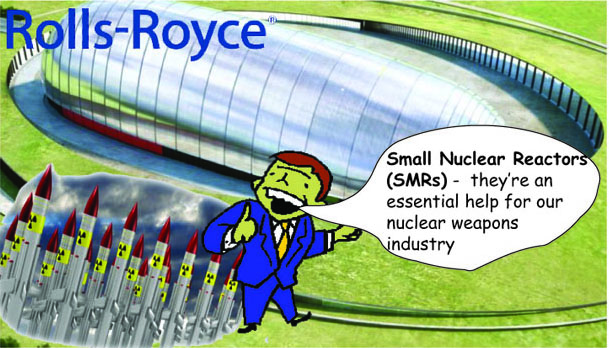
UK refuses to release document showing Net Zero Strategy CO2 savings, New Scientist, 1 December 2021, By Adam Vaughan
The UK government Department for Business, Energy and Industrial Strategy (BEIS) has turned down a freedom of information request that would allow independent scrutiny of its plan for net-zero greenhouse gas emissions.
The UK government has refused a freedom of information request to release a spreadsheet showing how much its landmark Net Zero Strategy will cut carbon emissions for individual measures, such as backing a new nuclear power station and fitting new electric car chargers.
Withholding the document smacks of “secrecy and subterfuge” and prevents the public from being able to interrogate the estimated impacts of the measures, says Ed Matthew at climate change think tank E3G.
The publication of the government’s Net Zero Strategy on 19 October was a key moment ahead of the COP26 climate summit, laying out in detail how the UK plans to reach its 2050 commitment to net-zero greenhouse gas emissions in the coming years.
Previous government blueprints for decarbonisation, such as the 2020 10-point green plan and 2017 clean growth strategy, have spelled out estimates of exactly how much individual policies will cut emissions. But the Net Zero Strategy failed to provide any such breakdown, which observers said showed a lack of transparency that hampered independent scrutiny.
Government officials conceded that there was a spreadsheet containing all the figures, but said they wouldn’t release it. Now, the Department for Business, Energy and Industrial Strategy (BEIS) has refused a freedom of information request by New Scientist to publish the document. It declined the request on the grounds that it involves the disclosure of internal communications…………….
The strategy does show top-level estimates of how much emissions will change for different sectors, such as power, buildings and farming, between now and 2050. But it doesn’t break down individual measures, including backing new hydrogen production or developing new small nuclear plants, both of which will be supported by hundreds of millions of pounds in public funding.
“Ministers are behaving like a shady dealer asking customers to buy a product without seeing it first,” says John Sauven at Greenpeace UK. He is calling on BEIS to publish the spreadsheet: “The best thing would be for the government to release the numbers behind the plan and allow experts to kick the tyres on it”.
The document is likely to include estimates of how extensively various technologies will be employed and their impacts on greenhouse gas emissions in the UK. There may be a mismatch between what the government has committed to publicly, such as a Conservative party manifesto pledge to quadruple offshore wind capacity by 2030, and the estimates that are being withheld, for example………..
New Scientist has appealed the decision not to publish the document. https://www.newscientist.com/article/2299318-uk-refuses-to-release-document-showing-net-zero-strategy-co2-savings/#ixzz7Drfyfmii
Belene nuclear plant: Bulgarian far-right leader threatens to send opponents to a labour camp
Belene nuclear plant: Bulgarian far-right leader threatens to send opponents to a labour camp, By Krassen Nikolov | EURACTIV.bg 26 Nov 21,
Kostadin Kostadinov, leader of the pro-Russian far-right party ‘Vazrazhdane’ (Revival), started his first term as an MP by threatening to deport all those who oppose the Belene nuclear power plant to the town’s communist-era forced labour camp.
The Belene NPP is an unfinished project that dates back to the 1980s. Bulgaria has invested €600 million in it. 26 Nov 2021 ……..
Vazrazhdane’ won just under 5% in the parliamentary elections due to its consistent policy of disparaging the pandemic, resistance to COVID vaccines and green certificates. Now the party is beginning to expand on the energy issue. Vazrazhdane has 13 out of 240 MPs in the new parliament…….
Belene NPP is the last remaining project of the so-called Russian Grand Slam in Bulgaria, which was agreed between the Presidents of Bulgaria and Russia Georgi Parvanov and Vladimir Putin. The others were the South Stream gas pipeline and the Burgas-Alexandroupolis oil pipeline. https://www.euractiv.com/section/politics/short_news/belene-nuclear-plant/
Tricastin nuclear power plant: cascading cover-ups.

Tricastin nuclear power plant: cascading cover-ups. In the case of the
whistleblower at the Tricastin power plant, which files a complaint against
EDF, new elements consulted by Mediapart reveal that the Nuclear Safety
Authority has long known about the problem. According to an internal
document, EDF lied and the safety authority also in its public
communication.
Mediapart 24th Nov 2021
“Blown to Hell: America’s Deadly Betrayal of the Marshall Islanders”
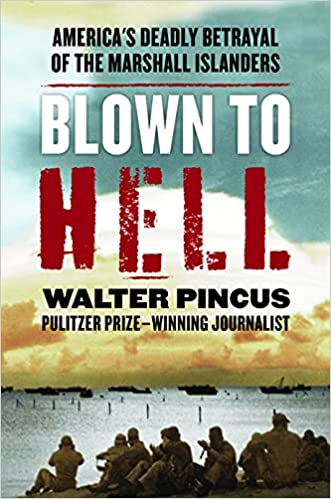
Biggest US nuclear bomb test destroyed an island—and this man’s life, https://nypost.com/2021/11/20/biggest-us-nuclear-bomb-test-destroyed-an-island-and-lives/ By Eric Spitznagel The US bomb tested near John Anjain’s (right) home in the Marshall Islands in 1954 was 1,000 times stronger than at Hiroshima, and left his wife and kids with debilitating and deadly health problems, as detailed in a new book. November 20, 2021
Just before dawn on March 1, 1954, John Anjain was enjoying coffee on the beach in the South Pacific when he heard a thunderous blast, and saw something in the sky that he said “looked like a second sun was rising in the west.”
Later that day, “something began falling upon our island,” said Anjain, who at the time was 32 and chief magistrate of the Rongelap atoll, part of the Marshall Islands. “It looked like ash from a fire. It fell on me, it fell on my wife, it fell on our infant son.”
It wasn’t a paranormal experience. Anjain and his five young sons, along with the 82 other inhabitants of Rongelap, were collateral damage from a “deadly radioactive fallout from a hydrogen bomb test… detonated by American scientists and military personnel,” writes Walter Pincus in his new book, “Blown to Hell: America’s Deadly Betrayal of the Marshall Islanders” (Diversion Books), out now.
In 1946, the US started testing atomic weapons began in Bikini Atoll, 125 miles west of Rongelap. Known as Operation Crossroads, the tests were moved to the islands from the US because officials feared “radioactive fallout could not be safely contained at
any site in the United States,” writes Pincus.
During those early tests, the Rongelapians were relocated to another island a safe distance away.
But the 1954 test was different. Not only were there no evacuations, but “Castle
Bravo,” as it was dubbed, was also the largest of the thermonuclear devices detonated during the military’s 67 tests, “a thousand times as large as the bomb that destroyed Hiroshima,” writes Pincus.
It took just hours for fallout to reach the shores of Rongelap, where it blanketed the island with radioactive material, covering houses and coconut palm trees. On some parts of the isle, the white radioactive ash was “an inch and a half deep on the ground,” writes Pincus.
The natives, who often went barefoot and shirtless, were covered in the toxic debris. It stuck to their hair and bodies and even between their toes.
“Some people put it in their mouths and tasted it,” Anjain recalled at a Washington DC hearing run by the Senate Energy and Natural Resources Committee to investigate the incident in 1977. “One man rubbed it into his eye to see if it would cure an old ailment. People walked in it, and children played with it.”
Rain followed, which dissolved the ash and carried it “down drains and into the barrels that provided water for each household,” writes Pincus.
It took three days before American officials finally evacuated the island, taking the natives to nearby Kwajalein for medical tests. Many Rongelapians were already suffering health effects, like vomiting, hair loss, and all-over body burns and blisters. Tests showed their white blood cell counts plummeting, and high levels of radioactive strontium in their systems. No one died, at least not immediately. That would come later.
After three years, the Rongelapians were allowed to return home, assured by officials that conditions were safe. But by 1957, the rate of miscarriages and stillbirths on the island doubled, and by 1963 the first residents began to develop thyroid tumors.
Though they continued to conduct annual medical tests, the US military admitted no culpability, other than awarding each islander $10,800 in 1964 as compensation for the inconvenience.
In fact, some — including the islanders — have speculated that the US government had used the Rongelapians as “convenient guinea pigs” to study the effects of high-level radiation.
For Anjain and his family, the effects were devastating. His wife and four of his children developed cancer. A sixth child, born after the fallout, developed poliomyelitis and had to use a crutch after one of his legs became paralyzed.
But the biggest tragedy befell his fifth child Lekoj, who was just one year old when Castle Bravo covered their island in nuclear dust. As a child, he was mostly healthy, other than the occasional mysterious bruise. Soon after his 18th birthday, Lekoj was flown to an American hospital, where doctors discovered he had acute myelogenous leukemia.
Anjain stayed at his son’s bedside for weeks as he underwent chemo, holding his dying son’s hand and watching him disappear.
He recounted Lekoj’s final days in a letter to the Friends of Micronesia newsletter in 1973. “Bleeding started in his ears, mouth and nose and he seemed to be losing his mind,” Anjain wrote of his son. “When I would ask him questions he gave me no
answer except ‘Bad Luck.’”
Lekoj passed away on November 15, 1972, at just 19. Newsweek called him “the first, and so far only leukemia victim of an H-bomb,” and said his death was proof that nuclear fallout “could be even more lethal to human life than the great fireball itself.”
After burying his son at a spot overlooking Rongelap Lagoon, Anjain continued to battle for financial restitution for his family and other Rongelapian survivors. In 2004, just months before his death (of undisclosed causes) at 81, he marched with 2,000 people in Japan to commemorate the 50th anniversary of the 1954 hydrogen bomb test that slowly killed his son.
In 2007, a Nuclear Claims Tribunal awarded Rongelap more than $1 billion in damages, but not a penny of it has yet been paid. And according to a 2019 Columbia University study, radiation levels on Rongelap are still higher than Chernobyl or Fukushima.
For Anjain, it was never really about the money. “I know that money cannot bring back my son,” he once said. “It cannot give me back 23 years of my life. It cannot take the poison from the coconut crabs. It cannot make us stop being afraid.”
Heritage Foundation – murky think tank funded by the nuclear weapons industry, wants weapons-makers to be exempt from climate and pandemic regulations

“Defense industrial base” is a buzzword that has picked up steam during the pandemic: It sends the message that, whatever happens with the economy and pandemic, we need to make sure we are in “fighting shape” — by keeping military contractors afloat. This concept was invoked to explain why, at the beginning of the pandemic, factories that produce bombs and tankers should be allowed to stay open, even amid the outbreak risk to workers. And it was also used to justify subsidies to contractors during the hardship of the pandemic.
Lockheed Martin is just one of numerous weapons manufacturers that has directly funded the Heritage Foundation. According to a report by the think tank Center for International Policy (CIP), the Heritage Foundation ranks ninth among the top think tanks that received funding from military contractors and the U.S. government from 2014 to 2019. Lockheed Martin and Raytheon were two of those major funders, both of which are among the largest weapons companies in the world and would be impacted by the new regulation.
This case provides a window into the murky world of think tanks, which are often viewed as academic and above-the-fray institutions but operate more as lobbying outfits.
Think Tank Funded by the Weapons Industry Pressures Biden Not to Regulate Military Contractors’ Emissions https://www.rsn.org/001/think-tank-funded-by-the-weapons-industry-pressures-biden-not-to-regulate-military-contractors-emissions.html
Sarah Lazare/In These Times 19 November 21The Heritage Foundation has received considerable donations from the arms industry. And now it’s trying to shield that industry from climate regulations targeting military contractors.
The Heritage Foundation, a prominent conservative think tank, is publicly opposing a new Biden administration regulation that would force the weapons industry to report its greenhouse gas emissions related to federal contracts. It turns out the Heritage Foundation also receives significant funding from the weapons industry, which makes the case worth examining — because it reveals how the arms industry pays supposedly respectable institutions to do its policy bidding at the expense of a planet careening toward large-scale climate disaster.
The regulation in question was first proposed in an executive order in May. It would require federal contractors to disclose their greenhouse gas emissions and their “climate-related financial risk,” and to set “science-based reduction targets.” In other words, companies like Lockheed Martin would have to disclose how much carbon pollution its F‑35 aircraft and cluster bombs actually cause.
In October, the Biden administration started the process to amend federal procurement rules to reflect these changes. “Today’s action sends a strong signal that in order to do business with the federal government, companies must protect consumers by beginning to mitigate the impact of climate change on their operations and supply chains,” Shalanda Young, acting director of the White House Office of Management and Budget, said at the time.The Department of Defense is the world’s biggest institutional consumer of fossil fuels and a bigger carbon polluter than 140 countries. Yet its emissions (and those of other armed forces) are excluded from UN climate negotiations, including the recent COP26 talks. The Biden administration itself supports a massive military budget, initially requesting $753 billion for the 2022 National Defense Authorization Act, a number that has since ballooned, with the Senate set to vote on a $778 billion plan. Organizers and researchers argue that, to curb the climate crisis, it is necessary to roll back U.S. militarism and dismantle the military budget.
But according to the Heritage Foundation, even this modest proposal is a bridge too far.
Continue readingNew files expose Australian govt’s betrayal of Julian Assange and detail his prison torment
The documents obtained by Tranter and provided to The Grayzone provide an unobstructed view of the Australian junior ally’s betrayal of one of its citizens to the imperial power that has hunted him for years. As Julian Assange’s rights were violated at every turn, Canberra appears to have been complicit.
New files expose Australian govt’s betrayal of Julian Assange and detail his prison torment https://thegrayzone.com/2021/11/17/files-australian-julian-assange-prison/ KIT KLARENBERG· NOVEMBER 17, 2021
Documents provided exclusively to The Grayzone detail Canberra’s abandonment of Julian Assange, an Australian citizen, and provide shocking details of his prison suffering
Was the government of Australia aware of the US Central Intelligence Agency plot to assassinate Julian Assange, an Australian citizen and journalist arrested and now imprisoned under unrelentingly bleak, harsh conditions in the UK?
Why have the country’s elected leaders refused to publicly advocate for one of its citizens, who has been held on dubious charges and subjected to torture by a foreign power, according to UN Special Rapporteur on Torture Nils Melzer? What does Canberra know about Julian’s fate and when did it know it?
The Grayzone has obtained documents revealing that the Australian government has since day one been well-aware of Julian’s cruel treatment inside London’s maximum security Belmarsh Prison, and has done little to nothing about it. It has, in fact, turned a cold shoulder to the jailed journalist despite hearing his testimony of conditions “so bad that his mind was shutting down.”
Not only has Canberra failed to effectively challenge the US and UK governments overseeing Assange’s imprisonment and prosecution; as these documents expose in stark detail, it appears to have colluded with them in the flagrant violation of an Australian citizen’s human rights, while doing its best to obscure the reality of his situation from the public.
Continue readingNon government organisations anxious about Tricastin nuclear station, and about historic law to protect whitleblowers
After Tricastin, we must “protect the whistleblowers and focus on the
alert and not on the messenger”. Three representatives of non-governmental
organizations recall, in a forum at “The World”, the importance of “the
historic law” that the National Assembly is about to vote on the protection
of whistleblowers. They are also calling for the opening of a parliamentary
inquiry into the facts relating to the Tricastin nuclear power plant.
Le Monde 15th Nov 2021
America’s relentless pursuit of Australian Julian Assange is a threat to any journalist who might expose a USA massacre of civilians
Julian Assange currently sits in Belmarsh Prison waiting to find out if British judges will overturn a lower court’s ruling against his extradition to the United States to be prosecuted under the Espionage Act for journalistic activity which exposed U.S. war crimes. War crimes not unlike those that were just exposed by The New York Times in its reporting on the Baghuz massacre.
The precedent the U.S. government is trying to set with its persecution of Assange will, if successful, cast a chilling effect over journalism which scrutinizes the U.S. war machine, not just in the United States but around the world.
Syria Massacre Coverup Shows Danger of Assange Precedent, https://consortiumnews.com/2021/11/15/syria-massacre-coverup-shows-danger-of-assange-precedent/ November 15, 2021 The precedent the U.S. government is trying to set with its persecution of Assange will, if successful, cast a chilling effect over journalism which scrutinizes the U.S. war machine, writes Caity Johnstone. By Caitlin Johnstone
CaitlinJohnstone.com The New York Times has published a very solid investigative report on a U.S. military coverup of a 2019 massacre in Baghuz, Syria which killed scores of civilians. This would be the second investigative report on civilian-slaughtering U.S. airstrikes by The New York Times in a matter of weeks, and if I were a more conspiracy-minded person I’d say the paper of record appears to have been infiltrated by journalists.
The report contains many significant revelations, including that the U.S. military has been grossly undercounting the numbers of civilians killed in its airstrikes and lying about it to Congress, that special ops forces in Syria have been consistently ordering airstrikes which kill noncombatants with no accountability by exploiting loopholes to get around rules meant to protect civilians, that units which call in such airstrikes are allowed to do their own assessments grading whether the strikes were justified, that the U.S. war machine attempted to obstruct scrutiny of the massacre “at nearly every step” of the way, and that the Air Force’s Office of Special Investigations only investigates such incidents when there is “potential for high media attention, concern with outcry from local community/government, concern sensitive images may get out.”
“But at nearly every step, the military made moves that concealed the catastrophic strike,” The New York Times reports. “The death toll was downplayed. Reports were delayed, sanitized and classified. United States-led coalition forces bulldozed the blast site. And top leaders were not notified.”
Journalist Aaron Maté has called the incident “one of the U.S. military’s worst massacres and cover-up scandals since My Lai in Vietnam.”
Asked by the Times for a statement, Central Command gave the laughable justification that maybe those dozens of women and children killed in repeated bomb blasts were actually armed enemy combatants:
“This week, after The New York Times sent its findings to U.S. Central Command, which oversaw the air war in Syria, the command acknowledged the strikes for the first time, saying 80 people were killed but the airstrikes were justified. It said the bombs killed 16 fighters and four civilians. As for the other 60 people killed, the statement said it was not clear that they were civilians, in part because women and children in the Islamic State sometimes took up arms.“
I mean, how do you even address a defense like that? How do you get around the “Maybe those babies were ISIS fighters” defense?
Reading the report it becomes apparent how much inertia was thrown on attempts to bring the massacre to light and how easy it would have been for those attempts to succumb to the pressure and just give up, which naturally leads one to wonder how many other such incidents never see the light of day because attempts to expose them are successfully ground to a halt.
The Times says the Baghuz massacre “would rank third on the military’s worst civilian casualty events in Syria if 64 civilian deaths were acknowledged,” but it’s clear that that “acknowledged” bit is doing a lot of heavy lifting there.
And it really makes you appreciate how much work goes into getting information like this in front of the public eye, and how important it is to do so, and how tenuous the ability to do so currently is.
Julian Assange currently sits in Belmarsh Prison waiting to find out if British judges will overturn a lower court’s ruling against his extradition to the United States to be prosecuted under the Espionage Act for journalistic activity which exposed U.S. war crimes. War crimes not unlike those that were just exposed by The New York Times in its reporting on the Baghuz massacre.
The precedent the U.S. government is trying to set with its persecution of Assange will, if successful, cast a chilling effect over journalism which scrutinizes the U.S. war machine, not just in the United States but around the world.
If it can succeed in legally establishing that it can extradite an Australian journalist for publishing information in the public interest about U.S. war crimes, it will have succeeded in legally establishing that it can do that to any journalist anywhere. And you can kiss investigative reporting like this goodbye.
This is what’s at stake in the Assange case. Our right to know what the most deadly elements of the most powerful government on our planet are doing. The fact that the drivers of empire think it is legitimate to deprive us of such information by threatening to imprison anyone who tries to show it to us makes them an enemy of all humanity.
Nuclear power company First Energy prosecuted for corruption, but still finds it worthwhile to bribe politicians

It is the largest fine ever imposed by the U.S. Attorney’s Office for the Southern District of Ohio.
But it is a pittance when compared to the earnings it brought in last year: $1.1 billion. For that reason, the company’s stock has a 52-week range of between $26 and its current high of $39 a share.
Paying Bribes Got FirstEnergy In Trouble, But It Is Still Making Political Donations , Forbes, 15 Nov 21,
Has FirstEnergy Corp. learned anything from its nuclear energy scandal and criminal probe? Prosecutors say that if the company fully cooperates then it will drop the charges against it in three years. But the utility is still giving millions to lobby lawmakers — a bit cringeworthy, given the events.
It’s legal. But the company’s chief executive since March, Steven Strah, has said that FirstEnergy FE +1.2% will play a more subtle political role. The protocol now is strict oversight of its lobbying activities — the kind of thing that would avoid, for example, bribing public officials to keep open struggling nuclear plants. For sure, FirstEnergy’s campaign spending is already at $1.5 million this year. That is in line with the contributions it has been making for the last decade.
FirstEnergy is sticking to “the way they did business 50 years ago,“ said Ashley Brown, a former Ohio public utilities commissioner, who now leads the Harvard Electricity Policy Group. “That’s part of why they’re just a lobbying firm with a utility sideline.”
Brown’s comments appeared in a story by Eye on Ohio, which joined with Energy News Network in the endeavor. Eye on Ohio is a division of the Ohio Center for Journalism.
In a deferred prosecution agreement reached over the summer between FirstEnergy and federal prosecutors, the utility admitted that it conspired with and subsequently bribed public officials: $60 million, which was used to secure a $1.3 billion bailout package for its nuclear units and to also help defeat a voter initiative that would have thrown out that law.
The company was penalized $230 million — money to be split equally between the federal and state government. In Ohio, it will be used to help low-income citizens pay their utility bills. It is the largest fine ever imposed by the U.S. Attorney’s Office for the Southern District of Ohio. But it is a pittance when compared to the earnings it brought in last year: $1.1 billion. For that reason, the company’s stock has a 52-week range of between $26 and its current high of $39 a share.
Prosecutors said that they wanted the penalty to “sting” but they did not want to disrupt the company’s business. They filed one charge: conspiracy to commit honest services and wire fraud, which will be dismissed if FirstEnergy continues to cooperate.
“Our activity in this space will be much more limited than it has been in the past, with closer alignment to our strategic goals and with additional oversight and significantly more robust disclosure,” says CEO Strah, before investors. “These efforts, together with enhanced policies and procedures, will help to bring additional clarity around appropriate behaviors at FirstEnergy.”
The bargain between prosecutors and the utility examines how FirstEnergy took monies from its regulated units and then paid off public officials. Former Ohio House Speaker Larry Householder has already been charged. Former Ohio Public Utilities Commission Chairman Sam Randazzo has resigned his position. The power company used a dark money group called Generation Now to hide its efforts. A lobbyist has pleaded guilty along with a staffer for Householder, who set up the shady organization to receive the dirty money.
A New Track
Subsequent to this criminal settlement, Ohio’s Attorney General Dave Yost added FirstEnergy’s former CEO Charles Jones to a list of defendants his office is suing. (Prosecutors would not comment on whether Jones is also in criminal trouble.) The civil complaint also includes ex-FirstEnergy senior vice president Michael Dowling and Sam Randazzo.
The “corruption was more cancerous than previously thought––necessitating adding additional defendants and giving rise to additional claims,” the lawsuit says. Ohio’s legislature, meantime, has revoked the $1.3 billion bailout. …… https://www.forbes.com/sites/kensilverstein/2021/11/15/paying-bribes-got-firstenergy-in-trouble-but-it-is-still-making-political-donations—and-amends/?sh=1e29ece1150a
French unions complicit with EDF in harrassments and other scandals
EDF, the grinding machine: “EDF holds the unions in its hands”. Number 2
in Force Ouvrière at EDF, Rémy Casabielhe has been one of the main
negotiators of the agreements in recent years within the company.
In his
interview with Blast, after the first stages of our investigation, the
union representative bluntly denounces the inaction of management, but also
of the unions, in the face of the problems of harassment, discrimination
and suicide.
And calls into question the agreements concluded for twenty
years, responsible for this phenomenon. Words that detonate and lift the
veil on a complicity that does not speak its name.
Blast 13th Nov 2021
1 This Month

of the week – Shut Down Drone Warfare!


Tell the Ukrainian Government to Drop Prosecution of Peace Activist Yurii Sheliazhenko

Petition to revoke the licensing of the Near Surface Nuclear Disposal Facility (NSDF) at Chalk River. https://www.ourcommons.ca/petitions/en/Petition/Details?Petition=e-7247
To see nuclear-related stories in greater depth and intensity – go to https://nuclearinformation.wordpress.com
-
Archives
- April 2026 (57)
- March 2026 (251)
- February 2026 (268)
- January 2026 (308)
- December 2025 (358)
- November 2025 (359)
- October 2025 (376)
- September 2025 (257)
- August 2025 (319)
- July 2025 (230)
- June 2025 (348)
- May 2025 (261)
-
Categories
- 1
- 1 NUCLEAR ISSUES
- business and costs
- climate change
- culture and arts
- ENERGY
- environment
- health
- history
- indigenous issues
- Legal
- marketing of nuclear
- media
- opposition to nuclear
- PERSONAL STORIES
- politics
- politics international
- Religion and ethics
- safety
- secrets,lies and civil liberties
- spinbuster
- technology
- Uranium
- wastes
- weapons and war
- Women
- 2 WORLD
- ACTION
- AFRICA
- Atrocities
- AUSTRALIA
- Christina's notes
- Christina's themes
- culture and arts
- Events
- Fuk 2022
- Fuk 2023
- Fukushima 2017
- Fukushima 2018
- fukushima 2019
- Fukushima 2020
- Fukushima 2021
- general
- global warming
- Humour (God we need it)
- Nuclear
- RARE EARTHS
- Reference
- resources – print
- Resources -audiovicual
- Weekly Newsletter
- World
- World Nuclear
- YouTube
-
RSS
Entries RSS
Comments RSS
 nuclear-news